VALERIUS MAXIMUS.
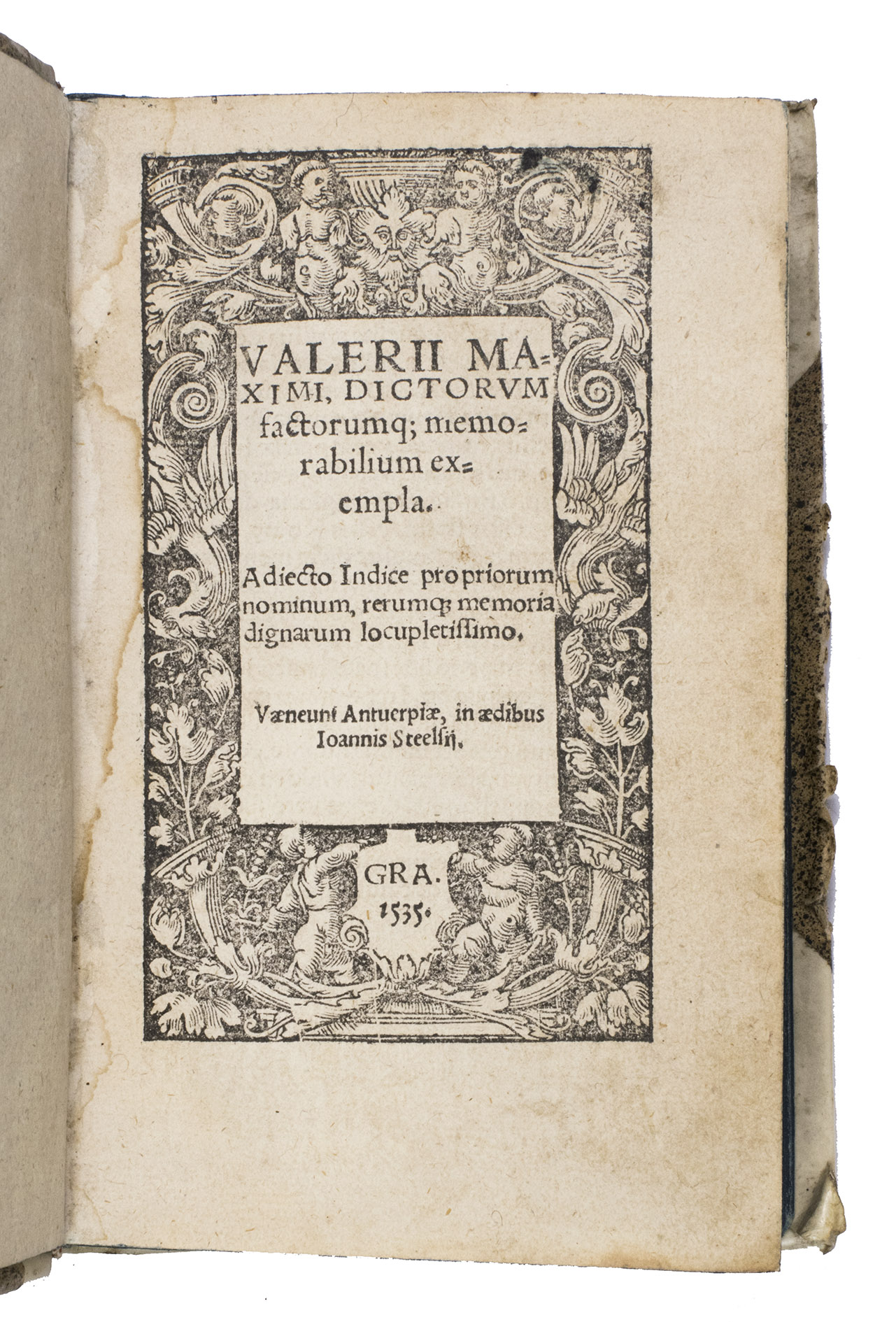
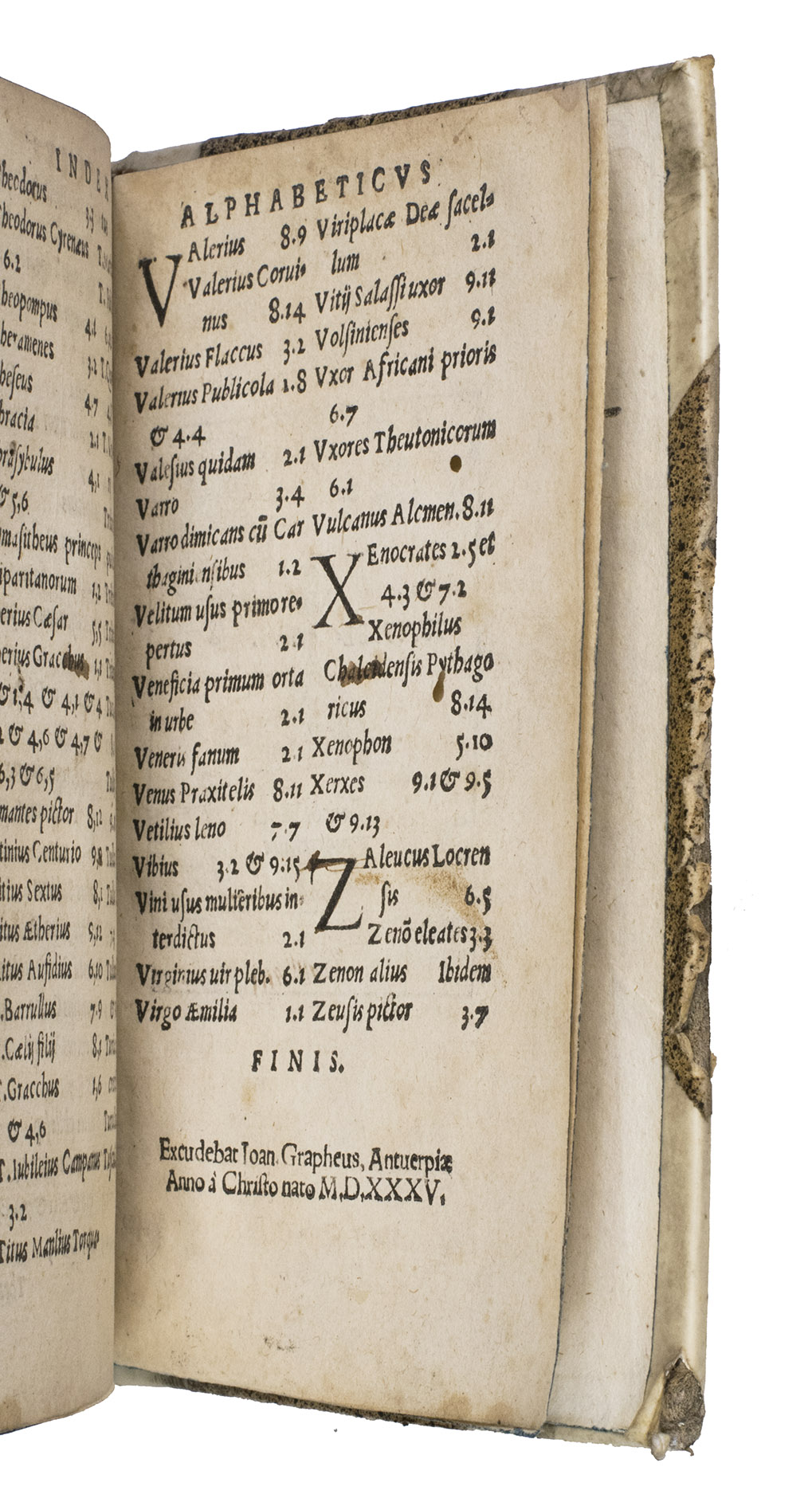
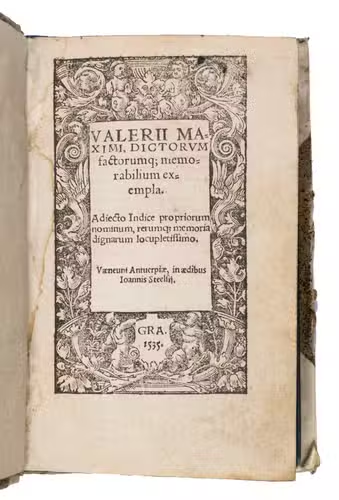
Dictorum factorumq[ue] memorabilium exempla. adjecto indice propriorum nominum rerumq[ue] memoria dignarum locupletissimo
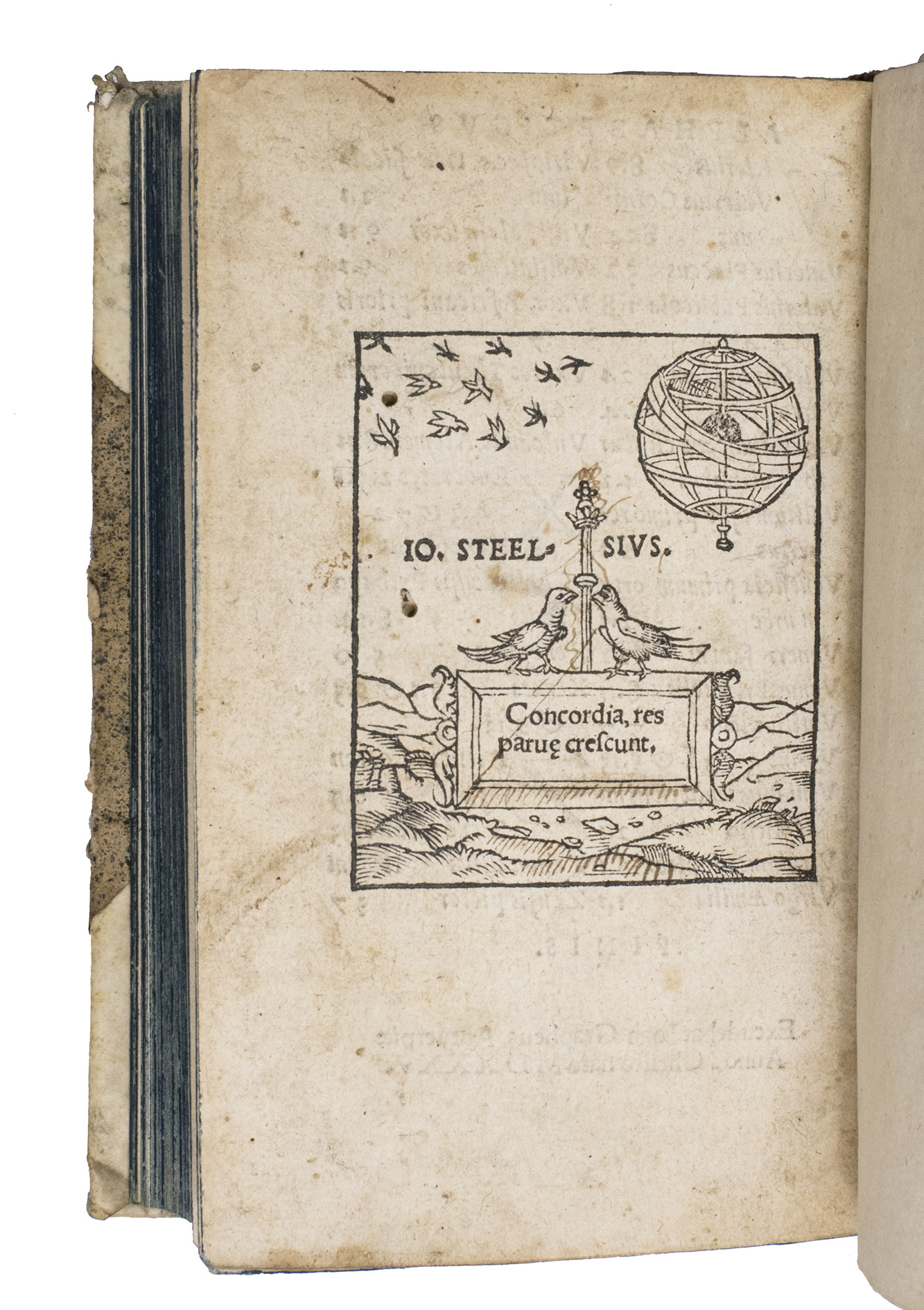
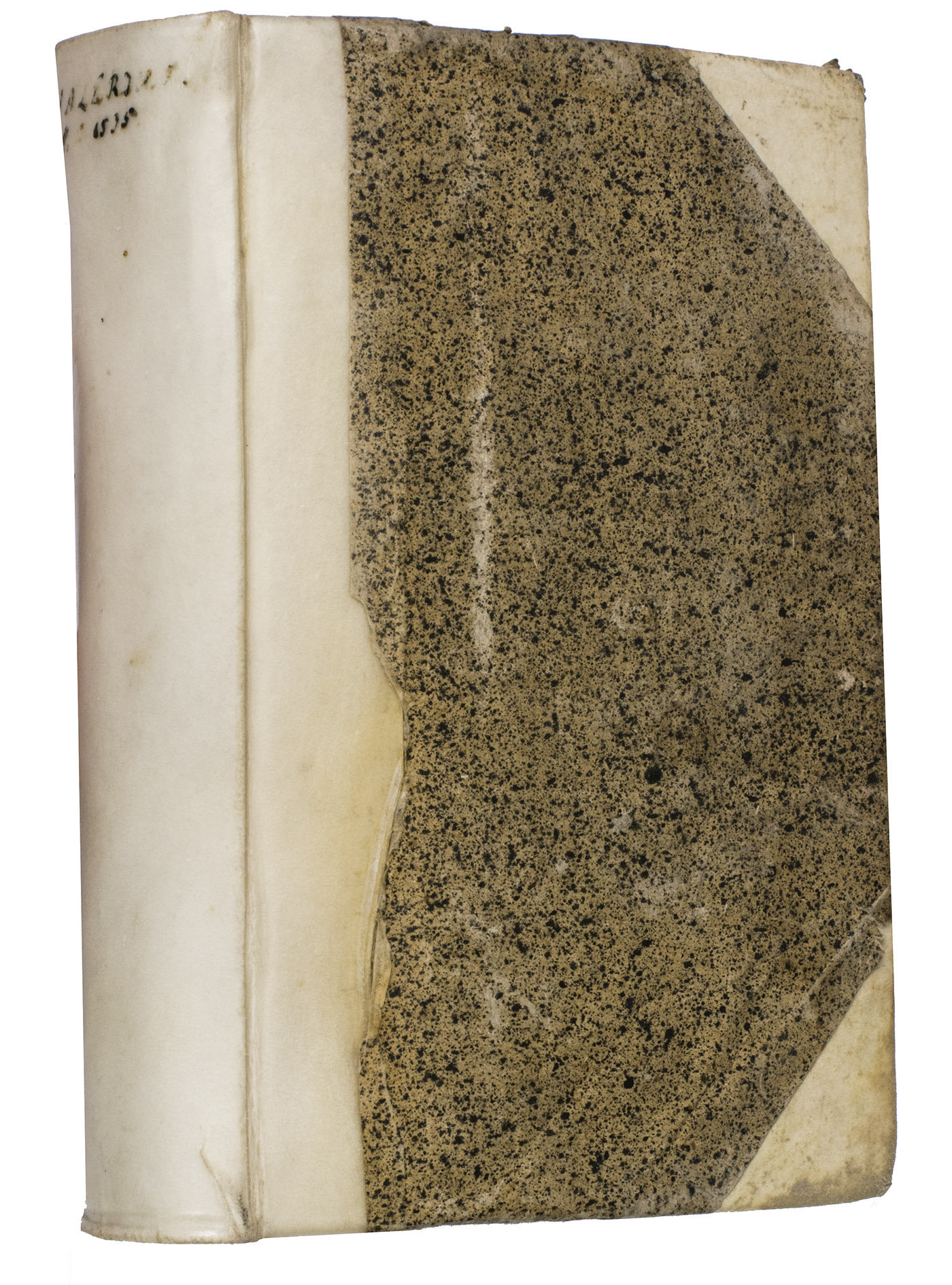
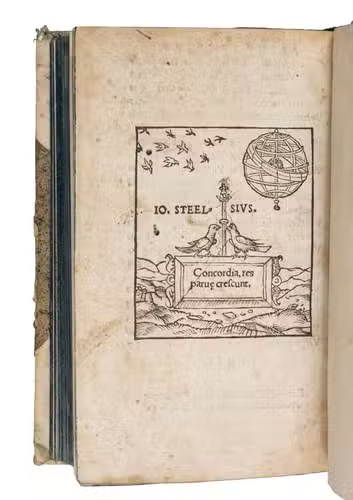
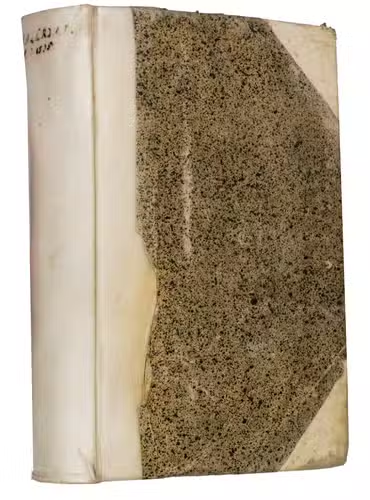
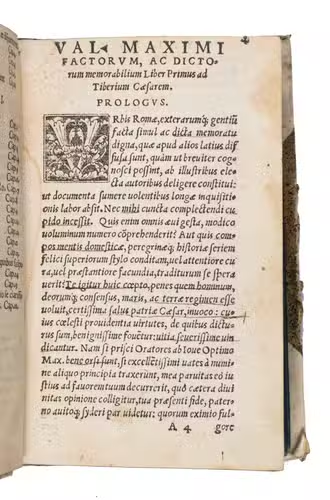
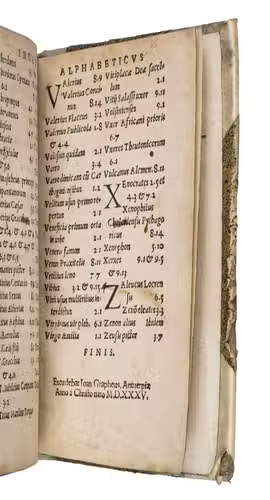
Antwerp, Joannes Grapheus for Joannes Steelsius, 1535. 8vo (14.6 x 9.1 cm). With a woodcut title frame, and a woodcut illustration incorporating Steelsius' device at the end. Old half vellum. 237, [11] ll.
€ 950
Early Antwerp edition of Dictorum factorumque memorabilium exempla, it transmits one of the most influential moral and historical collections of Imperial Rome. The work was compiled by Valerius Maximus, a Latin author active in the early decades of the first century CE, and dedicated in 31 CE to the emperor Tiberius.
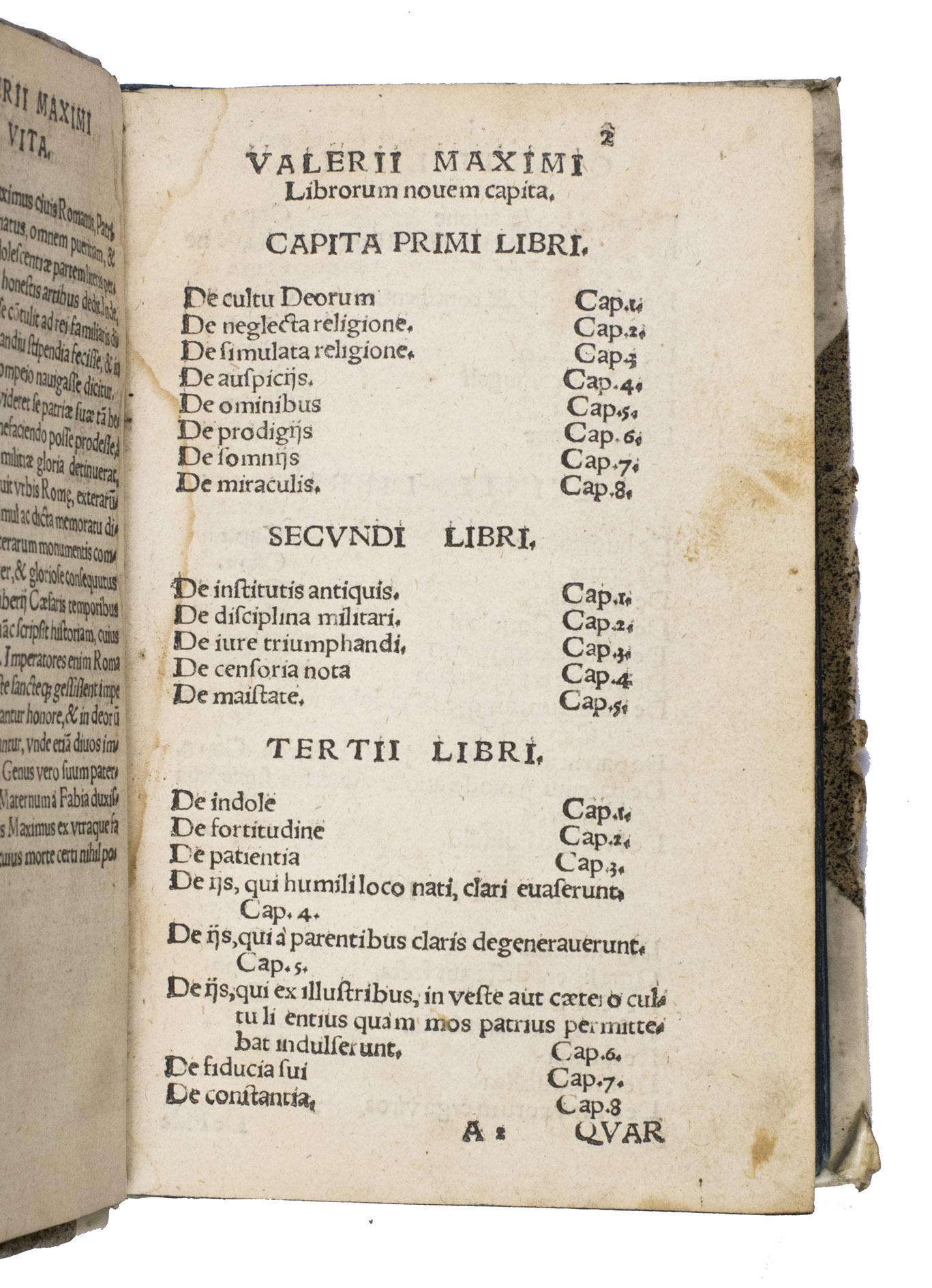
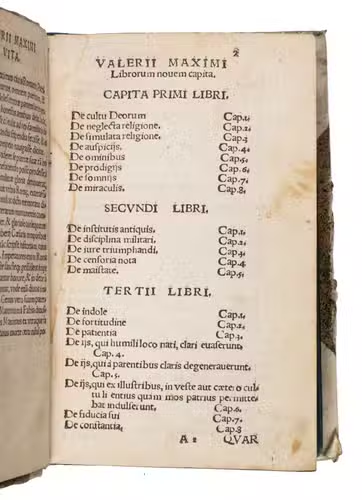
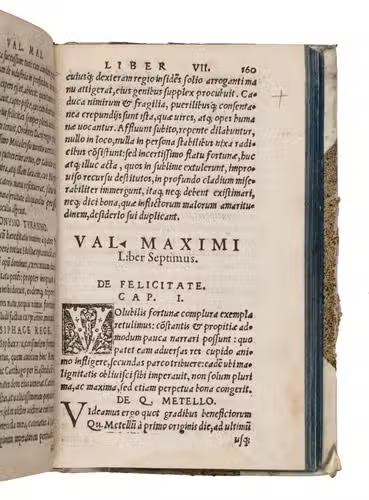
Valerius Maximus (first century CE) organised his material into nine thematic books, each arranged to facilitate consultation by rhetoricians and educators. The collection brings together roughly a thousand concise anecdotes (memorable deeds and sayings) drawn primarily from Roman history, with selected foreign examples, especially from Greek tradition. These exempla illustrate civic, military, religious, and private virtues such as filial piety, loyalty, courage, justice, moderation, friendship, and modesty, while contrasting them with corresponding vices. The work reflects the Roman conviction that history functions as a storehouse of moral examples, to be used in education, public speaking, and ethical reflection.
Valerius sources include Cicero, Livy, Sallust, and Pompeius Trogus, among others, some of whose works are now lost. Though his style is rhetorical and emphatic, characteristic of Silver Latin, the collection remains historically valuable, not least because it preserves material otherwise unattested and offers occasional glimpses into the reign of Tiberius. The structured organisation of the work, with clearly defined moral categories, made it especially useful as a practical reference tool for speakers and teachers.
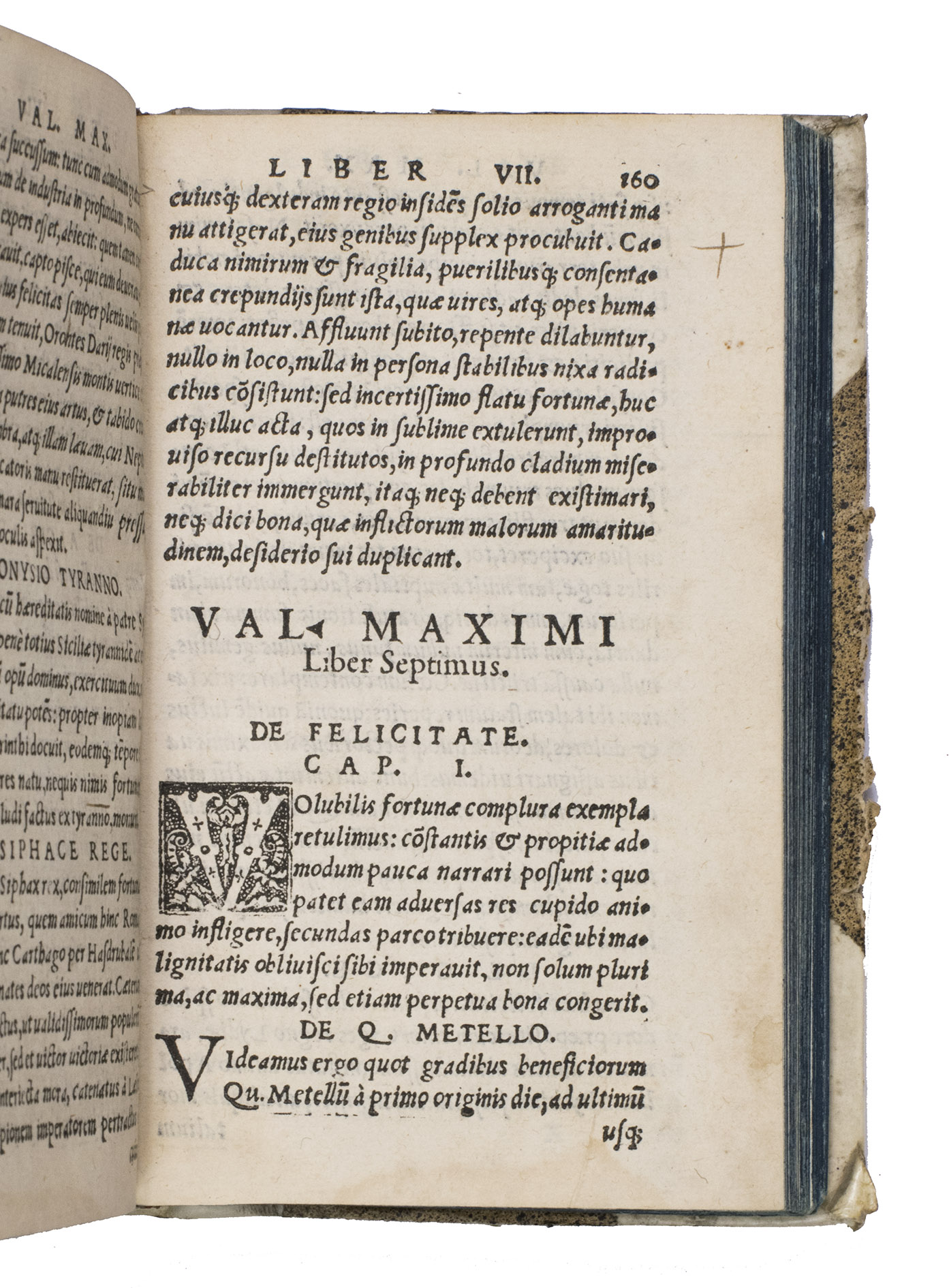
In the present work the text is set in ten books. The first nine contain the authentic work of Valerius Maximus. The tenth book, however, is explicitly identified as an epitome, compiled by Gaius Titius Probus.
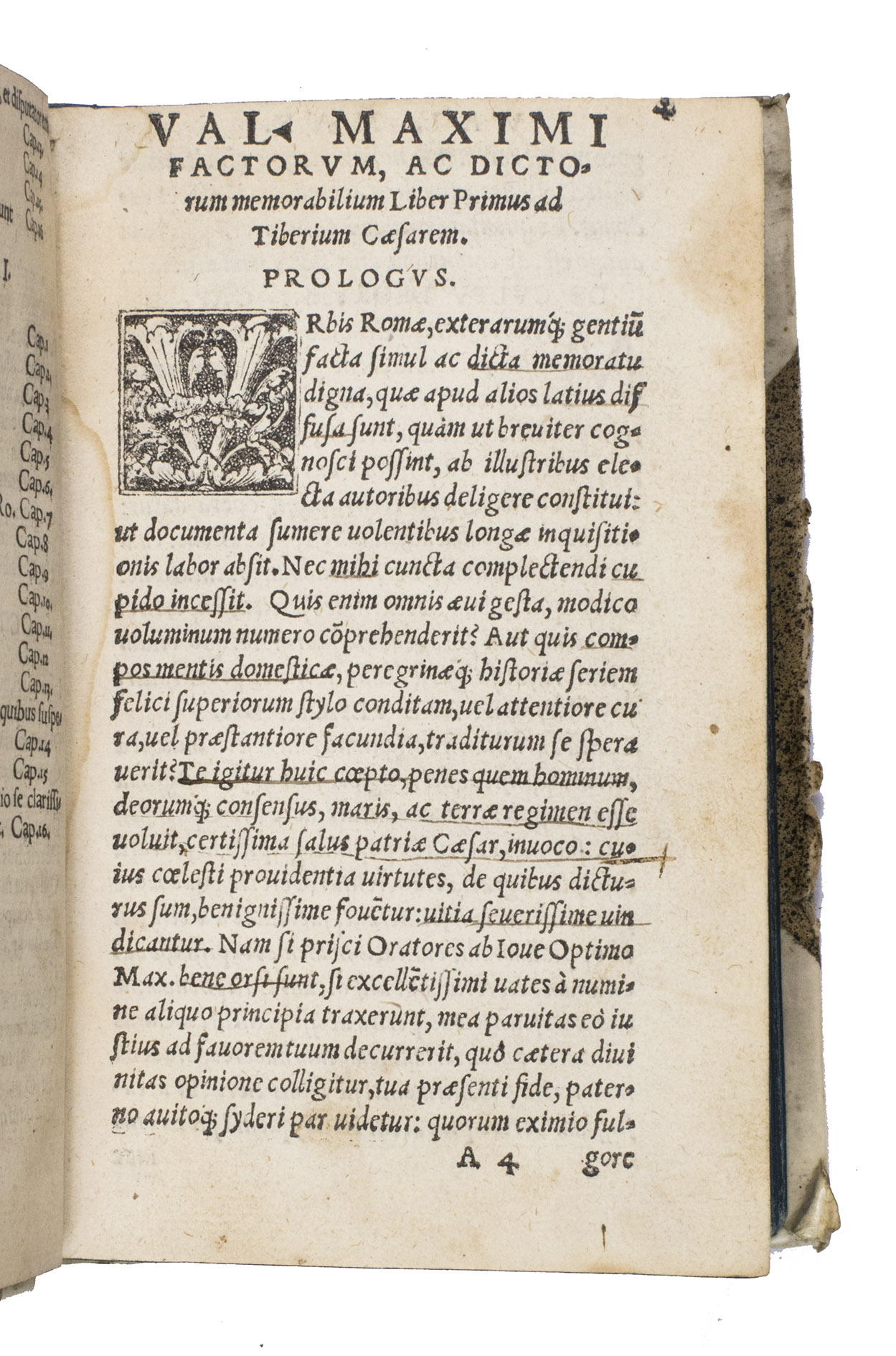
With some underlining and highlighting in the text, and minimal marginal annotations, occasional damp staining in the inner gutter and bottom margin. Otherwise, in good condition. Nijhoff-Kronenberg 2095; STCV 12927337 (1 copy); USTC 403922 (8 copies).
Related Subjects: