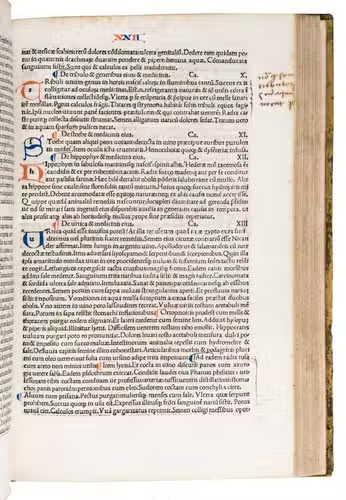
PLINIUS SECUNDUS, Gaius (PLINY the elder) [and Philippus BEROALDUS (editor)].
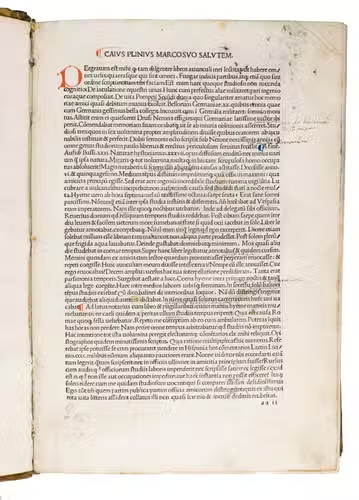
Historia naturalis.
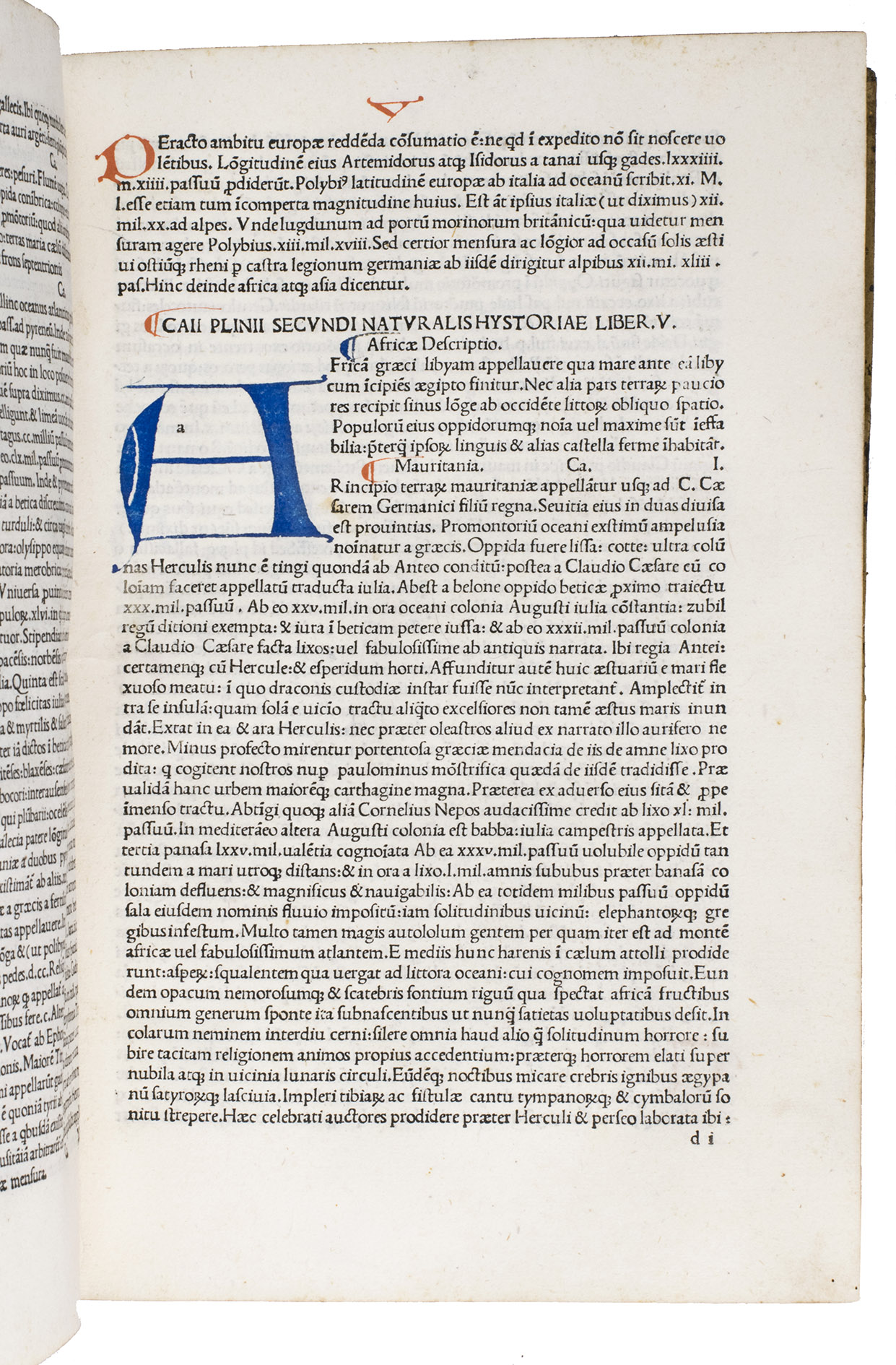
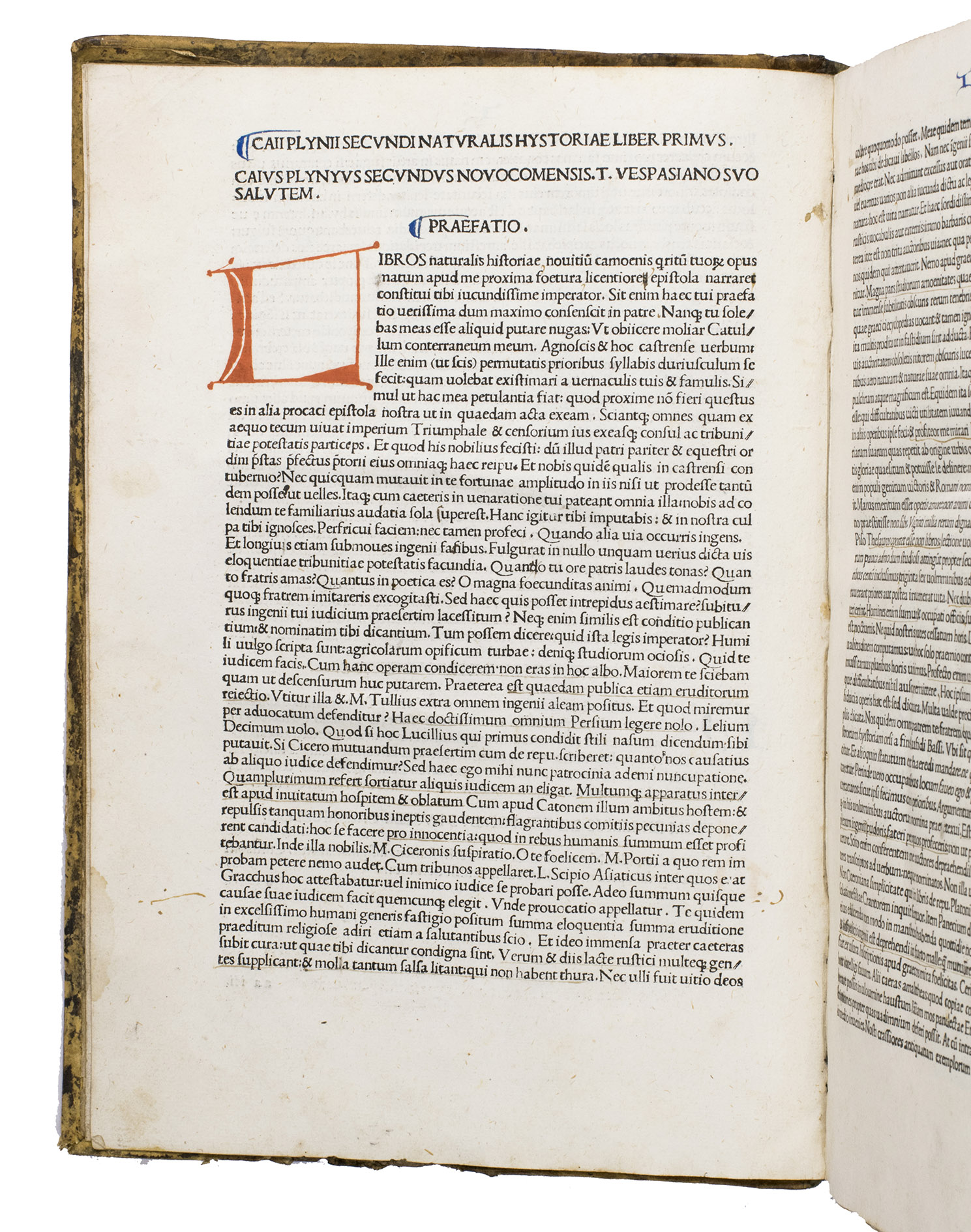
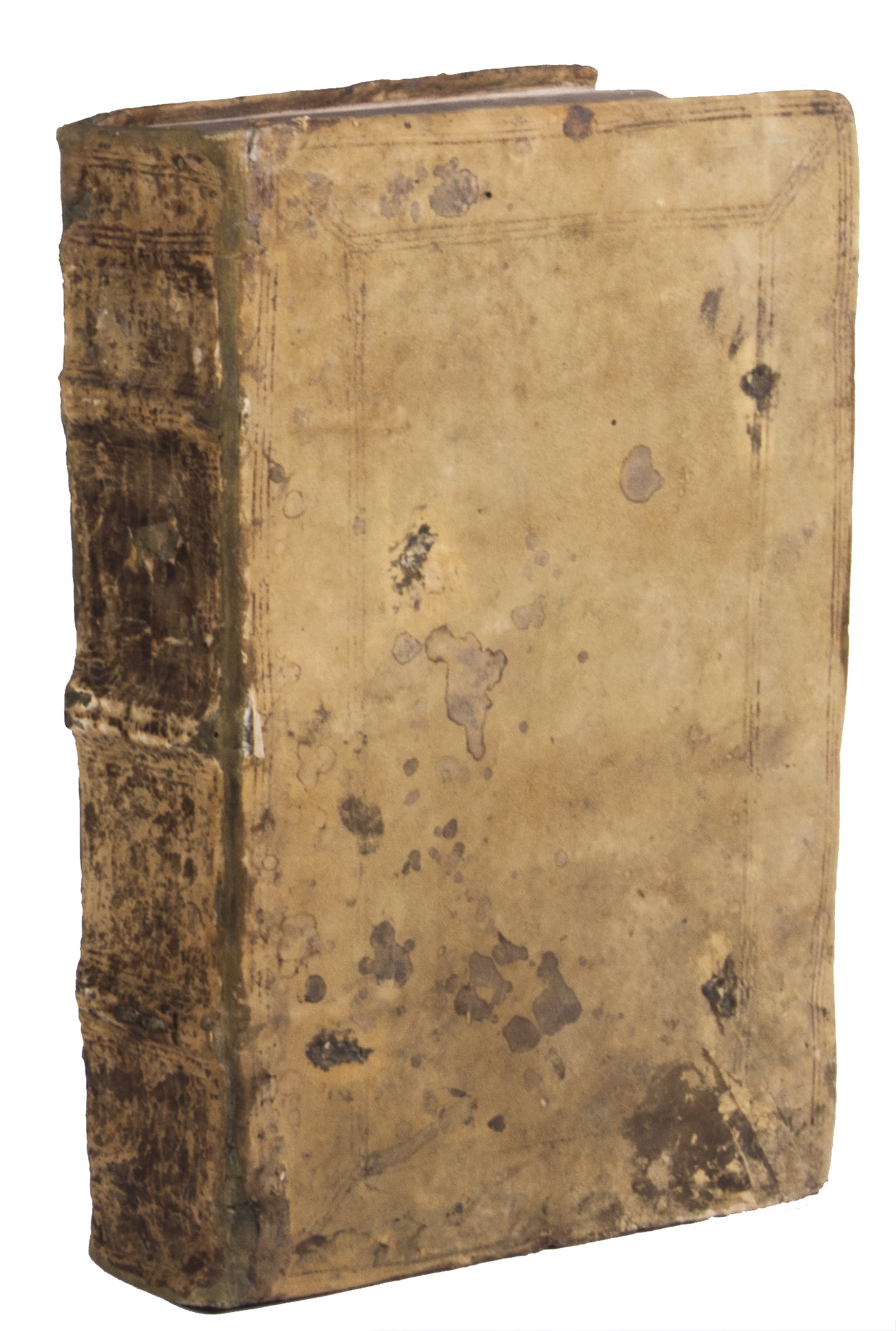
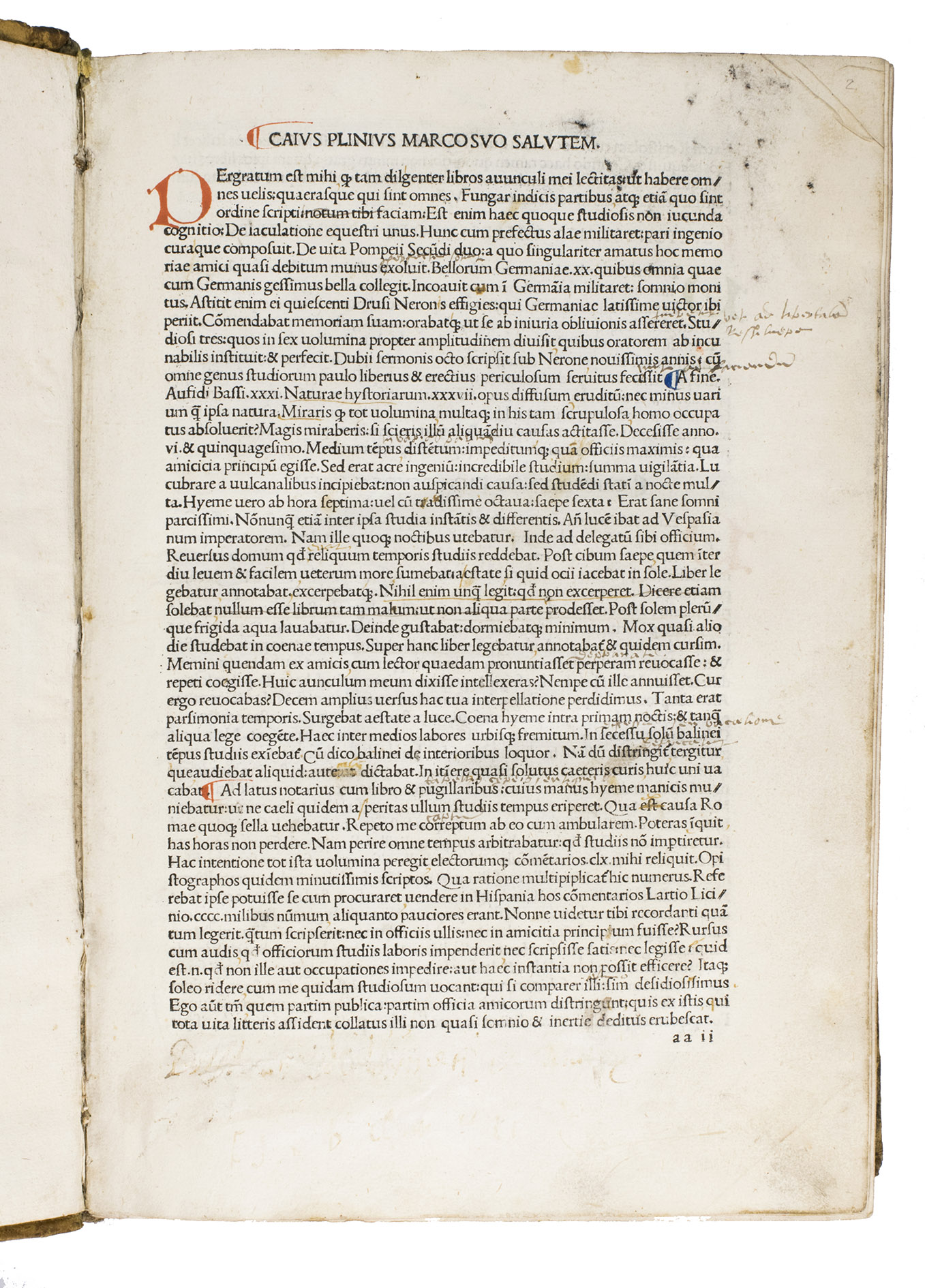
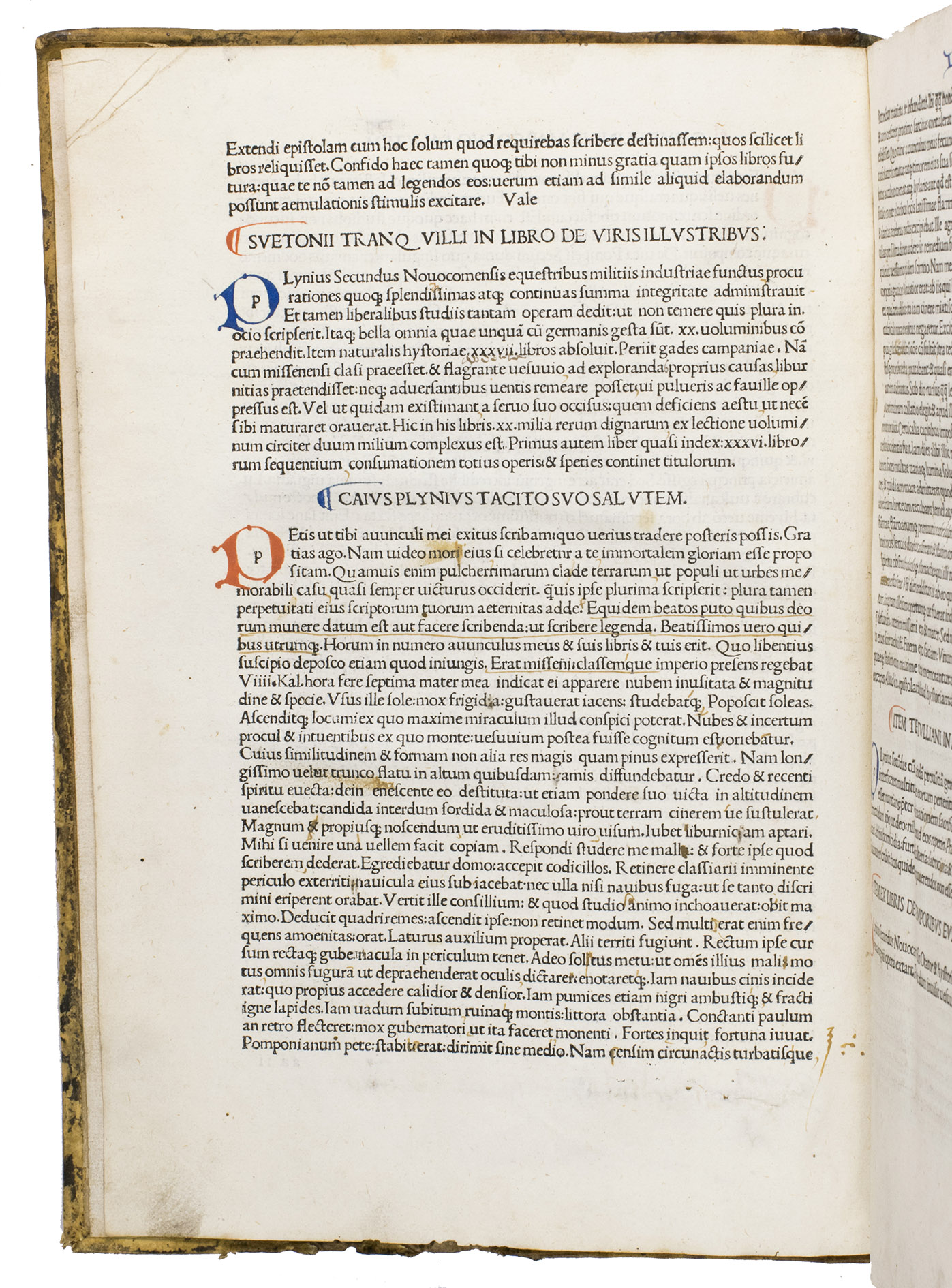
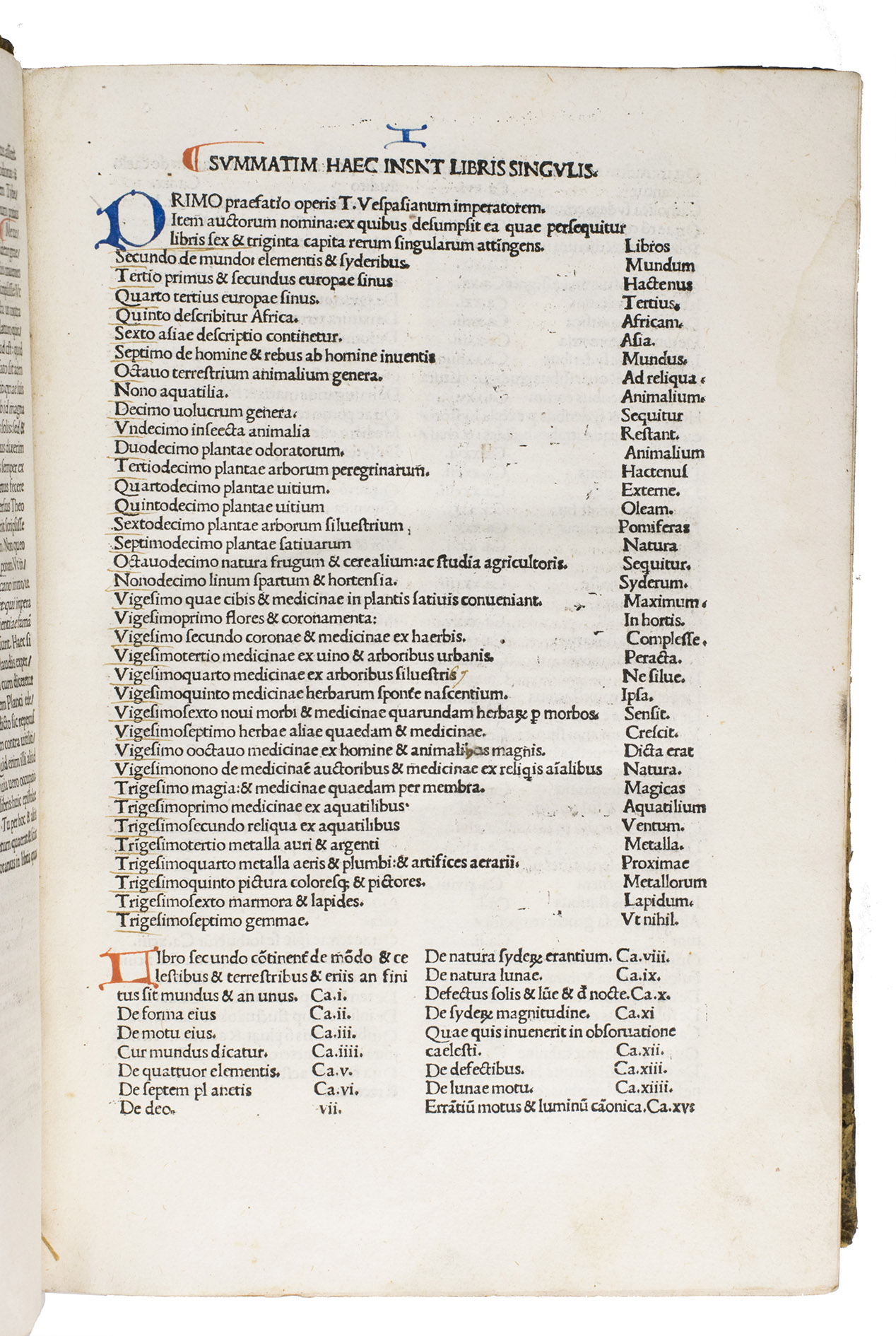
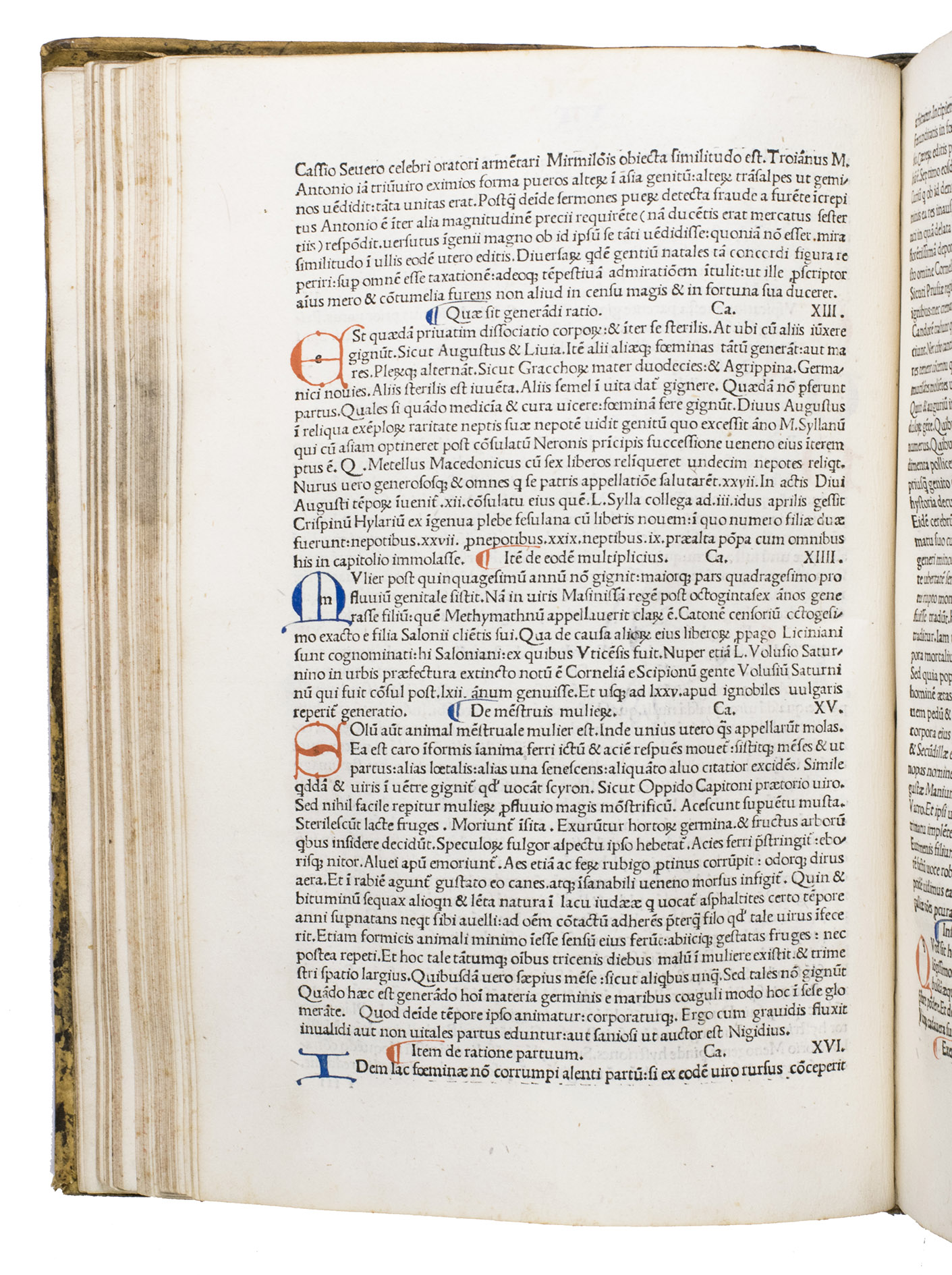
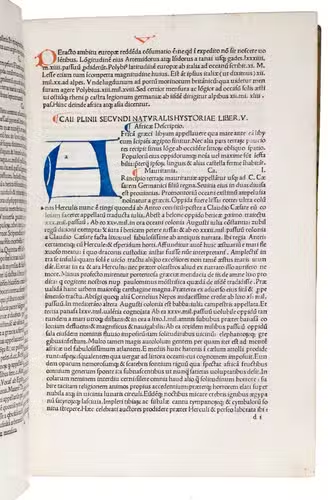
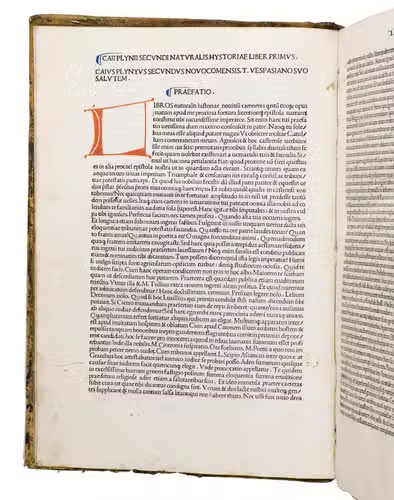
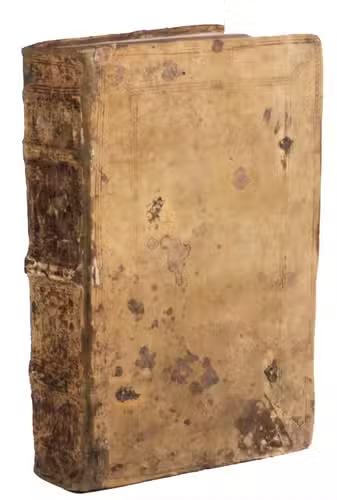
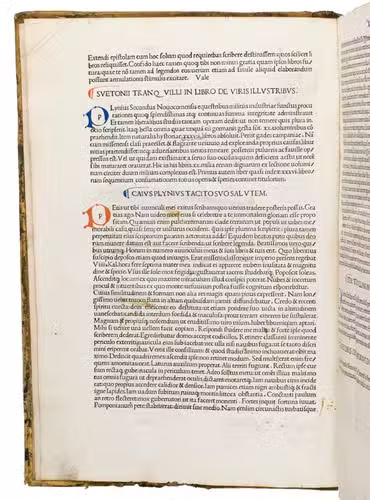
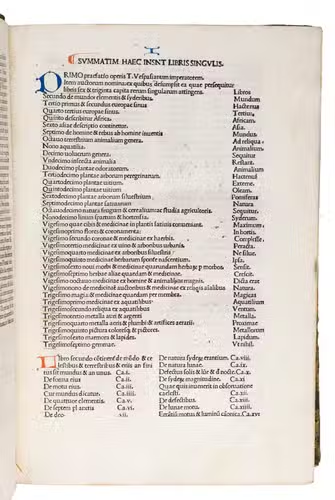
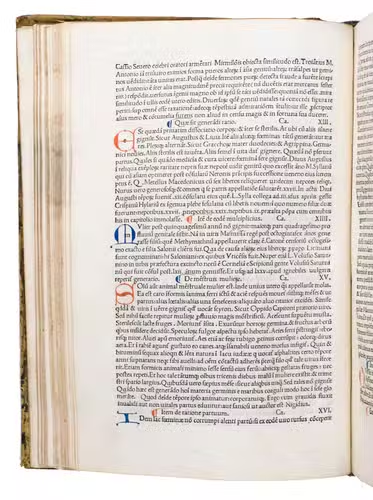
Venice, Reynaldus de Noviomago, 1483. Small folio. With the initials and book numbers alternatingly painted in red and blue. 17th-century blind-tooled sheepskin. [355] ll.
€ 65,000
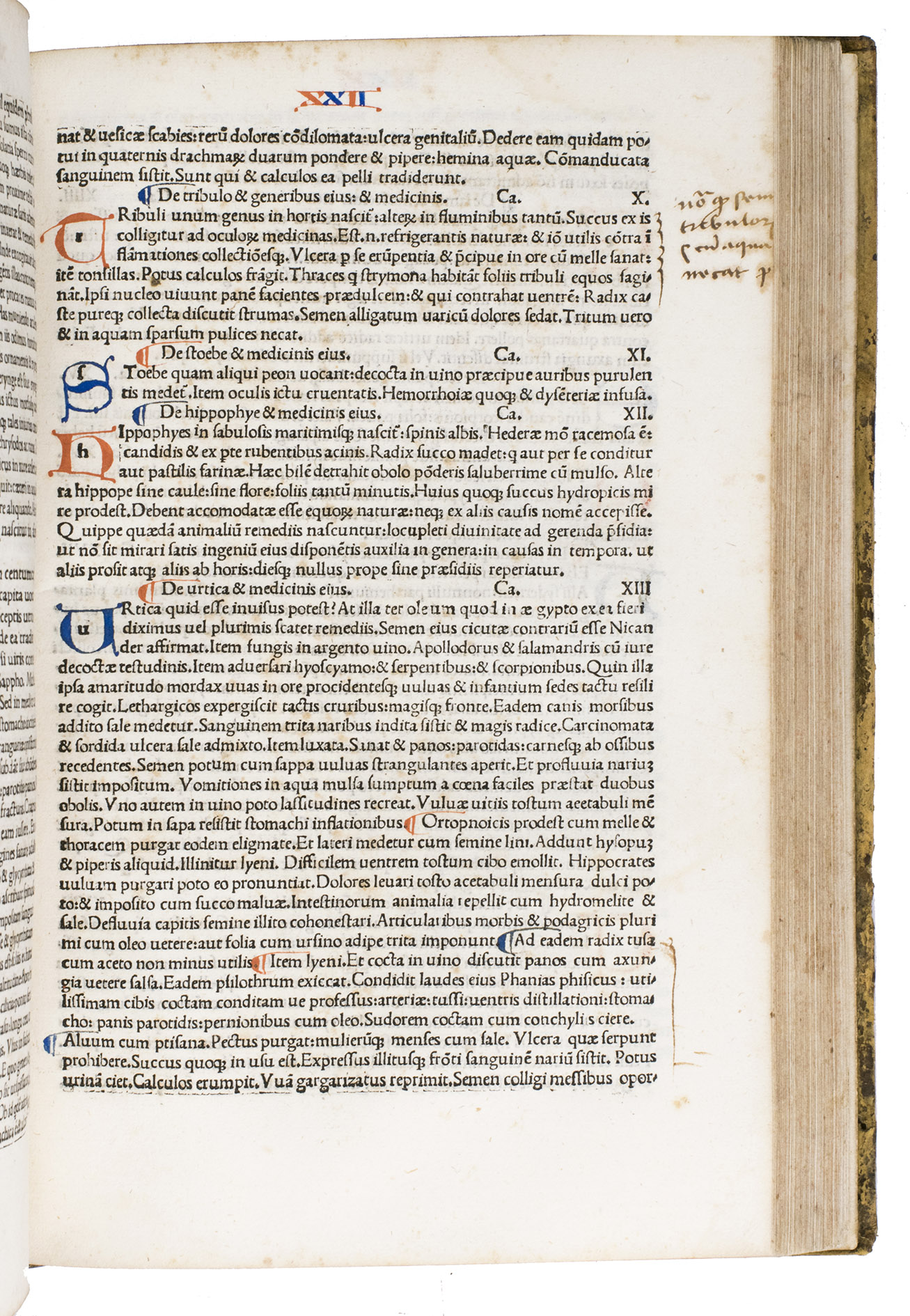
Beautifully rubricated 1483 edition of Plinys encyclopaedia of all knowledge in the ancient world (PMM), edited by the Italian humanist Philippus Beroaldus (1453-1505). Divided into 37 books, the text is one of the largest works to survive from the Roman Empire, encompassing botany, zoology, astronomy, geology, geography, mineralogy, and art. First published in Venice in 1469 by Johannes de Spira, it marked the first appearance in print of any scientific text. The present work is the 11th edition overall, and the first and only by Reynaldus de Noviomago (dates unknown), originally from Nijmegen in the Netherlands.
The Historia Naturalis aims to cover the full scope of ancient knowledge, drawing on the most authoritative sources available to Pliny. It remains a key reference for understanding Roman science, technology, and natural phenomena. The work preserves unique accounts of technical innovations such as mining techniques and the use of water mills for grinding, and many of its observations have been confirmed by archaeology. Pliny also provides rare descriptions of contemporary artists, making the work an invaluable source for art history. As the Dictionary of Scientific Biography notes, Pliny "holds a place of exceptional importance in the tradition and diffusion of Western culture."
Widely read and highly influential in the 15th century, Historia Naturalis saw 18 early printed editions from 1469 to 1500, all produced in Italy. Despite occasional inaccuracies or lapses in citing sources, Plinys compilation of "facts" is unique for its breadth and ambition. By quoting numerous classical authorities and including all material uncritically, he provides a comprehensive overview of ancient knowledge. Even the errors in his work offer modern scholars insight into both the understanding and misunderstanding of the natural world in antiquity.
Gaius Plinius Secundus (23/24-79 CE), better known as Pliny the Elder, was a Roman author, naturalist, and natural philosopher, as well as a commander in the Roman army and navy and a friend of the emperor Vespasian. Devoting much of his life to observation, study, and travel, he produced this encyclopaedic work, which became a model for all subsequent encyclopaedias in its scope, meticulous referencing of sources, and detailed indexing, leaving a lasting legacy for the study of natural history in both the Renaissance and beyond.
With a shelfmark(?) label mounted on the front pastedown, several 16th-century annotations in the text. The outer layer of the sheepskin has been rubbed off, leaving the suede layer, the work has been rebacked, with the original spine laid down. The first and last few leaves are slightly soiled, water stains in the margins of some of the leaves, sometimes slightly affecting the text, lacking the first blank leaf. Otherwise in good condition. Goff P794; GW M34329; Hain-Copinger 13095; IDL 3731; ISTC ip00794000; Klebs 786.9; Oates 1783 (lacks first blank); Proctor 4445; cf. DSB 11, pp. 38-40; E. Ghareeb & I. Al Abed, United Arab Emirates: A New Perspective (London 2001), pp. 54-58; Printing and the mind of man 5.
Related Subjects: