CHARAS, Moyse.
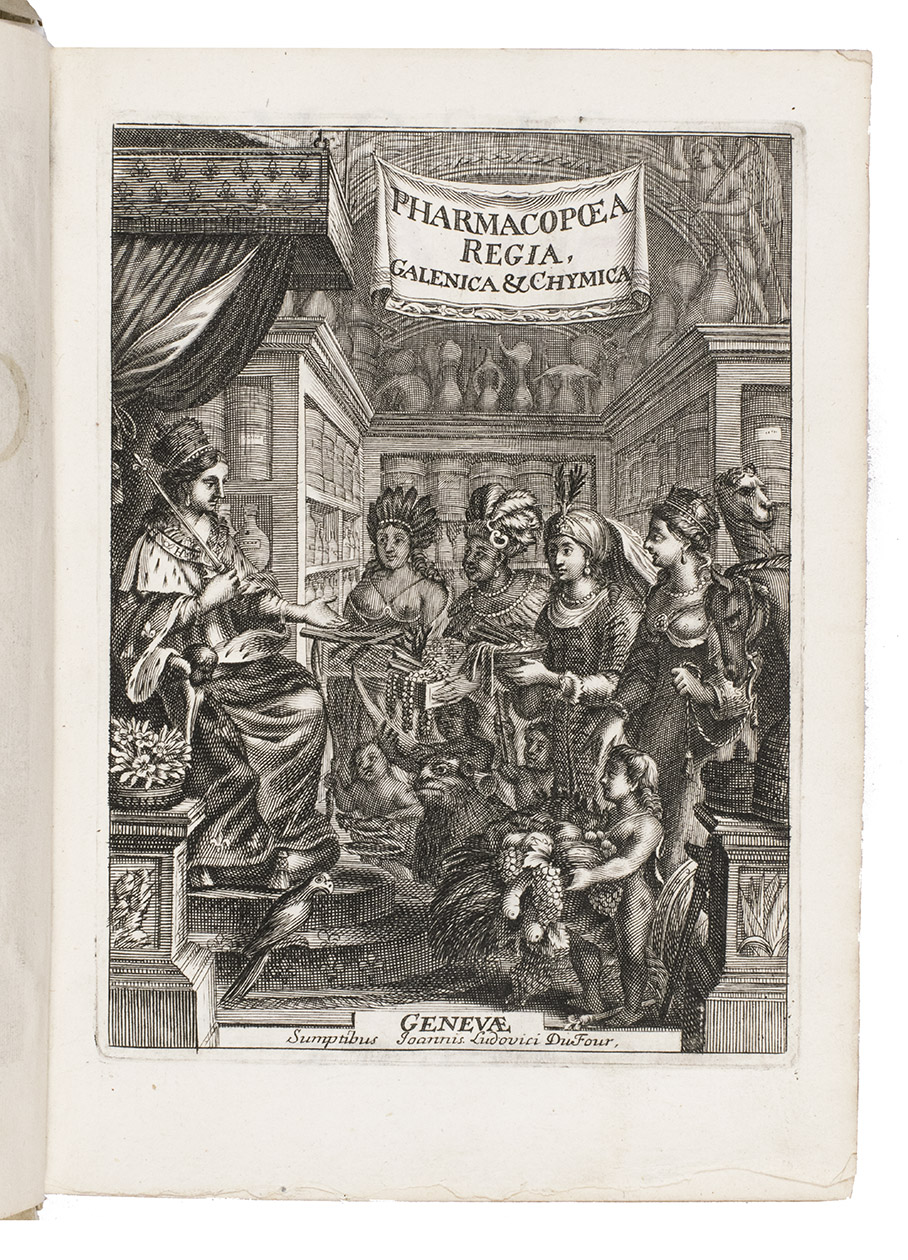
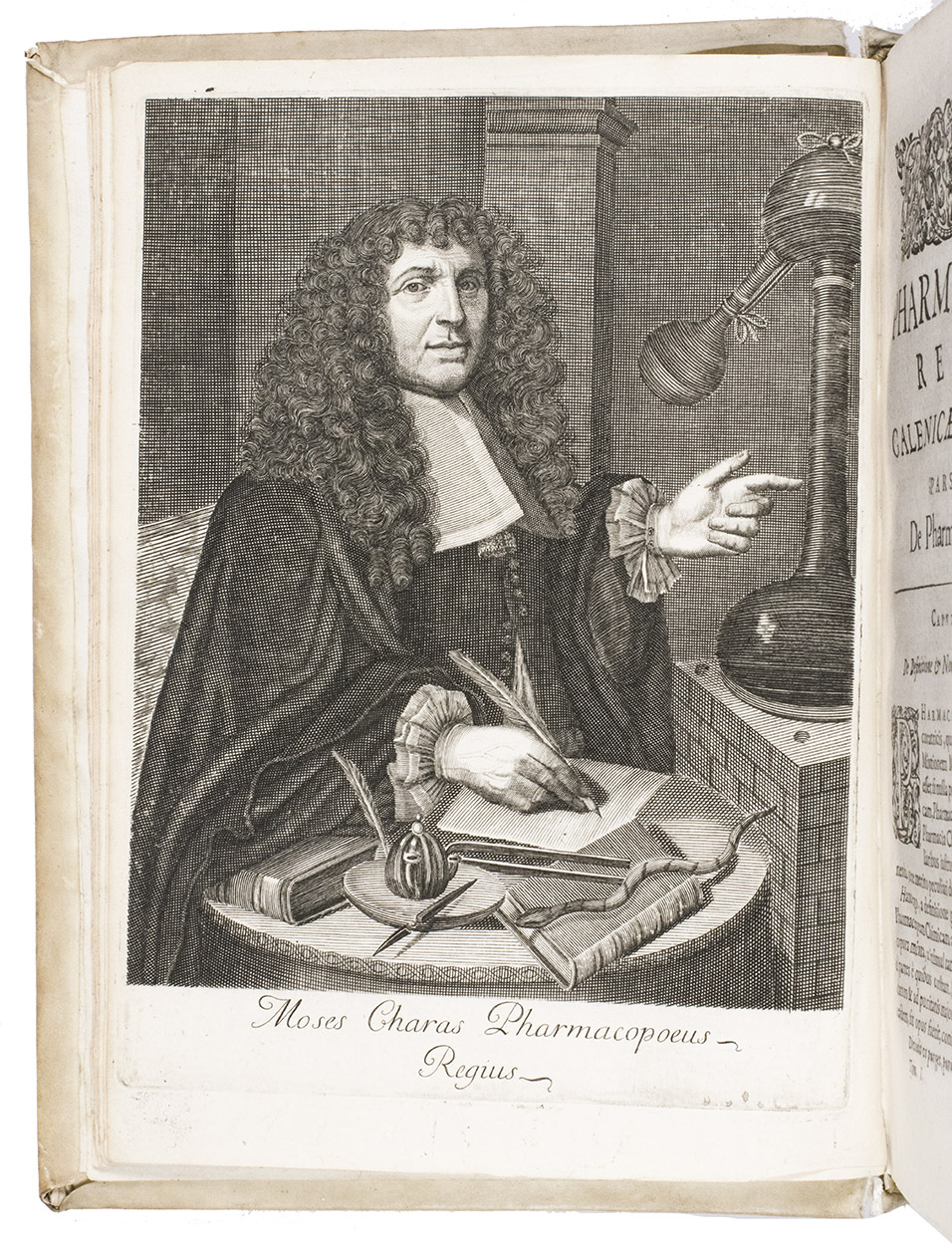
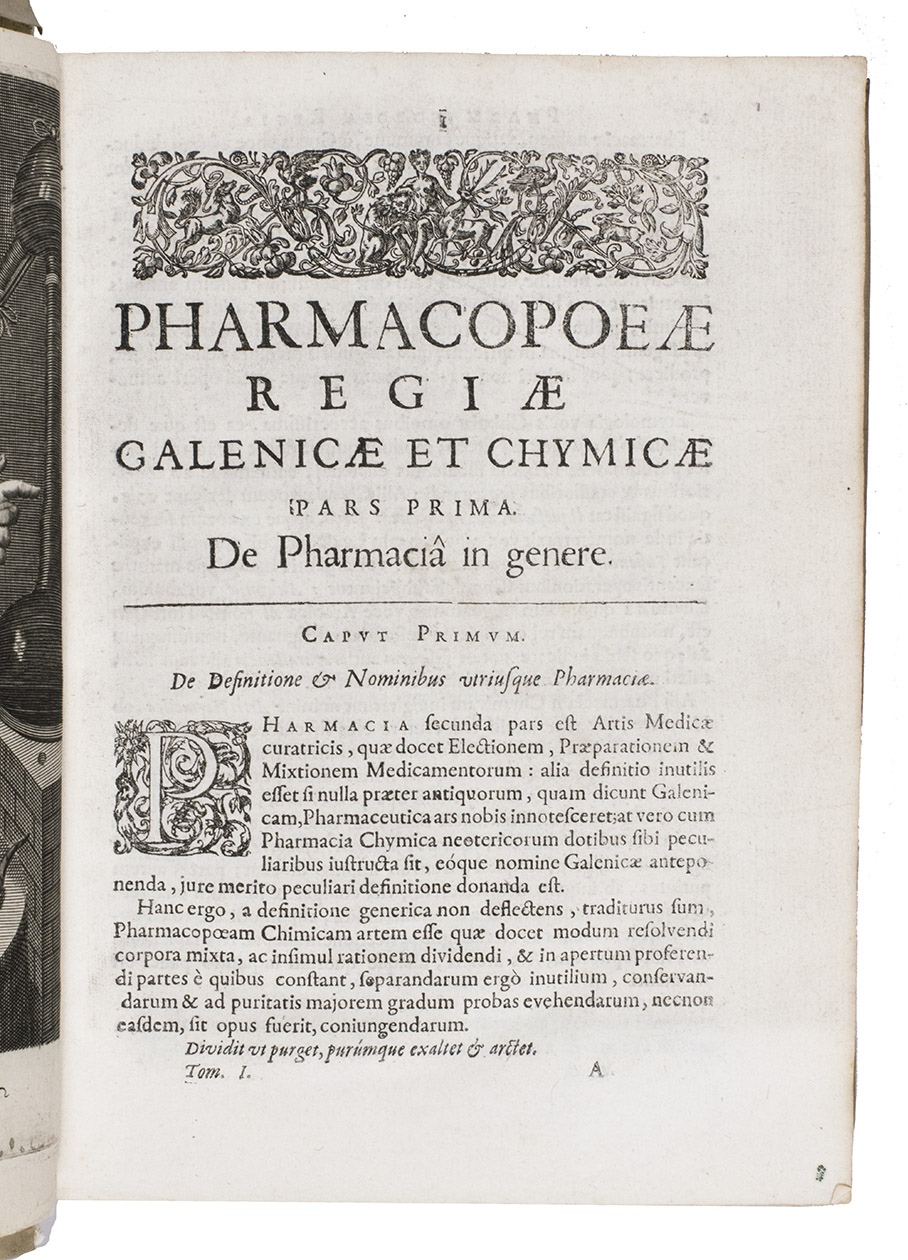
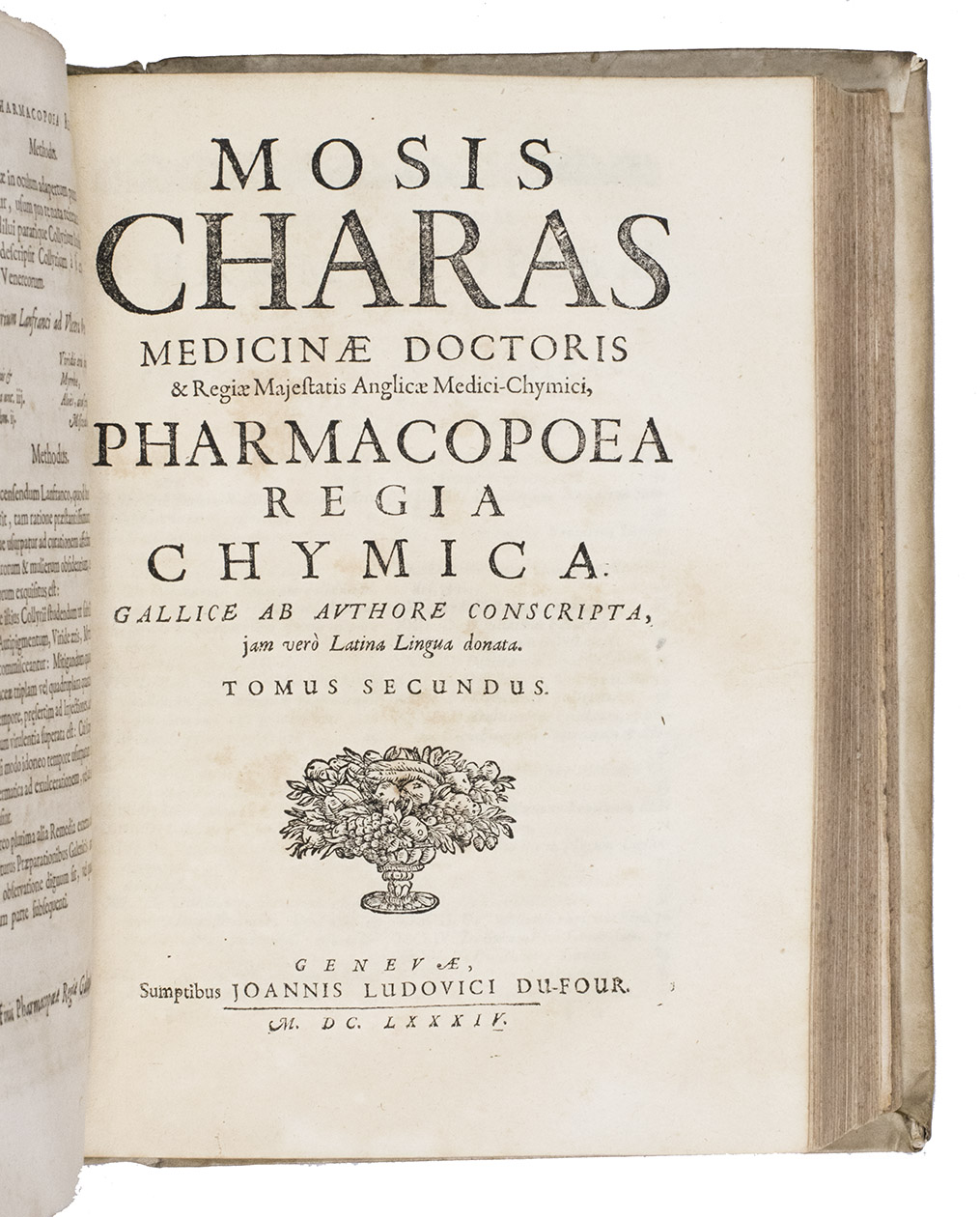
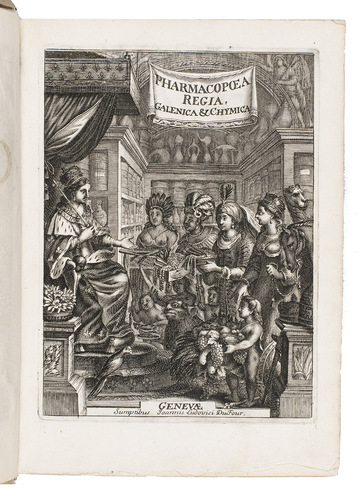
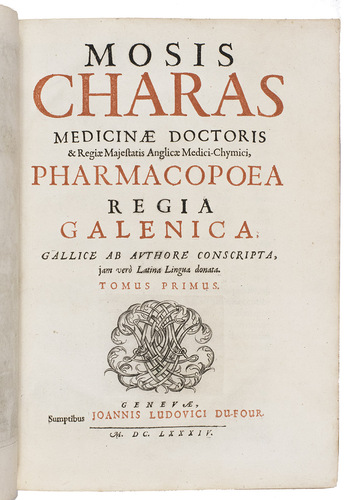
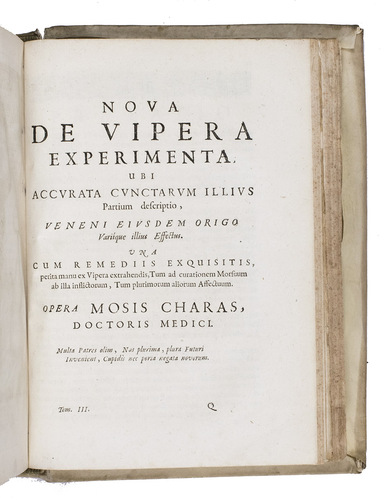
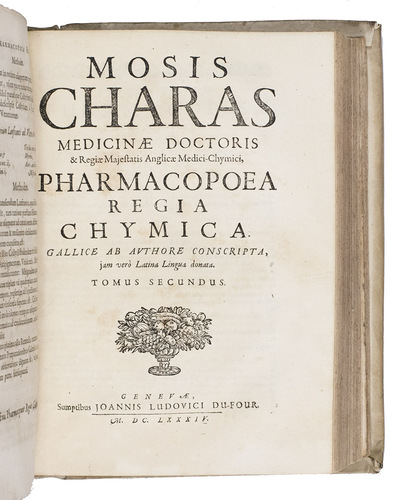
[Engraved title page:] Pharmacopoea regia Galenica et chymica. [half-title]: Opera tribus tomis distincta: I. pharmacopoea regia galenica II. pharmacopoea regia chymica III. tractatus de theriaca & tractatus de vipera.
Comprising:
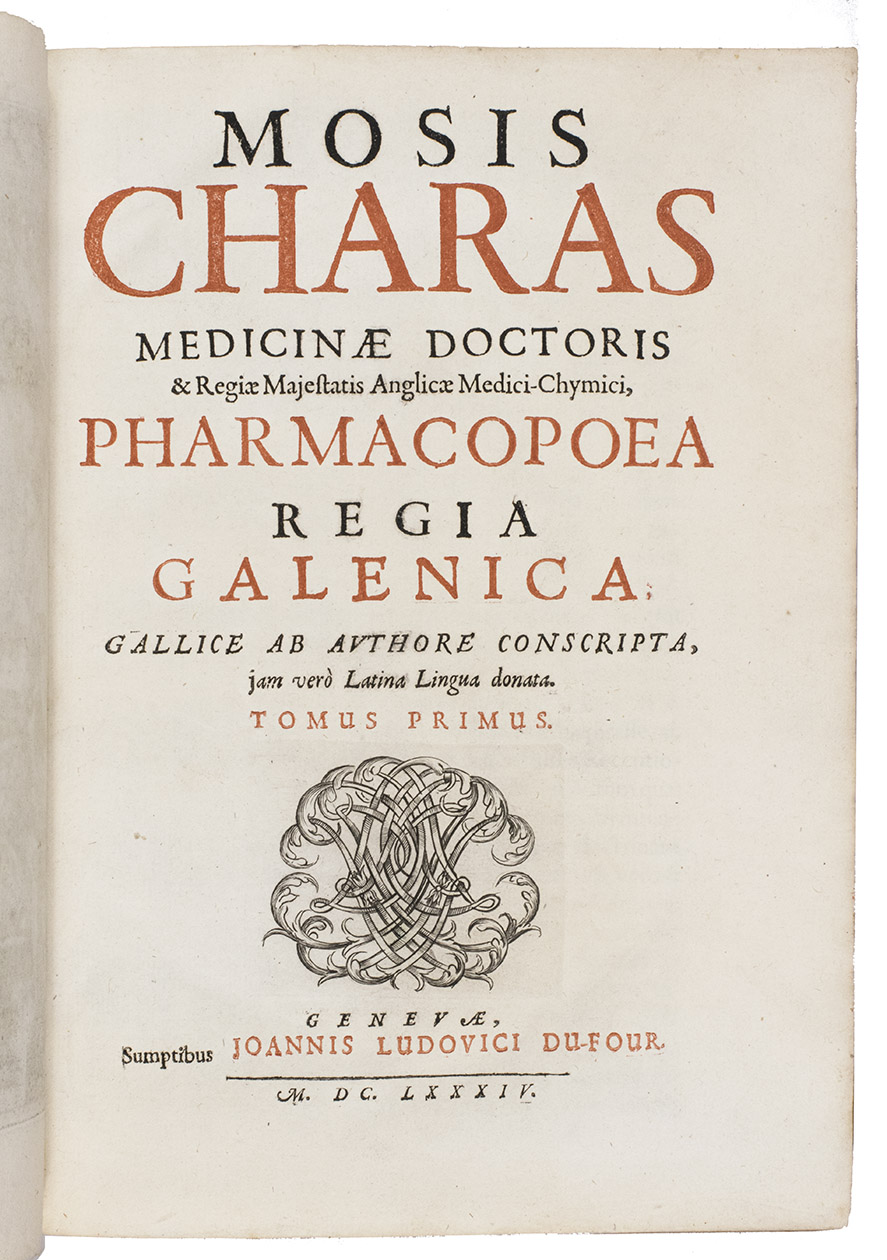
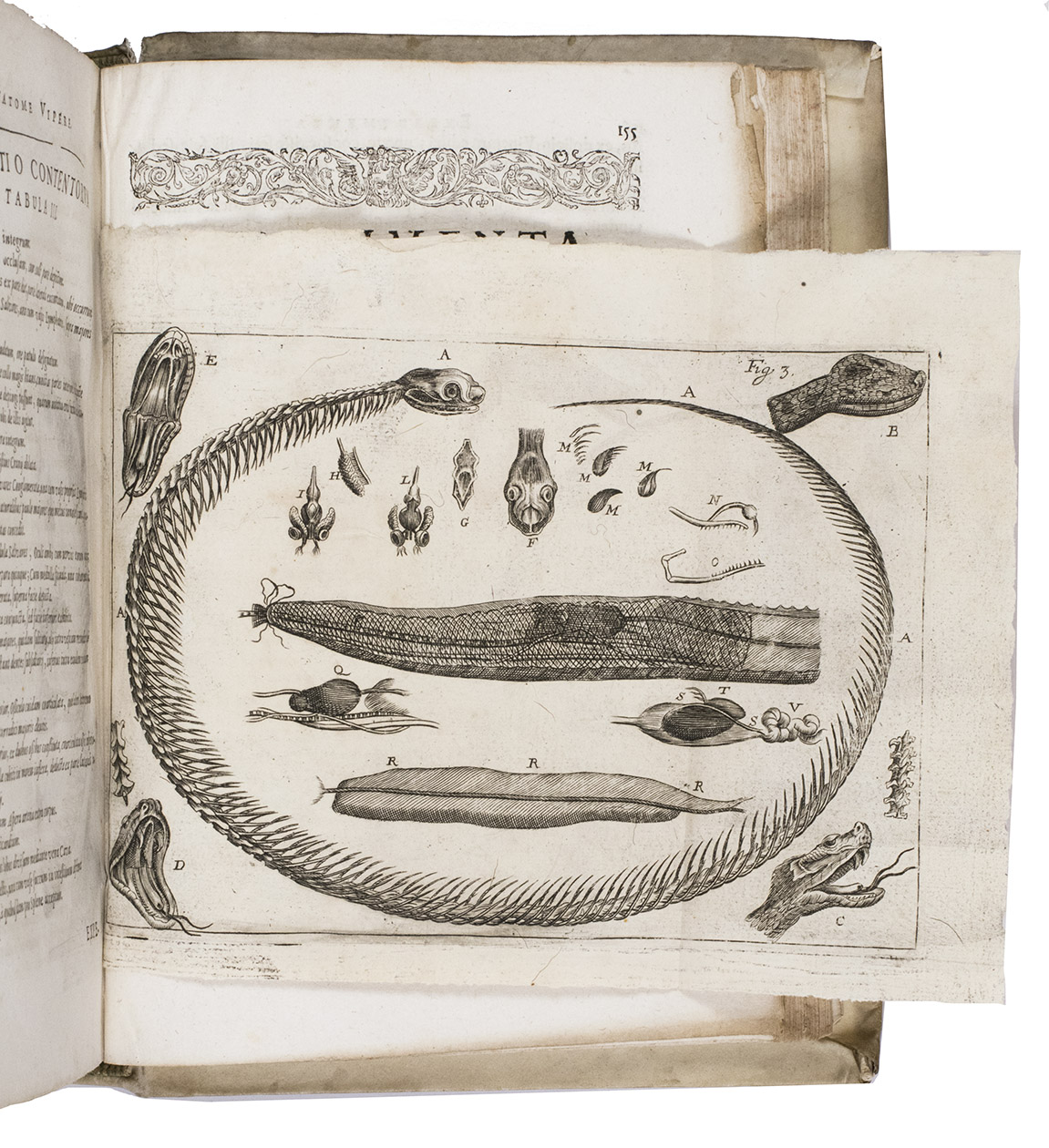
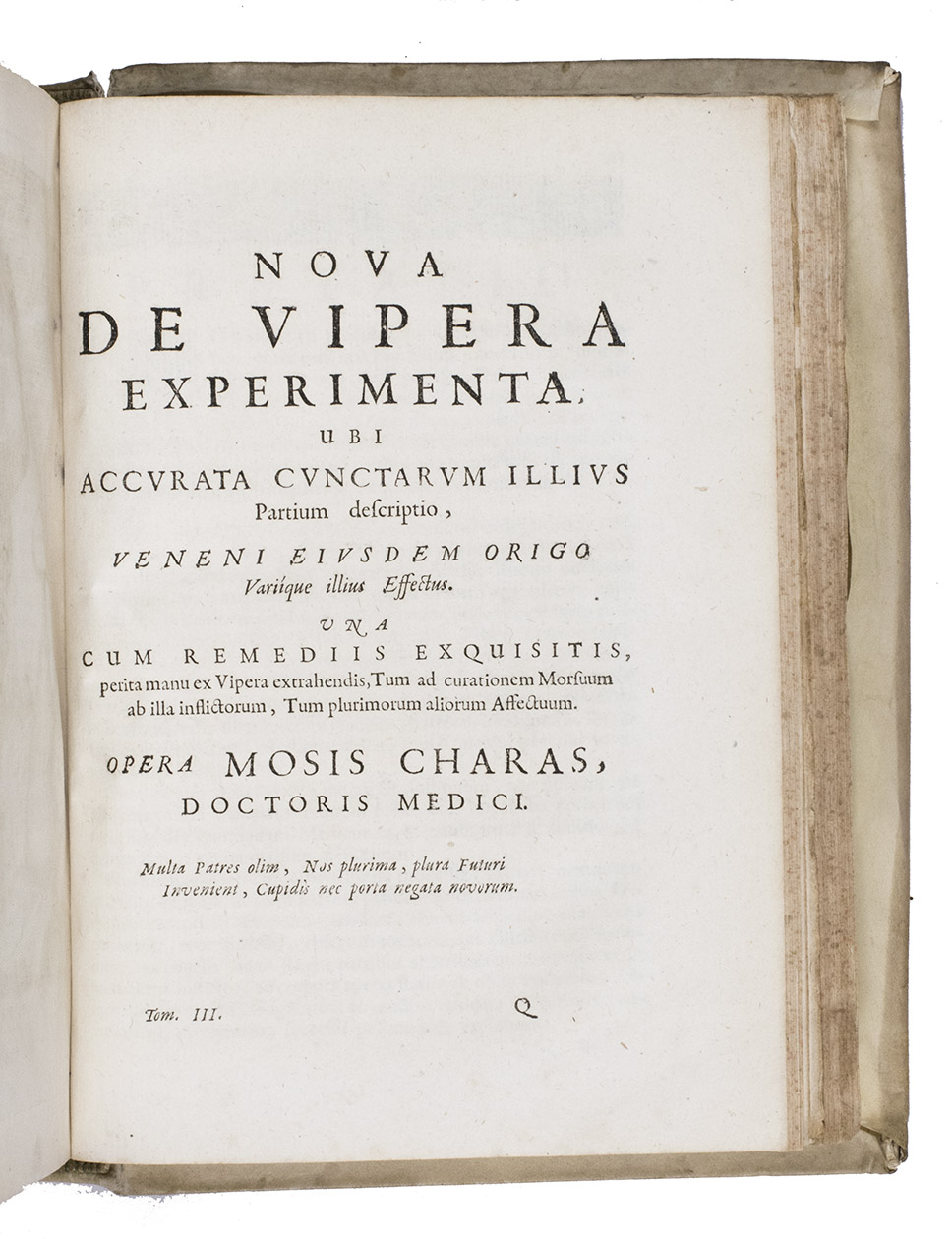
(1) CHARAS, Moyse. Pharmacopoea regia Galenica.(2) CHARAS, Moyse. Pharmacopoea regia chymica.(3) CHARAS, Moyse. Historiam naturalem animalium, plantarum et mineralium, theriacae andromachi compositionem ingredientium, cum experiments circa viperam.
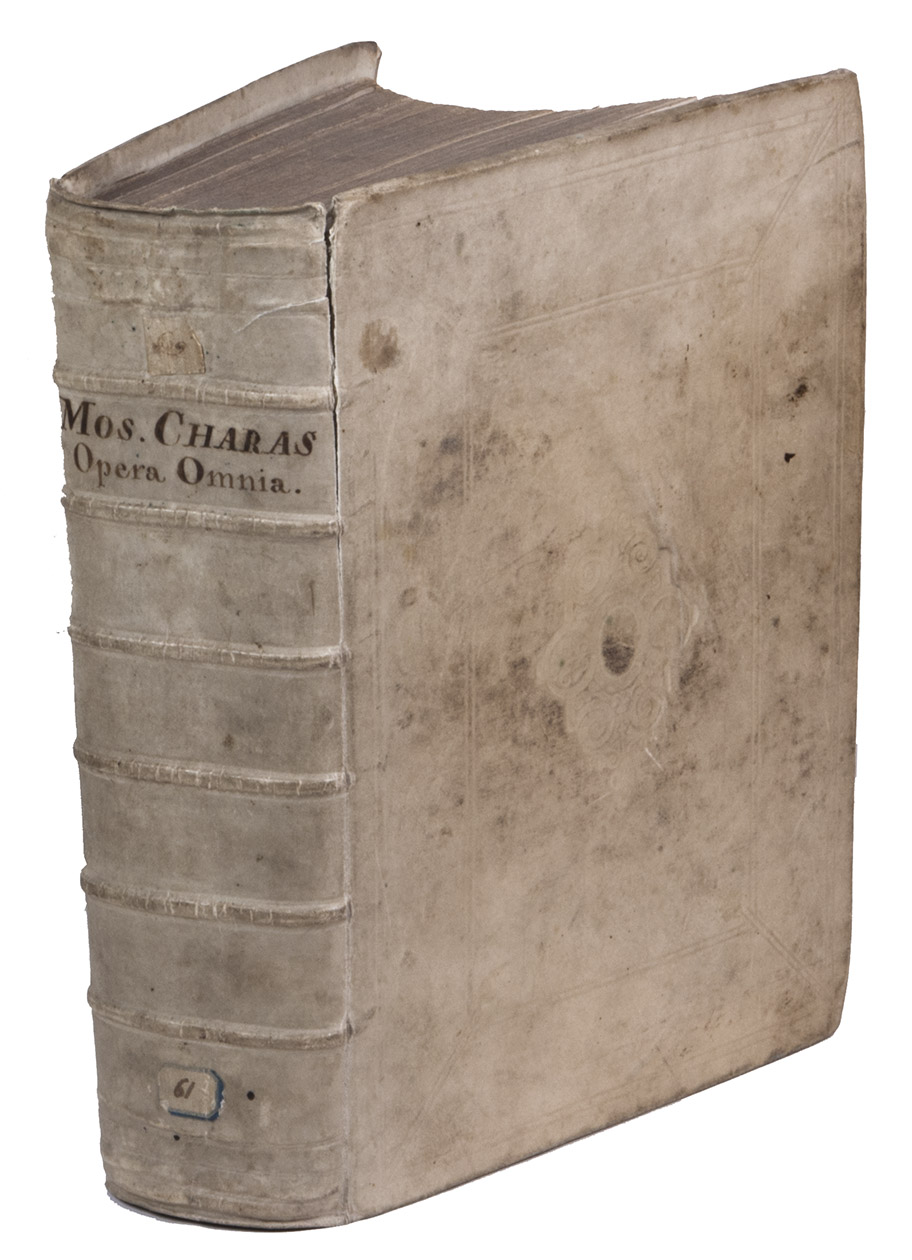
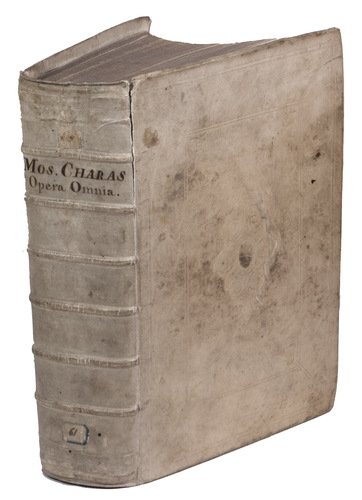
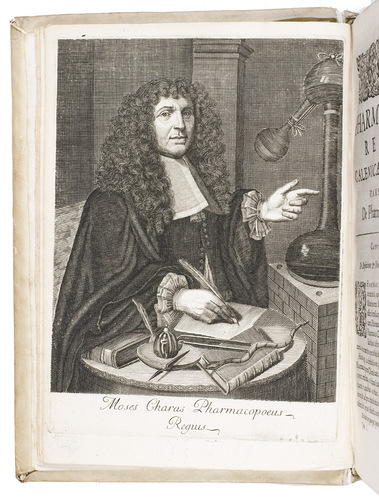
Geneva, Joannis Ludovici Du-Four, 1684. 3 works published as 1. 4to. With an engraved general title page, engraved authors portrait, 6 engraved plates and 3 engraved folding plates. Contemporary blind-tooled vellum. [11], [1 blank], 496; [8], 449[=451], [1 blank], [28]; [4], 275, [1 blank] pp.
€ 8,500
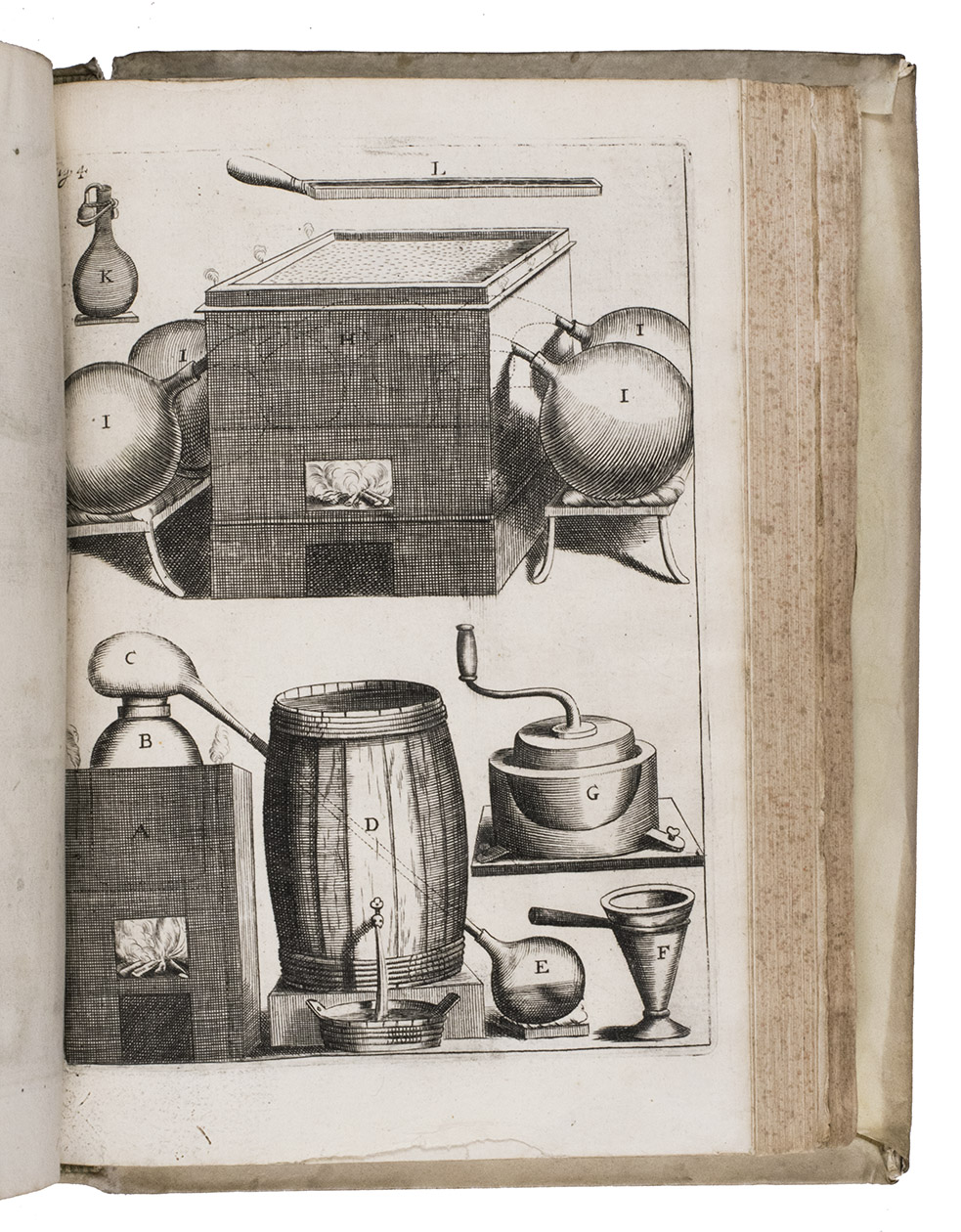
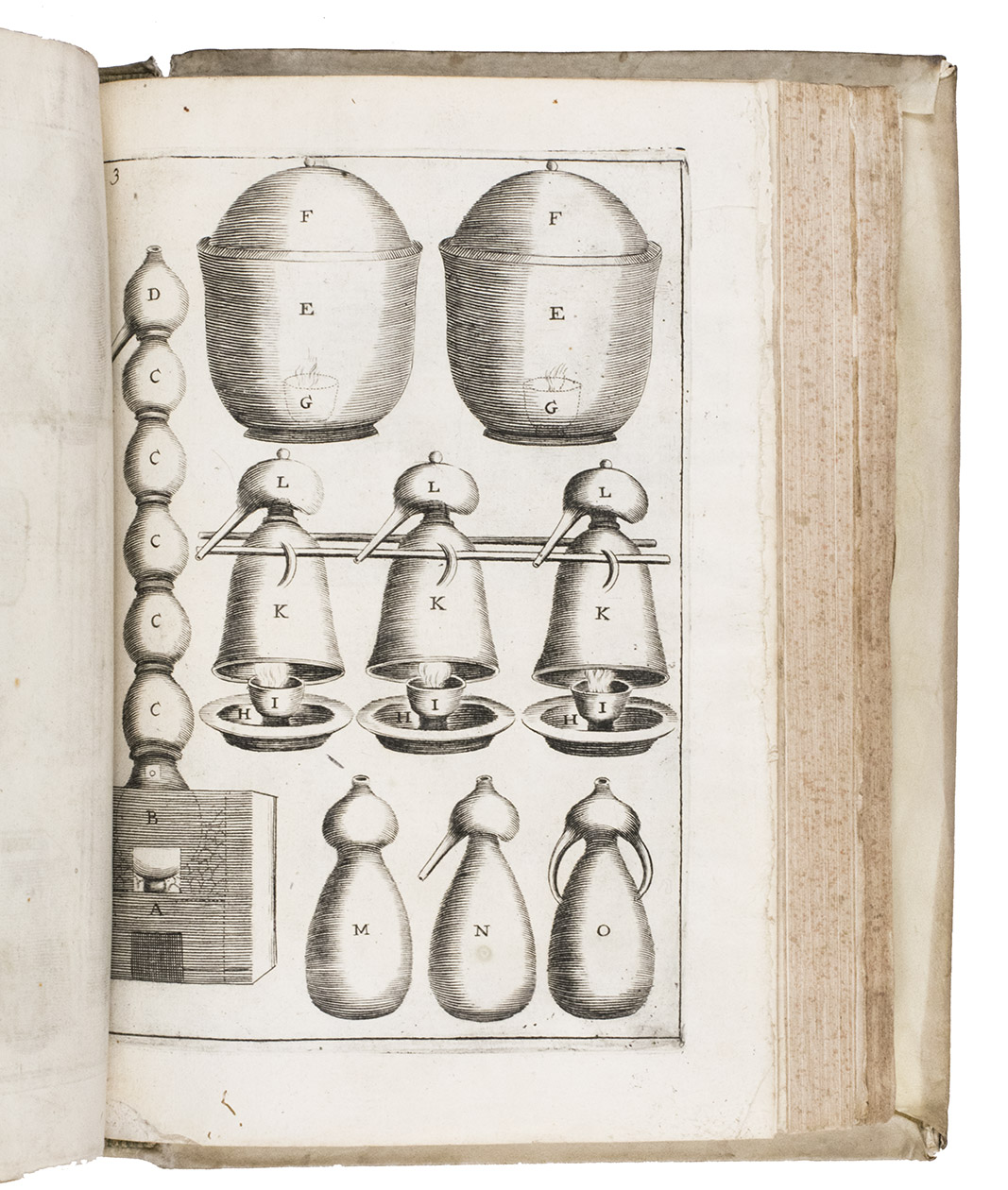
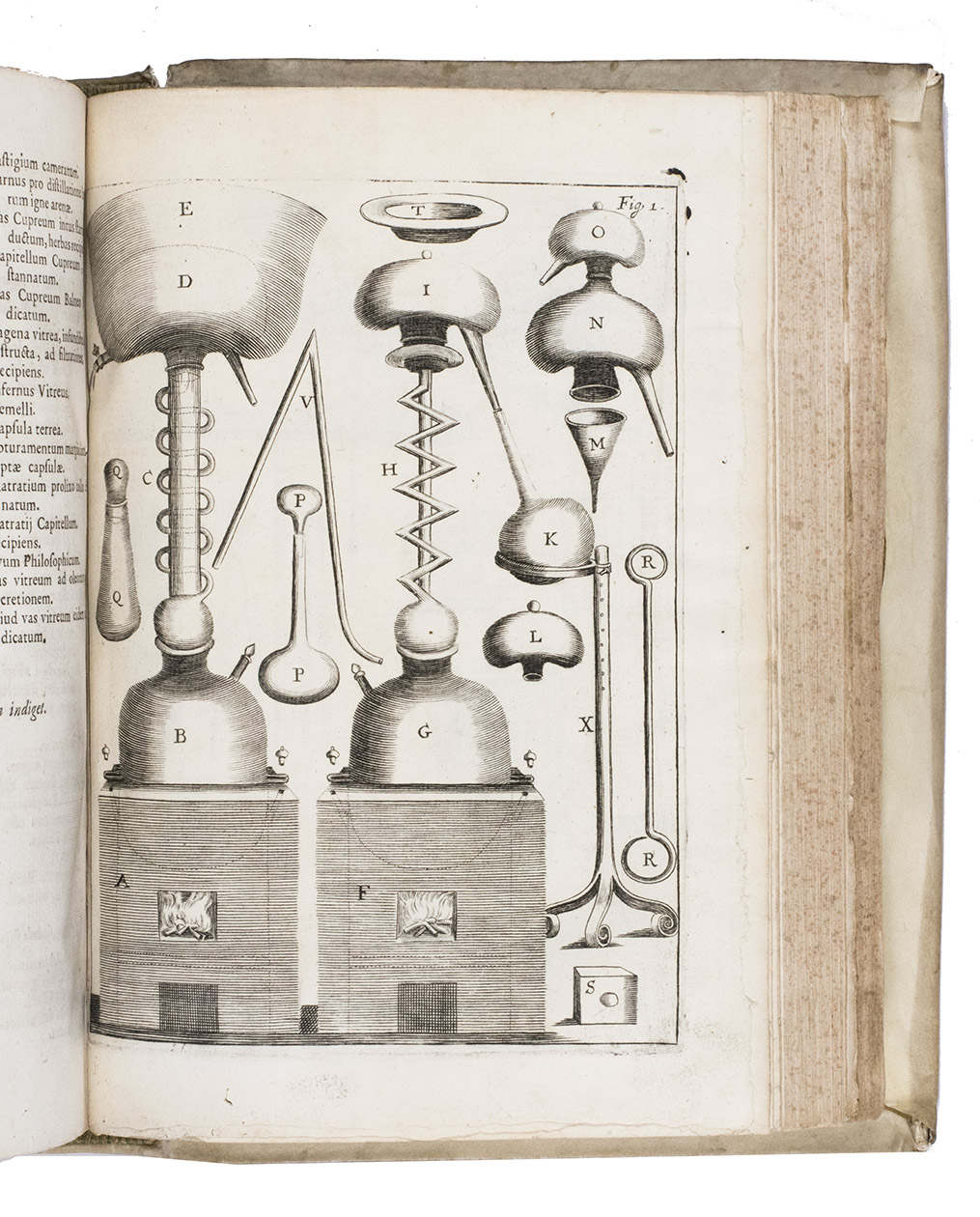
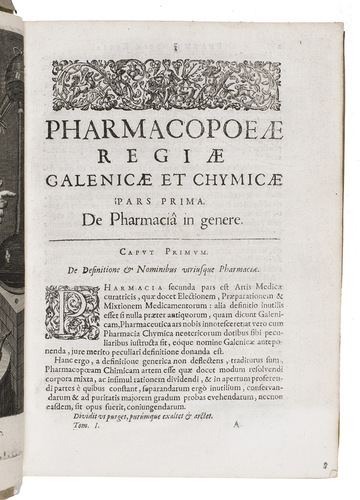
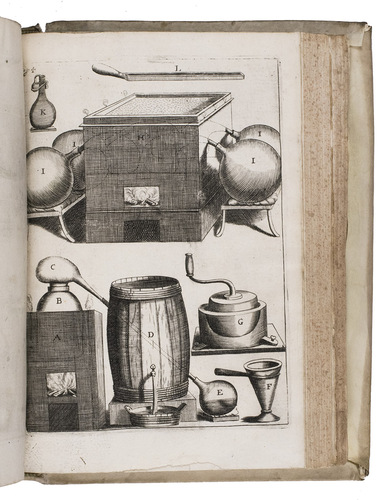
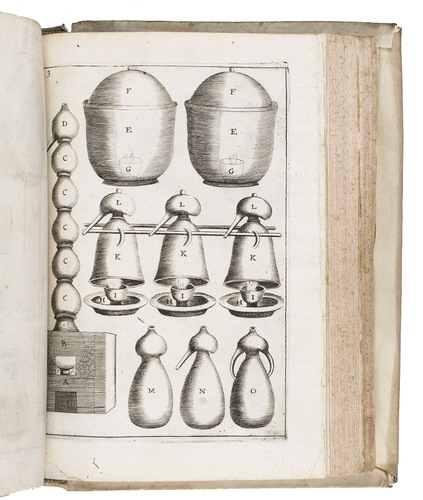
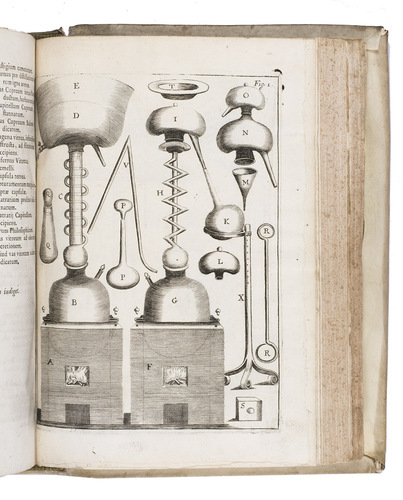
Reissue of the first Latin edition of a pharmacopoeia compiled by the French apothecary Moyse Charas (1618-1698). The pharmacopoeia begins with an extensive introduction to ancient (Galenic) and modern (chemical) pharmacy. Until the first half of the 17th-century Galenic, or natural, medicine had been the standard in both Europe and the Middle East, it's foundation laid by the Roman physician Galen (ca. 129-200). "His approach to medicine had a major impact on the development of Islamic medicine and influenced such prolific writers as the Persian medieval physician Avicenna (ca. 980-1037)" (Duffin). Charas was among the protagonists in favour of the chemical pharmacy, however, he did not thoroughly reject the Galenic pharmacy. "The remainder of the volume was divided almost evenly between traditional and chemical preparations. ... In a long section on the elements he openly took the side of the chemists stating that the four elements were insufficient to explain observations. ... The chemical section included plates illustrating chemical equipment as well as chemical characters and symbols" (Debus).
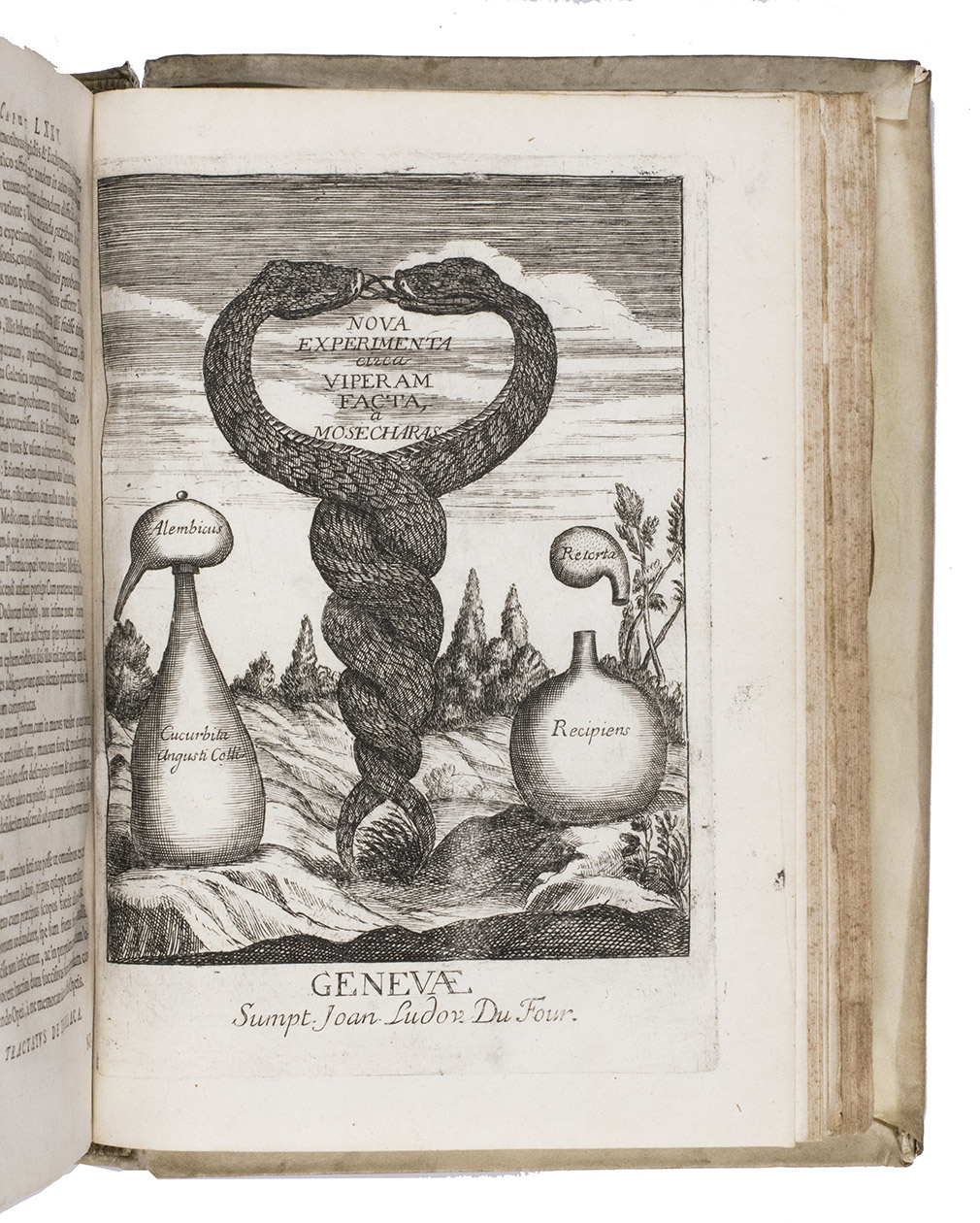
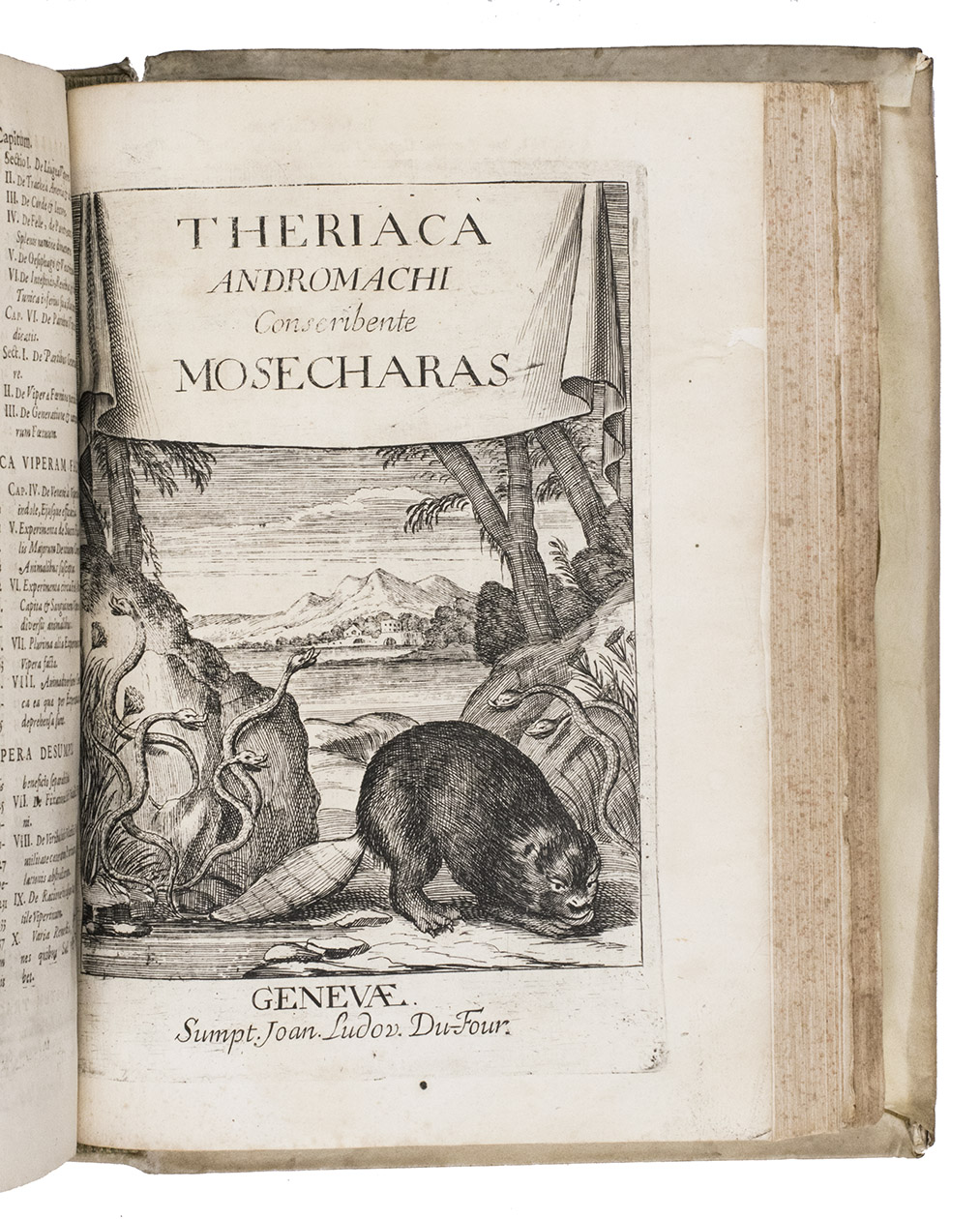
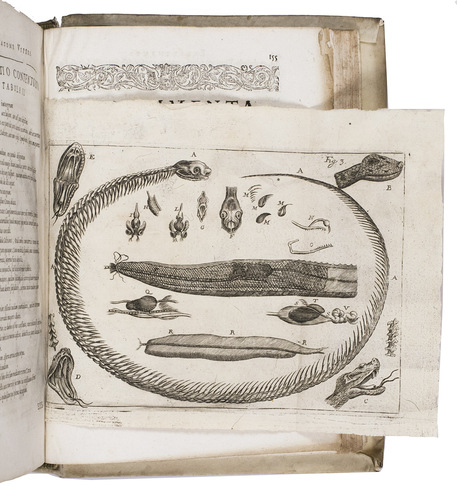
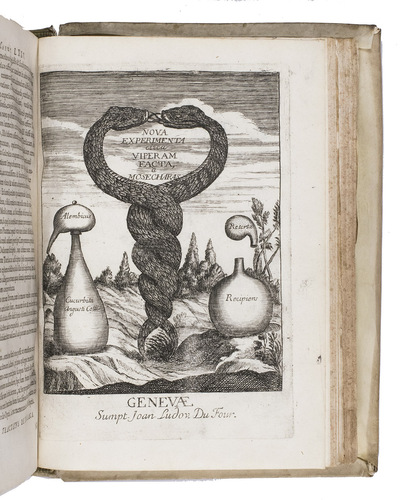
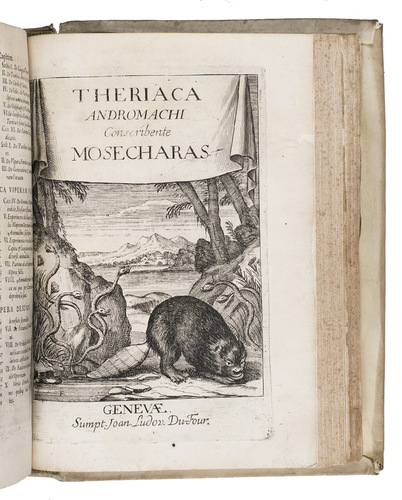
Charas "attained European celebrity in 1668, when the plague swept France, as the first French pharmacist to prepare the famous Theriac. ... It consisted of 65 ingredients and in his Theriaque d'Andromacus (1668) he gives a description of each of them" (Hagelin). In the third part the Latin translation of this text on theriac is given, along with Charas' Nouvelles experiences sur la Vipere (1669, Paris), each with an individual title page. "In his work on vipers Charas alleged that he had shown by repeated experiments in the presence of numerous physicians that the yellowish liquor was merely a harmless saliva. He had wounded a number of animals with a detached viper-tooth and then poured the liquor into the wound with no ill effects" (Hagelin).The first edition, in French, appeared in 1676 in Paris, entitled Pharmacopée royale, galénique et chymique. While Charas wrote several works, the present pharmacopoeia is his best-known and was soon translated into English, German and even Chinese, and as such the first European medical book translated into Chinese.
With the bookplate of A. Claudin and the bookplate of P.H. Chavoix on the pastedown. Binding with a couple smudges and a small part of the front hinge cracked, but otherwise very good. Slightly browned and some occasional foxing throughout, a few bottom corners torn off, not affecting text. A very good copy. Krivatsy 2363; cf. A.G. Debus, The French Paracelsians: the chemical challenge to medical and scientific tradition in early modern France (1991), pp. 130-131; C.J. Duffin, A history of geology and medicine (2013) p. 284; Hagelin, p. 148.
Related Subjects: