STRADA, Faminianus.
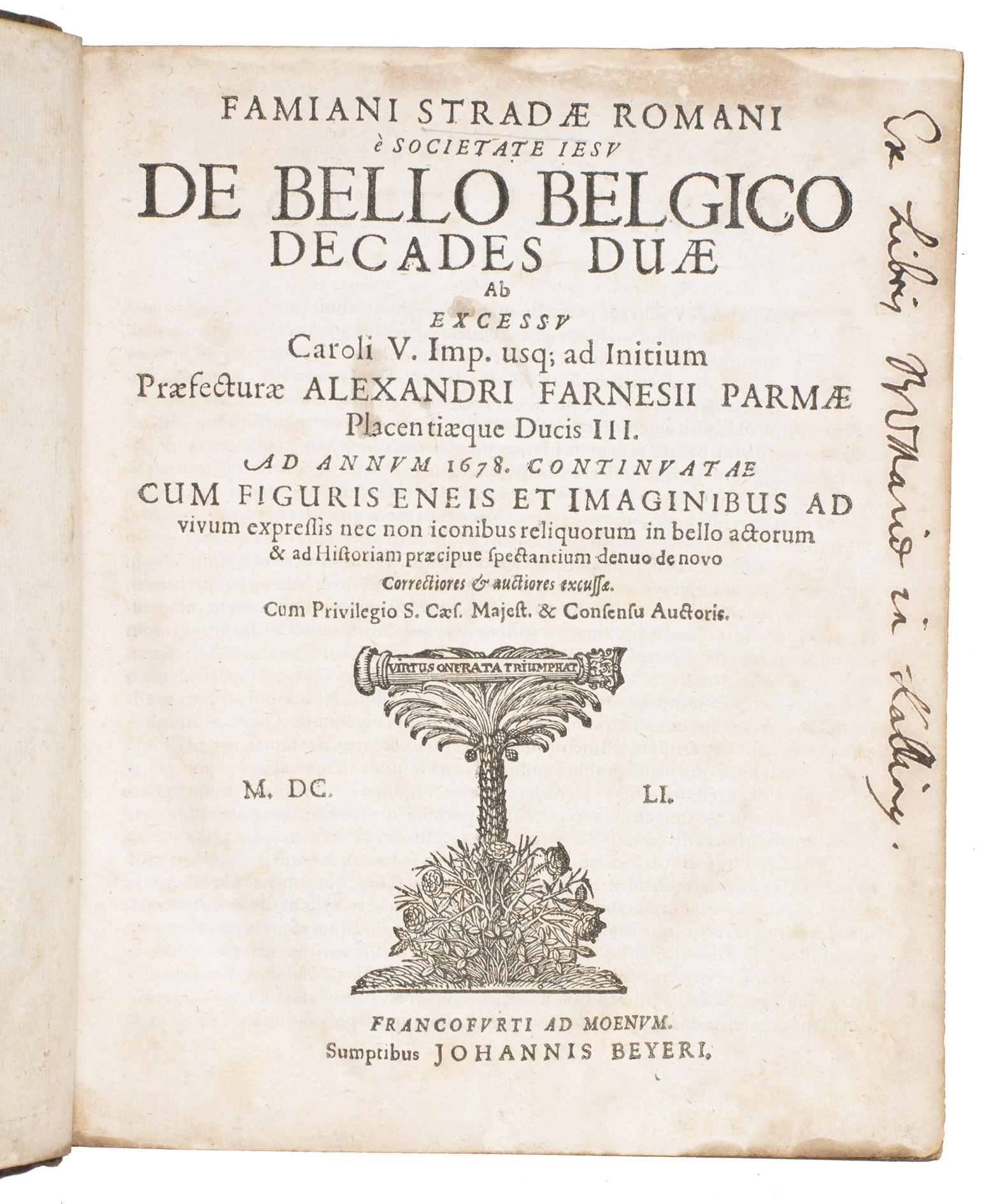
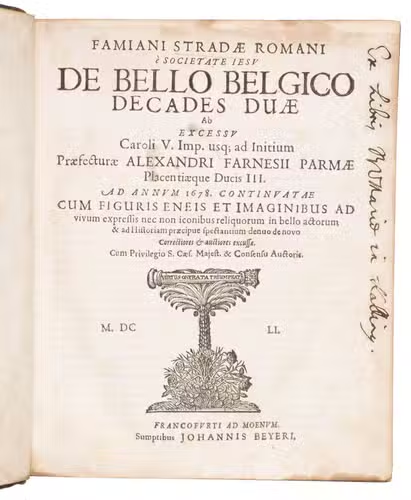
De bello Belgico decades duae ab excessu Caroli V. ... ad annum 1678 [recté 1578]. Continuatae [to 1590] ...
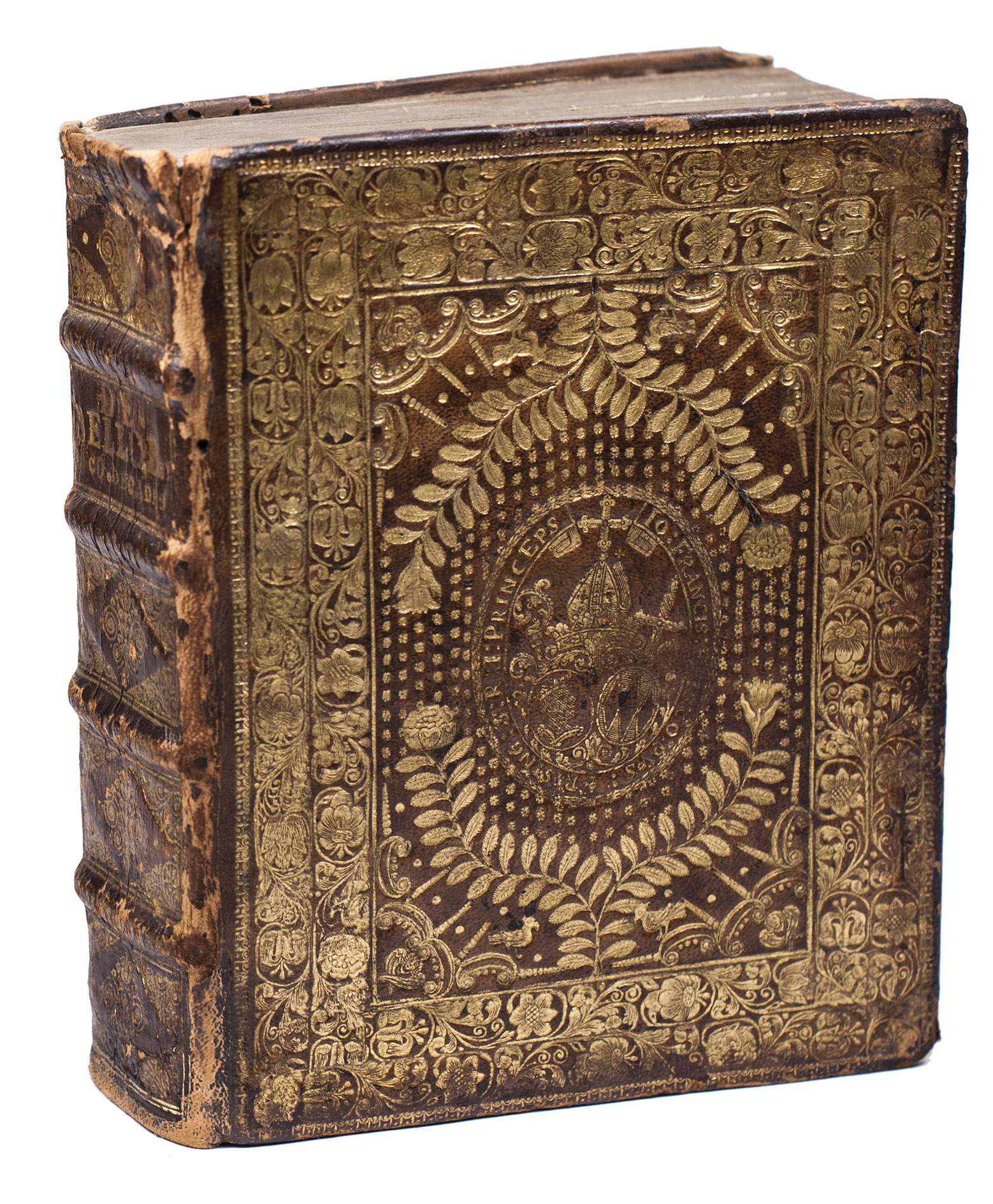
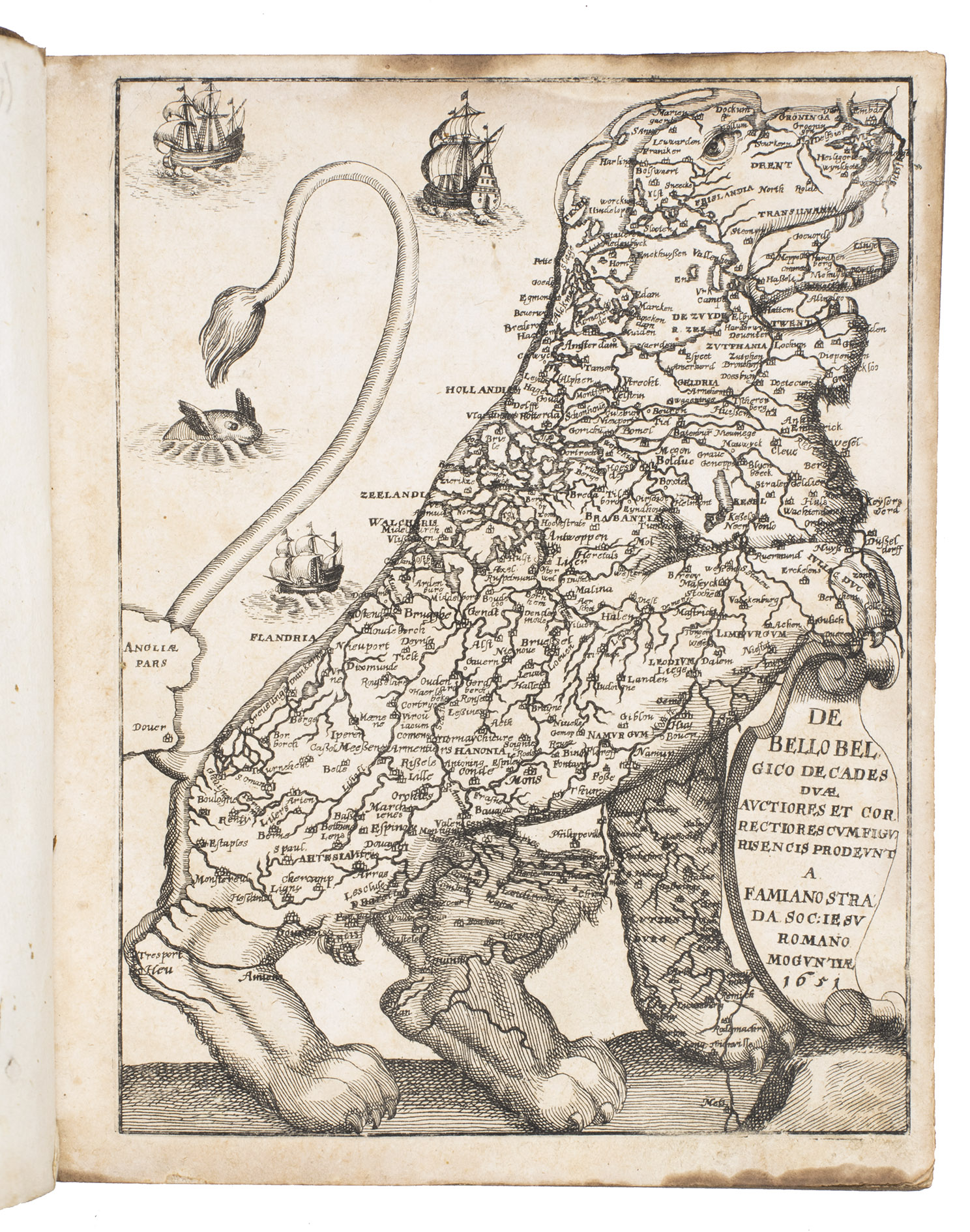
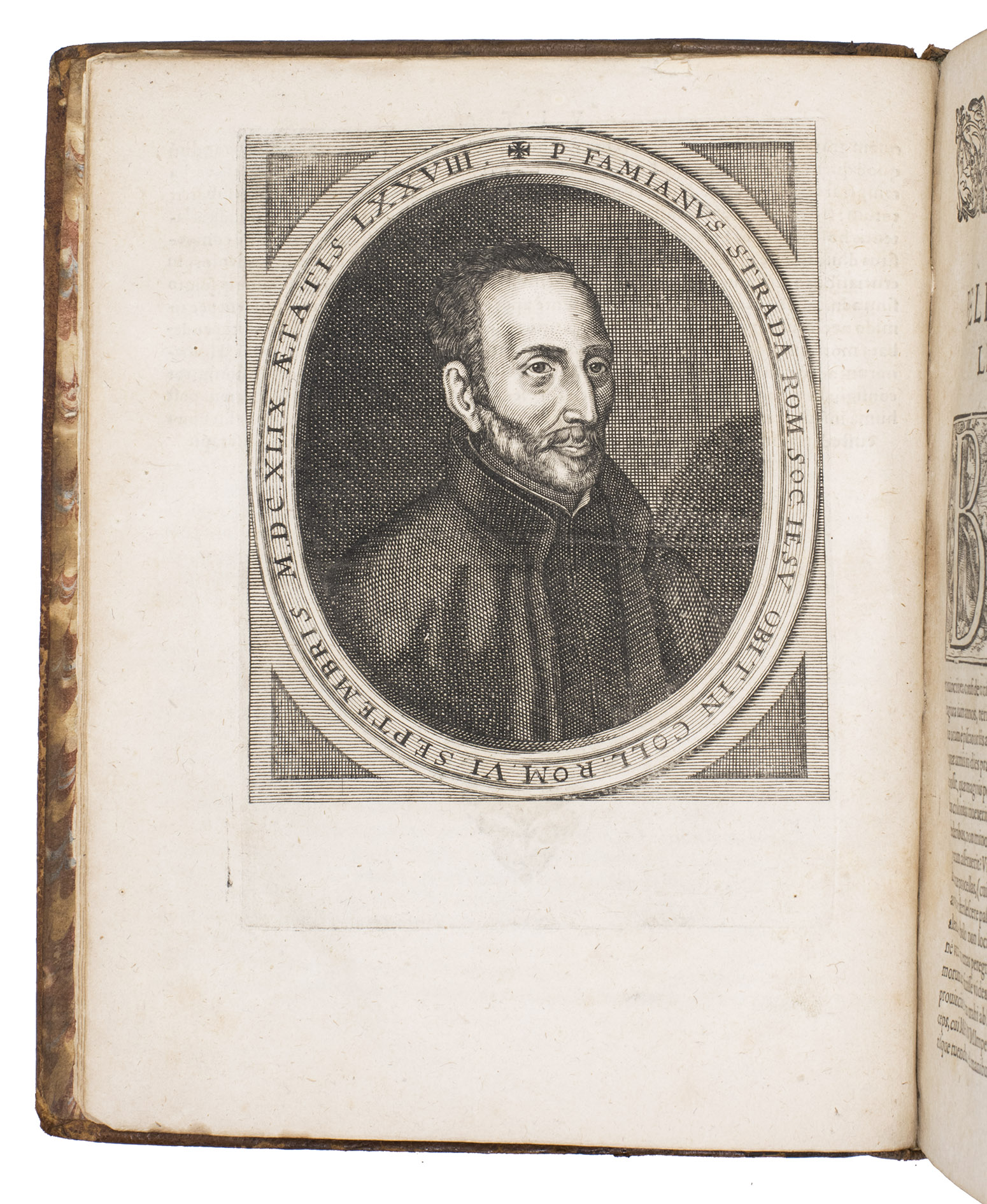
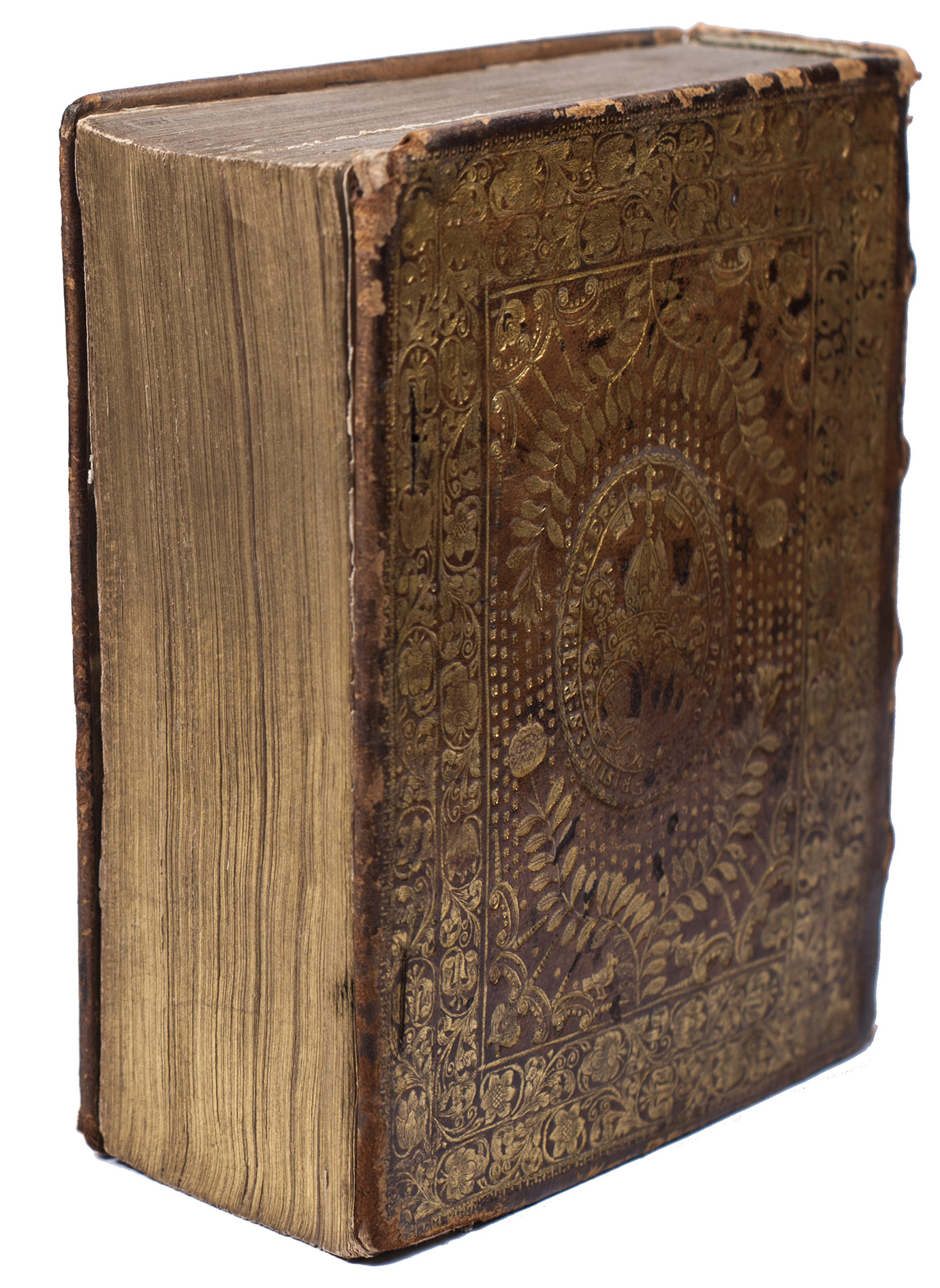
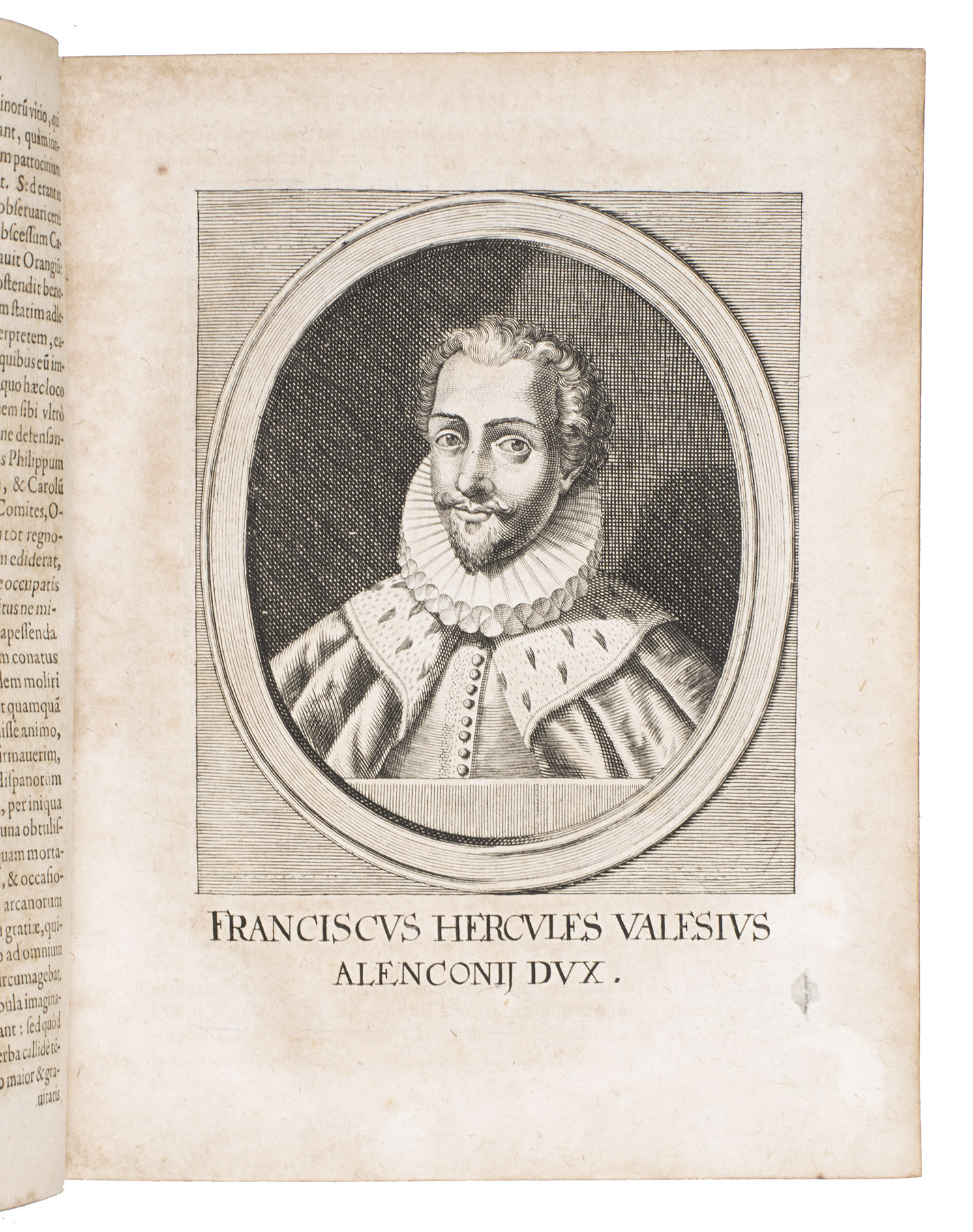
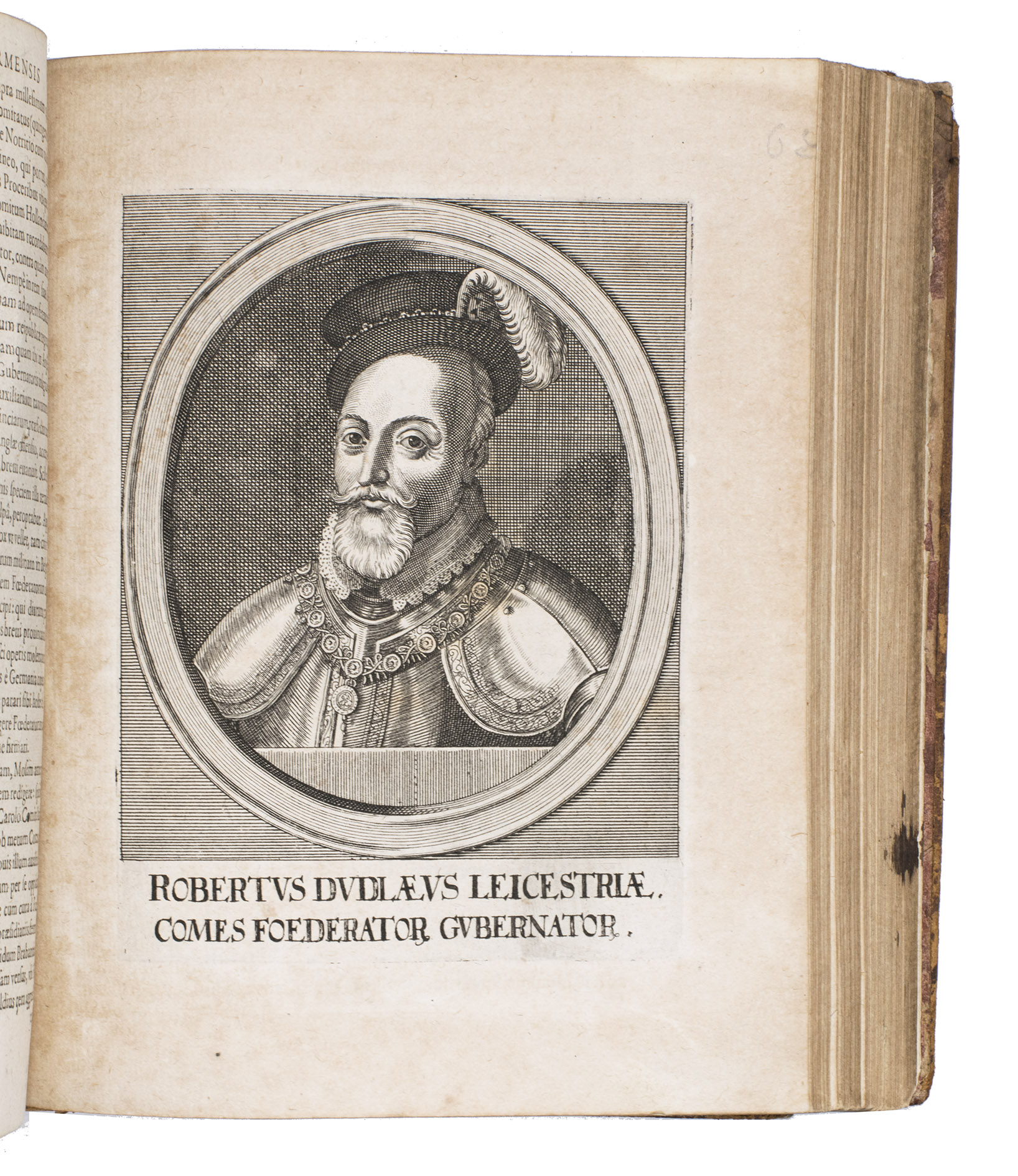
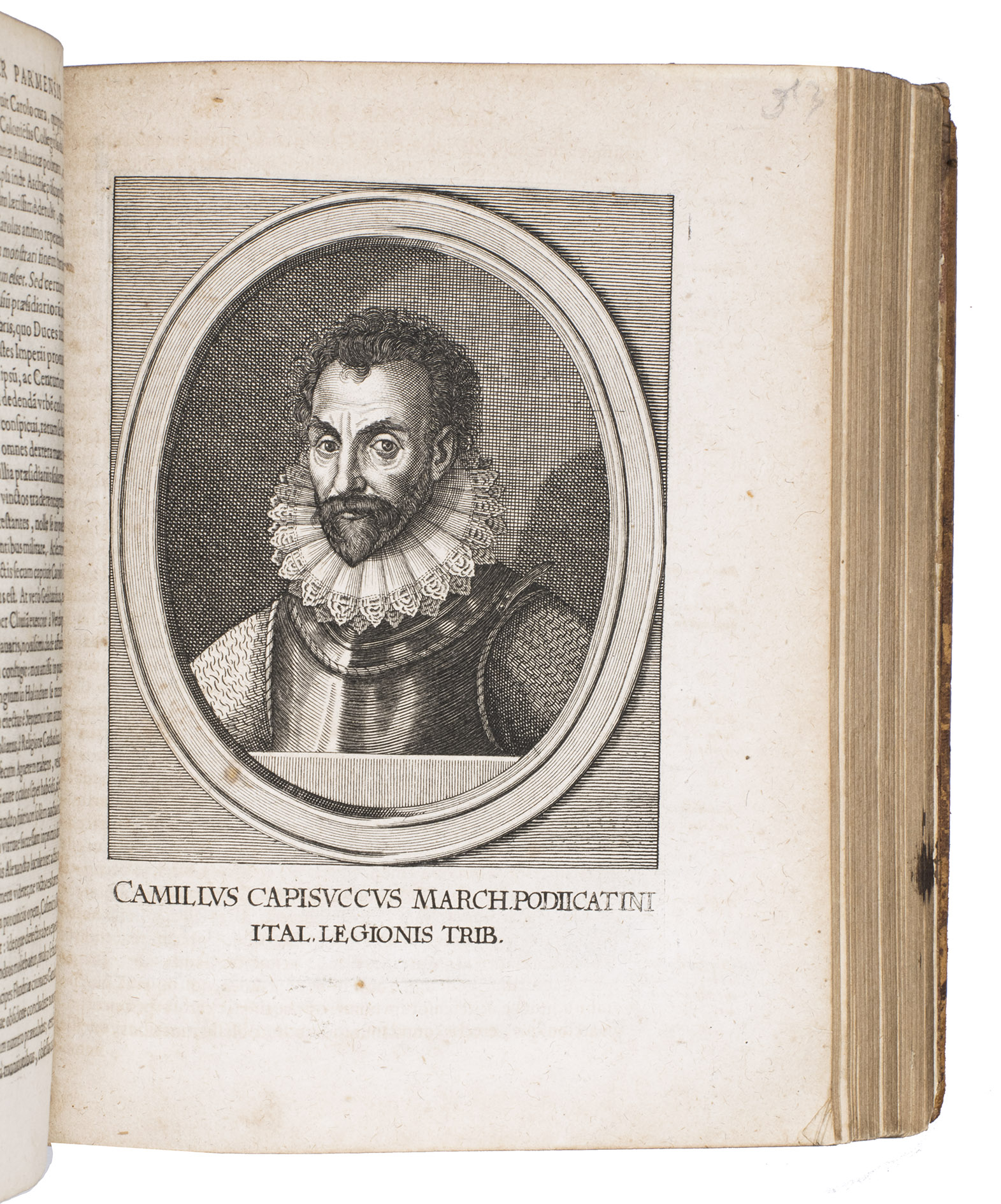
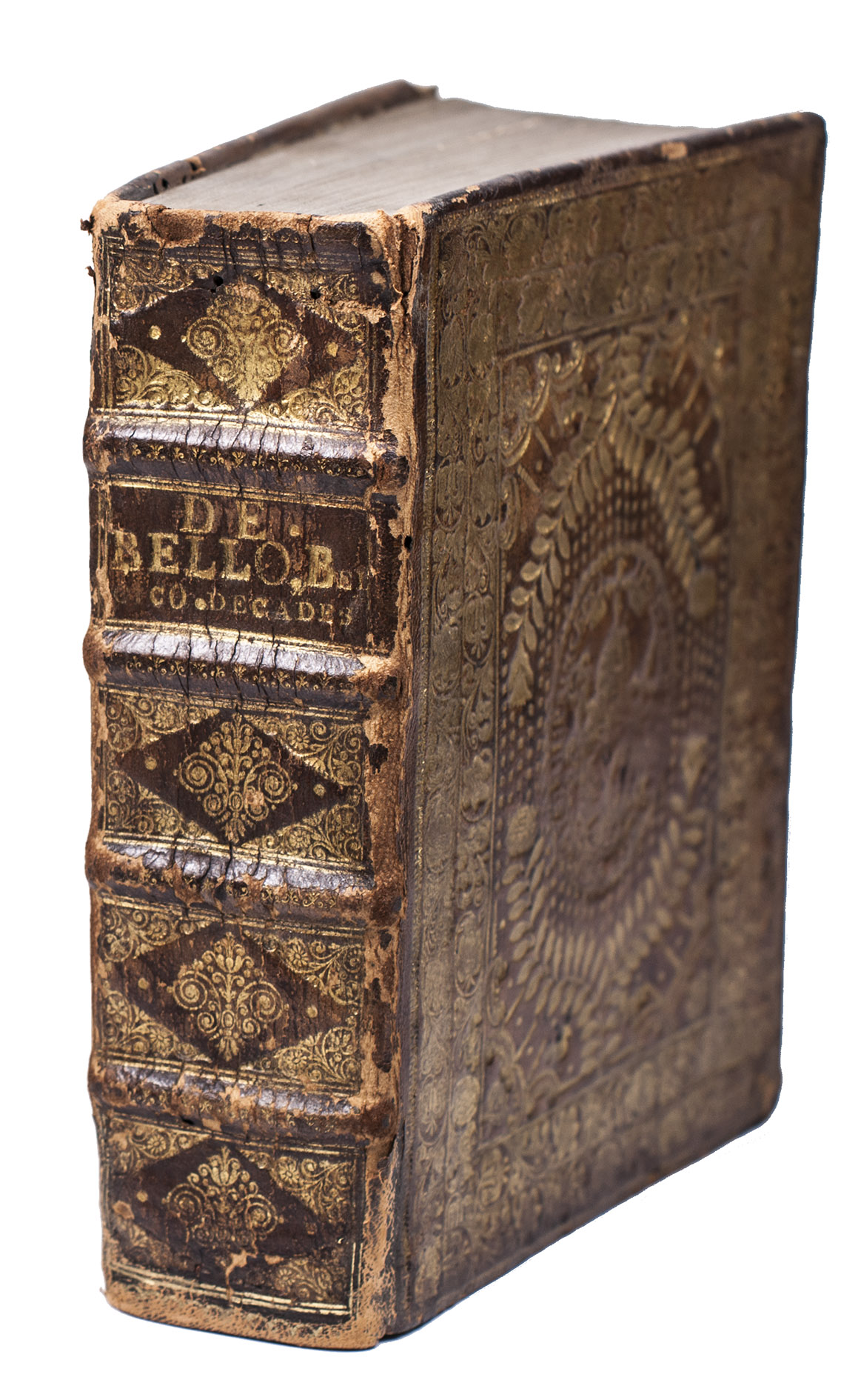
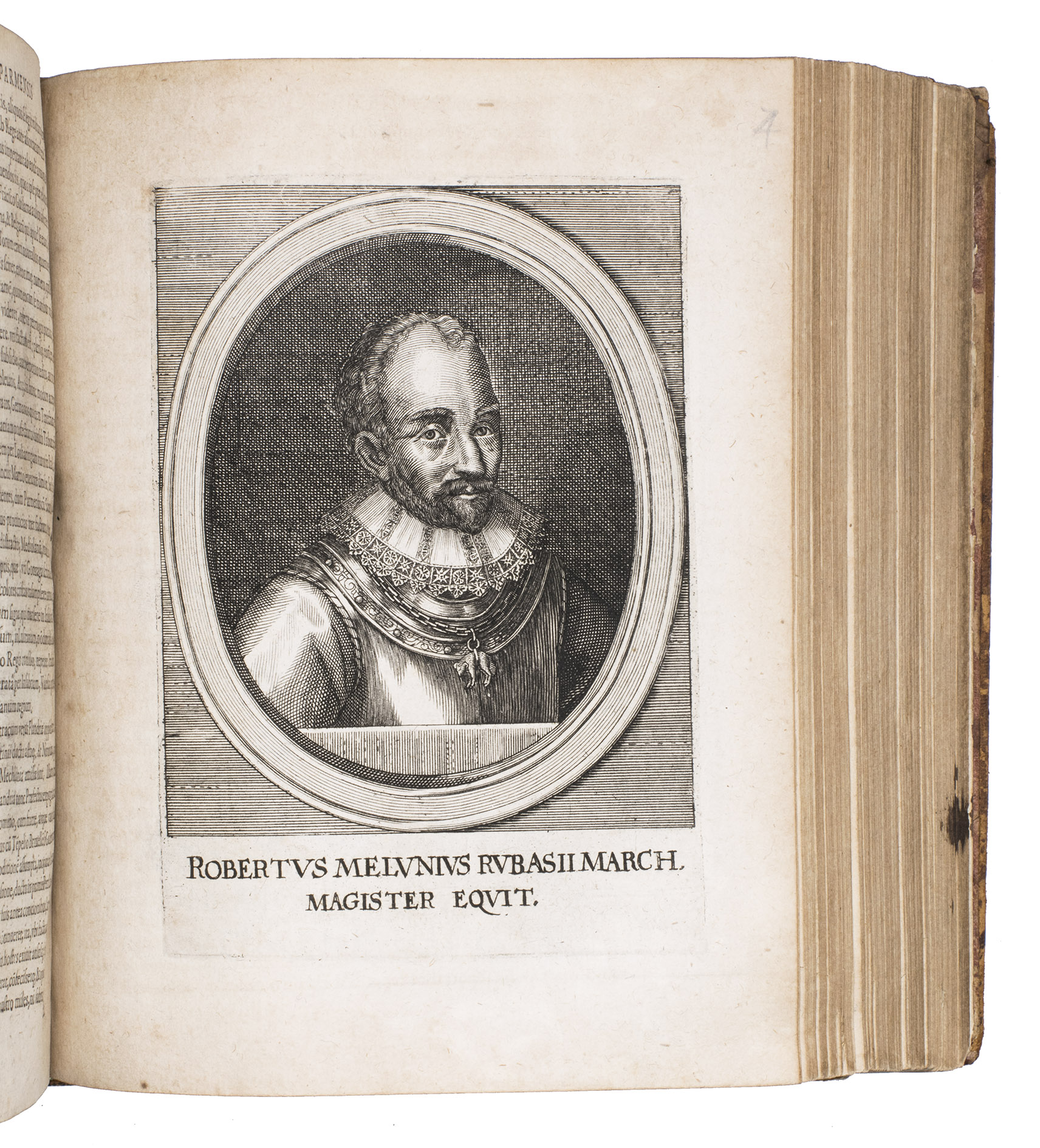
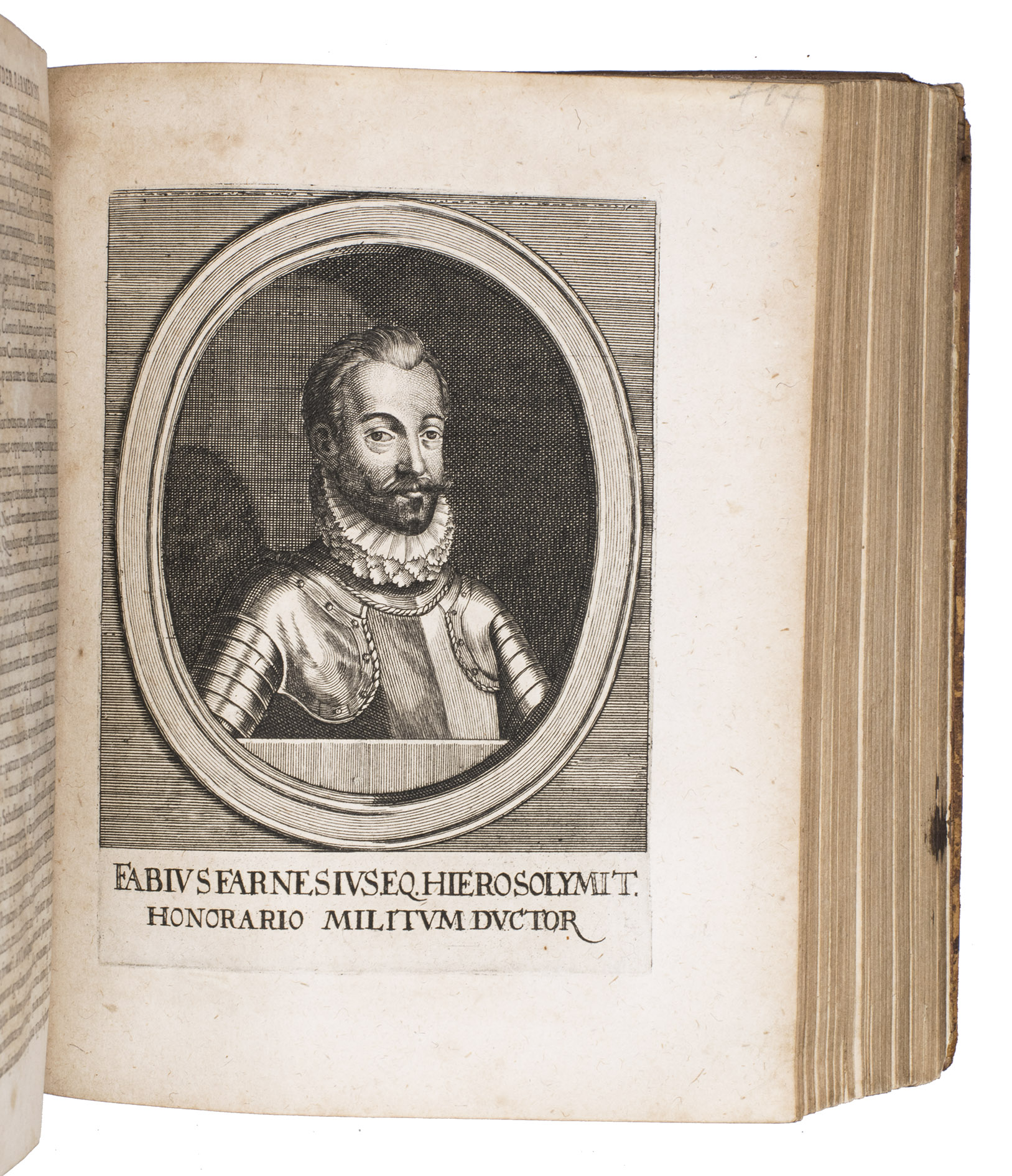
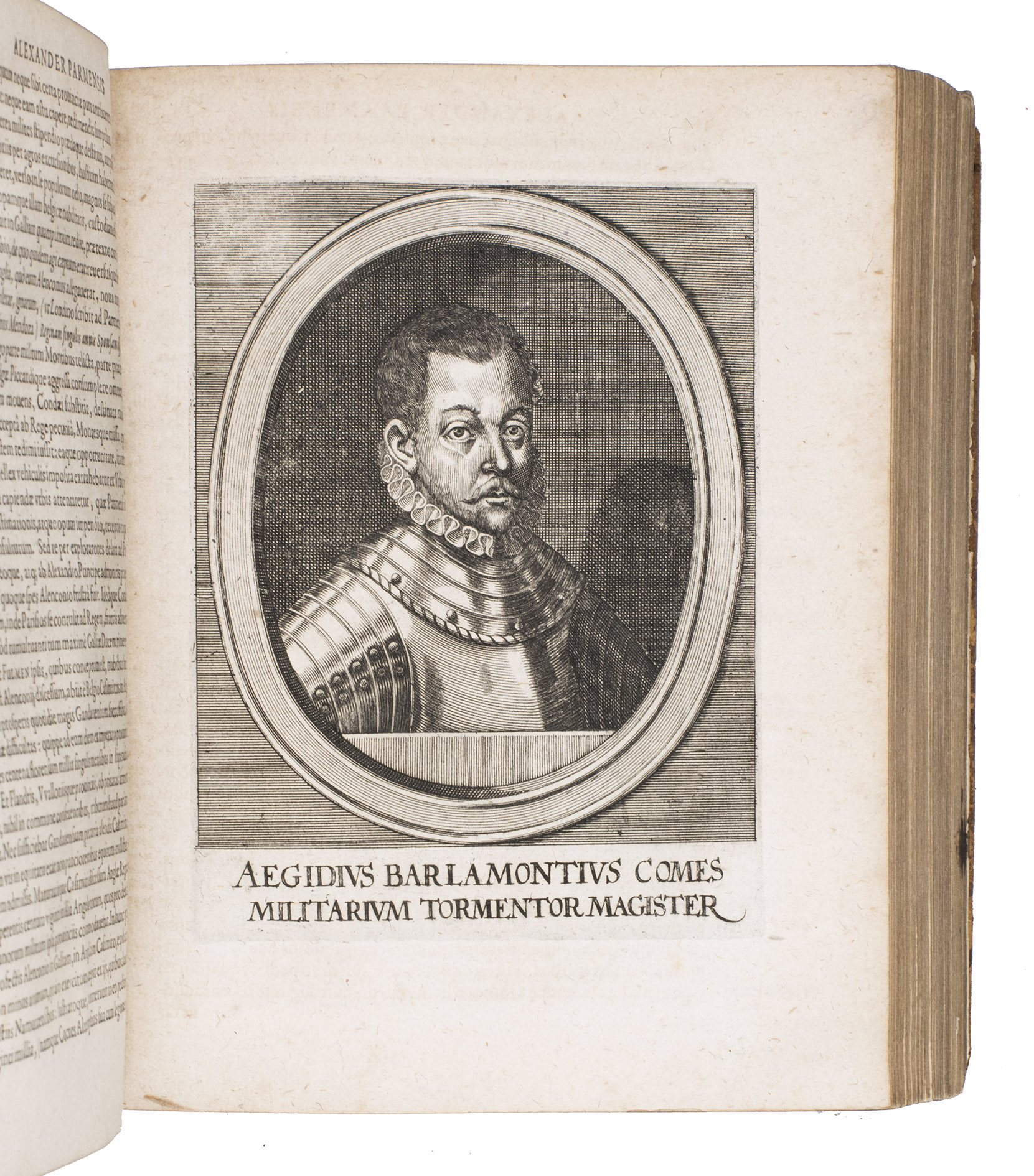
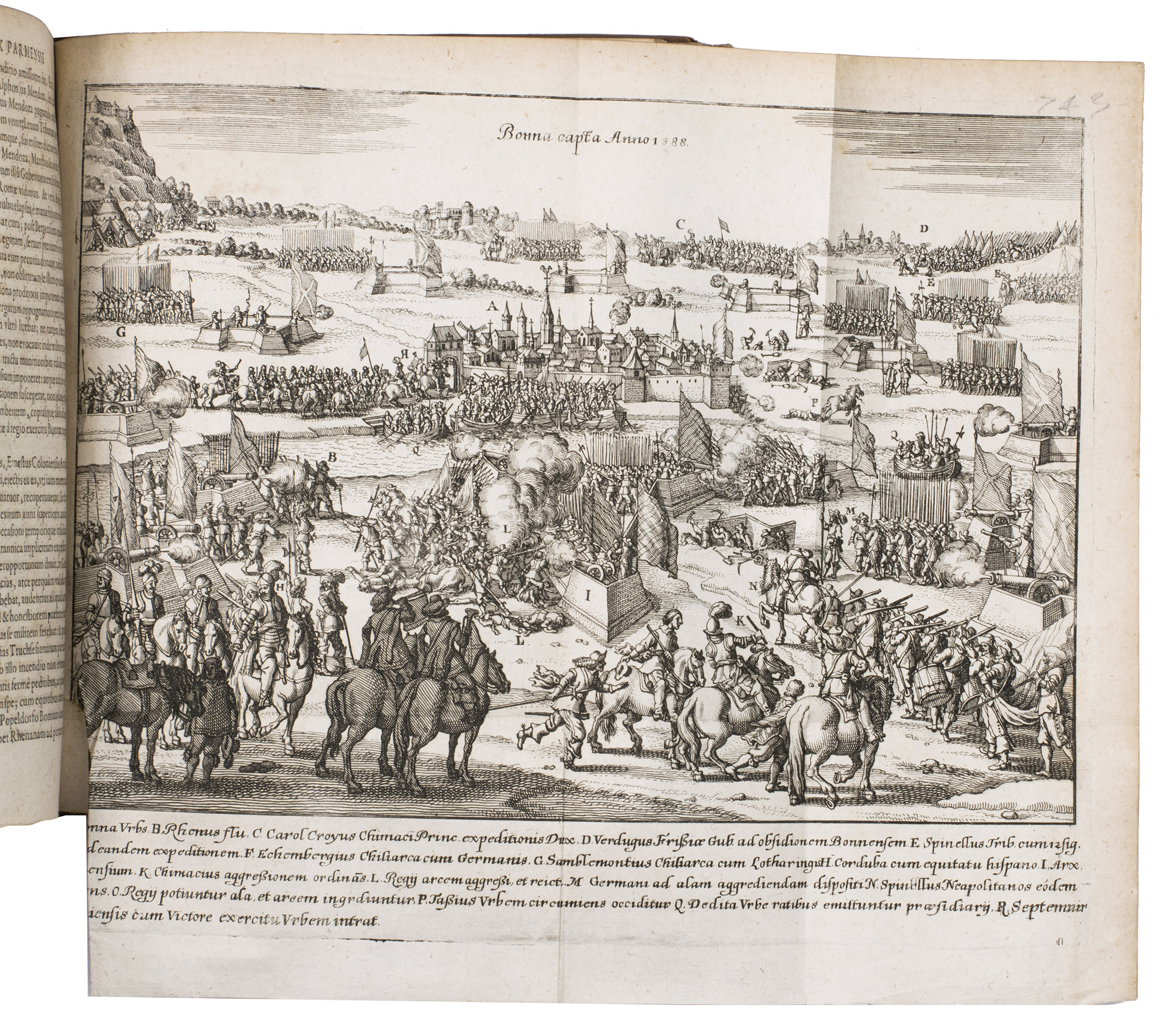
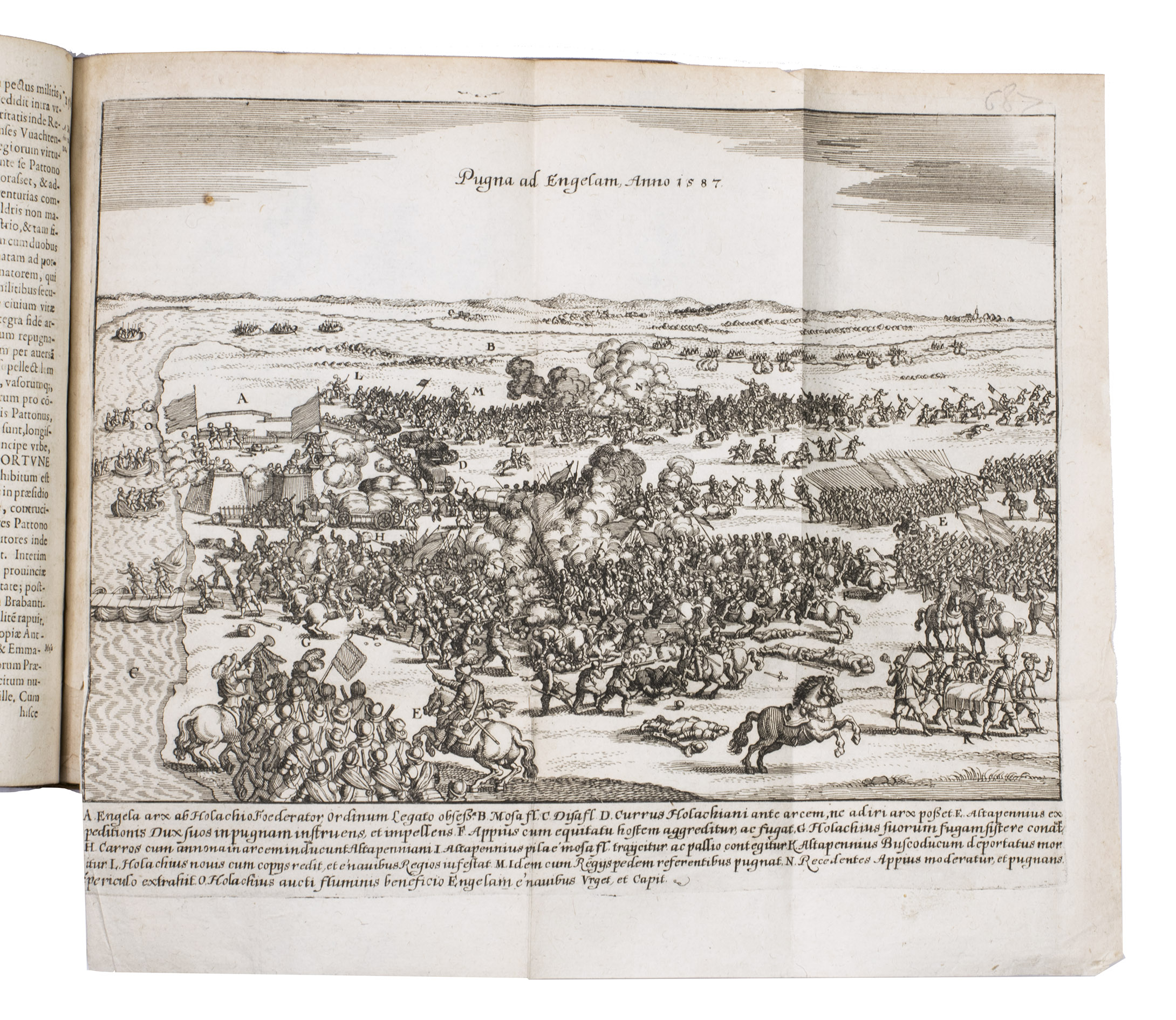
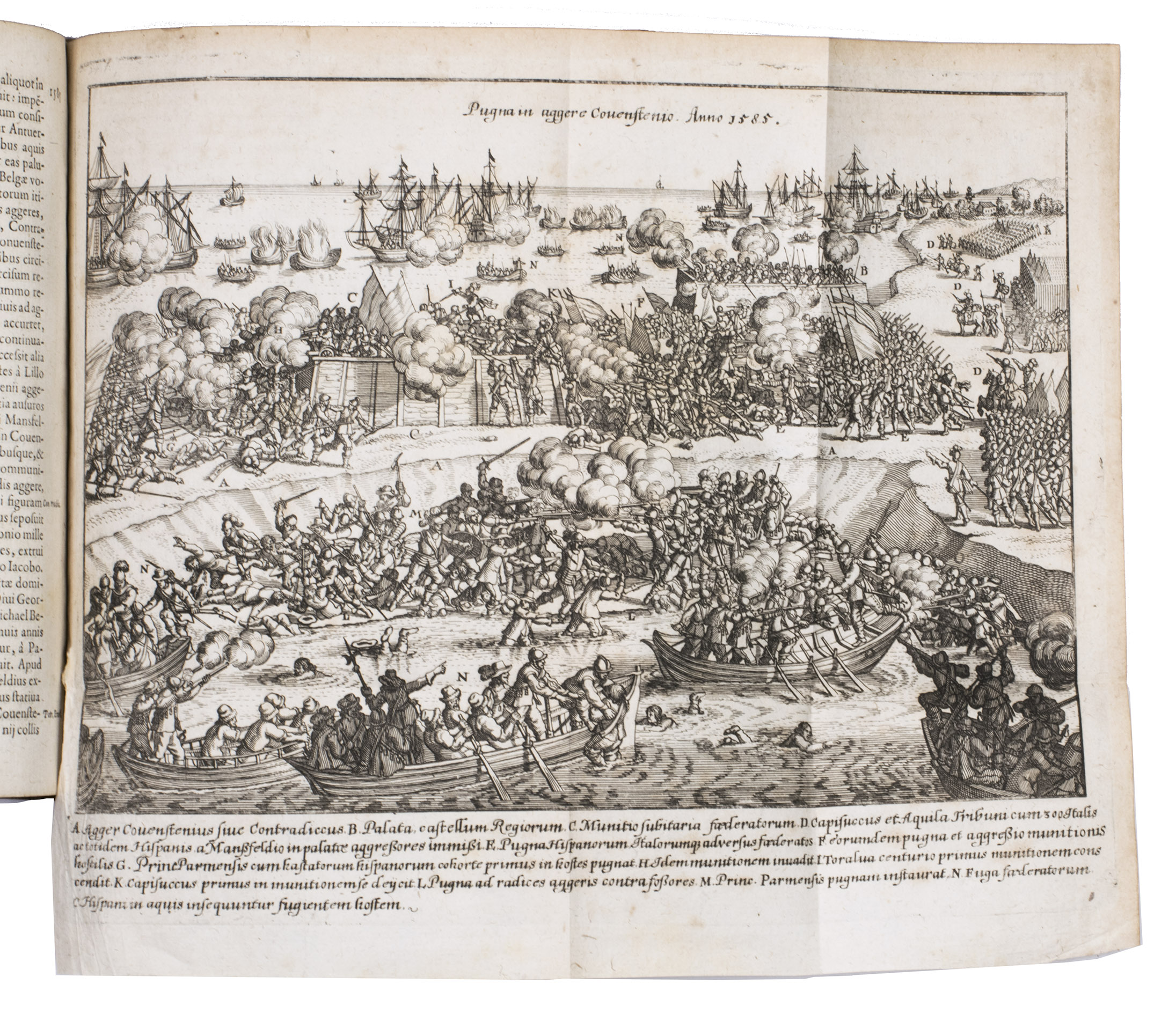
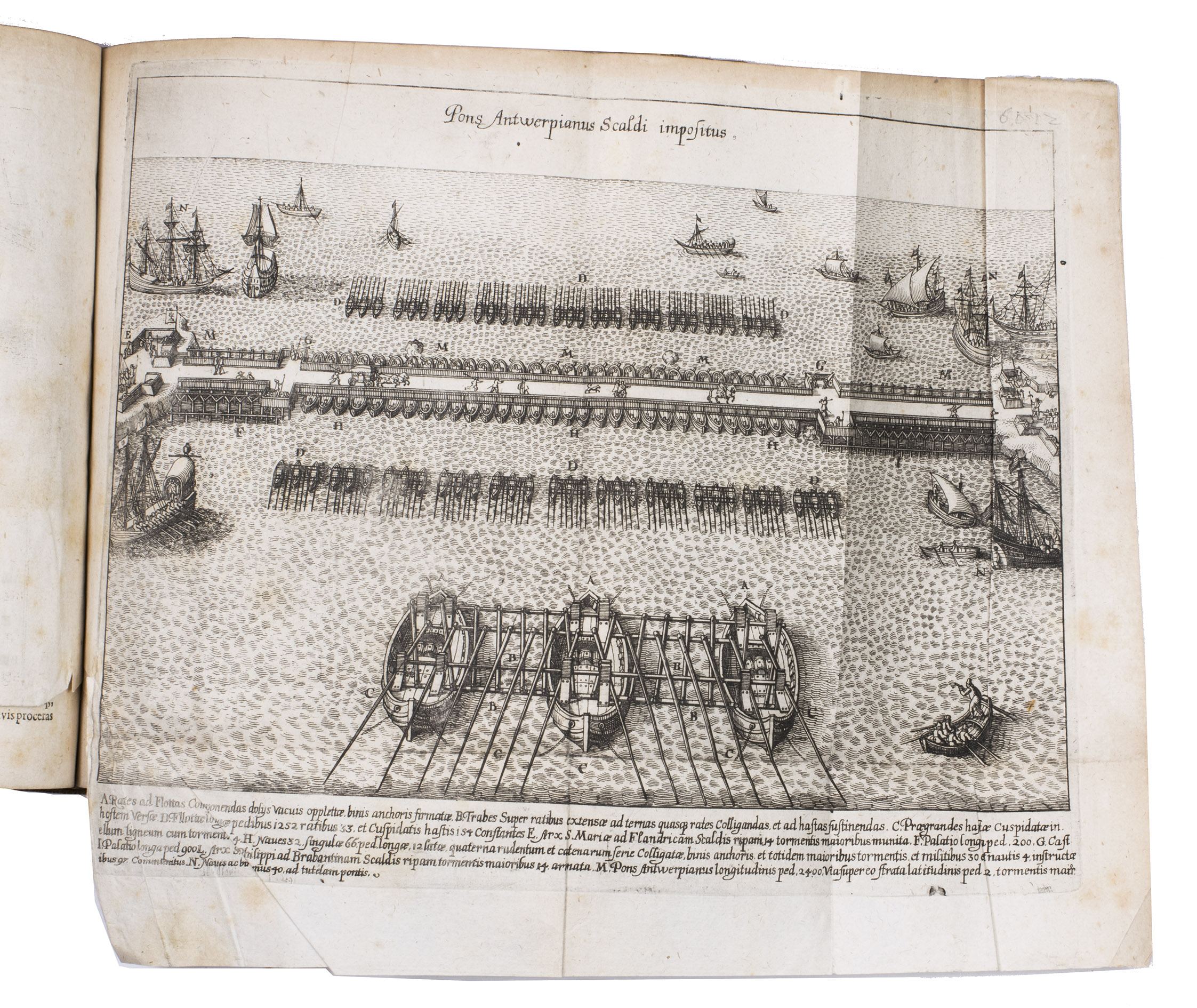
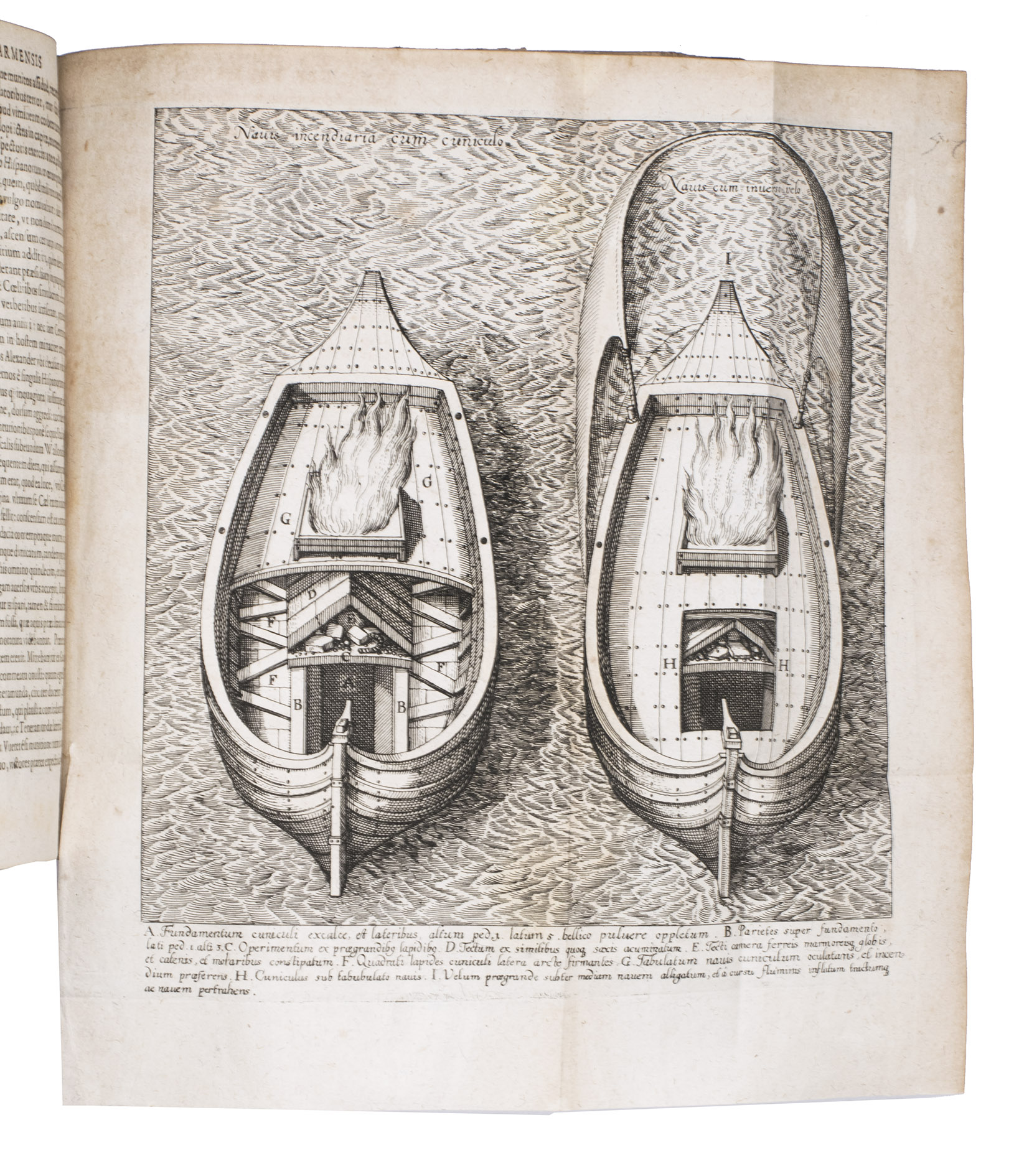
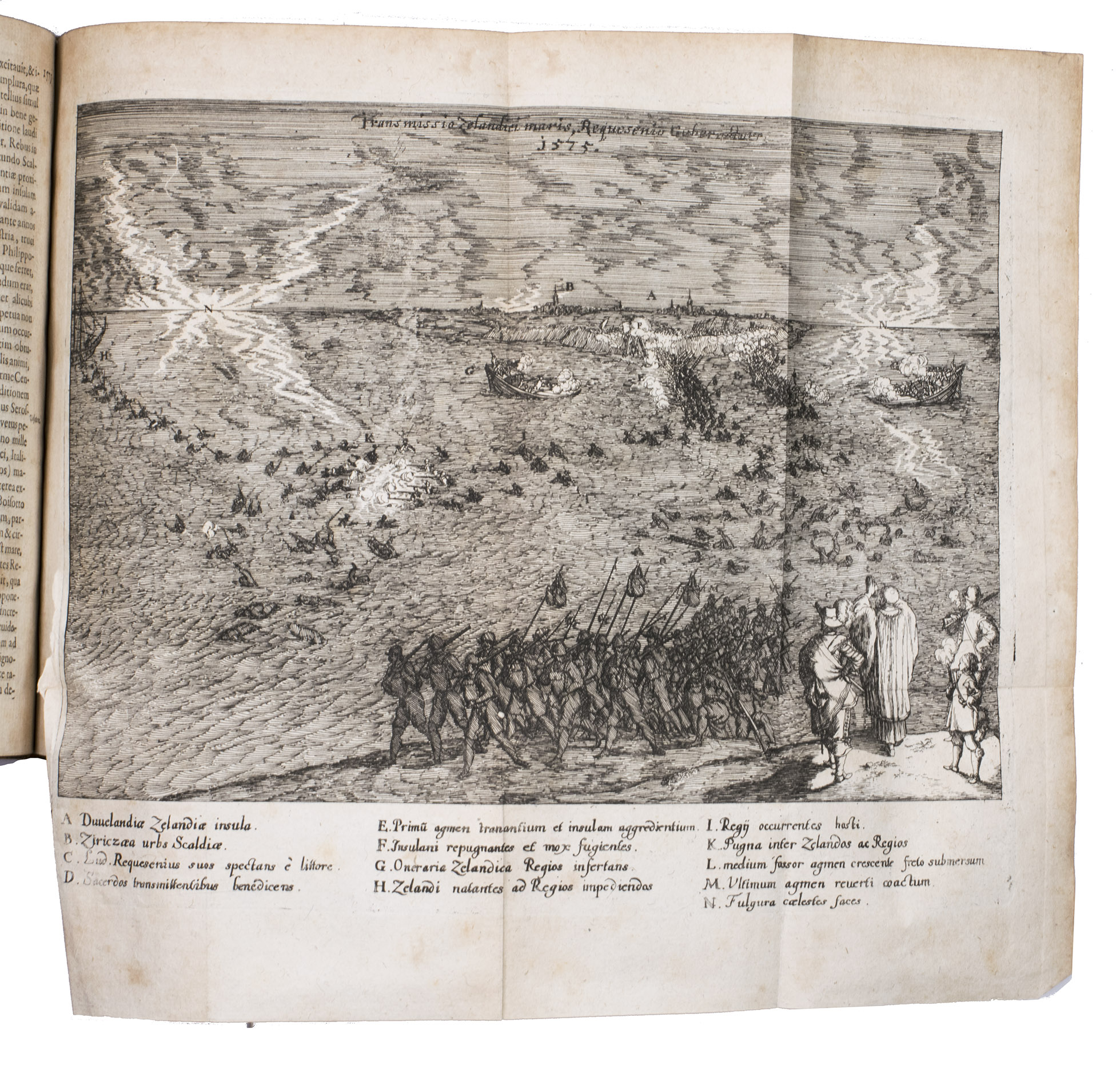
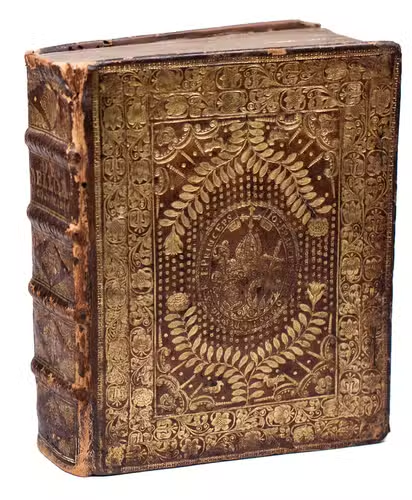
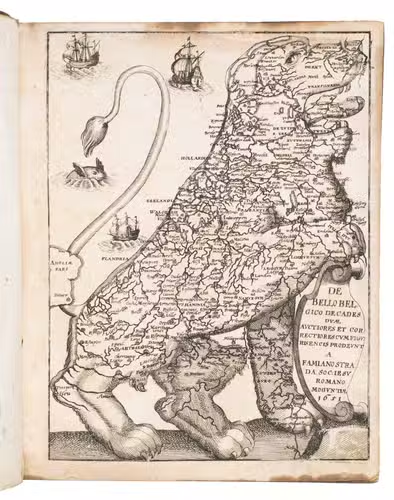
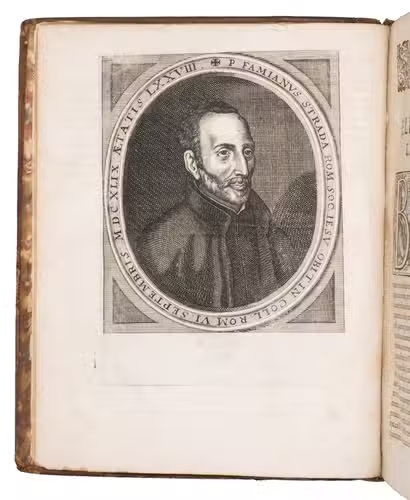
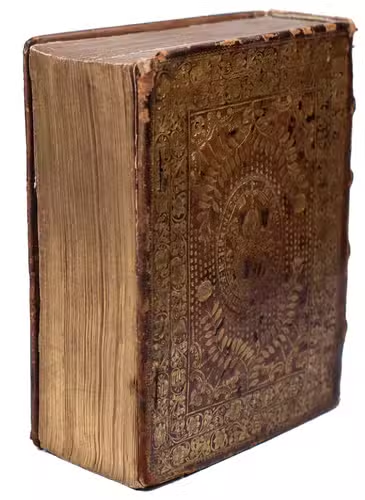
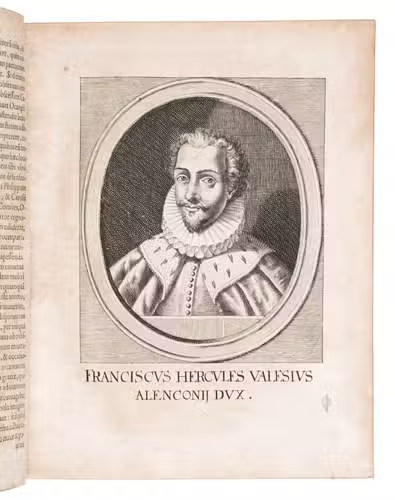
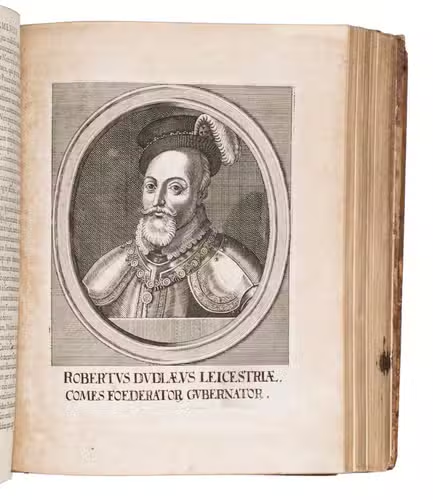
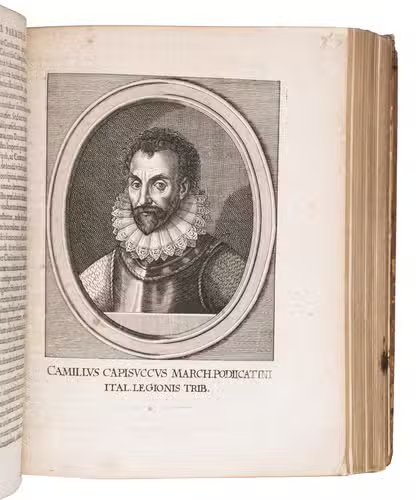
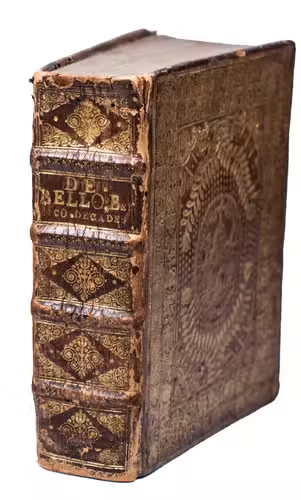
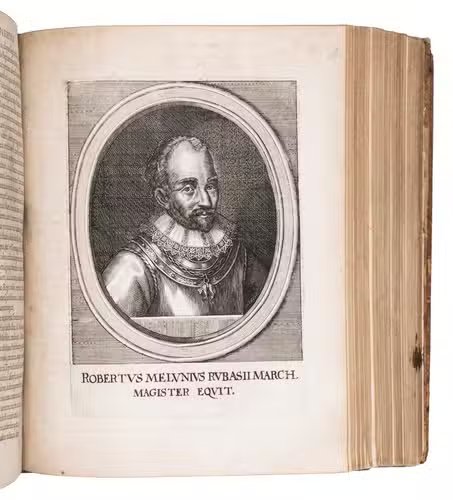
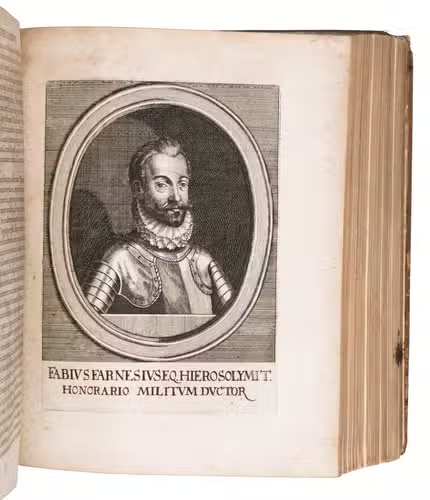
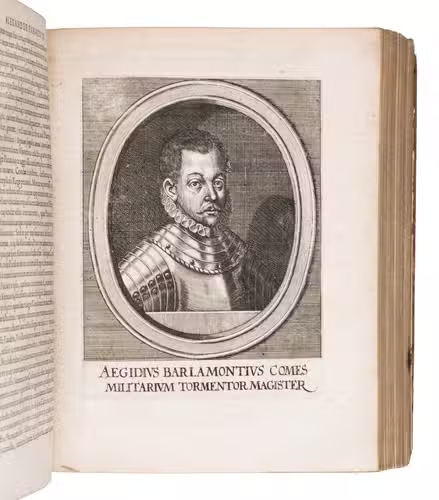
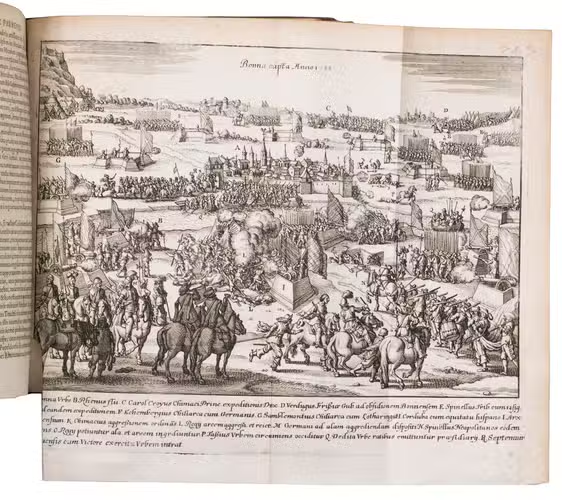
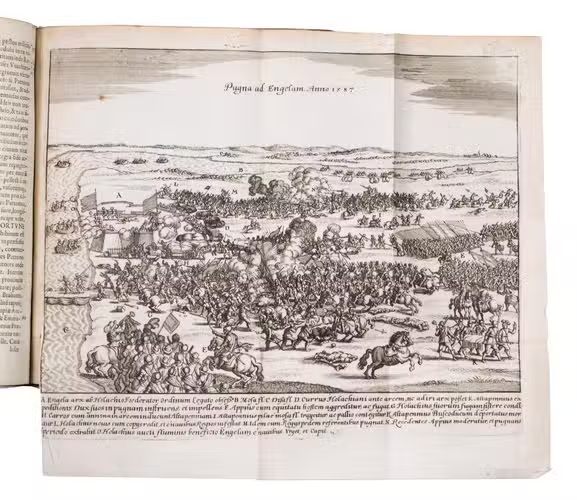
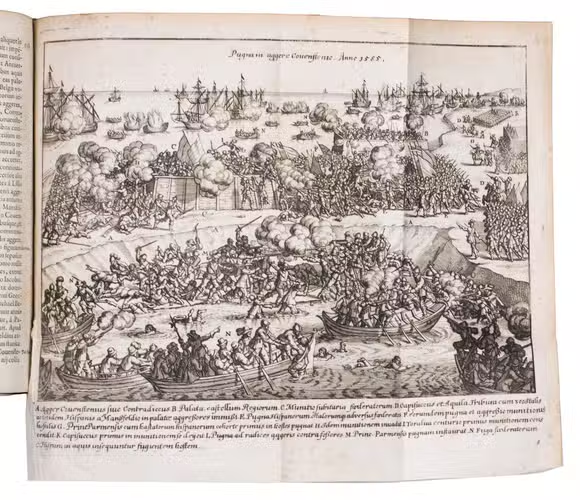
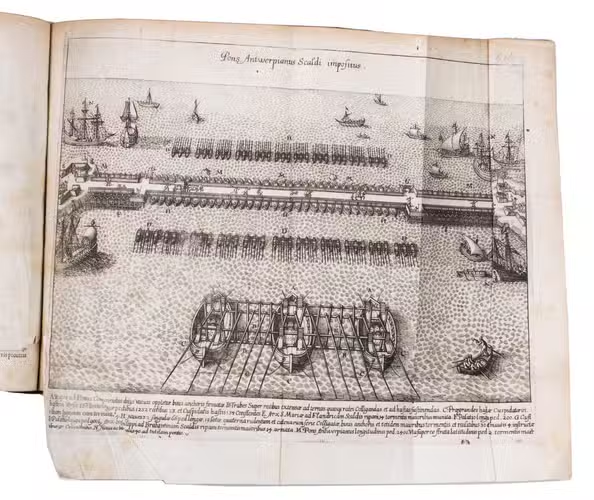
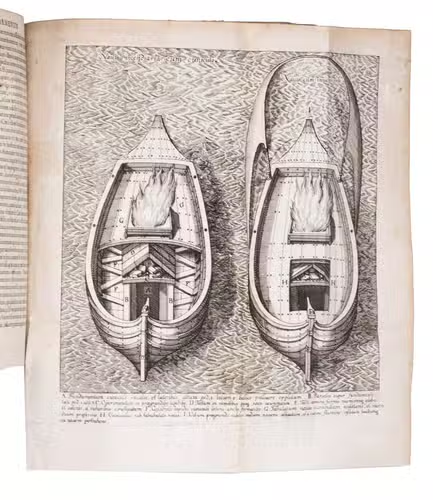
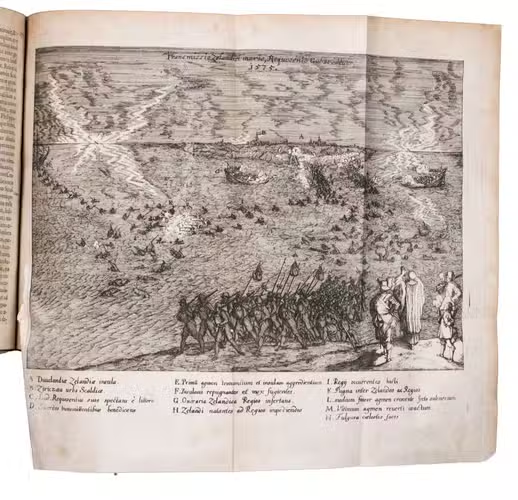
Frankfurt am Main, Johannes Beyer, 1651. 2 parts in 1 volume. 4to. With a full-page engraved "Leo Belgicus" map as integral frontispiece, Beyer's woodcut printer's device on the title-page, a full-page engraved portrait of the author on an integral leaf, 45 engraved plates (25 portraits and 20 folding maps and views of battles), woodcut head- and tailpieces, decorated woodcut initials (6 series, including a 4.1 cm pictorial B and P), and decorations built up from cast arabesque fleurons. Slightly later (ca. 1700) richly gold-tooled armorial brown sheepskin for Johann Franz Eckher von Kapfing (1649-1727), with the title lettered in gold on the spine, sewn on 4 cords, each board in an elaborate panel design with an oval with the arms of Freising (Moor's head) and Eckher von Kapfing (sable 3 lozenges argent) in the centre ("Io: Francis: Episcopus: Frising: S: R: I: Princ Eps.) and hundreds of impressions of 2 rolls and a dozen stamps (including birds, flowers and angel heads) surrounding it, traces of 2 pairs of cloth ties, gilt edges, marbled paste-downs. [8], 778, [104] pp.
€ 5,000
First Frankfurt edition of a history of the Dutch War of Independence from 1555 to 1590, the first edition to combine two earlier volumes into one. It was one of the most popular histories of the Dutch war of independence against Spain and is still a rich and valuable source for the early period of the Eighty Years War. The present copy has been beautifully bound for the library of Johann Franz Eckher von Kapfing (1649-1727), Prince-Bishop of Freising from 1695 to 1727. It includes the last dedication leaf with dedications to Ferdinand III, Louis XIV and the governors of Naples and Milan, which is often lacking.
The Jesuit Famiano Strada (1572-1649) had composed this work at the request of Duke Ranuccio Farnese, whose father Alexander and grandmother Margaret had played an important part in the struggle. Starting with the abdication of Charles V as Holy Roman Emperor in 1555, whereby the Dutch provinces passed to his son Philip II of Spain. Strada ended his first volume with the death of the Spanish governor of the Netherlands, Don John of Austria, in 1578. The second volume describes the campaigns of Alexander Farnese from 1578, when he succeeded Don John to his departure from the Netherlands in 1590. Due to opposition by the Spanish court, a planned third volume was never published.
As a panegyric account of the achievements of the Farnese family in the Netherlands, Strada was granted access to primary documents from the personal archives of the Duke of Farnese. This resulted in a lively, moralising, and frequently anecdotal historical narrative. Together with the vivid illustrations by Jan Miel (1599-1663), Johann Wilhelm Baur (1607-1642), and others, this made Strada's history one of the most popular accounts of the Dutch Revolt, running through numerous editions and translations in several languages.
The present work combines two volumes which were initially published separately at Rome in 1632 and 1647. This is the first edition to do so, and a second followed in 1699. Both rather confusingly include a title page indicating that the first volume, or "decade", continues the history to "1678", a misprint for "1578", and not noting that the continuation runs to 1590. Three issues of the 1651 edition exist, one published by Johann Beyer, one by Johann Gottfried Schönwetter, and one by the two of them together, but differences between the three are minimal.
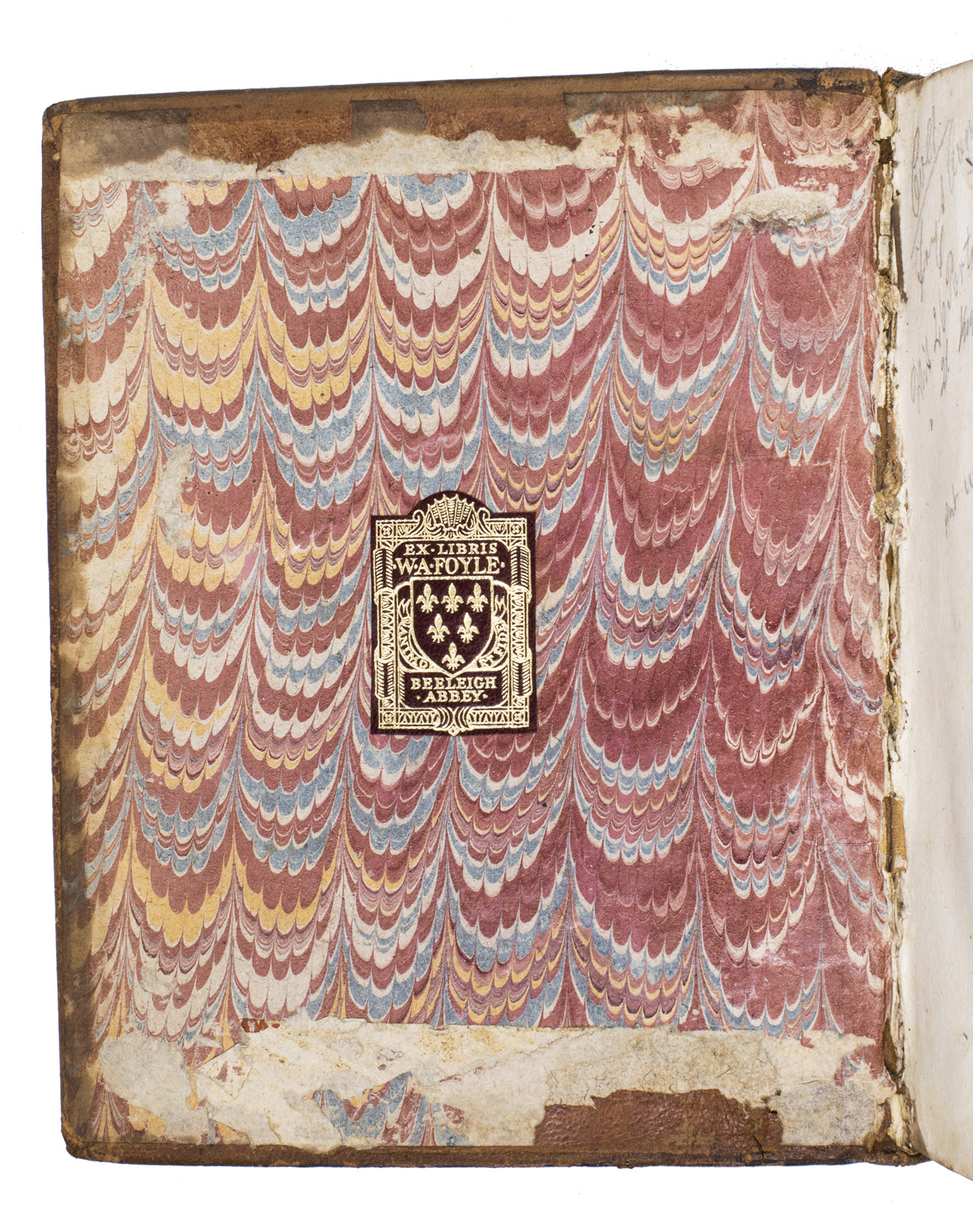
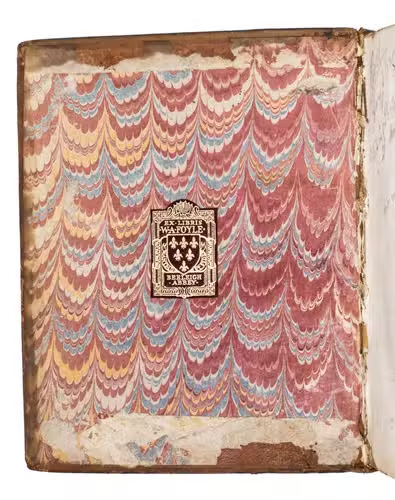
With a contemporary(?) ownership inscription on the title page ("Ex libris B. V. Marie in Kallioy[?]"). Later in the library of Johann Franz Eckher von Kapfing (1649-1727), Prince-Bishop of Freising, bound for his library after 1695. Subsequently in the library of William Alfred Foyle (1885-1963), with his gilt morocco bookplate on the front pastedown. The boards and spine are somewhat rubbed, the spine with four small wormholes. The leaves are somewhat browned and occasionally stained, lacking 10 folding plates. Otherwise in good condition. De Backer & Sommervogel, 7, col. 1611; Bibl. Belgica S 50; BM STC German S2875; USTC 2640857; VD17 3:310413T; cf. for the Leo Belgicus map: Van der Heijden, Leo Belgicus, 14; Neumann, Geschichtsschreibung als Kunst, pp. 201-264.
Related Subjects: