PORTA, Giovanni Battista della.
De hum. Physiognomonia ... De humana physiognomonia libri IIII ...
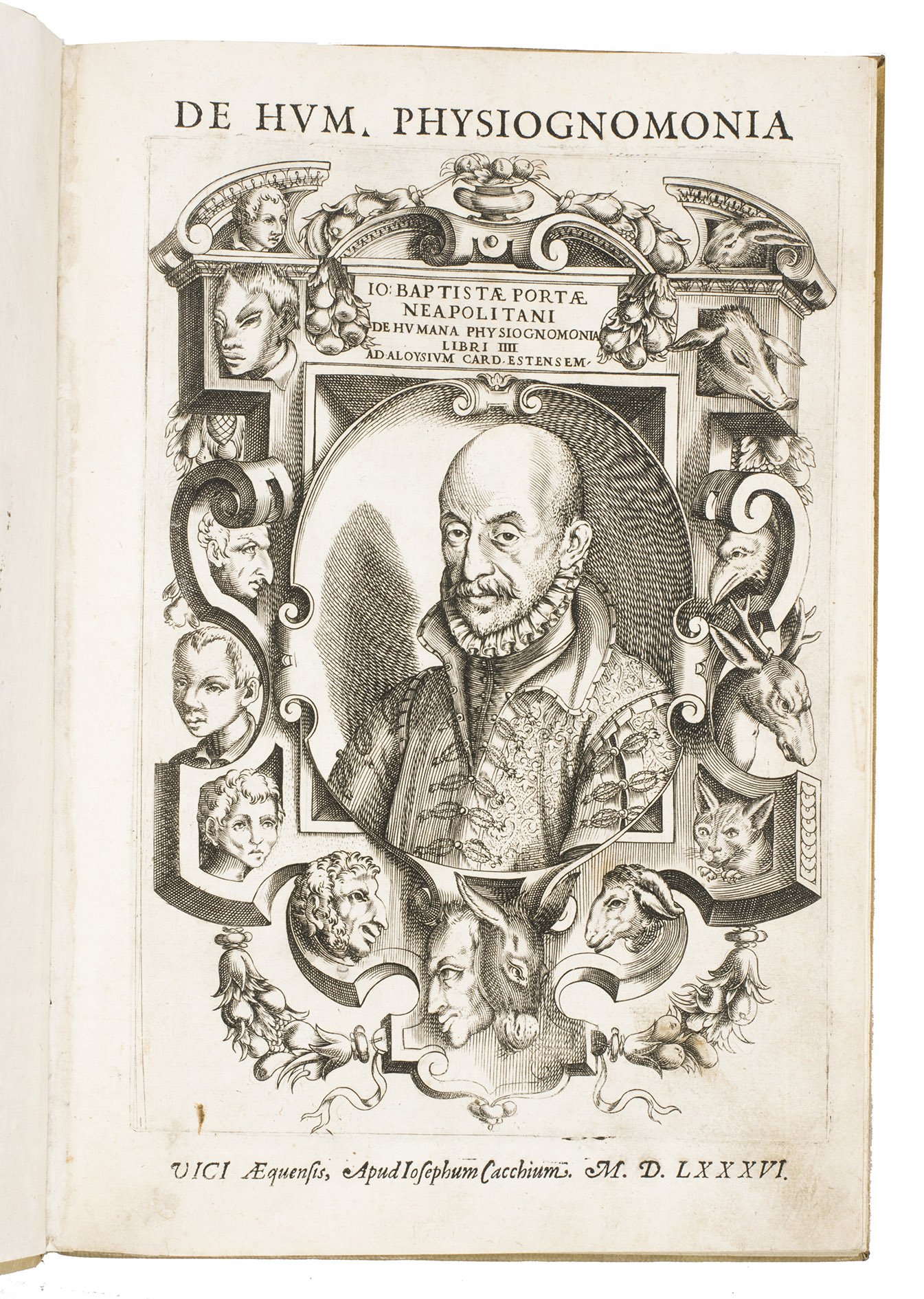
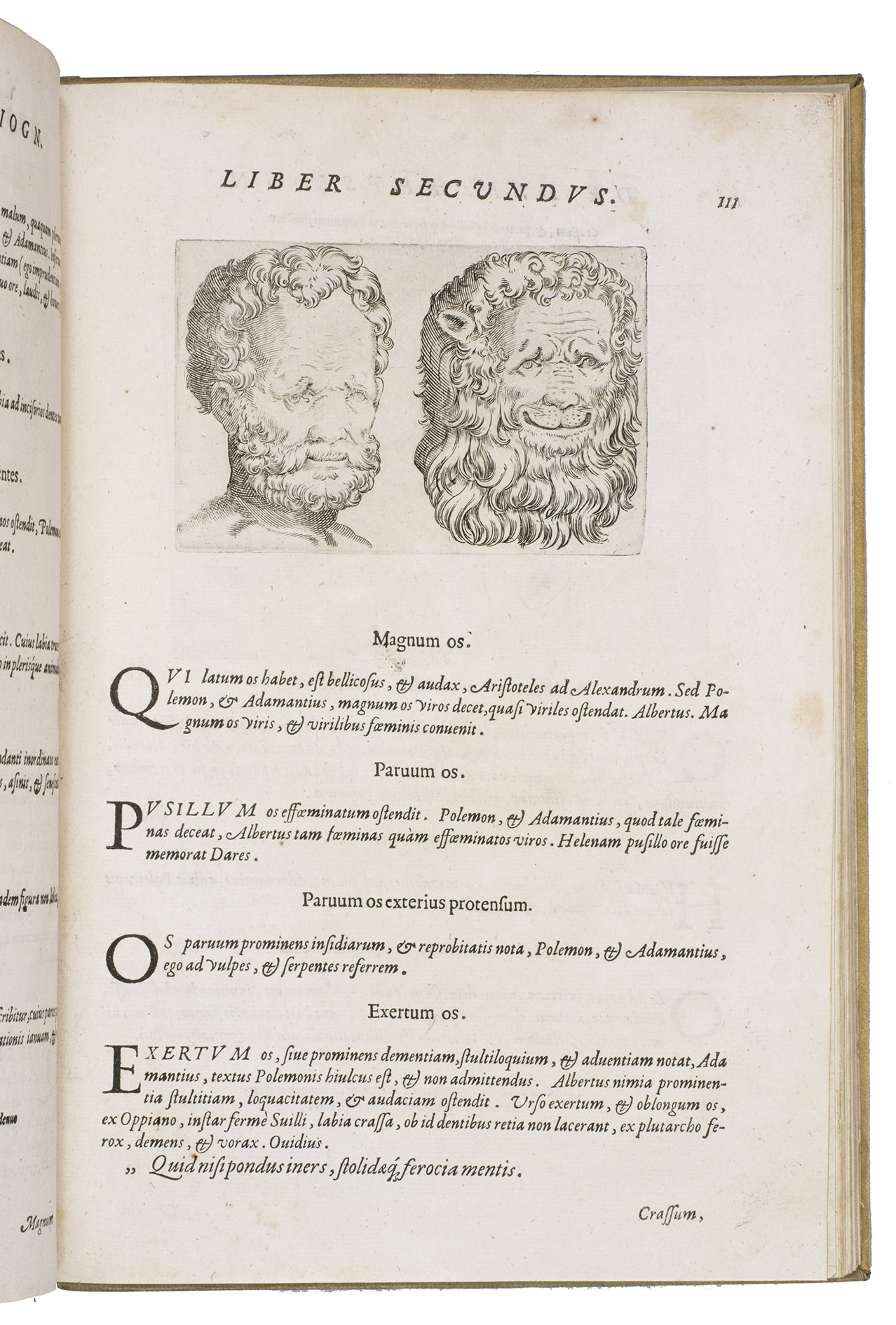
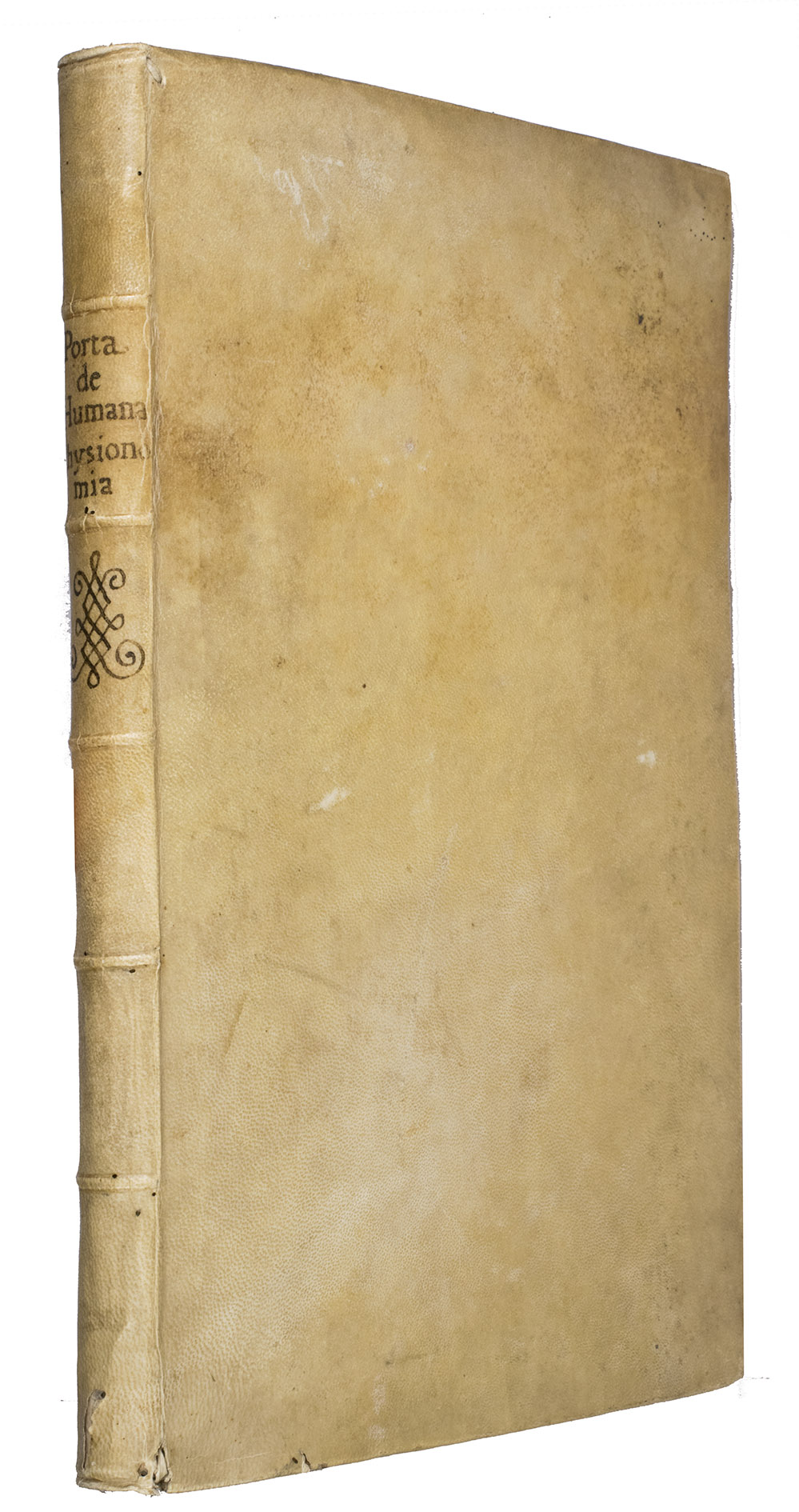
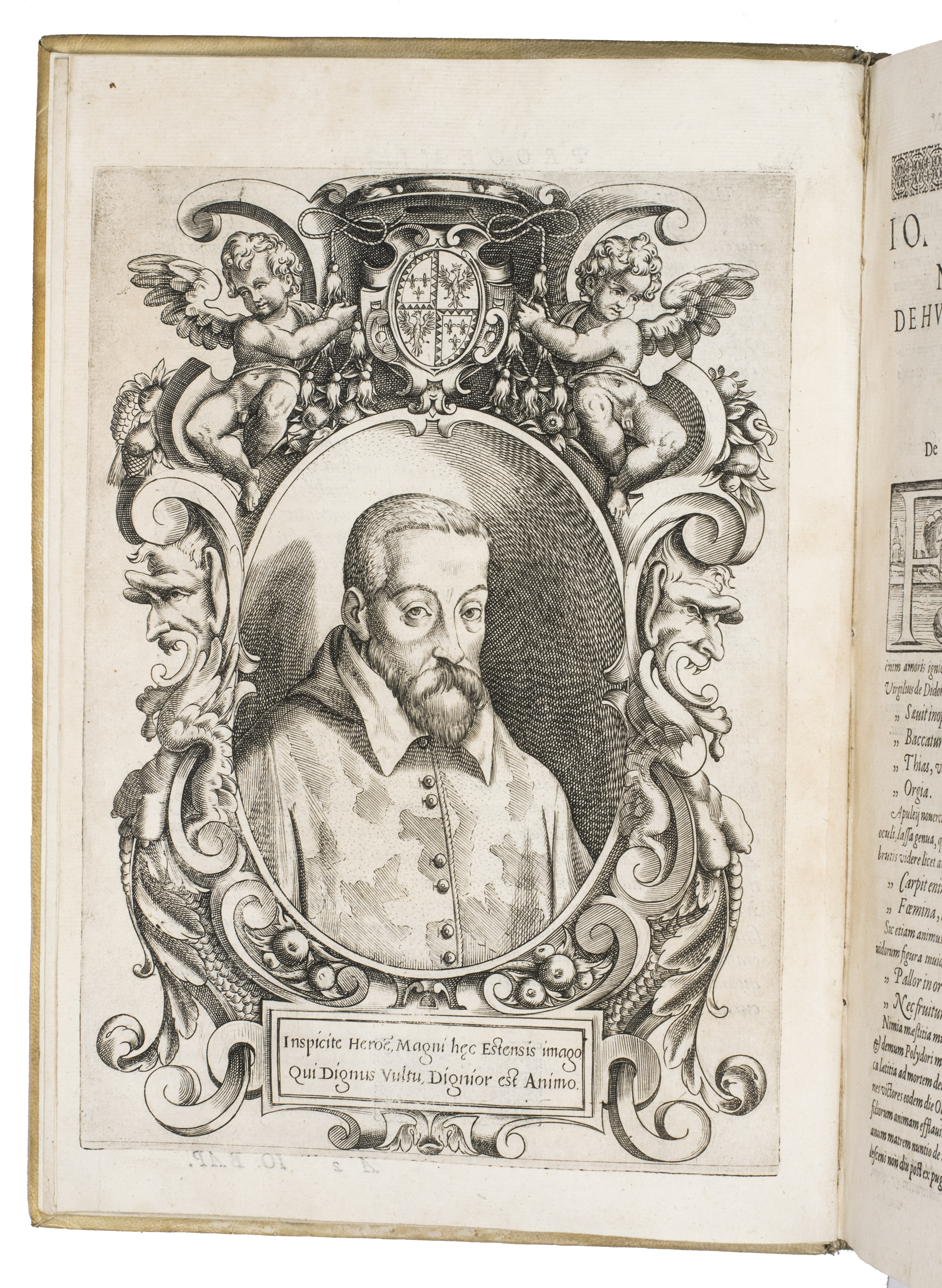
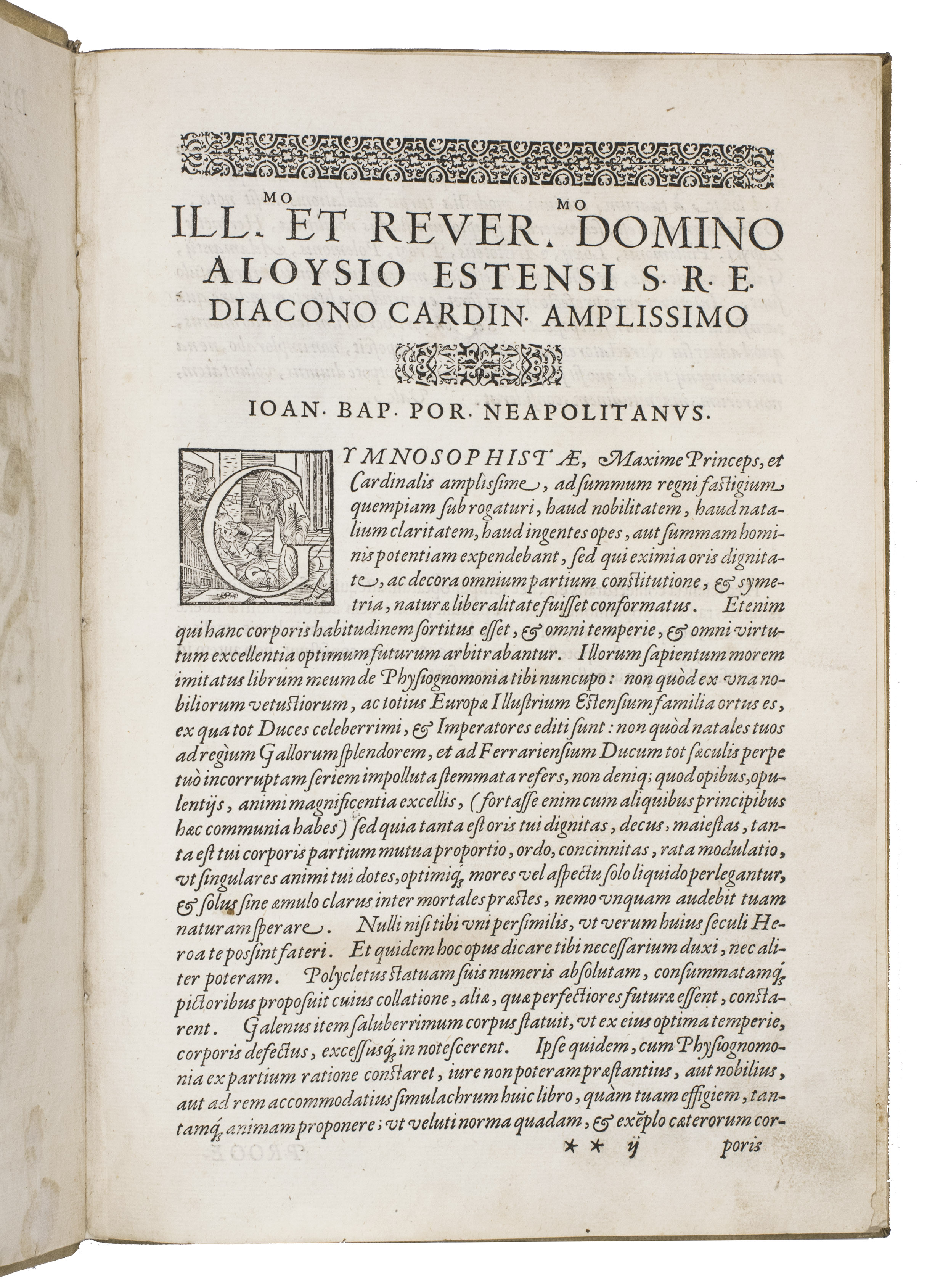
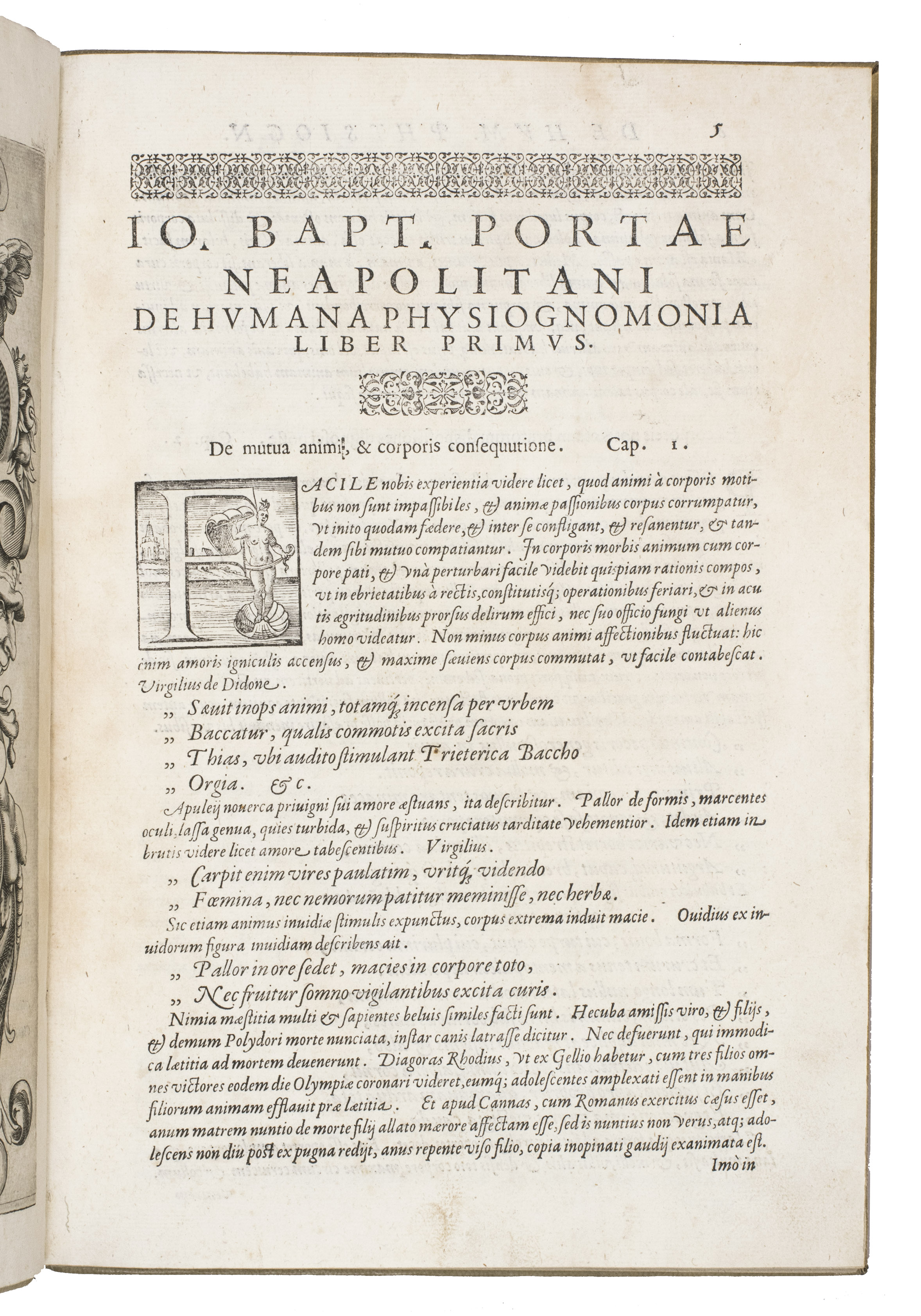
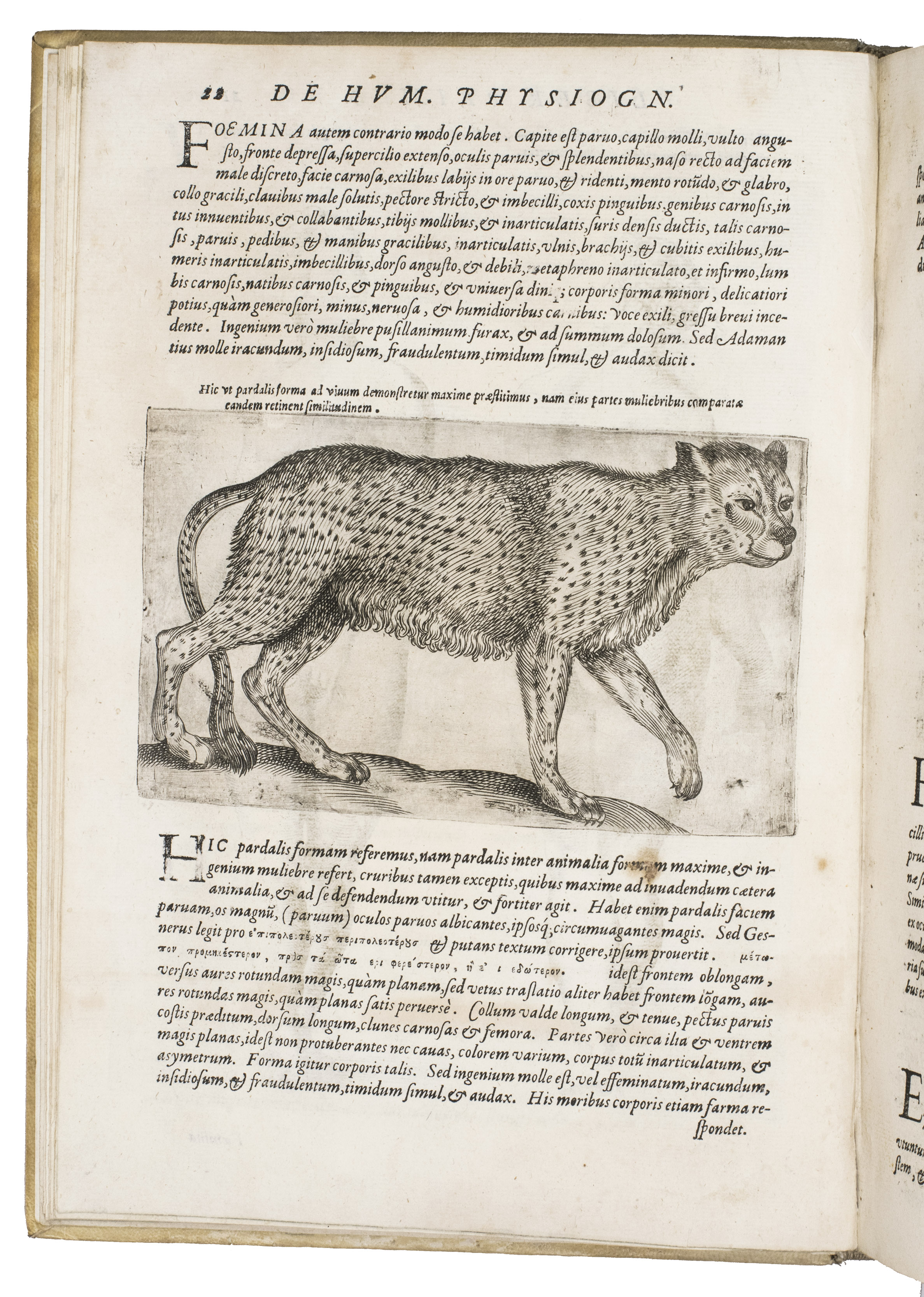
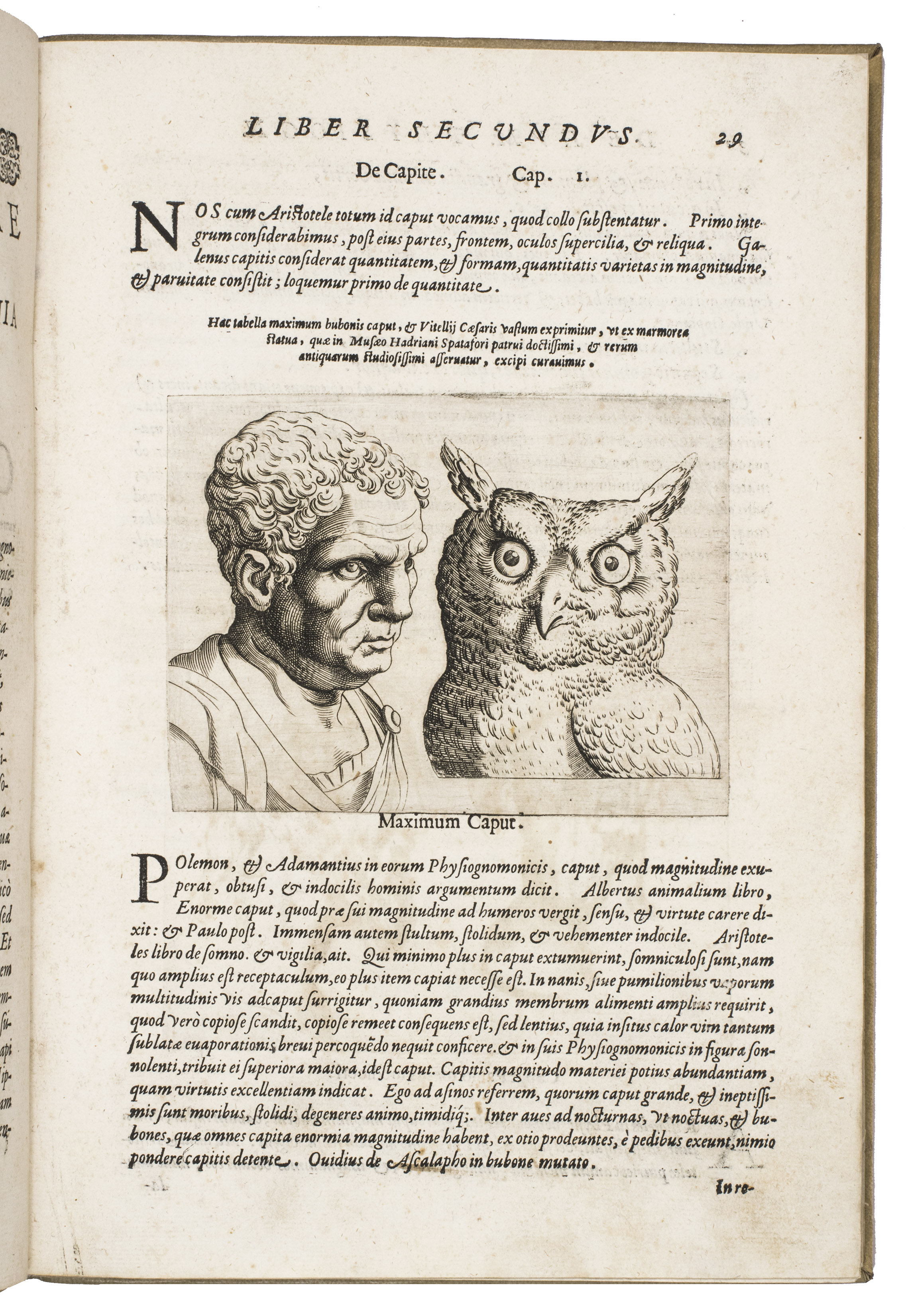
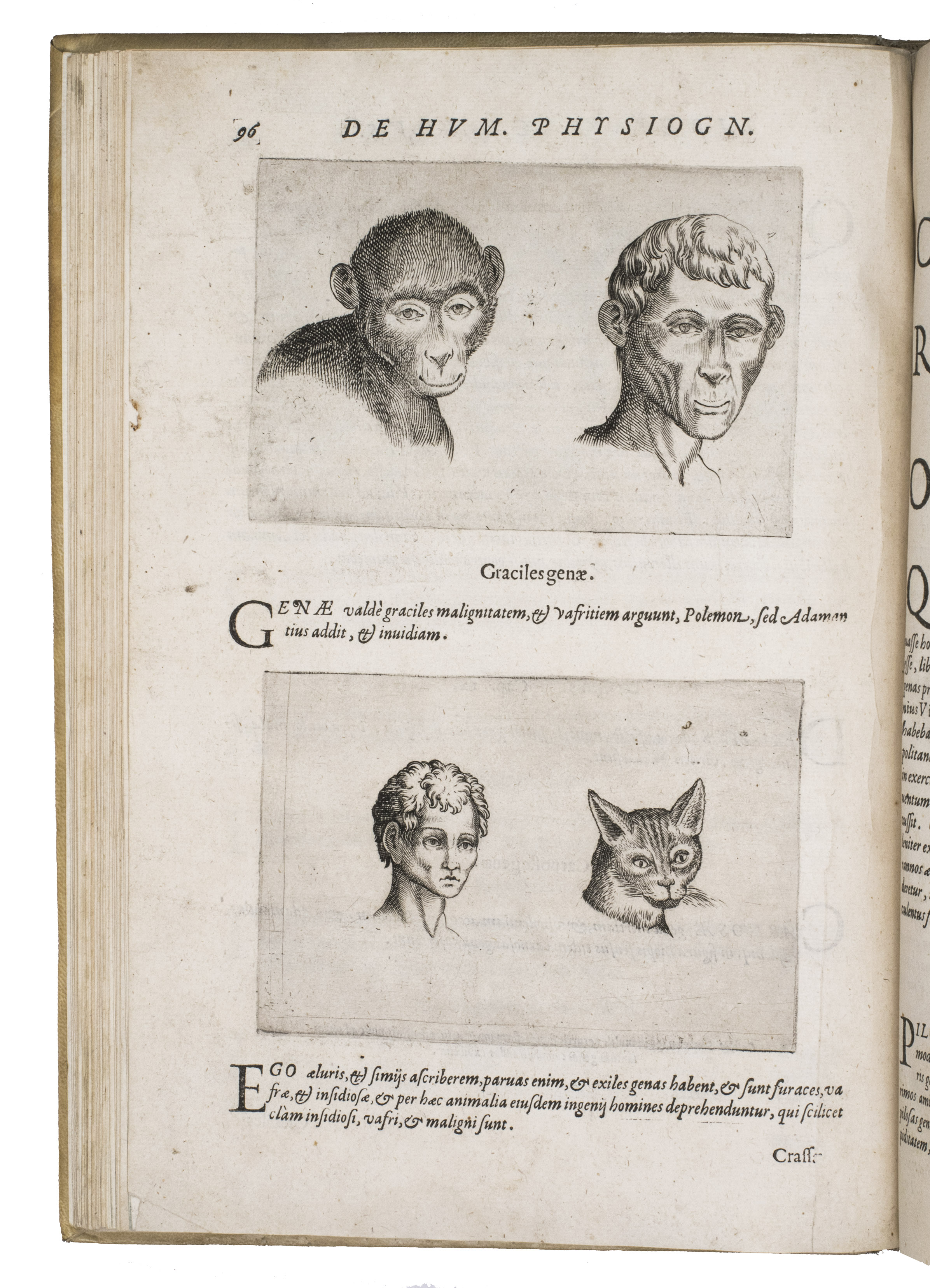
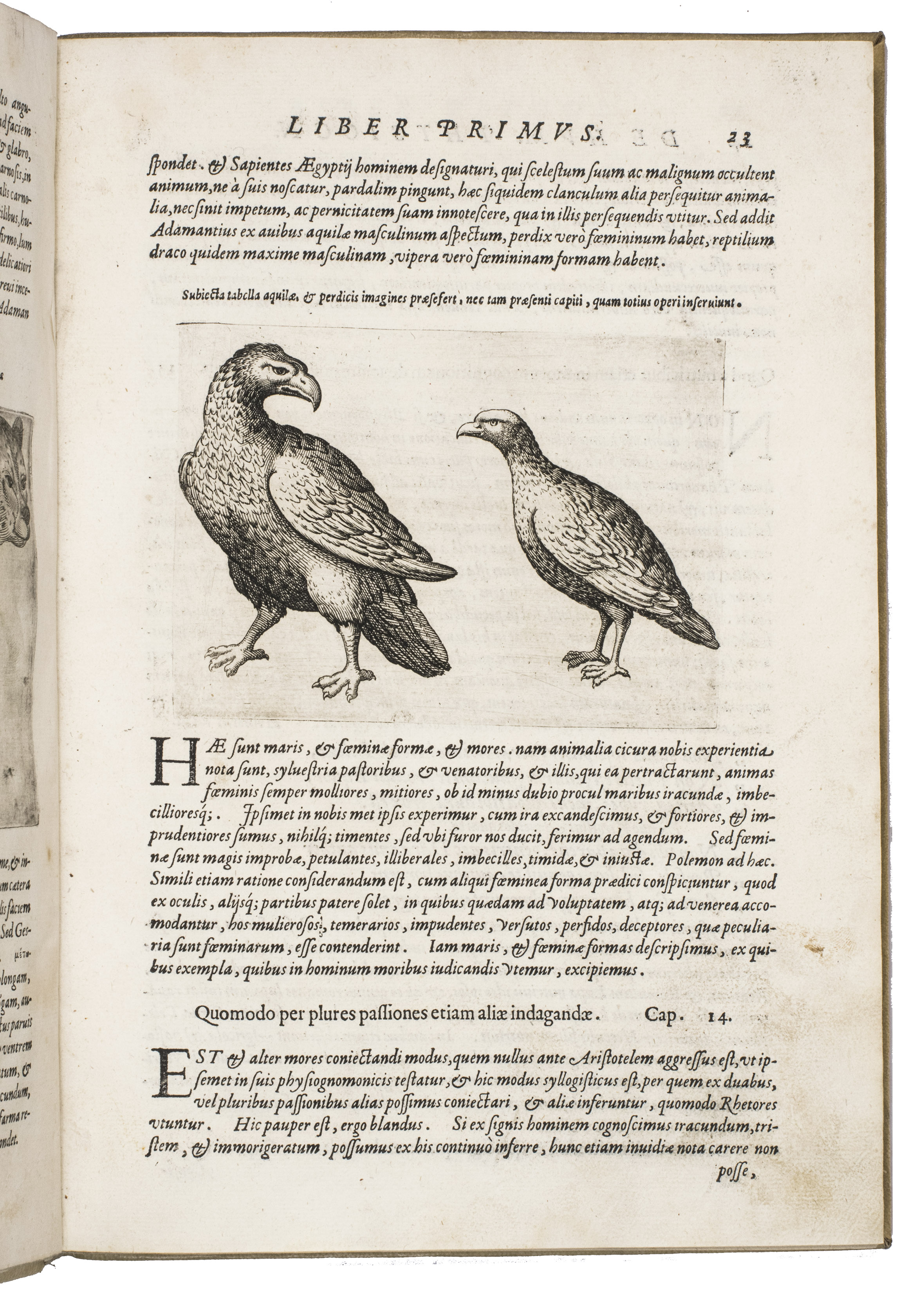
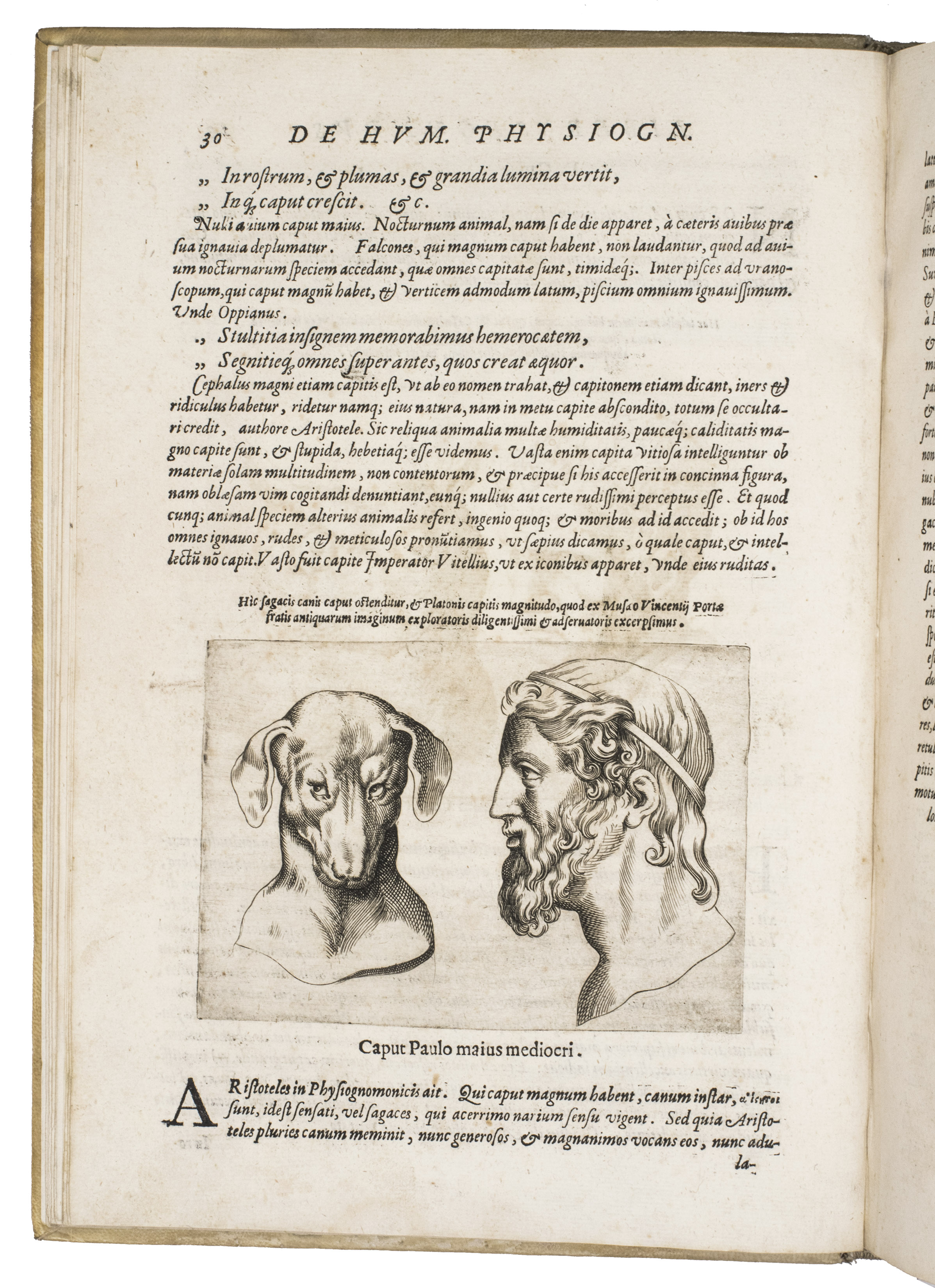
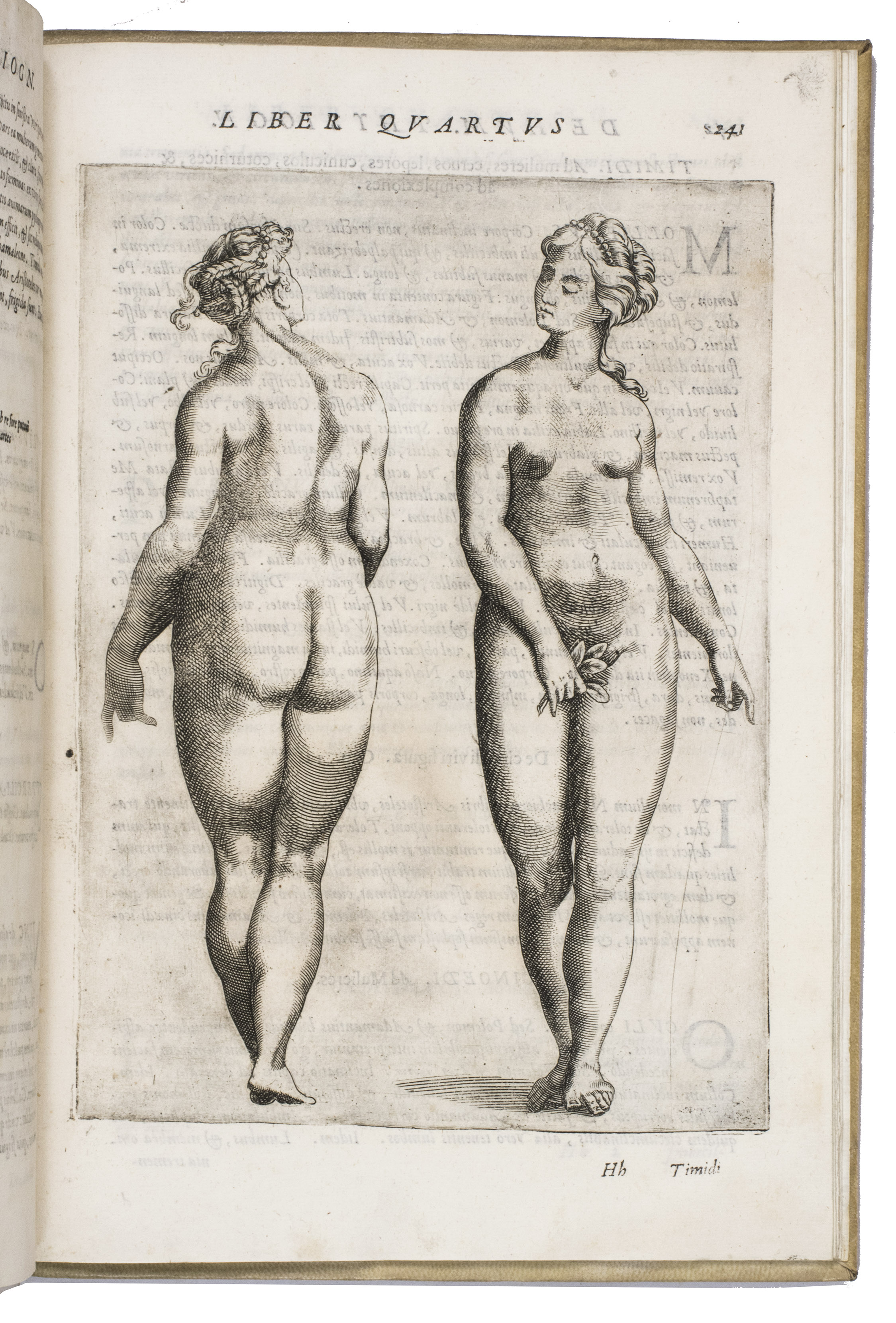
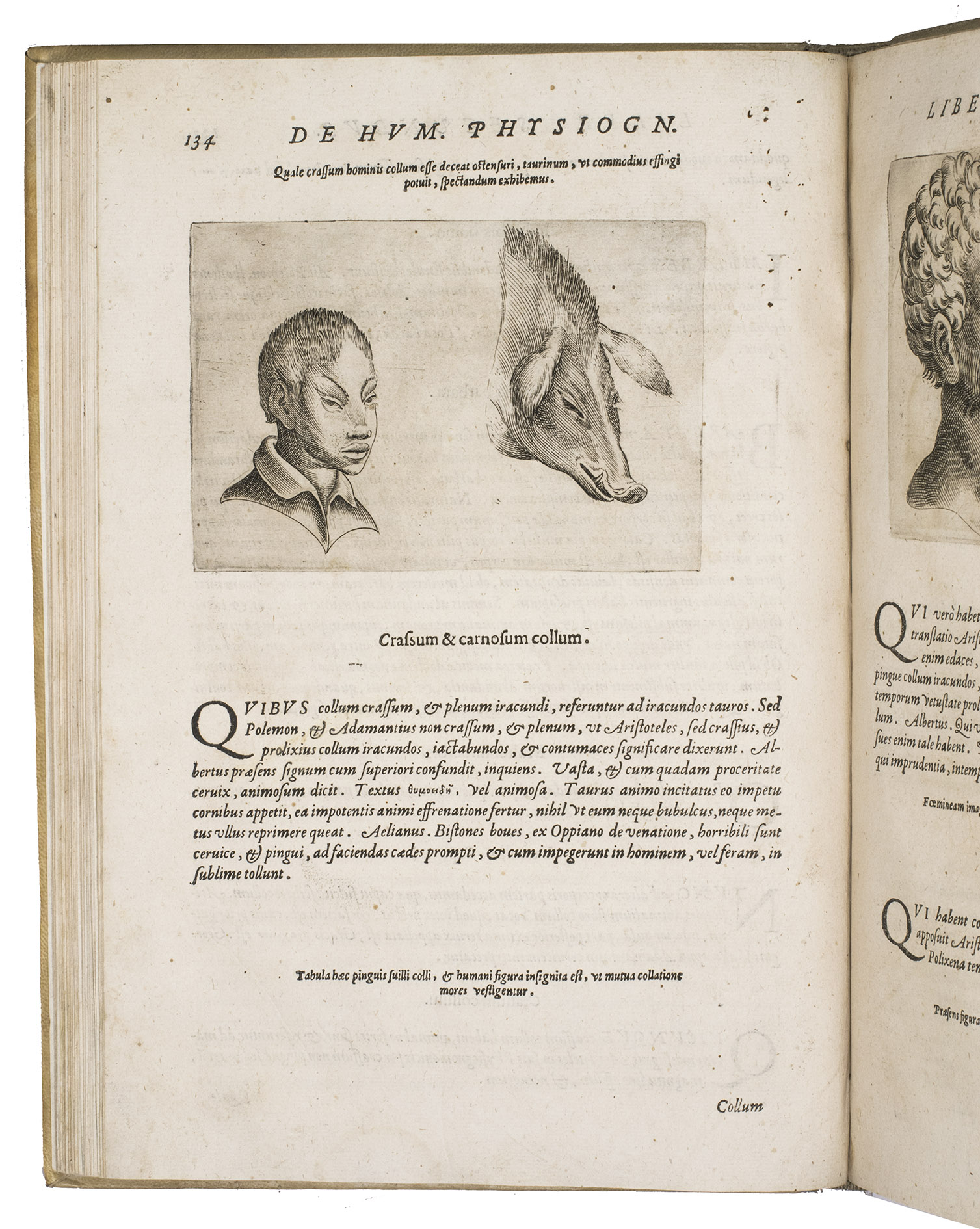
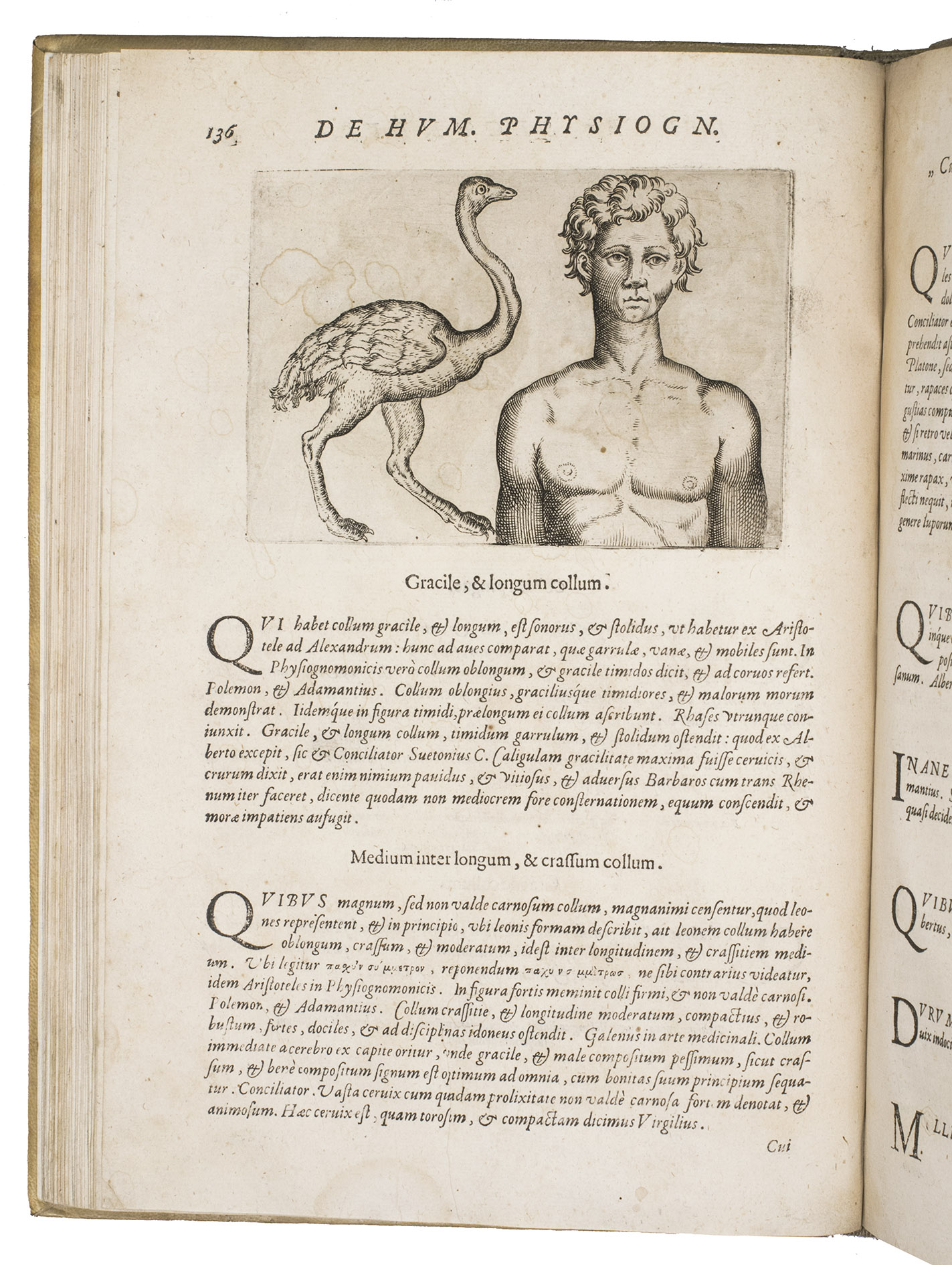
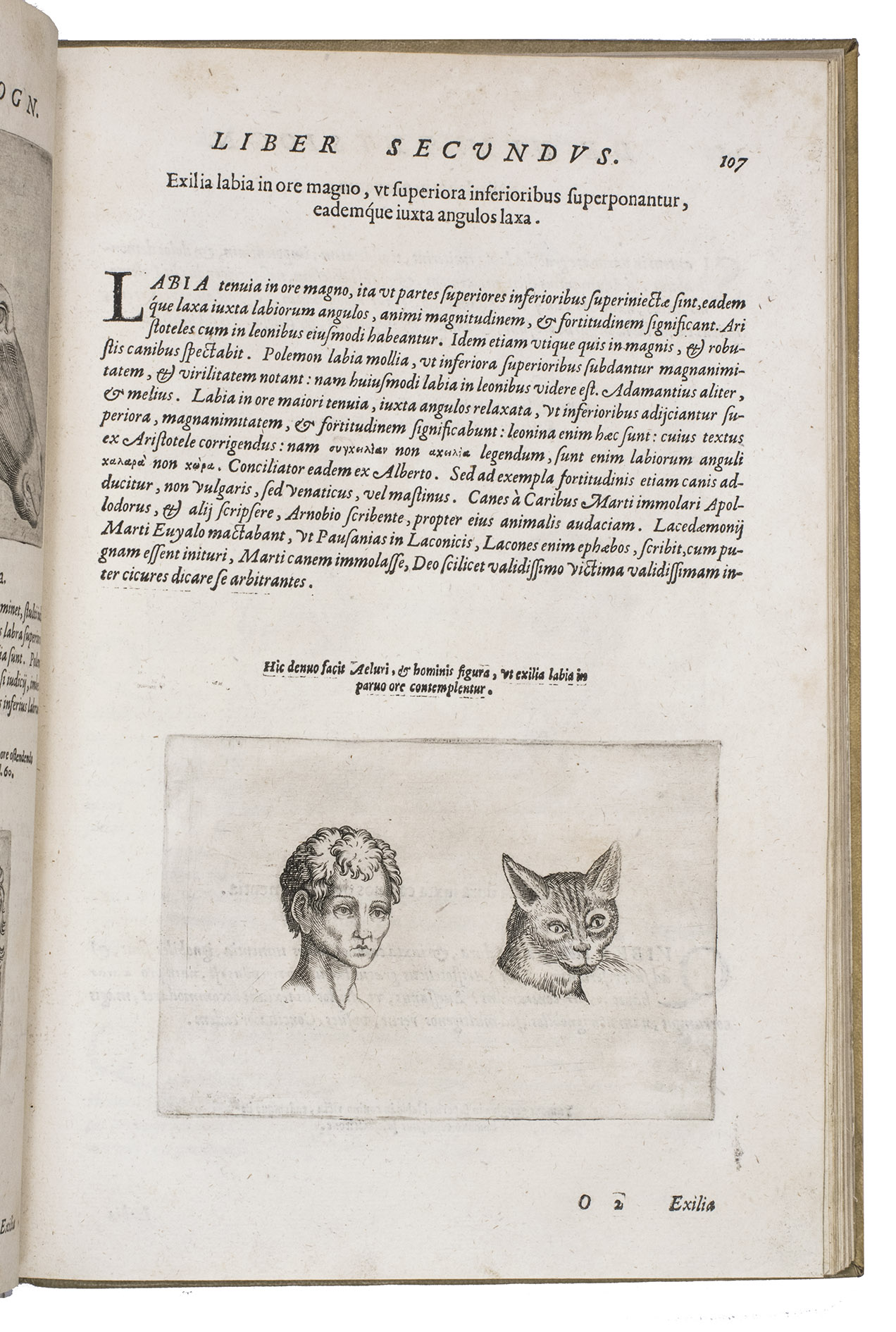
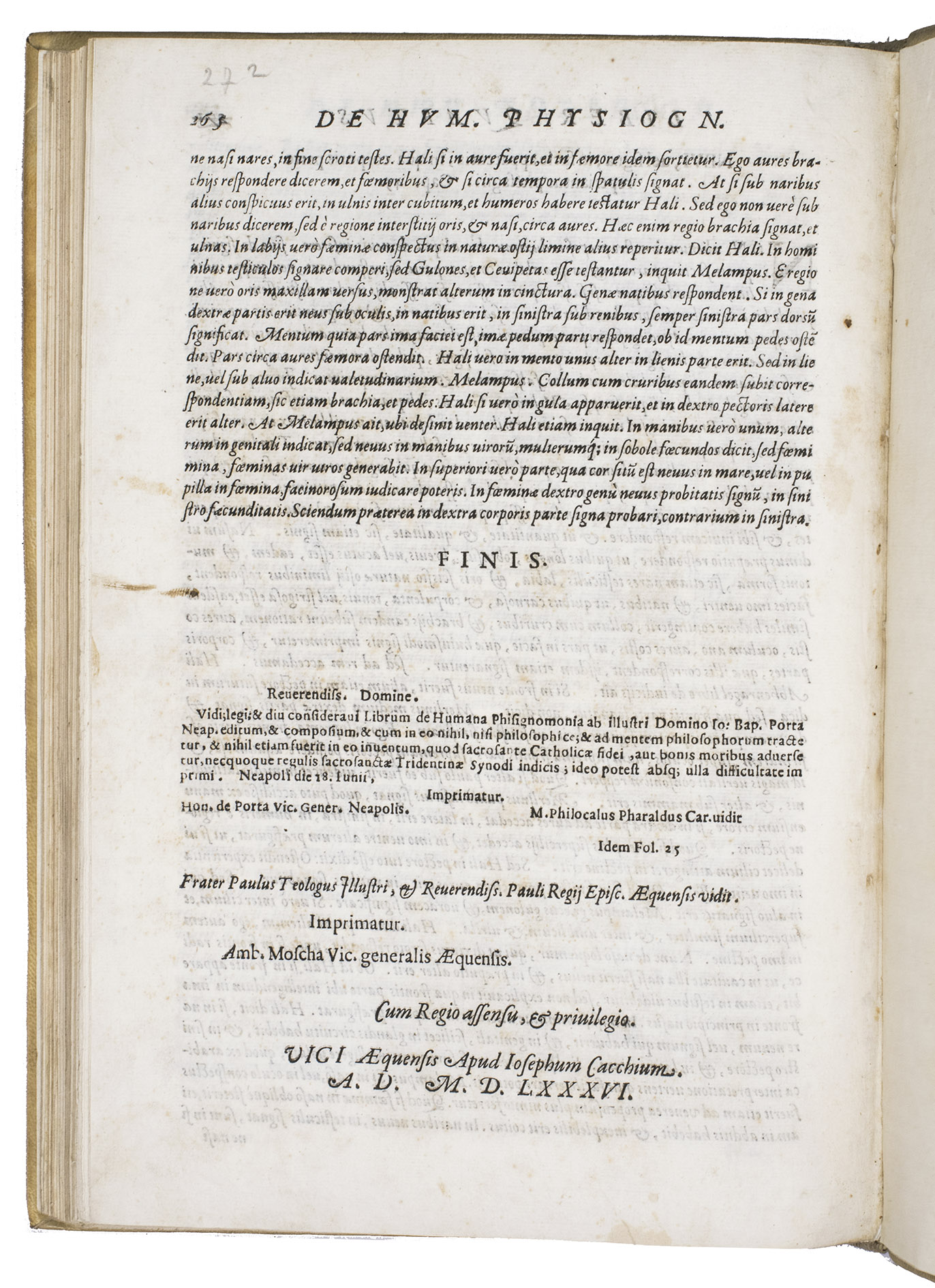
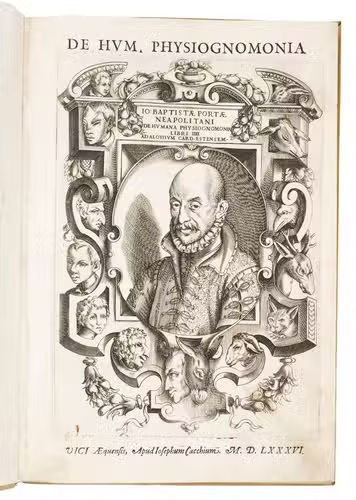
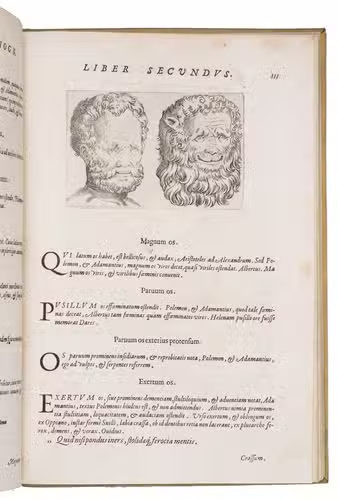
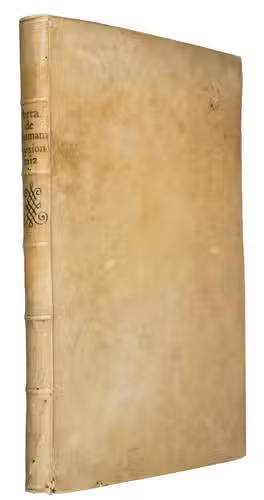
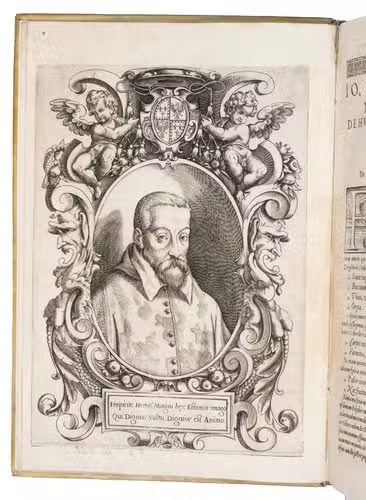
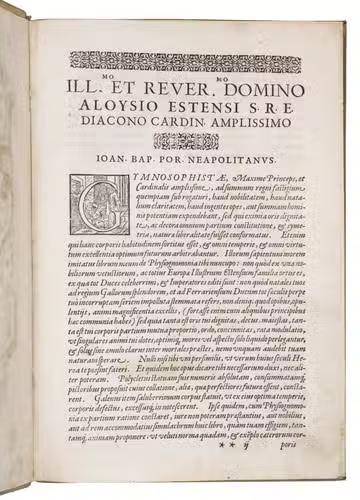
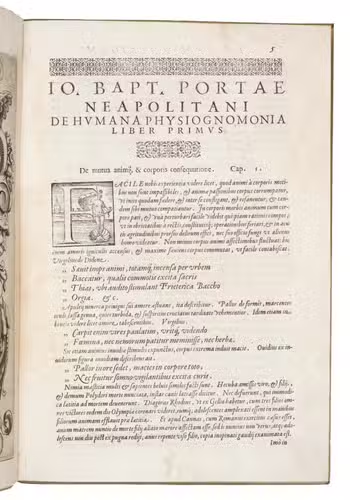
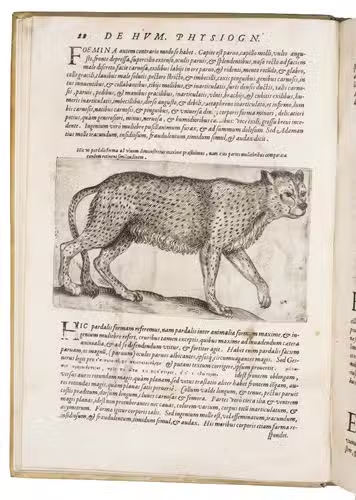
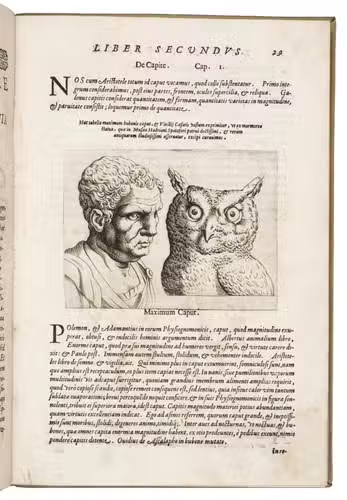
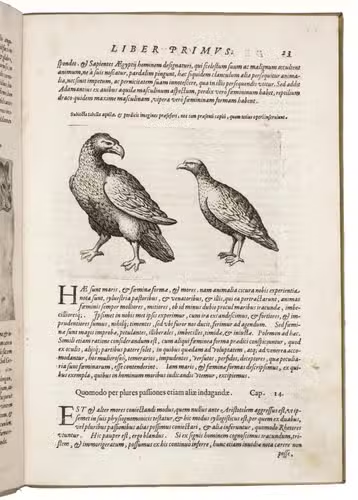
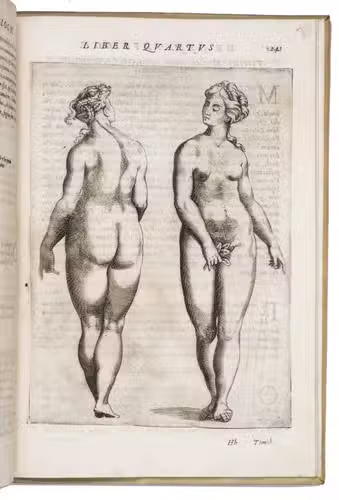
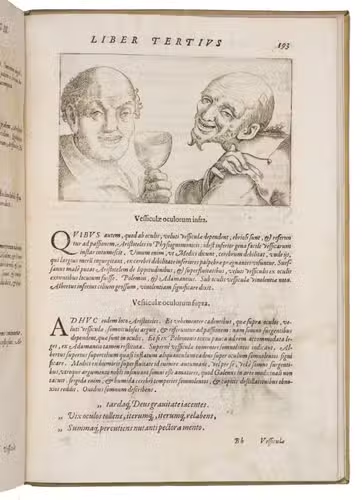
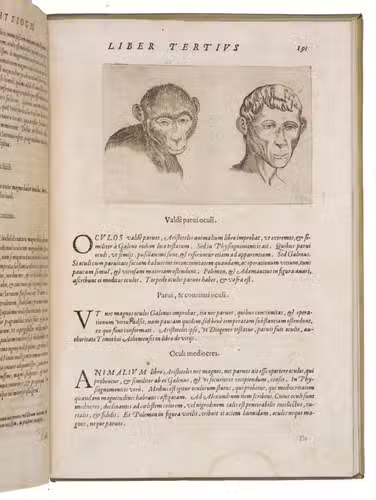
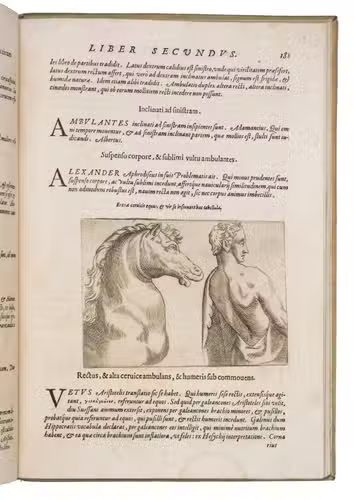
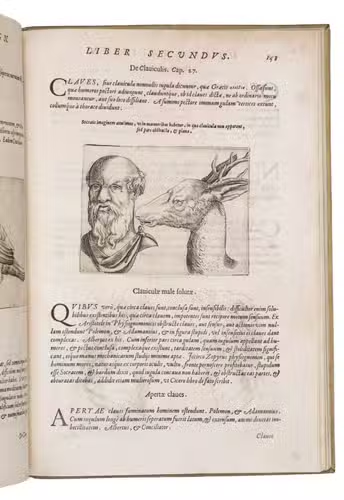
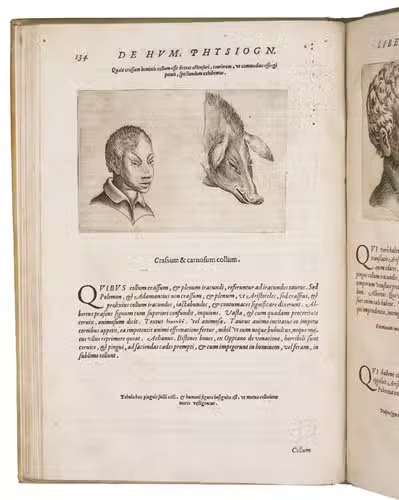
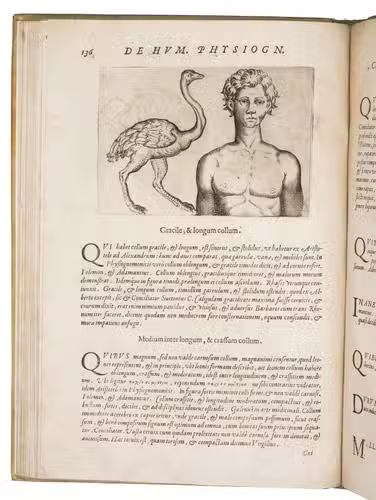
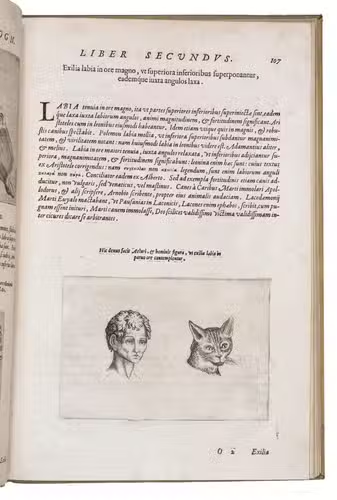
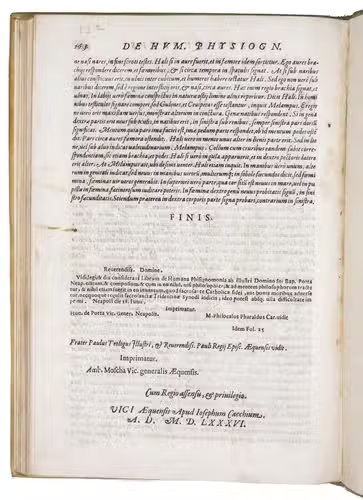
Vico Equense, Giuseppe Cacchi, 1586. Folio (32.5 x 23 cm). With a full-page engraved portrait of the author on the title page, set within an architectural frame incorporating animal and human heads, a full-page engraved portrait of the dedicatee, 85 engraved illustrations throughout, including four full-page plates, a woodcut diagram of a syllogism, and numerous woodcut historiated initials, headpieces, and tailpieces throughout. Contemporary vellum. [4], 265 (=272) pp.
€ 4,000
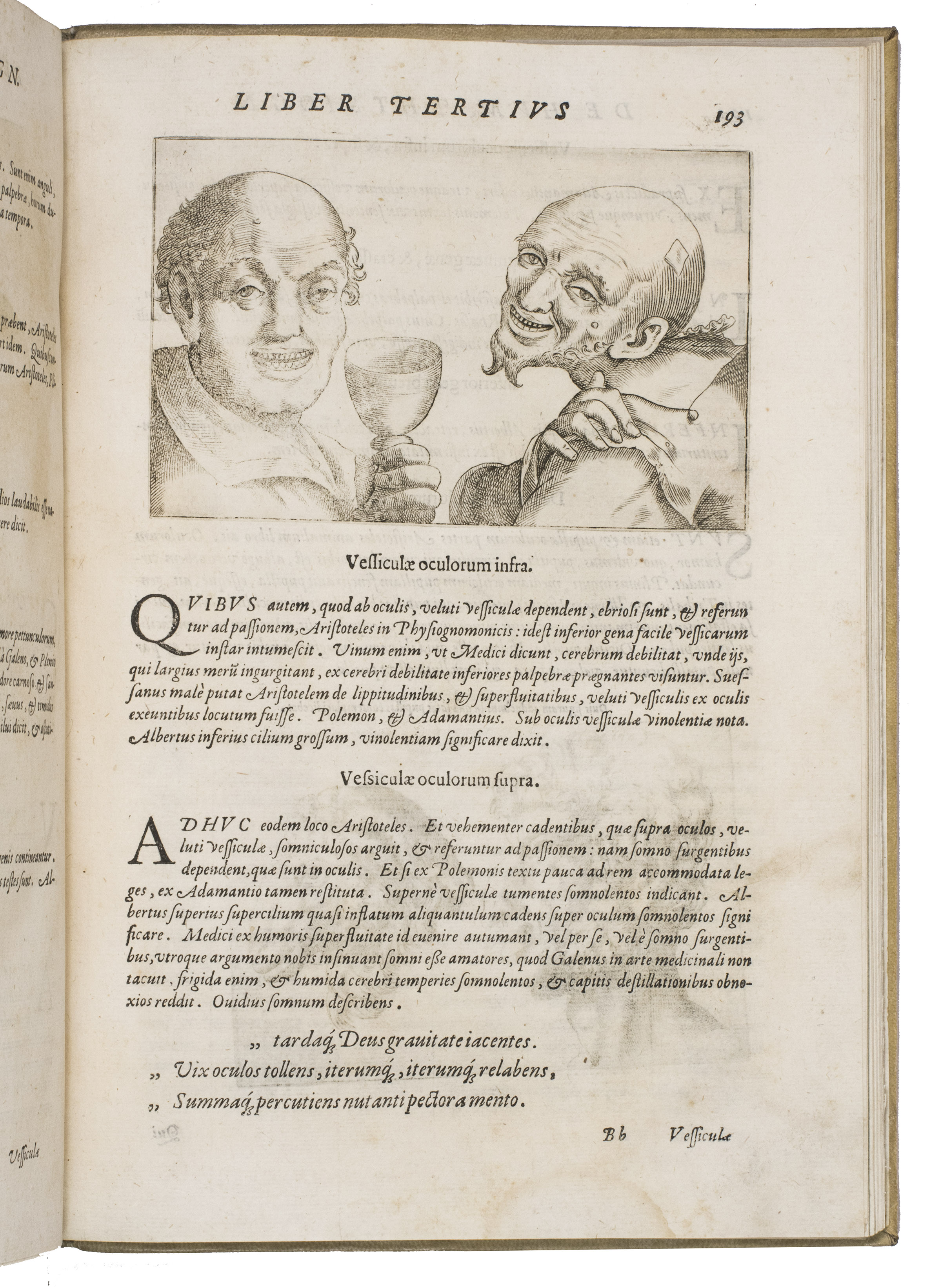
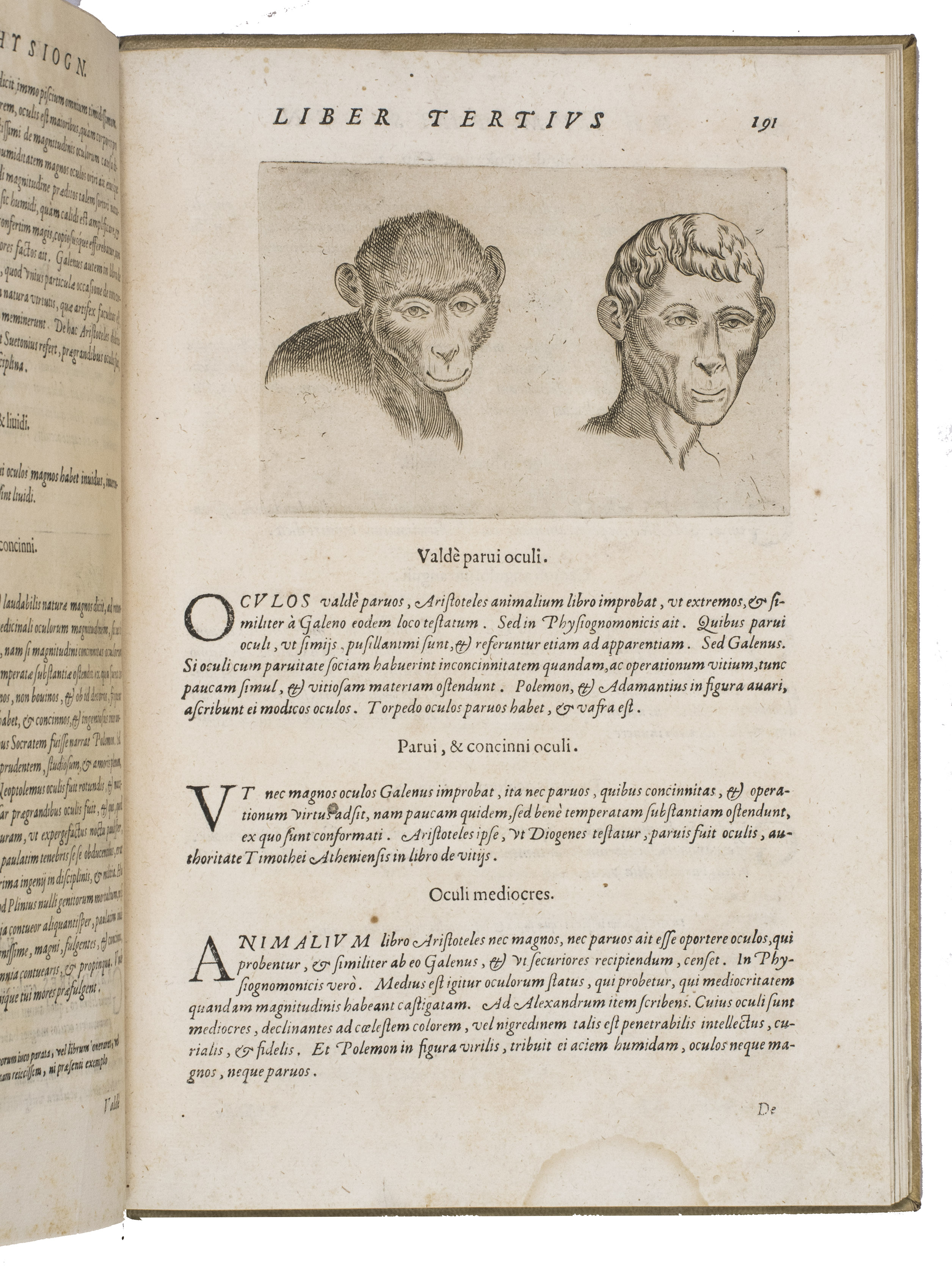
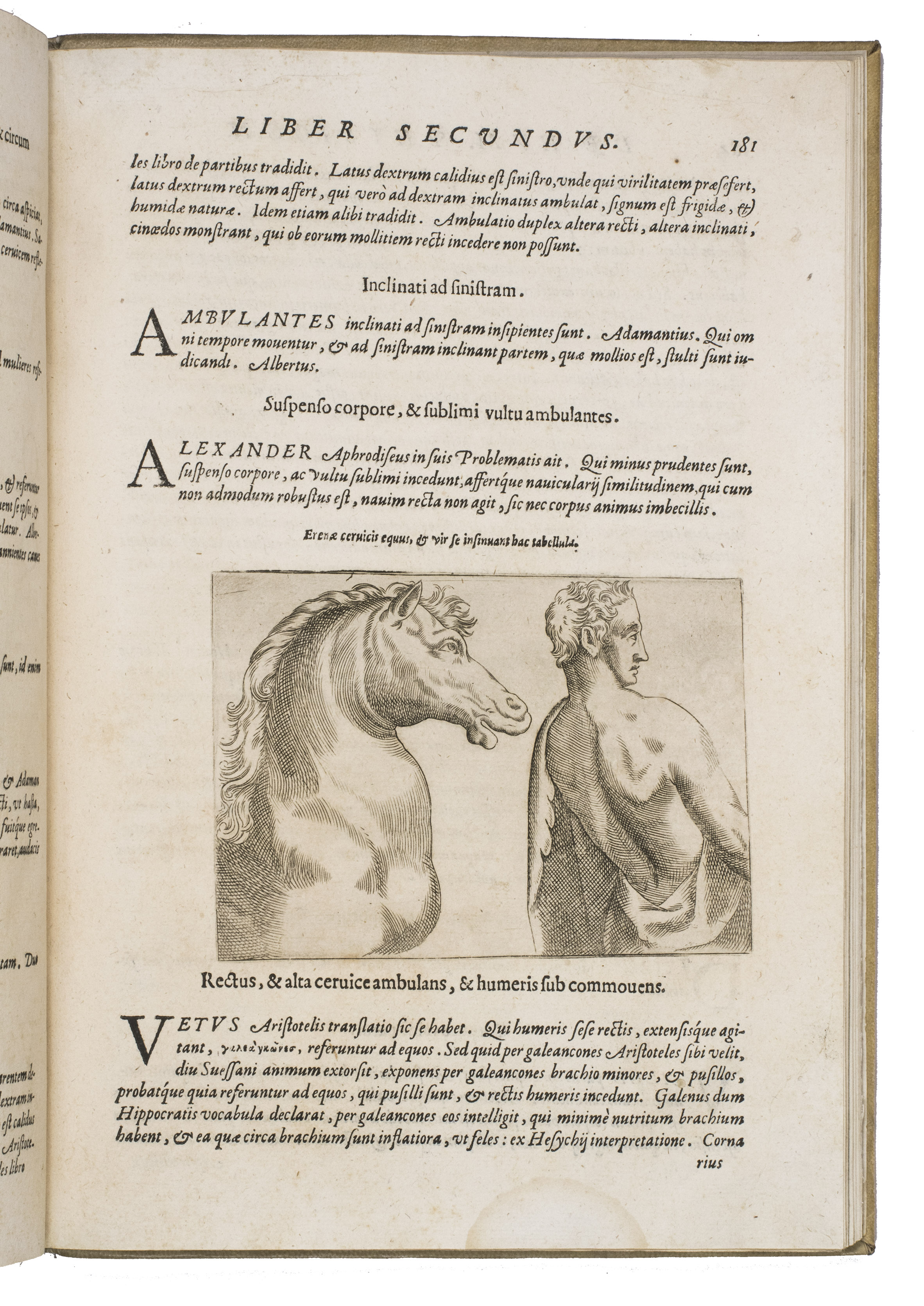
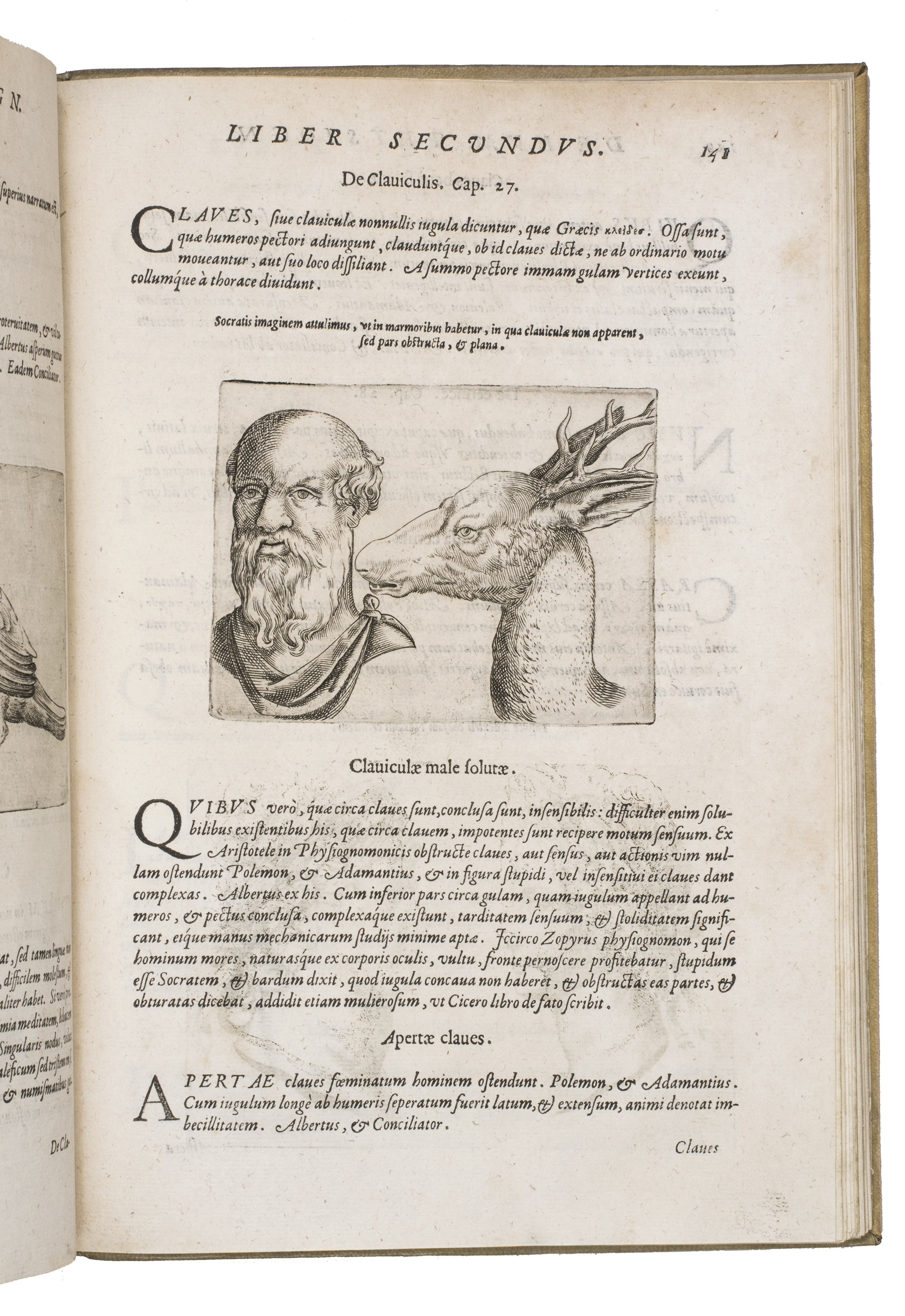
First edition of a landmark of Renaissance thought. Giovanni Battista della Portas (1535-1615) De humana physiognomonia is a foundational work in the history of physiognomy: the study of human character through physical appearance. Printed in 1586 in Vico Equense (southern Italy) by Giuseppe Cacchi (1535-1593), the towns first printer, it ranks among the earliest extensively illustrated treatises devoted to the subject.
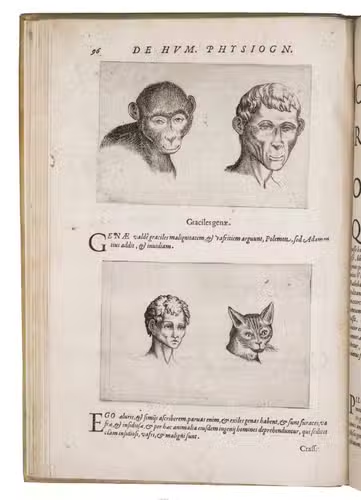
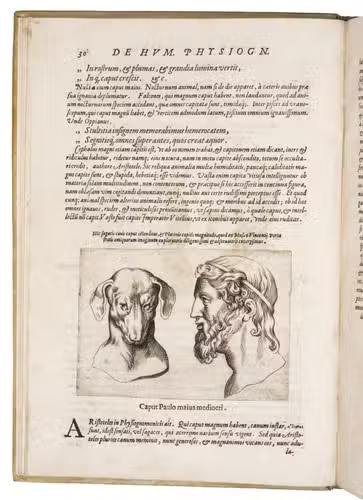
Della Porta was a leading intellectual of the Italian Renaissance, a polymath and founder of the Neapolitan Accademia degli Oziosi, who sought to systematise the relationship between outward form and inner disposition. Drawing on classical sources while emphasising direct observation and comparison, De humana physiognomonia advances a method that links facial features, bodily proportions, posture, gestures, and especially the hands to moral and psychological traits, frequently through analogies with animals.
The work reflects a keen observational eye. Della Porta examined individuals across diverse social settings, including prisons, and recorded both morphological and behavioural characteristics. Notable passages include early descriptions of the Neapolitan femminielli, underscoring his interest in the expressive connection between body, behaviour, and identity. His conviction that the body mirrors the soul underpins the entire treatise, physical features are presented not as arbitrary forms, but as meaningful signs of temperament and character.
With a green and white round bookplate of Gino Sabattini ("De Phisonomia Ex-Libris Gion Sabattini") mounted on the front pastedown. A small (ca. 1 cm) worm hole at the foot of the spine and a smaller worm hole at the foot edge of the front board, the vellum is very slightly stained. The work is somewhat stained and foxed throughout. Otherwise in very good condition. Bird 1974; BL Italian books p.536; Castiglioni p.515; Cicognara, vol. 1, no. 2454; Durling 3720; Edit 16 CNCE 16532; EEB (Proquest) hin-wel-all-00005559-001; Garrison-Morton 150; Mortimer 398; Norman 1723.
Related Subjects: