NAVA Y ORTEGA, Henriques.
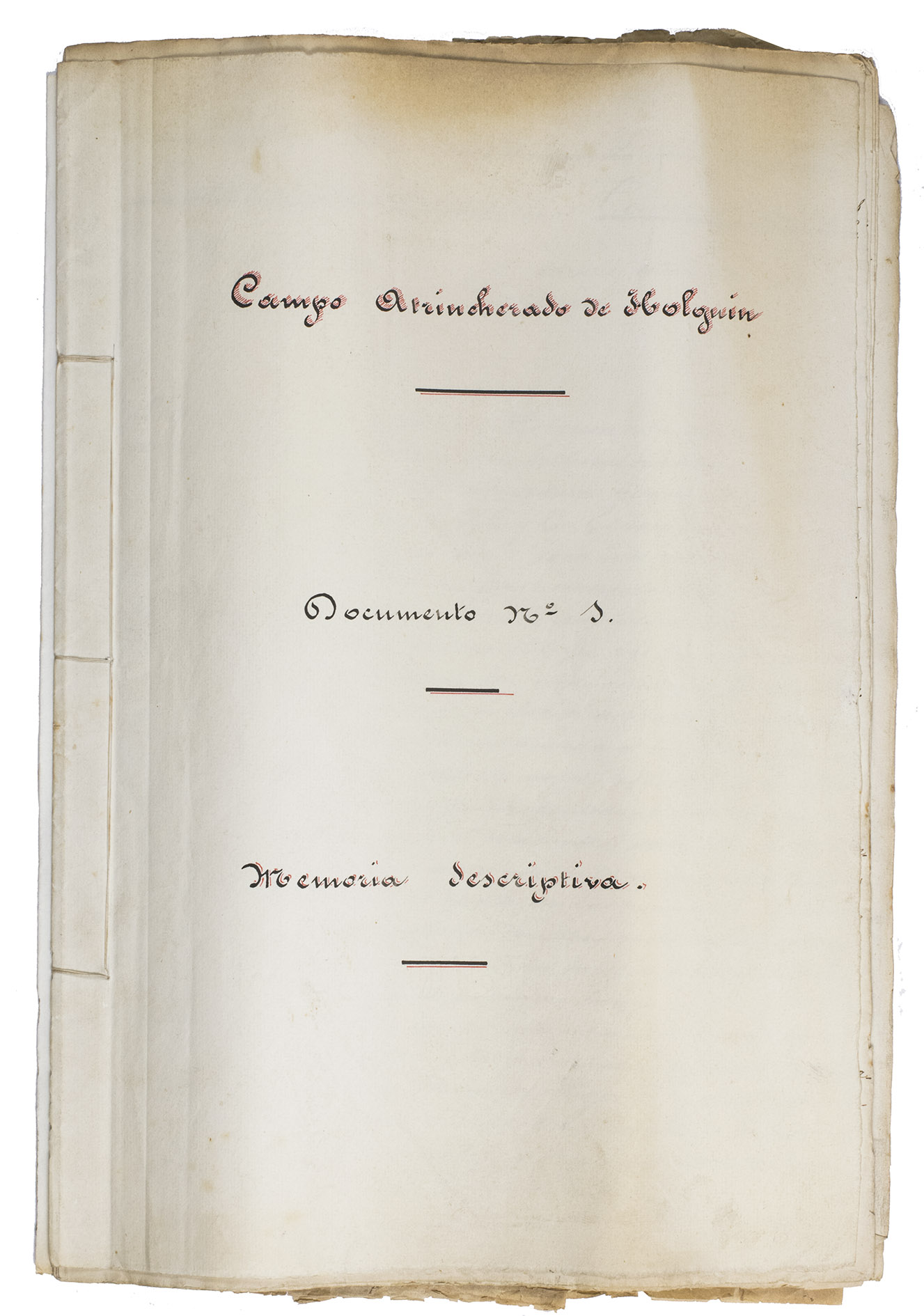
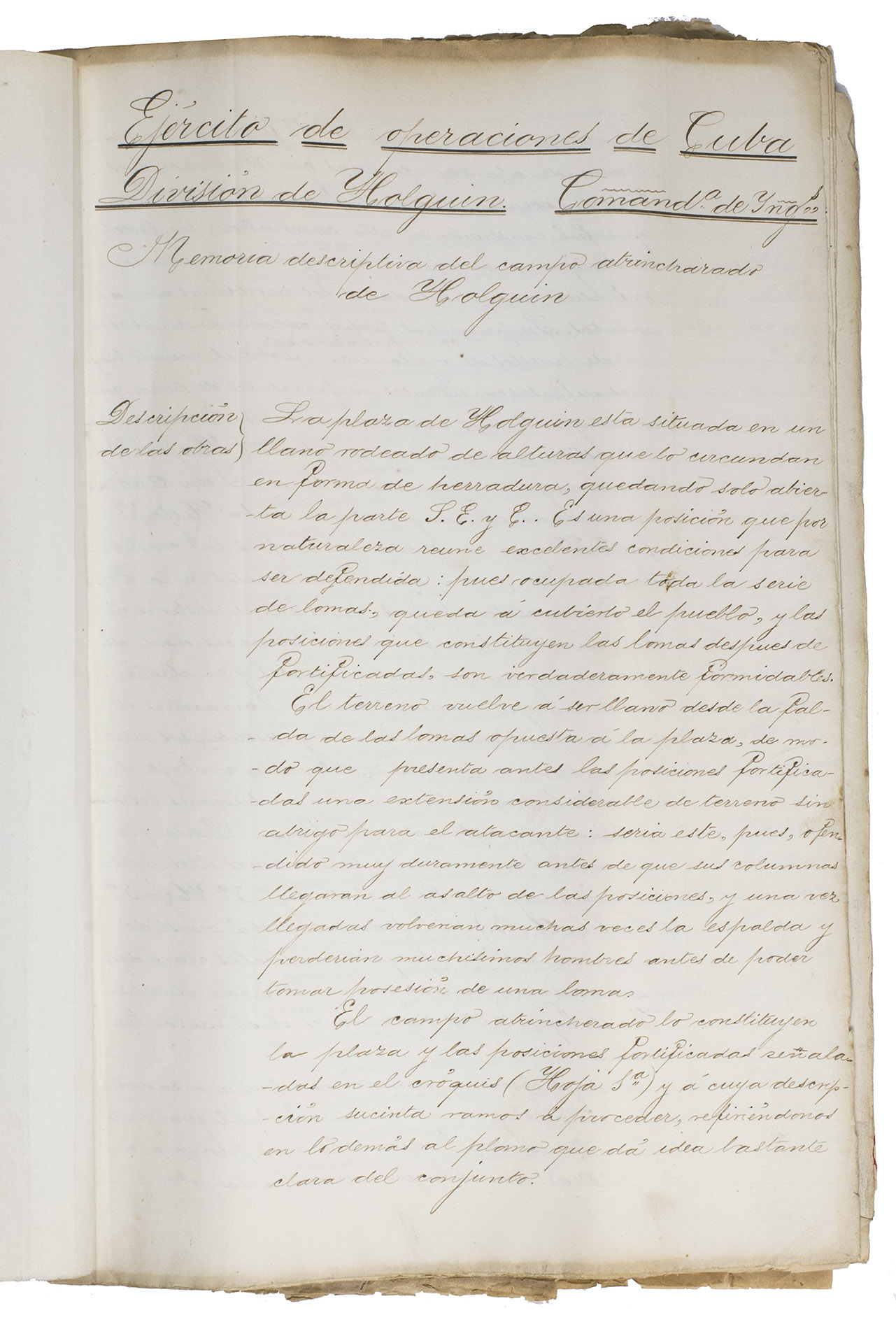
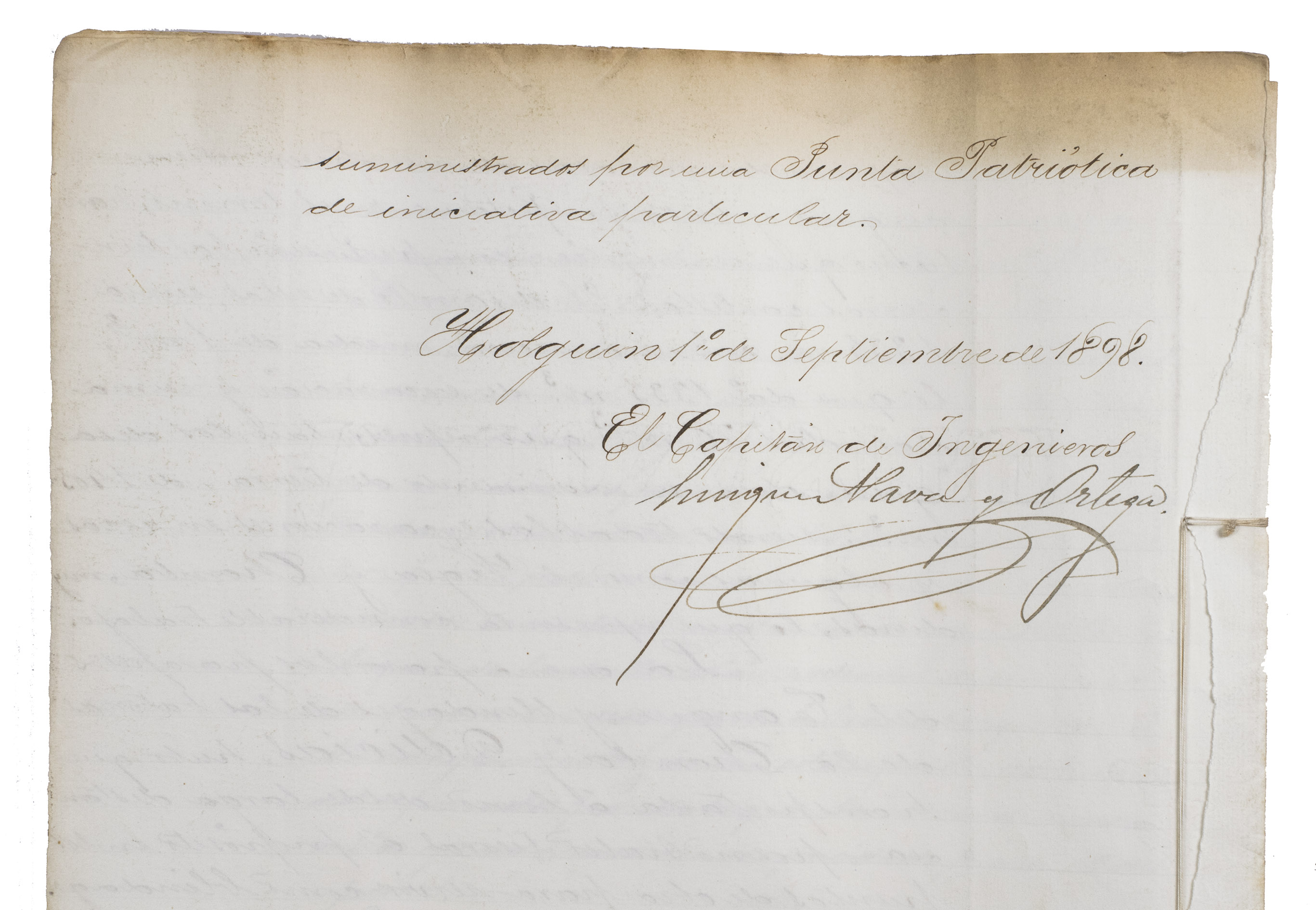
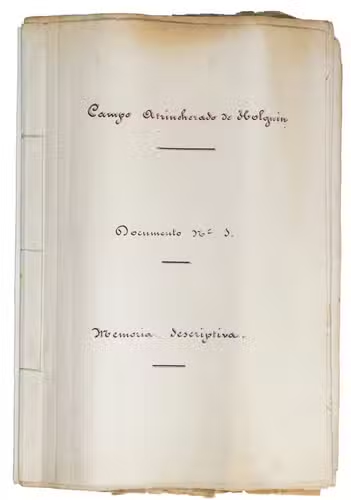
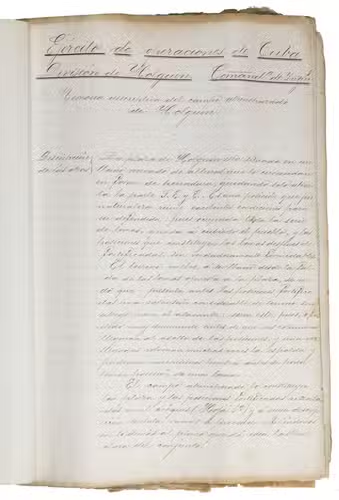
Campo Atrincherado de Holguin. Documento no. 1. Memoria descriptiva.
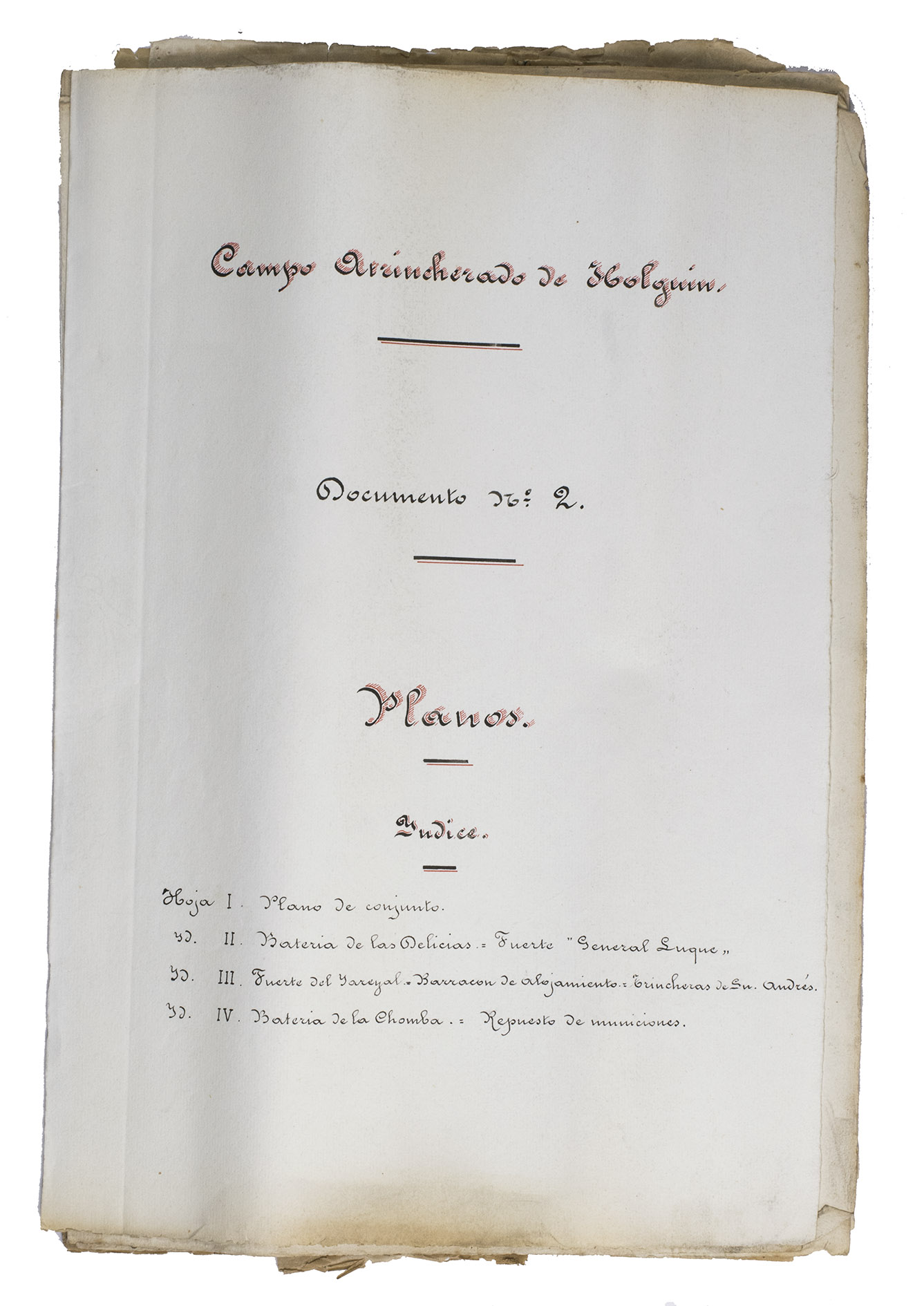
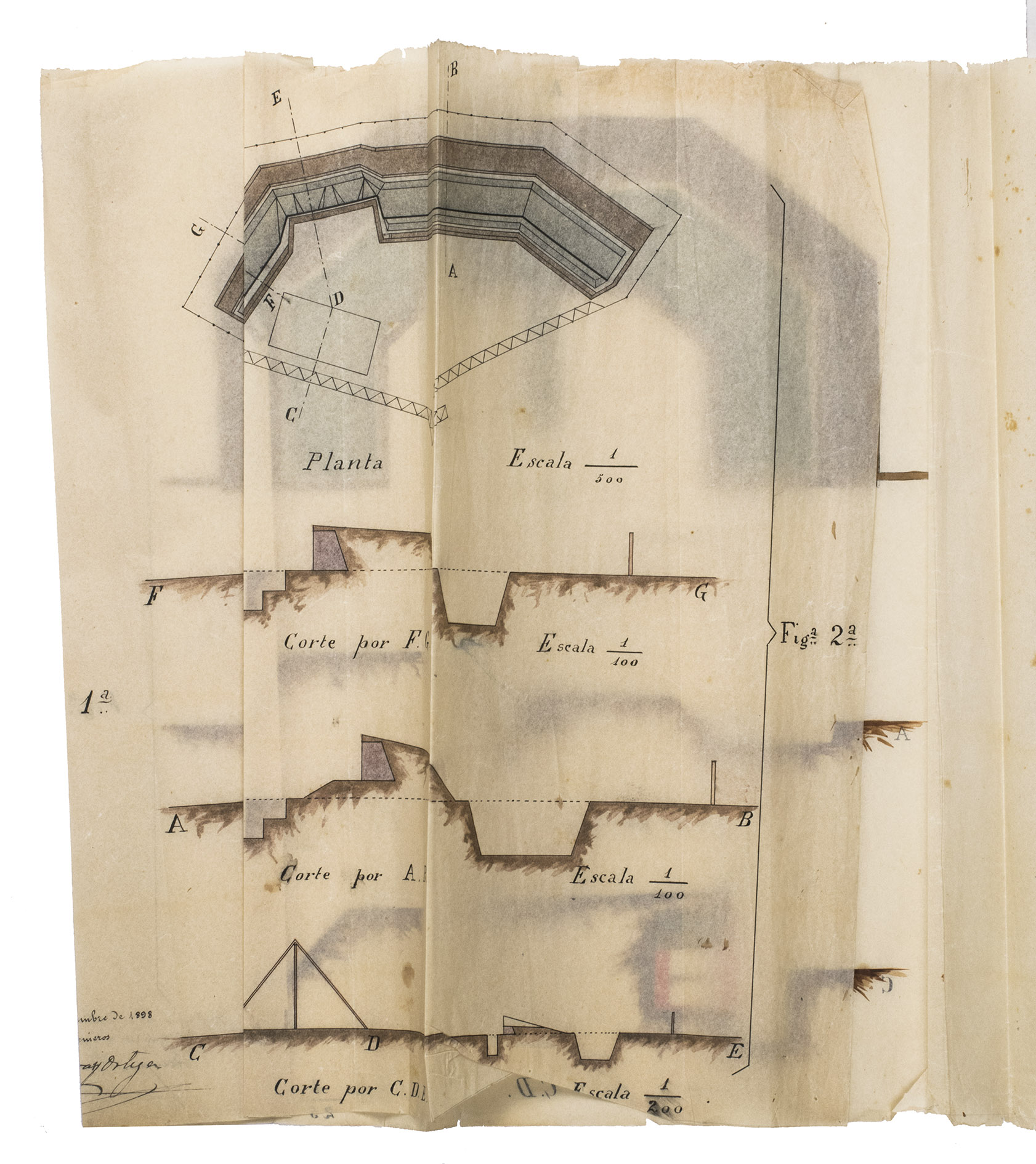
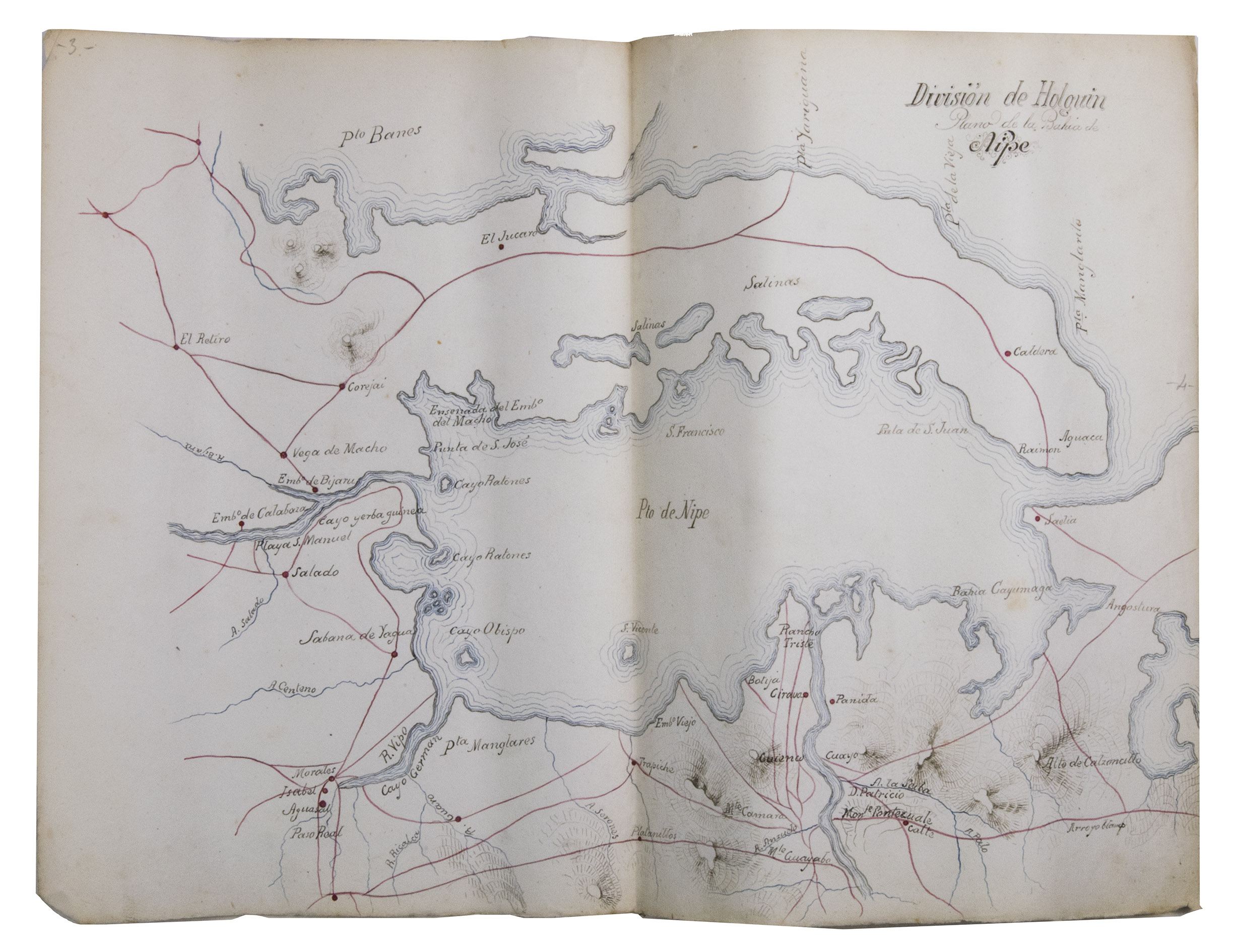
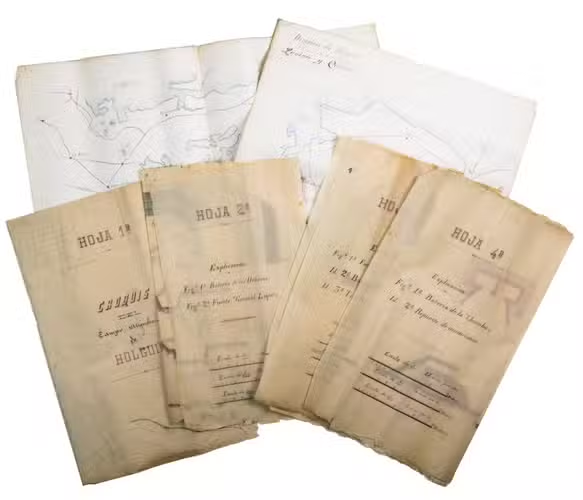
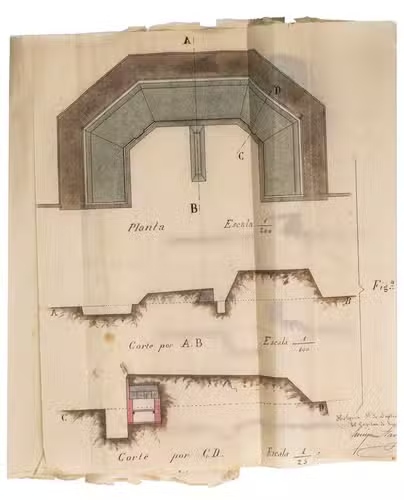
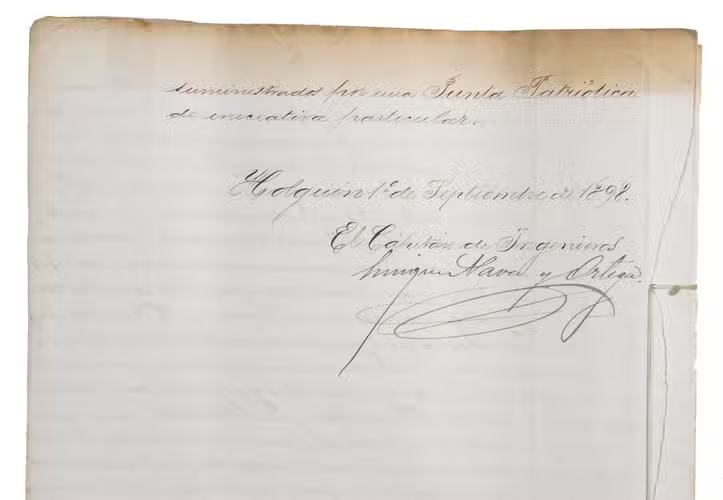
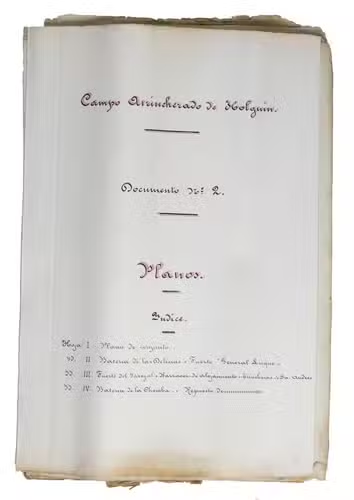
Holguín, 1 September 1898. 2 documents. Folio. With a double-page manuscript map, 2 full-page manuscript maps, and 4 manuscript plans on tissue paper. Including: IDEM. Campo Atrincherado de Holguin. Documento no. 2. Planos.
Holguín, 1 September 1898. Ad 1: Original wrappers, side stiched through 3 holes, with the manuscript title on the front. Ad 2: unbound. [16] pp.
€ 4,950
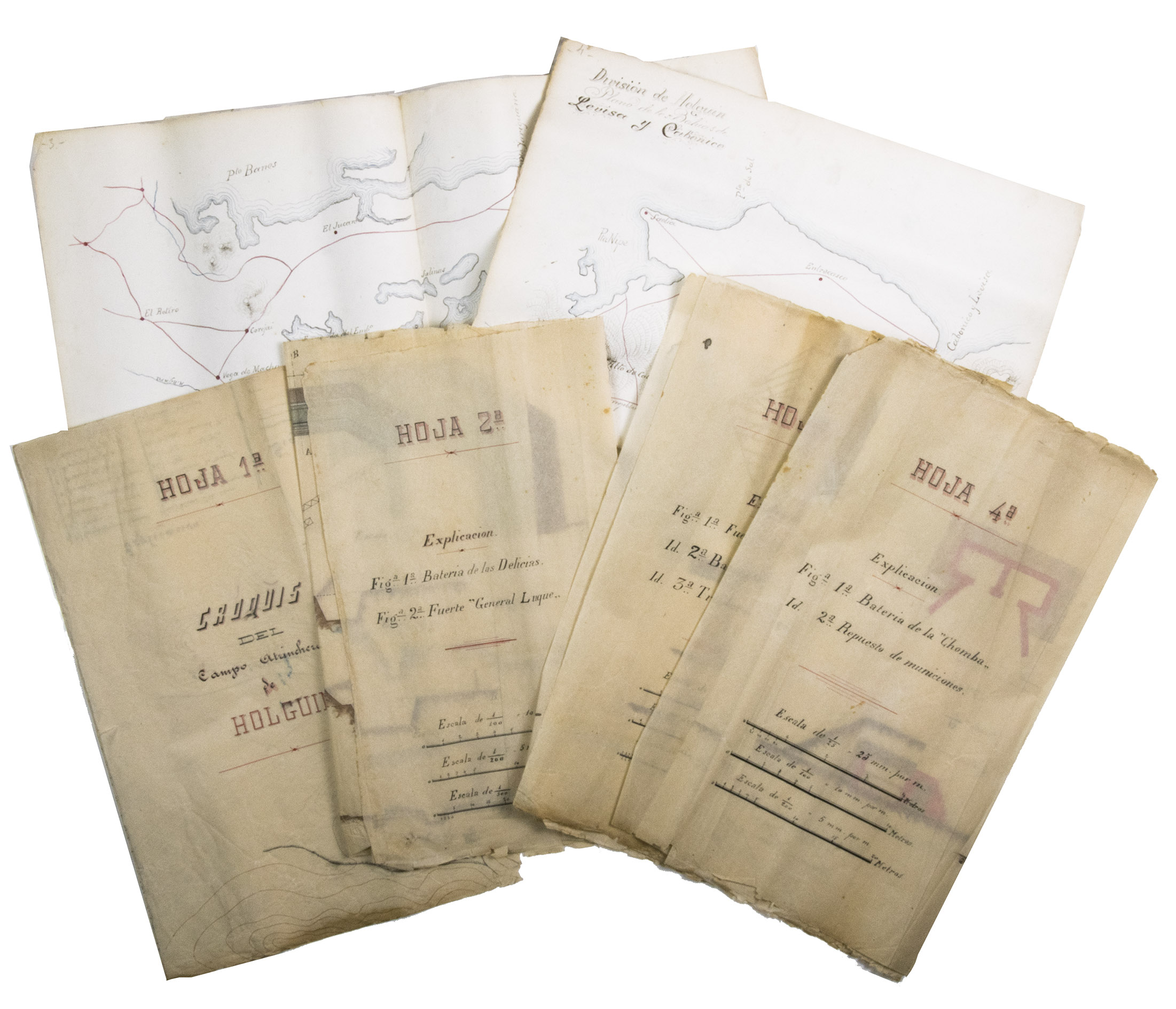
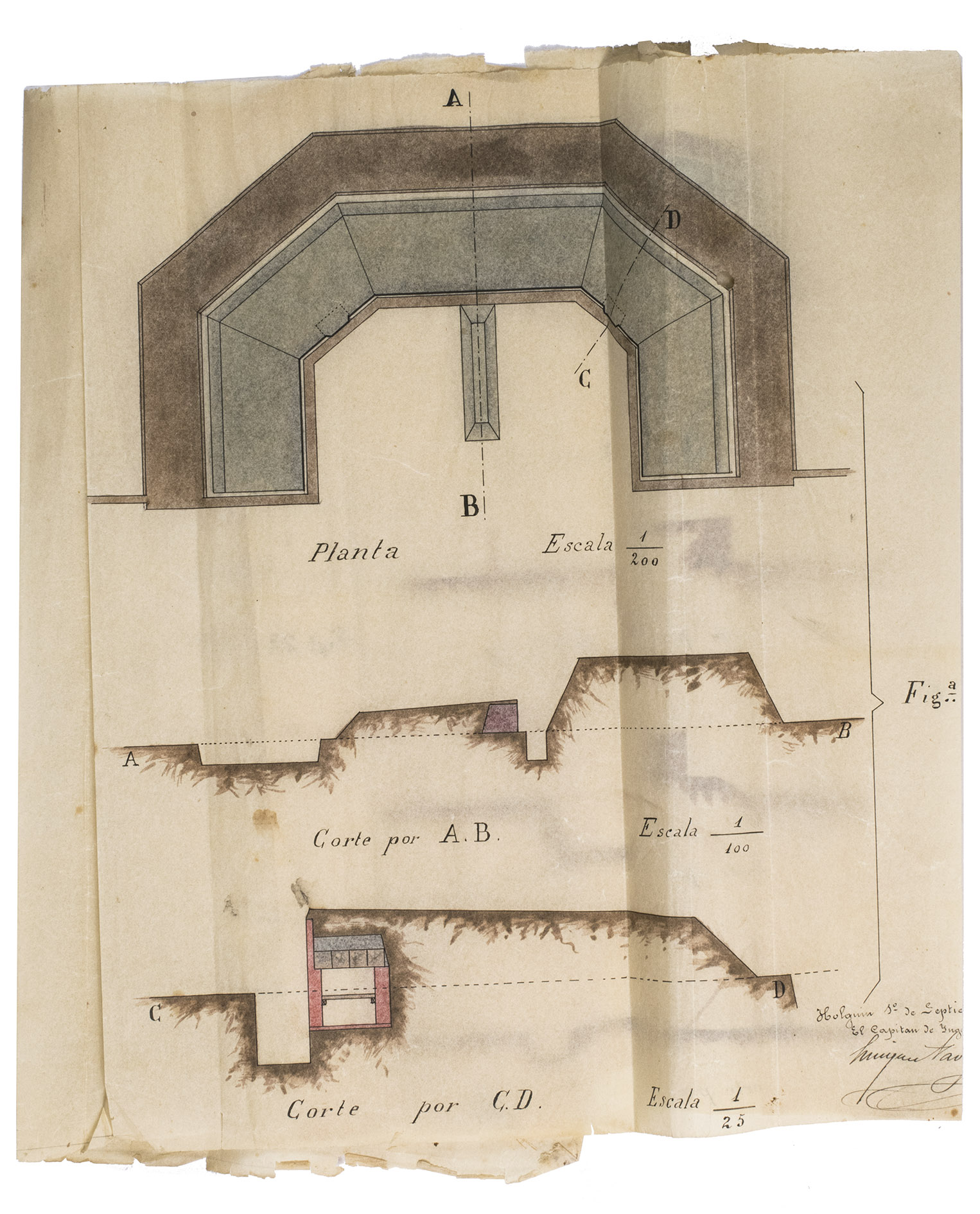
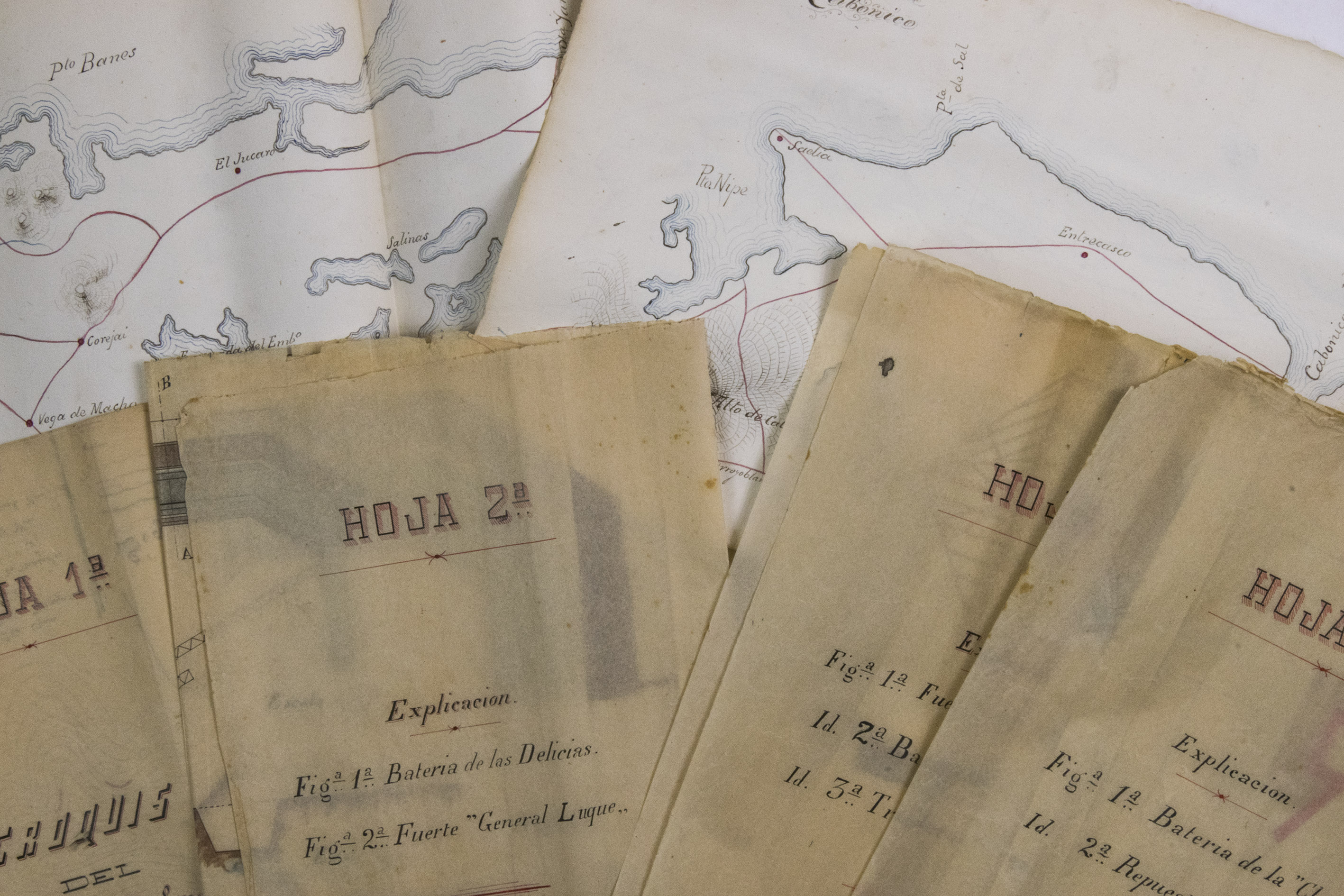
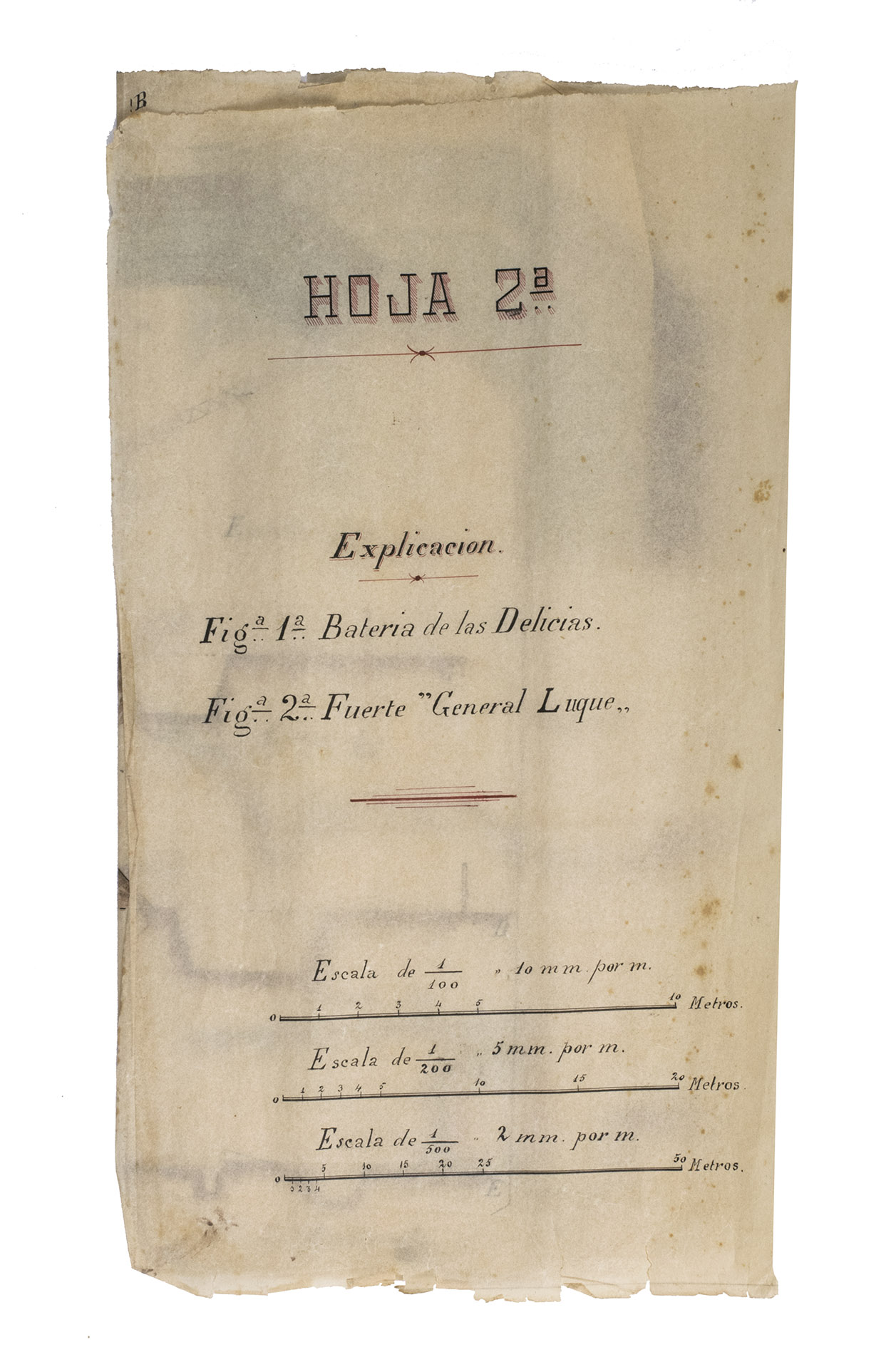
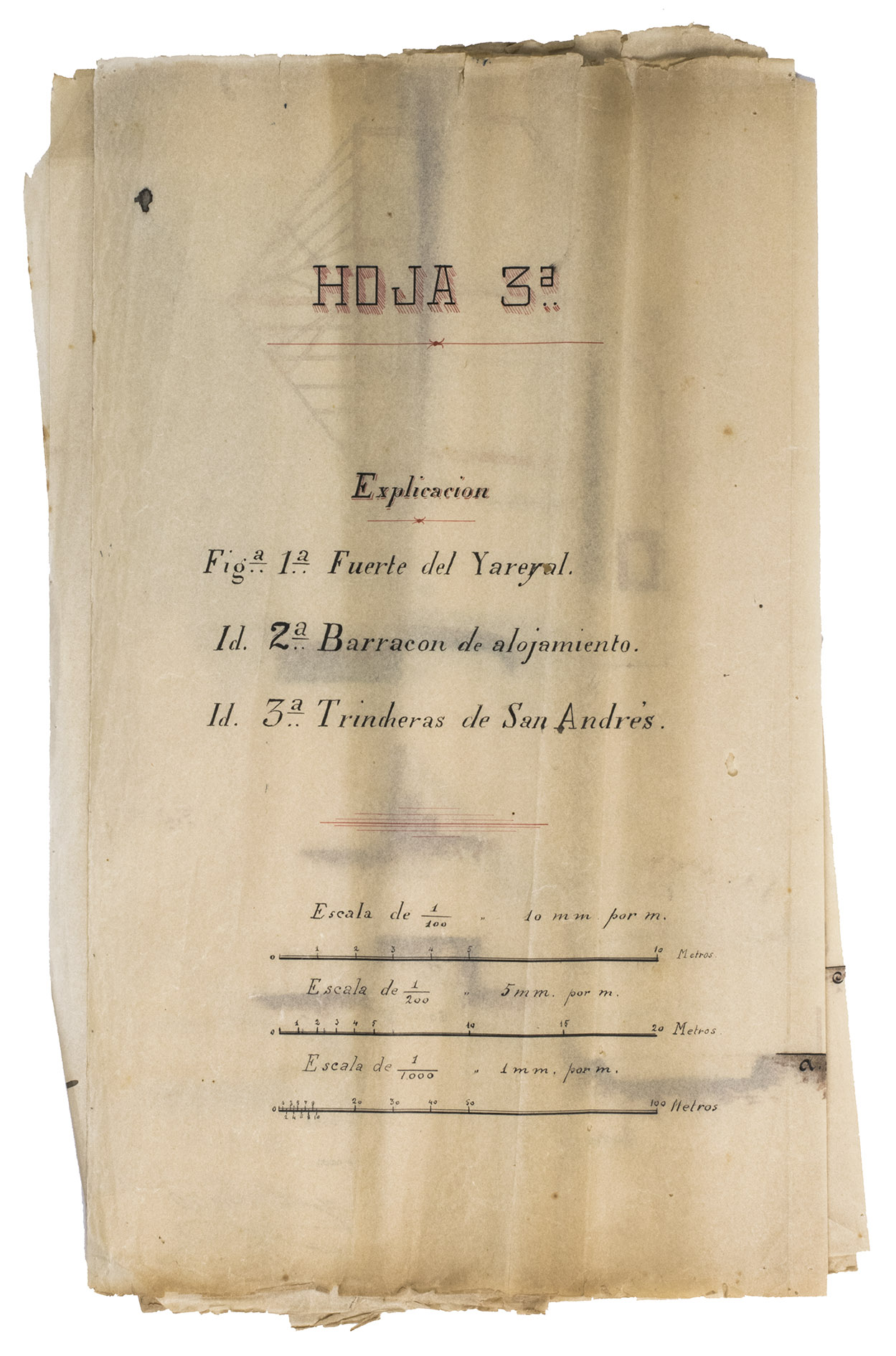
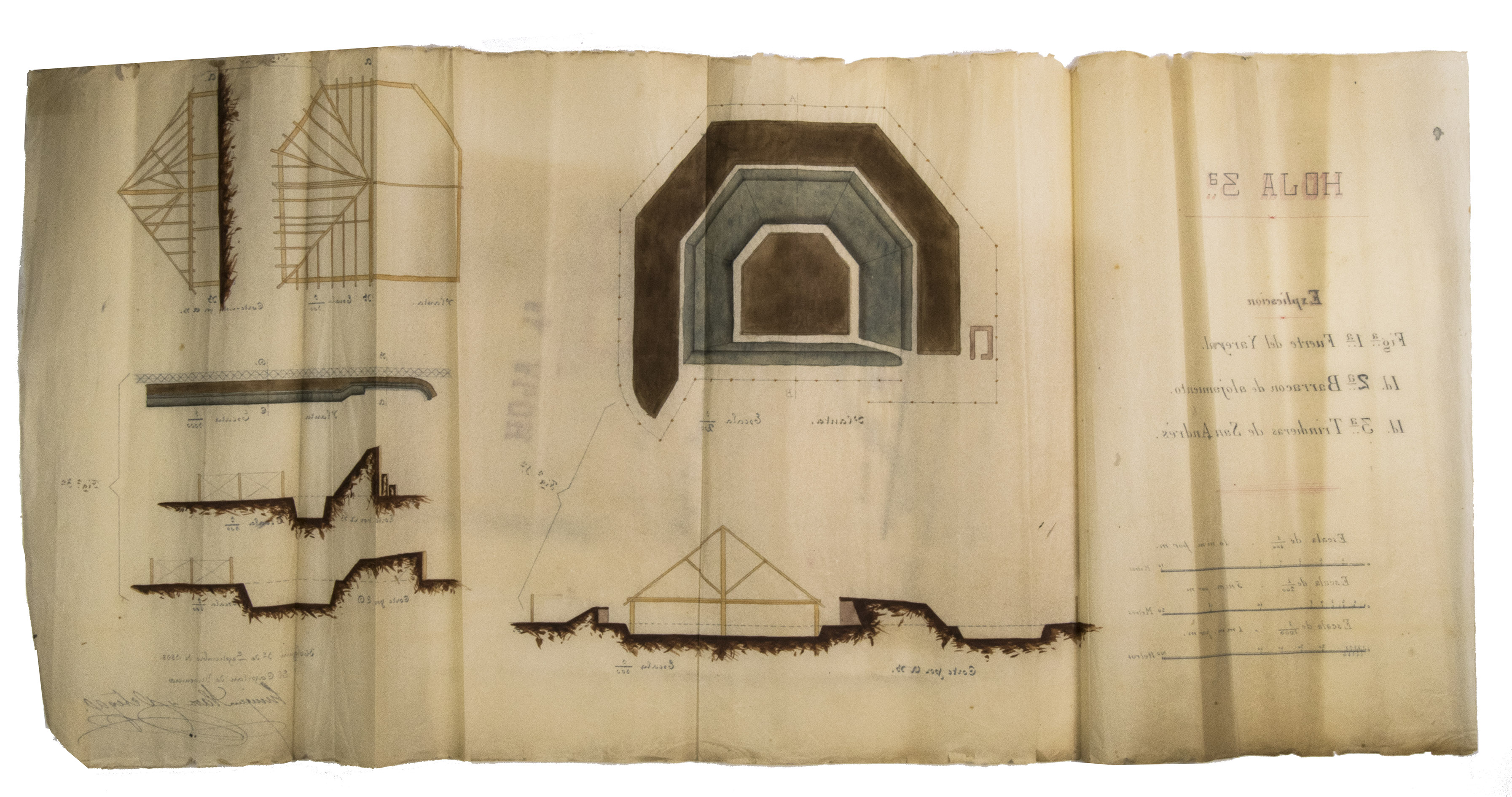
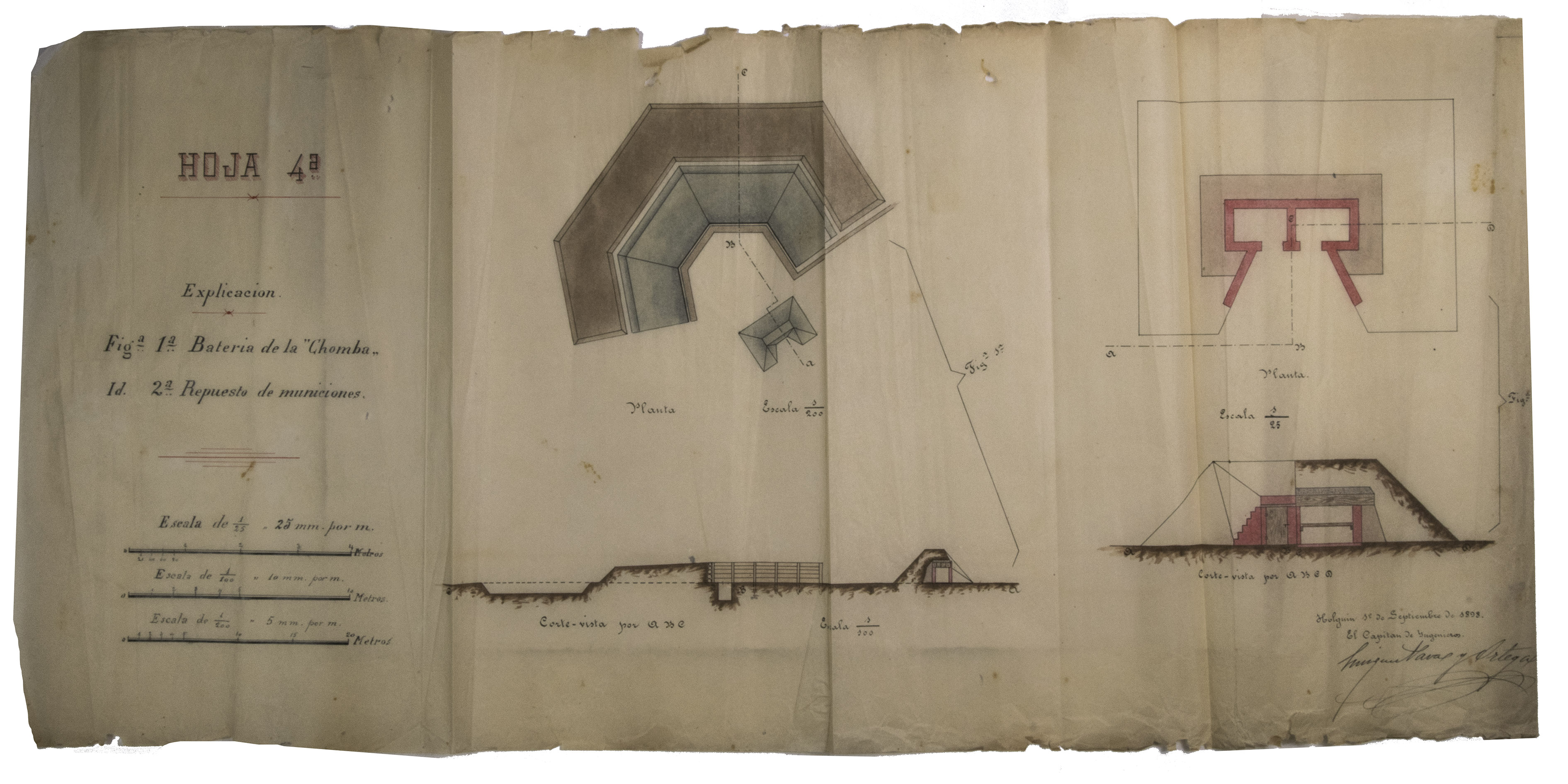
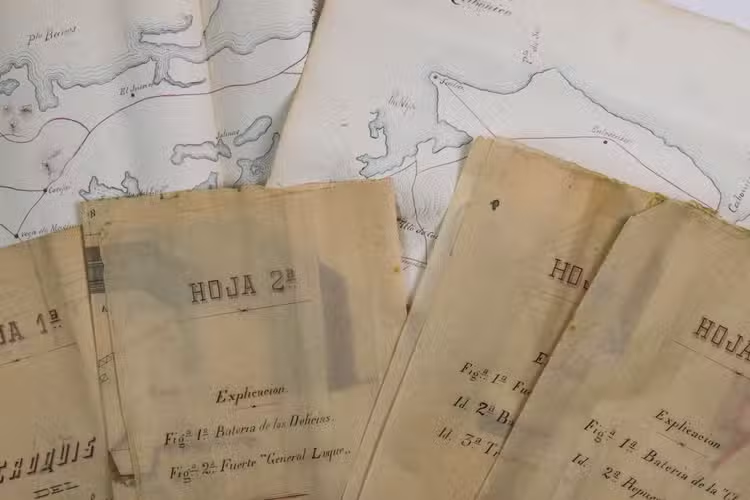
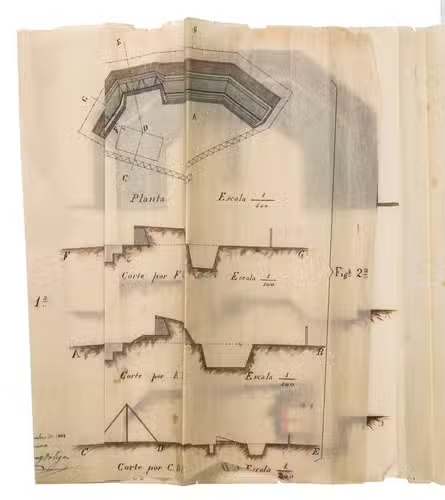
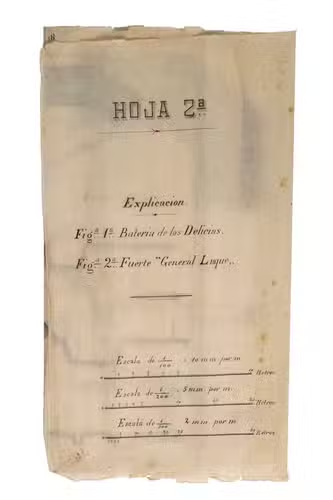
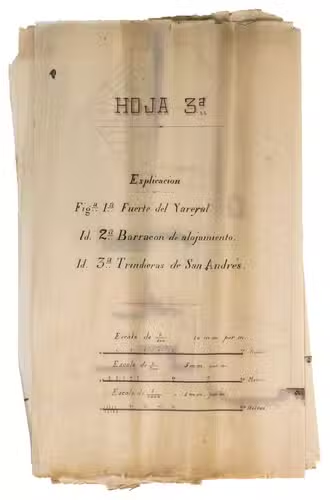
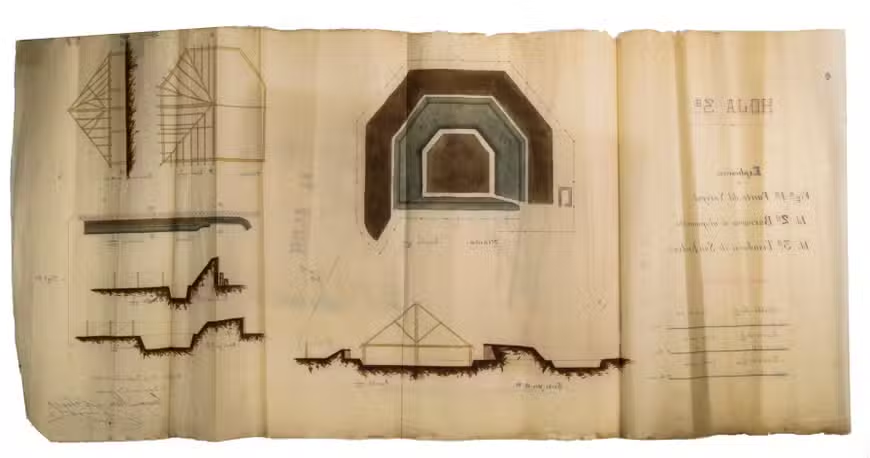
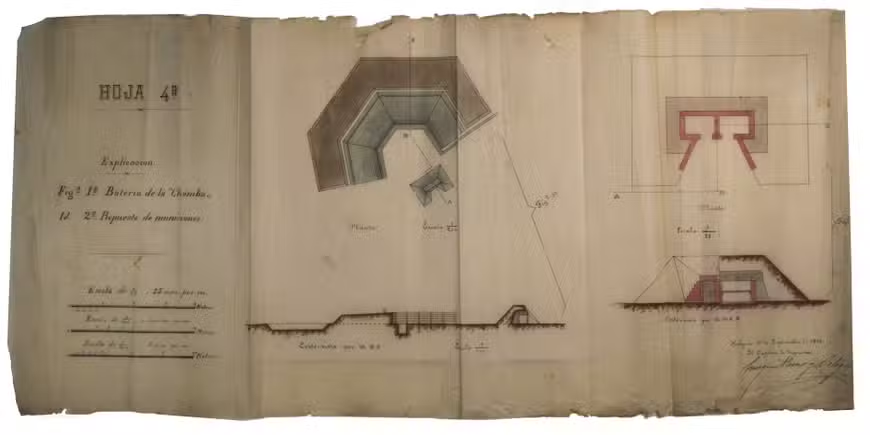
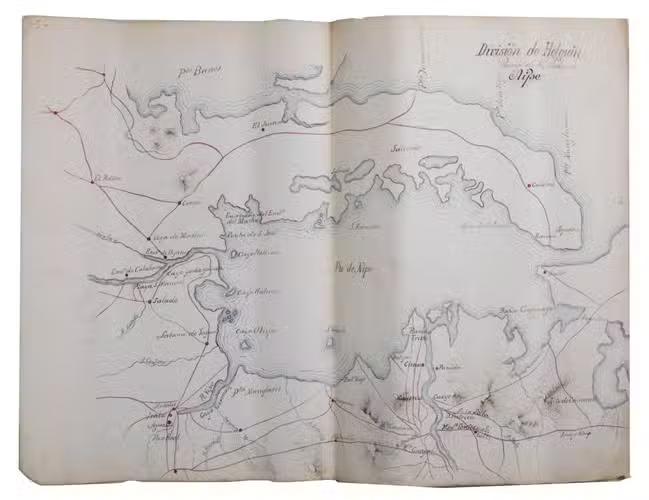
Historically significant set of two original documents on the military defenses of Holguín, written by Captain Henriques Nava y Ortega (dates unknown), a Spanish military engineer, during the final months of Spanish rule in Cuba. The work includes a description of the strategic layout, condition, and planned reinforcements of the citys defensive positions, as well as seven large, hand-coloured plans. These plans meticulously detail military installations, including the battery of General Luques fort, Fort Yareyal, and the Chomba battery, along with critical geographic locations in the surrounding area such as the Bay of Puente del Padre, Cabonico, and Nigre.
Holguín was an important Spanish stronghold during the Cuban war of Independence (1895-1898), and was besieged multiple times by the Cuban forces. The present documents were written mere weeks after the Cuban revolutionary forces under General Calixto García (1839-1898) had laid siege to Holguín on August 17. Although an armistice in the Spanish-American War had been signed between Spain and the United States on August 12, Cuban troops were not party to the ceasefire and continued their fight for independence. The present documents represent the final defensive efforts of the Spanish army in the face of growing insurgent pressure and the broader collapse of the Spanish Empire.
Holguín ultimately surrendered peacefully in early November 1898 without a major battle, making these documents among the last produced under Spanish authority in Cuba before the Treaty of Paris formally ended Spains sovereignty in December. The work offers vivid insight into late 19th-century military engineering, the conditions of colonial warfare under siege, and the final days of Spanish colonialism in the Americas.
Ad 1 is lacking the back wrapper. A brown stain in the top margin throughout, not affecting the text. The tissue paper plans in ad 2 are somewhat browned. Otherwise in good condition.
Related Subjects: