MEYERE, Jacobus de.
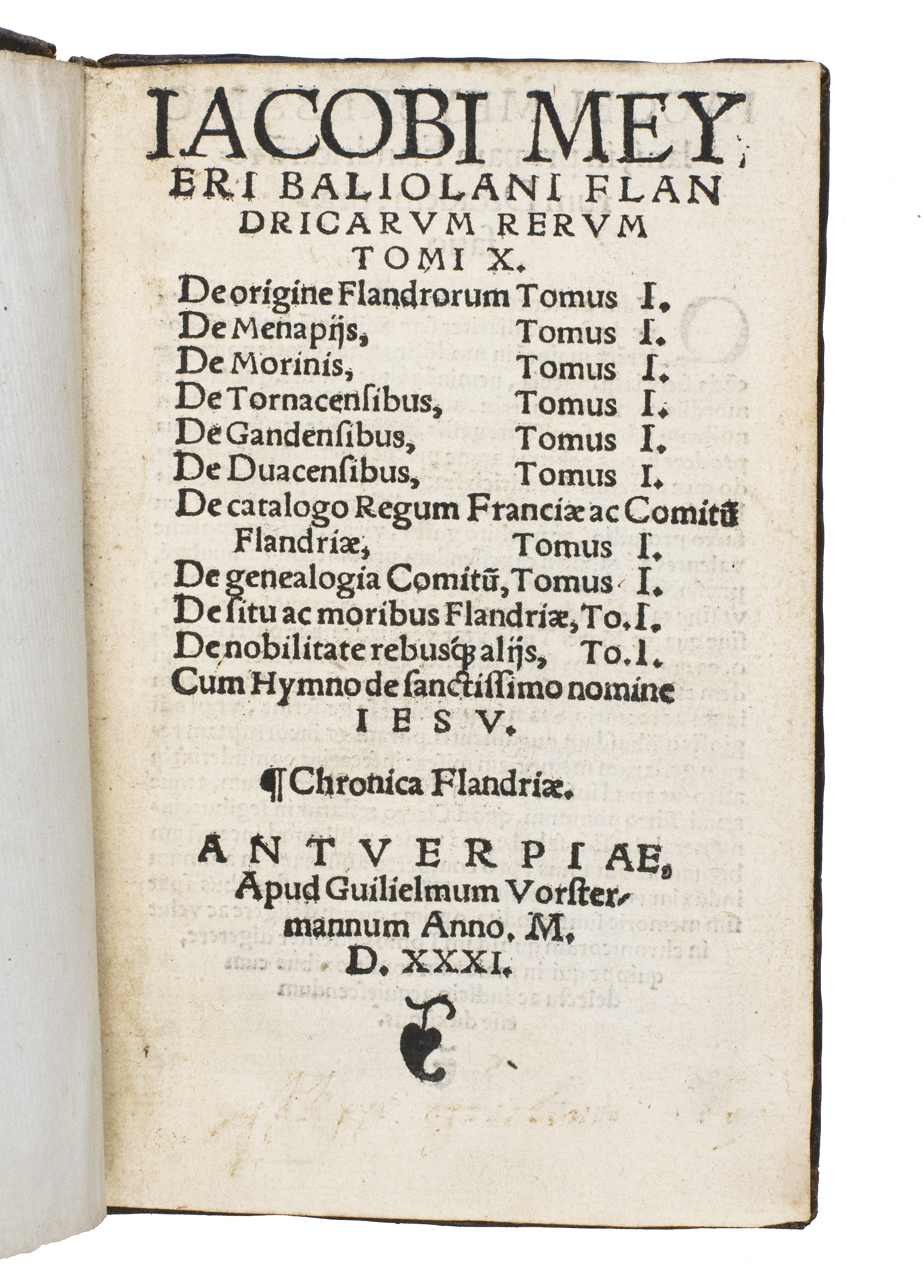
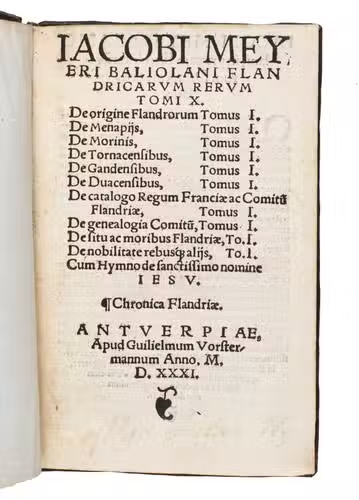
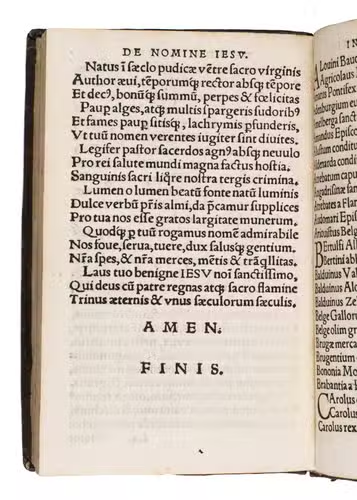
Flandricarum rerum tomi X ... Cum Hymno de sanctissimo nomine Iesu. Chronica Flandriae.
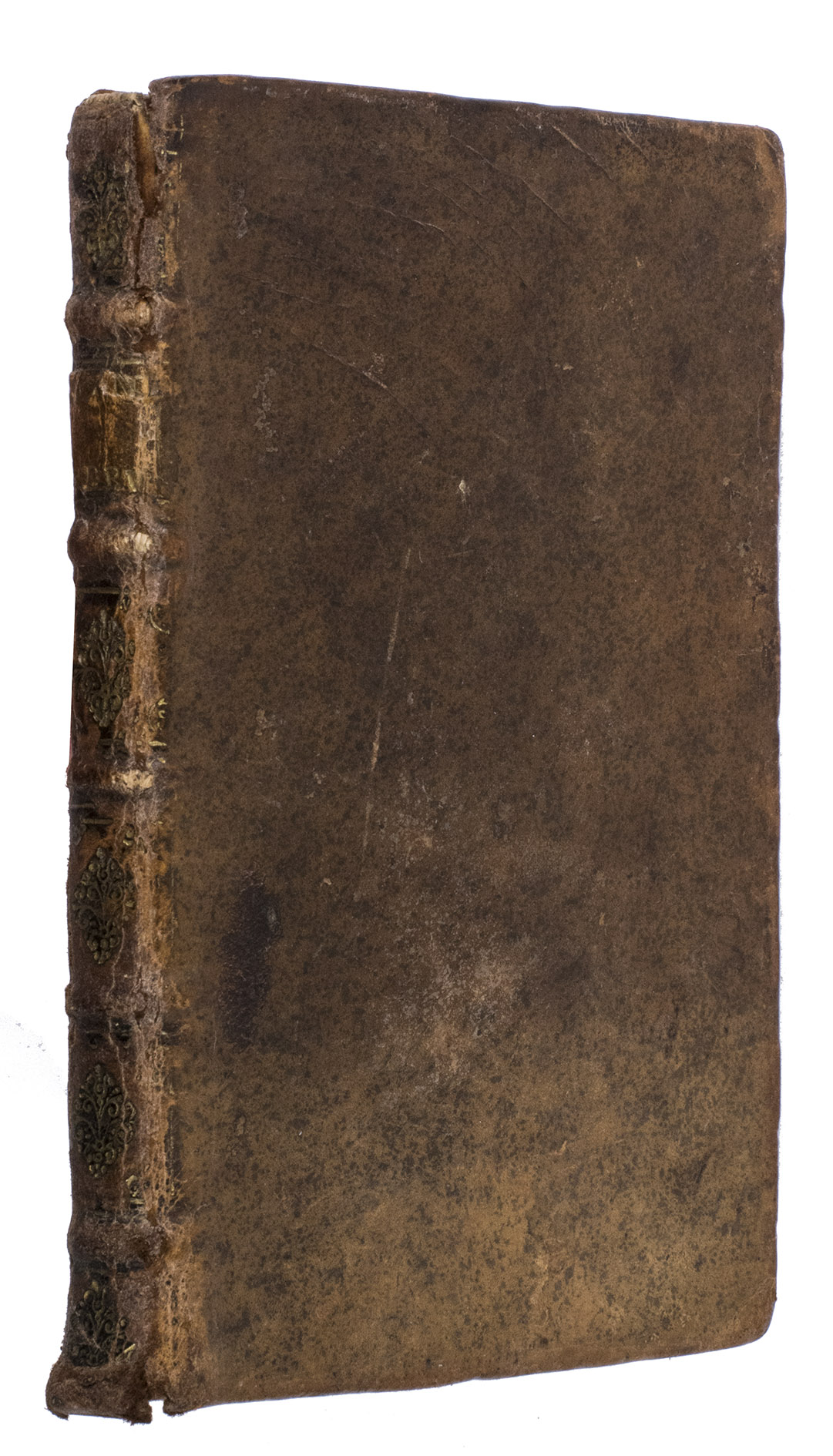
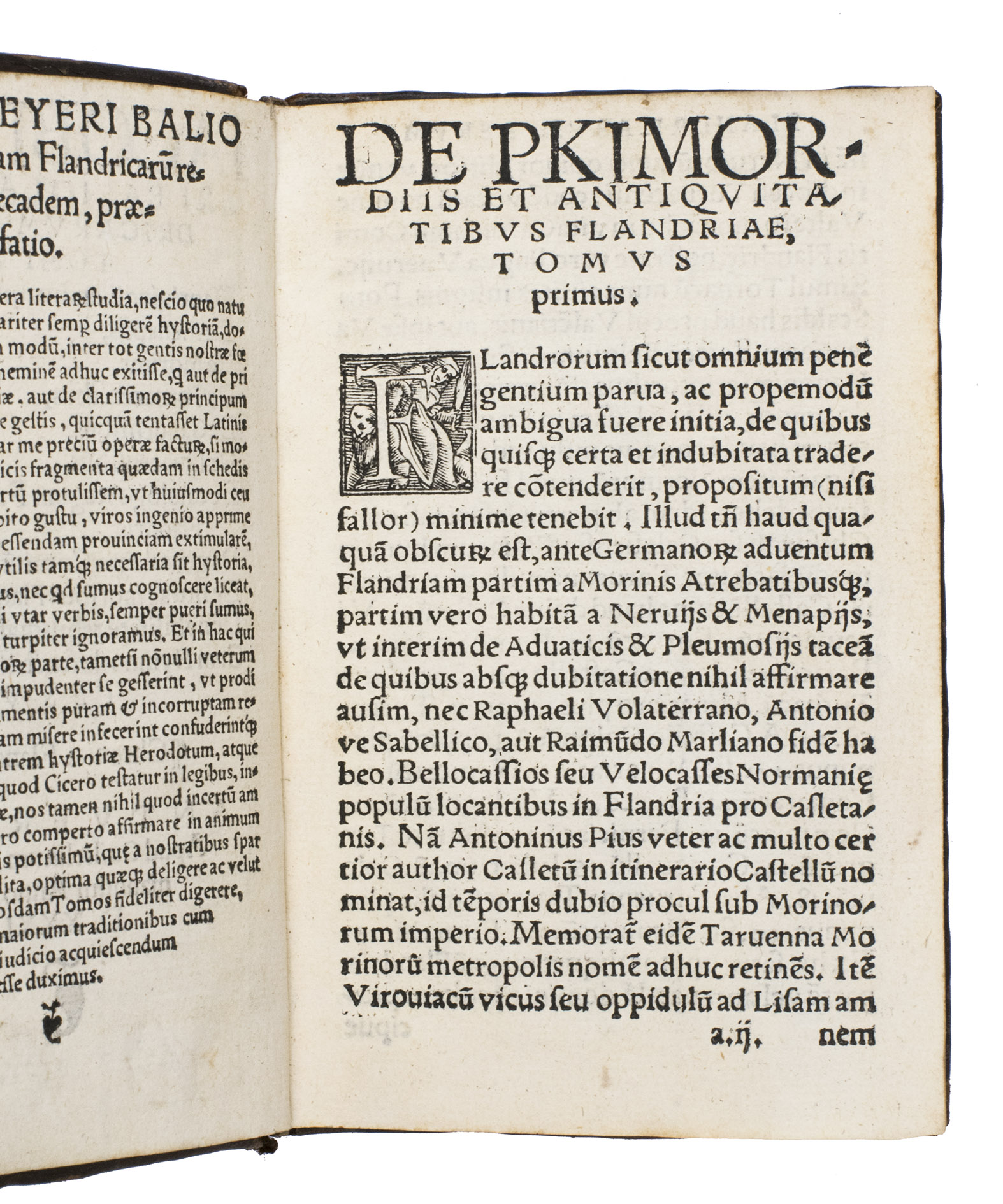
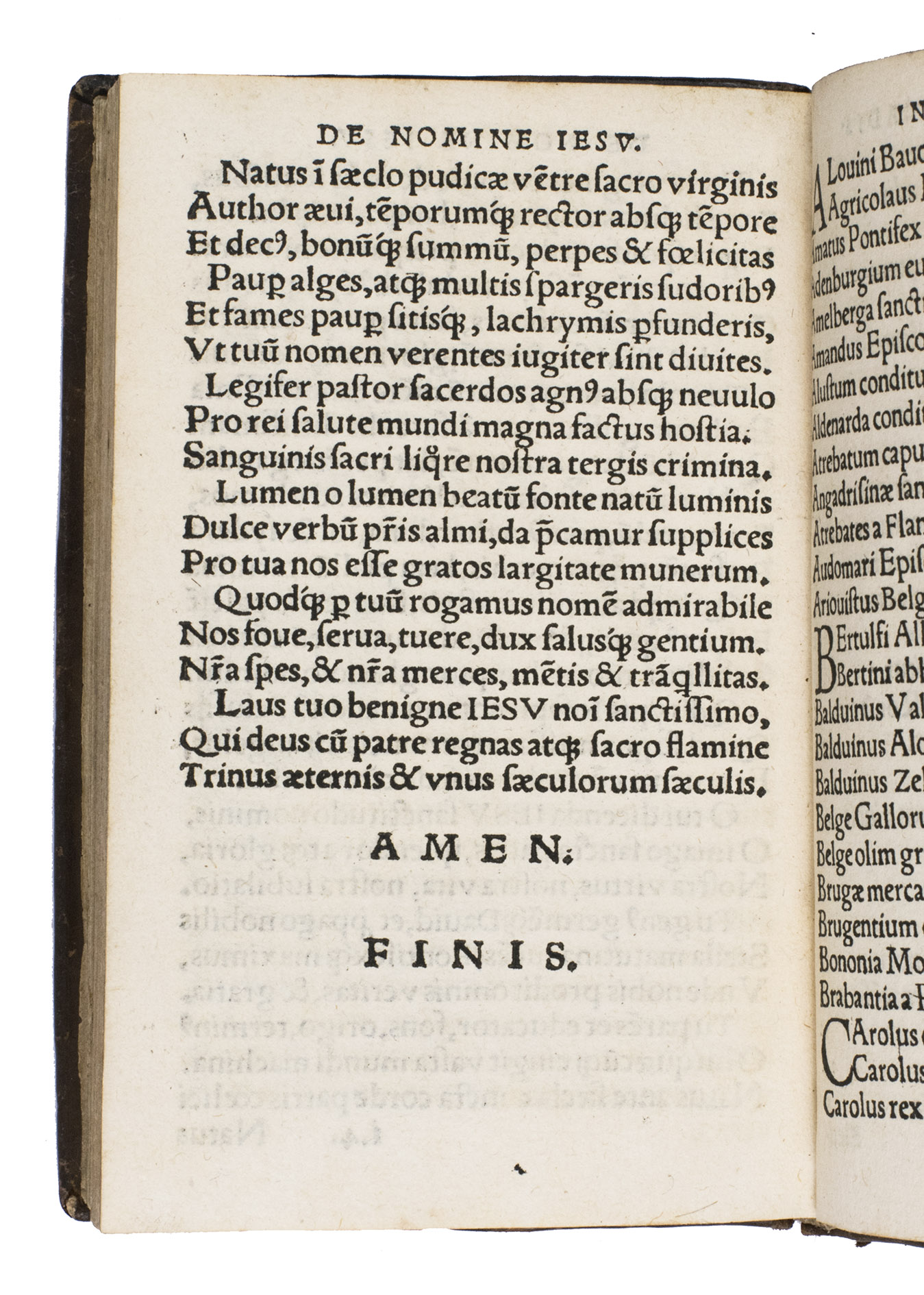
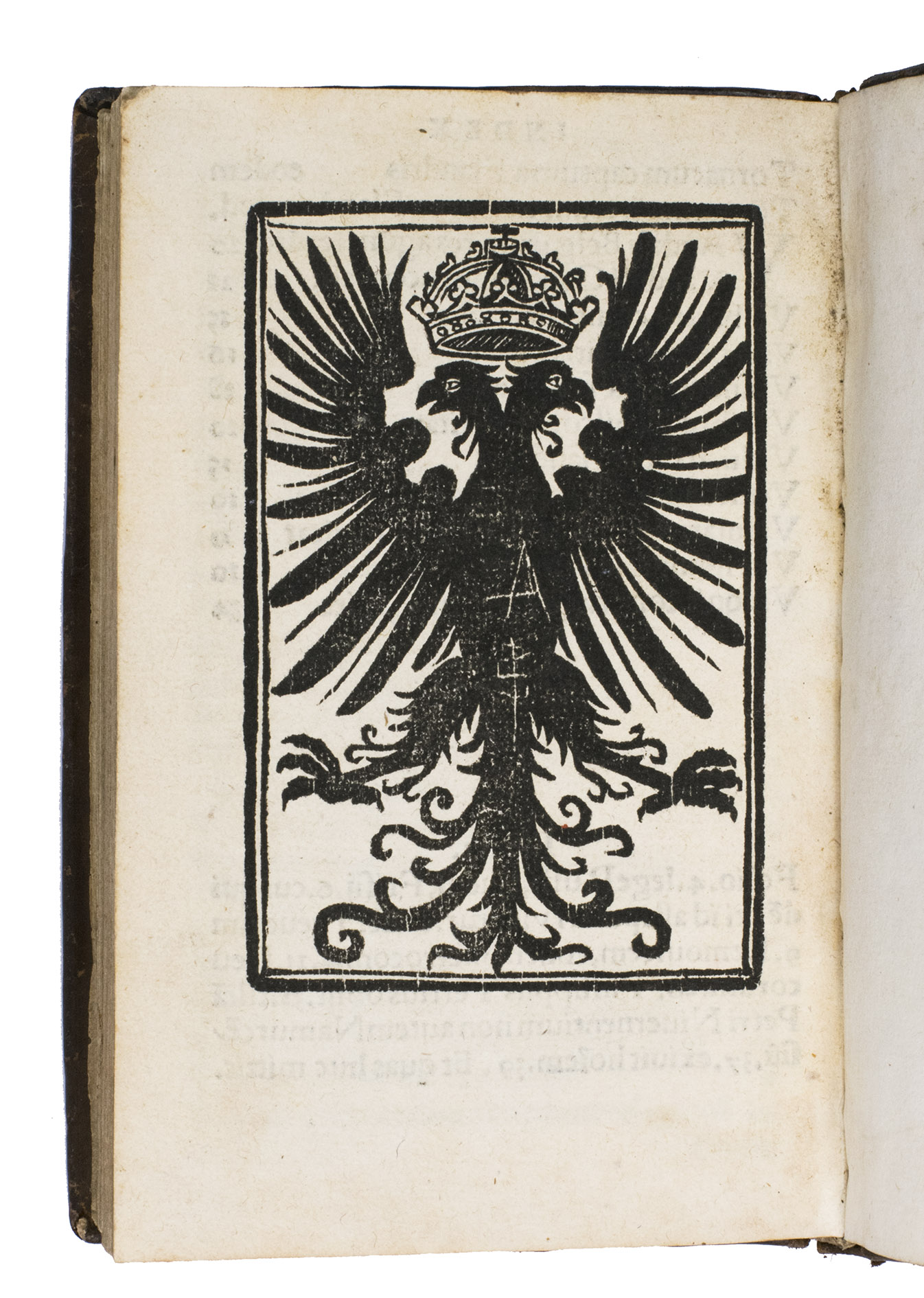
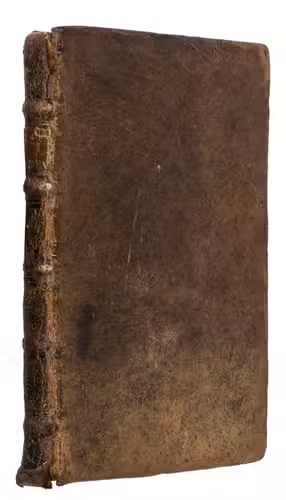
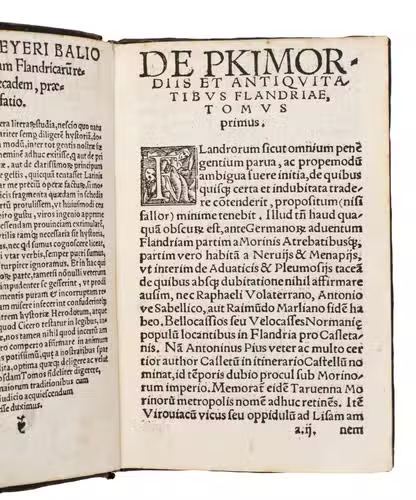
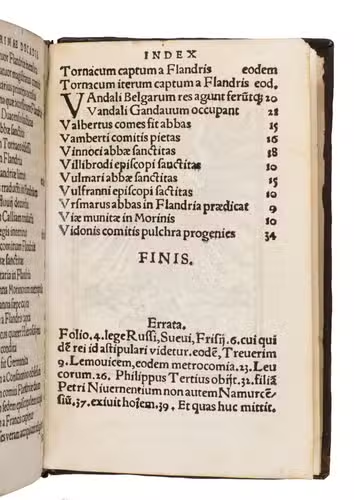
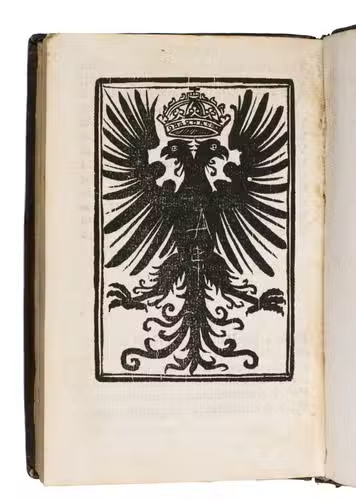
Antwerp, Willem Vorsterman, 1531. 8vo. With several woodcut decorated initials, and a woodcut illustration incorporating Vorsterman's device at the end. 17th-century mottled calf, with a gold-tooled spine, and the title lettered in gold, sewn on 5 supports with the corresponding raised bands on the spine. 67, [5] ll.
€ 1,250
Second edition of the Flandricarum rerum tomi X, first printed the same year by the Bruges printer Hubert de Croock. It is the first original work of the historian, poet, and humanist Jacob de Meyere (Vleteren 1491/92-1552). Within months, the Antwerp printer Willem Vorsterman produced an pirated edition, a move that infuriated De Meyere and vividly illustrates the fierce commercial rivalry between Bruges and Antwerps presses.
De Meyere, educated at the Sorbonne and later schoolmaster and chaplain in Bruges, is today regarded as the first "modern" historian of Flanders, a title that earned him the sobriquet "Father of Flemish Historians." In ten concise chapters he offers a fresh historical and geographical survey of the County of Flanders. He begins with the Celtic inhabitants of the region and proceeds through its territories, its succession of counts, its abbeys, and the gradual Christianisation of the land. The work culminates in a vivid description of Flanders as it appeared around 1530: its trade, agriculture, crafts, social conditions, household life, poverty and prosperity, and its lively cultivation of arts and letters.
De Meyere drew upon an impressive range of sources, Enea Silvio Piccolominis (1405-1464) Germania, hagiographic collections, the manuscript Antiquités de Flandre by Filips Wielant (1441/1442-1520), printed and unpublished chronicles, oral accounts from Juan Luis Vives (1493-1540), and correspondence with fellow humanists such as Jodocus Badius (1462-1535). His approach was deliberately innovative: systematic source-criticism, careful comparison, and focus on verifiable evidence. It was this methodology that later shaped his posthumously published Commentarii sive annales rerum Flandricarum (Antwerpen, 1561).
The present work also contains material of wider European interest. It includes references to contemporary humanists, such as Johannes Despauterius (1480-1520), and Desiderius Erasmus (1469-1536), and offers an unusually precise description of the plague that swept through Bruges and Ghent in 1530. Certain chapters provide thoughtful notes on commerce, learning, and the arts, as well as dedicated sections on Tournai, Ghent, and Douai.
Though modest in size, Flandricarum rerum tomi X was an important intellectual turning point. Many Flemish place-names remain in their original vernacular forms rather than being Latinised, a deliberate and innovative choice by Meyere, who recognised both the novelty and the linguistic sensitivity of his task and intended to elaborate on it in a second volume that, unfortunately, never materialised. The books immediate success, and its swift piracy in Antwerp, likely discouraged him from entrusting future manuscripts to Bruges printers.
With remnants of a catalogue entry and several annotations on the front pastedown, and a faded (owners?) inscription on the title page. The binding shows slight signs of wear. Otherwise in very good condition. Dewitte, "Plaatsnamen in Flandricarum Rerum Tomi X (1531)", Handelingen van de Koninklijke Commissie voor Toponymie en Dialectologie, 73, 1 (2001), pp. 395-404; Nijhoff & Kronenberg 1518; STCV 12916358; USTC 402993; Vandamme, "De boekdrukkunst in Brugge tijdens de 16de eeuw", Vlaanderen Kunsttijdschrift, Jaargang 43, (1994), pp. 133-137; WorldCat 1089693992.
Related Subjects: