MACROBIUS, Ambrosius Theodosius.
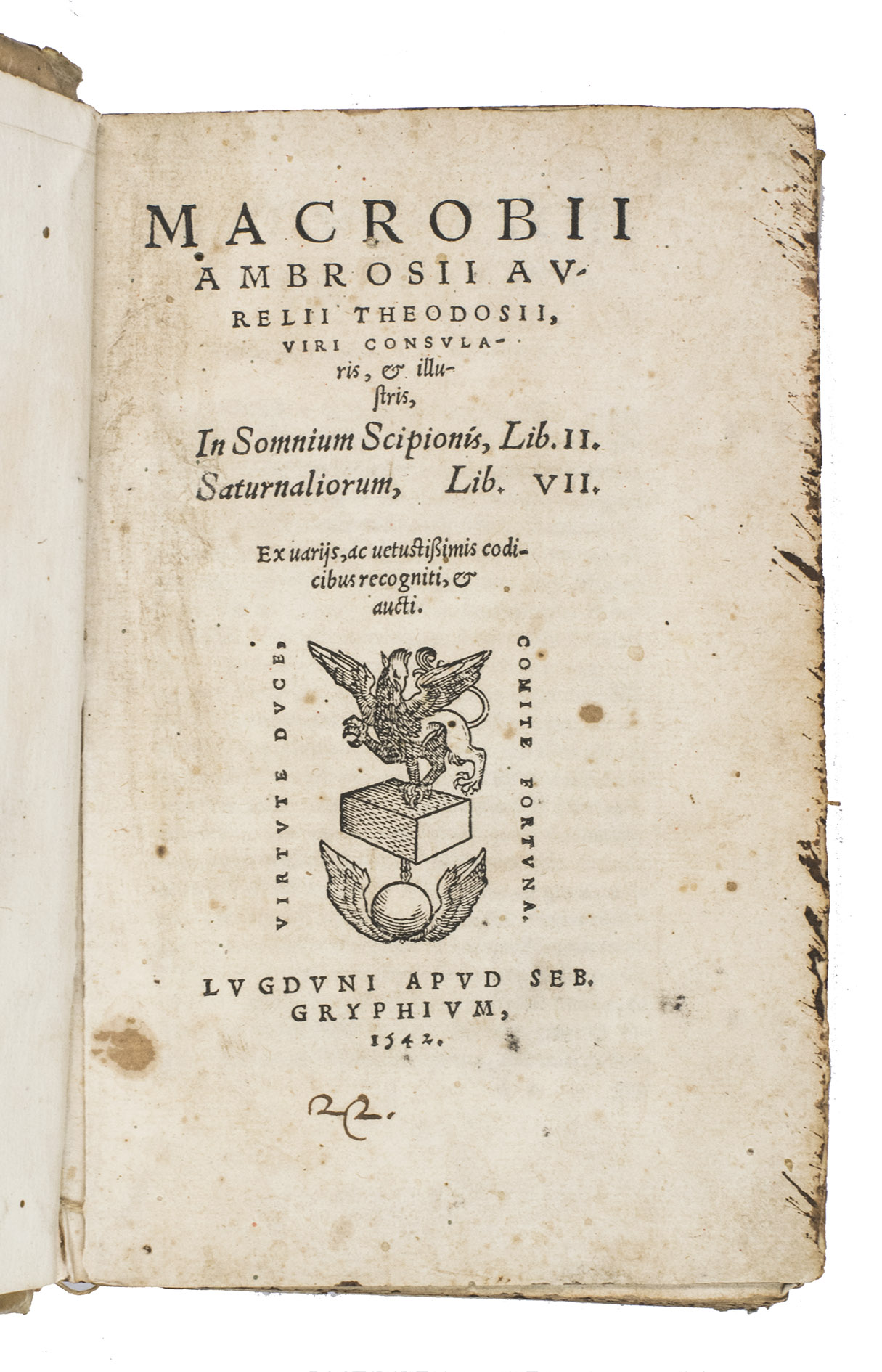
In somnium scipionis, lib. II. Saturnaliorum, lib. VII.
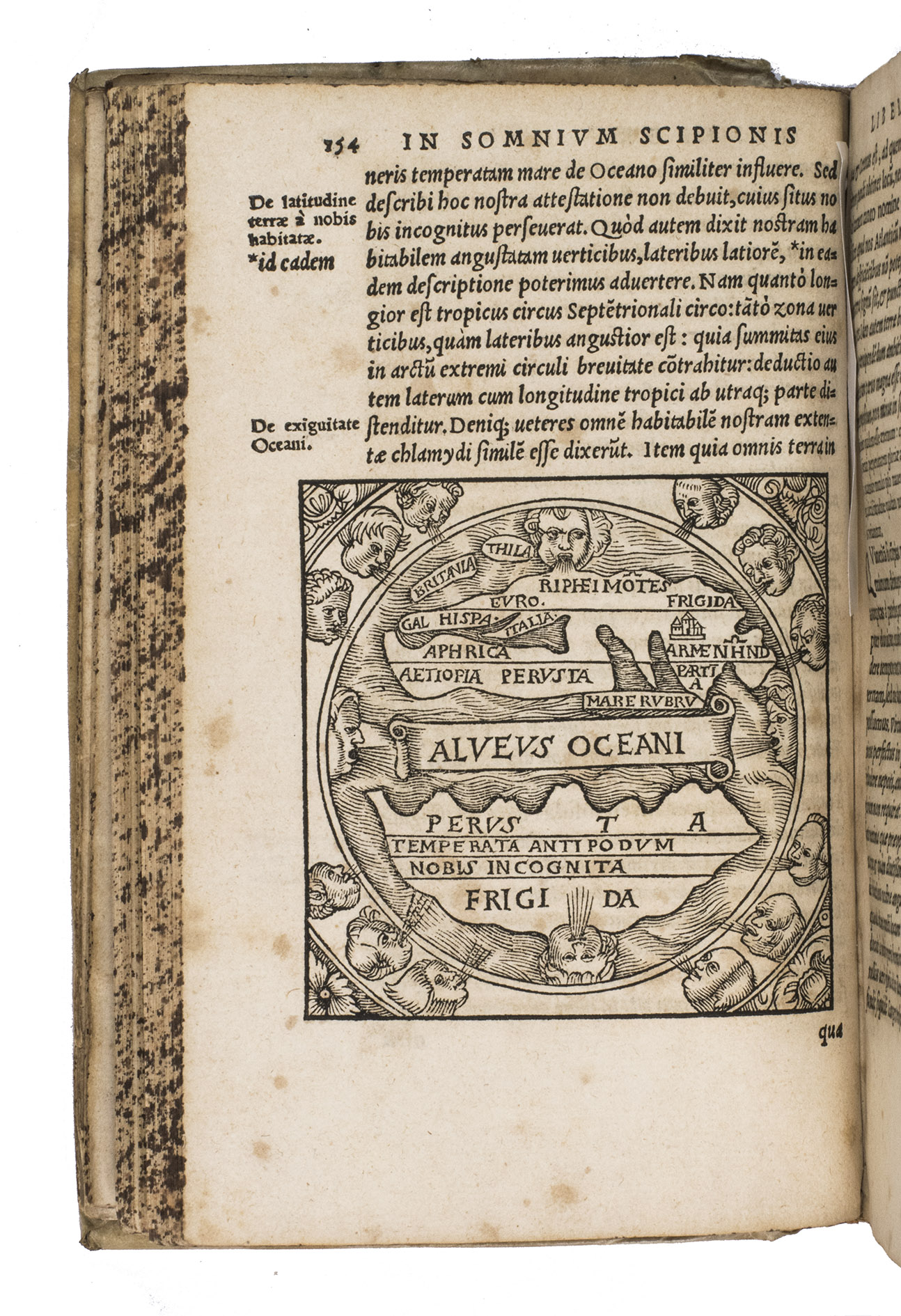
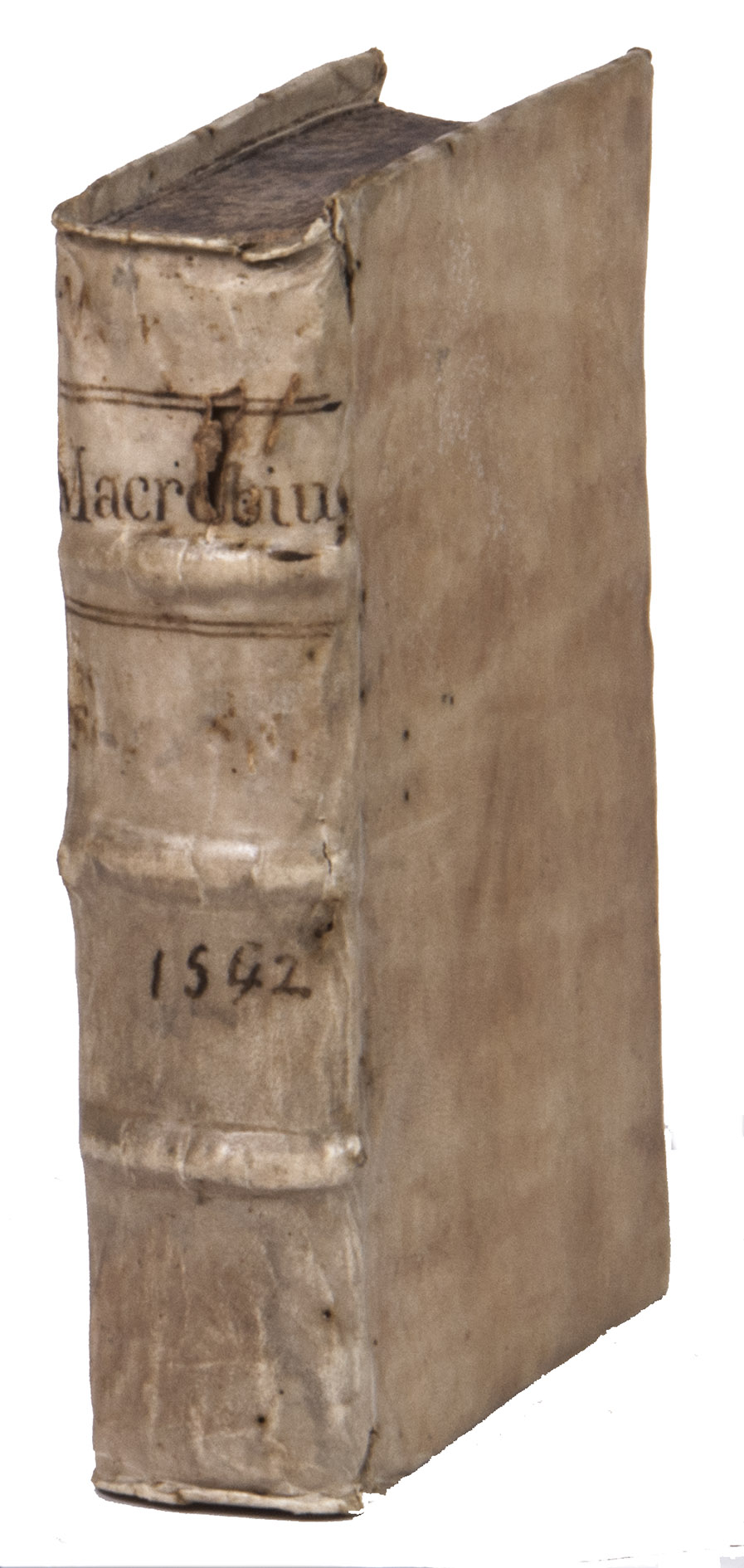
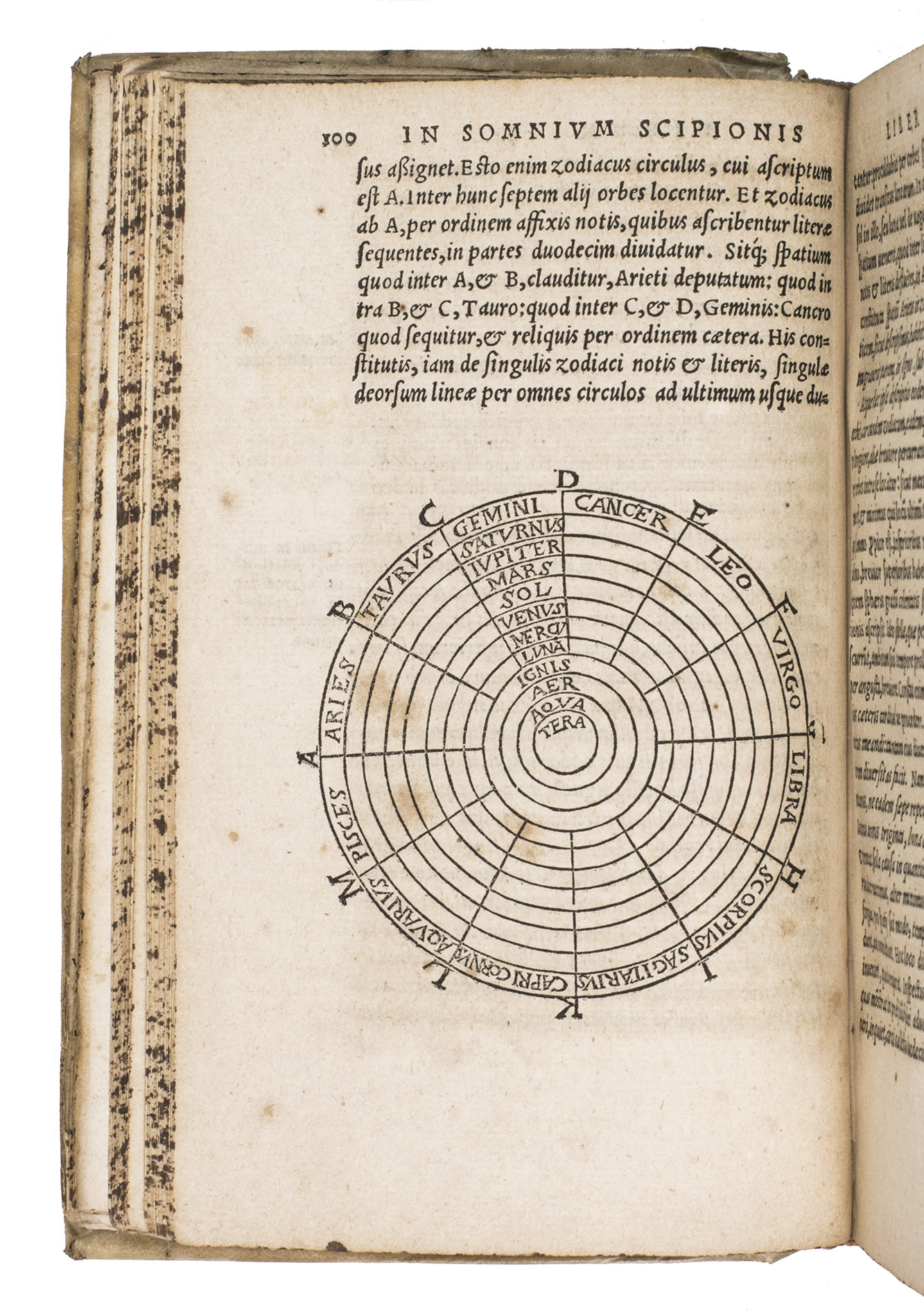
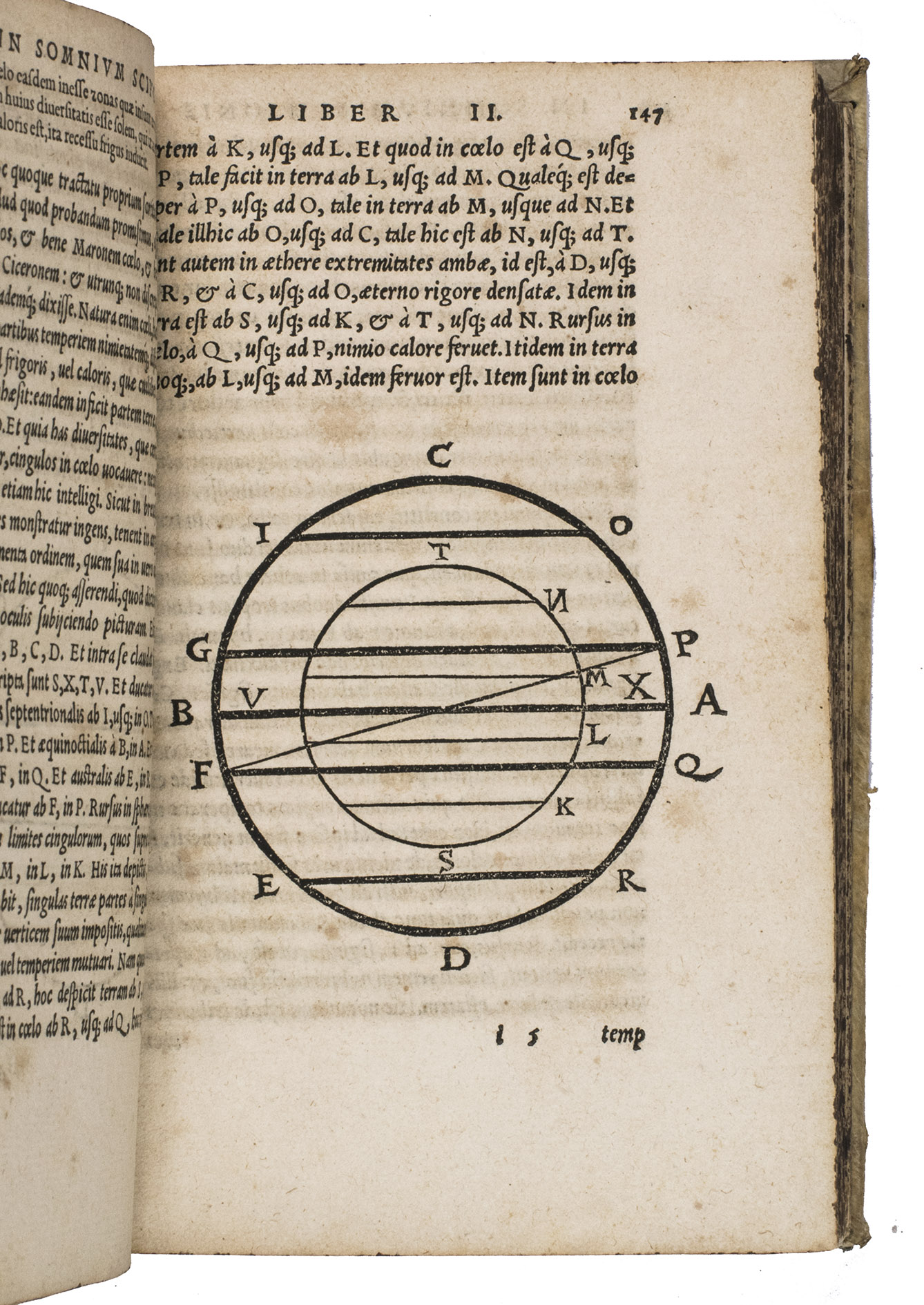
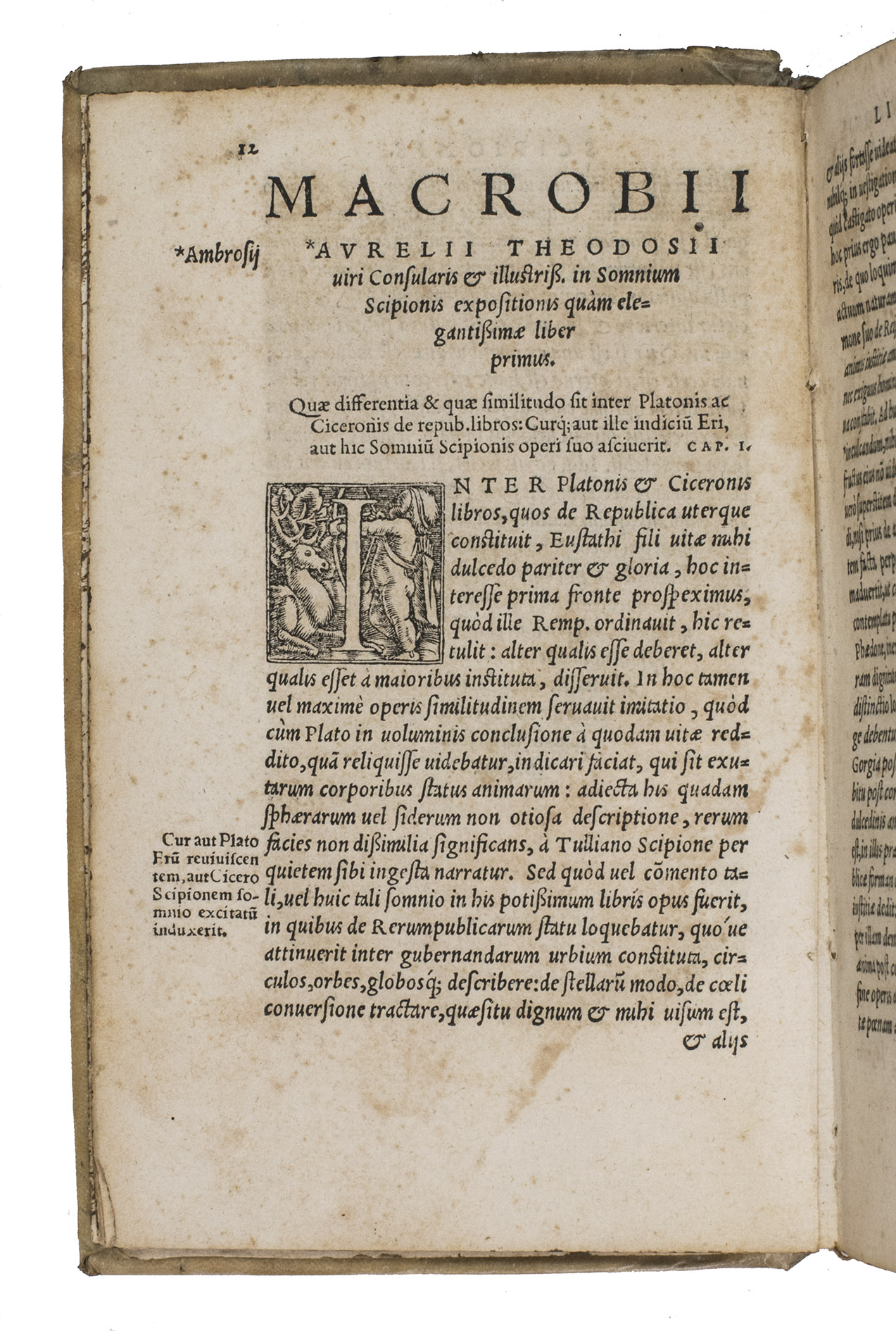
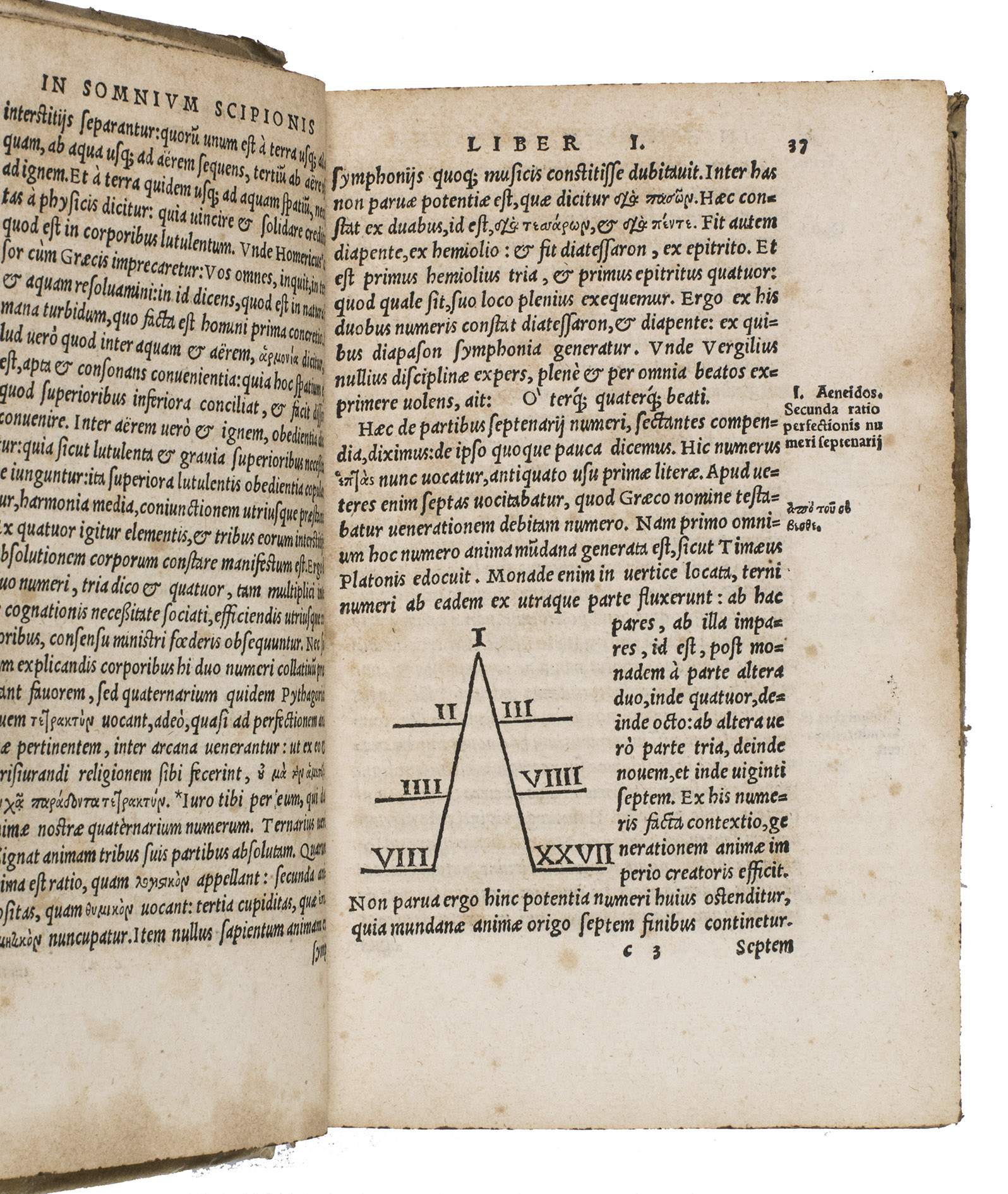
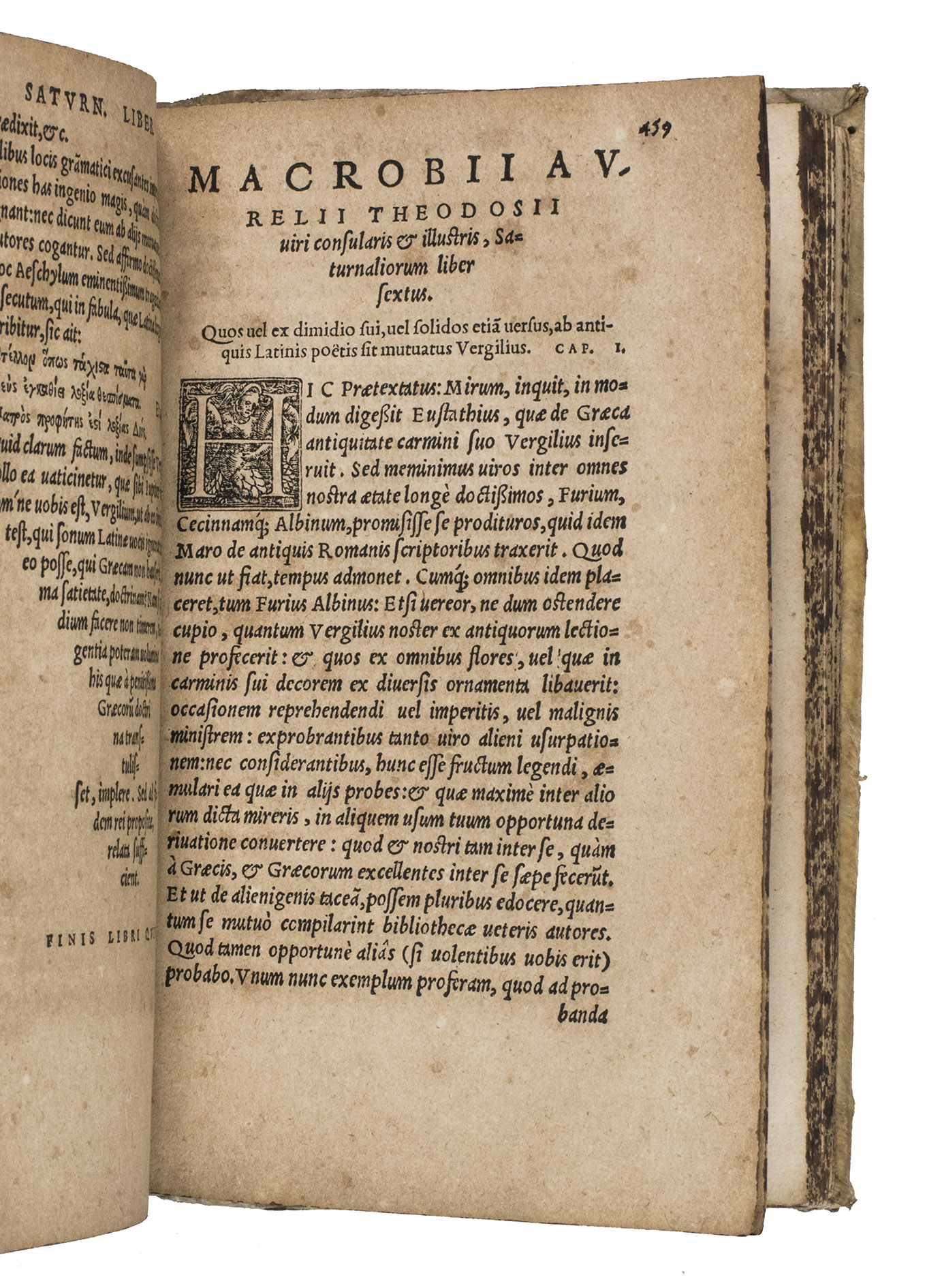
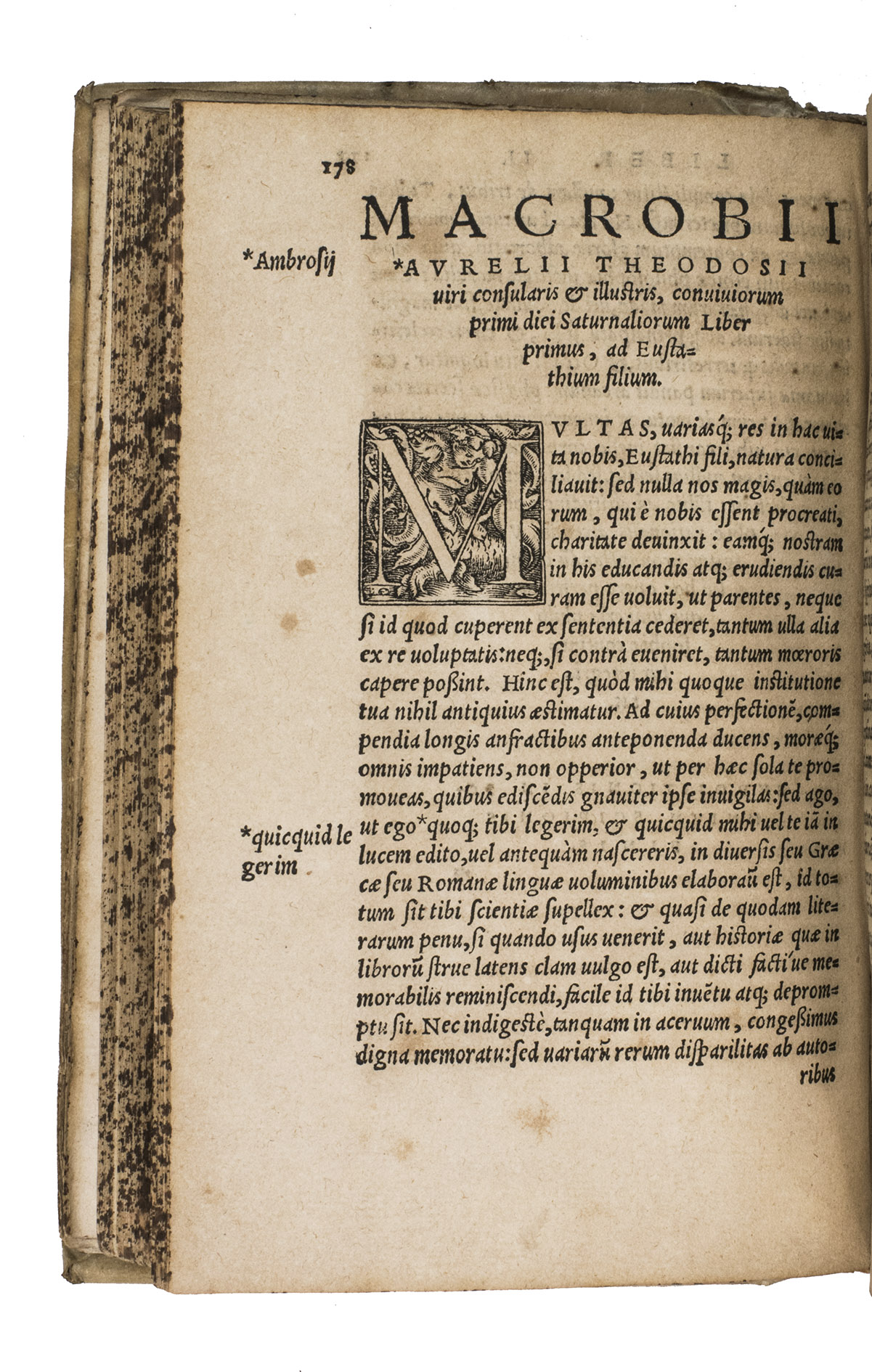
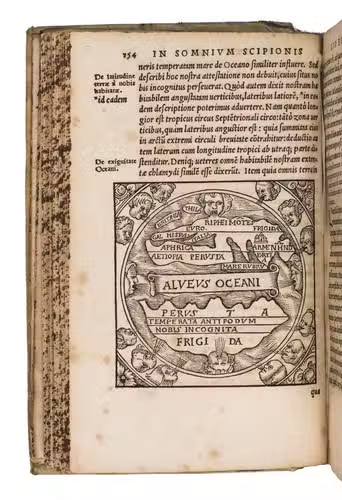
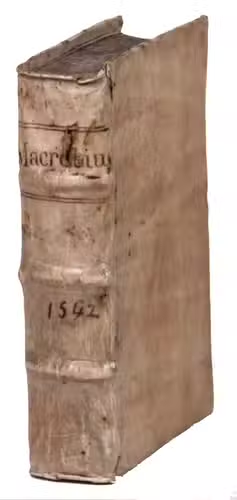
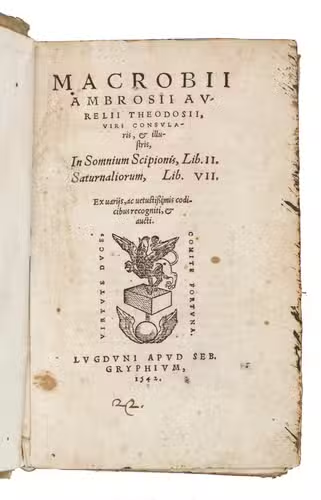
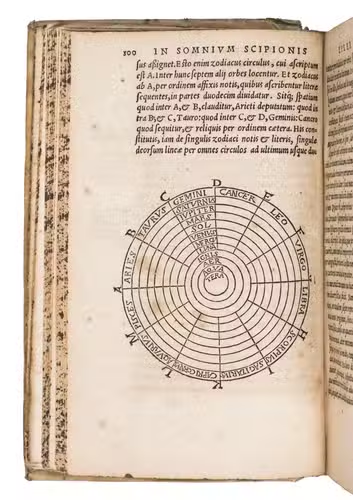
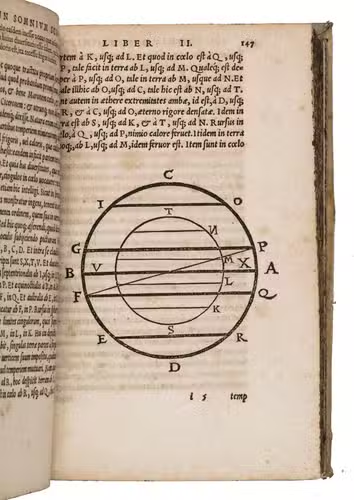
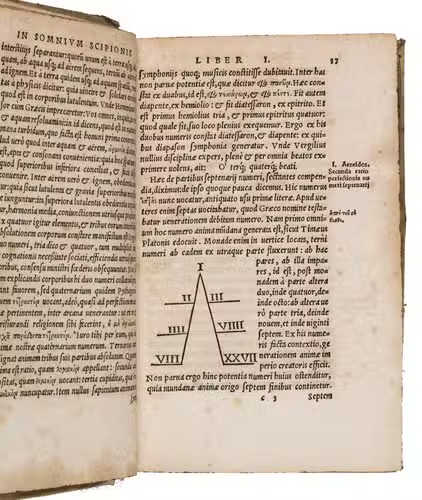
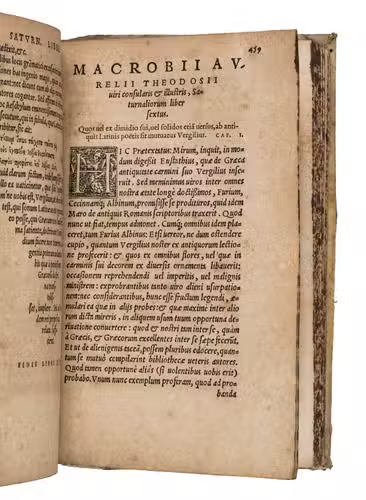
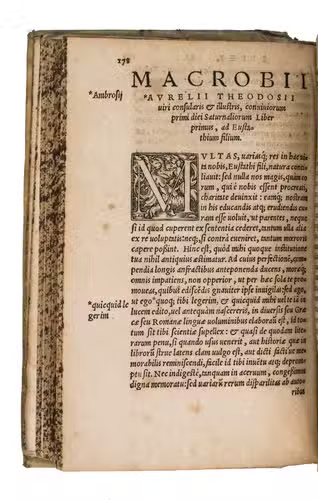
Lyon, Sebastien Gryphe, 1542. Large 8vo. With a woodcut printers device on the title page, woodcut initials, 6 small woodcut figures, and the well-known half-page woodcut world map in a circle with the winds blowing in the corners (79 x 80 mm). Contemporary vellum. 567, [73] pp.
€ 950
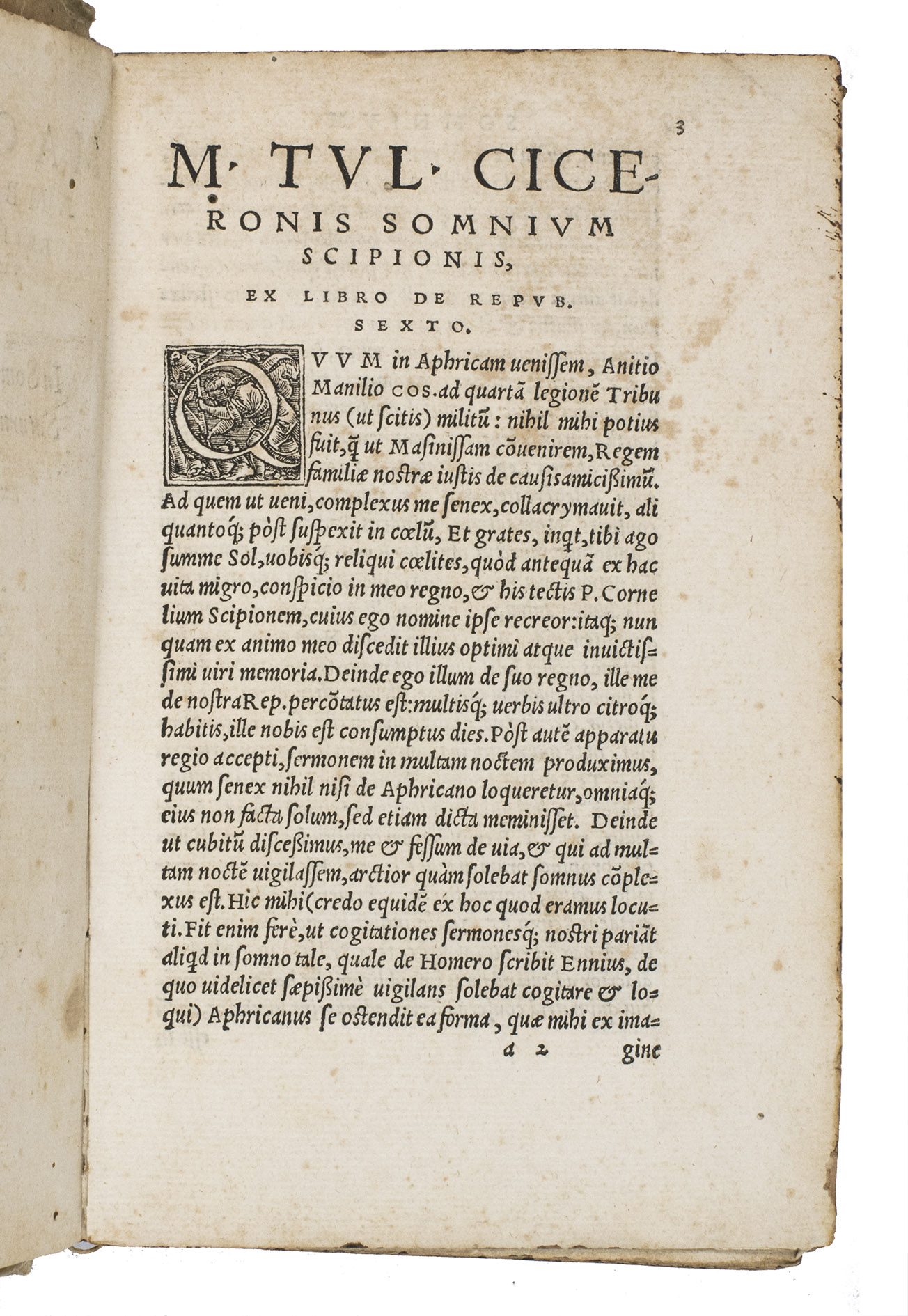
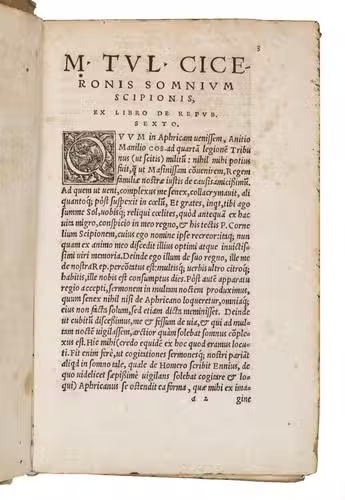
The Somnium Scipionis (Dream of Scipio) really is the sixth and final book of Ciceros De re publica. Because parts of Ciceros work are missing, the Somnium Scipionis represents nearly all that remains of the sixth book. The Somnium survived because in the fifth century the Latin author Macrobius wrote a Neoplatonic commentary on the work in which he excerpted large portions of the original text of Cicero. Many ancient copies of Macrobius text were amended with the text of the Somnium at the end. In our edition this text can be found on pp. 3-11.
The victor in the war against Carthage in 146 BC, Scipio Aemilianus tells his dream in which he travels through Heaven to speak to his grandfather Scipio Africanus. From above Scipio views the cosmos and the place of our world in it describing the harmony of the whole. He sees that Rome is only an insignificant part of the world, which is in itself dwarfed by the stars with the seven spheres of the planets in between.
During the Middle Ages the Dream became very popular thanks to this commentary by Macrobius in which he explains the neo-Platonic doctrine of the soul, the musical theory of harmony and astronomy, discussing the nature of the cosmos and the earths place at the centre of the universe.
The first edition of this work was published in 1472 in Venice by Nicolaus Jenson, followed by many editions. Our edition is a reprint of the 1526 edition, edited by Arnoldus Vesaliensis and printed by Hittorpius at Cologne. A number of the early Macrobius editions are famous because of the circular woodcut world map (in this edition78 x 80 mm on p. 154 = 144). There are several variants, all similar in design but differing in both details and dimensions, the first being published in 1483 in Brescia by Boninus de Boninis (GW M-19695; Hain 10427). Our map resembles that first map, especially the right geographical relationship between the British Isles and Thule (Iceland). On the other hand, the heads of the winds (12 in the four corners and 4 within the circle) were only introduced in the map in the 1489-edition of the Summa astrologiae iudicialis de accidentibus mundi by Johannes Eschuid (Venice, Johannes Santritter; GW E-9392; Hain 6685). The version in our edition is almost identical to the map printed by Johann Soter in 1527 in Cologne (VD16, C 3640) and is printed in Lyon seven times between 1532 and 1560. This version, however, has not been described by Shirley in his Mapping of the world.
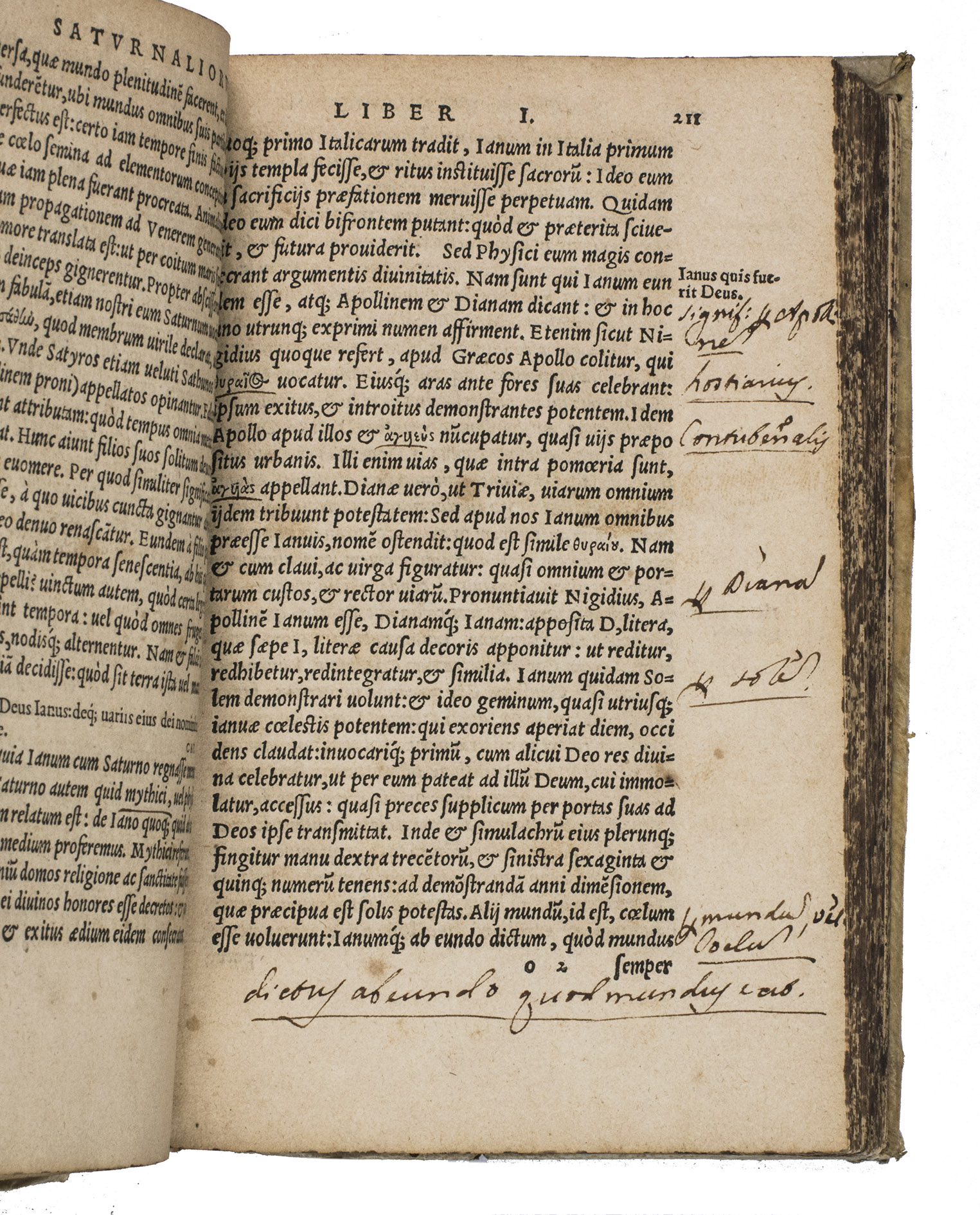
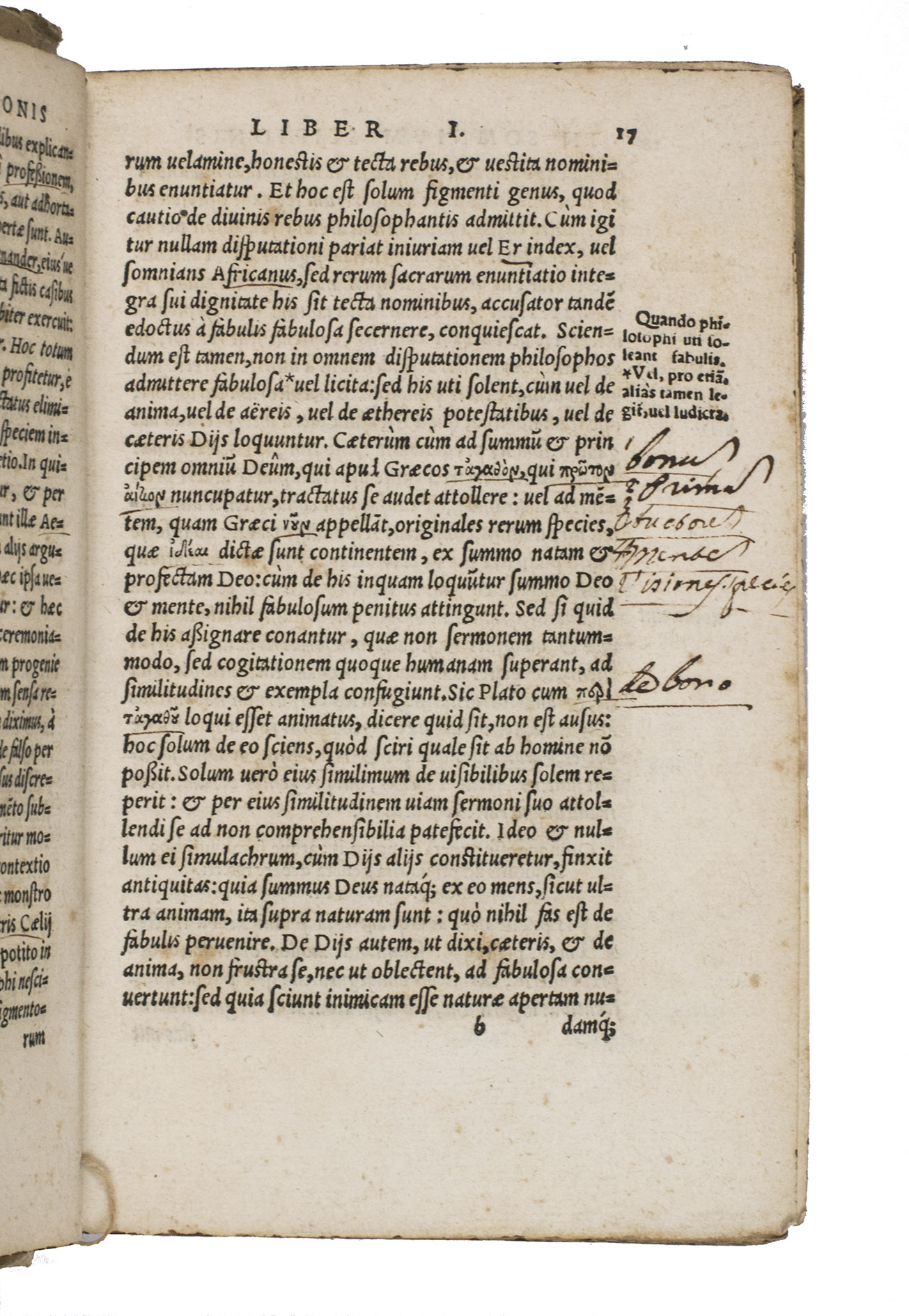
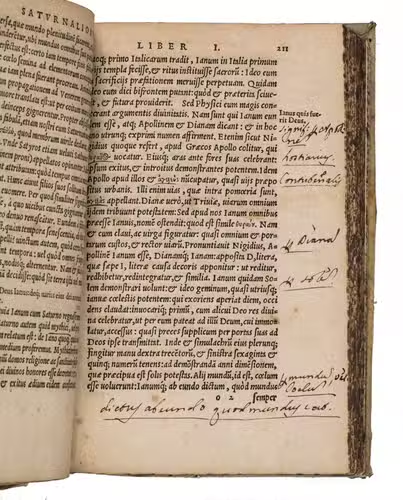
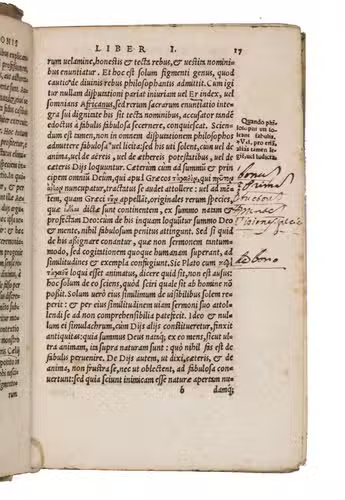
Some insign. wormholes in the vellum of both sides and sm. tear in spine; some browning and spotting throughout, ink sprinkles on title-page. With many contemporary annotations in ink. Adams, no. M-66; Baudrier, VIII, 166; Bächtold, W., Dream interpretation. Ancient and Modern, chapt. I: Macrobius: commentaries ex Cicerone in Somnium Scipionis; Leeman, A. D. & H.W.A. van Rooijen-Dijkamn, Scipios droom, in: Hermeneus, 59 (1987), pp. 1-7; Pettegree and Walsby 78540; Schweiger, II, 586; USTC 140464.
Related Subjects: