LABORDE, Alexandre de.
Voyage pittoresque et historique de l'Espagne.
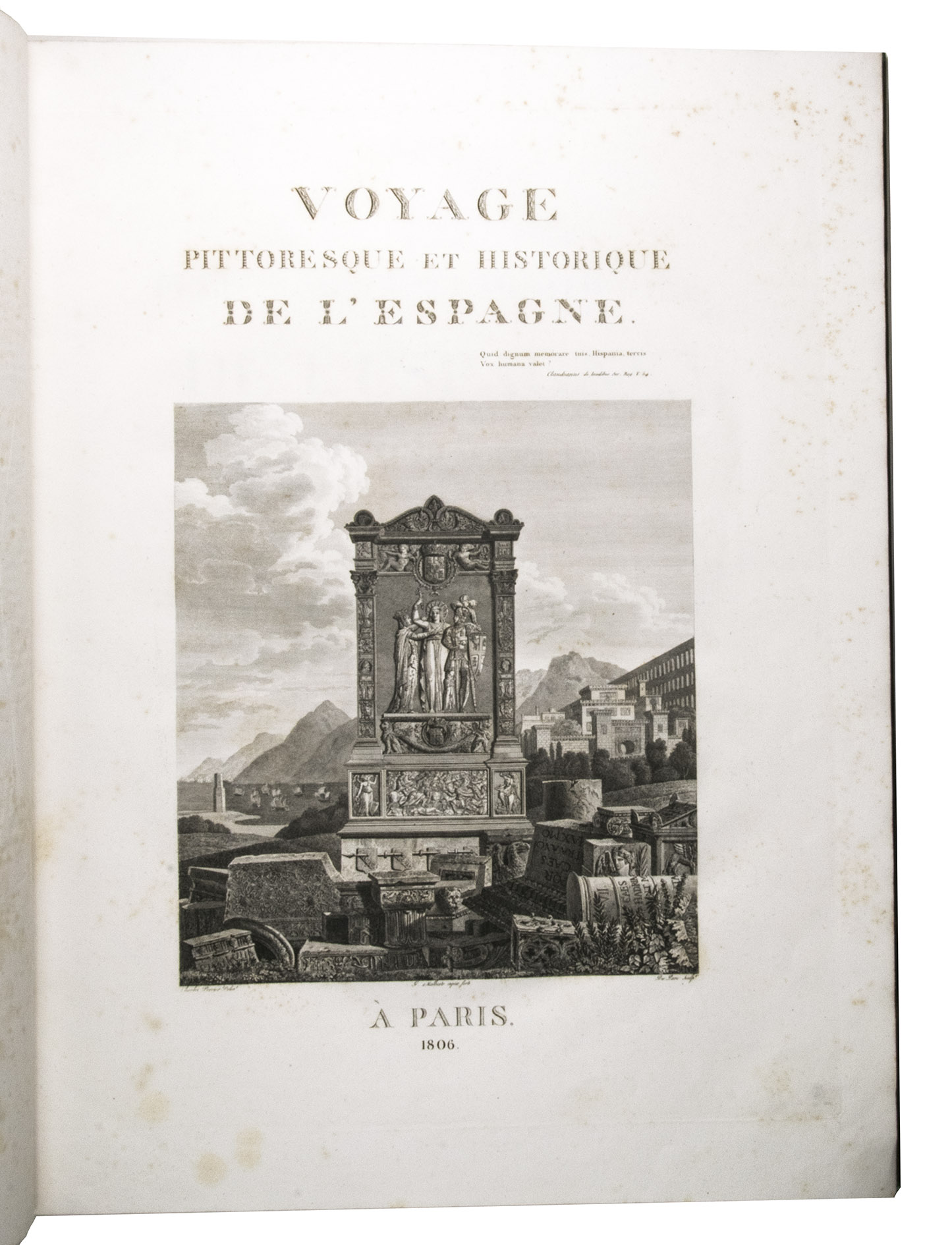
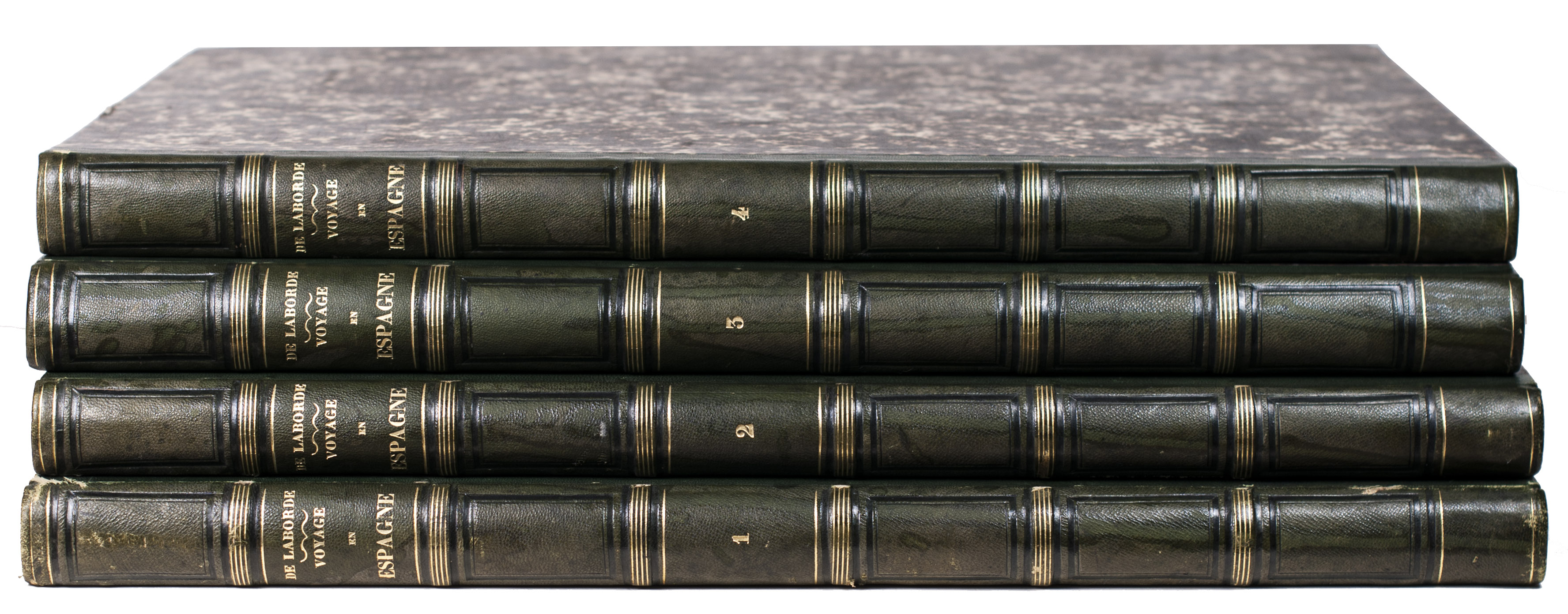
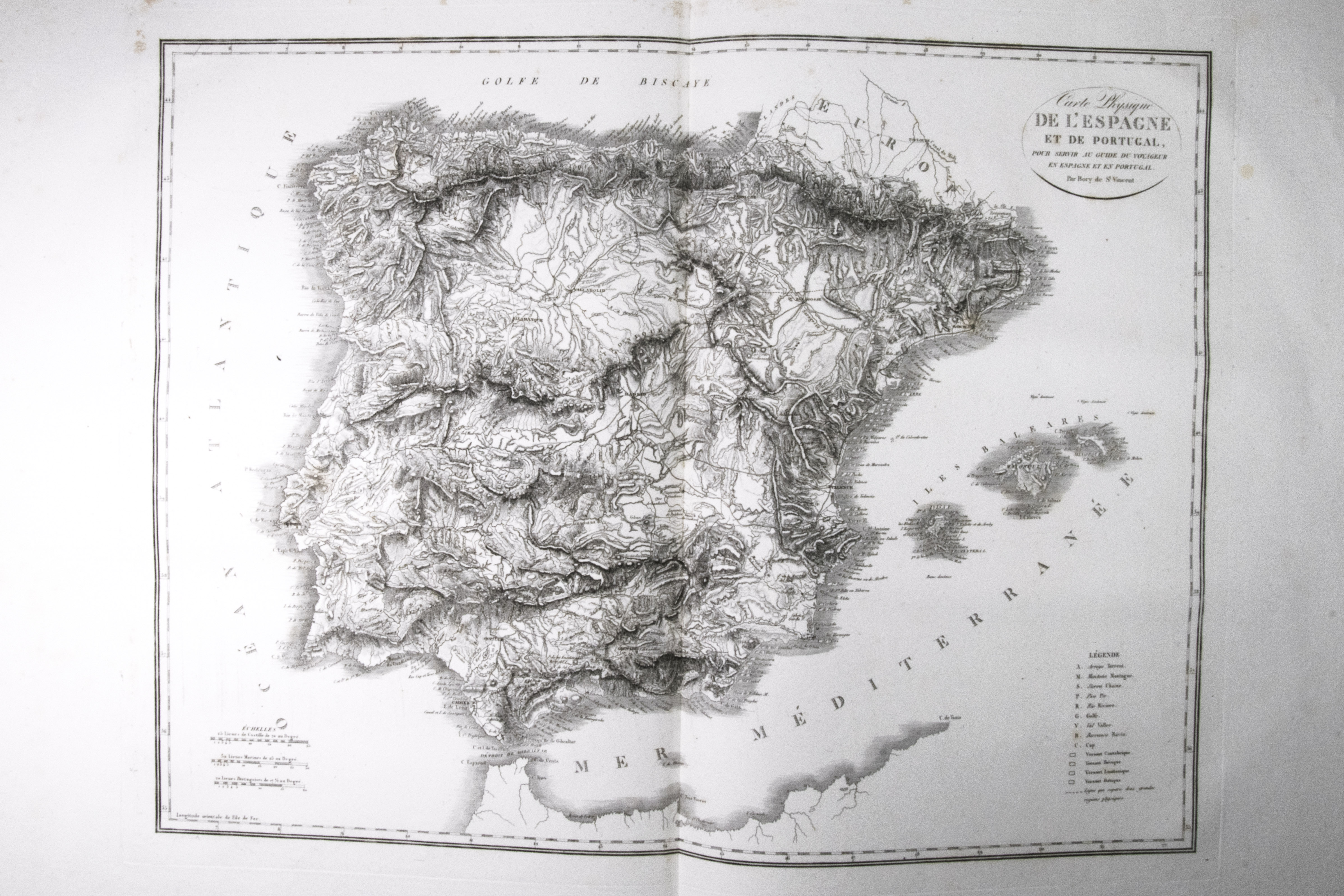
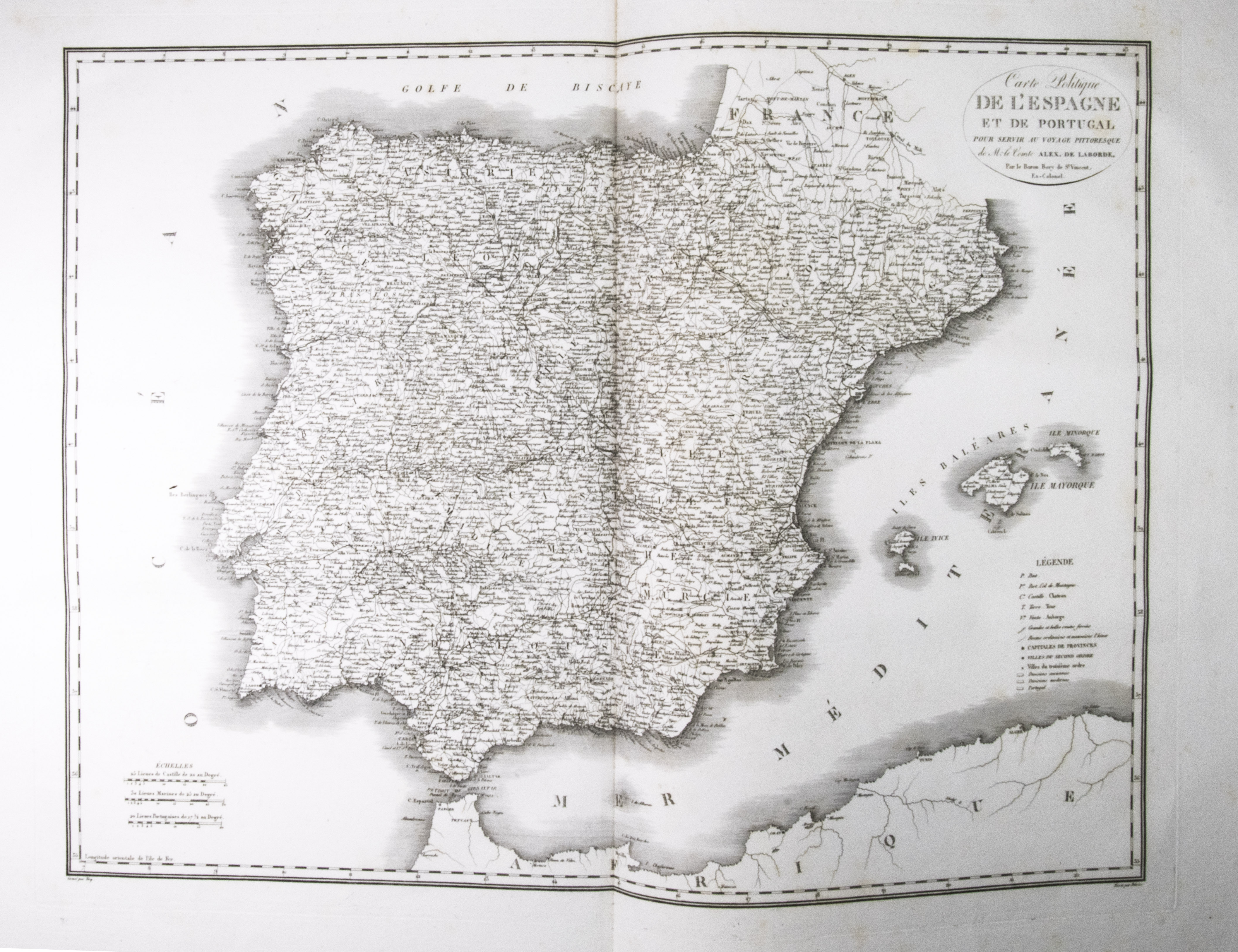
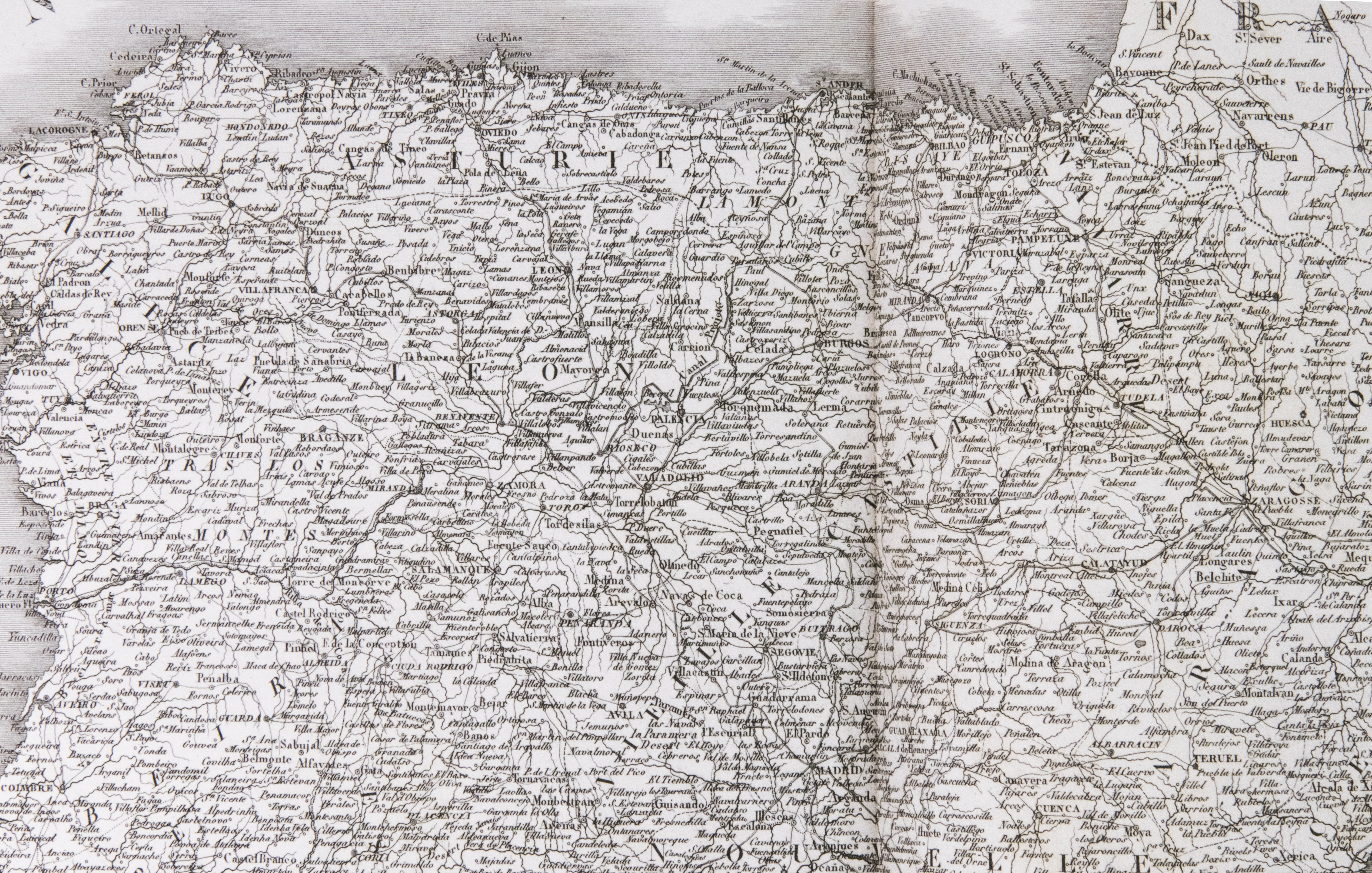
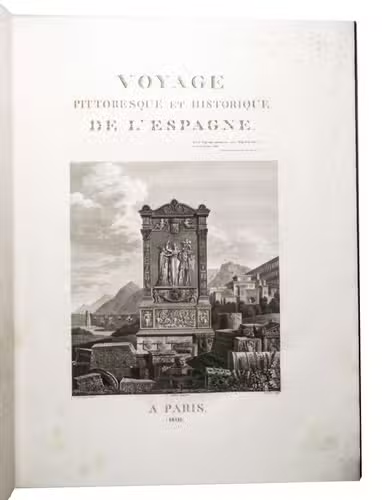
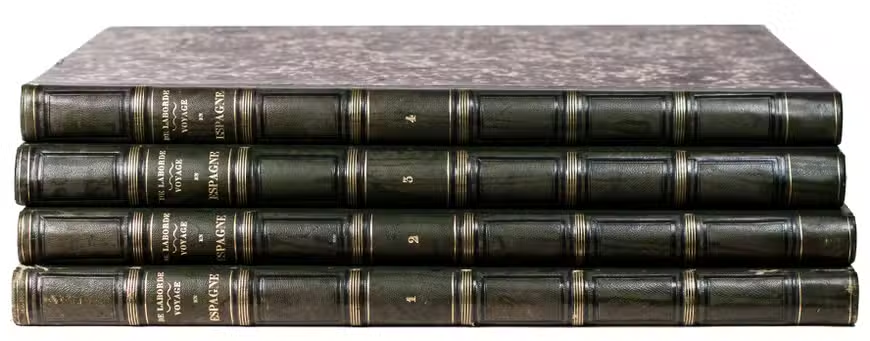
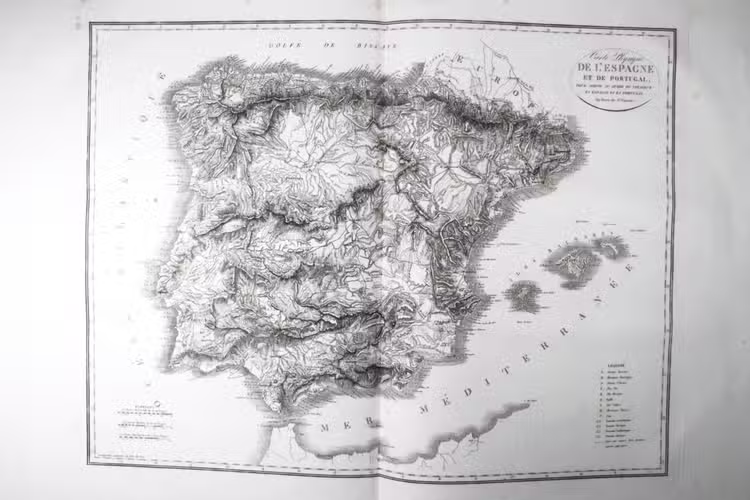
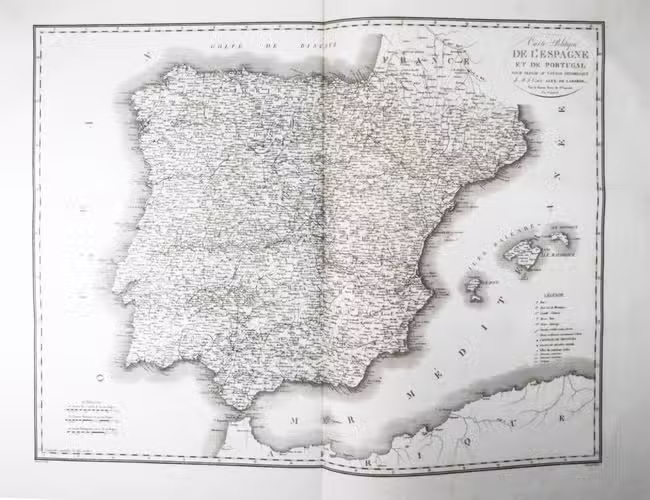
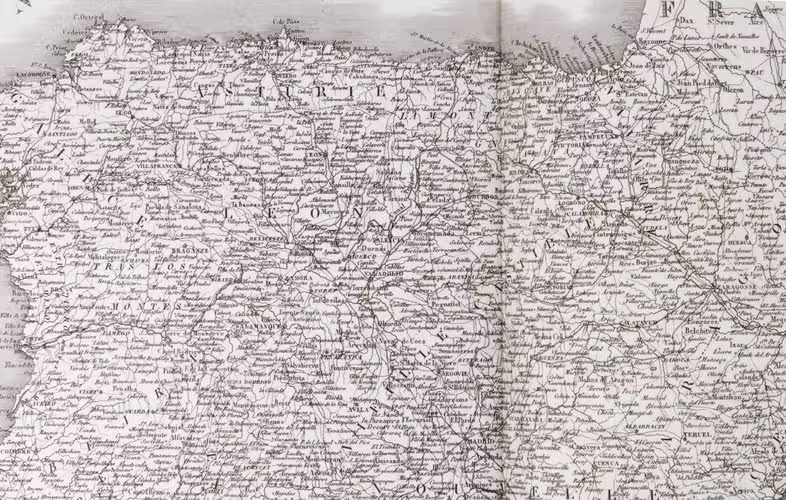
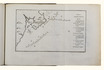
Paris, Pierre Didot l'aîné, 1806-1820. 2 volumes, each in 2 parts, bound as 4. 1mo (57 x 44 cm). With engraved illustrated title-page by Du Parc after Charles Percier, 4 letterpress title-pages, each with a different engraved illustration, 272 engraved plates and 2 large double-page engraved maps, of Spain and Portugal. Contemporary green half morocco. XLVI, 72, [2]; 73-132; XLV, [1 blank], 33, [1 blank] [2]; XCI [= LXXXI], [1 blank] pp.
€ 17,500
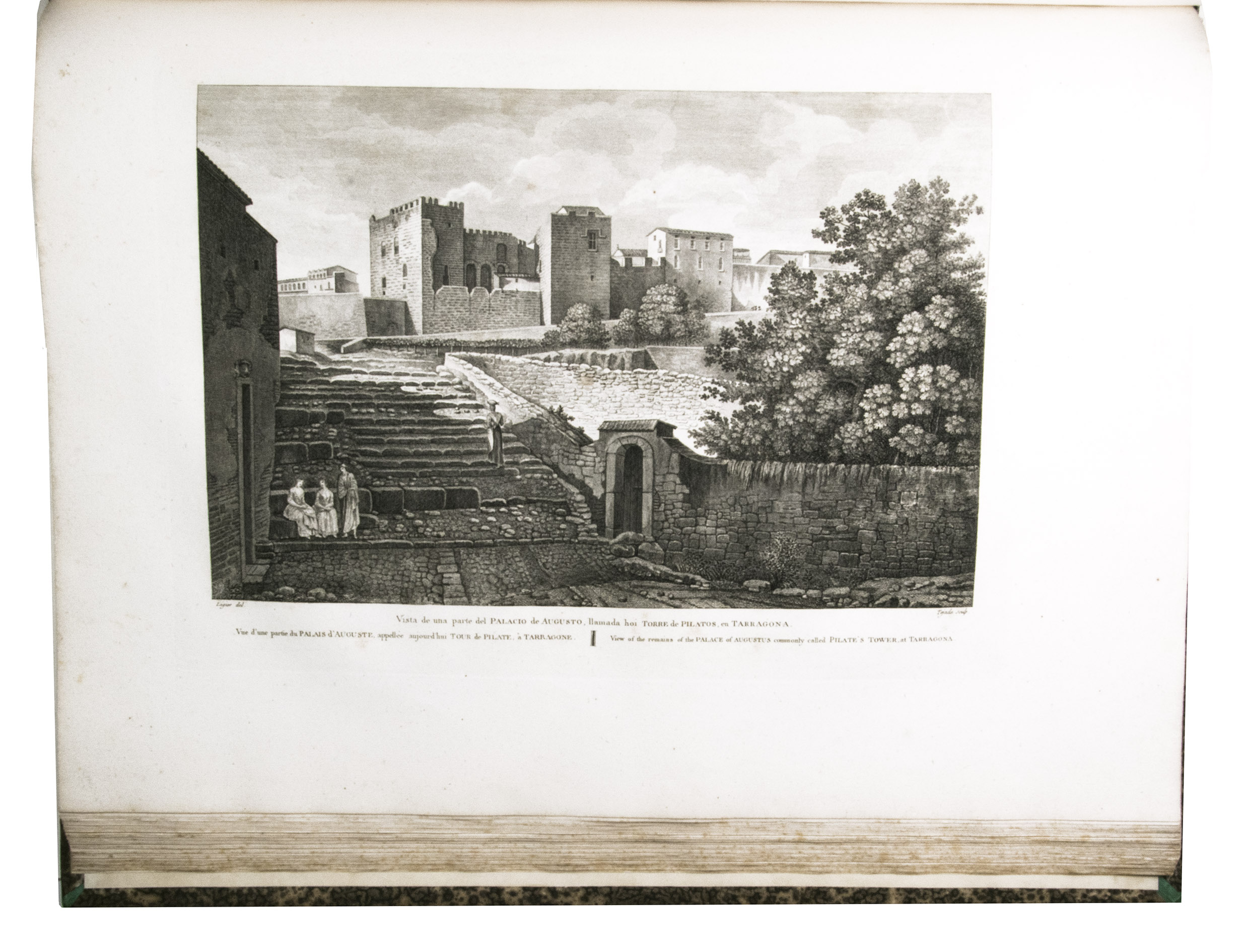
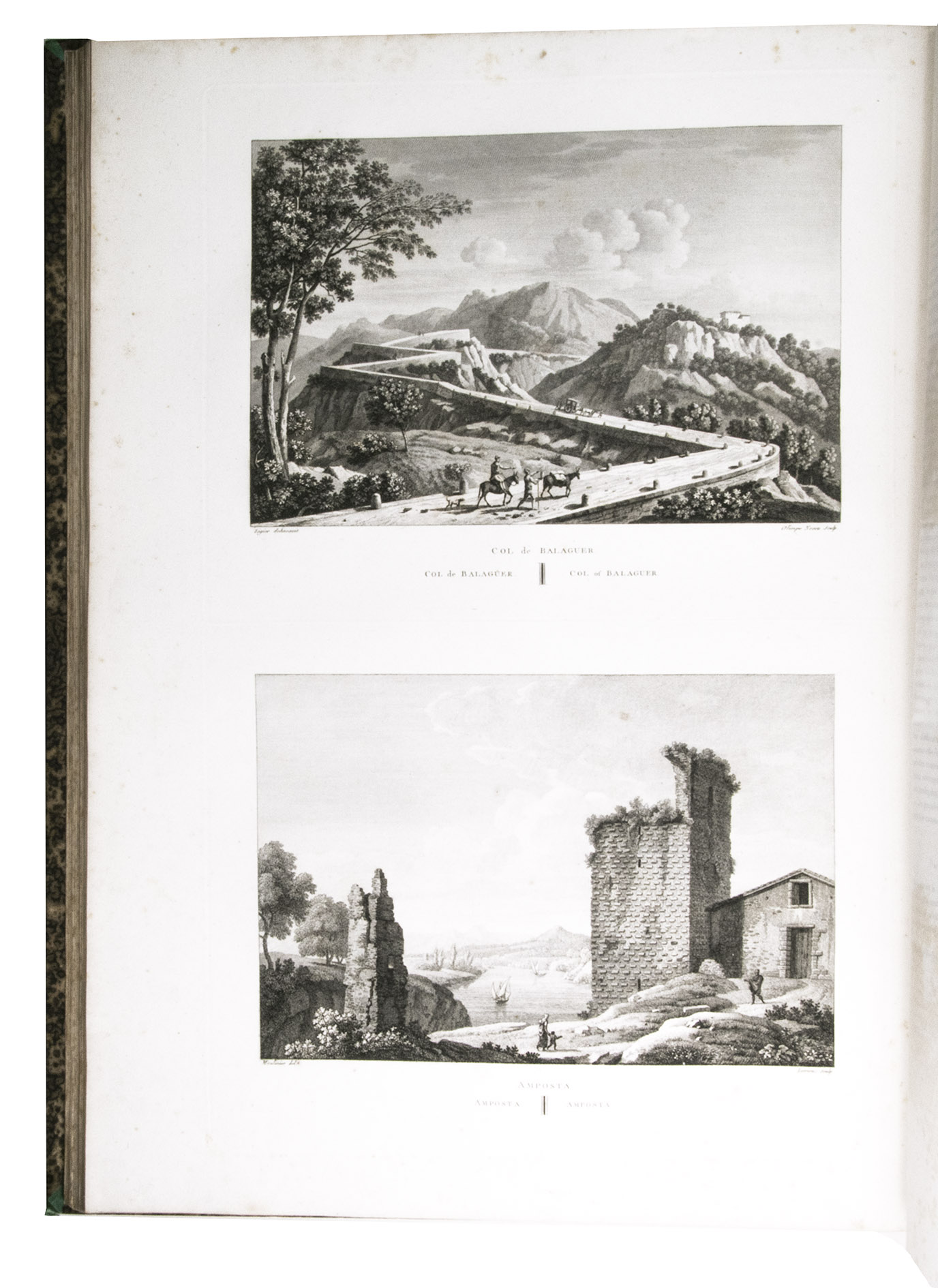
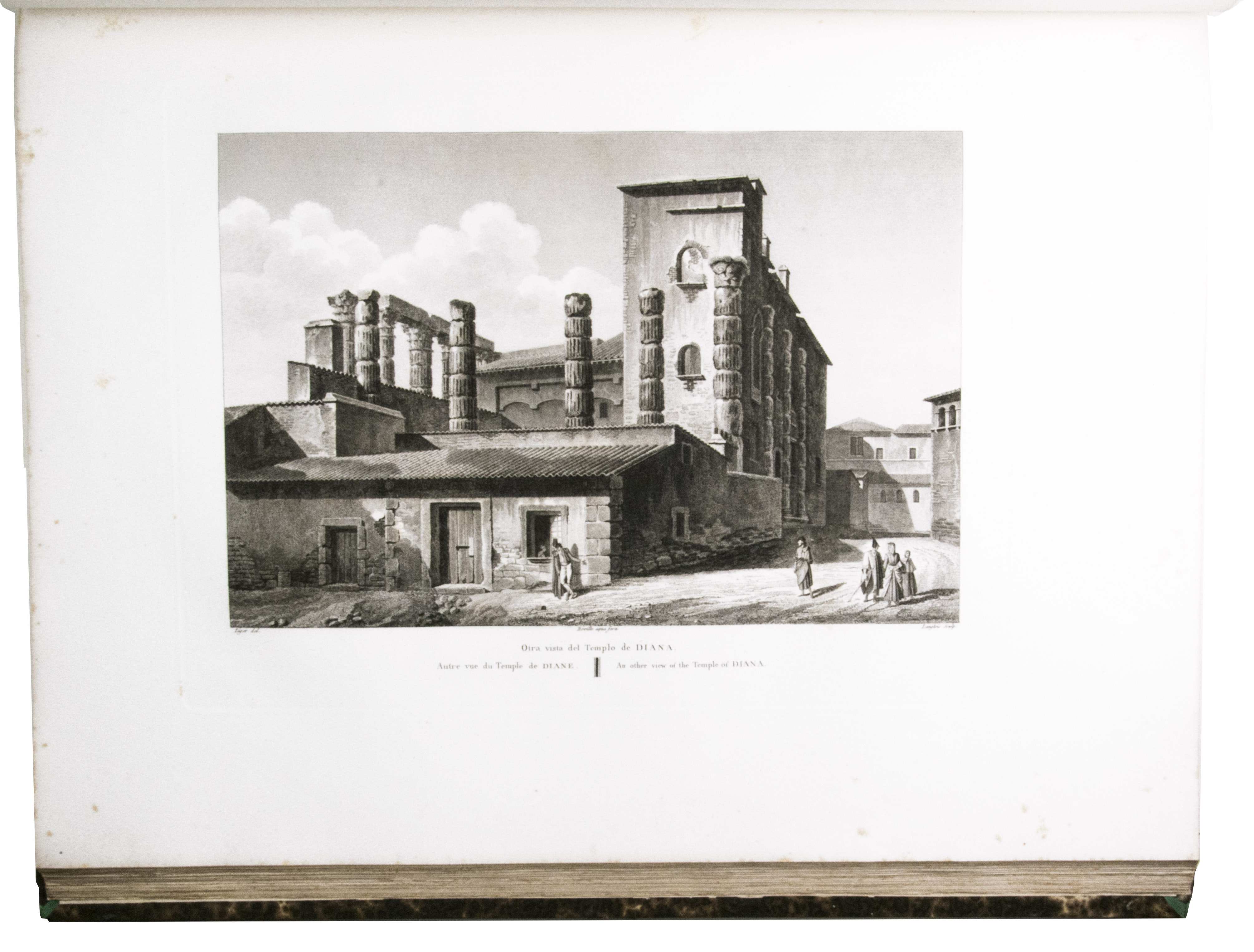
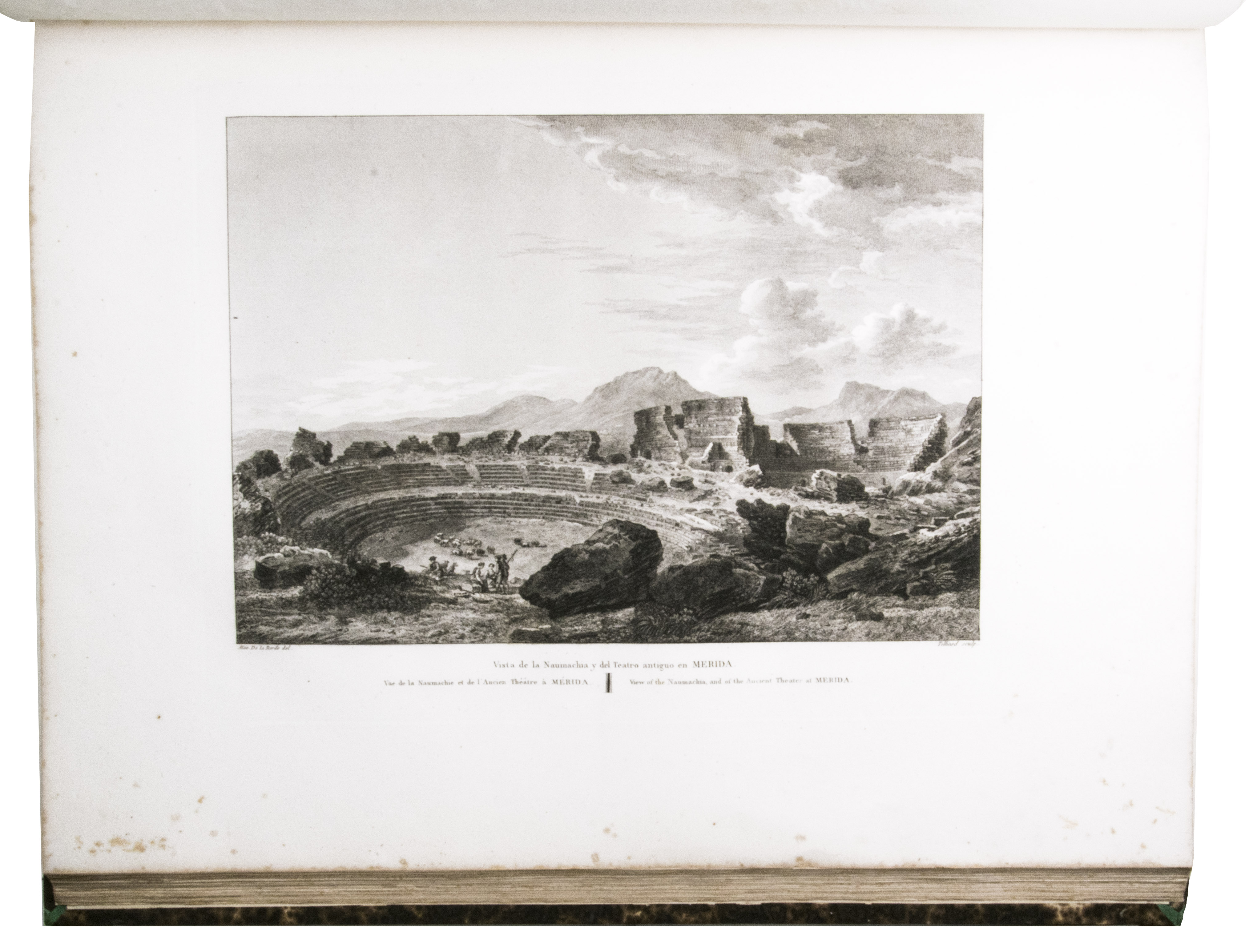
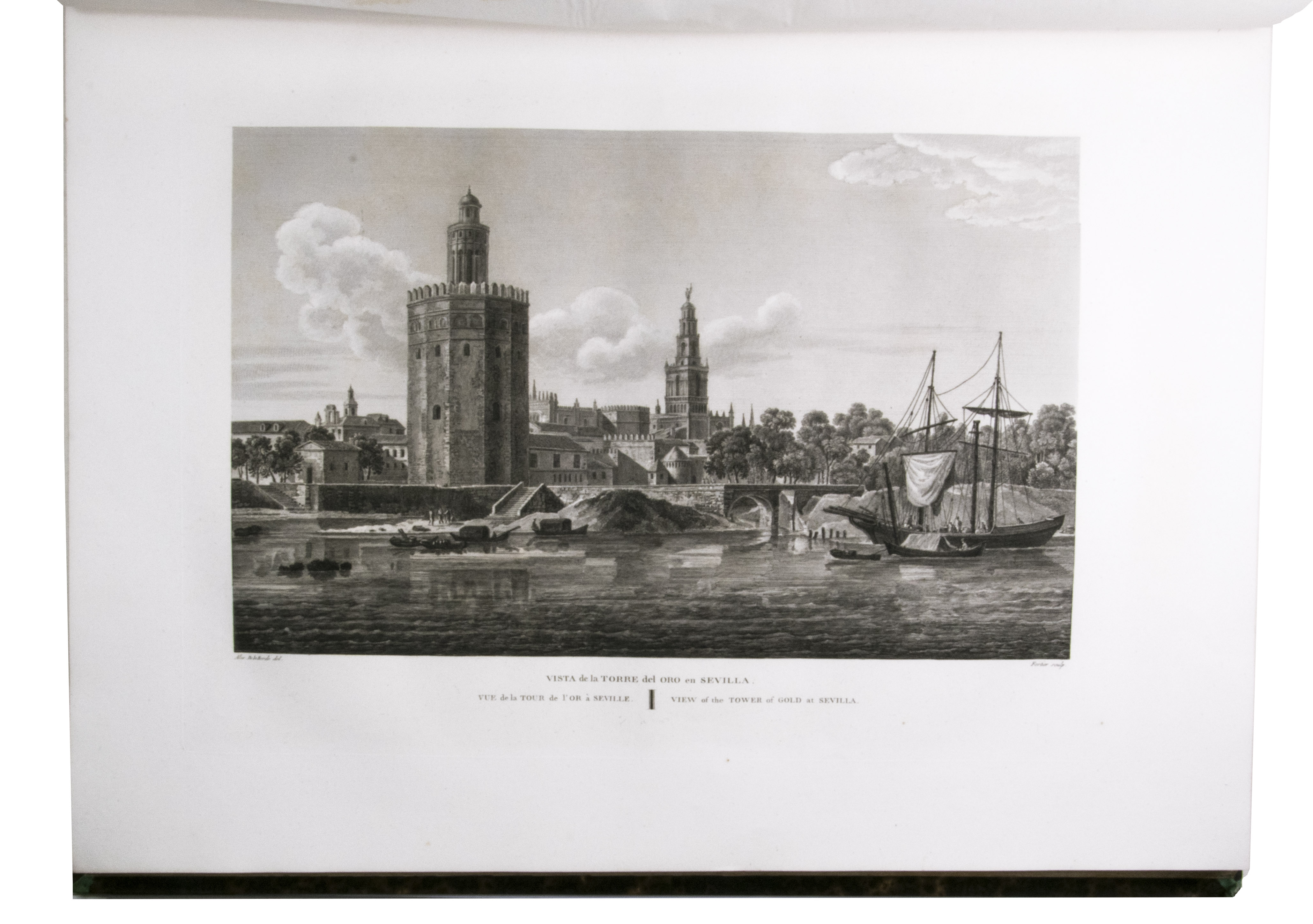
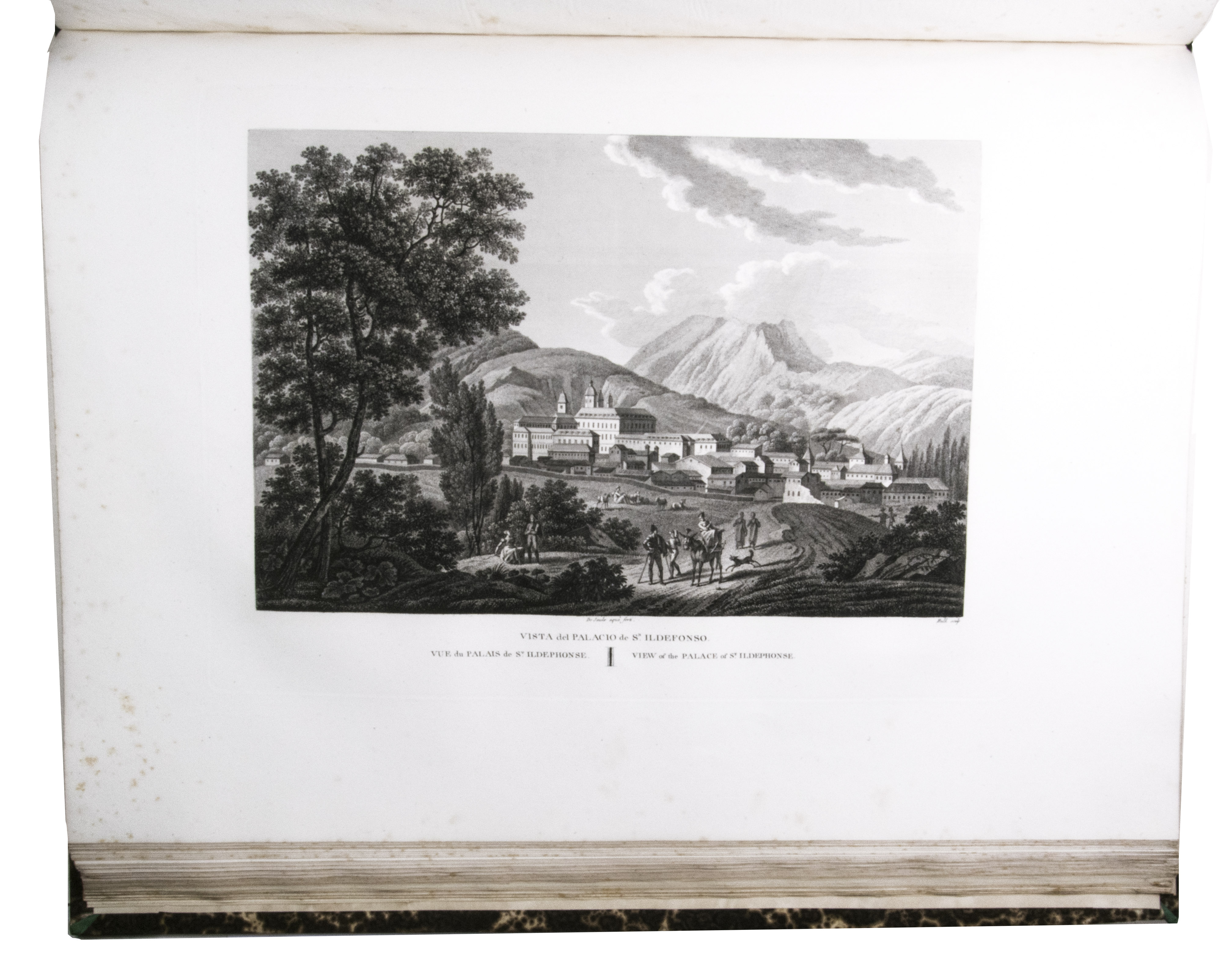
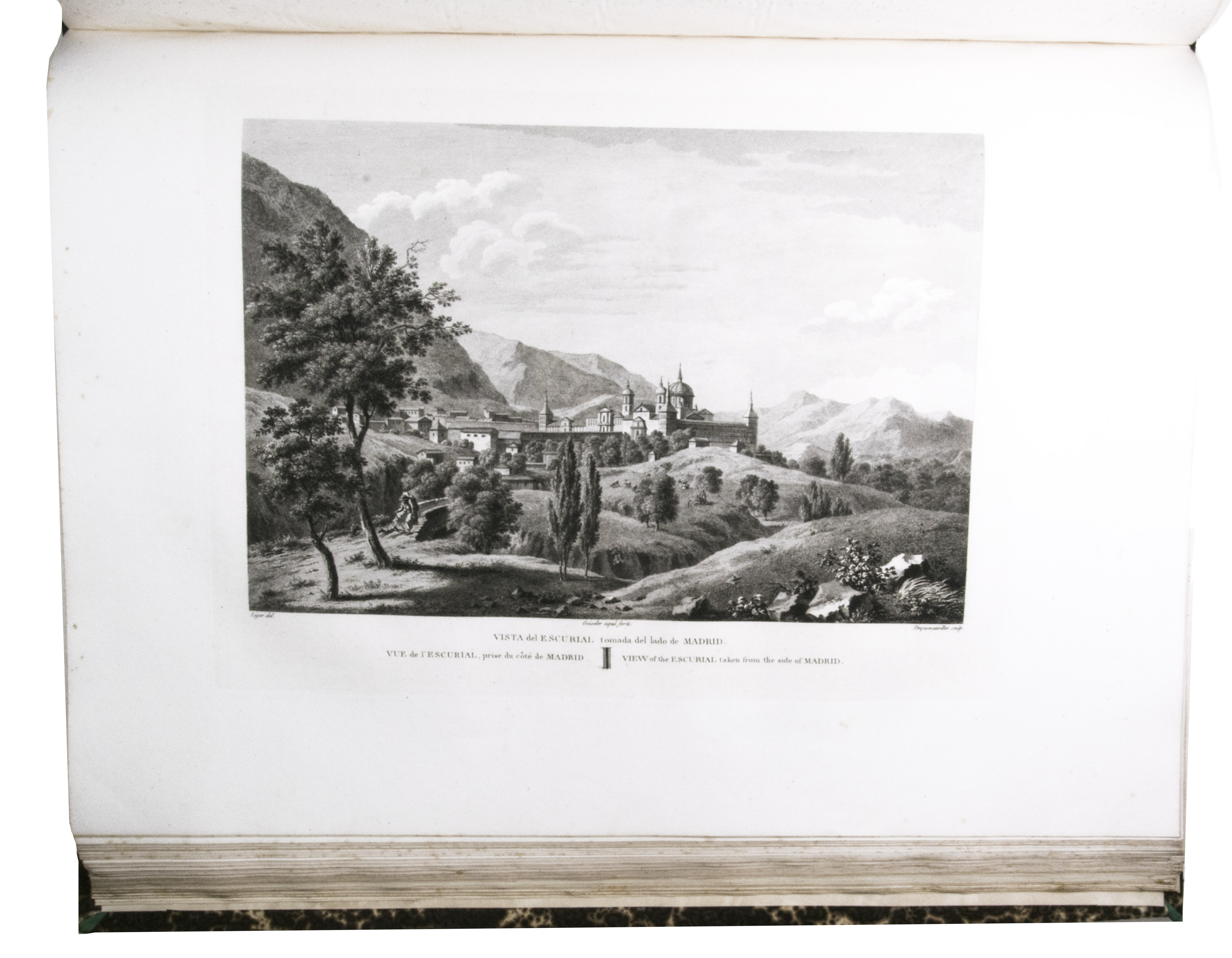
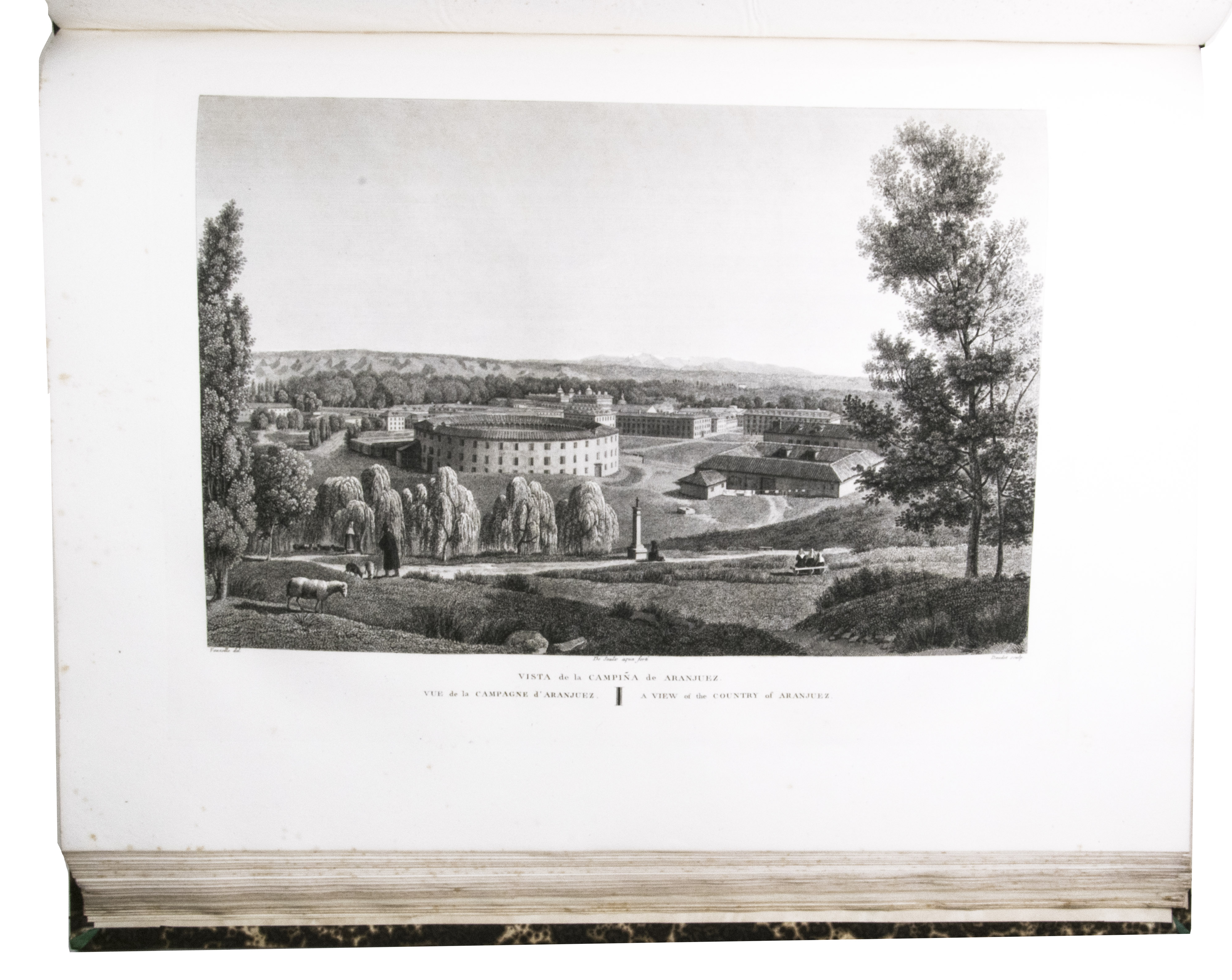
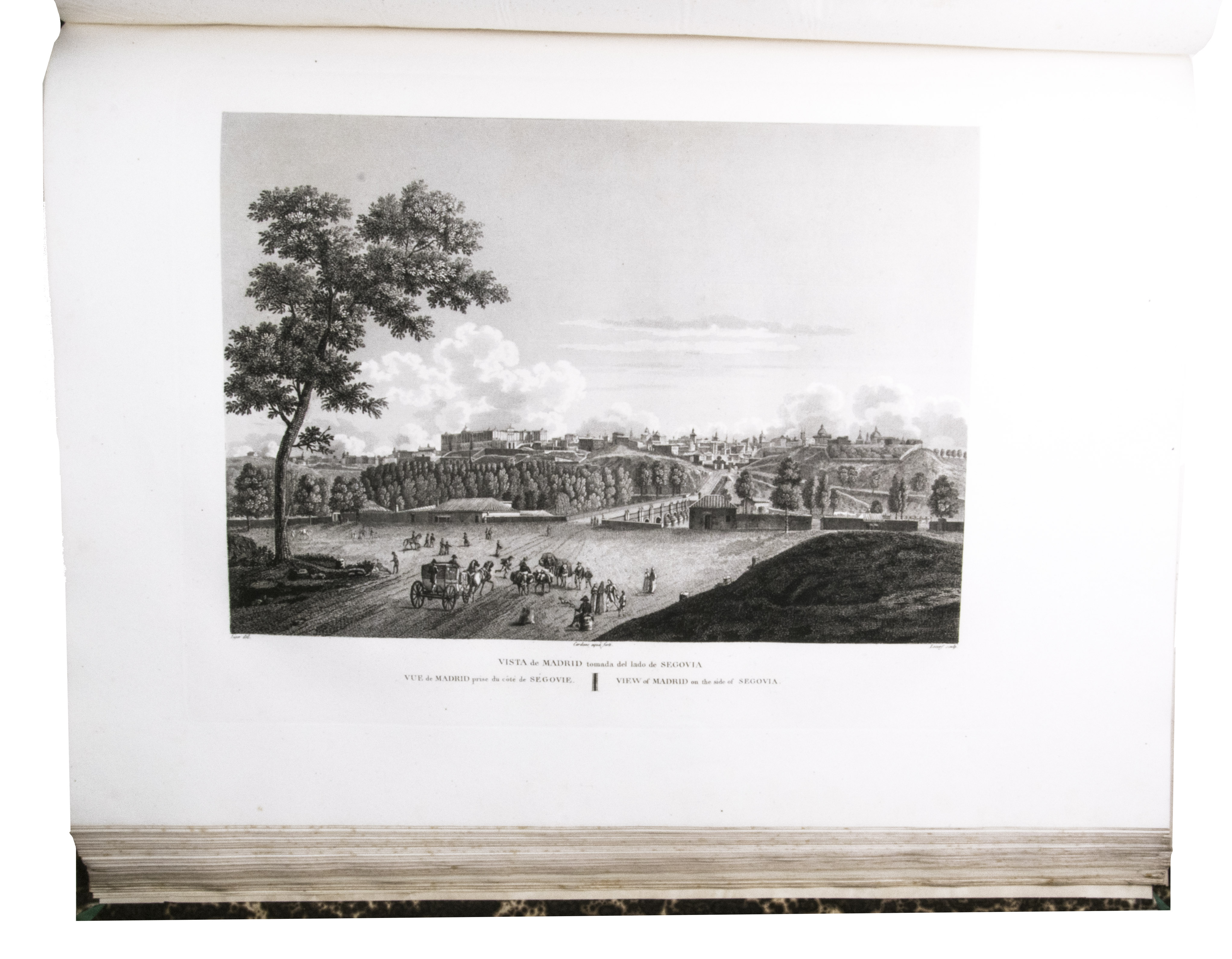
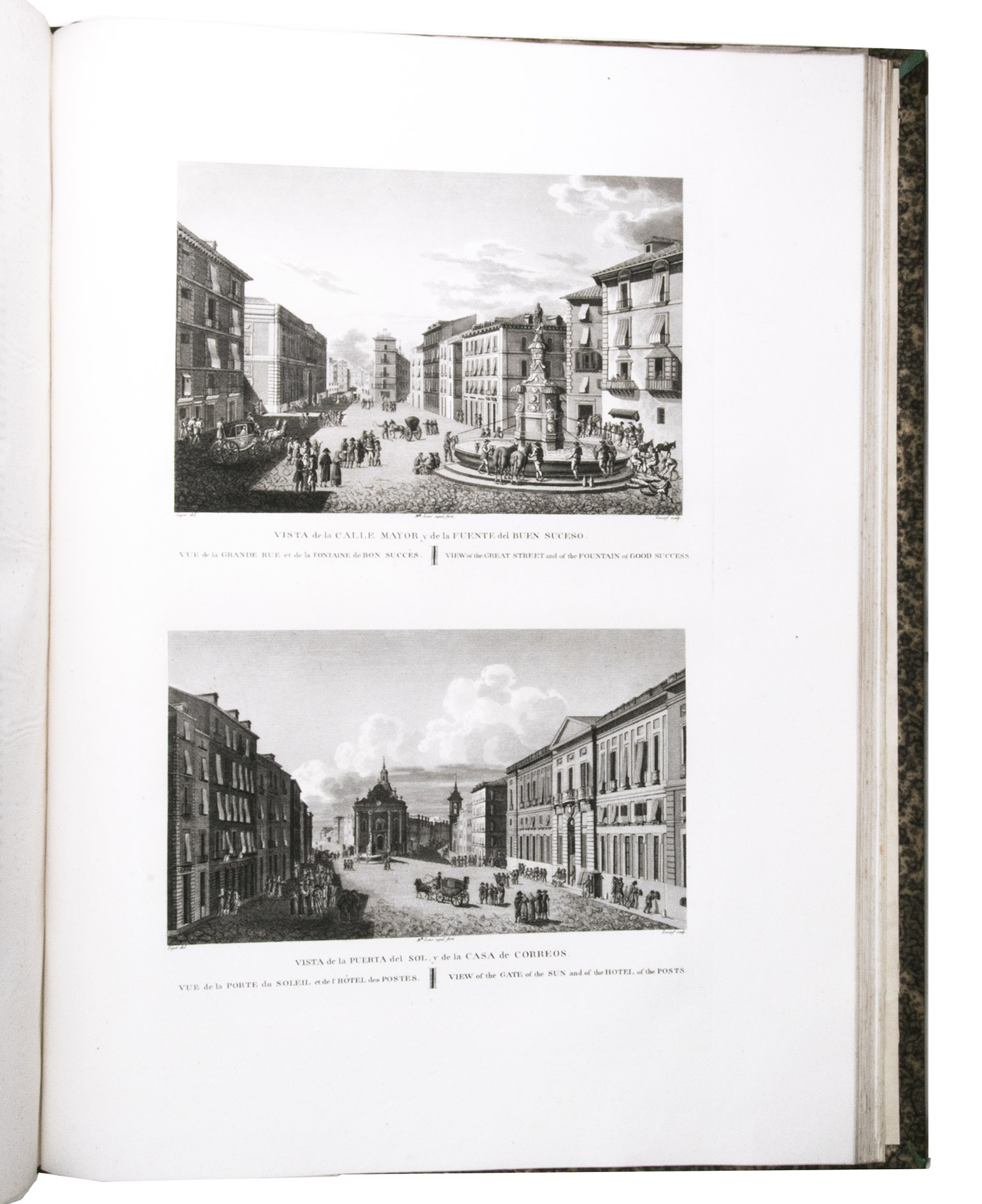
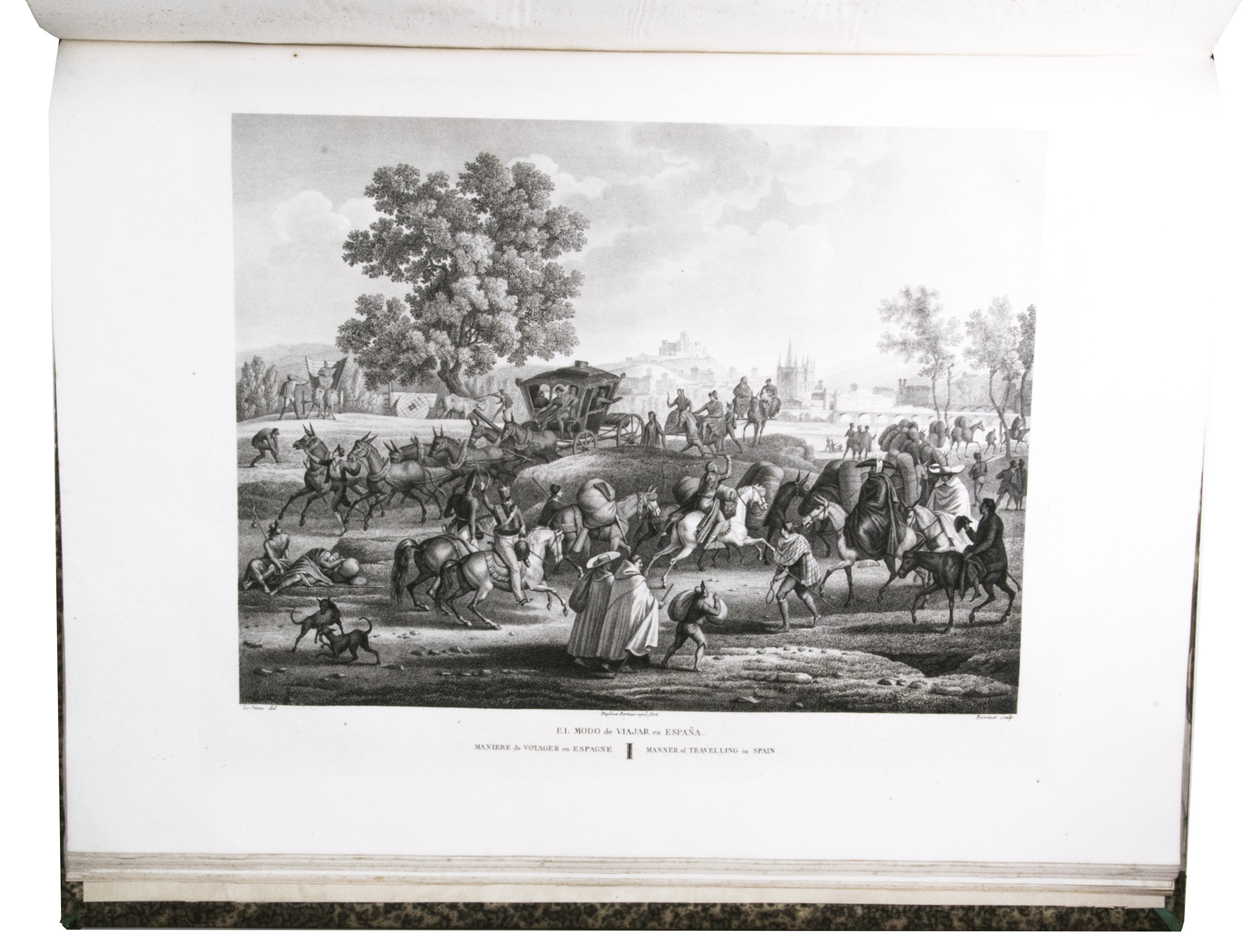
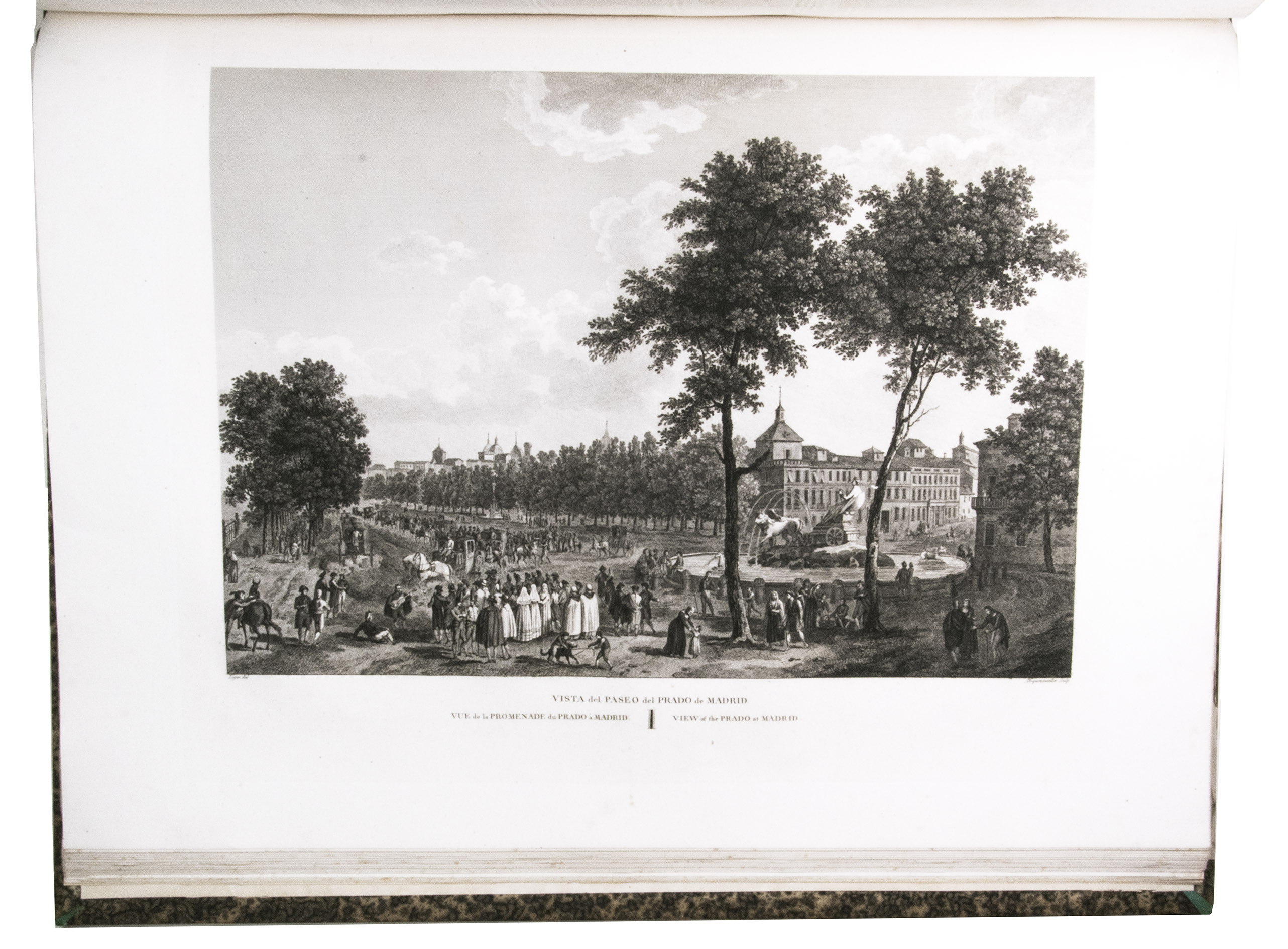
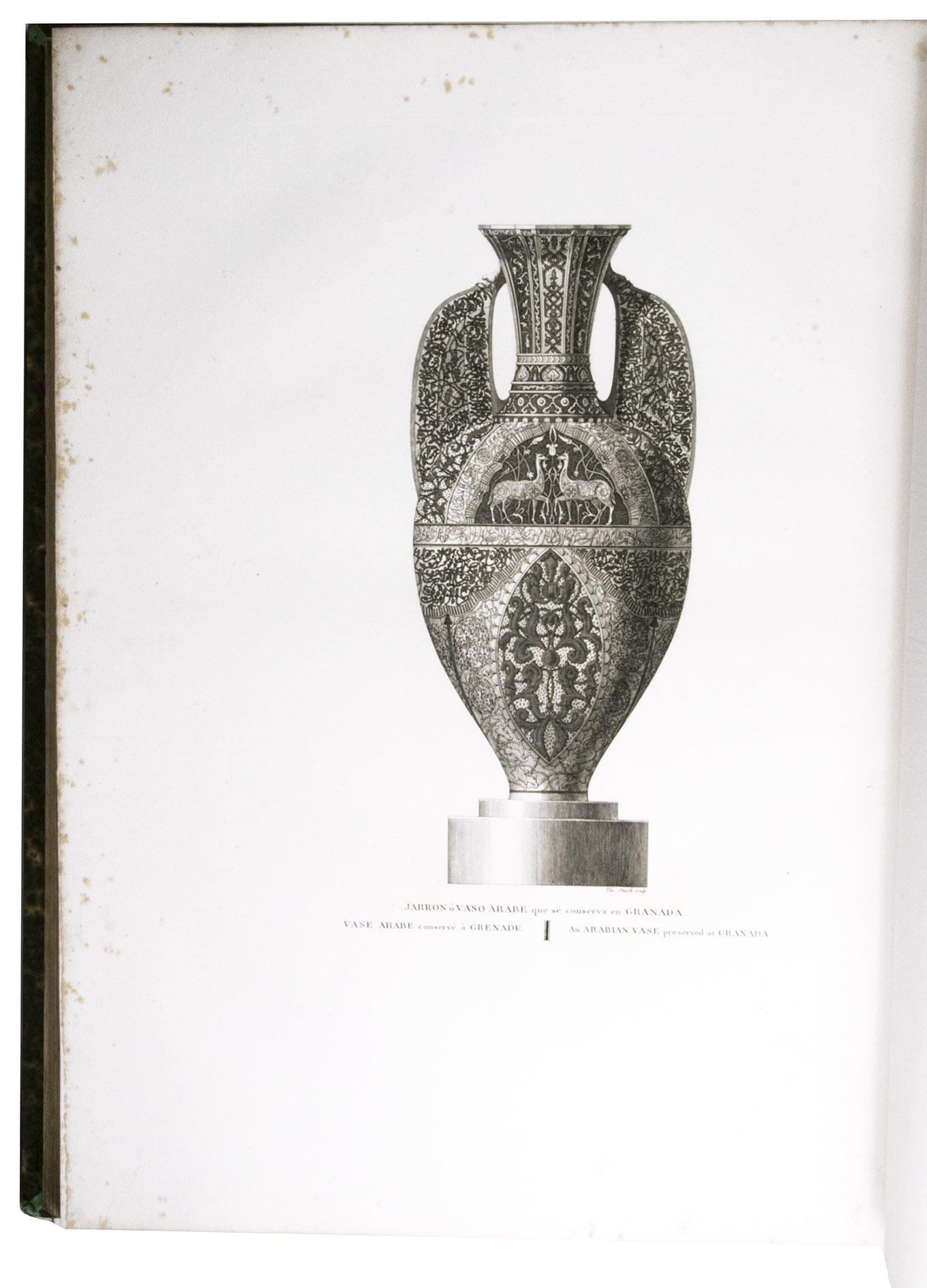
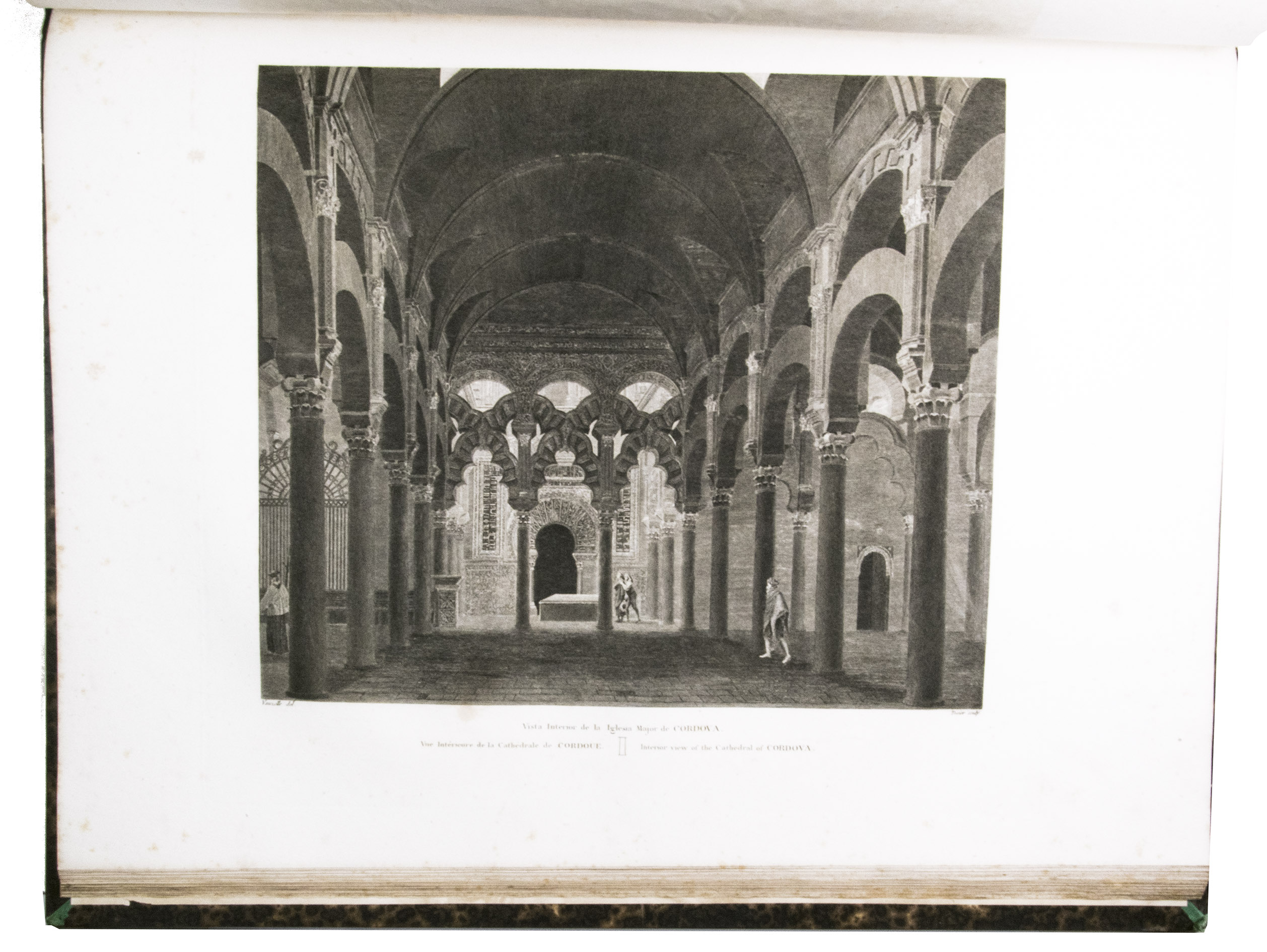
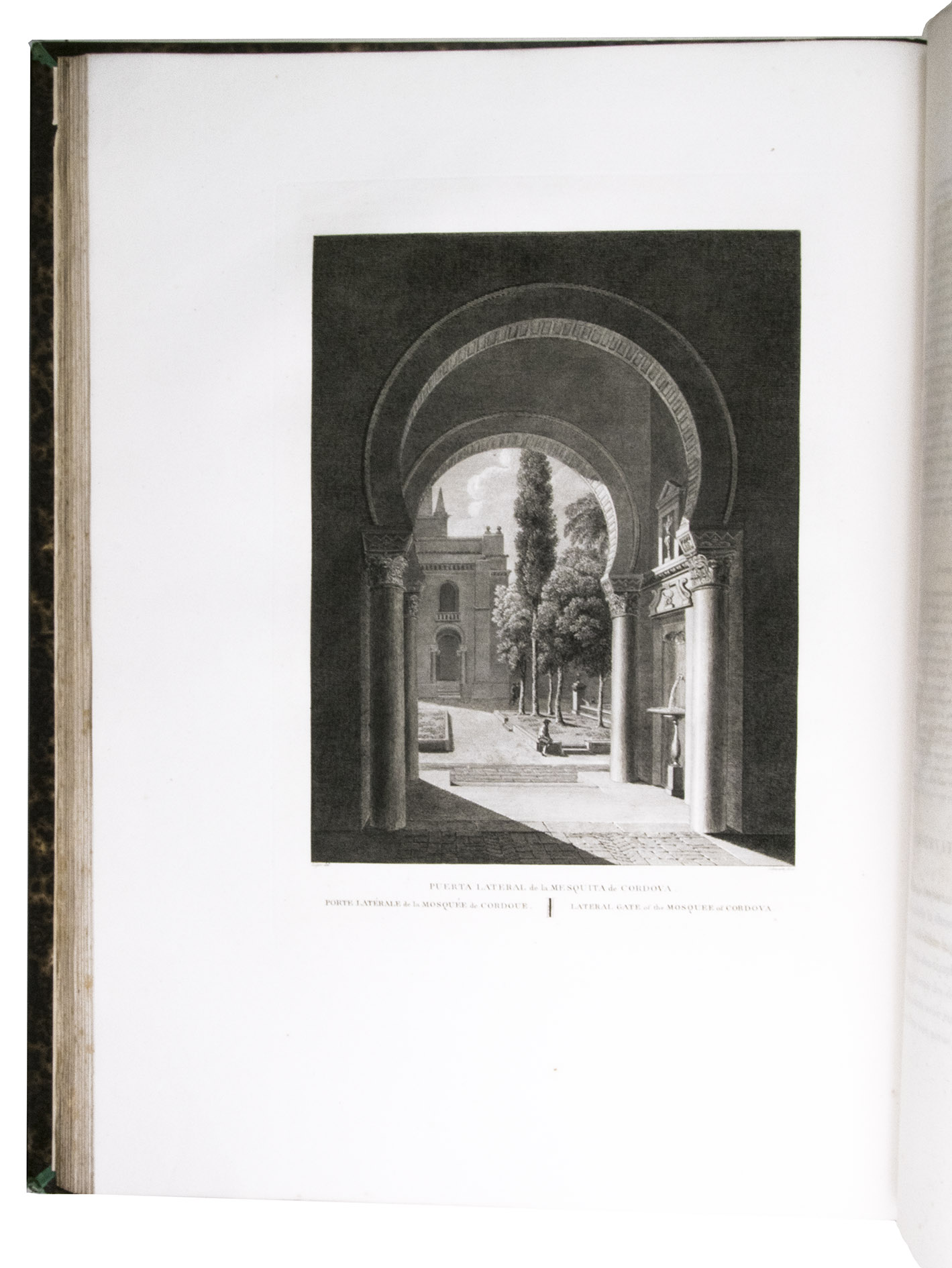
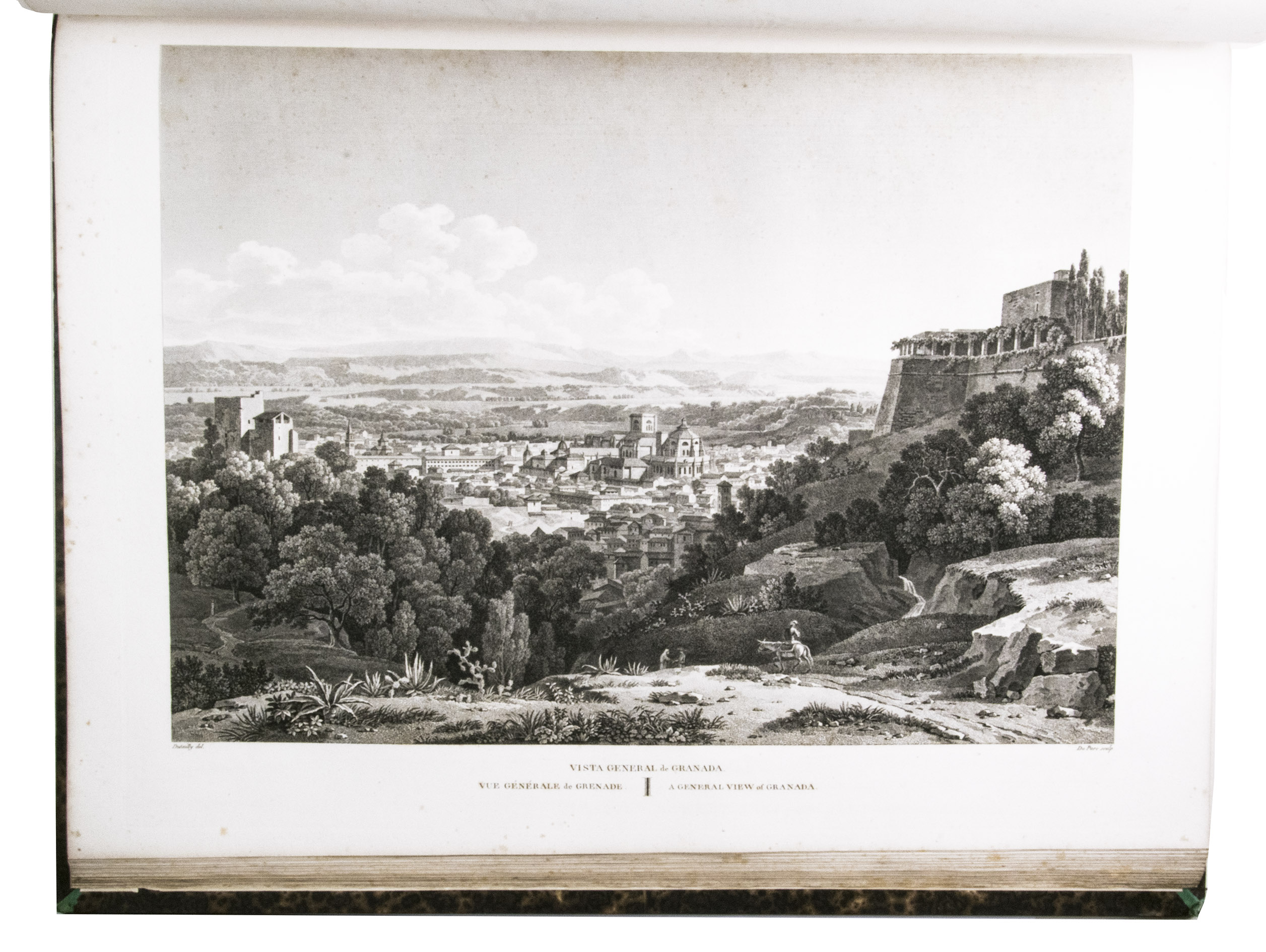
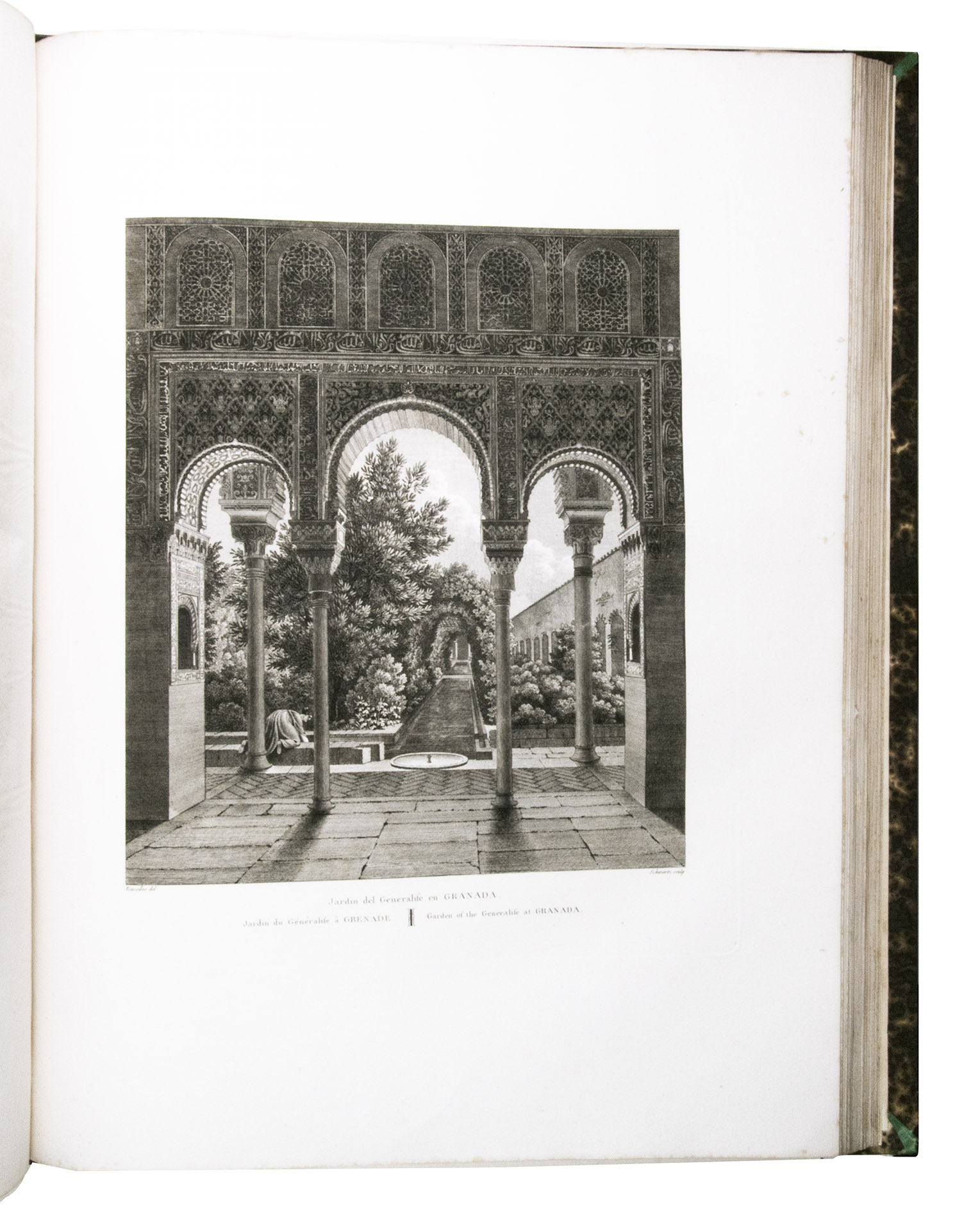
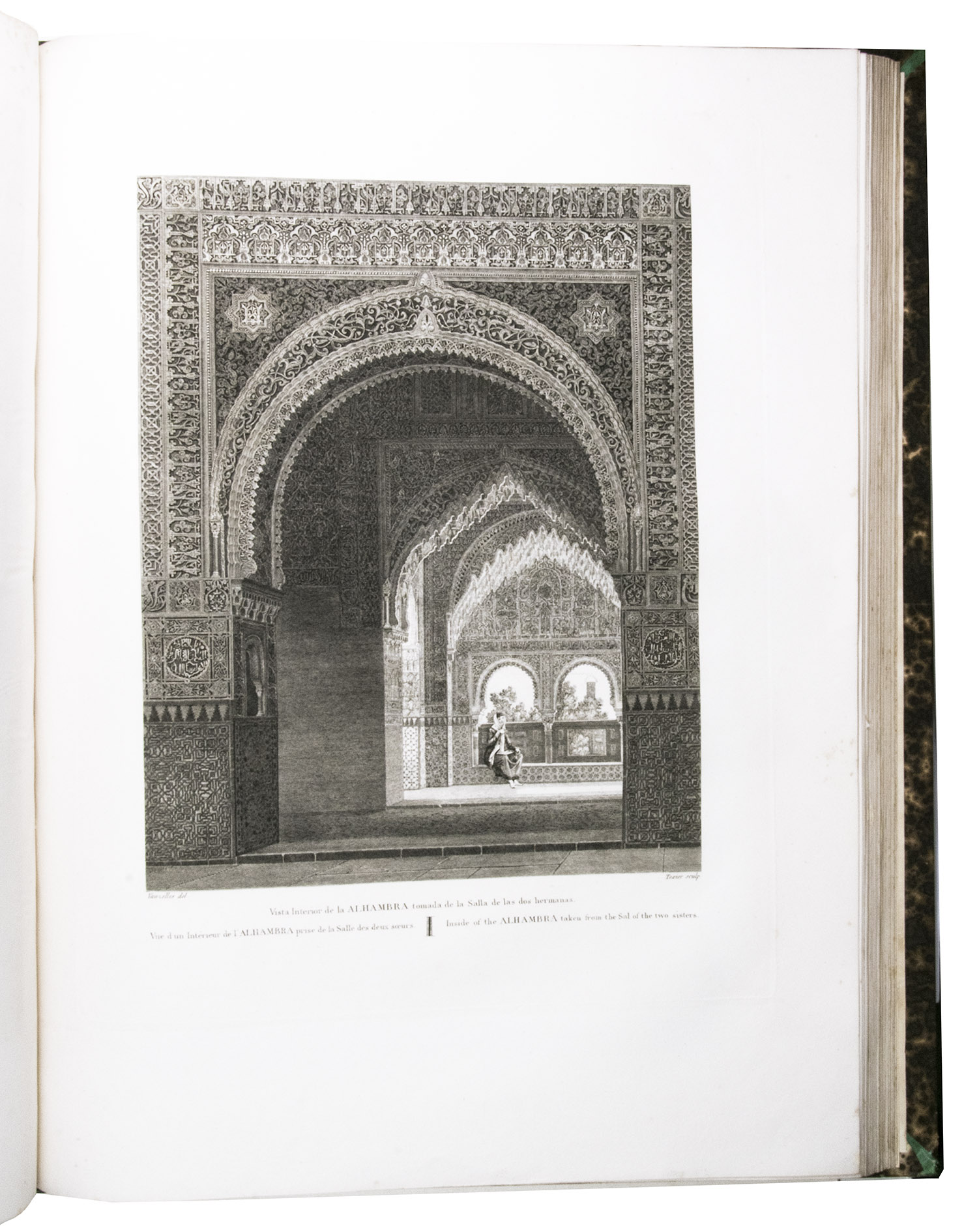
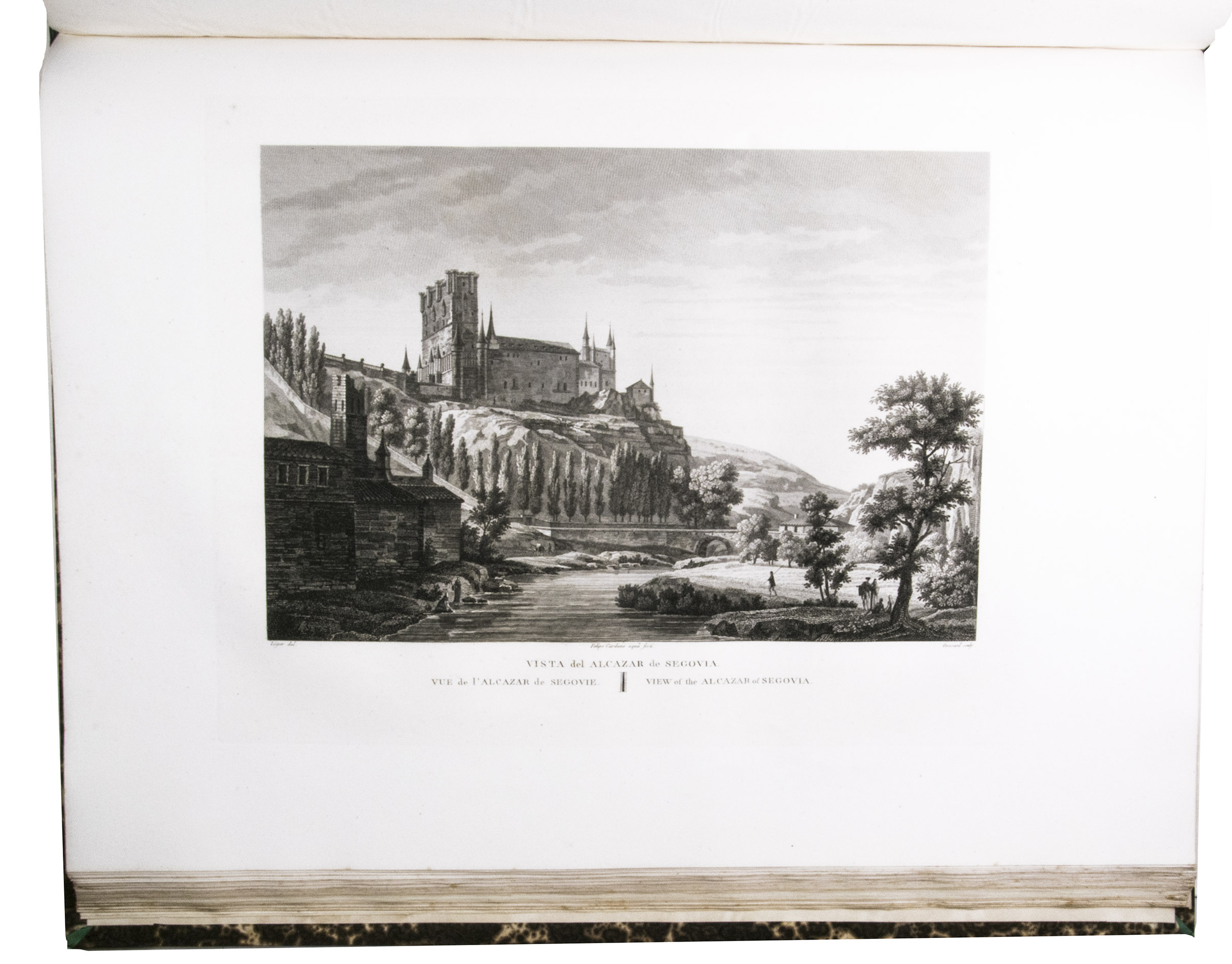
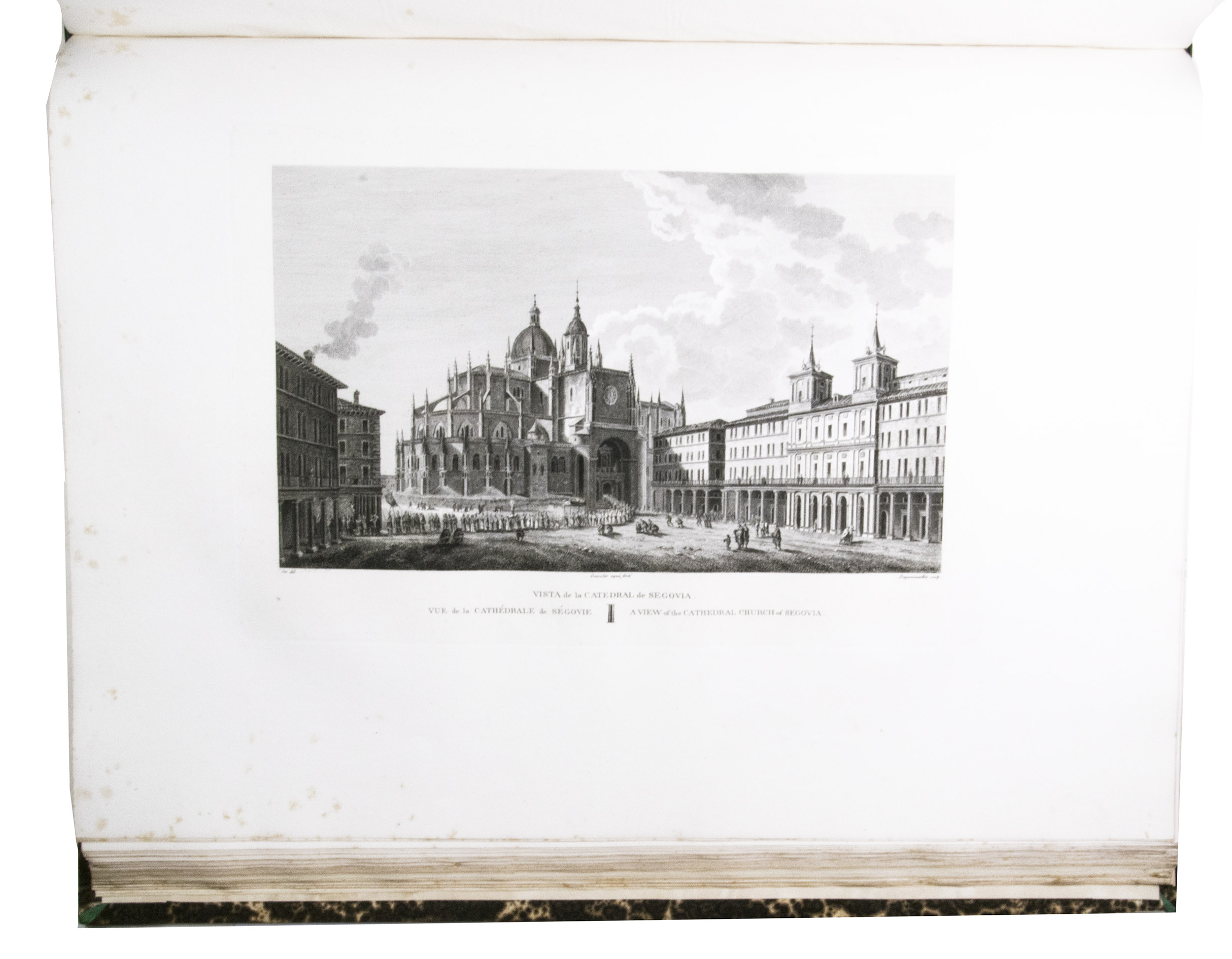
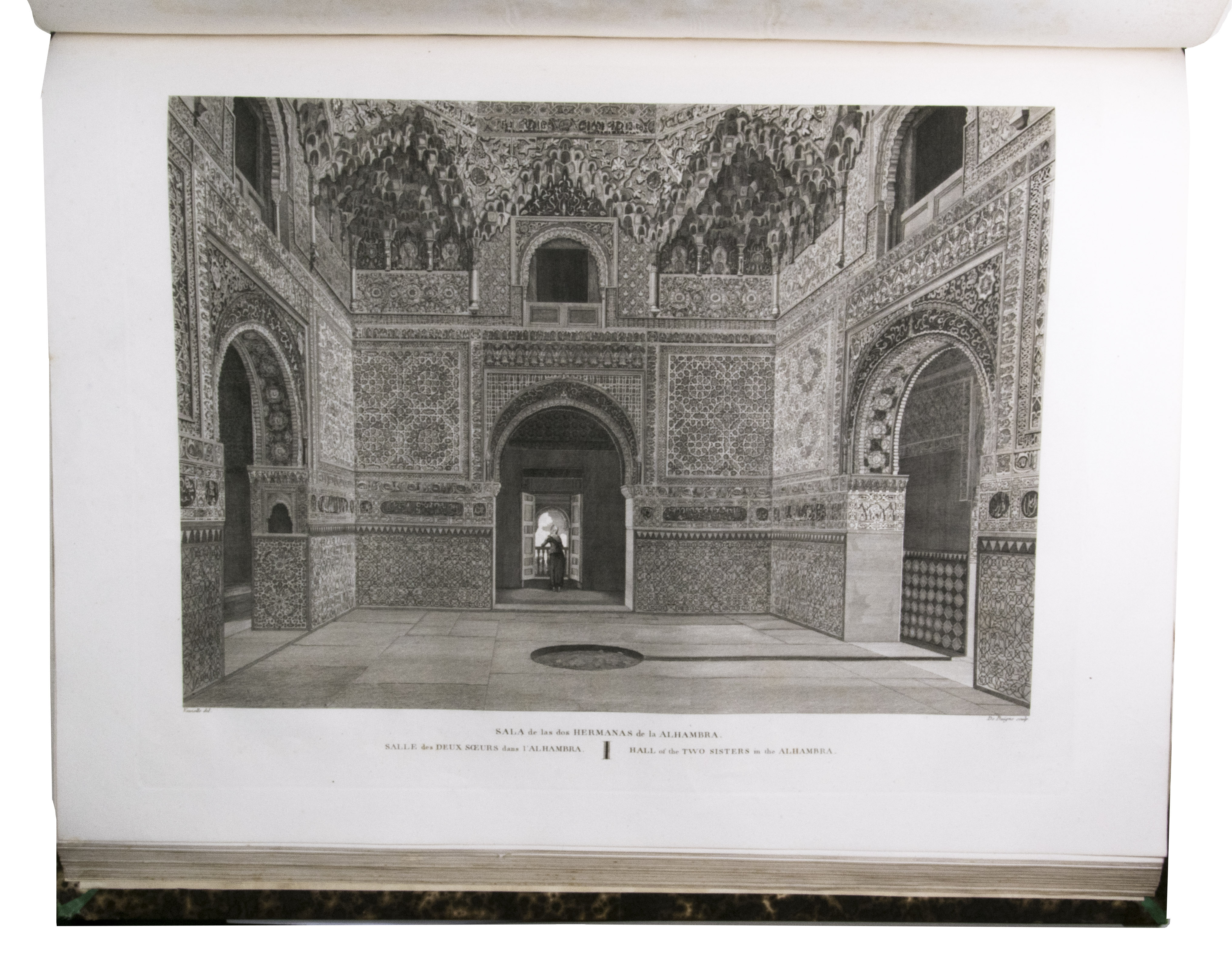
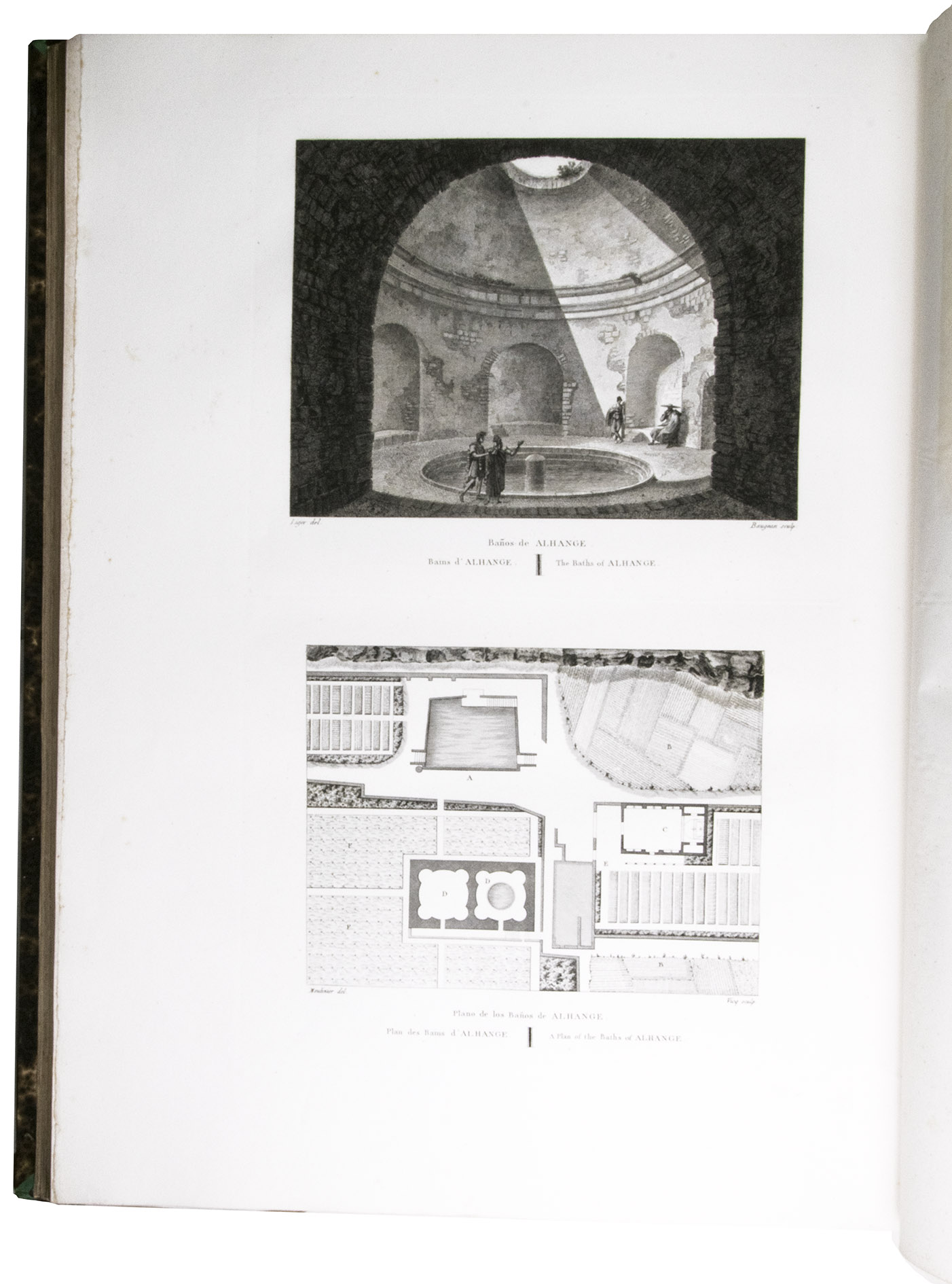
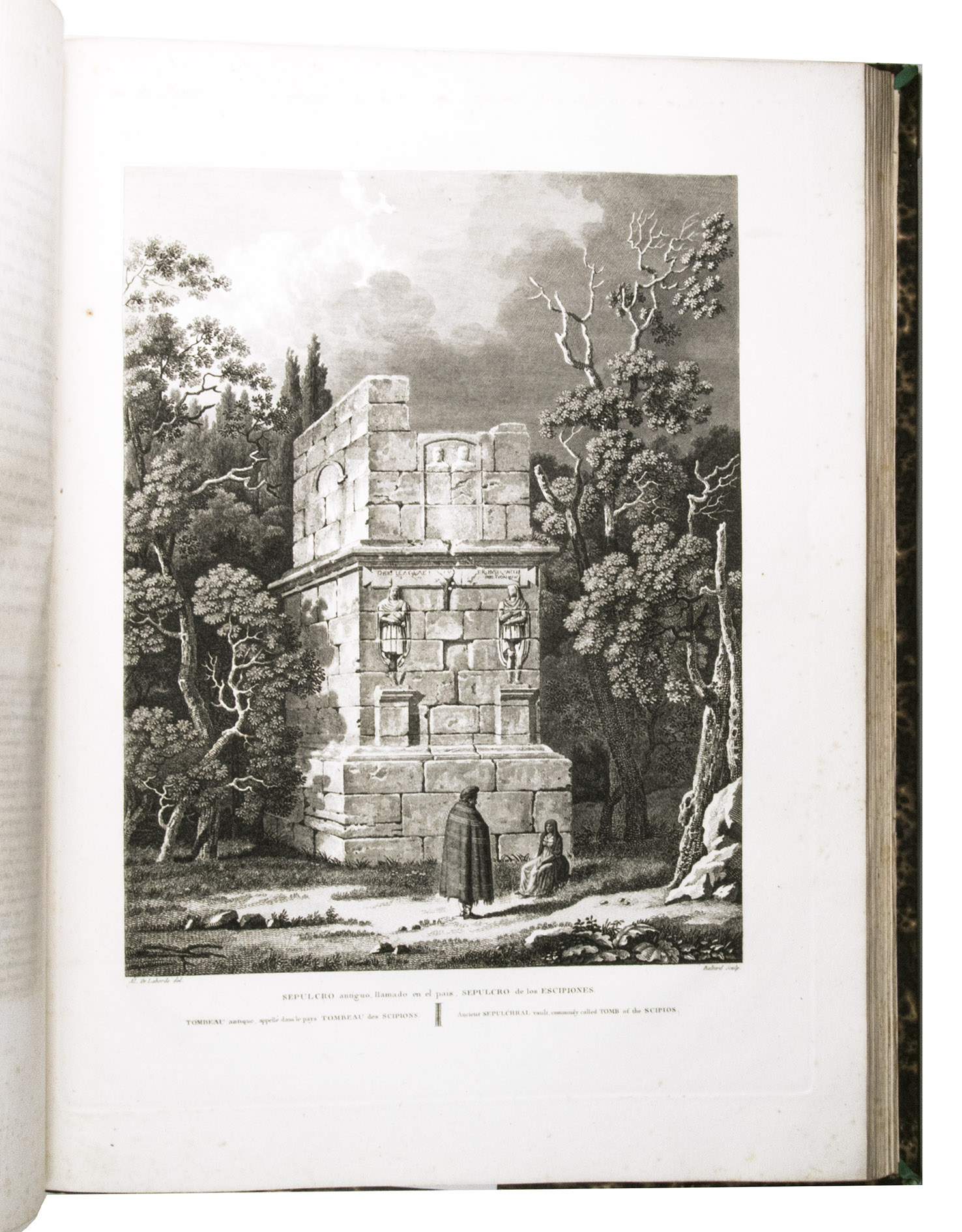
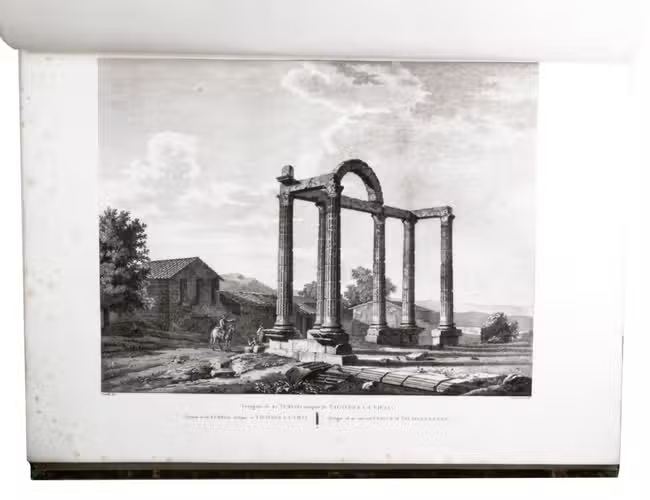
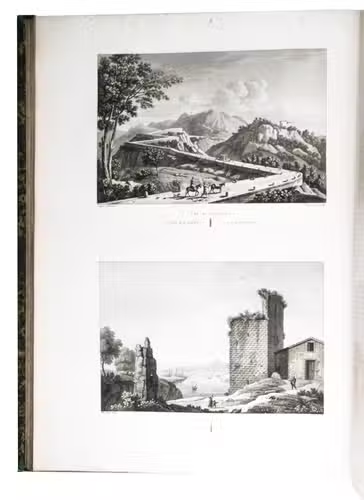
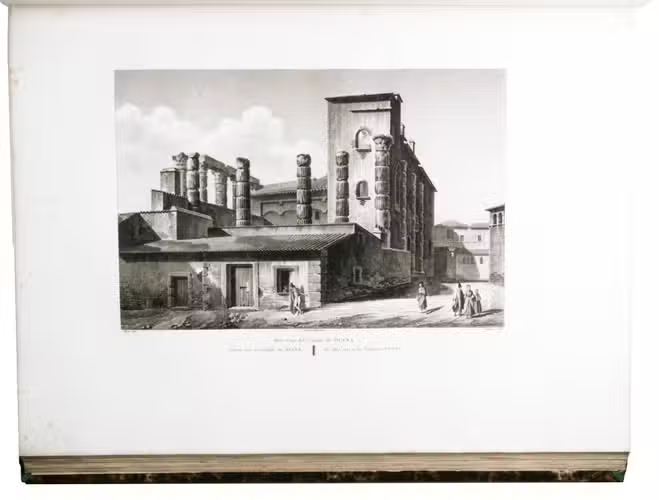
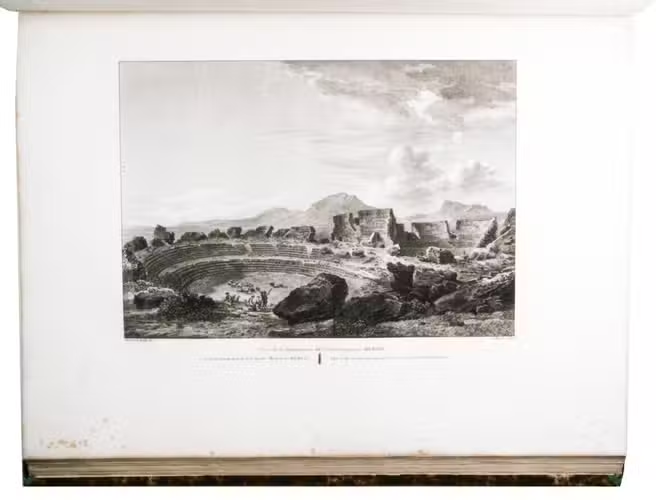
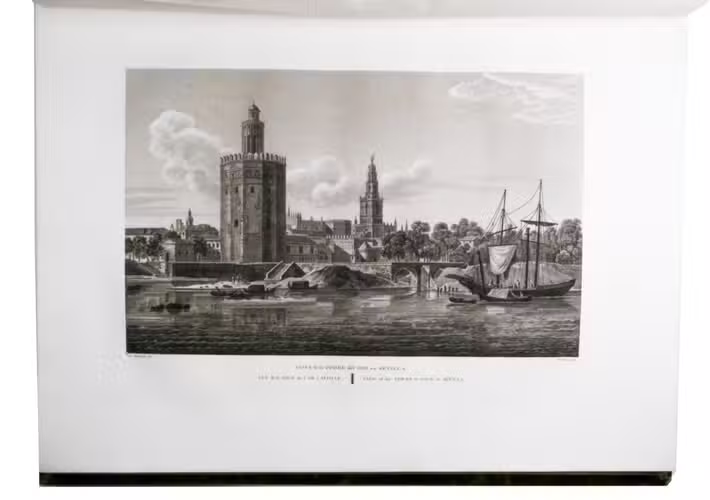
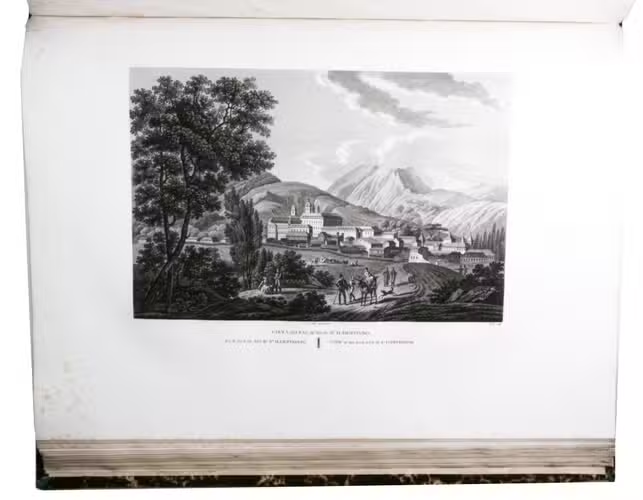
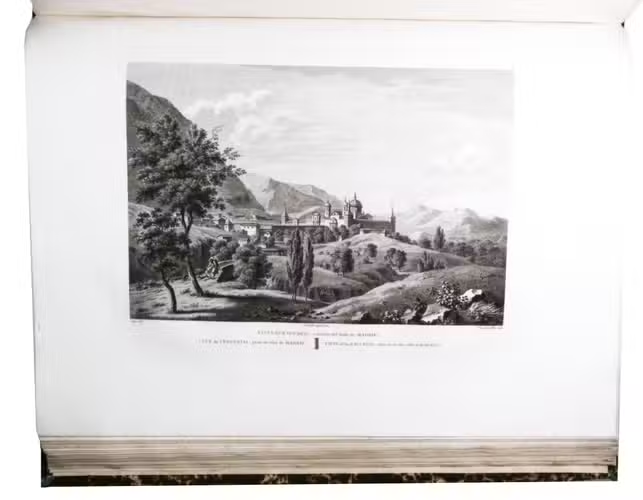
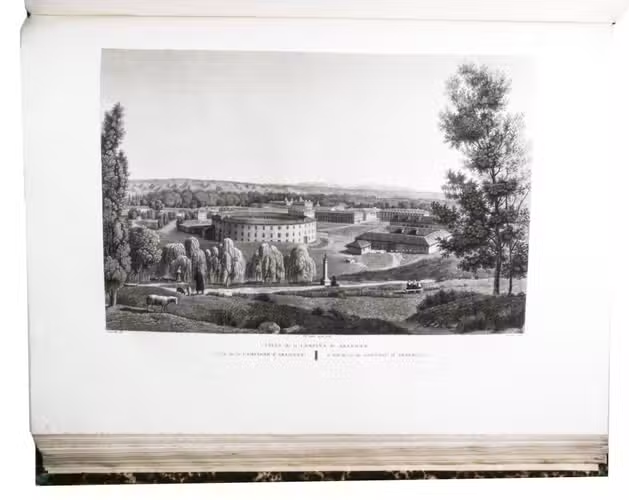
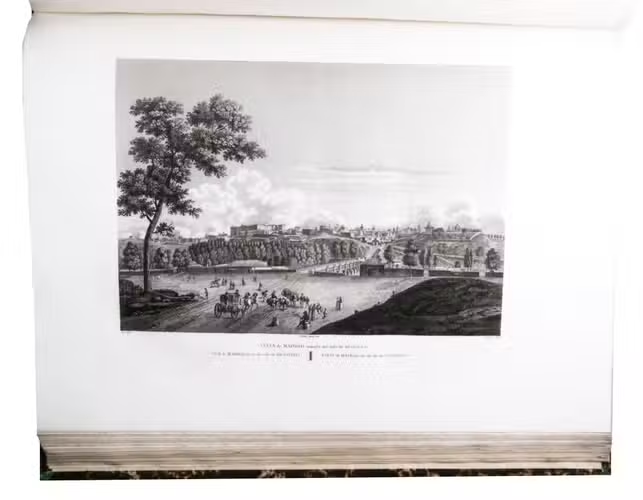
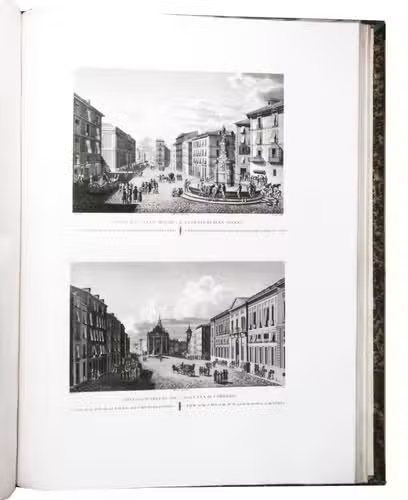
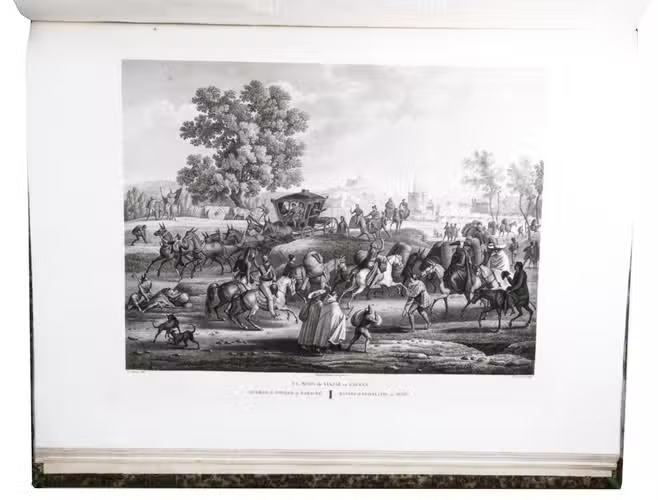
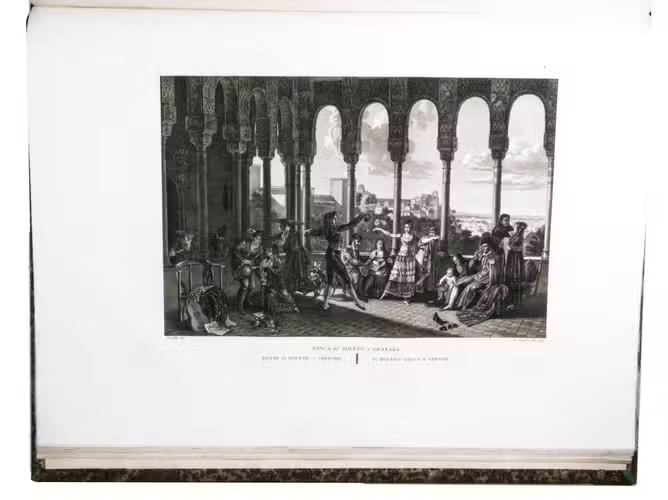
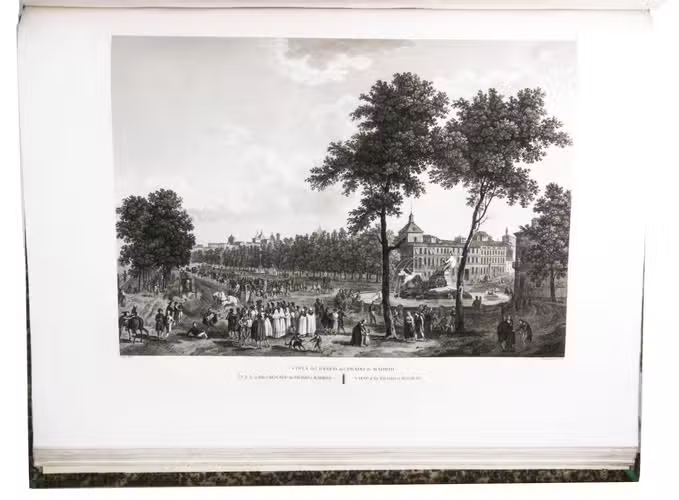
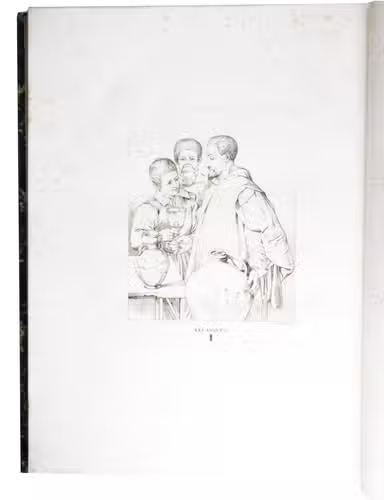
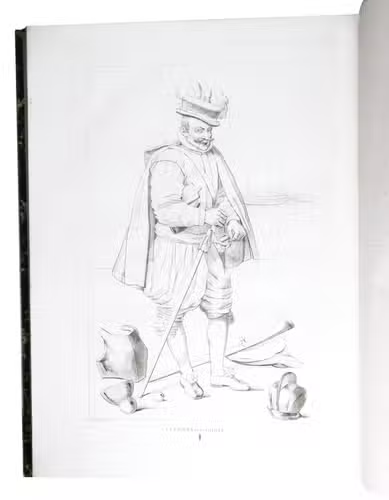
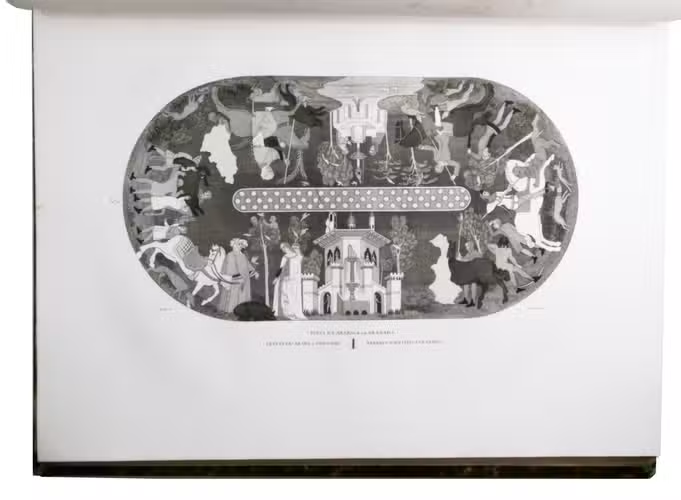
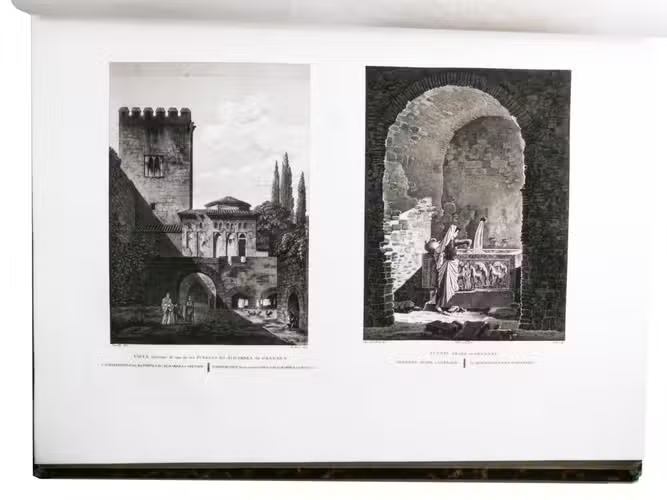
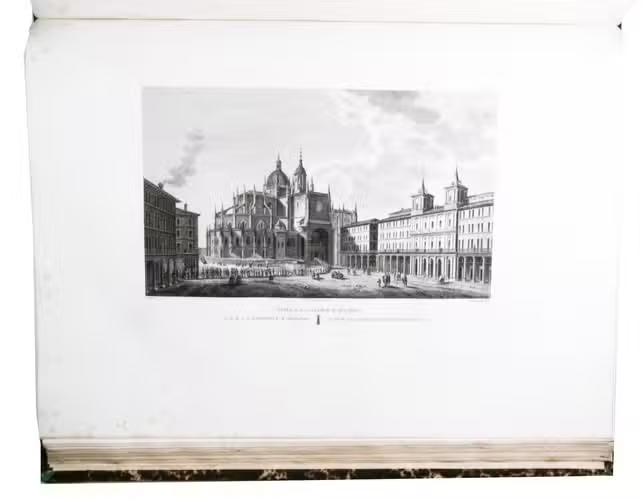
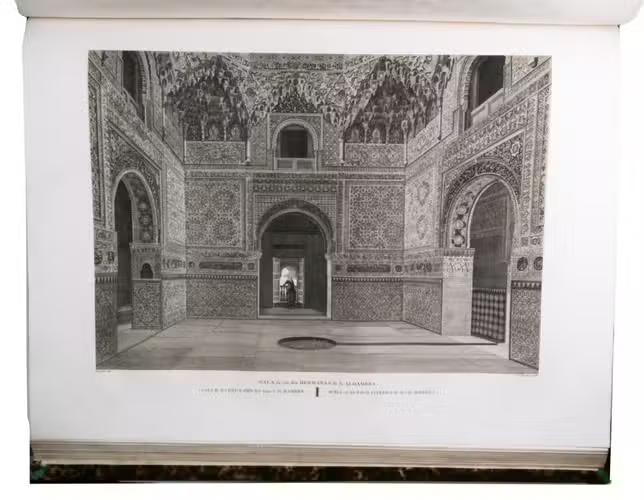
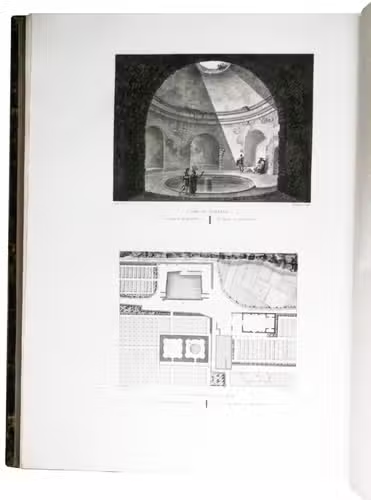
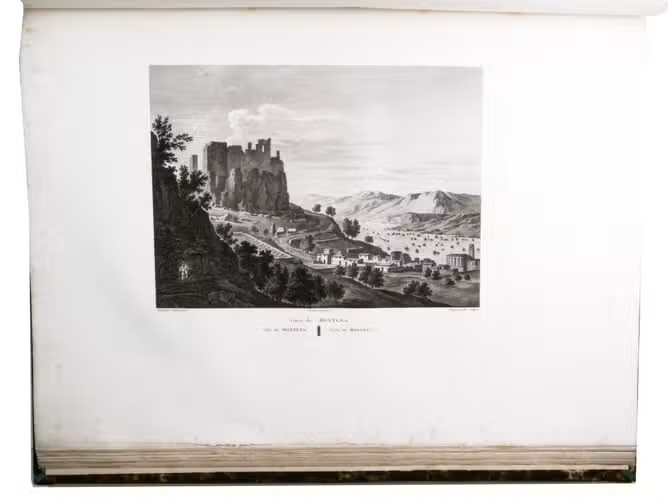
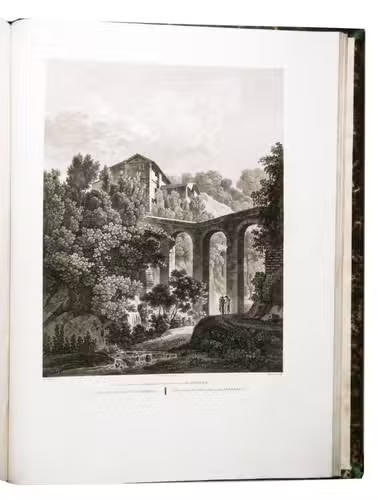
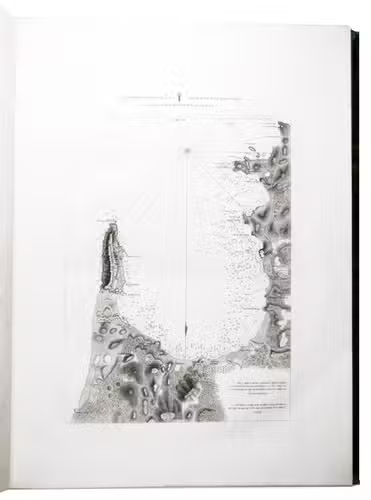
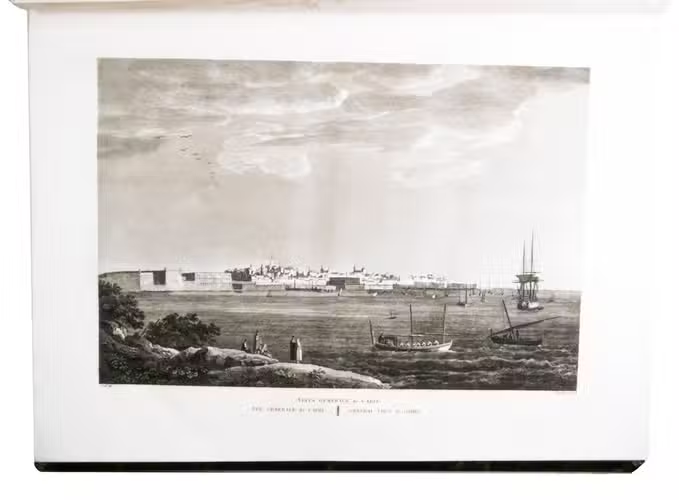
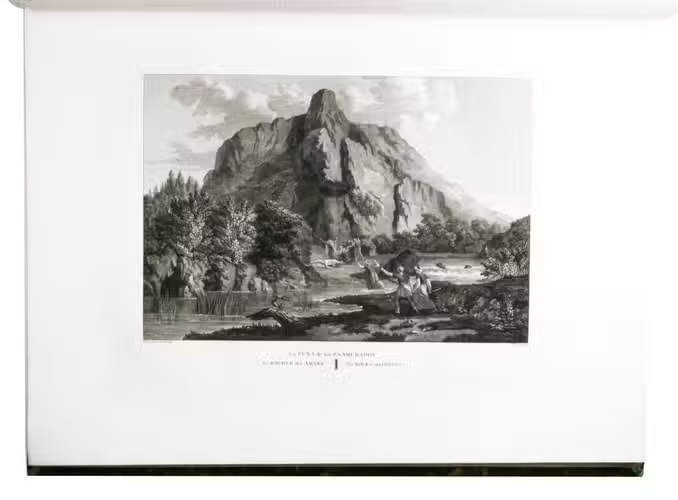
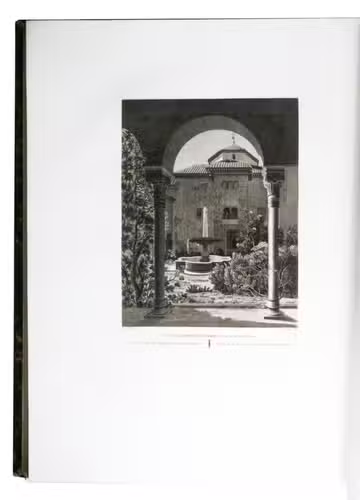
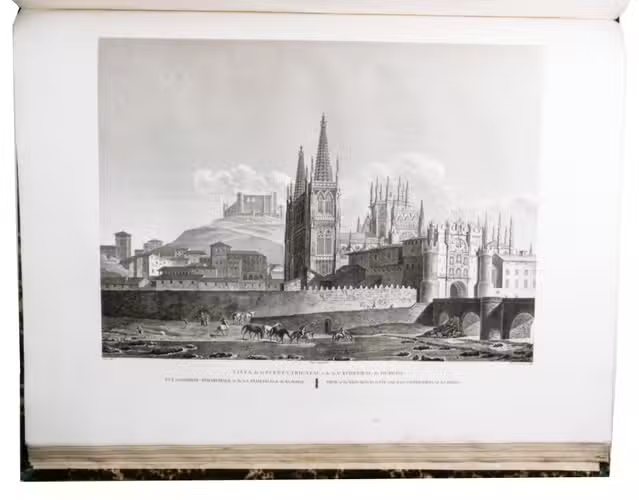
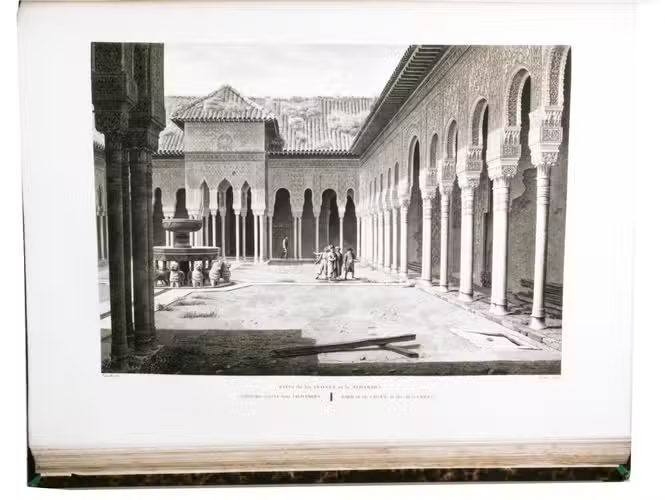
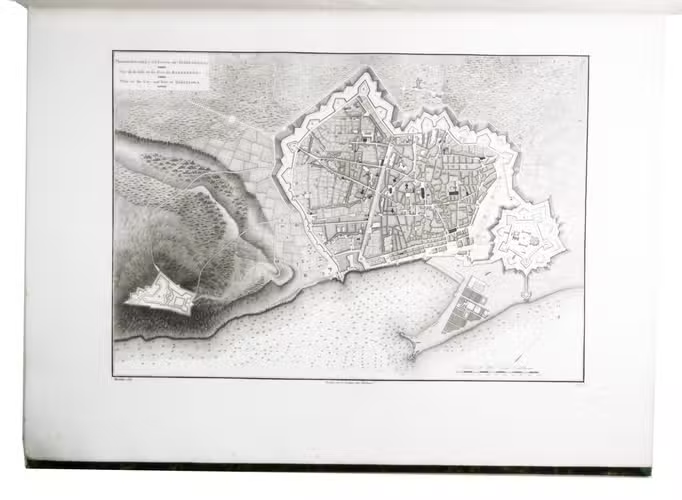
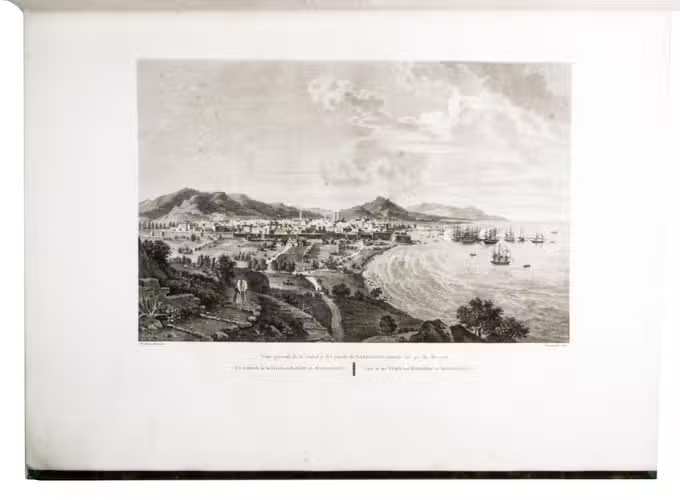
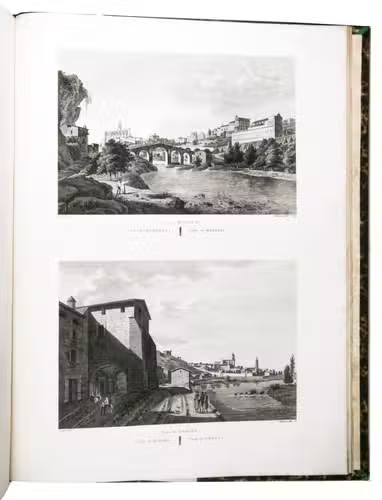
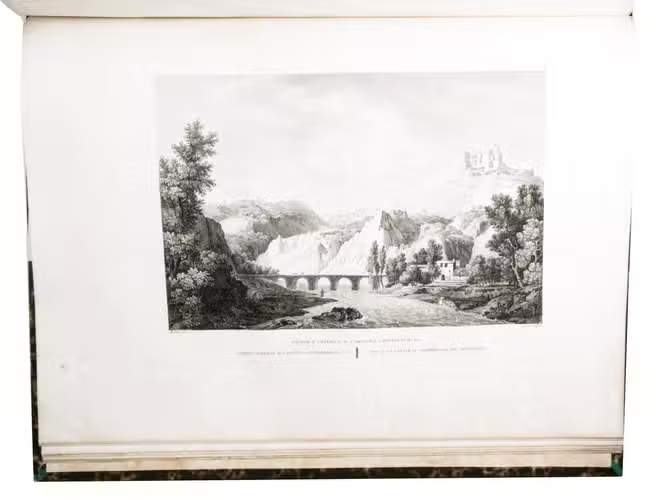
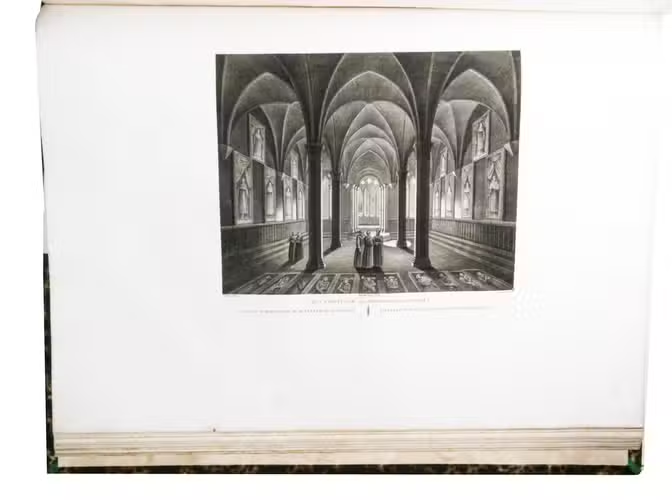
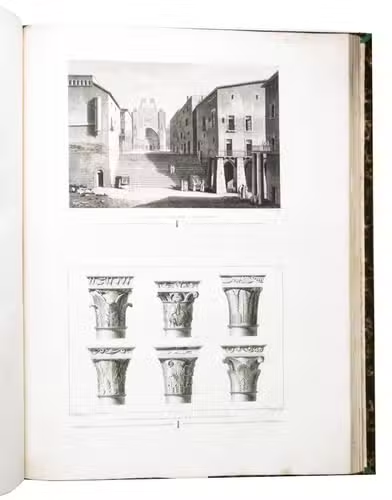
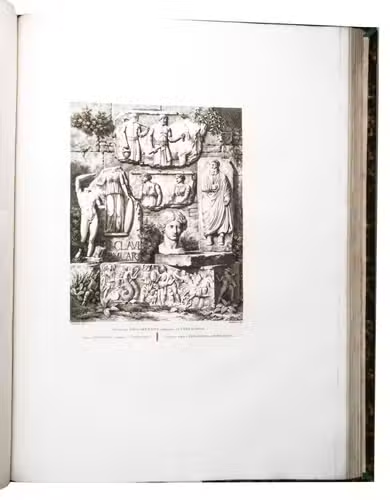
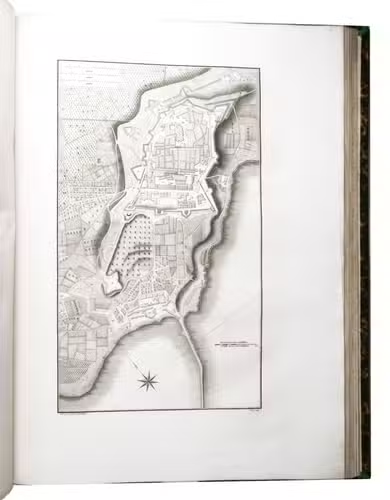
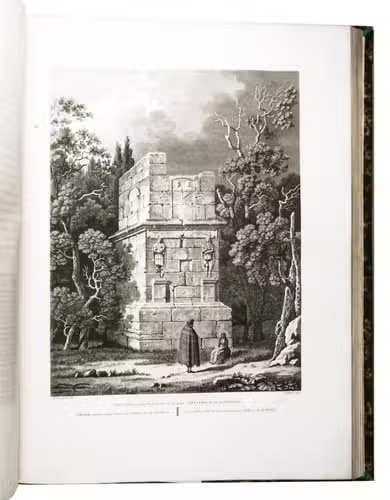
First edition of Laborde's splendid 4-volume work on Spain and Portugal, abundantly illustrated with engraved views, by Alexandre Louis Joseph Laborde (1774-1842). The work is divided in four parts, arranged chronologically. Laborde starts describing monuments from the Roman civilization, continues with Arab sites from the Middle Ages, and at the end he pays attention to the present. Every part is preceded by an extensive historical explanation, and the plates themselves are also accompanied by short texts.
After having served the emperor Joseph II in Vienna, and having distinguished himself in the imperial army, Alexandre Laborde returned to his fatherland and started to develop a taste for the arts. He travelled to the United Kingdom, Holland, Italy and Spain. His travels and his studies earned him a special place in the world of archeology and literature. Especially Spain made a great, wonderful, and mysterious impression on him. Here he found the remains of Roman civilization, and of two peoples and religions, the Arabs and the Spaniards. Moreover, the peninsula was virtually unknown in Europe, and Laborde aspired to do for Spain what Choiseul-Gouffier did for Greece. He was part of Lucien Bonaparte's ambassy in 1800 and 1801, and his intimate relations with the minister provided him the means to achieve his goal. He travelled around the country with several artists, himself drawing what he thought were the most interesting sights. All of this resulted in the publication of Itinéraire de l'Espagne, followed by the present Voyage pittoresque et historique en Espagne.
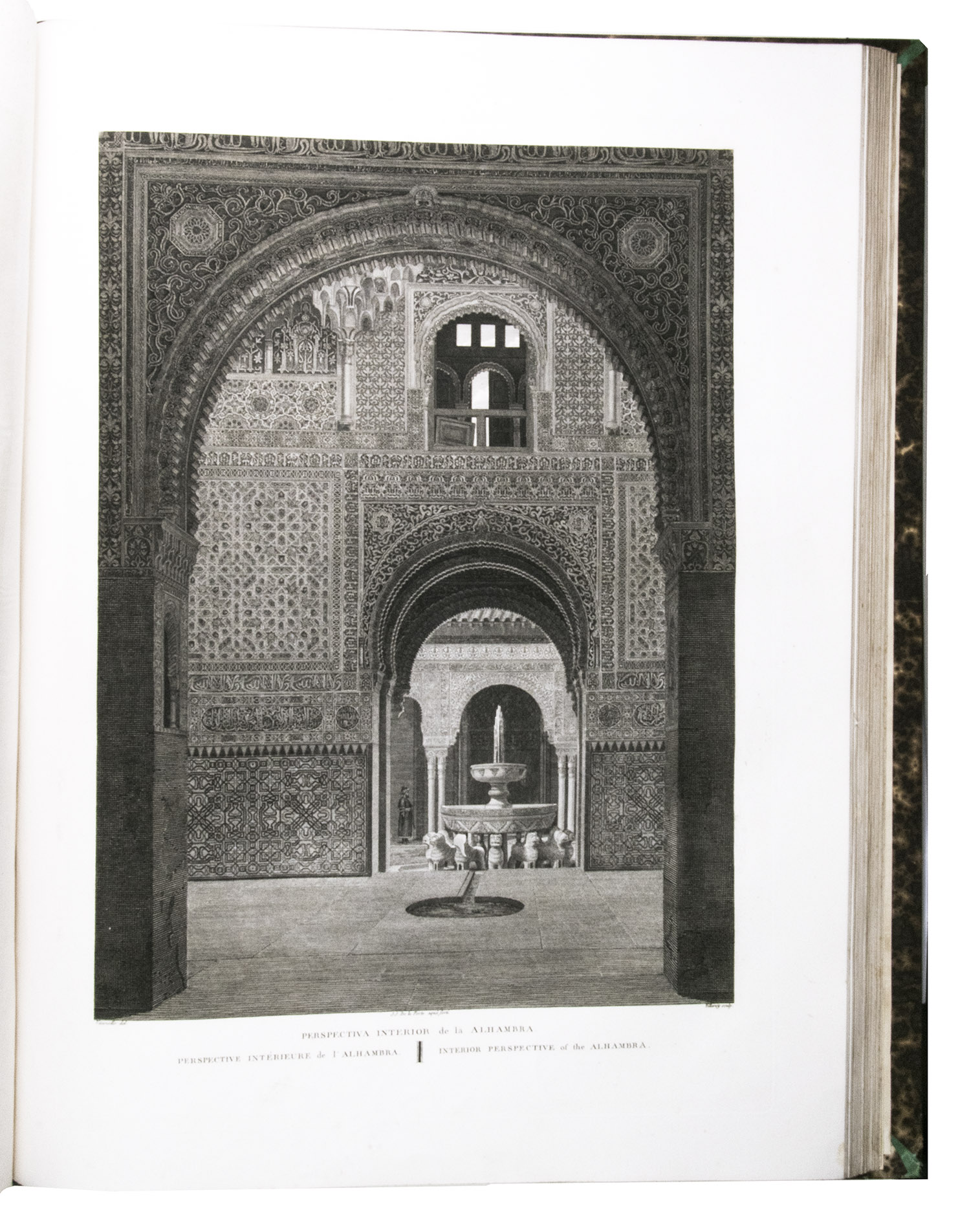
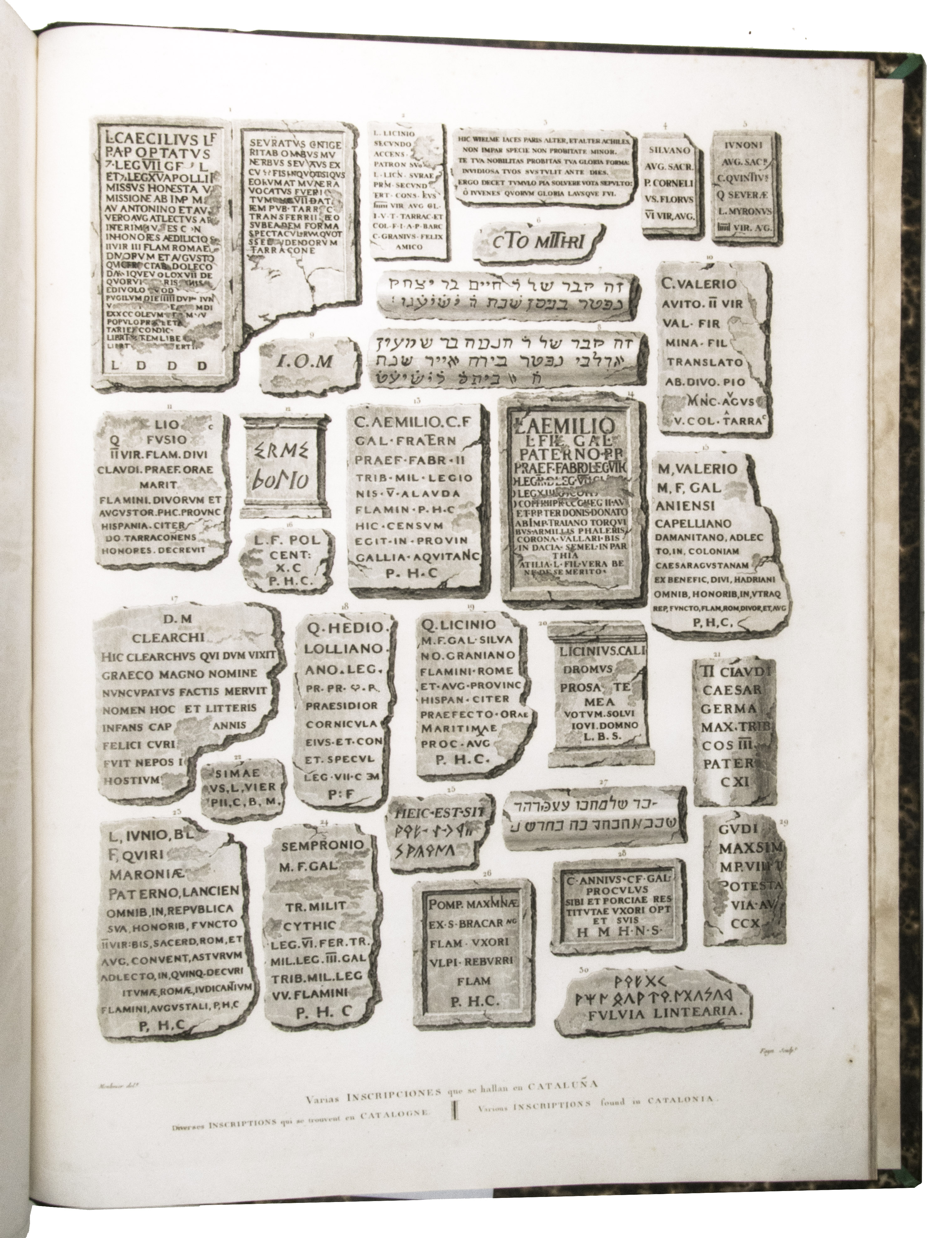
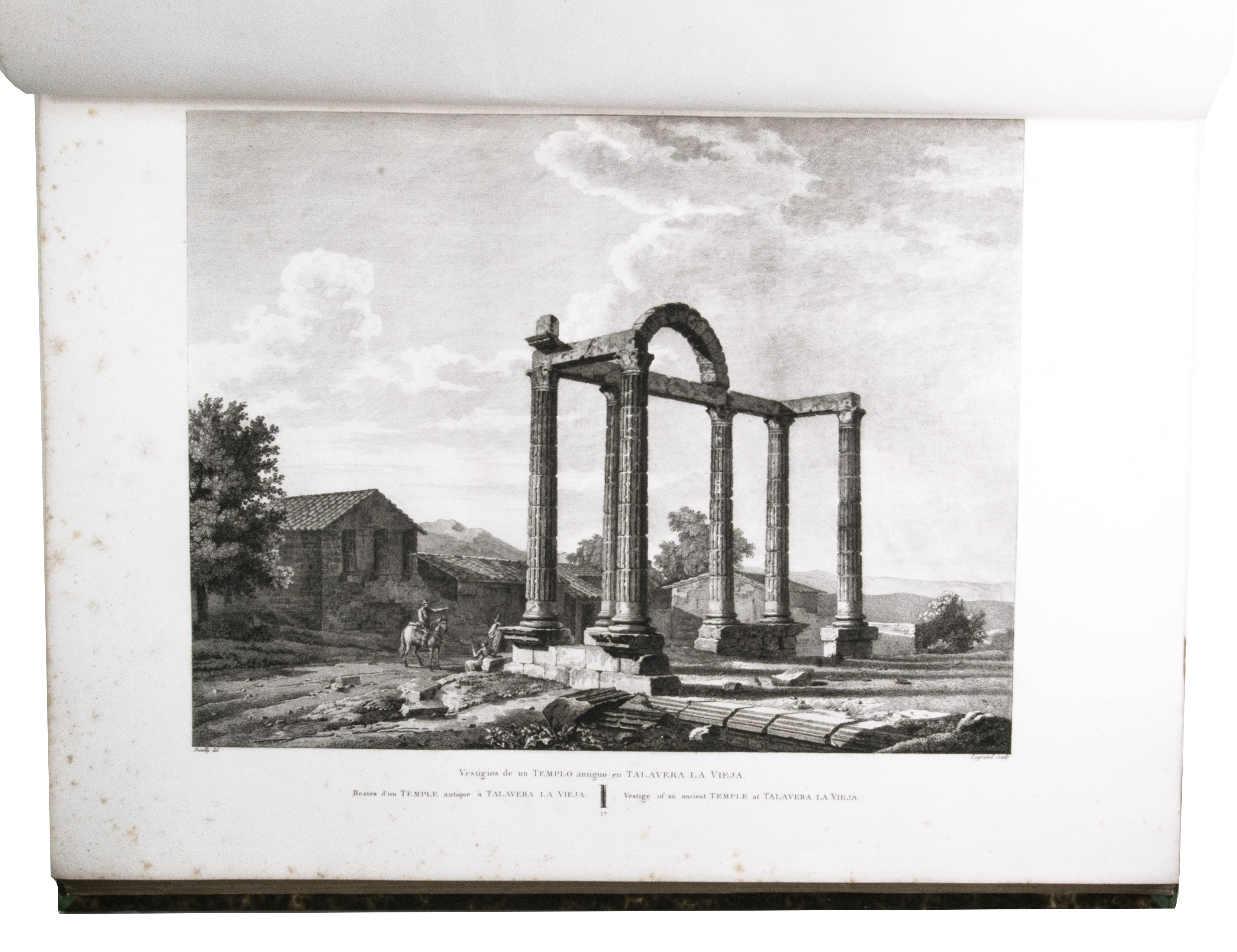
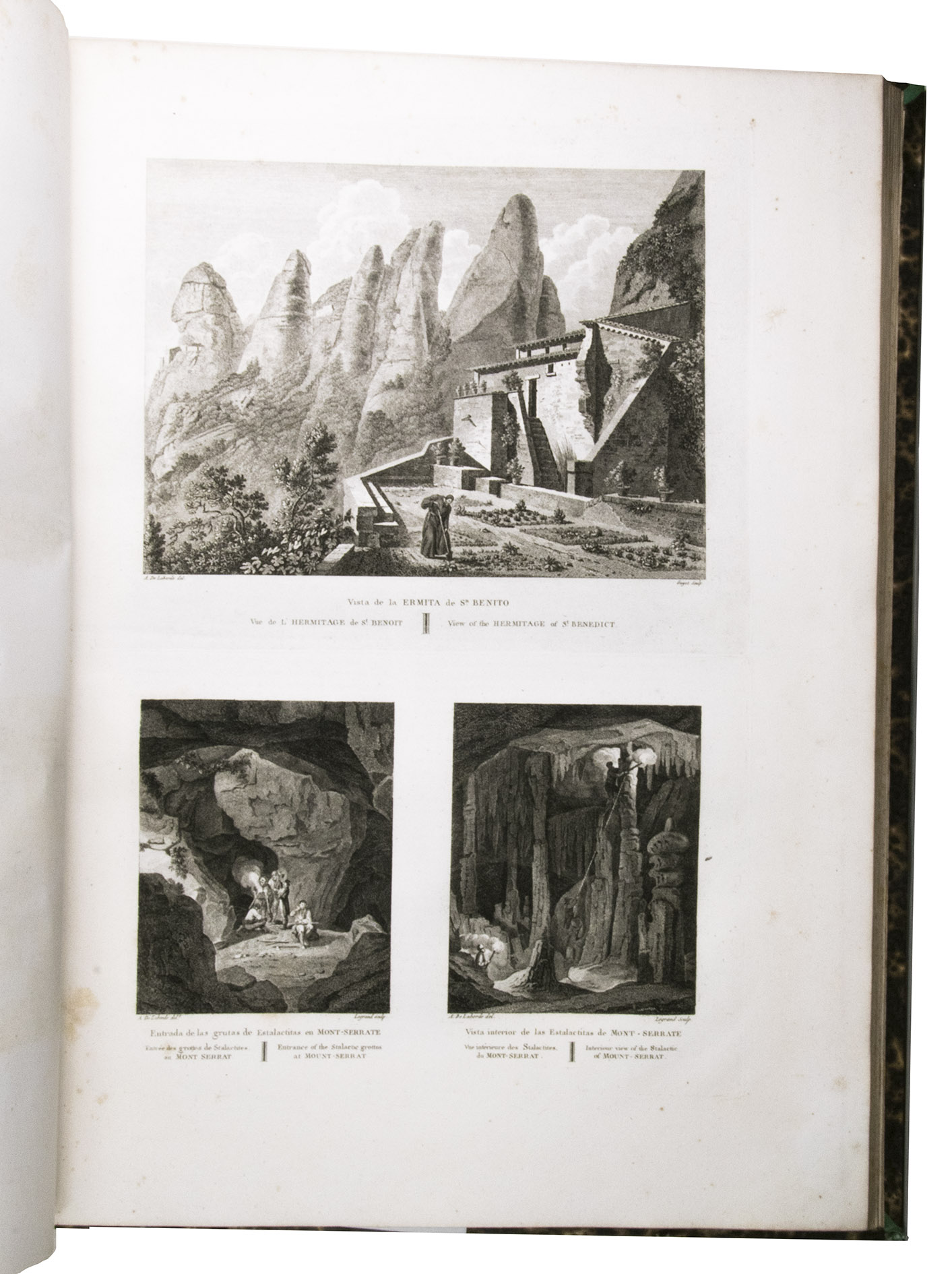
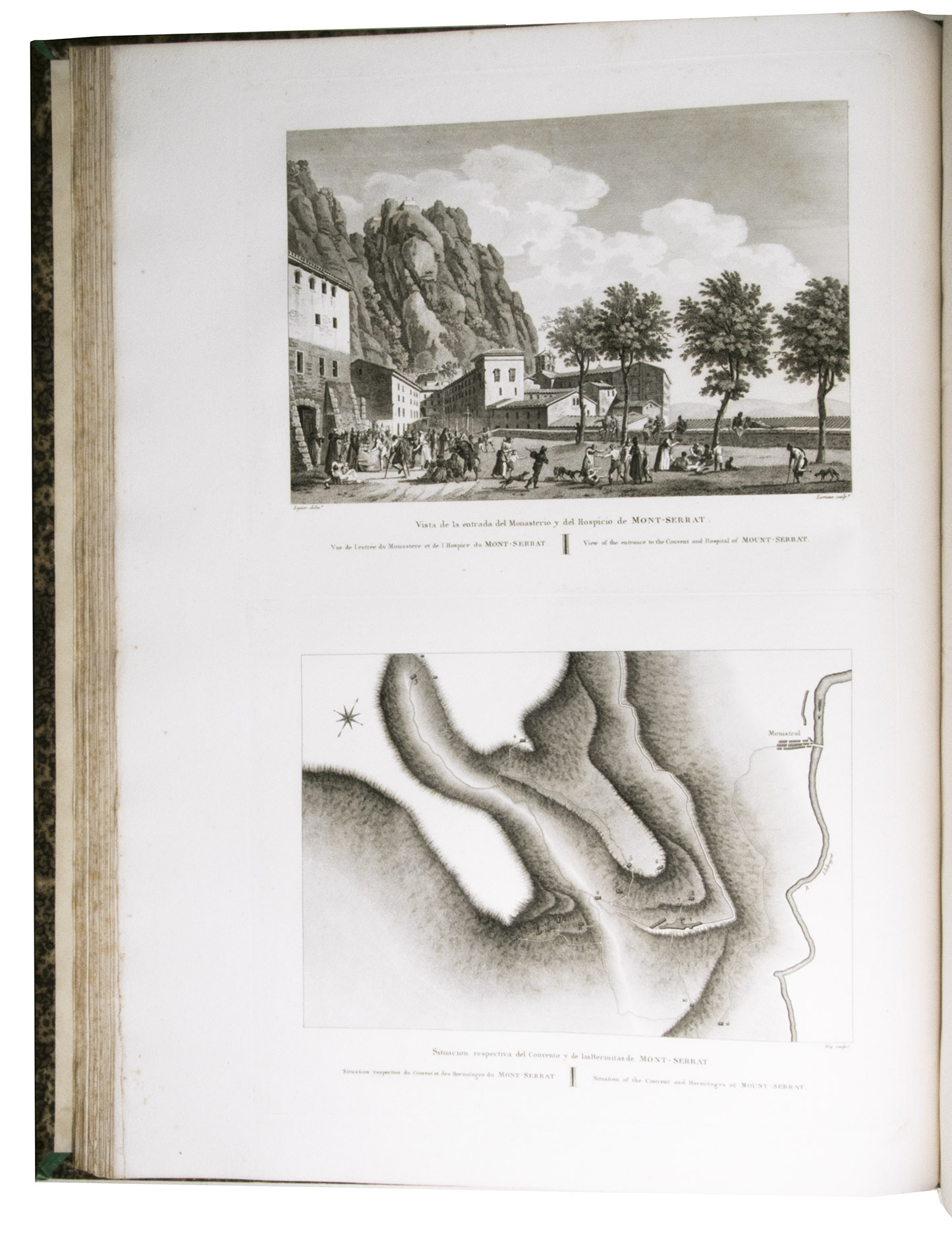
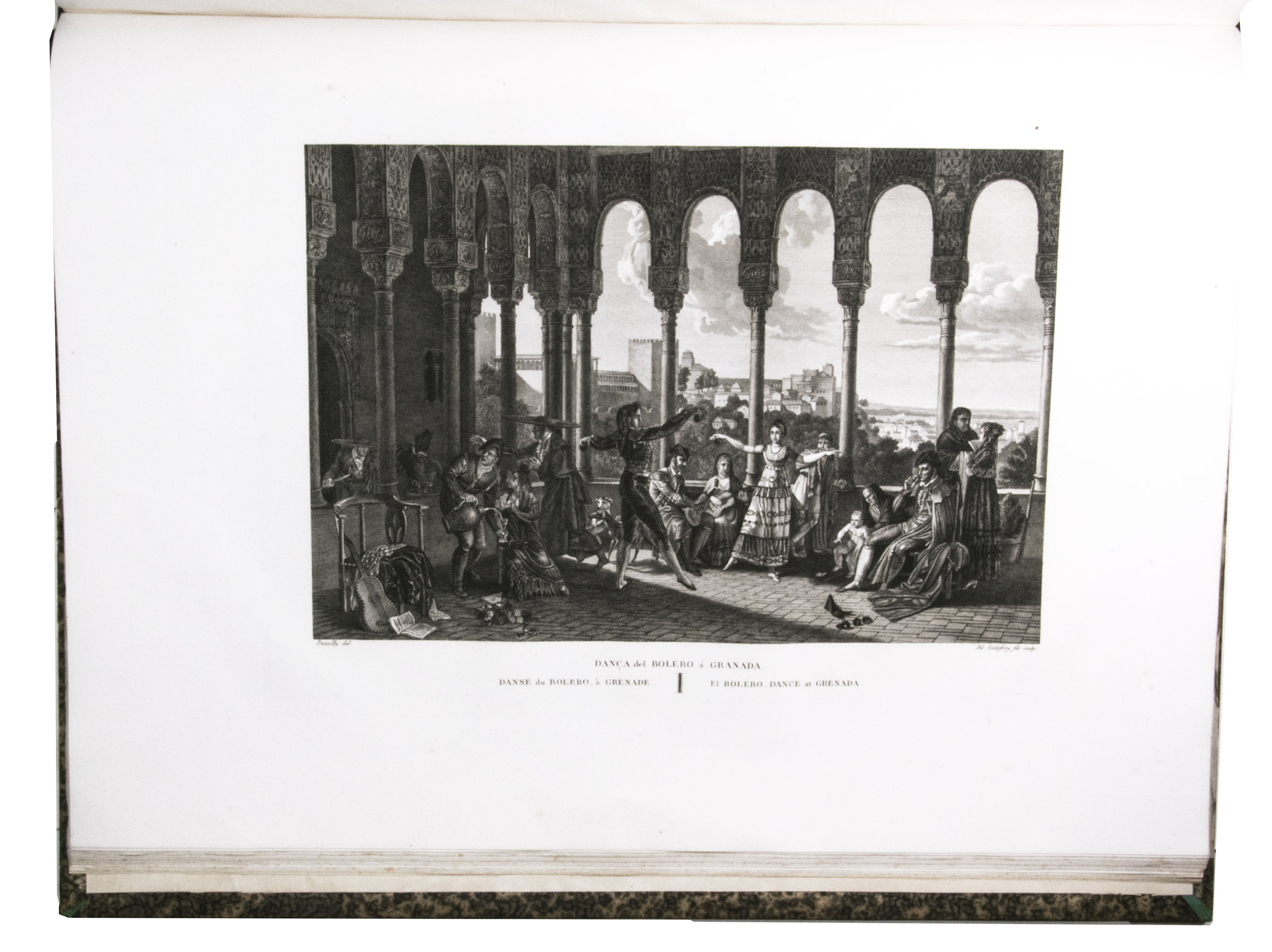
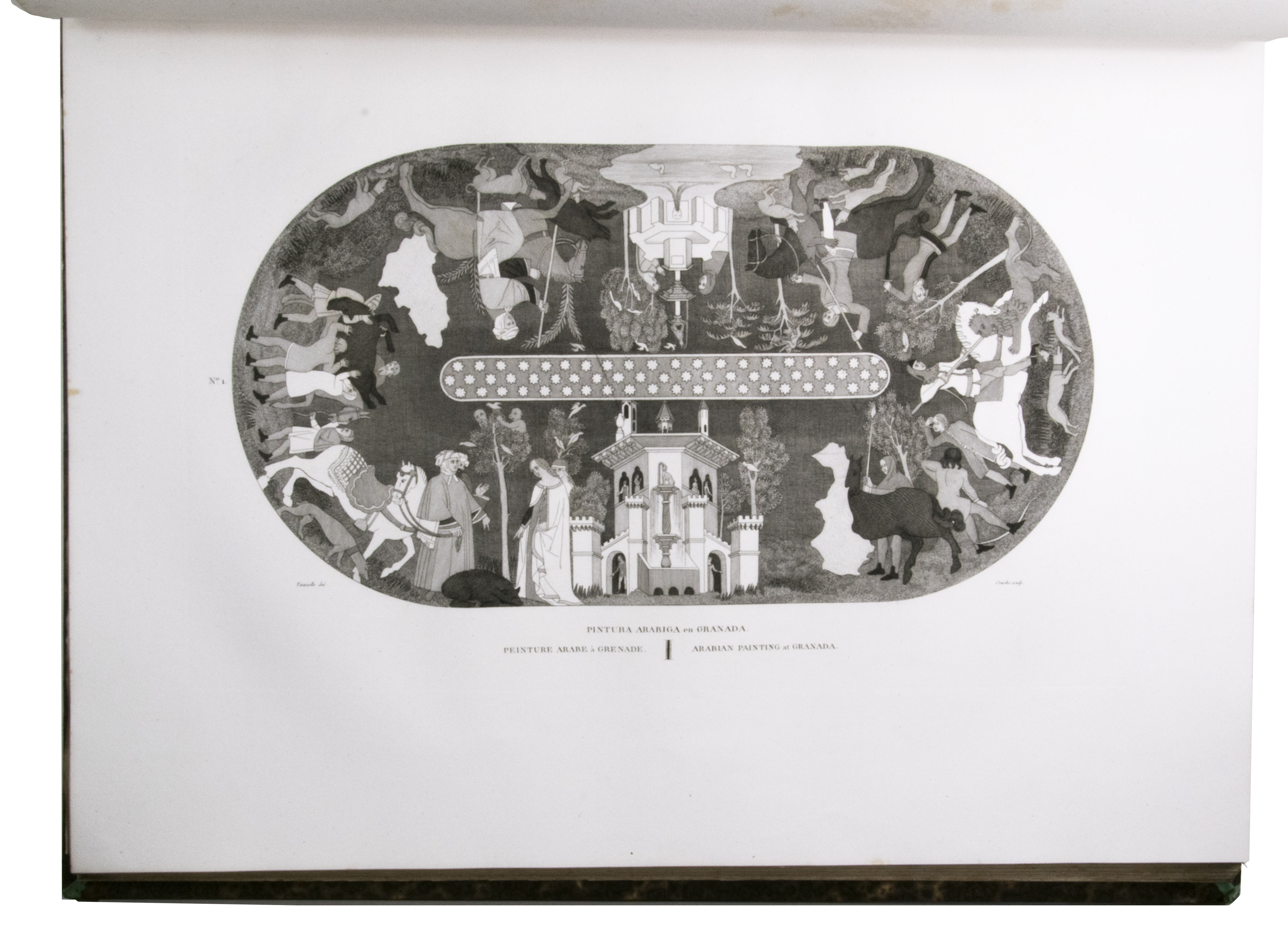
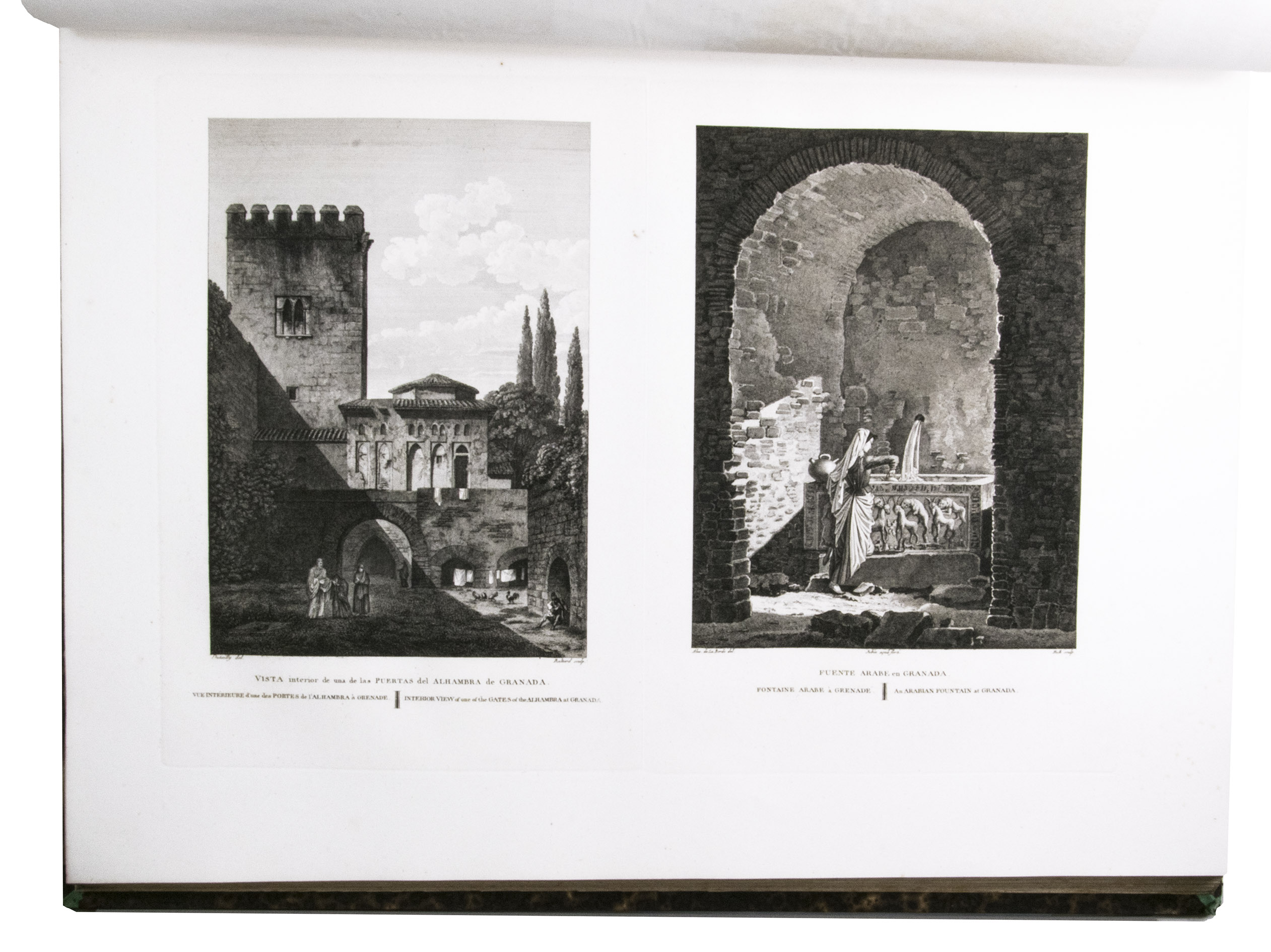
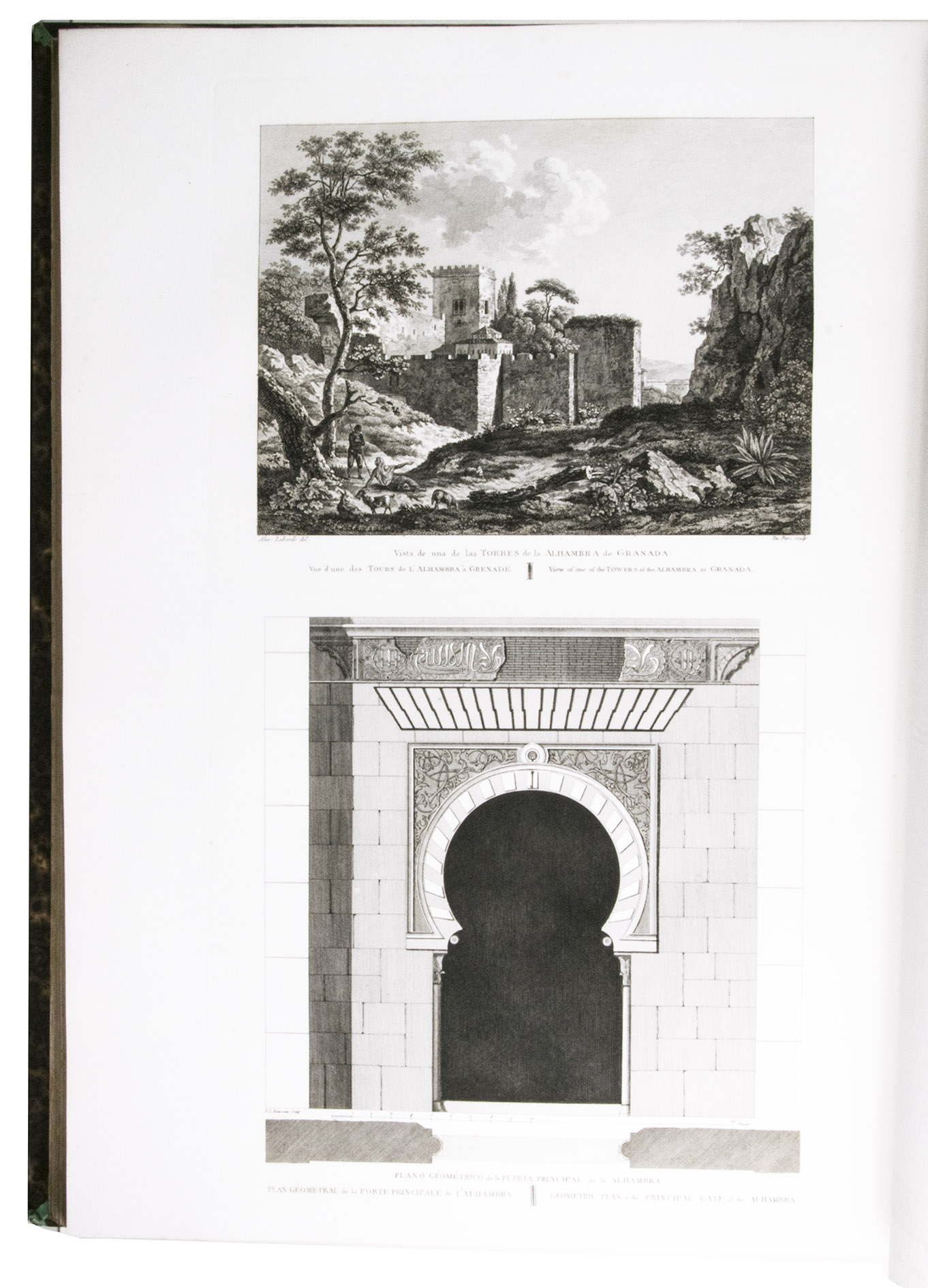
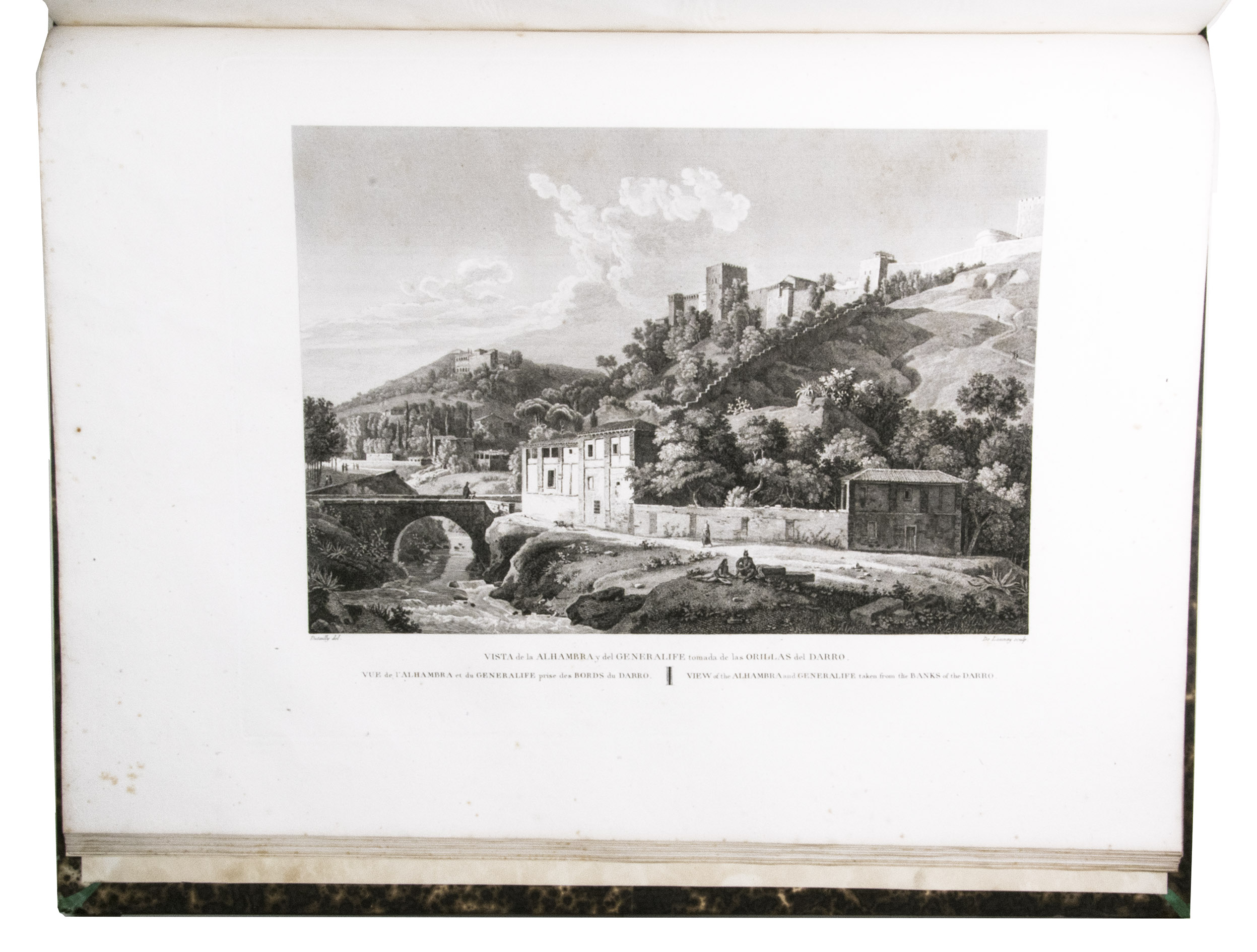
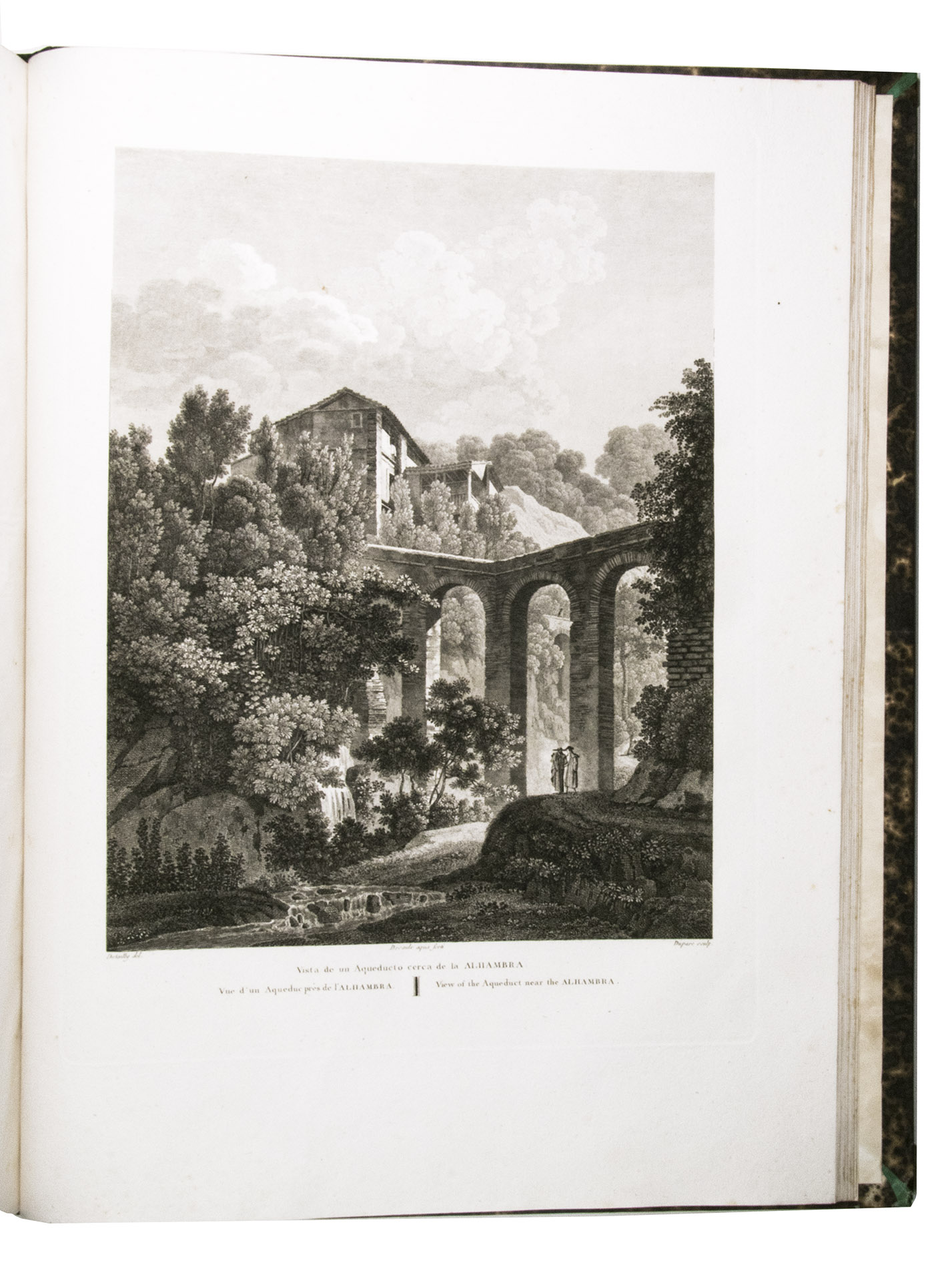
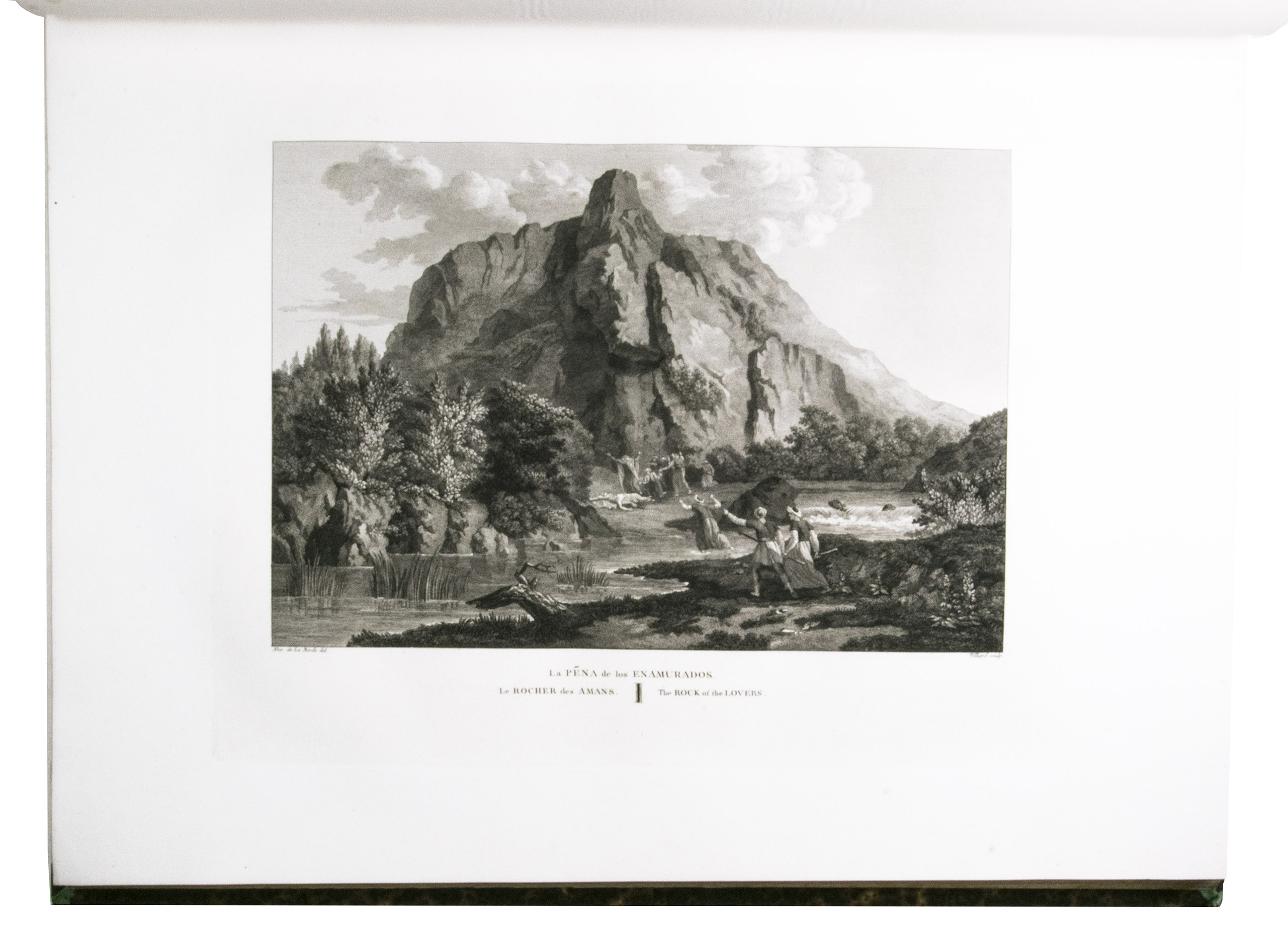
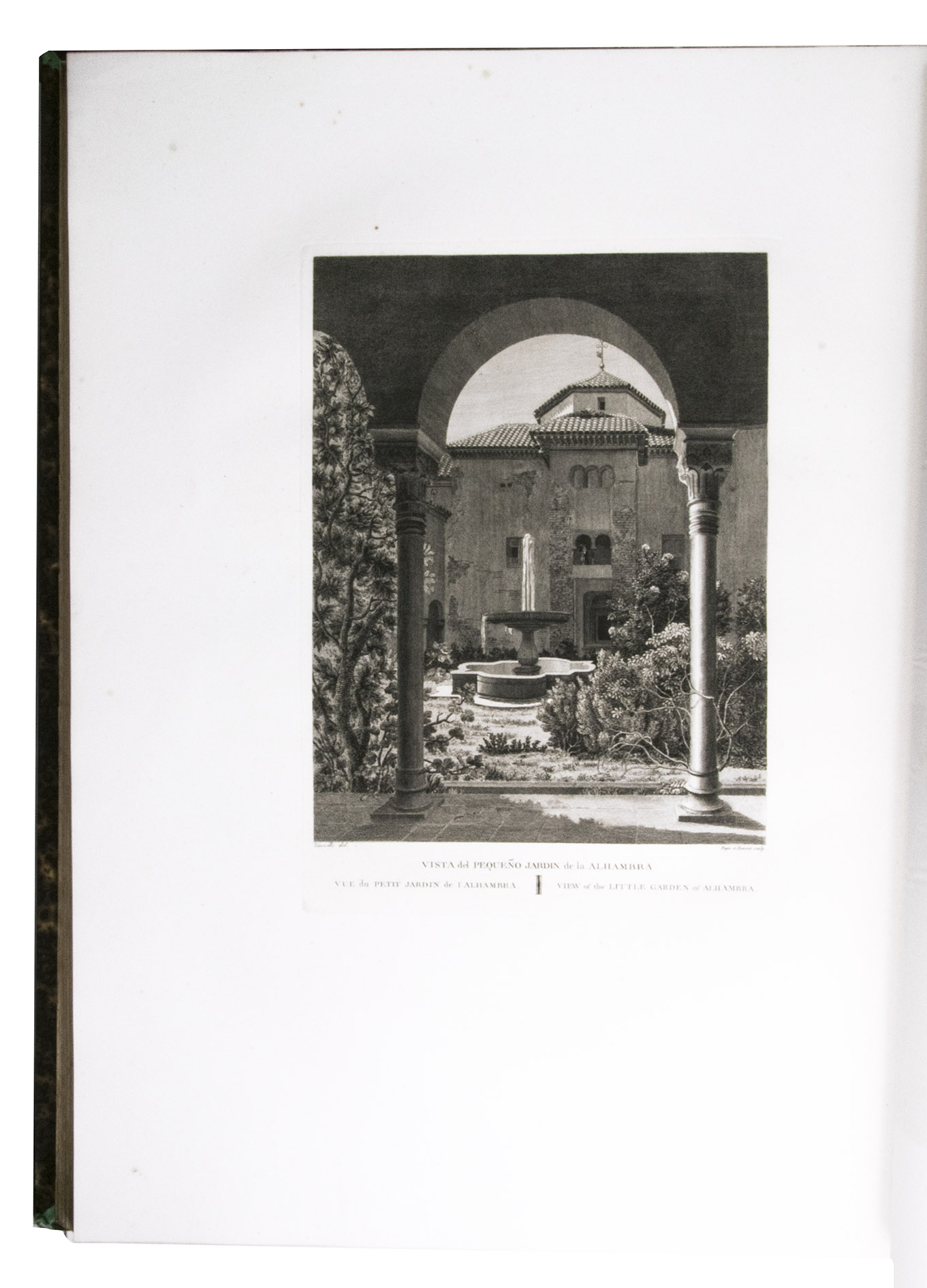
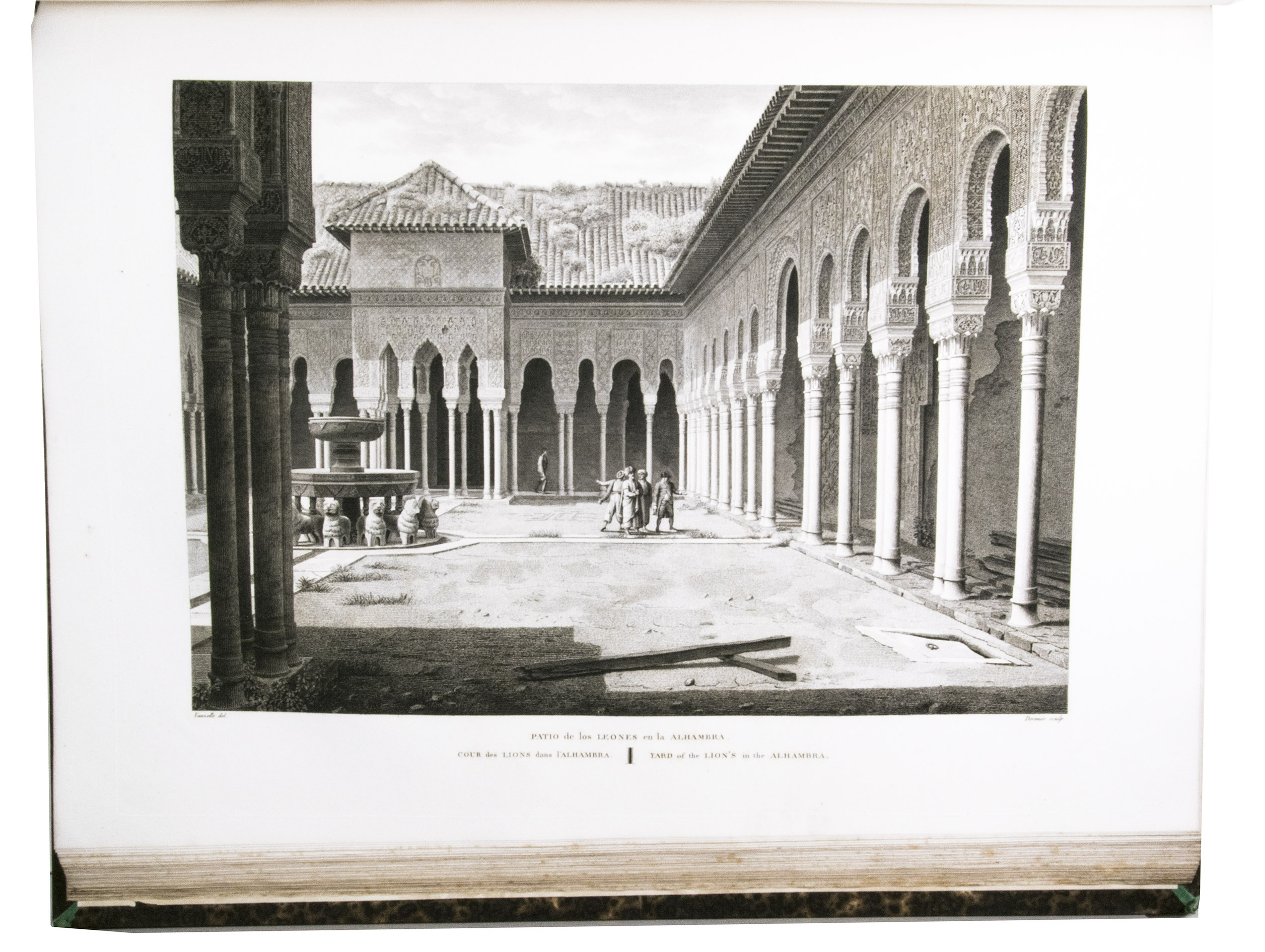
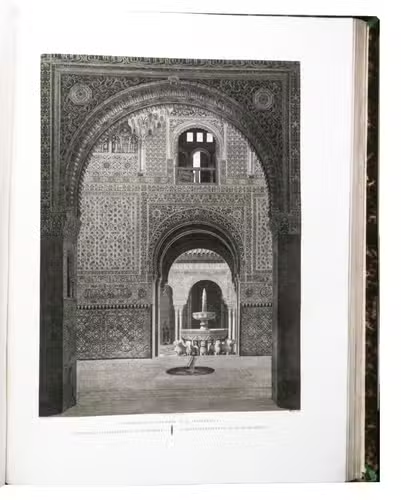
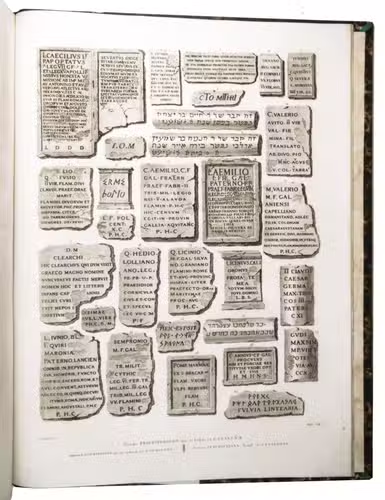
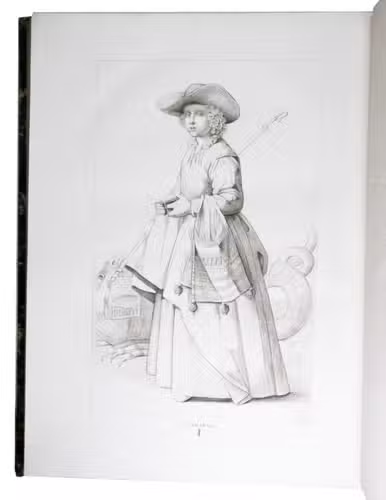
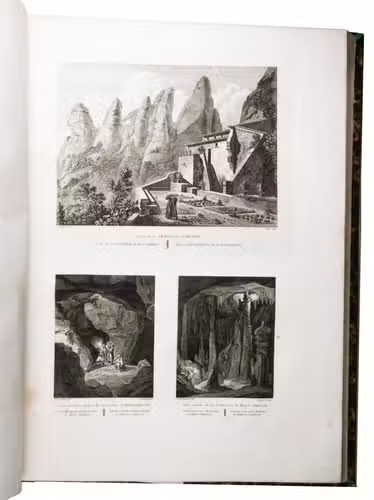
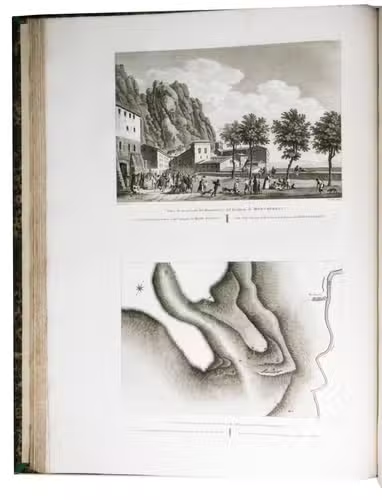
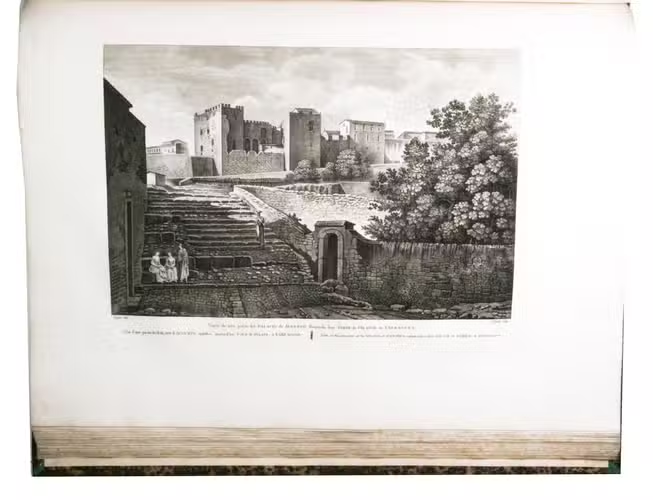
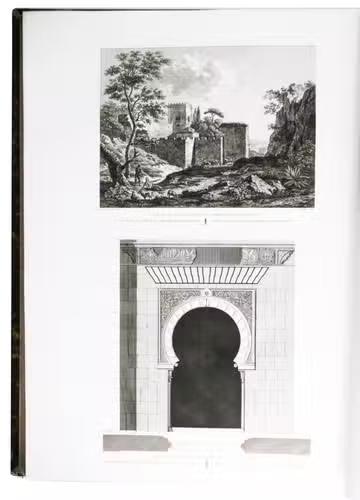
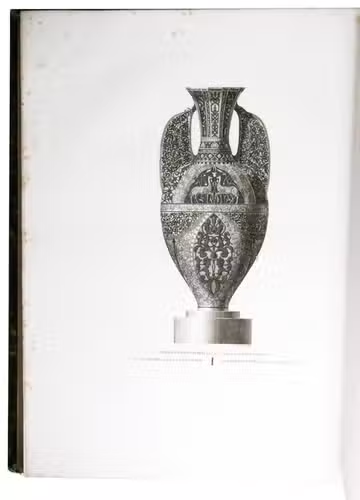
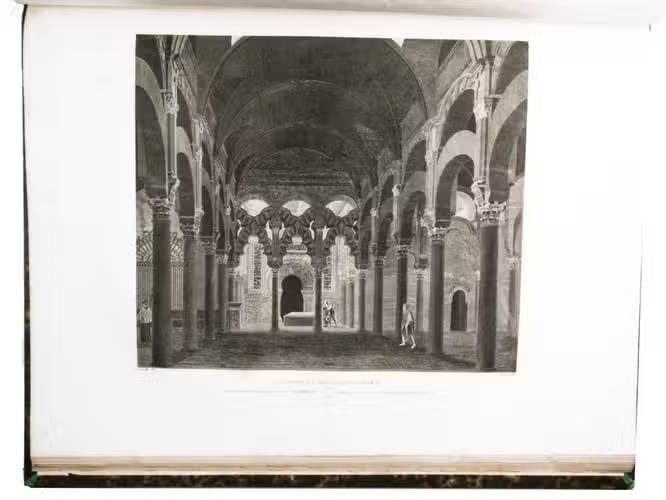
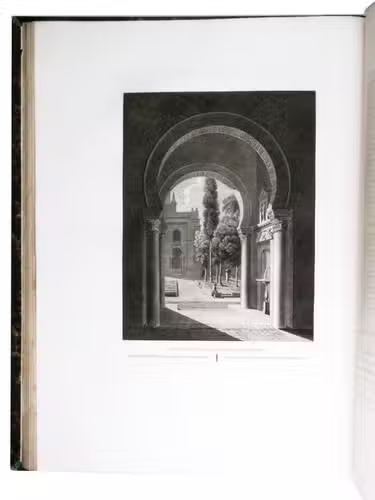
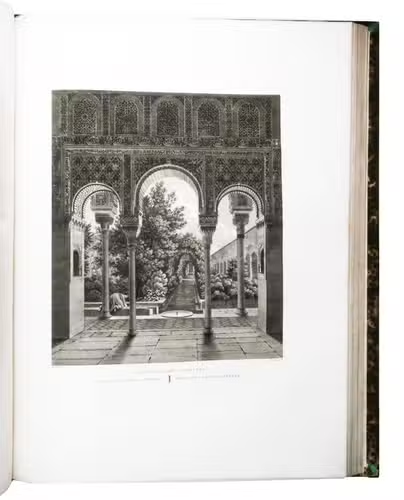
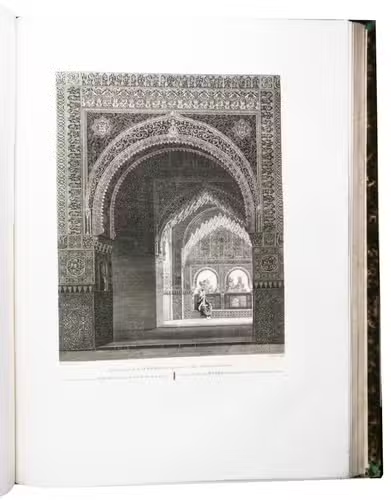
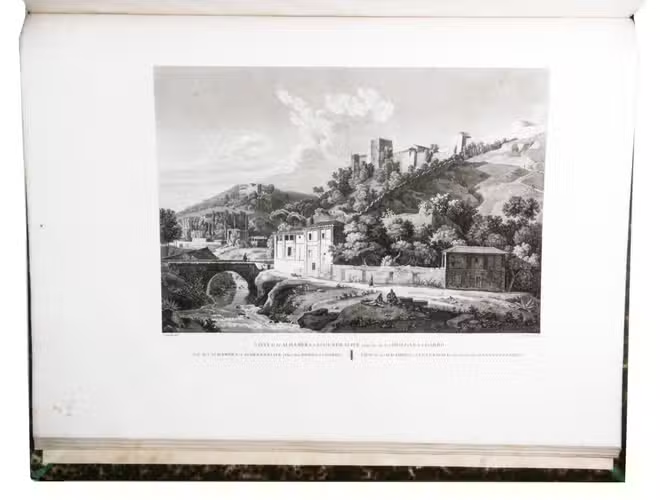
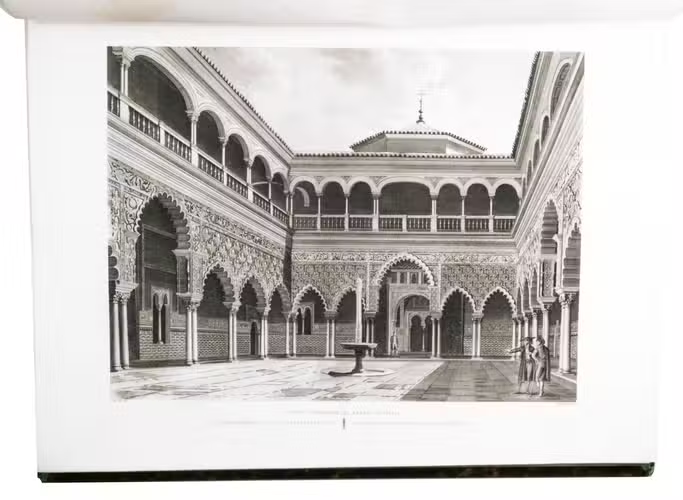
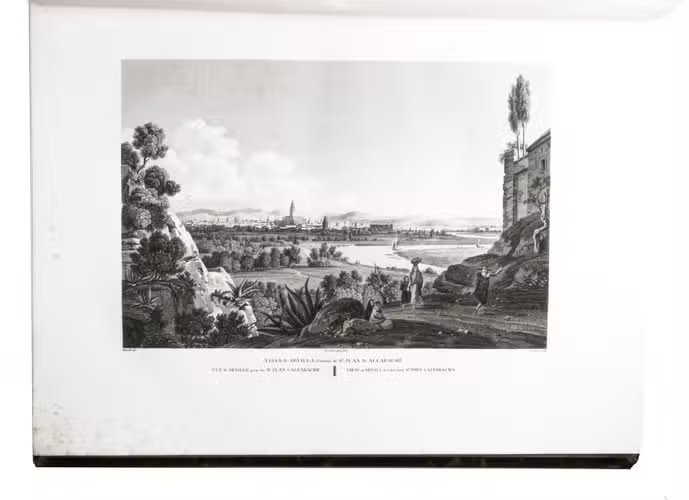
The production of his sumptuous travelogue almost led to his financial ruin, but the result is still impressive today. He was assisted by a team of scholars, artists and writers and had the work set in a beautiful roman type, printed Pierre Didot, one France's most distinguished printers. Although at least the large capitals on the title-pages are the Firmin Didot types that Pierre Didot usually used, the imprints of all four title-pages strangely say "avec les caracteres de Bodoni", the Didots' leading rival. The striking plates show monuments, ancient inscriptions, landscapes and building plans. Truly remarkable are the dozens of illustrations representing the Alhambra. Laborde was particularly impressed by this Islamic palace: "Something in the overall look of the Alhambra makes it truly impressive, and resuscitates an irresistible emotion: the emotion stirred by any monument that embodies strength, greatness and permanence" (vol. 2, p. 17).
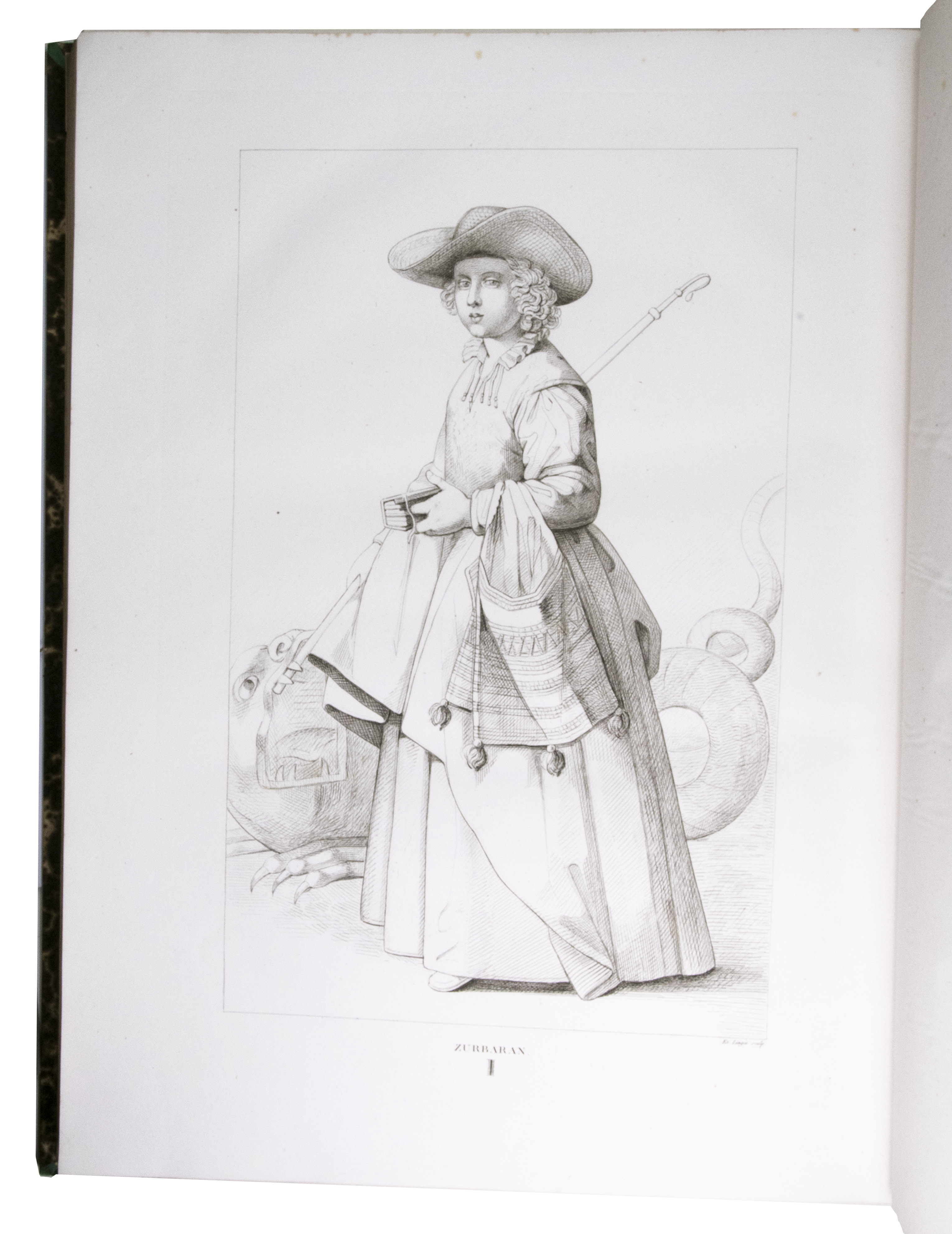
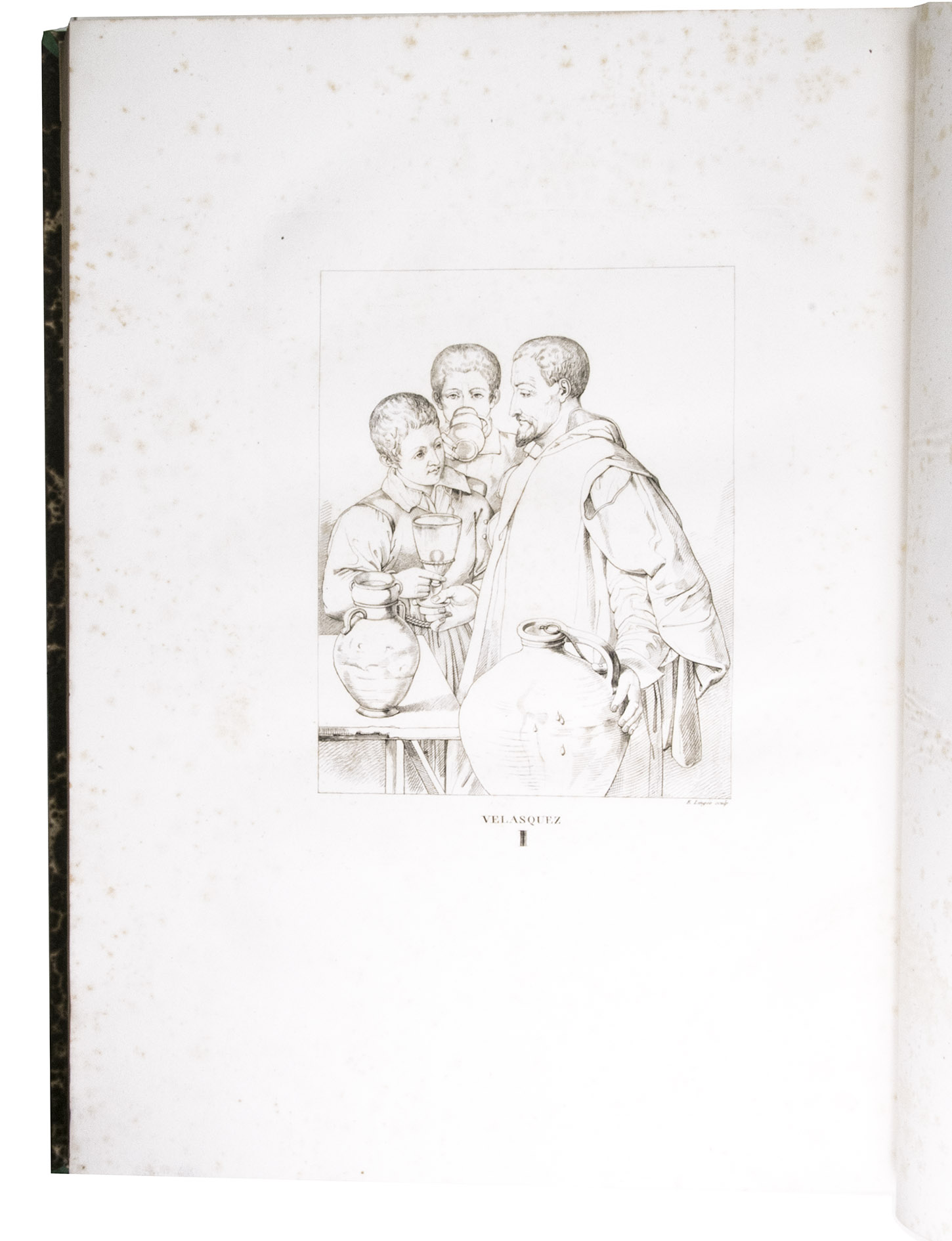
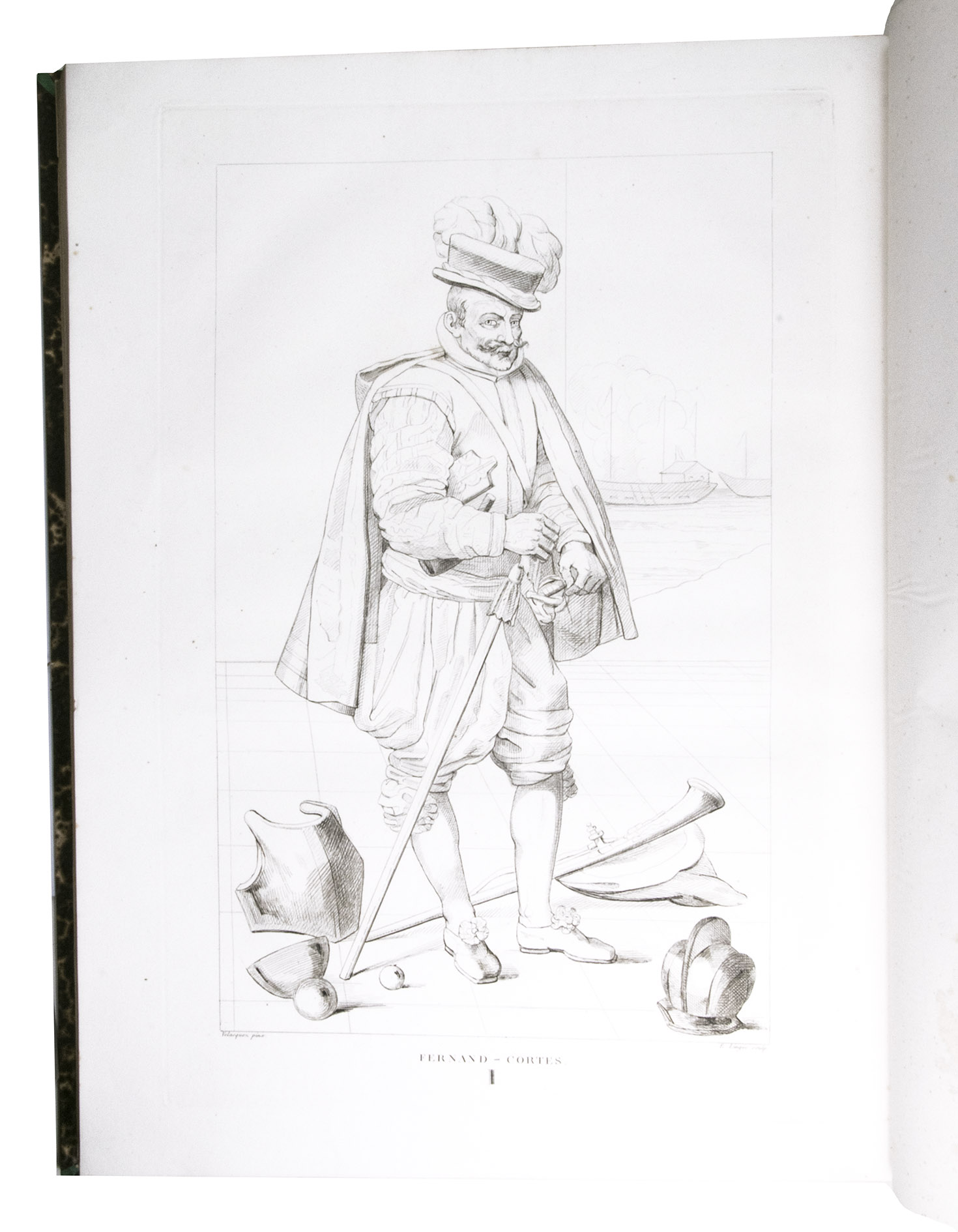
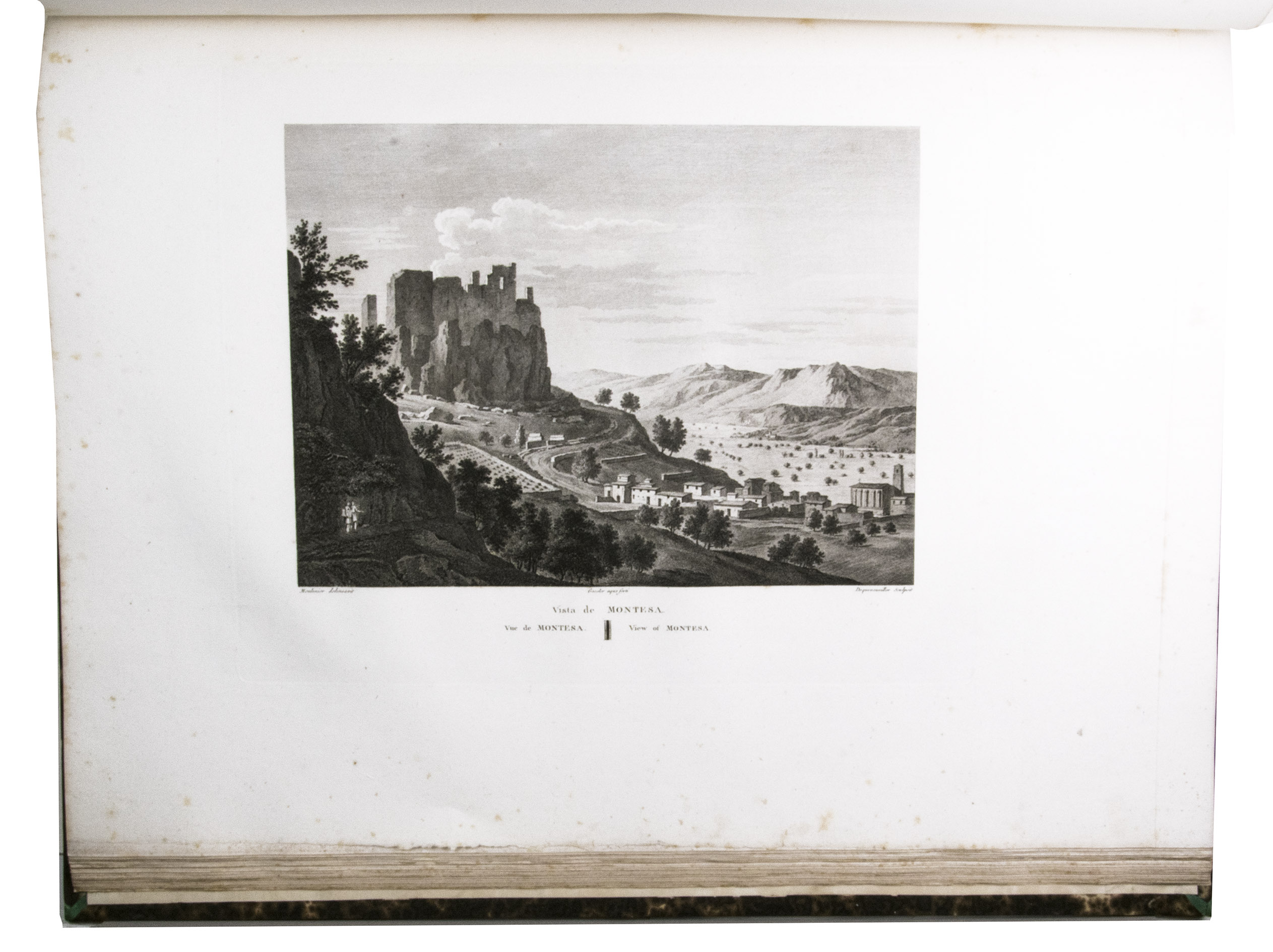
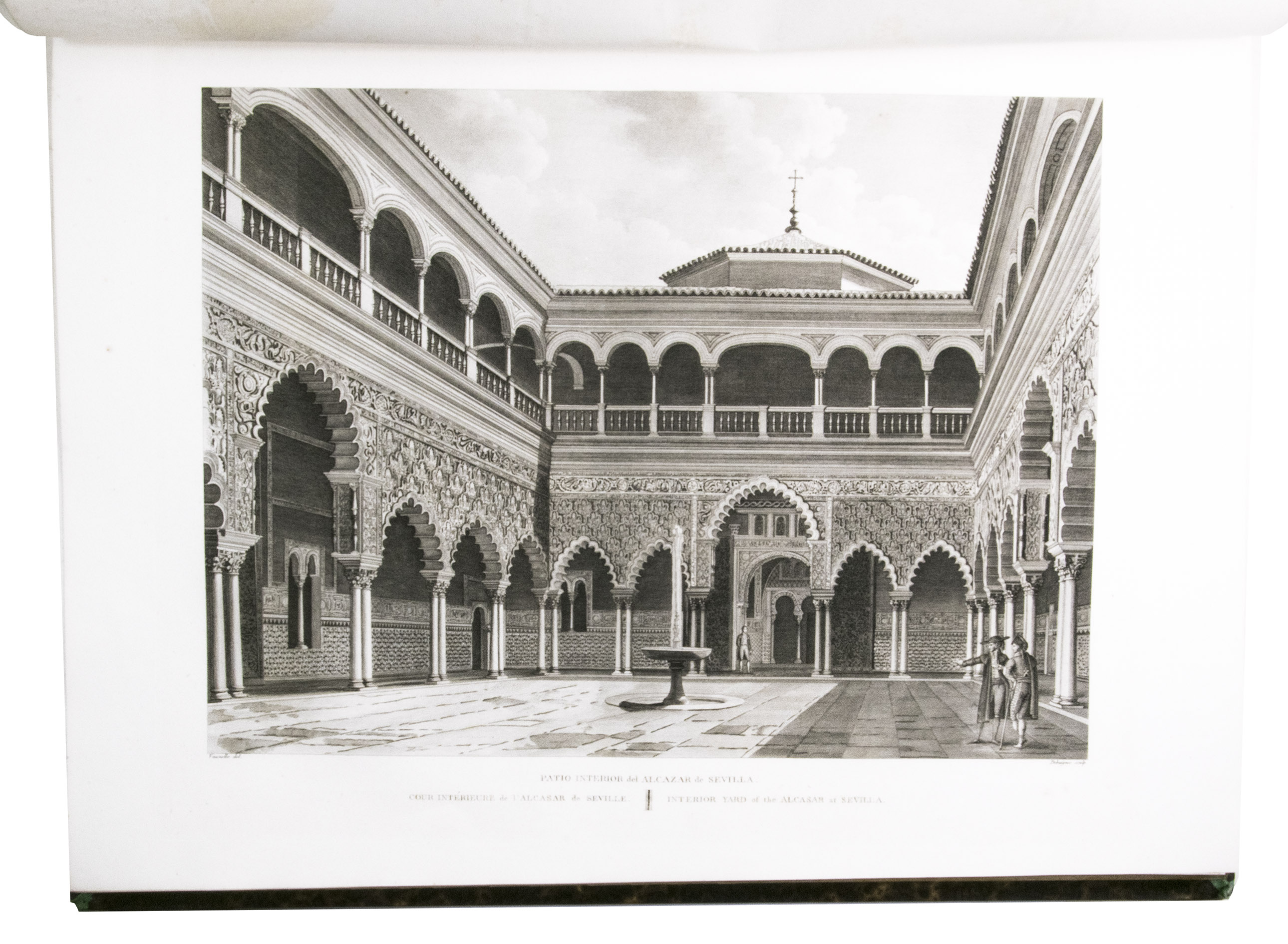
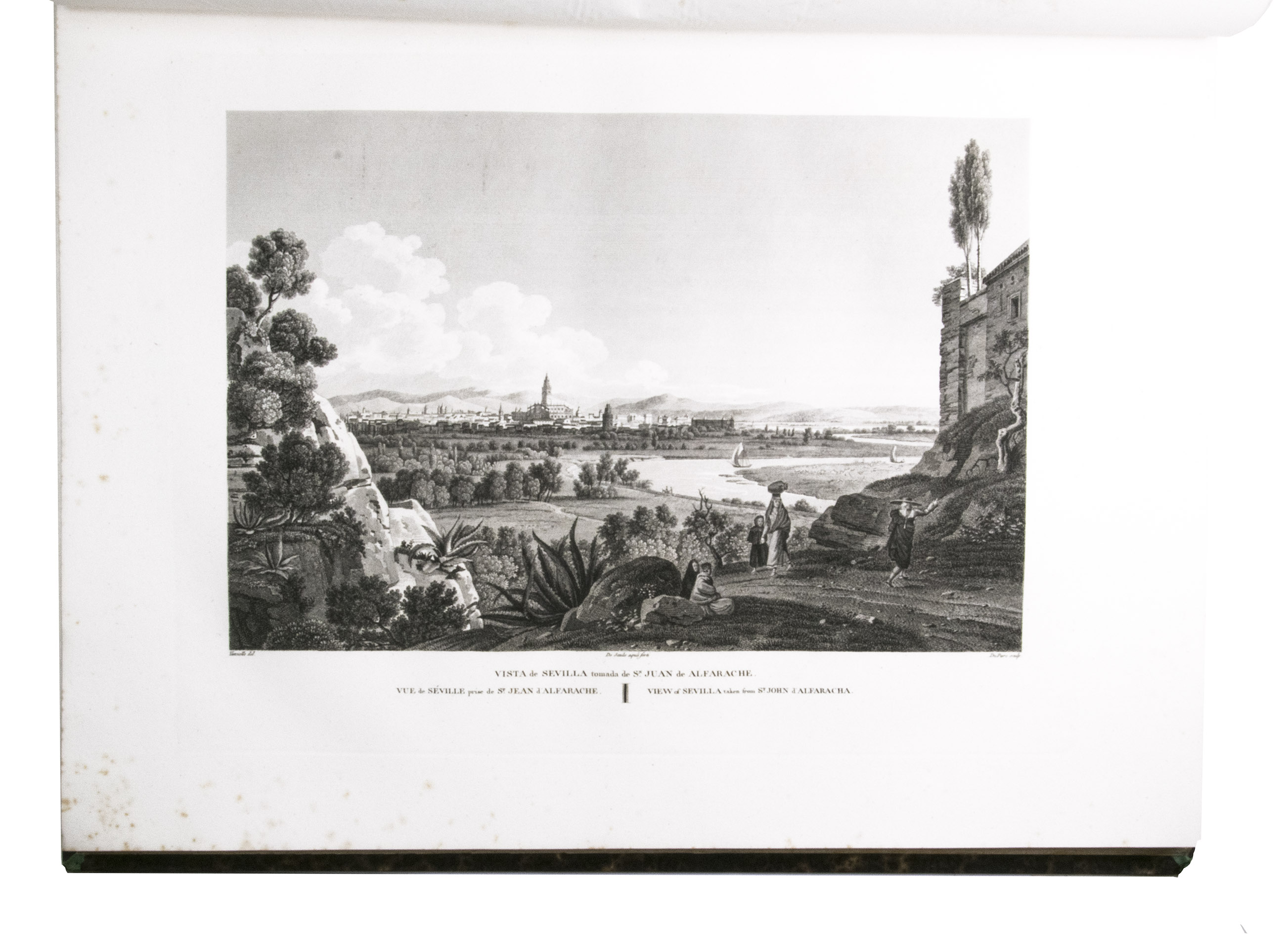
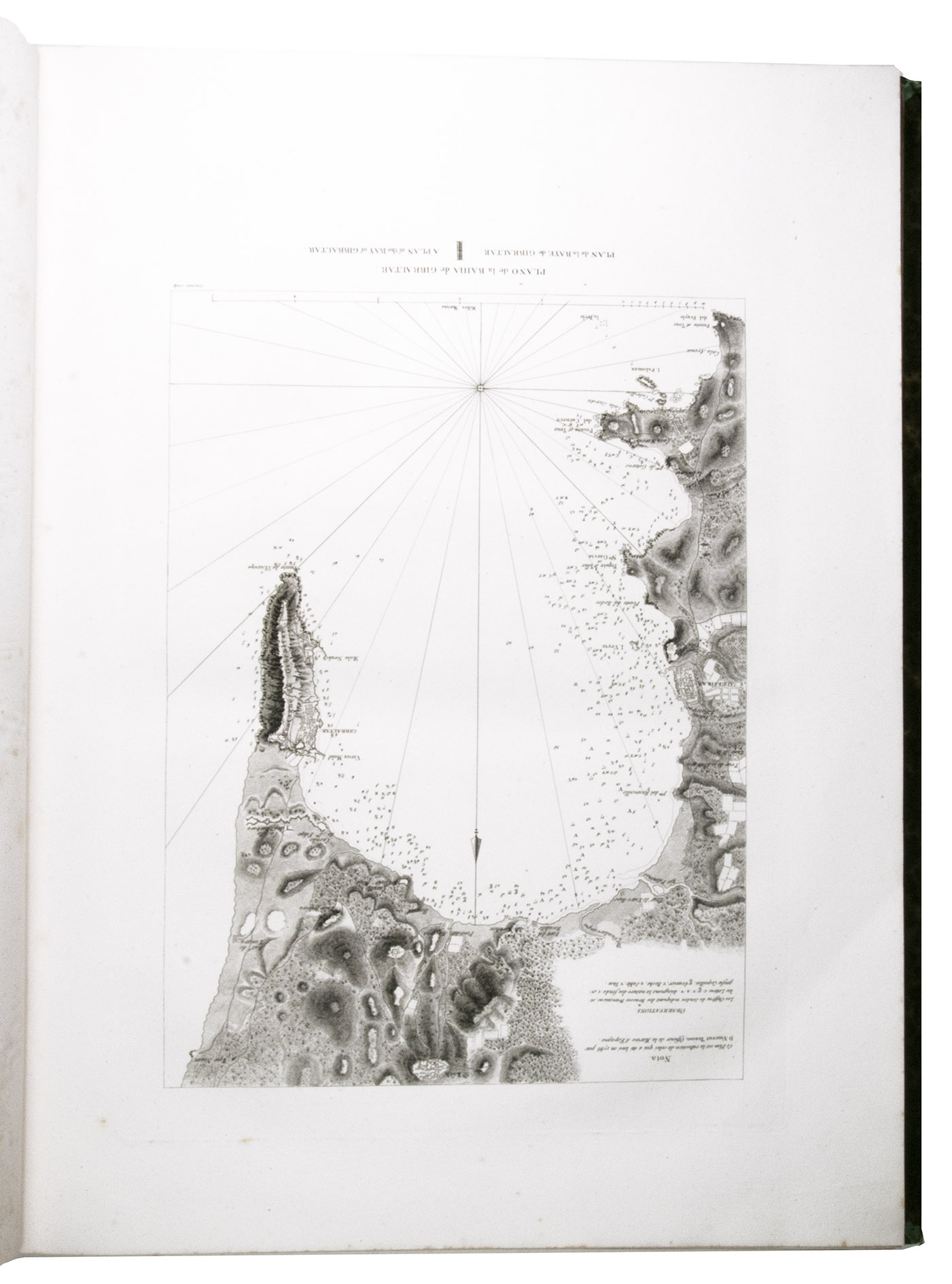
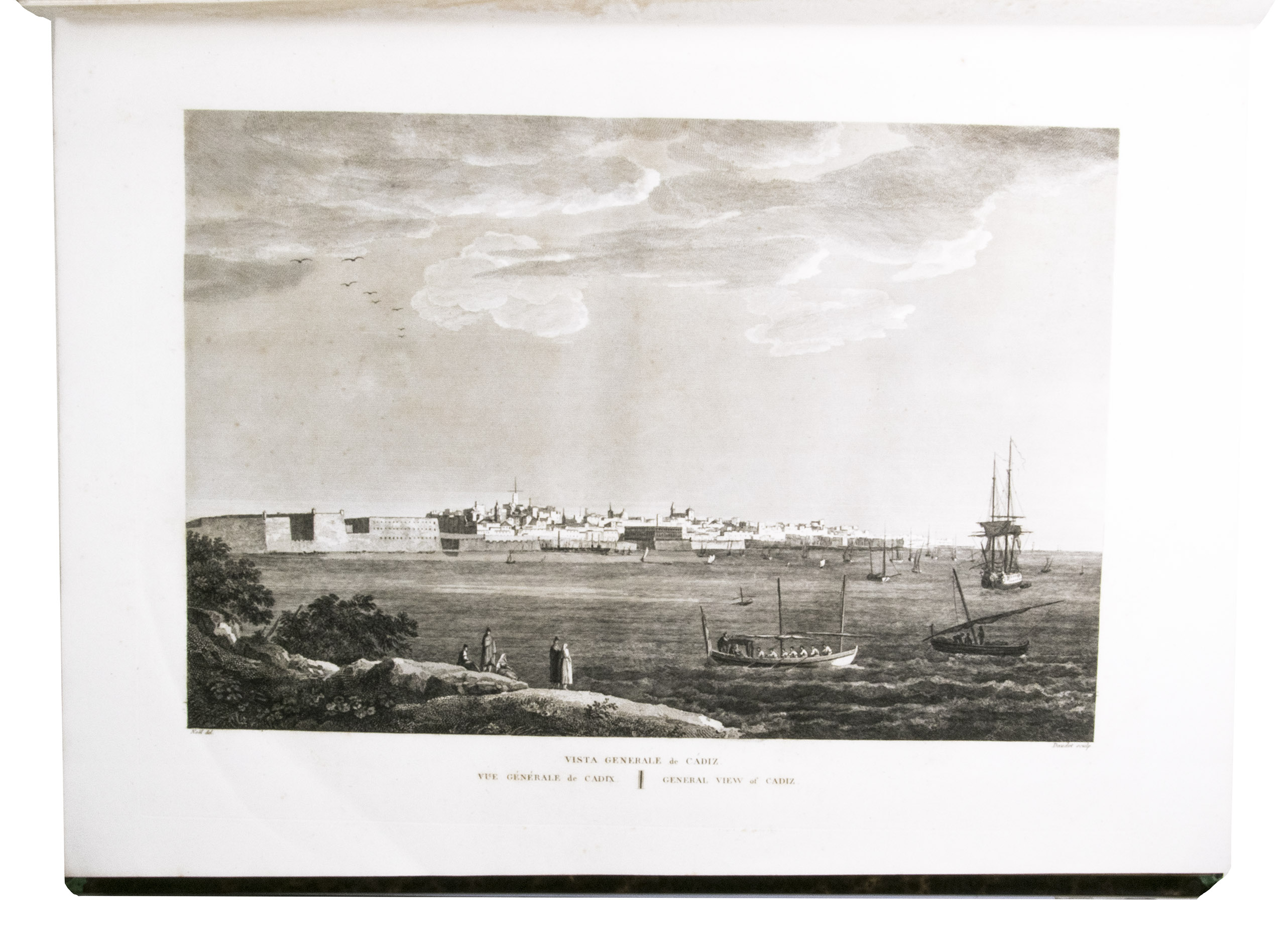
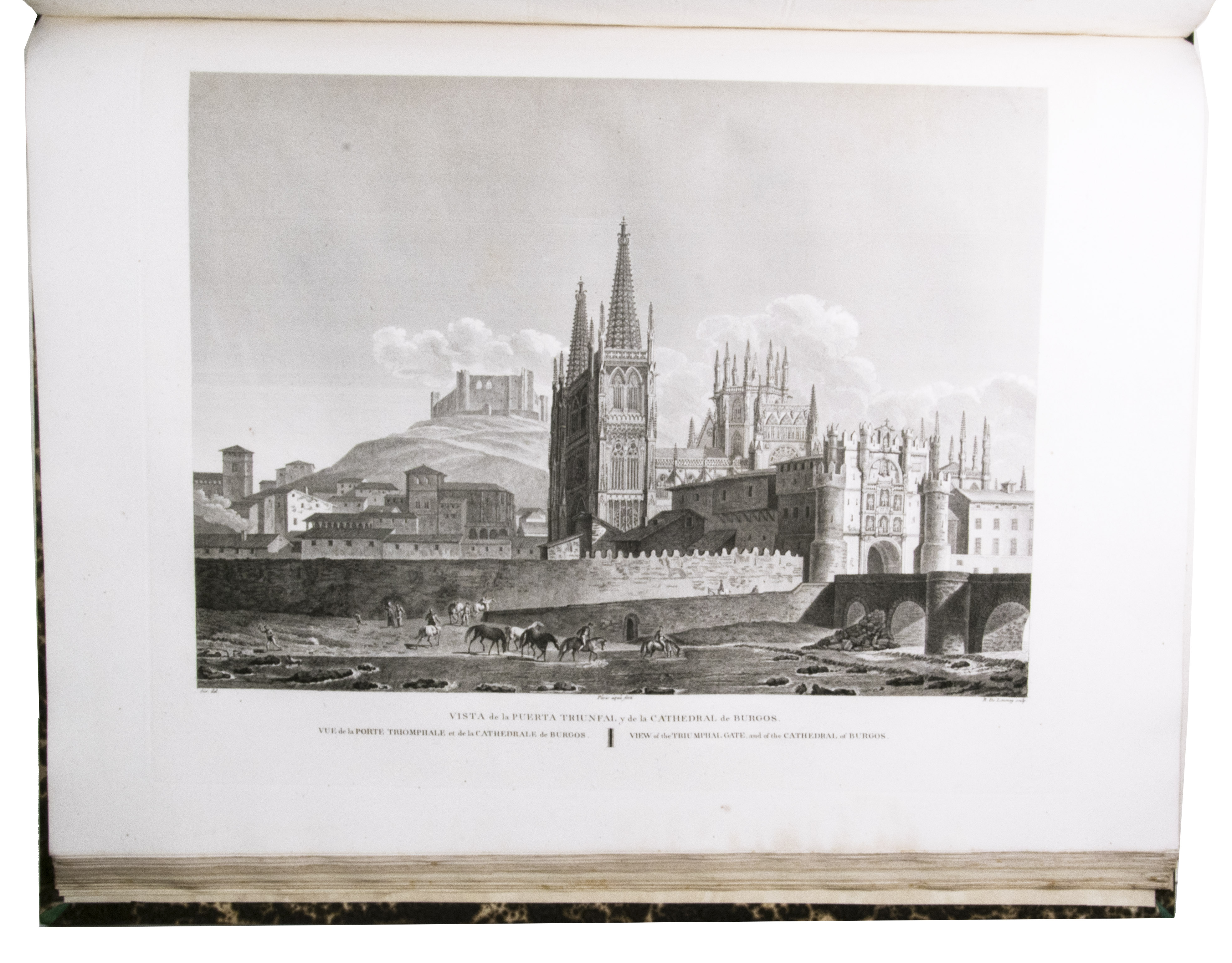
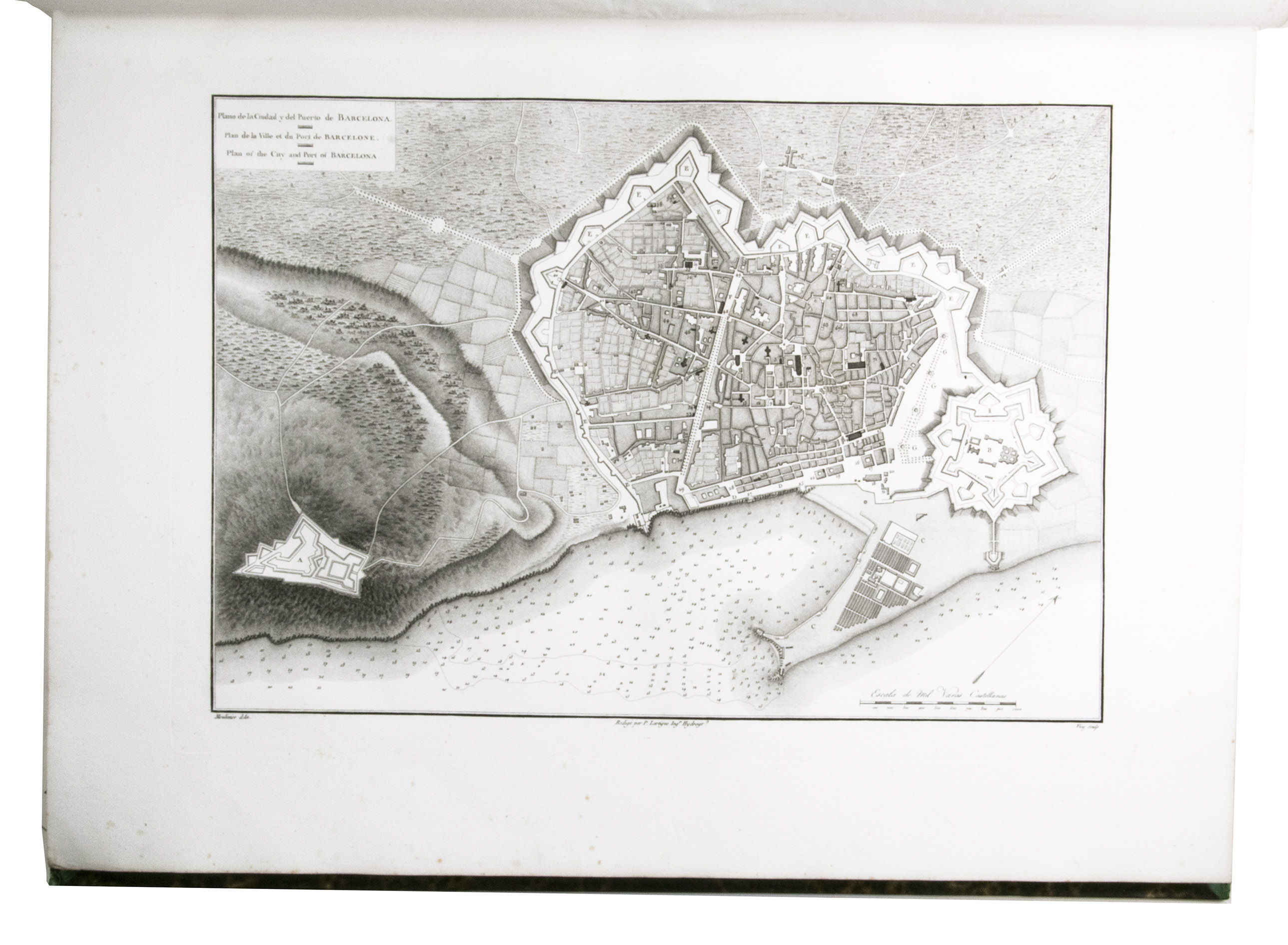
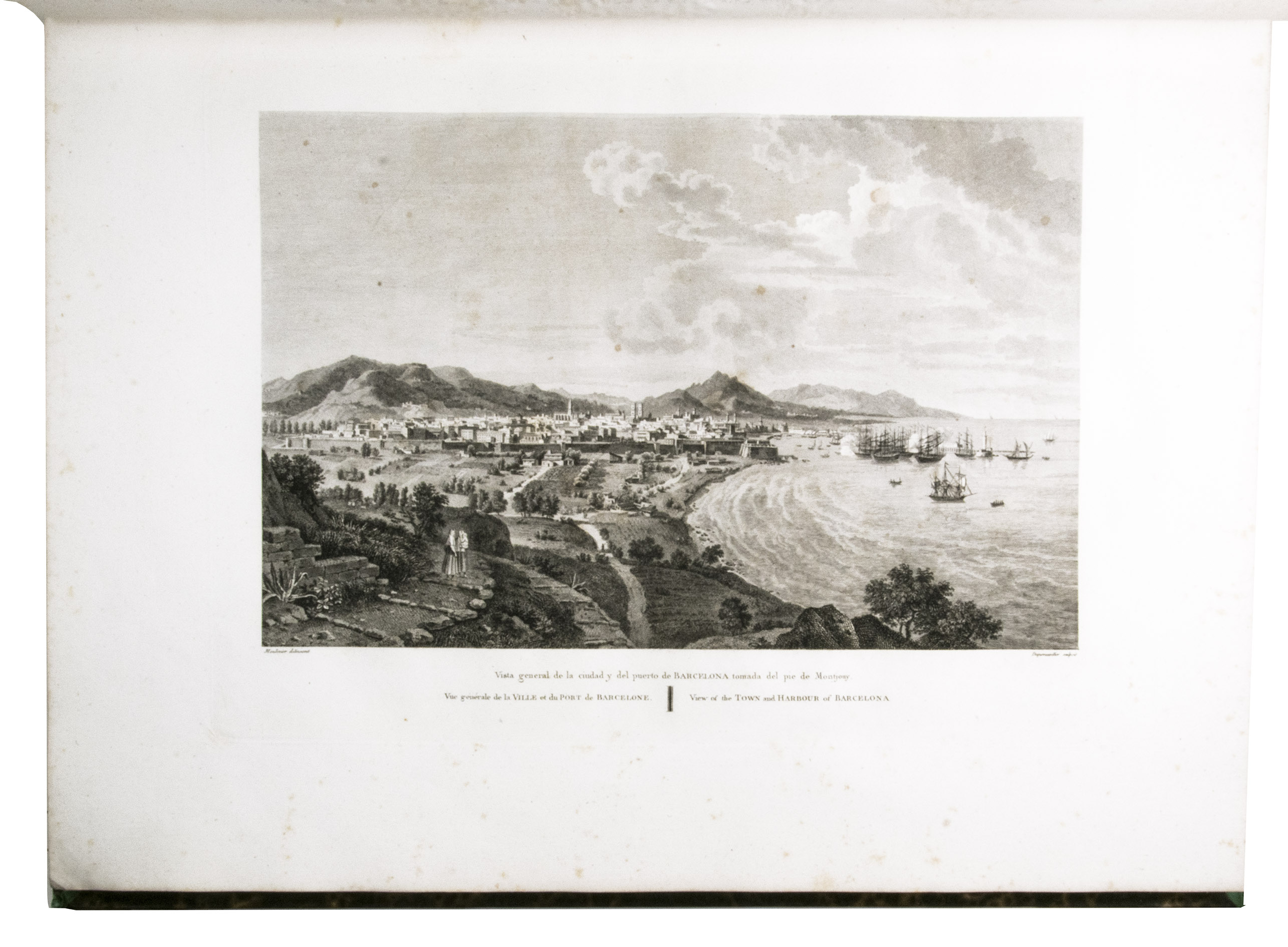
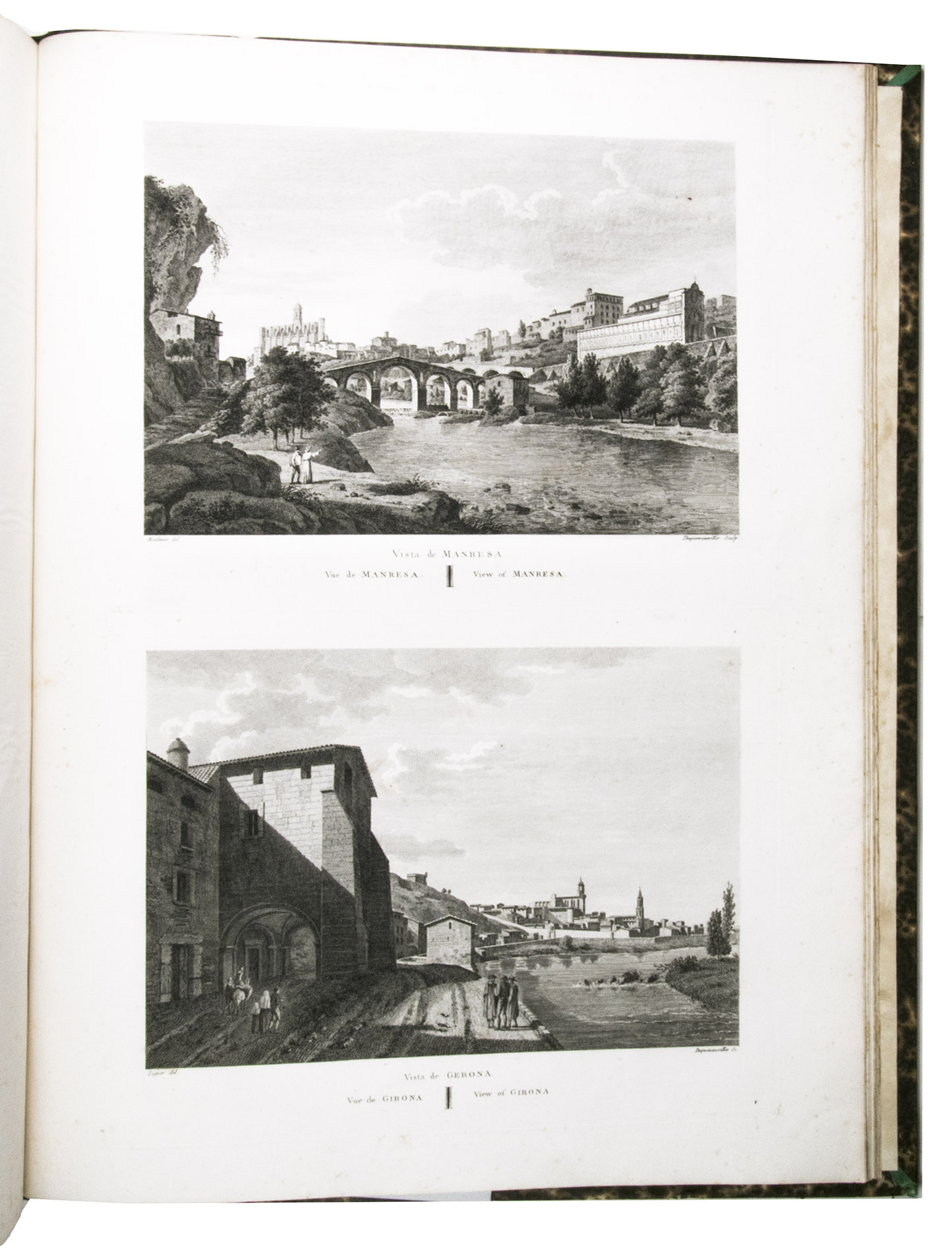
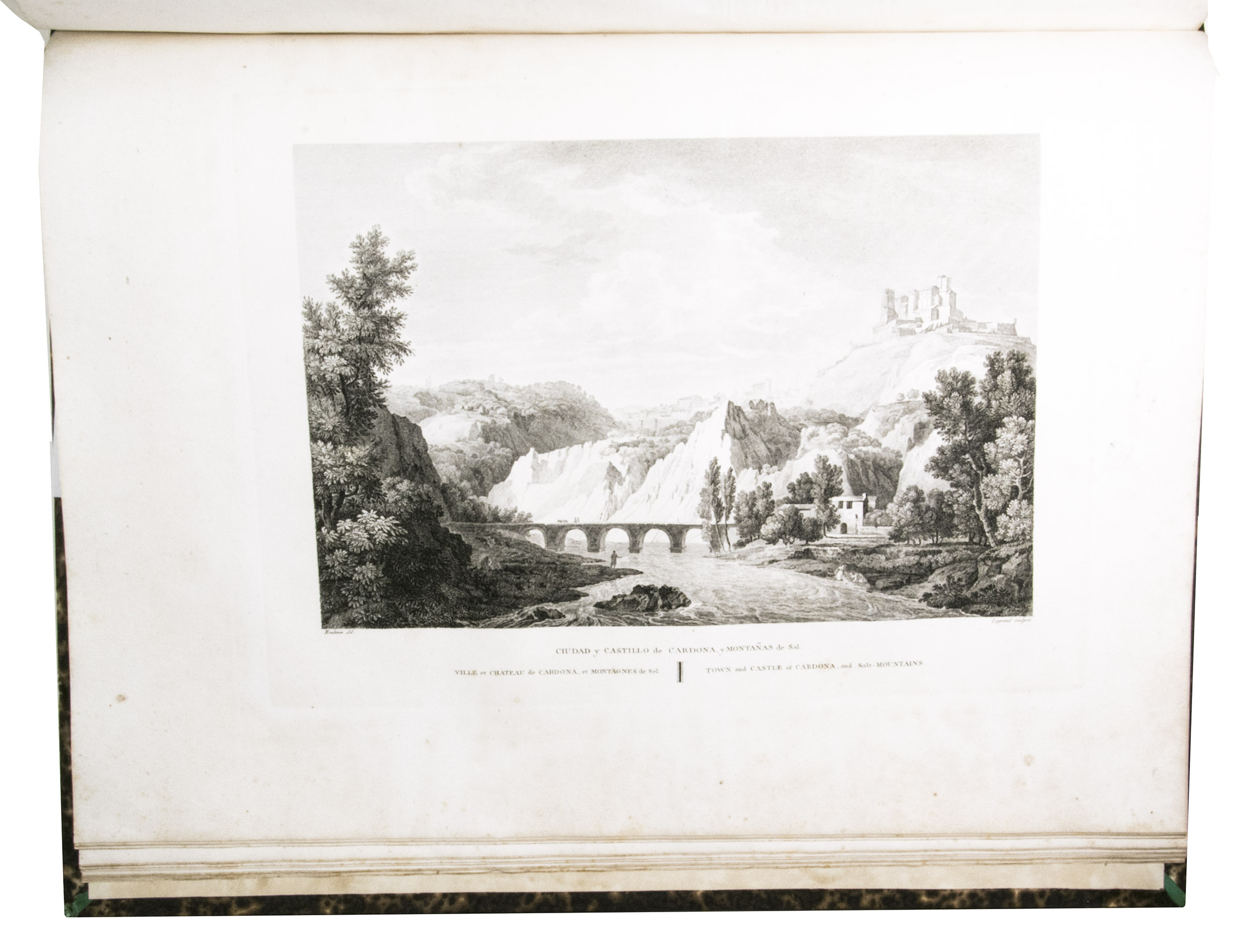
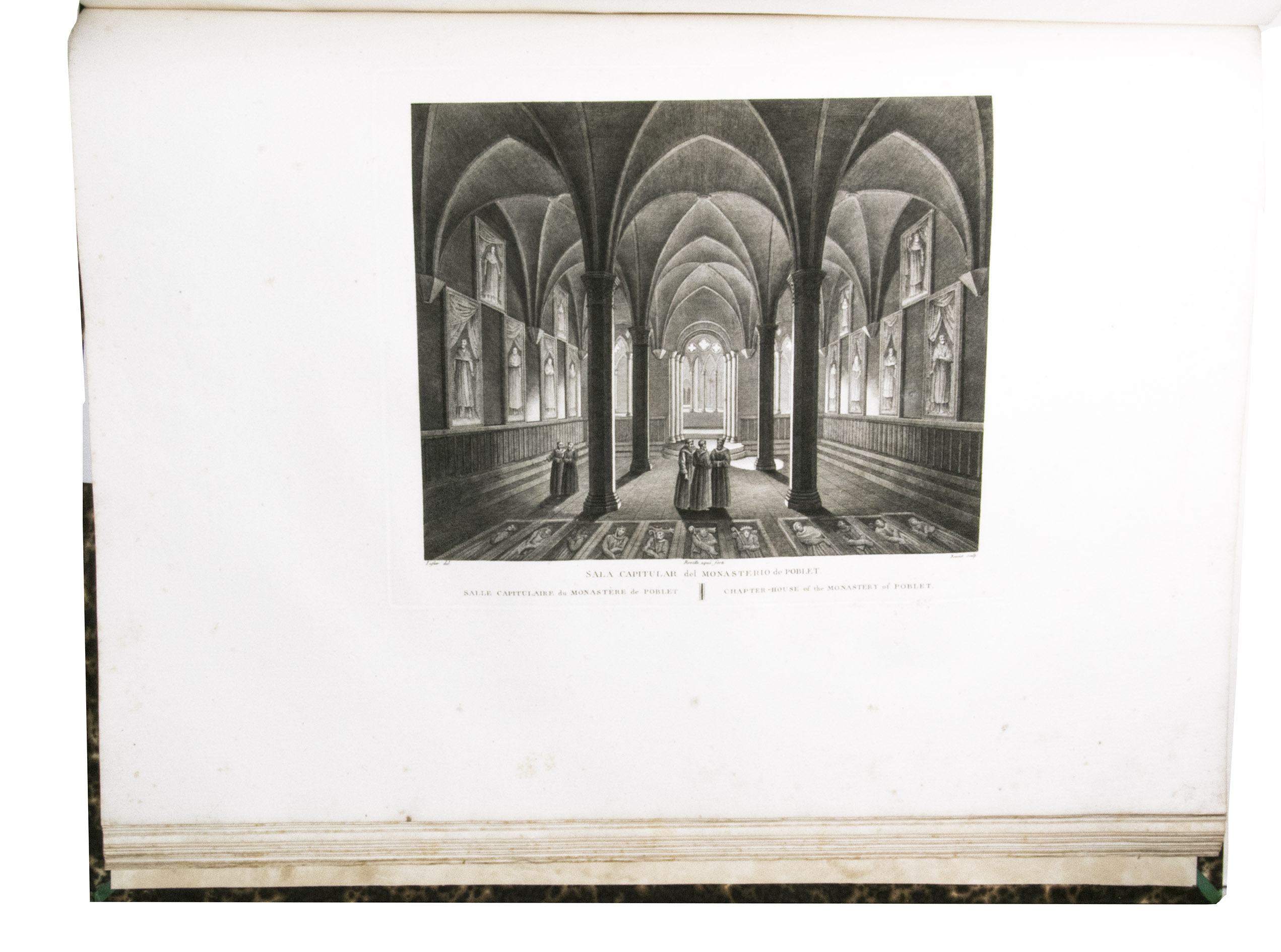
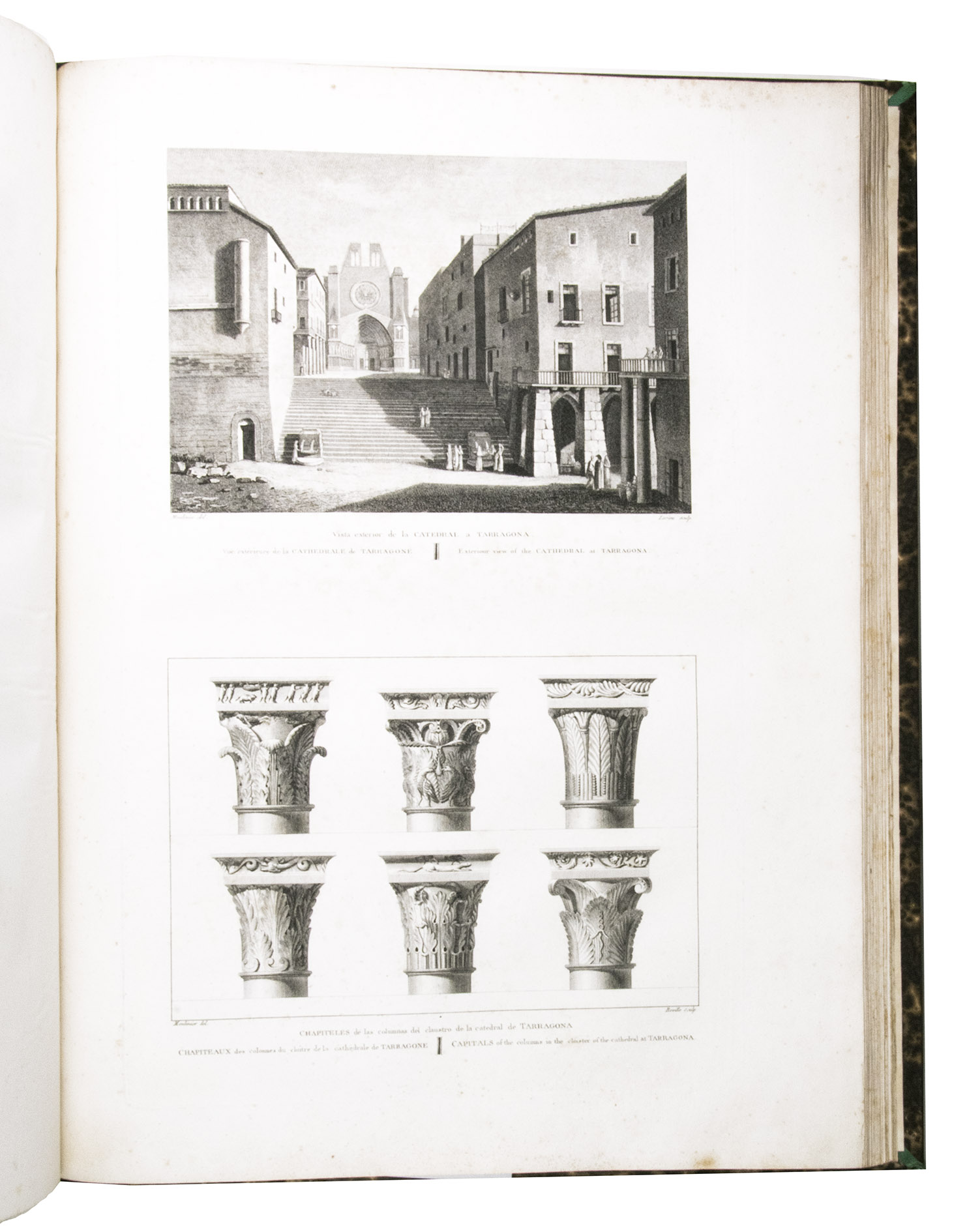
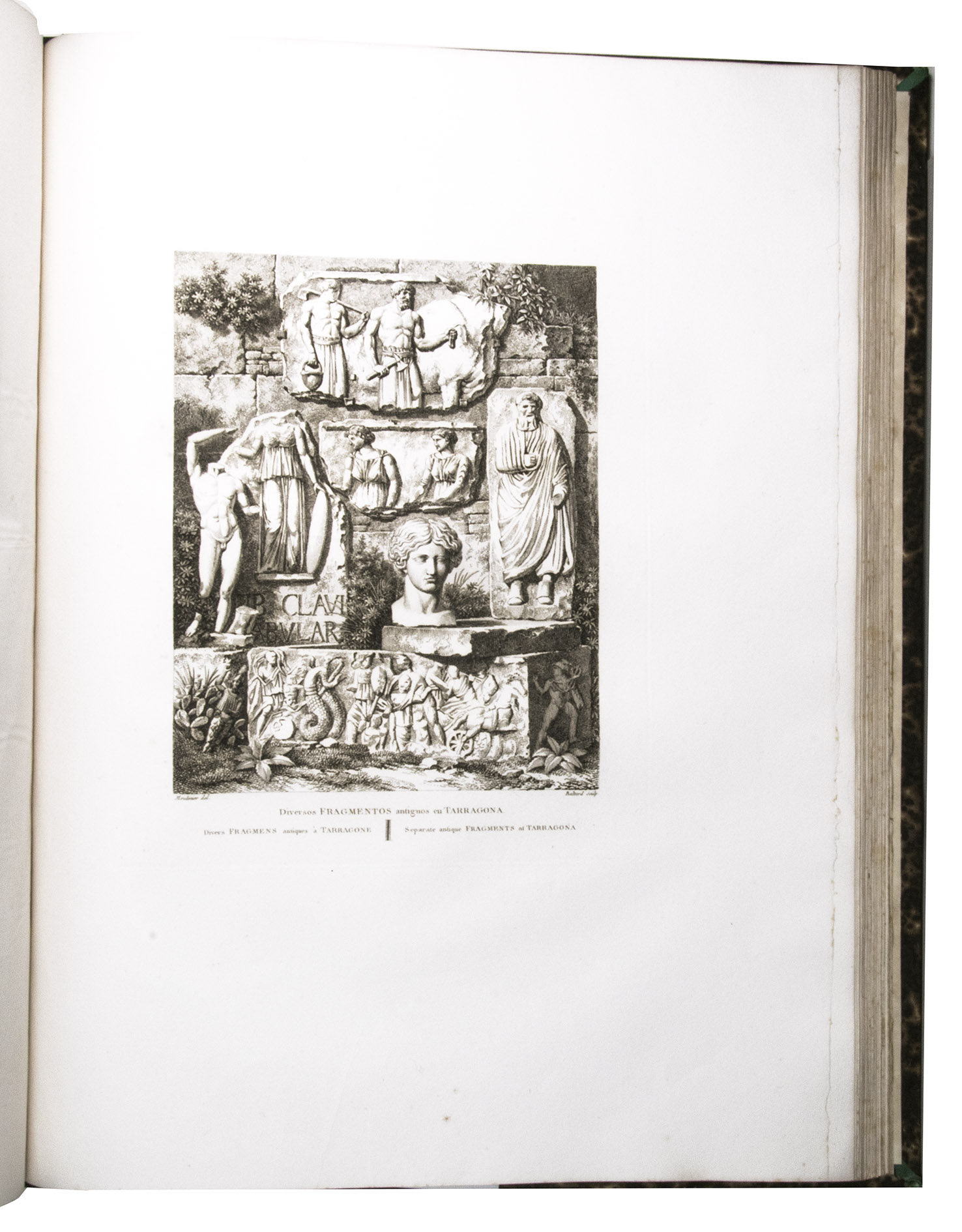
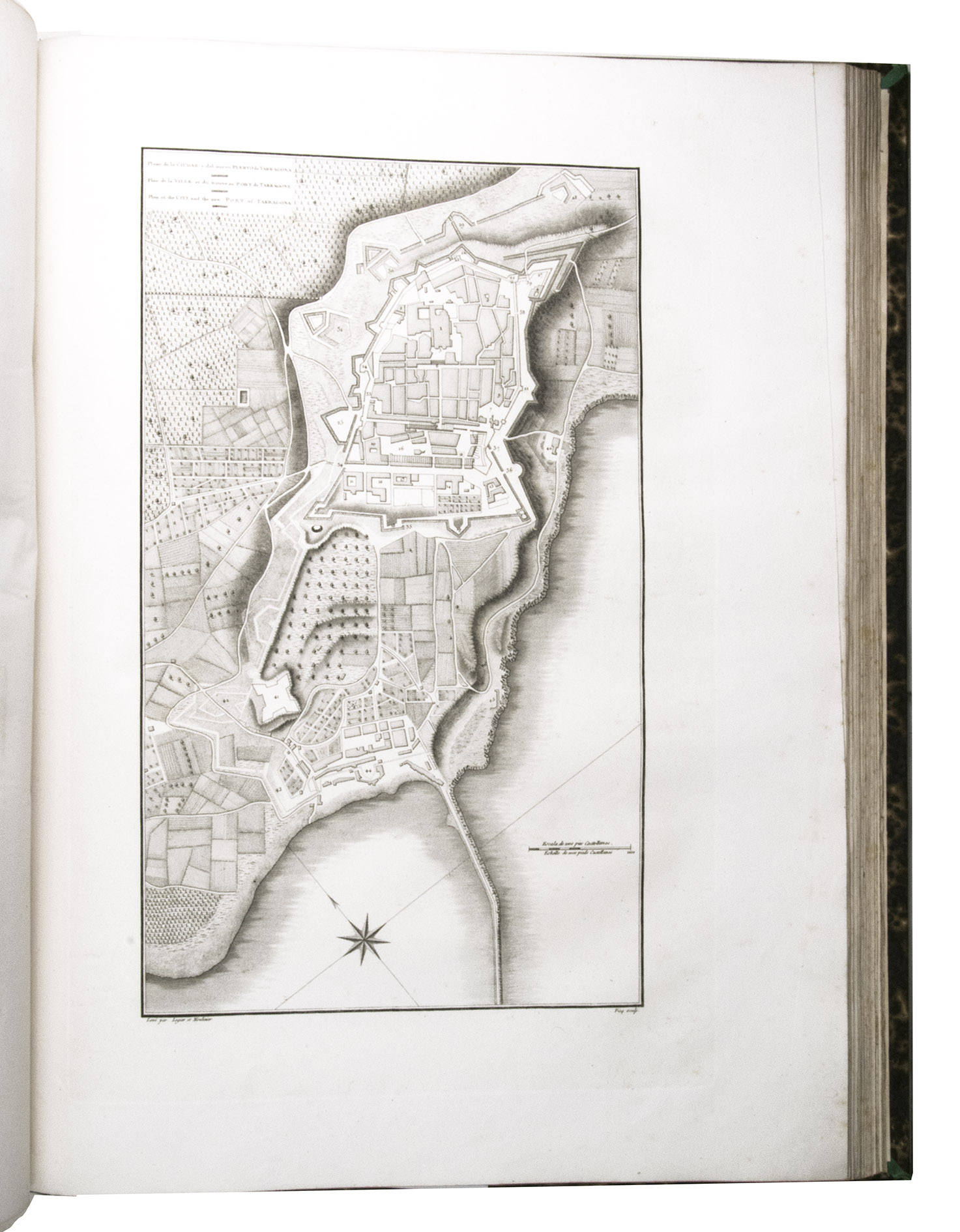
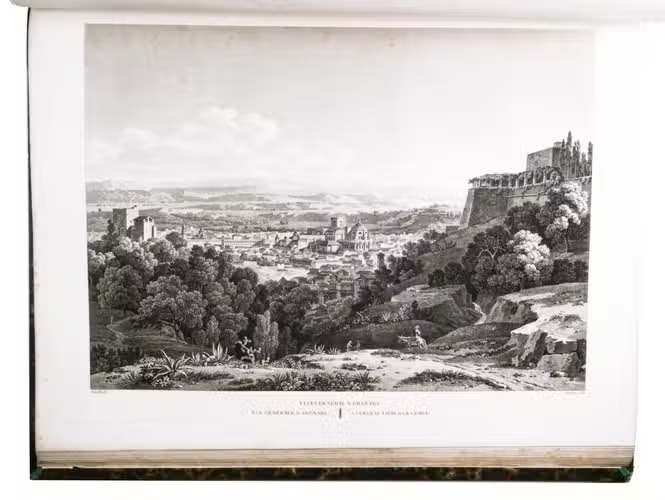
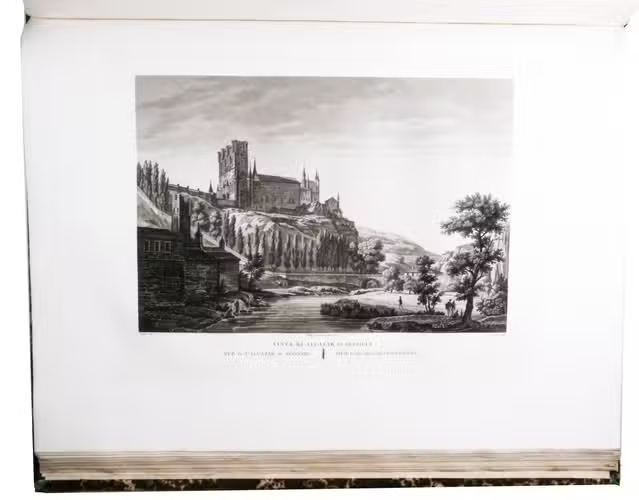
Many towns and cities are depicted, in vol. I: Barcelona, S. Michel del Fay, Martorel, Mont-Serrat, Olerdola, Tarragone, Tartose, Lérida, Poblet, Belpuch, Cardona, Manresa, and Girone; vol. II: Valence, Murviedro, Almenara, Cabanes, Villafames, Chulilla, Chelves, San Felippe, Montesa, Dayemus, Denia, Calp, Villa-Joyosa, Alicante, Elche, Badajoz, Merida, Alconeta, Alcantare, Caceras, Caria, Caperra Talavero, and Guadalupe; vol. III: Belmes, Espiel, Sierra Morena, Cordova, Grenada, Alhambra, Loxa, Sevilla, Italica, Malaga, Gibraltar, and Cadix; vol. IV: Pampelune, Renceveaux, Saragossa, Burgos, Segovia, Talavera, Valladolid, Coca, Saint-Ildephonse, l'Escurial, Tolede, Aranjuez, Madrid, Ocana, Grenada, and some plates depicting paintings by famous Spanish artists like Velasquez, Fernand-Cortès, Claude Coello, Ribera, and Murillo.
Good copy. Palau 128975; Vicaire IV, 742.
Related Subjects: