JOSÉ I, King of Portugal.
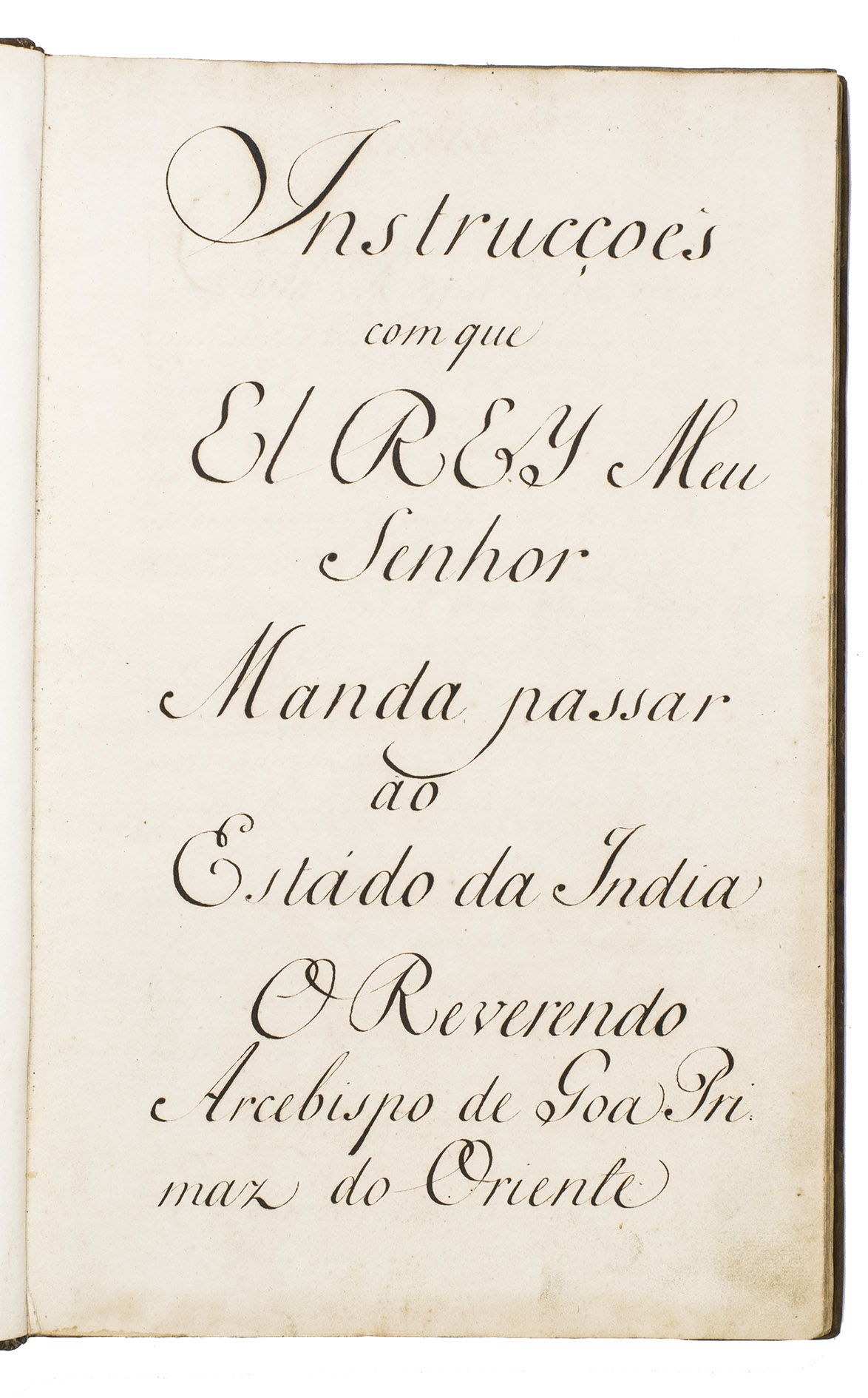
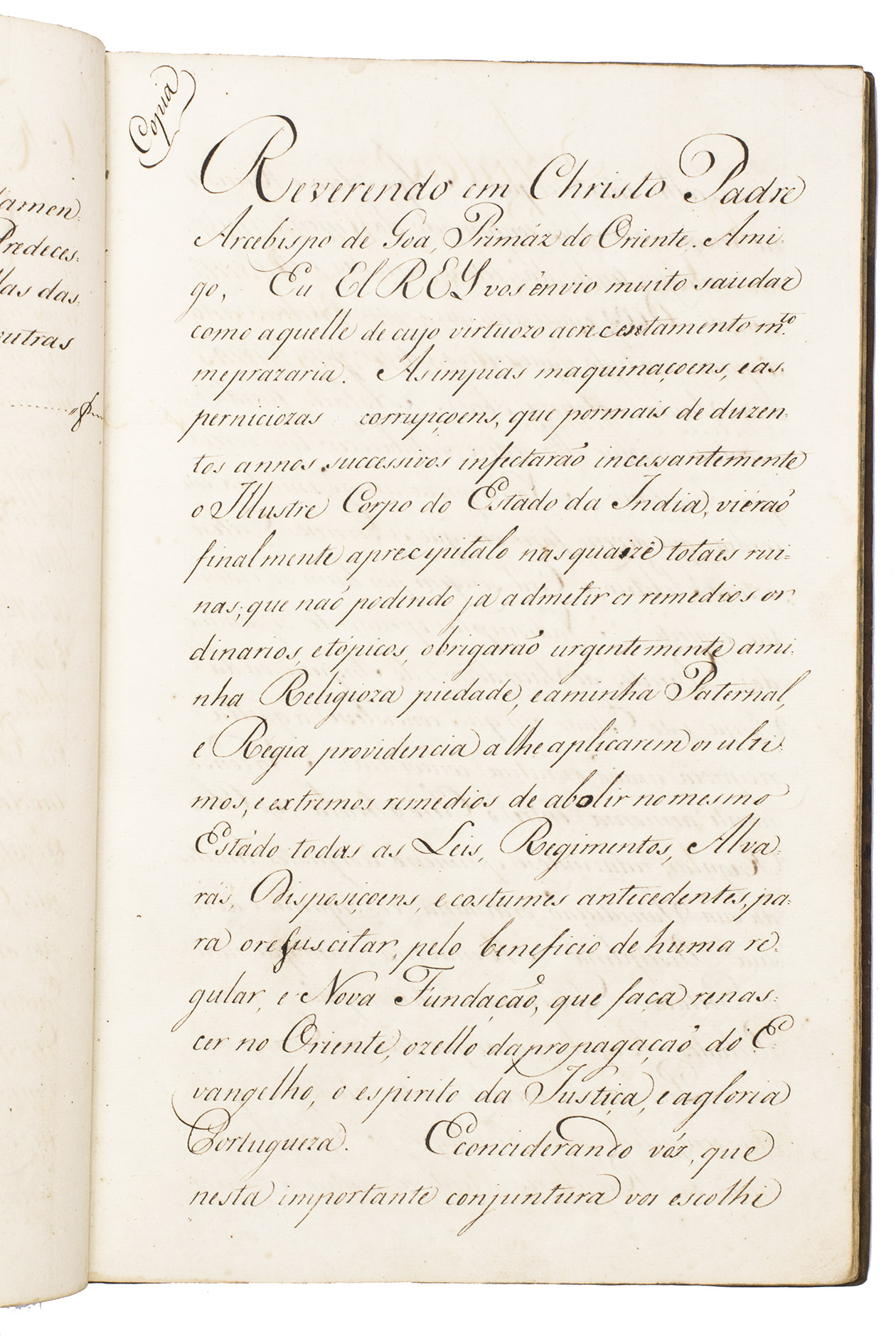
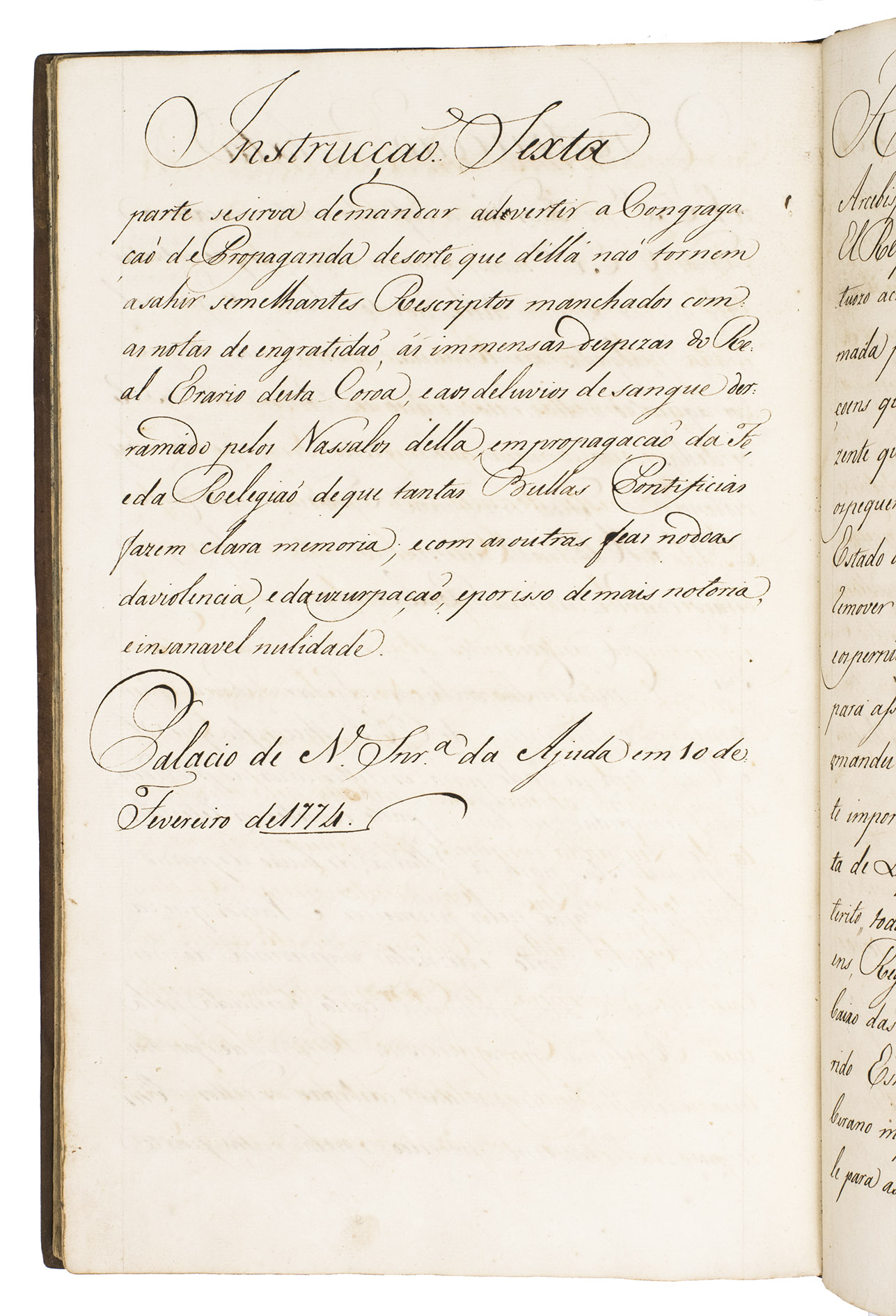
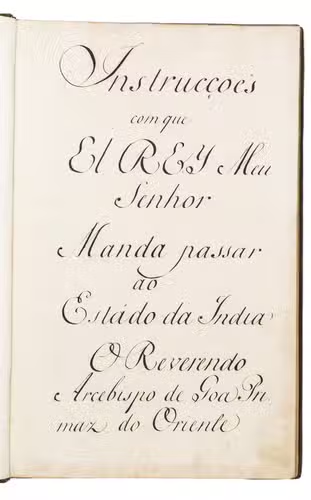
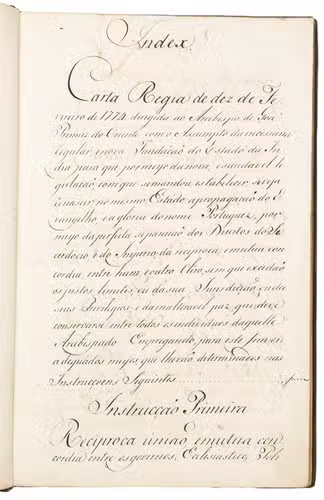
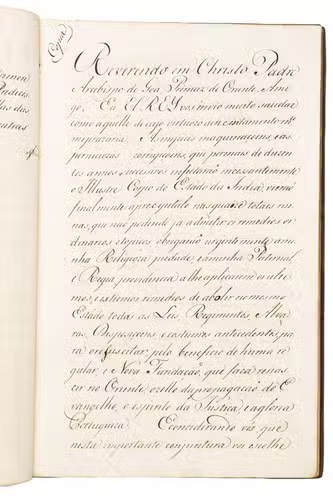
Instrucçõens com que el Rey meu senhor manda passar ao Estado da India o reverendo Arcebispo de Goa primaz do Oriente.
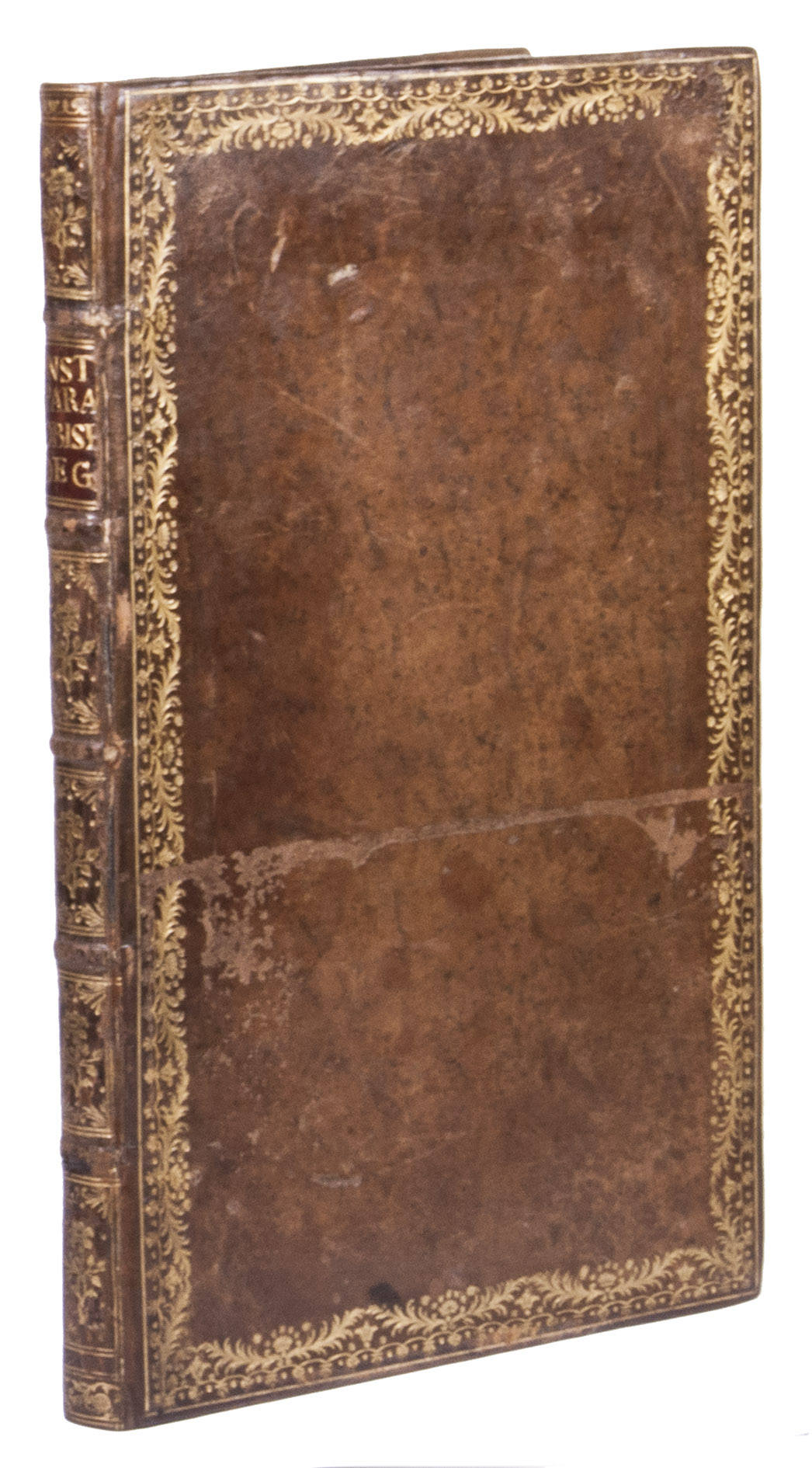
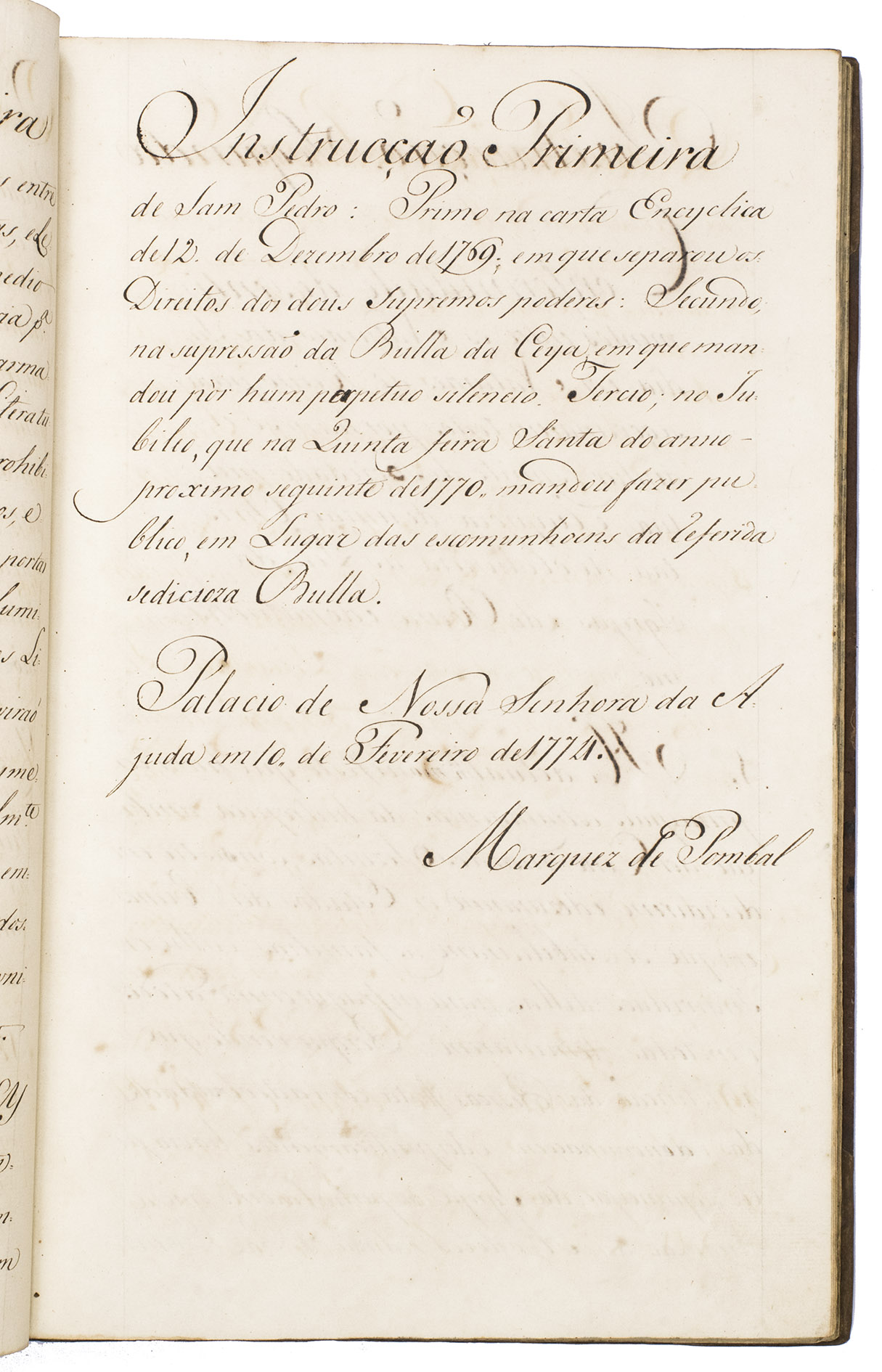
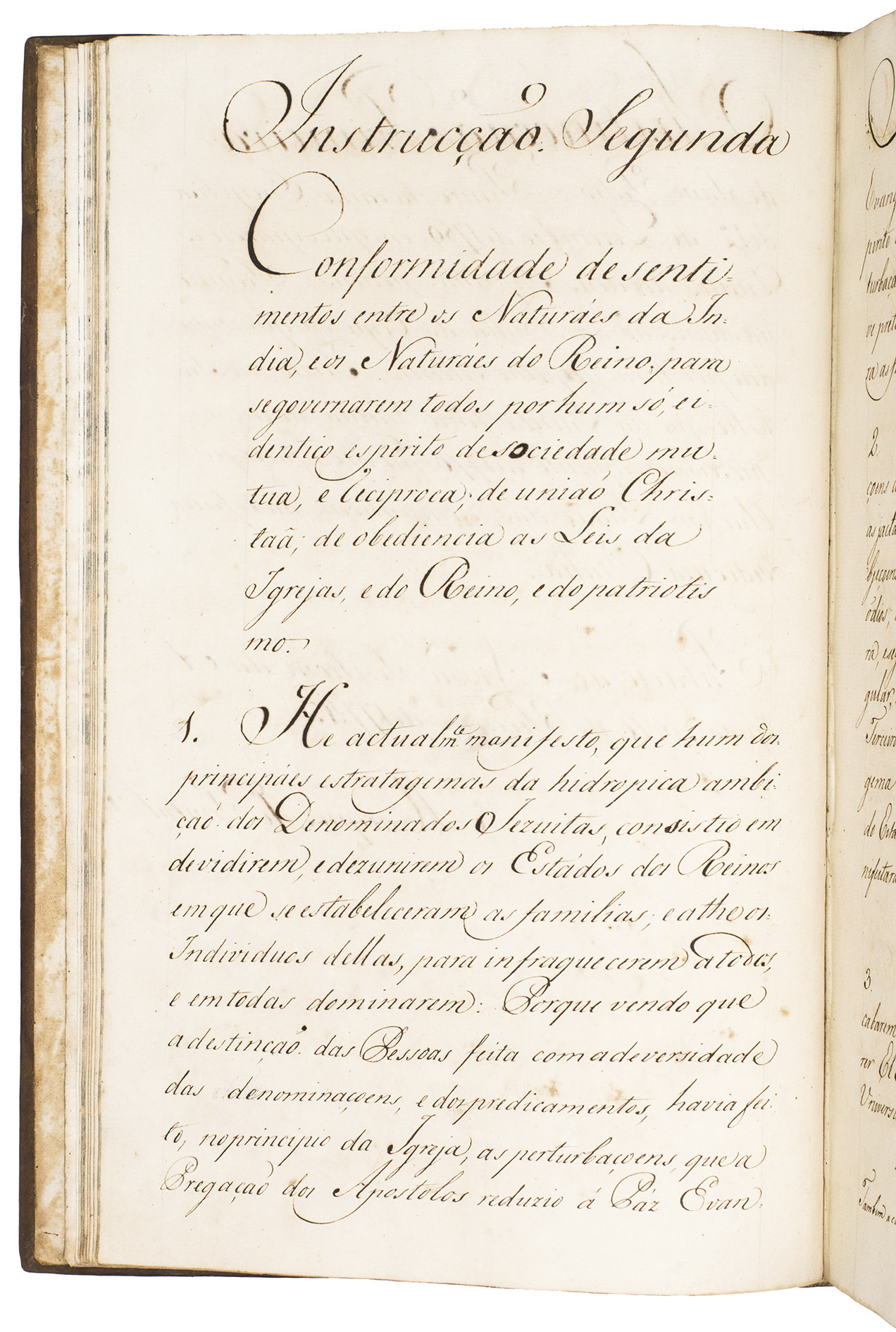
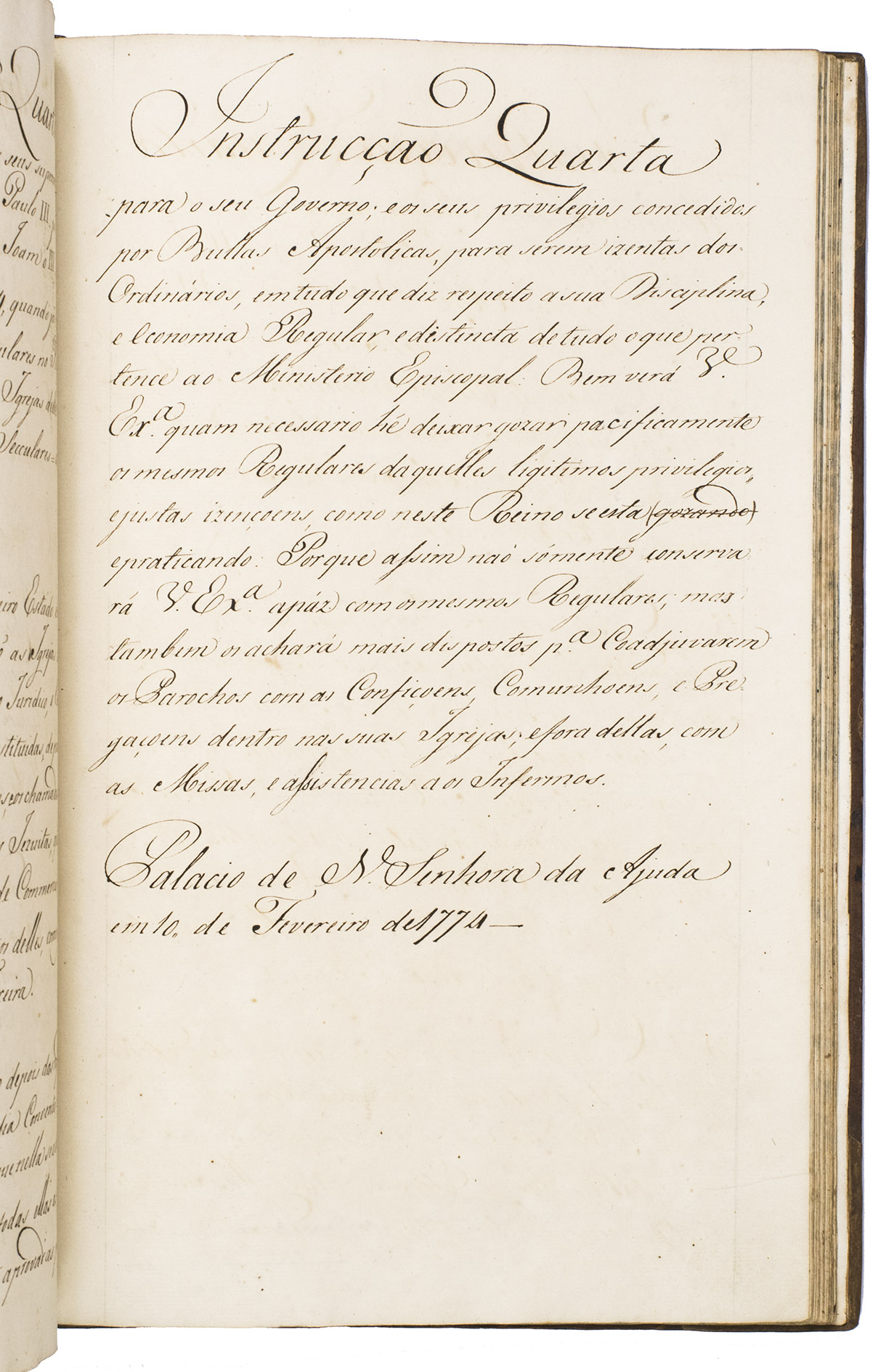
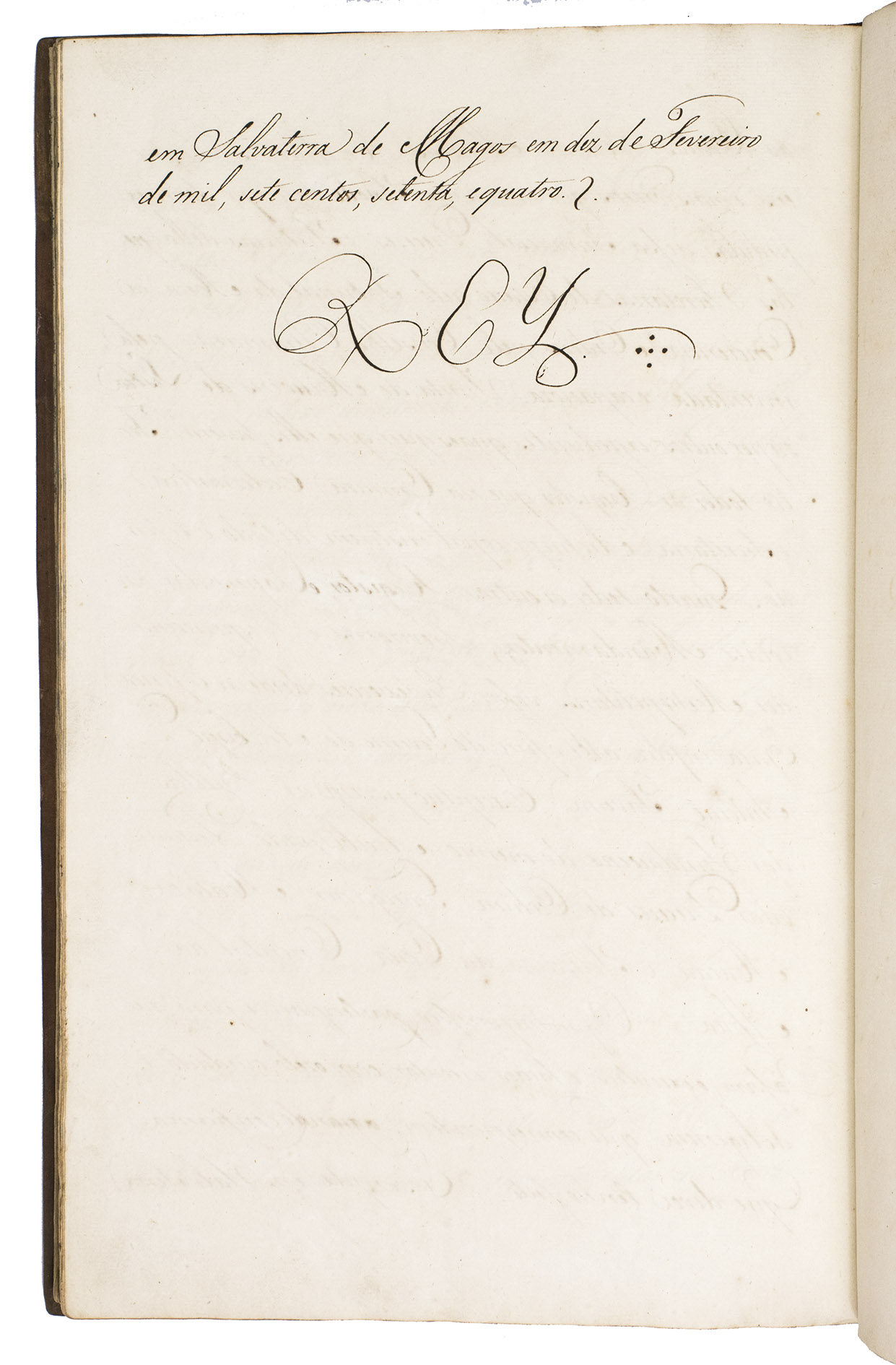
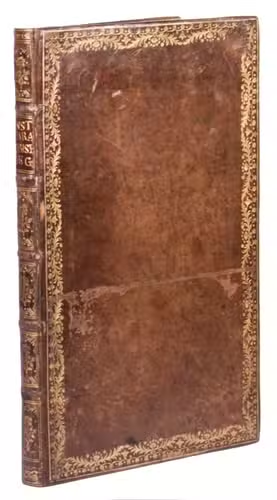
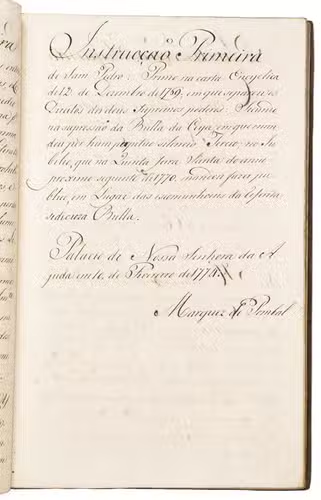
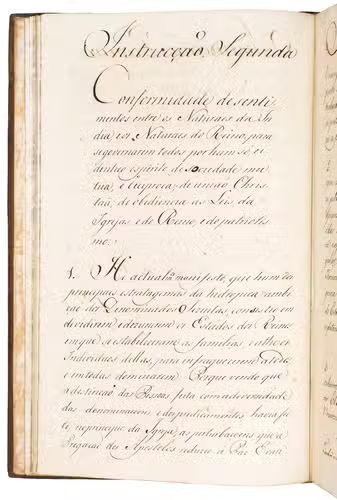
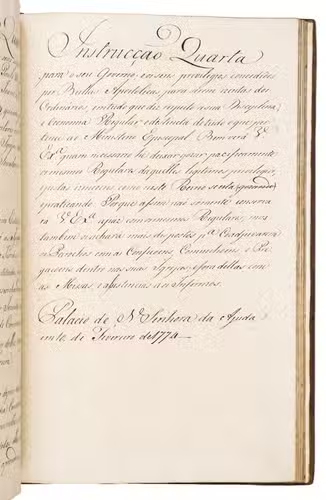
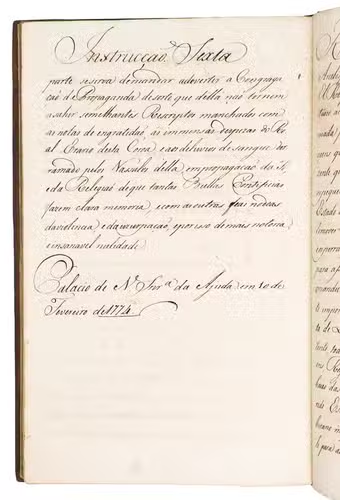
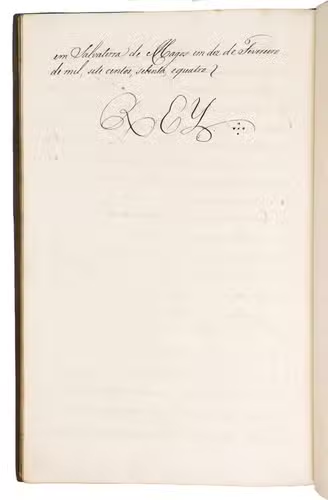
[Lisbon?, dated 10 February 1774 at the foot of the of each of the six Instrucçõens]. Folio. Manuscript on paper, written in a neat secretarial hand. Contemporary gold-tooled brown calf. [2 blank], [4], [68], [2], [4 blank] ll.
€ 16,500
Rare contemporary manuscript of a royal letter addressed to the newly appointed Archbishop of Goa and Primate of the Orient, the Augustinian hermit Dom Frei Francisco da Assunção e Brito, just prior to his departure from Portugal to take up his new post. It outlines a set of ecclesiastic reforms arranged in six instructions. These were part of a series of major reforms introduced by the Portuguese king relating to the governance of the Estado da India: the same day, royal instructions were also sent to the Governor and Captain General of Portuguese India, D. José Pedro da Câmara, regarding military, political and economic reforms.
The instructions to the Reverendo Arcebispo de Goa were drafted by the Marquês de Pombal, Sebastião José de Carvalho e Melo, 1st Marquis of Pombal, 1st Count of Oeiras (1699-1782). Carvalho was one of the most influential Portuguese statesmen of the eighteenth century: it was during his term as prime minister earlier in the reign of José I that Portugal had abolished slavery both in Portugal itself and in the Portuguese colonies in India (but, not, however in other parts of its empire), and that autos-de-fé and the Limpeza de Sangue had been phased out. He had also been largely responsible for having the Jesuit Order expelled from Portuguese domains, and he does not conceal his antipathy towards the Order in these instructions to the new Archbishop. Of great interest also are Carvalhos insistence on the removal of any distinction between natives of India and natives of Portugal (second and third instructions), and his condemnation of the level of censorship imposed by the Inquisition and by the Jesuits (fifth instruction).
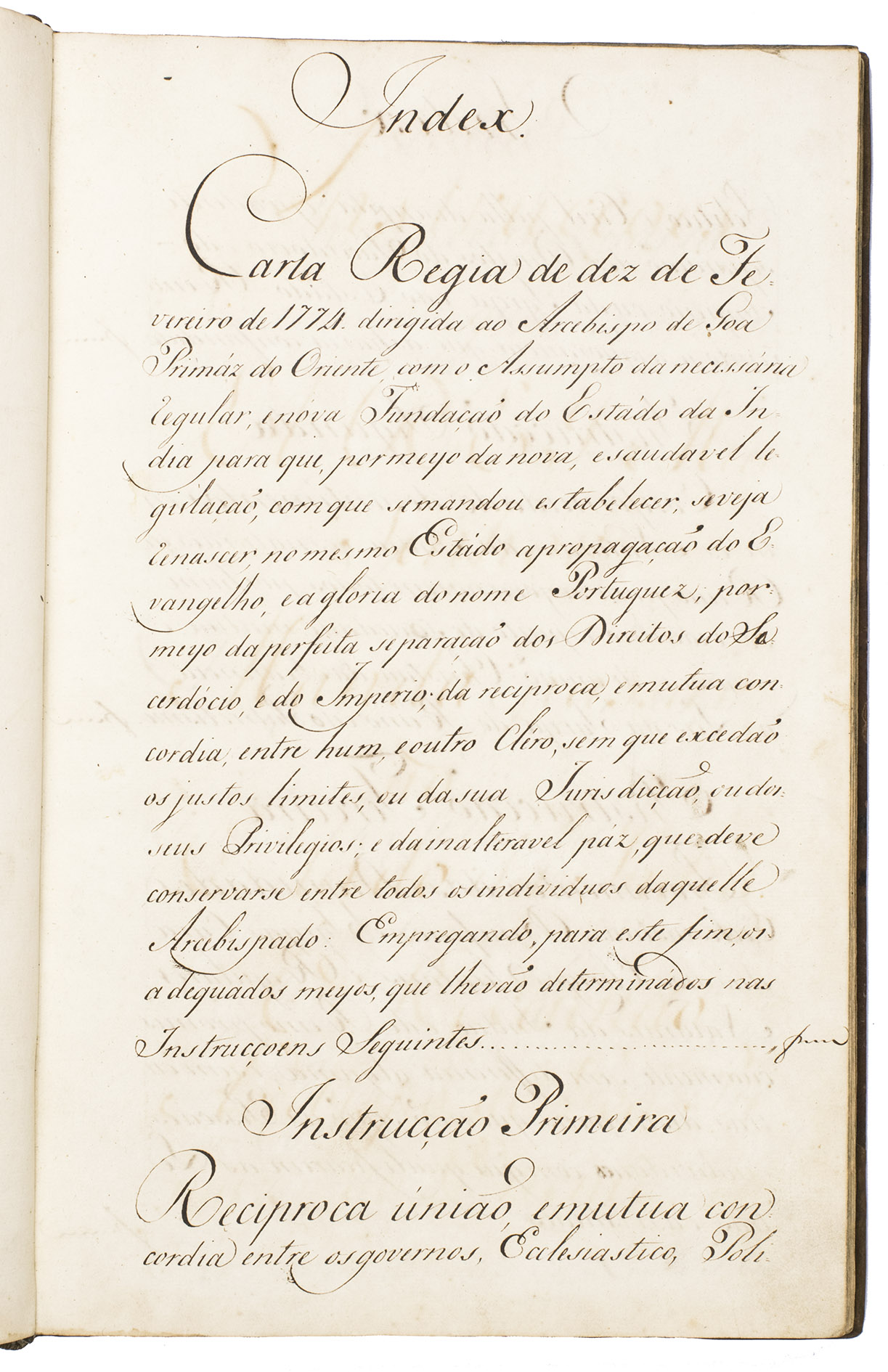
An edited version of the present letter, and of the letter dated the same day addressed to Câmara, were published much later on in Pangim, in 1841. The printed version of the ecclesiastical letter includes neither the index nor the second four-page royal letter which are both present in this manuscript.
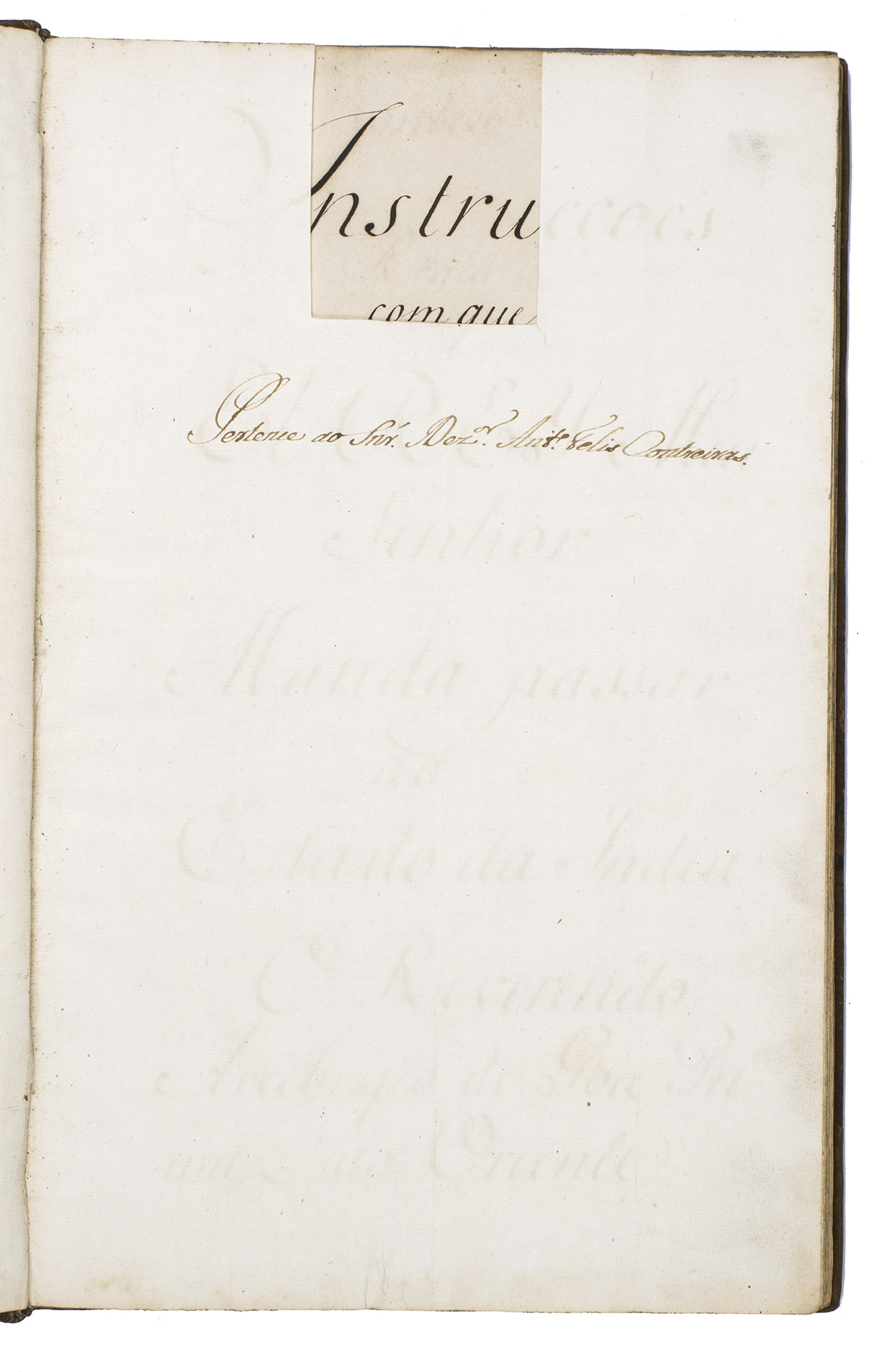
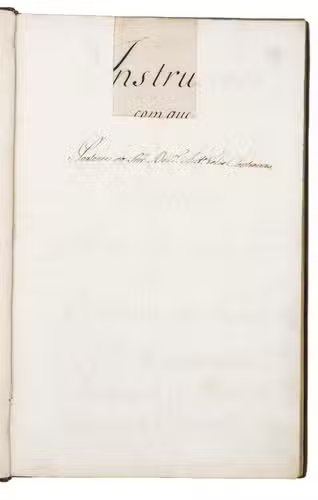
With a contemporary ownership inscription ("Pertence do snr. Dez. Anst. Felis Contreiras.") on the second free flyleaf. The edges of the boards are lightly scuffed, the boards have been scratched, with some loss of material. The bookplate mounted on the second free flyleaf has been cut off, the work is lightly browned and foxed throughout. Otherwise in good condition.
Related Subjects: