HOMER, and Raffaele MAFFEI (translator).
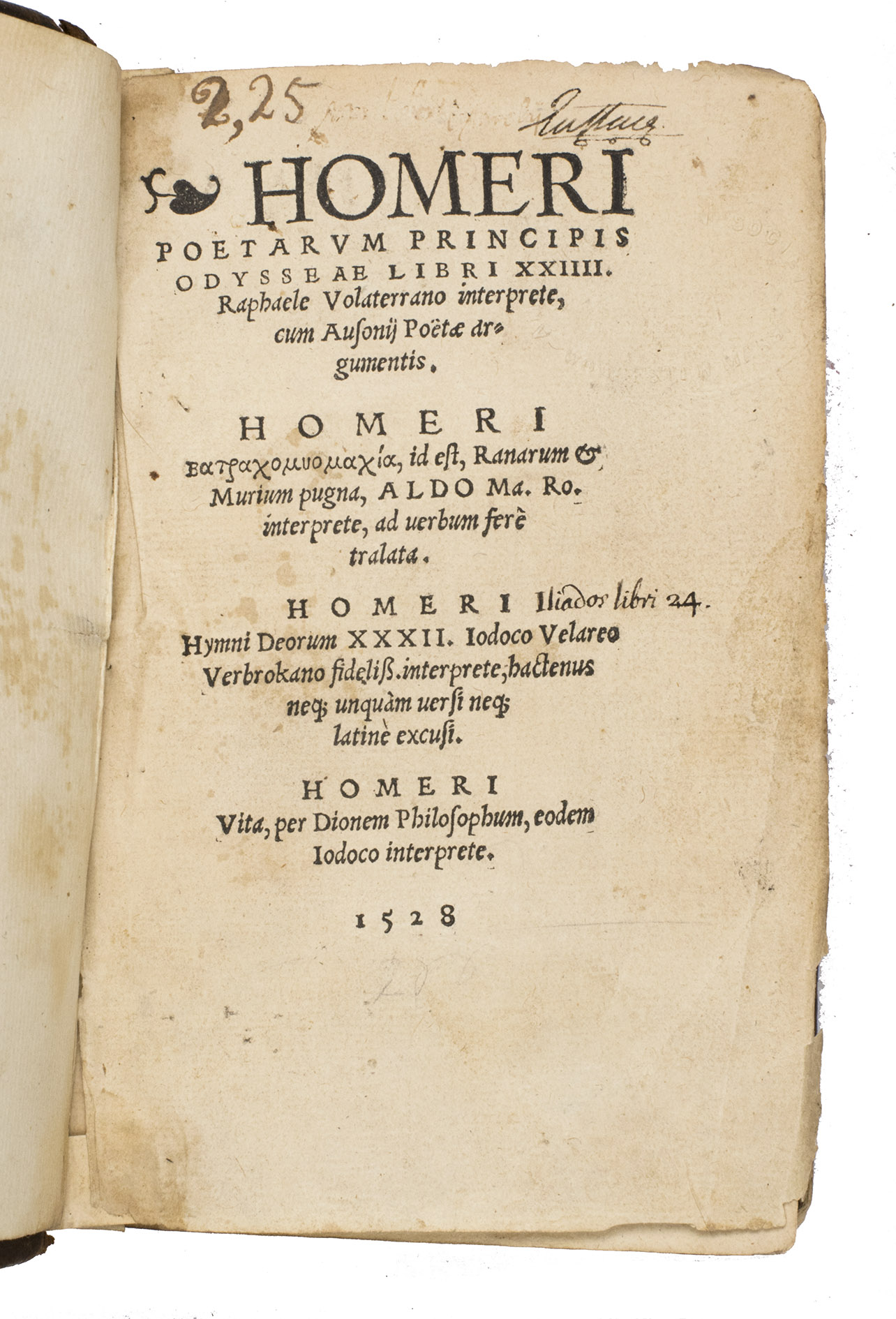
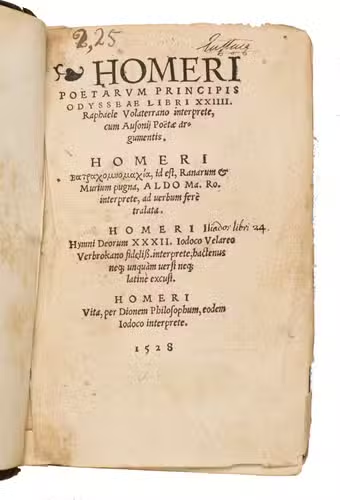
Odysseae Libri XXIIII. Raphaele Volaterrano interprete ...
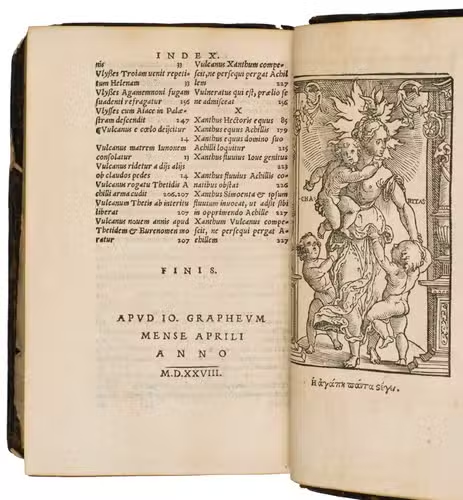
(Colophon:) Antwerp, Joannes Grapheus, April 1528.
With:
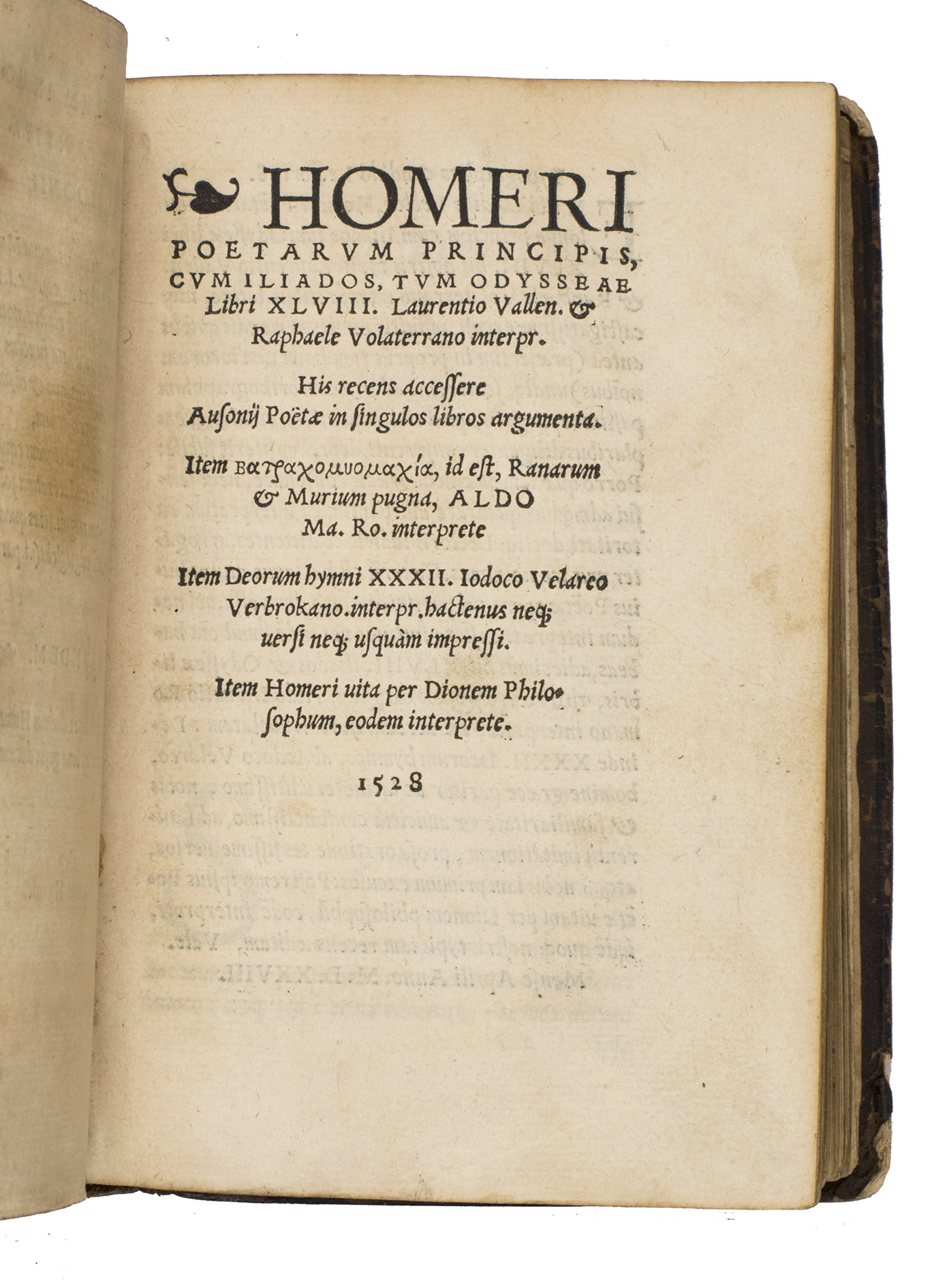
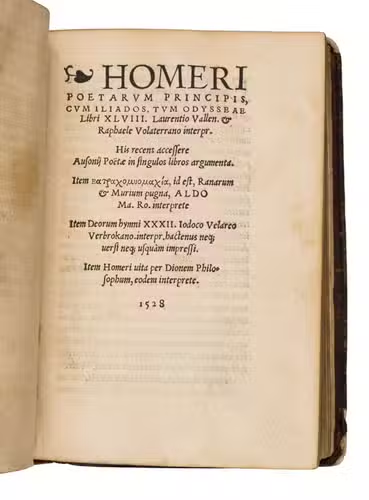
(2) IDEM. Iliados, tum odysseae libri XLVIII. In singulos libros argumenta. Batrachomyomachia. Deorum hymni XXXII. Homeri vita.
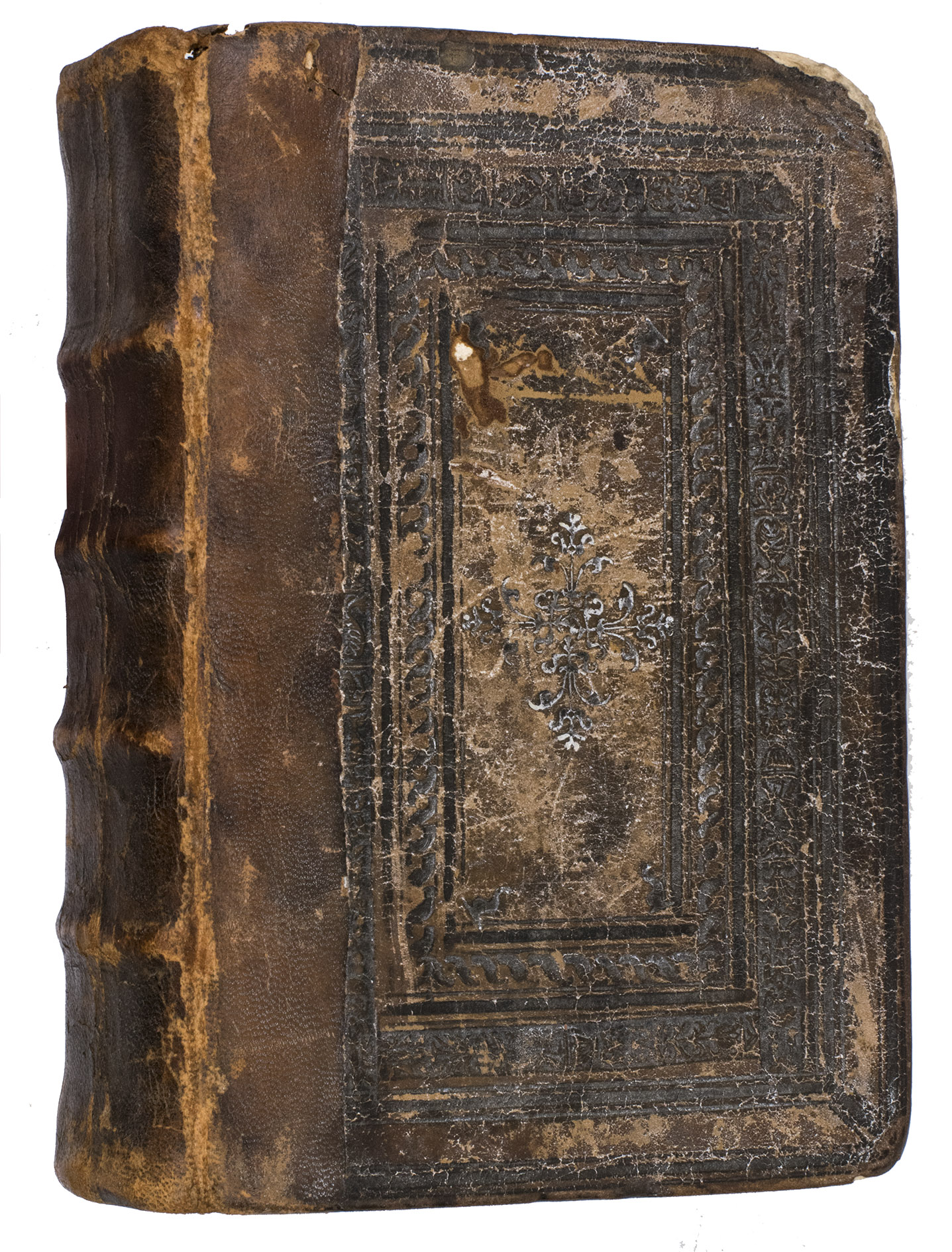
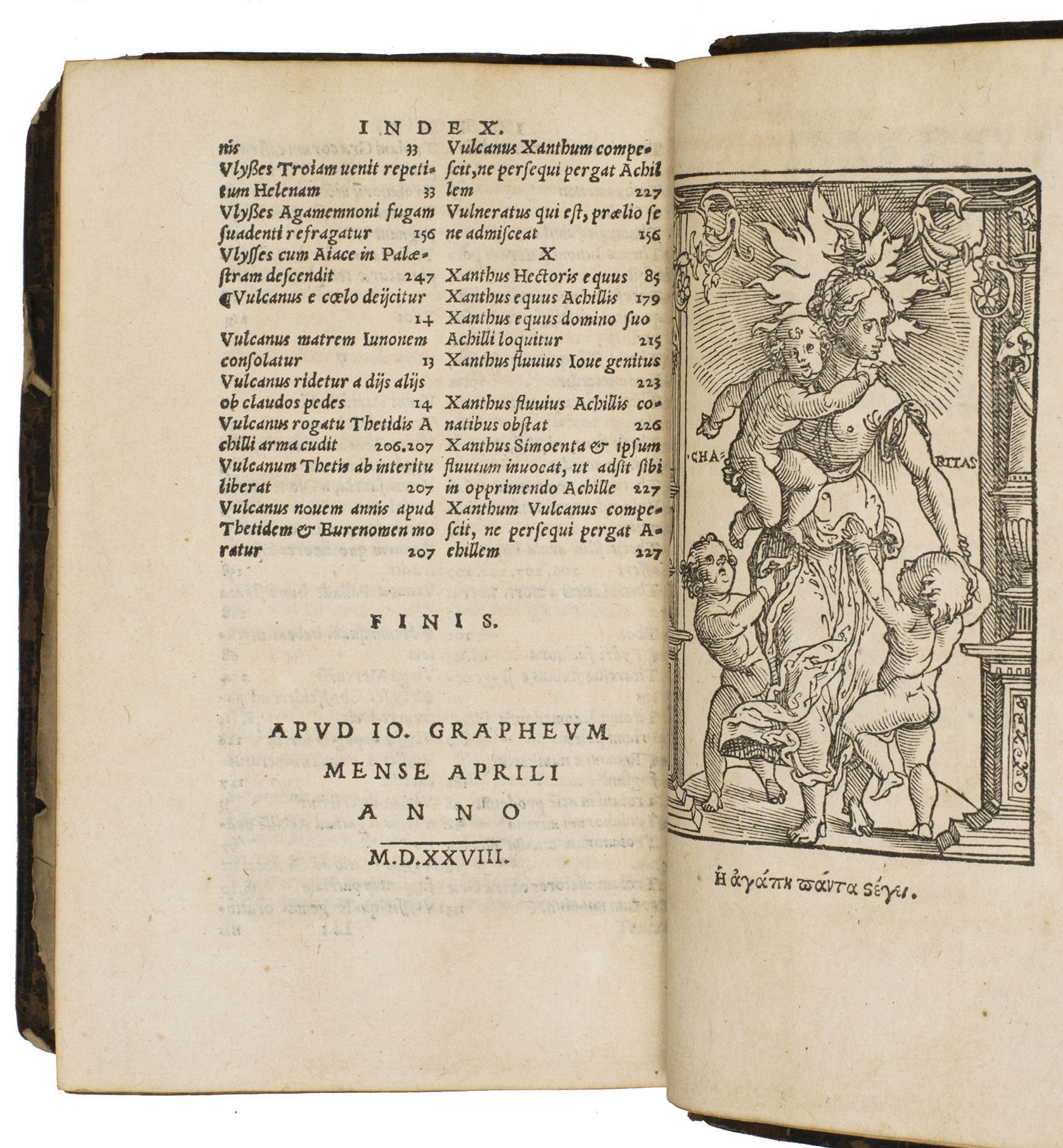
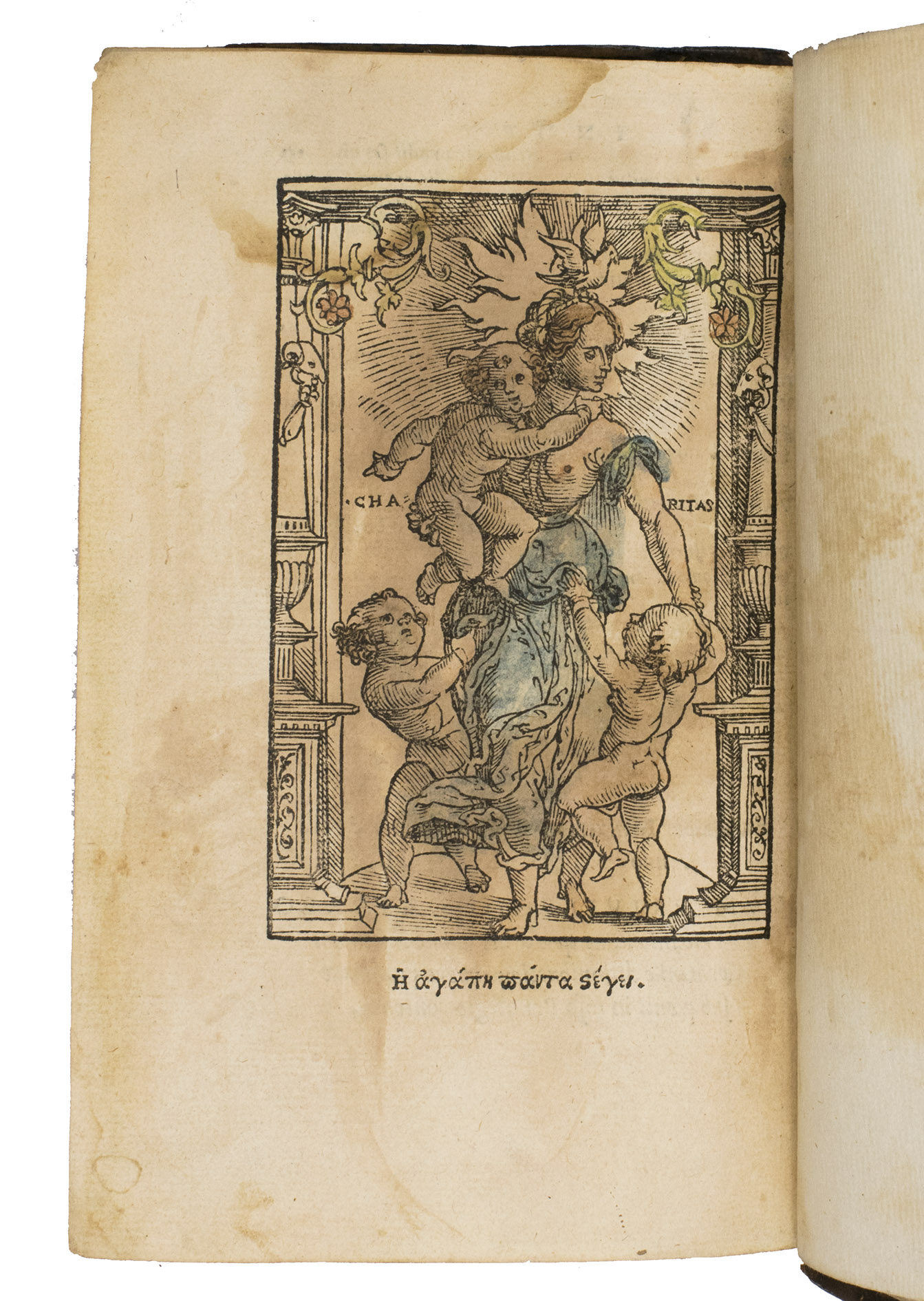
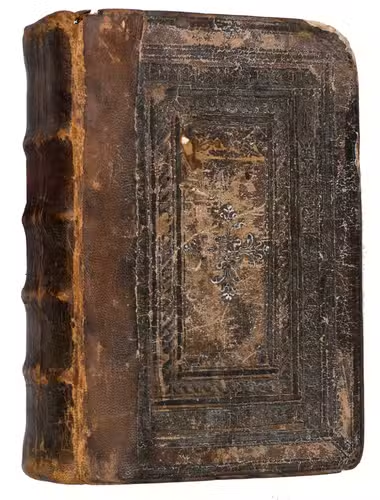
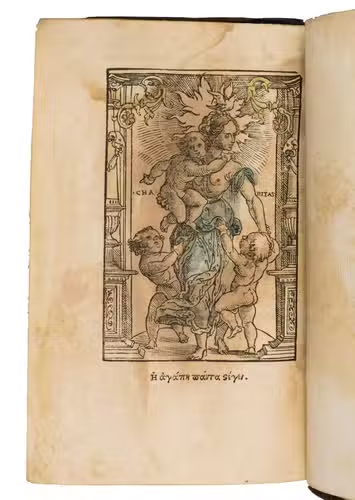
(Colophon: Antwerp, Joannes Grapheus), 1528. 2 parts in 1 volume. 8vo (15.6 x 10.4 cm). Ad 1 with a full page woodcut device at the end of the volume, lightly hand-coloured. Ad 2 with the same device. Contemporary blind-tooled calf, sewn on 4 supports with the corresponding raised bands on the spine, and rebacked. 183; 259, [8]; [1], "184-214" [=31], [8] ll.
€ 3,750
Rare first Antwerp edition, and the earliest truly complete Latin Homer to be printed in the city, from the press of Joannes Grapheus (1502-1571). Conceived as a two-volume "opera omnia", it gathered together all the major Latin translations of Homer available in the early 16th century, creating what was, in effect, the earliest attempt to present Homers entire surviving corpus in a unified Latin form.
The present work is bibliographically intricate, and the two volumes do not always appear together. Each was designed in parallel, the first devoted to the Odyssey, the second to the Iliad, and both concluding with the same constellation of ancillary texts. Grapheus clearly intended the pair to form a complete whole, but also structured each volume so that it could circulate independently.
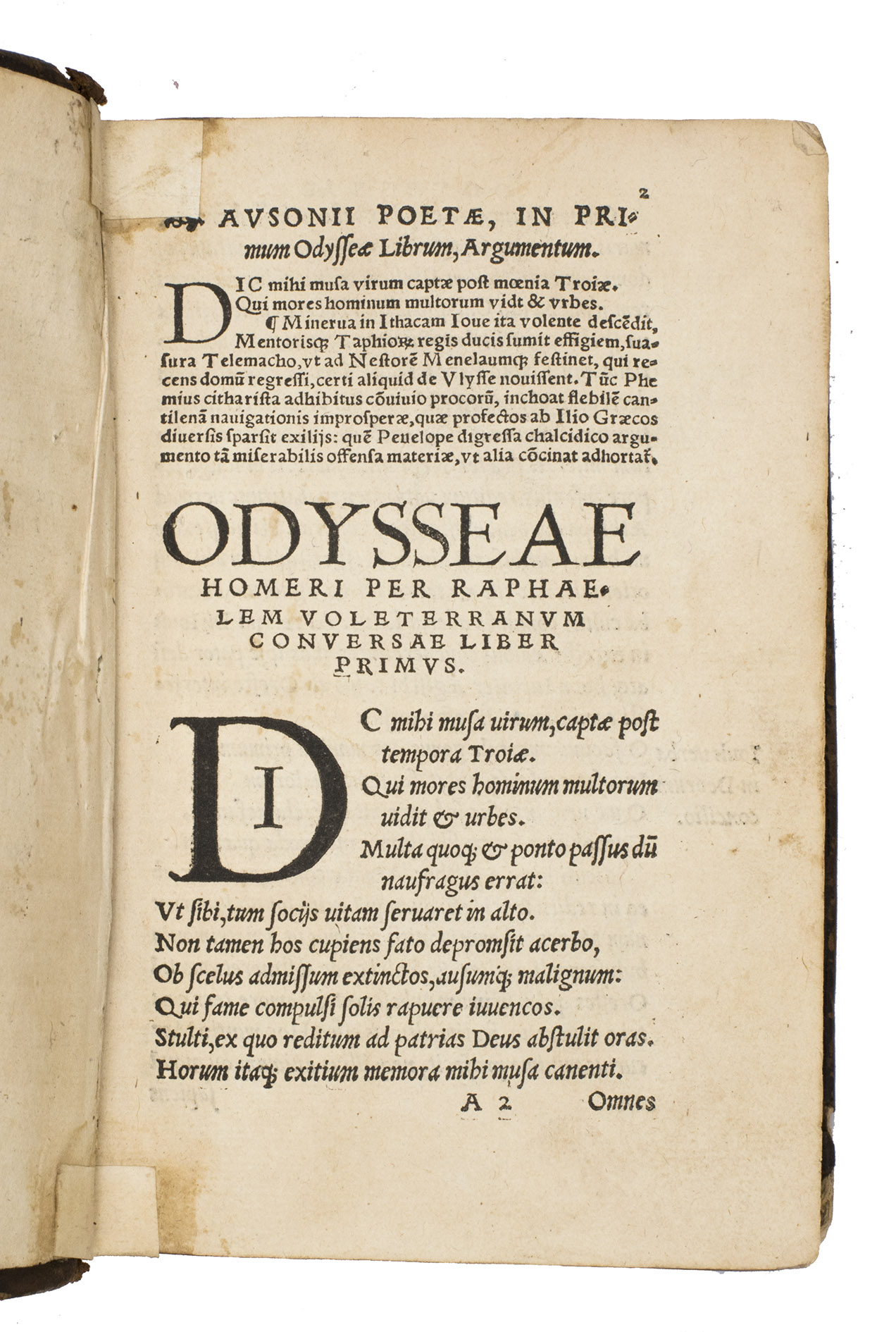
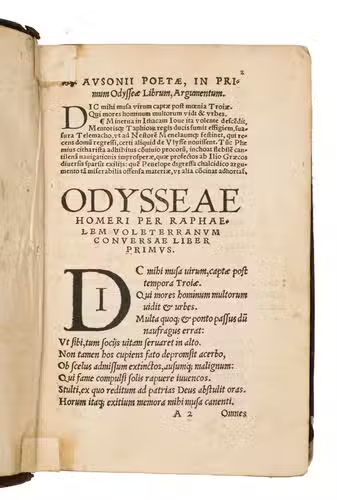
Ad 1 contains the Latin Odyssey, translated by the Roman humanist and theologian Raffaele Maffei (also known as Raphael Volaterranus, 1451-1522). Having spent most of his life working within the Roman Curia, Maffei dedicated his final years to Greek learning and Christian humanist interpretation. His Odyssea, previously printed in Brescia (1512) and Cologne (1523 and 1524), enjoyed considerable popularity. Stylistically distinctive, it is written partly in prose and partly in dactylic hexameters, a deliberate mixture inspired by both Lorenzo Valla (ca. 1405-1457) and the prosimetrical experiments of writers such as Sannazaro in his Arcadia (1504).
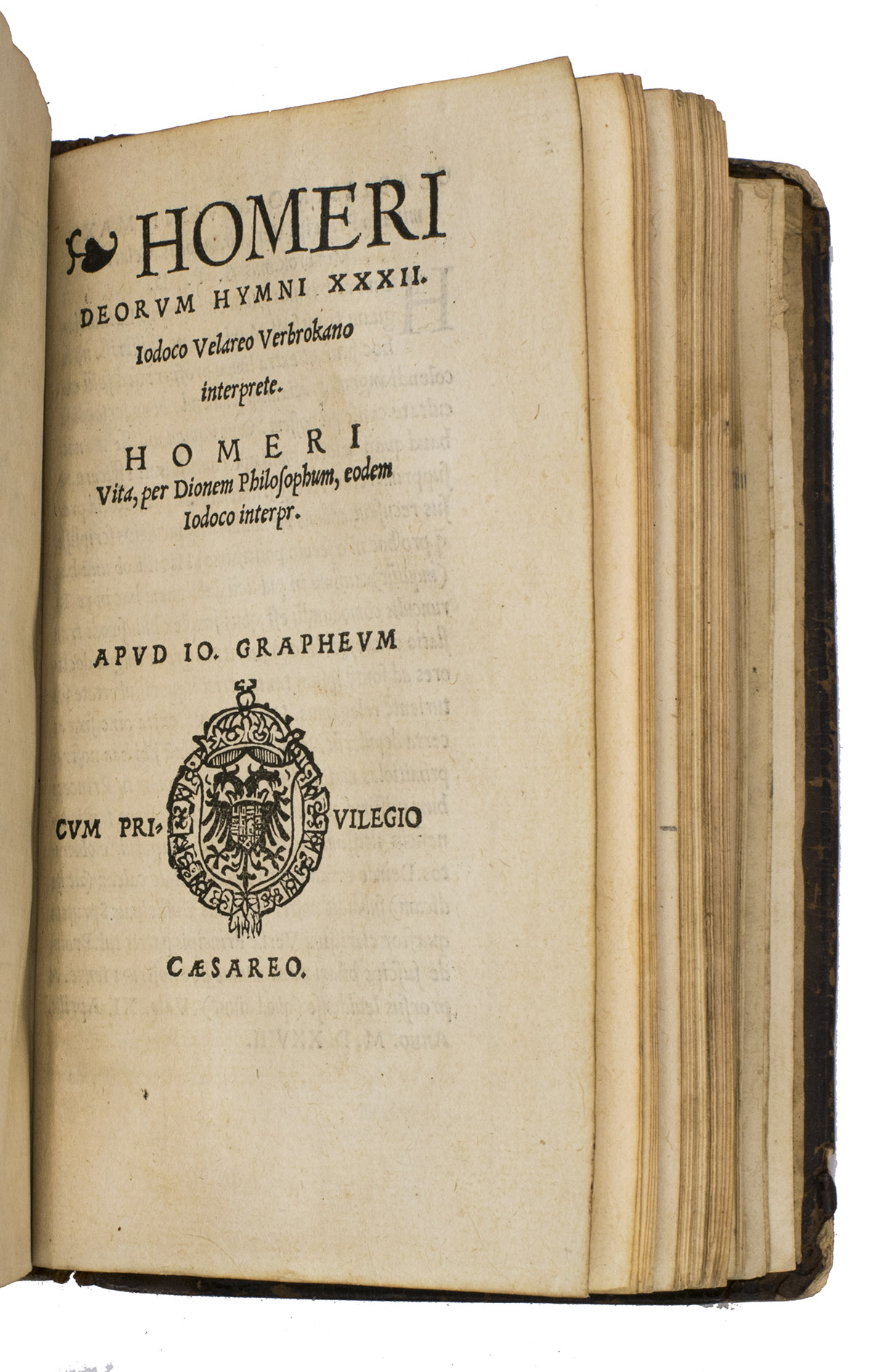
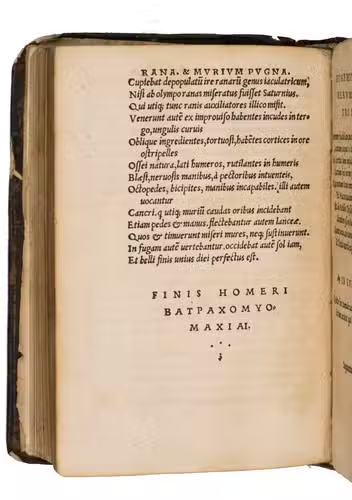
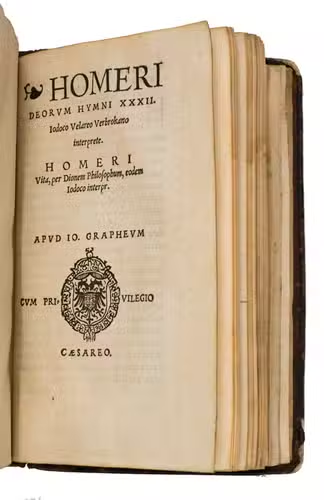
In the Antwerp printing, Maffeis 24-book translation appears with Ausonius poetic summaries, and is followed by 32 (of the 33 hymns and 1 epigram) Homeric Hymns, translated into Latin for the very first time by Jodocus Velareus Verbrokanus (dates unknown).Verbrokanus included 31 hymns and the epigram to the Hosts, but left out the first hymn to Dionysus and the first hymn to Demeter. It concludes with a Latin Vita Homeri, attributed to Dio Chrysostom and likewise rendered by Velareus.
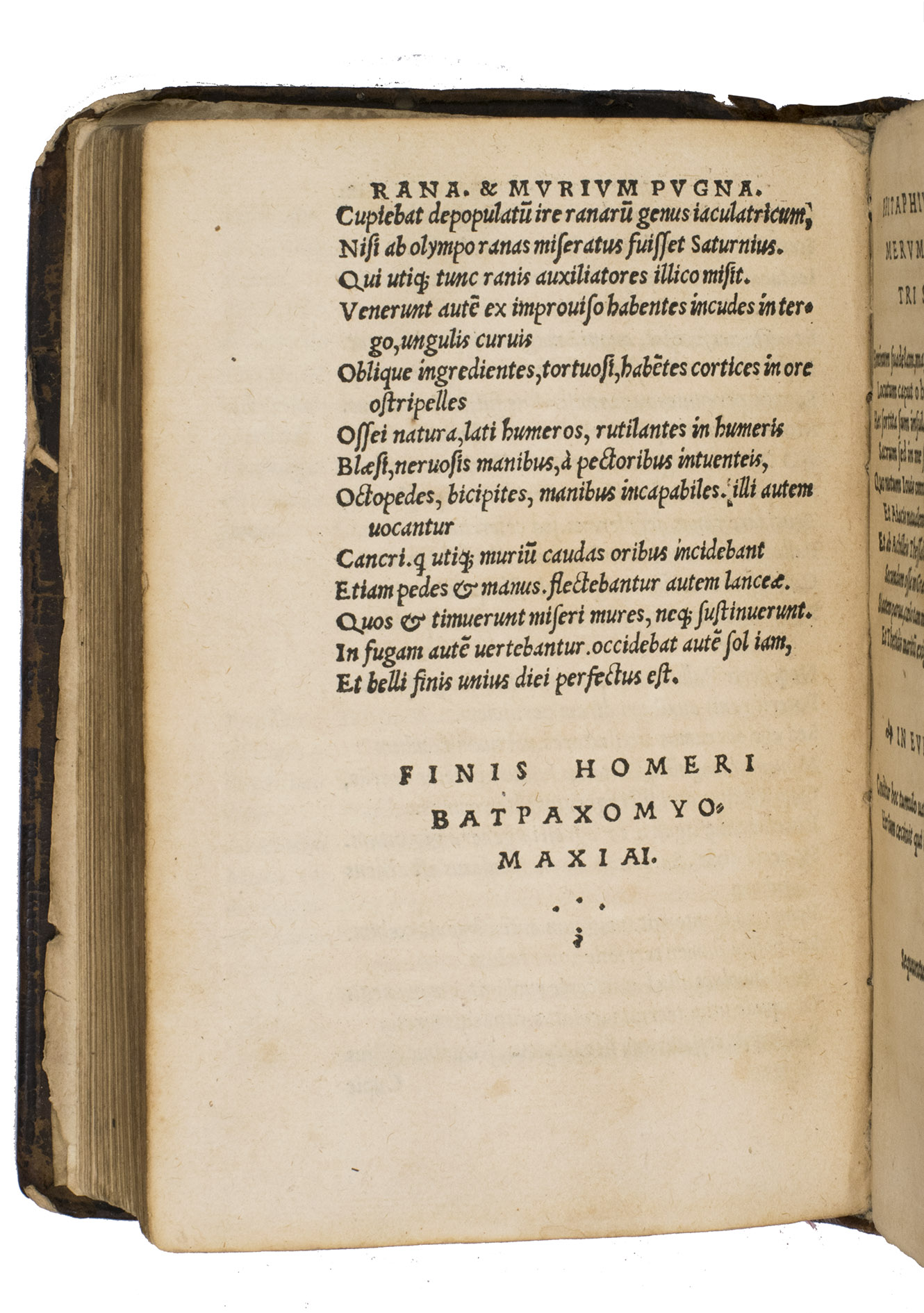
Ad 2 combines the Iliad and the Odyssey into a single, integrated edition together with all the associated texts. Here the Iliados libri XXIIII, translated by Valla and completed by later humanists, stand beside Maffeis Odyssey. As in ad 1, Ausonius arguments introduce each book, and the epics are followed by Aldus Manutius (1449-1515) Latin version of the Batrachomyomachia, Velareus Homeric Hymns, and the Vita Homeri. In this form, the work realises Grapheus most ambitious aim: to provide scholars and readers with a complete Renaissance "opera omnia" of the Homeric tradition. With its own title pages inserted for some of the supplementary works, the works functioned effectively as an autonomous publication.
Ad 1 is split in two, and ad 2 is placed between the two parts.
With multiple ownership inscriptions, one on the first endpaper ("ex libris Joan B. des Manette no. 27 1814"), one on the recto of the first flyleaf, an inscription by an Aaron from Antwerp in 1815, underneath a further inscription dated 8 September 1880, on the title page, the number 2,25 and a name (possibly Ruffus?). The title page also bears an oval blind stamp of the American Antiquarian Society, Worcester, Massachusetts. On the final endpaper, an ownership inscription ("A. White, alumnus Universitatis Harvardini"). The corners of the binding are rubbed. The first few leaves are reinforced at the inner margin, the work is damp stained throughout and some minor underlining on several pages. Otherwise in good condition. Nijhoff & Kronenberg 1110; Piasere, "Raffaele Maffeis Anthropologia (1506): the birth and diffusion of a (quasi)-neologism", DADA, 1, (2019) pp. 55-89; Sánchez, La recepción de Homero en el Humanismo y el Renacimiento: de Francesco Petrarca a Gonzalo Pérez. Artifara, 14, (2014), pp. 89-117; Ad 1: STCV 12922176; USTC 443242; Ad 2: USTC 403786.
Related Subjects: