Home
Shopping cart (0 items € 0)
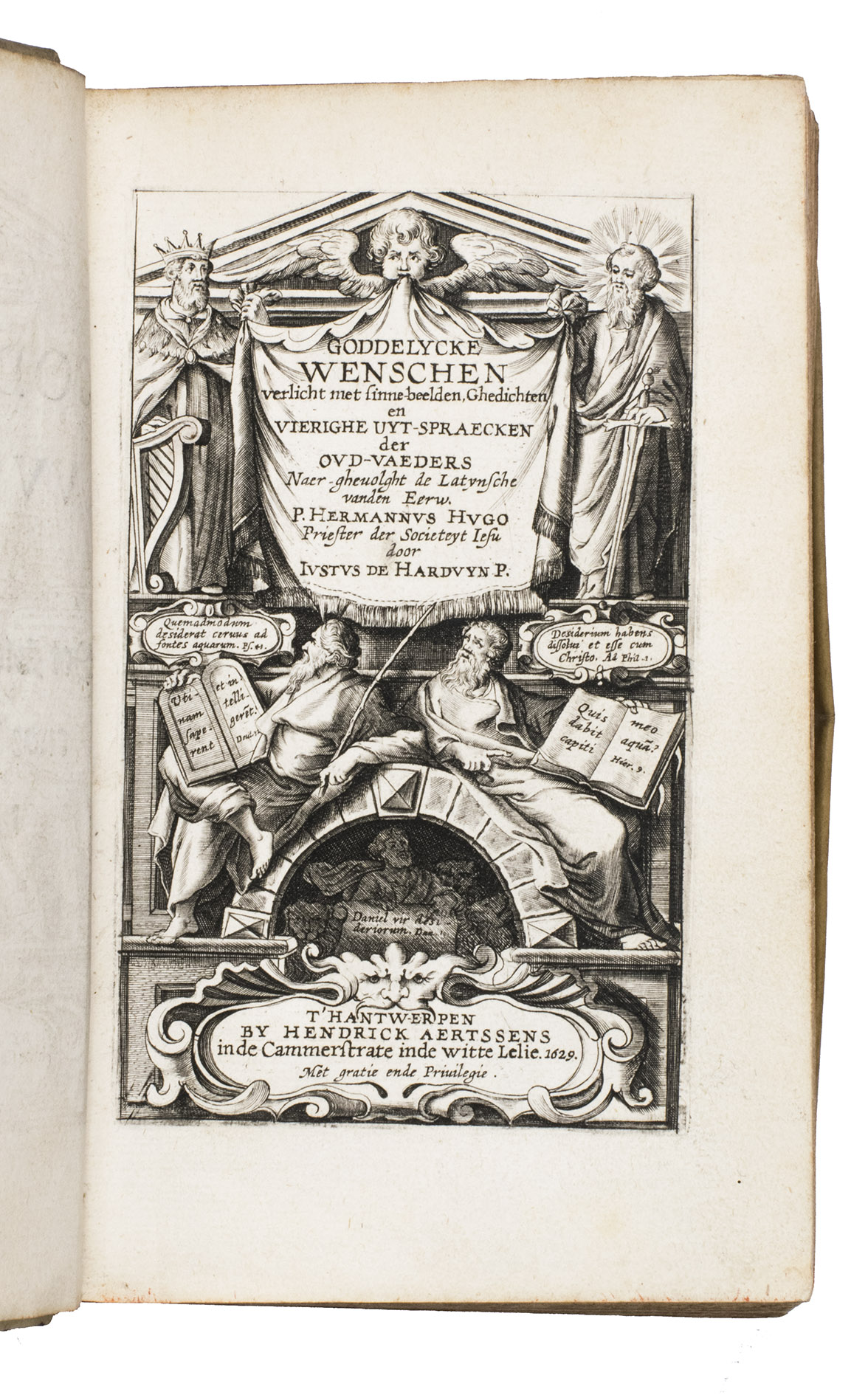
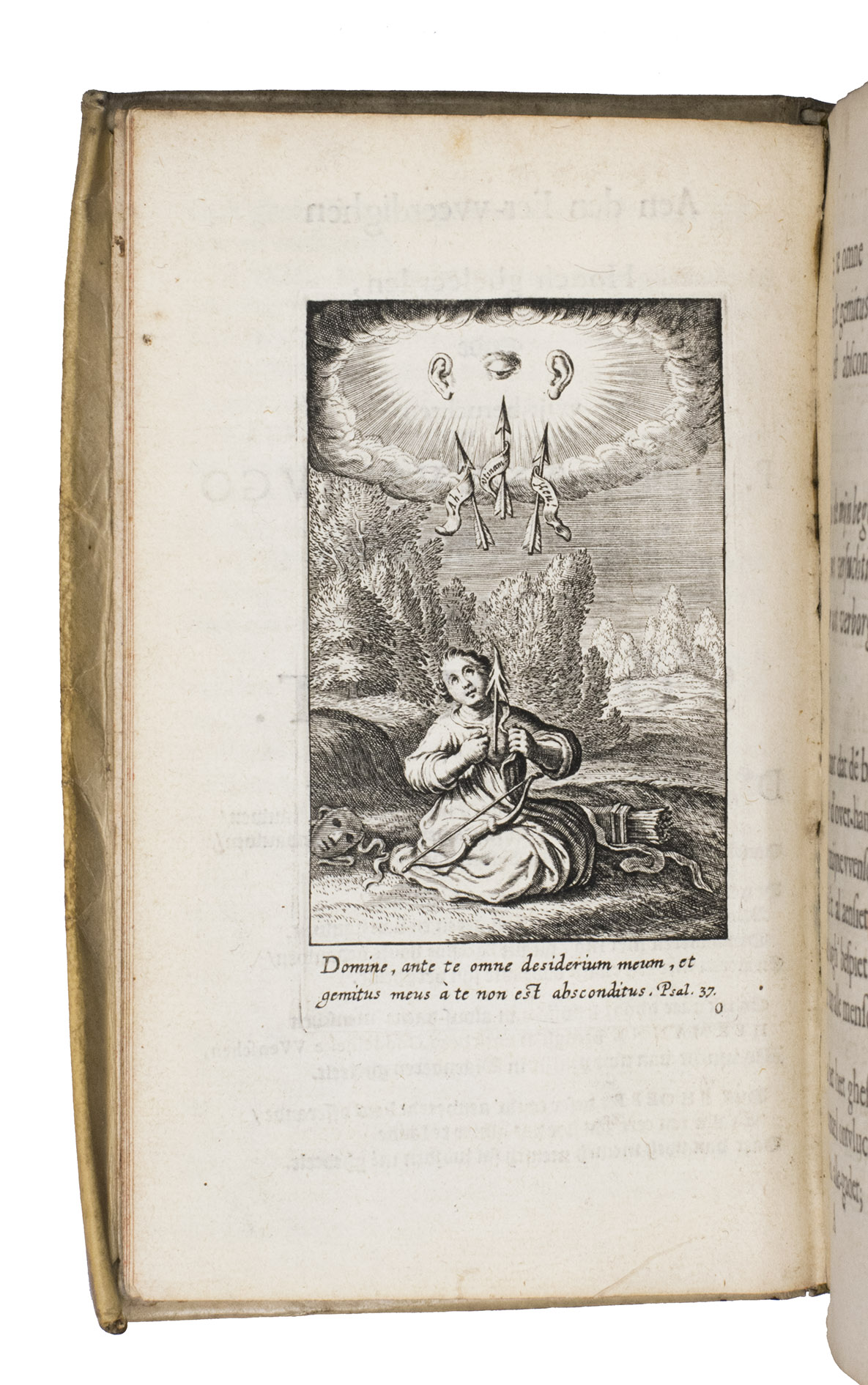
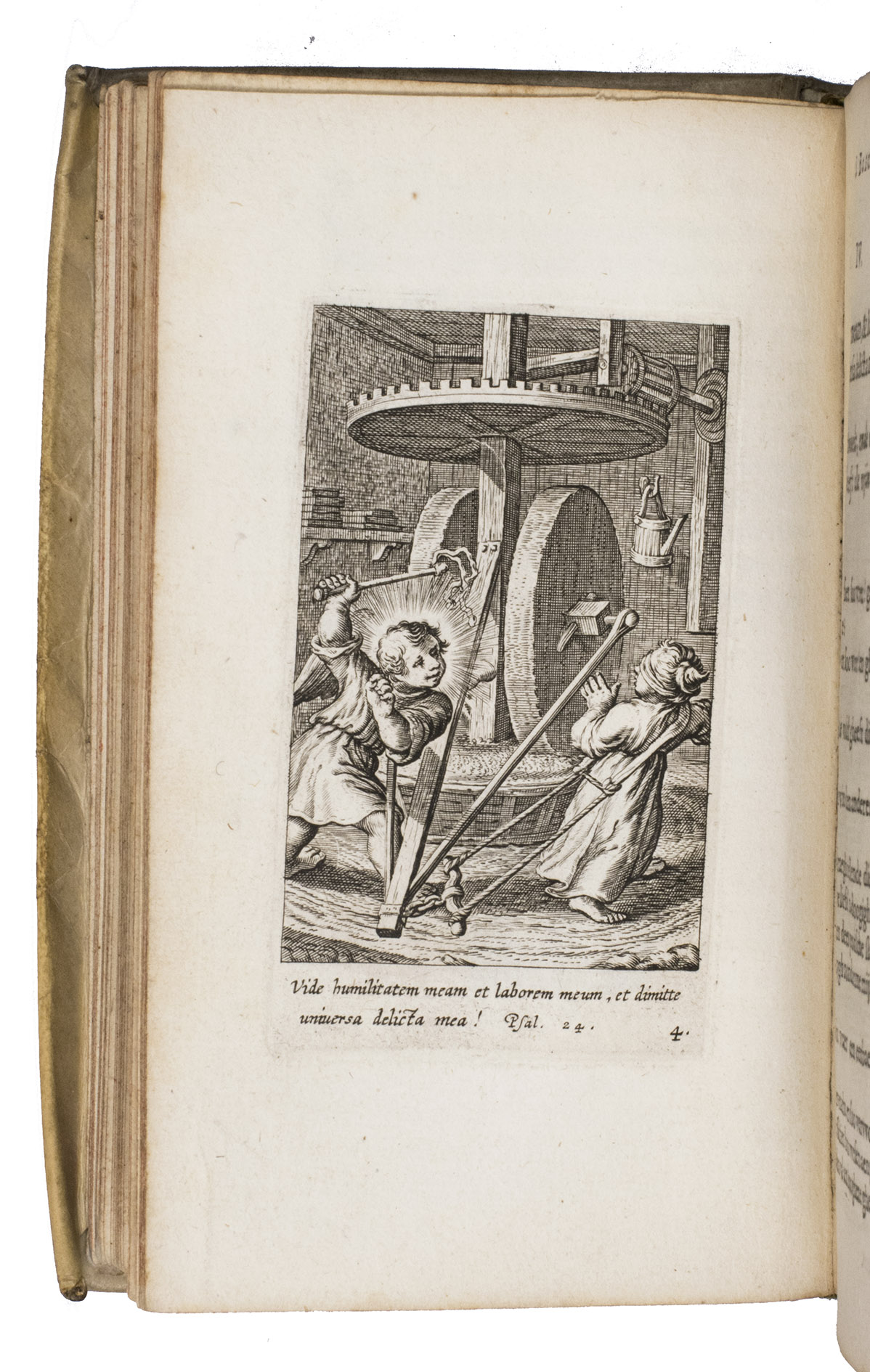
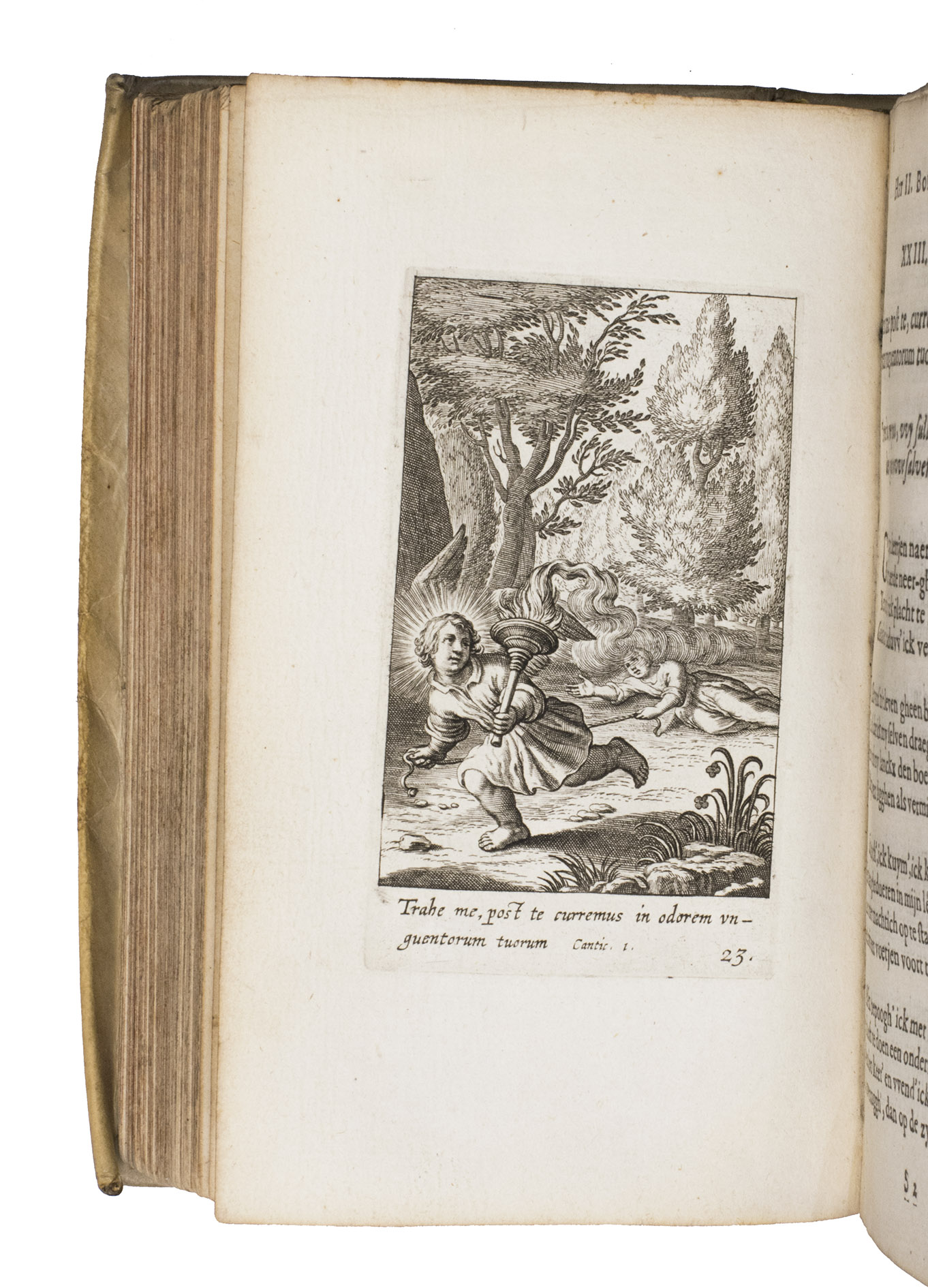
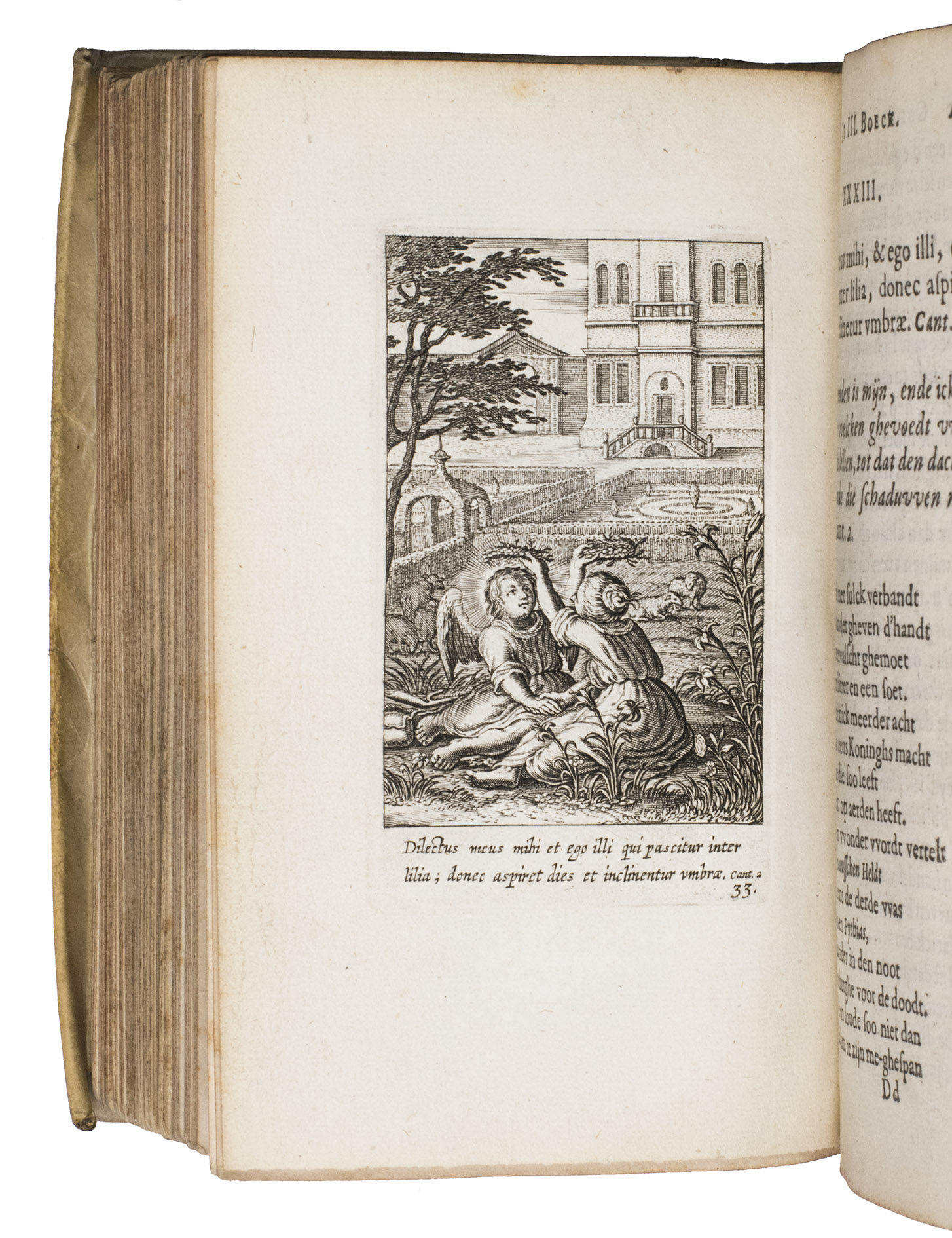
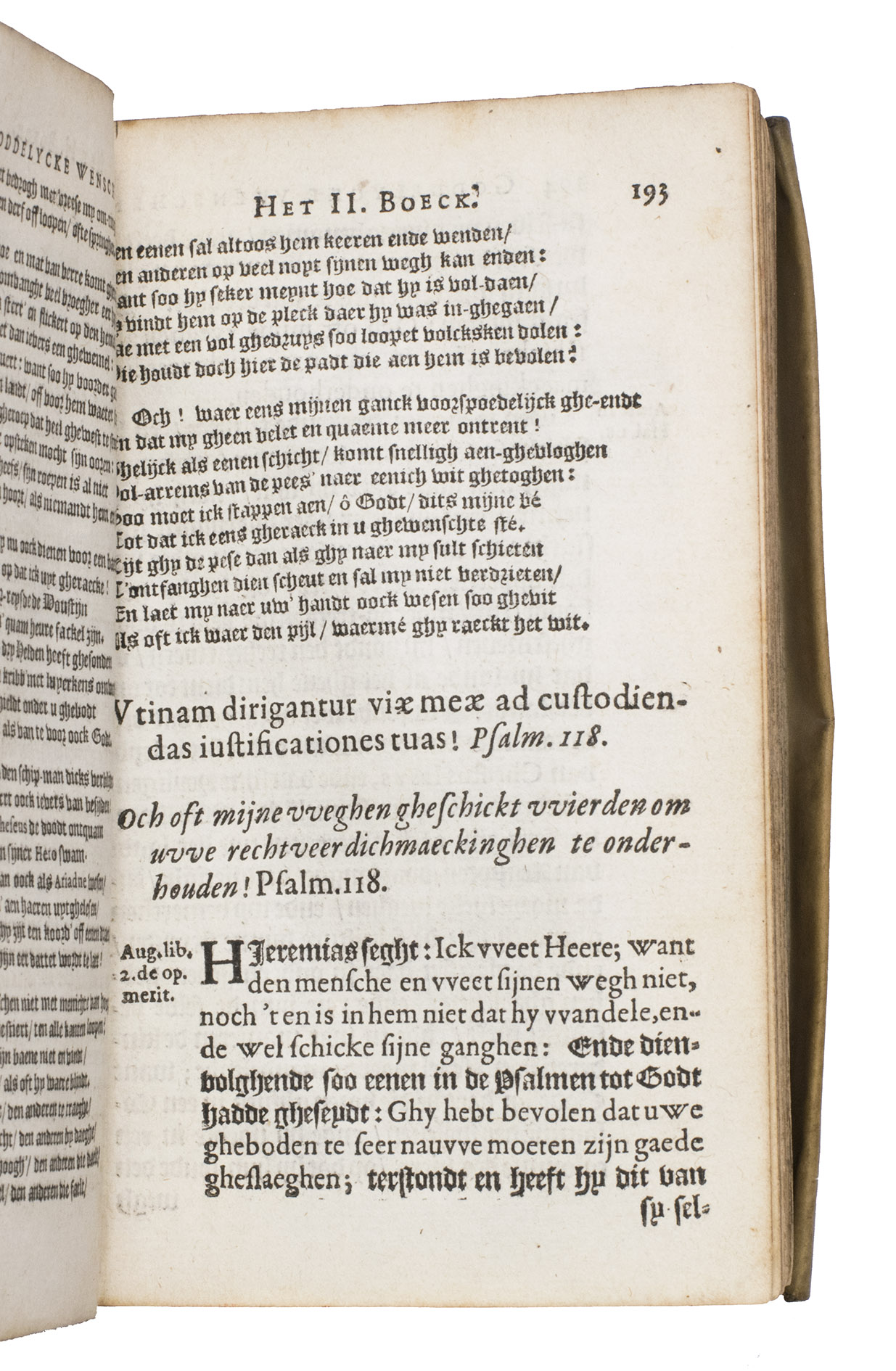
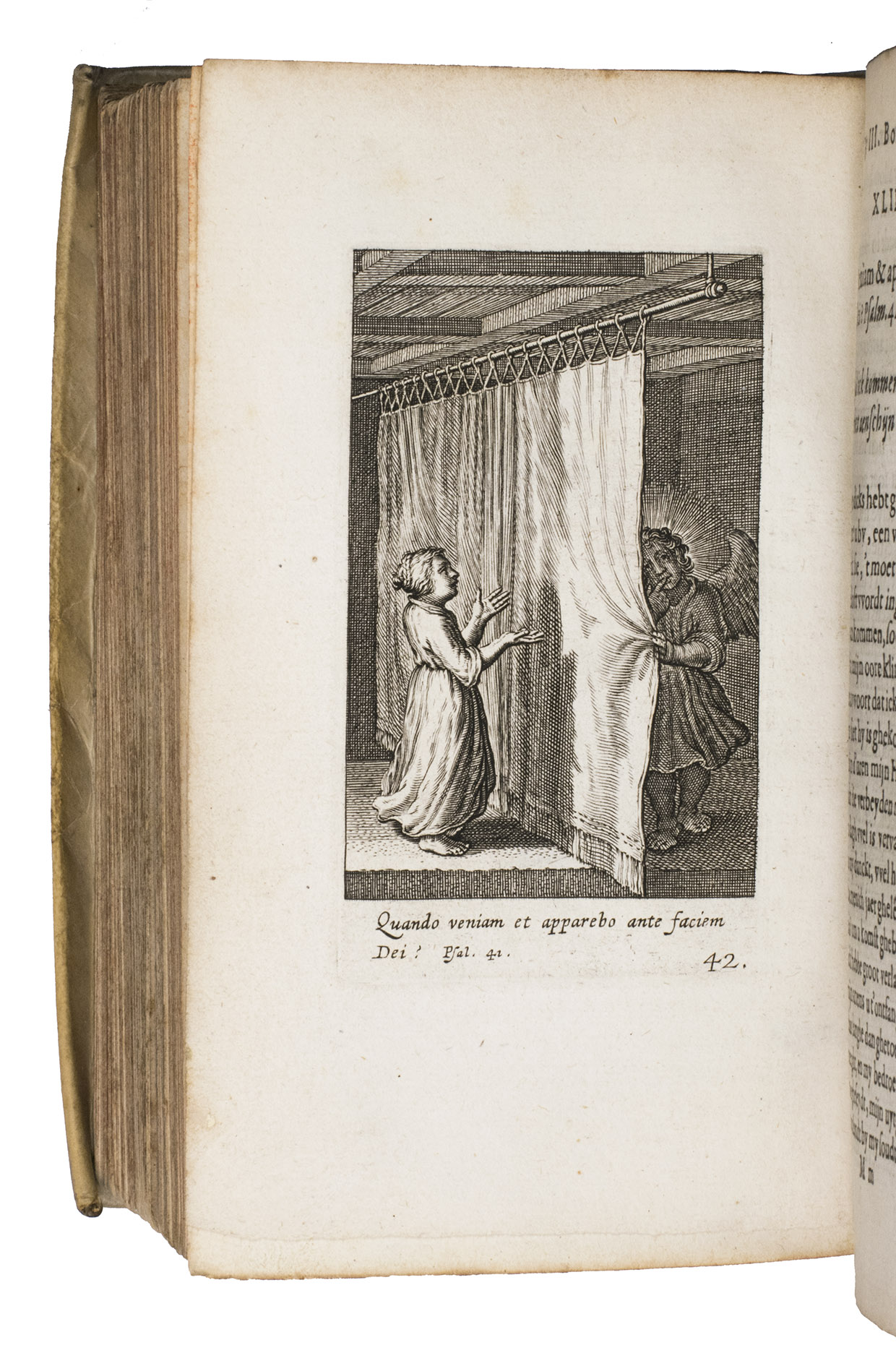
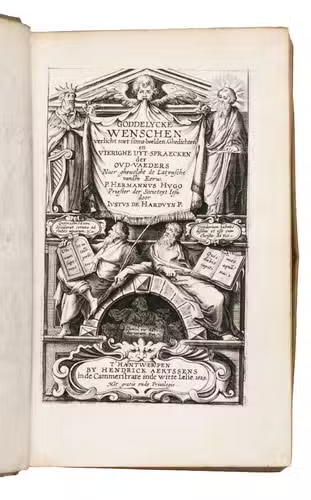
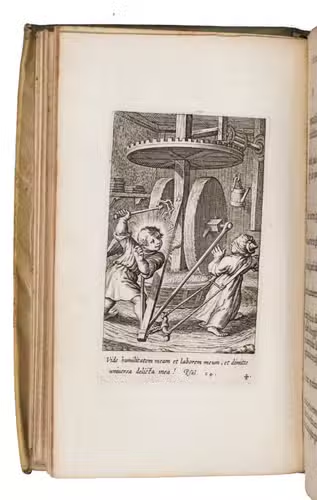
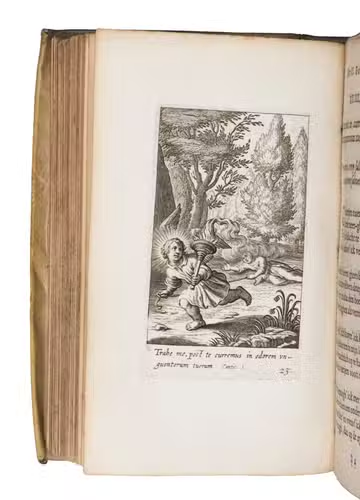
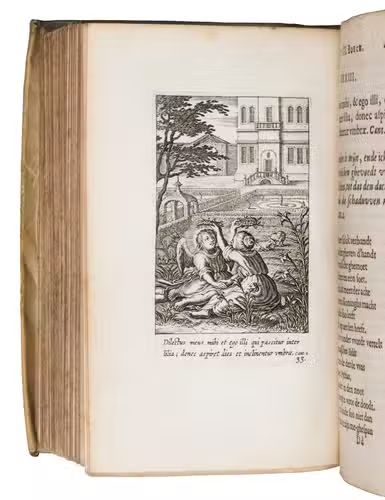
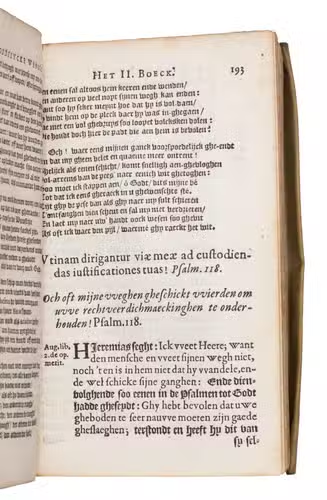
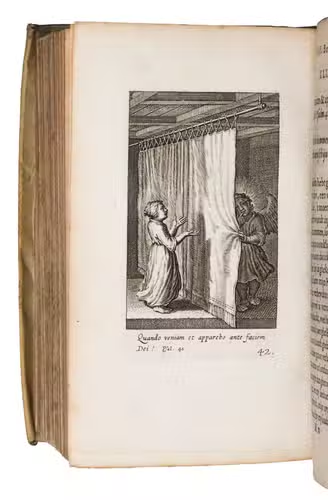
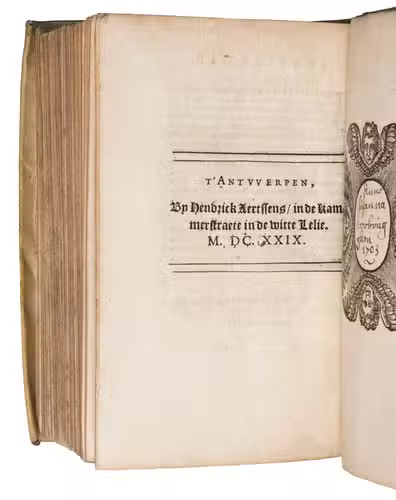
Goddelycke wenschen verlicht met sinne-beelden, ghedichten en vierighe uyt spraecken der Oud-Vaders. Naer ghevoilght de Latynsche vanden Eerw. P. Hermannus Hugo ... door Justus de Harduyn P.
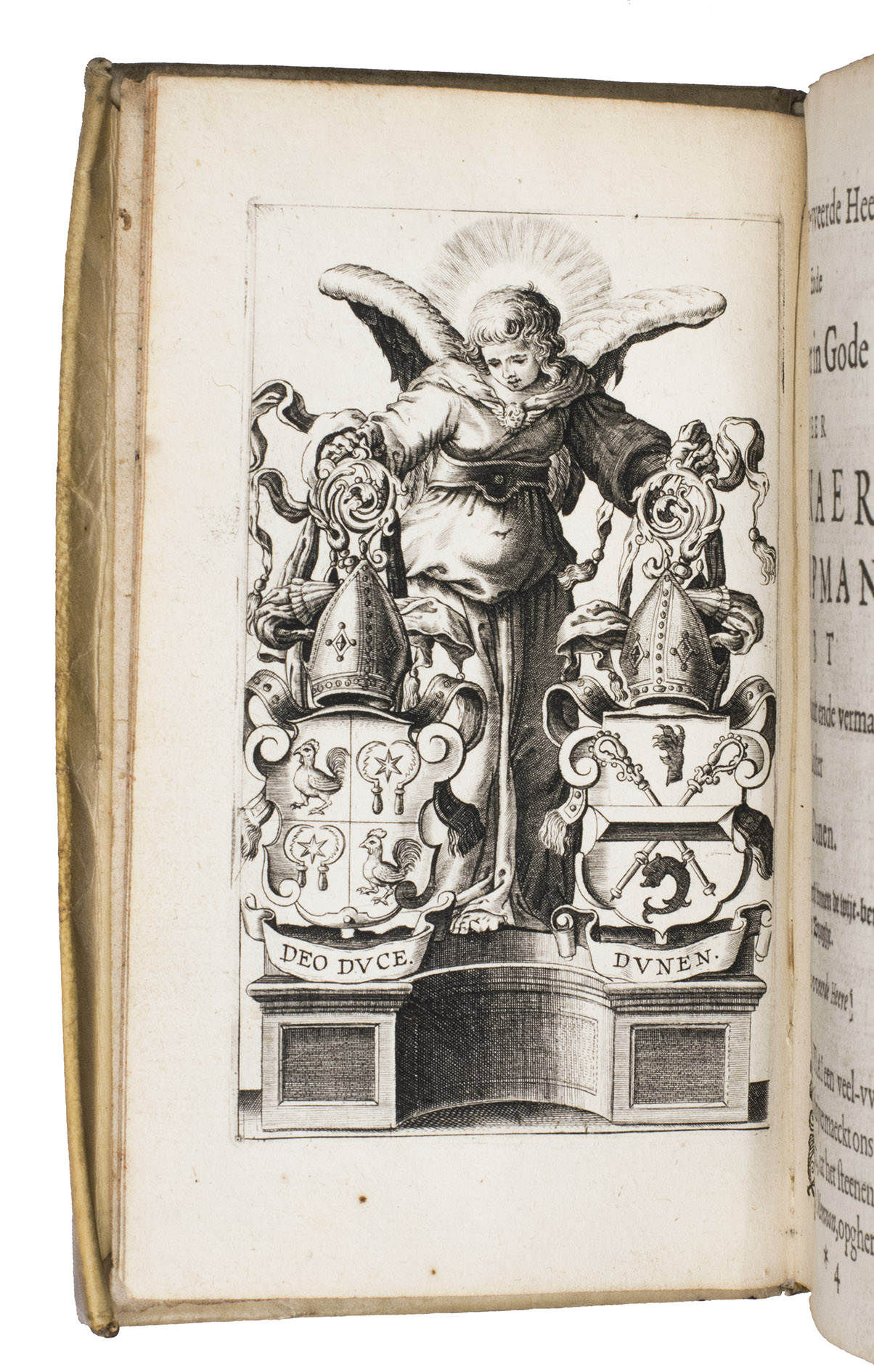
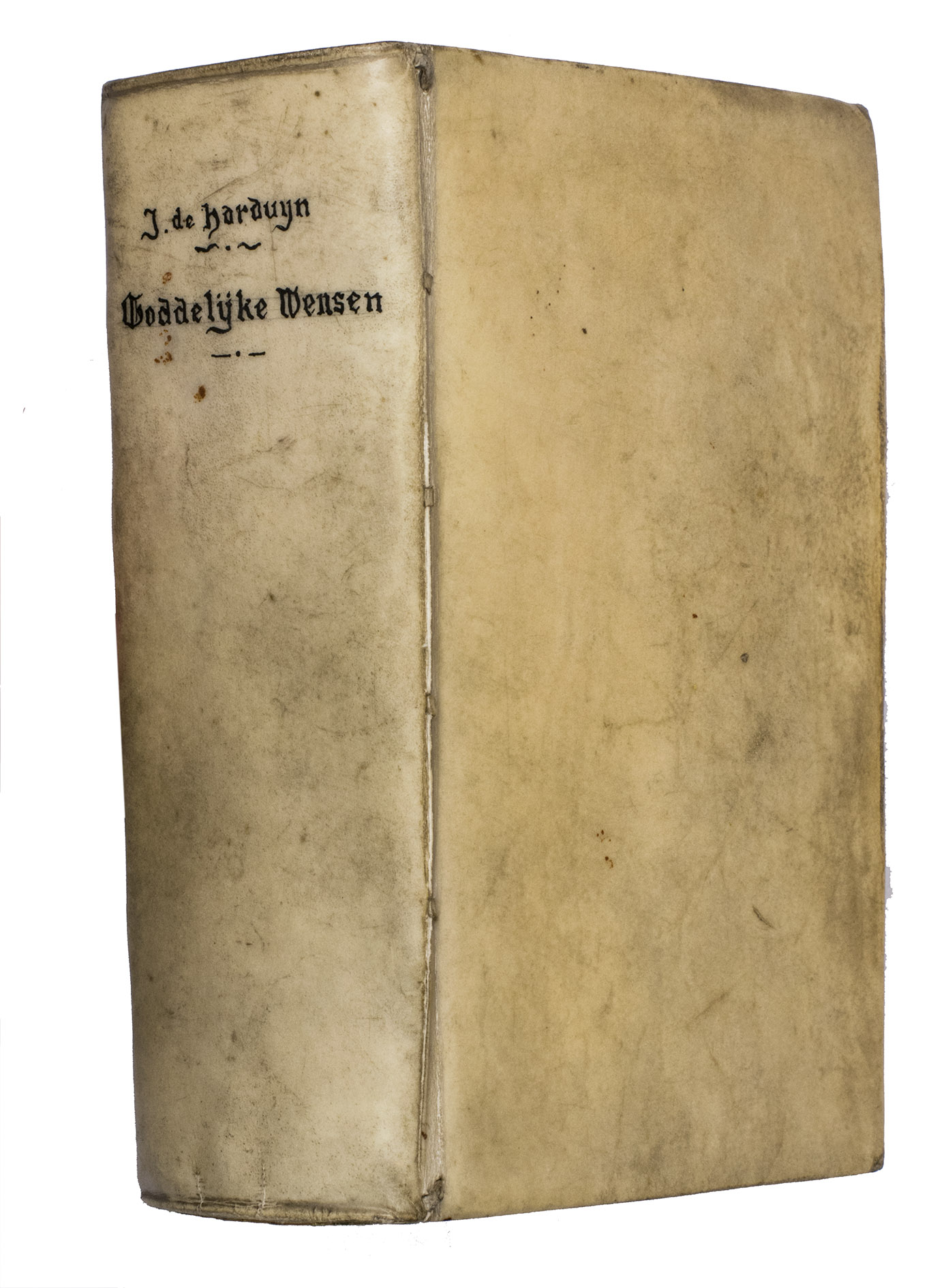
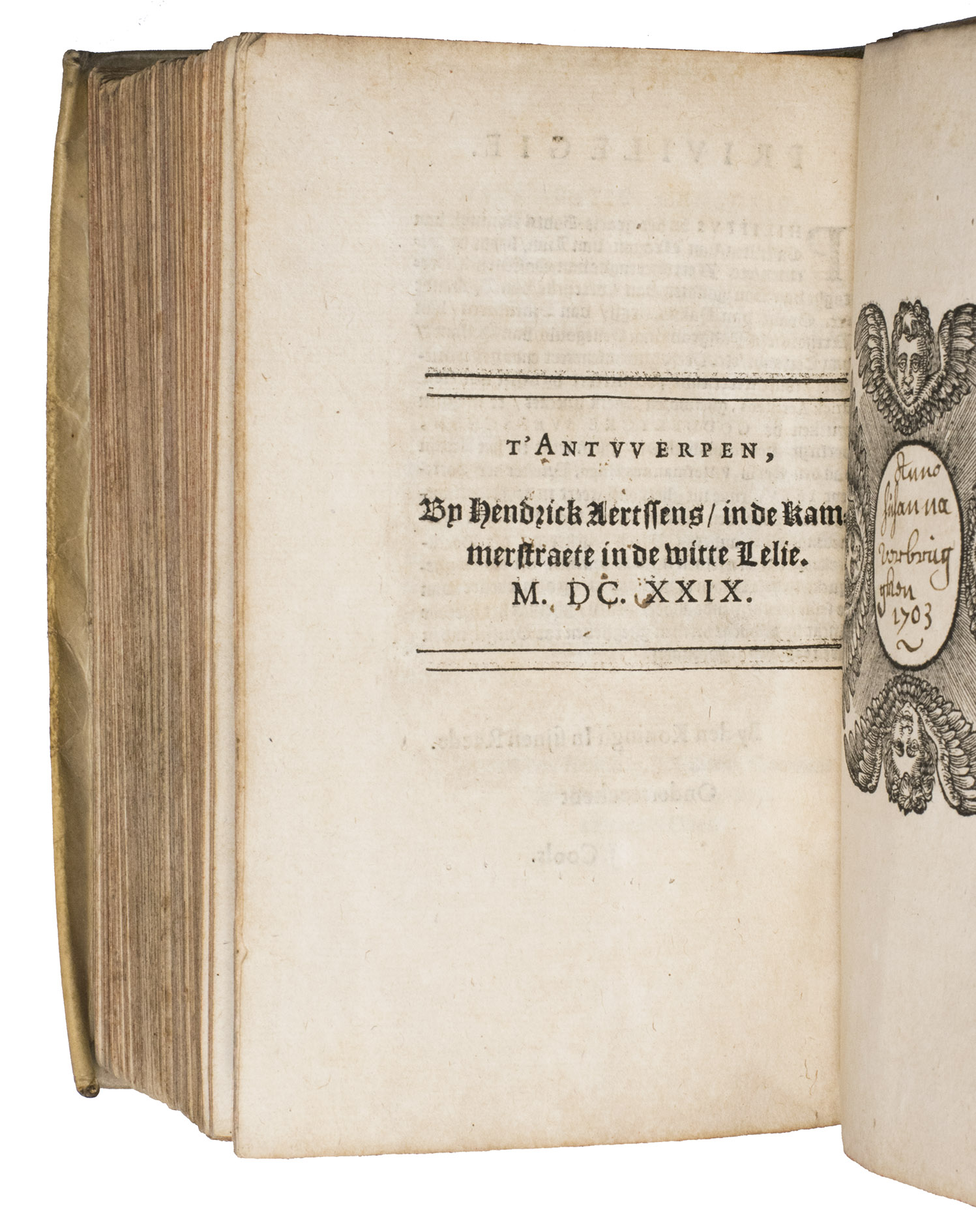
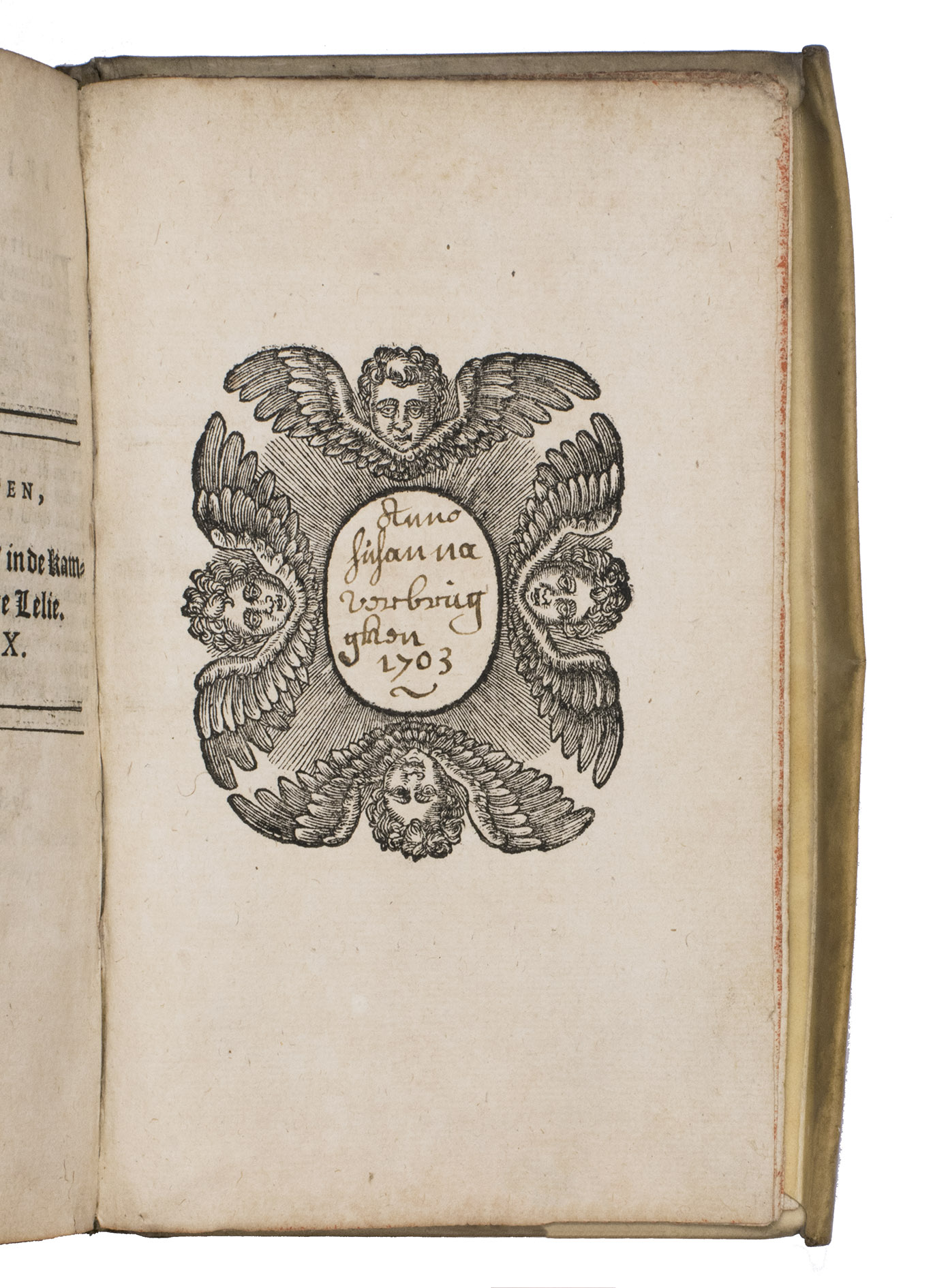
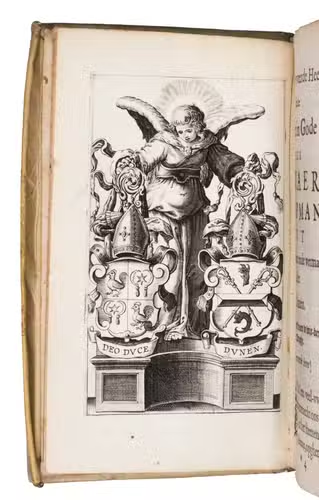
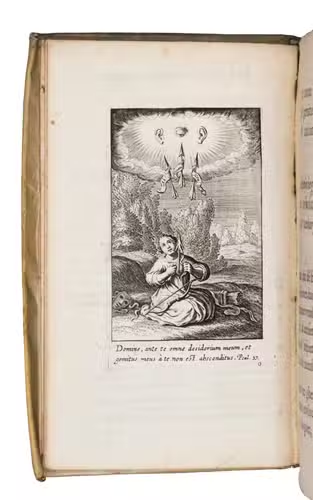
(Colophon:) Antwerp, Hendrick Aertssens, 1629. 8vo. With an engraved title page, a full-page engraved coat of arms, a full-page ornamental woodcut, 45 full-page engraved emblematical plates by Boëtius à Bolswert, and a woodcut printer's device on the final page. Contemporary overlapping vellum. [16], "604" [=602], [6] pp.
First edition of the first translation and adaptation of the most popular religious emblem book of the 17th century, Hermann Hugos Pia desideria (1624). The Goddelycke wenschen was intended for a Dutch audience that did not know Latin. De Harduwijn meant to stimulate the individual practise of faith and hoped his work would help pious souls to meditate and pray, familiarising this audience with the newly popular mystical work by Hugo.
The Jesuit Hugos spiritual emblem book Pia desideria had become very popular from the moment it was published in 1624 by Hendrick Aertssens in Antwerp. It went through 42 editions in Latin. Aertssens had engaged the well-known engraver Boëtius à Bolswert to illustrate the emblem book with 45 plates. He ordered Justus de Harduwijn to make a translation of the Pia desideria, making good use of the copperplates he already owned. By using the same plates in the Goddelycke wenschen, De Harduwijn stayed close to the original. The mottoes and references to texts by the Church fathers in the prose part of the "subscriptio" also stayed the same. However, De Harduwijn made quite a few changes, in the poetry parts of the Pia desideria, including the different rhyme schemes and stanzas. This poetic part can only be found in the present first edition. The following three editions (dating from 1632, 1645 and 1648) have been reduced to the parts in prose.
Justus de Harduwijn (1582-1636) was born in Ghent in a Catholic family and he studied humanities and law at the Jesuit College in his native town. Afterwards he was educated as a priest and he became a priest in Oudegem and Mespelaere. In 1613 he anonymously published a collection of love poems: De weerliicke liefden tot Roose-mond.
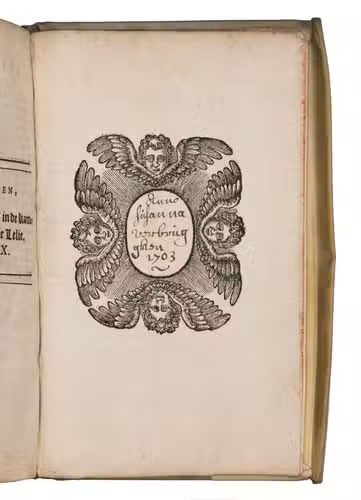
With the ownerships entry of Susanna Verbrugghen, dated 1703, in the printer's device on the final page. The vellum is slightly soiled. Internally very clean, with only some browning on the final few leaves and an occasional stain. Otherwise in very good condition. Landwehr, Emblem & Fable books, 357; Nijhoff, Cat. 677 (1946), no. 670 ("very fine copy"; price f. 75!); STCV 3136615; De Vries, no. 129; USTC 1002001; cf. O. Dambre, Justus de Harduyn. Een biografische en letterkundige studie (1926); id., Nabeschouwingen over Pia Desideria en Godeelycke wenschen, in: Spiegel der Letteren, 2 (1958), pp. 59-65; Insolera, La spiritualité en images aux Pays-Bas Méridionaux dans les livres des 16e et 17e s. (1996), pp. 170-176; A. Raspa, Arwaker, Hugos Pia Desideria and Protestant Poetics, in: Renaissance and Reformation, 24/2 (2000), pp. 63-74.
 a few rarer than the "uncovered"" title="A masterpiece of rococo book illustration, with all images in the "covered" state,


