FLITNER, Johann [and Thomas MURNER].
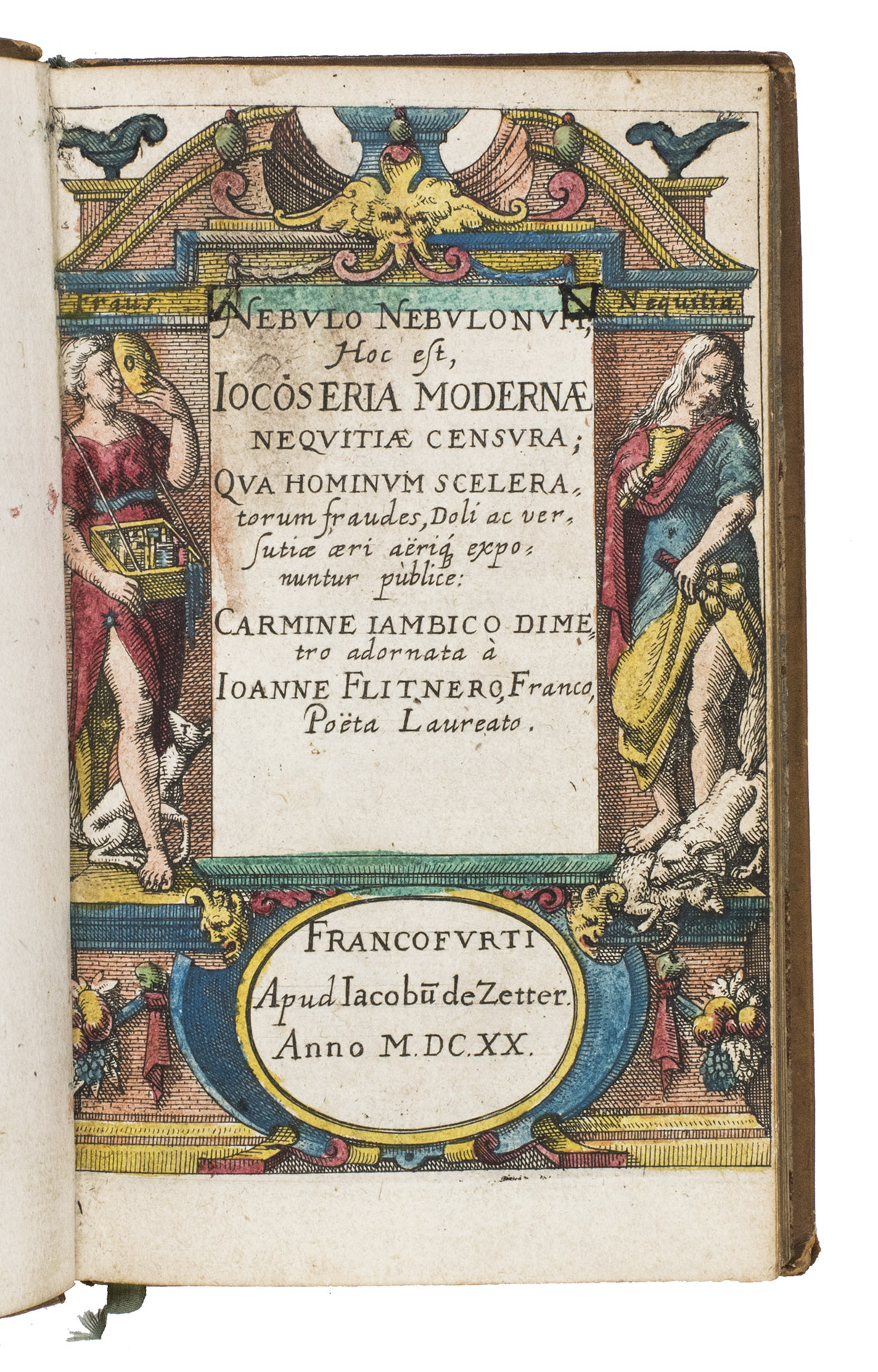
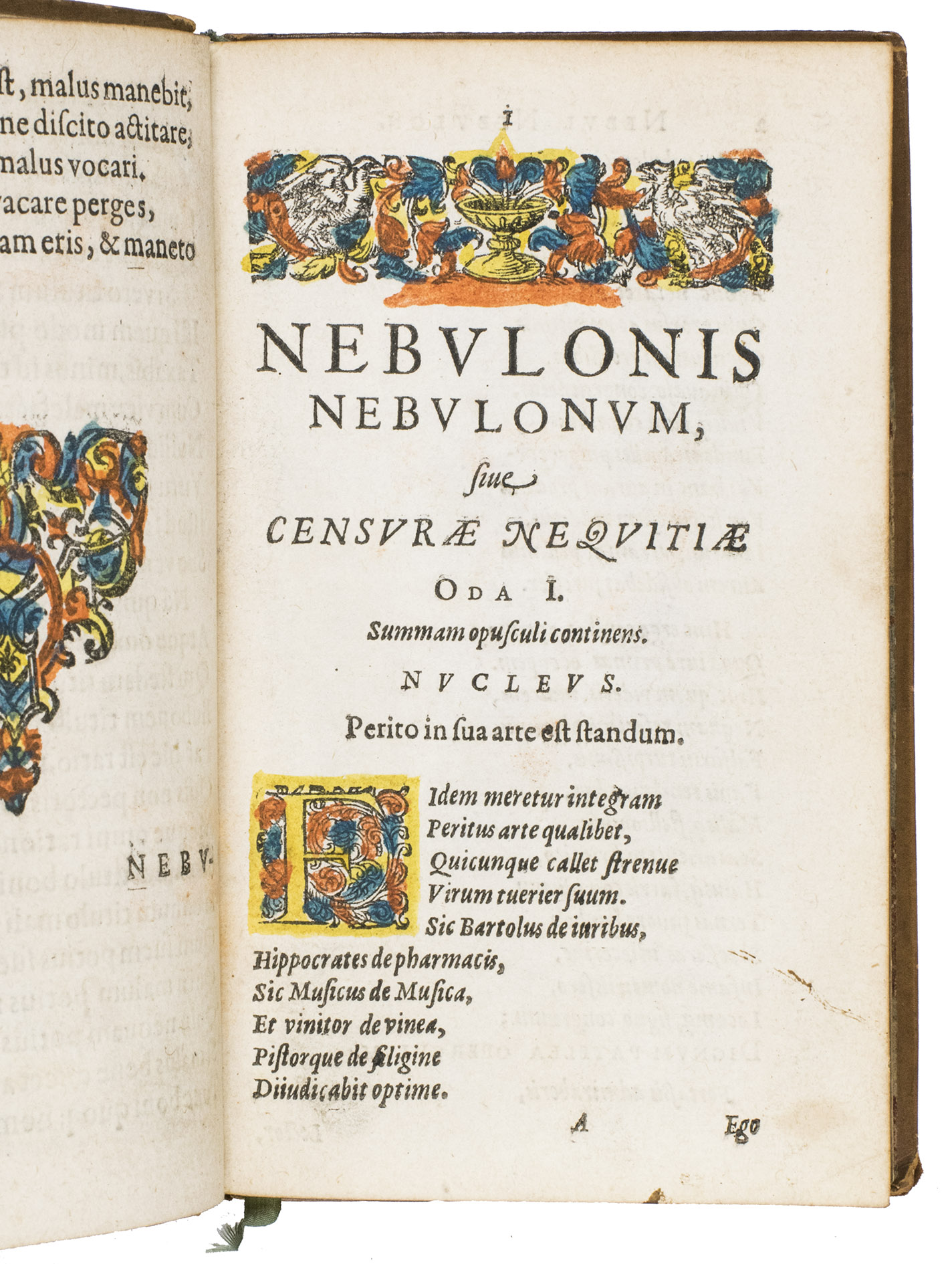
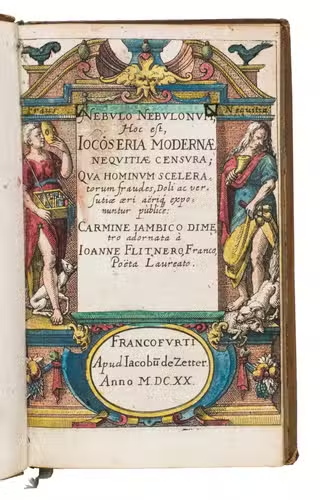
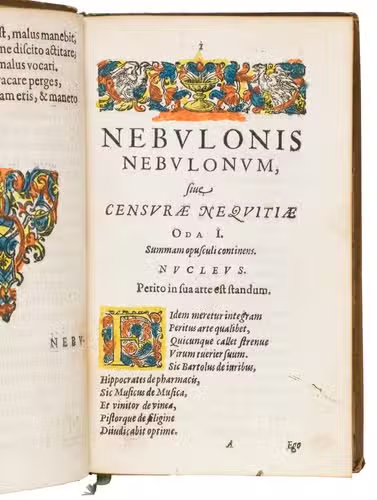
Nebulo nebulonum, hoc est iocoseria modernae nequitiae censura; qua homine sceleratorum fraudes, doli ac versutiae aeri aëriqu exponuntur publice: carmine iambico dimetro adornata à Ioanne Flitnero, franco poëta laureato.
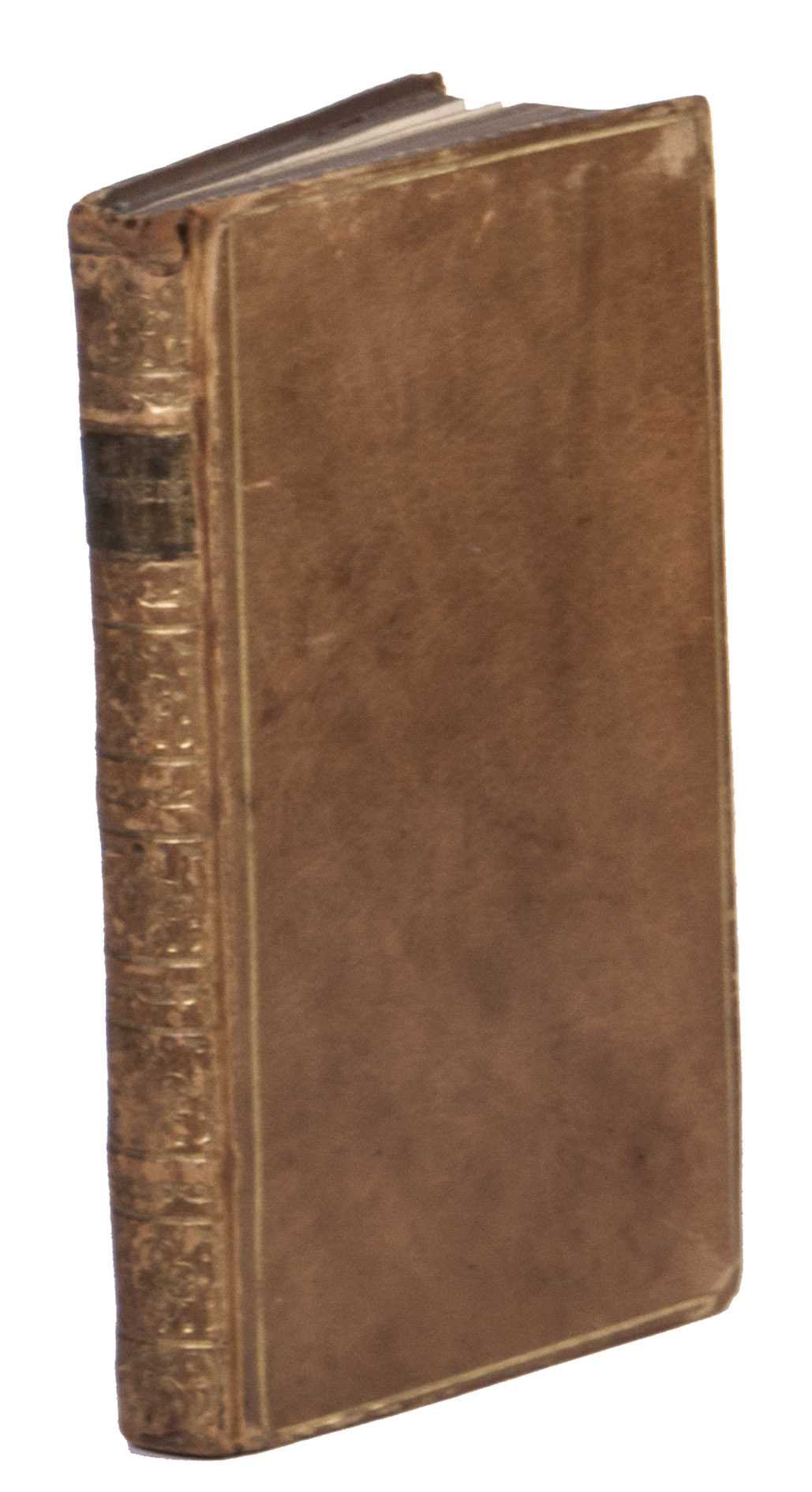
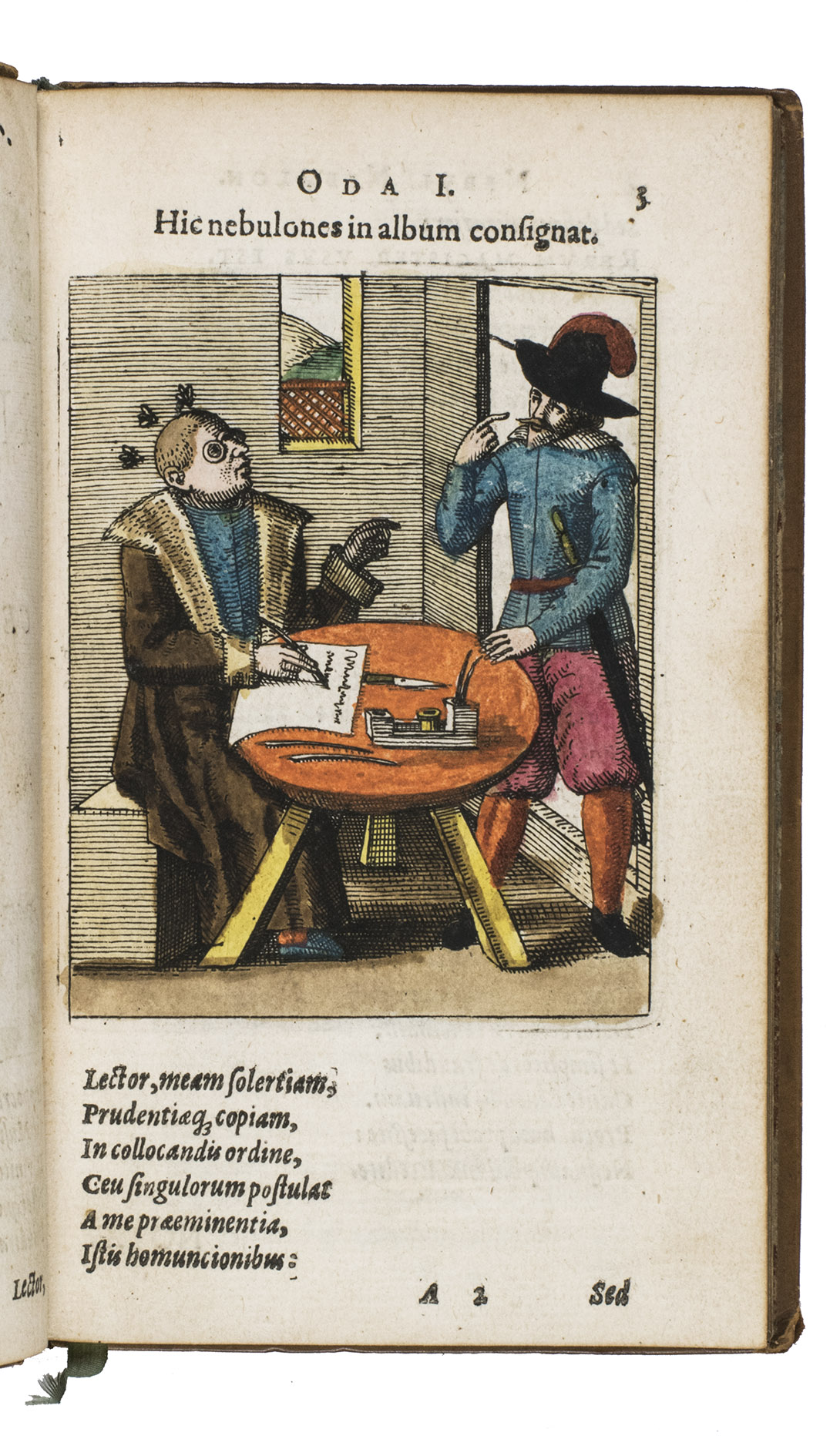
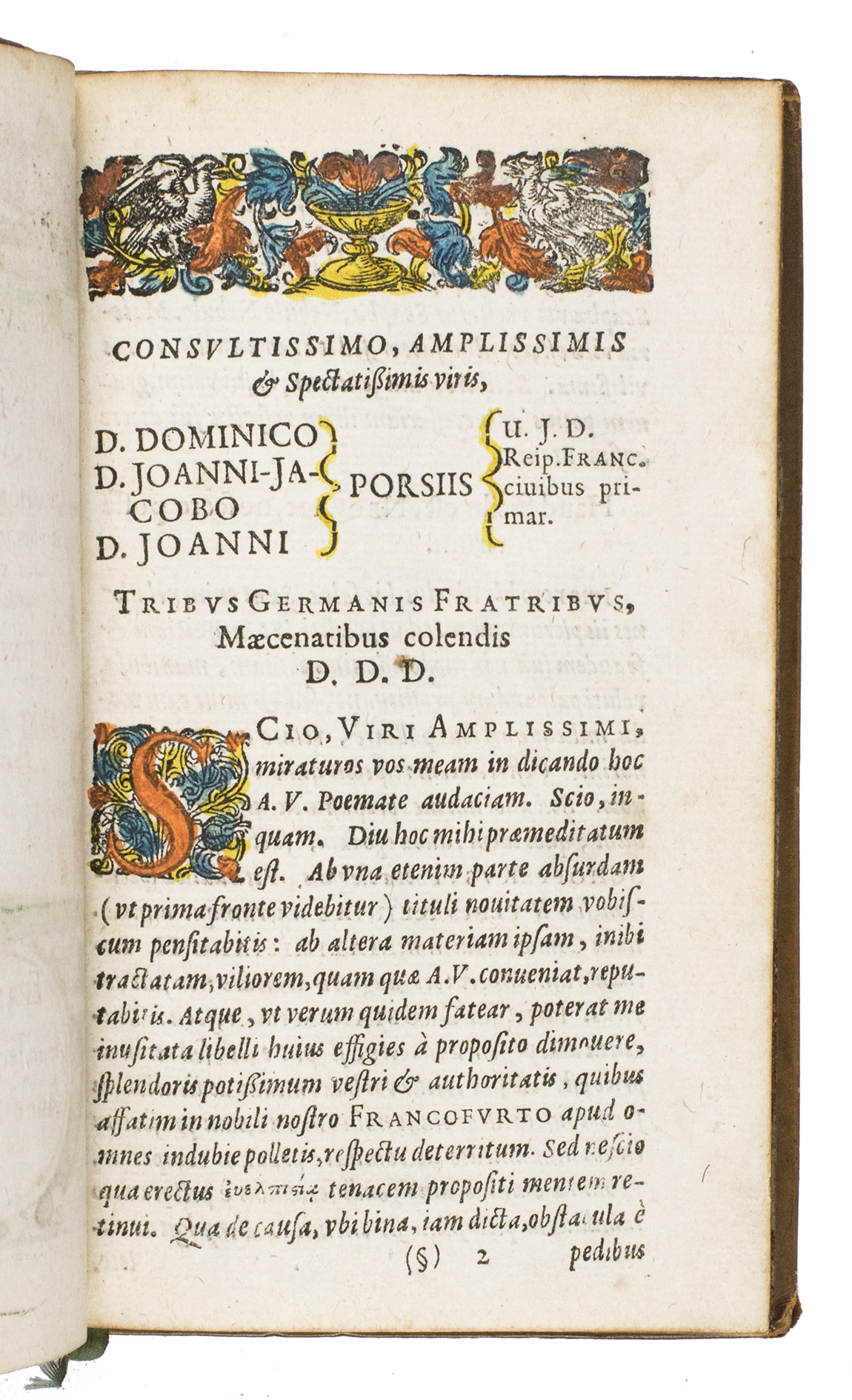
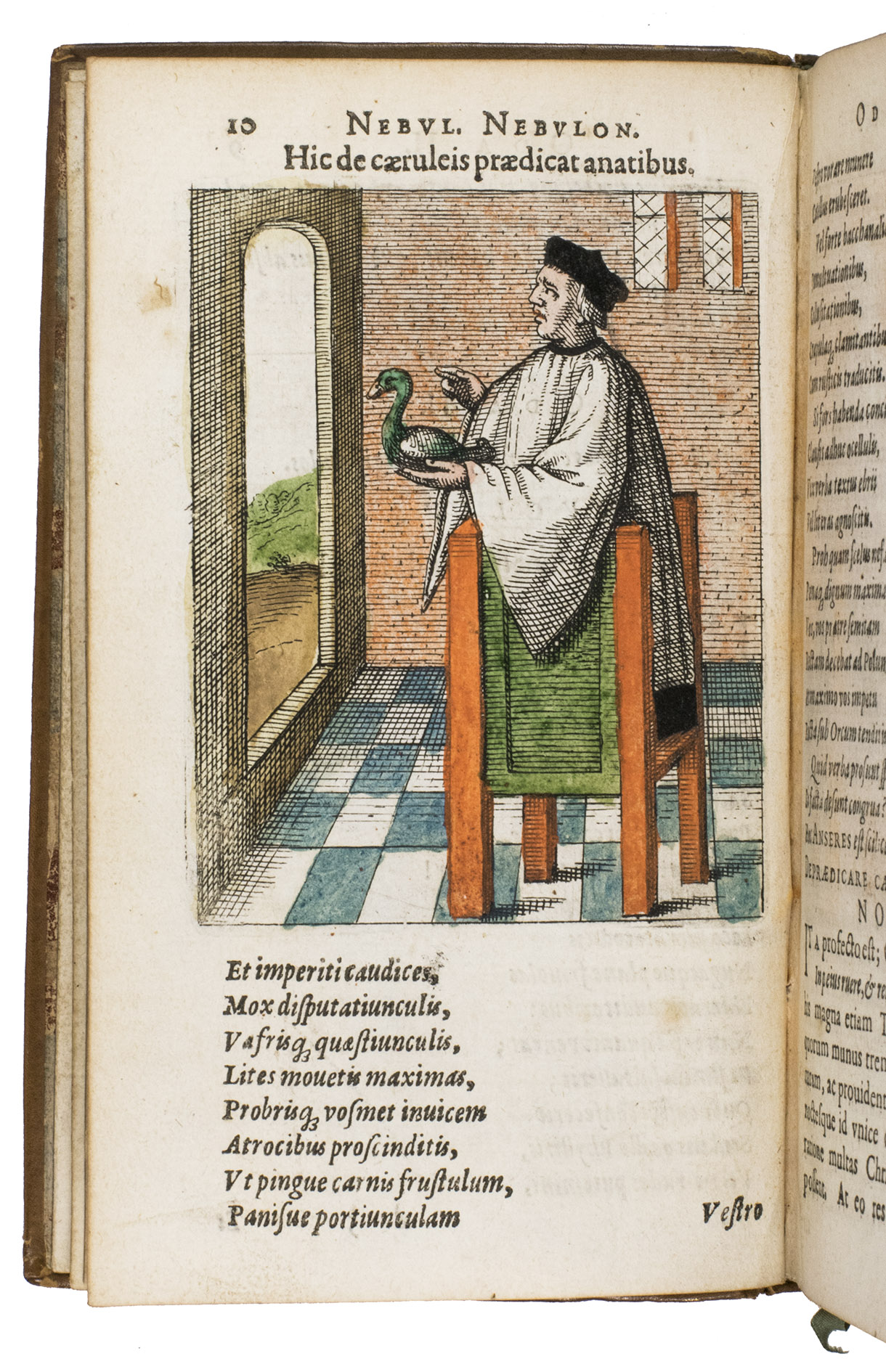
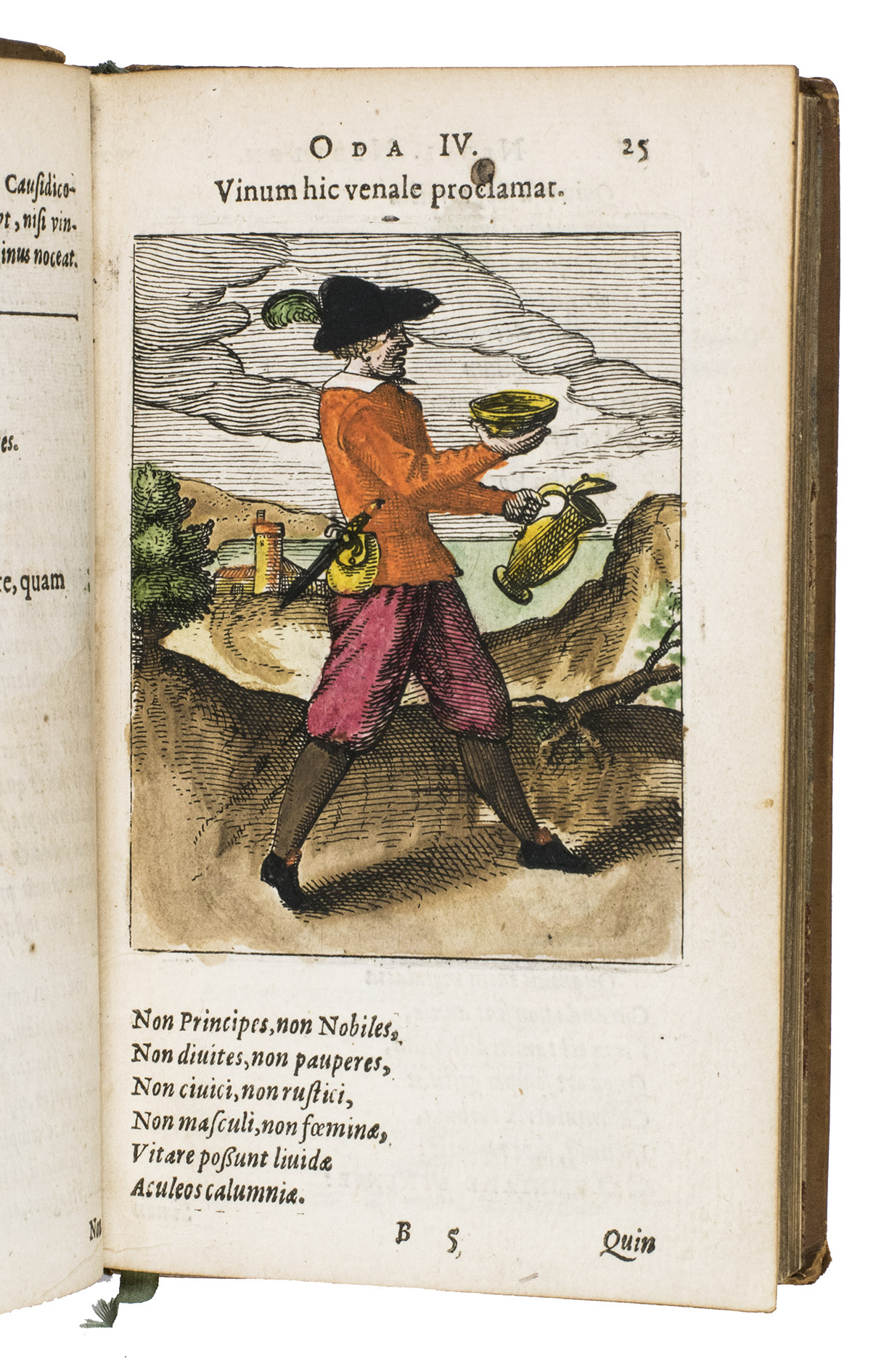
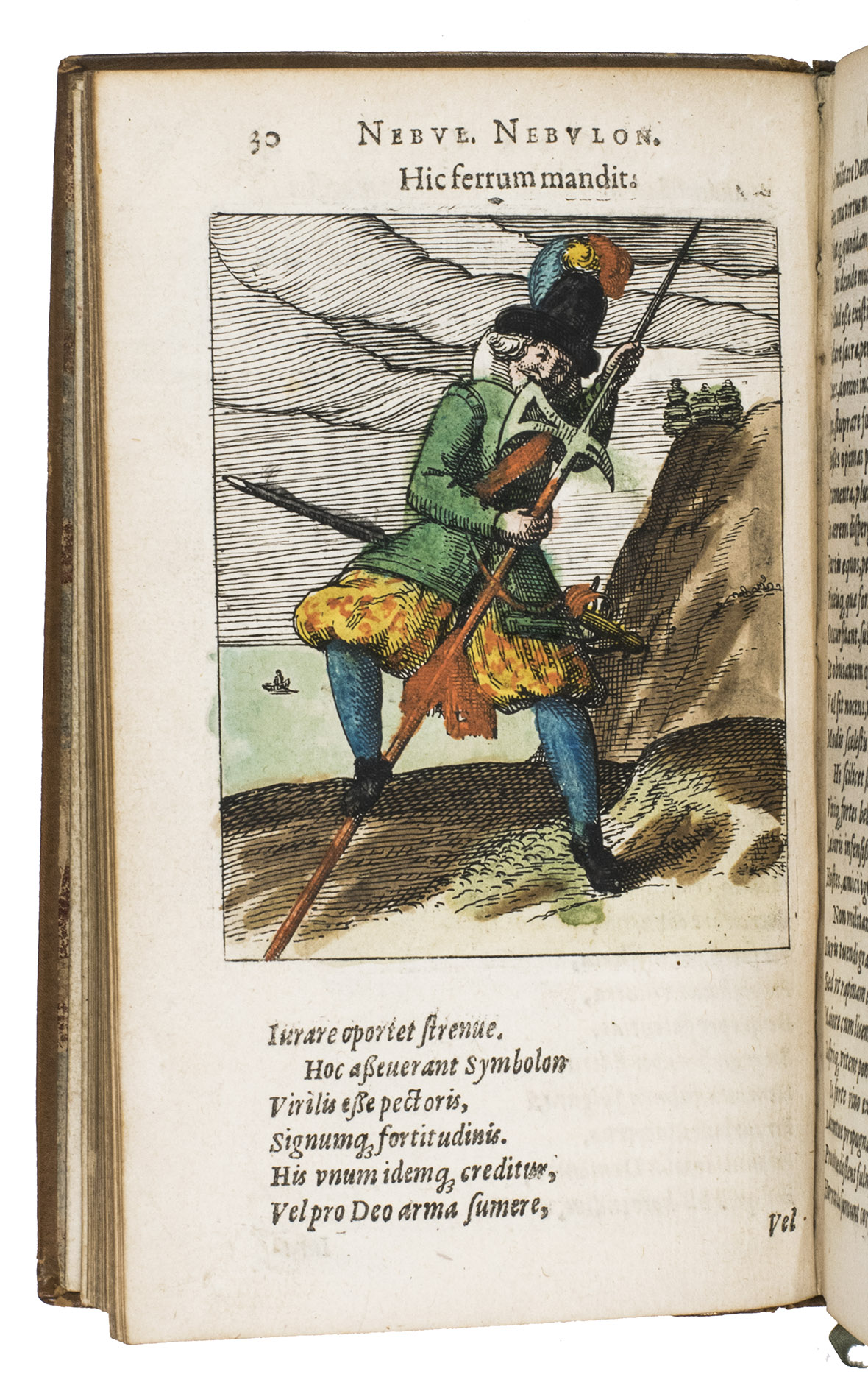
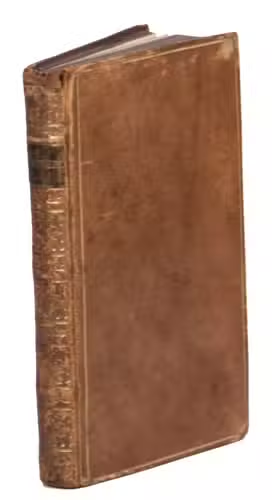
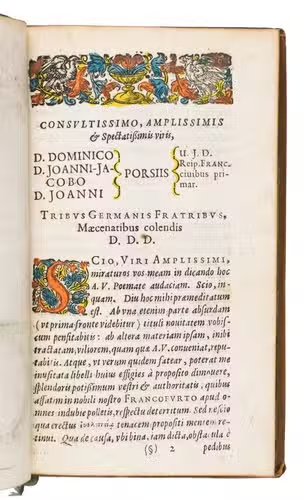
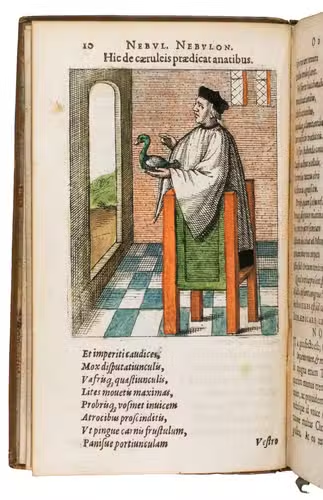
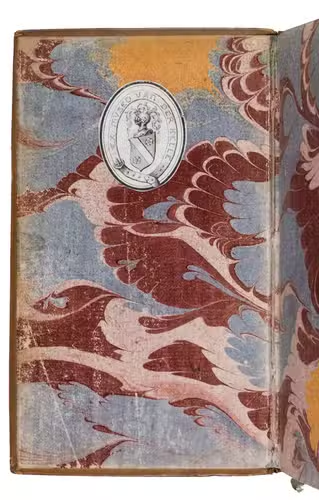
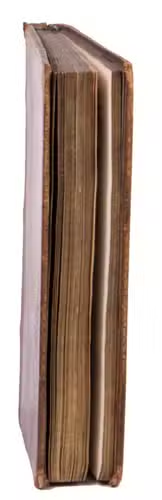
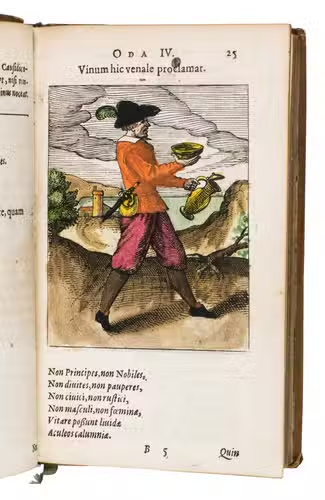
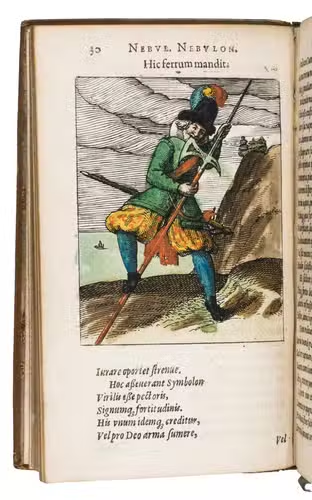
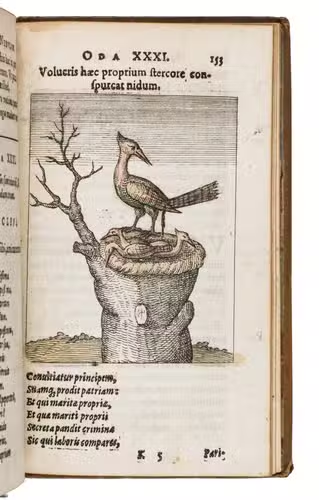
Frankfurt am Main, Jacobus de Zetter, 1620. 8vo. With an engraved title page, 33 engravings in the text (9.1 x 7.2 cm), several woodcut head- and tailpieces, and decorated woodcut initials, all coloured by a contemporary hand. Late 18th-century gold-tooled calf, gilt edges, marbled endpapers. [8], 164, [2] pp.
€ 12,500
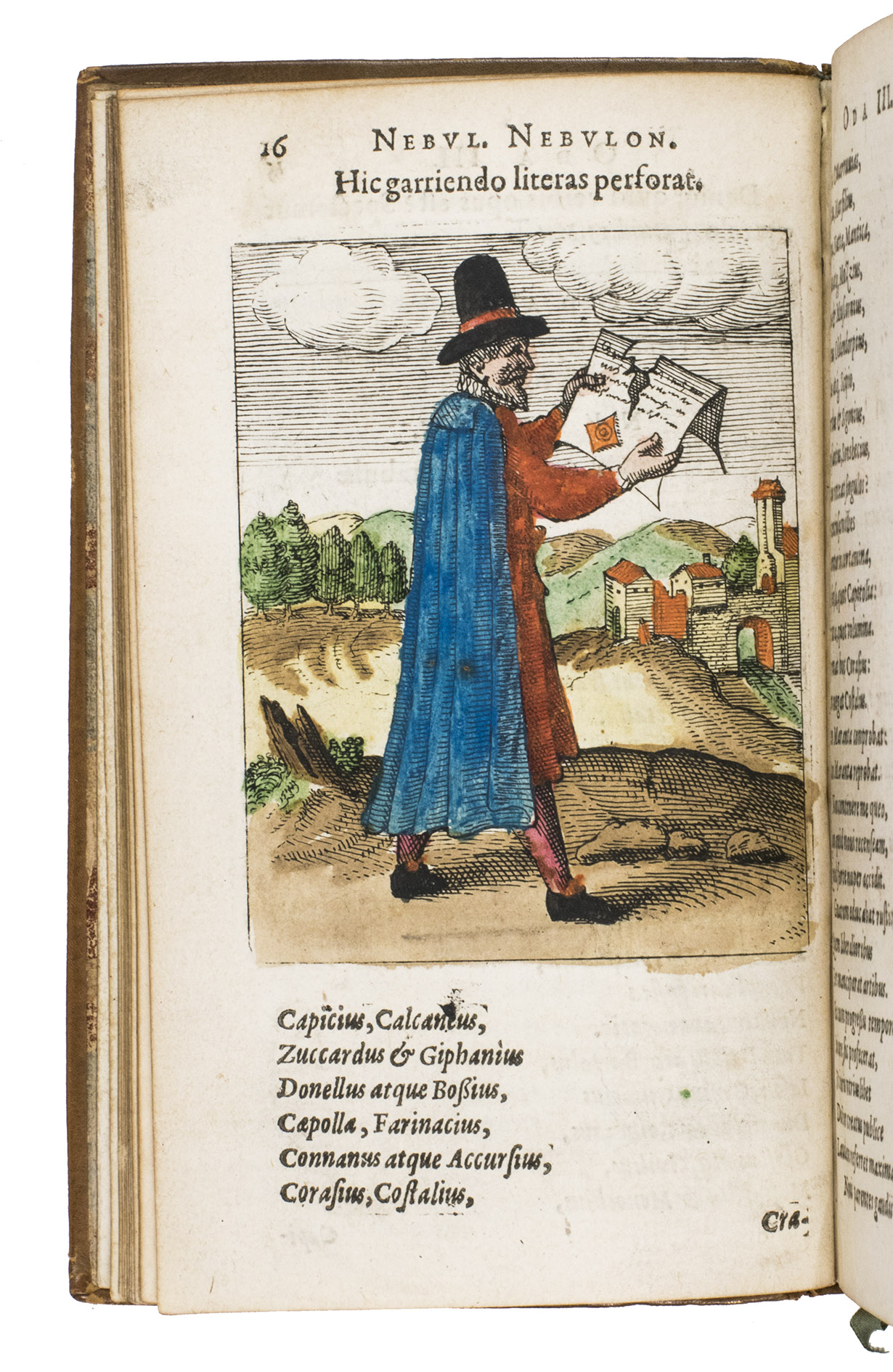
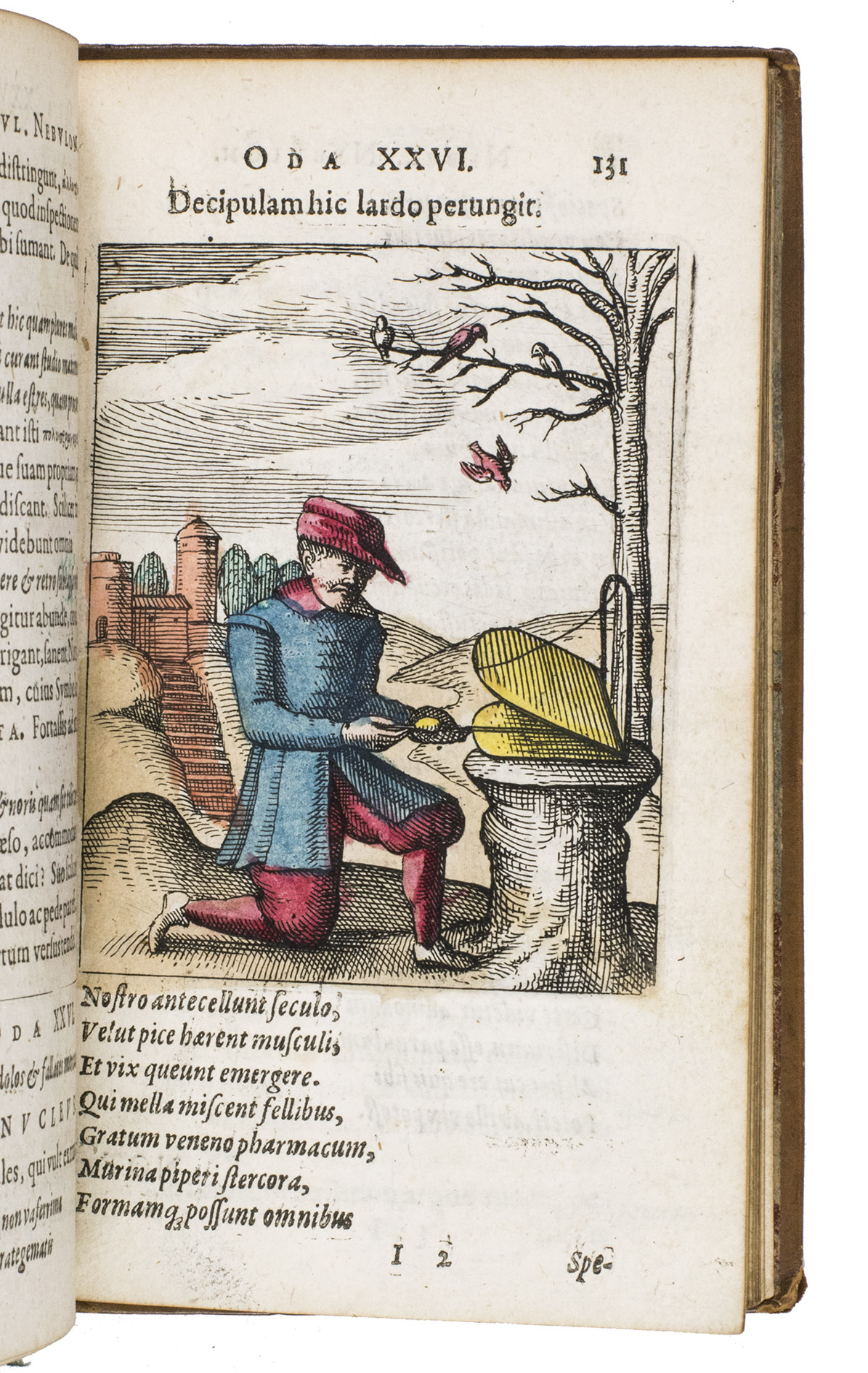
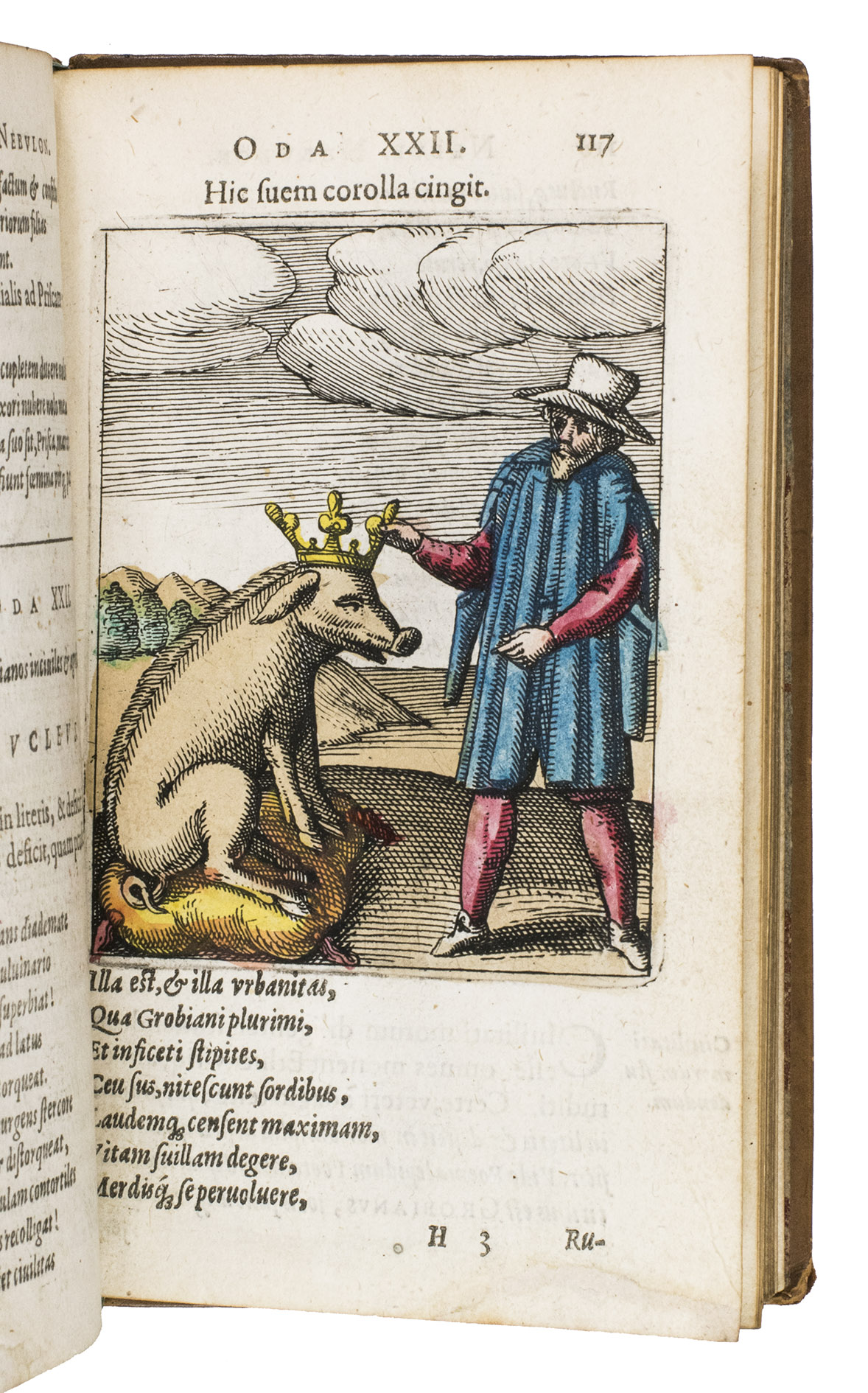
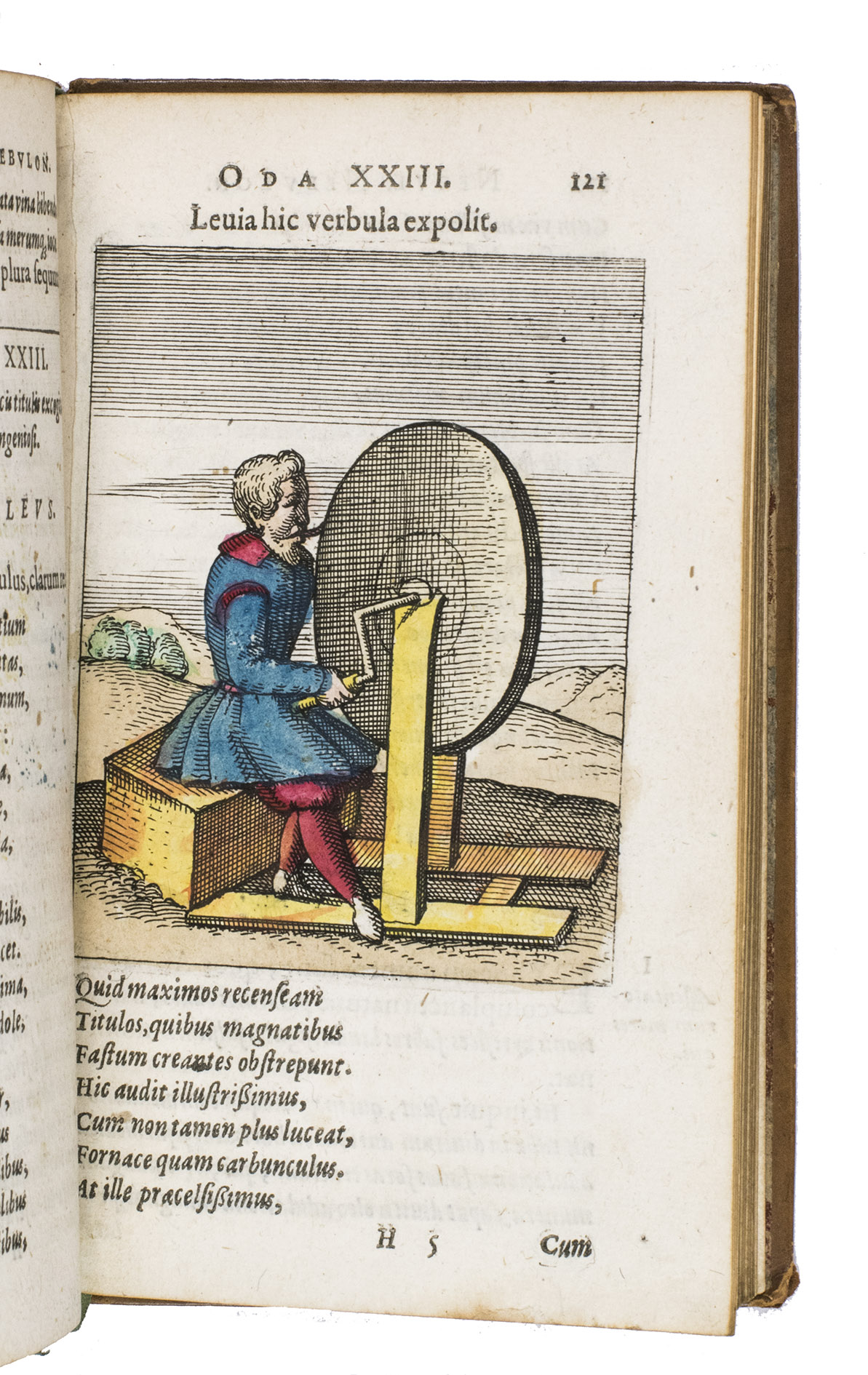
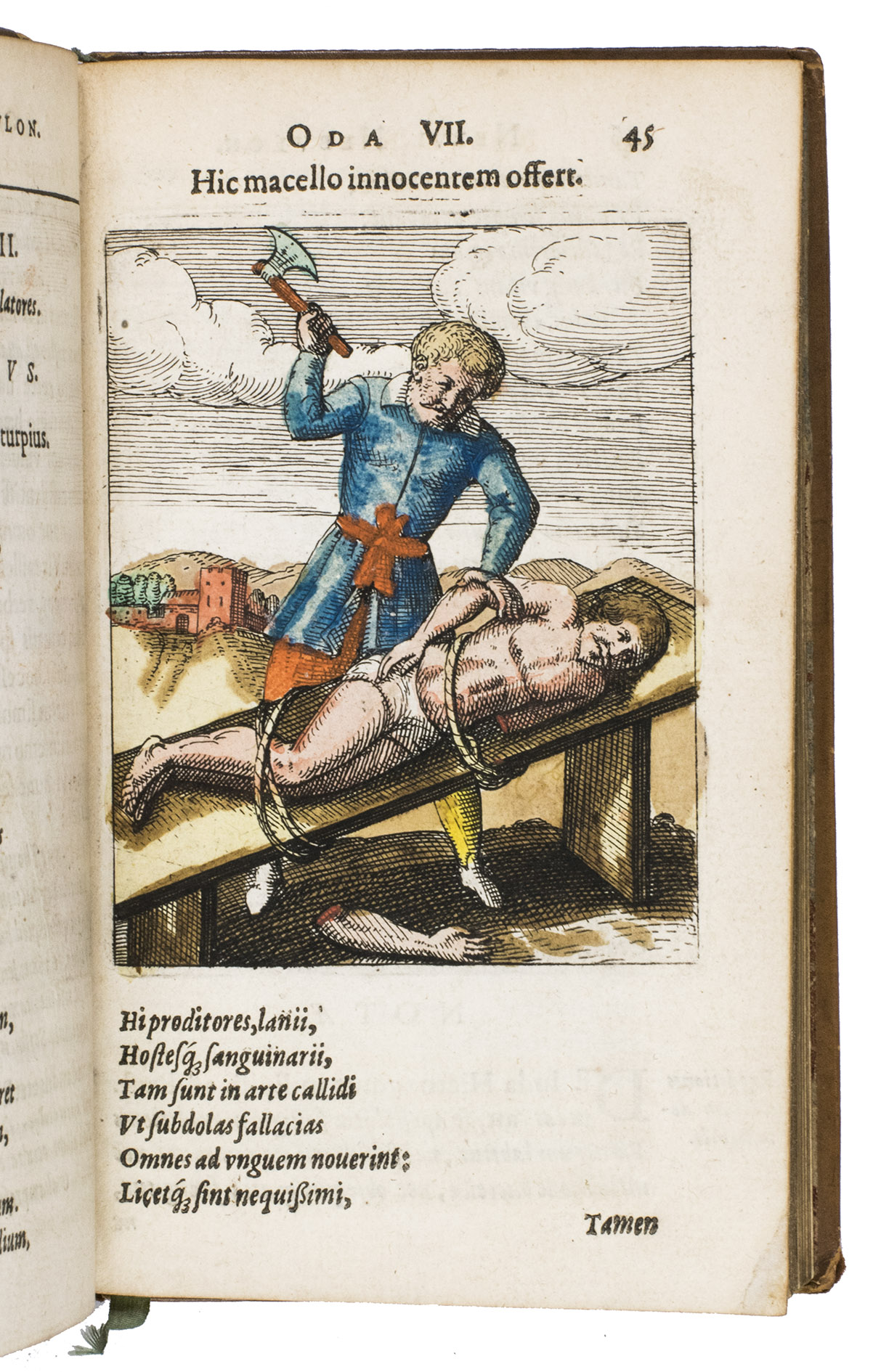
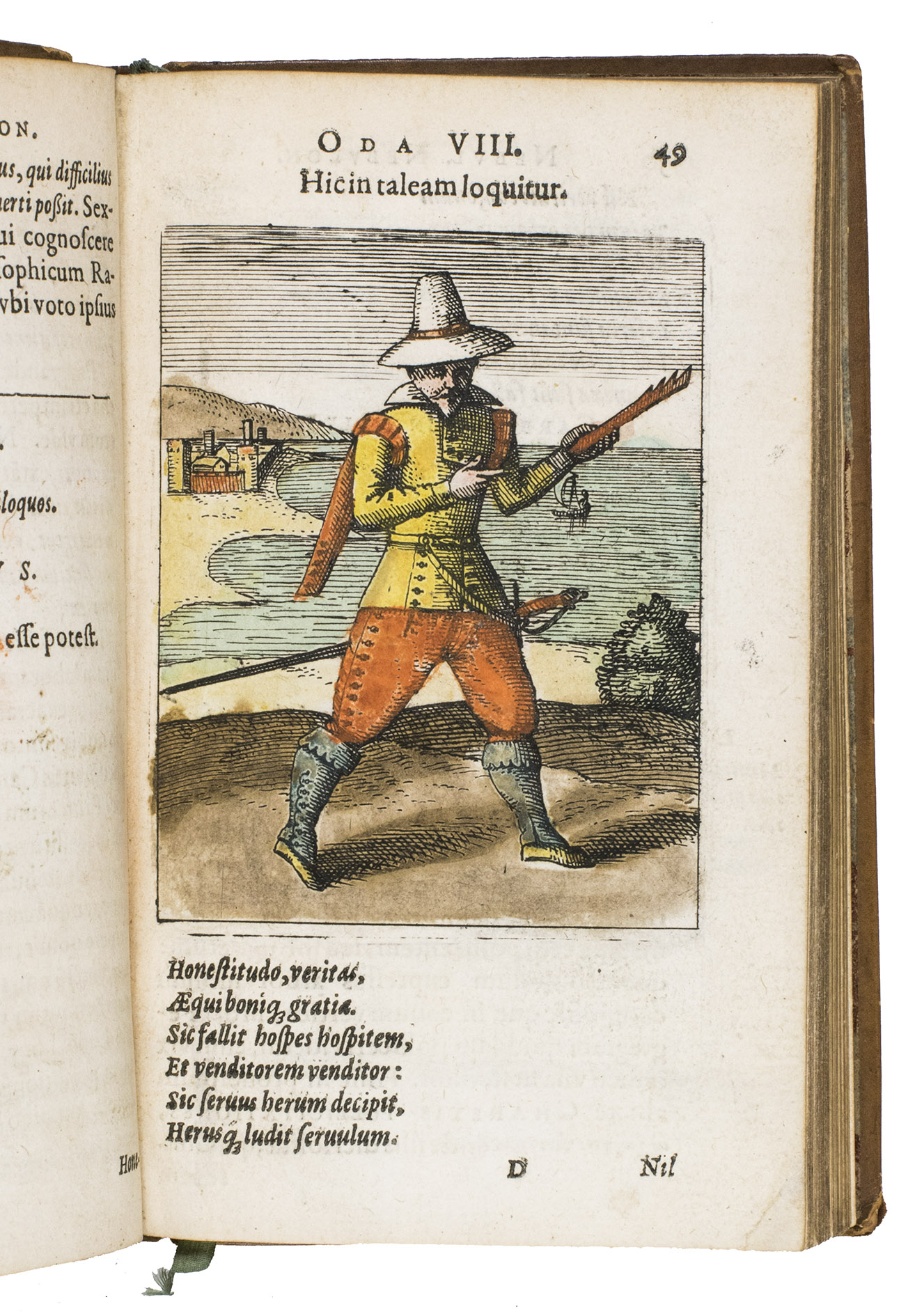
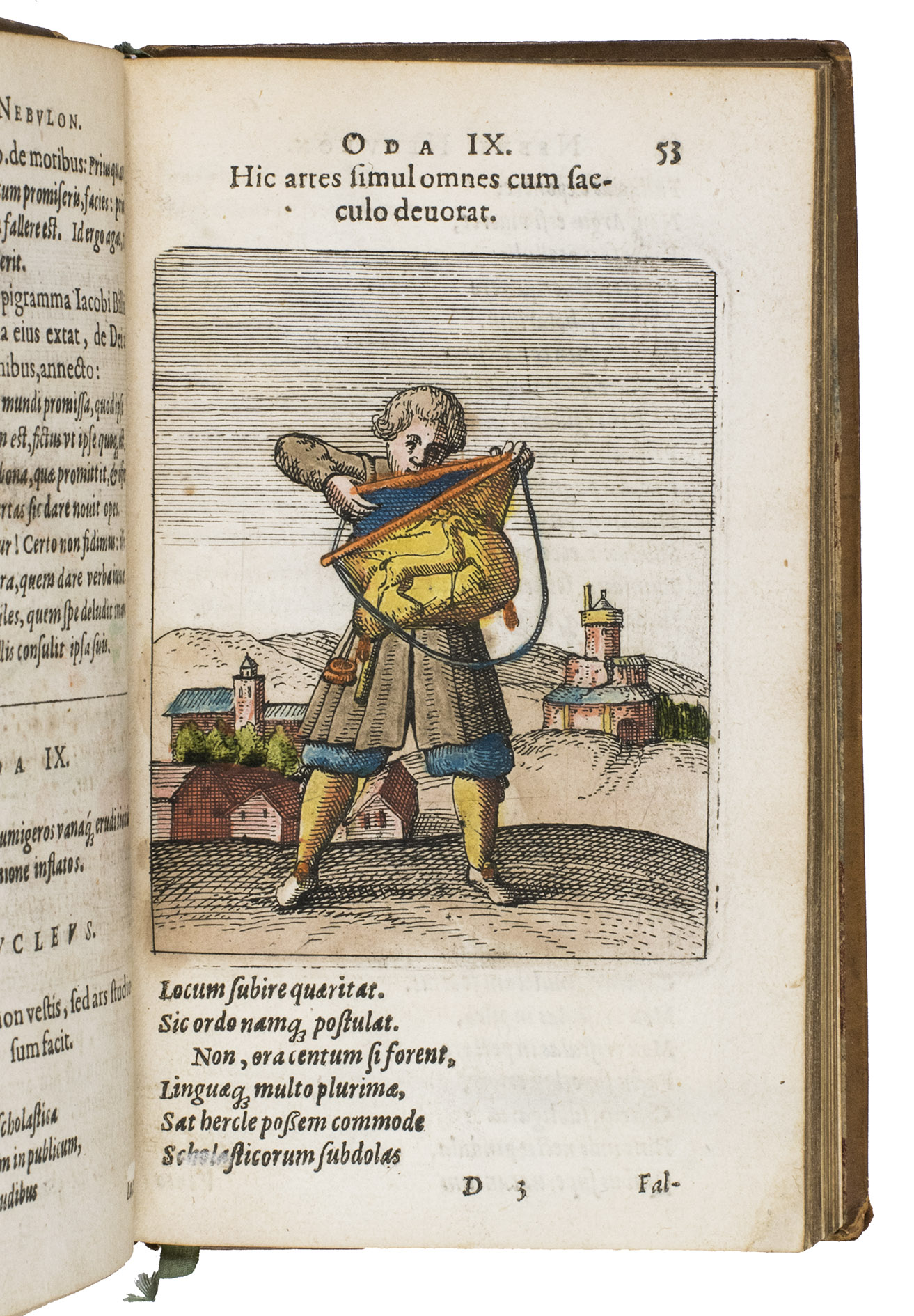
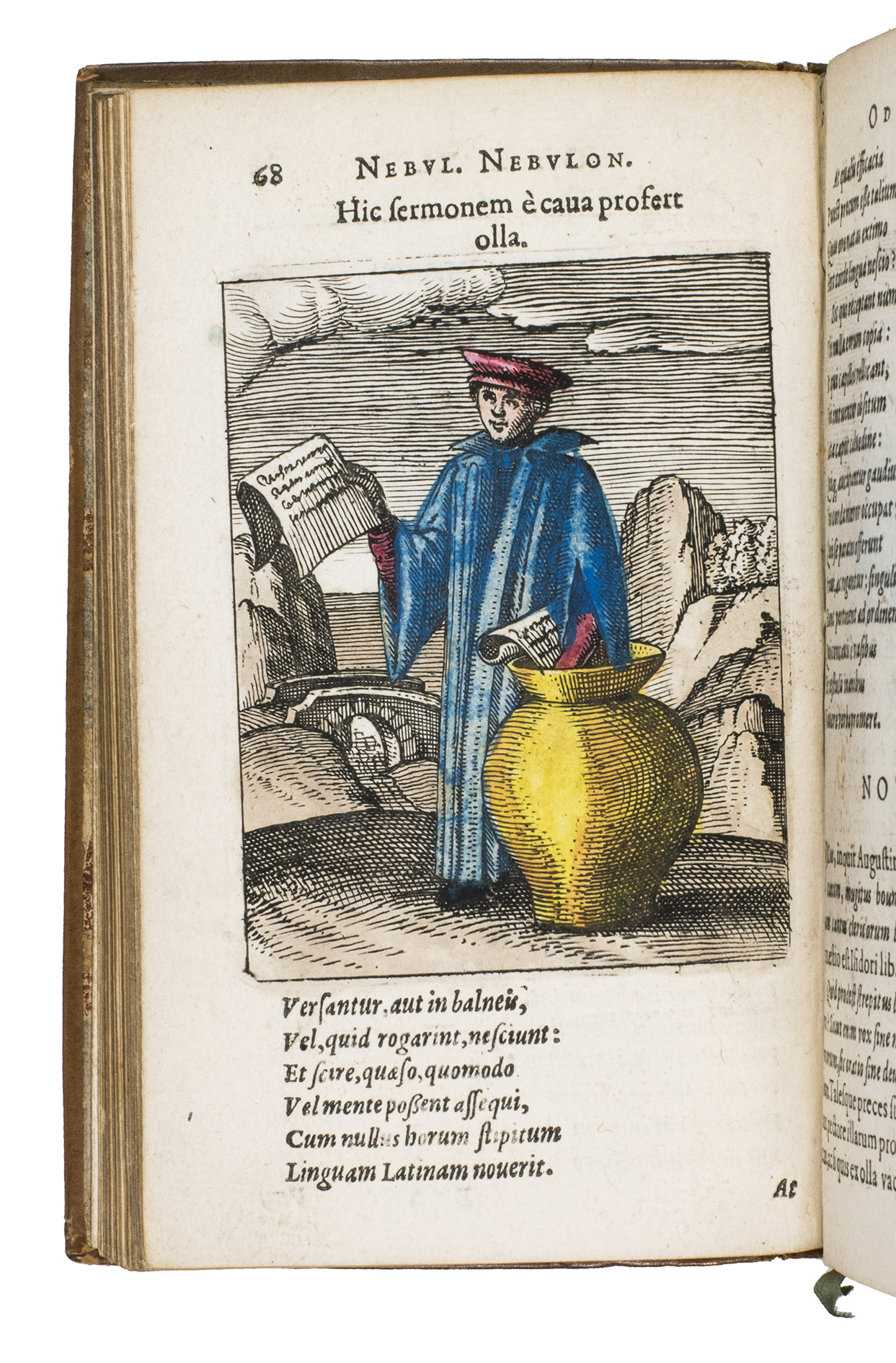
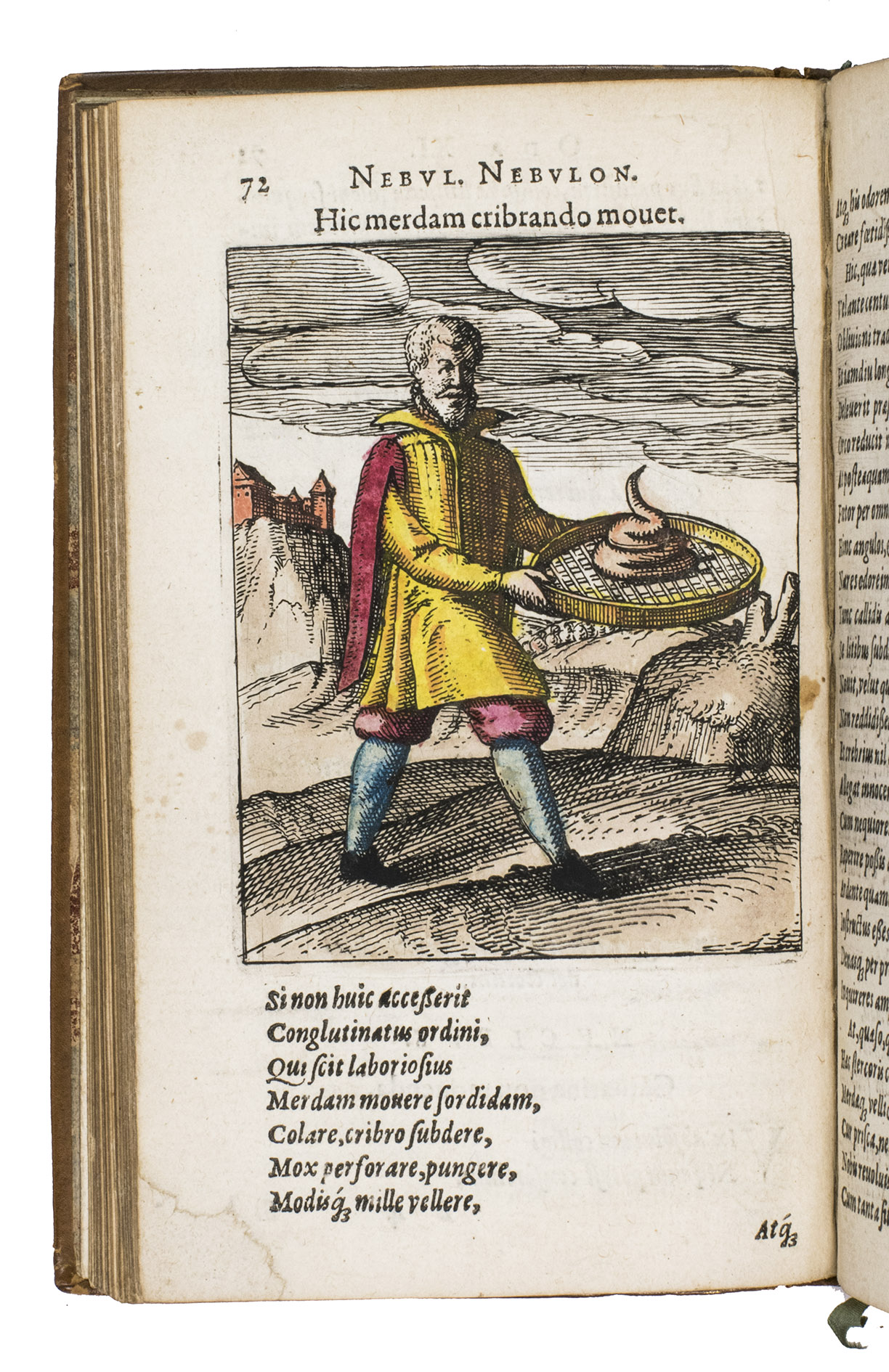
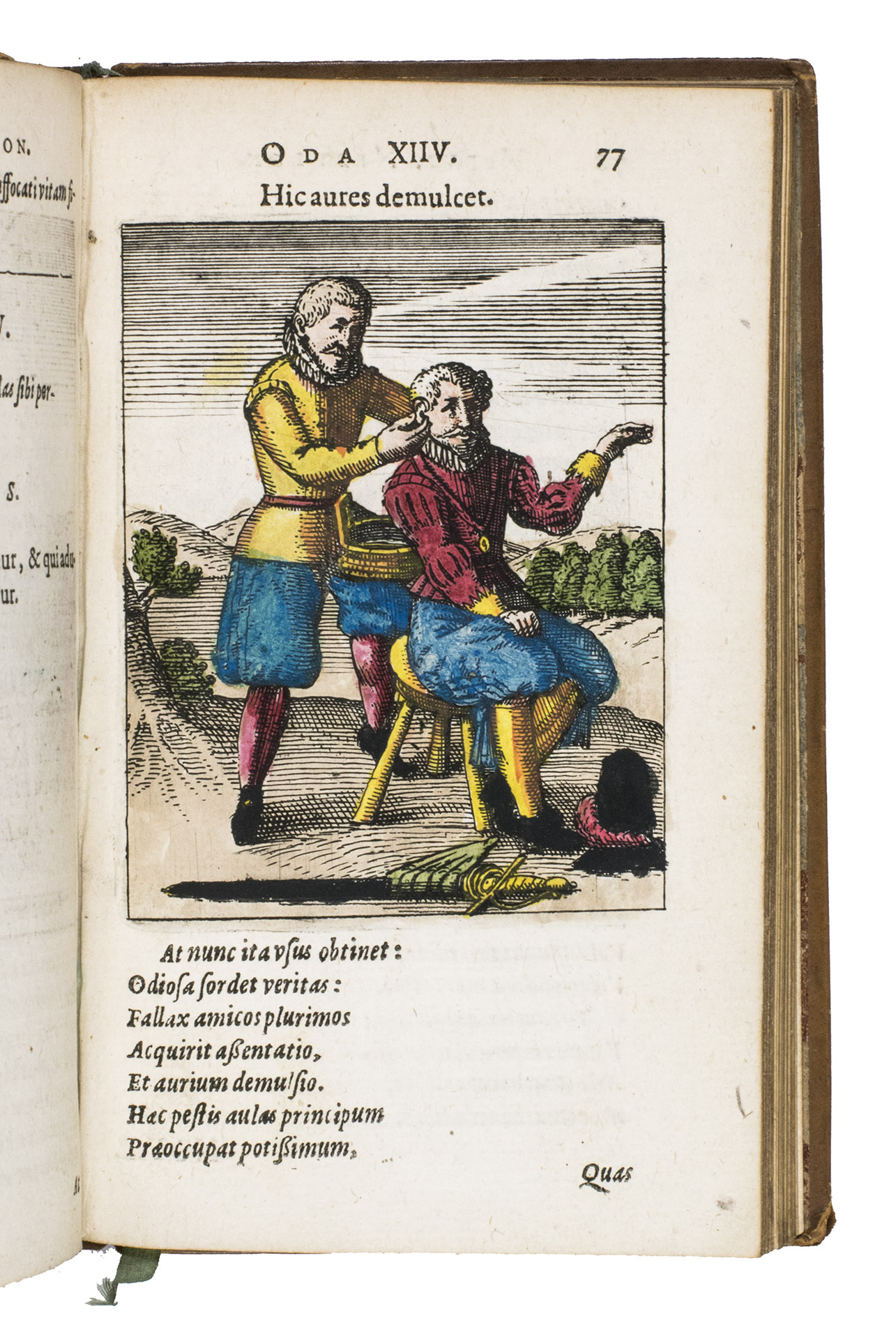
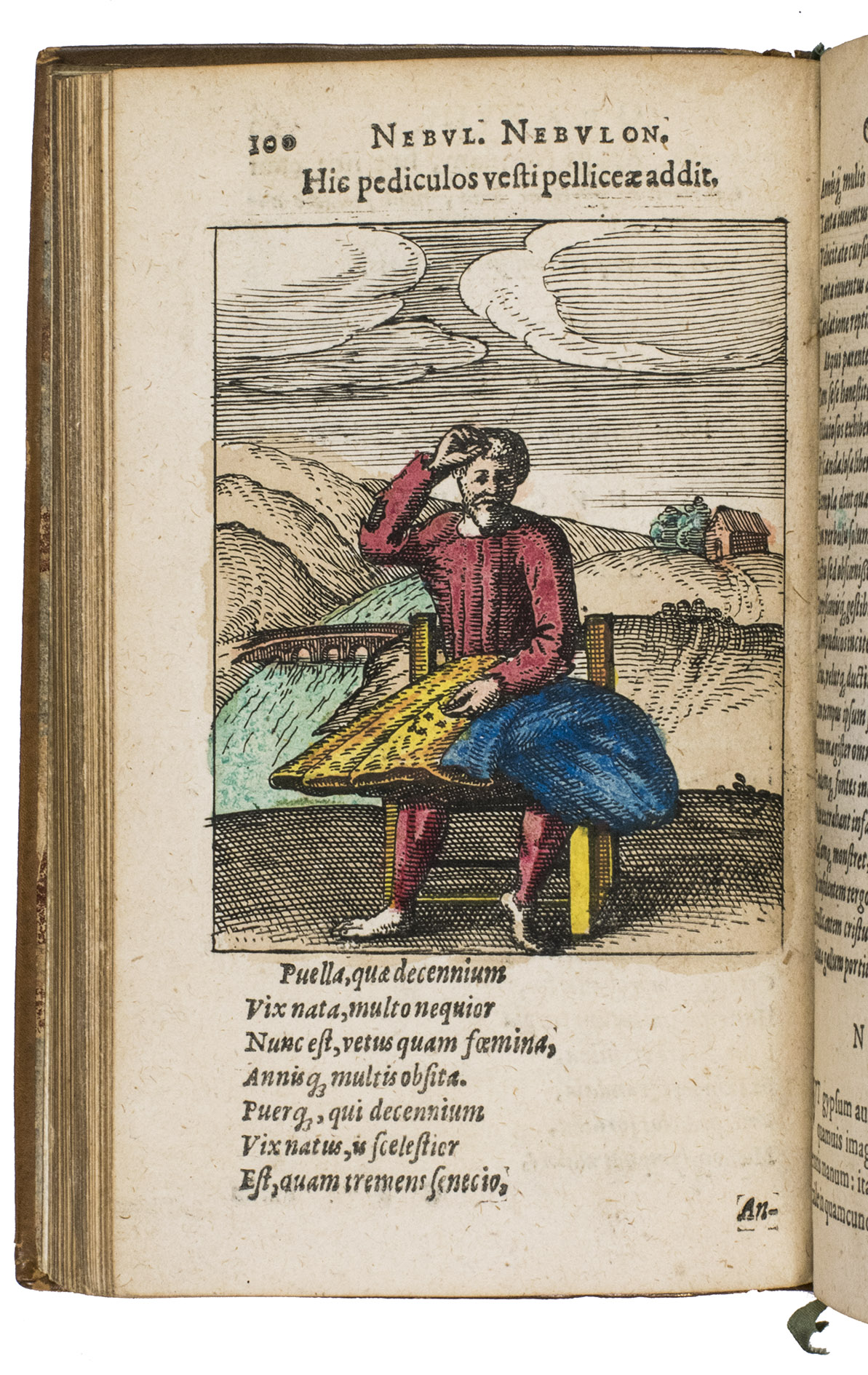
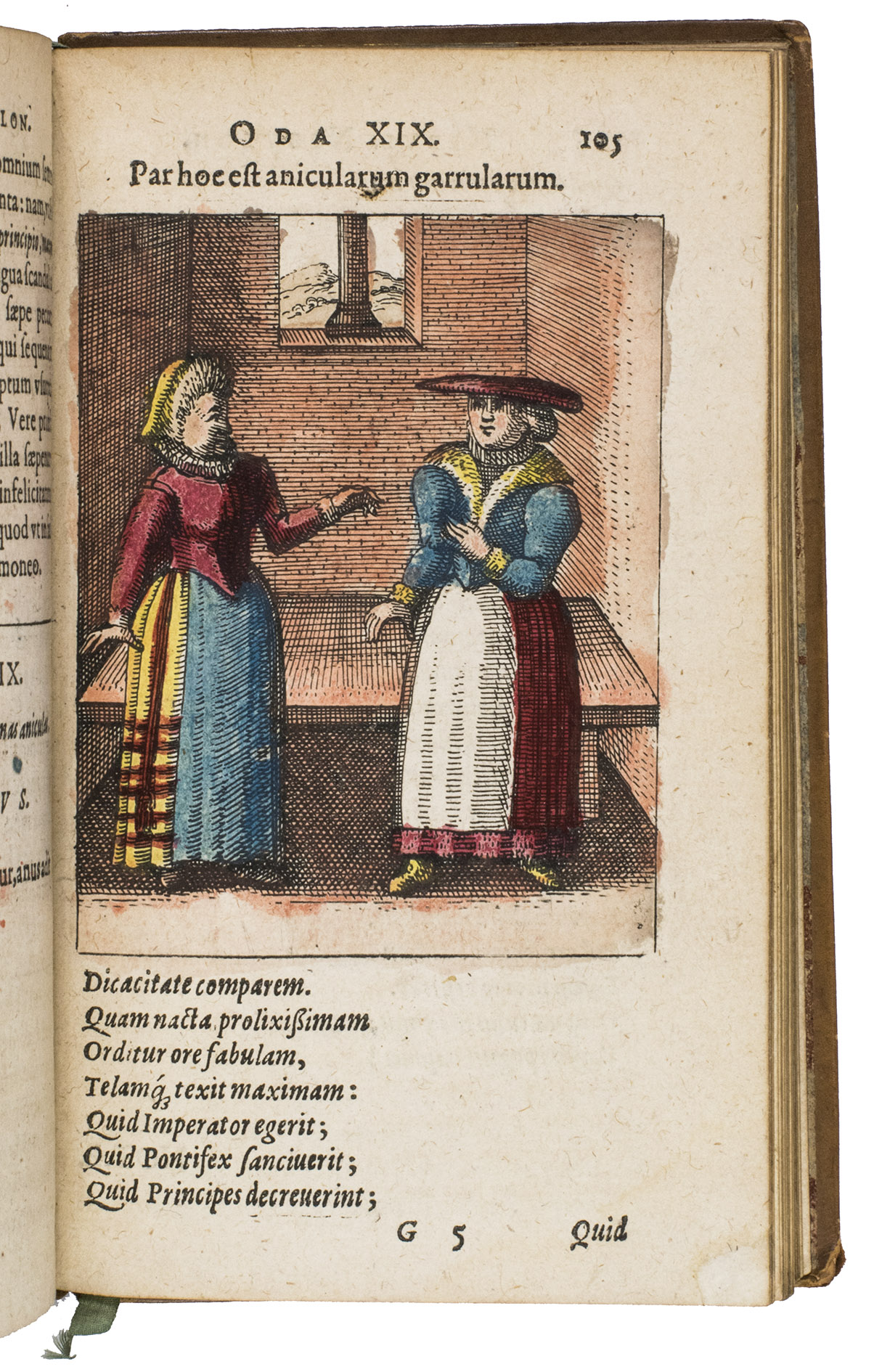
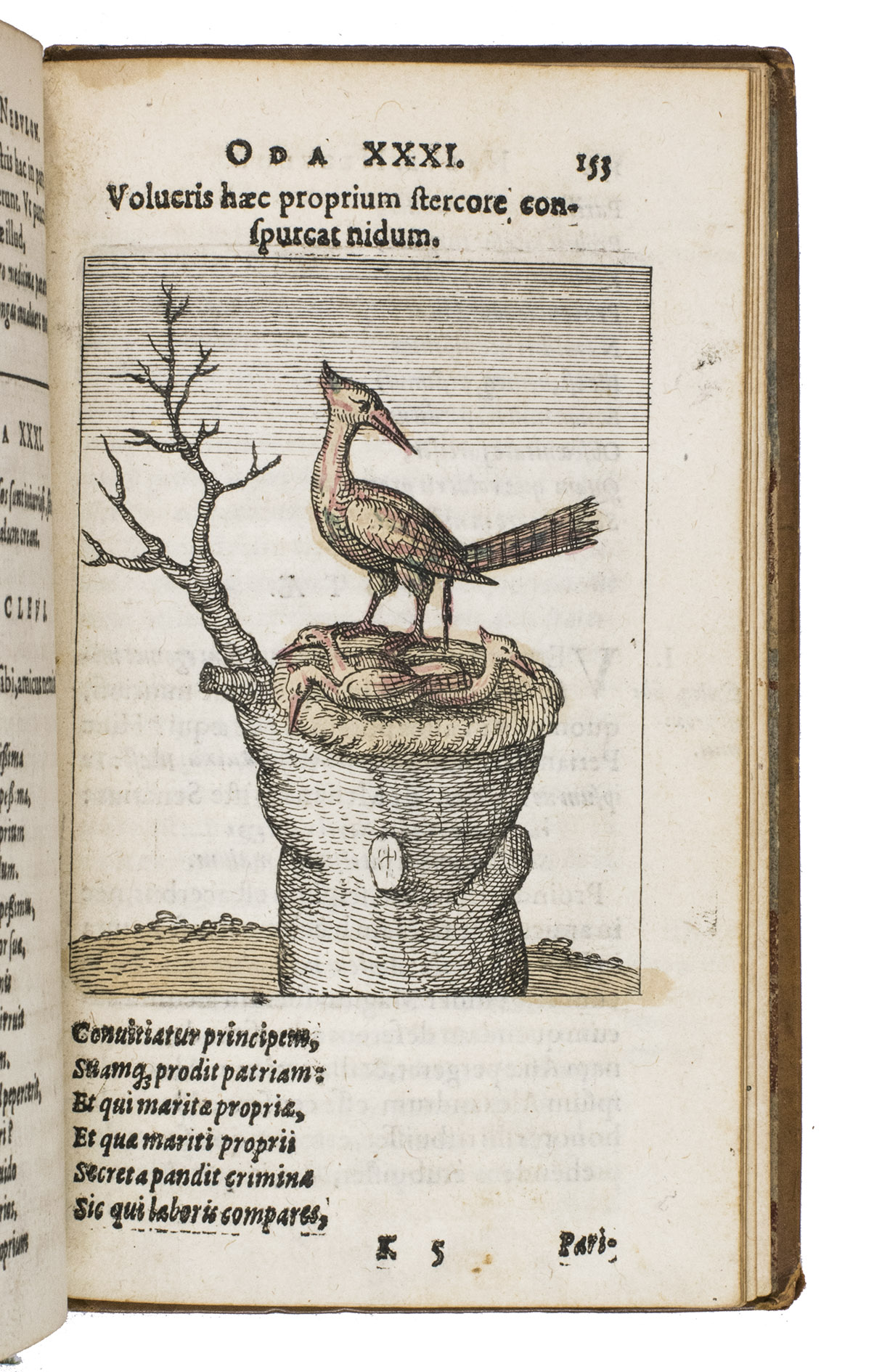
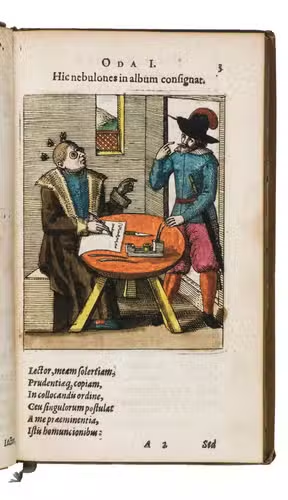
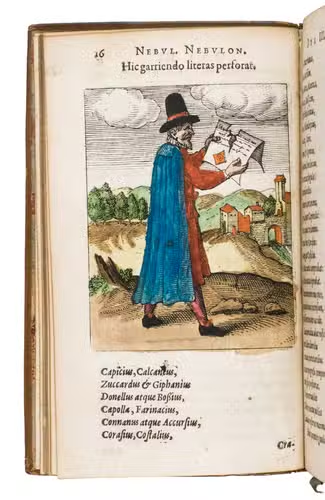
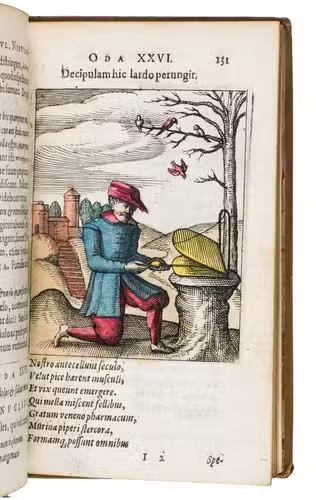
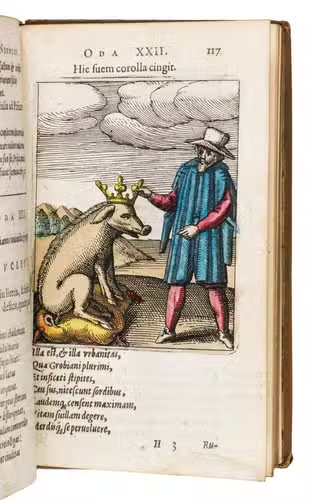
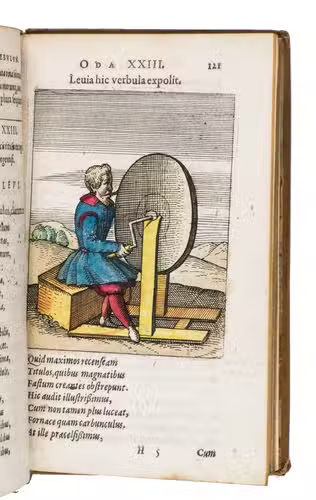
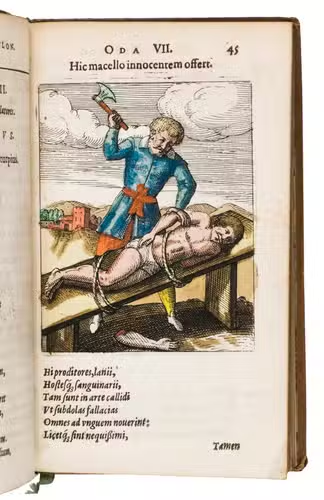
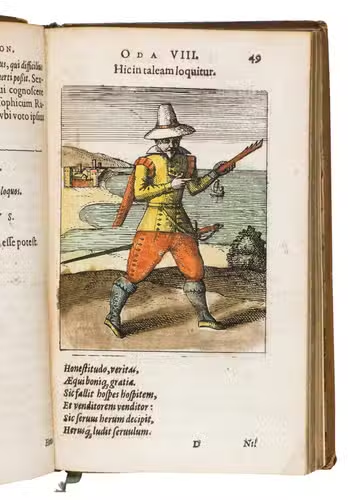
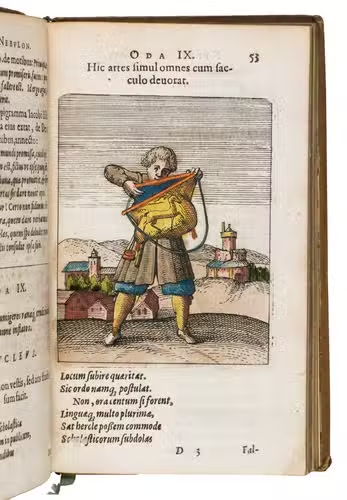
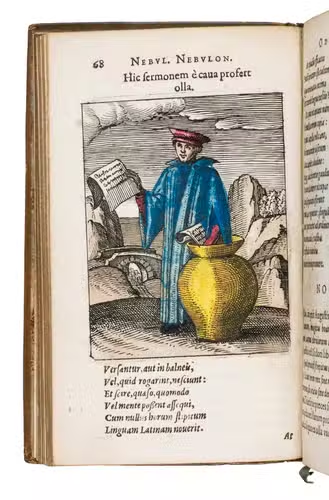
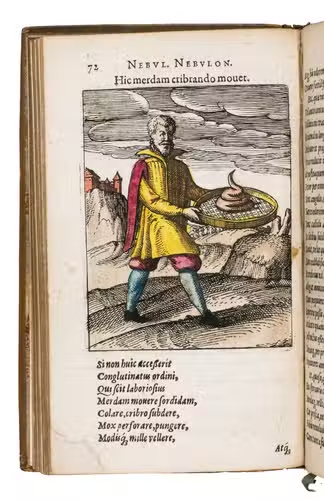
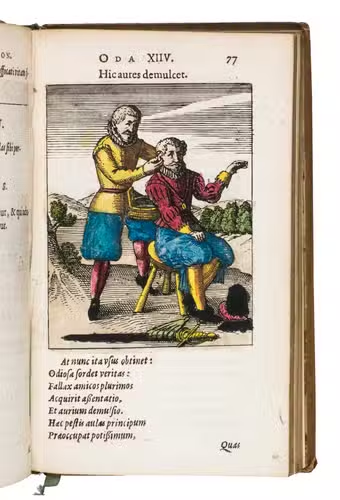
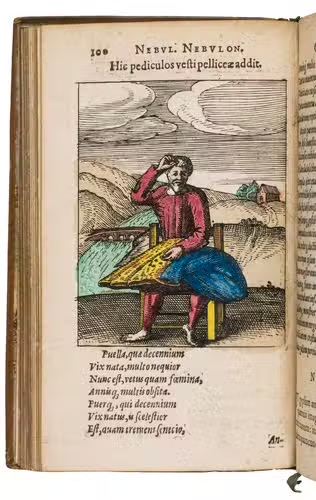
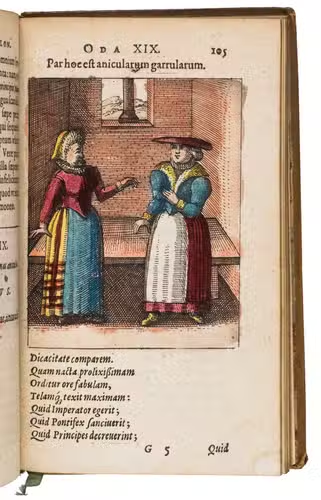
First edition of a satirical work by Johann Flitner, an adaptation in Latin of Thomas Murner's (1475-1537) great early 16th-century German satire Schelmen Zunft (1512). At the same time it is a curious emblem book, focusing on those who use words to deceive and seduce: jurists, councilors, clerics, debtors, preachers, hypocrites and flatterers. The arrangement is similar to that of an emblem book: 33 poems are symbolically illustrated with an engraving, accompanied by two mottoes, one for the poem and one for the plate, and an explanation in prose. The emblematic plates are also of interest for showing daily life at the beginning of the 17th century, depicting the costumes, home interiors and all sorts of indoor and outdoor activities, including a scholar in his library and a minister on his pulpit. The illustrations are very likely by the publisher of the book, Johann de Zetter.
Johann Flitner (dates unknown) was a German neo-Latin poet who lived in the first half of the 17th century. Censuring the corrupt manners of his time, his book presents a curious mixture of iambic verses in "macaronic" Latin and learned Latin notes, quoting classical authors on the subject, in Greek and Latin. Other editions were published in 1634, 1636, 1644, and 1663. A Dutch translation appeared in Leeuwarden in 1634 and 1645.
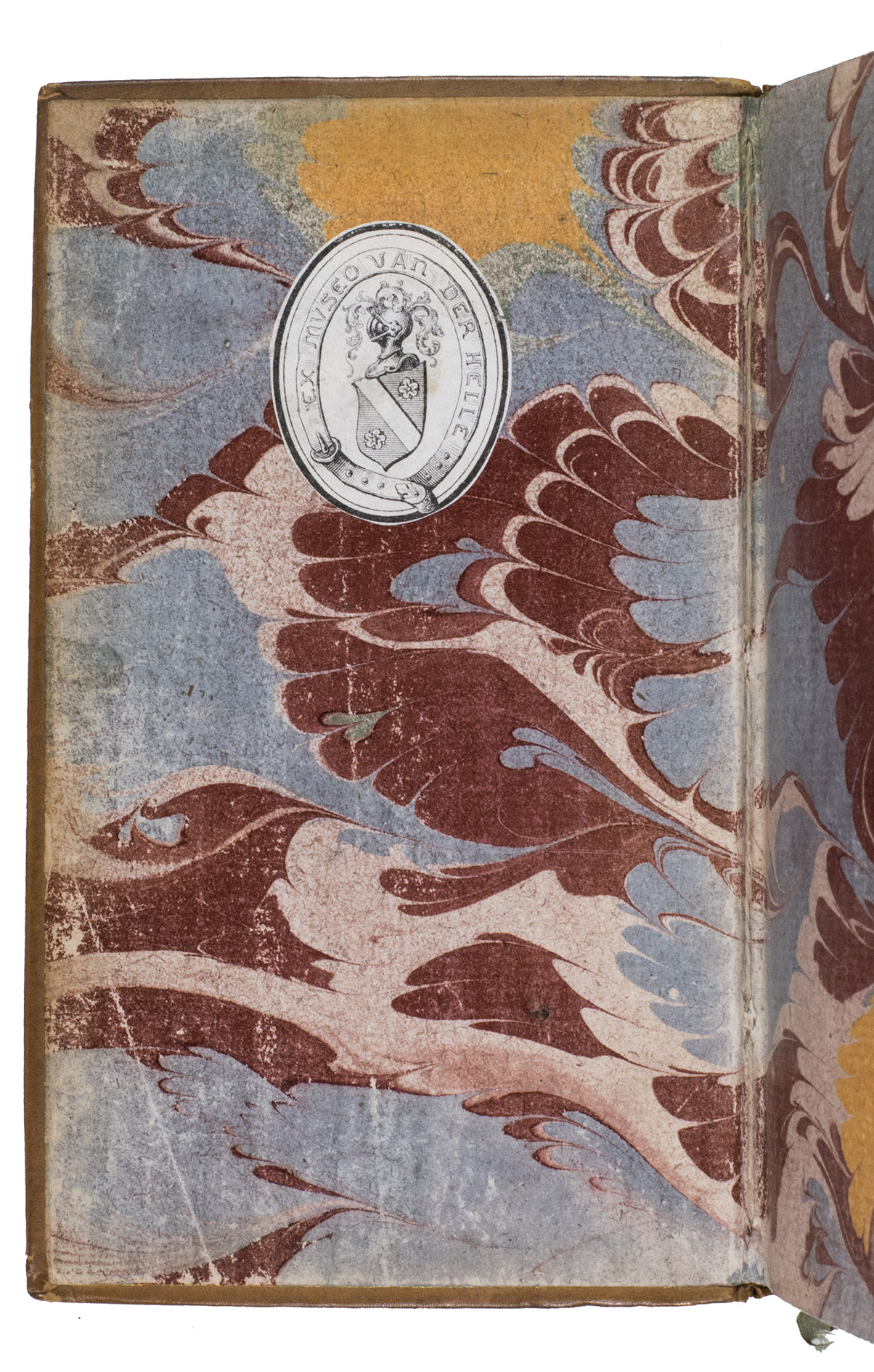
With the armorial bookplate of the bookcollector Van der Helle, from Lille, on the pastedown, and a manuscript note on the flyleaf. The corners of the boards are slightly scuffed, the hinge is slightly cracked near the head. Some of the colouring on the title page is a bit smudged, some occasional spots, and a few small restorations near the lower corners. Overall a good copy. Brunet II, col. 1293; Catalogue de la bibliothèque M. Van der Helle (1868), 1352 (this copy); Hayn & Gotendorf V, p. 248; Landwehr, German emblem books 283; Lipperheide 681; Praz, p. 337; VD17, 1:029198C; Wellcome I, 4490.
Related Subjects: