FÉNELON, François.
Les aventures de Télémaque.
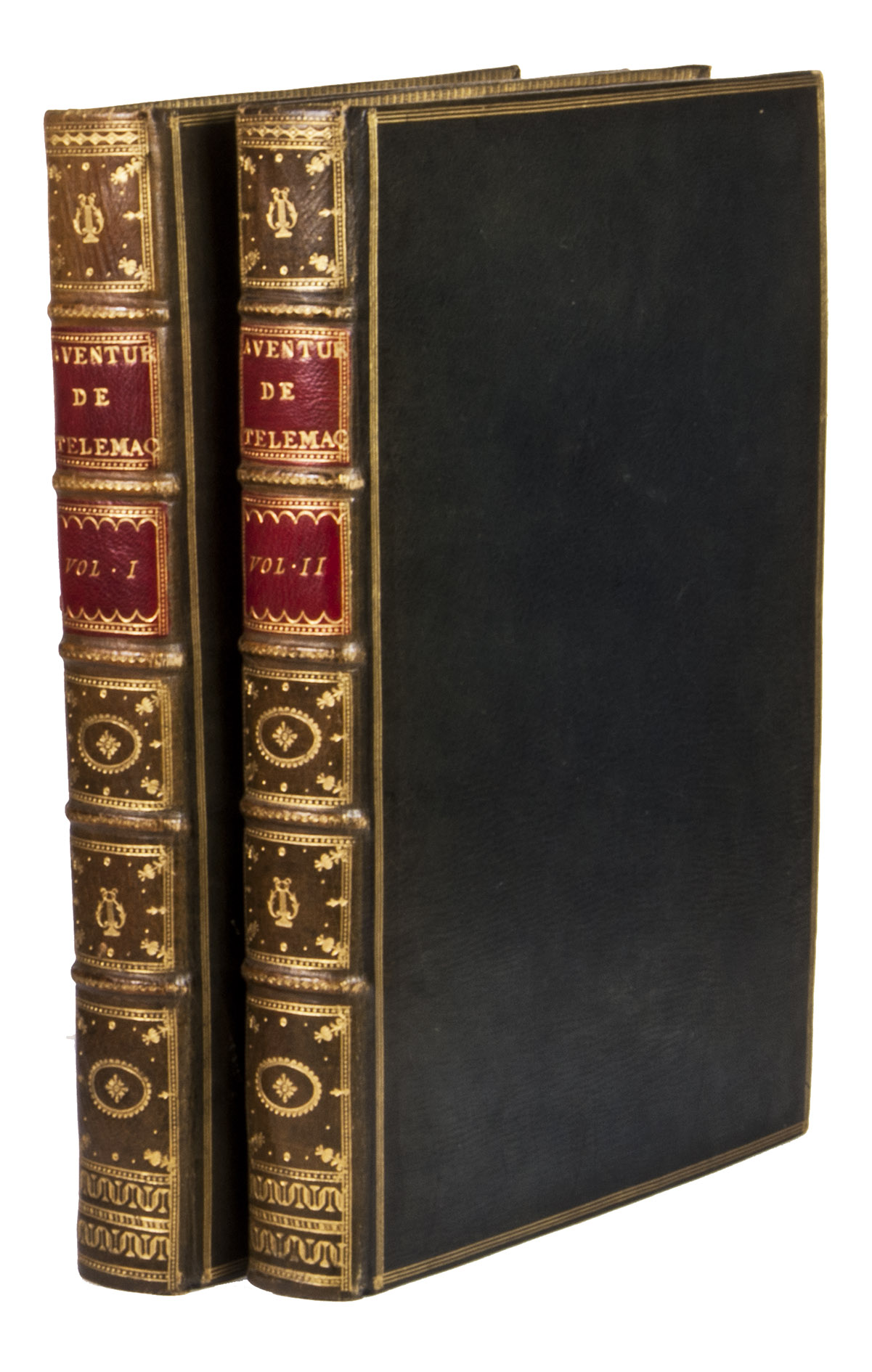
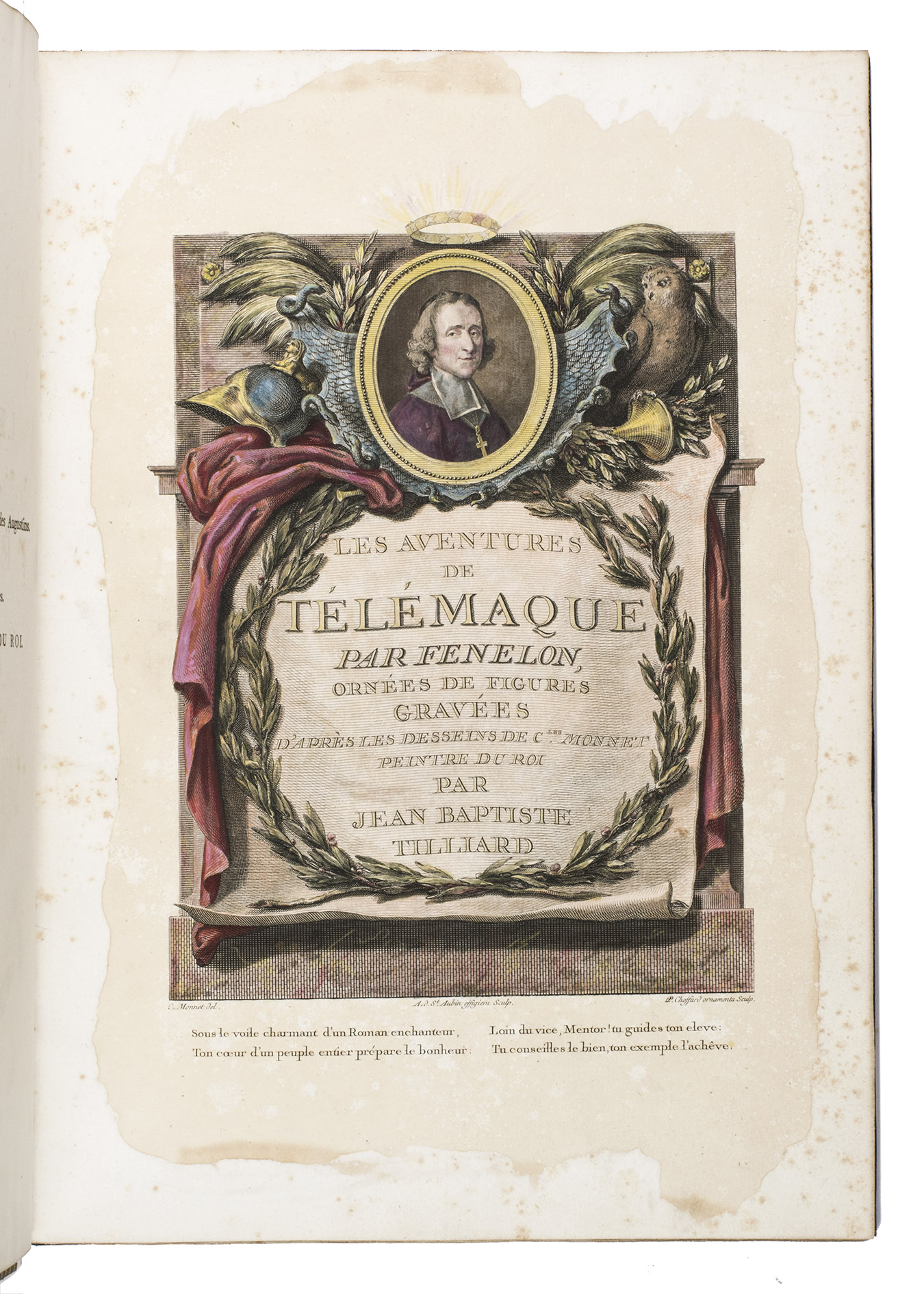
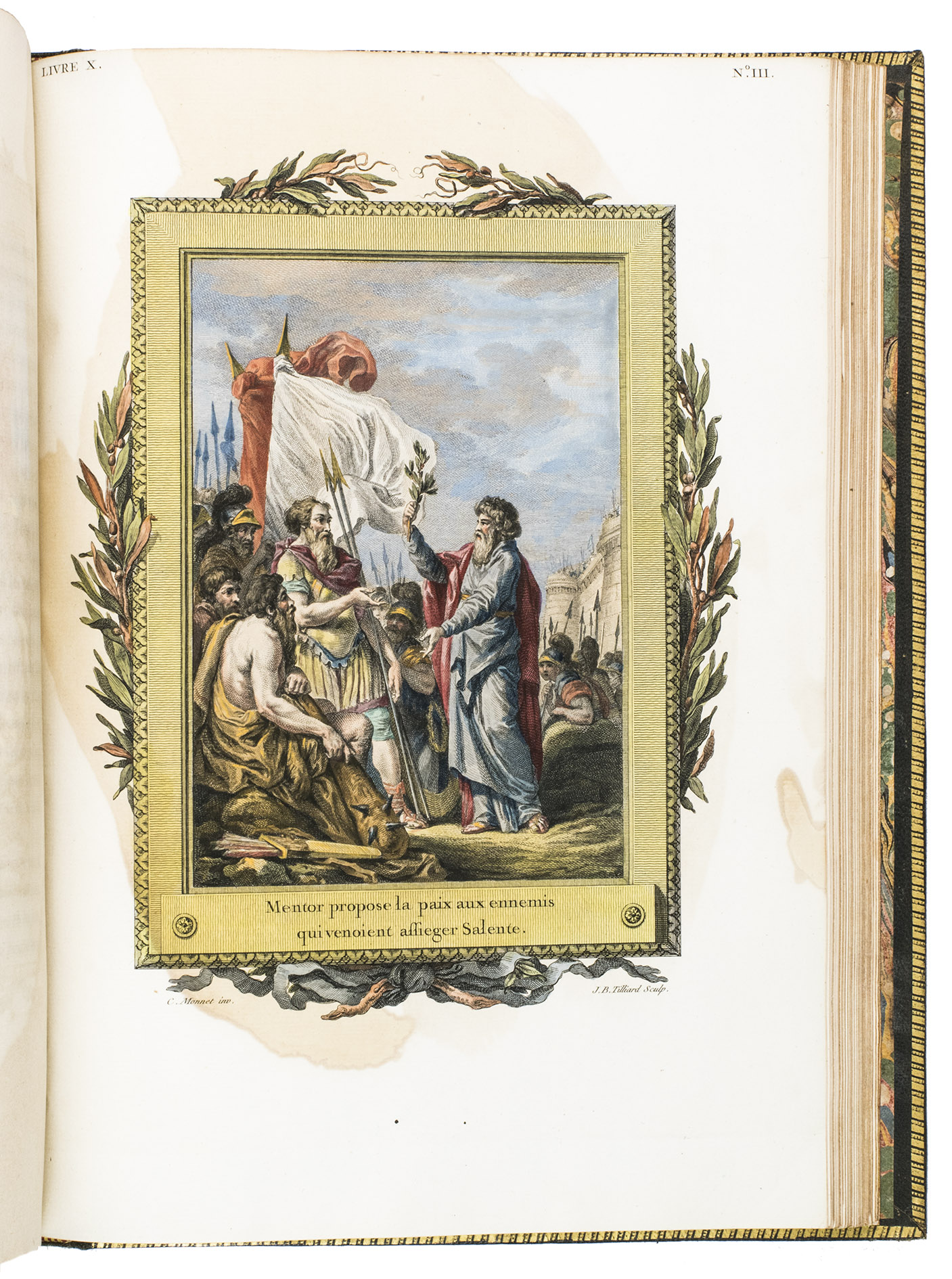
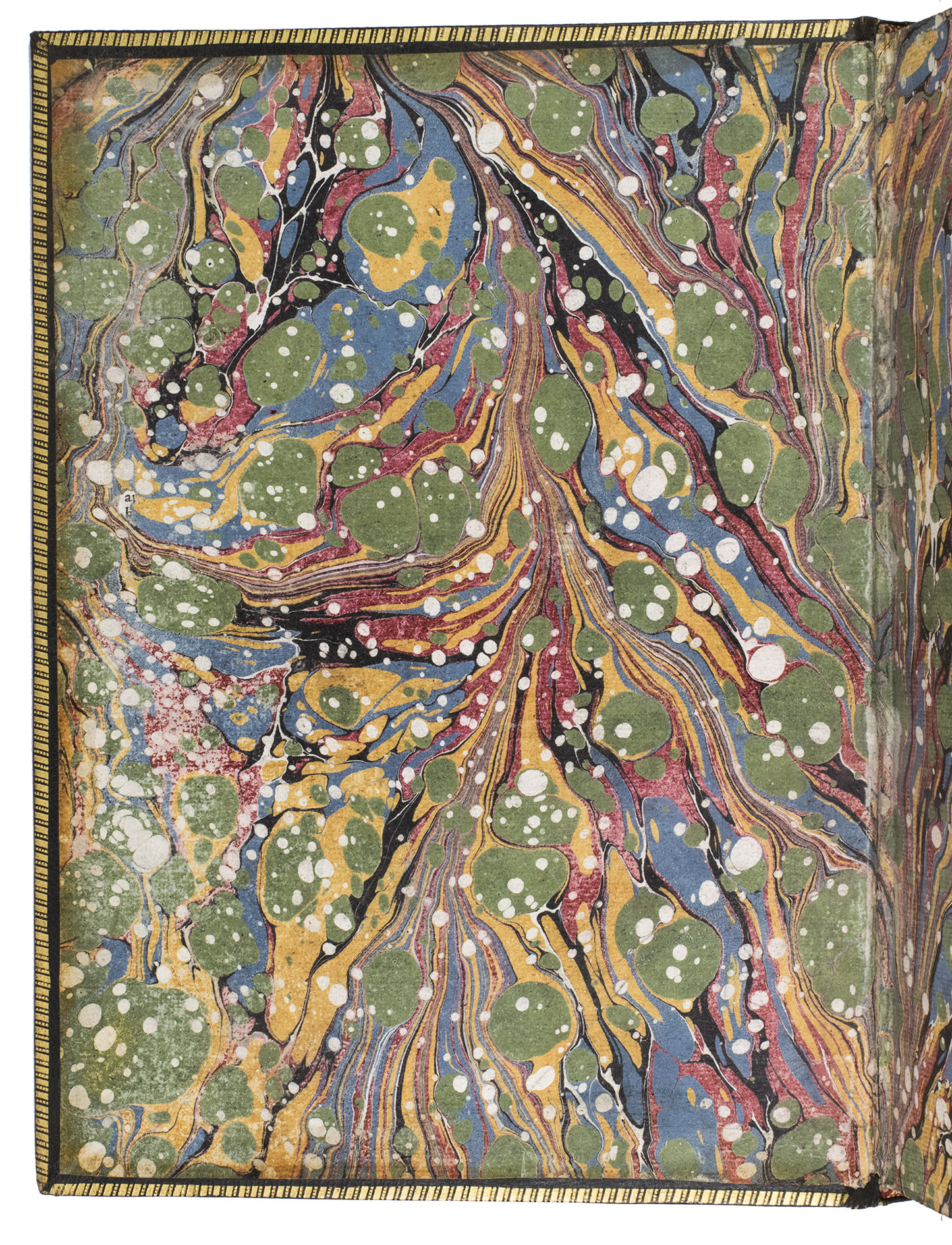
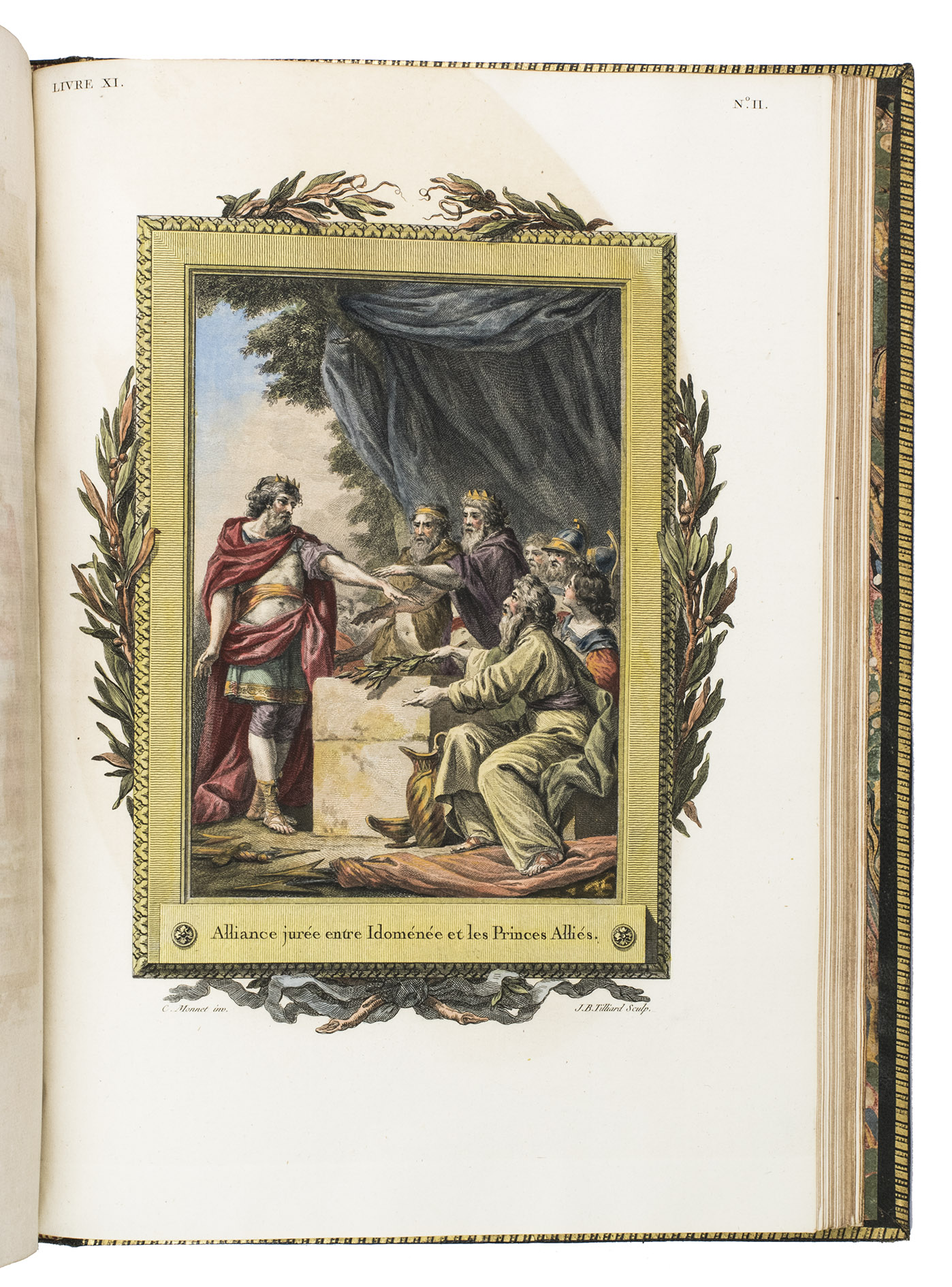
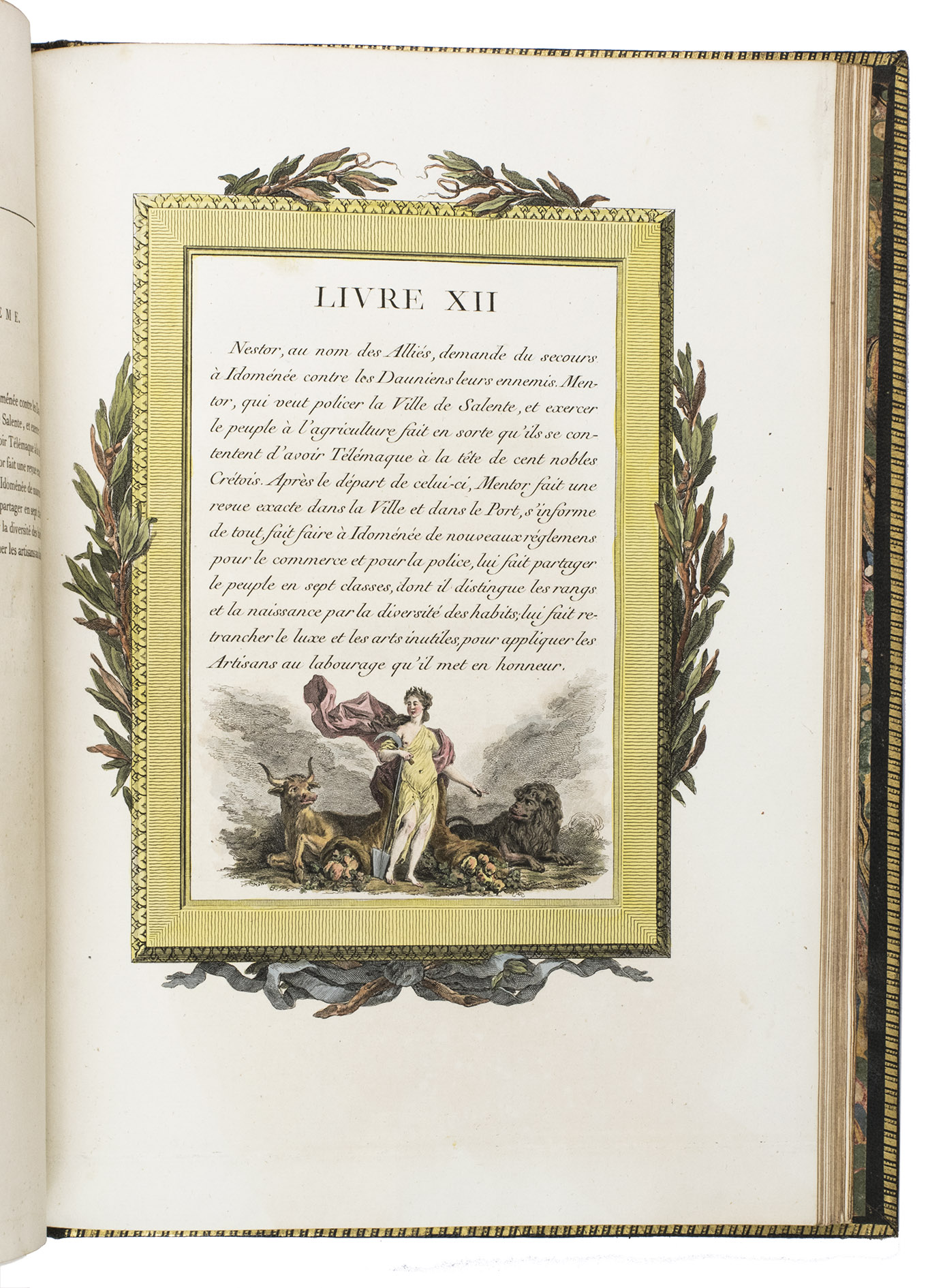
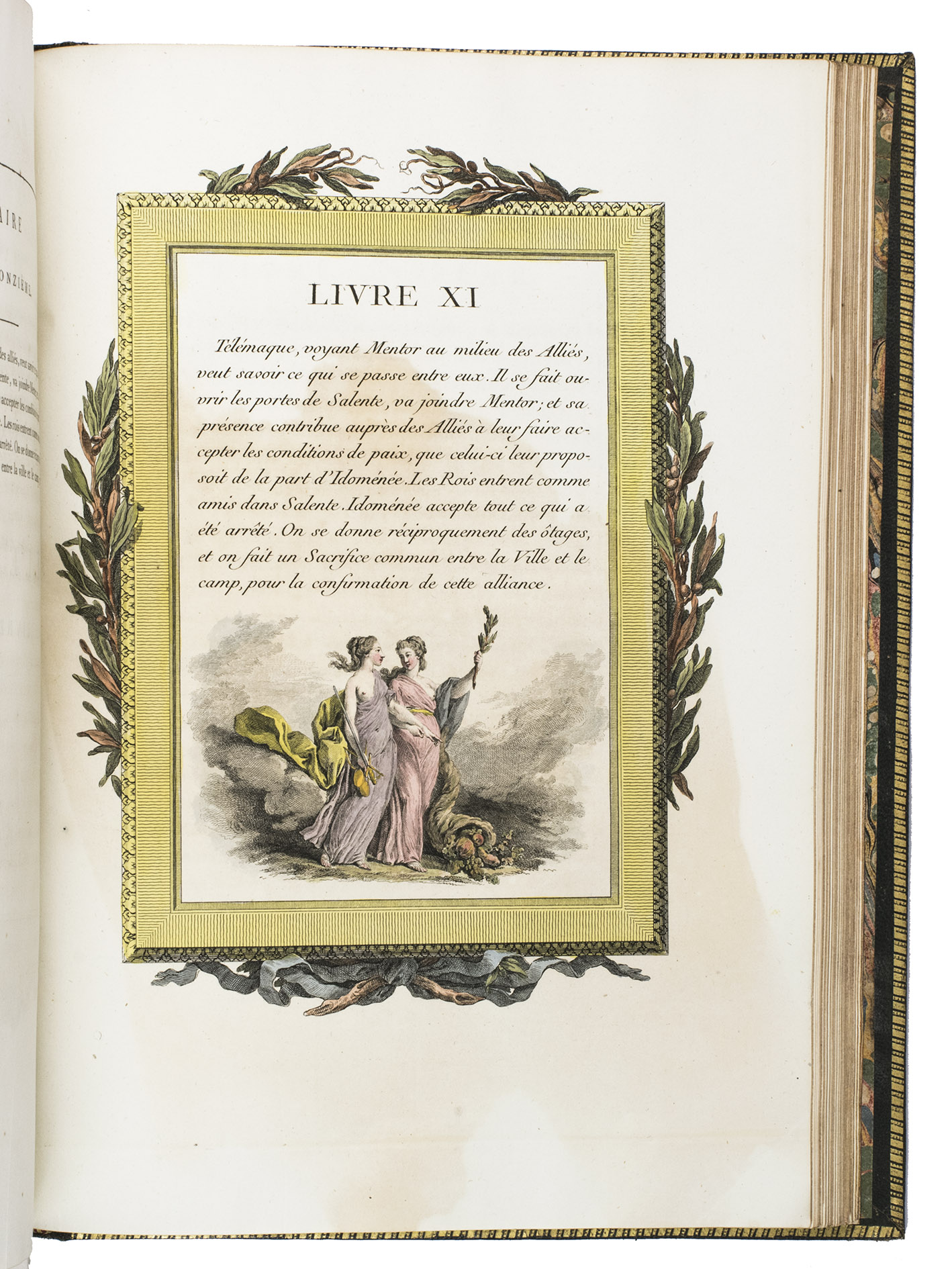
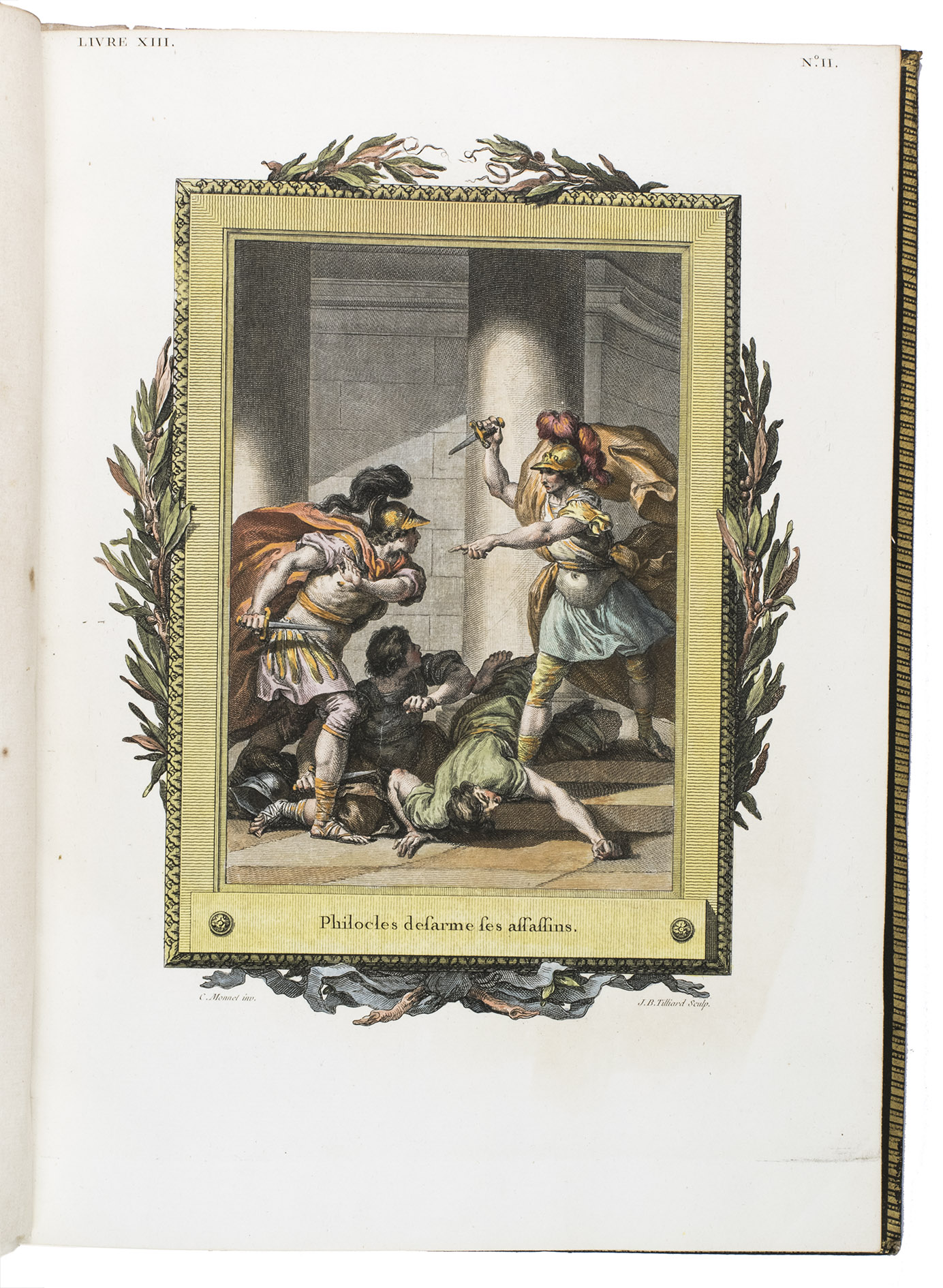
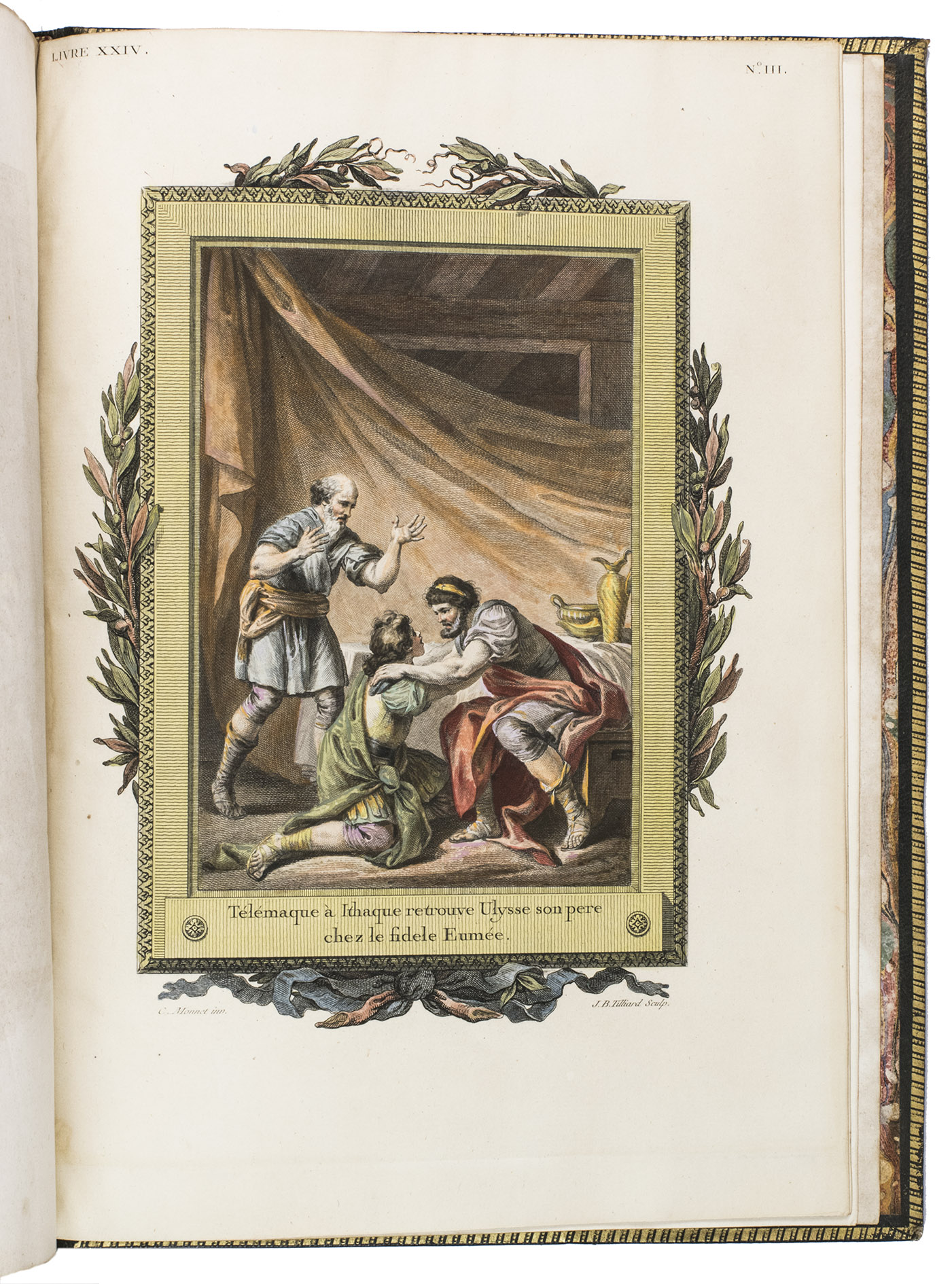
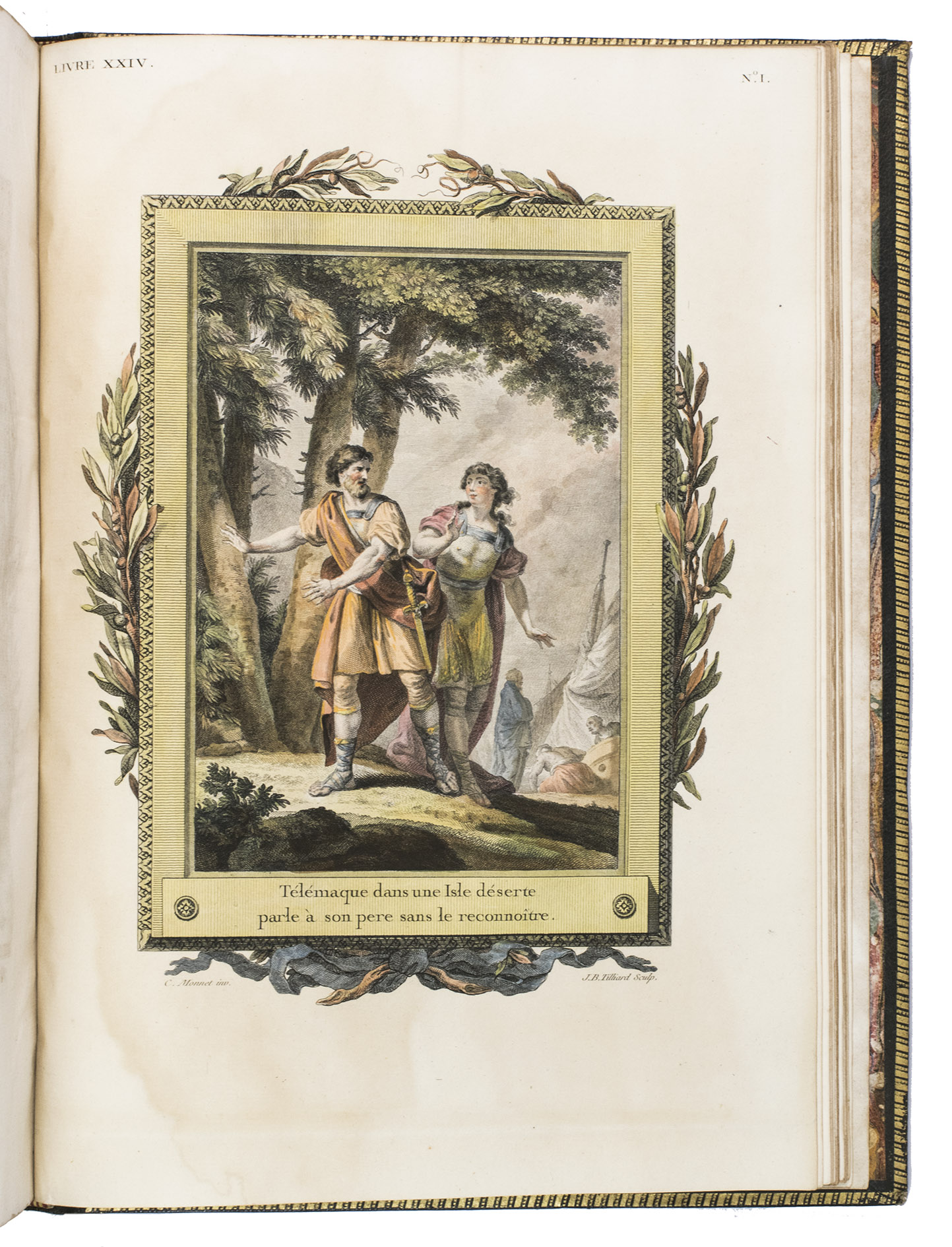
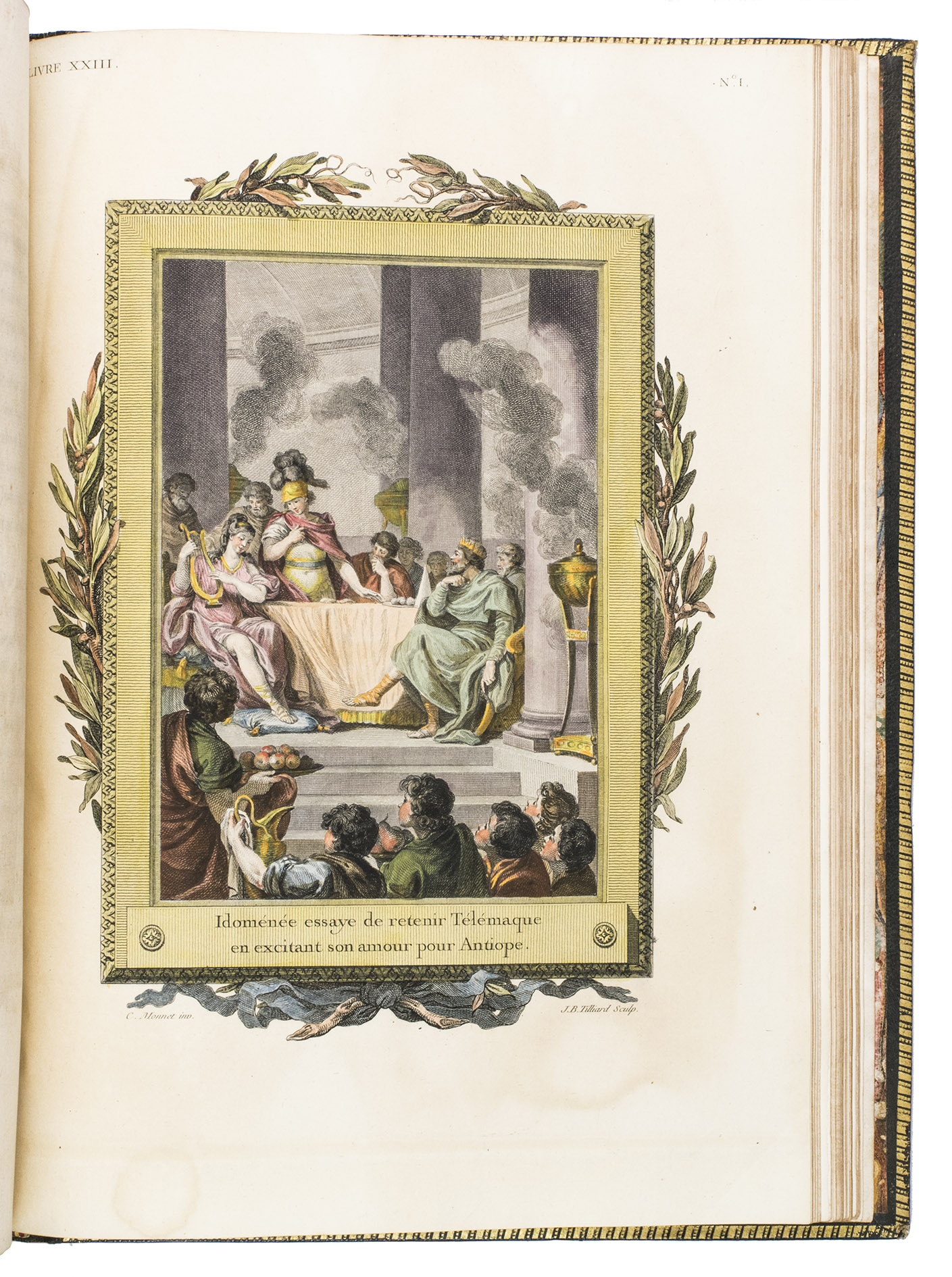
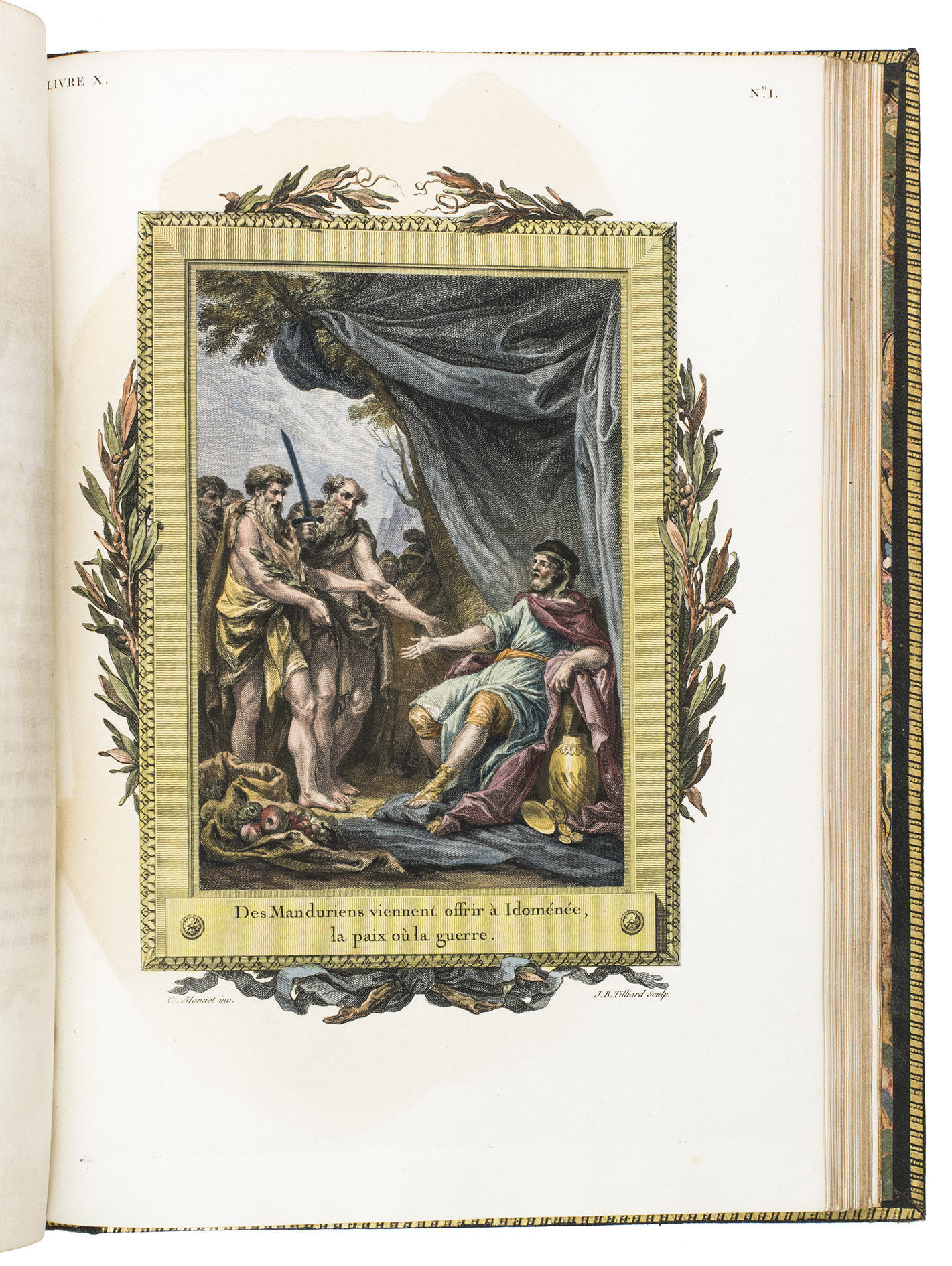
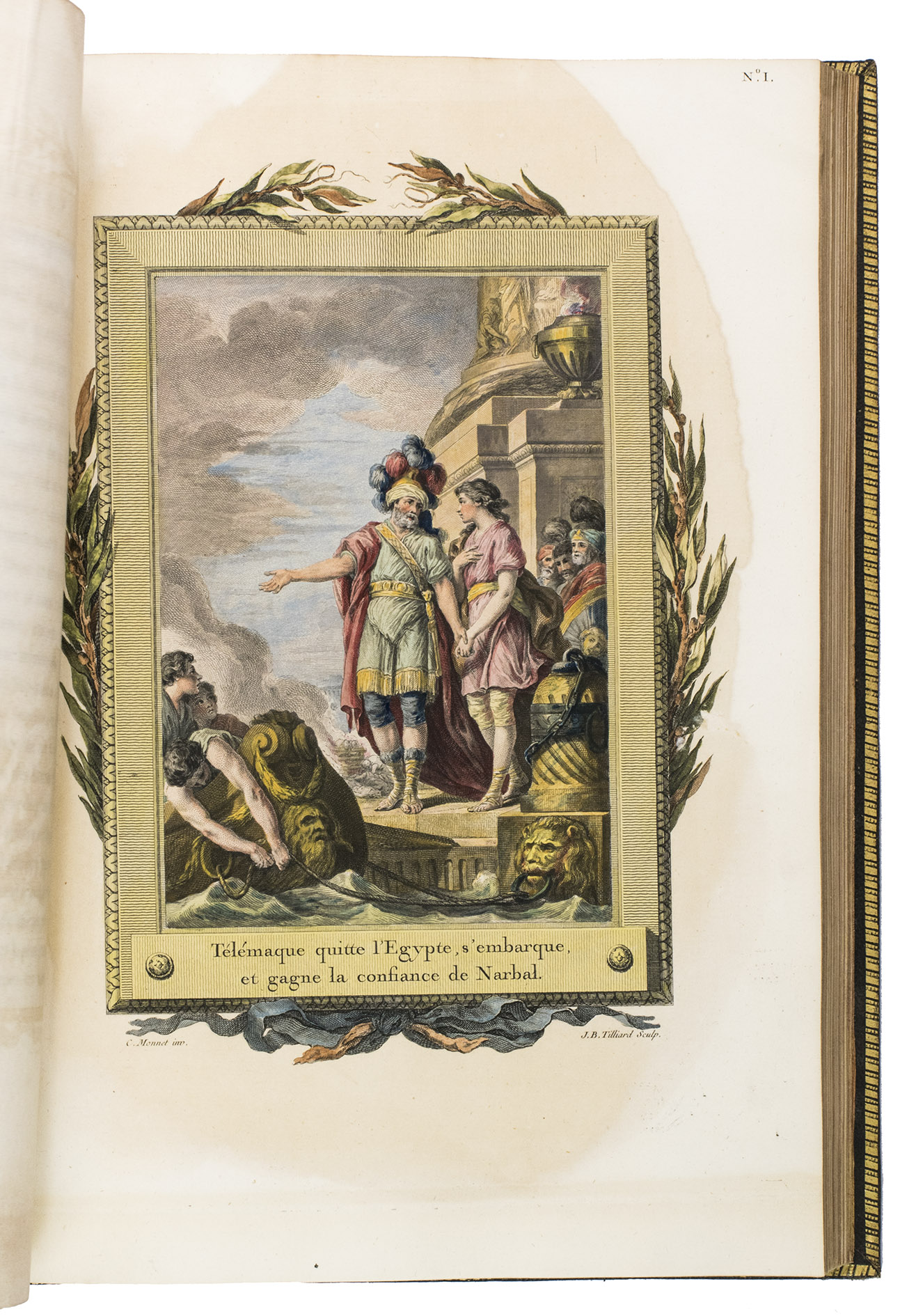
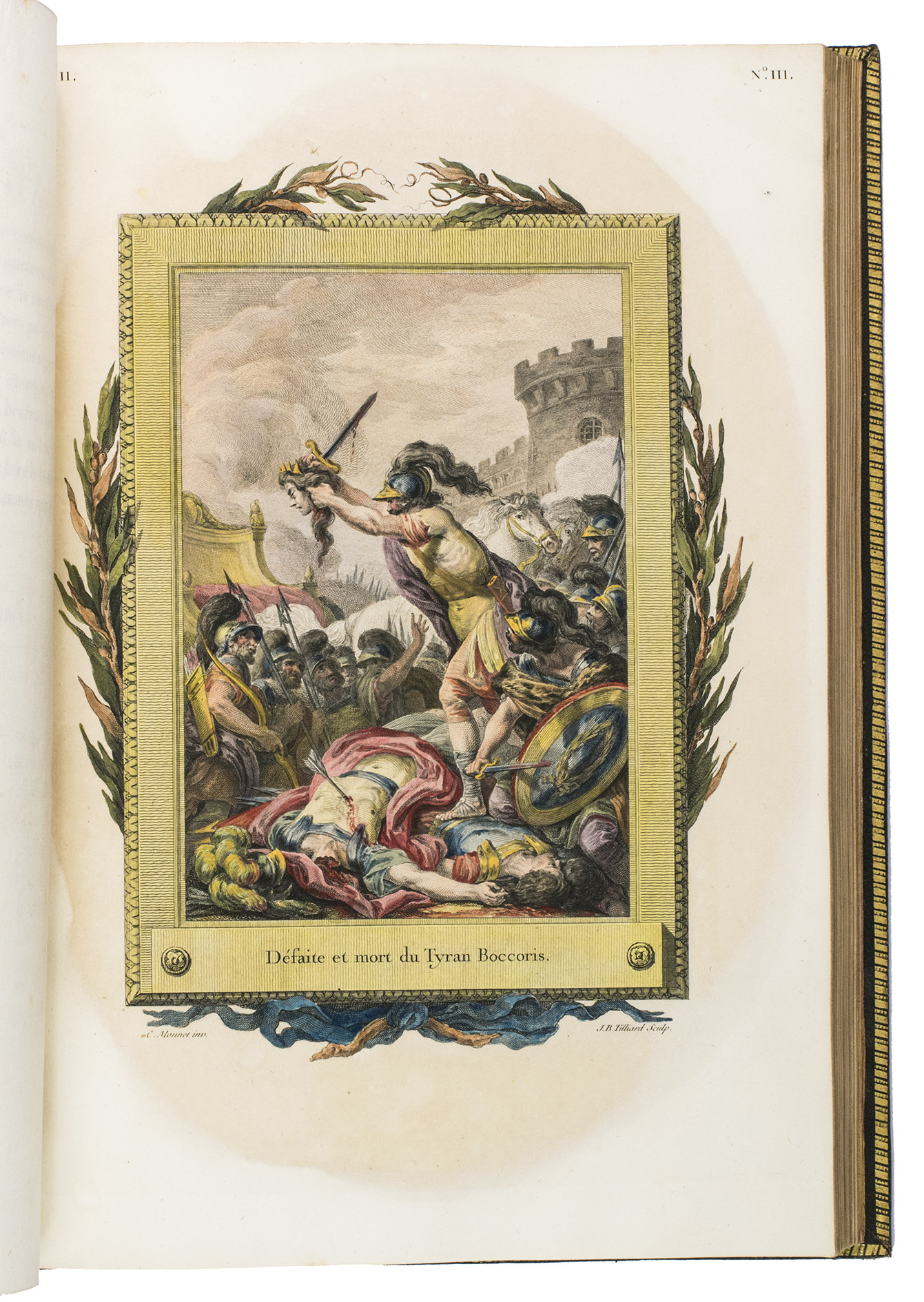
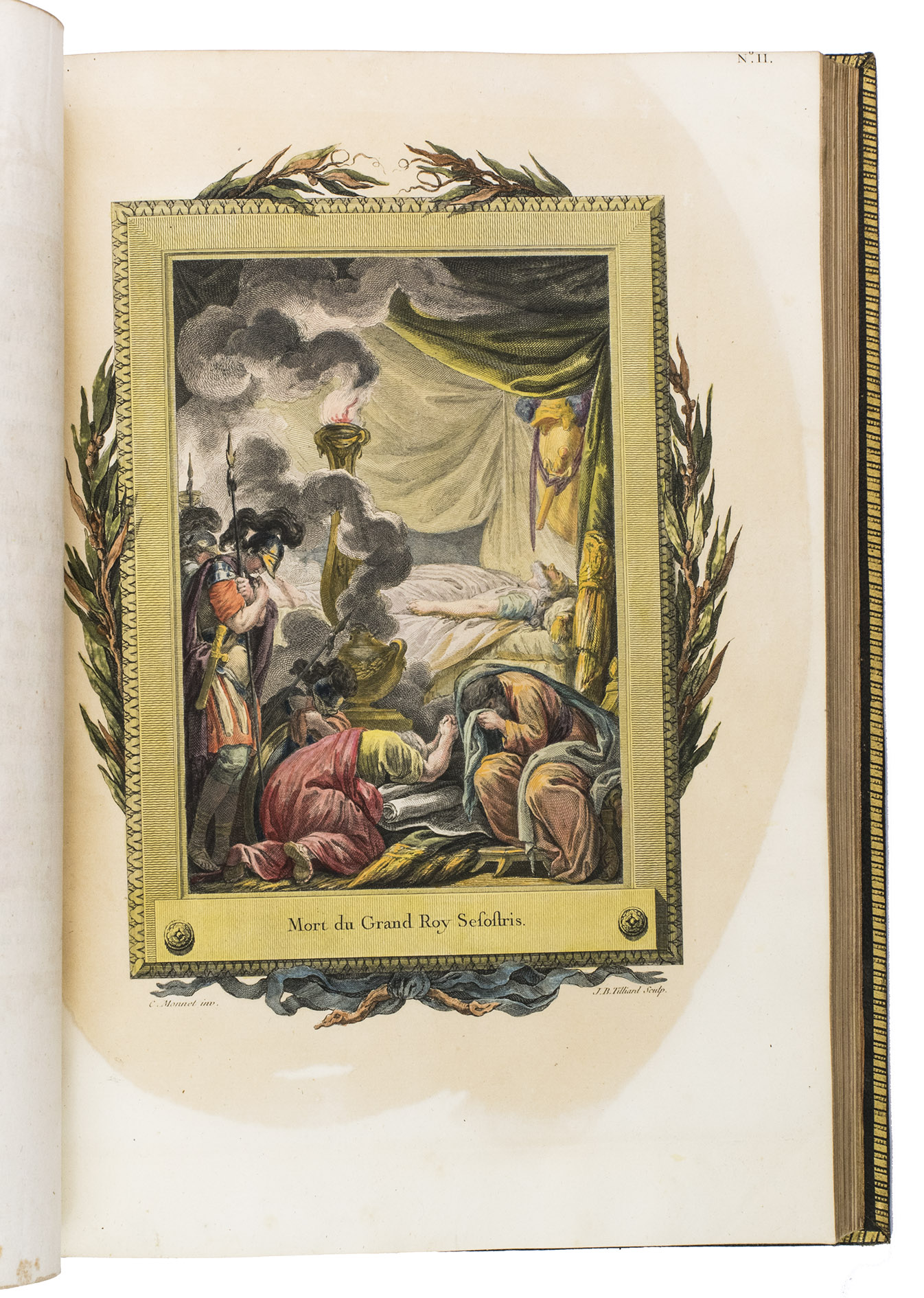
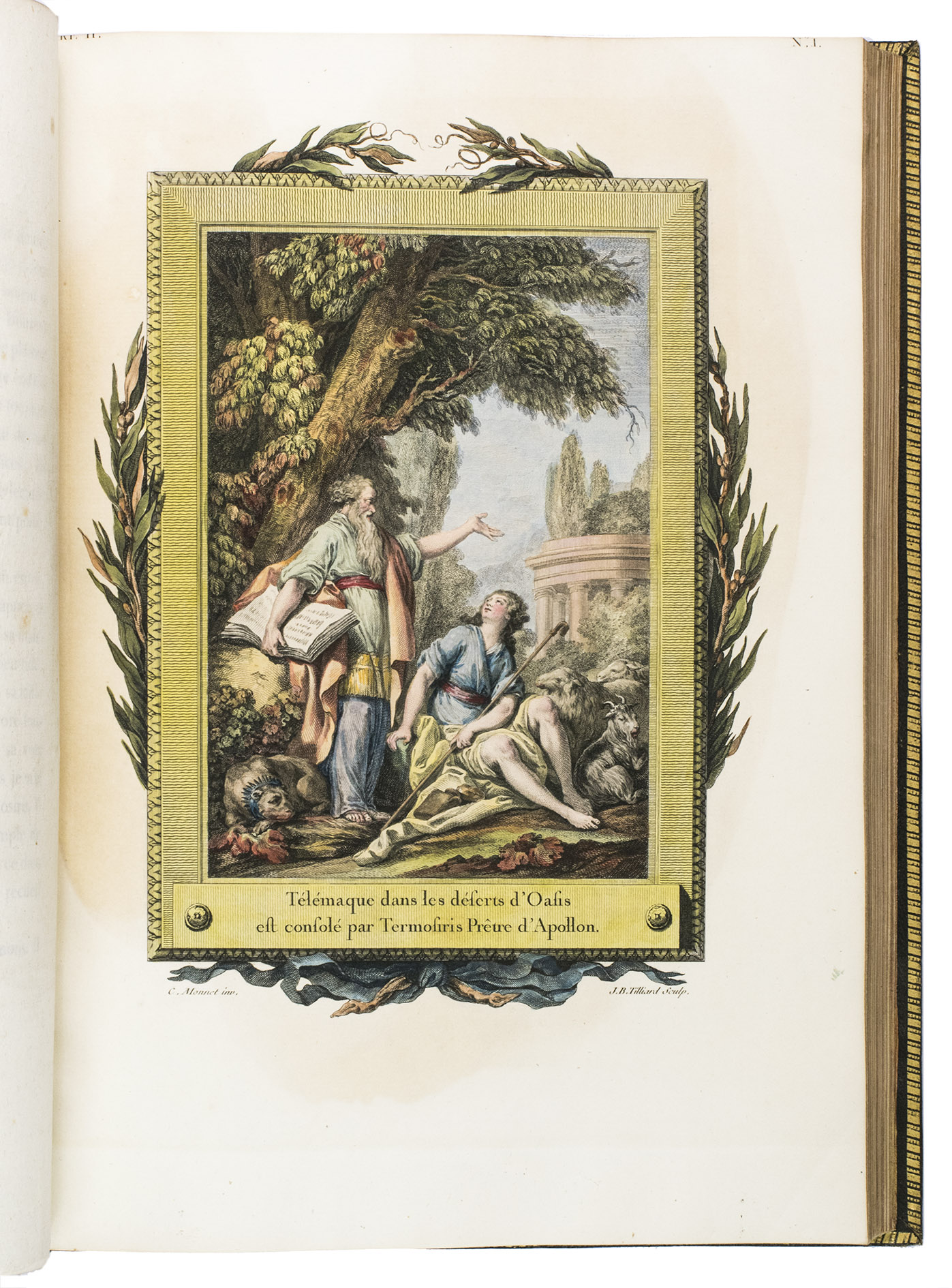
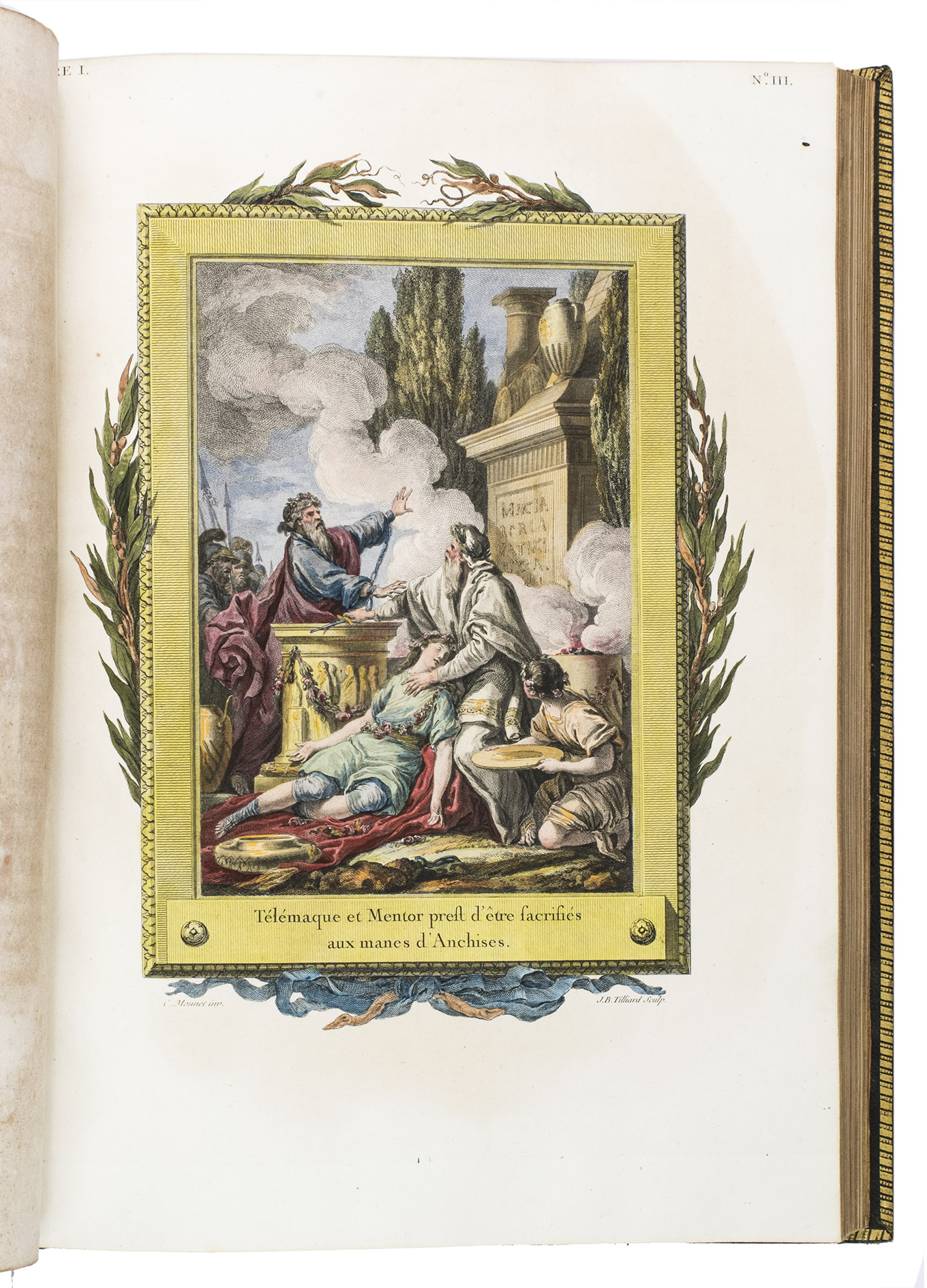
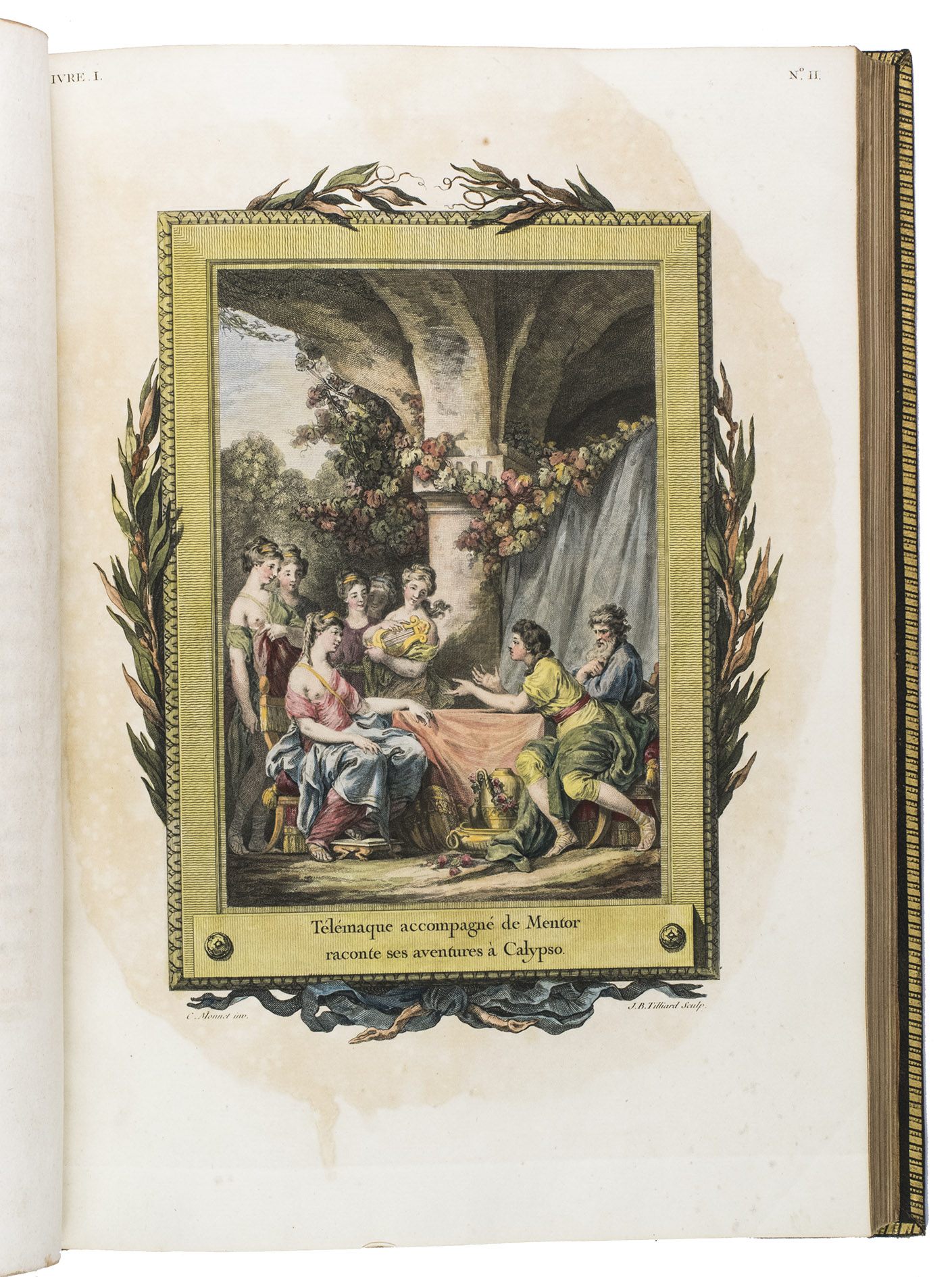
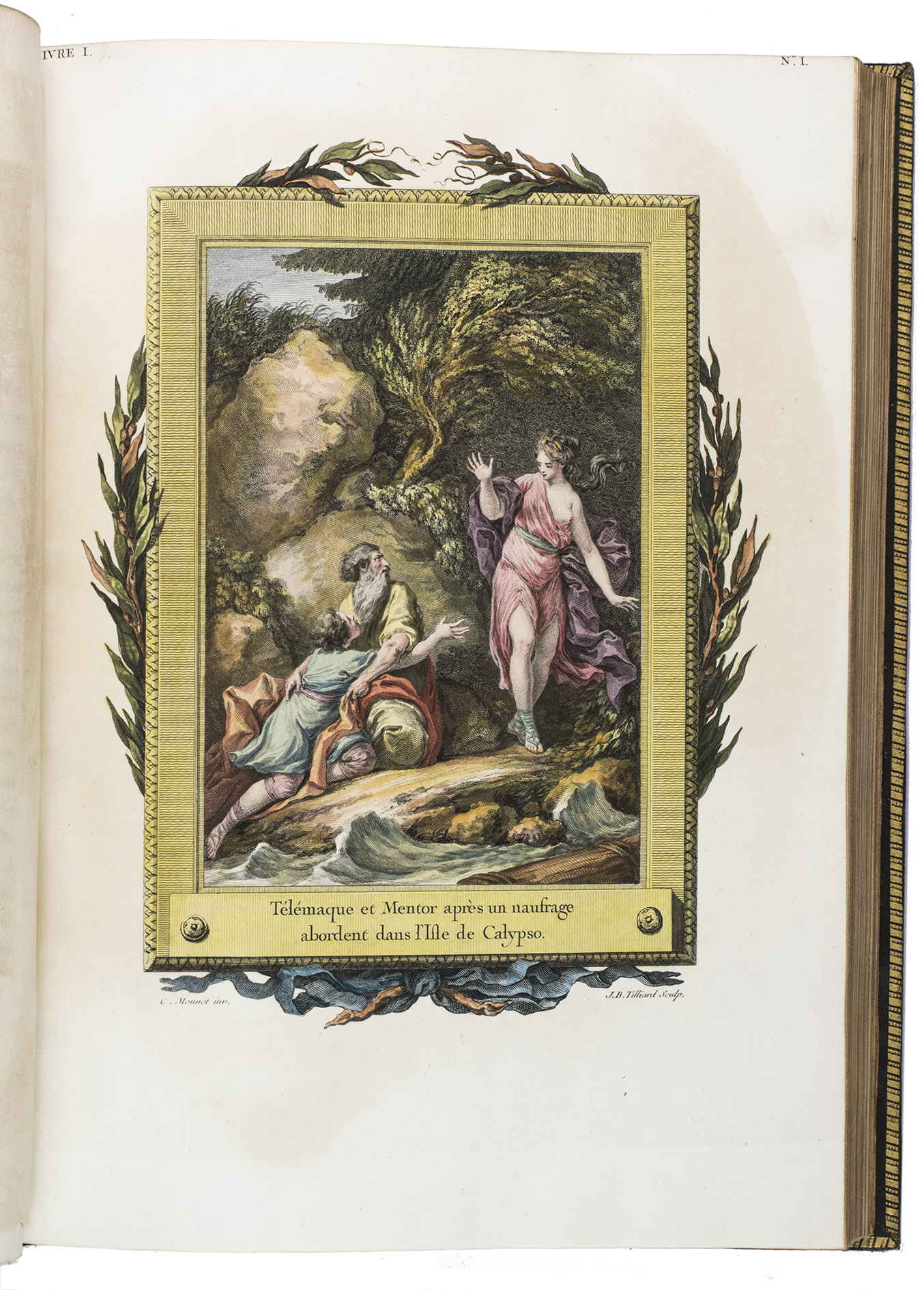
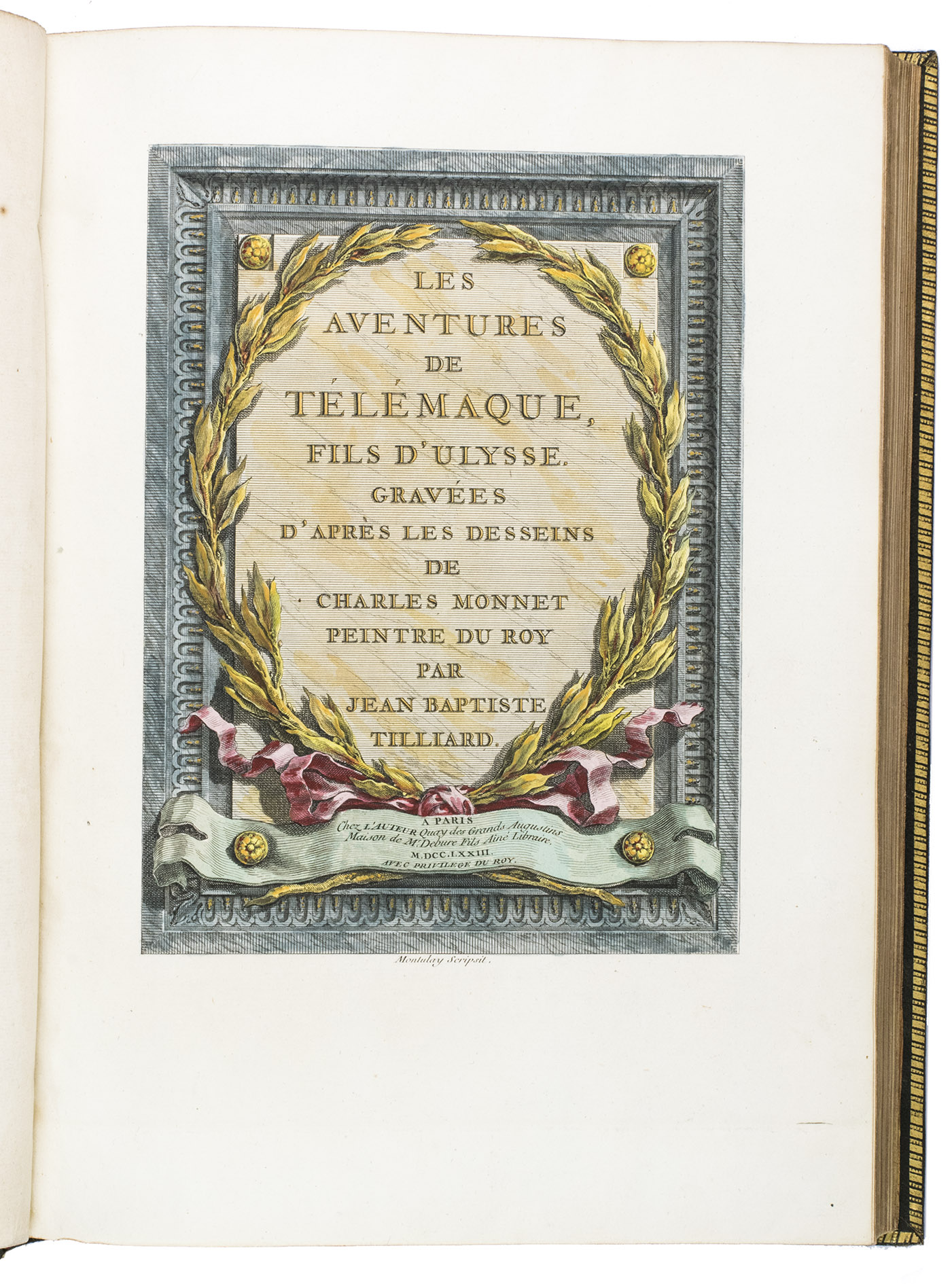
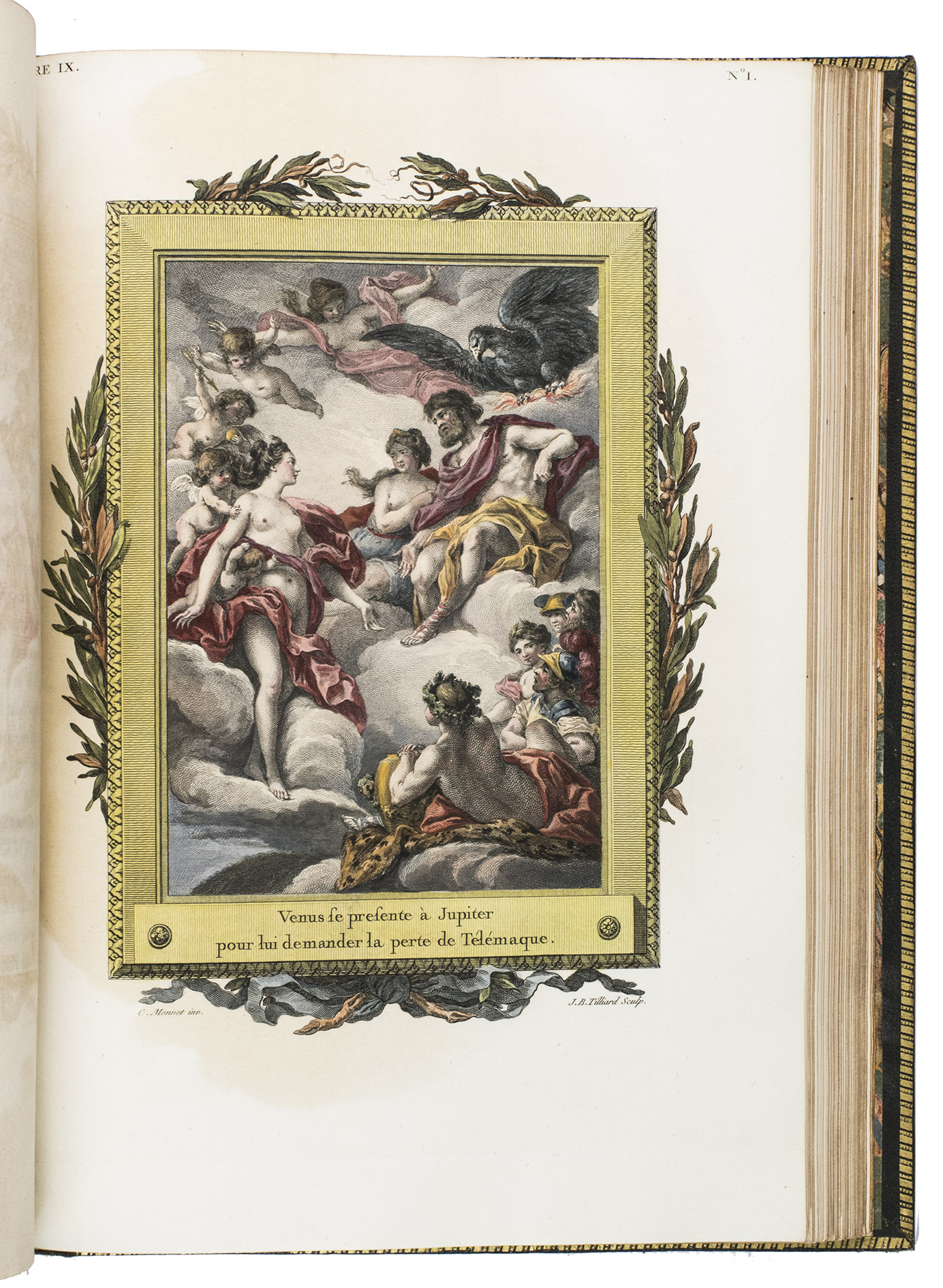
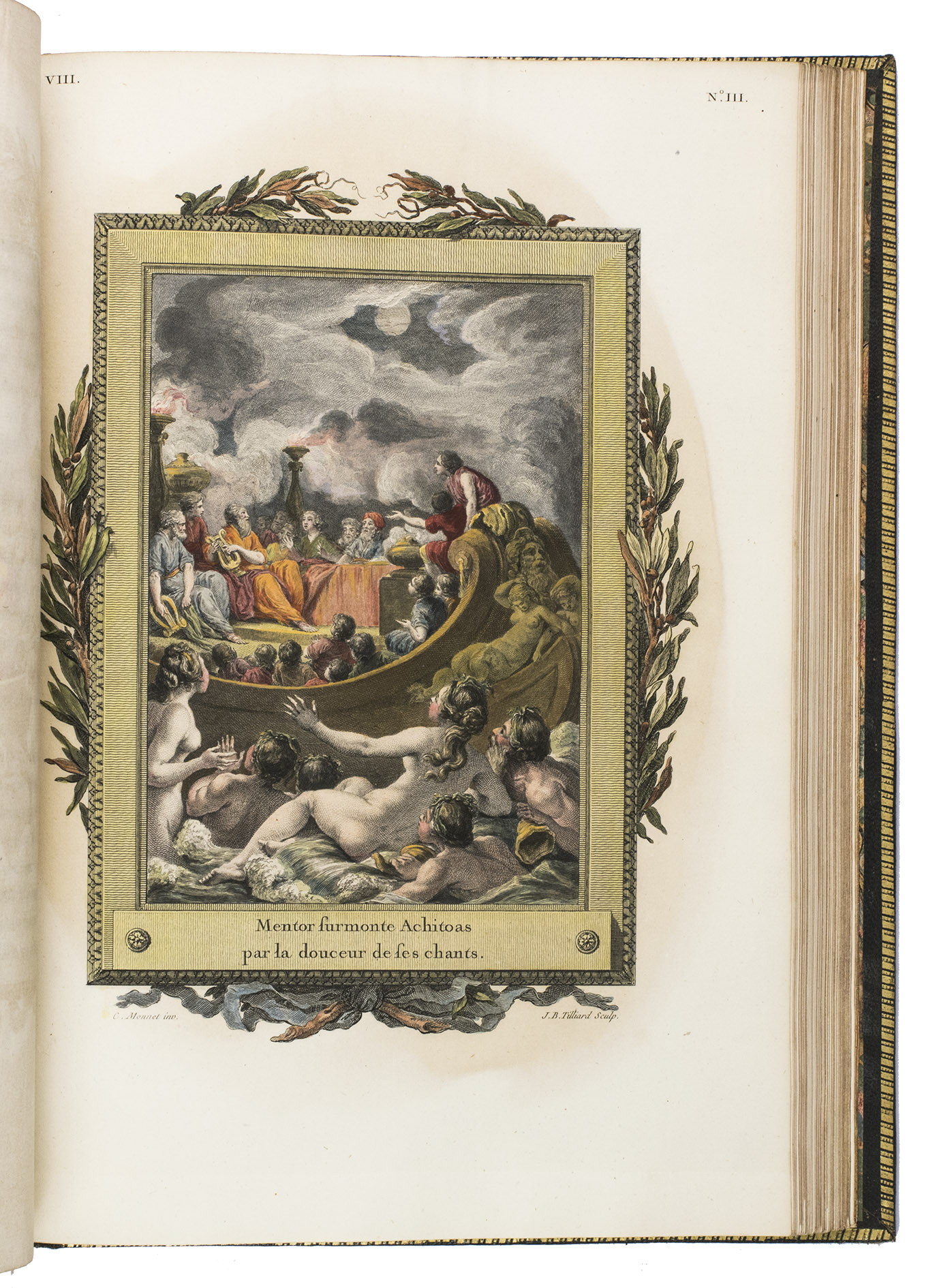
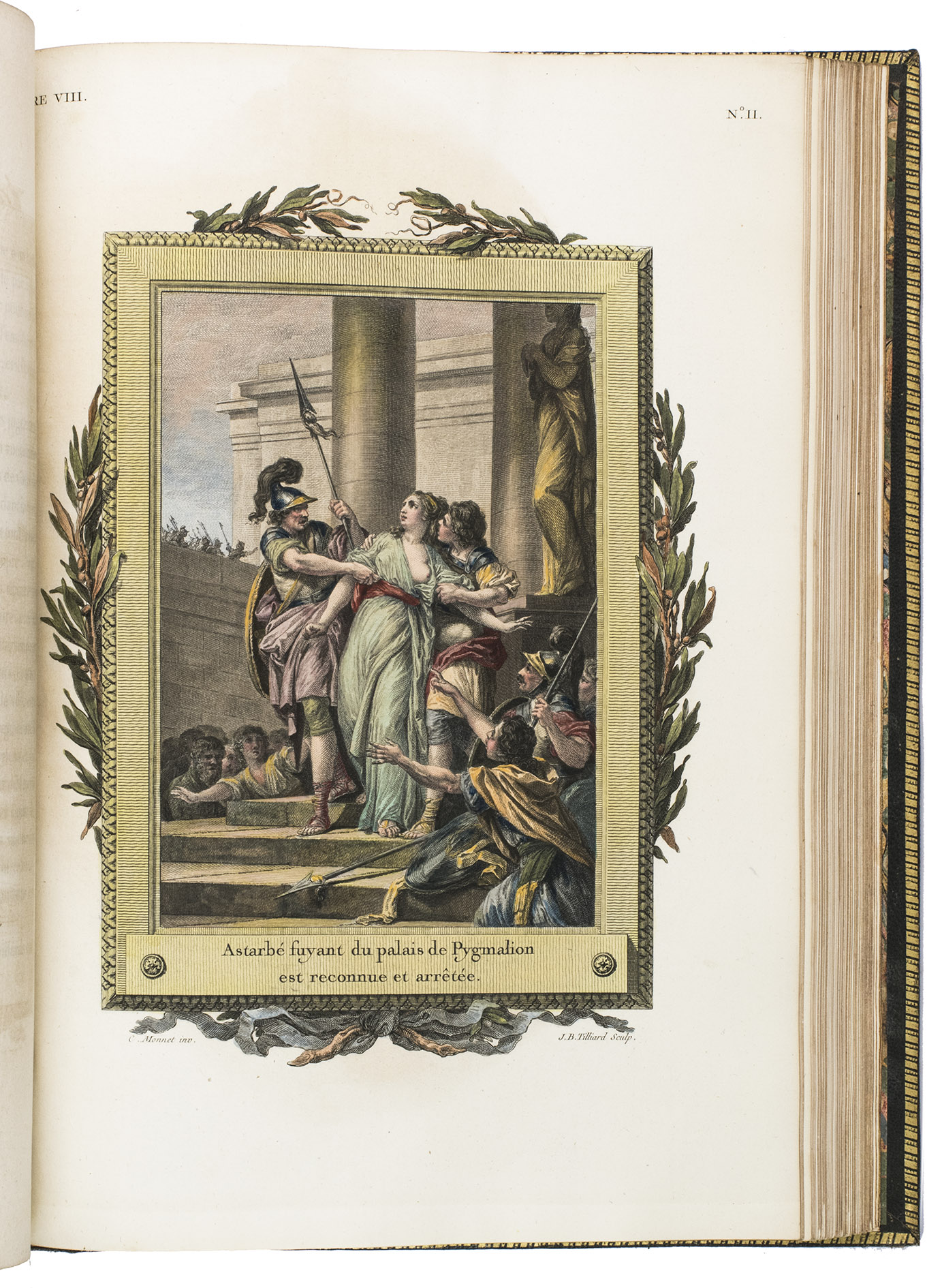
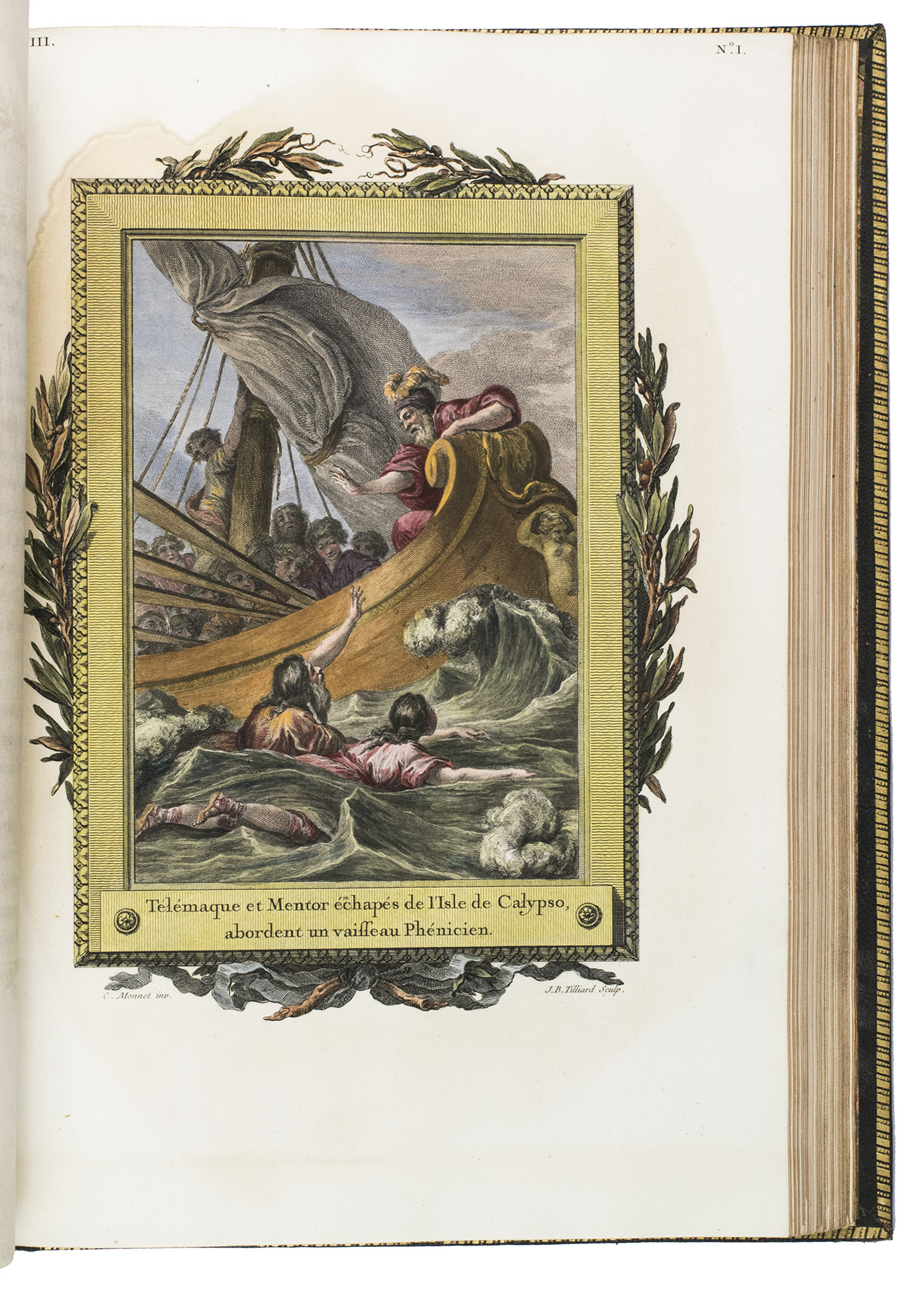
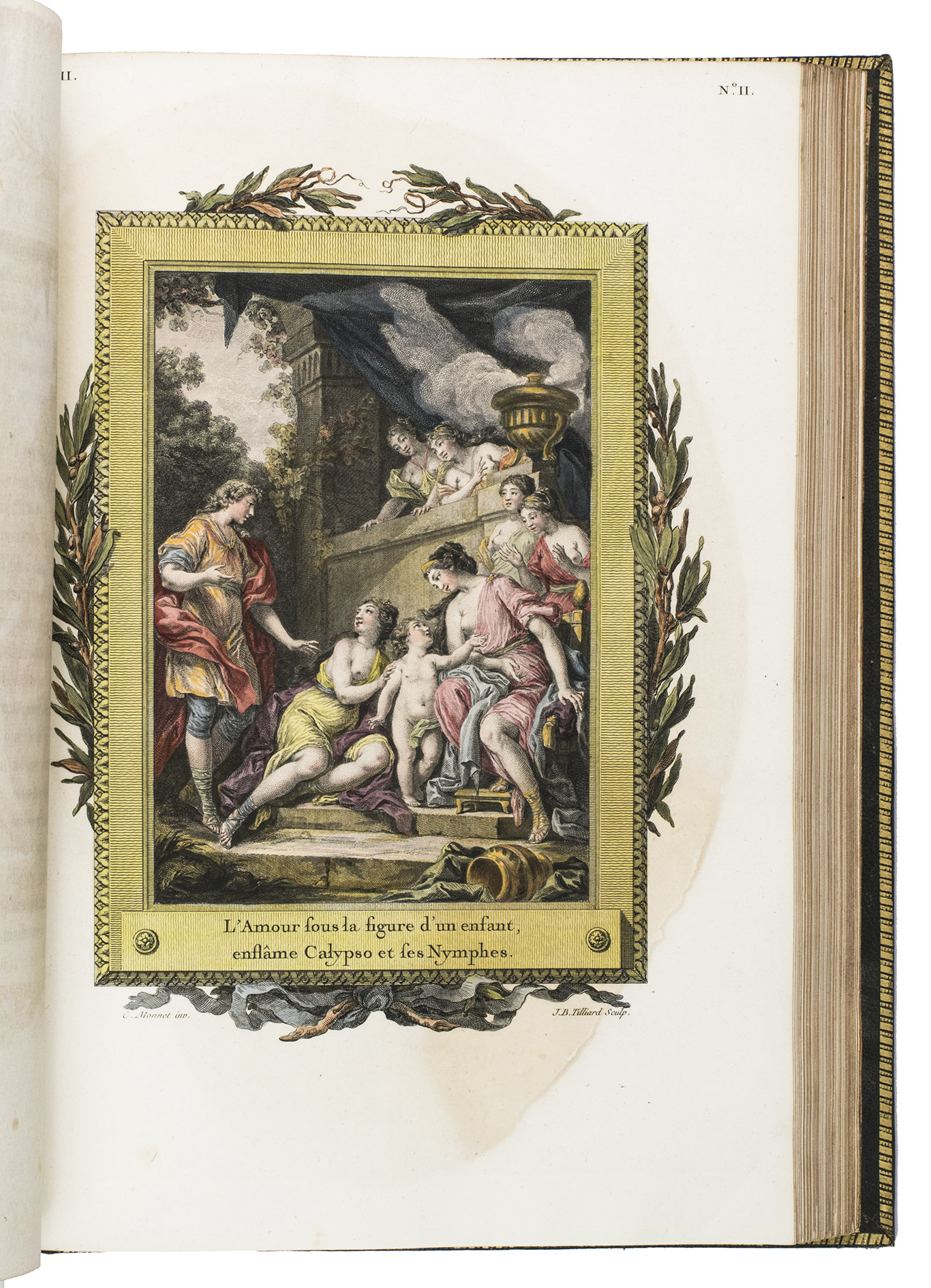
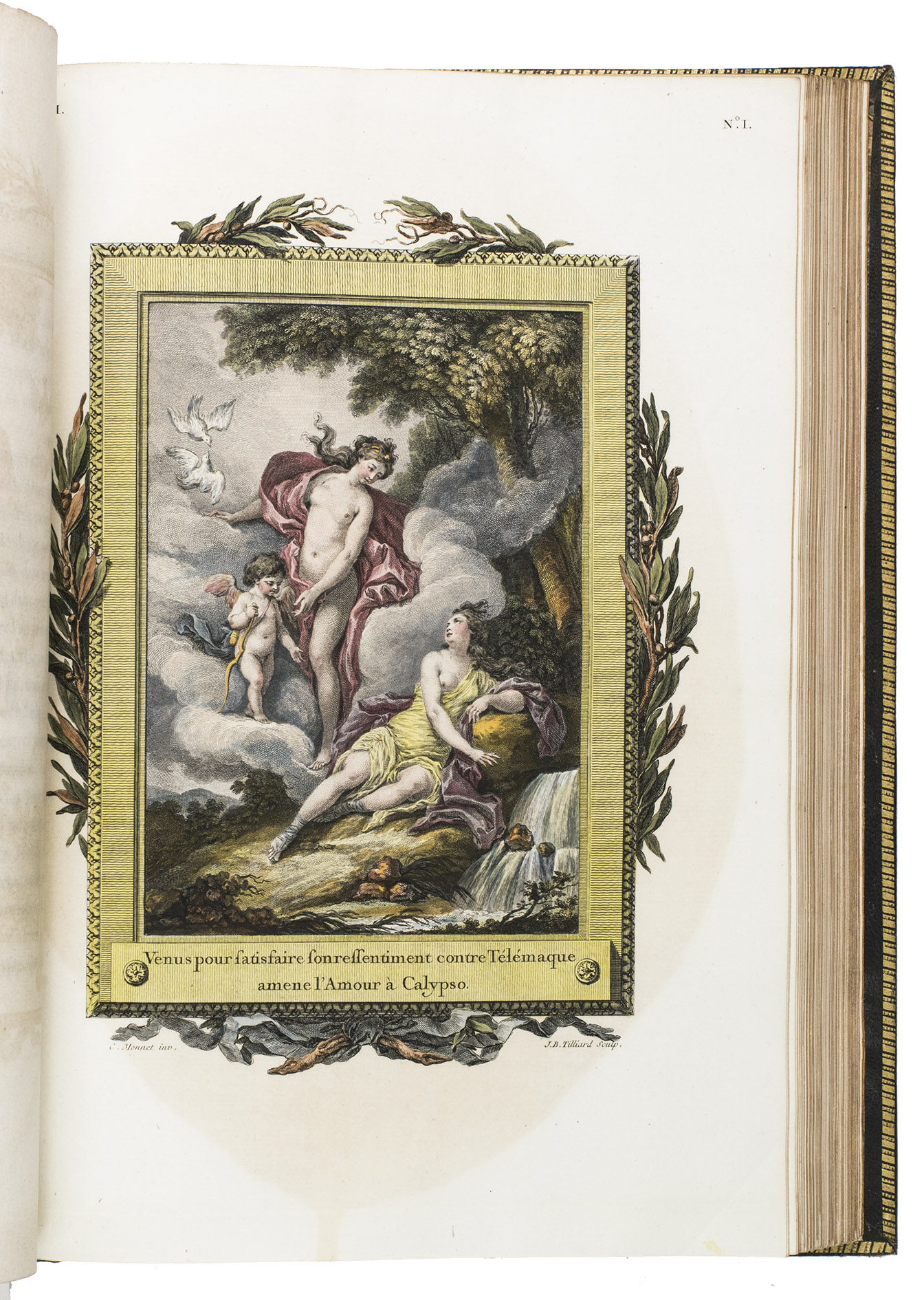
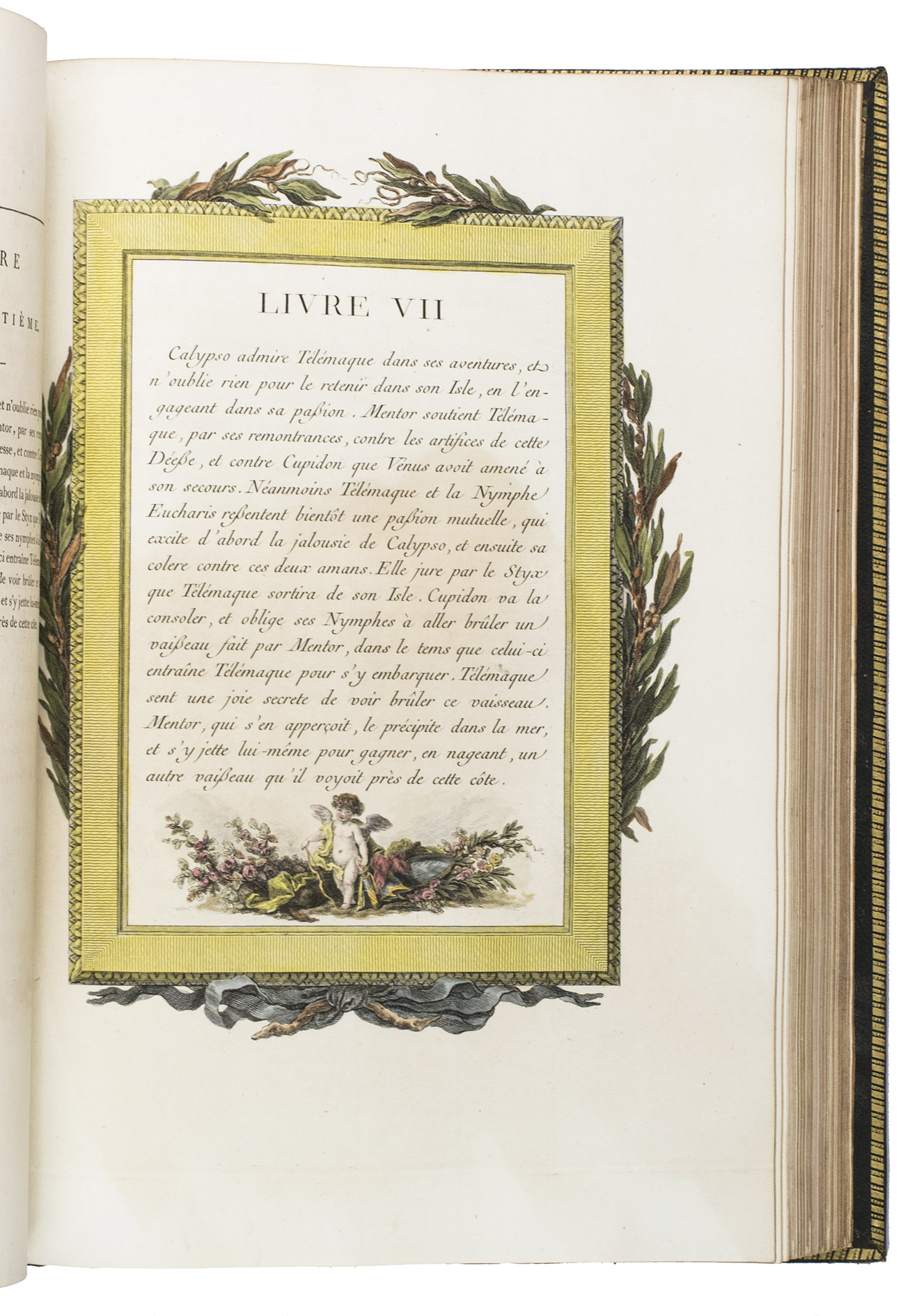
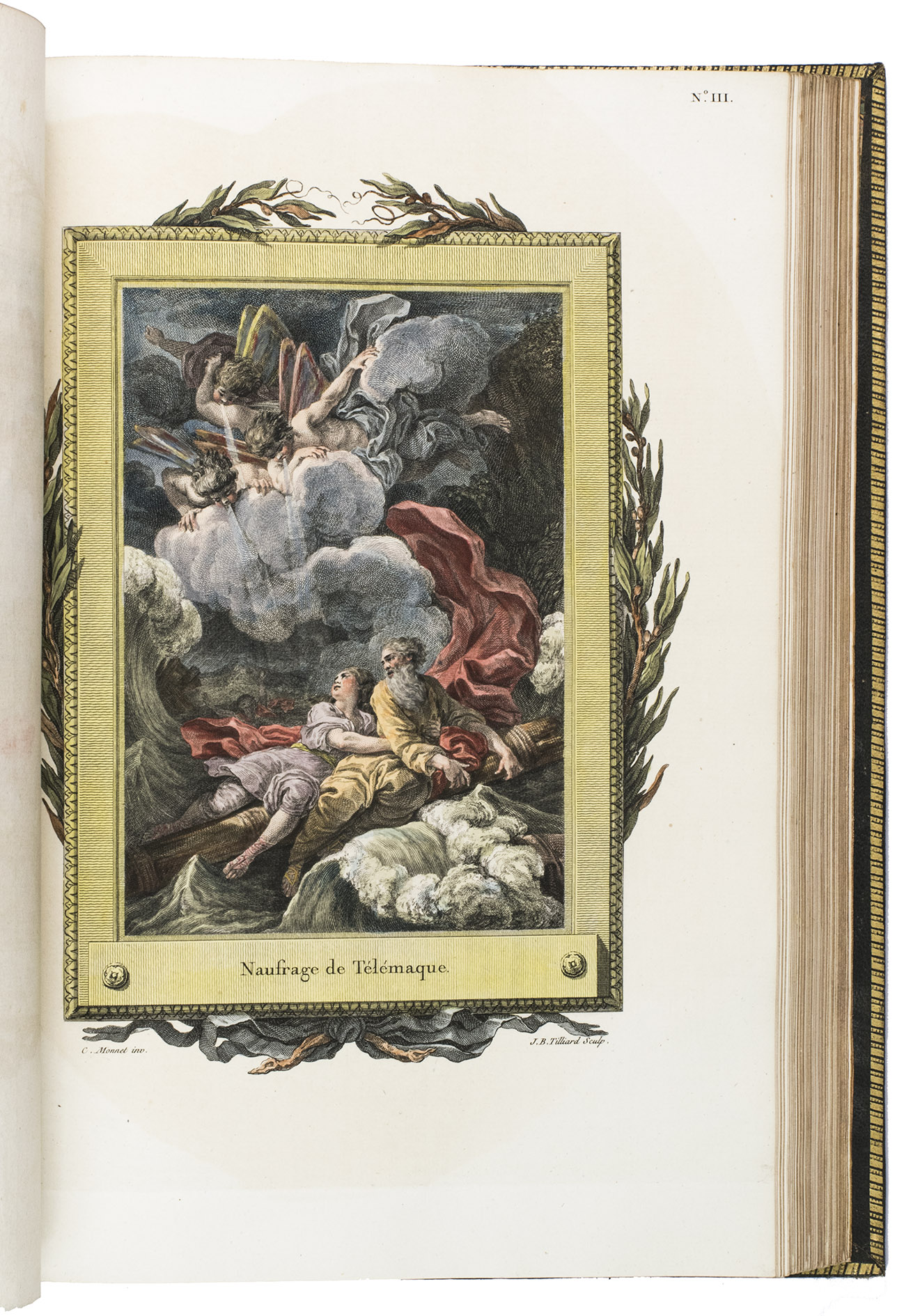
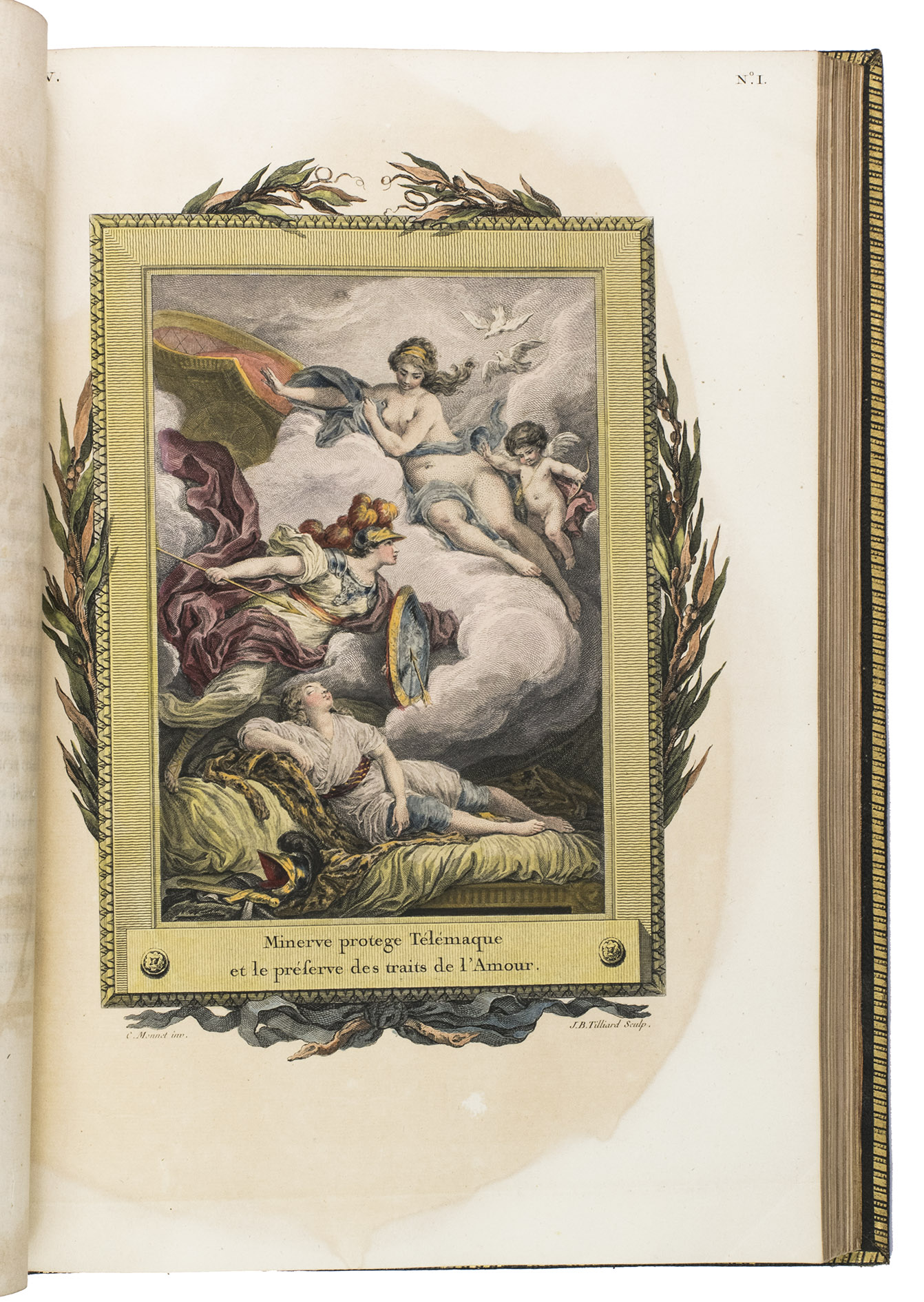
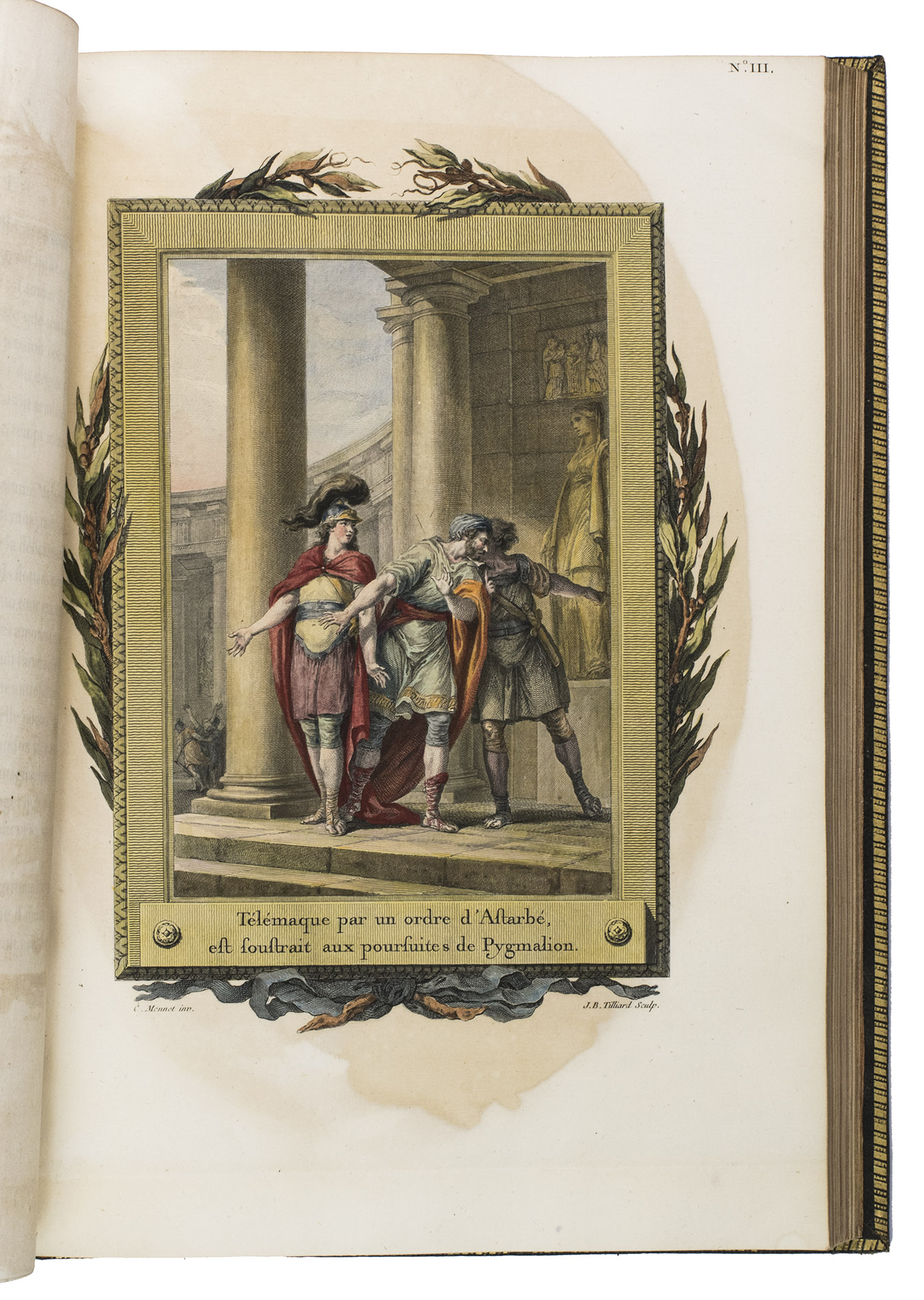
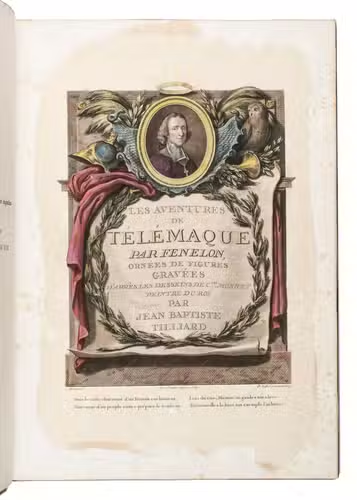
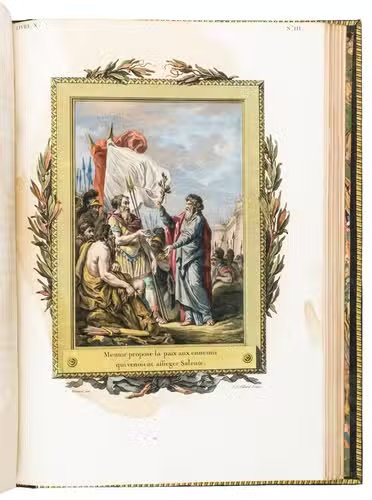
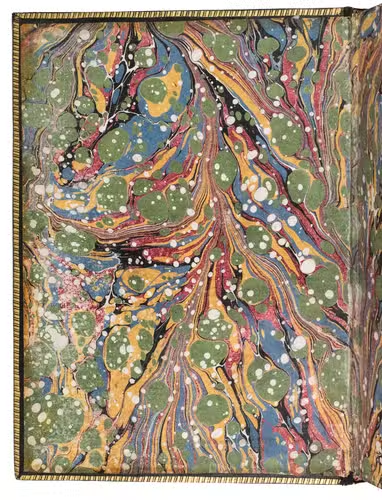
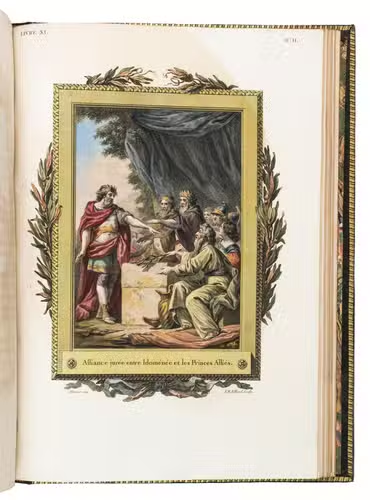
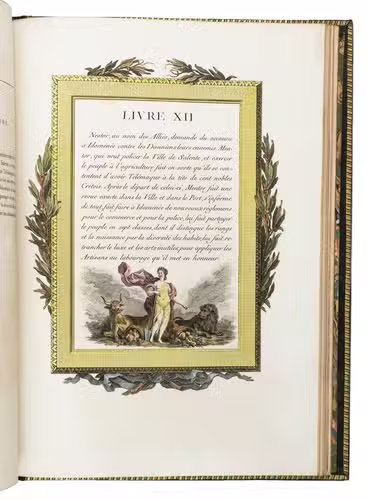
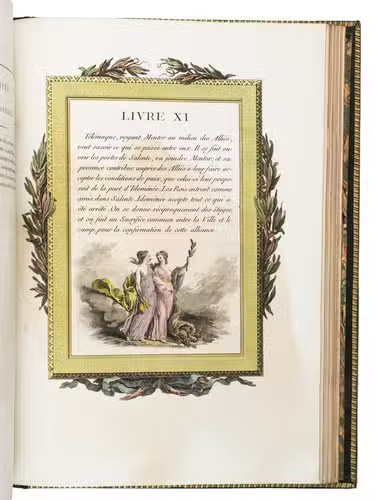
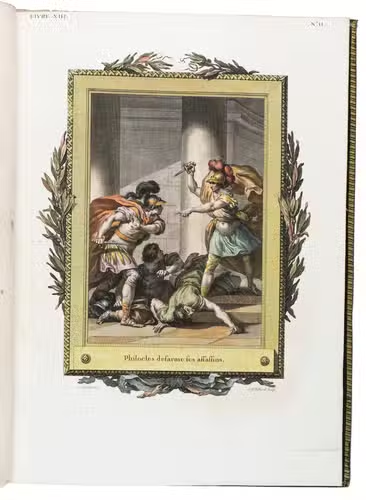
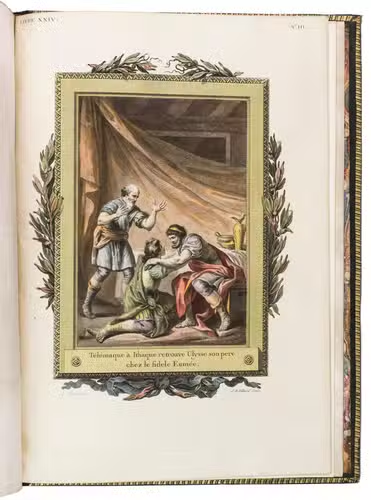
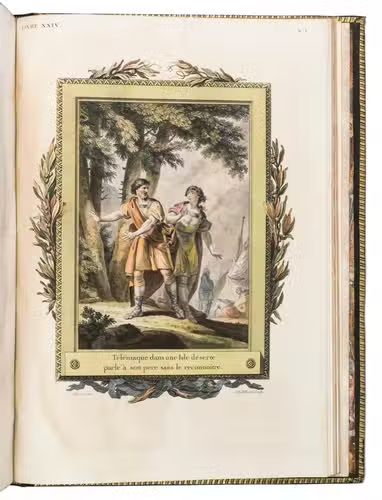
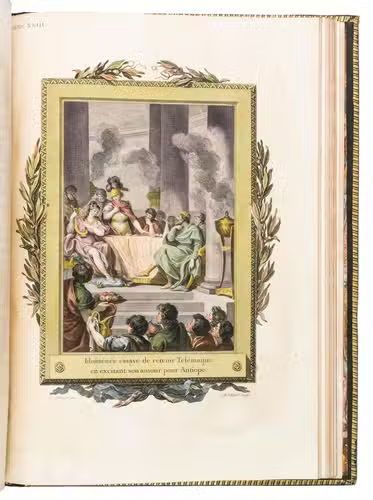
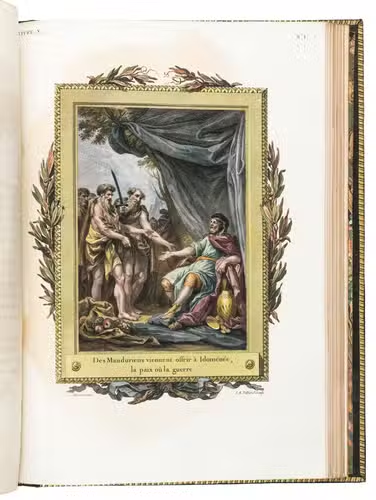
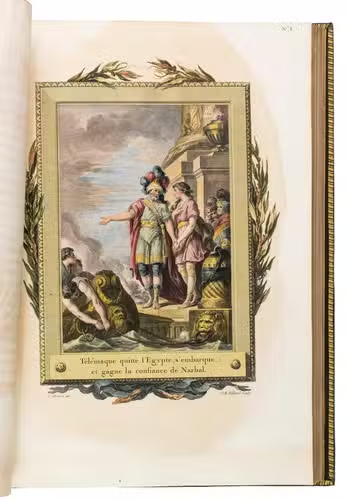
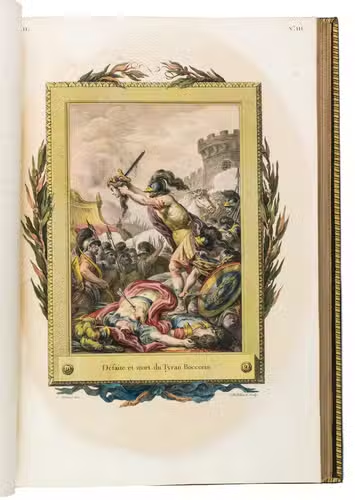
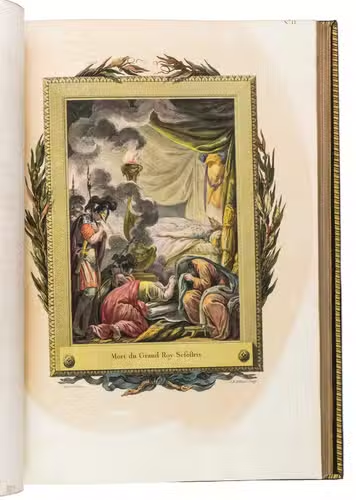
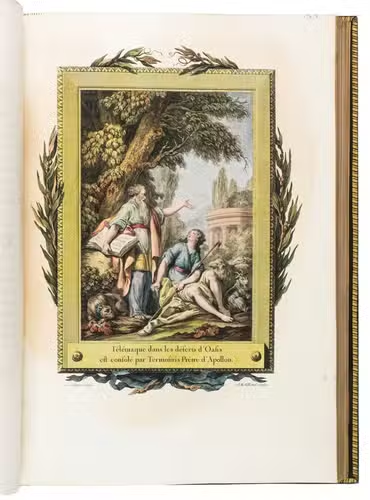
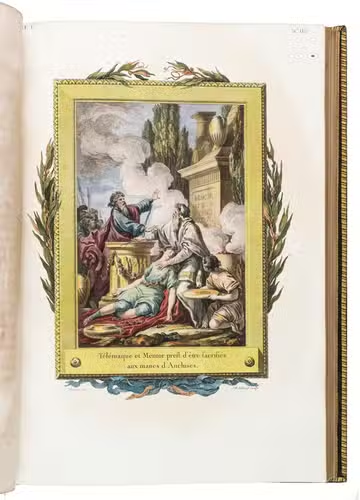
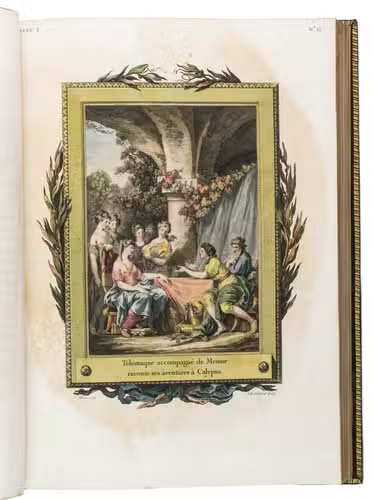
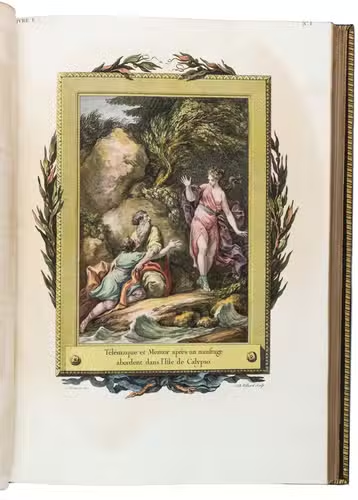
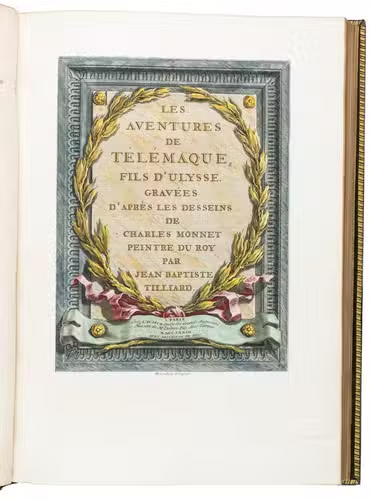
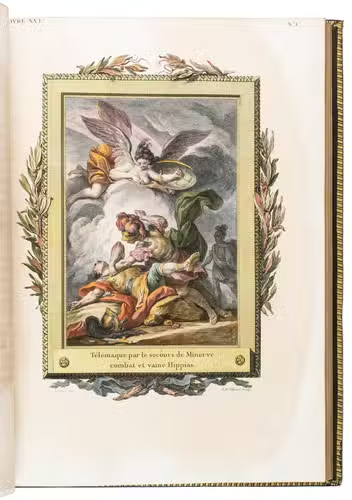
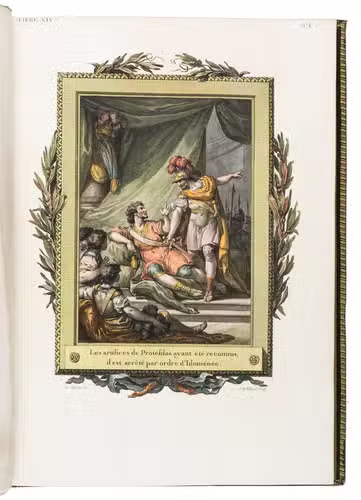
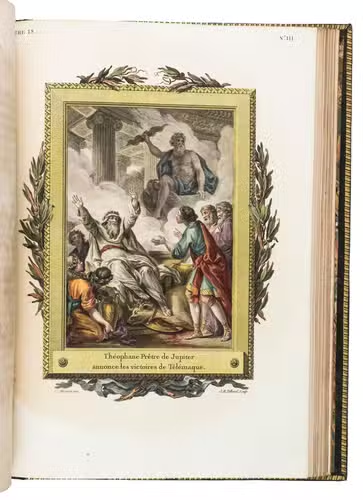
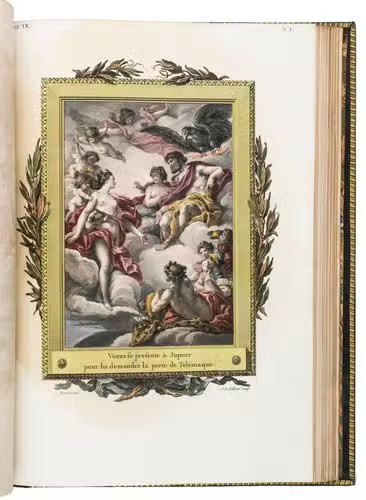
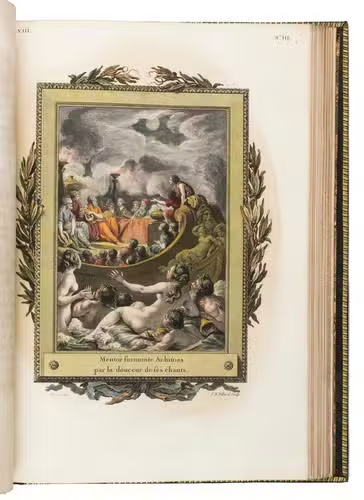
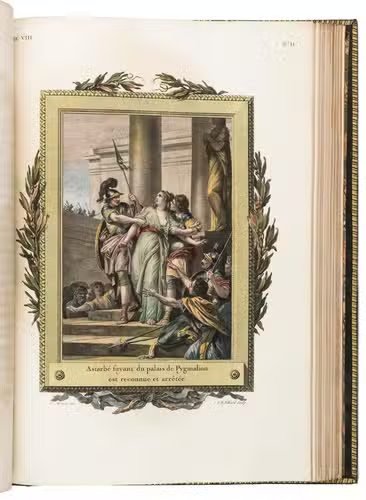
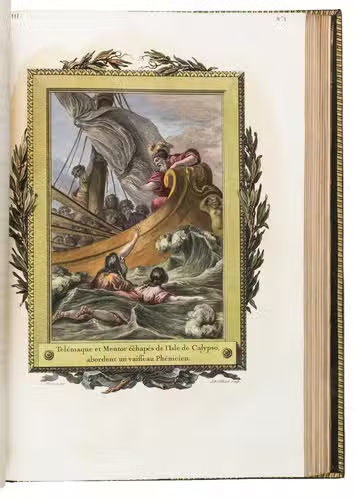
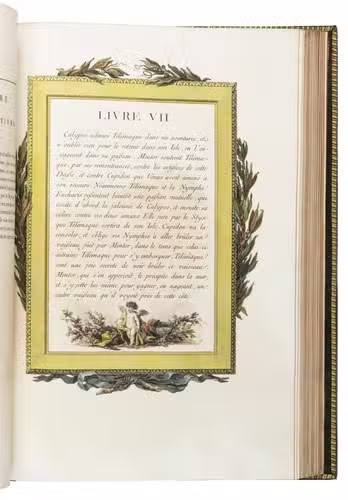
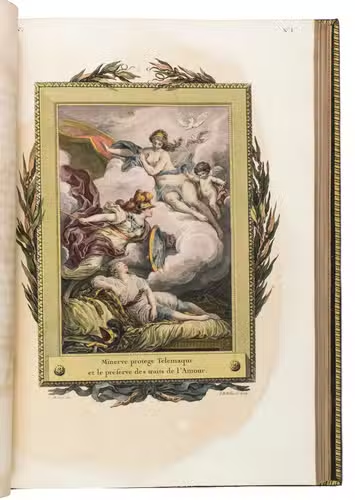
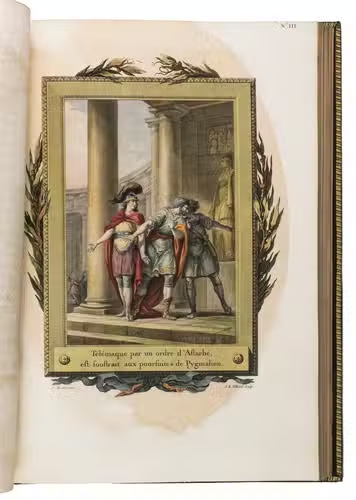
Paris, [Pierre François Didot le jeune], 1785. 2 volumes. Super royal 4to. With 98 hand-coloured plates, namely two engraved title pages in volume 1, 72 illustration plates engraved by Jean-Baptiste Tilliard after drawings by Charles Monnet, and 24 engraved plates with summaries of the "books" in decorative frames. Further with an elaborate armorial device on the title page of each volume. Contemporary gold-tooled dark greenish-brown morocco, a red morocco title and volume label on the spine, lettered in gold, gold-tooled board edges and turn-ins, gilt edges, marbled endpapers. [3], [1 blank], [4], 309, [3 blank]; [3], [1 blank], 297, [1 blank], [2] pp.
€ 32,500
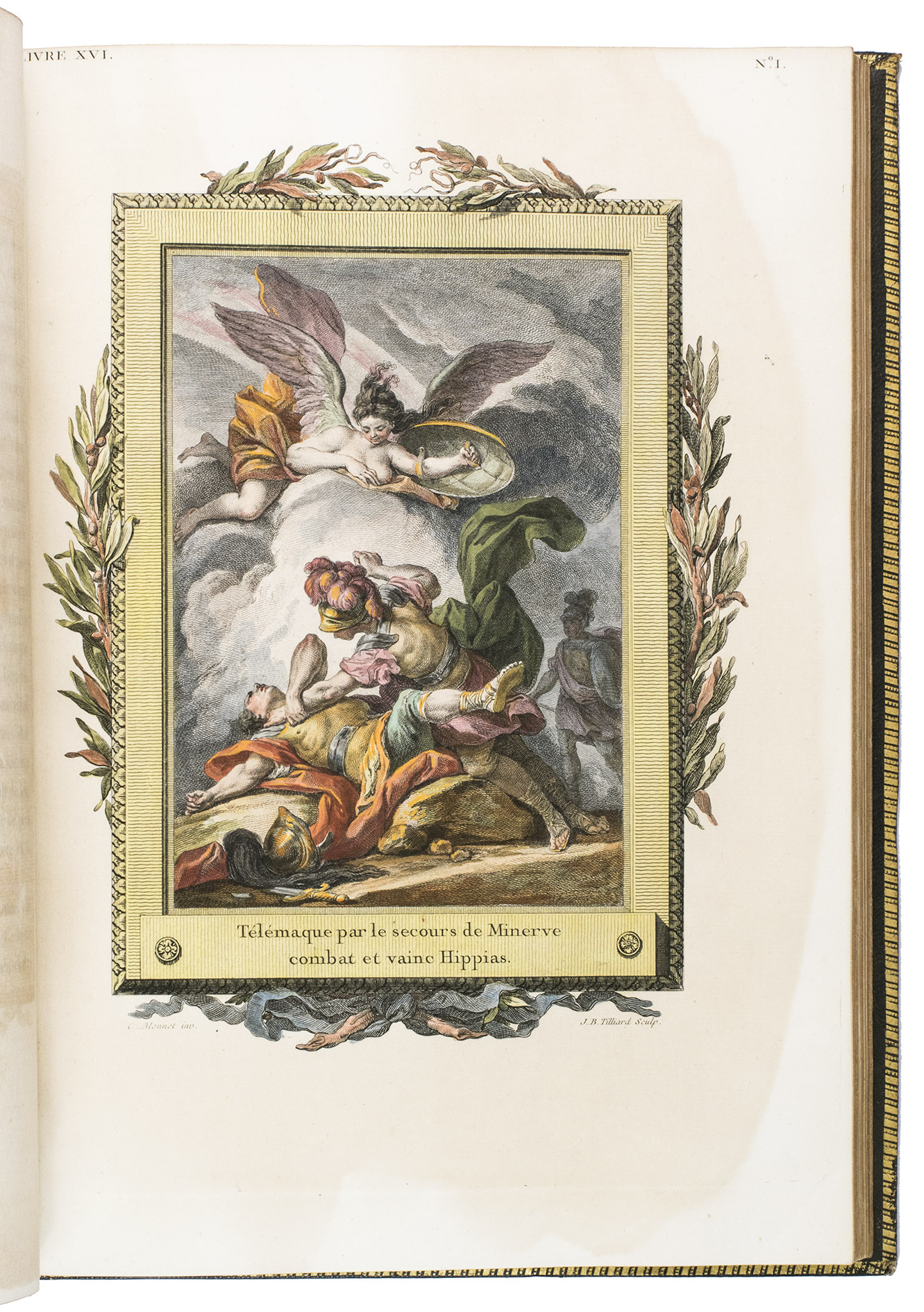
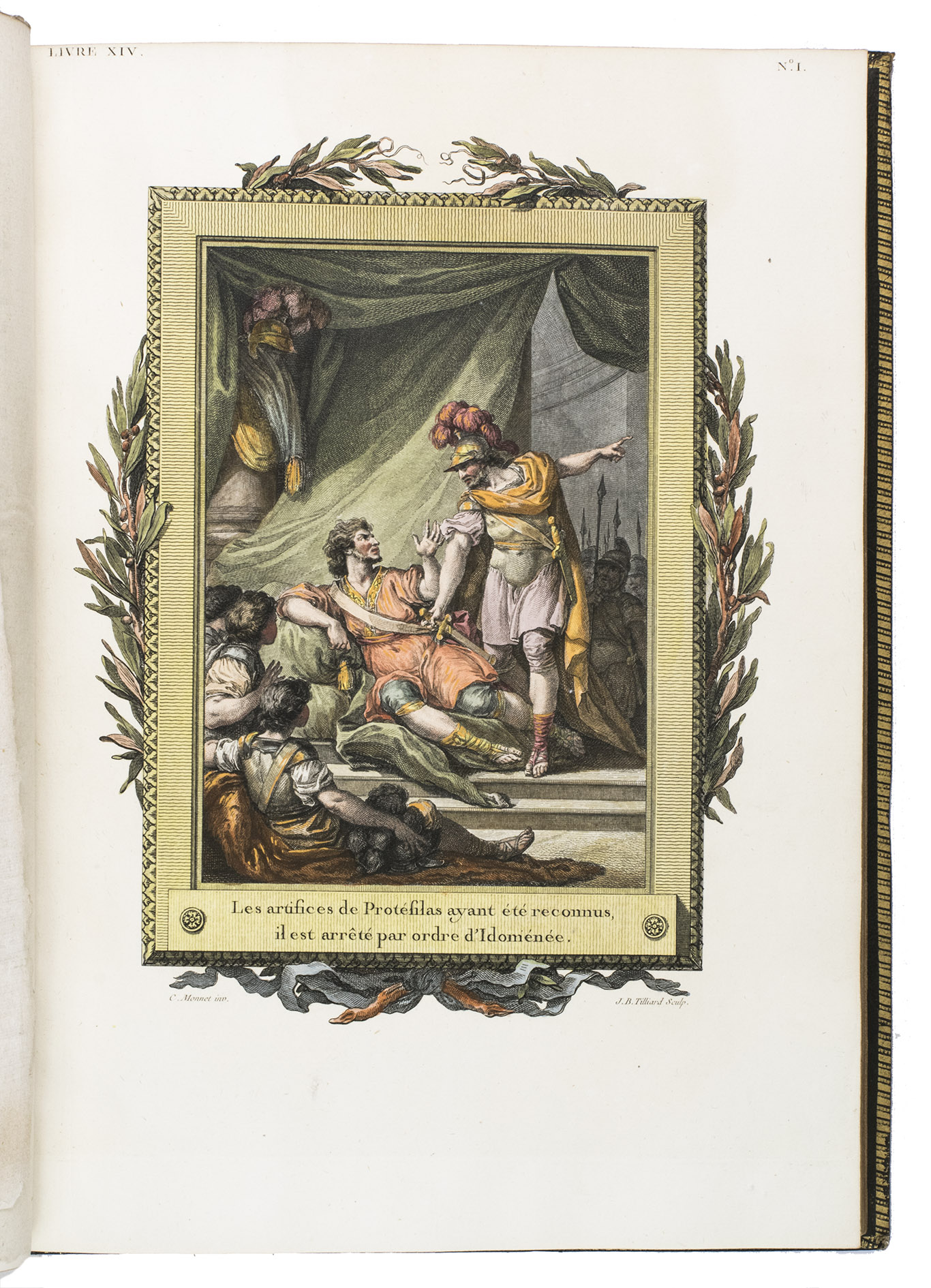
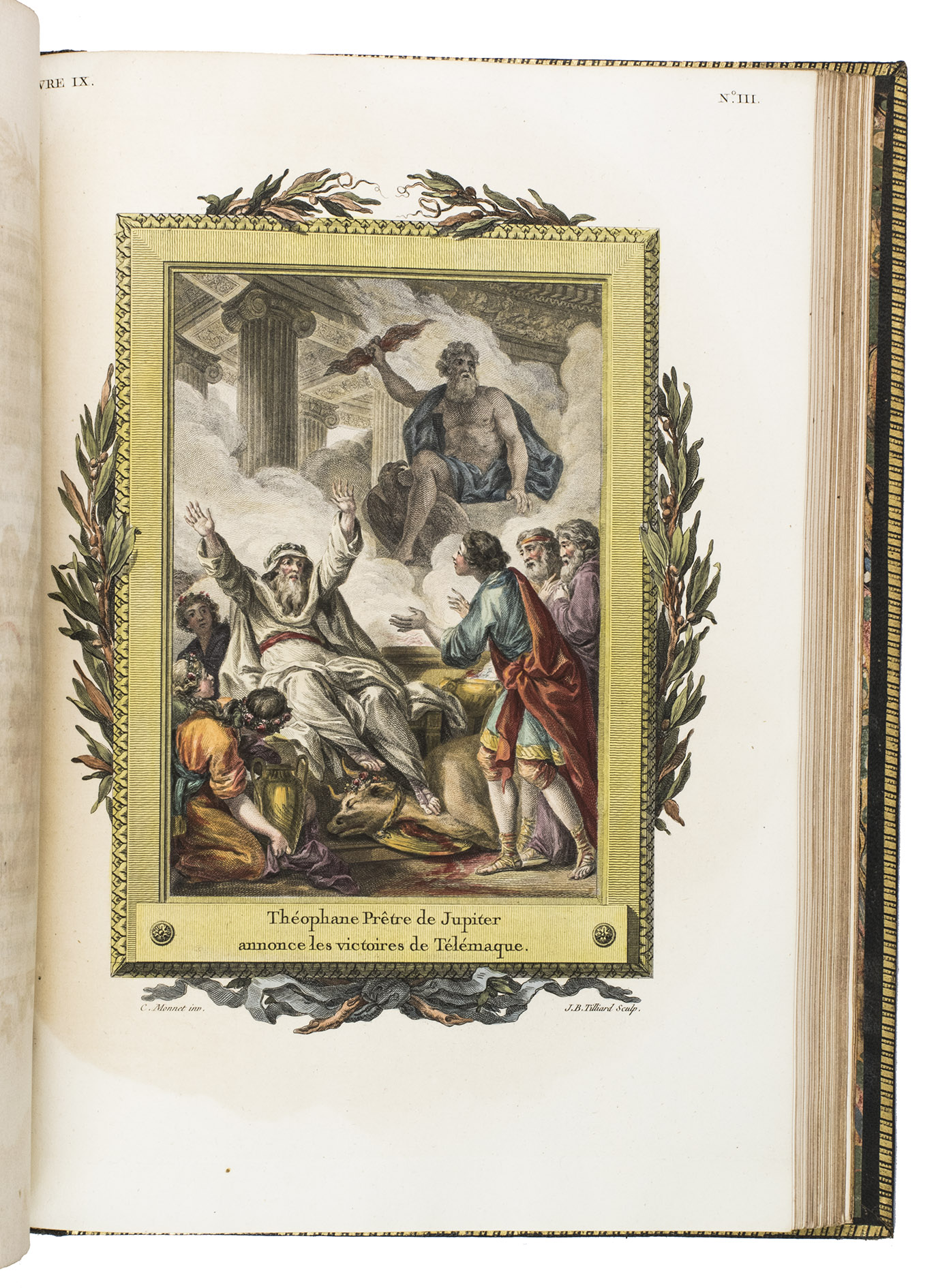
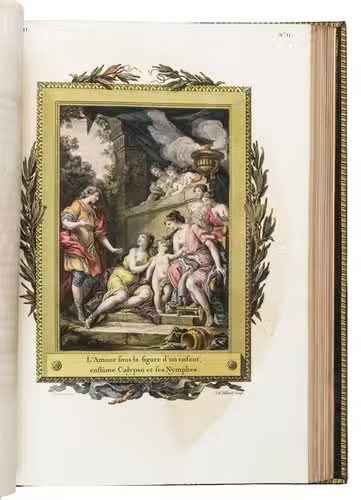
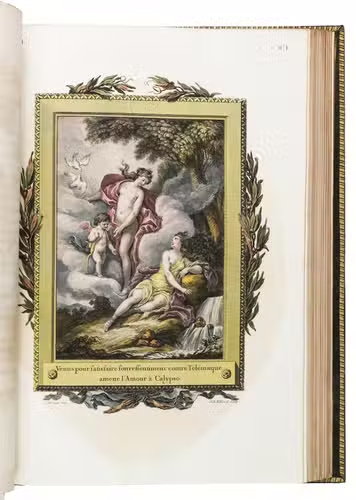
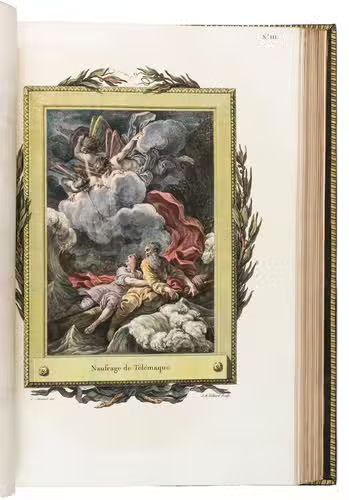
Deluxe hand-coloured edition of Fénelons popular didactic novel, printed with newly designed type by Didot. This is also the first edition to include the 72 beautifully engraved plates drawn by the French painter Charles Monnet (or Monet, 1732-1808 or later) and engraved by Jean-Baptiste Tilliard (1740-1813). The present copy has been luxuriously bound in a neoclassical style by Nicolas-Denis Derome (1731-1790), a renowned bookbinder who was known for the beauty and finesse of his work.
Les aventures the Telemaque was originally published anonymously in 1699, because its denunciation of luxury, war, and selfishness as a matter of principal clearly bore an implied critique of the autocratic rule of King Louis XIV. The author did not remain anonymous for long; François de Salignac de la Mothe-Fénelon, mostly known as François Fénelon (1651-1715), was a French Catholic archbishop, theologian, poet, and writer. He was a regular visitor of the royal court at Versailles and for eight years tutor to Louis, Duke of Burgundy, known as the Petit Dauphin, King Louis XIVs grandson. In 1697, however, Fénelon was banished to his diocese, initially because of a religious dispute and later for writing the present work. Growing dissatisfaction with Louis XVI leading up to the French Revolution, made it once again both popular and dangerous, though ironically the present edition and others were produced with patronage from members of the royal family.
The story of Telemachus and Minerva was meant as a small addition to fill a gap in the chronology of Homer's great epic the Odyssey. While Telemachus, the son of Ulysses/Odysseus is in theory the main character, the principal focus is actually on "Mentor", or Minerva, who teaches him how to rule and how to live life in general with both wisdom and morality. Fénelon's work proved incredibly popular, going through numerous editions and translations throughout the 18th and well into the 19th century. The author's ideals of simplicity, equality, and world peace found their way through Telemachus and Minerva/Athena to French revolutionaries and German romantics, thus indirectly shaping 18th- and 19th-century European cultural and political thought. It also found its way to North America - becoming one of Thomas Jefferson's favourites - and the Ottoman Empire. With the publication of an edition in Ottoman Turkish in 1859, it became the first European novel to be translated into Turkish.
The present luxurious edition - which stands in stark contrast to the author's original message of simplicity and relative equality - was produced under the direction of Pierre François Didot with the patronage of the future King Louis XVIII. It is the first edition to unite the text with the detailed illustrations by Monnet and Tilliard. The first 6 plates, belonging to the first 2 books in volume 1, are numbered, signed, and captioned, all other plates are "avant la lettre" without the textual information and are very rare. The main text is set in the new Gros Romain gras roman type that Didot commissioned for this book from the punchcutter Jean-Baptiste Gérard, and printed on high quality wove paper made by Pierre II and Étienne Montgolfier in Annonay.
With the bookbinder's label of Nicolas-Denis Derome mounted on the verso of the second flyleaf ("Rélié par Derome le jeune"). The boards have been slightly rubbed, the spines are somewhat faded (due to exposure to sunlight in the past). The work is slightly browned and very lightly foxed throughout, the tissue paper guards have browned, some of the plates are stained. Otherwise in very good condition. Cohen & De Ricci, cols. 384-385; André Jammes, Les Didot (1998), p. 27; Jeanne Veyrin-Forrer, "Les caracteres de Pierre-François Didot (1783-1790)", in: Gutenberg-Jahrbuch, 1962, pp. 57-67, at pp. 60-64 & figs. 1-7, also in Veyrin-Forrer, La lettre et le texte (1987), pp. 139-157; Quérard III, p. 92; for the plates by Tilliard after Monnet: Portalis, 1877, pp. 399-413.
Related Subjects: