ERASMUS, Desiderius.
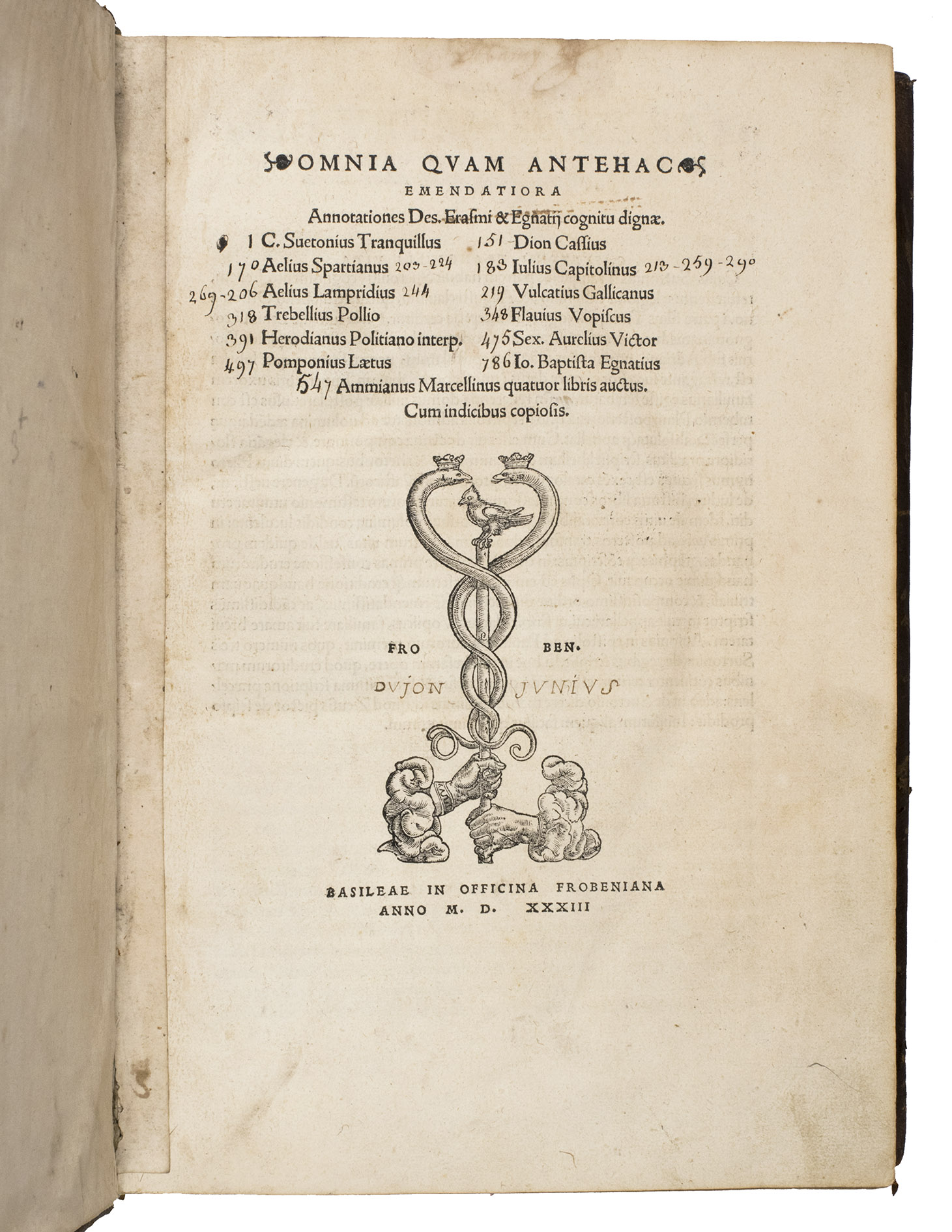
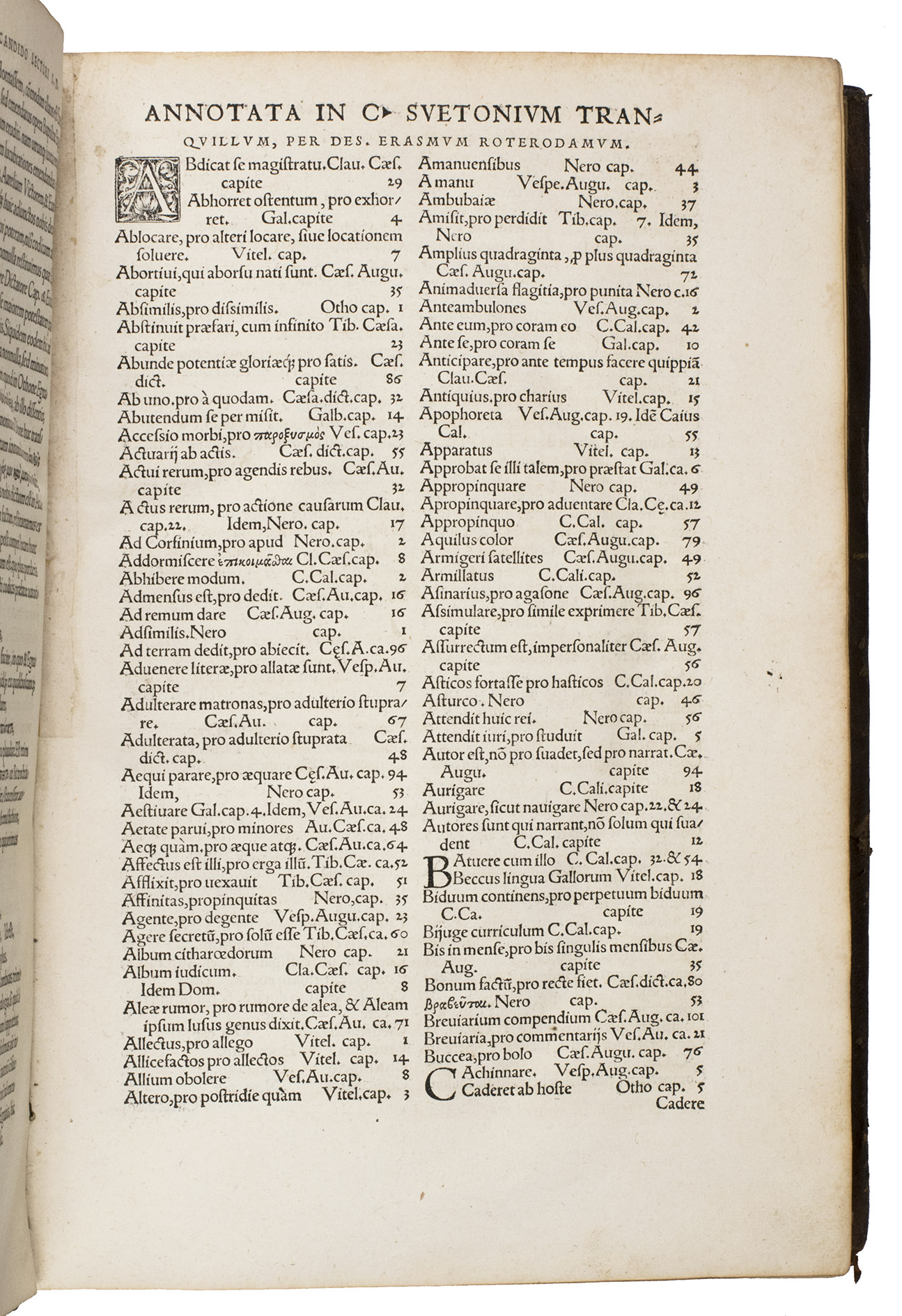
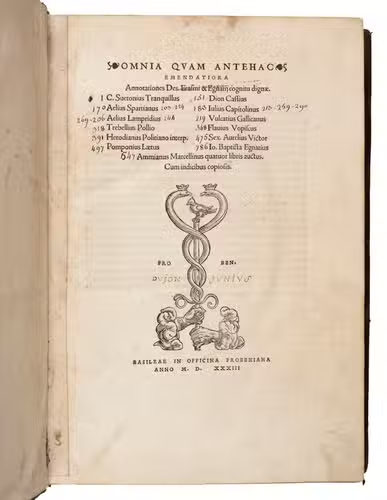
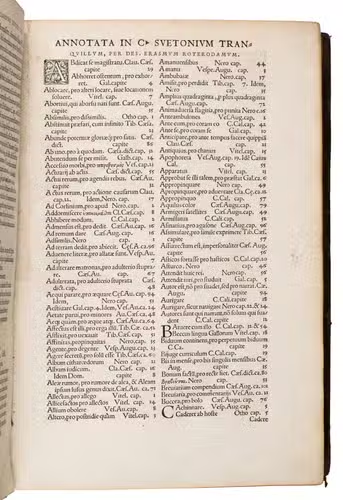
Omnia quam antehac emendatiora. Annotationes Des. Erasmi & Egnatij cognitu dignae: C. Suetonius Tranquillus, Dion Cassius, Aelius Spartianus, Iulius Capitolinus, Aelius Lam-pridus, Vulcatius Gallicanus, Trebellius Pollio, Flauius Vopiscus, Herodianus Politiano interprete, sex Aurelius Victor, Pomponius Laetus, Io. Baptista Egnatius Ammianus Marcellinus quatuor libris auctus. cum indicibus copiosis...
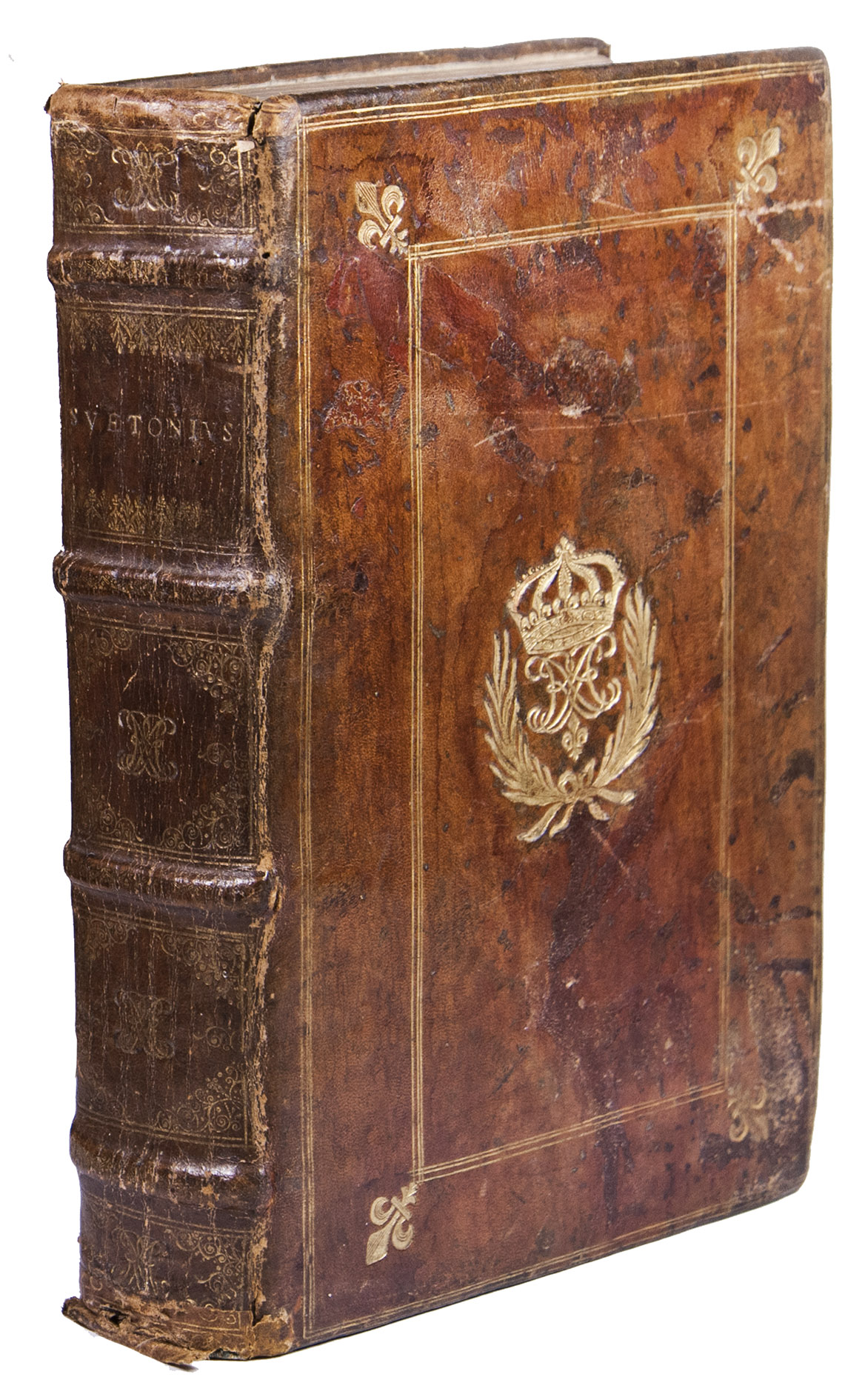
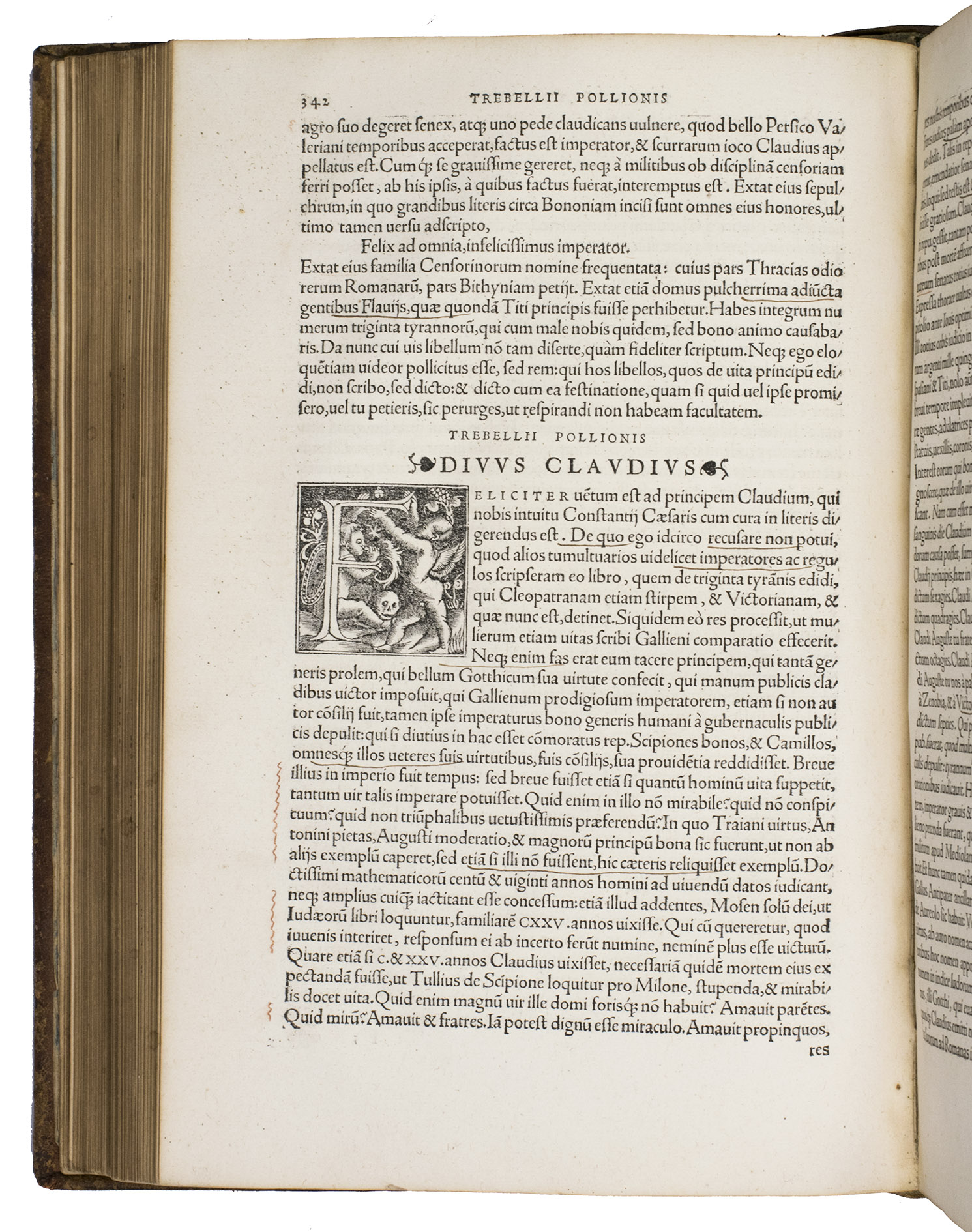
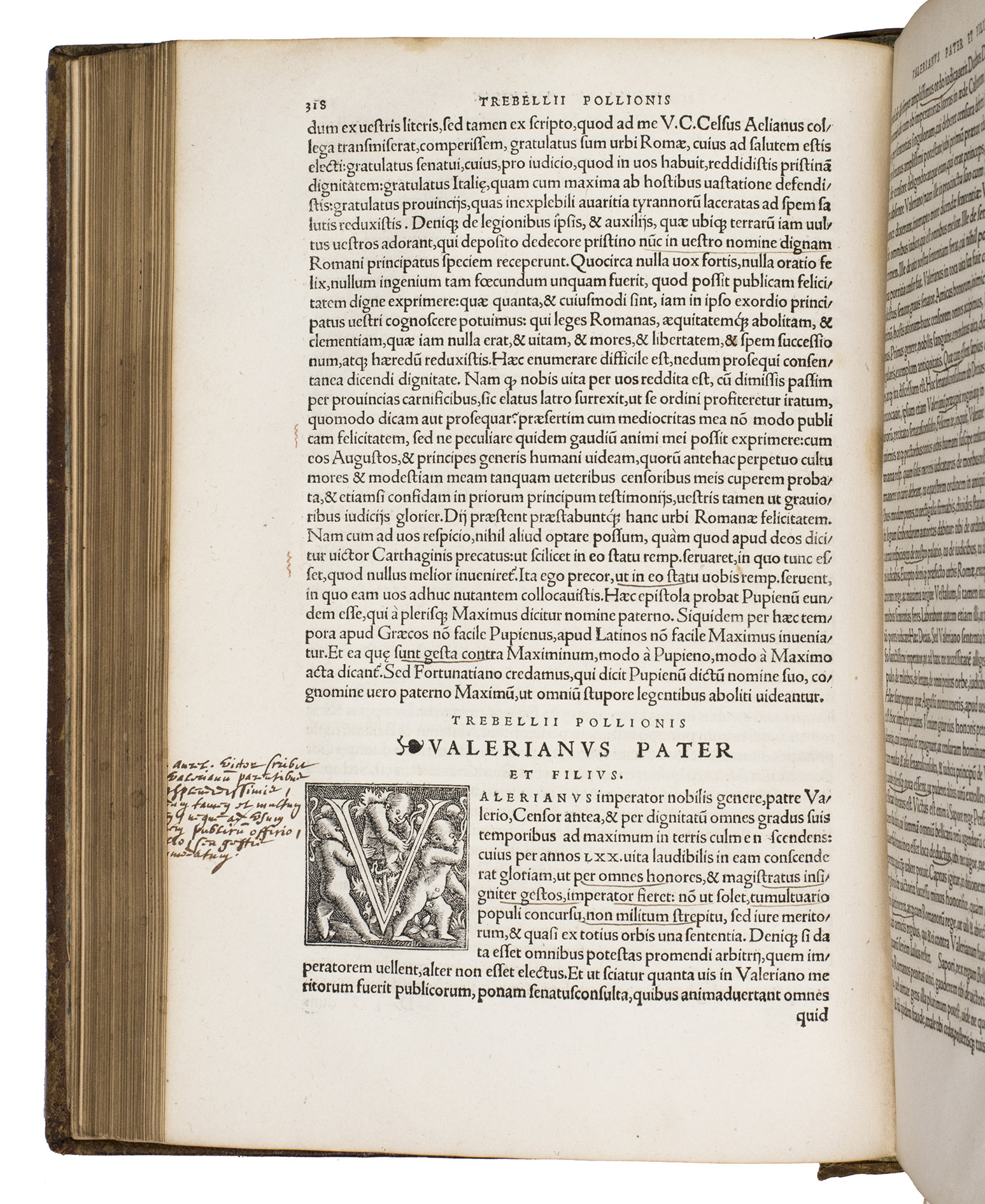
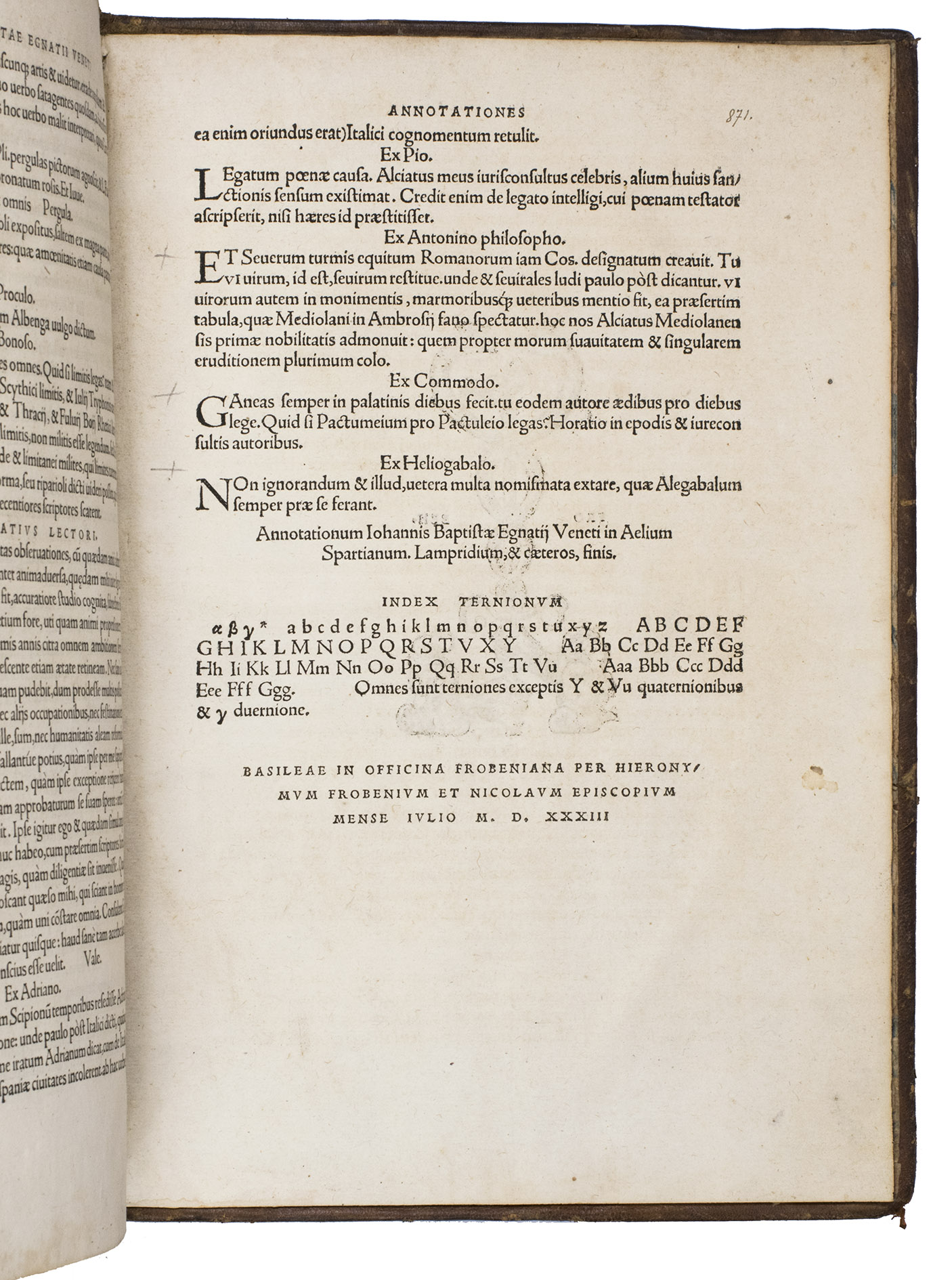
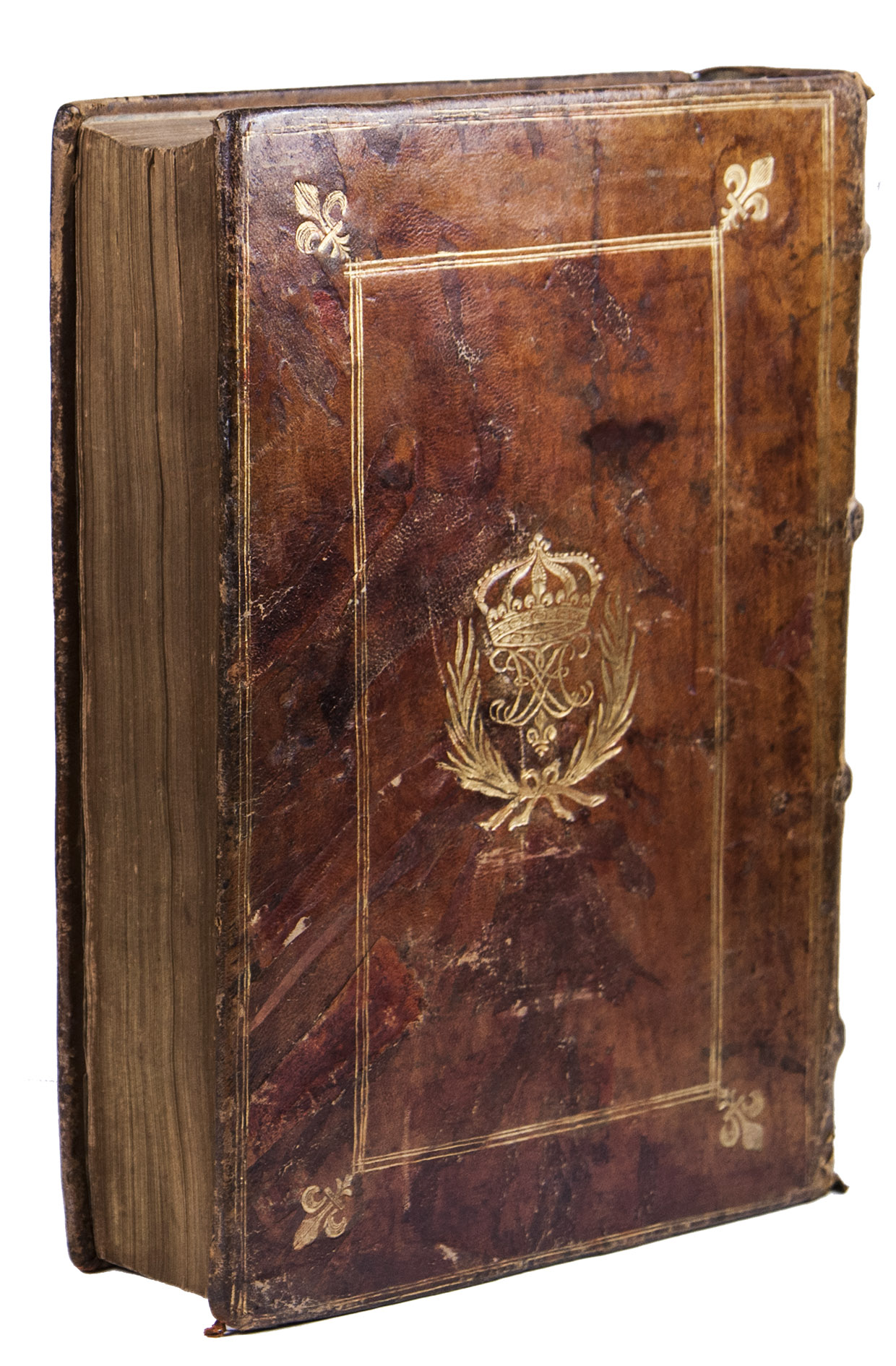
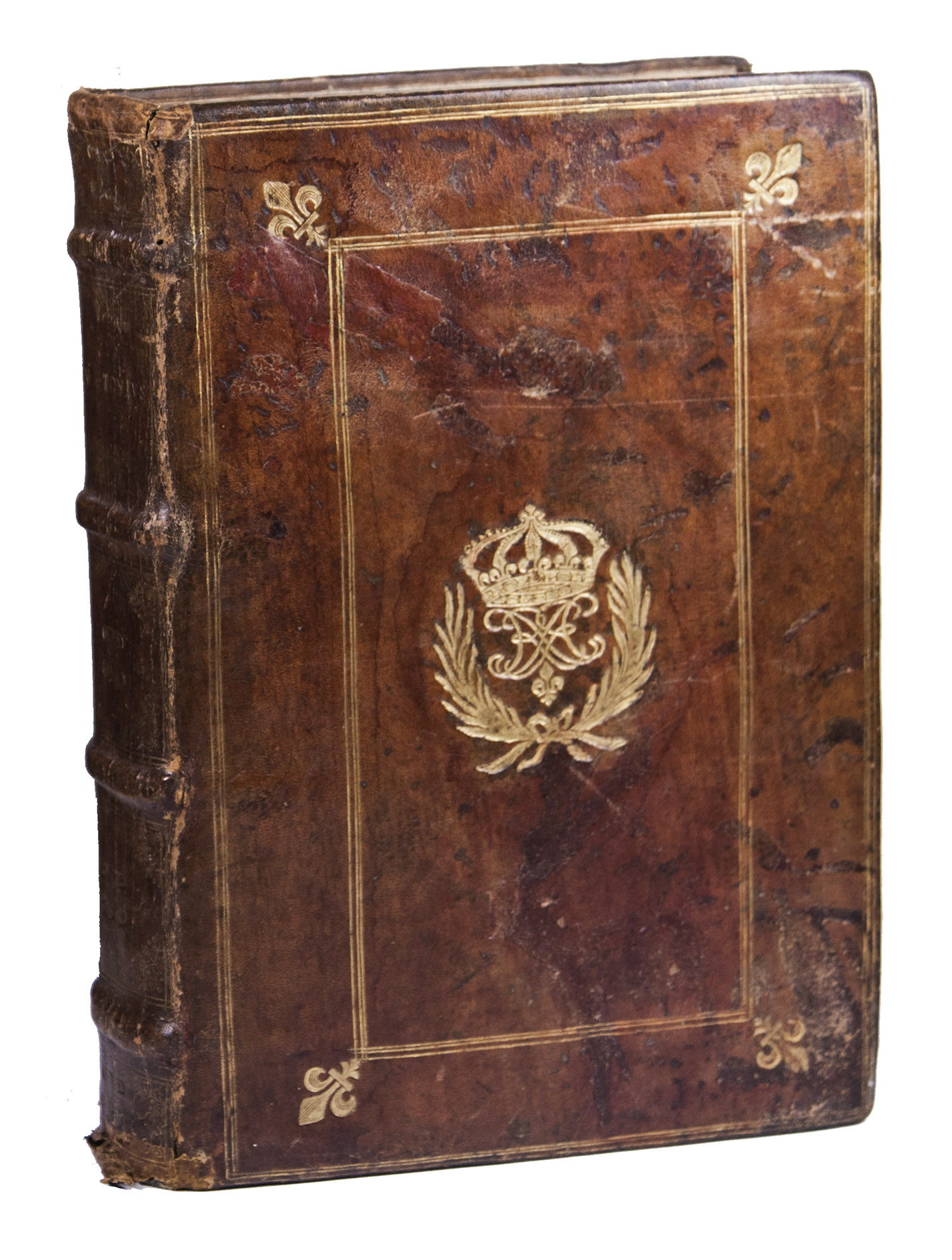
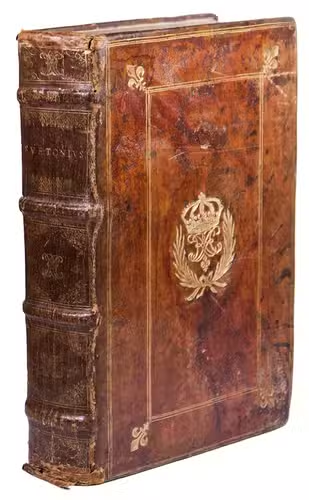
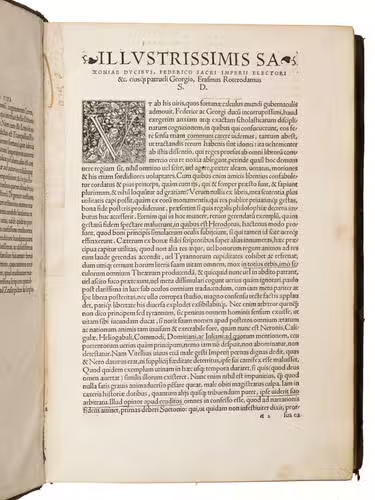
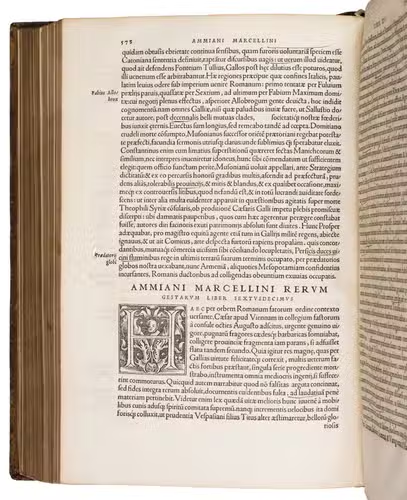
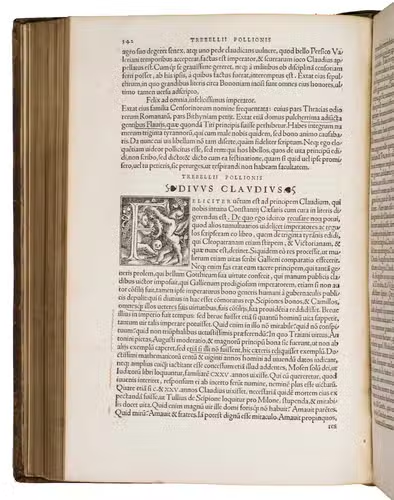
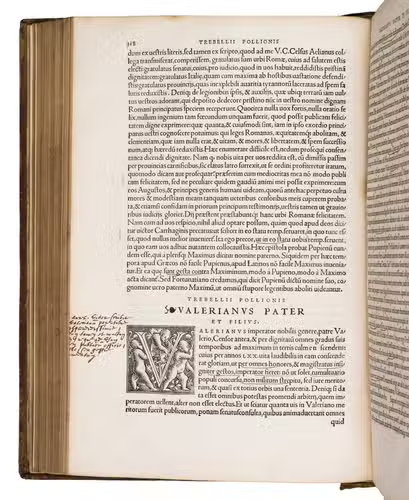
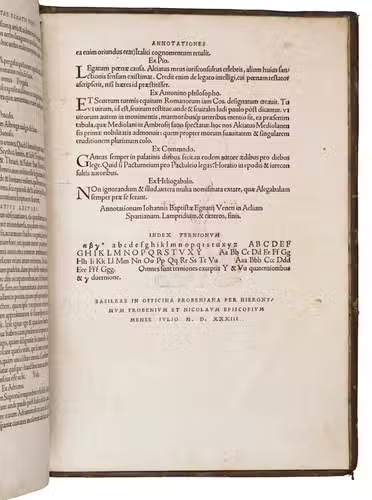
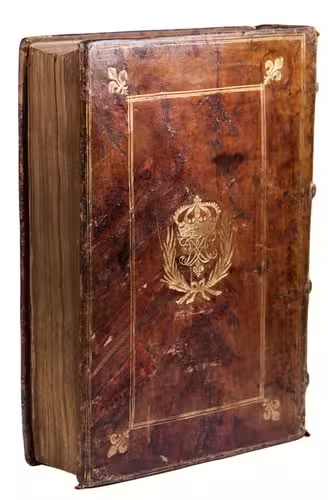
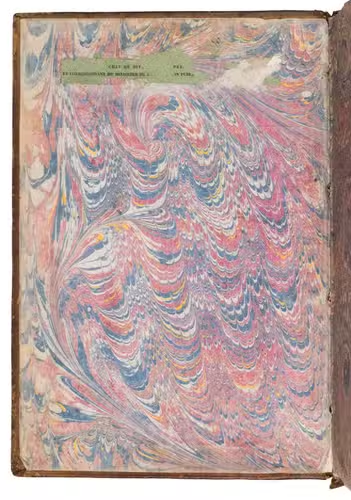
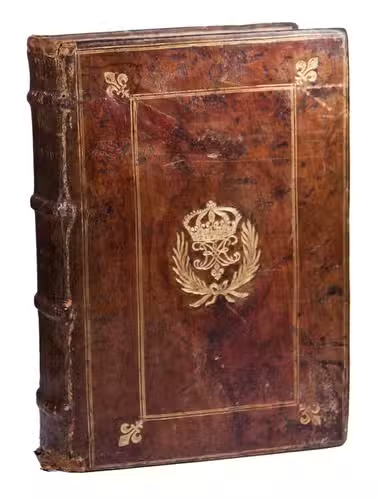
Basel, (colophon) Hieronymus Froben & Nicolaus Episcopius, July 1533. 2 parts in 1 volume, Small folio (21.5 x 31.8cm). With Frobens large woodcut device on the title page, repeated on the final page and several large woodcut initials after Holbein. 17th-century gold-tooled mottled calf, sewn on 4 supports with corresponding raised bands on the spine. Both boards show two triple fillet frames, the smaller frame with four fleurs-de-lis cornerpieces on each outer corner, and within the smaller frame a centrepiece containing the monogram of the Collège (Royal) de Navarre in Paris. [44], 786, [2 blank], [84] pp.
€ 3,500
Beautifully bound copy of a collection of Roman imperial biographies, known as the Historia Augusta, which was supposedly written by 6 authors of the late Roman Empire: Aelius Spartianus, Julius Capitolinus, Vulcacius Gallicanus, Aelius Lampridius, Trebellius Pollio, and Flavius Vopiscus (collectively known as the "Scriptores Historiae Augustae"). Although modern scholarship questions the authenticity and authorship of these texts, they remain a crucial source for understanding the history, politics, and personalities of the Roman emperors from Hadrian (r. 117-138 CE) to Numerian (r. 283-284 CE).
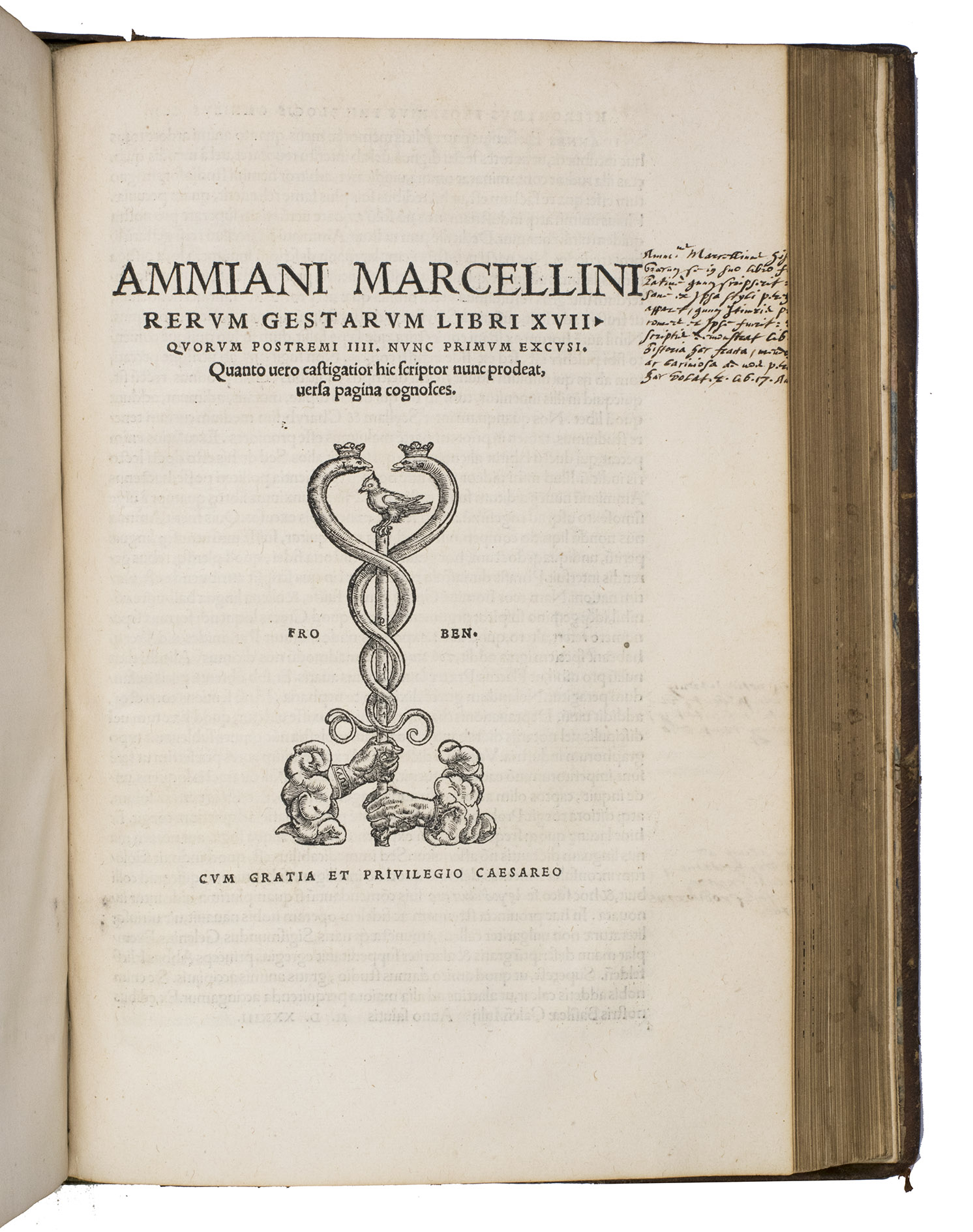
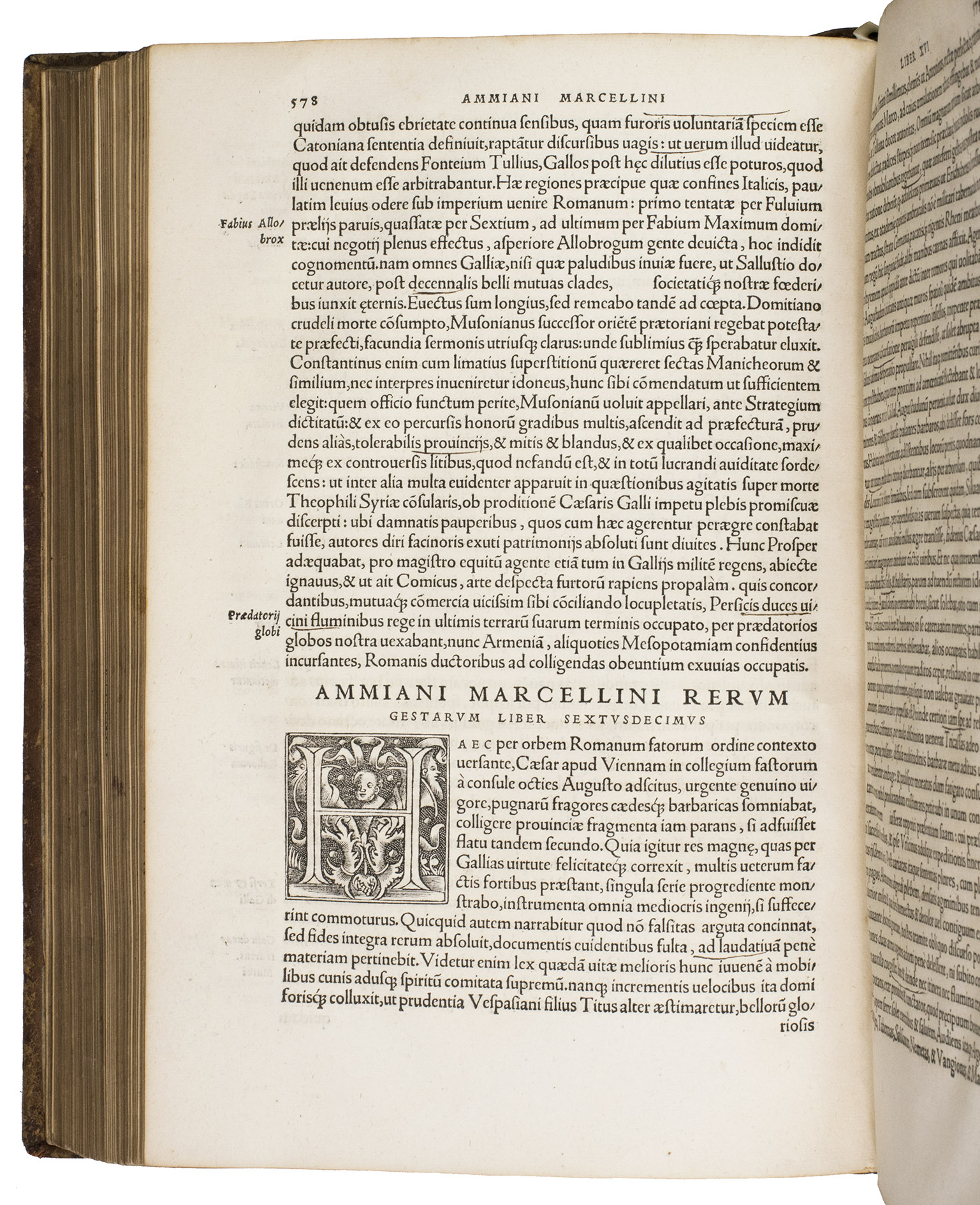
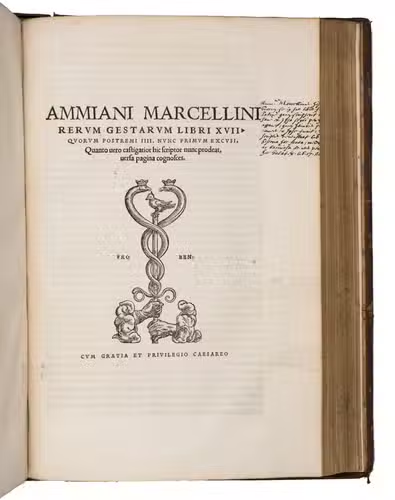
The present edition of the Historia Augusta was edited and annotated by Erasmus, alongside several notable scholars including Giovanni Battista Egnazio (or Egnatius, 1478-1553). Additionally, this volume contains a second part with a divisional title page on p. 545: Rerum gestarum libri XVII, written by Ammianus Marcellinus (ca. 330-ca. 400 CE), the last major historian of the Roman Empire. As a former soldier and eyewitness to many events he describes, Ammianus essentially wrote a continuation of the history of Tacitus, offering vivid accounts of military campaigns, court politics, and the slow unravelling of Roman power in the West.
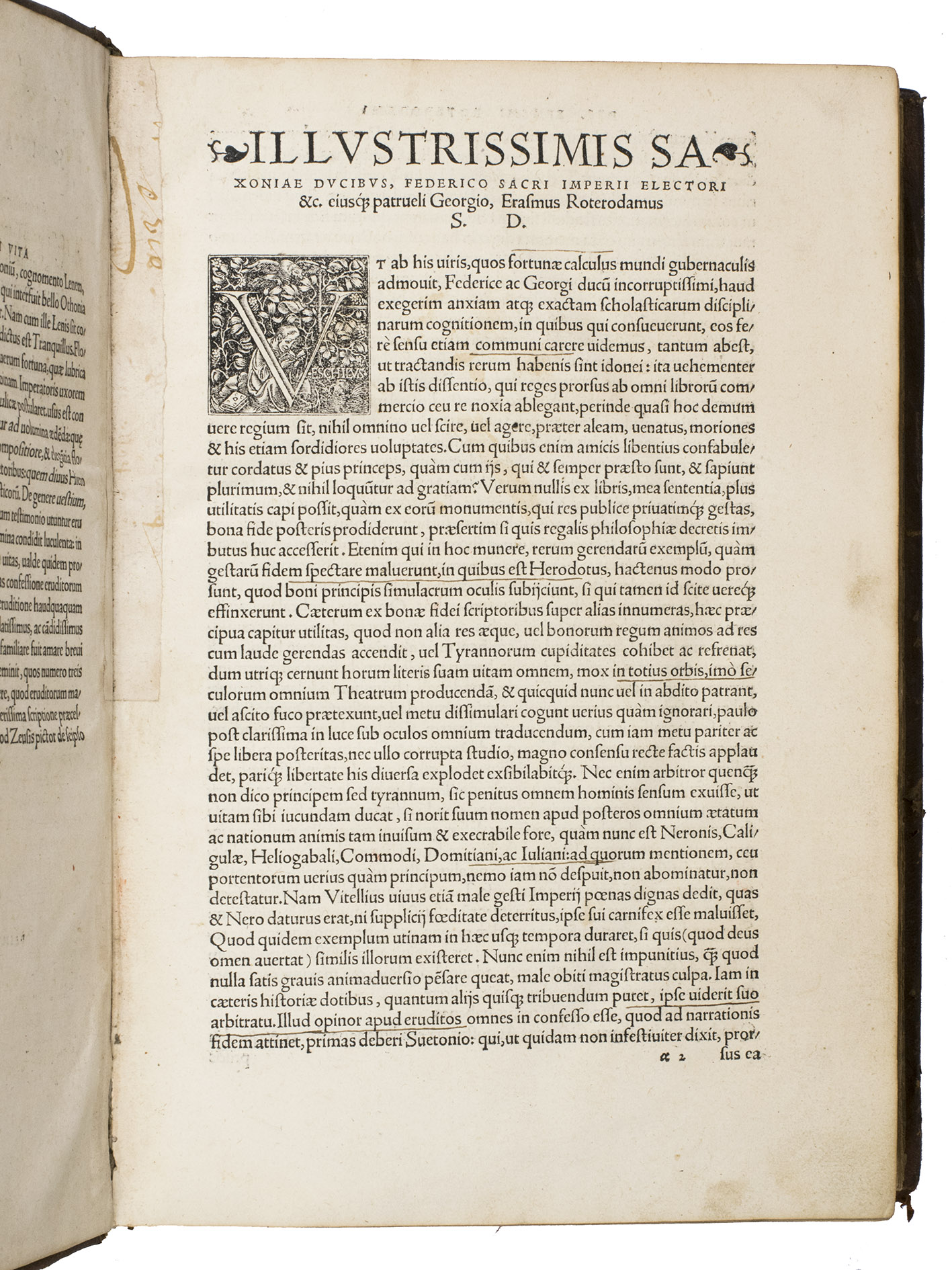
This version of the Historia Augusta was already printed in 1518 by the Basel publisher Johann Froben. For that edition, Erasmus contributed an edited version of Suetonius along with a preface, although the title page misleadingly implied that he had also edited Ammianus work. The present edition followed in July 1533, issued by Hieronymus Froben in partnership with Nicolaus Episcopius, which incorporated the recently discovered Books 27-30 of Ammianus. Contrary to some claims, the editor of that 1533 edition was not Conradus Goclenius but Sigismundus Gelenius. It appears that Erasmus, perhaps distracted or misremembering, once confused the two names.
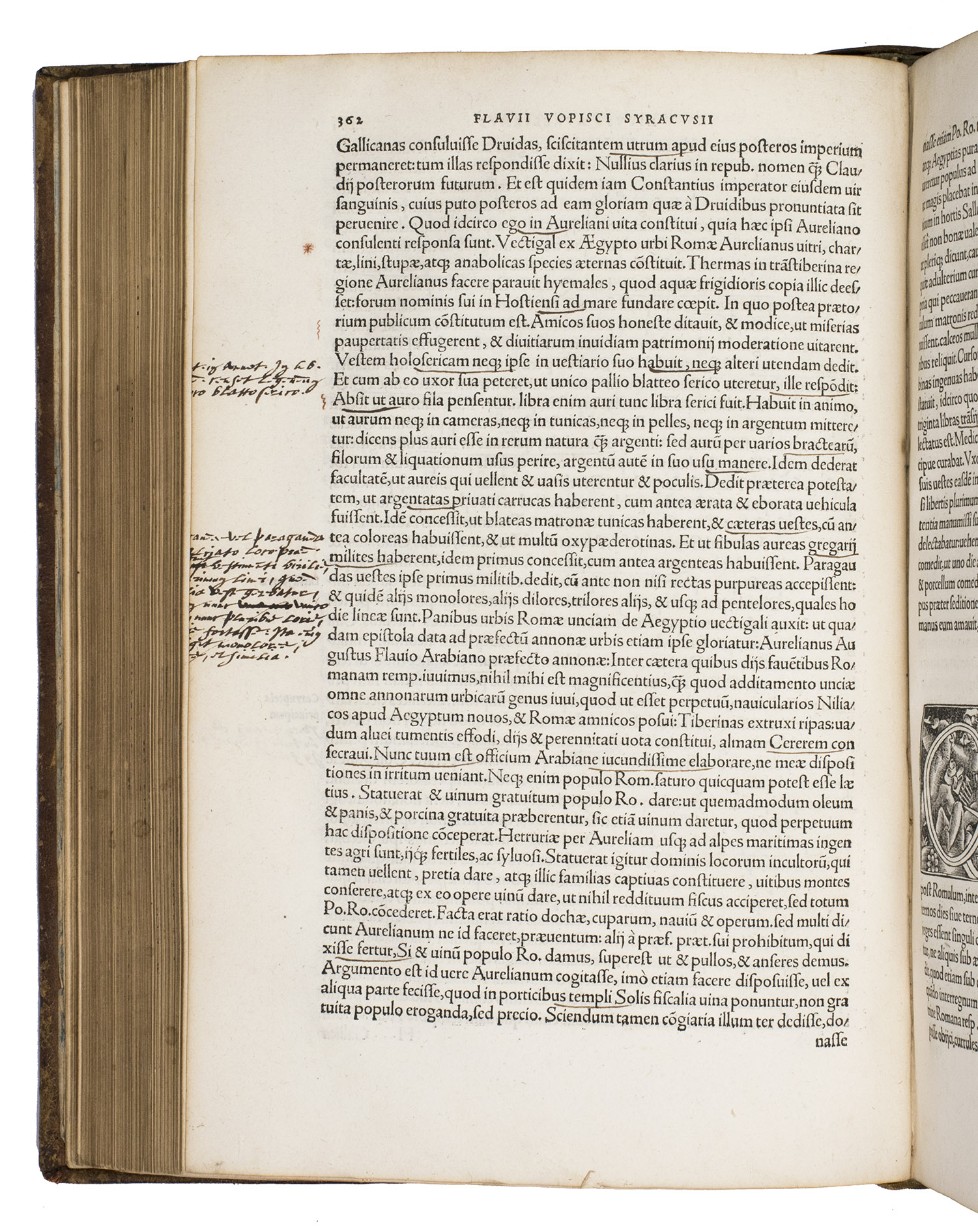
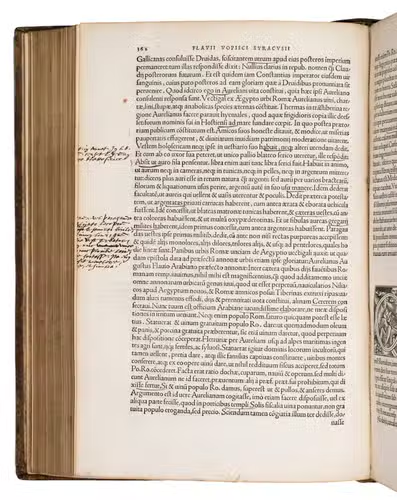
On the title page, surrounding the Froben device, there is an ownership inscription reading: DVJON - JVNIVS. This could refer either to Franciscus Junius the Elder (François du Jon, 1 May 1545 - 23 October 1602), a prominent Huguenot theologian, or more likely to his son, Franciscus Junius the Younger (François du Jon 29 January 1591-1677 ), the noted philologist and pioneering scholar of Germanic languages, known for his extensive collection of ancient manuscripts. With underlinings and marginal annotations throughout, including brief notes on the text as well as references to related materials. In a few places, the outer margins have been slightly trimmed, affecting only a small number of annotations.
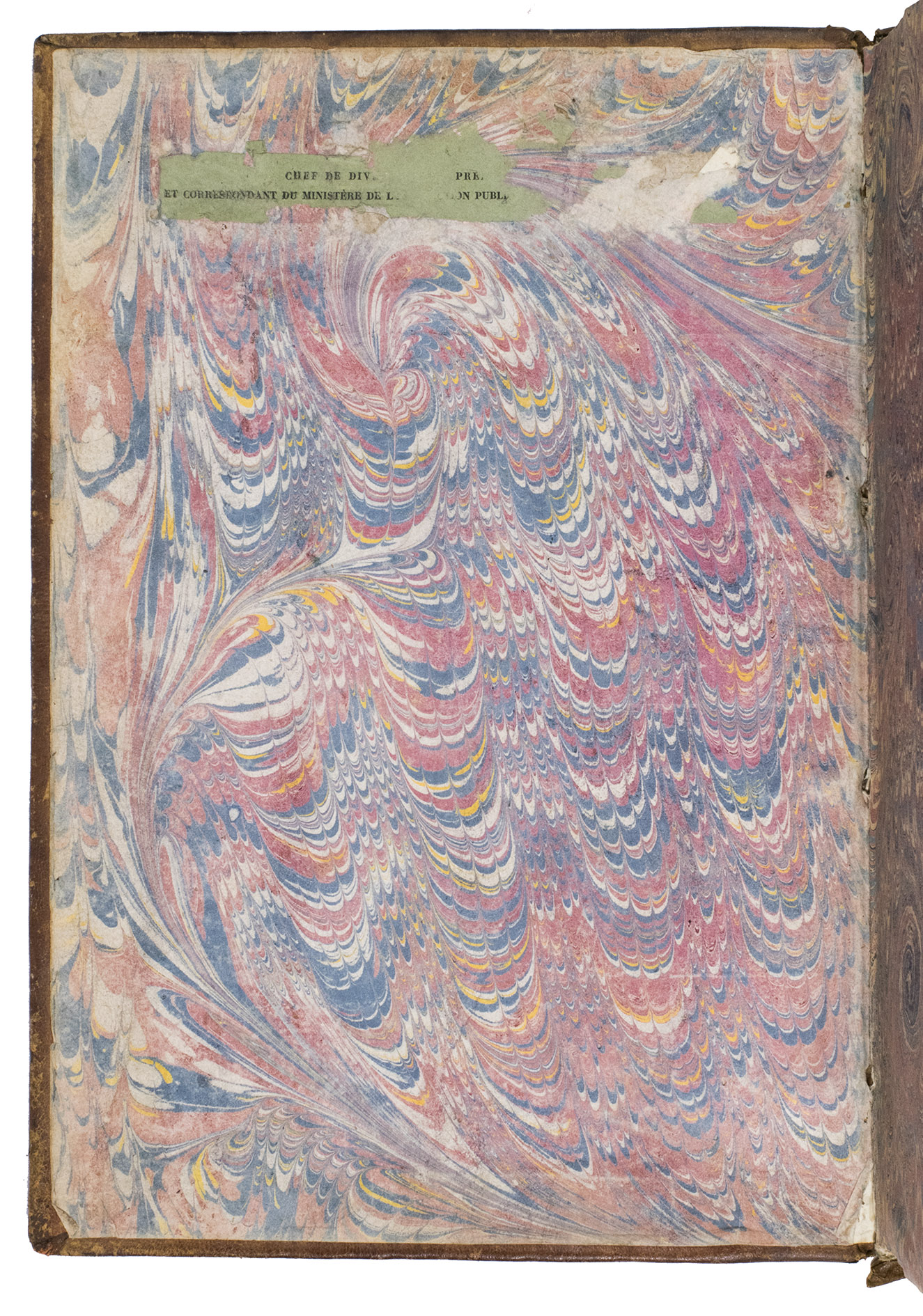
The spine shows light rubbing, with some wear to the spine ends, the text is lightly browned throughout. Overall, a very good copy. Adams S 2025; BM STC German p. 842; Clarence H. Miller, The Correspondence of Erasmus: Letters 2635 to 2802, volume 19, (2019); Erasmus Online 4325; USTC 679548; VD16 E 3647; not in De Reuck; cf. for the monogram of the College de Navarre see: Archives de la Société des collectionneurs dex-libris (Paris: 1895) [2d Année, No. 1, Janvier], pp. 66-69.
Related Subjects: