BOYMANS, Johannes Andreas.
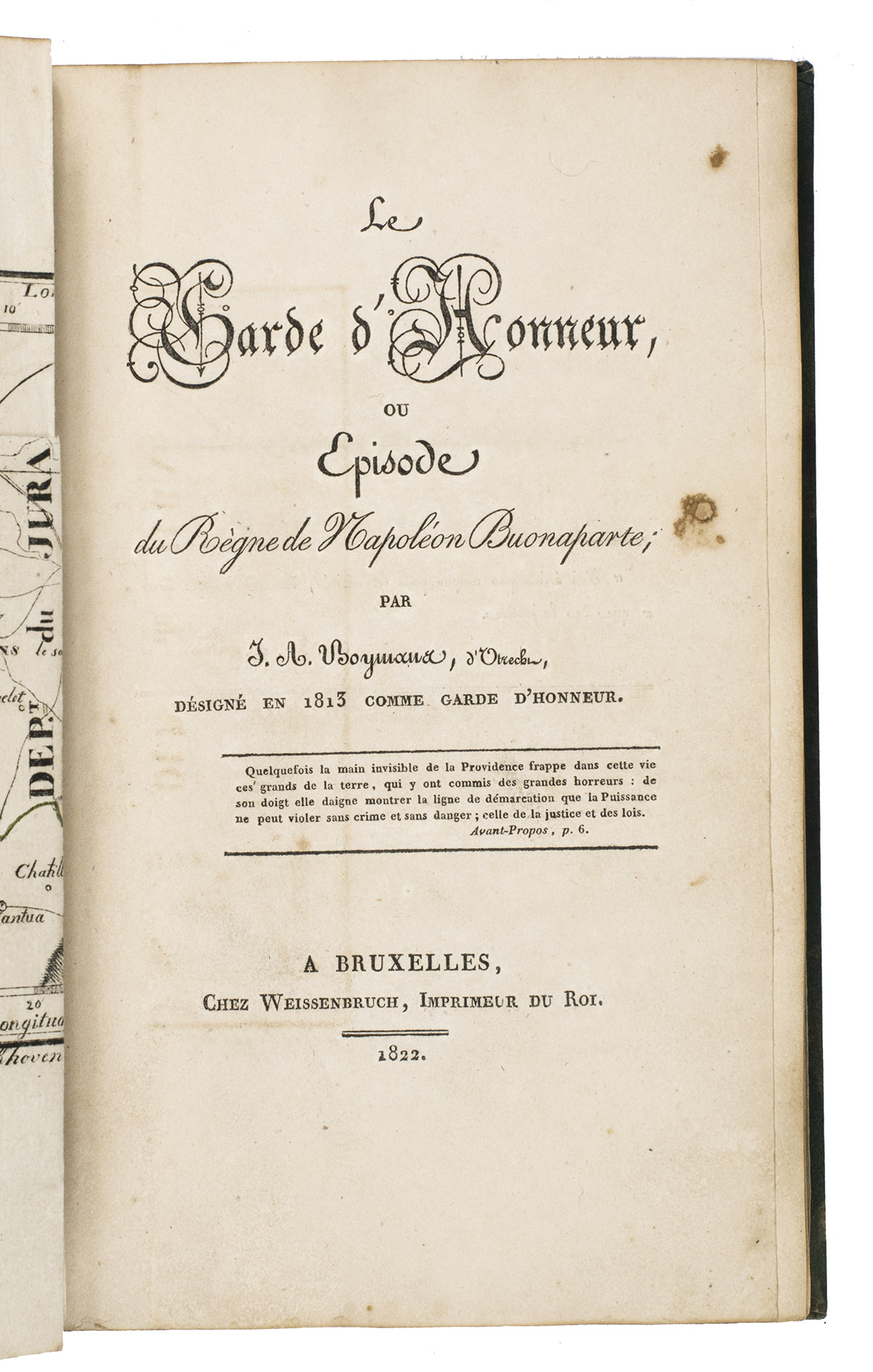
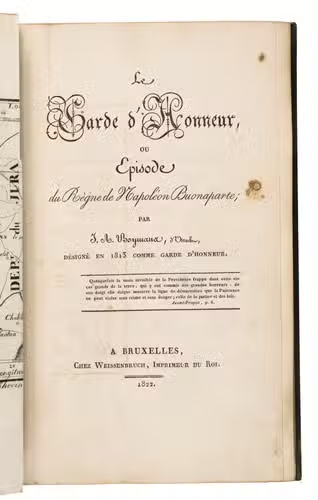
Le garde d'honneur, ou episode du règne de Napoléon Buonaparte.
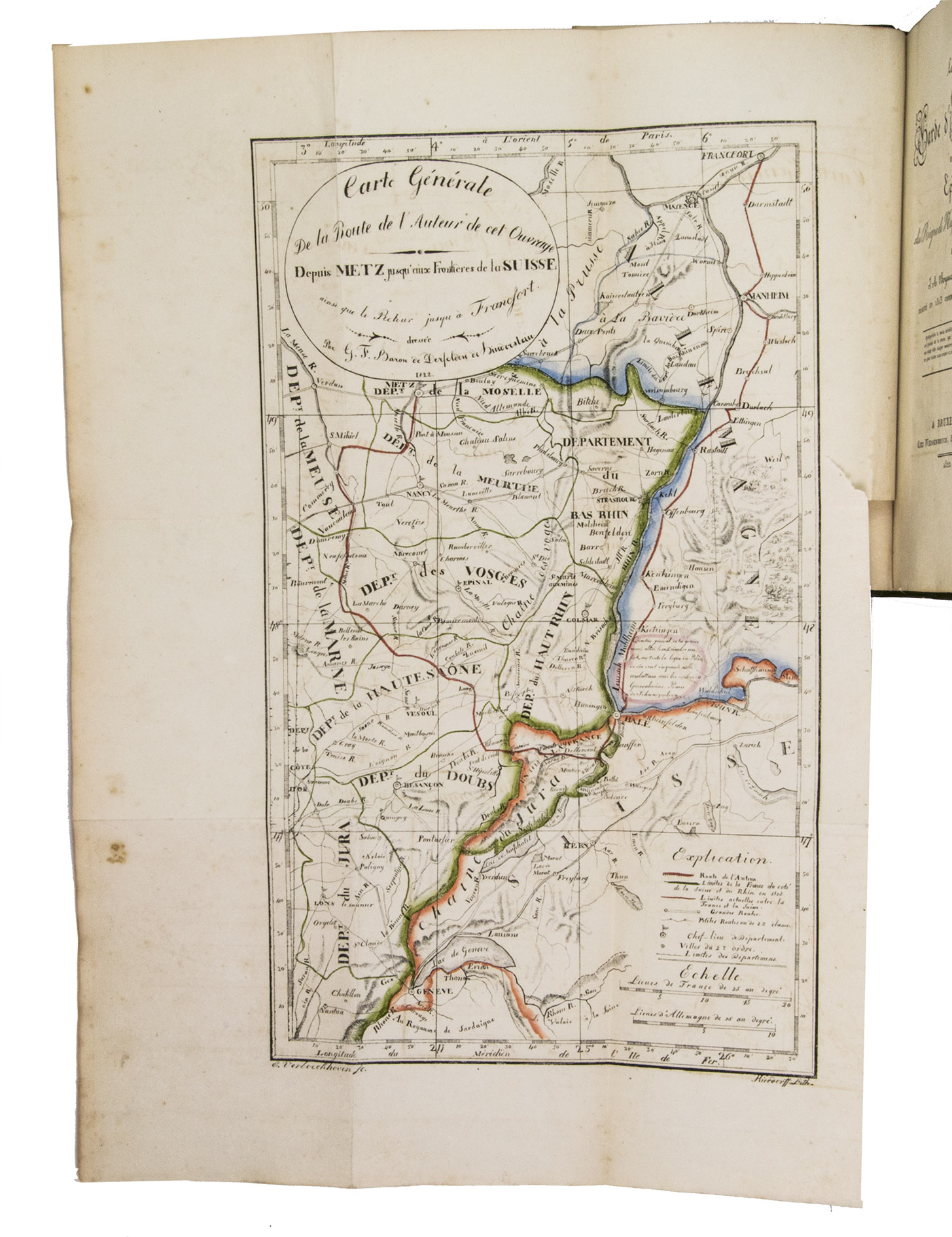
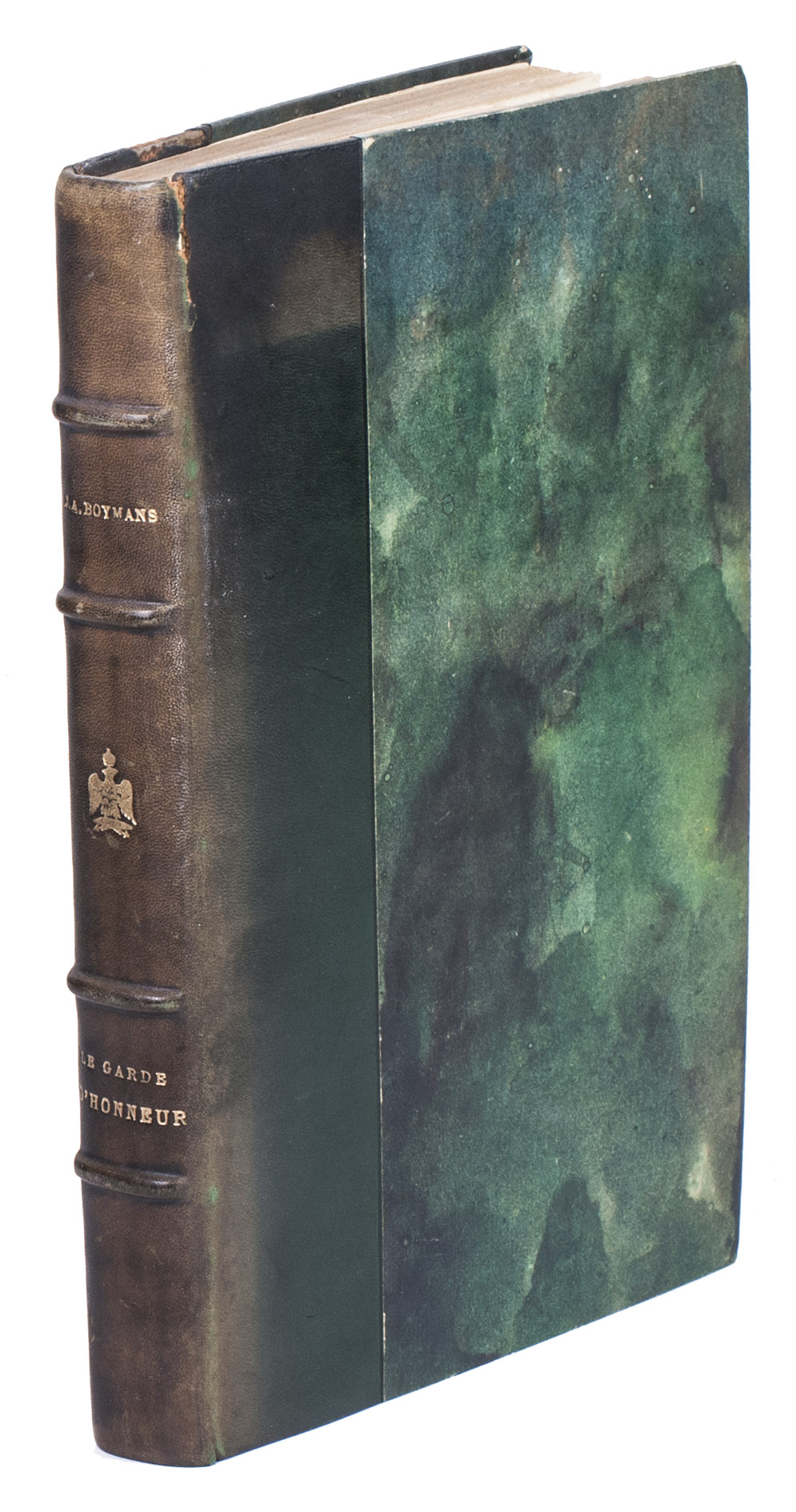
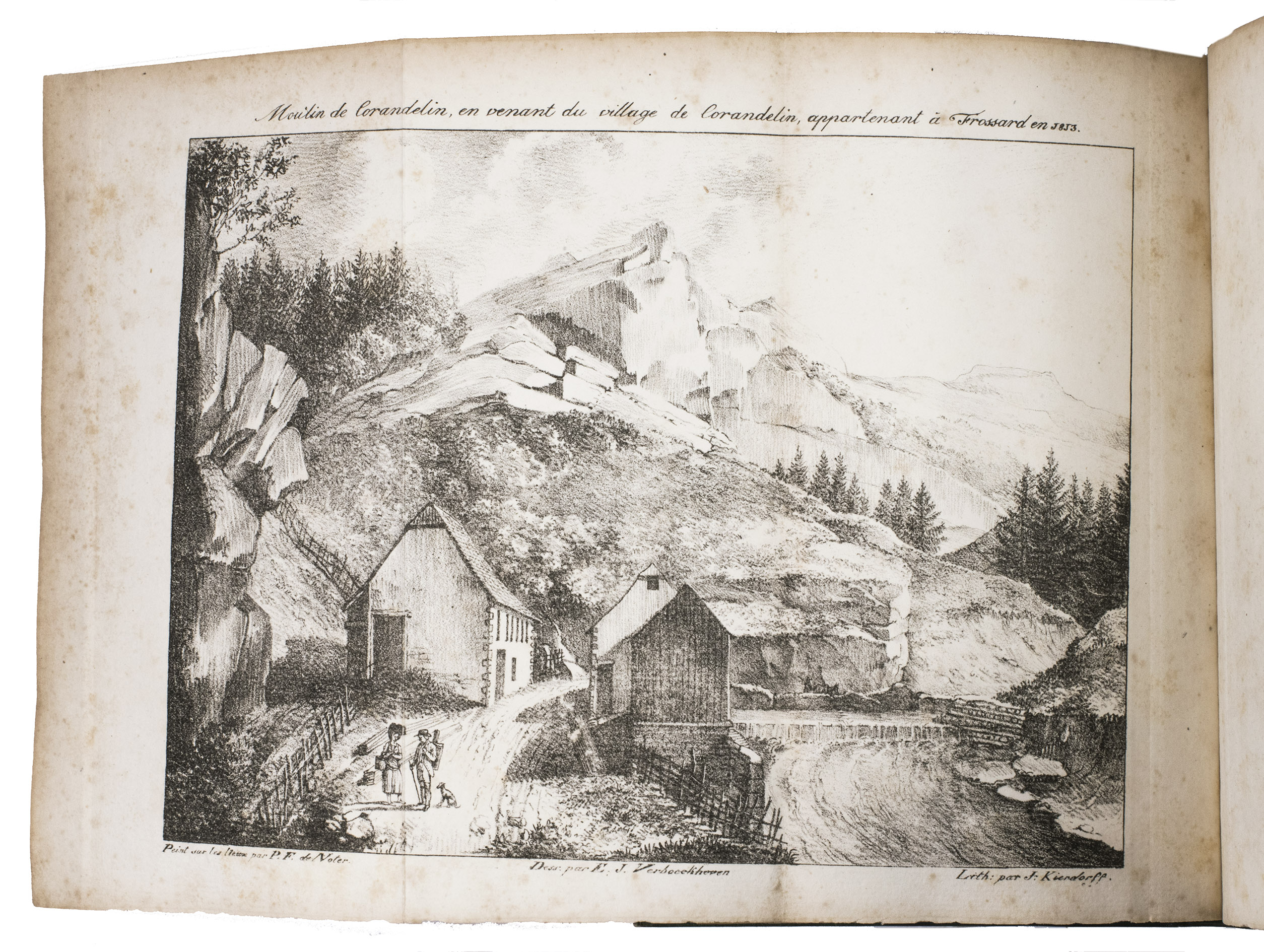
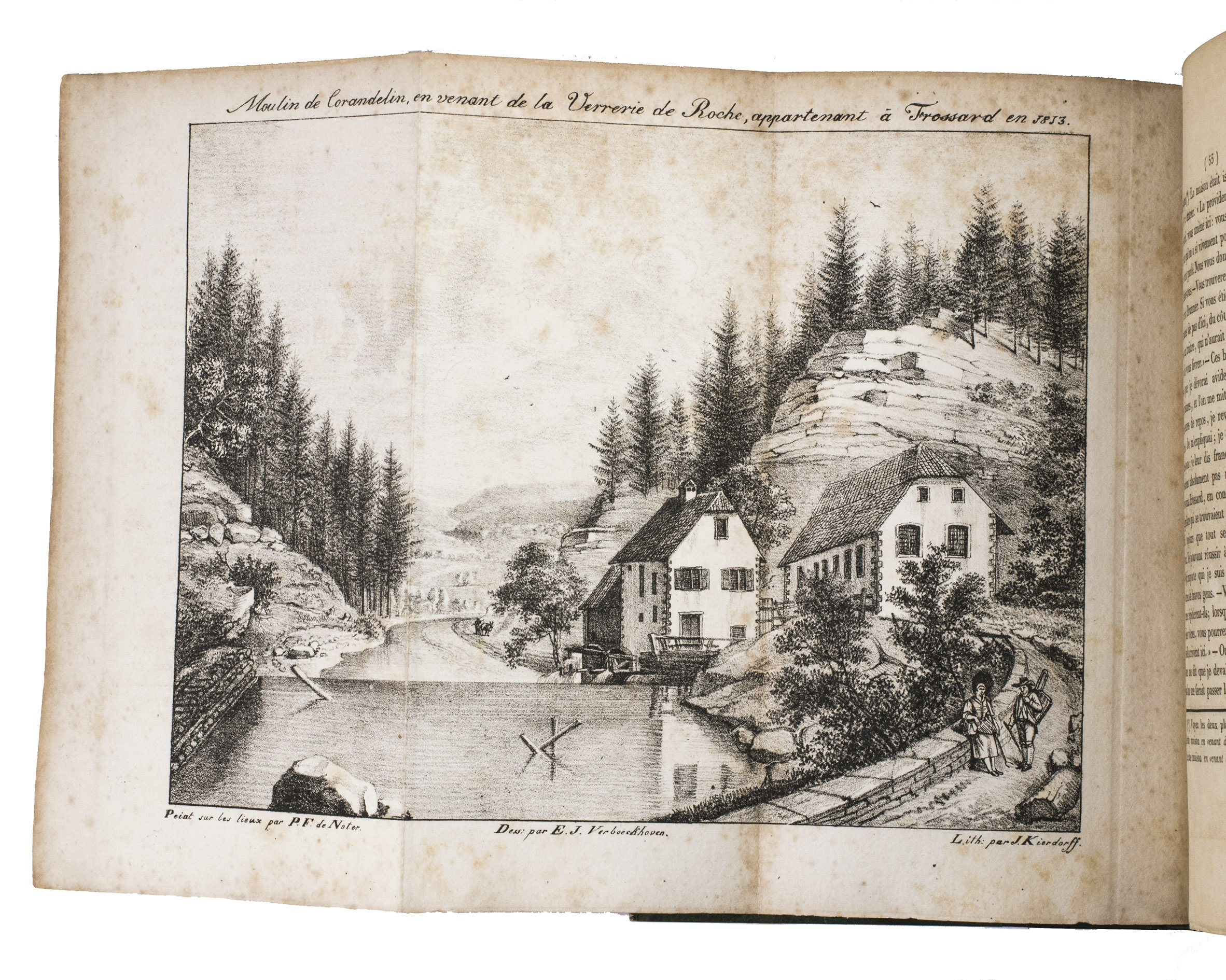
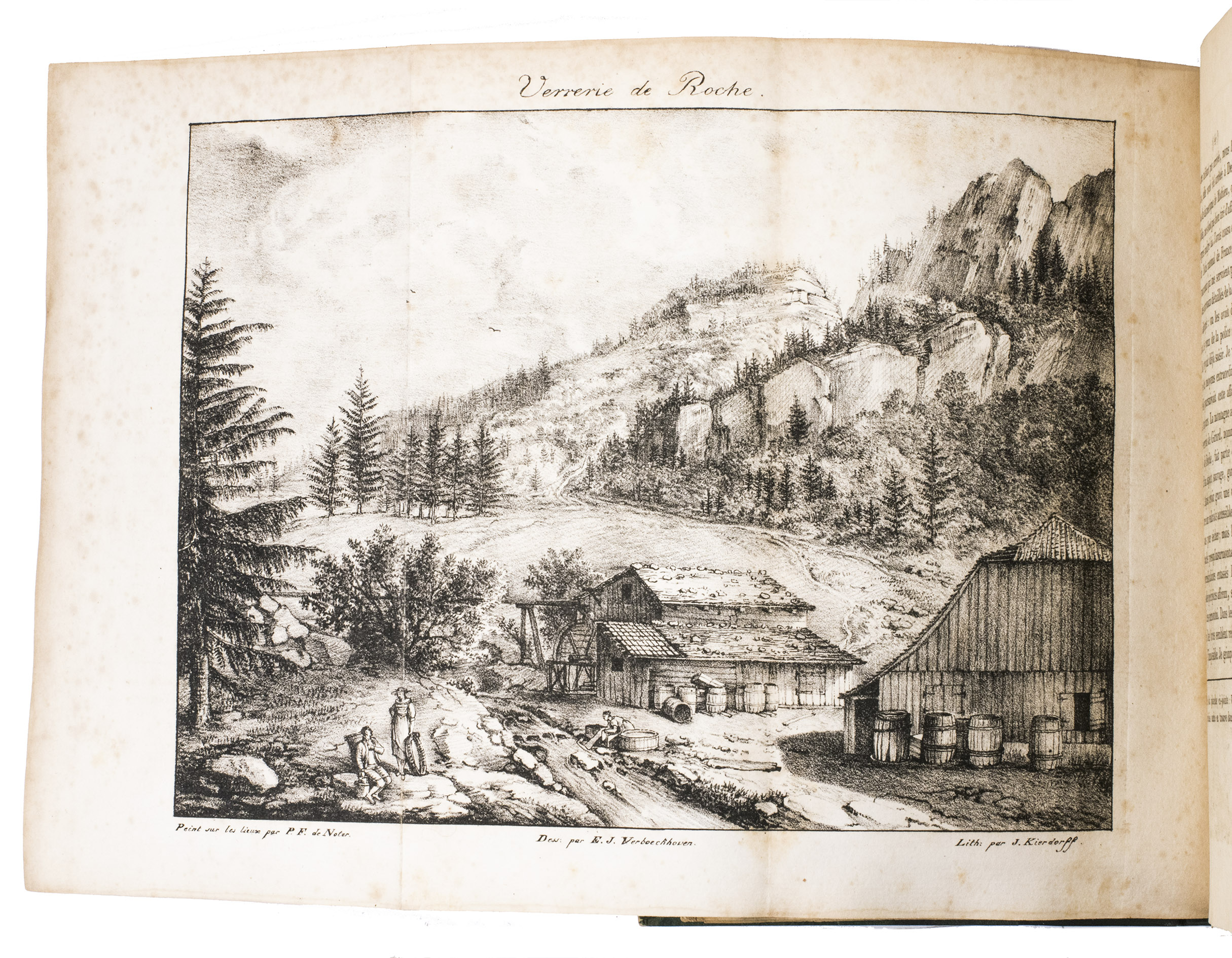
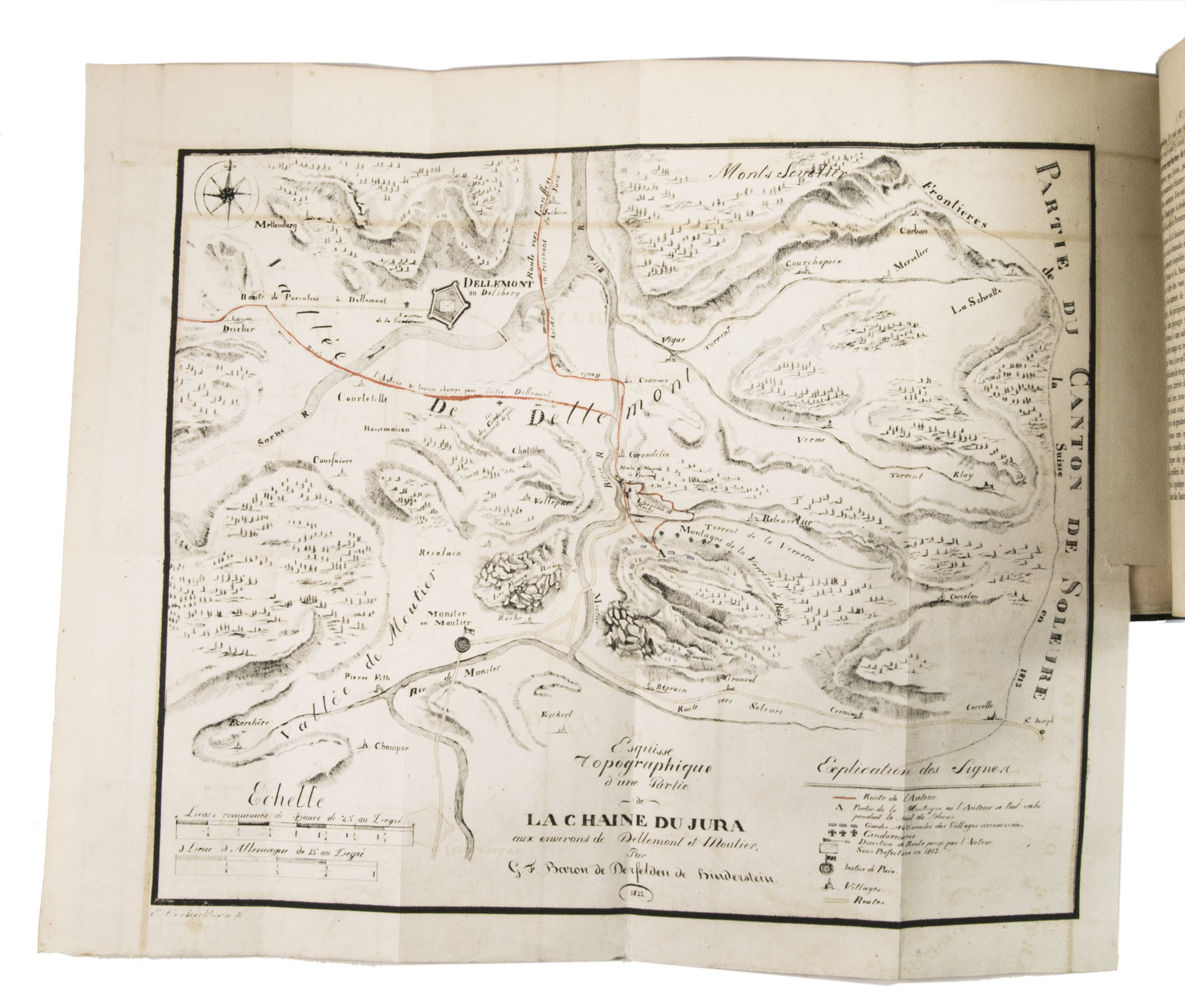
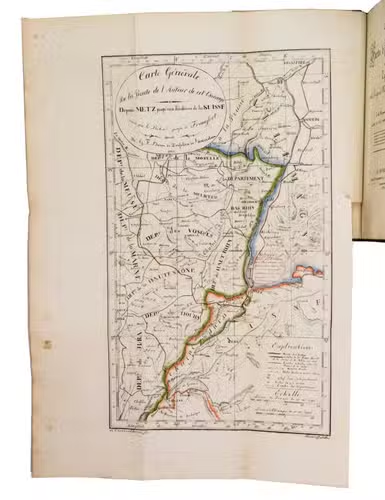
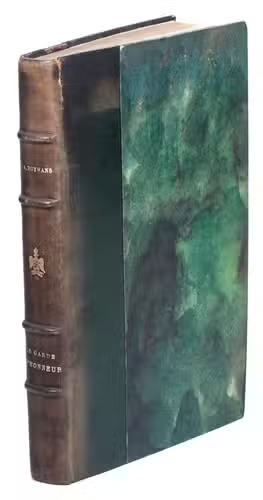
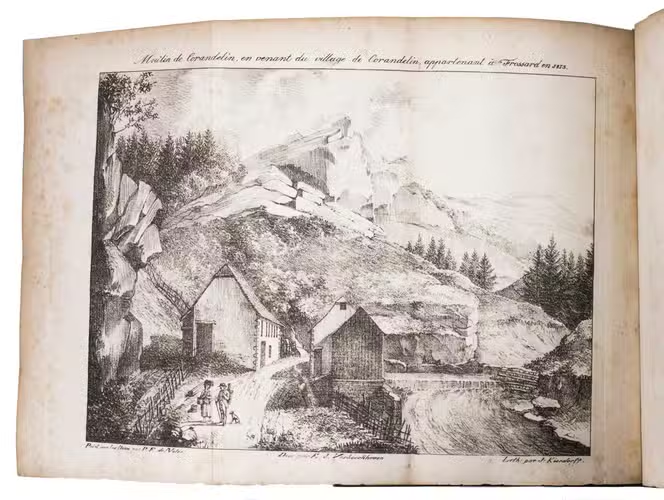
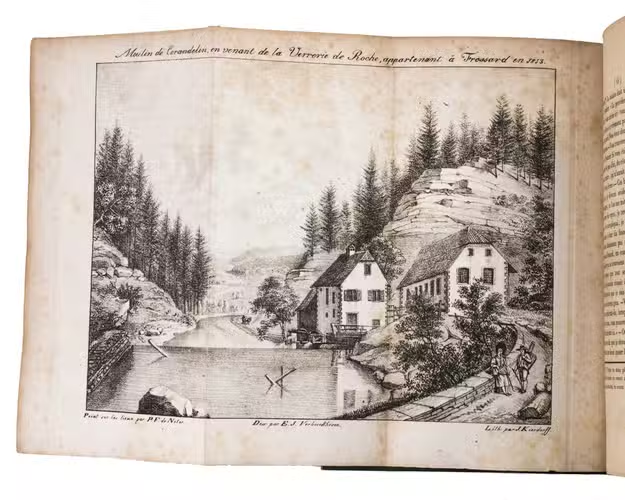
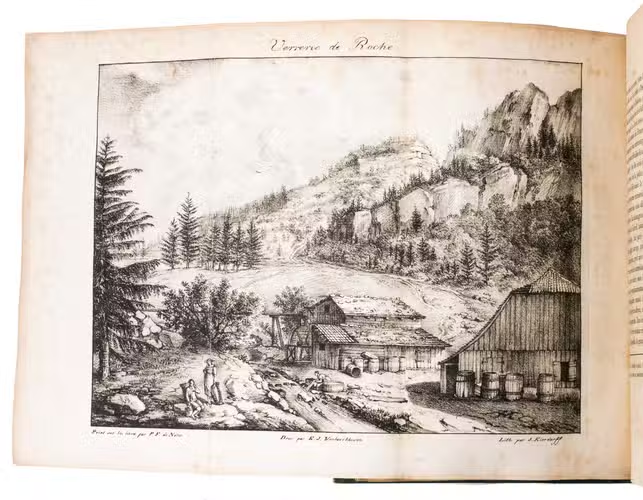
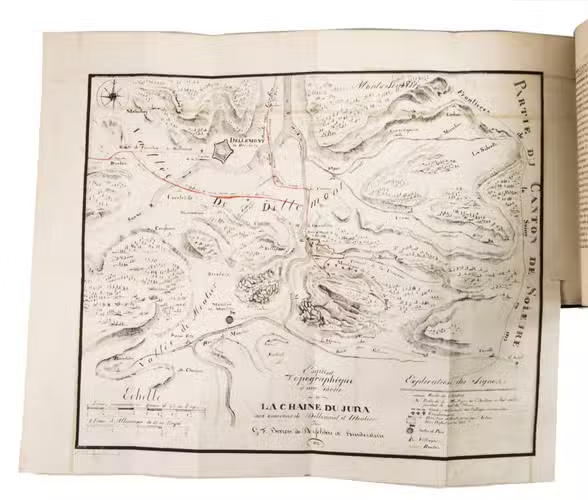
Bruxelles, Weissenbruch, 1822. 8vo. With 2 large folding maps after designs by G.F. Baron de Derfelden de Hinderstein, partly coloured by hand, a white on black phantasmagoric folding lithographed plate, and 4 folding lithographed views by Kierdorff after E. van Boeckhoven. Later gold-and blind tooled half green calf, with the author and title lettered in gold on the spine, green decorative paper sides, green decorative paper end papers. XXXIV, 69, XLI, XVIII, [2], [1 blank] pp.
€ 1,600
Dedication copy of the first edition of an account of Napoleon's "Garde d'honneur", partly based on the Dutch author's personal experience, as he was one of the young noblemen who were enlisted in 1813 to join Napoleon's Russian army. The present copy is dedicated to G. van der Brugghen, who is otherwise unknown, but was also a member of the nobility and may therefore have been enlisted in Napoleon's army as well. The work offers a fascinating insight into the Dutch experience during Napoleon's campaigns.
The Garde d'honneur was a part of Napoleon's army that consisted of four cavalry regiments of 2500 men each, which were conscripted among the young men of noble families throughout Napoleon's empire. These men had to pay for their own uniform, weapons, and horse, which led to protests among the upper class. In the Netherlands, 500 men were chosen. They were generally not pleased with it, and tried to disobey the French at every turn in the hopes of getting fired.
As the son of a fervent Utrecht orangist, who had fled to Prussia during the so-called "Patriot Government" in Utrecht in the 1780s, Johannes Andreas Boymans (or Jan André, 1788-1832) obstructed the Emperial order as best he could. When the army had crossed the Rhine, near the Ardennes, he fled and tried to pass into Switzerland. One of the maps in the present work shows the route the author took from Metz to the Swiss border and back to Frankfurt. The other map shows a part of the Jura. They were both designed by the author's friend and companion Baron de Derfelden de Hinderstein, to which the author also dedicated the work. The plates show views of La Roche and Corandelin. The author also included a number of interesting source documents, and some statistical material. At the end a letter addressed by the author to Dirk Donker Curtius (1792-1864) is added. The latter had complained about the author's description of him as a voluntary and very enthusiastic soldier in the Garde d'honneur, which after the fall of Napoleon must have been rather damaging to his career.
Boymans died relatively young, so his father, since 1813 High Judge in Utrecht, left his rich collection of paintings, drawings and porcelain to the city of Rotterdam, which laid the foundations for the now famous Museum Boijmans-Van Beuningen. He left the collection to Rotterdam rather than to Utrecht, because Rotterdam at that time had the most humane juvenile penitentiary, to which the revenue of the Museum was stipulated to go.
With an annotation by the author ("A Monsieur G. van der Brugghen. Gage d'amitié de la part de l'auteur") on the fourth free flyleaf, and an ownership stamp from W. A. van Tienhoven on the half title. The edges and corners of the boards are somewhat scuffed, the spine has discoloured, the front joint is weakened at the head. The work is uncut, the leaves are somewhat browned and occasionally slightly foxed, a small horizontal tear in the inner margin of the first folding map, without loss. Otherwise in good condition. Cat. Nijhoff, Ned. Gesch. IV, 1494; Saalmink p. 282 (lists 2 copies only, in the Royal Library at The Hague, and in the University Library Groningen); WorldCat 905423176, 457128665.
Related Subjects:
 set in one of the first roman printing types ever produced" title="The "Mirror of human life", printed at Rome in 1473, with contemporary marginal manuscript notes: