[QUR'AN JUZ'].
[An illuminated Qur'an, Juz' XXVIII].
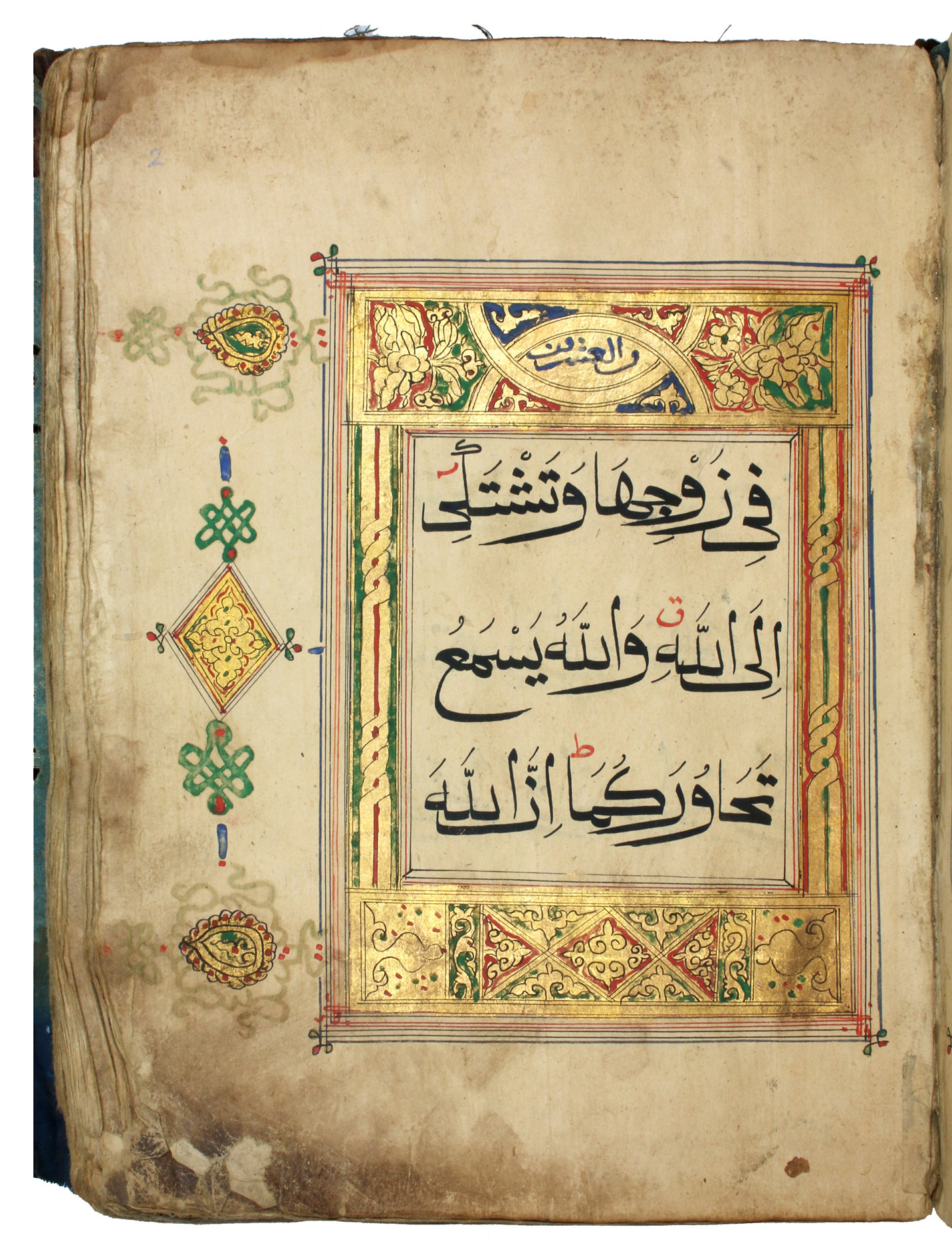
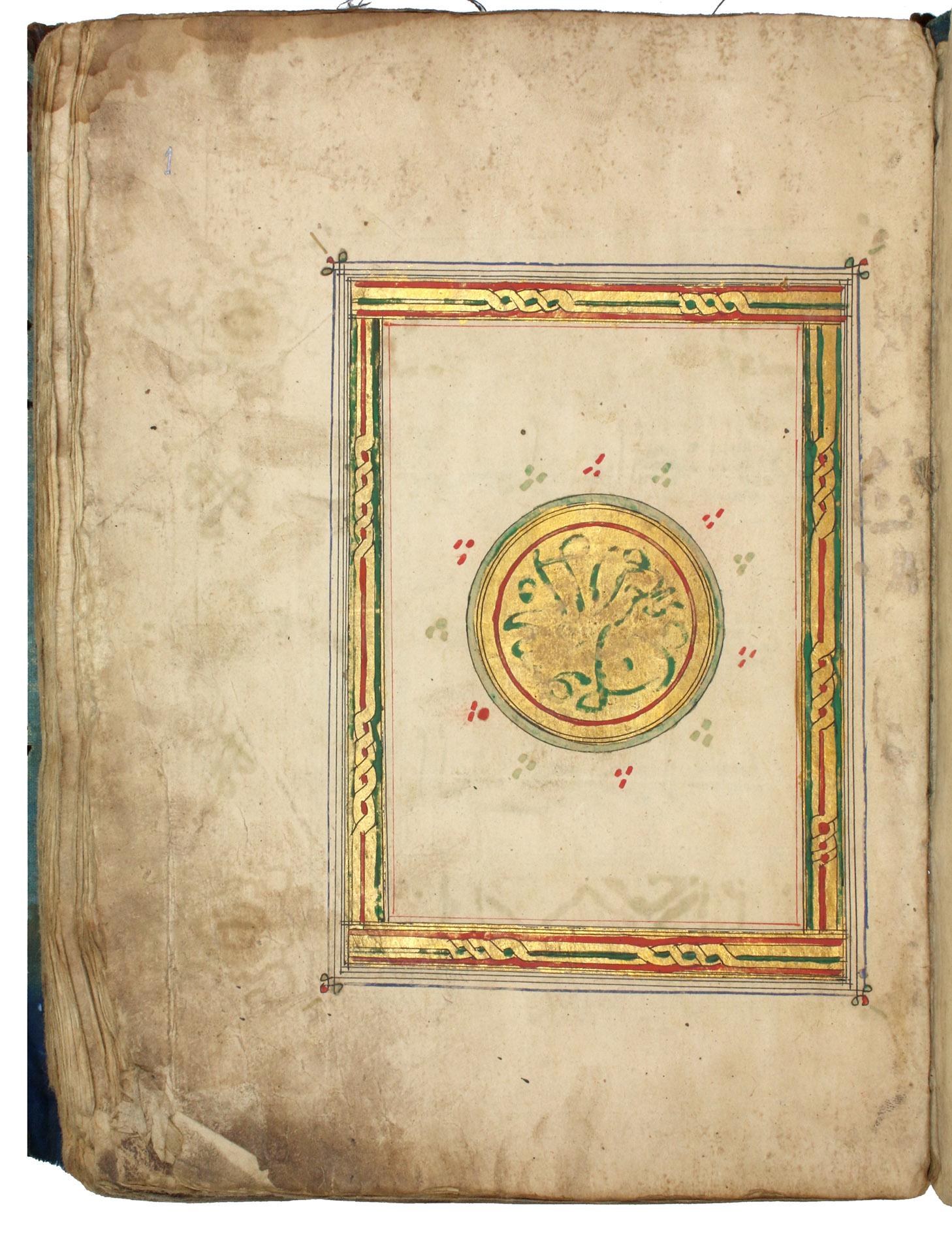
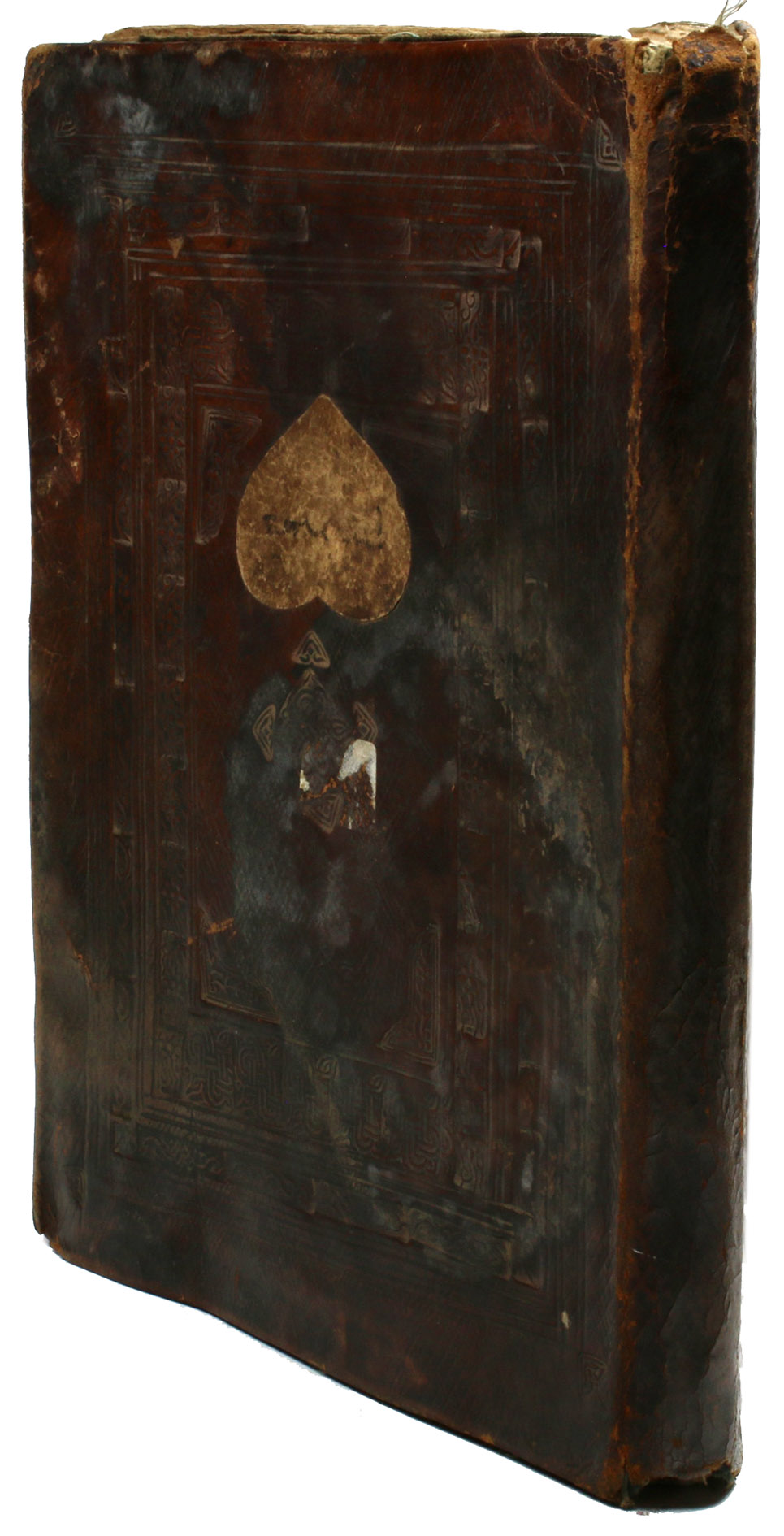
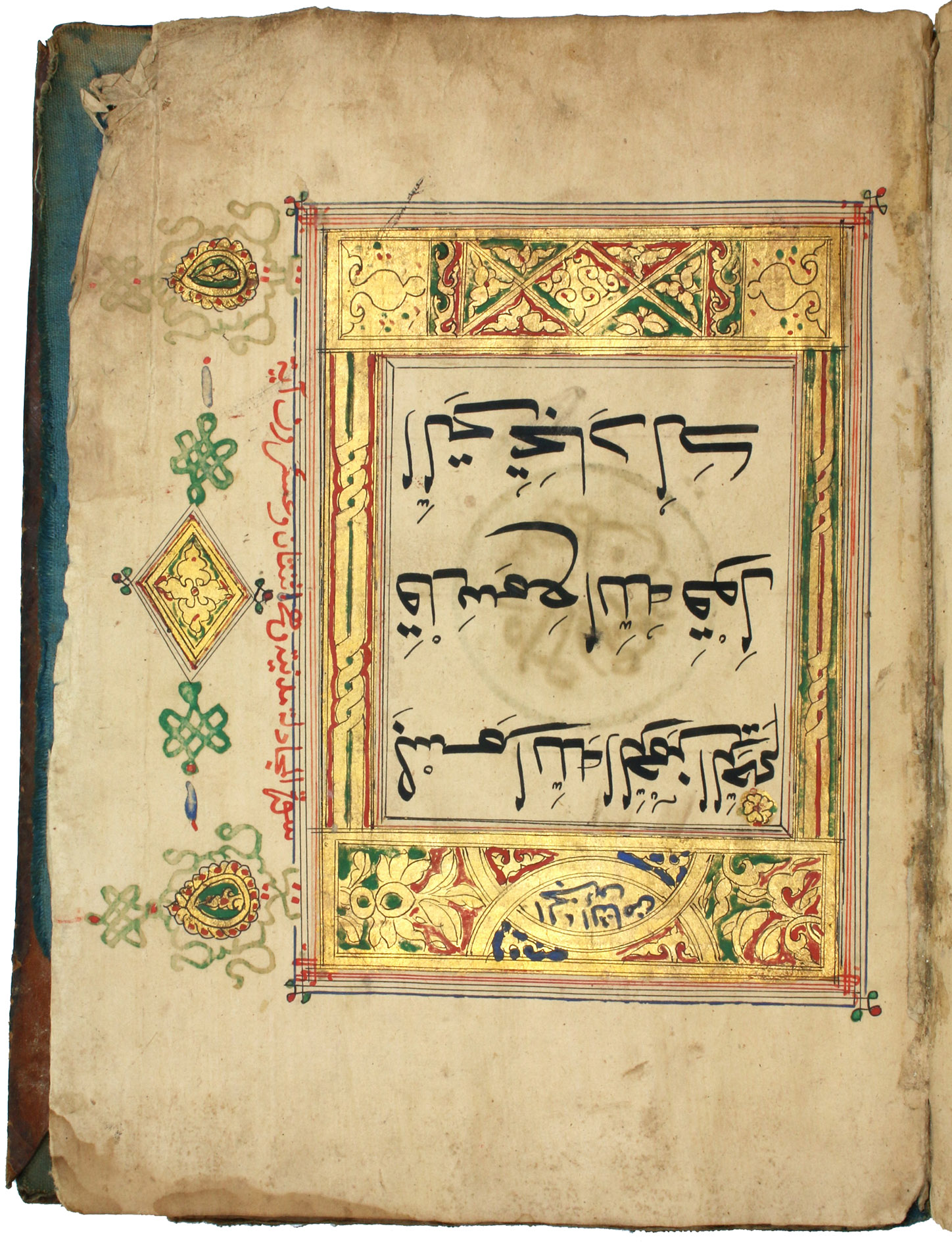
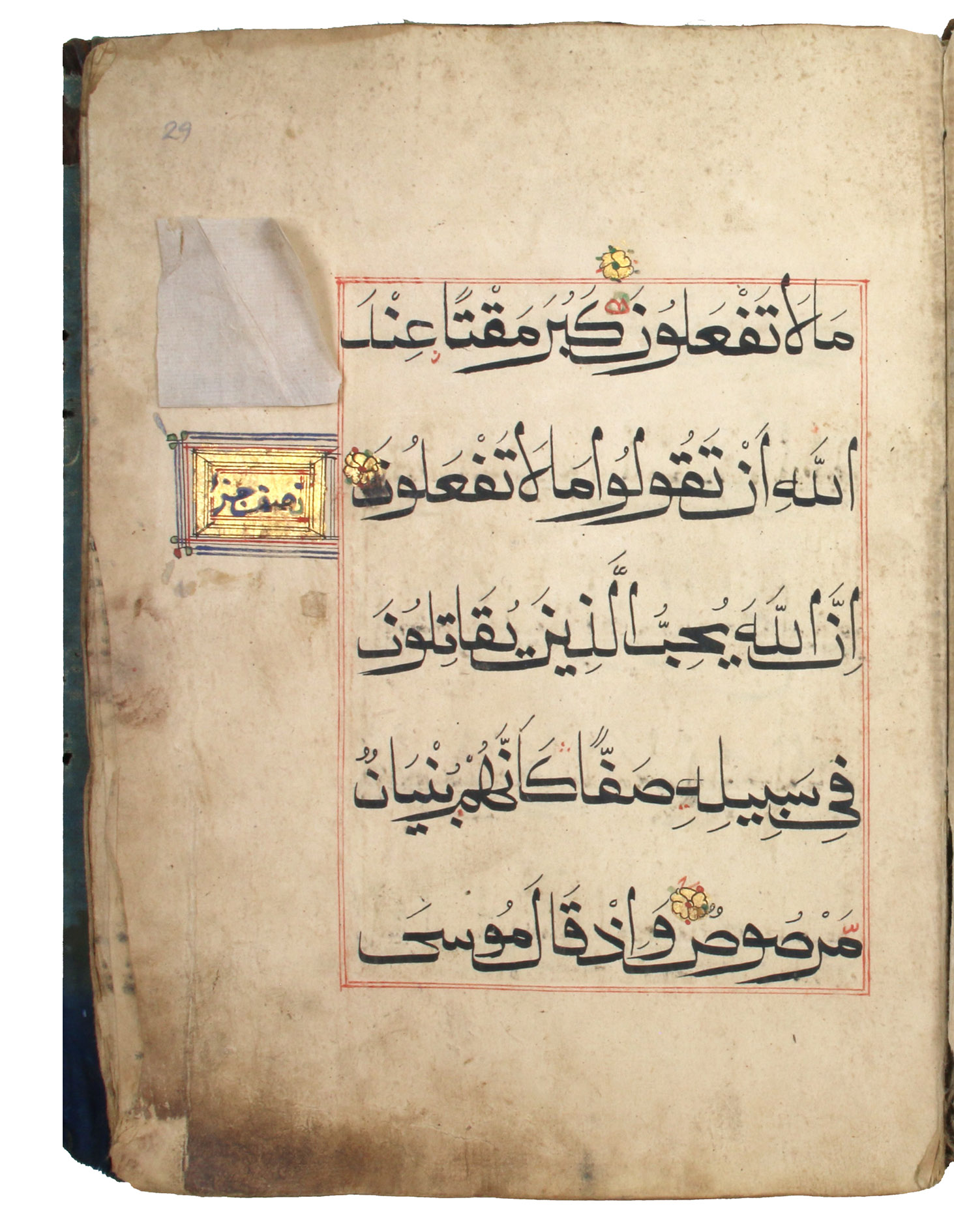
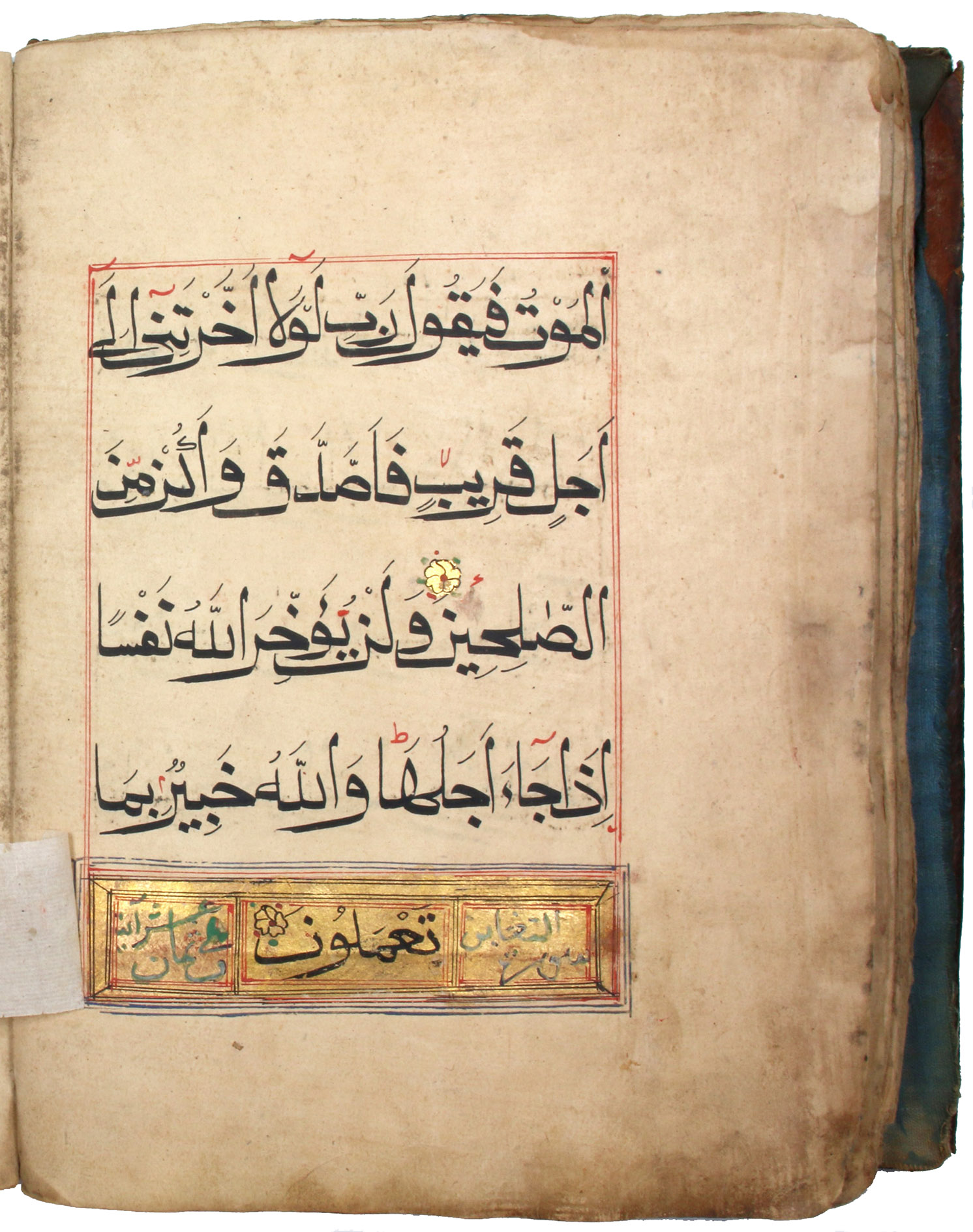
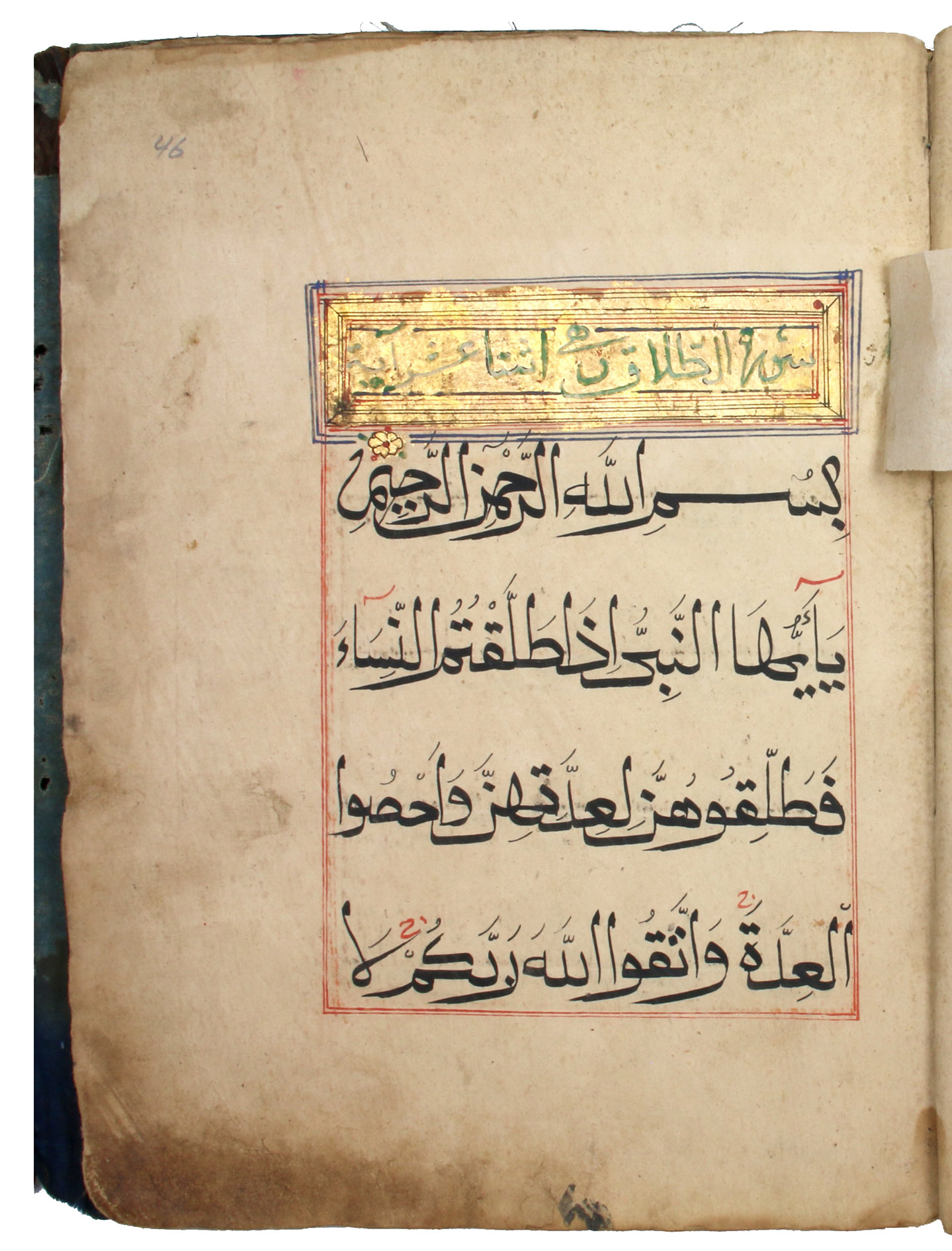
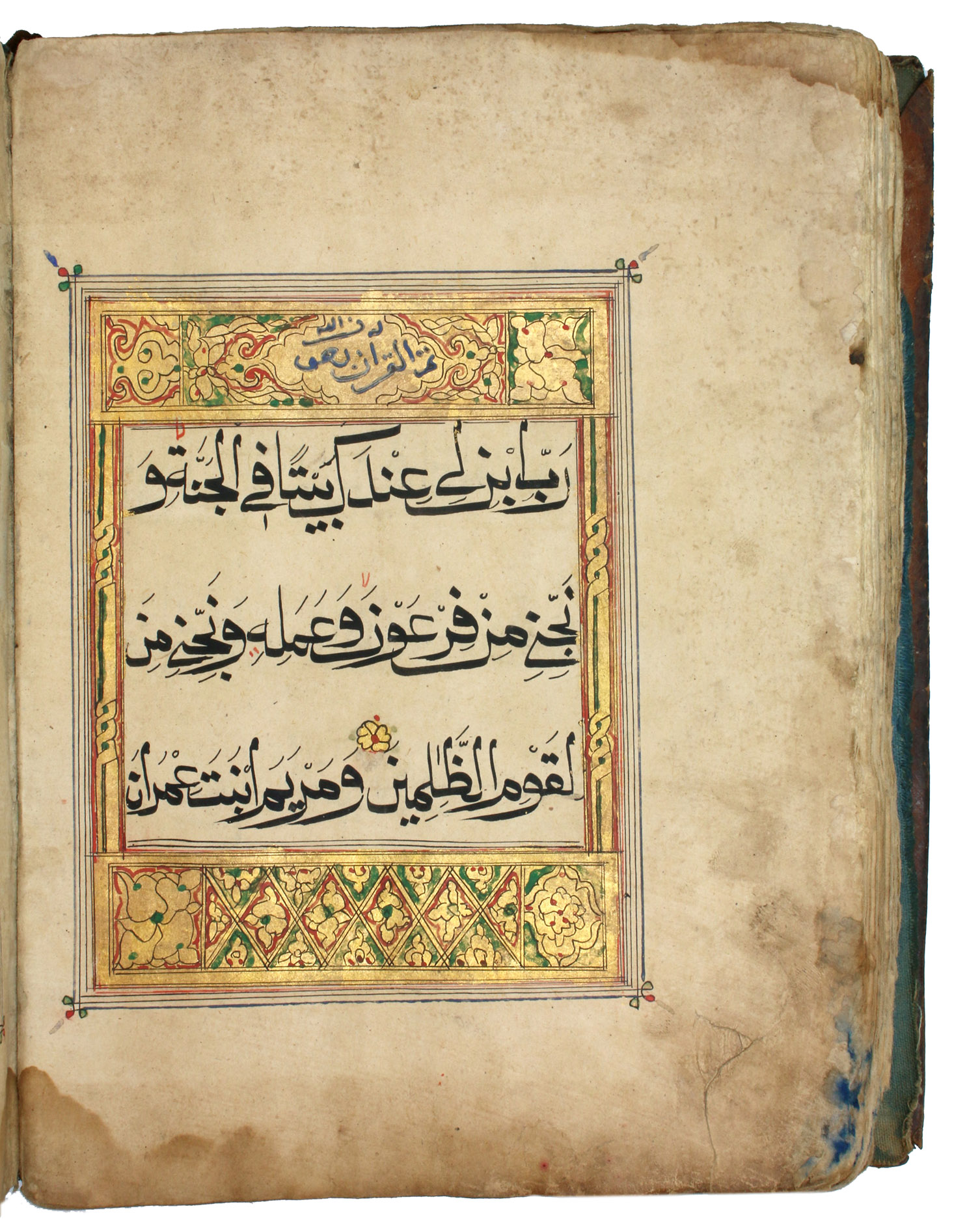
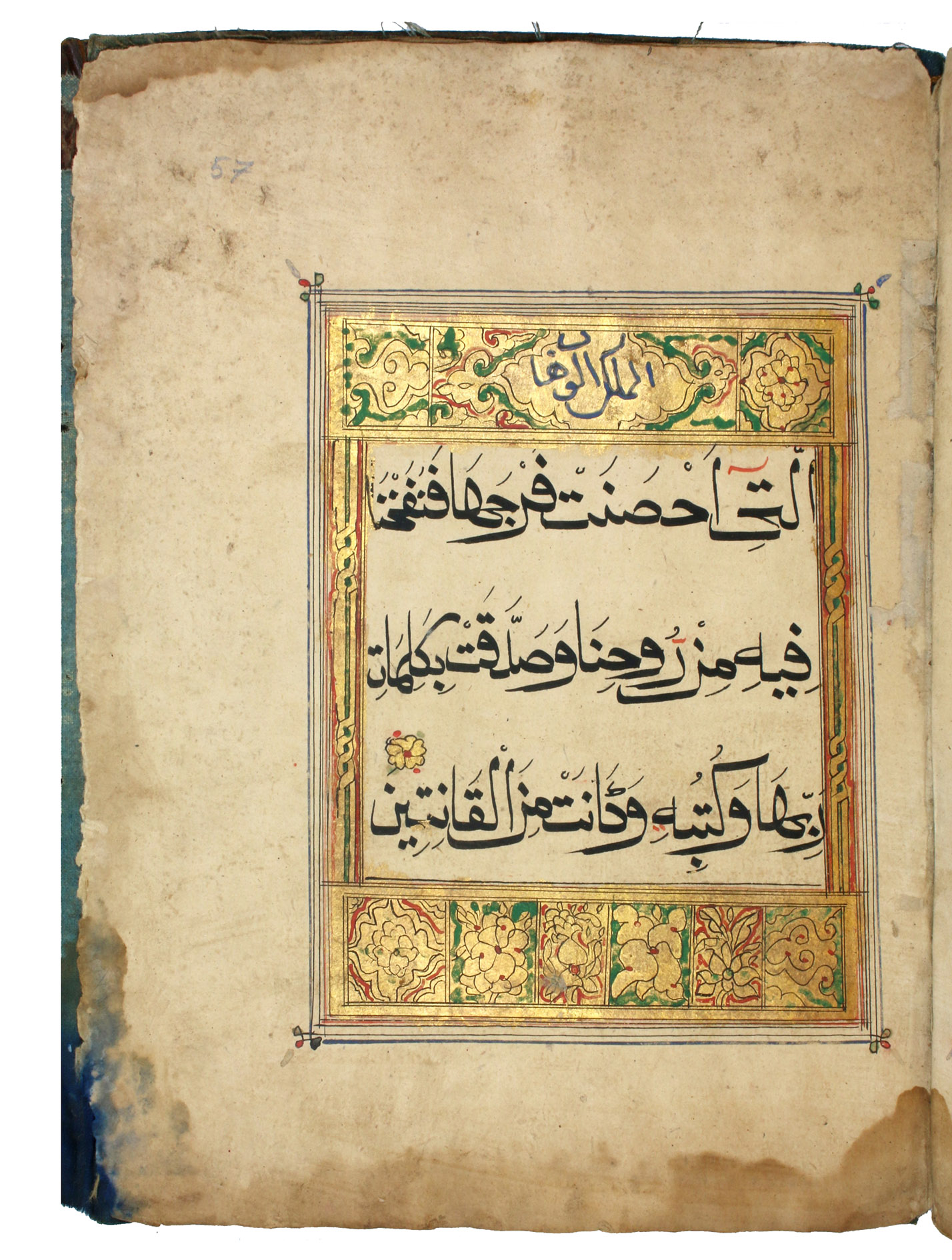
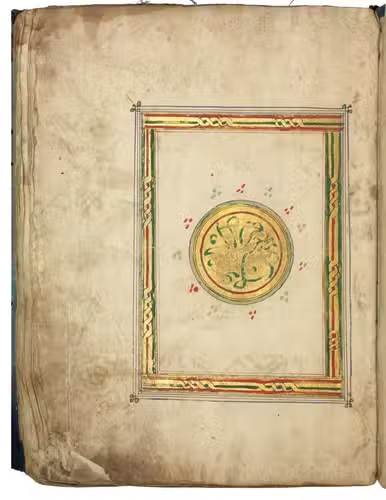
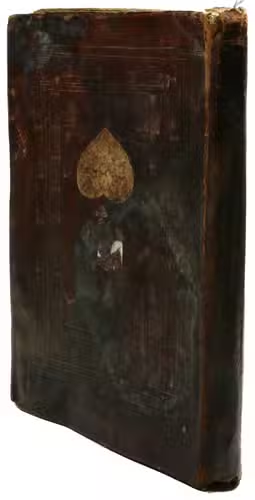
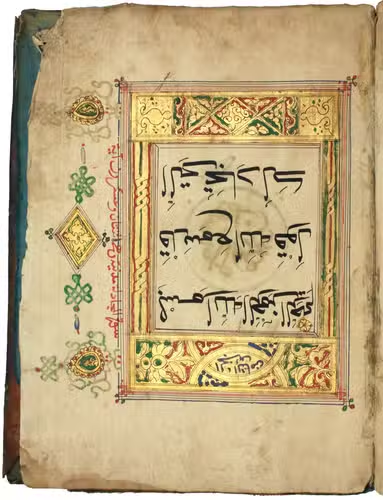
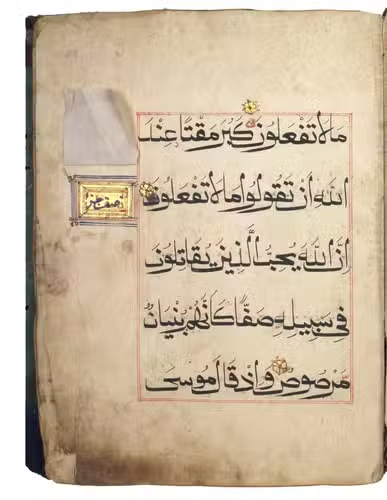
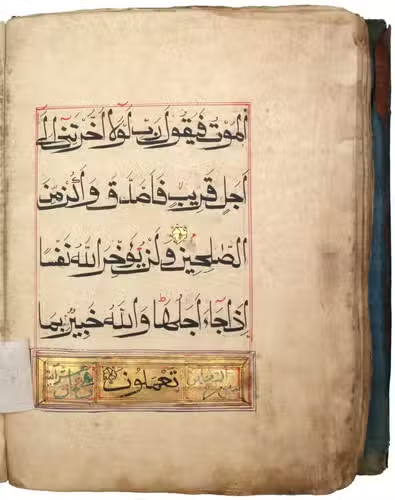
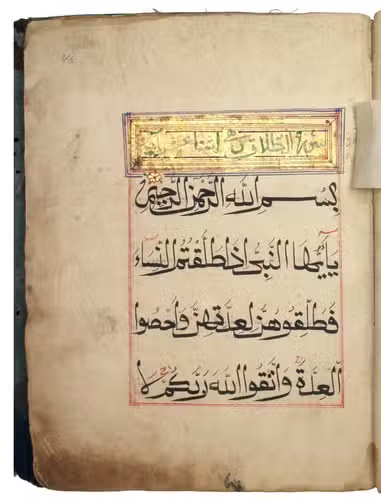
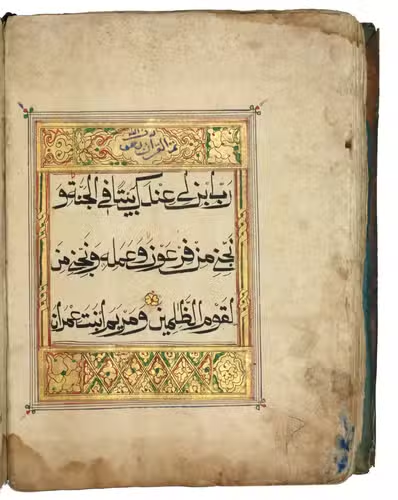
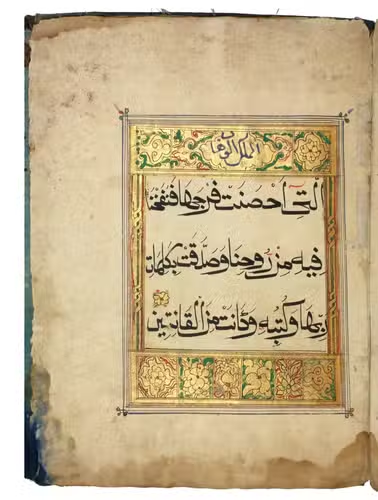
[Qing China, perhaps Yunnan or Gansu, ca. 18th century]. 4to (212 x 285 mm). Arabic manuscript on paper, written in a black Sini script in 5 lines, with some diacritics picked out in red, and the leaves outlined in red. The Arabic text on the opening page is calligraphed within a golden circle, surrounded by a gold border, the opening and closing bifolia have wide gold borders with multicoloured designs, and Chinese knots in the margins, the verse markers and Surah titles are calligraphed on fields of gold, with the Surah titles calligraphed with jade green ink. 19th-century gold tooled leather, blue cloth end papers. 60 ll.
€ 18,000
A complete Chinese manuscript of the 28th Juz' of the Qur'an, decorated with gold. This manuscript is part of the long Islamic manuscript tradition, especially popular among Chinese Muslims, of splitting the Qur'an into thirty sections, called Juz'. Each Juz' would be copied with particularly careful, beautiful Arabic calligraphy in the Chinese Sini script.
The twenty-eighth Juz' stretches from the 58th Surah, al-Mujadila, to the end of the 66th surah, at-Tahrim, and thus begins and ends with the concerns of Muslim women, from directions on how to divorce to exhortations to female chastity and a story of the Prophet's own wives. Other suwar treat general topics of the faith, and especially focus on the role of Jesus of Nazareth within the Muslim faith.
Arab presence in China dates back as far as the first Caliphate: the Prophet's companion Sa'd ibn Abi Waqqas is traditionally credited with introducing Islam to China as ambassador in 650 CE. Historically, many major cities in China, such as Xi'an (known as Chang'an during the height of the Silk Road) and Beijing boast a long and rich Muslim history. Qur'an sections written by Chinese Muslims show Chinese influence clearly in both the decoration and the bold Sini script, which is derived from naskh.
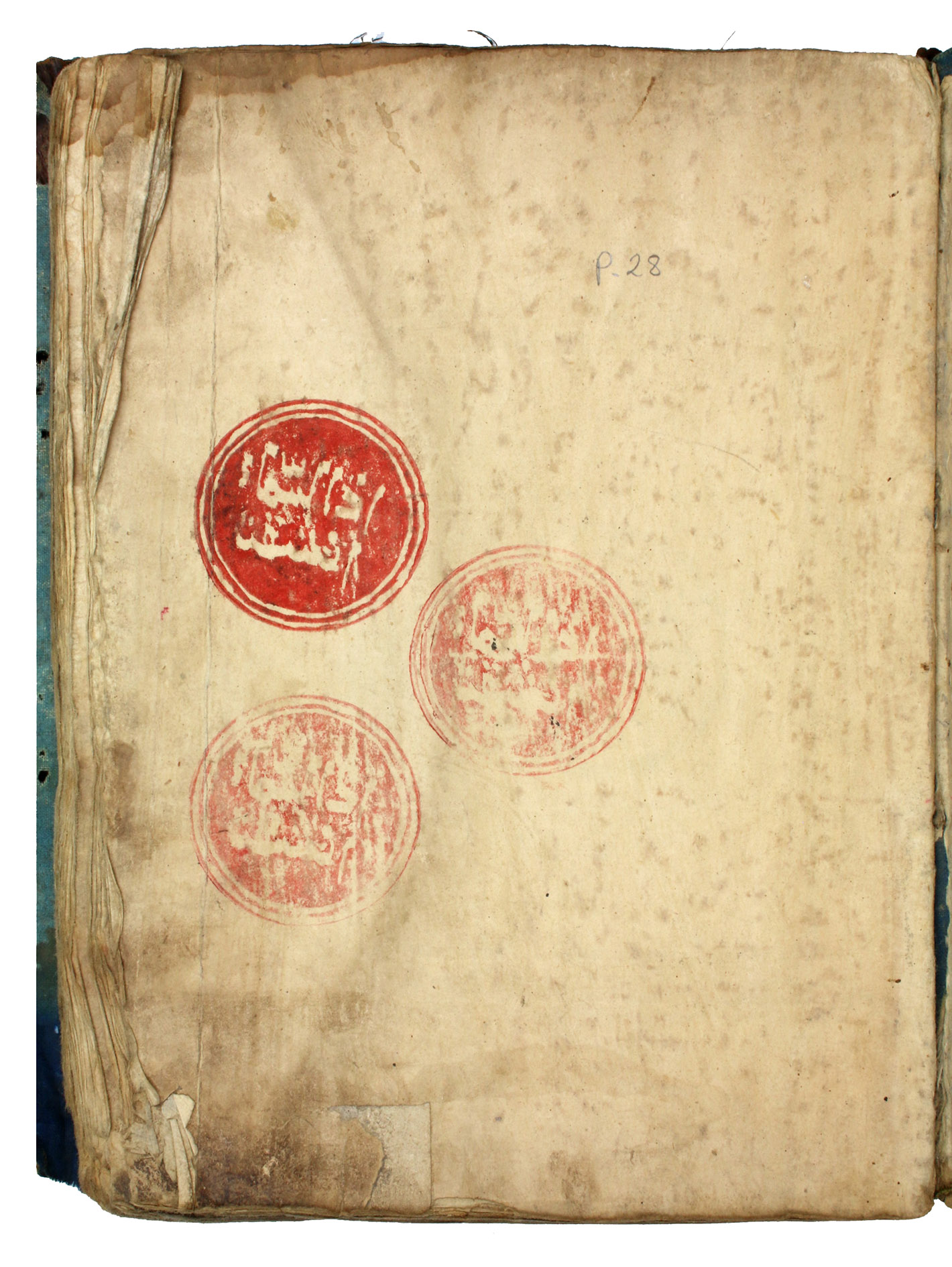
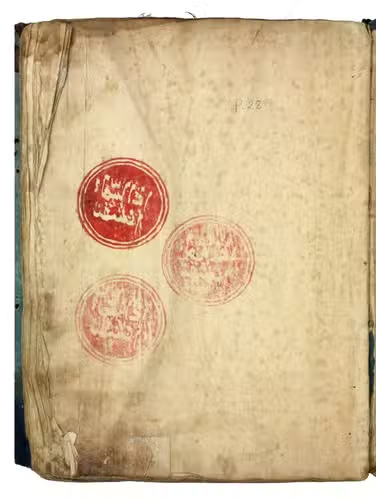
With three matching red ownership stamps on the first free endpaper, in Arabic, but Chinese in style. The work shows slight traces of use. The leaves are somewhat soiled and water stained around the edges, remnants of a later bookplate, the Surah titles are slightly rubbed, but protected with tipped-in tissue paper. Otherwise in good condition.
Related Subjects: