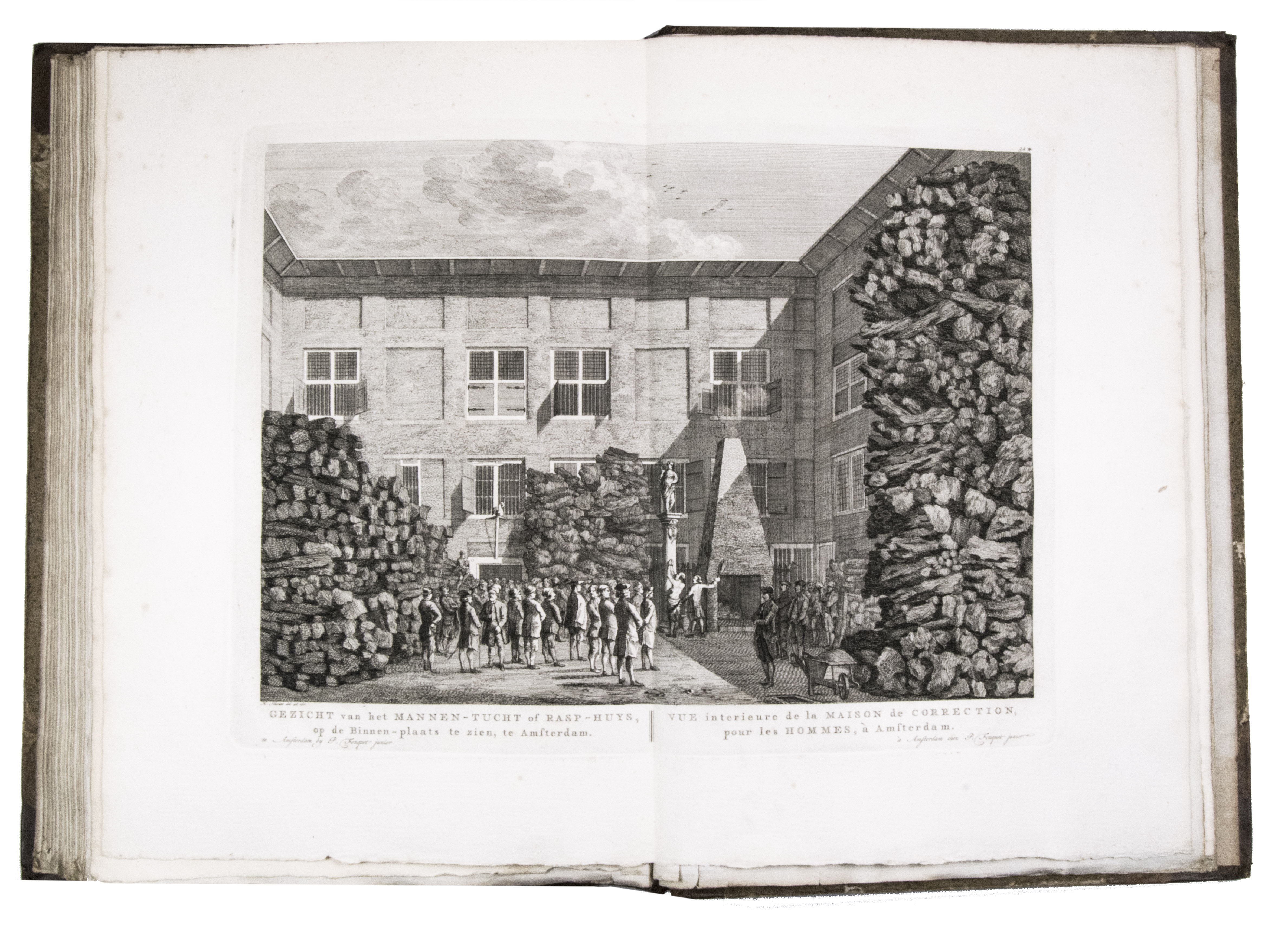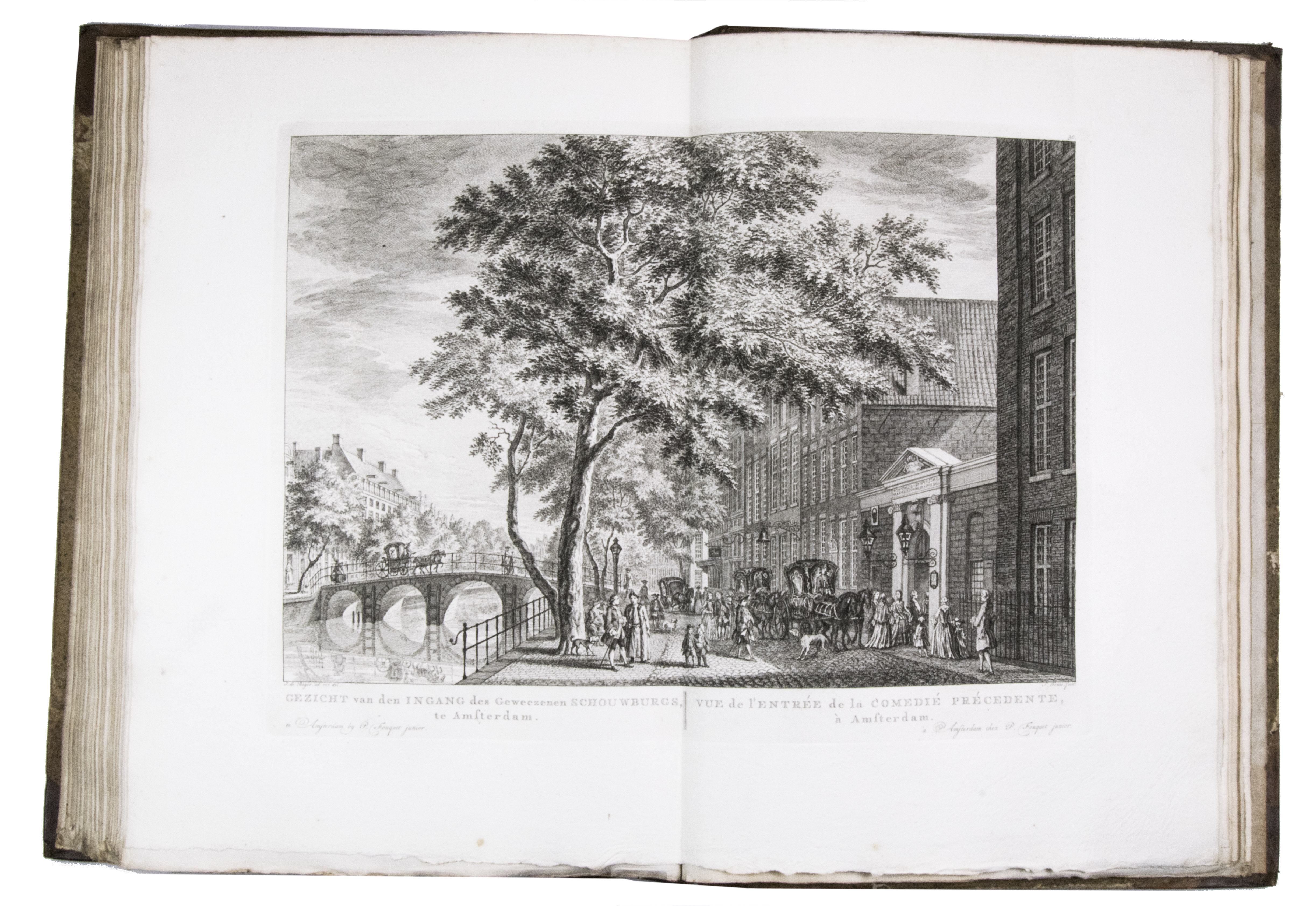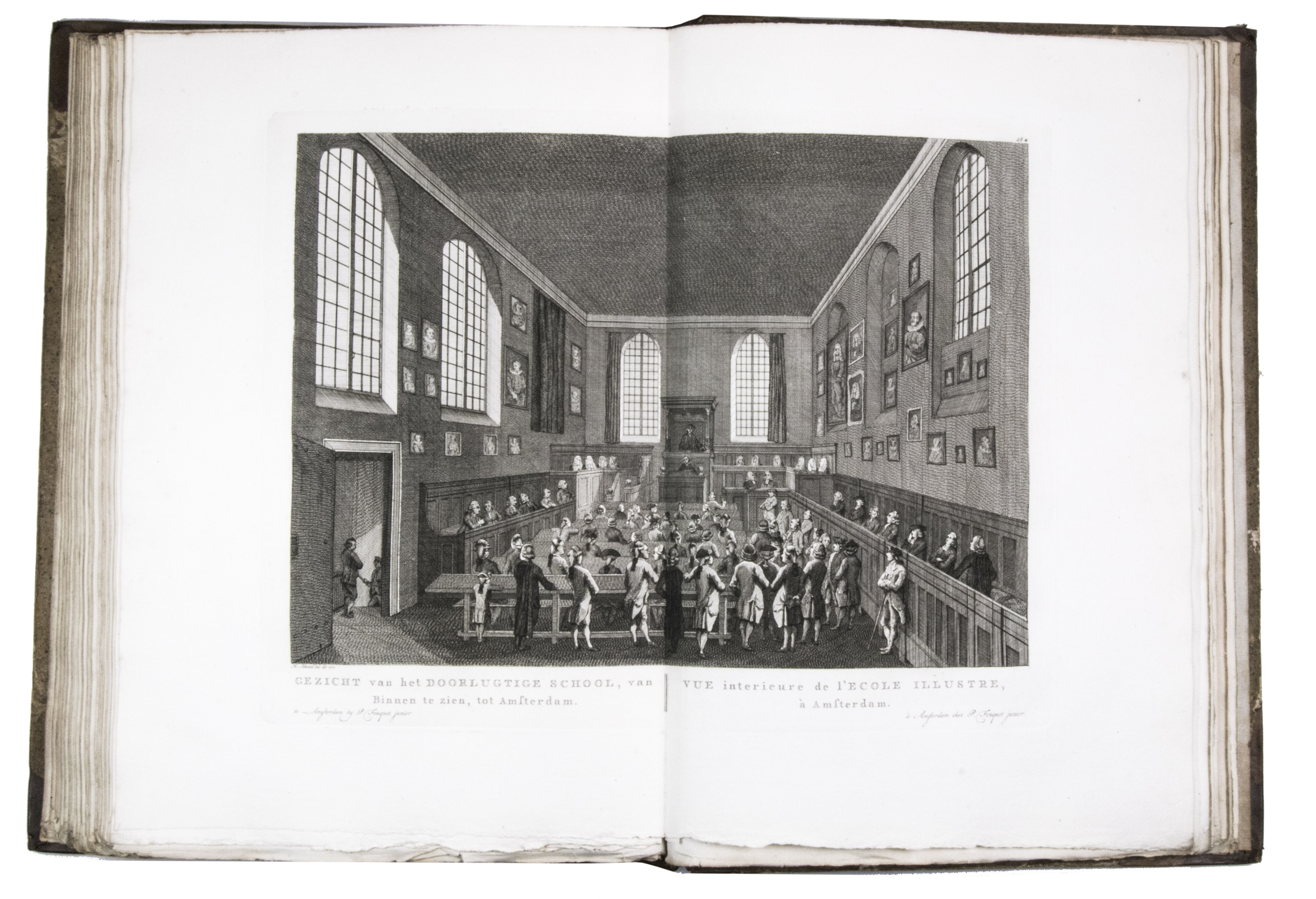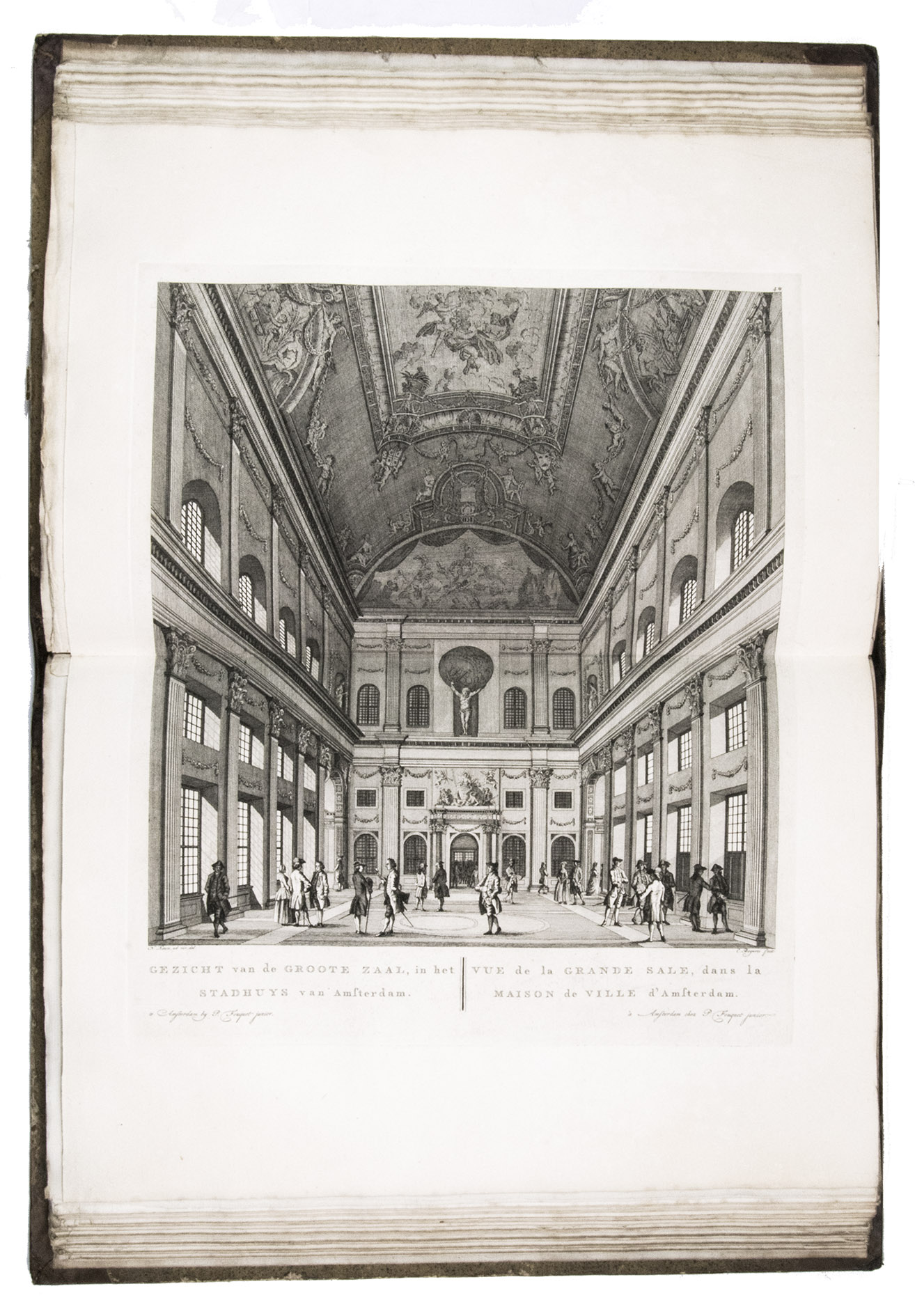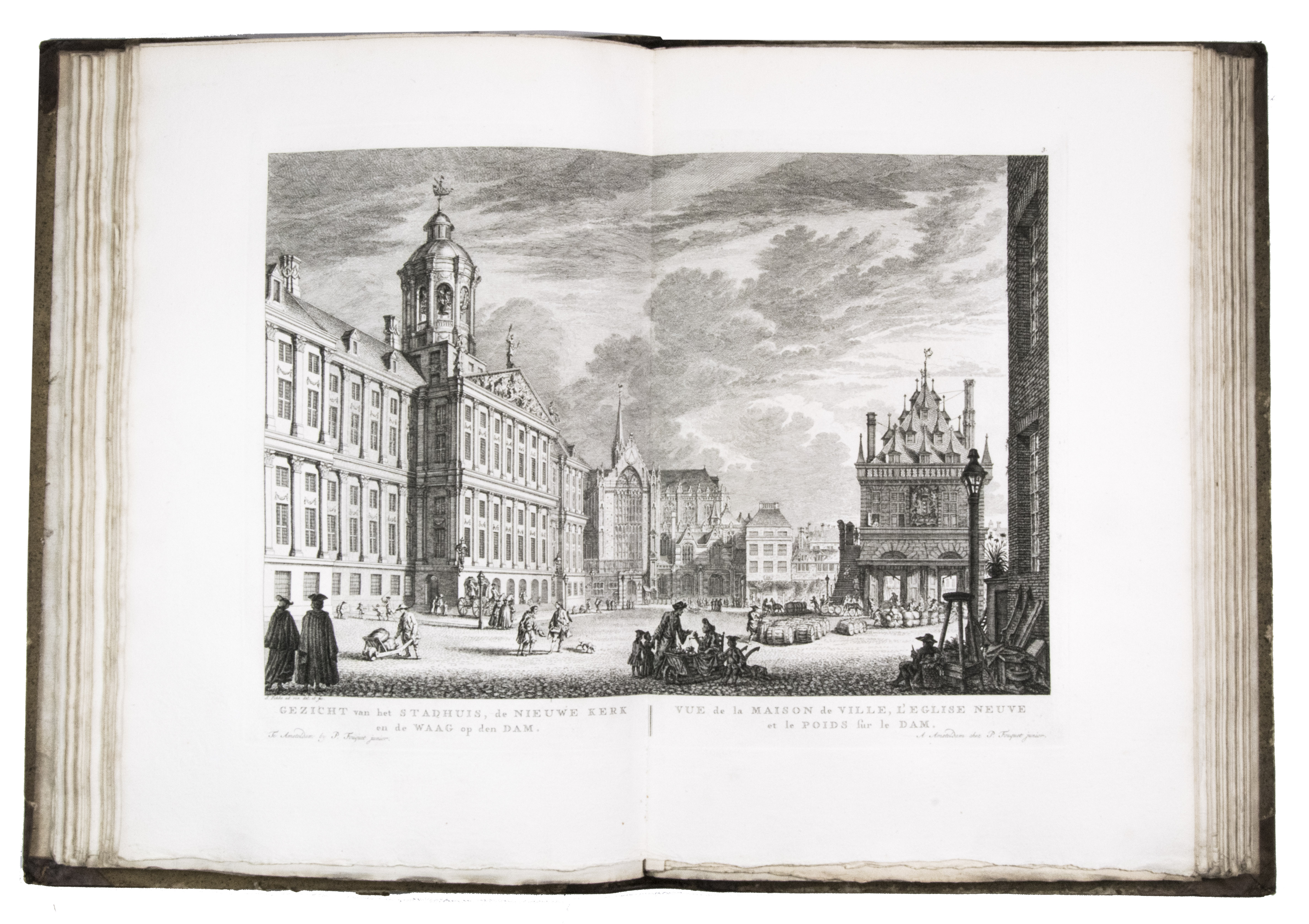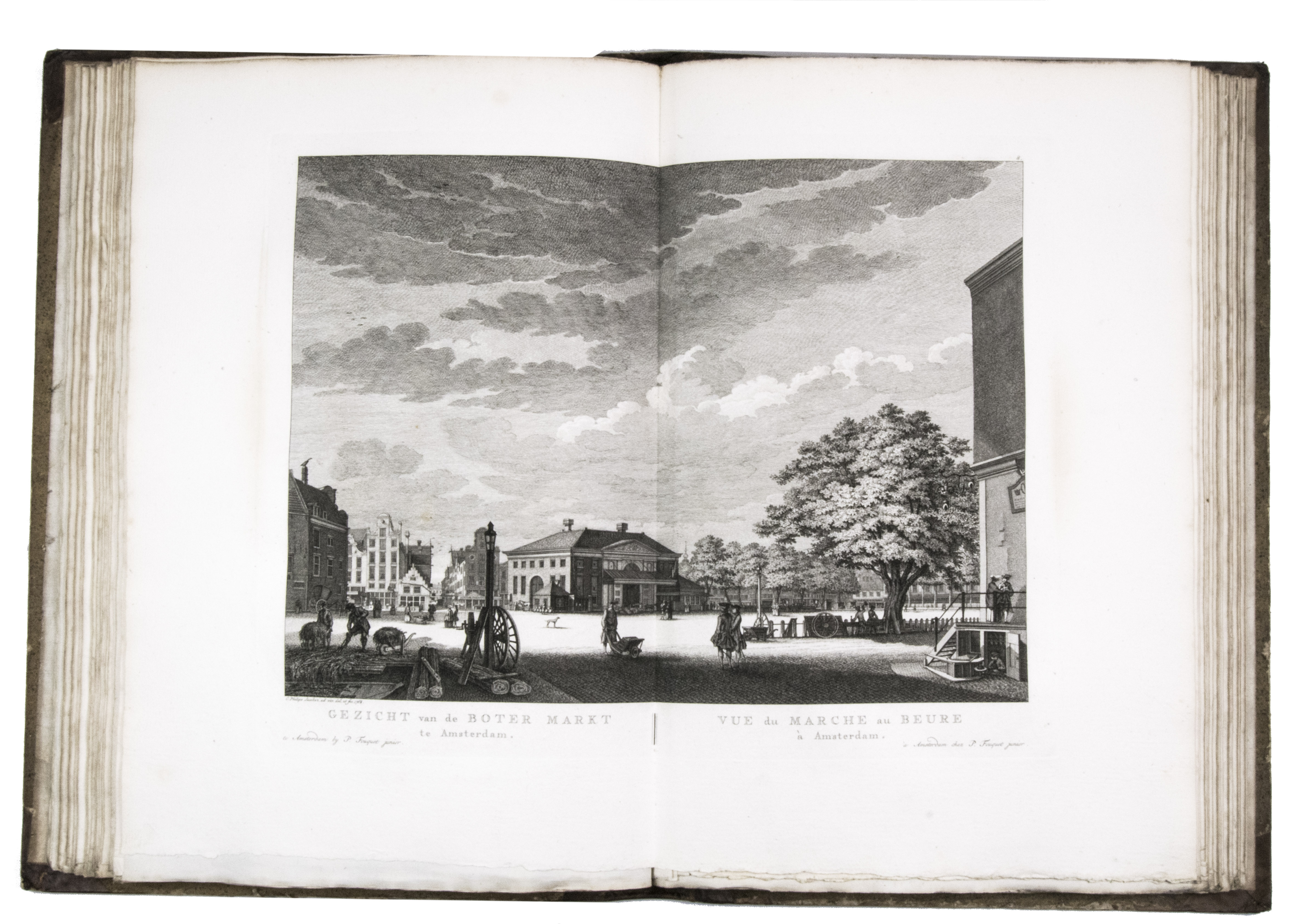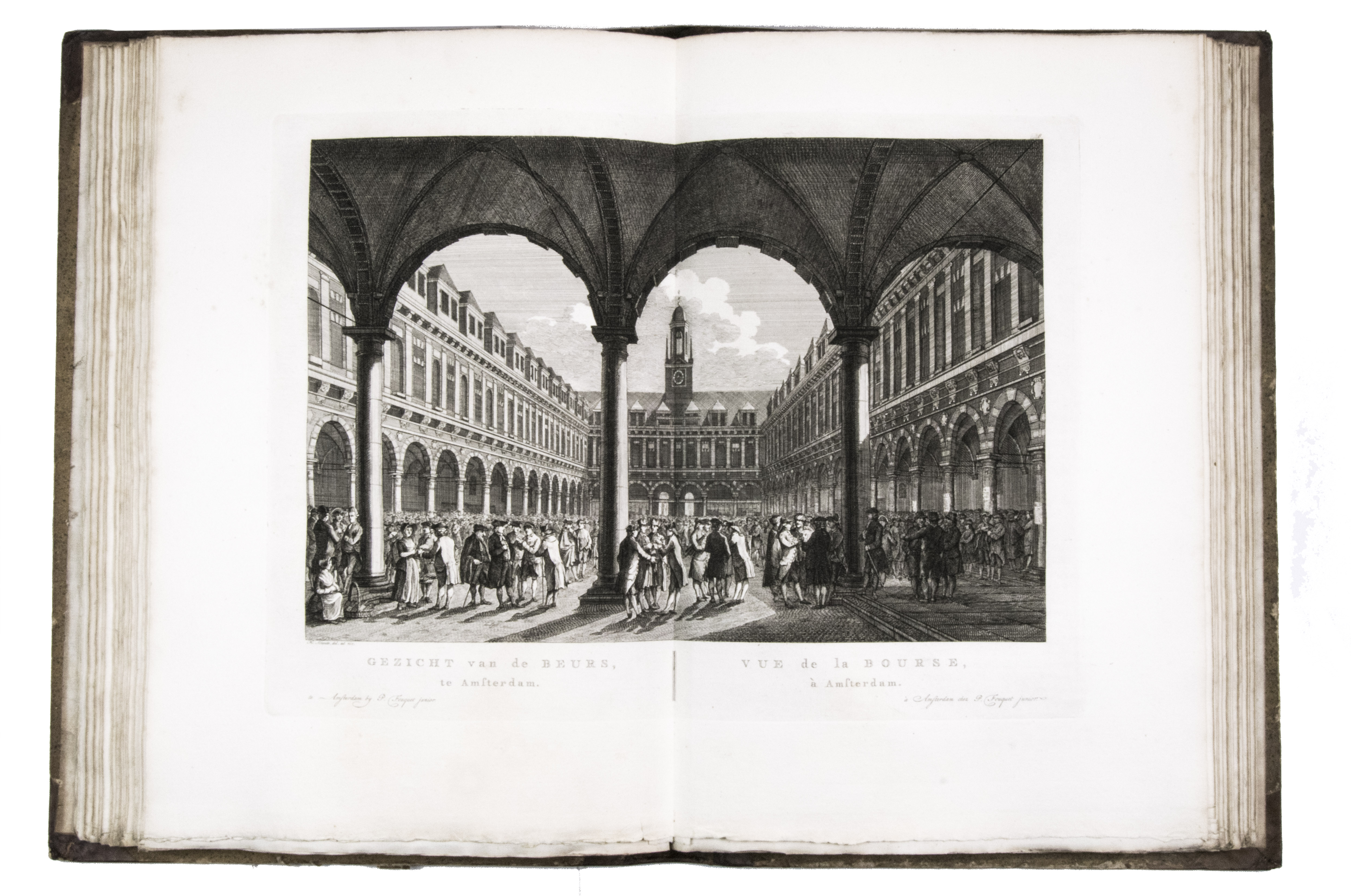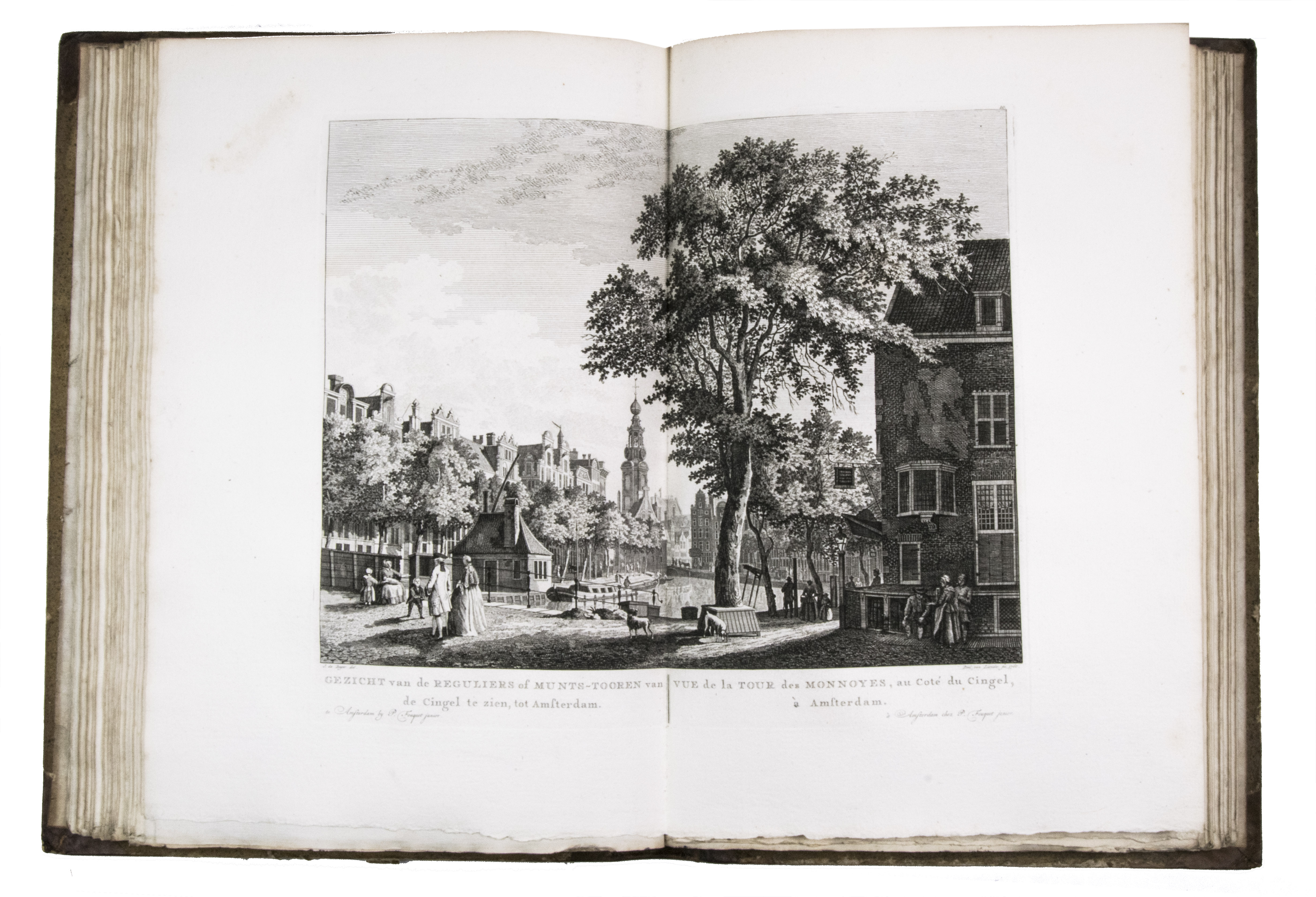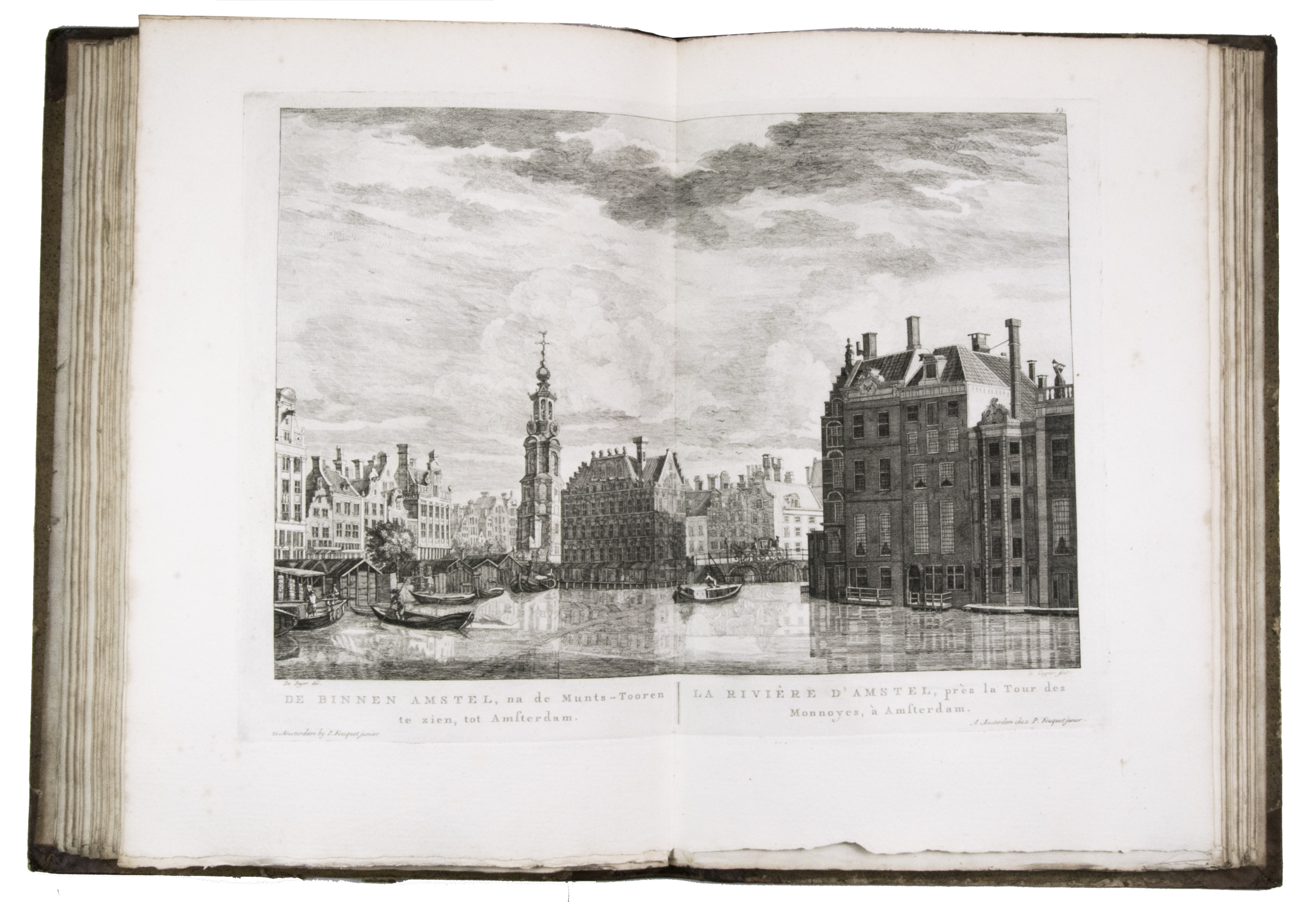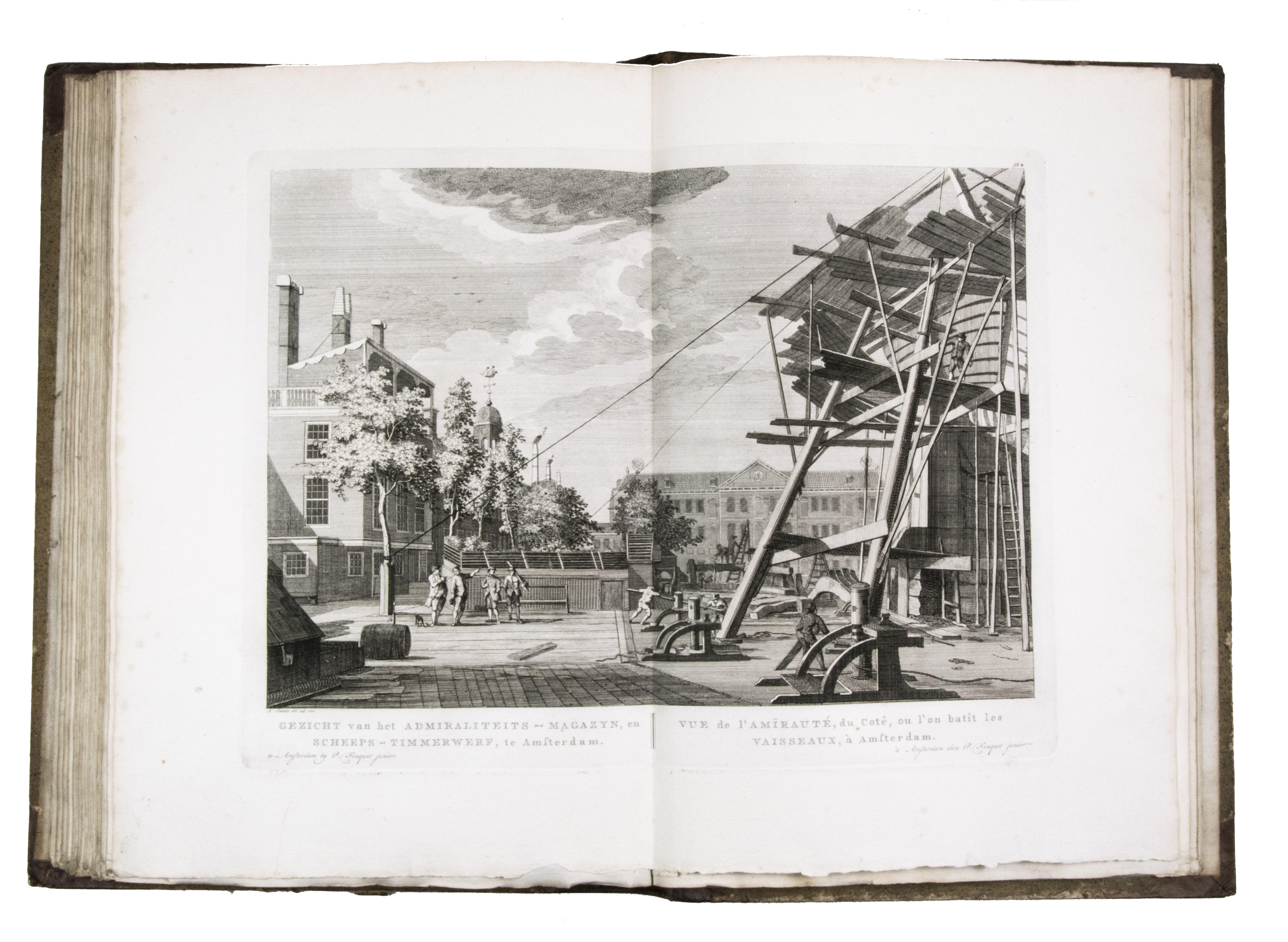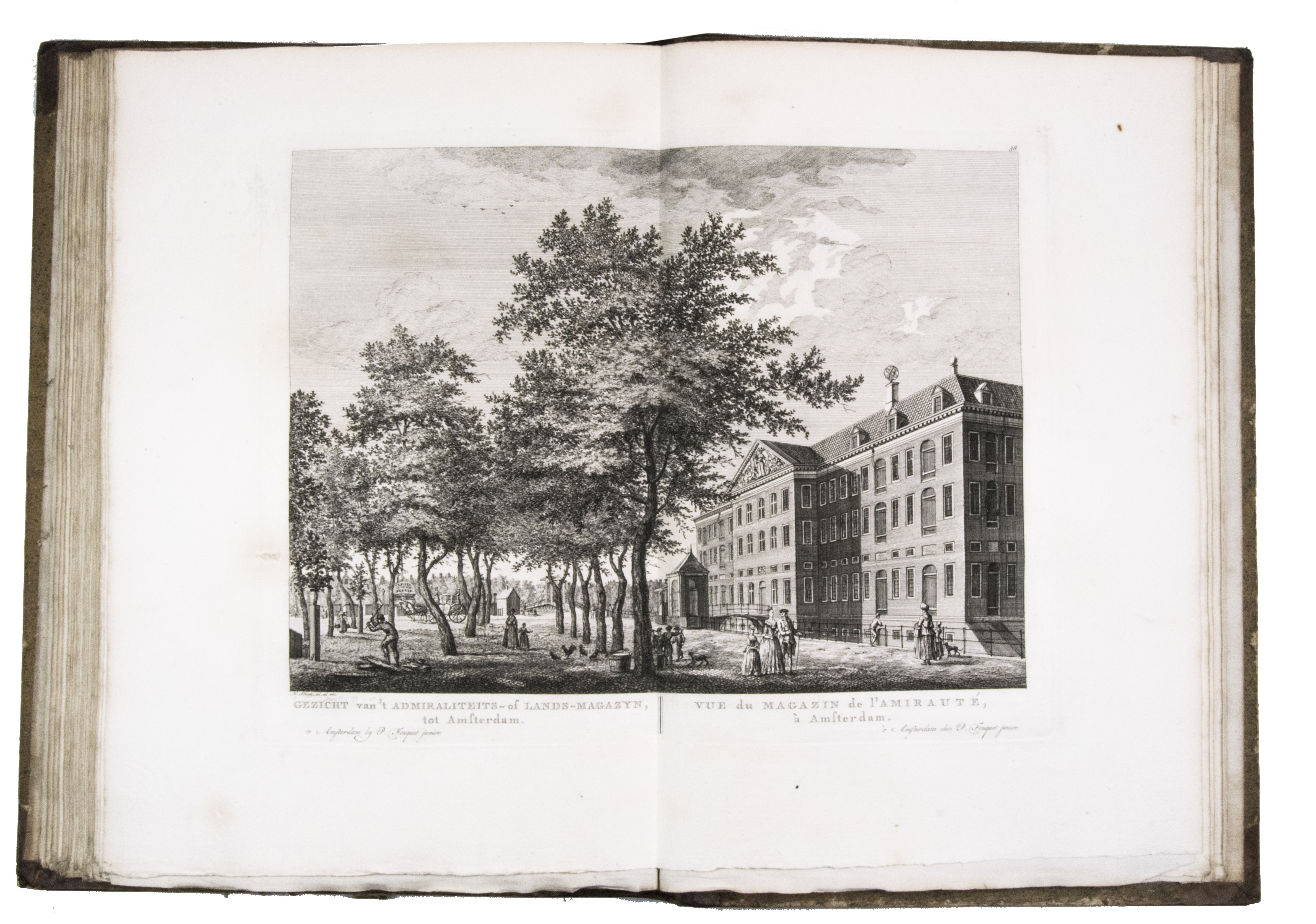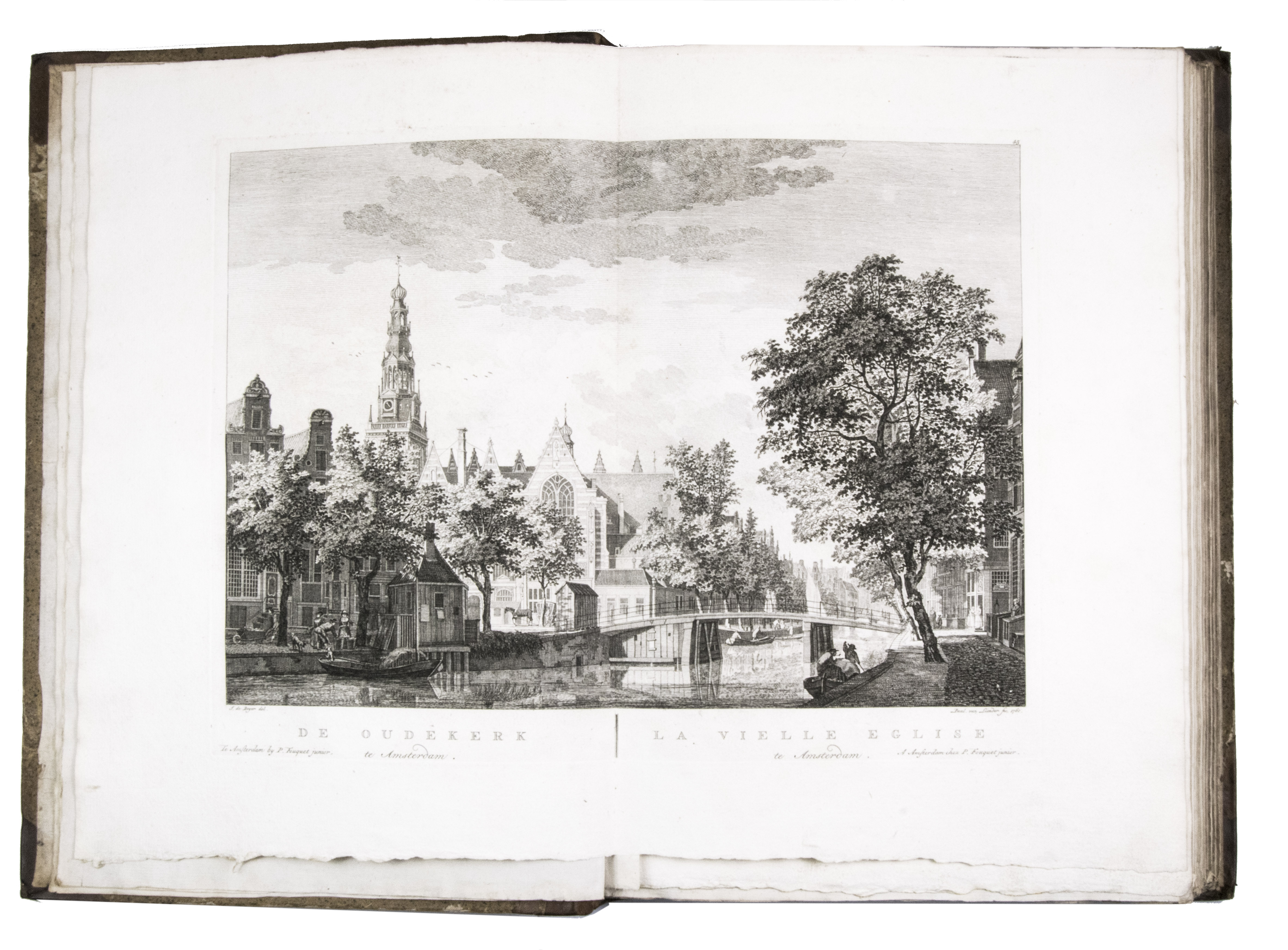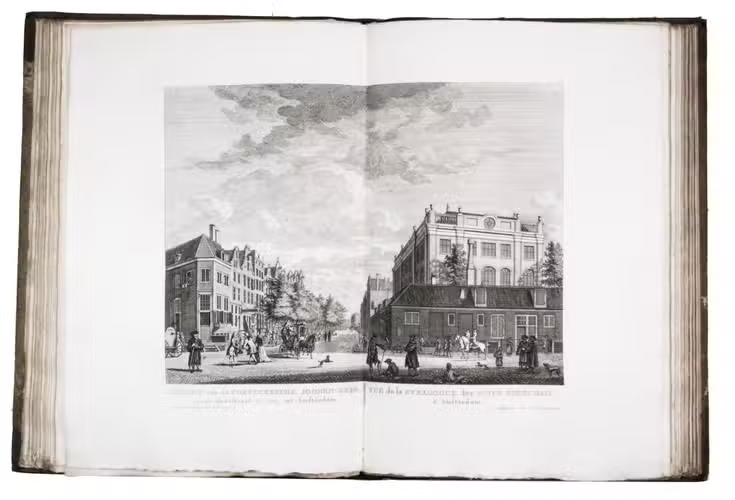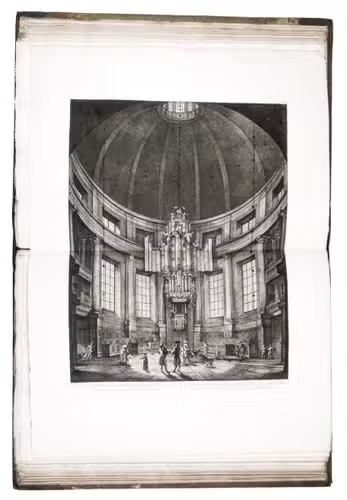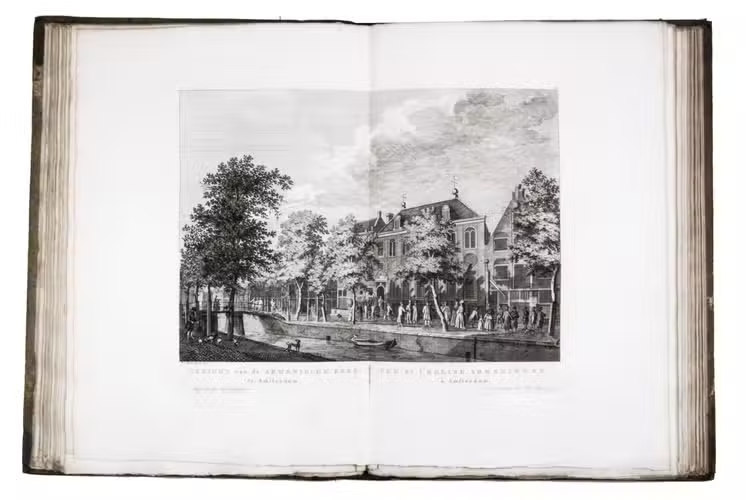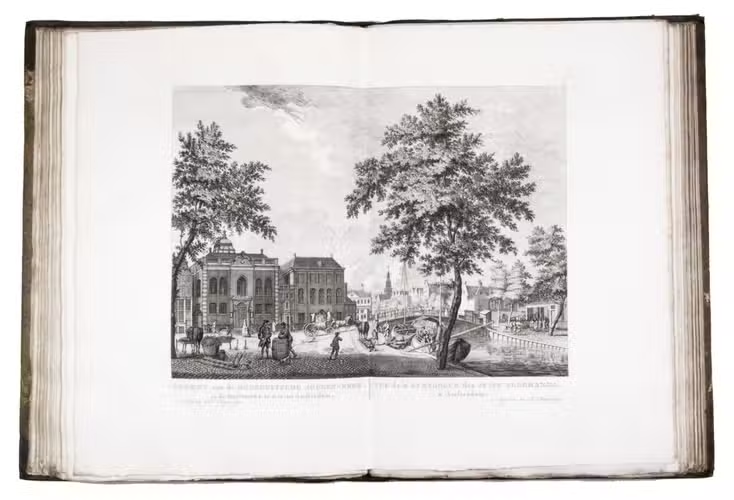
[FOUQUET Jr., Pierre].
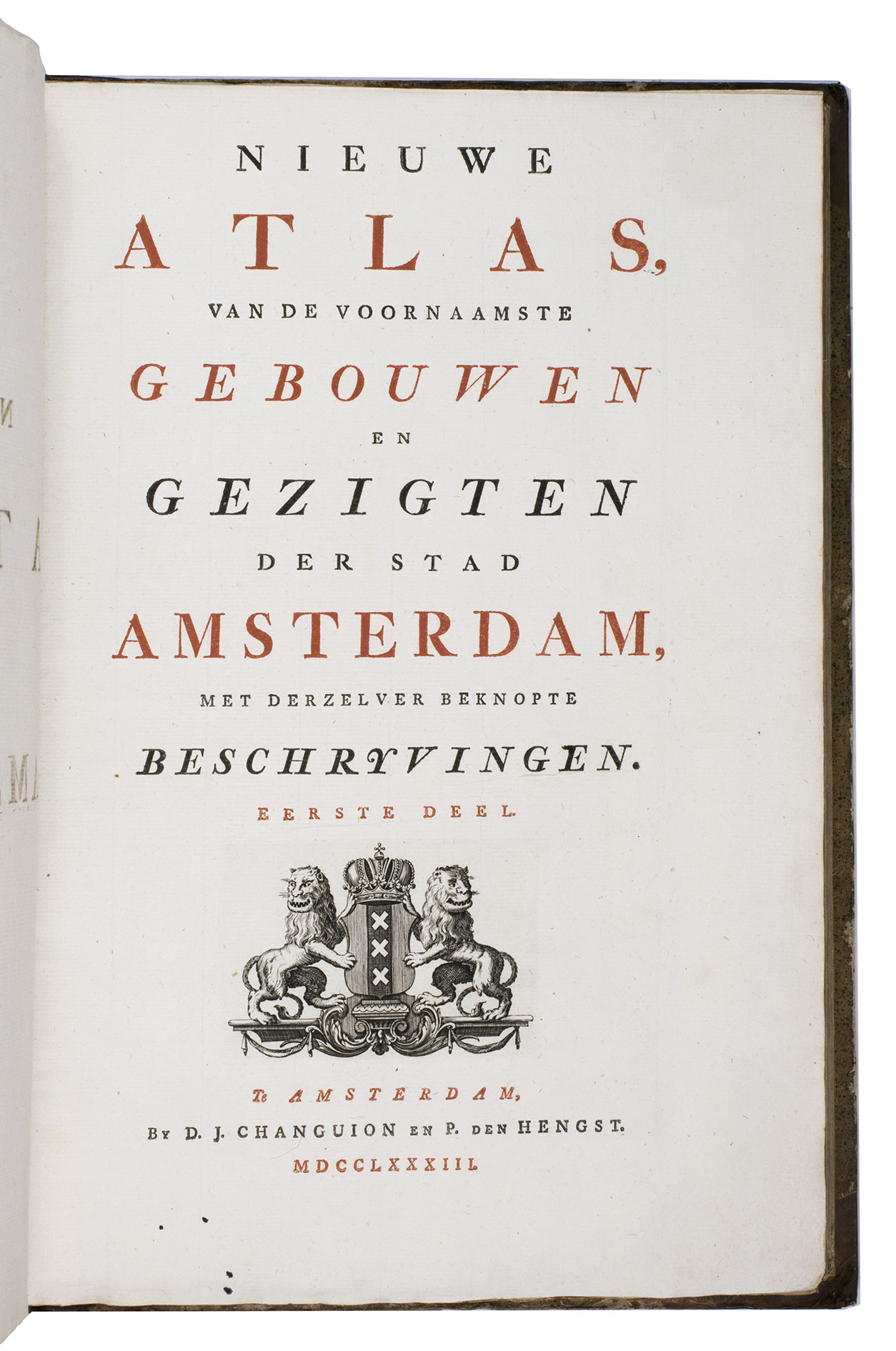
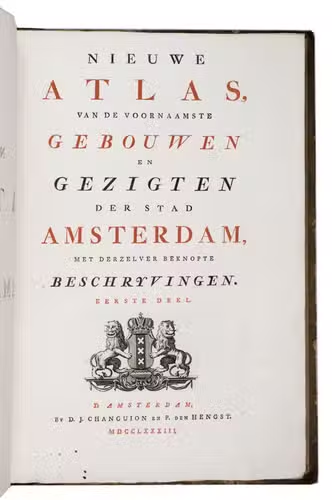
Nieuwe atlas van de voornaamste gebouwen en gezigten der stad Amsterdam, met derzelver beknopte beschryvingen.
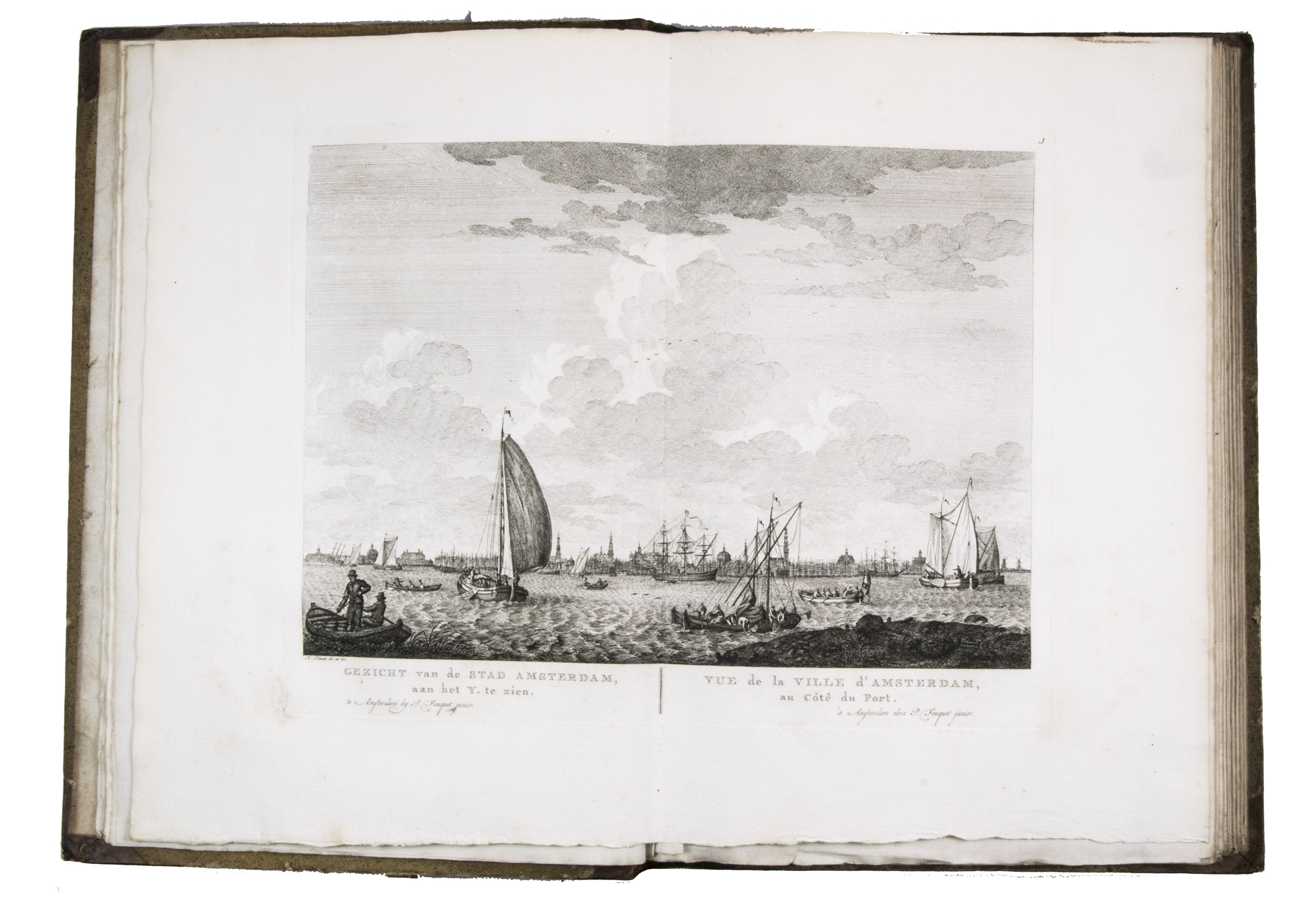
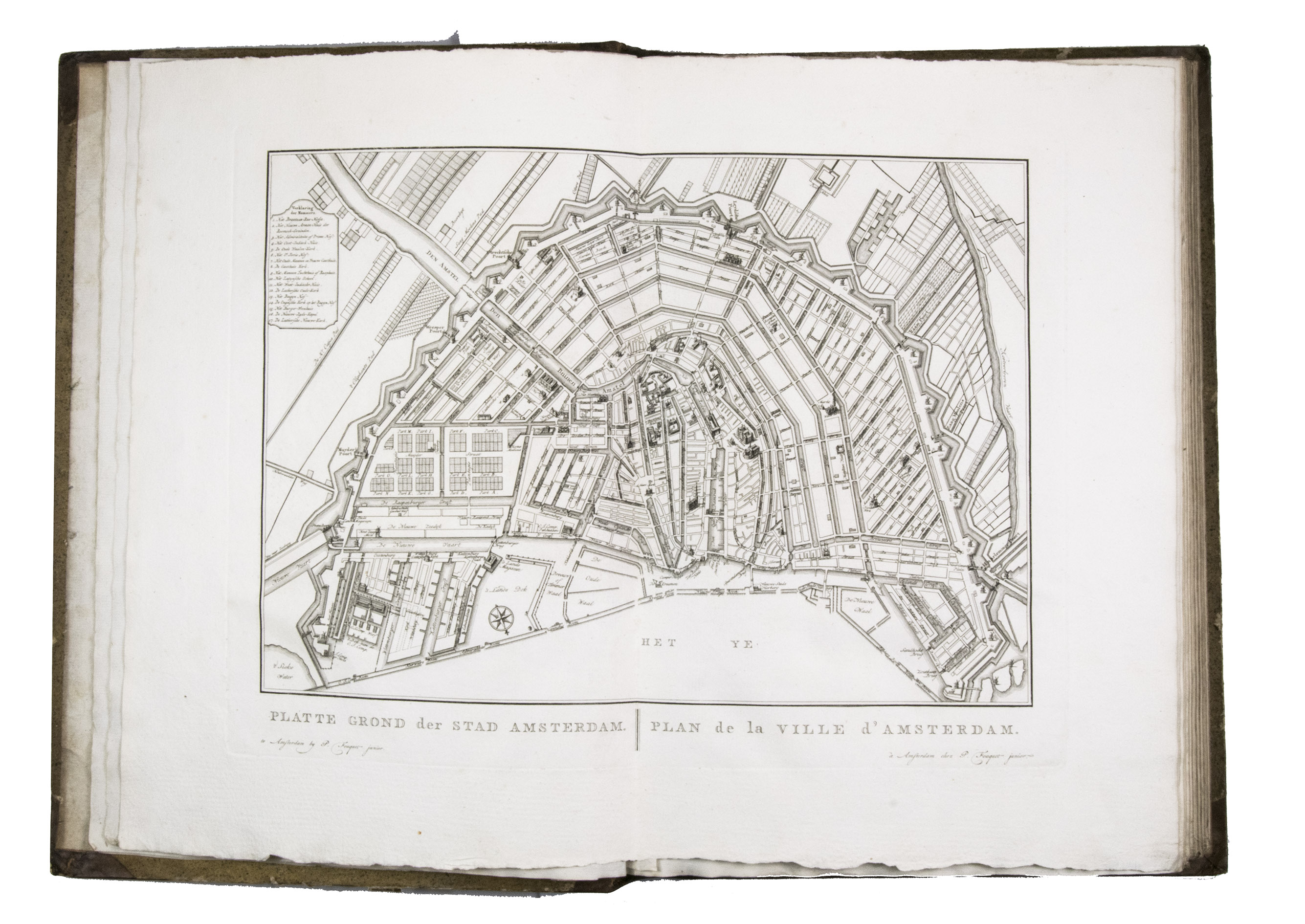
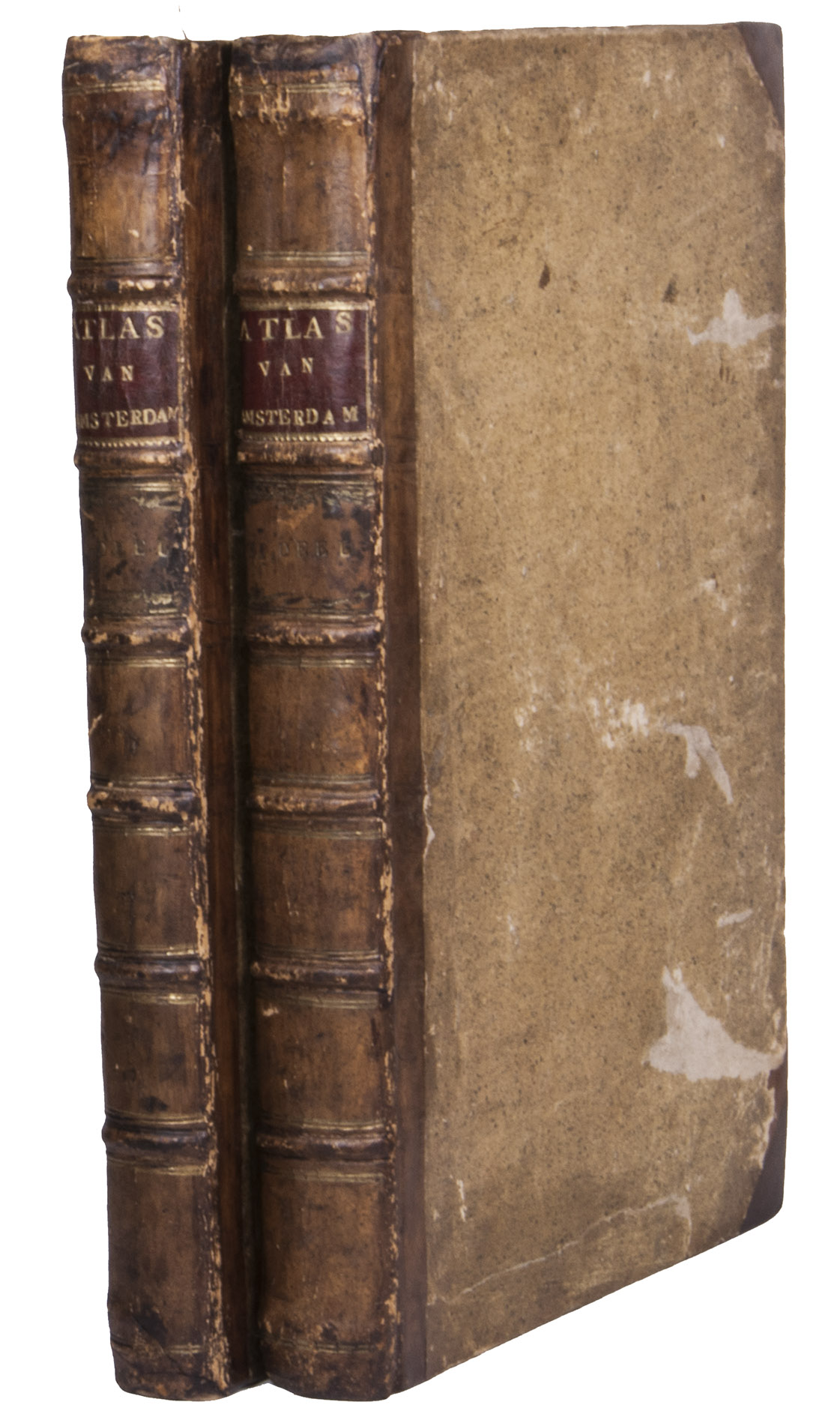
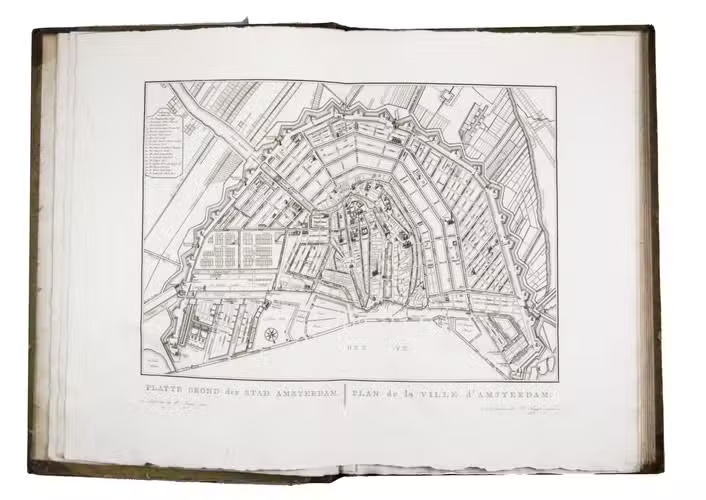
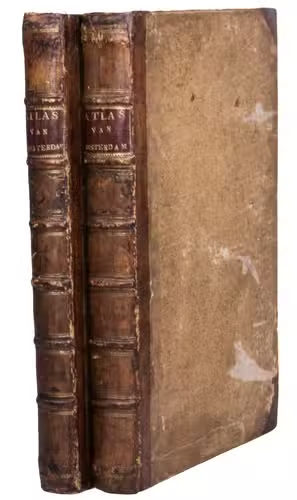
Amsterdam, Daniel Jean Changuion & Petrus van Hengst, 1783. 2 volumes. Folio. With a double-page engraved plan of Amsterdam, and 102 double-page engraved city views (45 in the first volume and 57 in the second), the title-page of each volume printed in red and black. Contemporary gold-tooled sprinkled half calf. [2], 27; [1], 36 ll.
€ 15,000
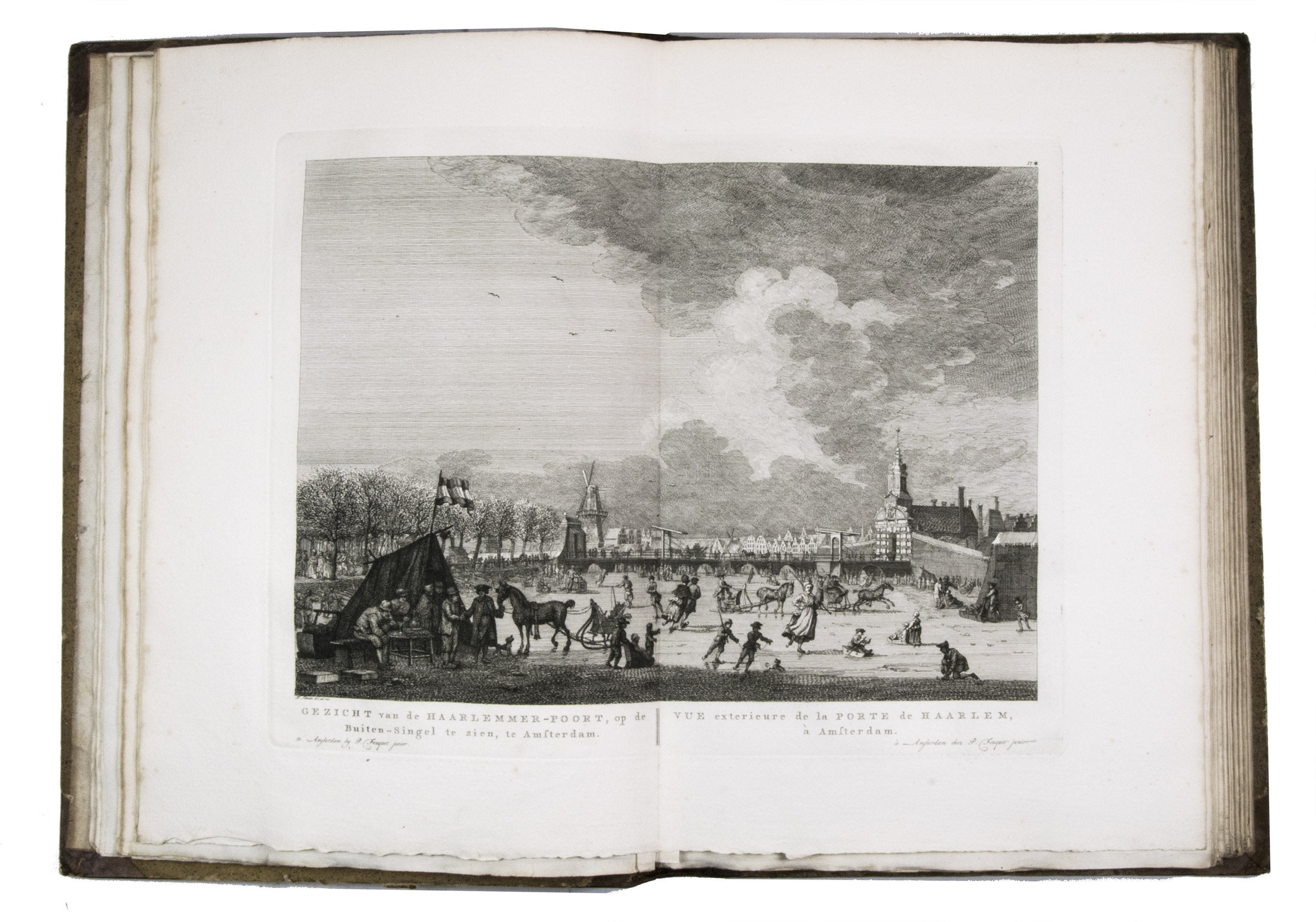
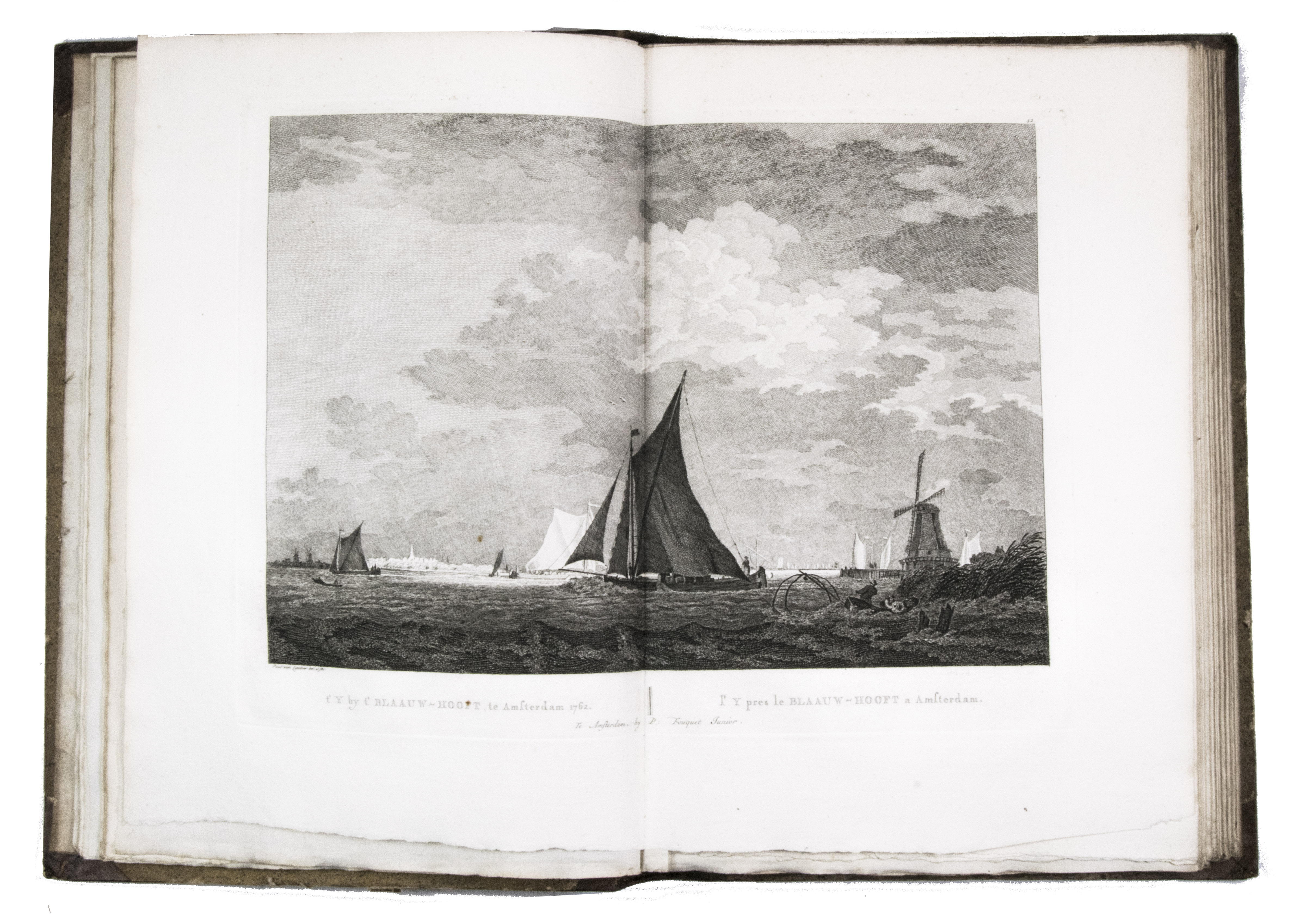
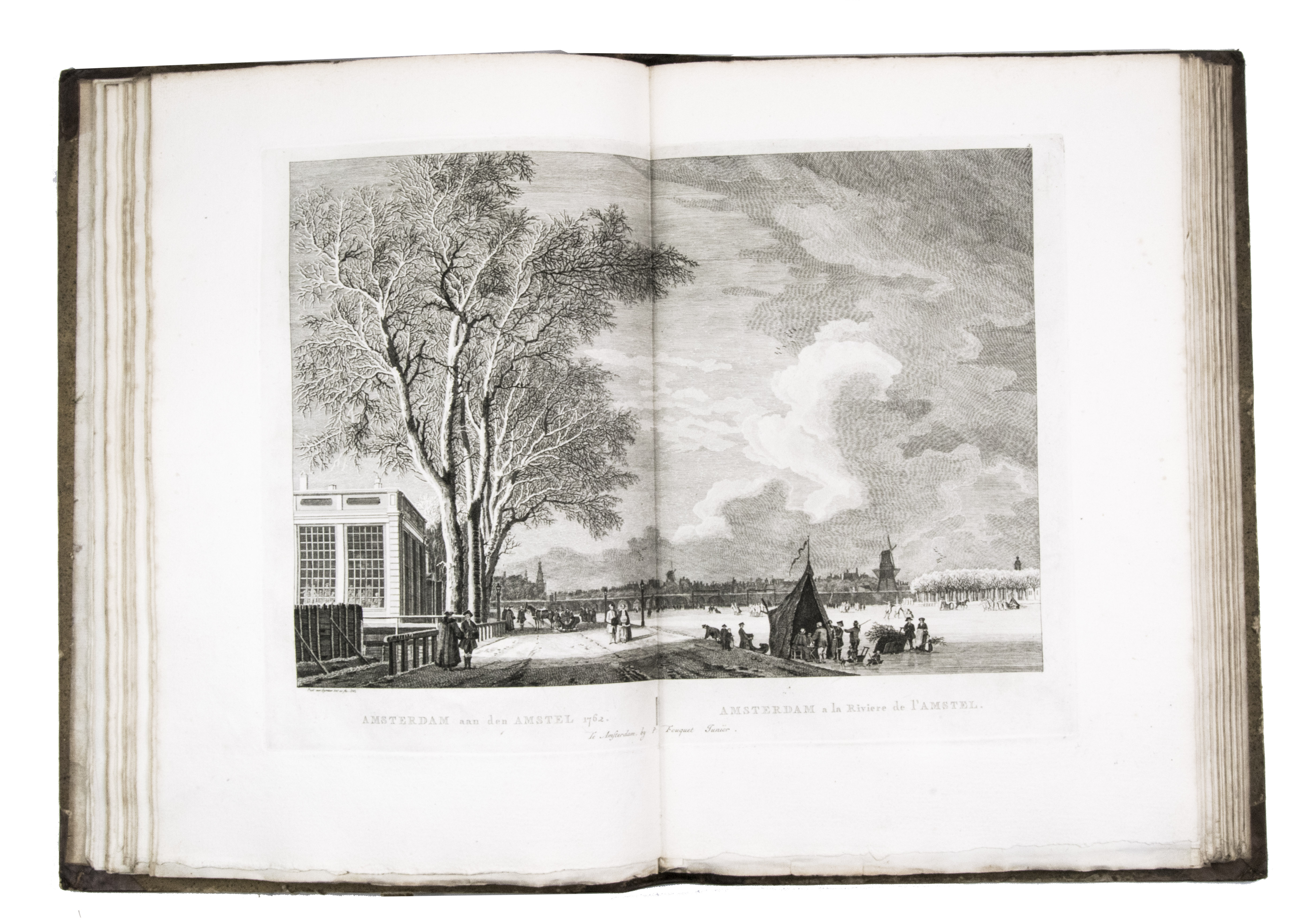
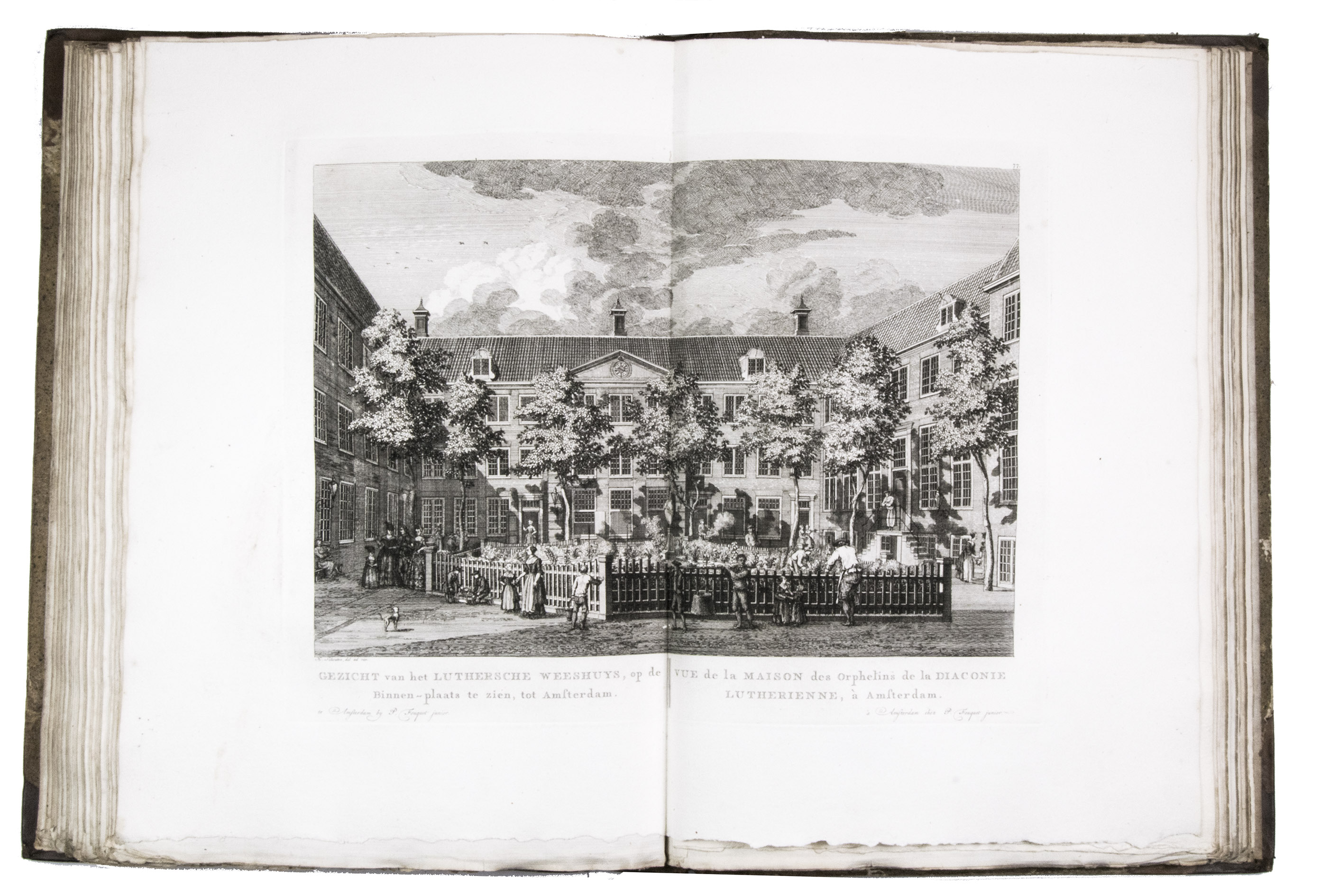
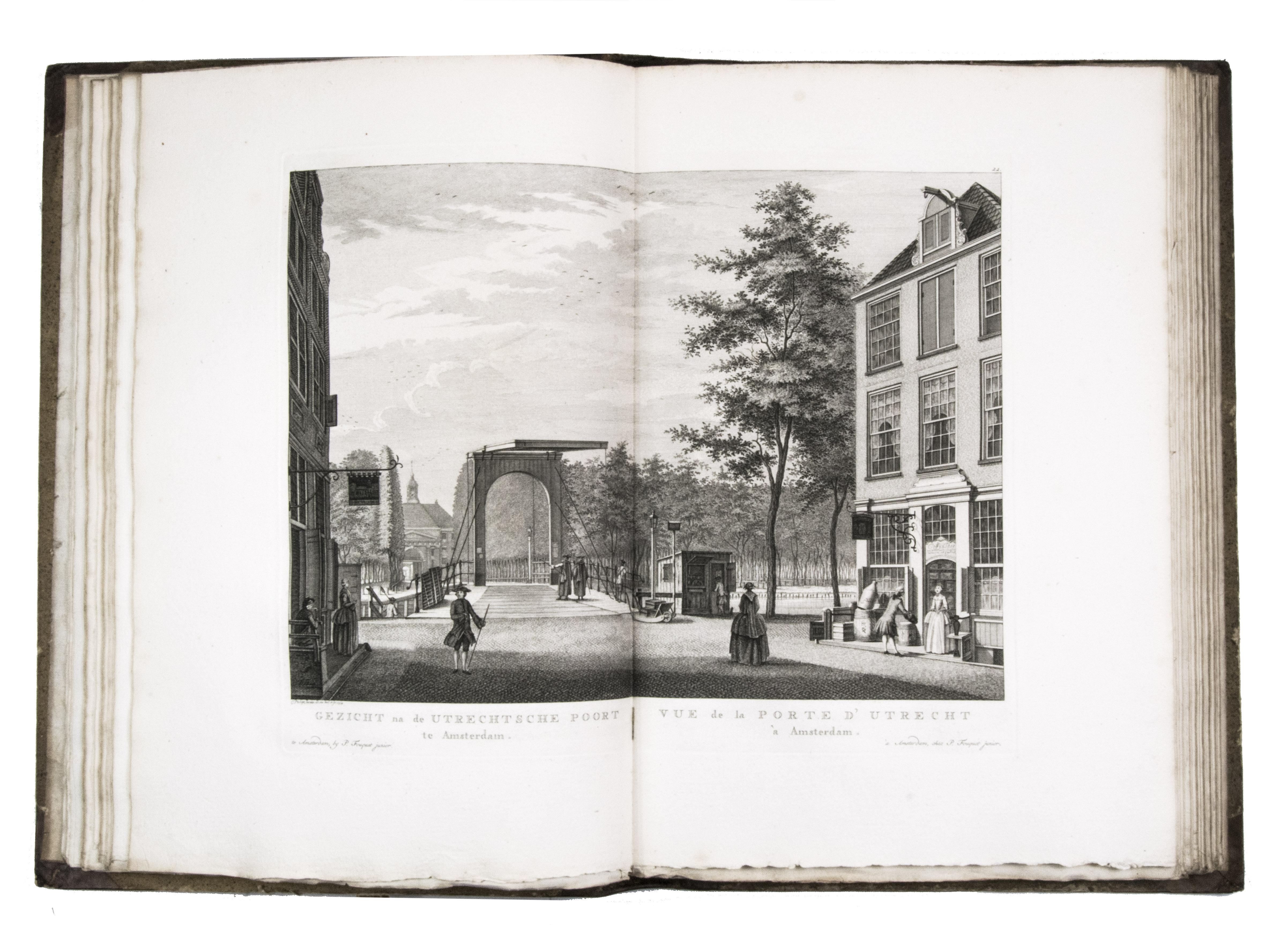
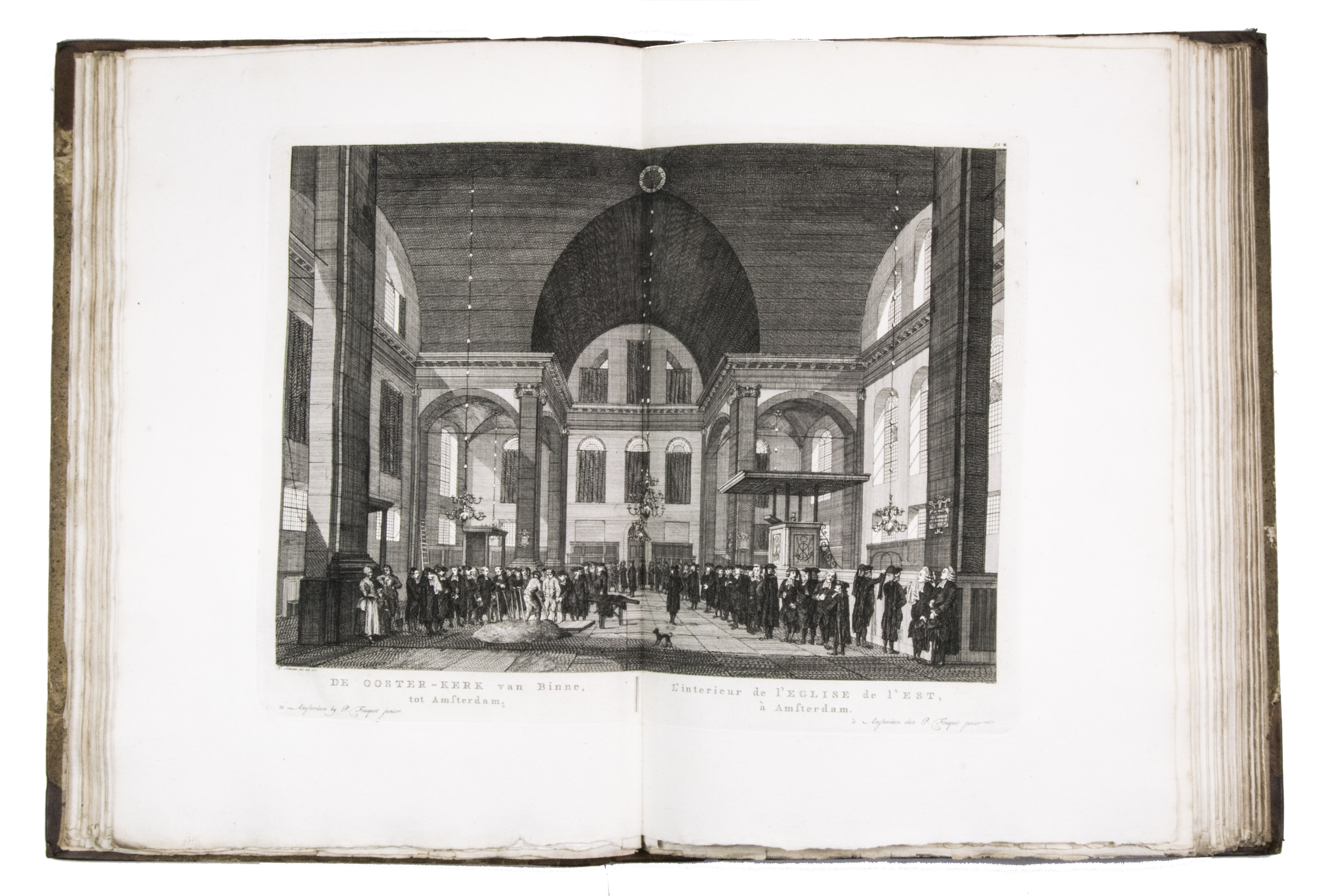
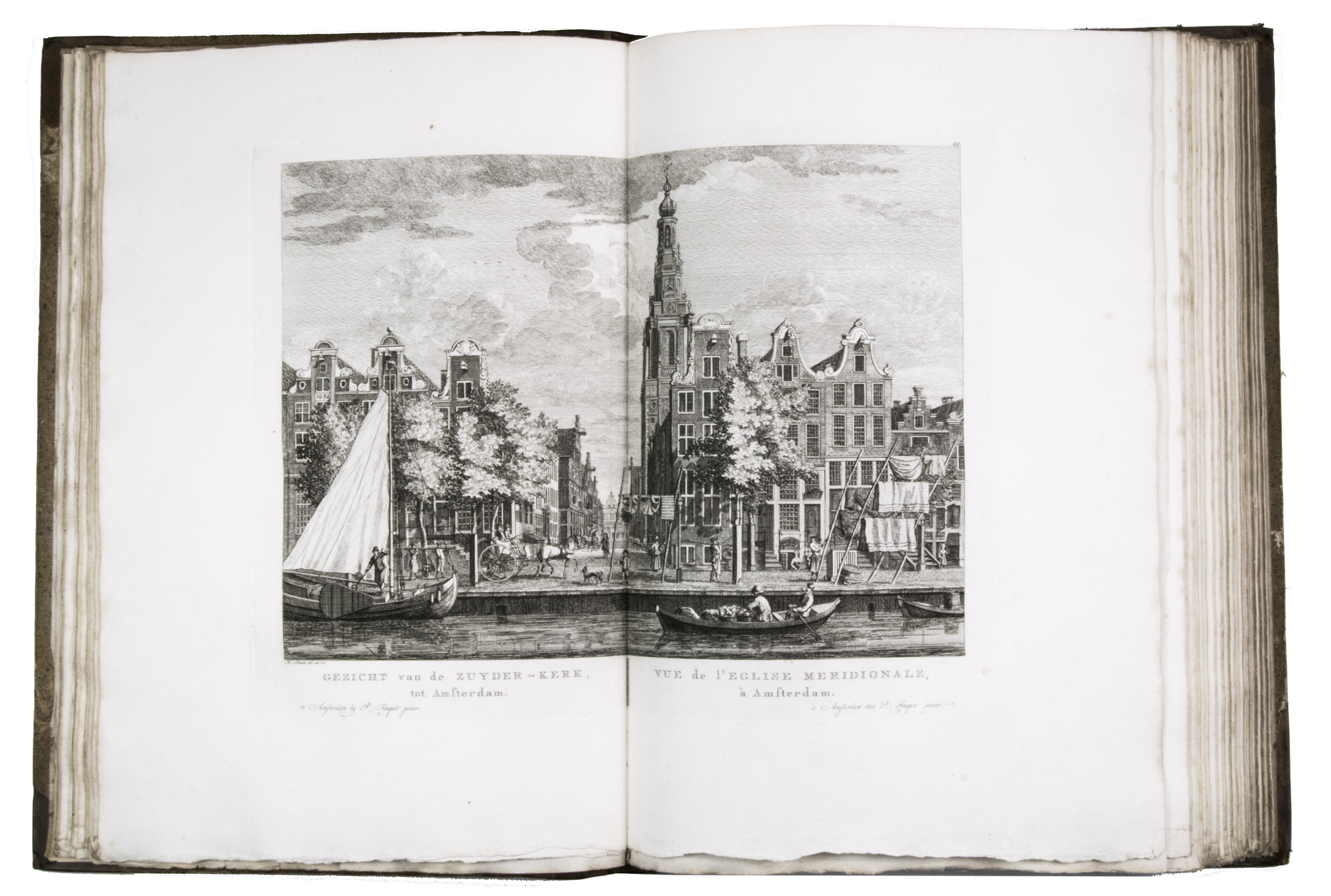
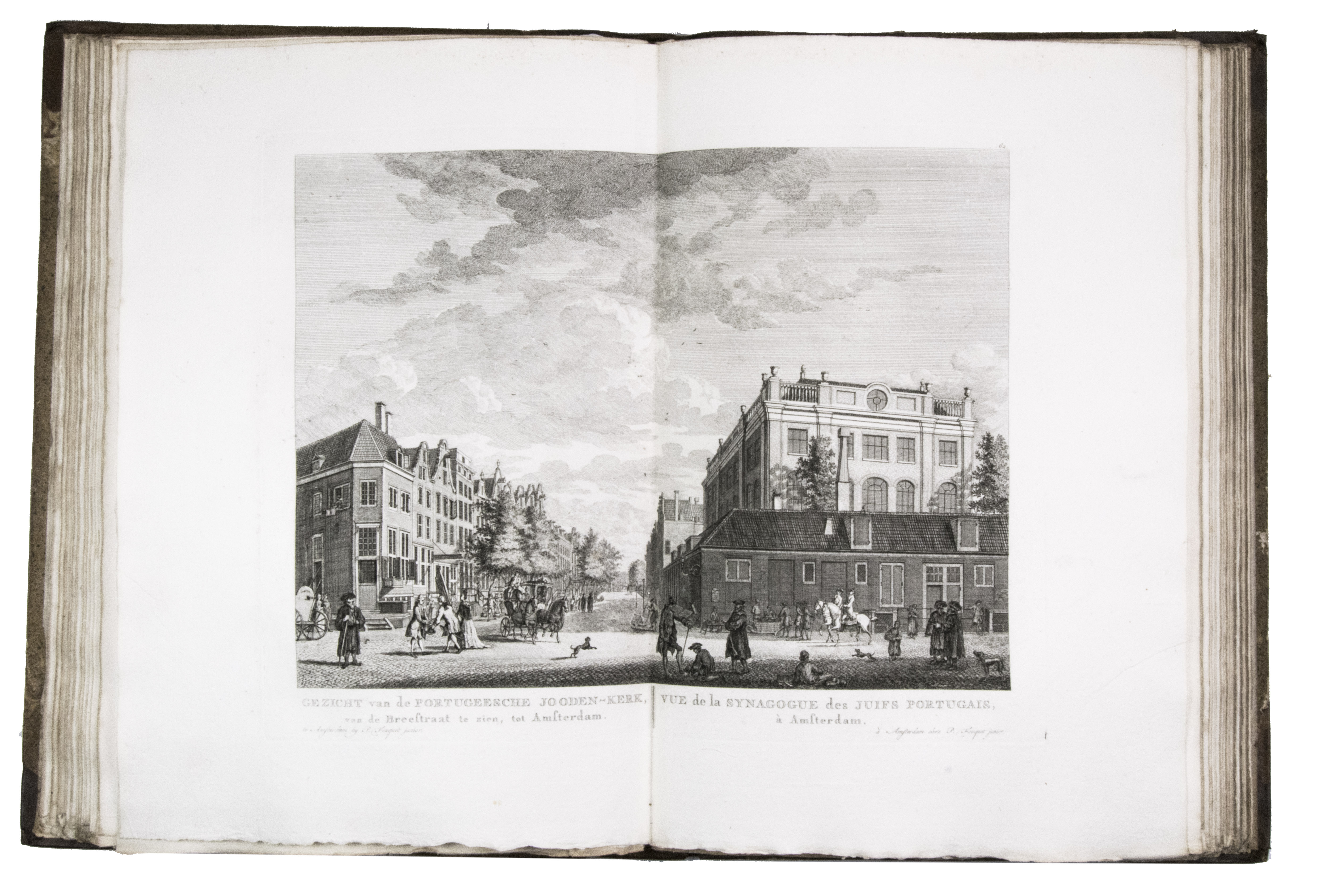
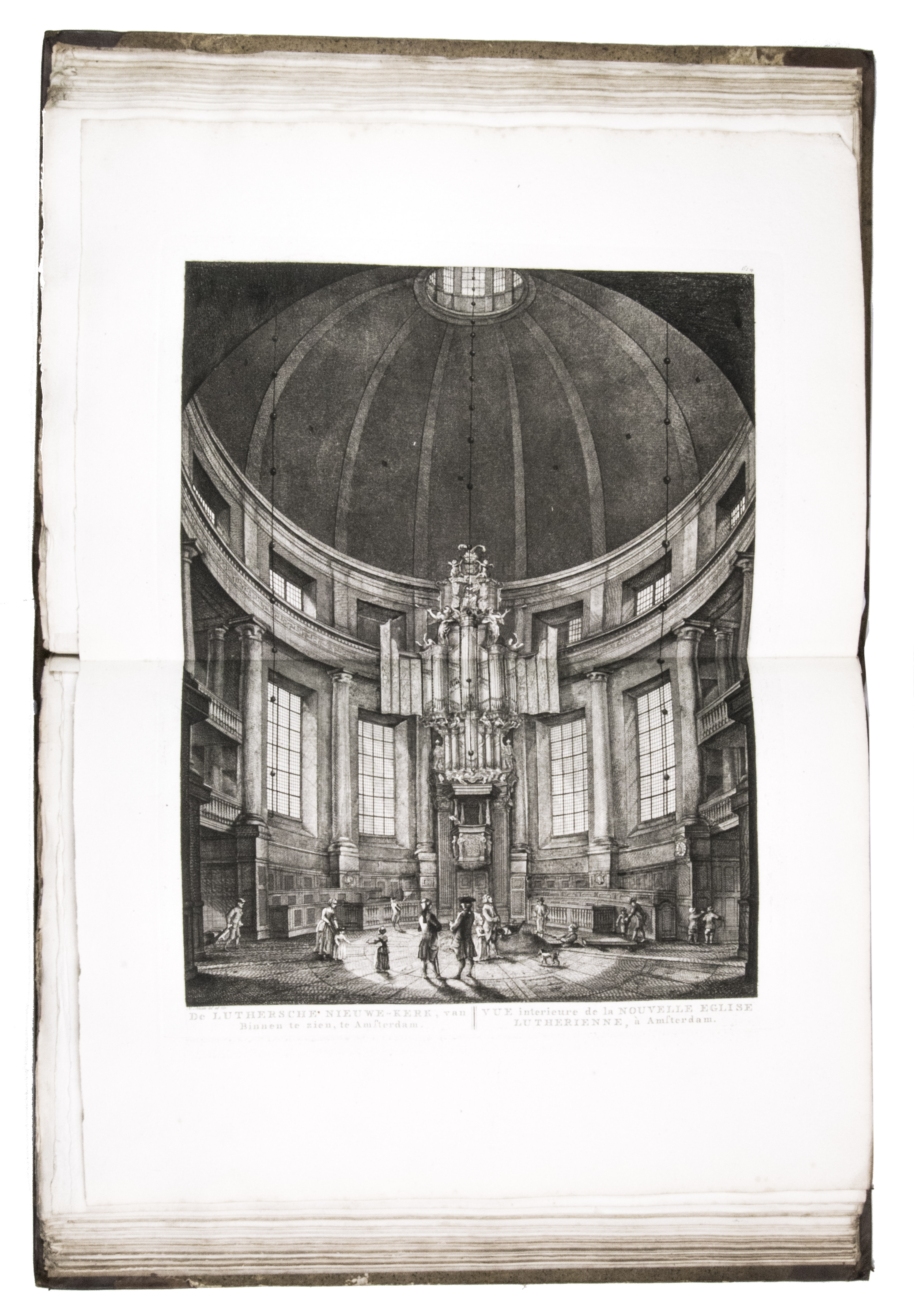
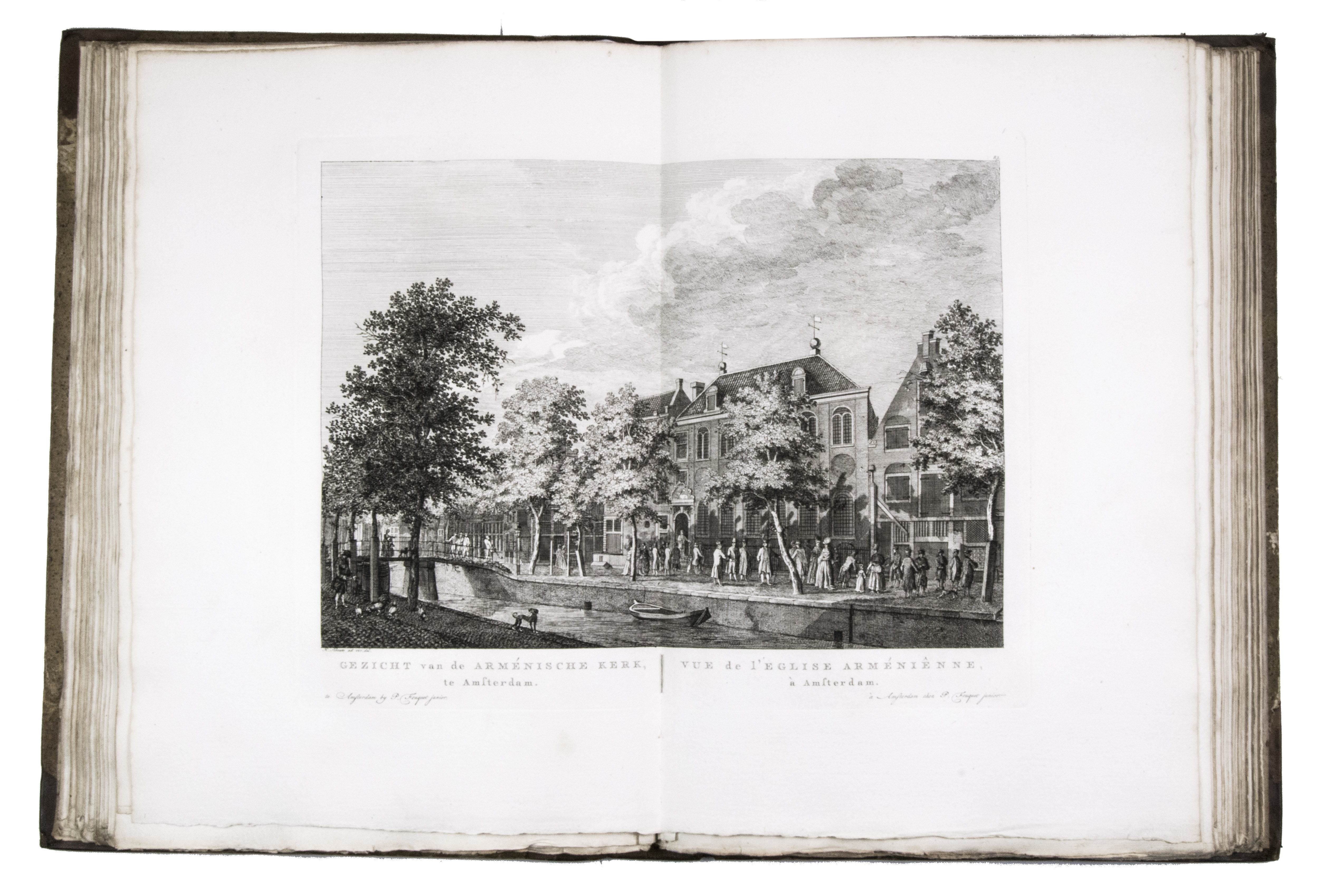
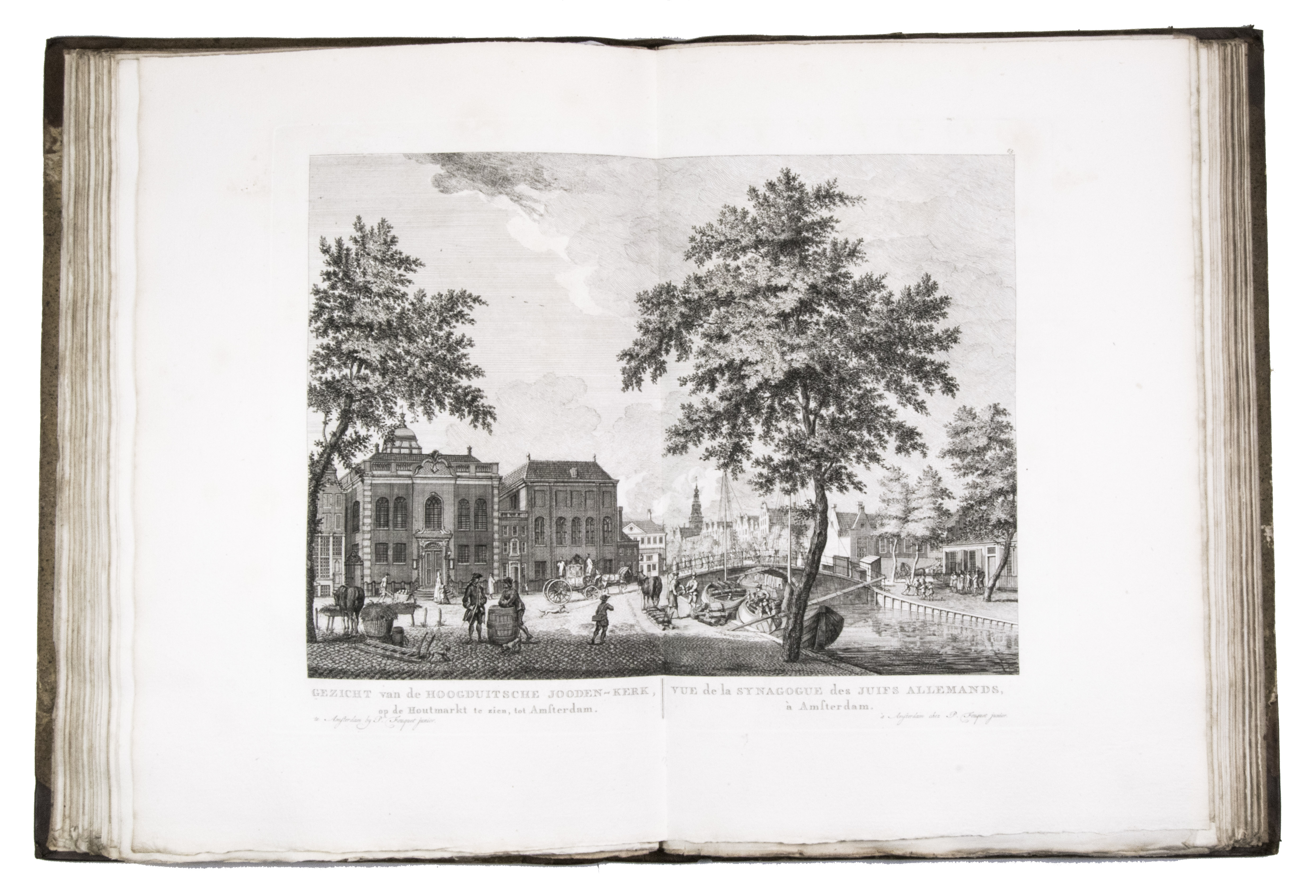
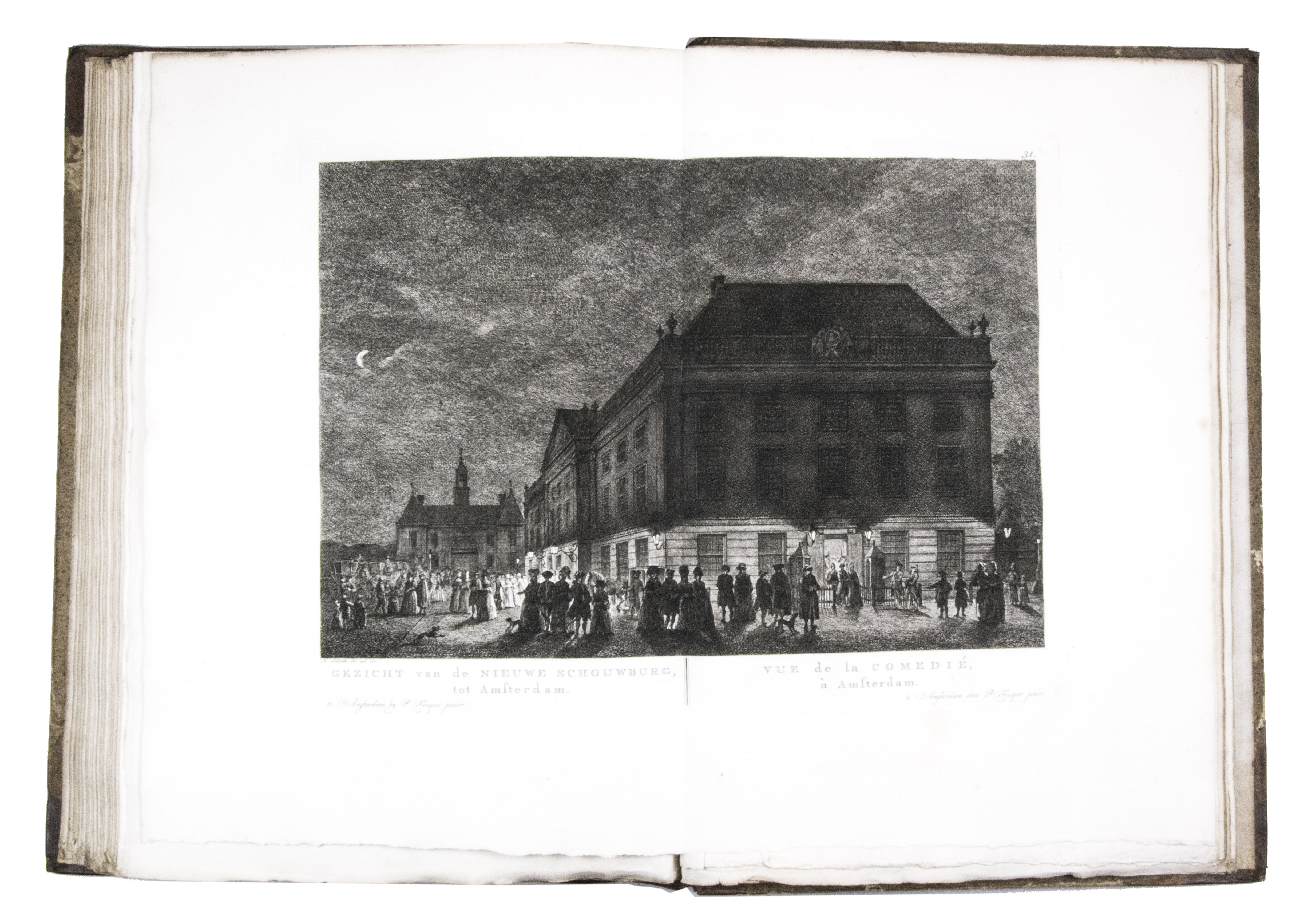
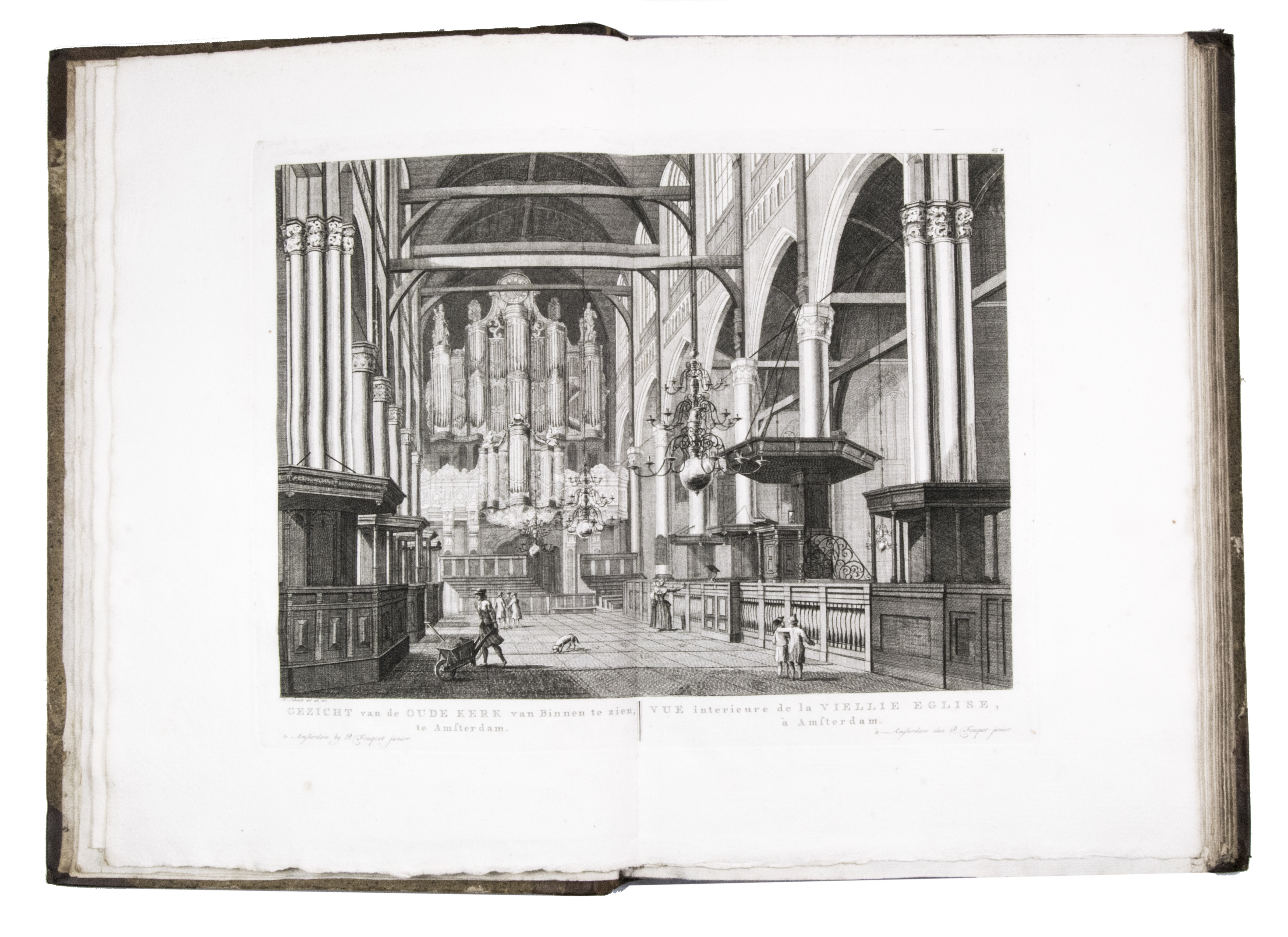
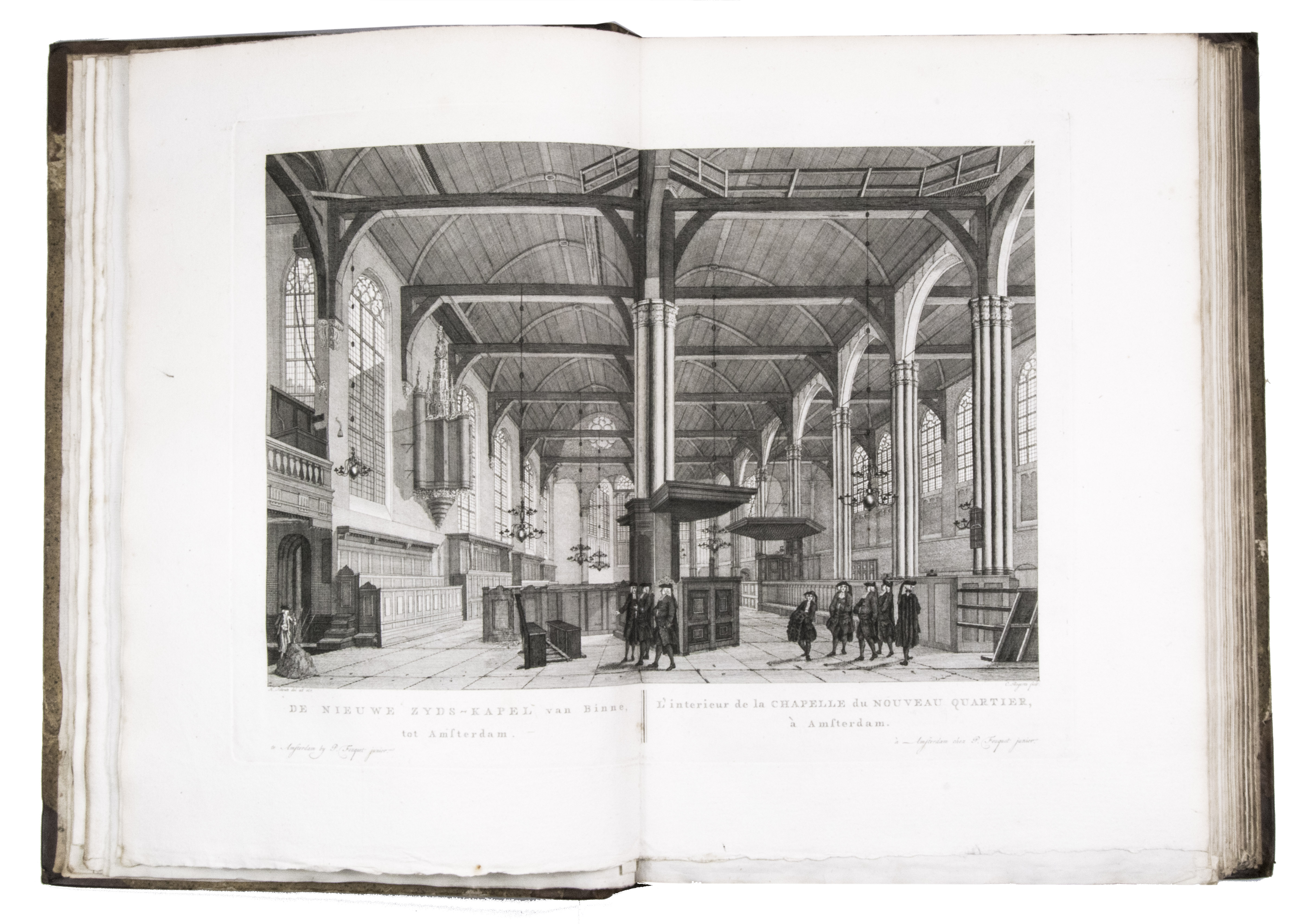
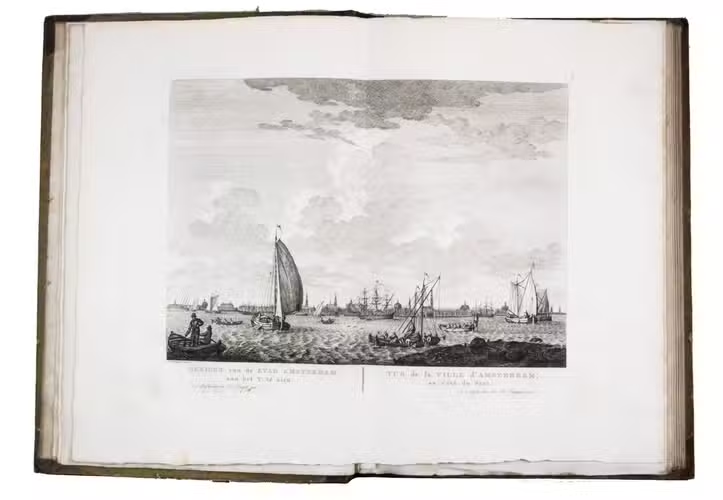
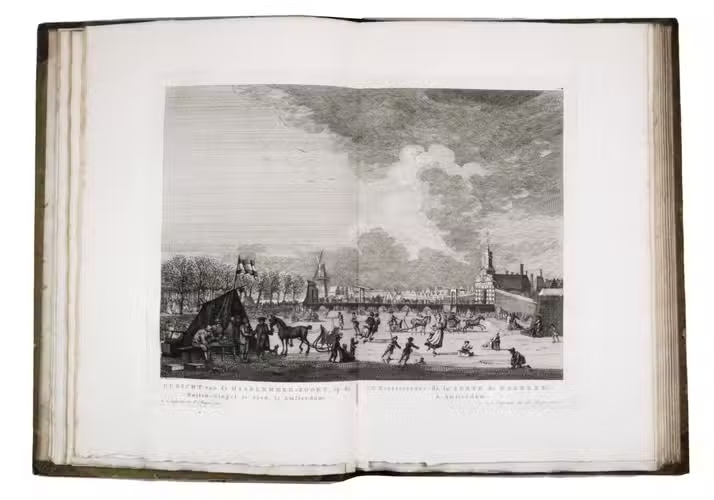
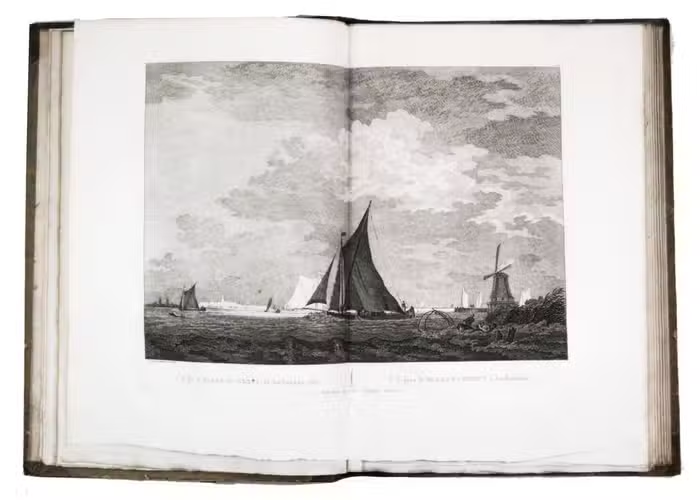
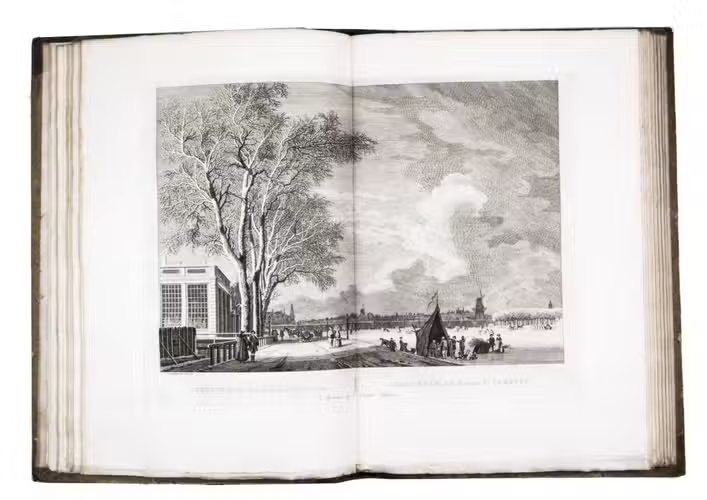
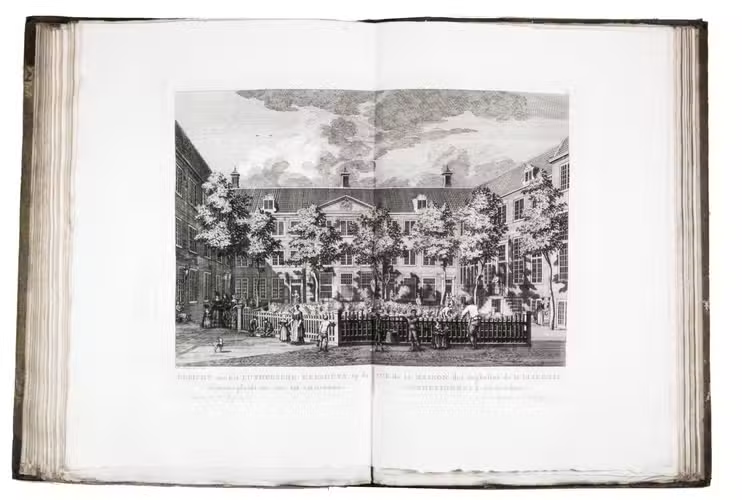
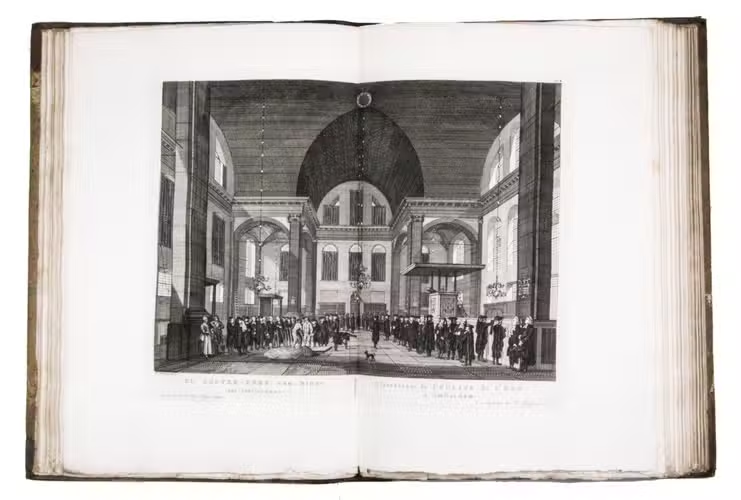
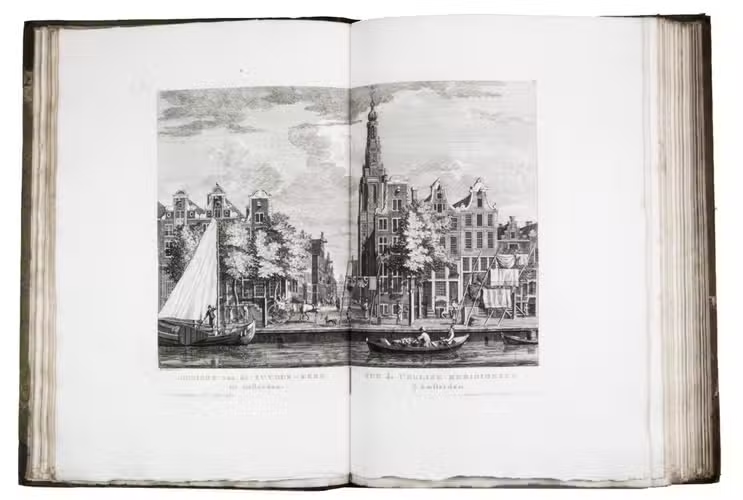
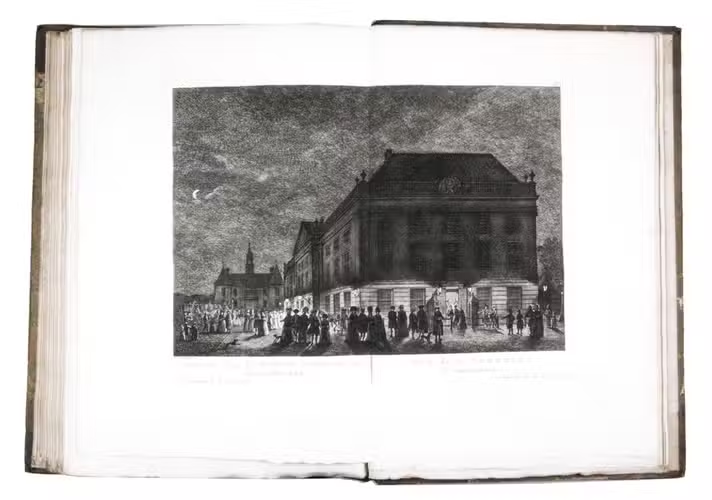
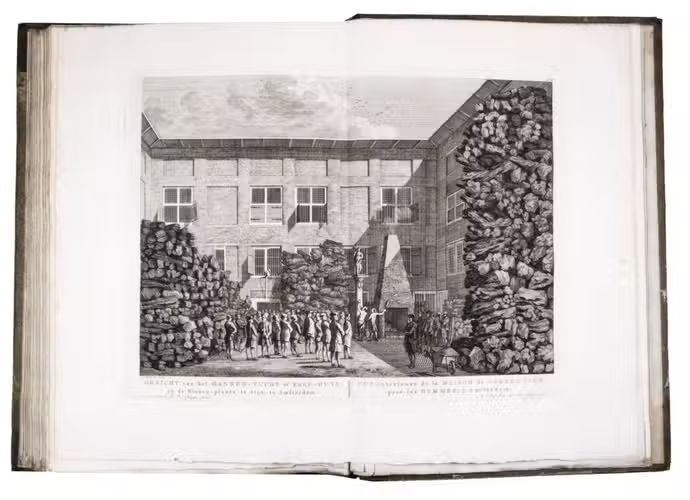
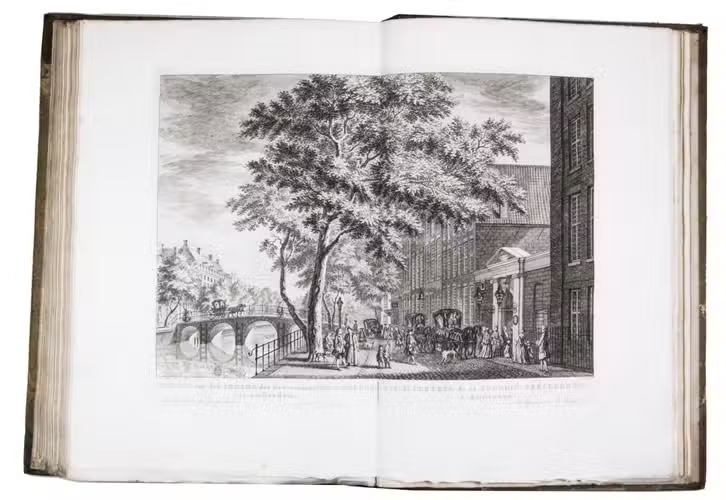
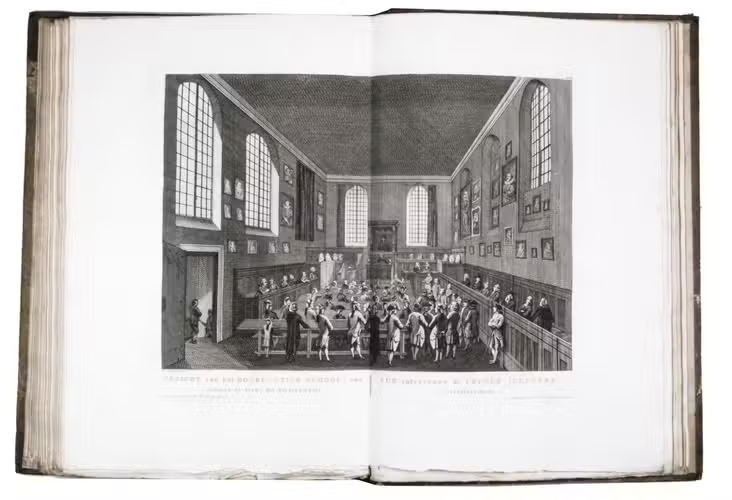
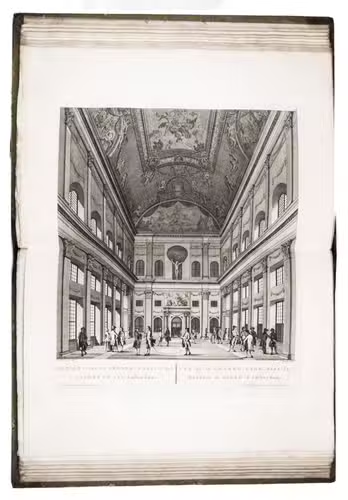
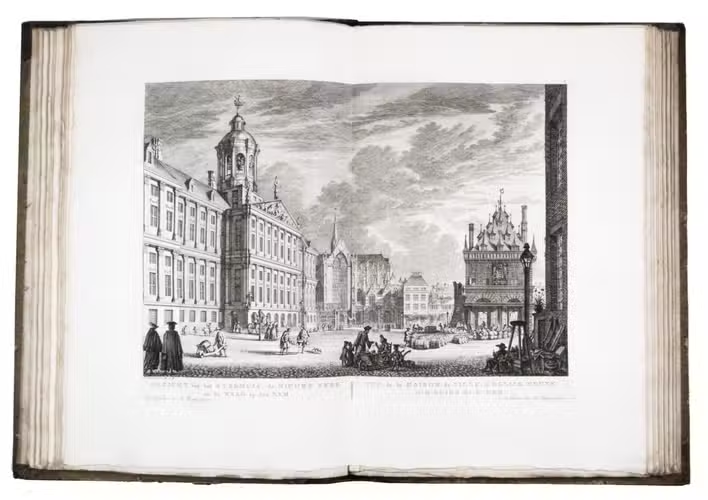
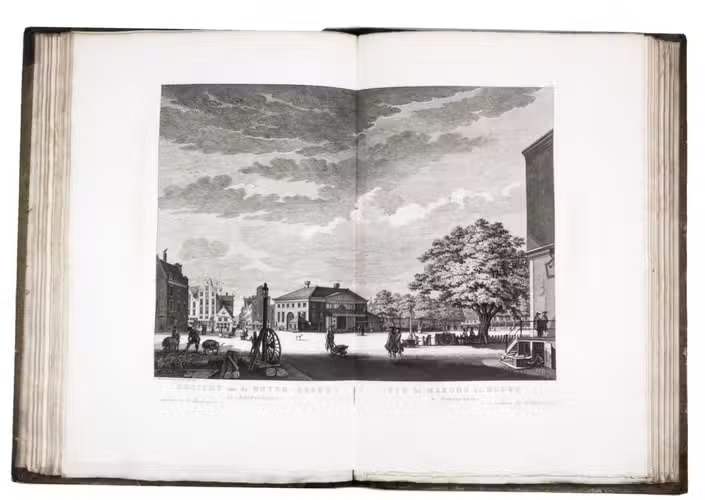
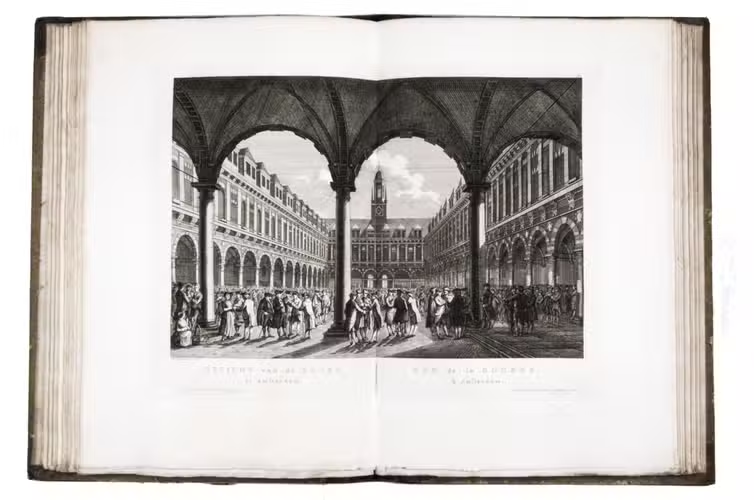
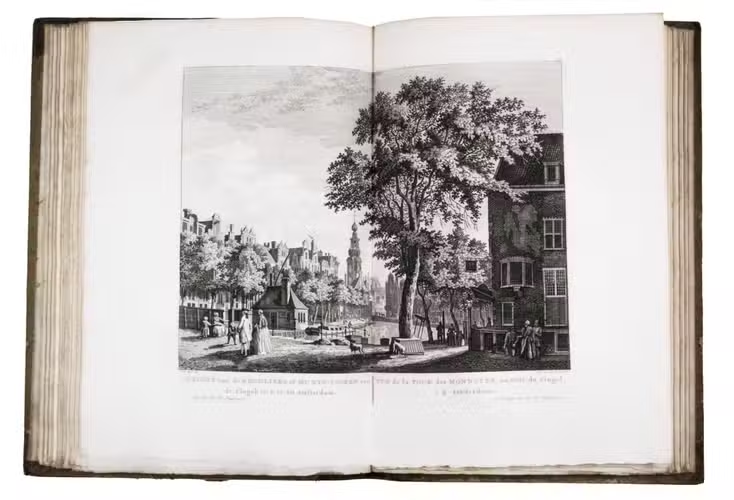
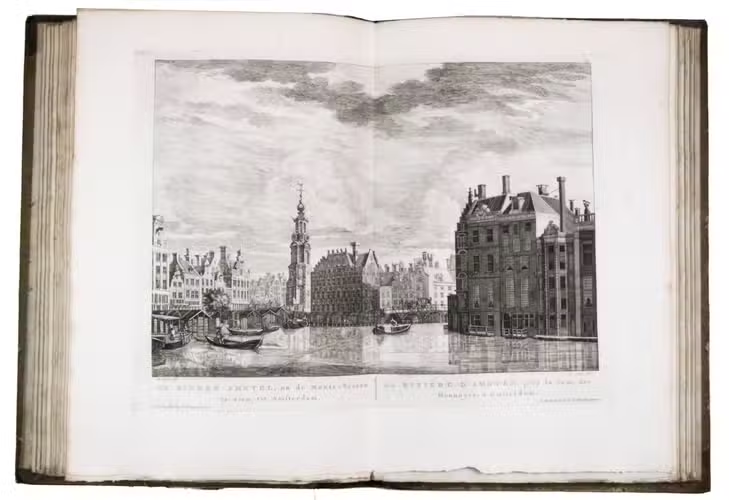
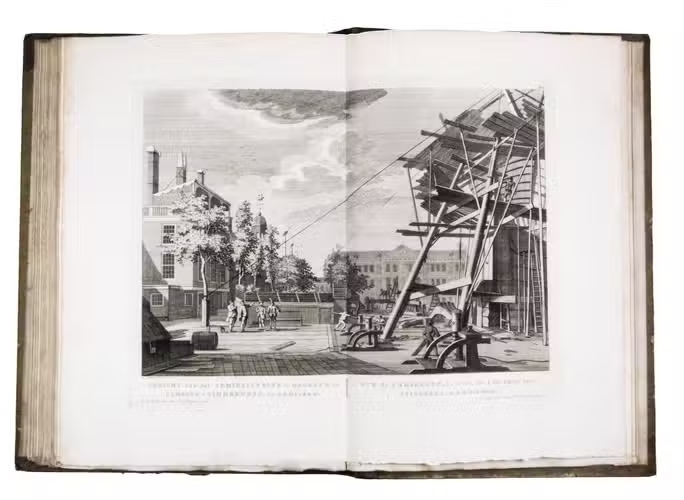
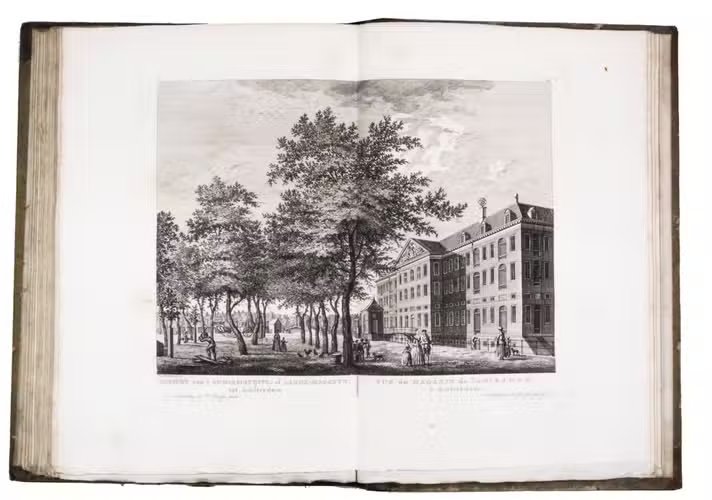
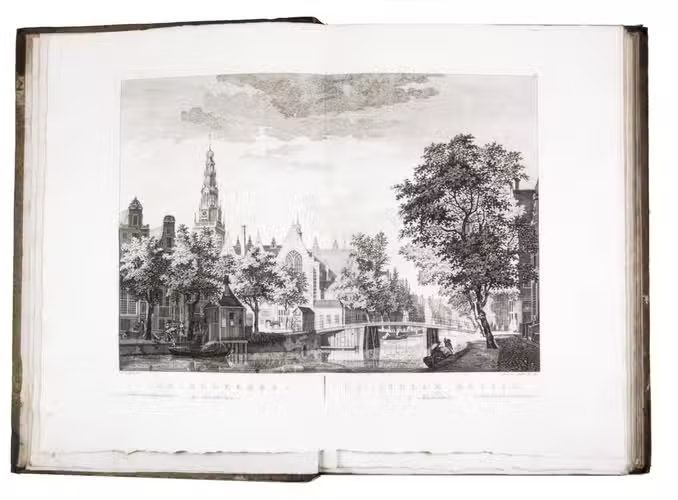
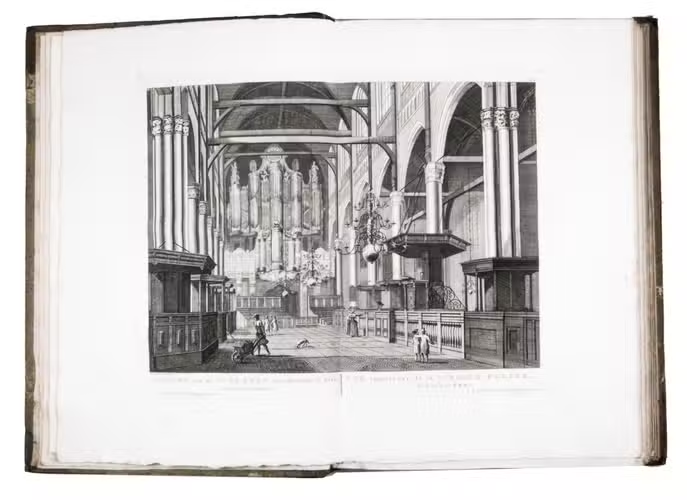
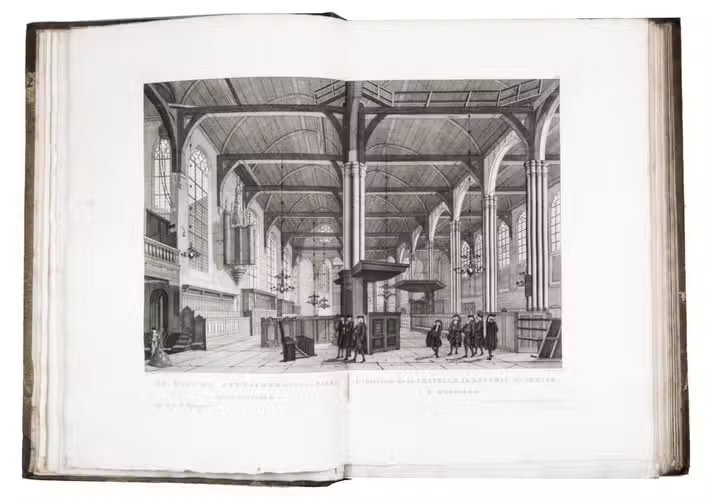
Rare complete first edition with 102 beautiful engraved views of Amsterdam by the artist and art dealer Pierre Fouquet Jr. (1729-1800). The work has been bound in two volumes, as usual, with two newly added unnumbered plates and the descriptions on 27 respectively 36 leaves based on the text of Wagenaar's Geschiedenis van Amsterdam, with interesting additions concerning the years 1765-1783. Originally the plates were published separately, with the first series of 10 townscapes issued in 1760-61 engraved by Paul van Liender and Simon Fokke after drawings by the well-known engraver of town- and landscapes Jan de Beyer (plates nr. 4, 10, 12, 15, 45, 50, 61, 72, 52-3), followed in 1764-68 by a series of 12 townscapes by Caspar Philips Jacobsz. (plates nr. 20, 22, 17-9, 21, 9, 23-4, 8, 73, 75), who also engraved the plates after J. de Vlaaming in 1768-69 (plates 27,14). The latest dated plate is from 1771 by C. Philips Jacobsz. (plate 25). Seventy-three of the plates are undated, 59 of which are by H. Schoute who never dated his engravings and seldom signed them. Other artists who contributed to the Atlas are C. Bogerts (after H. (not N.) Keun; plate 4*), J. van der Schley after P.R. van Dijk (plate 69-70), and Coppier and Simon Fokke after six more drawings by Jan de Beyer.
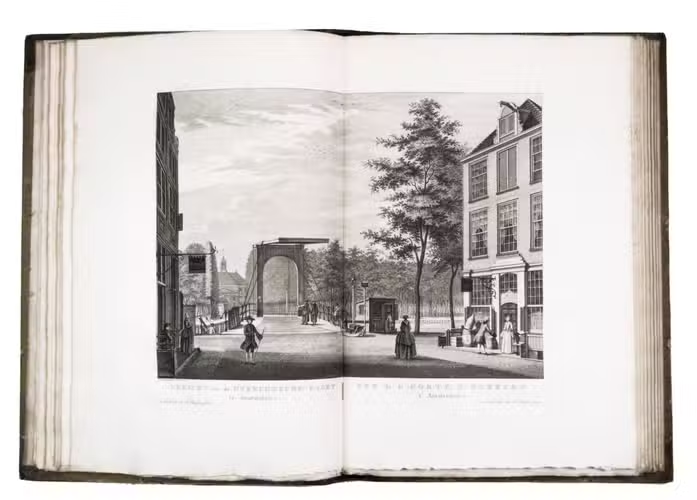
Shortly after 1778 the plates were issued in oblong format with a map of Amsterdam and a contents, but without any text, under the title Afbeeldingen van de wyd-vermaarde koopstad Amsterdam / Recueil des édifices les plus considerables ... A second edition of the present work was printed in 1805 by Evert Maaskamp. However, the plates of the first edition are more beautiful. There certainly is no better source than Fouquet's atlas to get a clear, lively, and even exiting picture of Amsterdam and its inhabitants during the 18th century.
The edges and corners of the boards are scuffed, the boards and spine have been rubbed, with some loss of material. The foot edge of the leaves is uncut, some of the plates are somewhat foxed, but the work is otherwise internally very clean, with the plates in beautiful fresh impressions. Nijhoff & V. Hattum 11; ''Met Fouquet door Amsterdam", in: Nieuwe Atlas van Fouquet; STCN 167743317 (8 copies).
Related Subjects: