[CASANOVA, Giacomo].
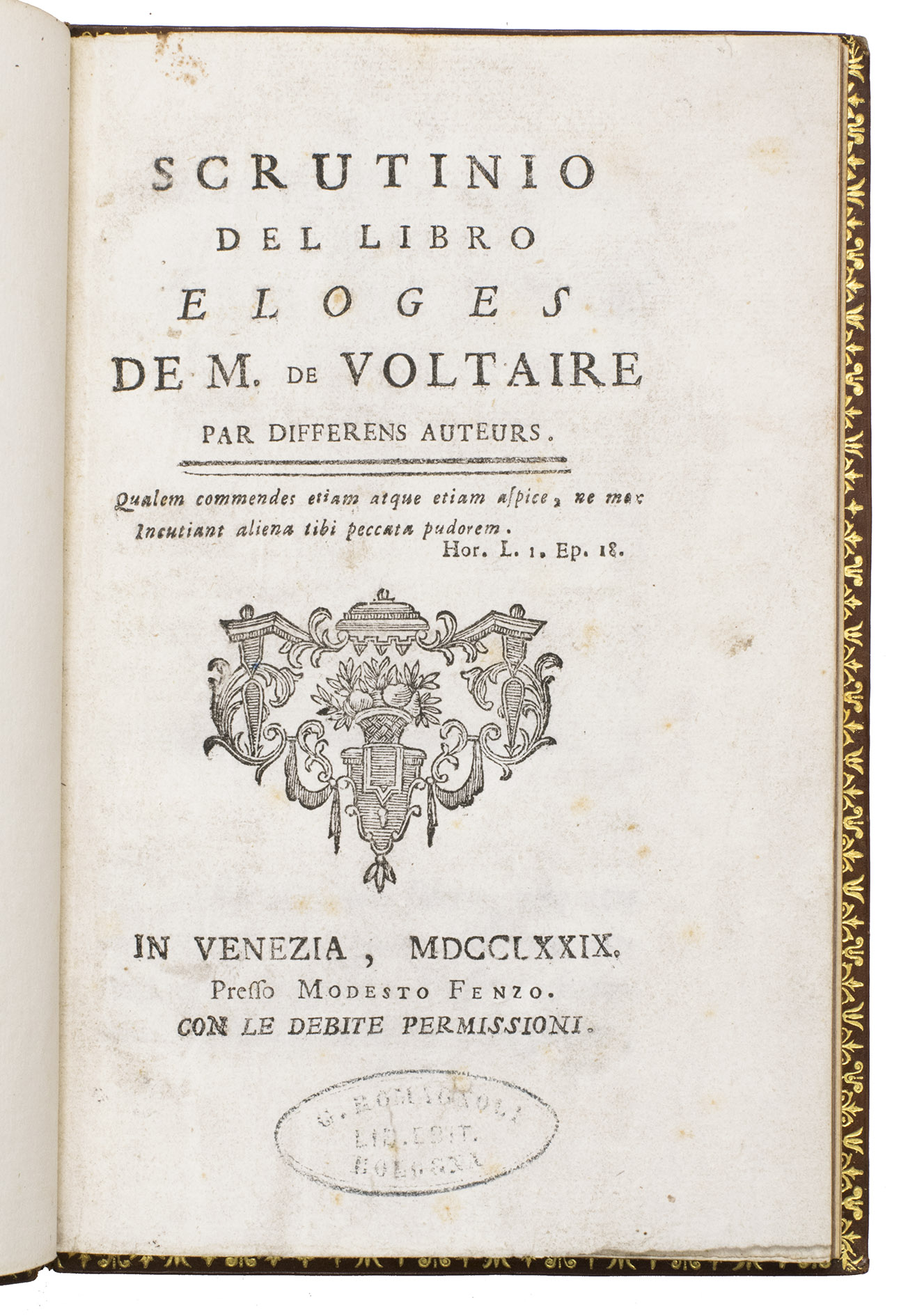
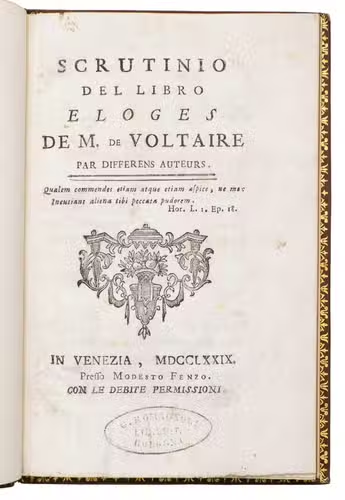
Scrutinio del libro eloges de M. de Voltaire par differens auteurs.
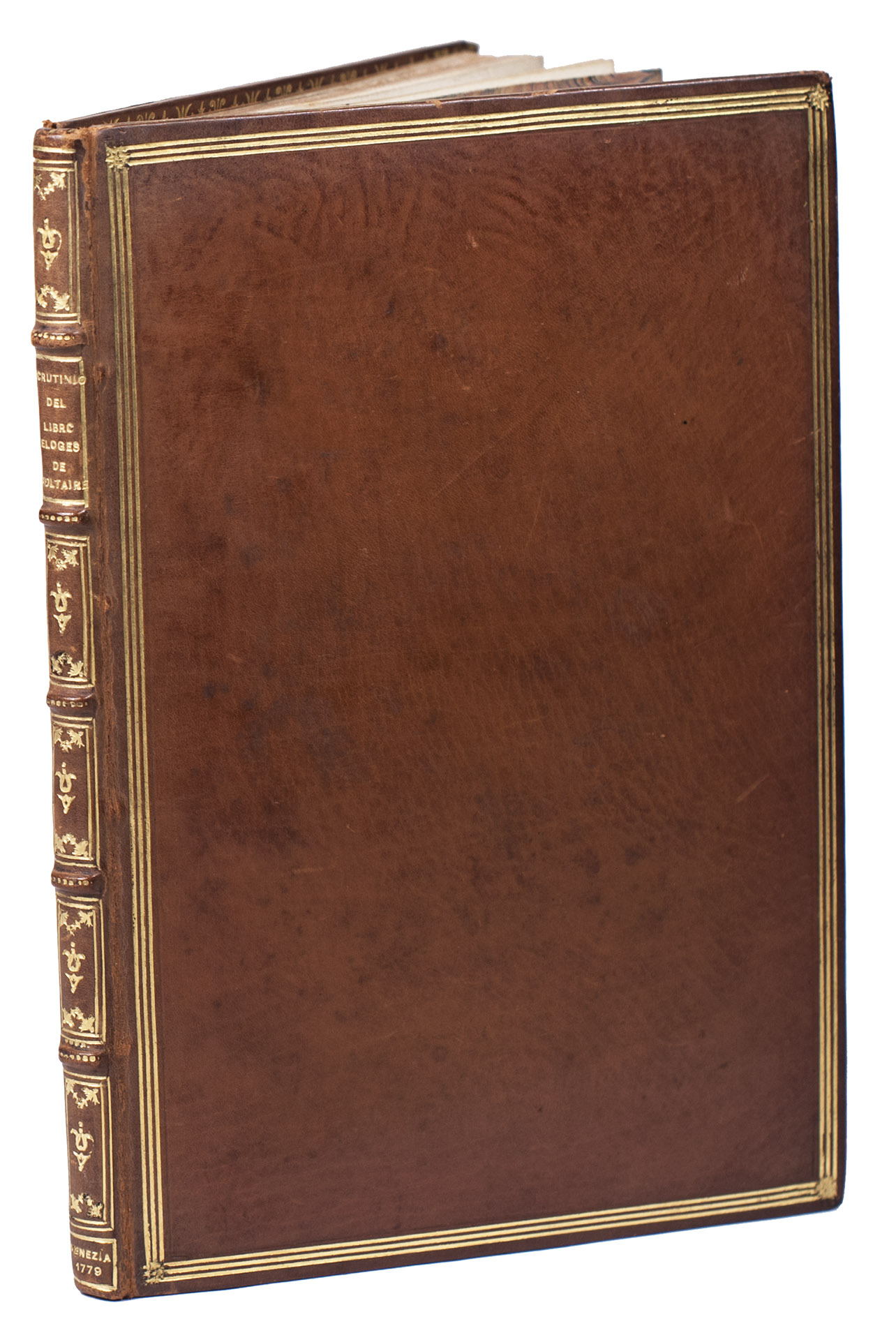
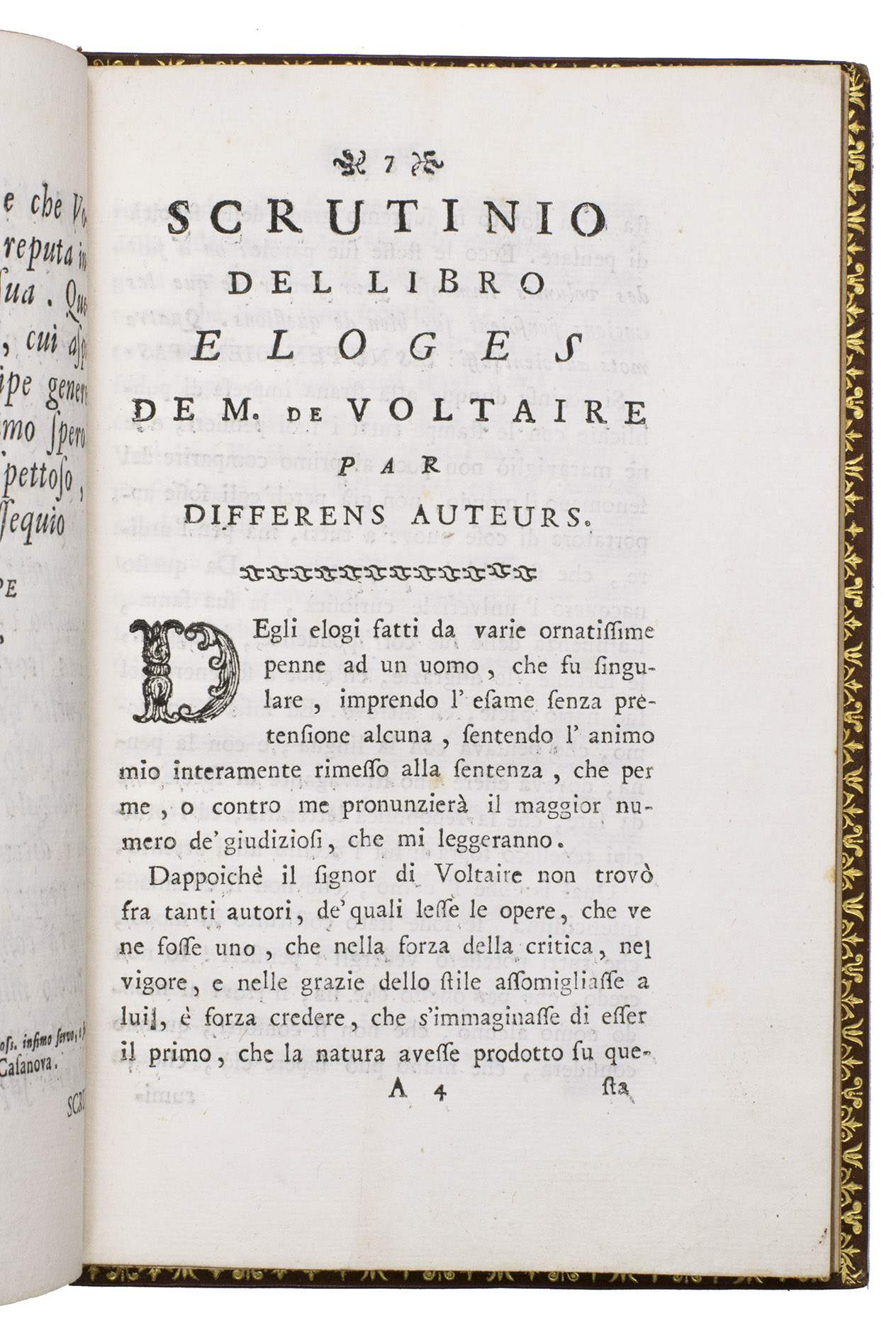
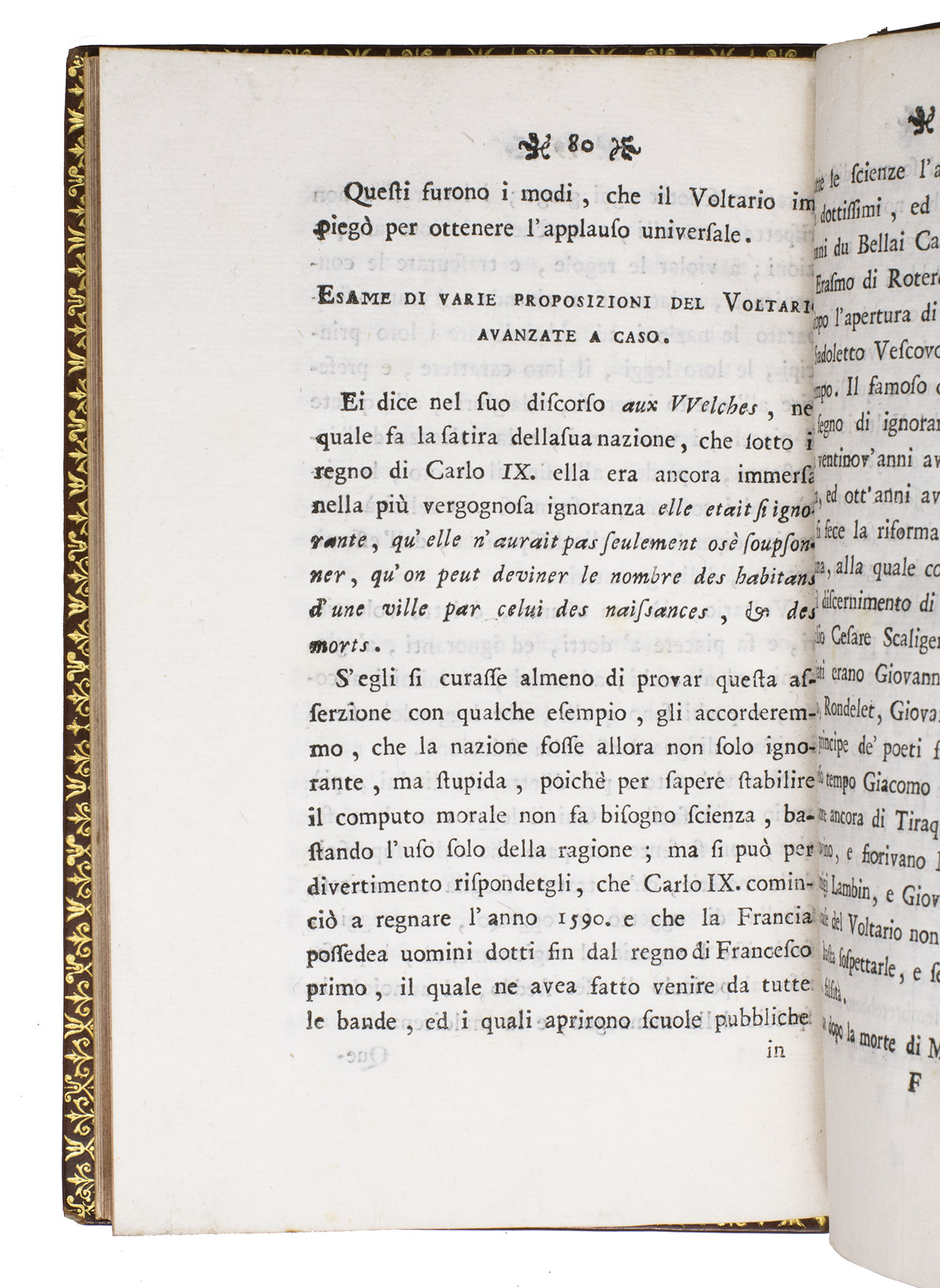
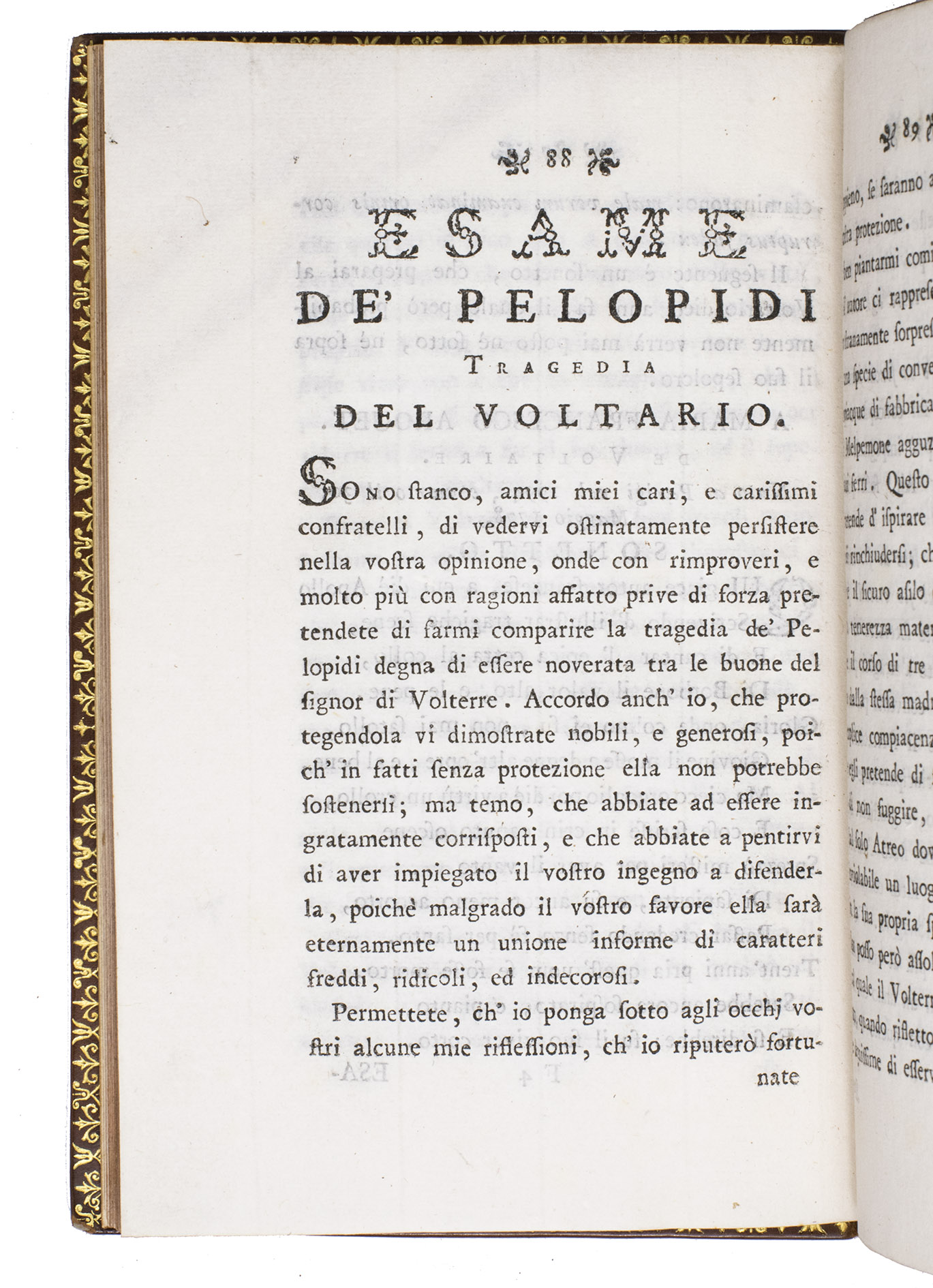
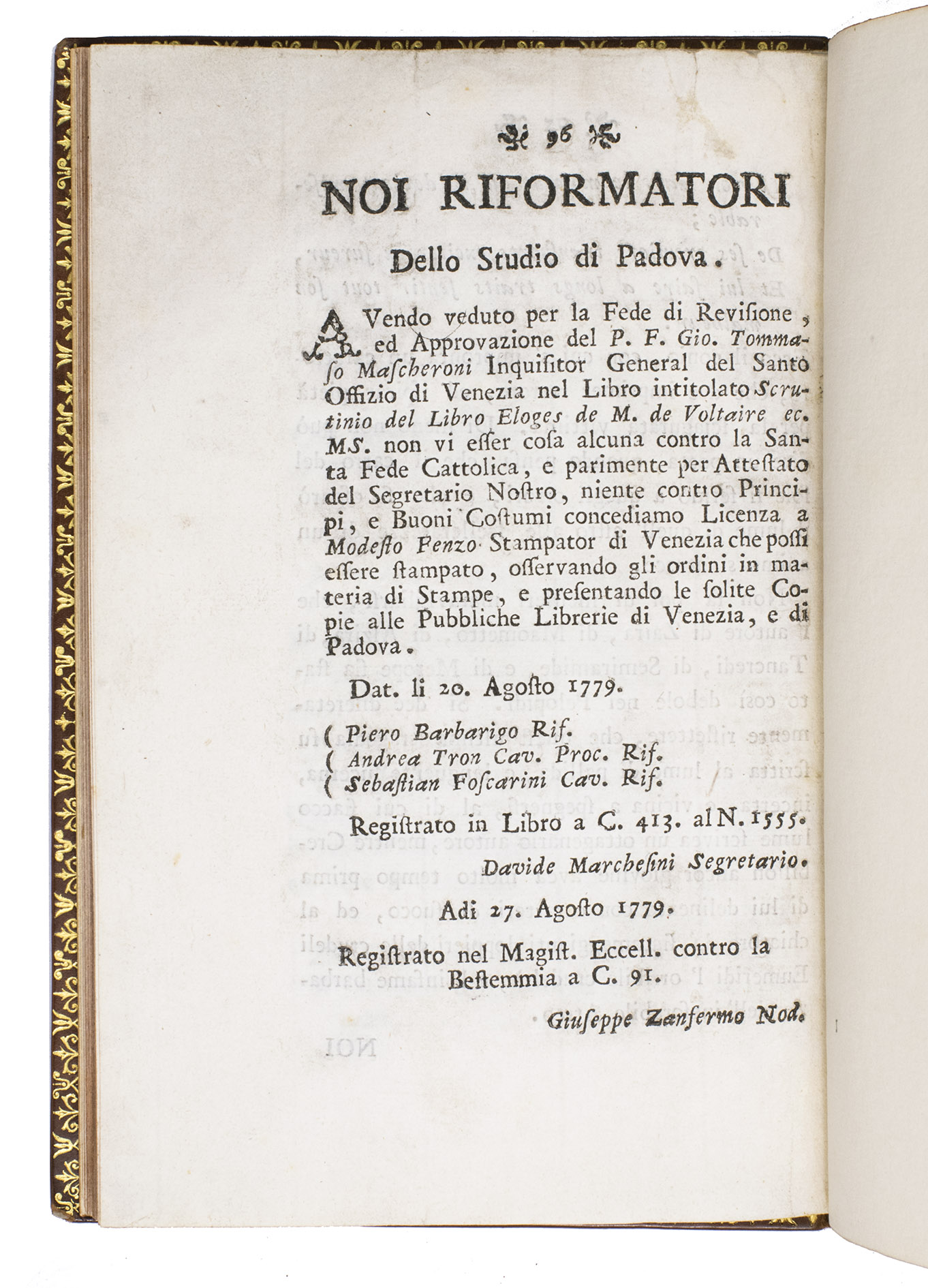
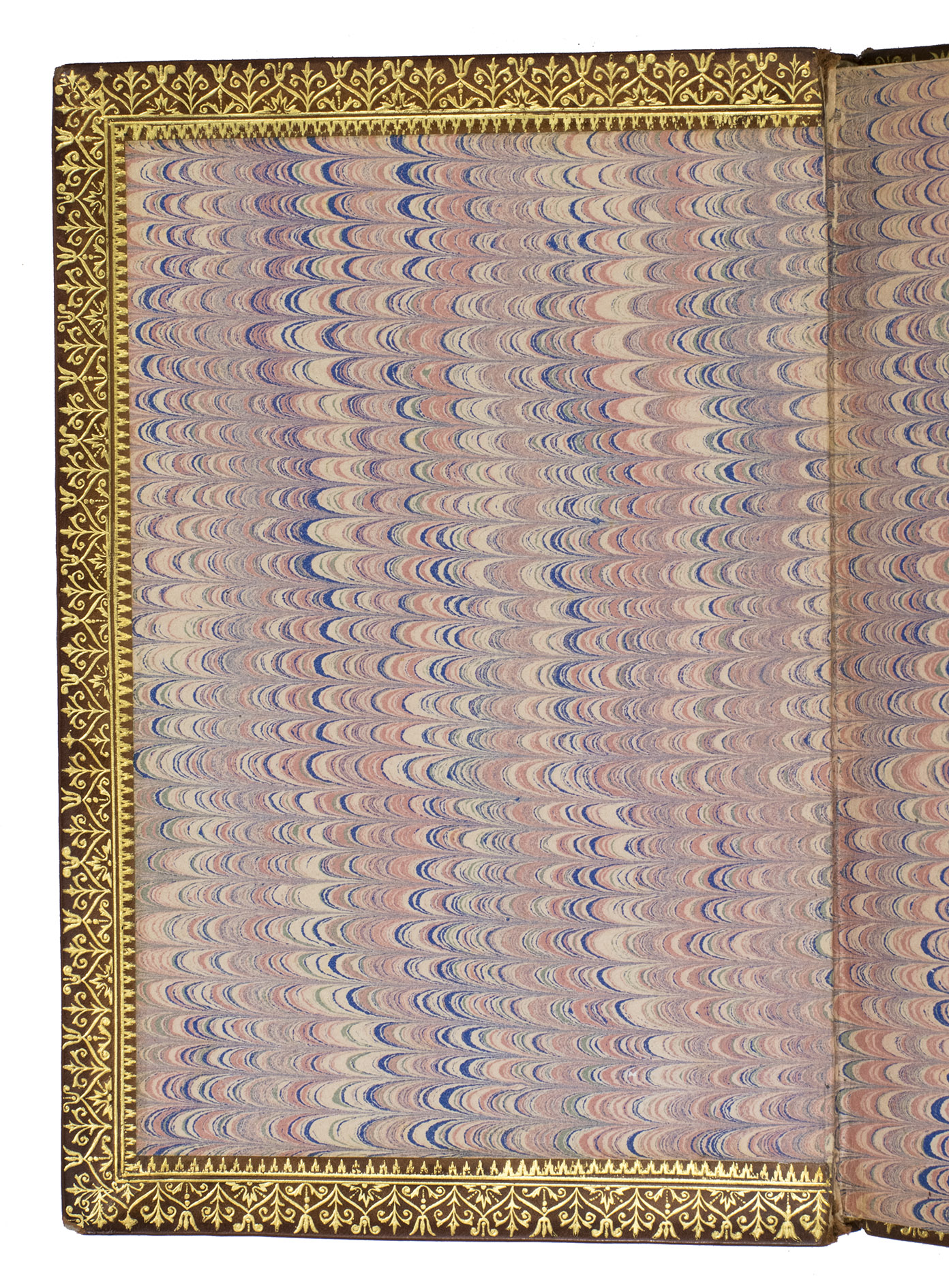
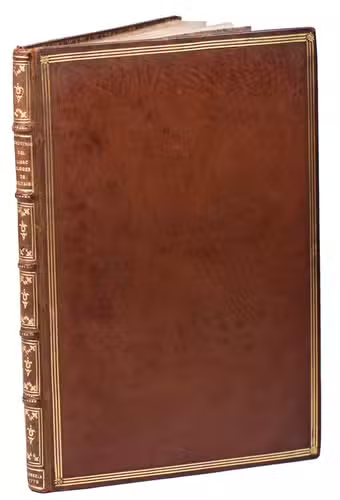
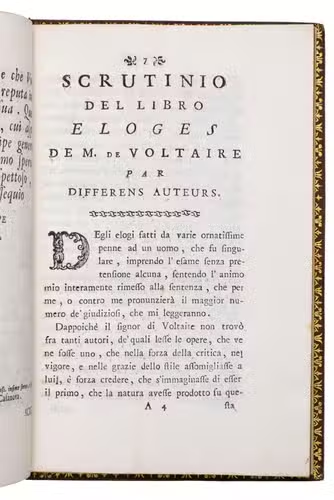
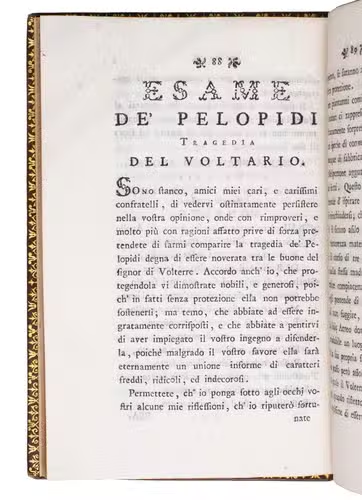
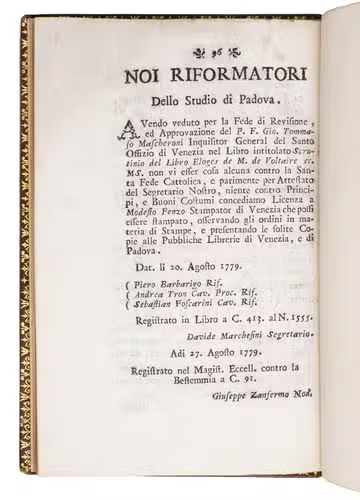
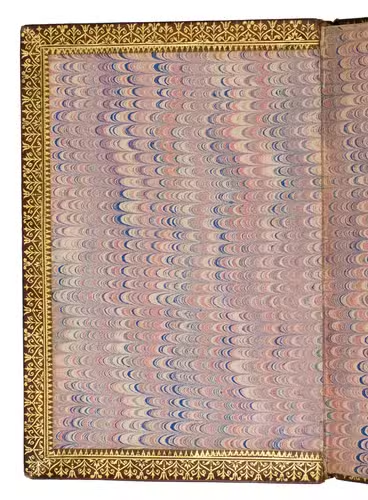
Venice, Presso Modesto Fenzo, 1779. 8vo. With a woodcut illustration on the title page, and 1 woodcut initial. Later gold-tooled brown morocco with the title lettered in gold on the spine, gold-tooled board edges and turn-ins, gilt edges, marbled endpapers. 96 pp.
€ 9,500
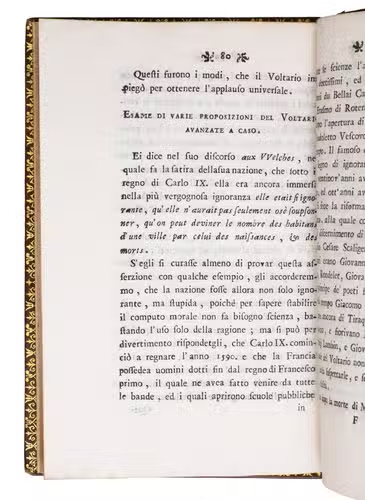
Rare first edition of Giacomo Casanovas (1725-1798) sharply polemical booklet, dedicated to Doge Paolo Renier (1710-1789) and written in the summer of 1779 while he was convalescing in Abano. Published the year after Voltaires (1694-1778) death, the work critiques the celebrated French writer with a mixture of fascination and bitterness. Following point by point the traditional praises read to the French Academy by Voltaires successor Jean-François Ducis (1733-1816) and the Abbot of Radonvilliers (1709-1789), Casanova counters each with such intensity that the effect is often the opposite of praise.
The Scrutinio reveals Casanovas complex relationship with Voltaire. Initially captivated by the French philosopher, Casanovas admiration evolved into gradual disillusionment after his visits to Les Délices in 1760-61, culminating in the more aggressive critiques of the Confutazione in 1769. On his return to Venice in 1774, possibly acting on behalf of the Inquisitors, Casanova openly criticised Voltaires works, condemning them as impious, morally unsound, and even objecting to the way Voltaire had altered his name to include a noble particle. In his Mémoires, Casanova reflected on this period with some regret, acknowledging that for ten years he had been compelled to critique everything Voltaire produced, although he still considered his criticisms justified.
The text also provides personal insights into Casanovas life. During his visits to Voltaire in July 1760, he engaged in lively literary discussions, including readings from Ludovico Ariostos (1474-1533) Orlando Furioso, which he recalled as some of the happiest moments of his life. Although Voltaire was sometimes dismissive of him, their exchanges reveal the depth of Casanovas engagement with literature and philosophy. They disagreed sharply on religion: Voltaire regarded it as mere superstition, while Casanova maintained that a society without religion could not be happy, as people need moral structure even if philosophers resist obedience.
Nearly twenty years later, while writing the Scrutinio in Abano, Casanova reiterated this perspective. The work also presents a slightly different account of his 1760 visit to Les Délices, including the episode of Merlin Coccai, offering valuable documentary evidence that these meetings actually took place.
With a black oval library stamp on the title page, "G. Romagnoli lid. Est. Bologna", from the library of Giovanni Romagnoli (1893-1976), an Italian painter and sculptor from Faenza, active in Bologna and internationally, who exhibited widely and won several major prizes in the 1920s and 1930s, the title page is slightly browned. Otherwise in very good condition. Rives Childs, no. XXIII, pp. 43-45; WorldCat 42134255.
Related Subjects: