VEEN, Otto, van.
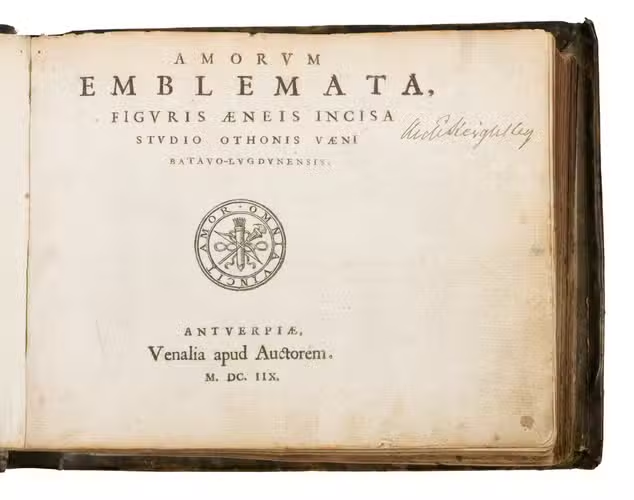
Amorum emblemata.
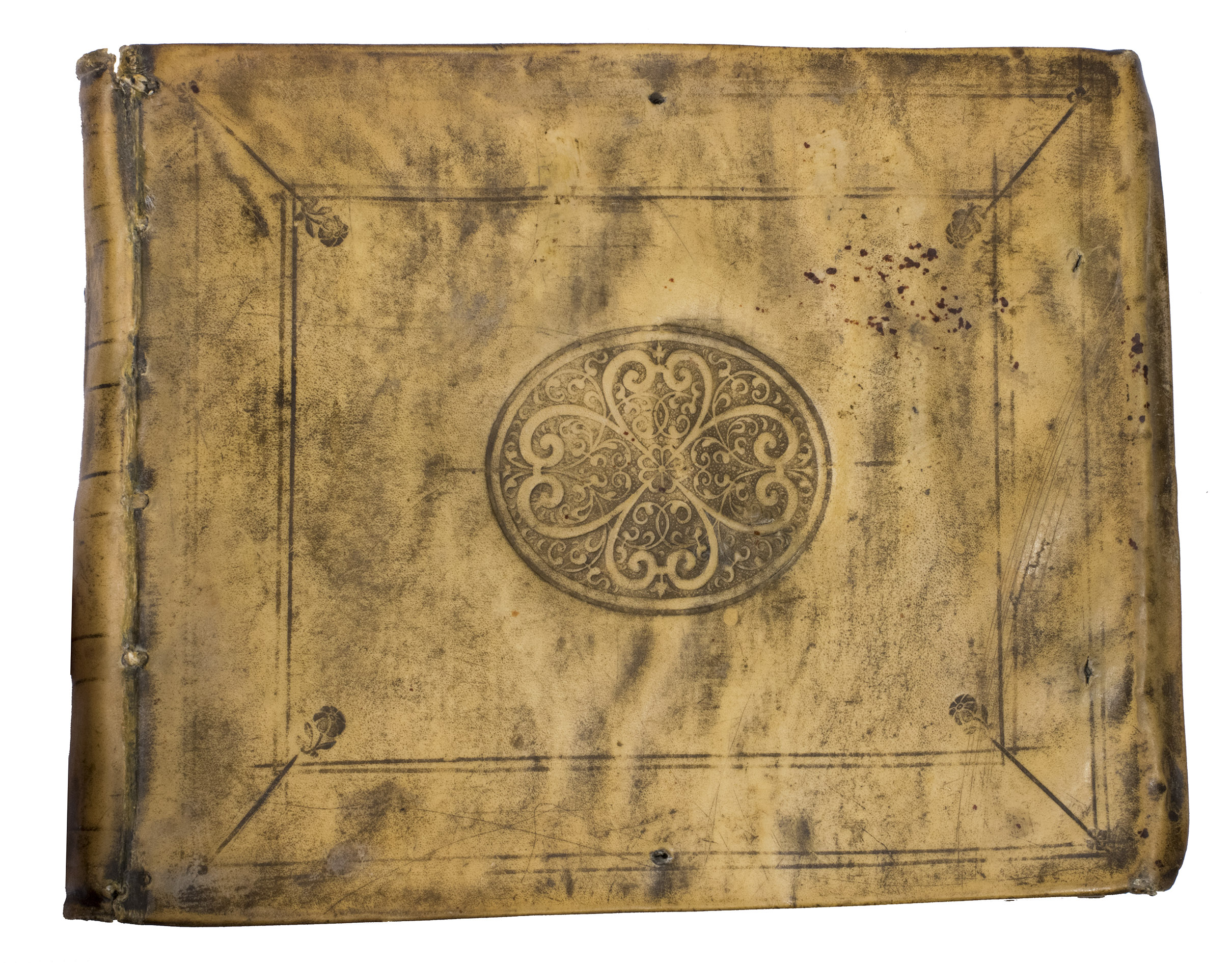
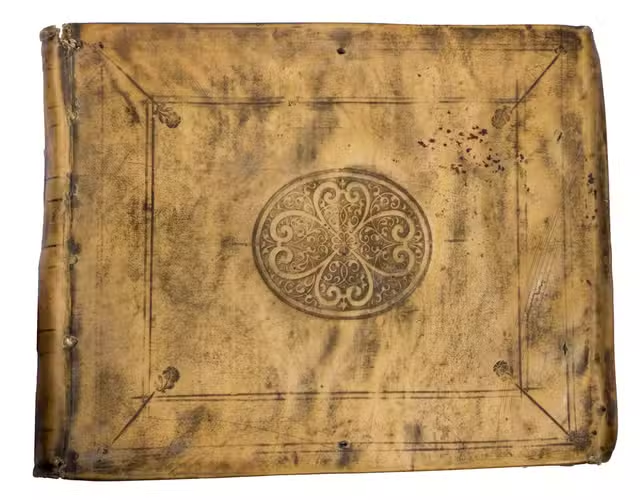
Antwerp, Henrik Swingen for the author, 1608. Oblong 4to (15 x 19.7 cm). With 1 full-page engraving, and 124 full-page engraved emblems, a woodcut vignette on the title page, and a woodcut decorated initial. Contemporary blind-tooled overlapping vellum, remnants of ties along all edges, sewn on 4 supports laced through the joints, red edges. [1], [1 blank], [14], 247, [1] pp.
€ 6,500
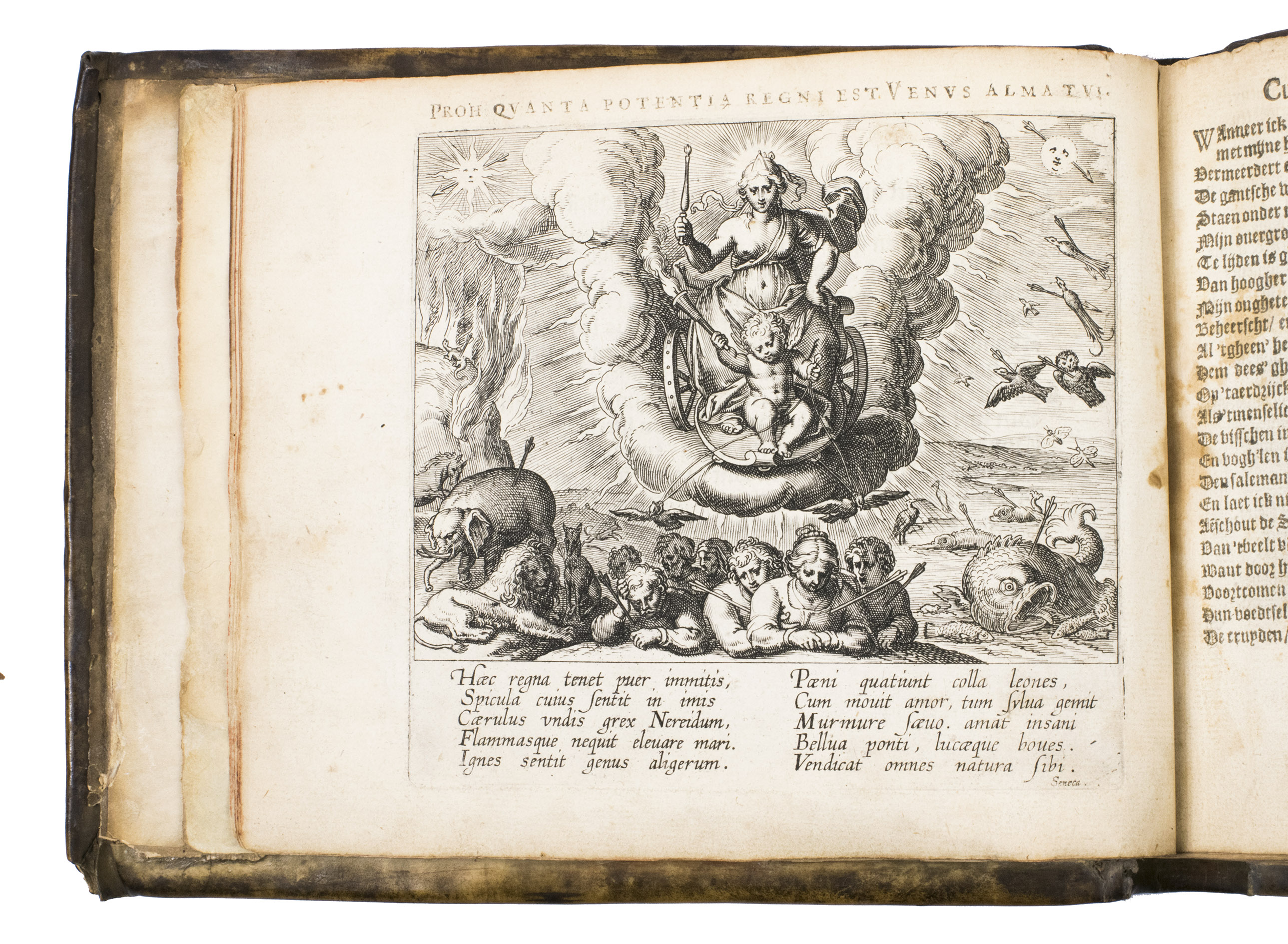
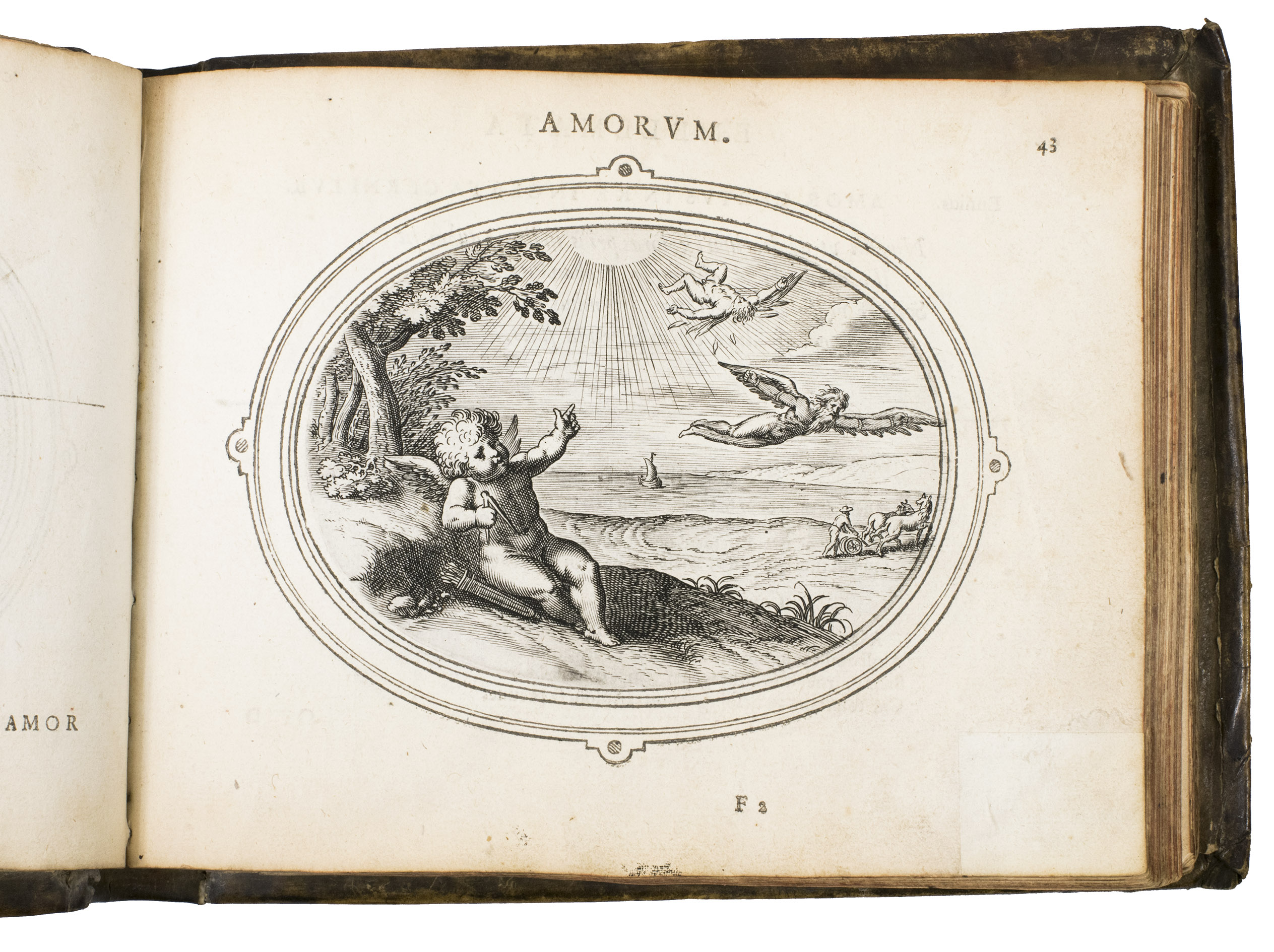
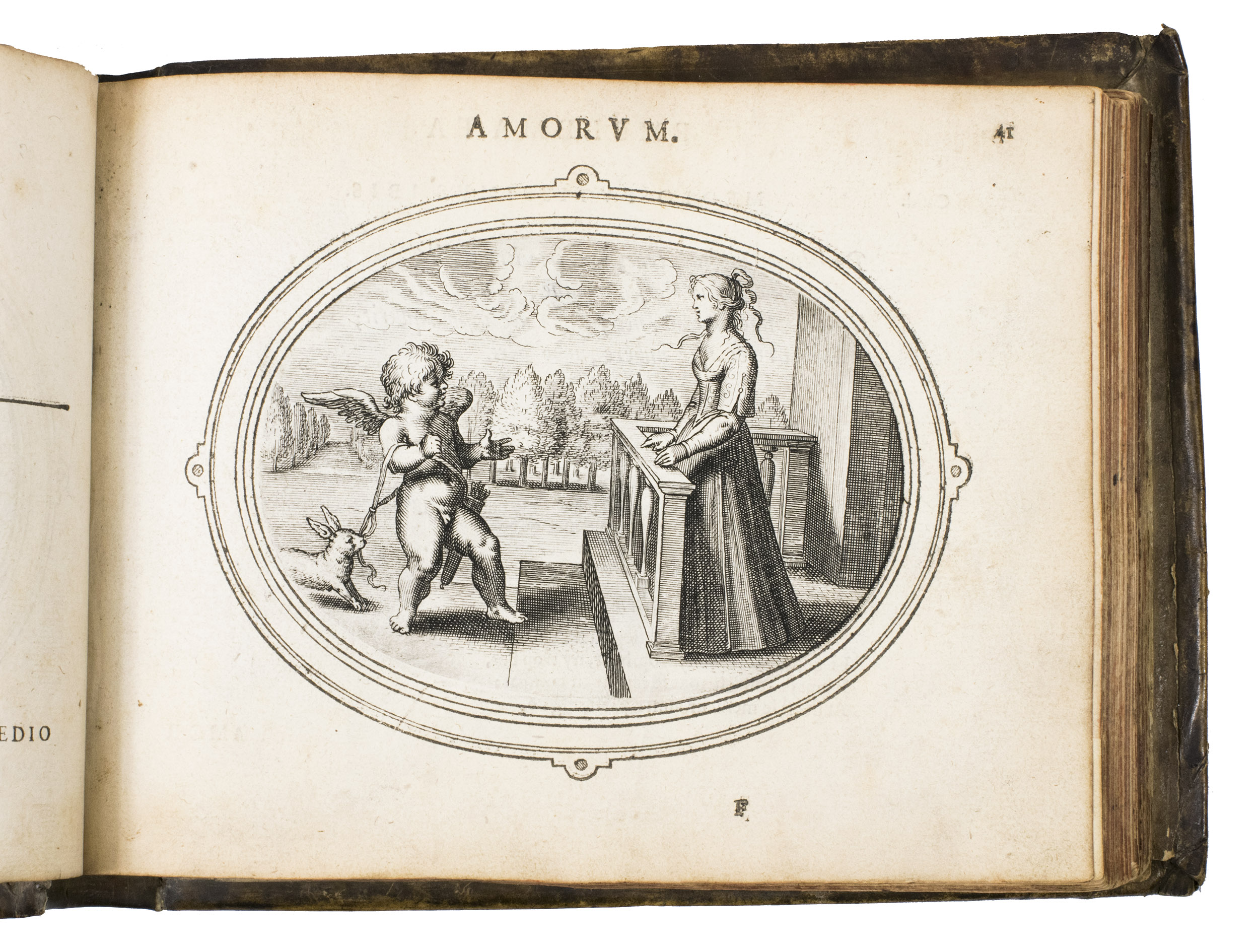
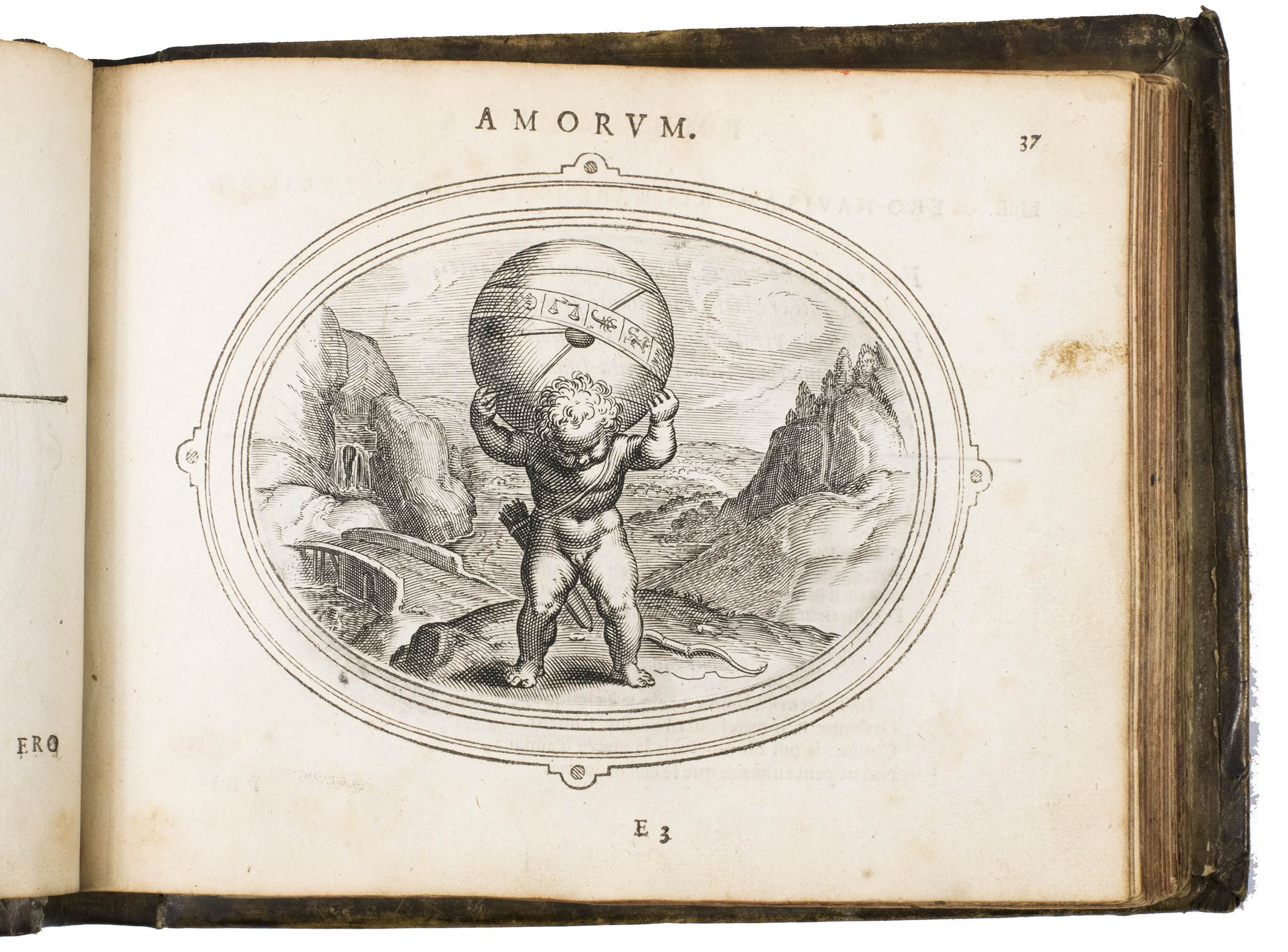
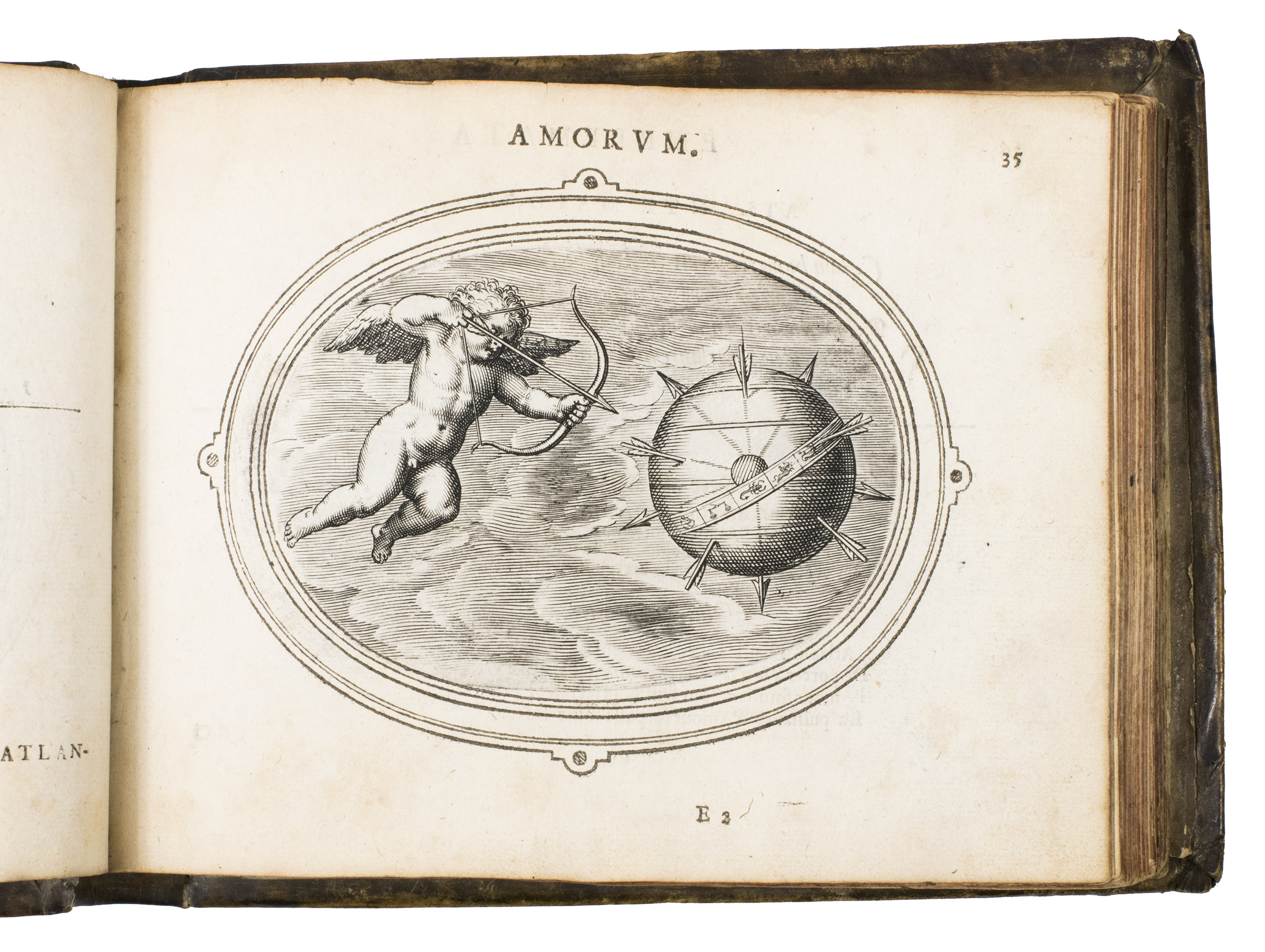
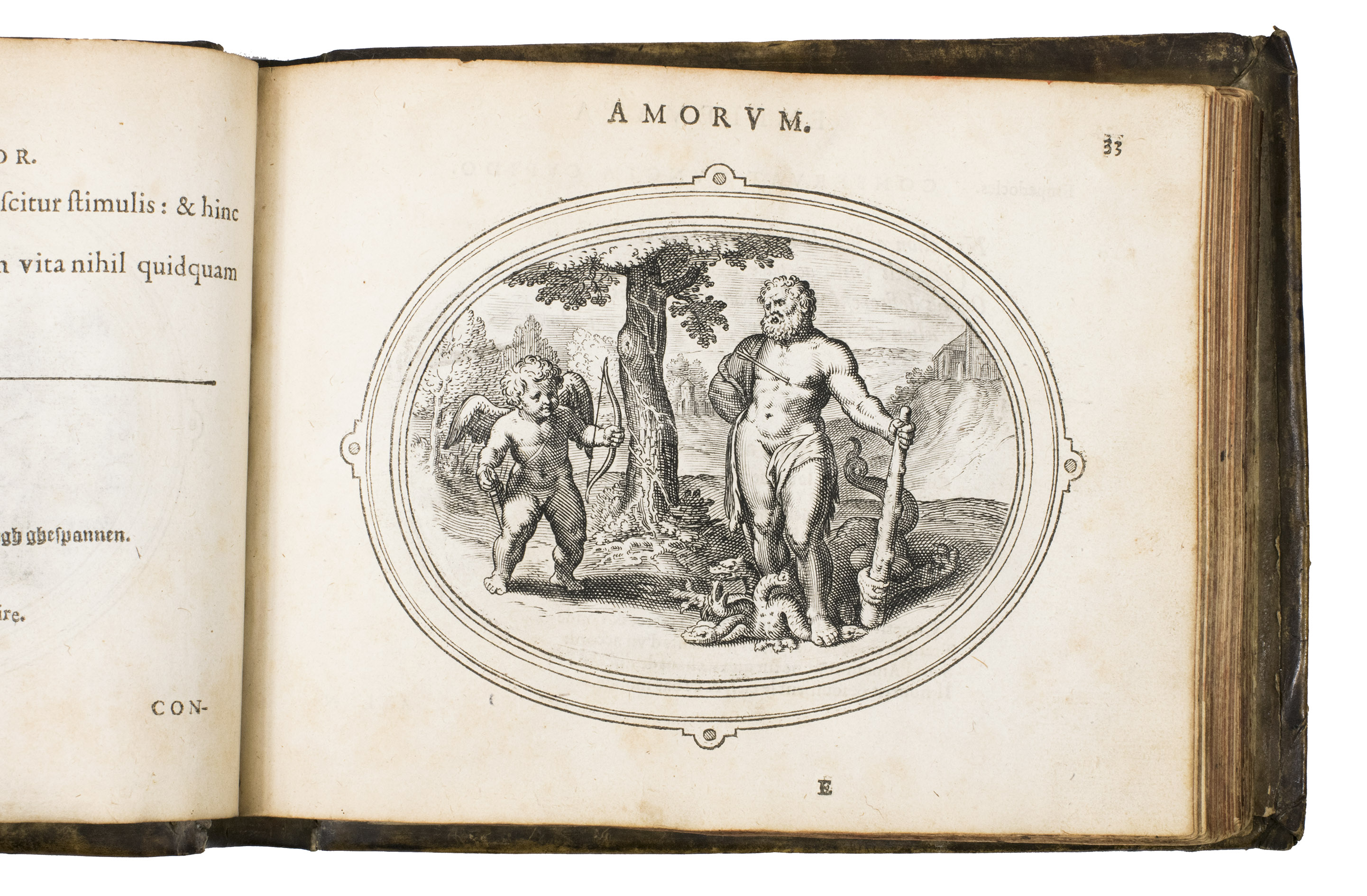
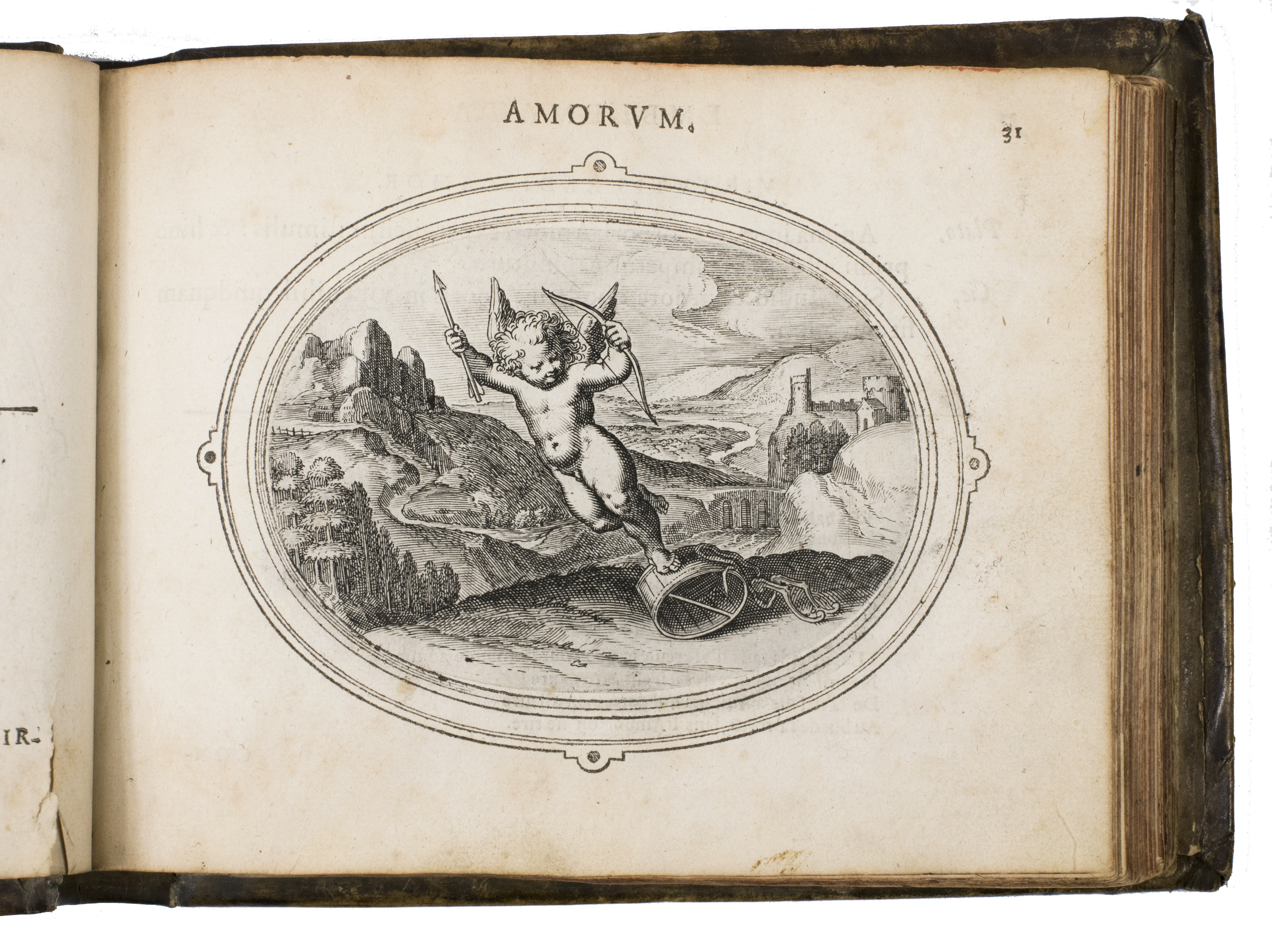
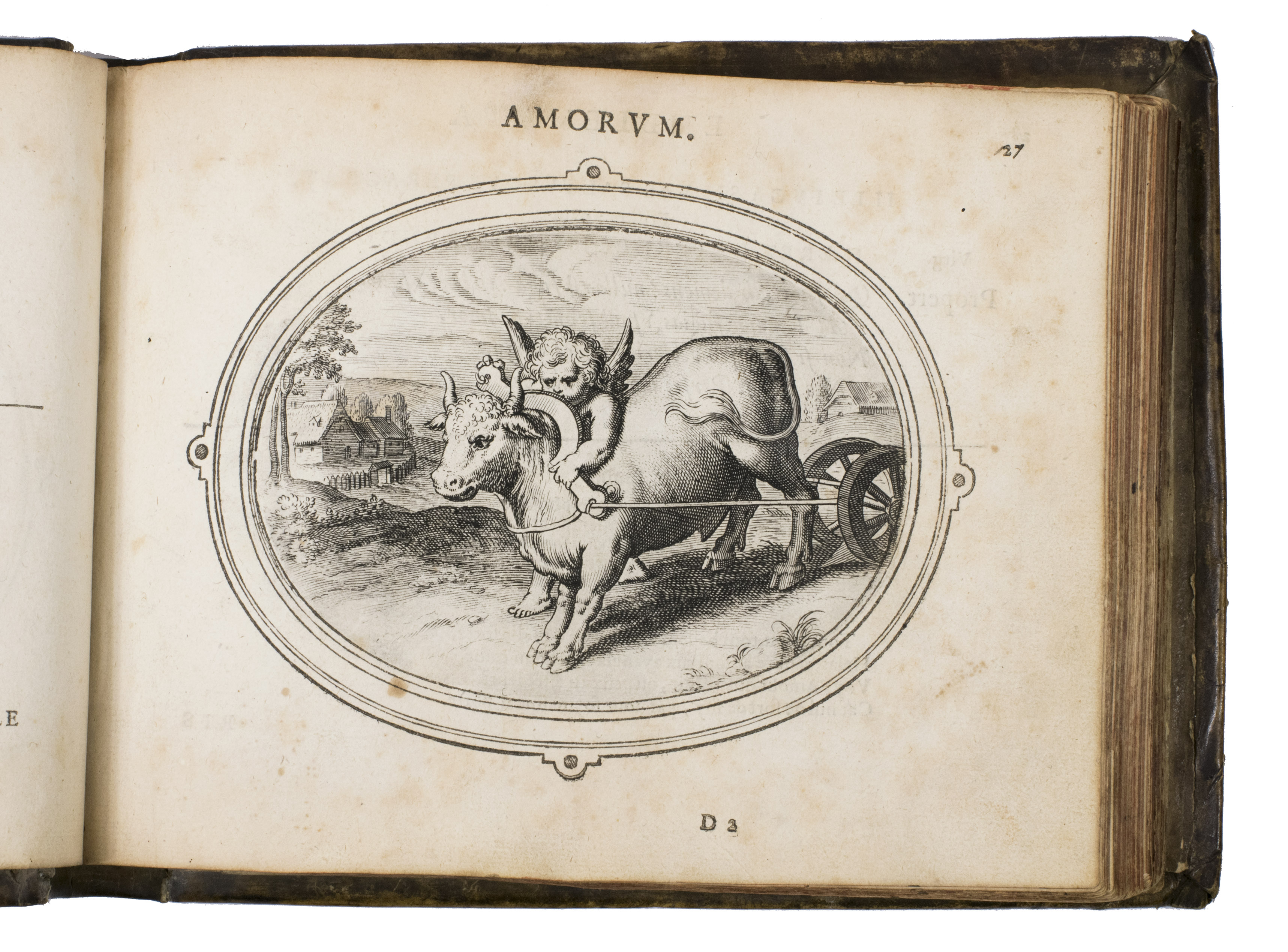
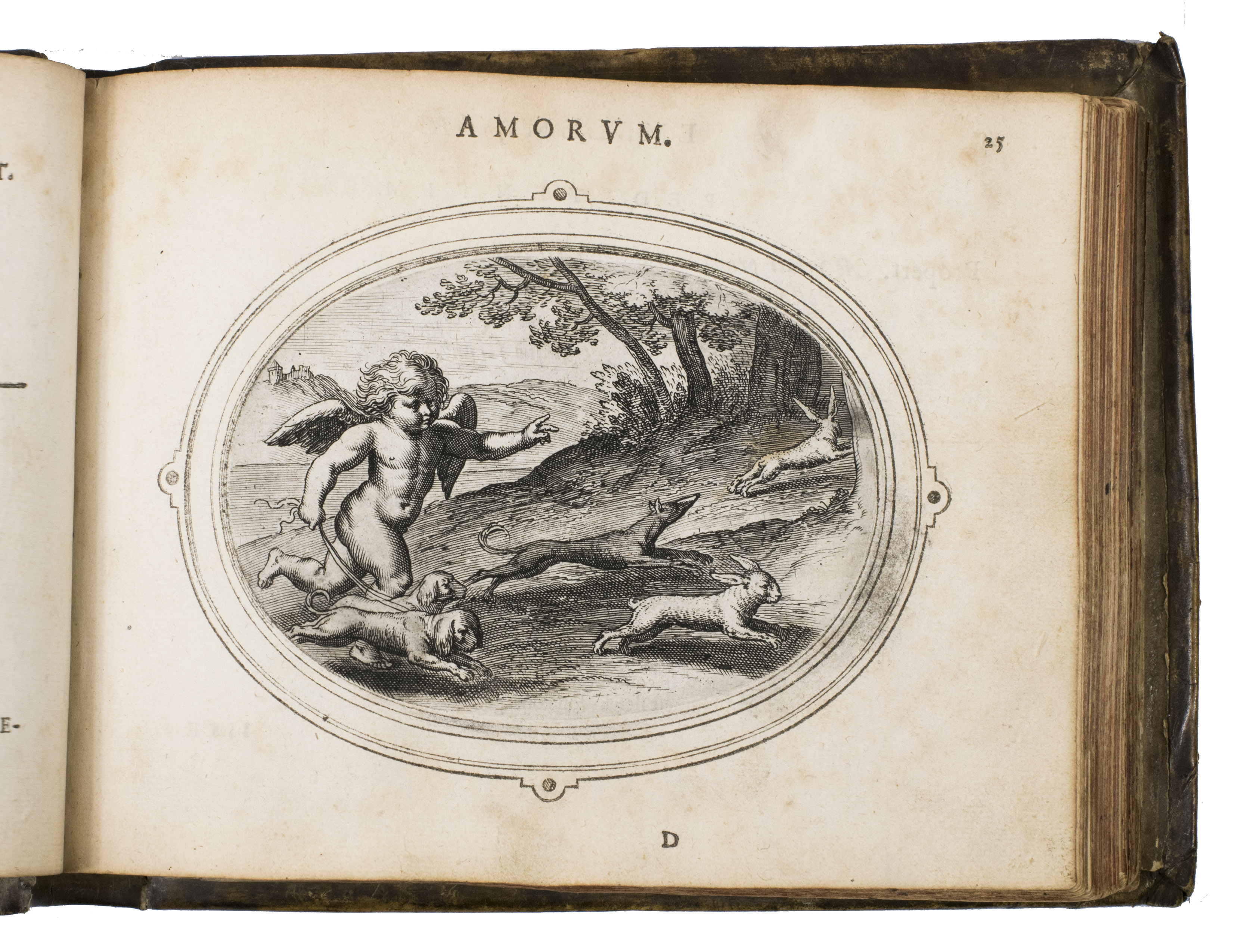
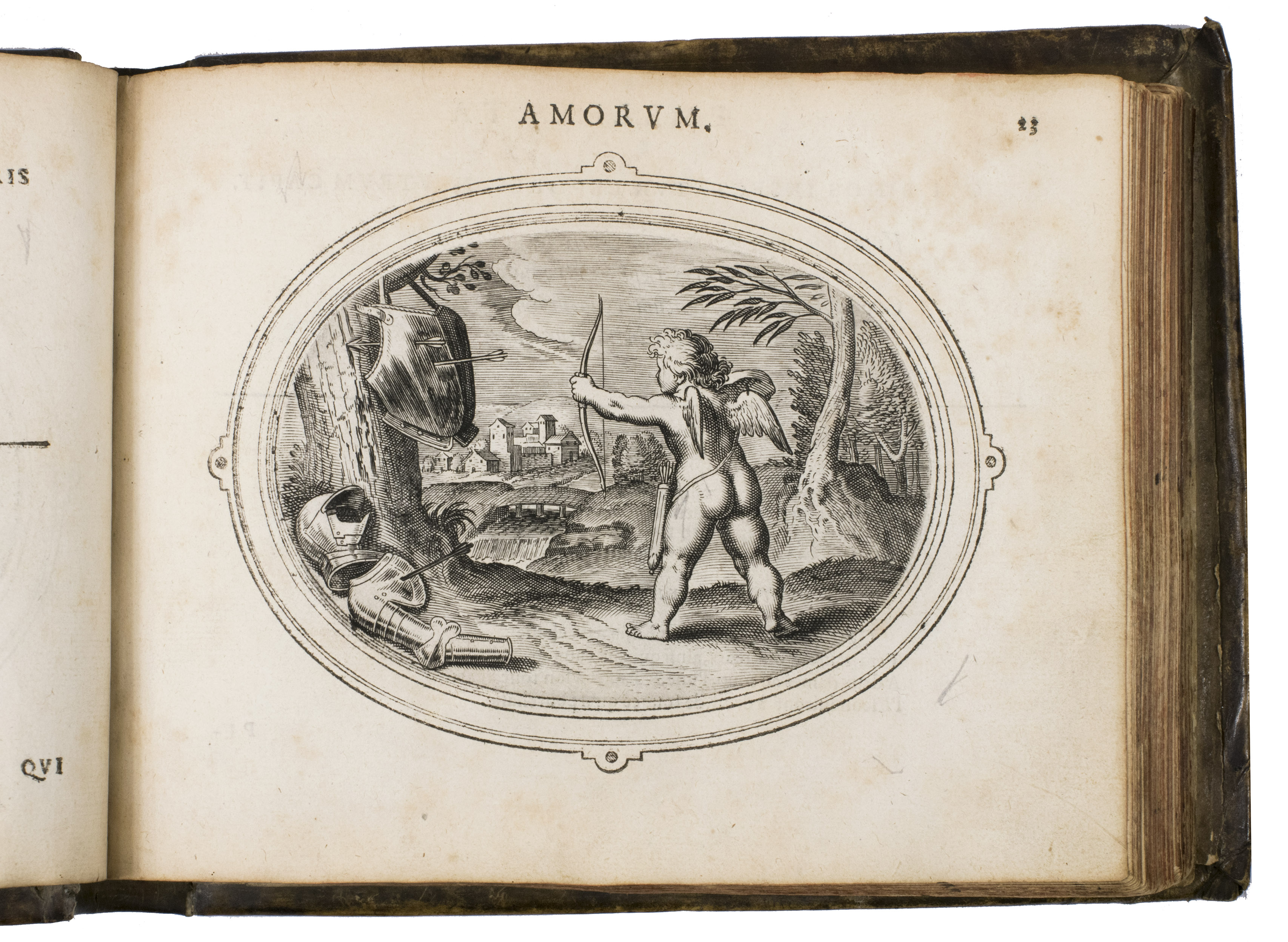
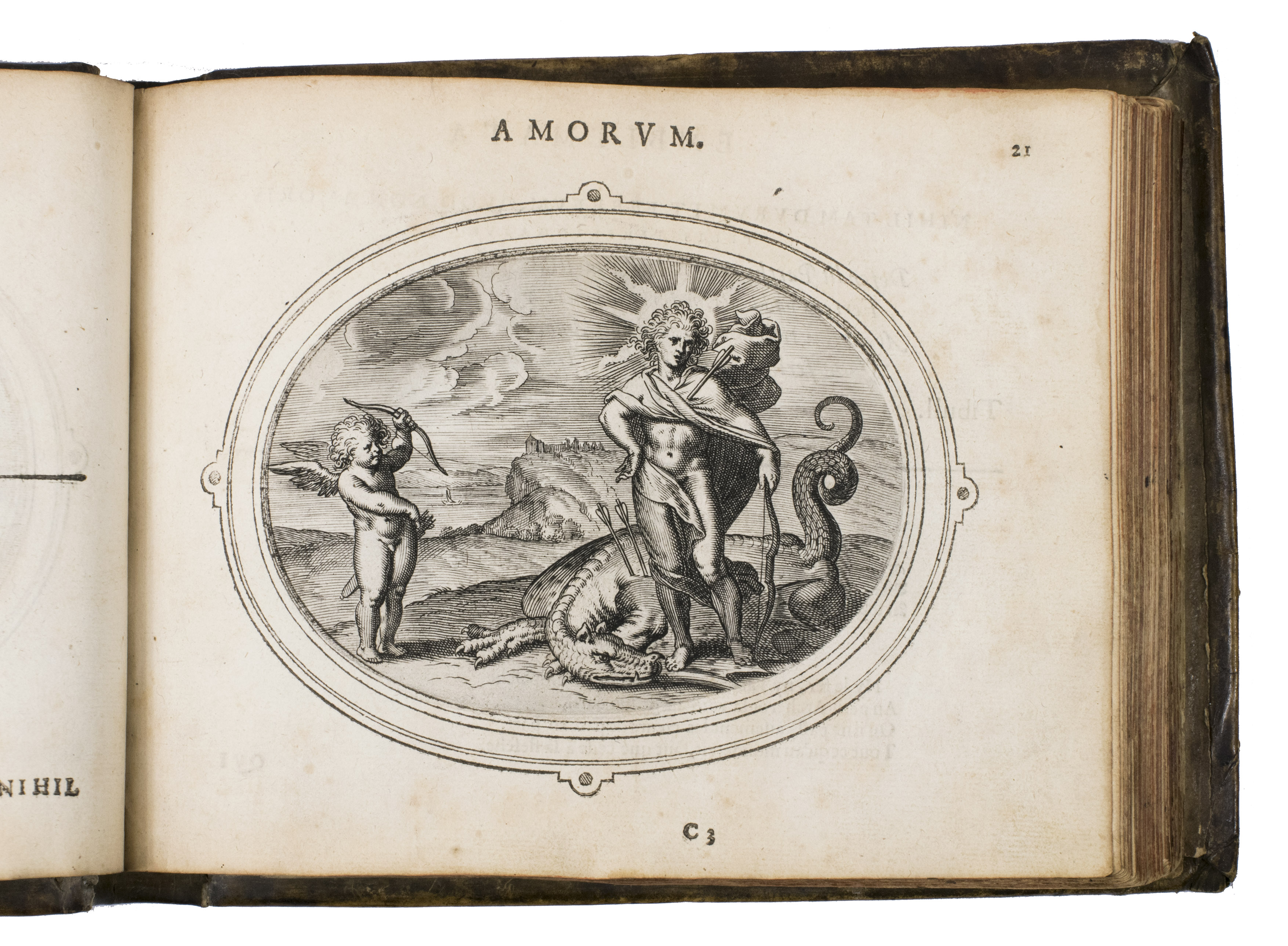
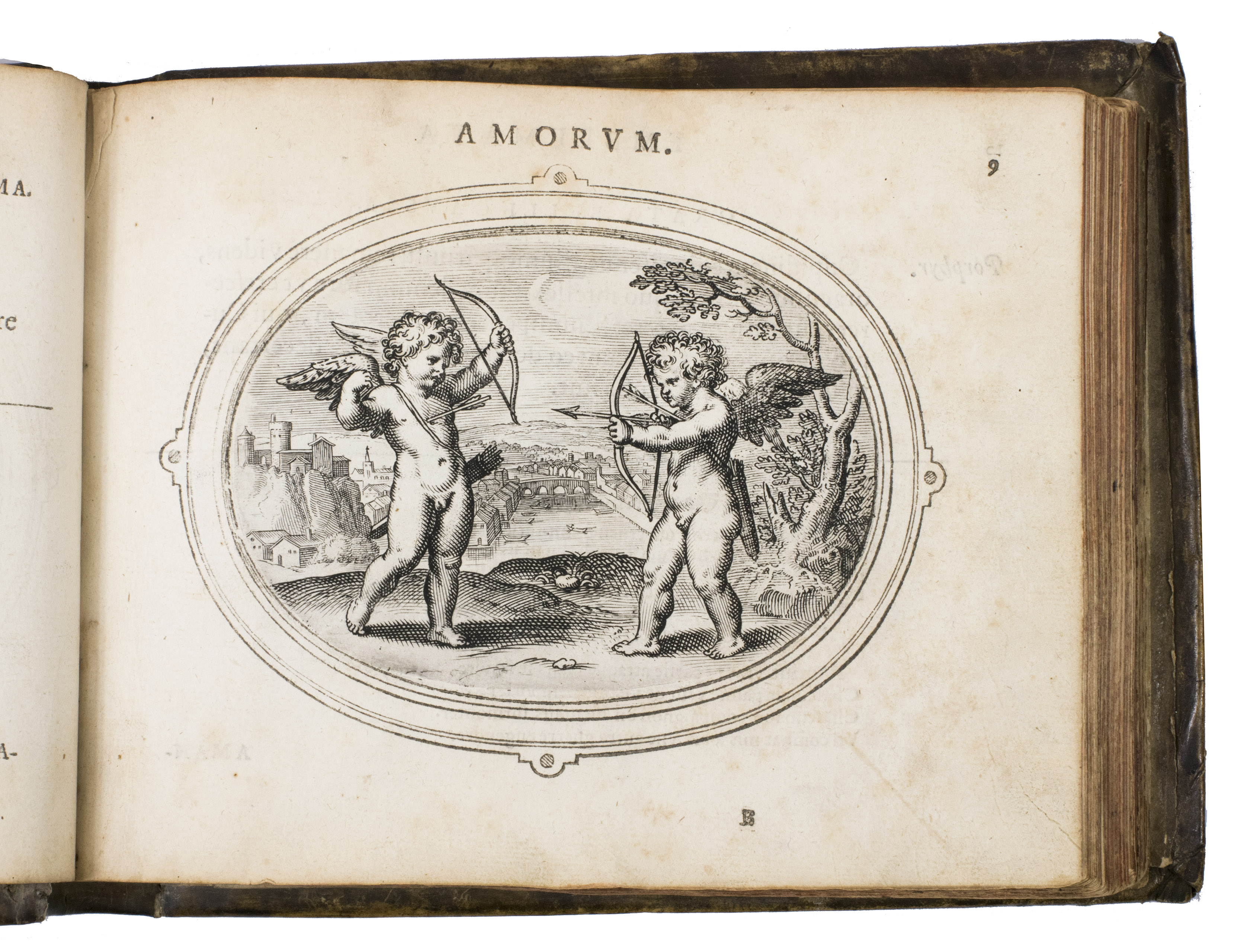
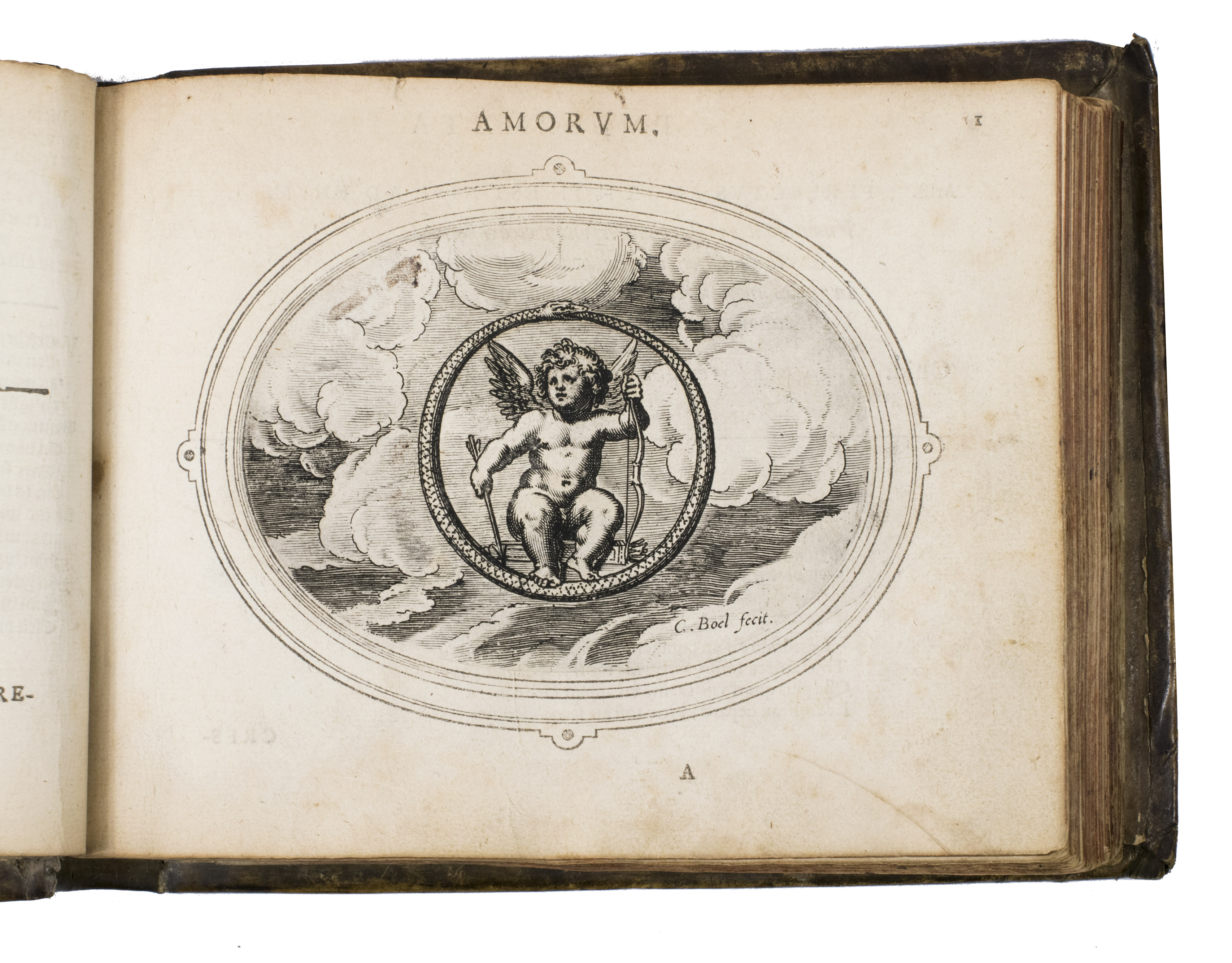
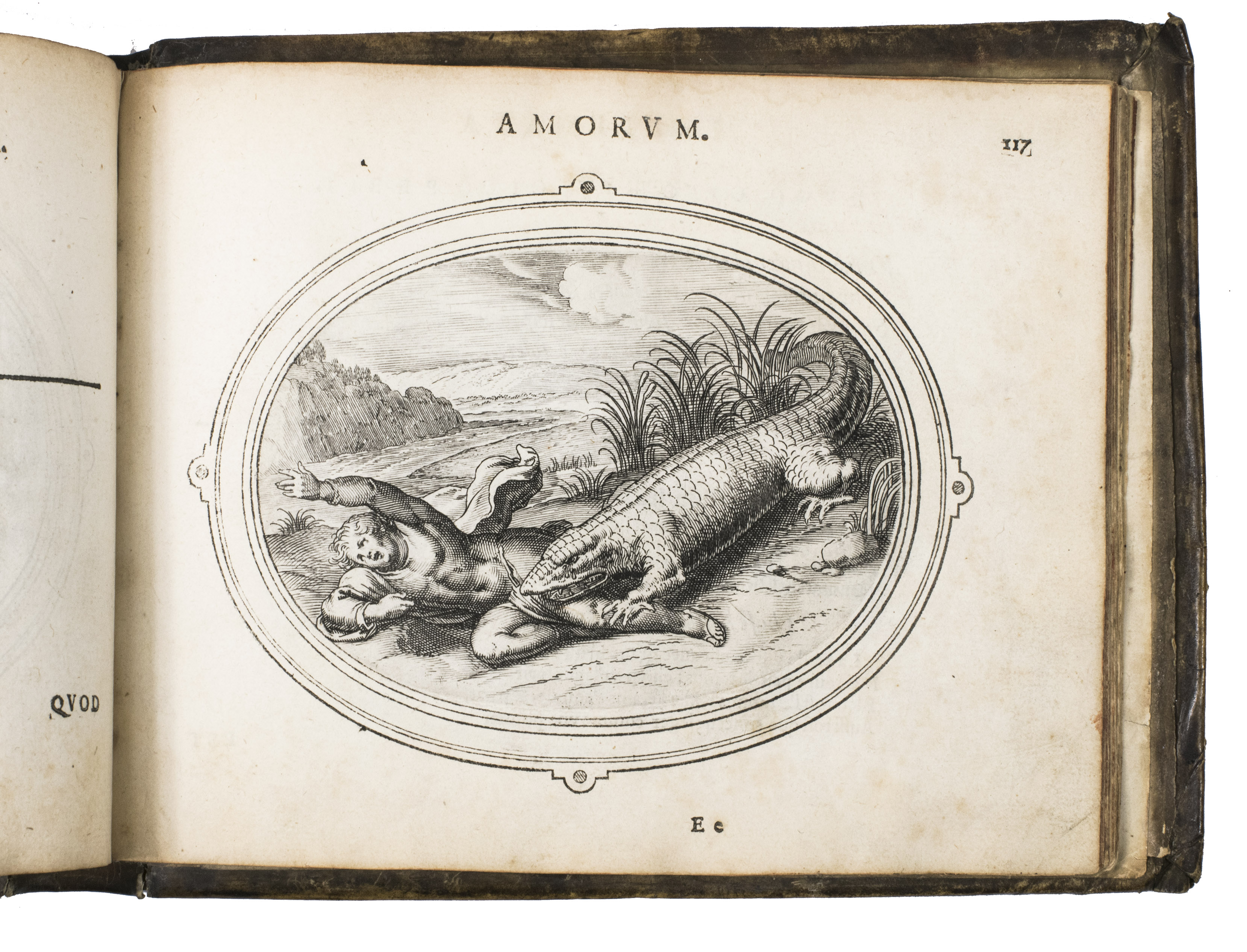
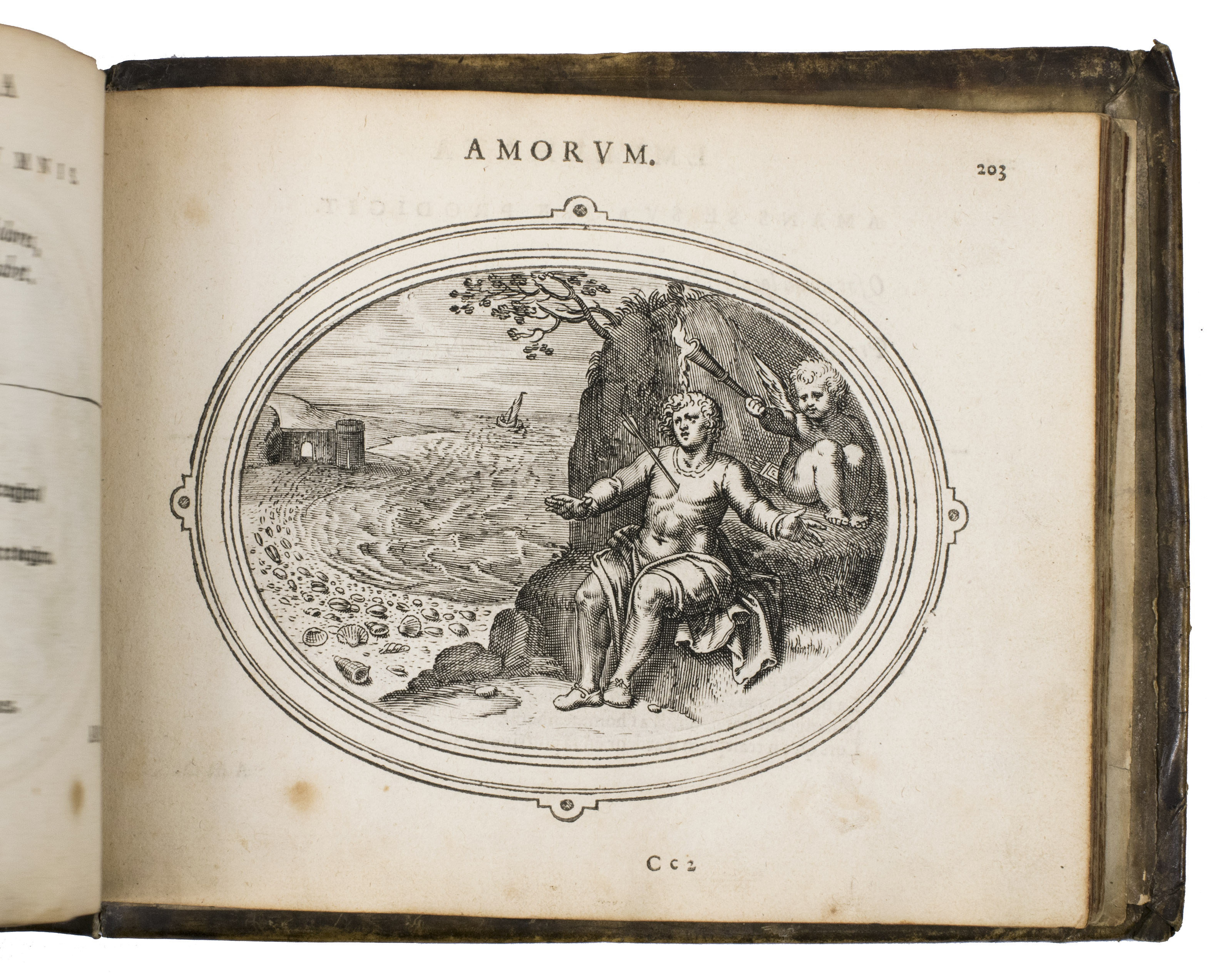
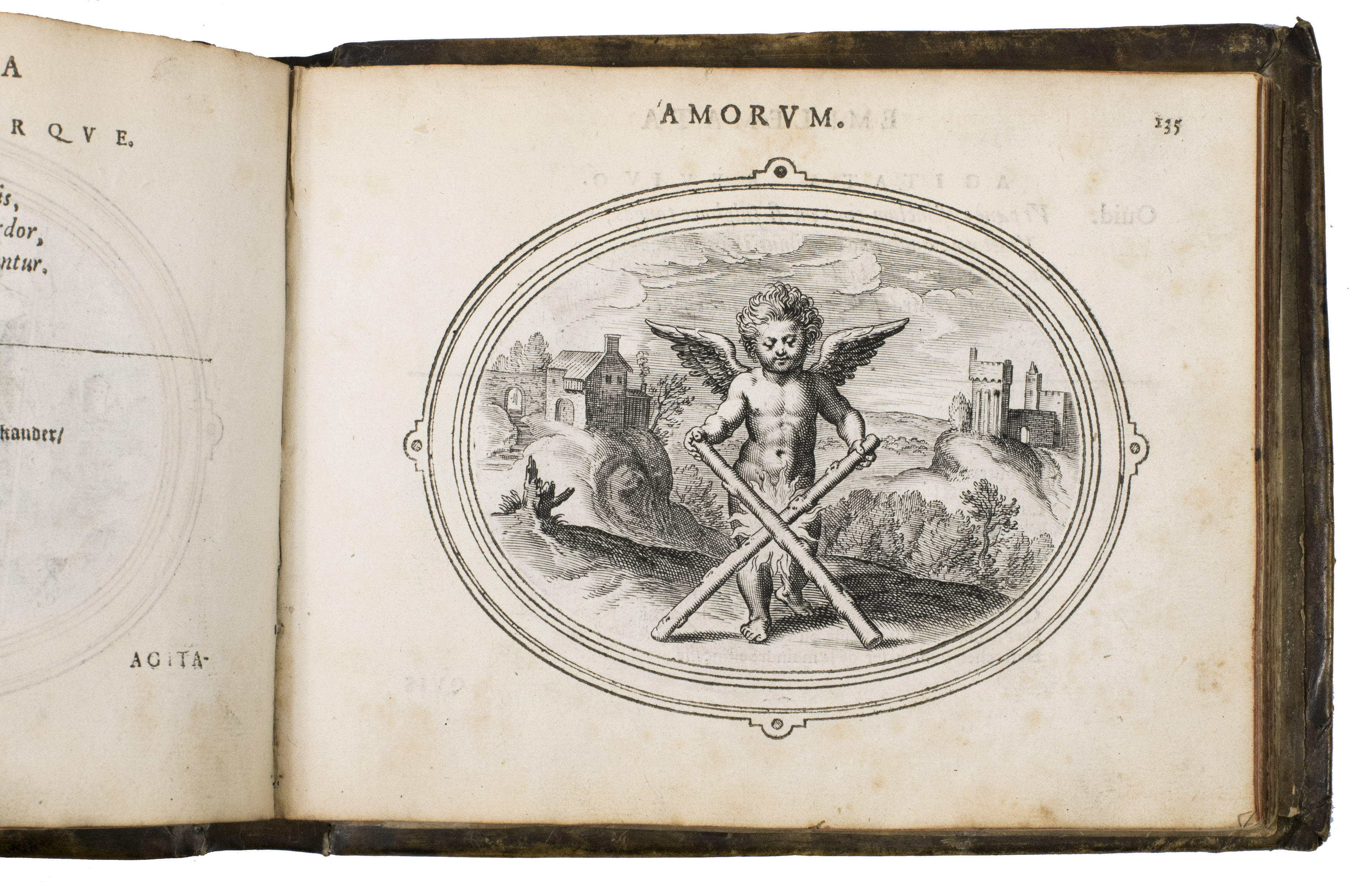
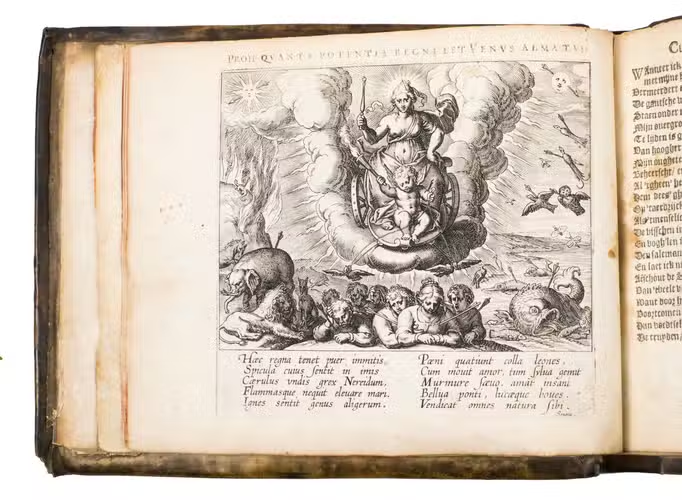
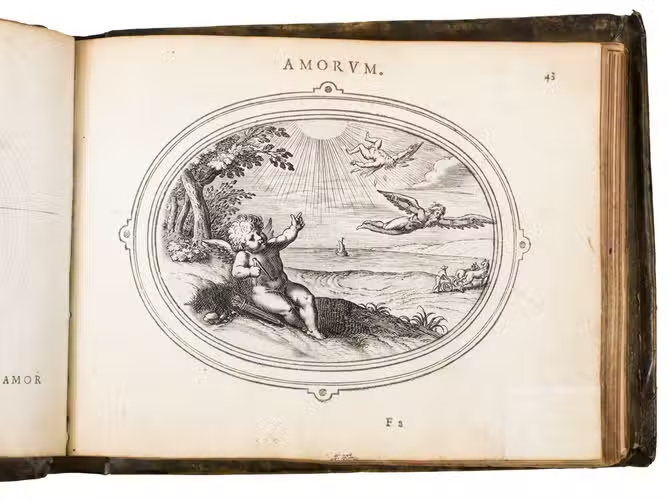
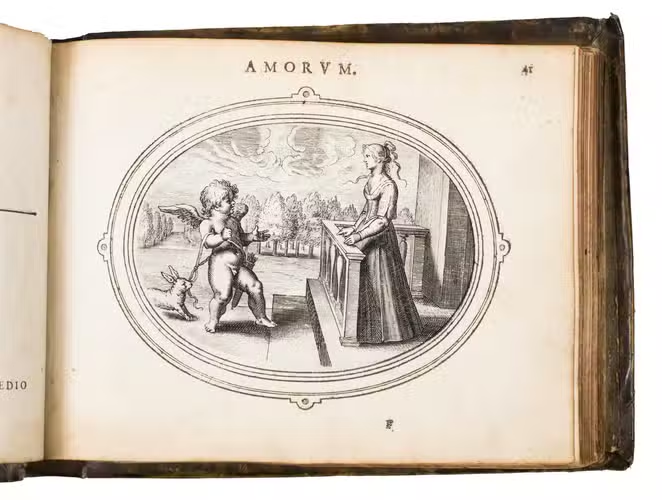
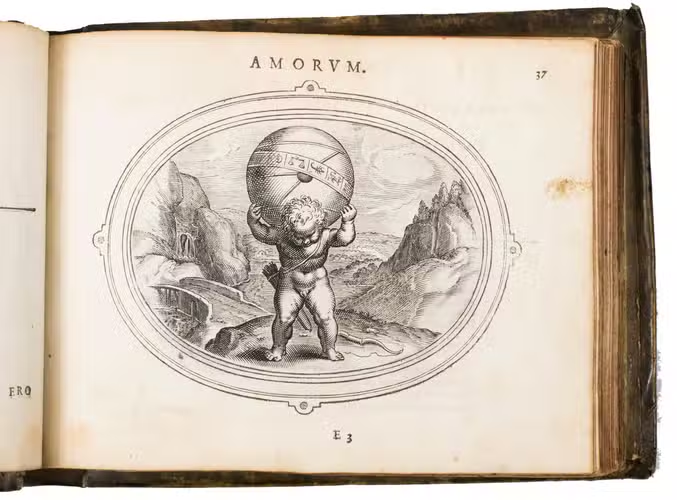
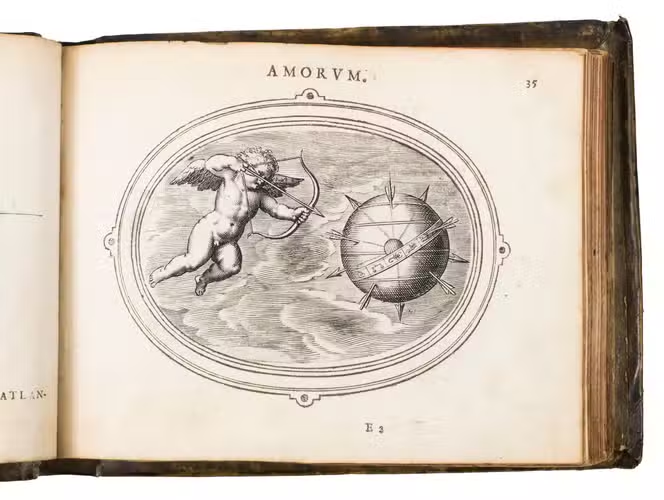
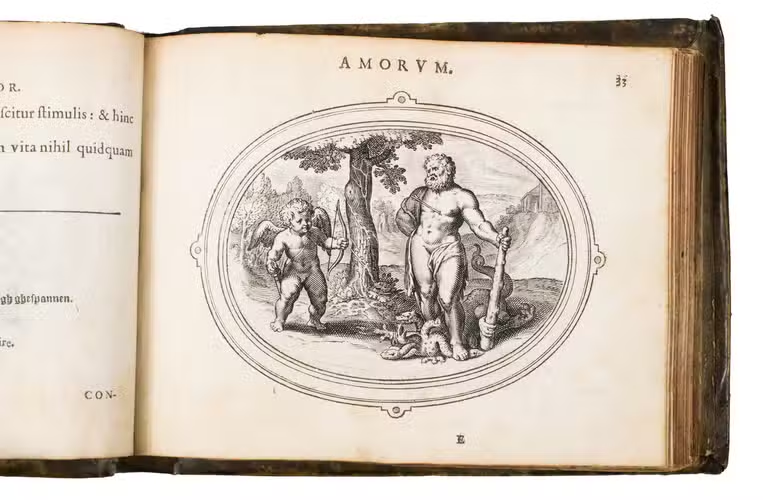
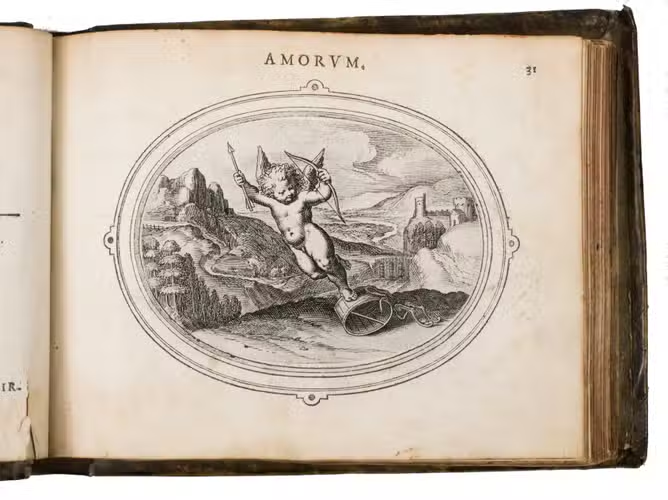
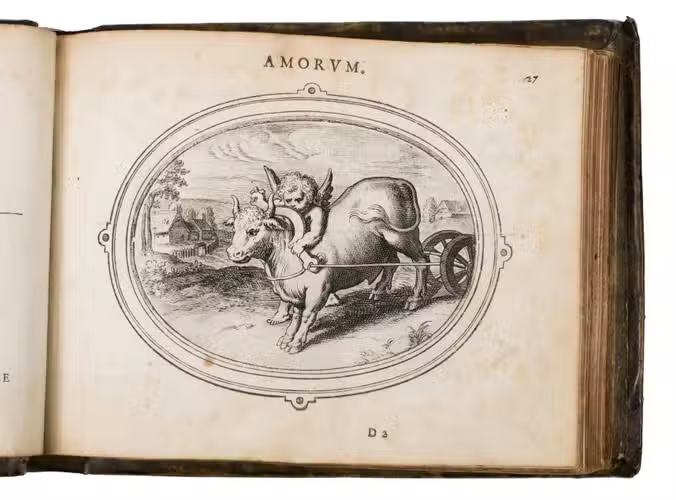
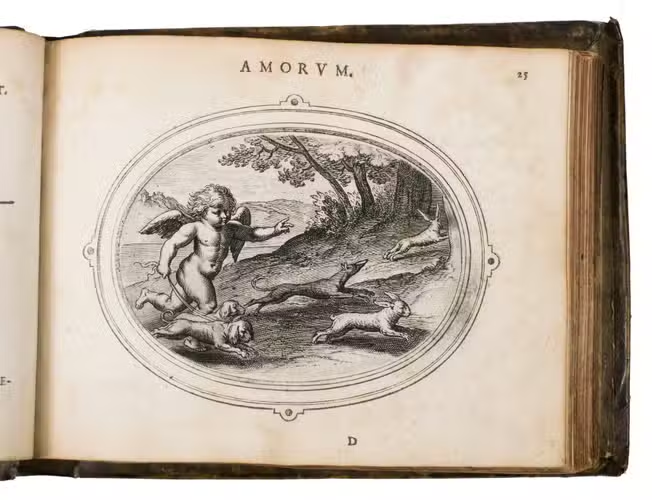
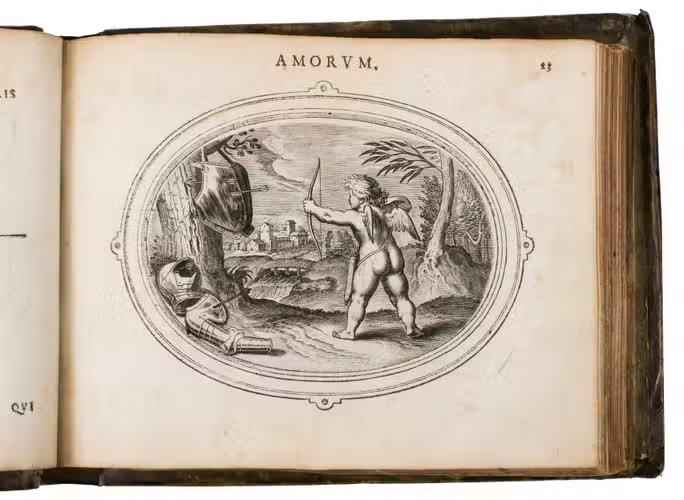
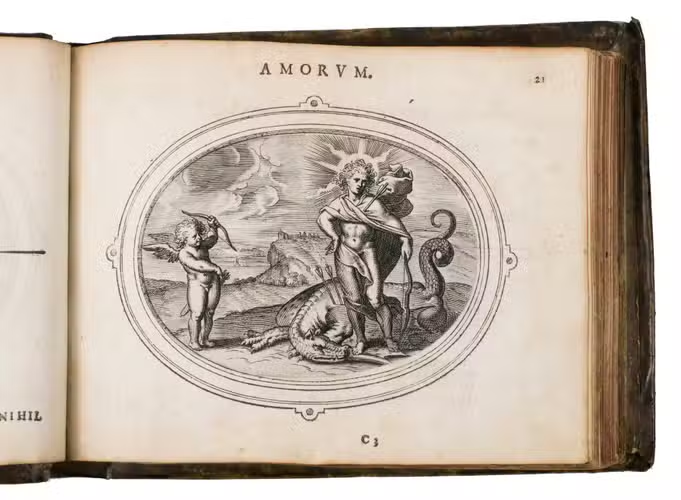
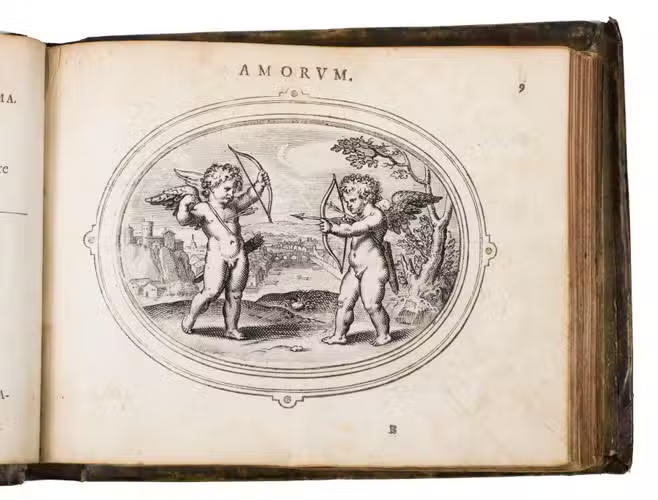
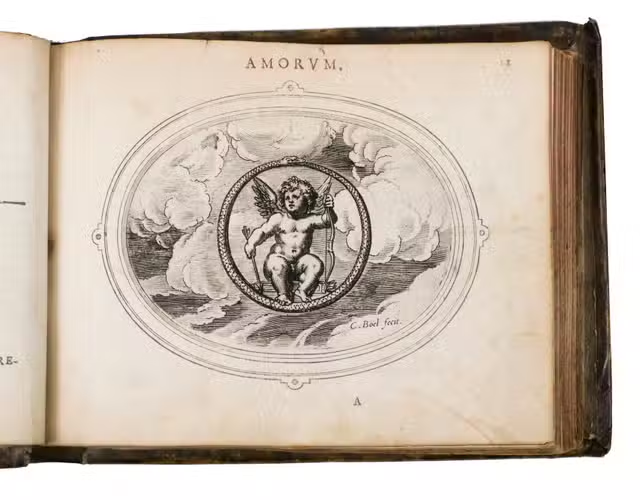
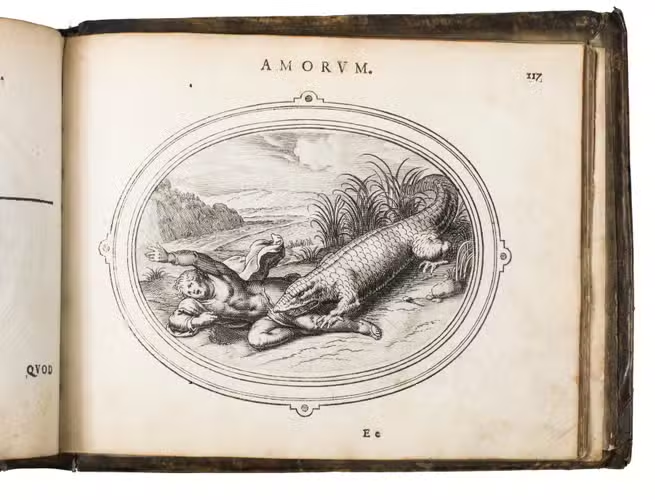
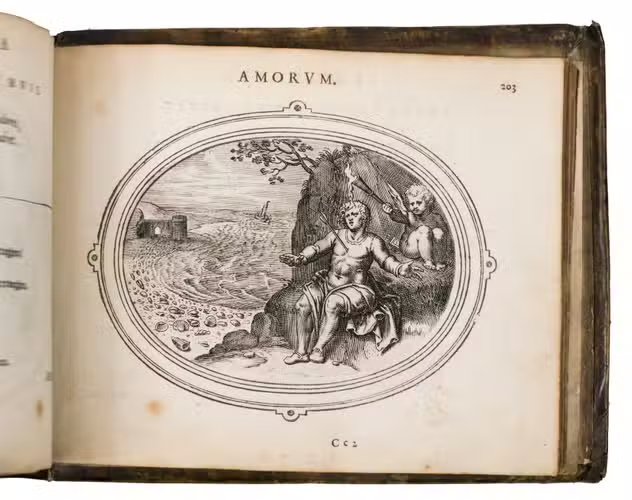
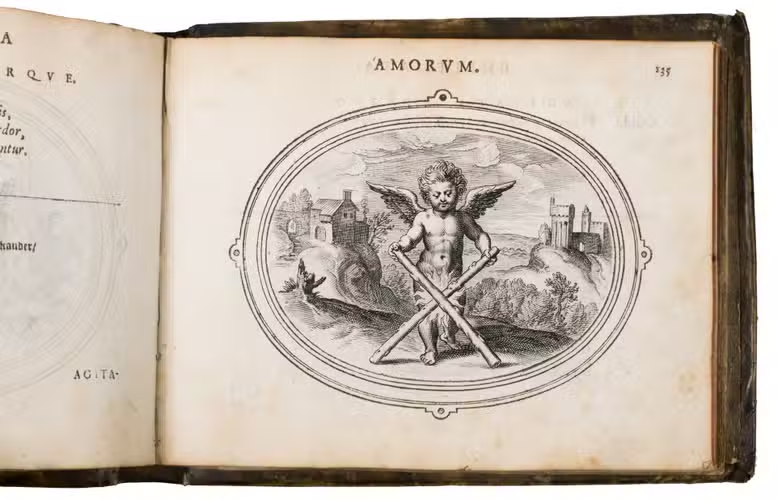
First edition of the Latin-French-Dutch issue of one of the most beautiful and influential love emblem books of the early modern period. The work contains 124 finely engraved erotic emblems depicting Cupid as a cherub engaged in a sequence of playful and often suggestive scenes, each illustrating allegorical verses on the irresistible power of love. Immediately popular on publication, the book played an important role in the dissemination of the emblem genre throughout Europe.
The emblems were designed by the painter and humanist Otto van Veen (1556-1629), better known by the Latinised name Otto Venius, and engraved by Cornelis Boel (ca. 1576-1621). Van Veen is best remembered as the teacher of Peter Paul Rubens (1577-1640) and as a leading artistic figure of the Southern Netherlands around 1600. The present work expands considerably on the model established by Jacob de Gheyn IIs Quaeris quid sit Amor (1601), which contained only 24 illustrations. In Amorum emblemata, Cupid interacts with allegorical and mythological figures such as Fortune, Hope, Envy, Hercules, Apollo and Venus, while the accompanying mottoes and verses draw on Ovid and other classical authors and philosophers. Beyond the central theme of love, the emblems also explore motifs of illness and healing, presenting love as both affliction and remedy.
The literary conception of the work is related to Daniel Heinsiuss (1580-1655) Het Ambacht van Cupido, a pictorial interpretation of Petrarchan love poetry in which Cupid appears in many guises pursuing or conquering mankind. The present work opens with Latin laudatory poems by leading scholars of the period, including Hugo Grotius (1583-1645), Daniel Heinsius and Philipp Rubens (1574-1611), the humanist brother of the painter.
The engravings were executed by Cornelis Boel (ca. 1576-1621), an Antwerp engraver working in a clear and refined style related to that of the Sadeler family. Boel collaborated on several important projects and later spent some time in England, where he engraved the frontispiece to the first edition of the Bible published by royal authority in 1611, later known as the King James Version.
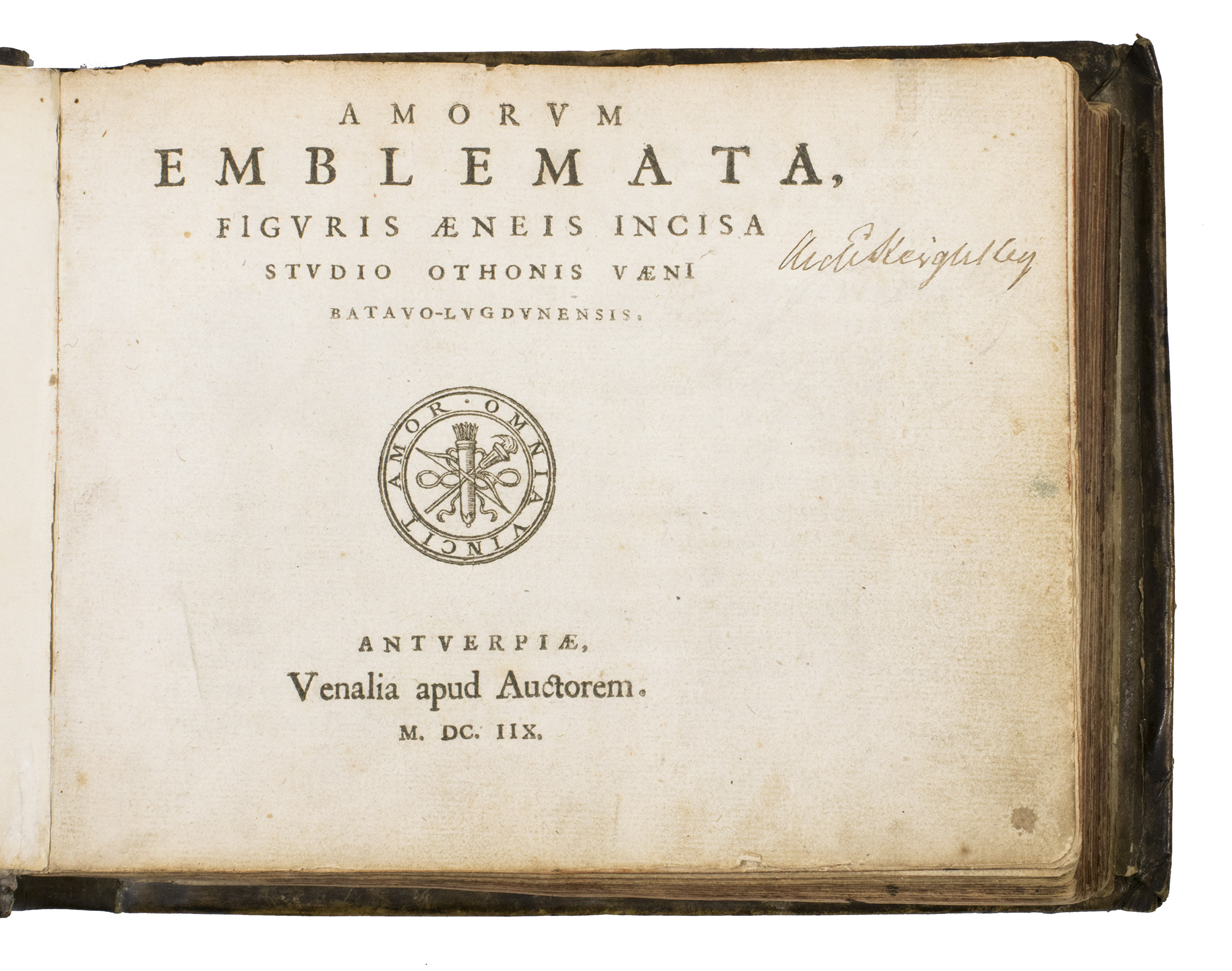
With a later manuscript owner's inscription ("ArchKeightley") on the title page, a signature of Archibald Keightley (1859-1930), an English physician and Theosophist. A contemporary Latin note on the verso of the final leaf mentions the Nereid Galatea and Jacob van Eycks musical piece "Phillis quam Philander tegen". The vellum is somewhat darkened and stained, the front joint and inner hinges have been repaired, the outer corner of pp. 43-44 has been restored, occasional foxing and staining. Some pages are mis numbered and pp. 241-242 is bound after p. 246, but the work is complete. Otherwise in good condition. Chatelain 138; De Vries 45; Funck p. 404; Hollstein III, 23-146; Landwehr, Low Countries 825; Landwehr, Romanic 744; Praz p. 524; Simoni V21; STCV 6837313 (2 copies); USTC 1004865 (8 copies).
Related Subjects: