TRITHEMIUS, Johannes and Gabriel de COLLANGE (translator).
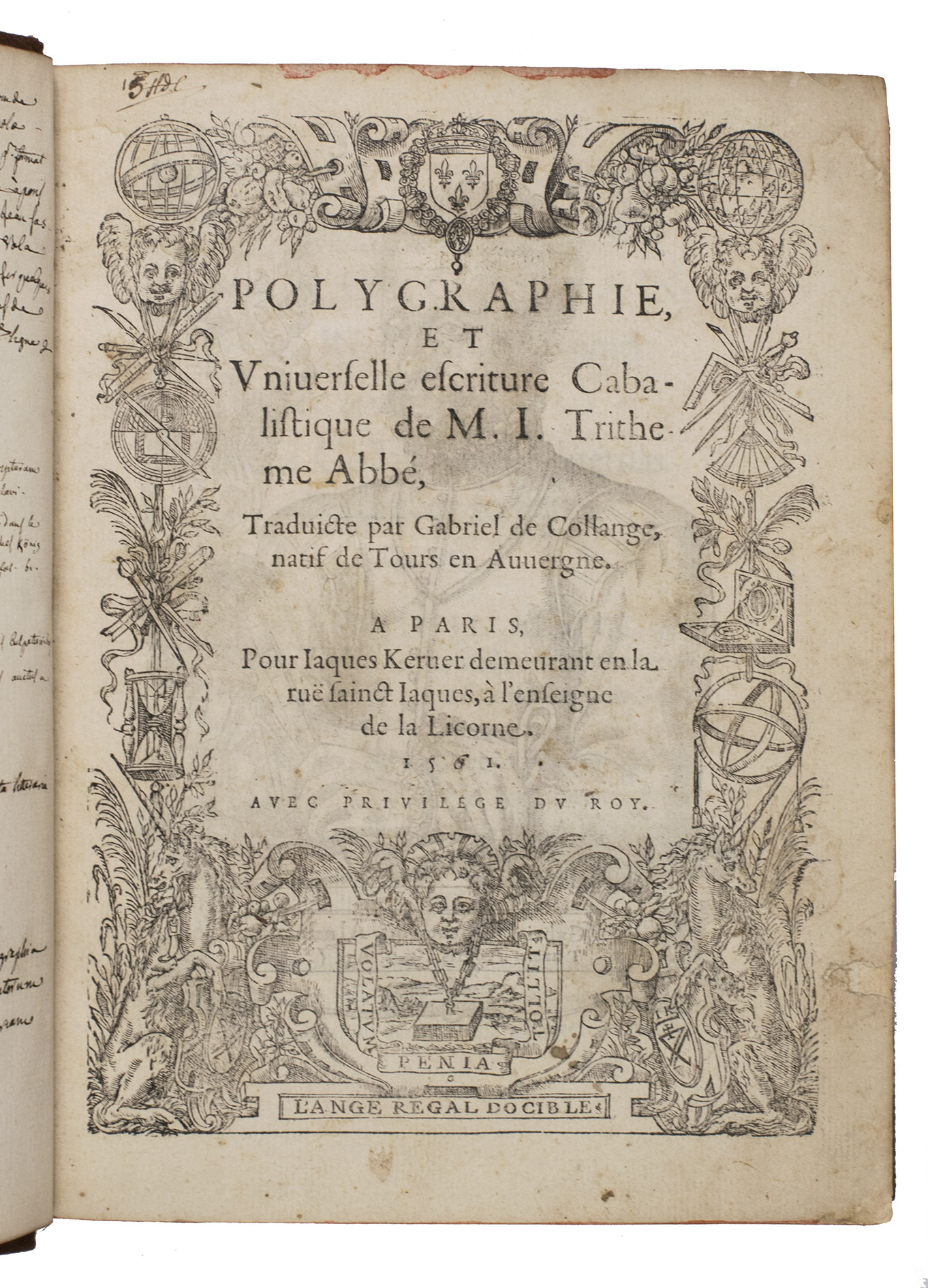
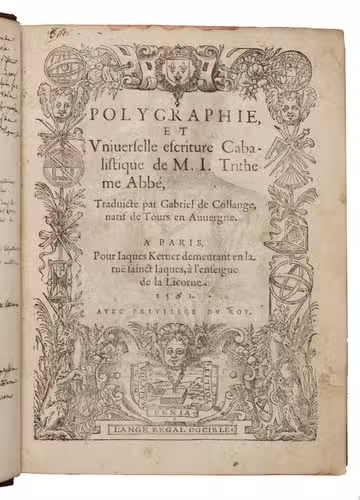
Polygraphie et universelle escriture cabalistique.
Including:
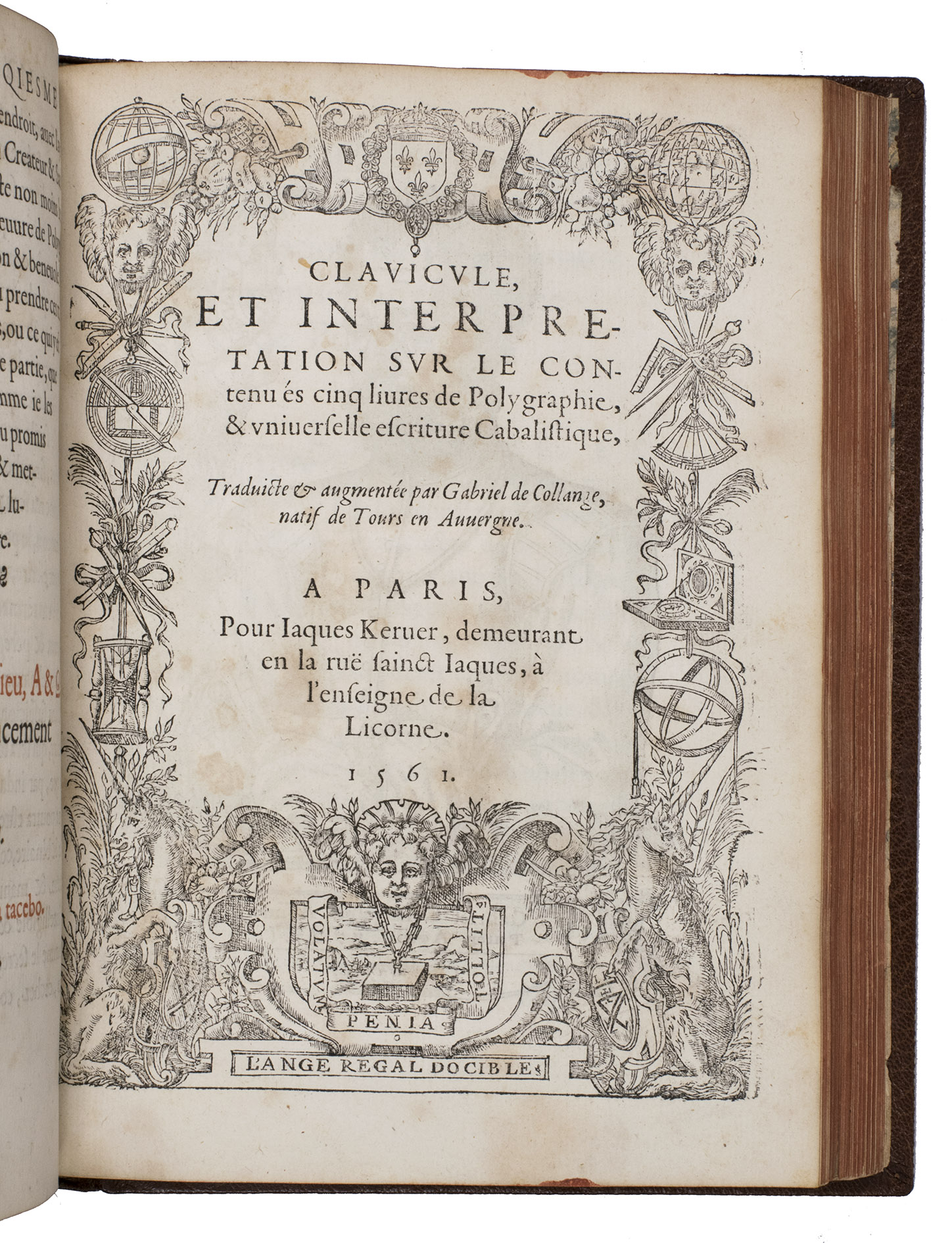
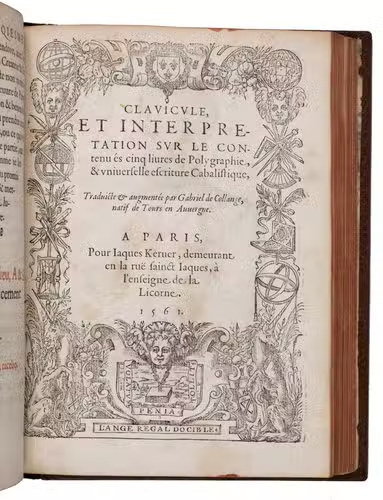
(2) TRITHEMIUS, Johannes and Gabriel de COLLANGE (translator). Clavicule, et interpretation sur le contenués cinq livres de Polygraphie, & universelle escriture Cabalistique.
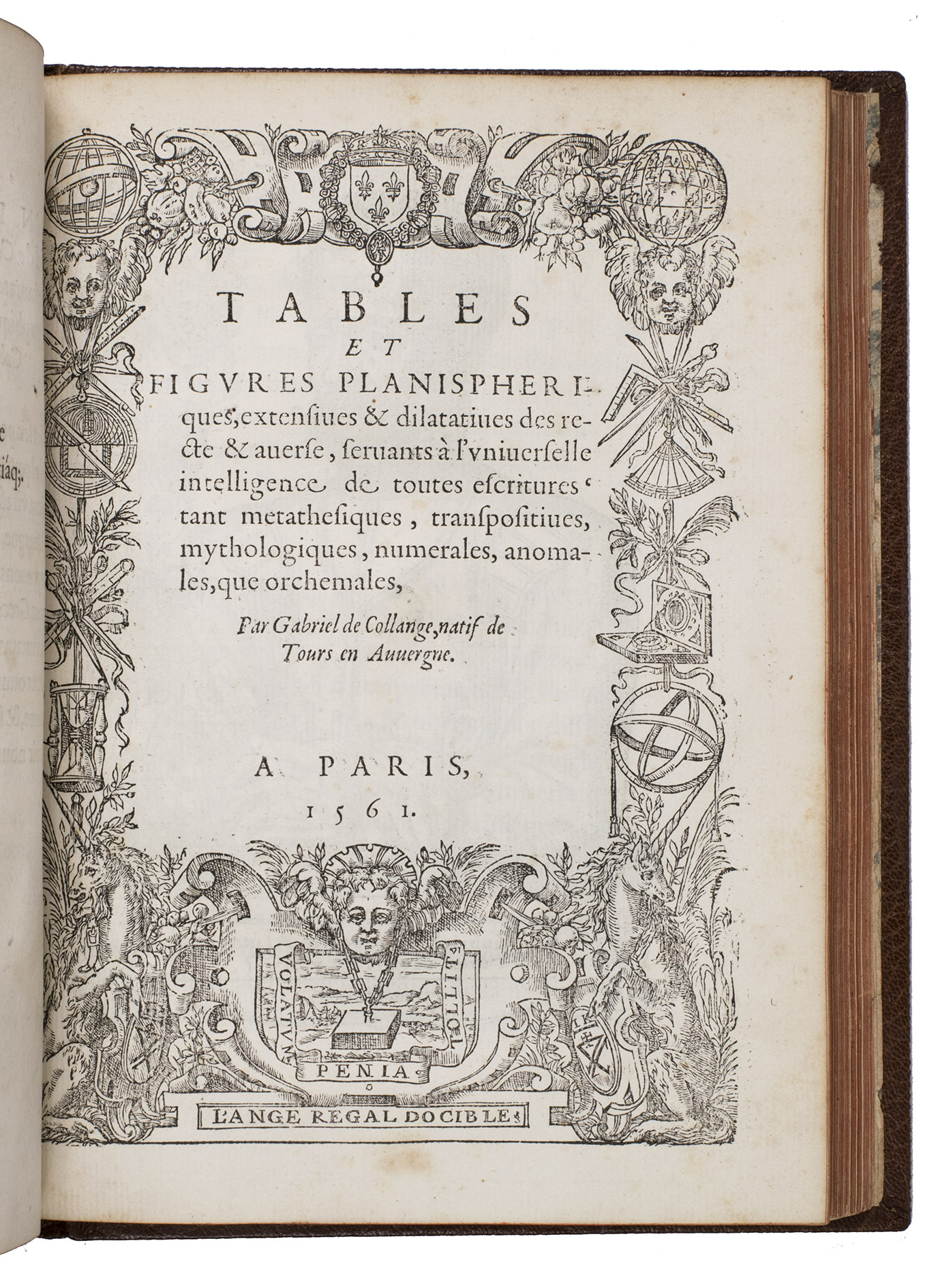
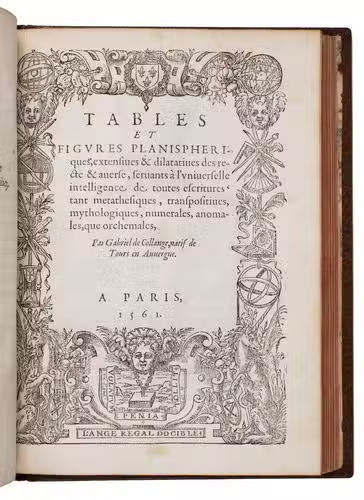
(3) COLLANGE, Gabriel de. Tables et figures planispheriques, extensives & dilatatives des recte & averse, servants à l'universelle intelligence de toutes escritures tant methathesiques, transpositives, mythologiques, numerales, anomales, que orchemales.
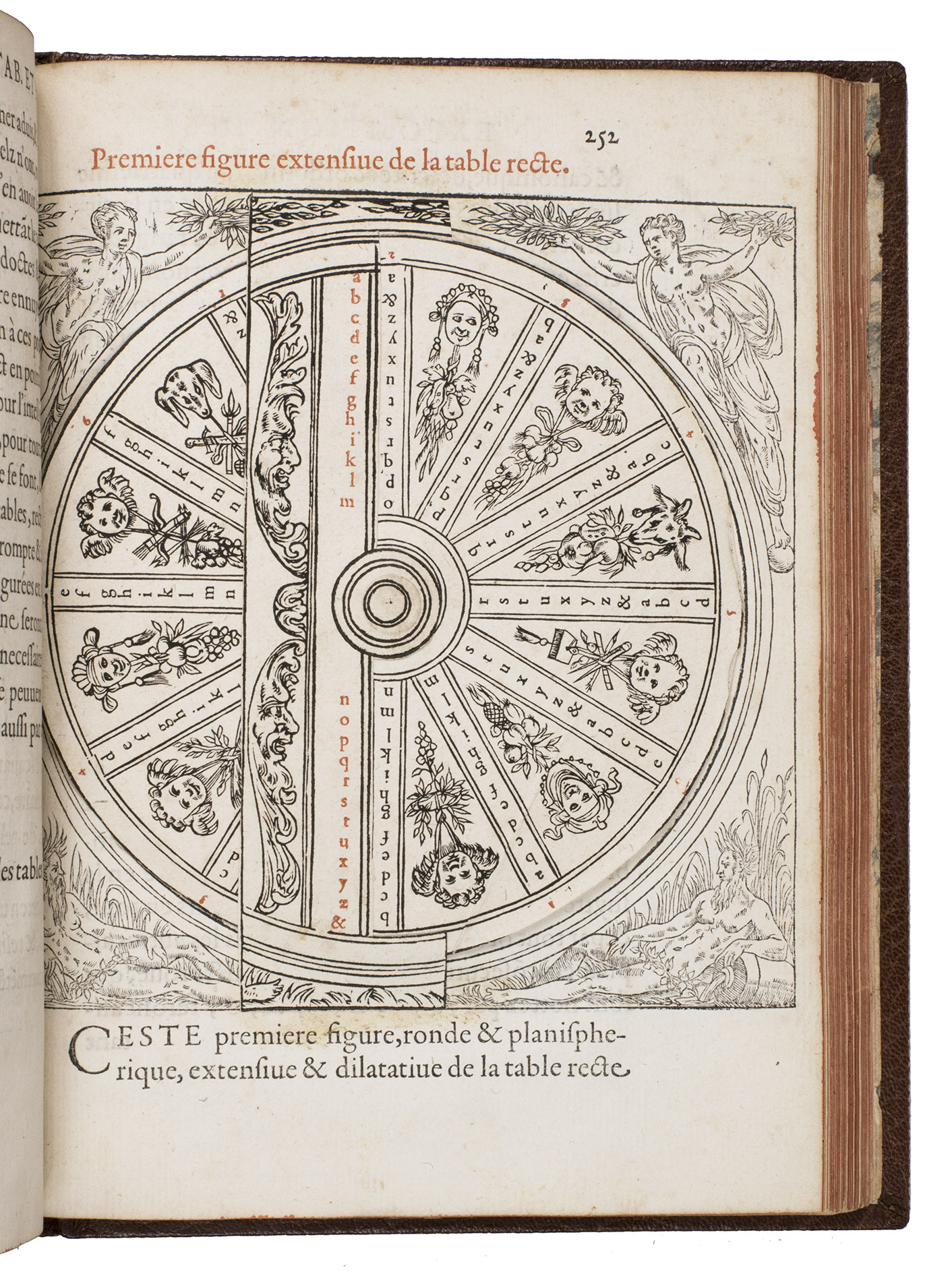
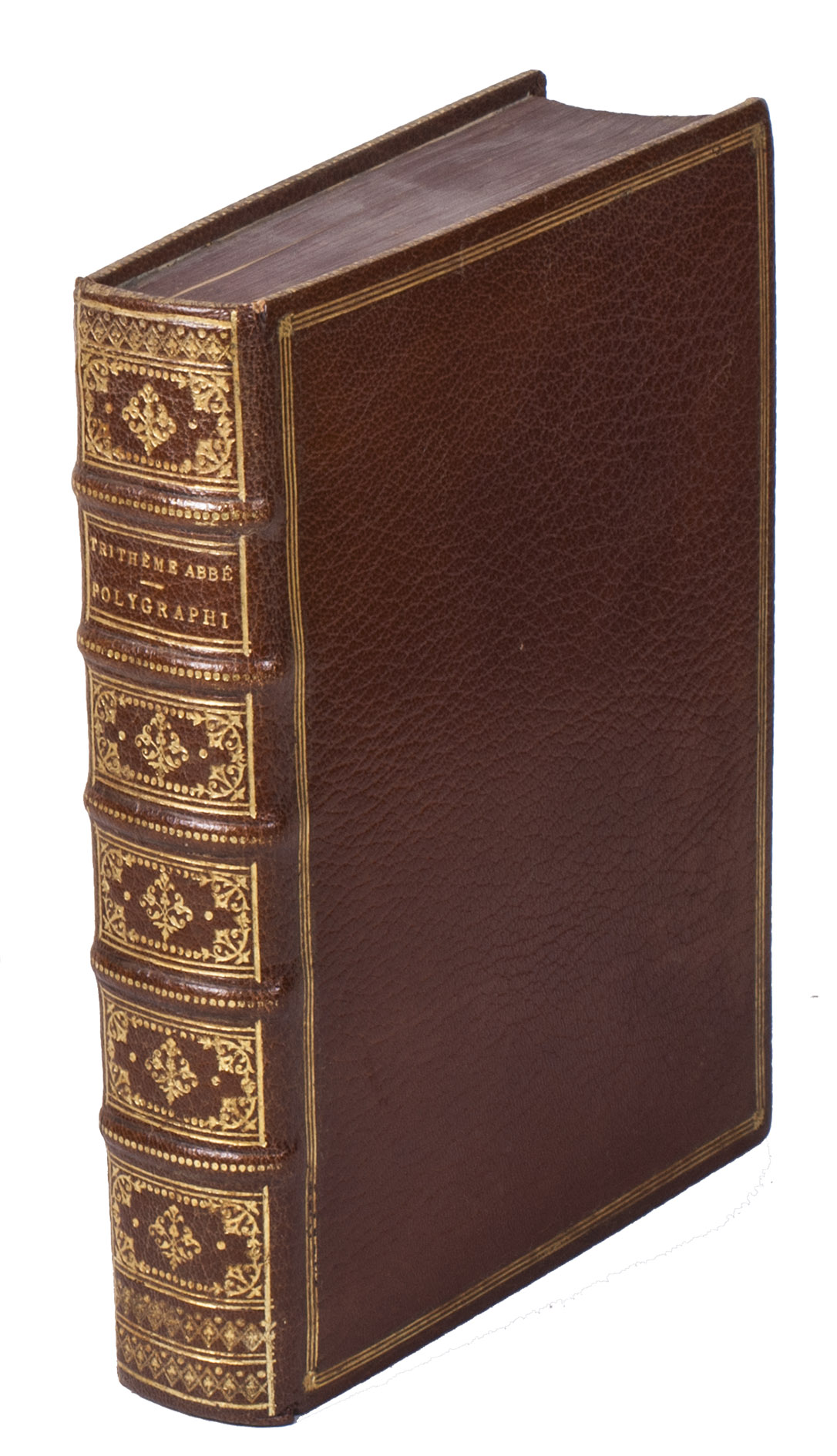
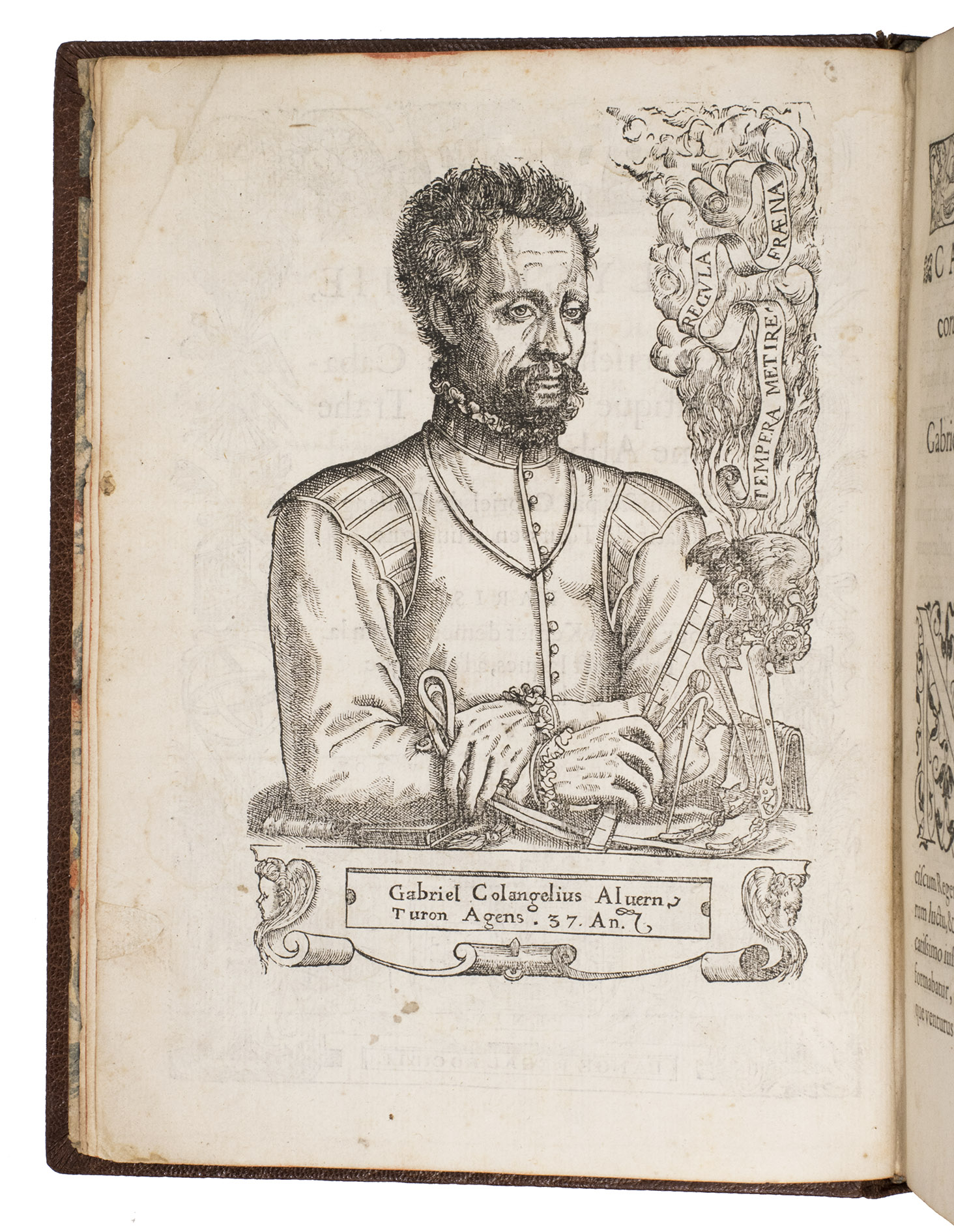
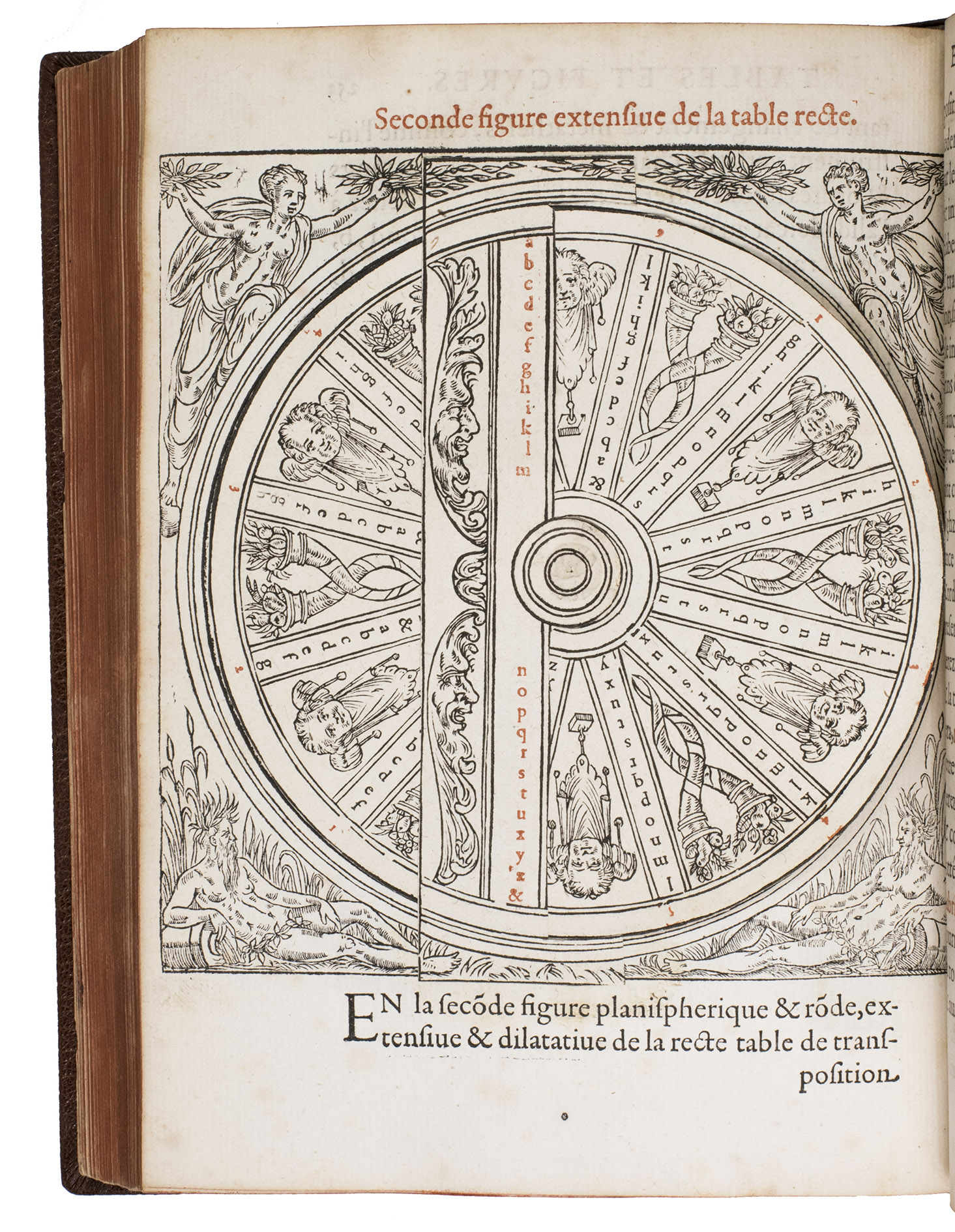
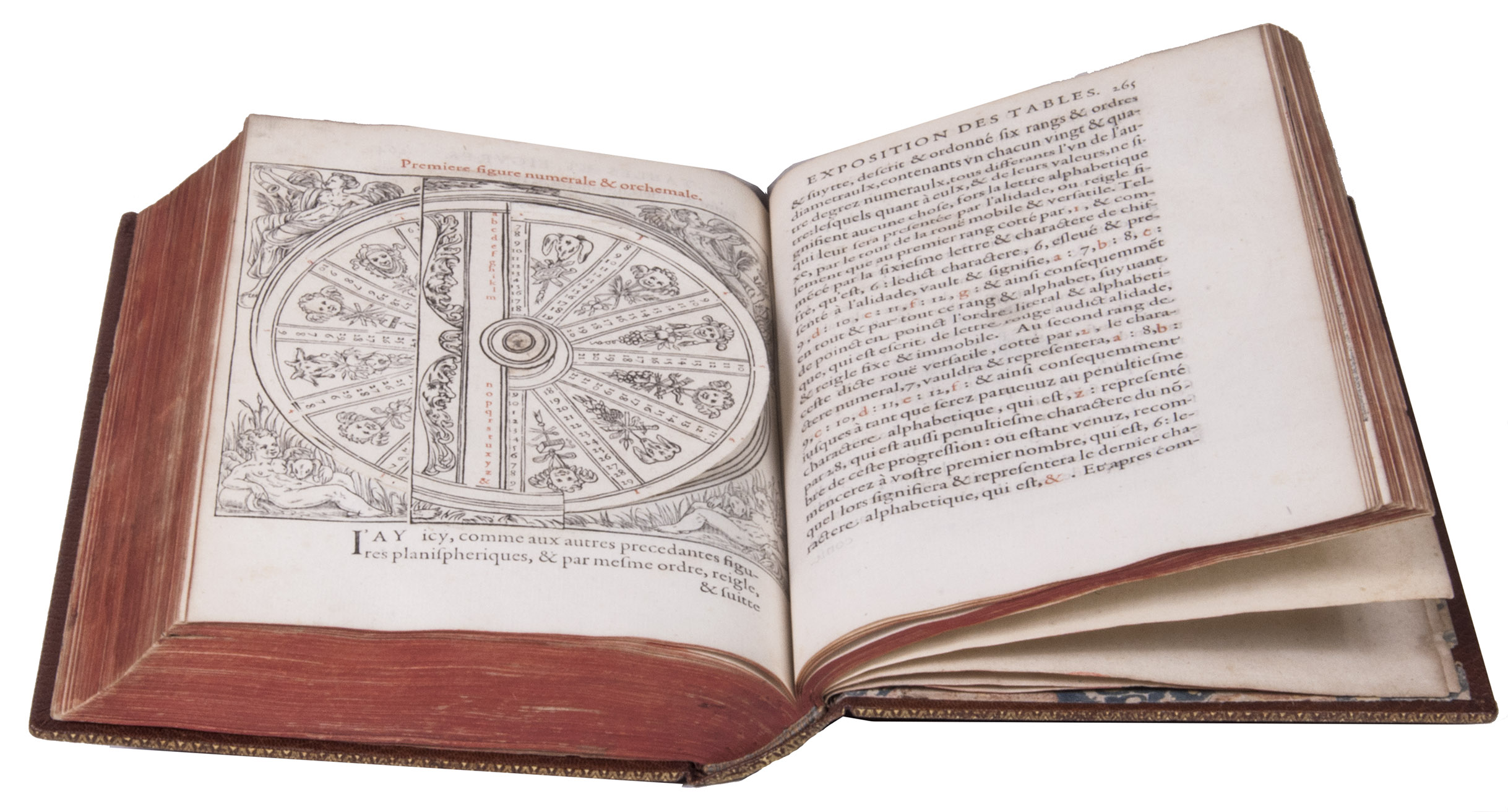
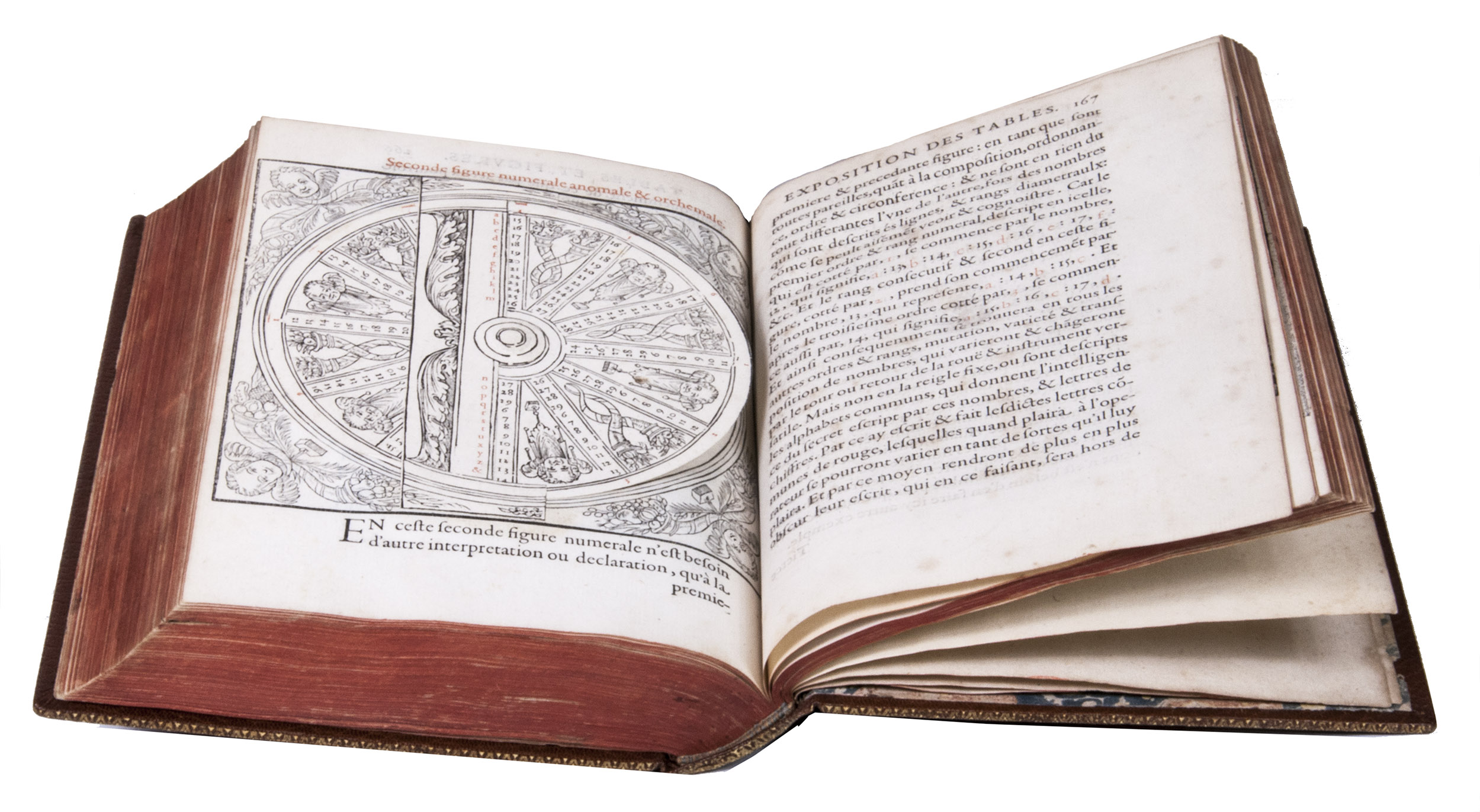
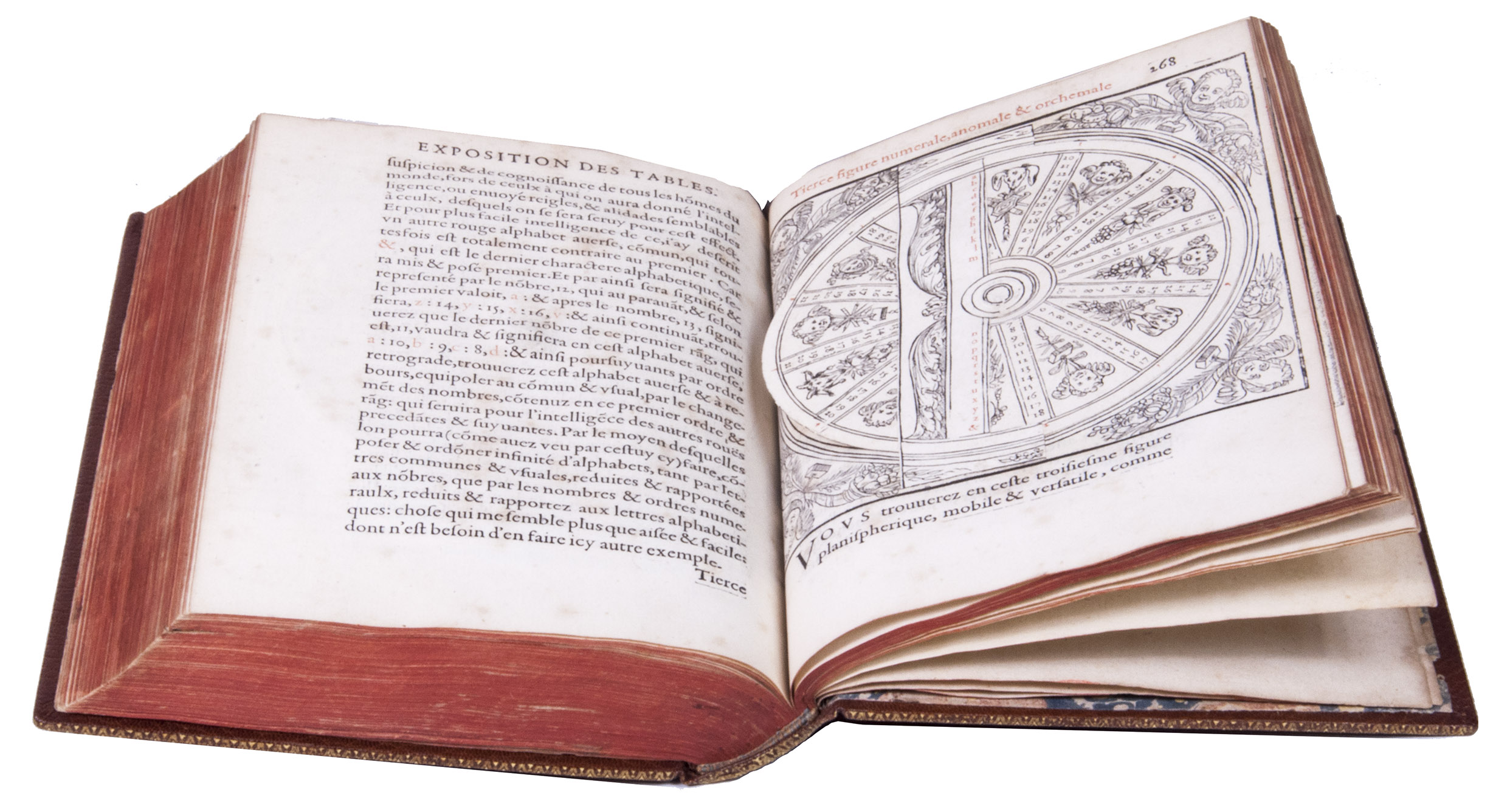
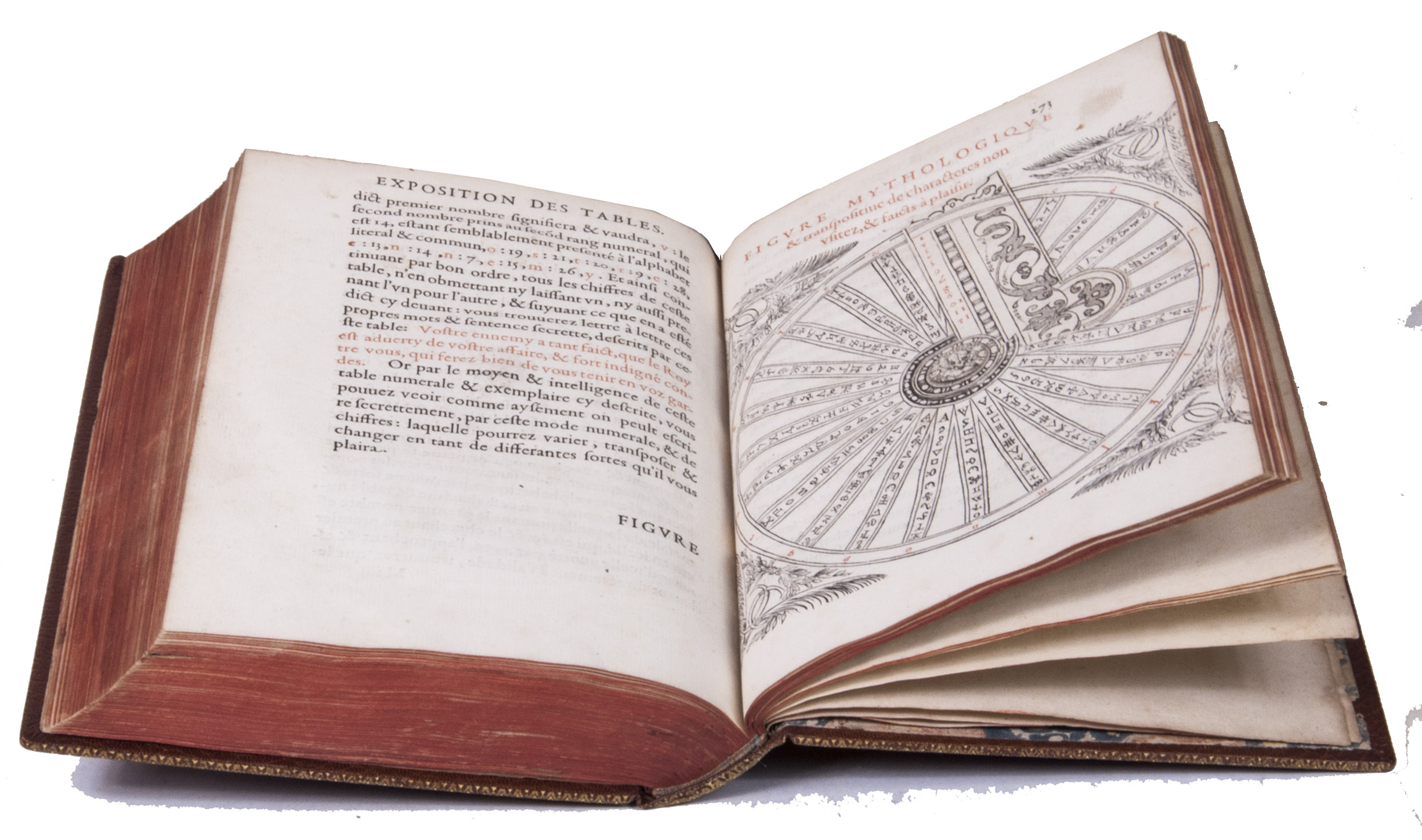
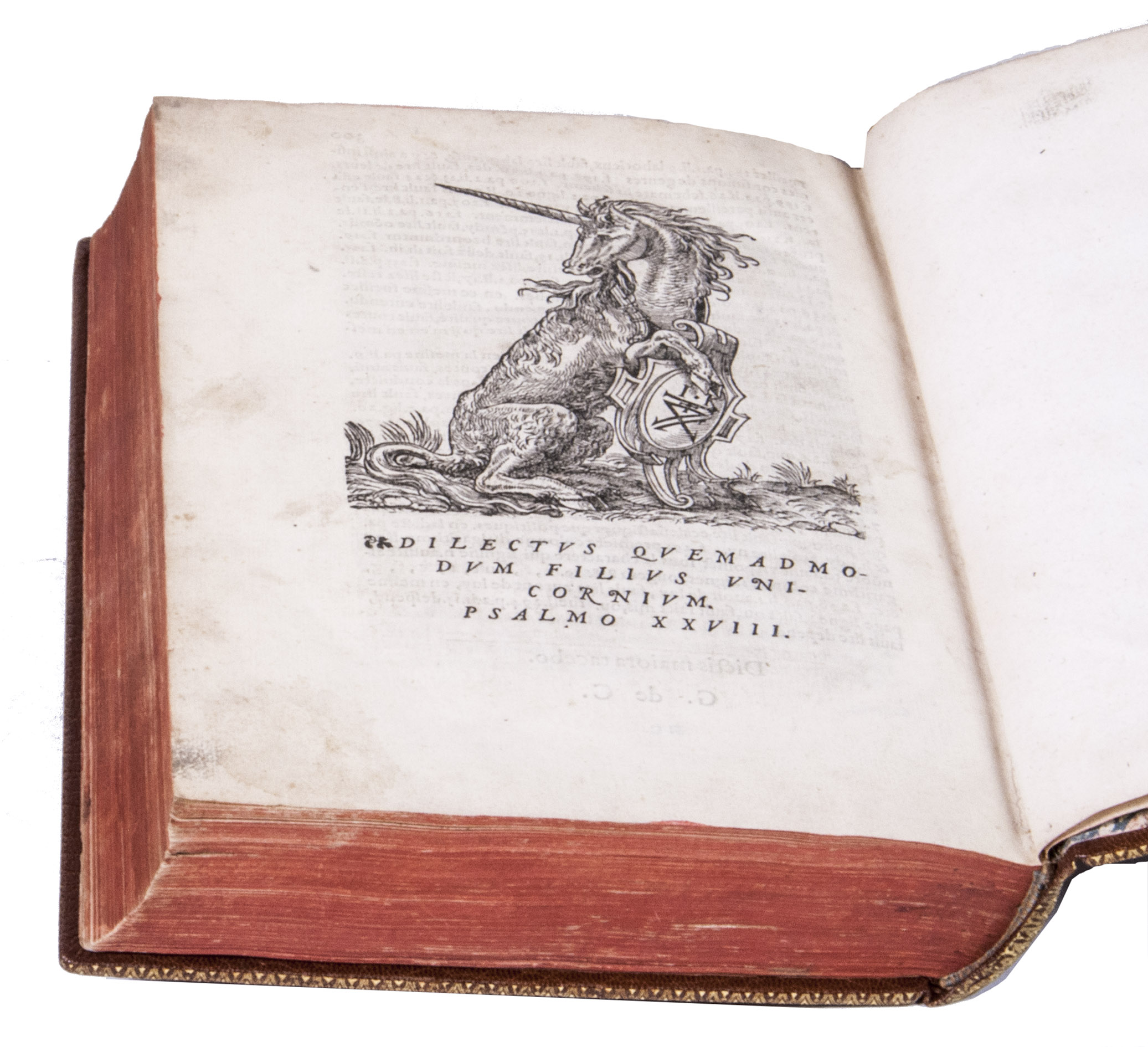
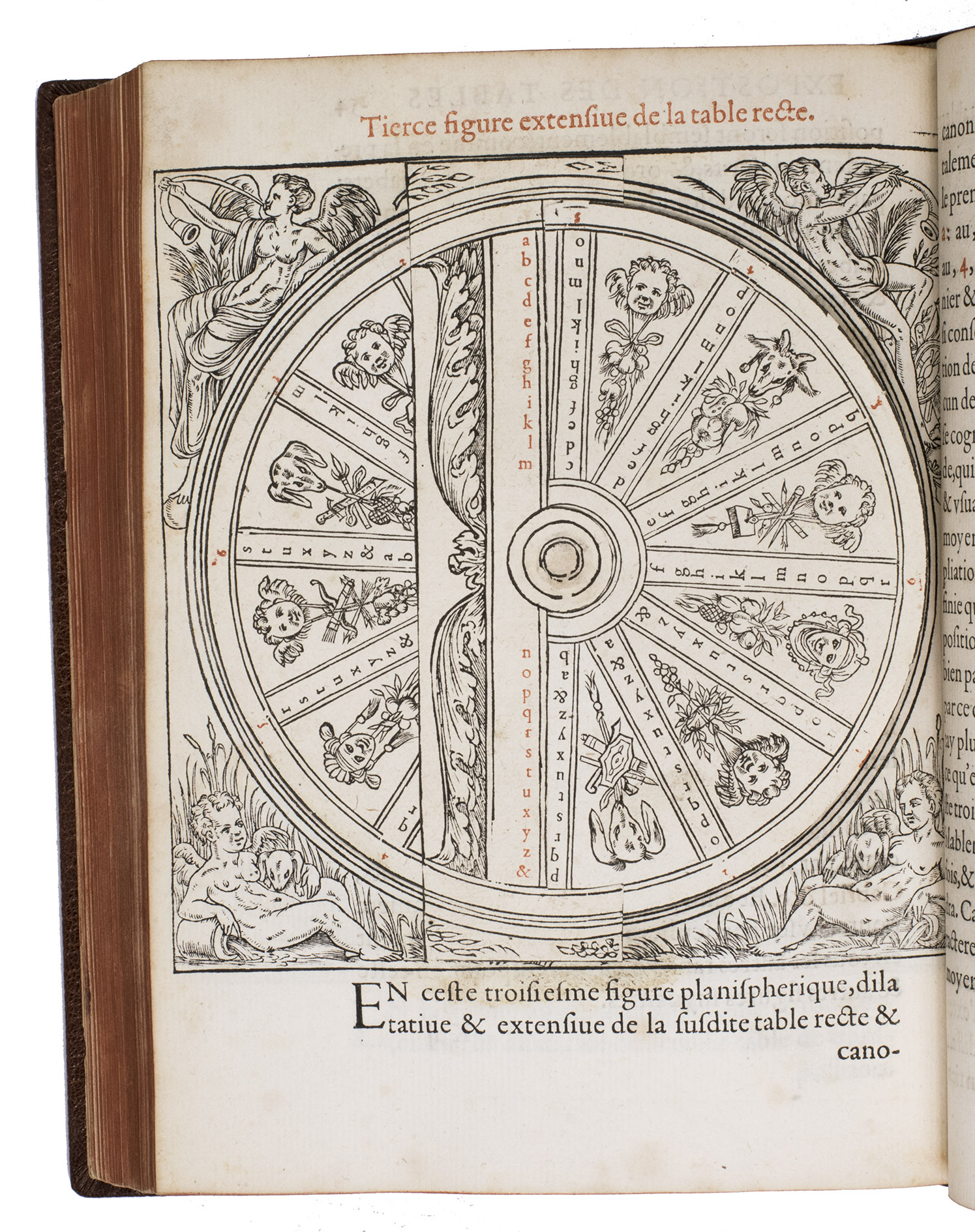
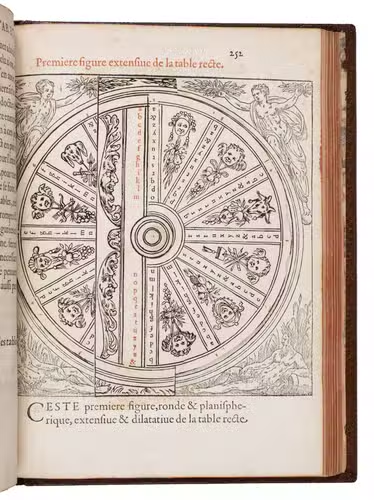
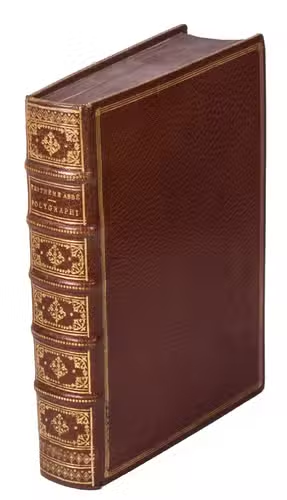
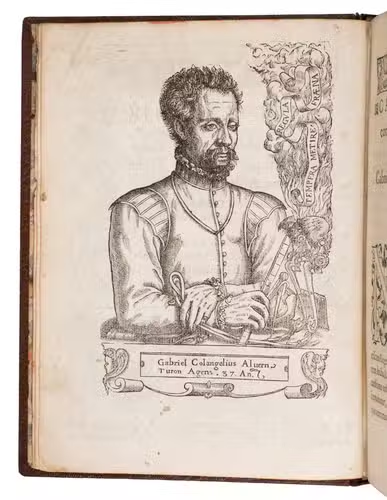
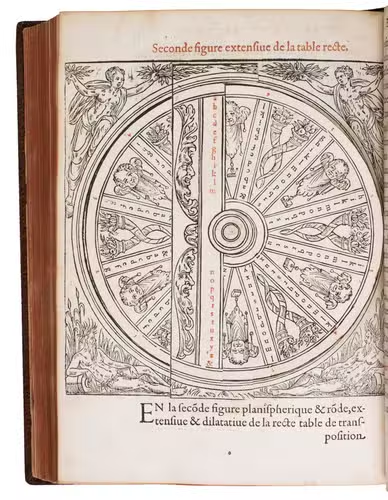
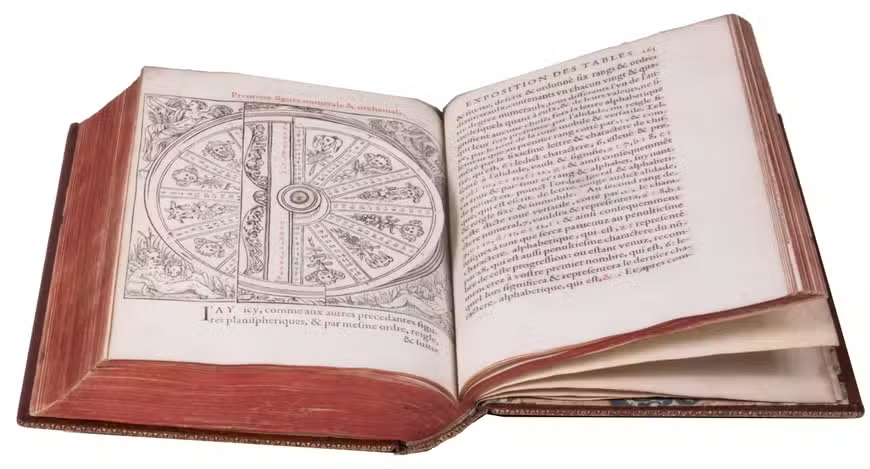
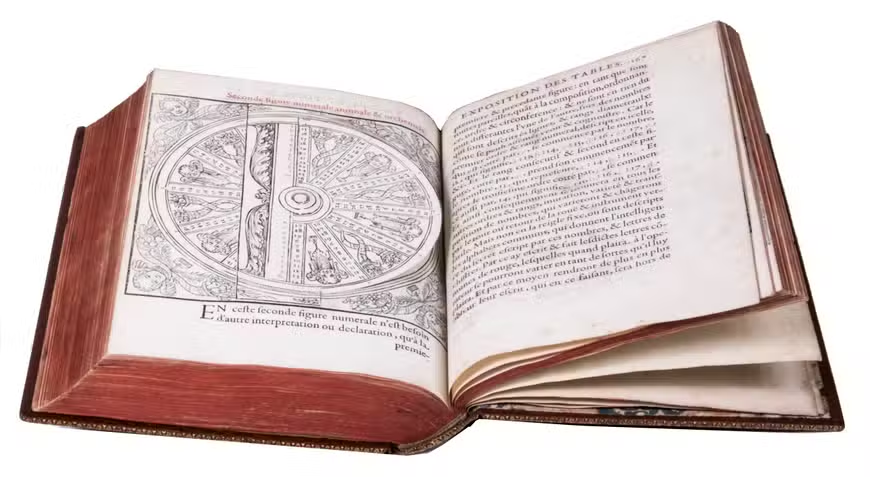
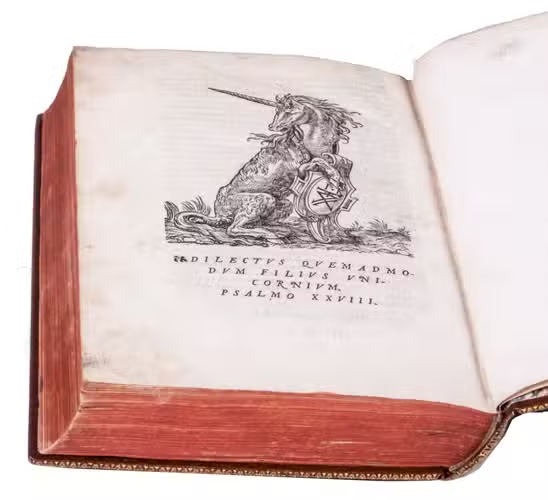
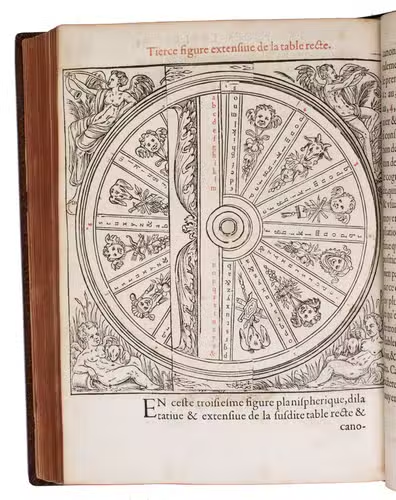
Paris, Benoît Prévost for Jacques Kerver, 1561. 3 parts in 1 volume. 4to. Printed in red and black, the main title and the titles of parts 2 and 3 set within a woodcut decorated border, 3 woodcut portraits of the translator, 13 large volvelles in part 3, numerous woodcut headpieces, and numerous woodcut decorated initials. 18th-century gold-tooled reddish-brown morocco, with the title and author lettered in gold on the spine, marbled endpapers, gold-tooled board edges, red edges. [18], 300 ll.
€ 12,500
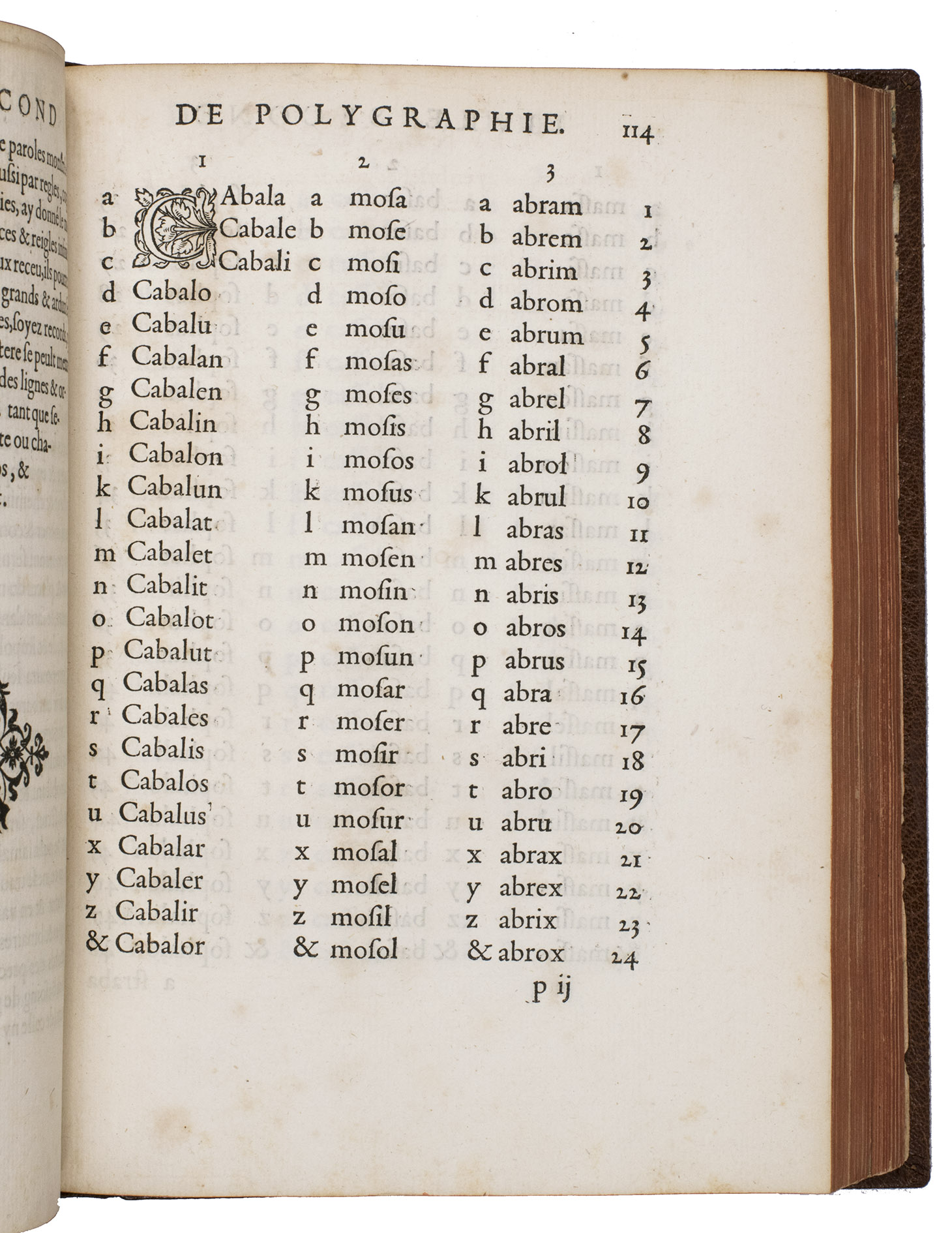
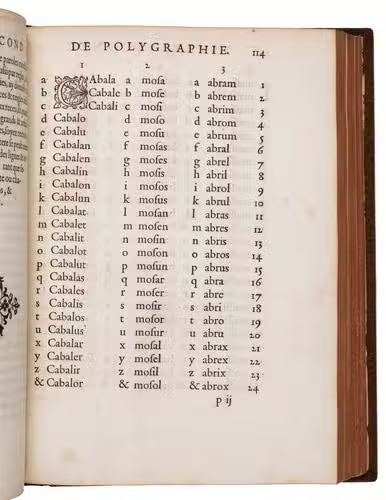
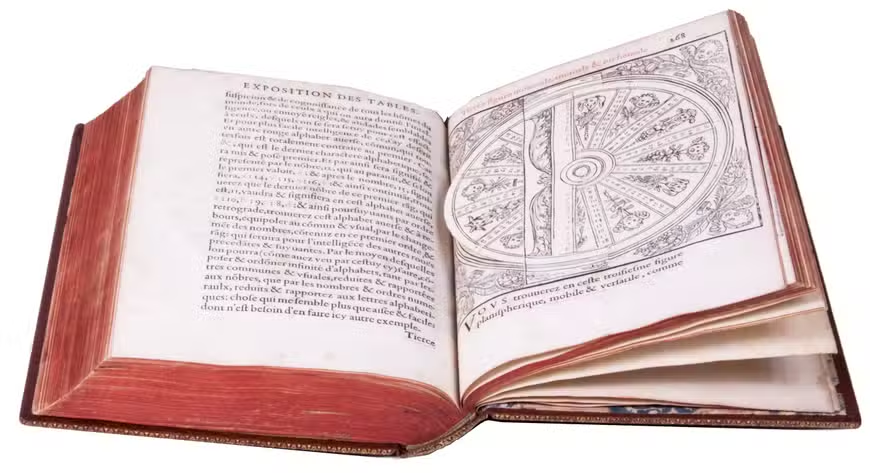
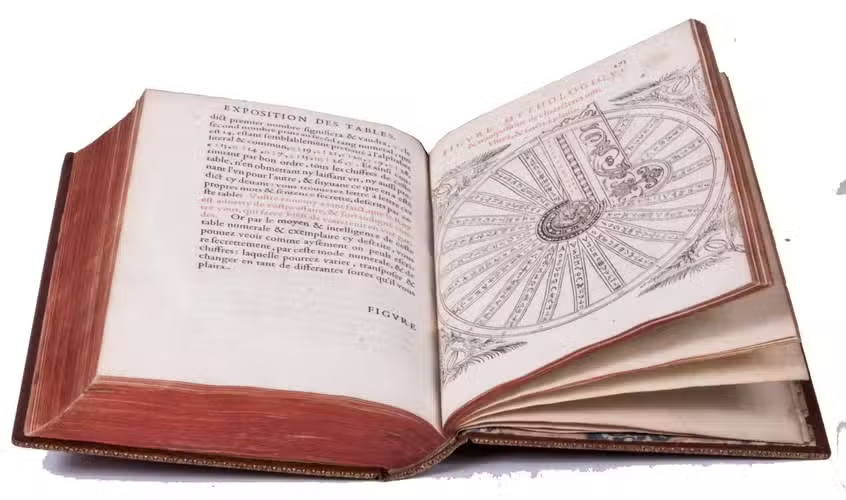
First French edition of the first printed work on cryptography, complete with all the tables and illustrations. This edition is particularly impressive because of the volvelles, which are exclusive to the French edition. The beautifully printed work contains hundreds of codes and ciphers, which could be used for writing or deciphering coded messages. It also includes many ancient alphabets and is the oldest known source for the Theban or witches' alphabet, which is still used in modern witchcraft today.
The Polygraphia is primarily a handbook for cryptography. The work is divided in three parts. The first contains a short history and description of the art of cryptography, and extensive lists of ciphers to use in coded messages. These ciphers are arranged in columns of code words, each corresponding to a letter of the alphabet. The code words are arranged grammatically, so that a grammatically coherent sequence emerges when words from each column are strung together to form a message. The first part also includes several exotic alphabets, including two purporting to have been derived from the works of Bede, and another from the 1546 Hypnerotomachie, presumably added by the translator. The second part of work contains the key, and the third extra information to help use the ciphers, including the volvelles, which are very useful for the swift transcribing from one alphabet to another. This third part was written by the translator, Gabriel de Collange (1524-1572), and is therefore not present in the first Latin edition (1518).
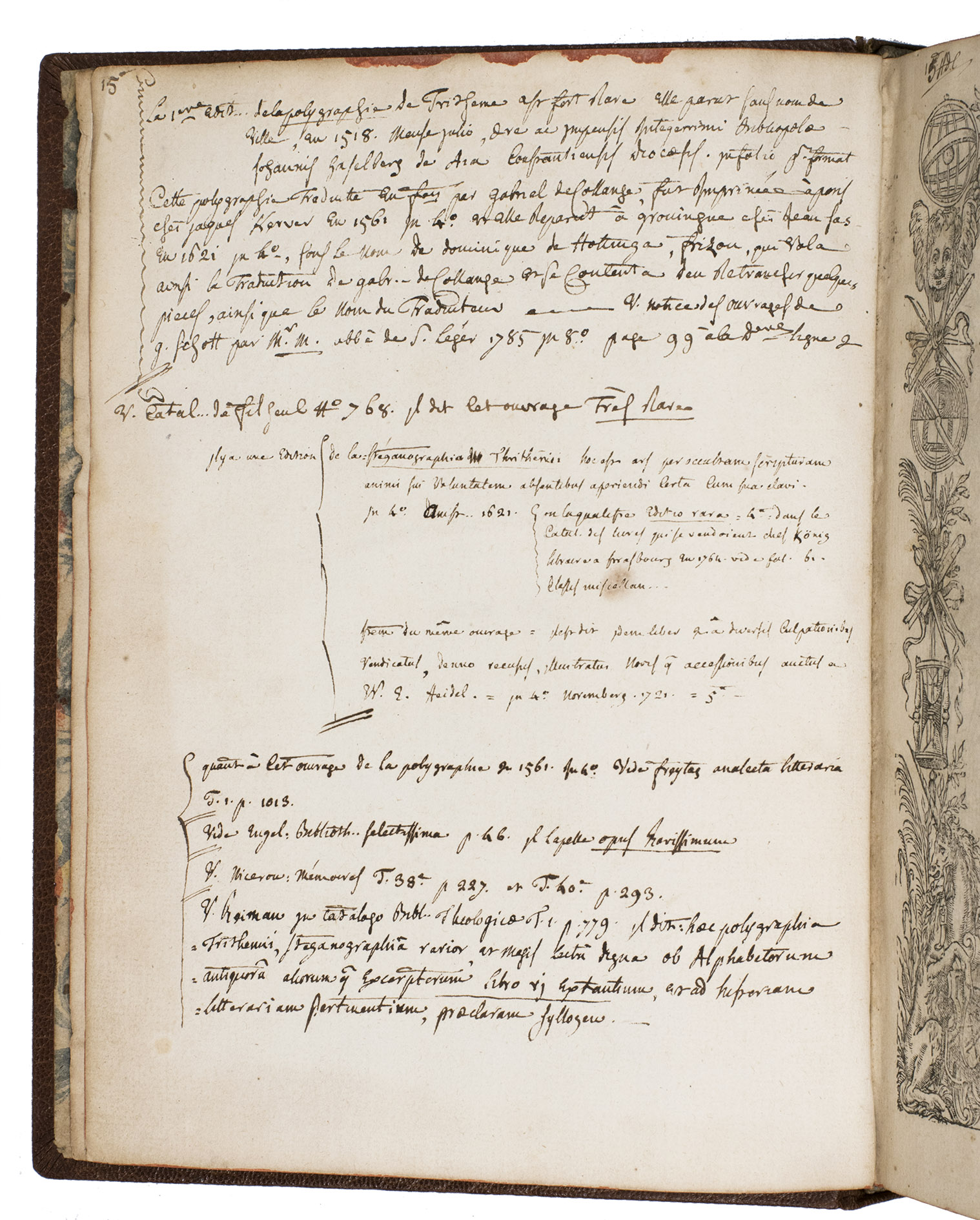
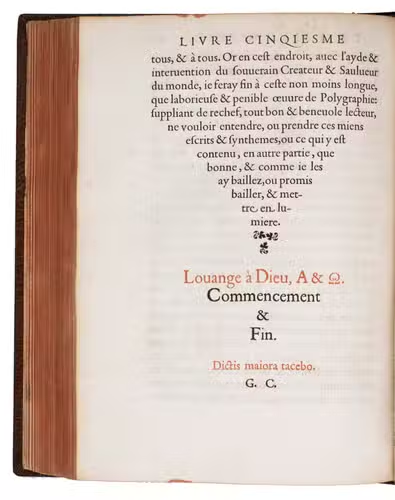
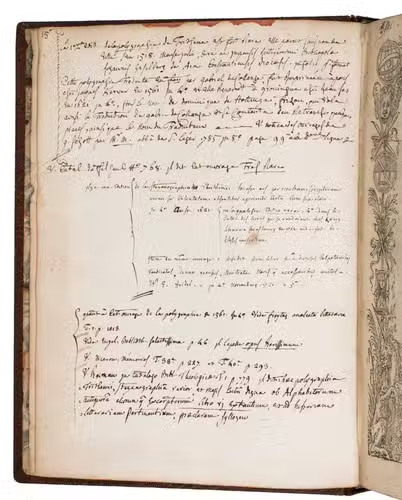
With the bookplates of Henry Pannier (1885-1935) and Guy Bechtel (1931) mounted on the front pastedown, later manuscript annotations with information about the work in four different hands on the verso of the second free endleaf, and a small manuscript inscription at the head of the main title page. With a small restored hole in the outer margin of the title page, not affecting the text, some of the leaves are slightly foxed, with brown stain on the verso of leaf 15, somewhat affecting the text, a water stain in the outer margins of leaves 177-186, some of the volvelles are slightly creased, the end papers have a small tear in the gutter, not affecting the structural integrity of the binding. Otherwise in very good condition. Caillet 10850; Mortimer, Harvard college library: French 16th century books, 528; Pettegree & Walsby 49898; USTC 1225; cf. Glidden, H., Polygraphia and the Renaissance sign: The case of Trithemius. In: Neophilogus 71, 1987, pp. 183-195.
Related Subjects: