THEOPHILUS ANTECESSOR and Jacobus CURTIUS (translator).
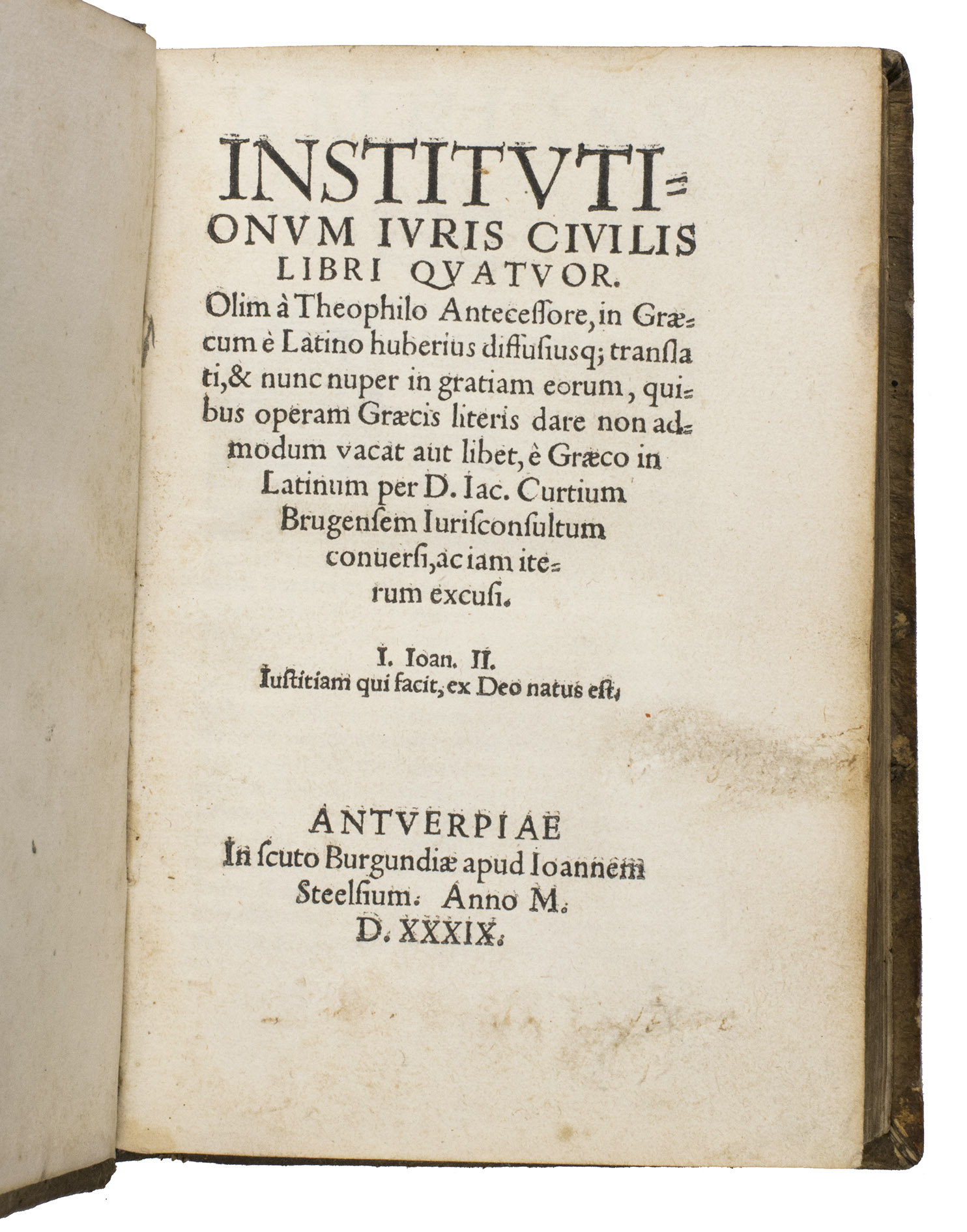
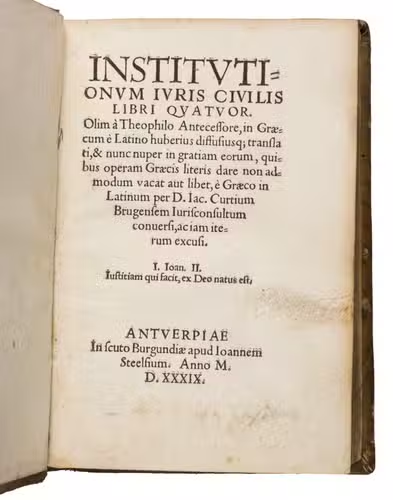
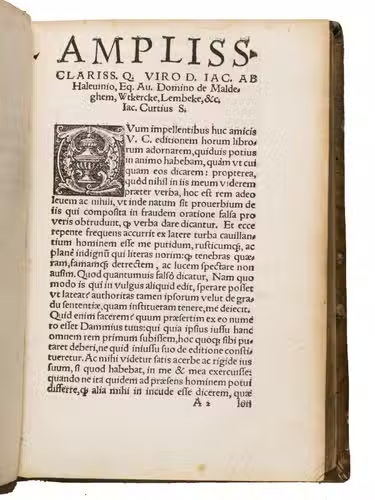
Institutionum juris civilis libri quatuor ... è Graeco in Latinum per D. Iac. Curtium Brugensem Iurisconsultum conversi, ac iterum excusi.
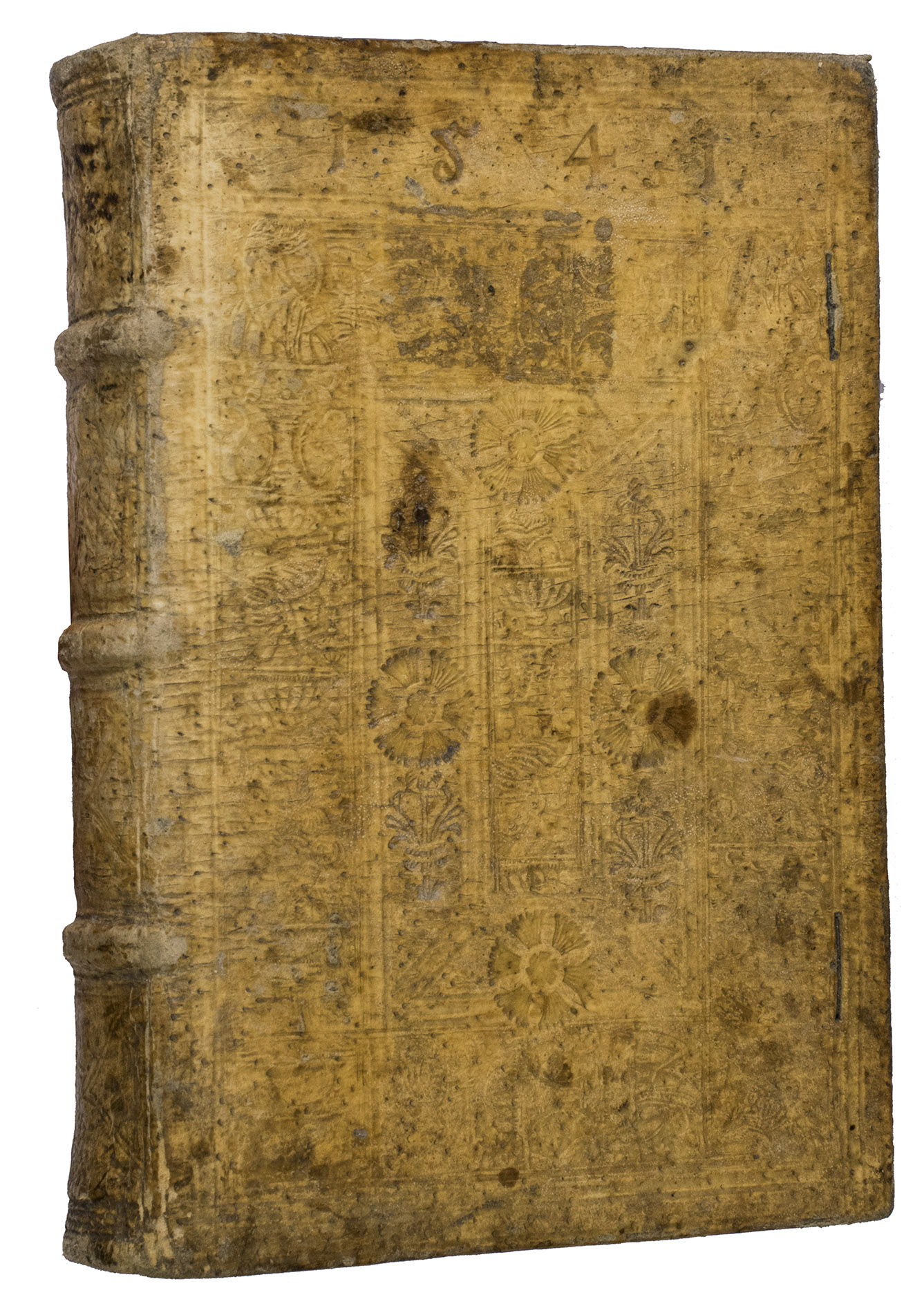
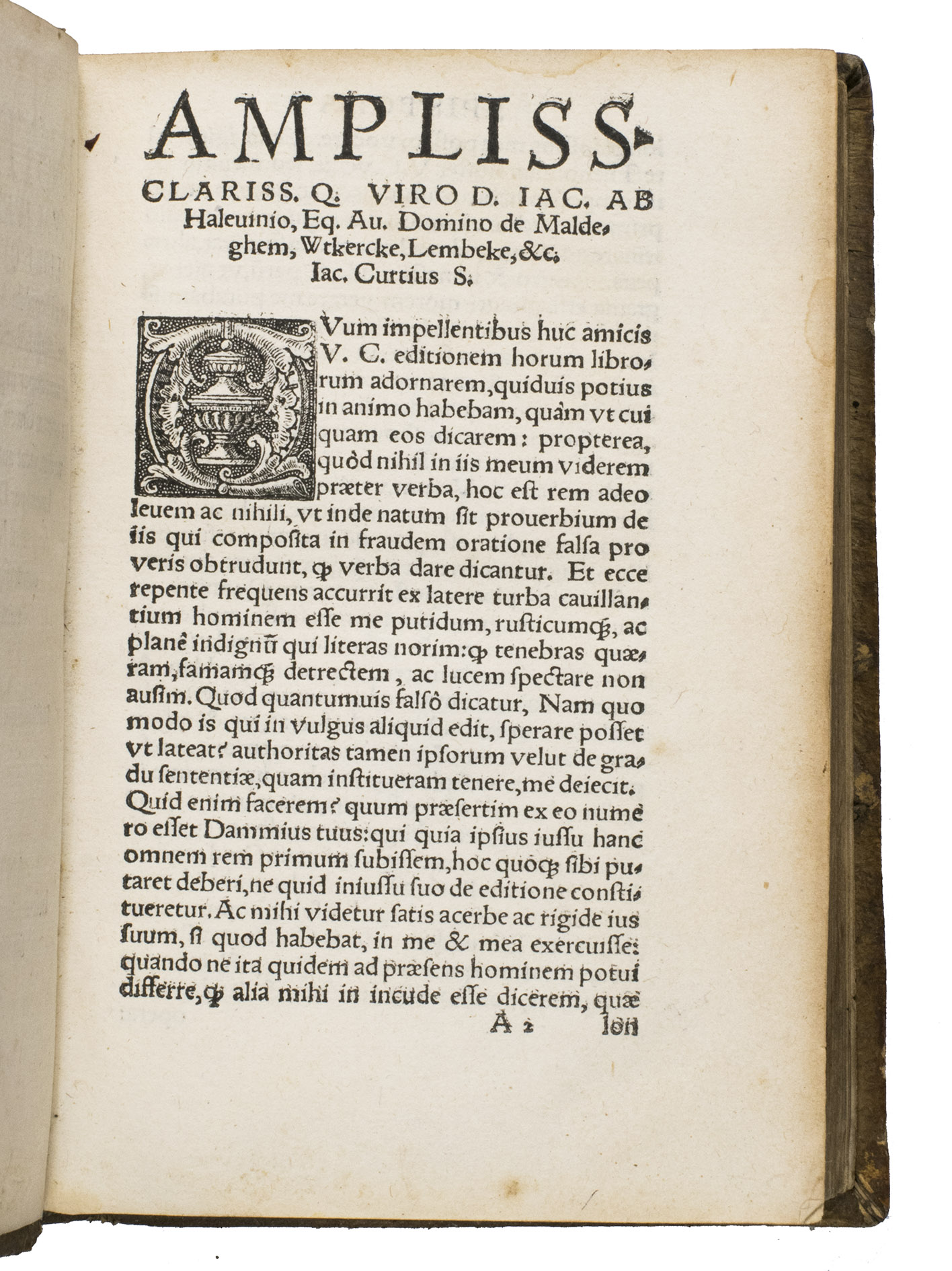
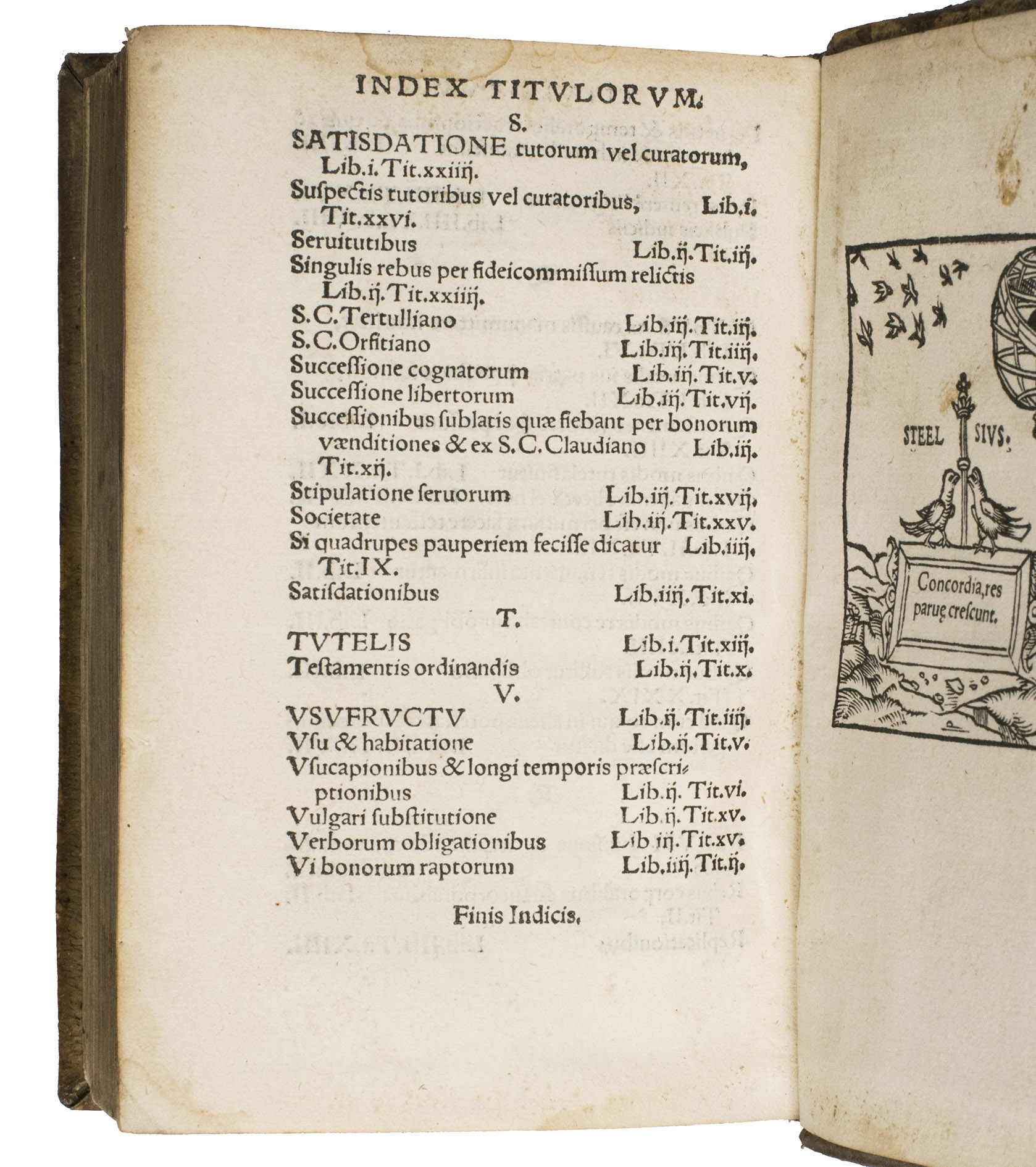
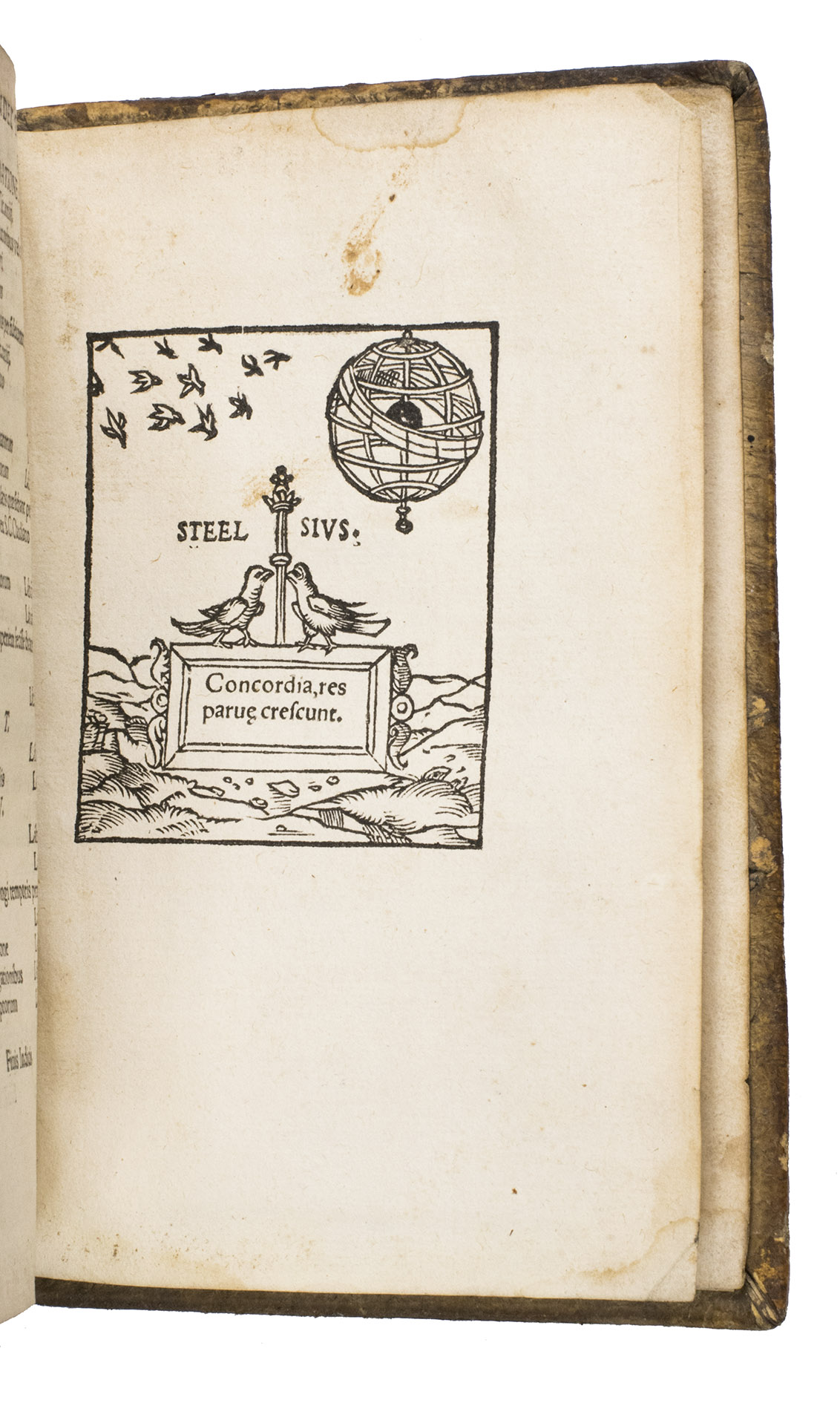
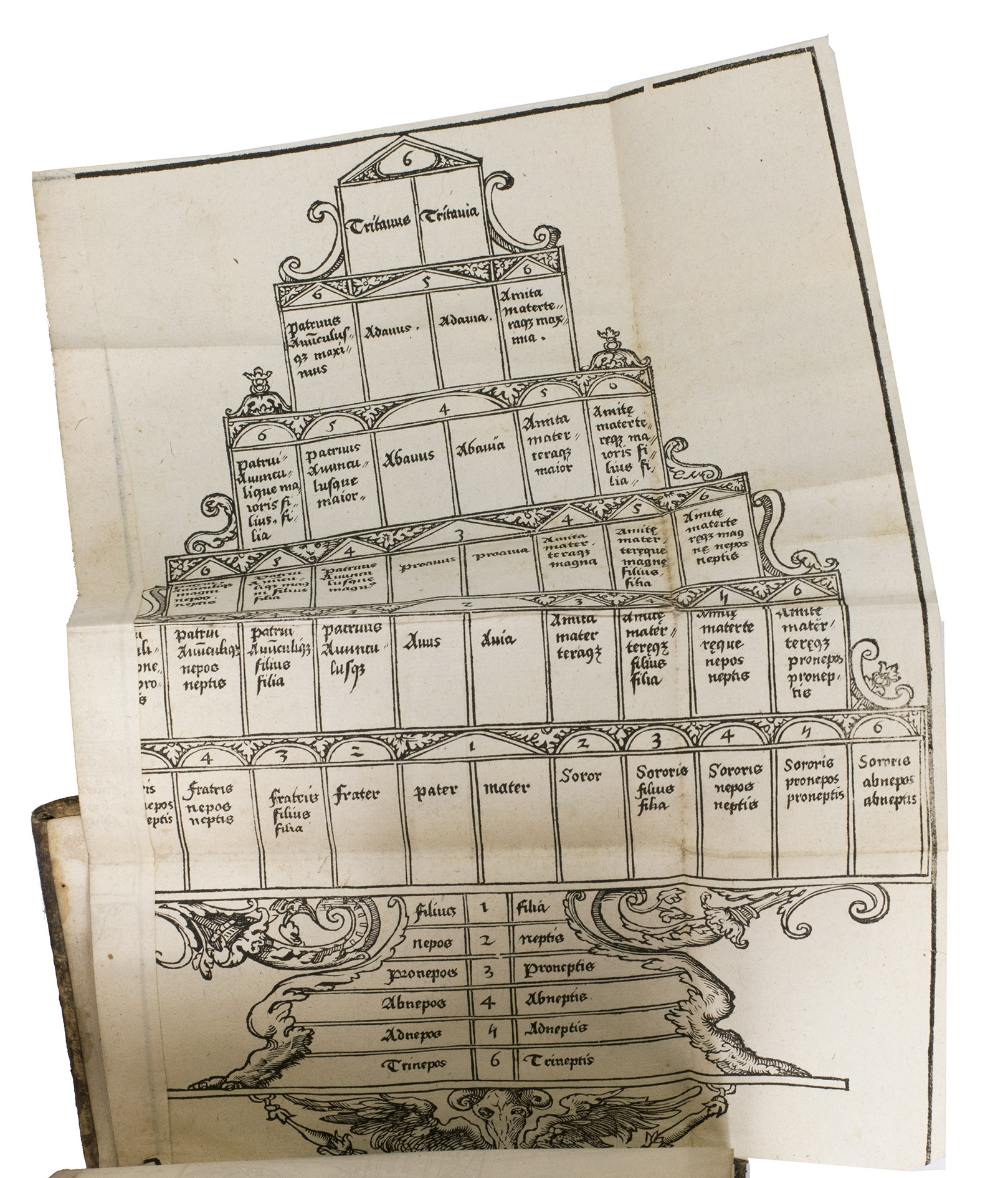
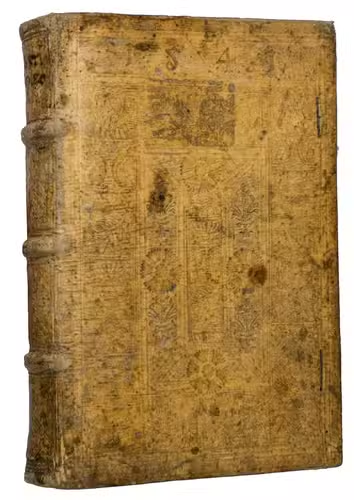
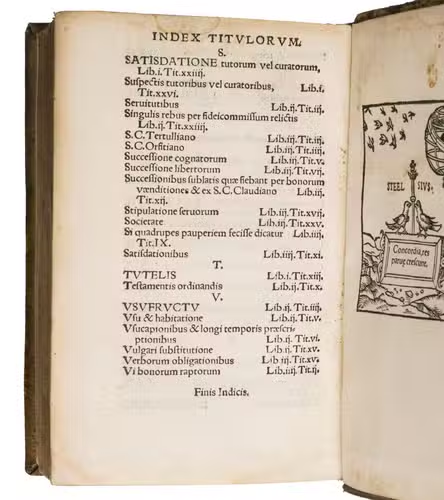
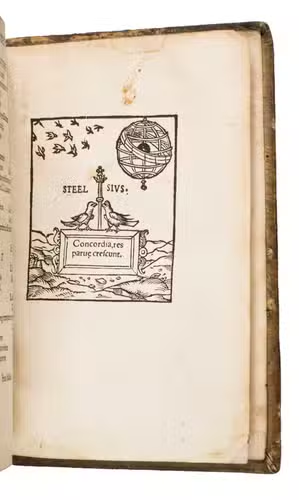
Antwerp, (colophon: Joannes Grapheus for) Joannes Steelsius, 1539. 8vo (15.4 x 10.4 cm). With a large woodcut folding table at the end, a woodcut device of Steelsius on the recto of the otherwise blank last leaf, and some woodcut decorated initials throughout. Contemporary blind-tooled pigskin. [8], 221, [3] ll.
€ 2,500
Rare complete second Latin edition (the first appeared with the same publisher in 1536) of the Greek paraphrase of Justinians Institutiones composed by the Constantinopolitan jurist Theophilus (fl. 6th century). His paraphrase was intended to diffuse the newly codified imperial law among the Greek-speaking populations of the Eastern Roman Empire. More than a translation, Theophilus work functions as a continuous explanatory commentary, indispensable for any learned reader of the Institutiones.
Theophilus, who lectured at Constantinople and, with Dorotheus (ca. 388-407) under the direction of Tribonian (500-542), helped draft Justinians official Institutiones. This paraphrase was a direct product of the pedagogical reforms of Justinians Constitutio omnem. It was designed to make a Latin legal manual intelligible to Greek-speaking students in a world where Greek legal education had to reconcile itself with Latin authoritative sources.
The Greek text of Theophilus had been rediscovered and first published in Basel in 1534 by Viglius Zuichemus (1507-1577), whose work was quickly reprinted in Paris and Louvain with corrections by Rutgerus Rescius and Petrus Nannius. Although Viglius initially intended to prepare a Latin translation himself, and Franciscus Cranevelt (1485-1564) briefly attempted one, neither progressed far. The present work was translated by Jacobus Curtius from Bruges (ca. 1510-1577). Curtius, familiar with both the newly recovered Greek text and Viglius introductory commentary, undertook the task. Curtius version proved extraordinarily successful: reprinted repeatedly until 1733, then published in a revised scholarly edition at The Hague in 1751, with further reprints at Basel (1760), Amsterdam (1860), and a major critical revision in Berlin between 1884 and 1897. His translation became the standard gateway through which Western jurists accessed Theophilus paraphrase.
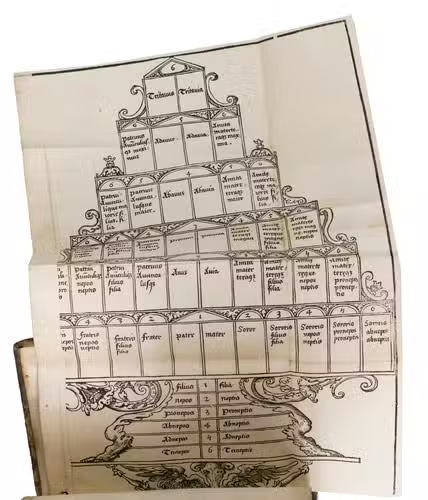
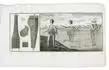
The present work comes with an large folding woodcut genealogical table at the end, often missing in other volumes, but present here. This chart illustrates the Roman-law system of familial relationships and was used to clarify legal issues concerning inheritance and marriage.
With several contemporary annotations towards the end commenting on the text. Lacking the ties along the fore-edge, and with some very minor browning and marginal staining. Otherwise in very good condition. Bibl. Belgica T 23; Irving, "An introduction to the study of the civil law", (1837); Matheeussen, "Theophilina Lovaniensia", Tijdschrift voor Rechtsgeschiedenis/Revue d'histoire du droit/The Legal History Review, 46(2), pp. 117-129; Nijhoff & Kronenberg 2003; STCV 12926530 (1 copy); USTC 438000 (10 copies); WorldCat 902424778 (4 copies).
Related Subjects: