ROSA, Salvator.
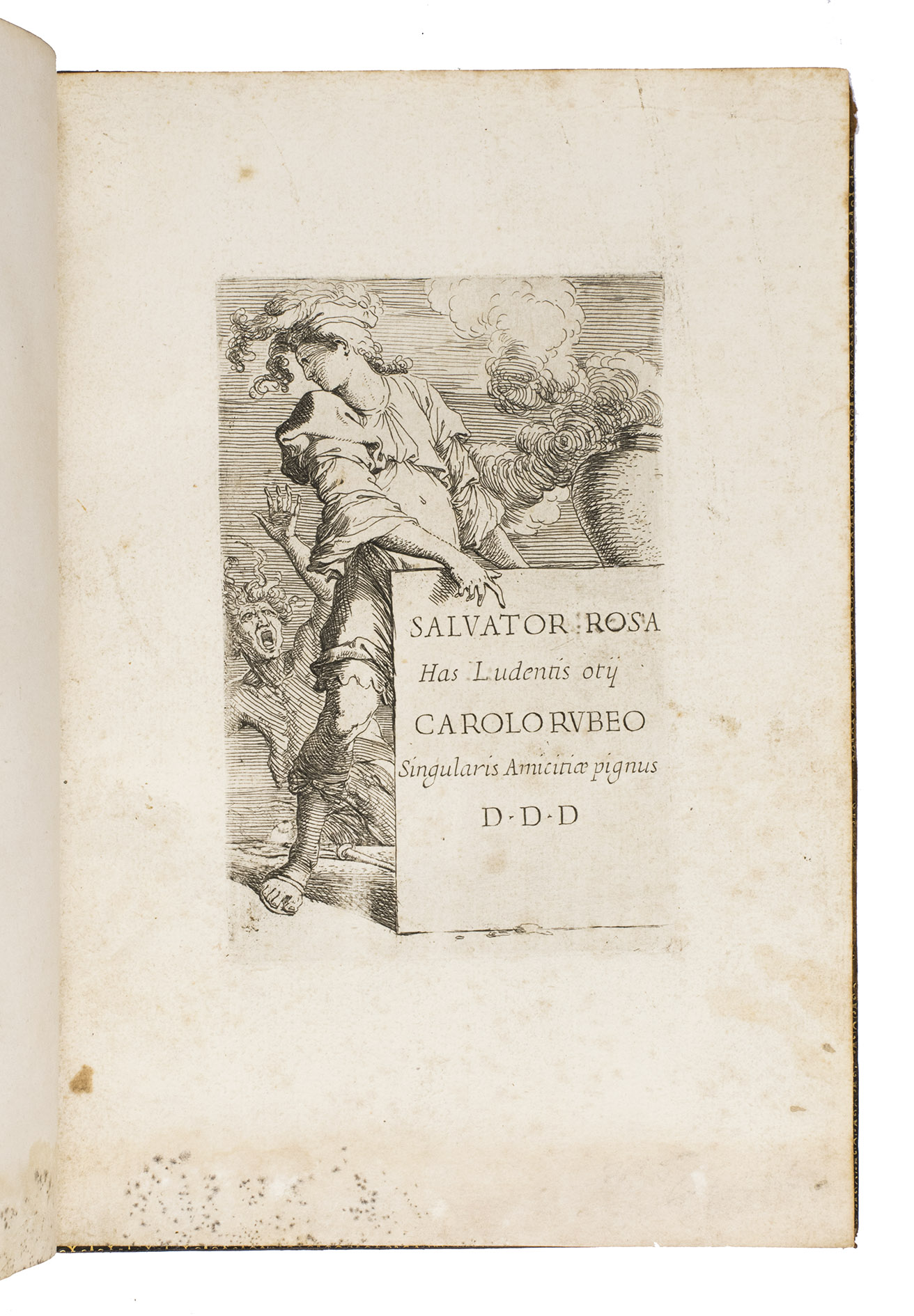
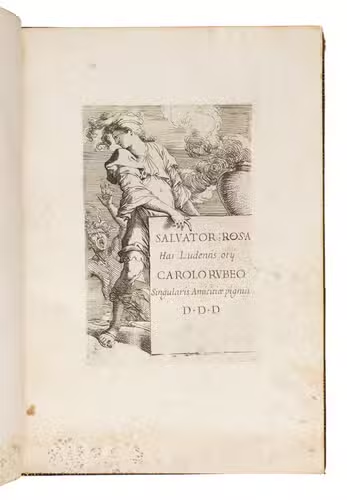
Has ludentis otii Carolo Rubeo singularis amicitiae pignus D.D.D.
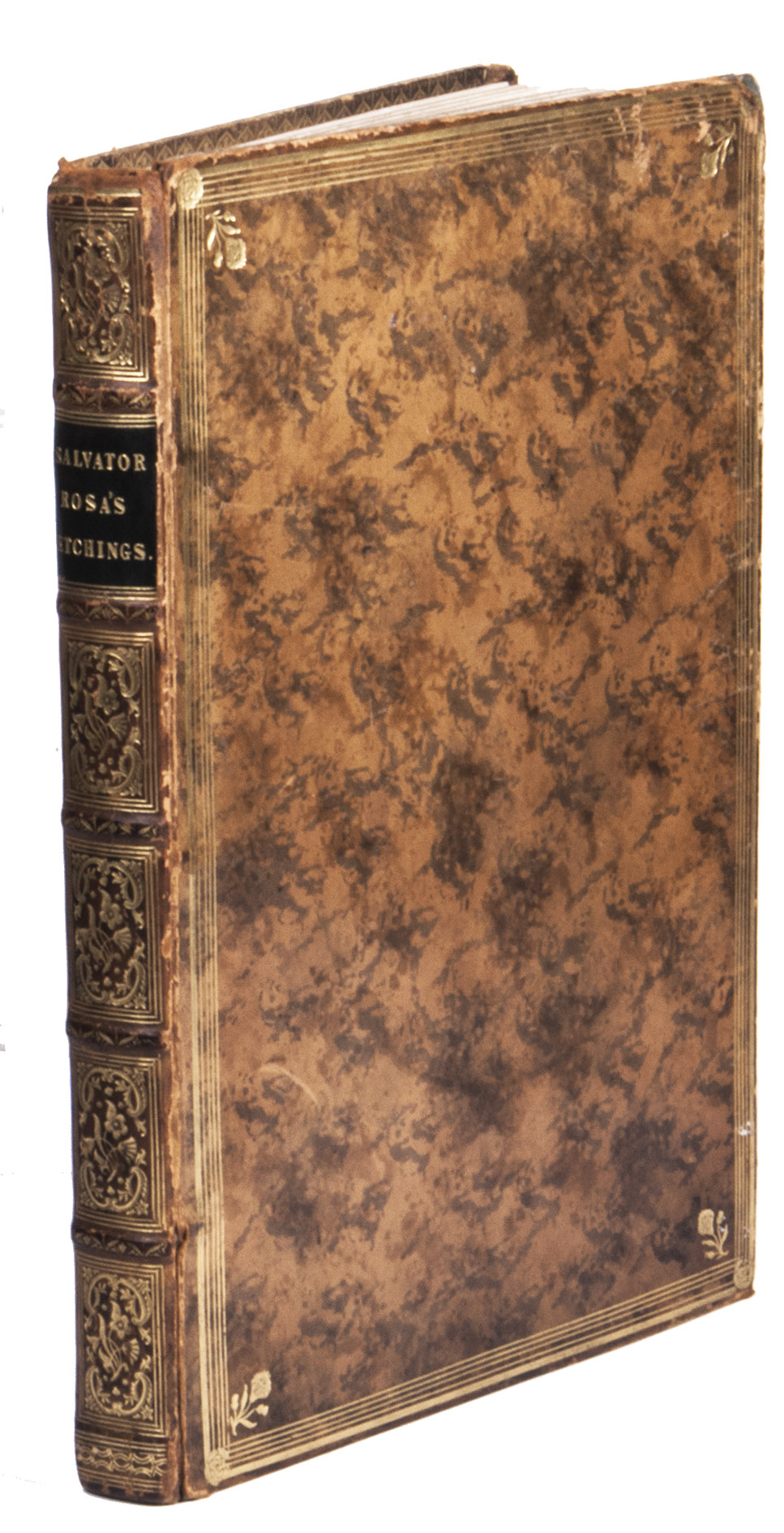
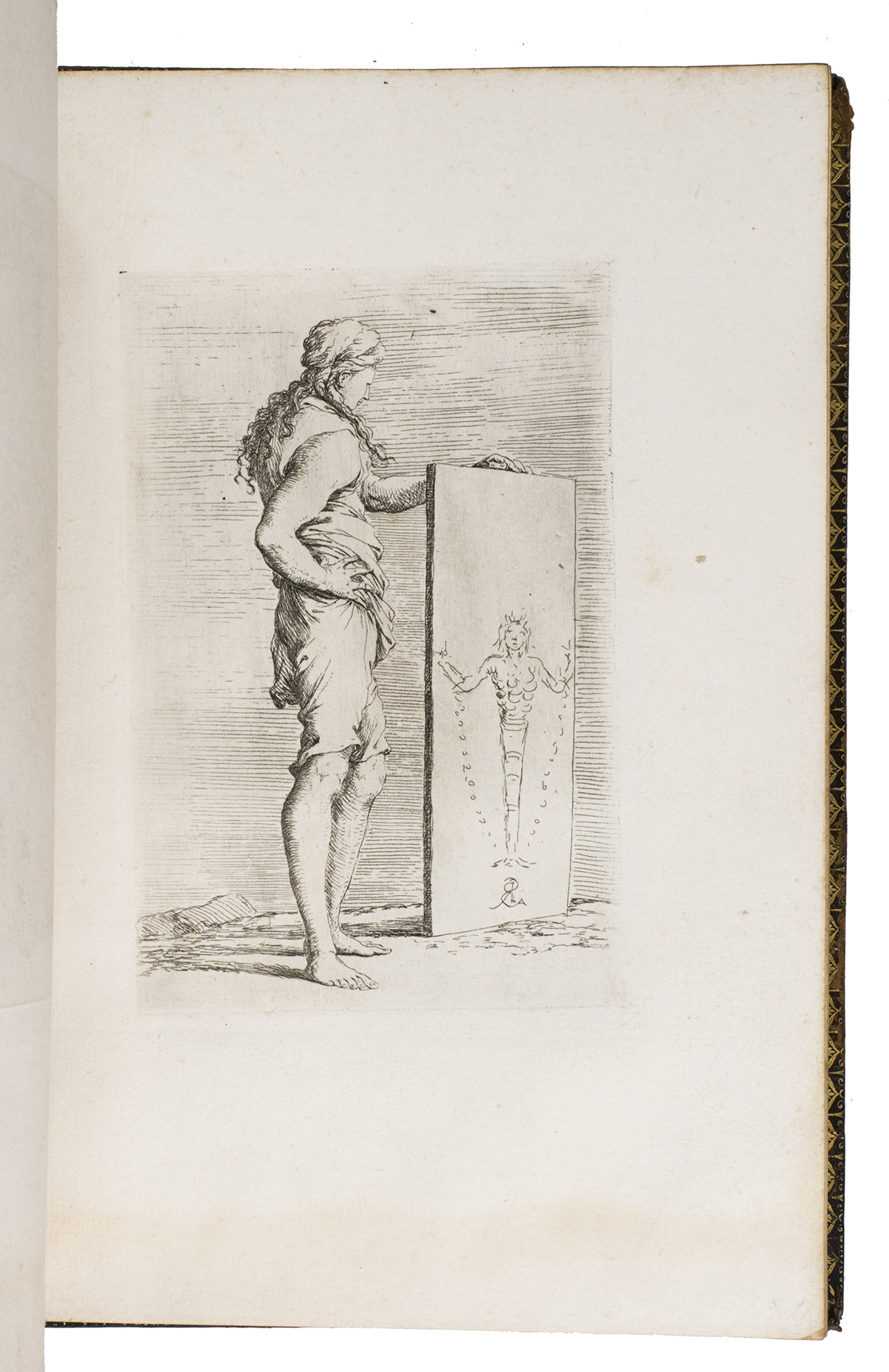
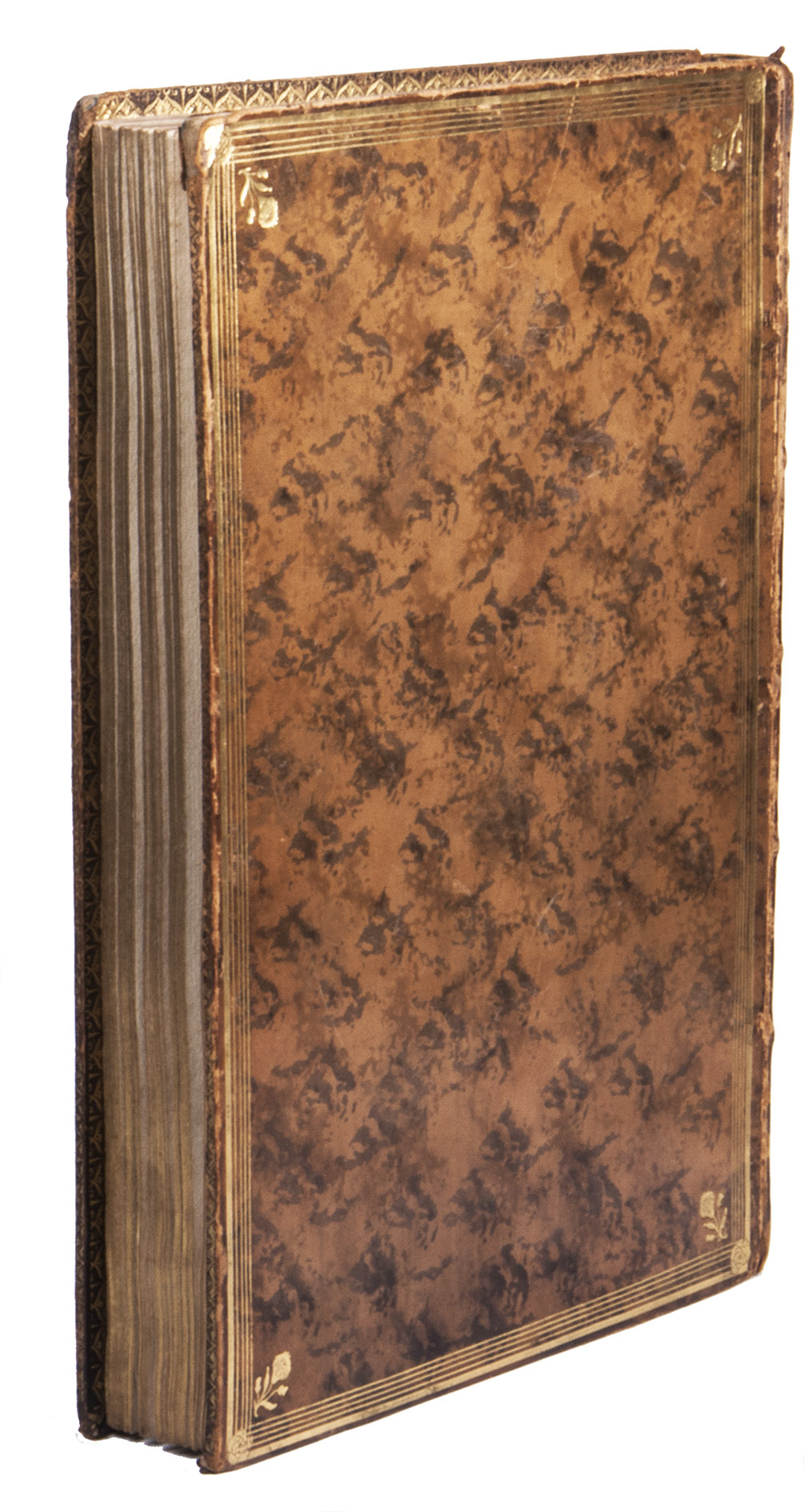
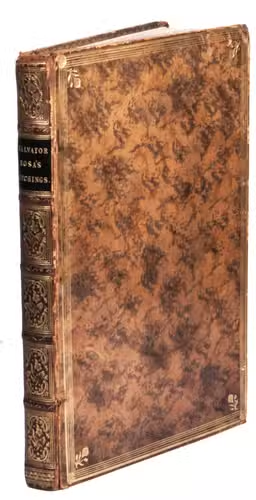
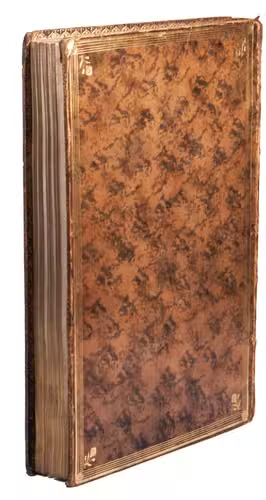
[Rome, ca. 1725]. 4to. With an etched frontispiece and 59 full-page etchings (of which 1 duplicate), all signed in the plate. Mid- to late 18th-century gold-tooled mottled calf. [60] ll.
€ 35,000
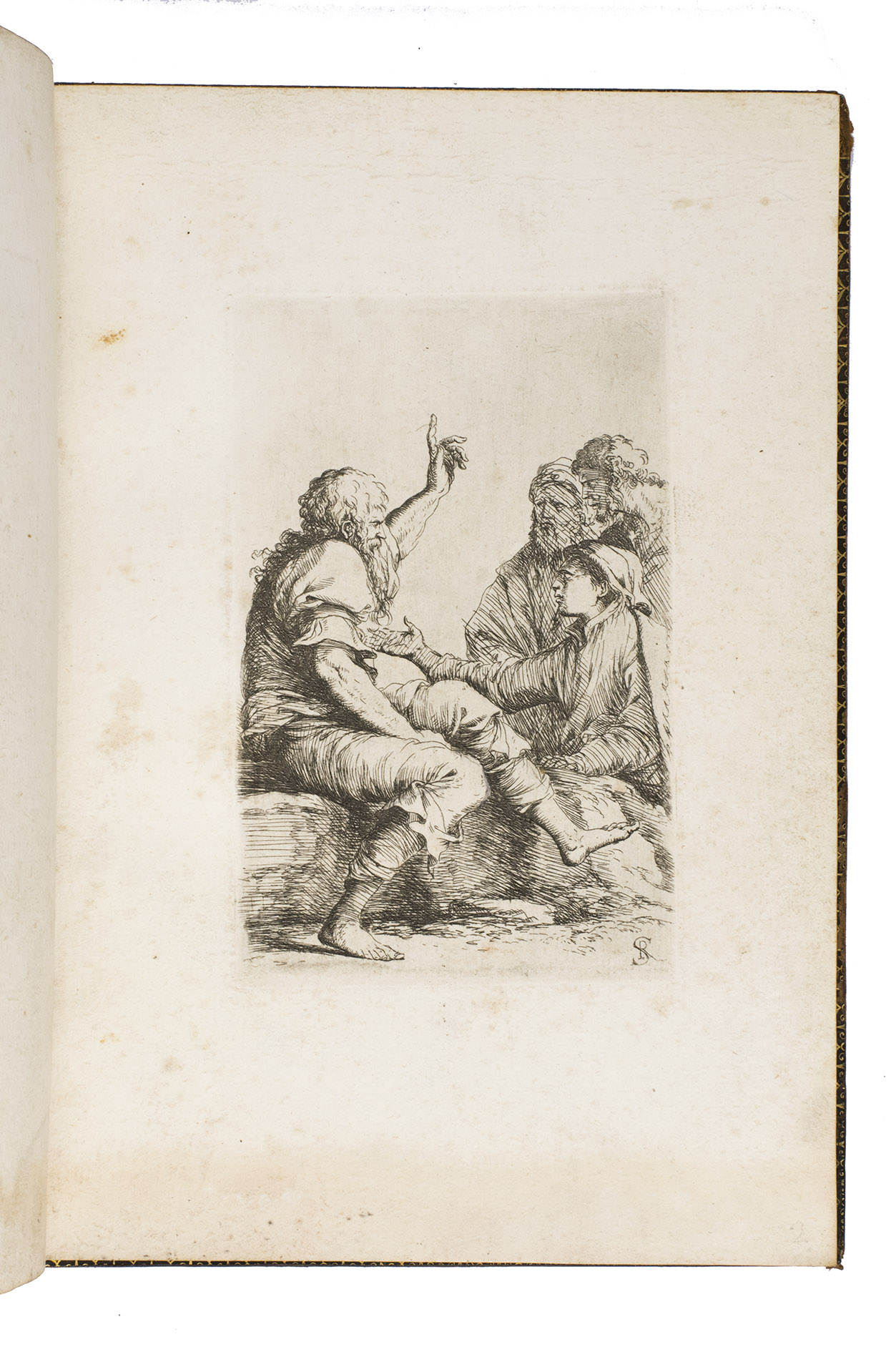
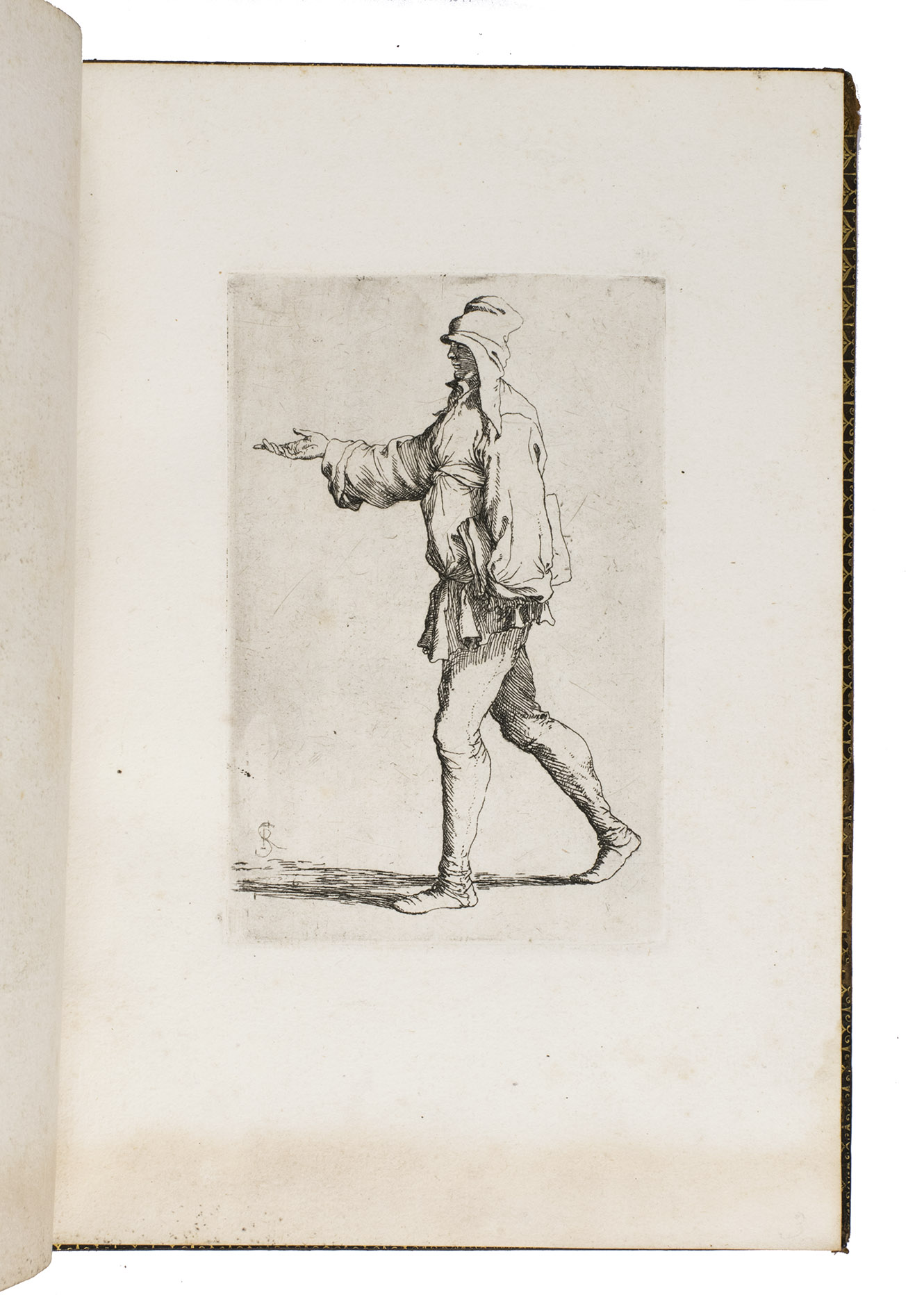
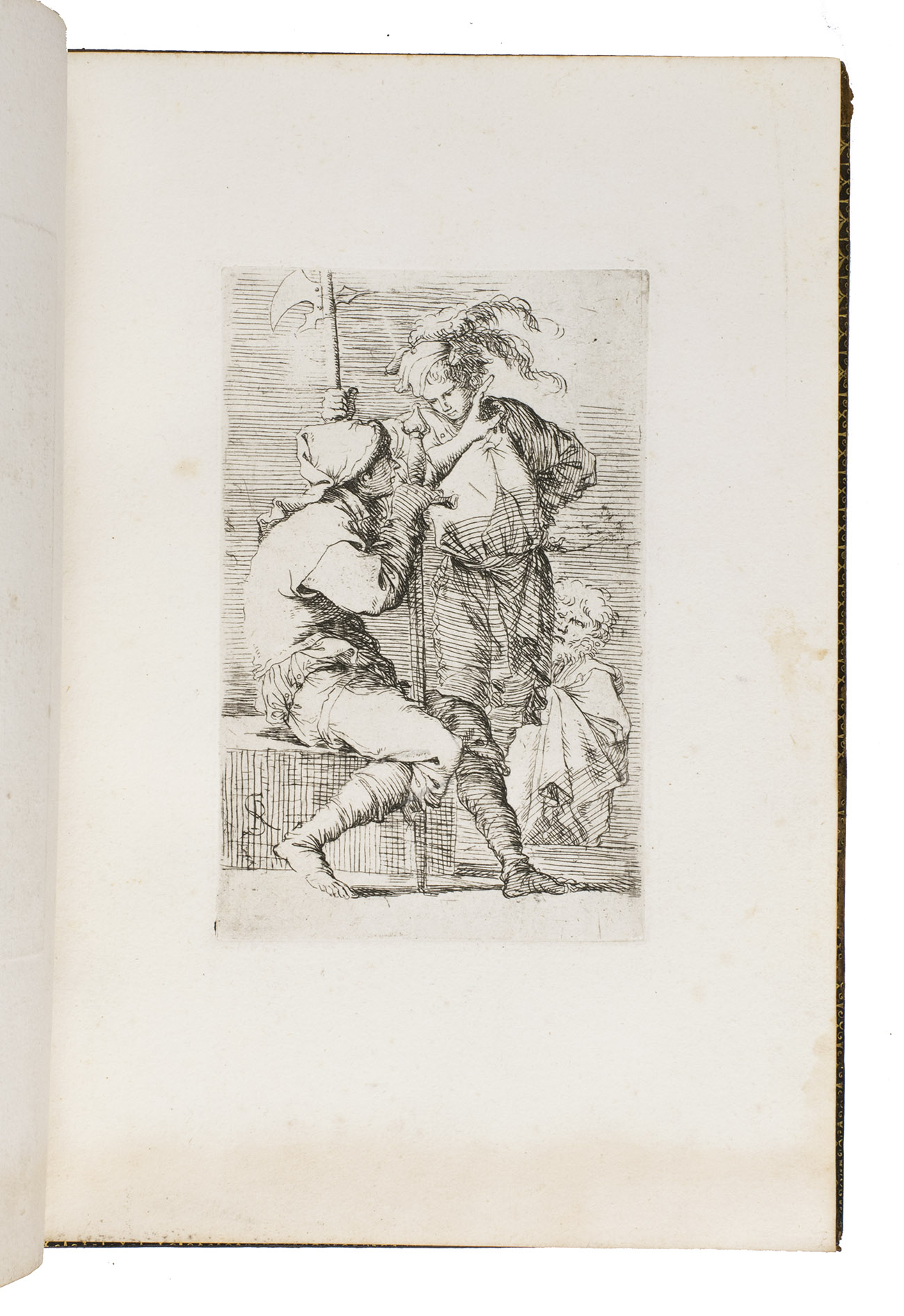
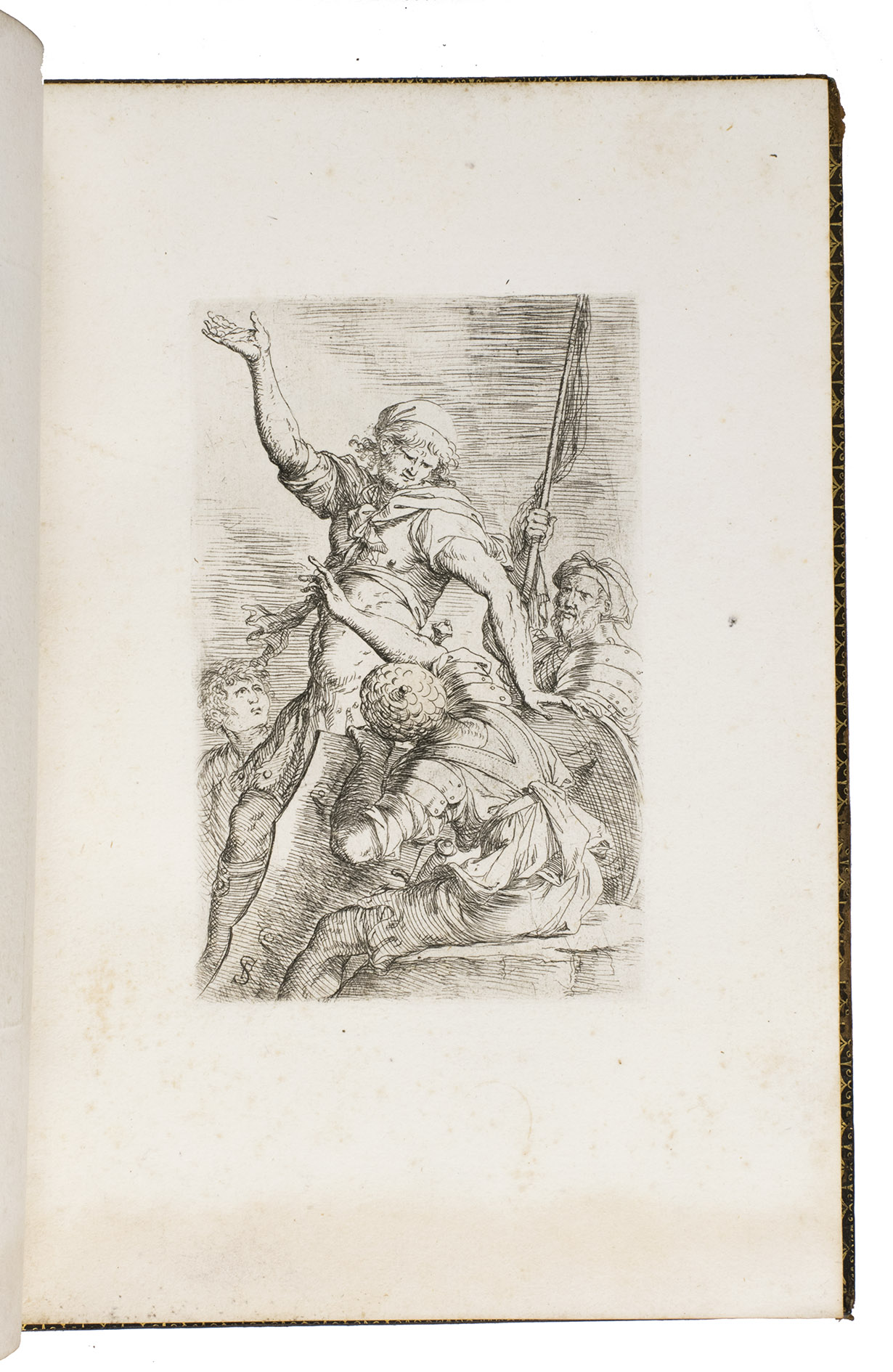
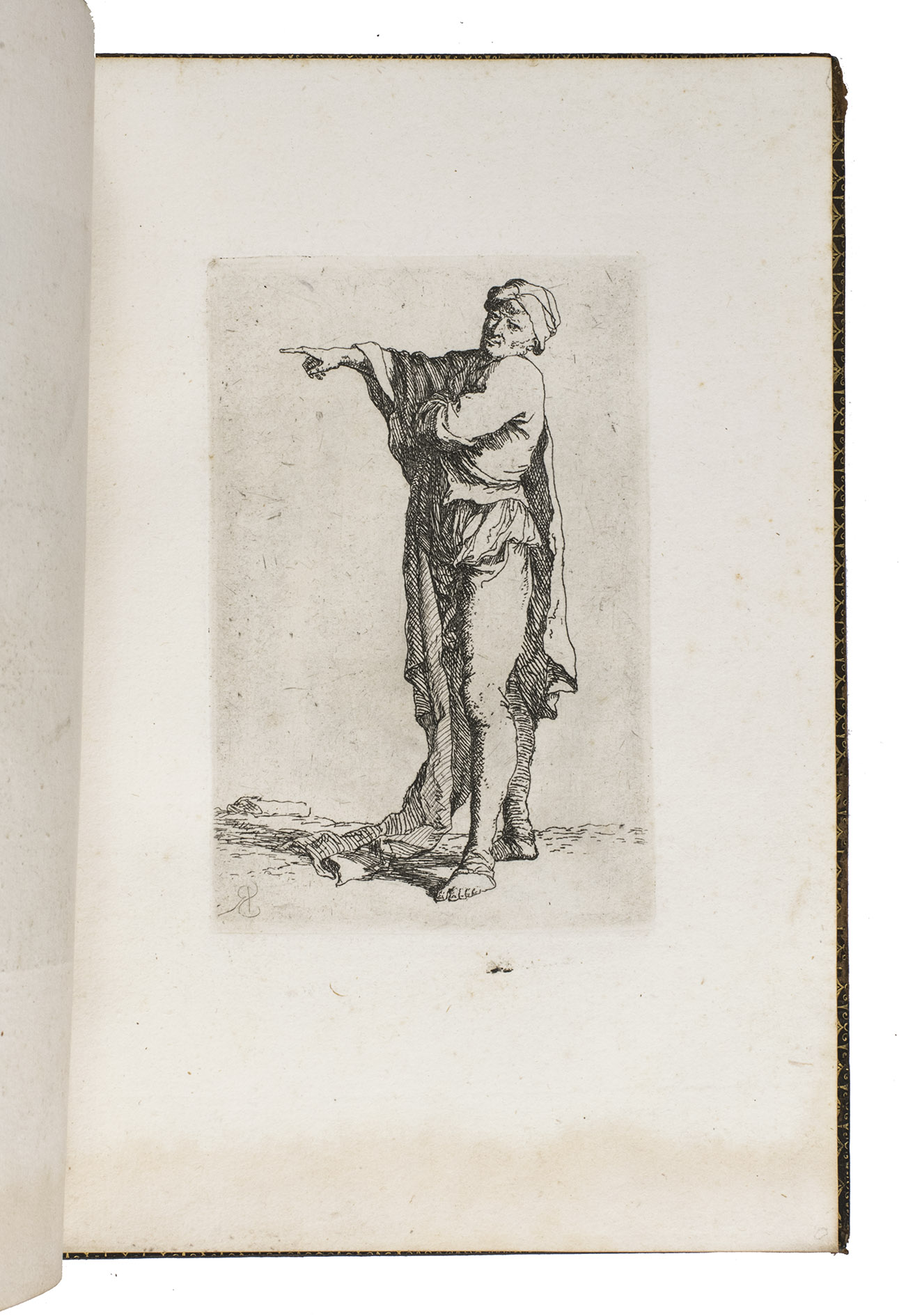
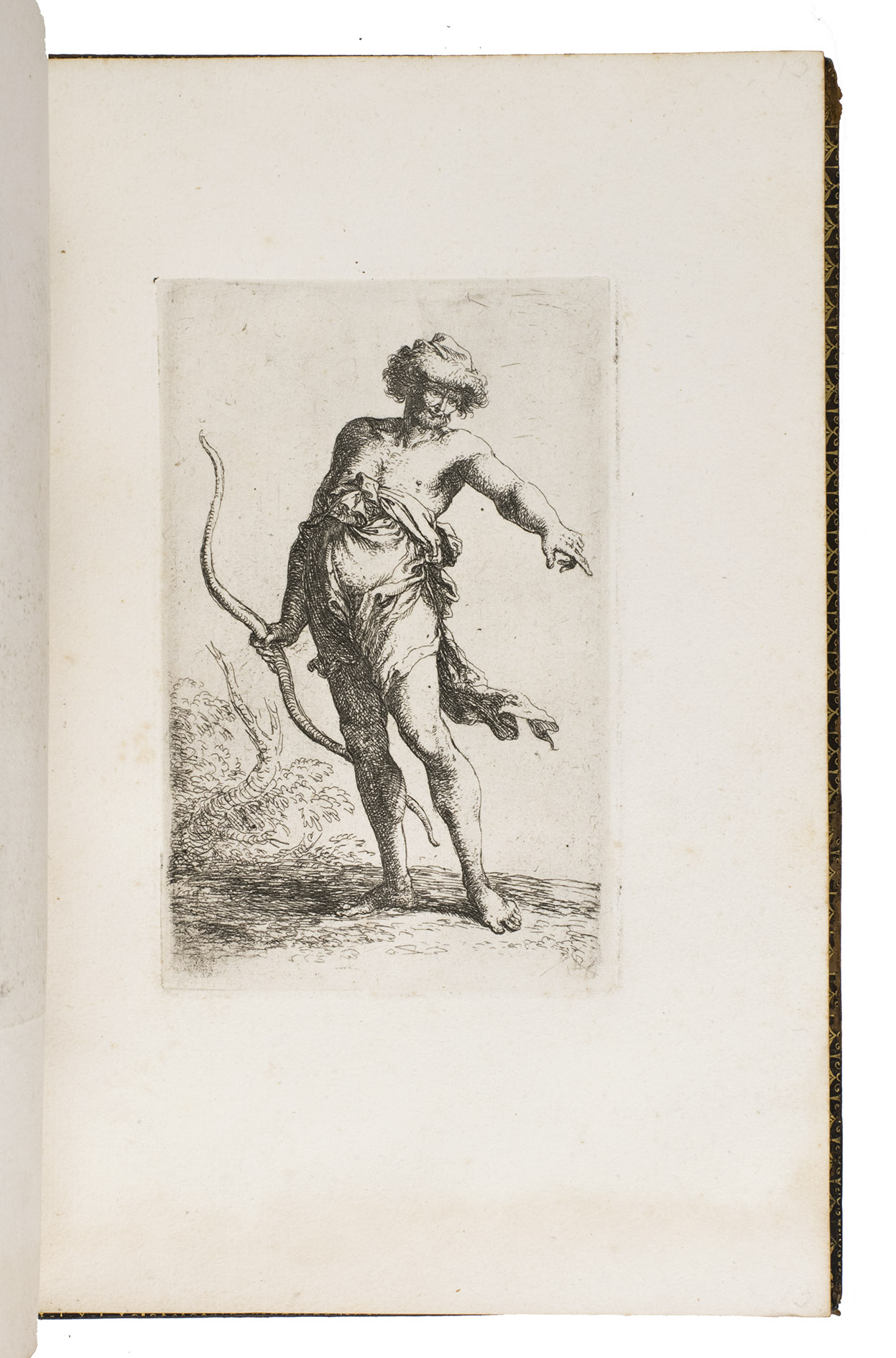
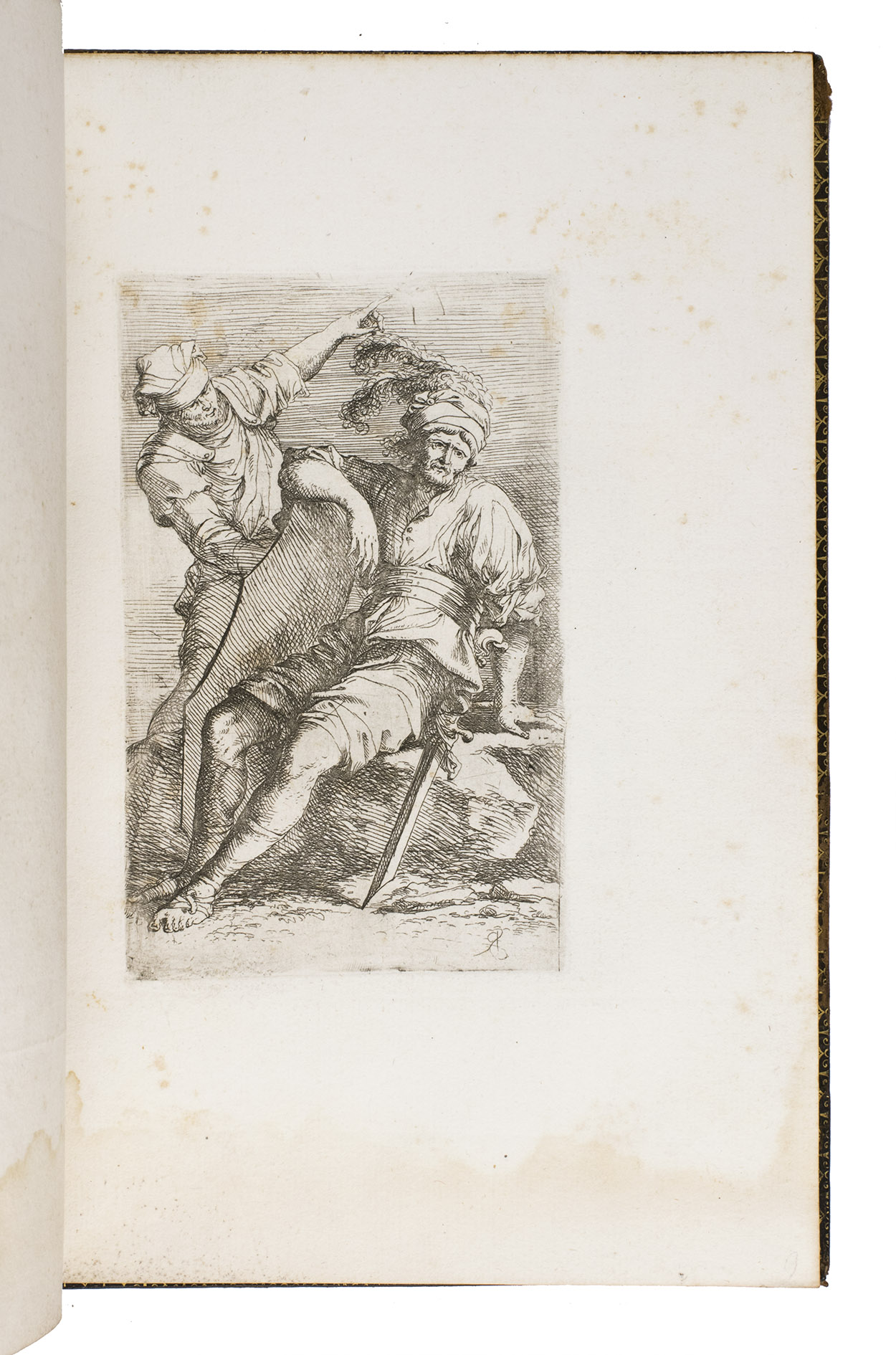
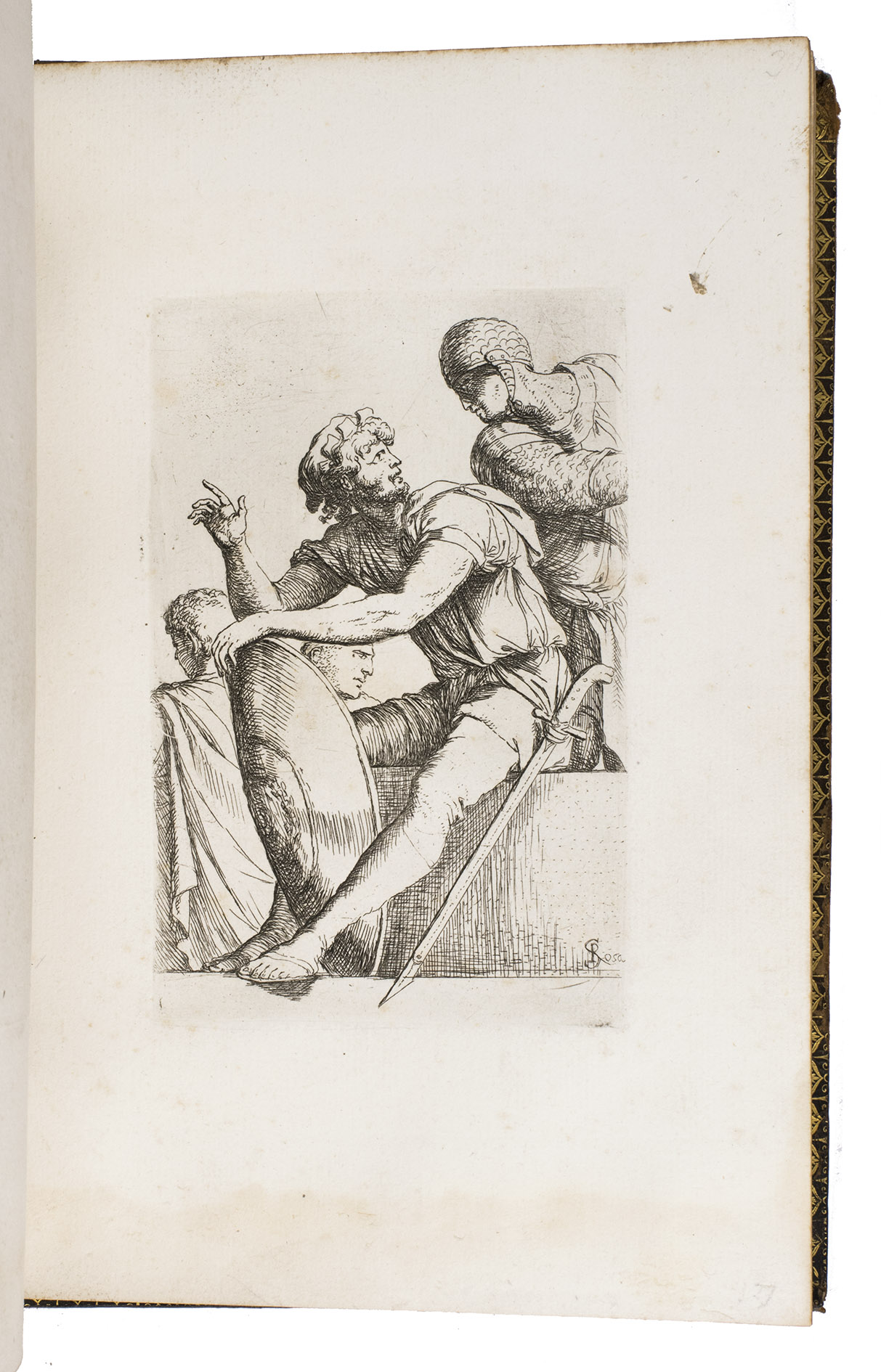
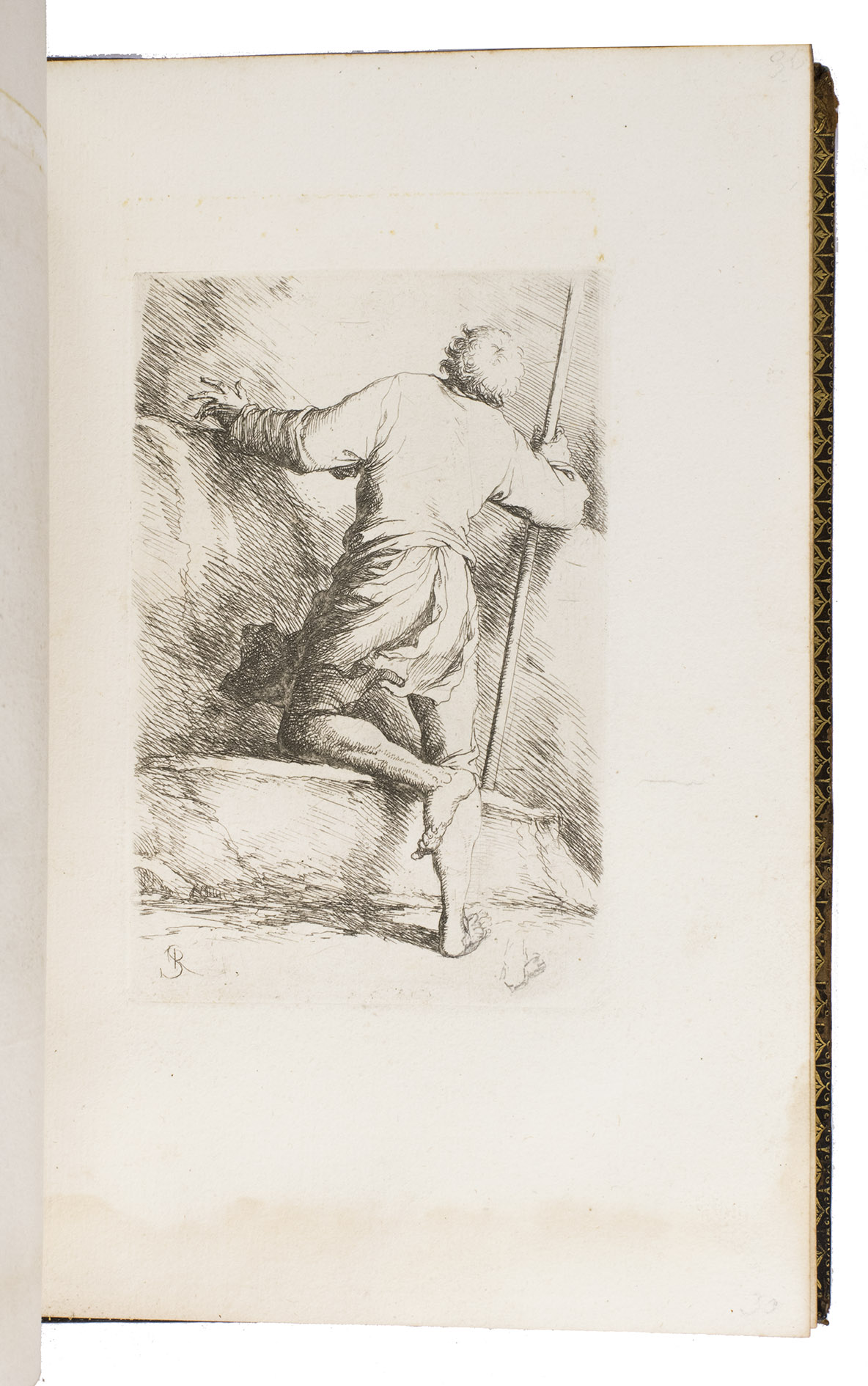
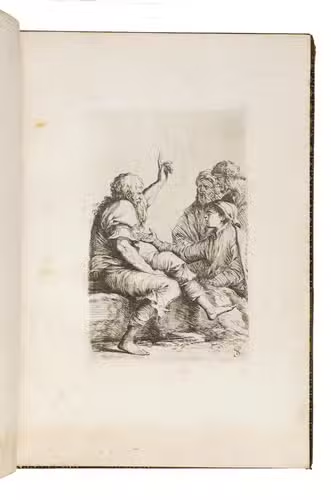
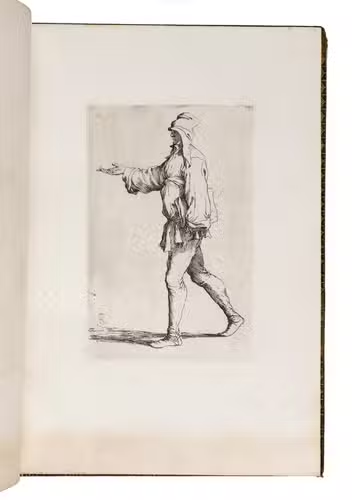
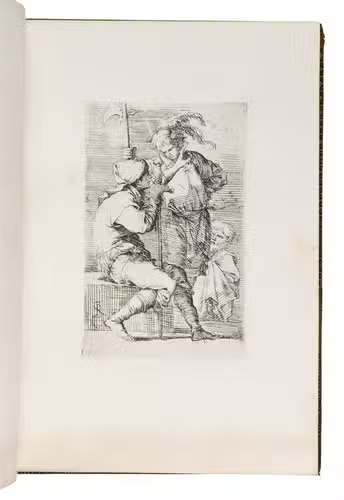
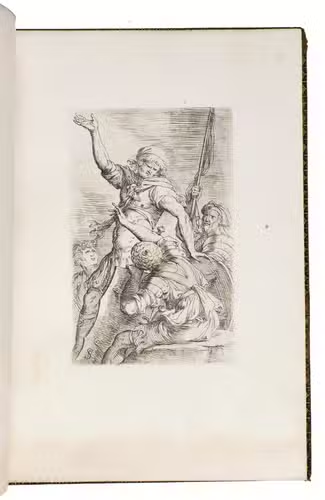
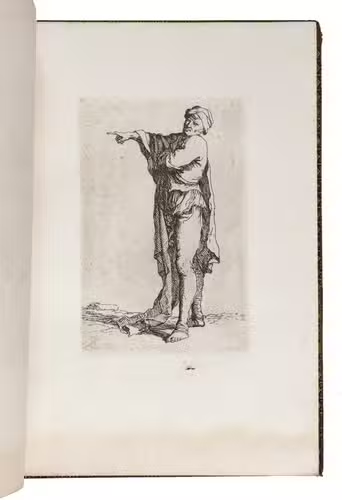
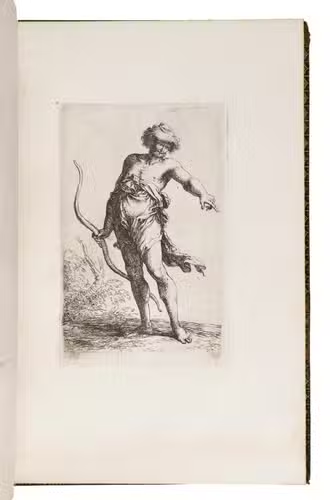
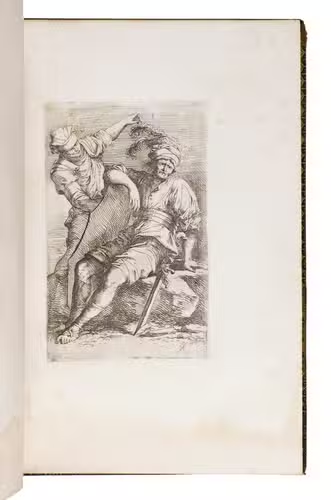
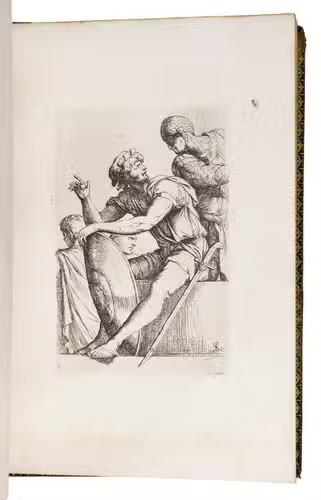
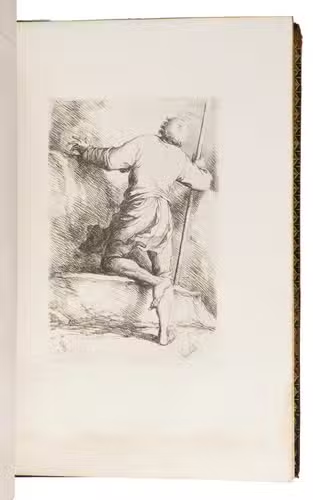
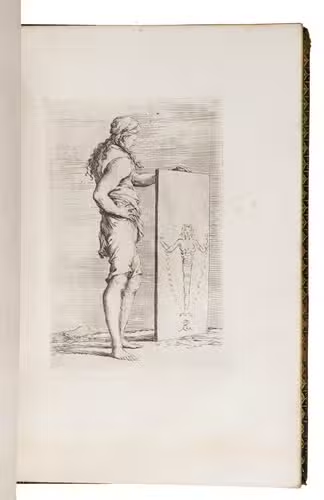
Exceptionally rare series of 60 etchings printed from the original copperplates, in beautiful dark impressions, and with wide margins. The etchings are part of Salvator Rosa's famous Figurine series, which "were so widely copied and forged that they can lay claim to being among the most imitated prints in the history of graphic art" (Wallace). As such, many collections of the series feature later copies, imitations, or variations. The present collection, however, was printed from the original plates.
The Figurine series, made in 1656-1657, consists of 62 etchings which show human figures, mostly soldiers, in a wide variety of different poses. It was likely intended to showcase the artist's skills in depicting anatomy, as he was until then primarily known as a landscape painter. Other than for its visual variety, the series is also admired for its inventiveness, as Rosa used nearly every etching technique possible to create the images. "They are in their graphic solutions among the most varied and inventive prints of the period. (...) no other series or group of prints of this period in Italy brings together such a broad range of so many diverse and varied kinds of technical, stylistic, and formal solutions within a single graphic program" (Wallace).
The series became very popular until well into the 19th century, with numerous copies and imitations printed. The most widely known is the German edition, printed by Joachim von Sandrart around 1690 in Nuremberg. This edition is most commonly found on the market and in institutions, and is easily recognisable because the etchings are mirrored. Copies printed from the original copperplates are rare. The present collection was printed in the early 18th century, and likely bought and compiled in Rome by someone taking part in the Grand Tour. It includes 60 etchings from the figurine series, with the famous frontispiece, and 1 duplicate (Wallace 33). All etchings are present in the second and final state (with the exception of the few etchings that only had a first state), as they are identical on both size and image to the examples shown by Wallace. The first state is exceptionally rare, with only one collection known to include them. It appears that Rosa printed the first state only once, and reworked the copperplates directly after when necessary, deepening the lines, adding more contouring, and signing them. Etchings of the second state are therefore more beautifully printed, in much darker impressions, and include Rosa's monogram.
Salvator Rosa (1615-1673) was a painter, printmaker, poet, actor, and musician from Naples. He was incredibly famous in his own lifetime, both for his art and his abrasive personality, which caused some trouble in his personal life. For example, he wrote several satires criticising his contemporaries, angering the affected individuals, but greatly entertaining those that were not. He was quite unique in his own time for his wish to remain independent. He therefore did not look for a patron, but painted whatever he wanted and displayed it in his studio for sale, usually quite successfully. His moody, mysterious work, depicting darker scenes such as witchcraft, wild landscapes, and obscure biblical stories, gained him a significant following into the early 19th century, and greatly influenced the Romantic movement.
With the bookplate of Francisco Xavier O'Neill d'Avillez (1903-1967) mounted on the front pastedown. The corners are bumped, the joints are weakened, but the structural integrity of the binding is still intact, the boards are slightly scratched. A water stain in the lower margin of the leaves, not affecting the etchings, the leaves are lightly foxed. Otherwise in good condition. Wallace, the etchings of Salvator Rosa; cf. Bartsch XX, cols. 167-174; Hayward Gallery, Salvator Rosa (catalogue for the 1977 exhibition); Nagler 15, pp. 132-150; Thieme/Becker 29, pp. 1-3.
Related Subjects: