NIEROP, Dirck Rembrantsz. van.
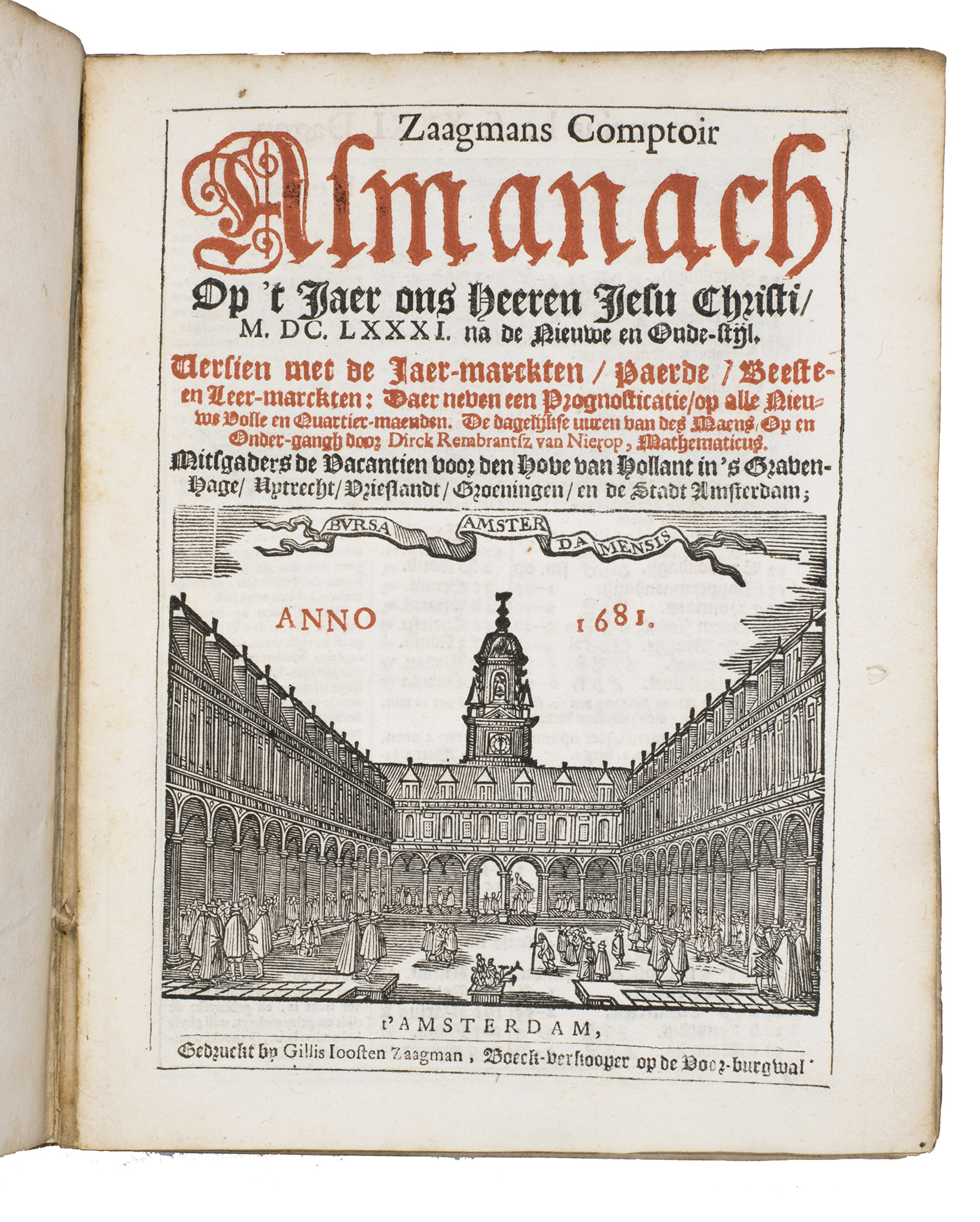
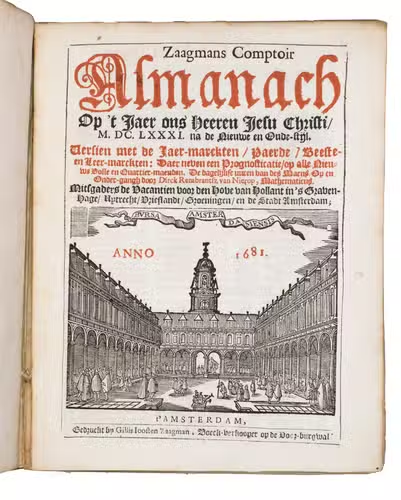
Zaagmans comptoir almanach op 't Jaer ons Heeren Jesu Christi M.DC.LXXXI. na de Nieuwe en Oude-stijl. Versien met de jaer-marckten, paerde, beeste- en leer-marckten: daer neven een prognosticatie, op alle nieuwe, volle en quartier-maenden. De dagelijkse uuren van des maens op en onder-gangh door Dirck Rembrantsz van Nierop, mathematicus. Mitsgaders de vacantien voor den Hove van Hollant in 's Graven-Hage, Utrecht, Vrieslandt, Groeningen, en de Stadt Amsterdam.
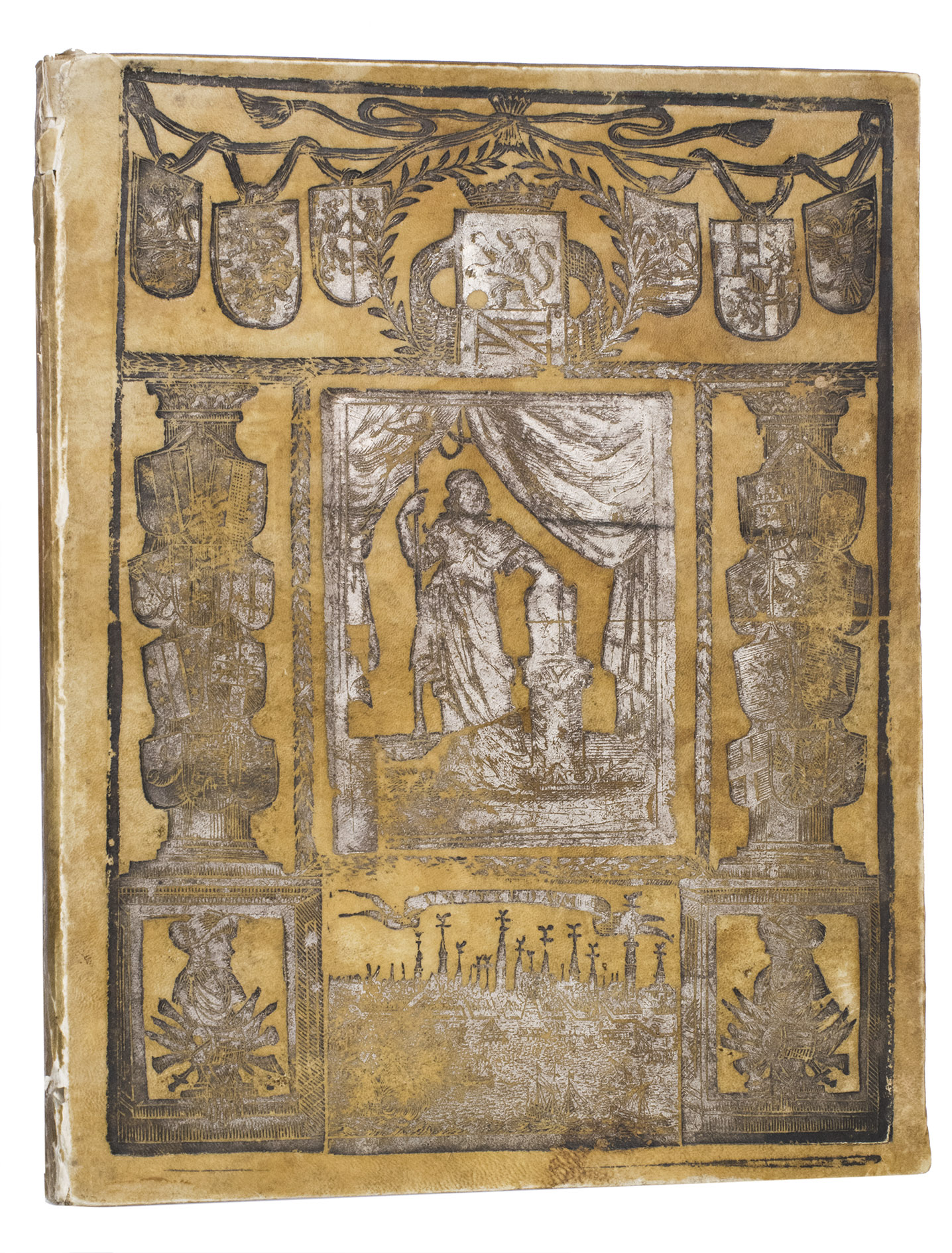
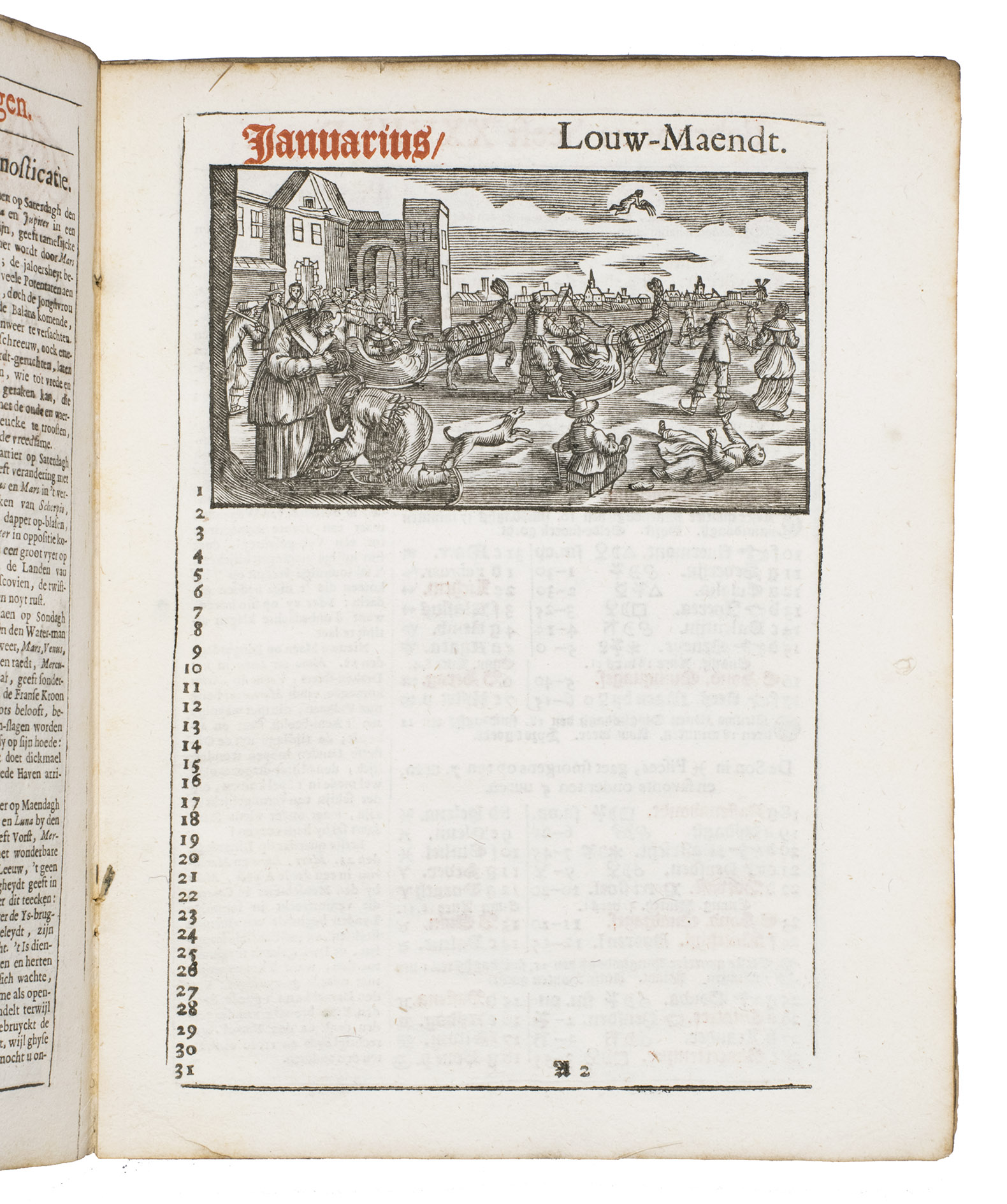
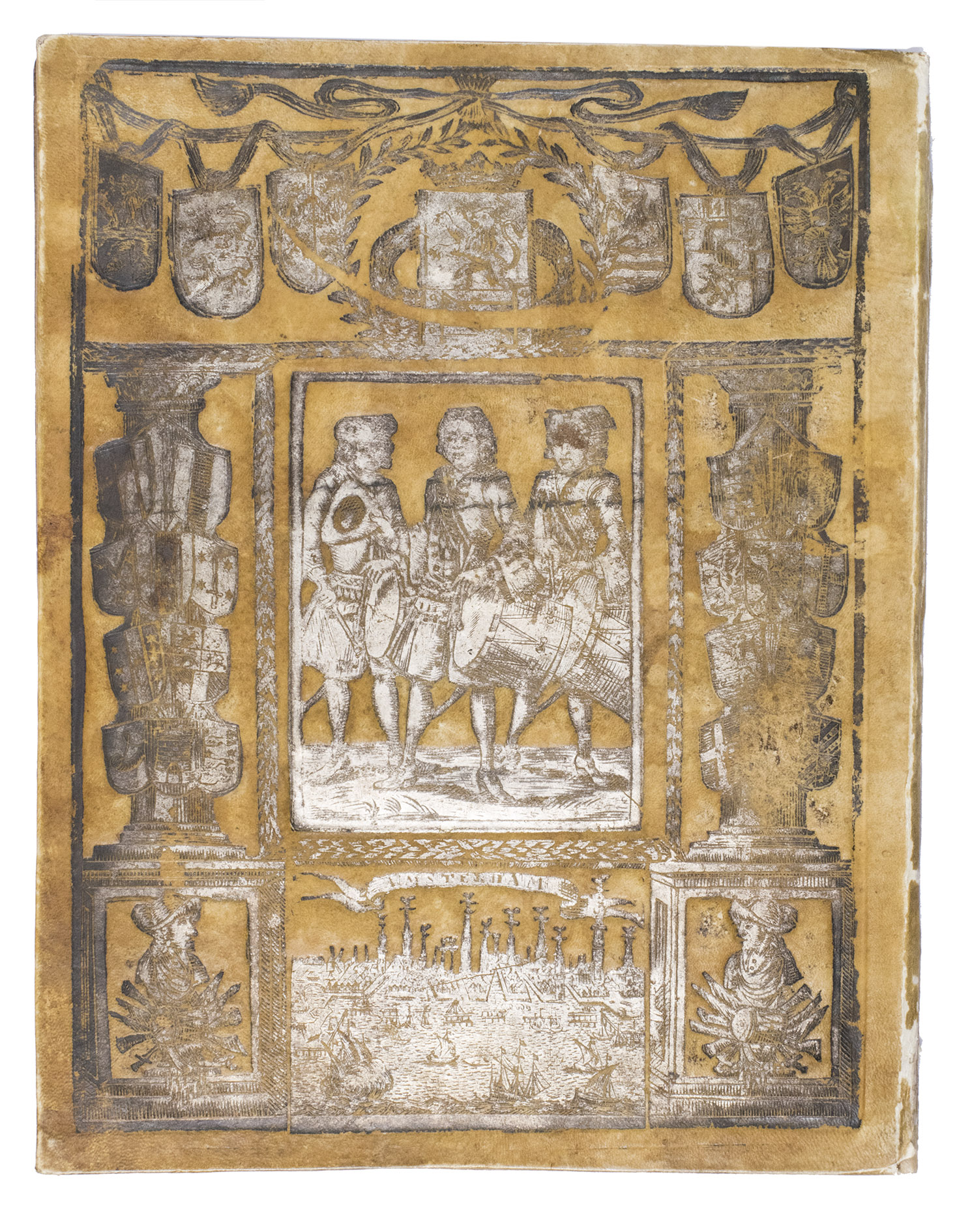
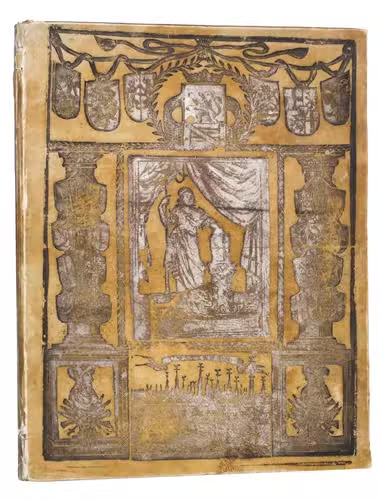
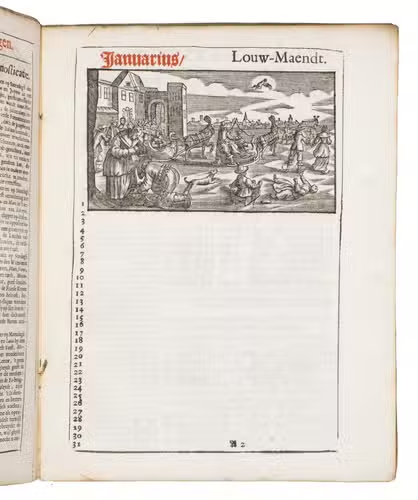
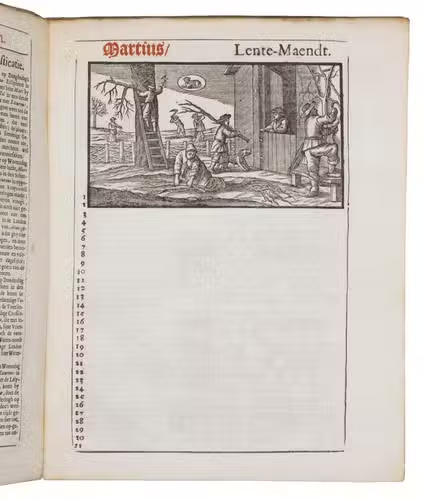
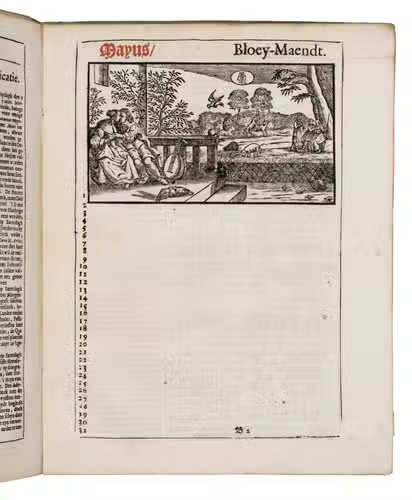
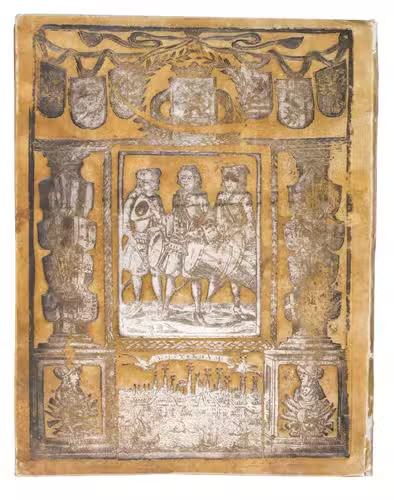
Amsterdam, Gillis Joosten Zaagman, [1680]. 4to. With the title and calendar printed in red and black, a large woodcut view of the Amsterdam stock-exchange on the title page, 12 large woodcuts in the calendar (1 for each month, depicting the main activities practised during this month), a small woodcut of an eclipse and a larger woodcut of a Zodiac man. Contemporary silver-tooled vellum, with on the front a central panel with a maid carrying a lance next to a book (the Bible?) on a column, and on the back a central panel with three drummers, both surrounded by an elaborate large frame block with the coat-of-arms of Holland in the "garden" of the Dutch Republic flanked by the other provincial arms at the top (the arms of the major Dutch cities at the left and right and a view of Amsterdam from the IJ at the bottom). [16] ll.
€ 2,500
Extremely rare early edition of the popular Amsterdam almanac, compiled by Dirck Rembrantsz. van Nierop (1610-1682) and published by Gilles Joosten Zaagman, often spelled Saeghman, a famous publisher of almanacs, popular books and prints, active at Amsterdam between 1642 and 1702. Zaagman held the privilege for the "comptoir almanach" during the second half of the 17th century. It was a lucrative business, not only because of the serial character of almanacs, but also because a large and secure market was guaranteed each year. The "comptoir" or "office" almanac was published in various sizes, in 4to, small 8vo, 16mo and 32mo. The present quarto edition was the most serious variant, meant to be used at the desk of one's office.
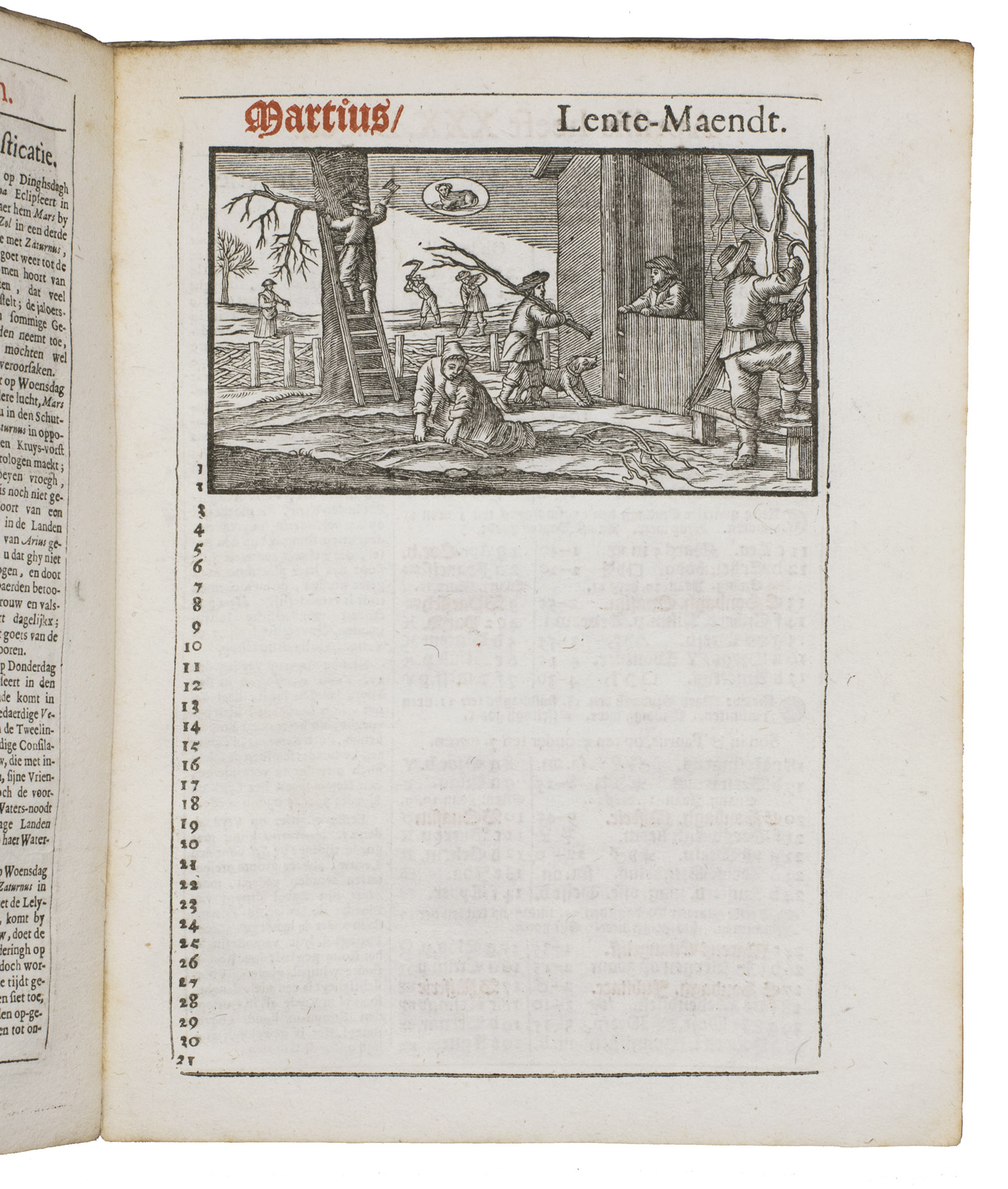
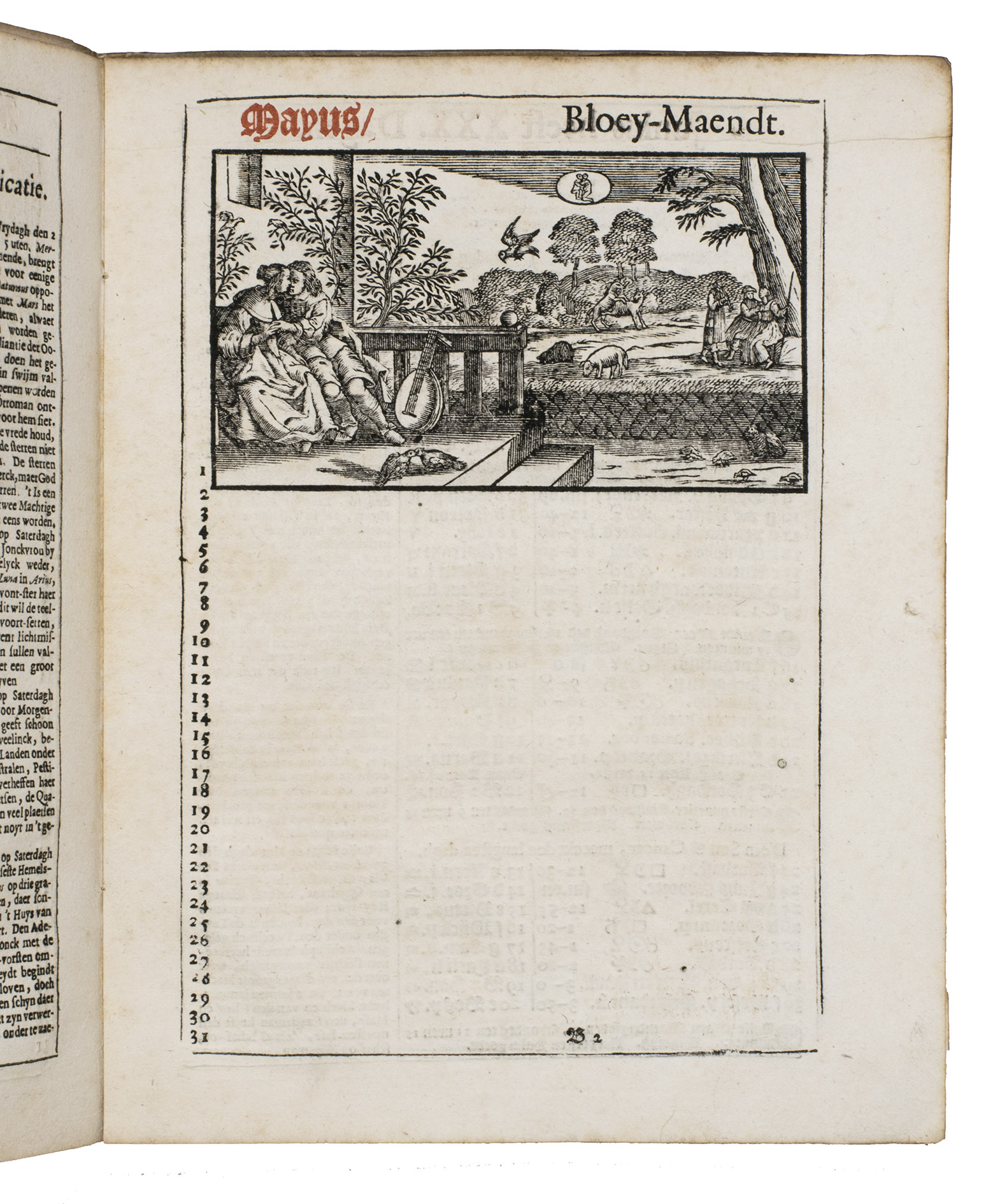
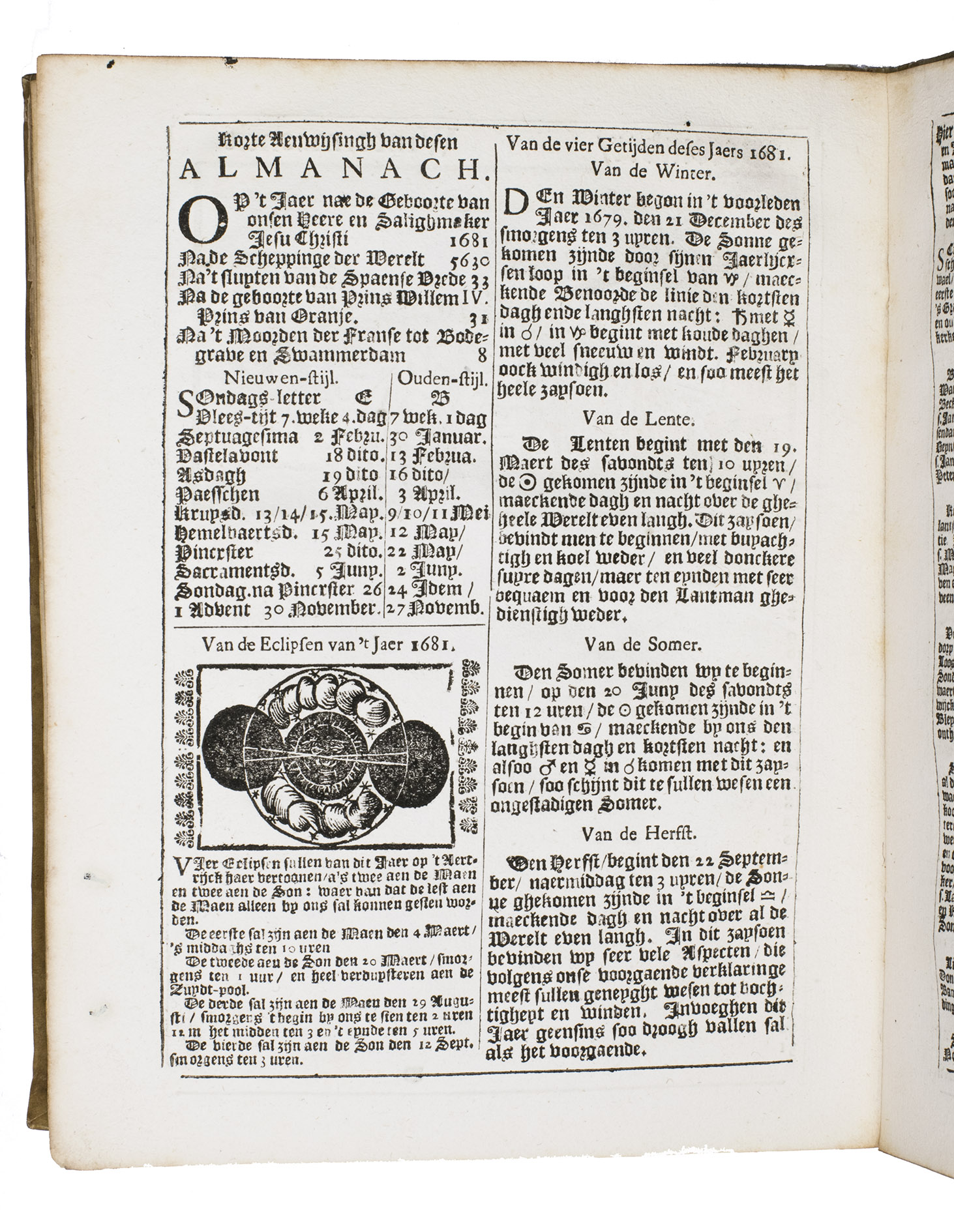
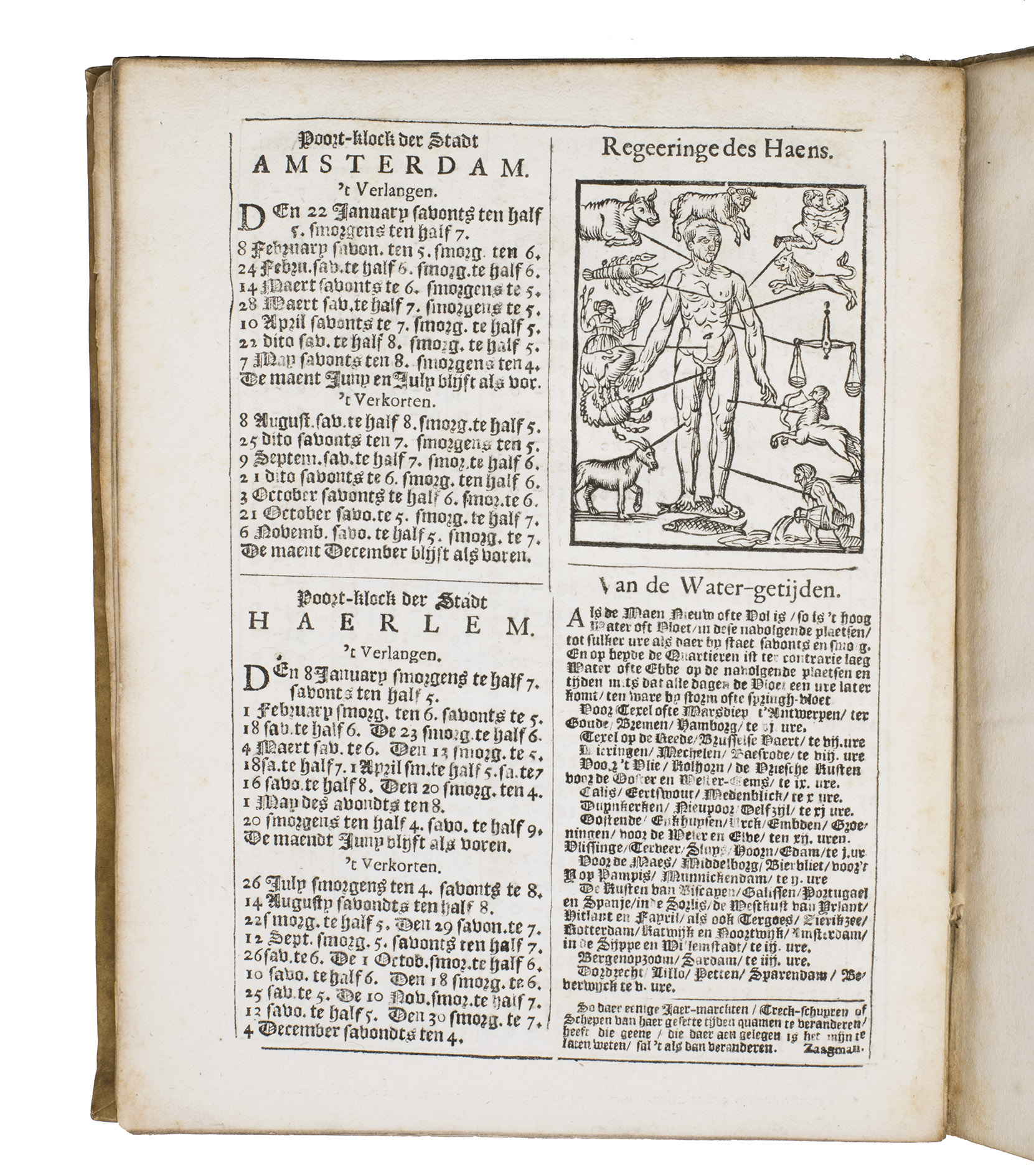
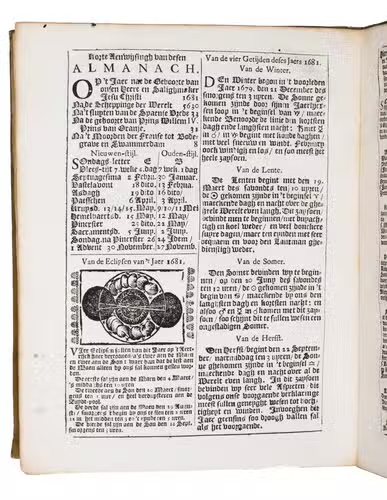
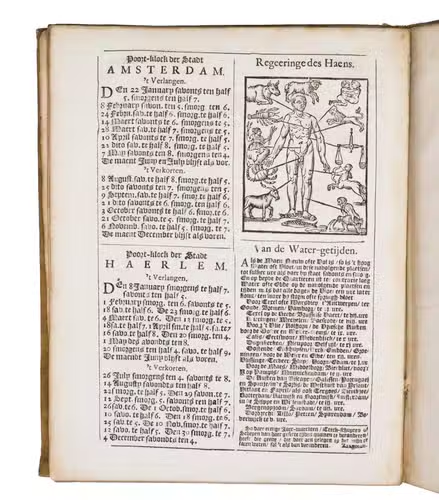
The calendar has two pages for each month: on the rectos a woodcut depicting the activities practised in each month at the top of the page (showing views of skating for December and January, sitting at the fire for February, a couple courting for May, shearing sheep in June, picking apples in September, tasting wine in October, slaughtering a pig in November, etc.) with an open space for making annotations for each day, the facing versos begin with a little poem followed by annotations for each day, while the right-hand column is devoted to the monthly prognostications. The last quire contains explanations of the almanac and calendar, the four eclipses that would appear in 1681, the dates of the four seasons, dates of the yearly fairs, time table of the sun risings, time tables of post coaches, travel coaches, ships and barges, holidays of the Courts of Holland, Friesland and Utrecht, and the magistrate of Amsterdam, change table of "ducats" into guilders, the opening times of the city gates of Amsterdam and Haarlem, a Zodiac man, and tide tables.
In 1702 Zaagman sold the rights and the woodcuts of his Comptoir almanach to the House of Stichter, or Stigter, which then held the privilege all throughout the 18th century.
The present binding has been included in the work by Storm van Leeuwen. He dates the binding to "before 1743" (?) as he cannot say for certain that the binding was made for the present almanac, due to the "practise of taking an original almanac out of its binding when no longer current and replacing it with a current almanac in a rather makeshift way". It seems more probable to us, however, that the woodcut blocks are to be dated earlier (ca. 1670-80?).
The drummers on the lower cover could be a reference to the civic guard, in which case the almanac may once have served as a New Year's gift.
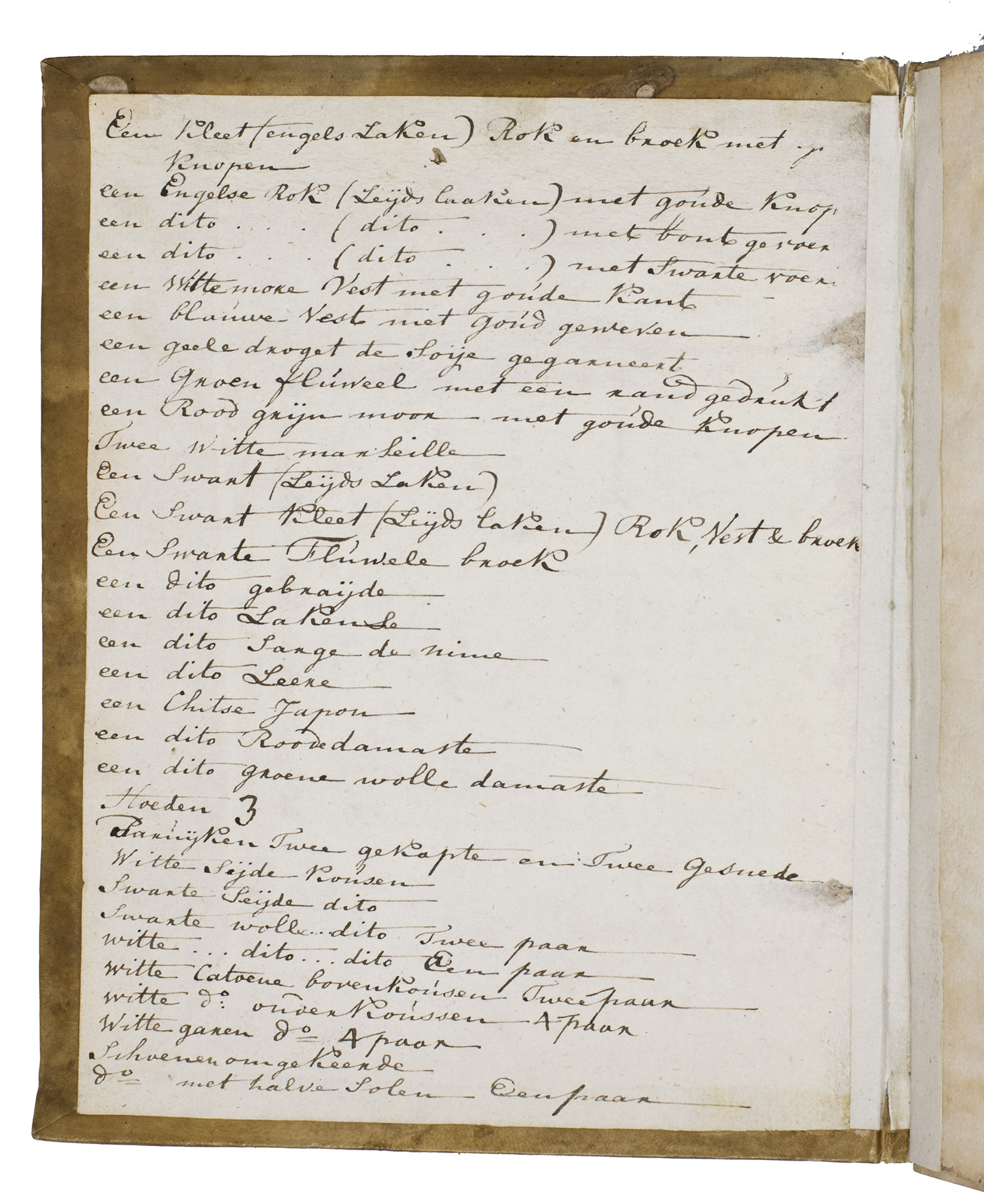
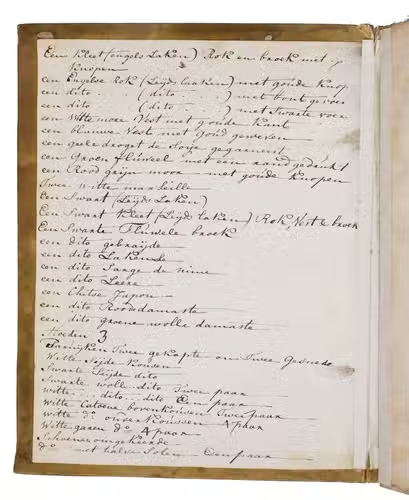
With a handwritten inventory of a man's wardrobe of ca. 1700 on the front pastedown. The vellum has browned, affecting the clarity of the silver tooling, the spine is somewhat worn. The edges of the leaves have darkened. Otherwise in good condition. Jacobsen Jensen 670; cf. Salman-Verhoeven, "The comptoir-almanacs of Gillis Joosten Saeghman", in: Quaerendo, 23 (1993), pp. 93-114; Vandenhole p. 155 (1673 ed.); STCN (other eds.); WorldCat 67771681 (other issue of the 1681 ed.); for the binding: Storm van Leeuwen, Dutch decorated bookbinding in the eighteenth century I, pp. 750-8; not in Plak, Bibl. van Amsterdamse comptoir almanakken 1600-1700.
Related Subjects: