MEYER, Jacques de.
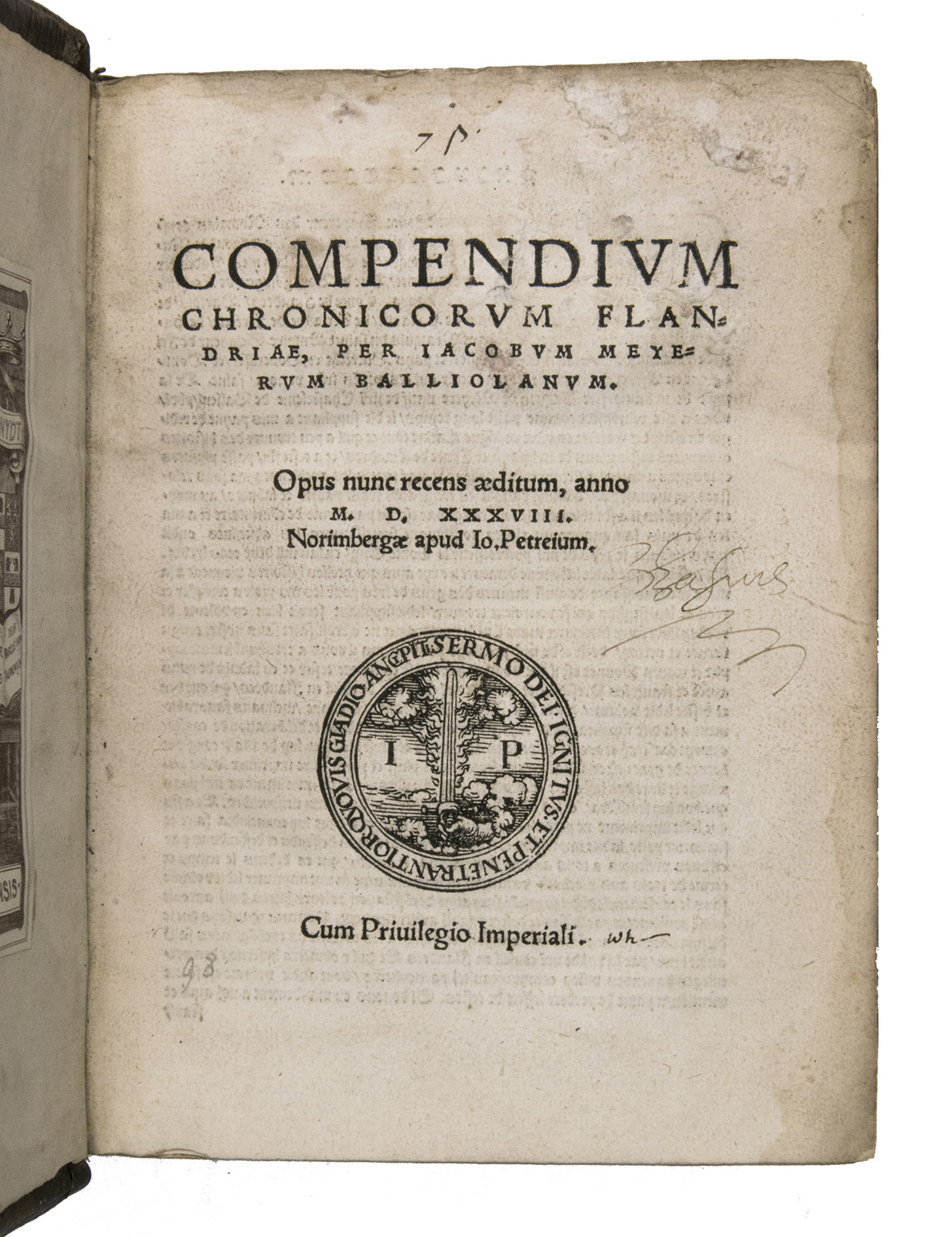
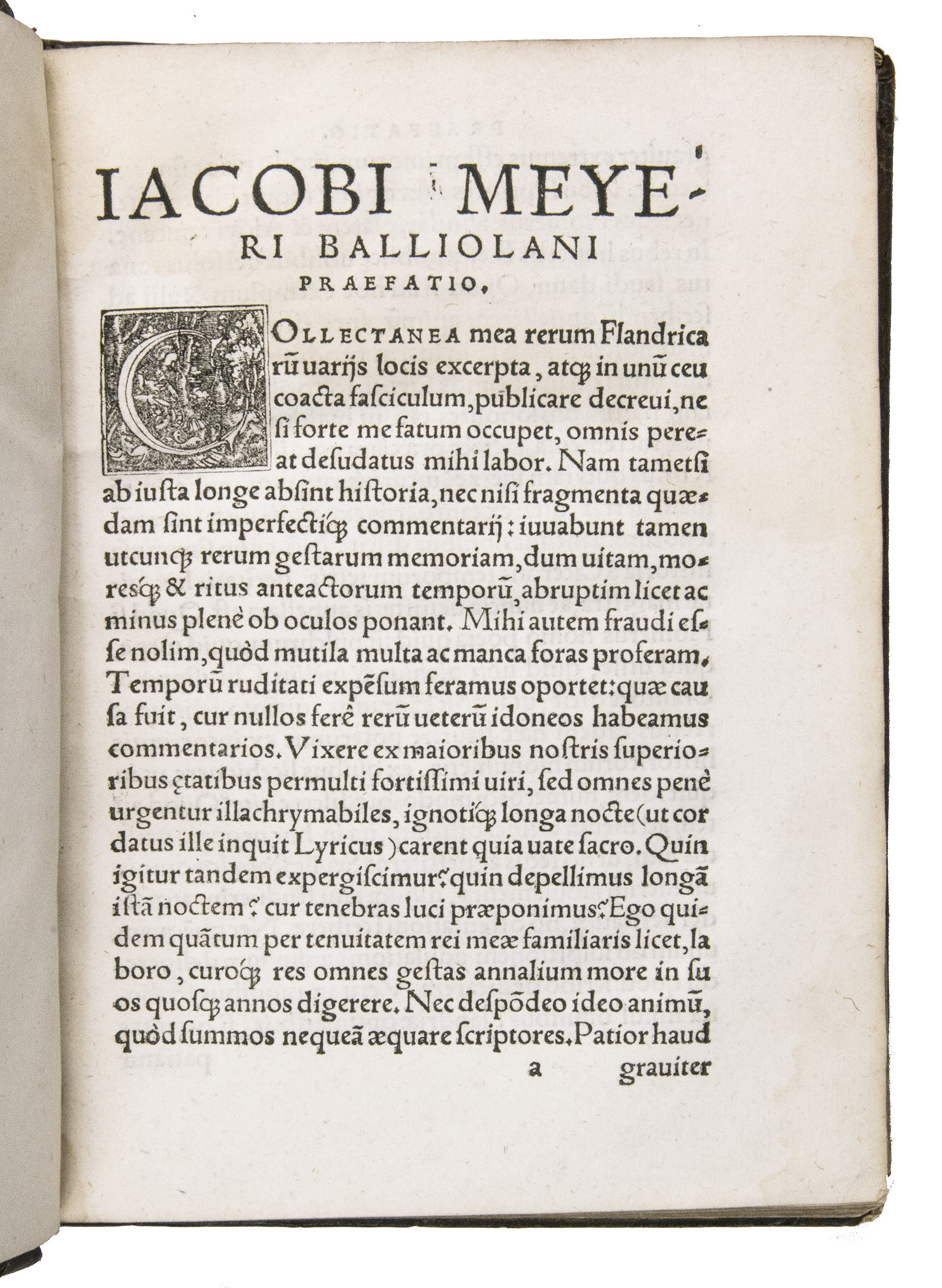
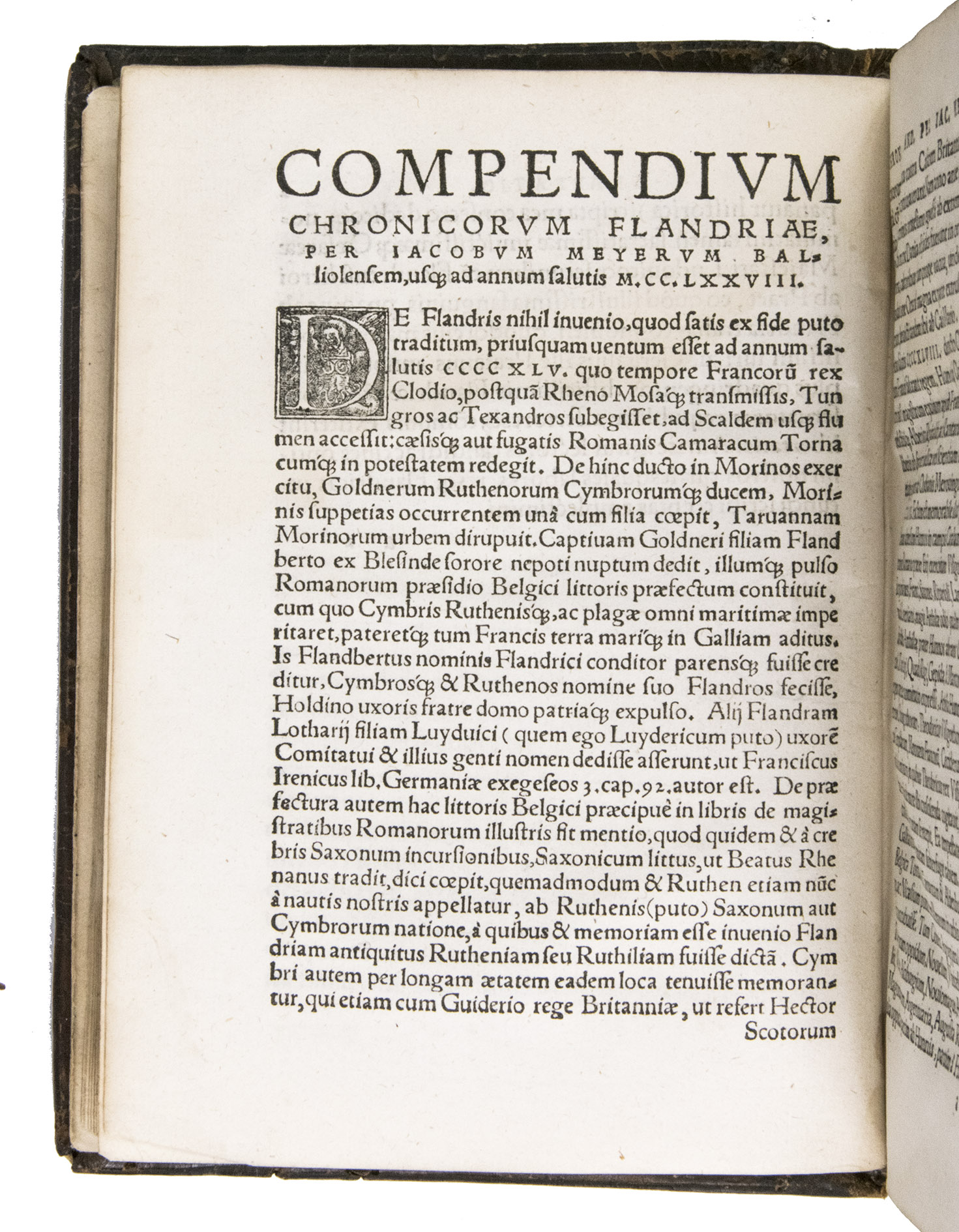
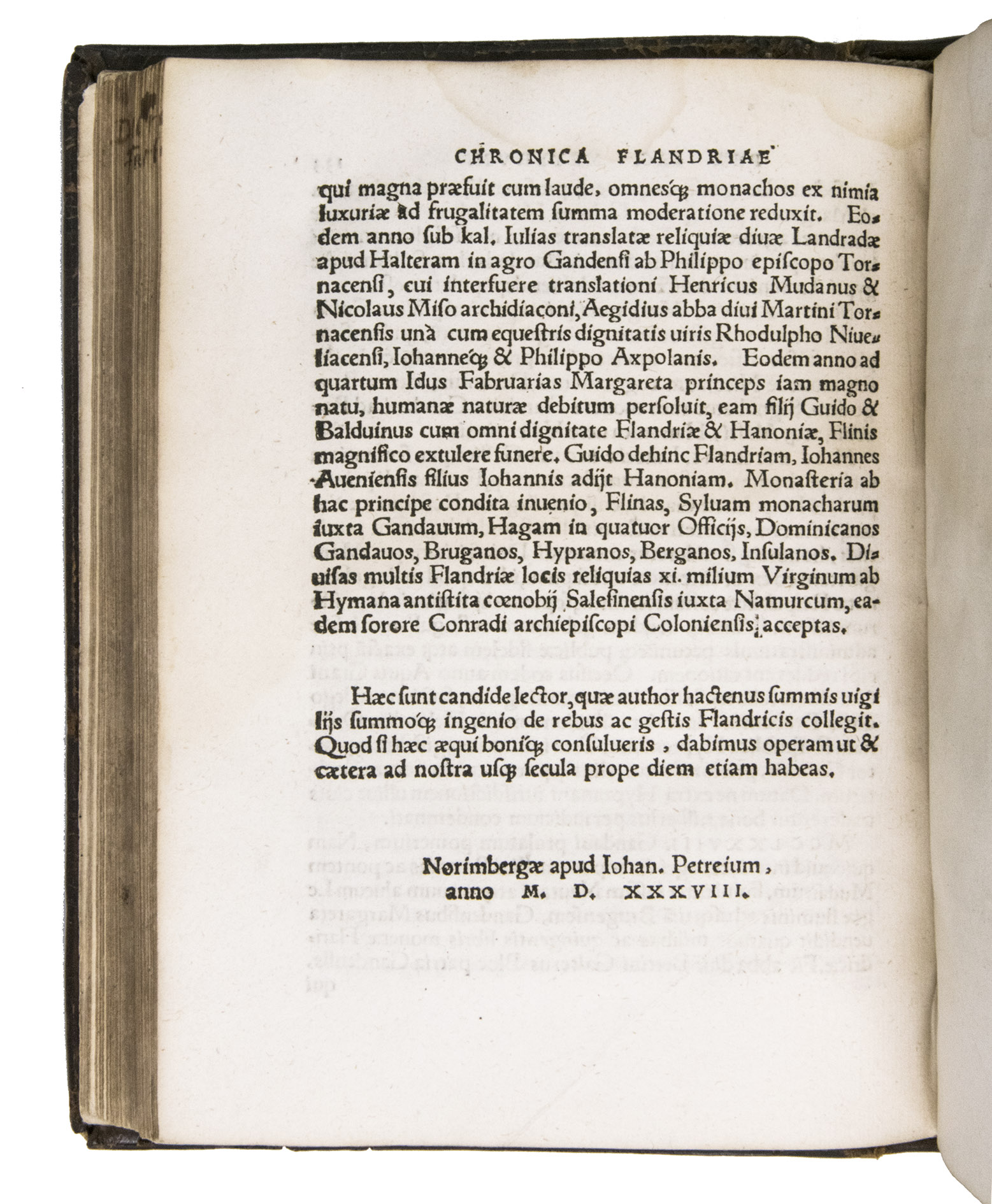
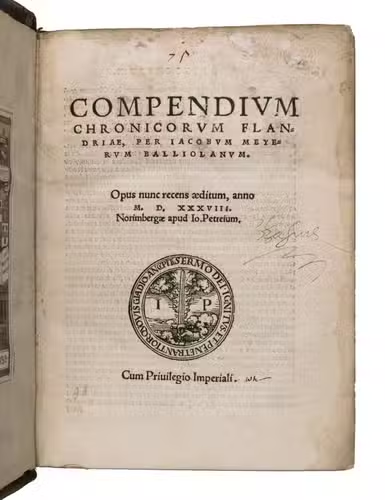
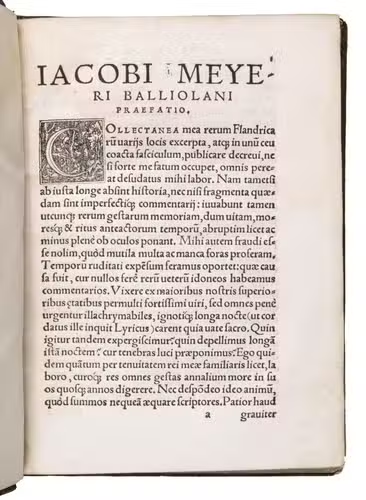
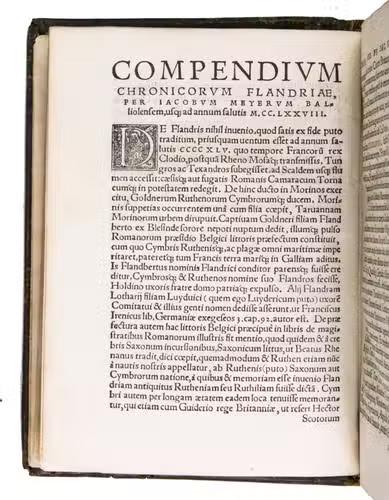
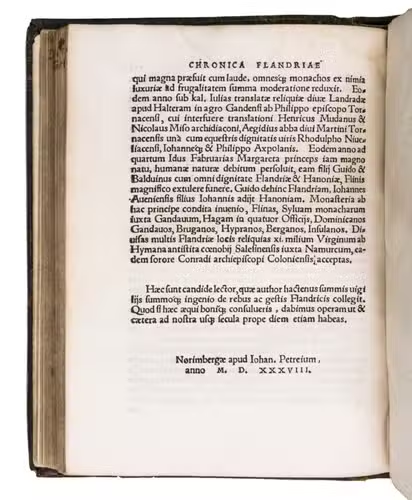
Compendium chronicorum Flandriae, per Iacobum Meyerum Balliolanum. Opus nunc recens aeditum, anno M.D.XXXVIII. Norimbergae apud Io. Petrium.
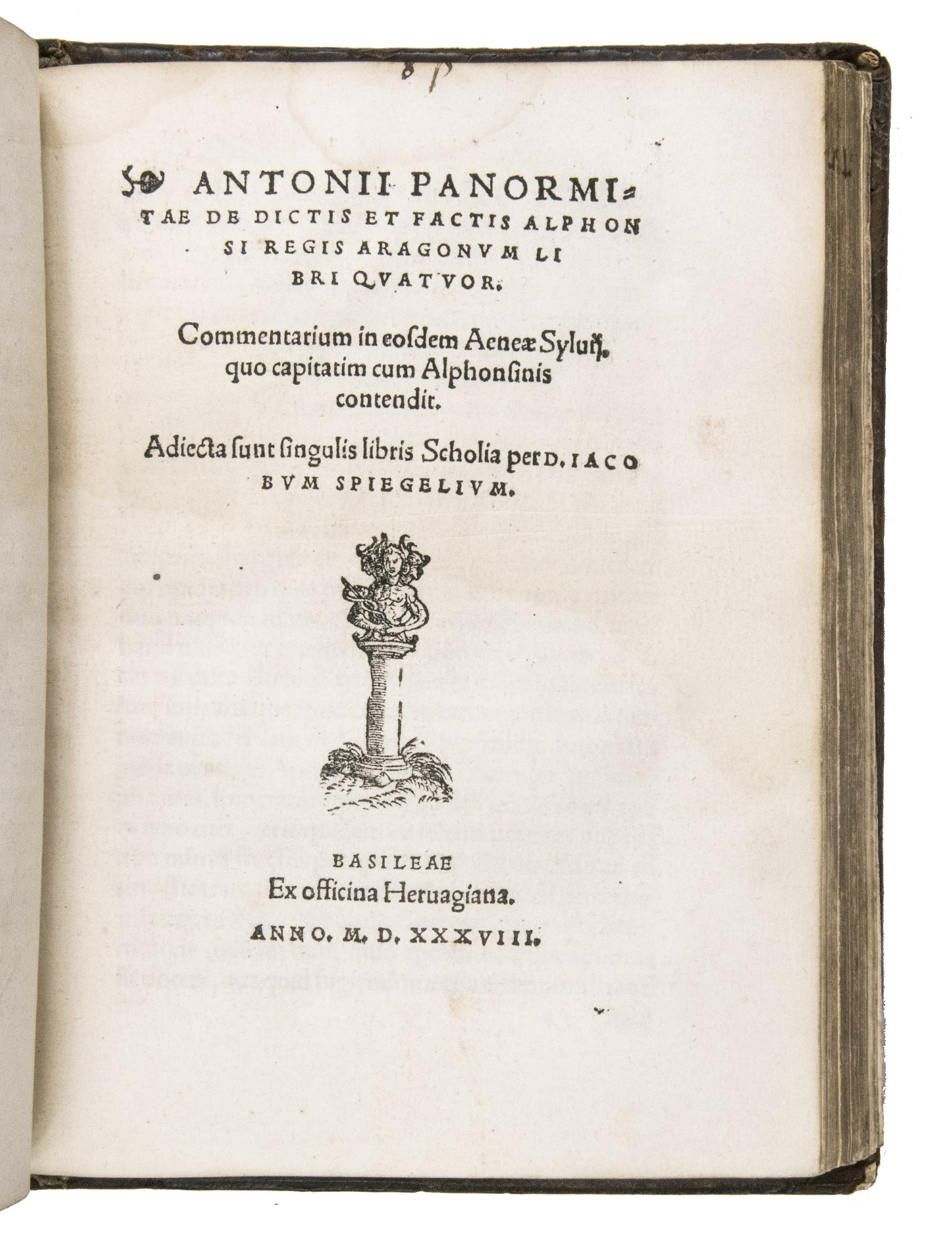
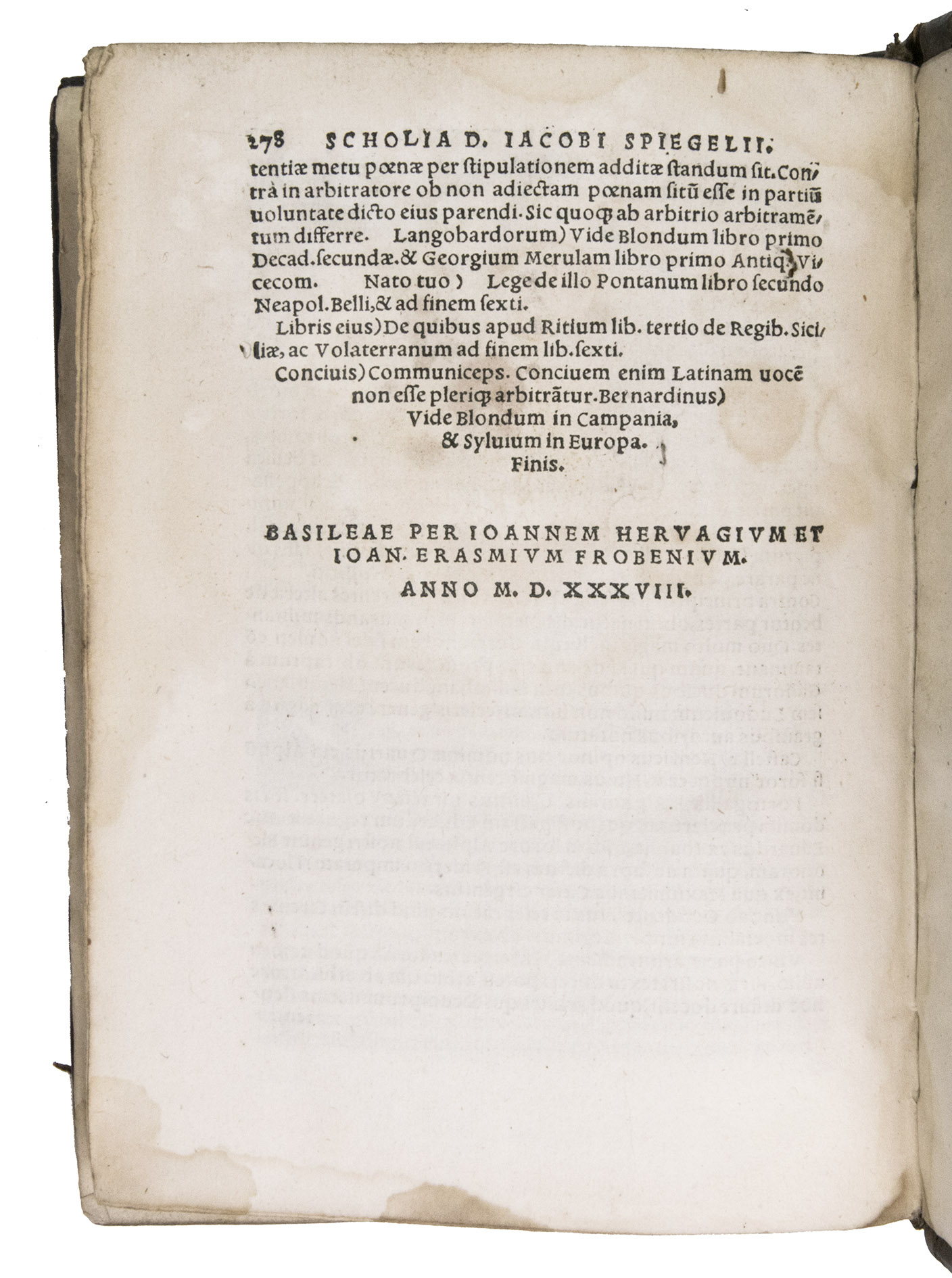
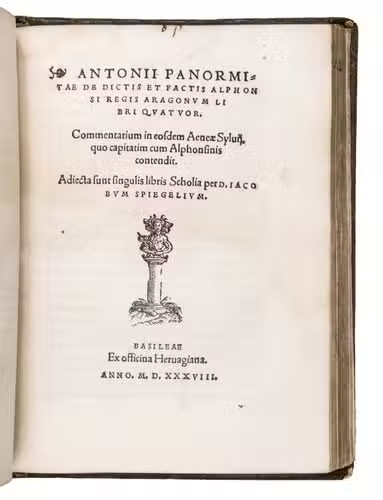
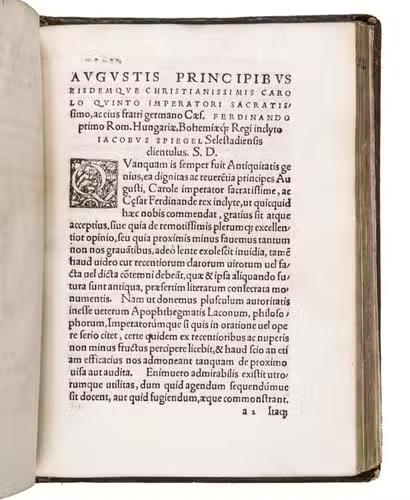
Neurenberg, Johannus Petreius, 1538. 2 works in 1 volume. 4to. With a woodcut printers device on the title page of each work, and 33 decorated woodcut initials (2 in ad 1, 31 in ad 2). With: PANORMITA, Antonius (Antonio BECCADELLI). De dictis et factis Alphonsi Regis Aragonum libri quattuor. Commentarium in eosdem Aeneae Sylvii quo capitatim cum Alphonsinis contendit. Adiecta sunt singulis libris Scholia per Iacobum Spiegelium.
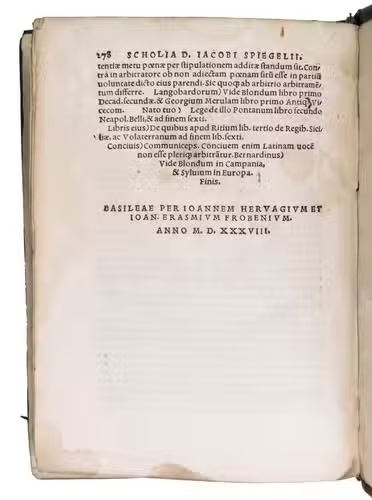
Basel, Ex officina Hervagiana (Joannes Hervagius & Joannes Erasmus Froben), 1538.
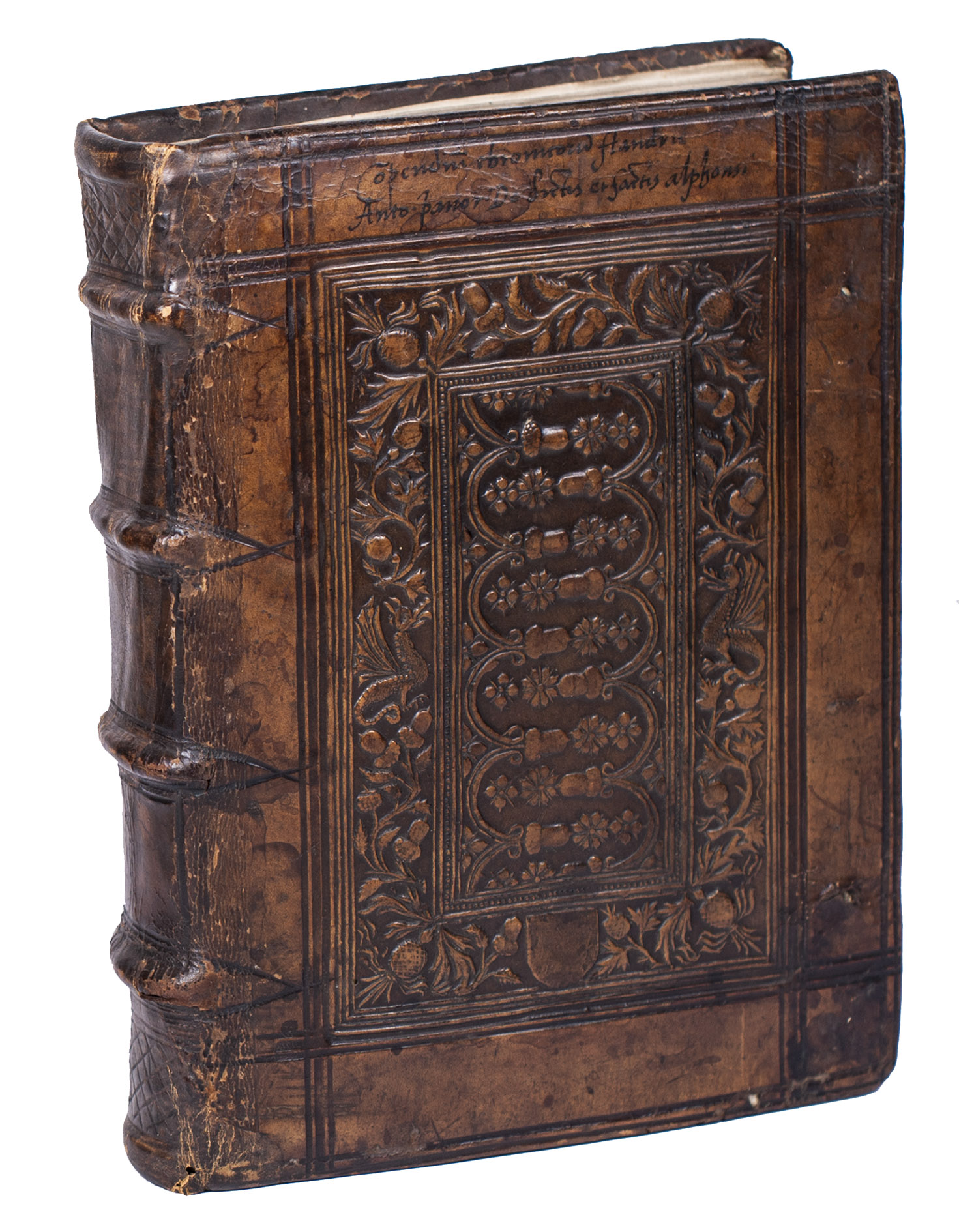
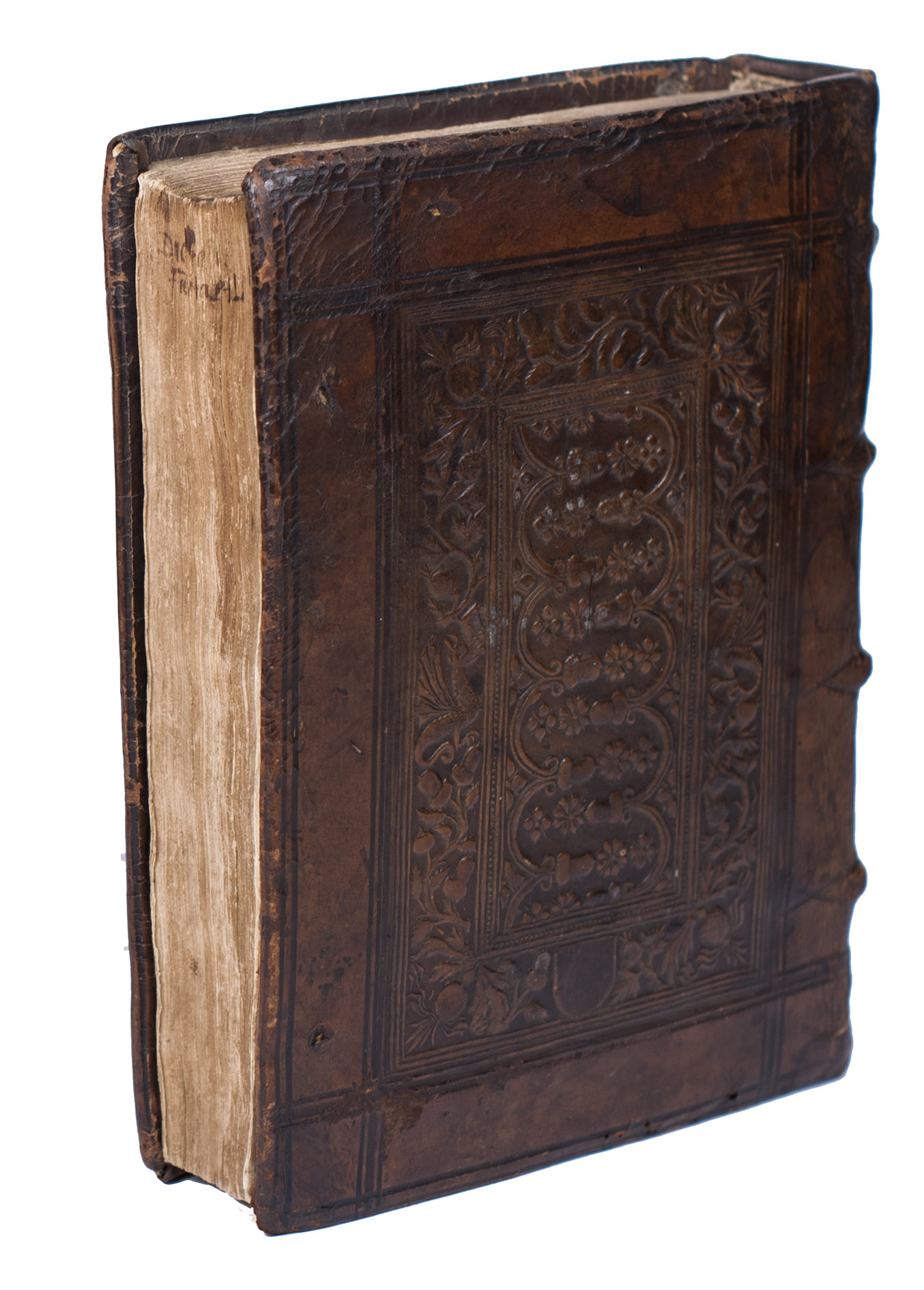
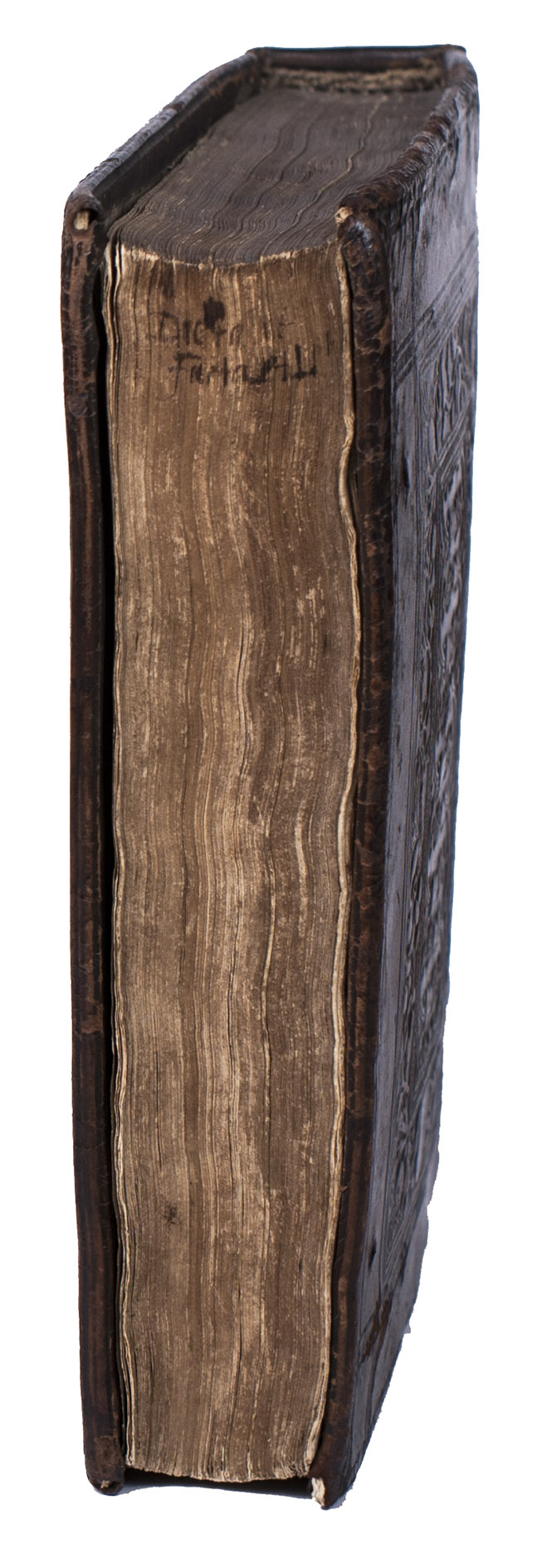
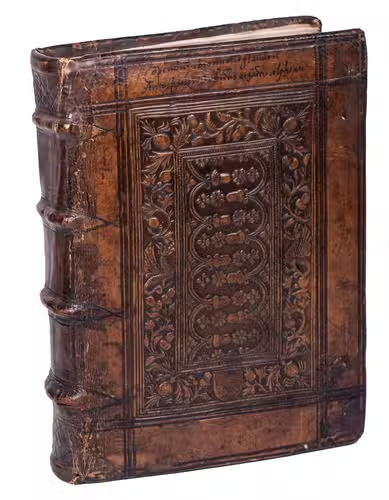
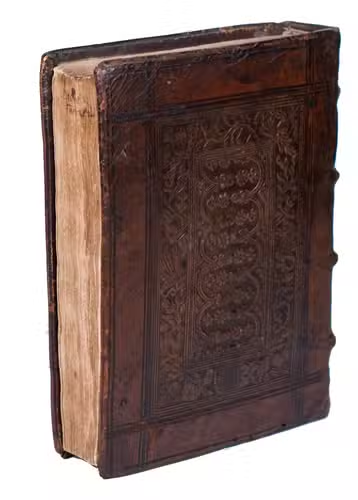
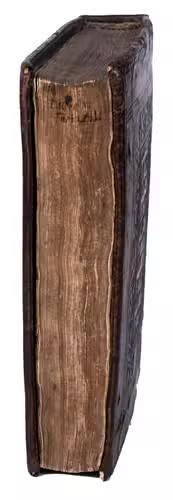
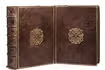
Contemporary panel-stamped calf, sewn on 4 supports with the corresponding raised bands on the spine, blind-tooled diagonal cross-hatching in the top and bottom compartment, a central panel on both boards (measuring 156 x 93 mm) with acorns on branches, surrounded by a floral border with acorns and wyverns, and an escutcheon at the bottom, the titles written in a humanistic hand at the top of the front board and on the fore edge, remnants of closing ties. [14], 134 ll; [8], 1-125, 226-299, 100-108, 209-212, 203, 213-214, 214-216, 117, 218-230, 221-278 [=282], [2] pp.
€ 6,500
Ad 1: First edition of an early humanist history of Flanders from 445 to 1278, in a beautiful contemporary, likely Flemish, binding with exceptionally clear impressions. The work covers the genealogy and highlights of the Counts of Flanders, as well as important historical events. The author had a critical mind and based his work on historical documents rather than folklore, unlike his contemporaries. Because of this, he is considered the first modern historian and often called the "father of Flemish historiography".
Jacques de Meyer from Vleteren near Bailleul (1491-1552) was a Belgian historian and friend of Erasmus. Earlier he had published a more concise history, Flandricarum rerum libri X (1531), which he had based on earlier chronicles, of which many only circulated in manuscript at the time. For the present work, however, he made use of documents he found in the archives of monasteries, cloisters, and ancient houses. According to the prefatory Privilege (fols. 1v-2r) the present work was finished at great personal expense, trouble, and labour to its author. After De Meyer's death, the text of the Compendium was revised and extended to the year 1476 by his nephew Antoine, and published in 1561 with the title Commentarii sive annales rerum Flandricarum.
Ad 2: Second edition after the incunable edition of 1485 (Pisa, Gregorio de Gente) of this panegyric on King Alphonso V of Aragon (1396-1458) residing at Naples, by Antonio Beccadelli (1394-1471), or "Il Panormita" (The Palermitan), an Italian poet, scholar, diplomat who entered the service of Alphonso V in 1434. Alphonso was a great patron of the arts and Beccadelli accompanied Alfonso for the rest of the Kings life. Beccadellis most famous work is his Hermaphroditus (1425), a collection of 81 Latin epigrams evoking the eroticism of Catullus and Martial. He received the poets crown in 1432.
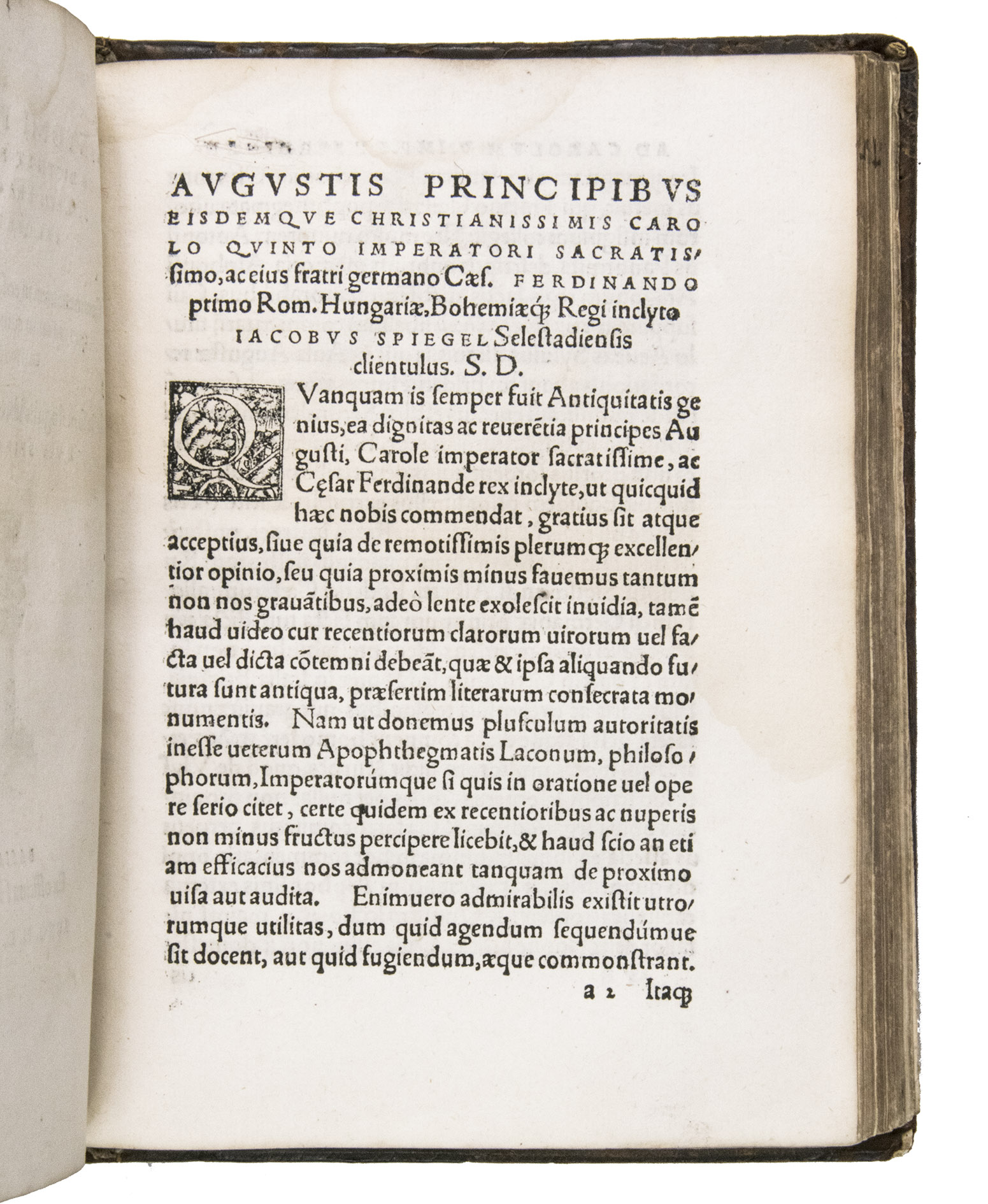
Completed in 1455 this collection of panegyric "Sayings and deeds" of Alphonso V recounts episodes of Alphonsos life with the aim of creating an ideal profile of the king ("Fürstenspiegel") in the form of anecdotes, sententiae and deeds attributed to Alphonso. The work is inspired by Xenophons Memorabilia and was published for the first time in 1485 in Pisa. This second edition is accompanied by the commentary by Enea Silvio Piccolomini (1405-1464), the well-known later pope Pius II (1458-1464) who was then Ambassador of Sienna at the court at Naples and friend of Beccadelli. The German humanist Jacob Spiegel (1483-1547) added his commentary and notes to both the work by Beccadelli and the commentary by Piccolomini. The work was translated into Catalan in 1481 and into Castilian, printed in 1527.
A few years later Beccadelli also wrote a chronicle on the undertakings of King Ferdinand, describing the life of the young Ferrante, Alphonsos son, Ferdinand I of Naples (1423-1494) during the years 1438 till 1458, the death of his father to demonstrate the legitimacy of his succession to the throne of Naples: Liber rerum gestarum Ferdinandi regis.
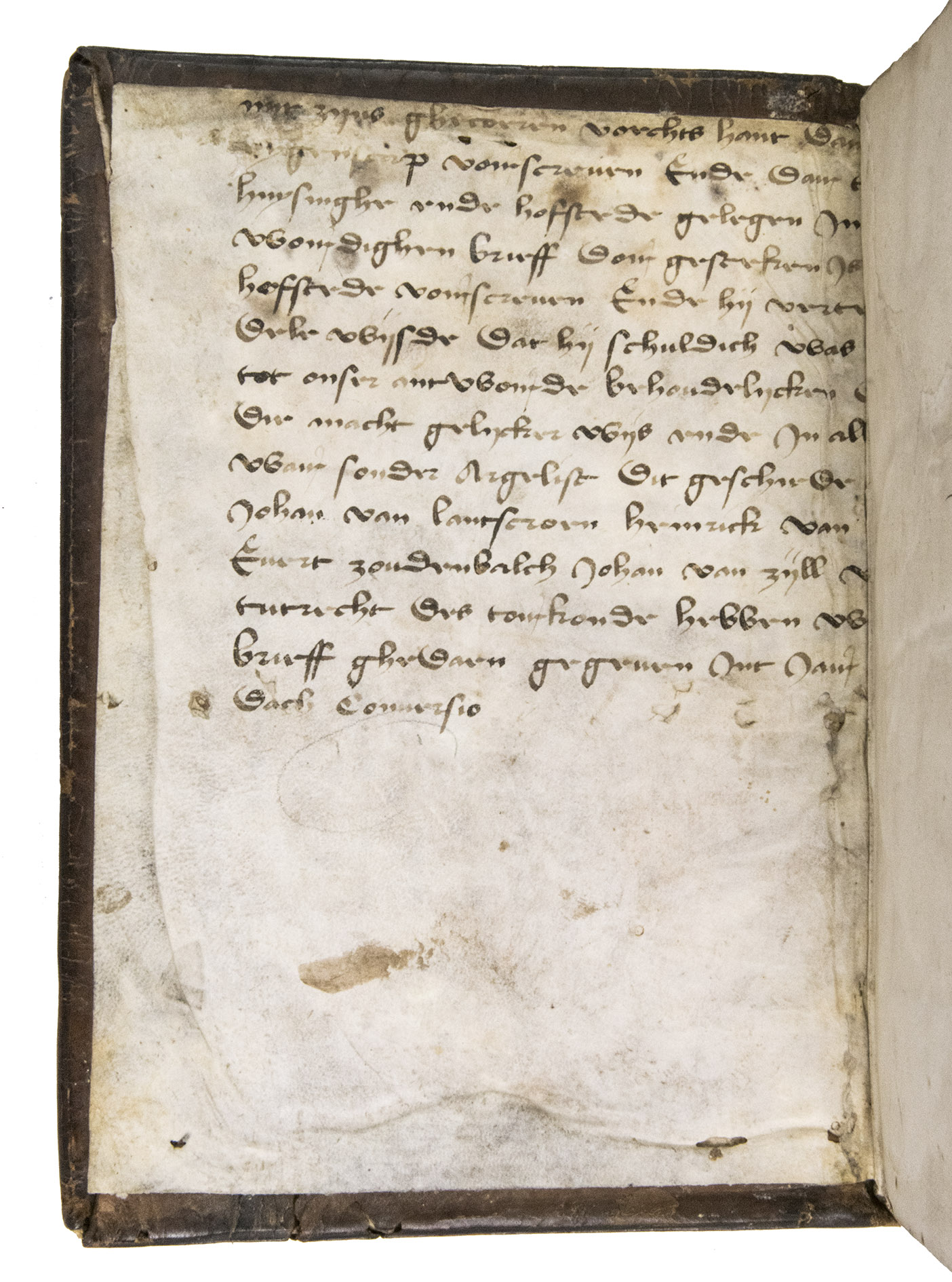
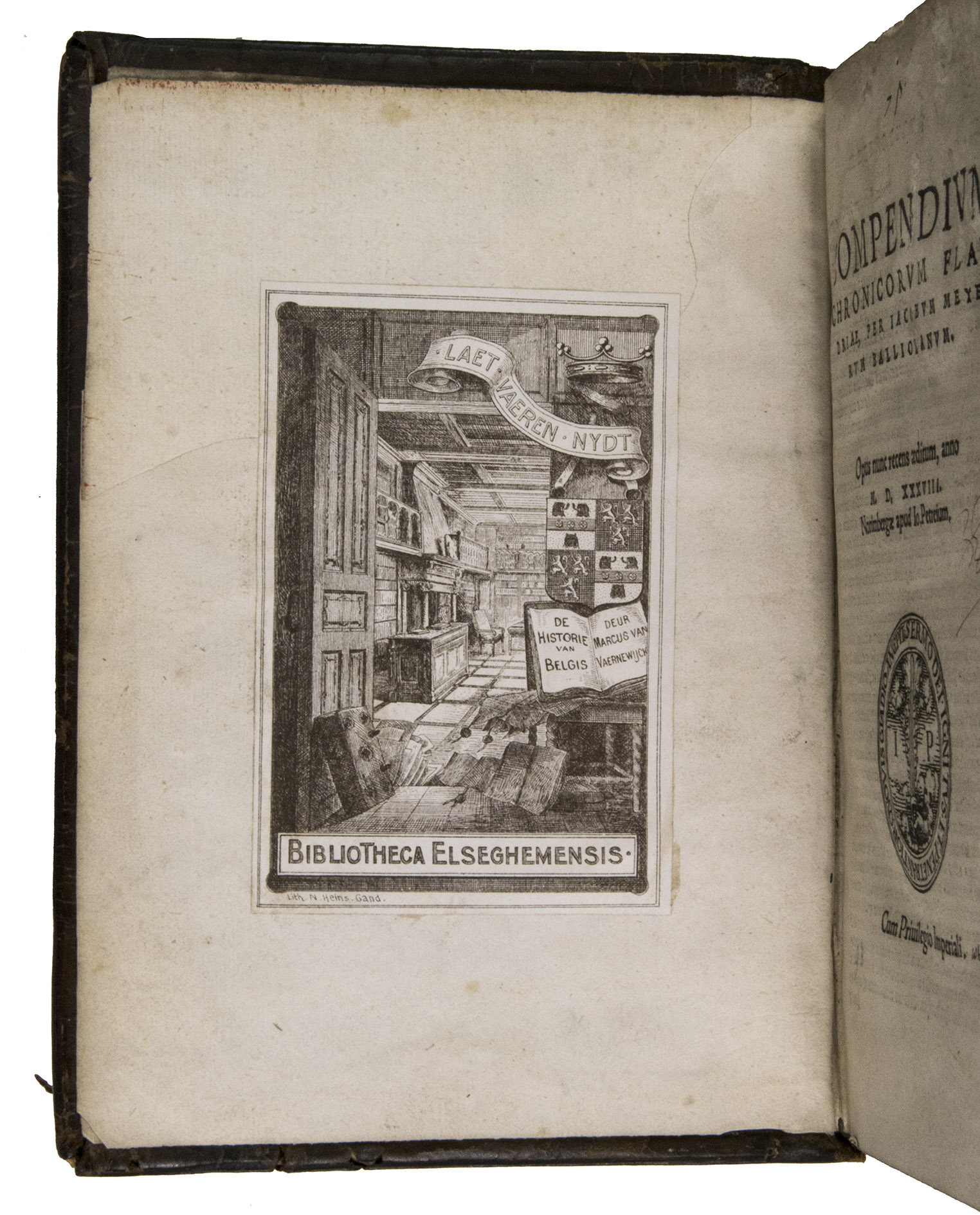
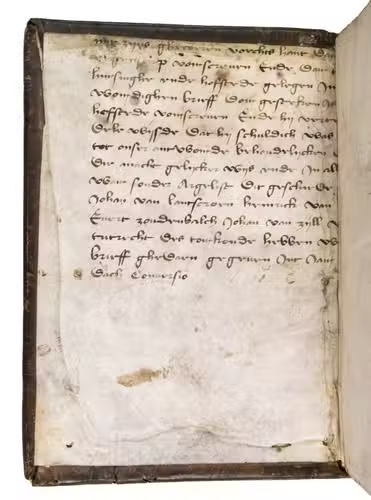
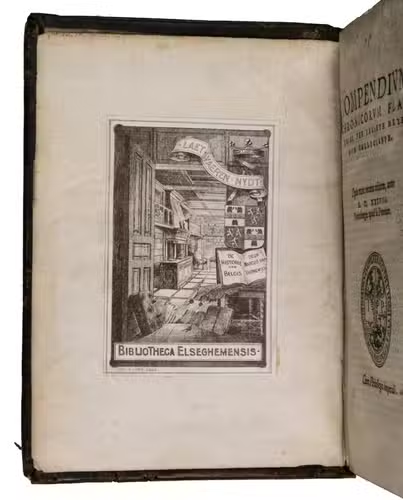
With a near contemporary signature on the title page ("B. Hasius"(?)), the bookplate of the Belgian politician, bibliophile and genealogist Amaury de Ghellinck dElseghem Vaernewyck (1851-1919) mounted on the verso of the first flyleaf, and manuscript waste pastedowns, taken from the lower half of an original charter in Dutch dated Utrecht, 1493, written in a clear gotica cursiva containing names all figuring in the list of names of the magistrates of Utrecht in the years 1492-1494 (including Johan van Lantscroon, the well-known Evert van Zoudenbalch (1424-1503), Johan van Zyll, Willem van der Borcht, Johan van Veen, Jacob van Amerongen and Willem Taets van Amerongen). The boards are very lightly rubbed, but the blind tooling is still very clear, the joints have been professionally restored. Small restored holes in the upper margin of the title of ad 1, a water stain in the outer margin of the first few leaves of ad 1 and ad 2, a small tear in fol. a2 of the second work affecting some letters of the headline, the last leaf is partly underlaid, affecting the mark, some contemporary marginal annotations and underlinings. Otherwise in good condition. Ad 1: Adams, M-1391; Brunet III, p. 1690; Machiels, M-469; STC German, 621; USTC 623923; VD16, M 5086; Ad 2: Adams, B-428; Index Aurel. 115.377; Palau, 7154; STC German, p. 73; USTC 612020; VD16, B 1315; J. Amador de los Rios, Hist. crit. de la literatura española, 6 (1861-65), p. 381; cf for the binding: Goldschmidt, Got. & Ren. bookbindings, no. 135; Fogelmark, Flemish and related panel-stamped bindings, Plate XLI (R. 103; Type B), pp. 12, 128-136 (and notes 254, 265), p. 176 (and notes 375, 377).
Related Subjects: