MENDEL, Gregor.
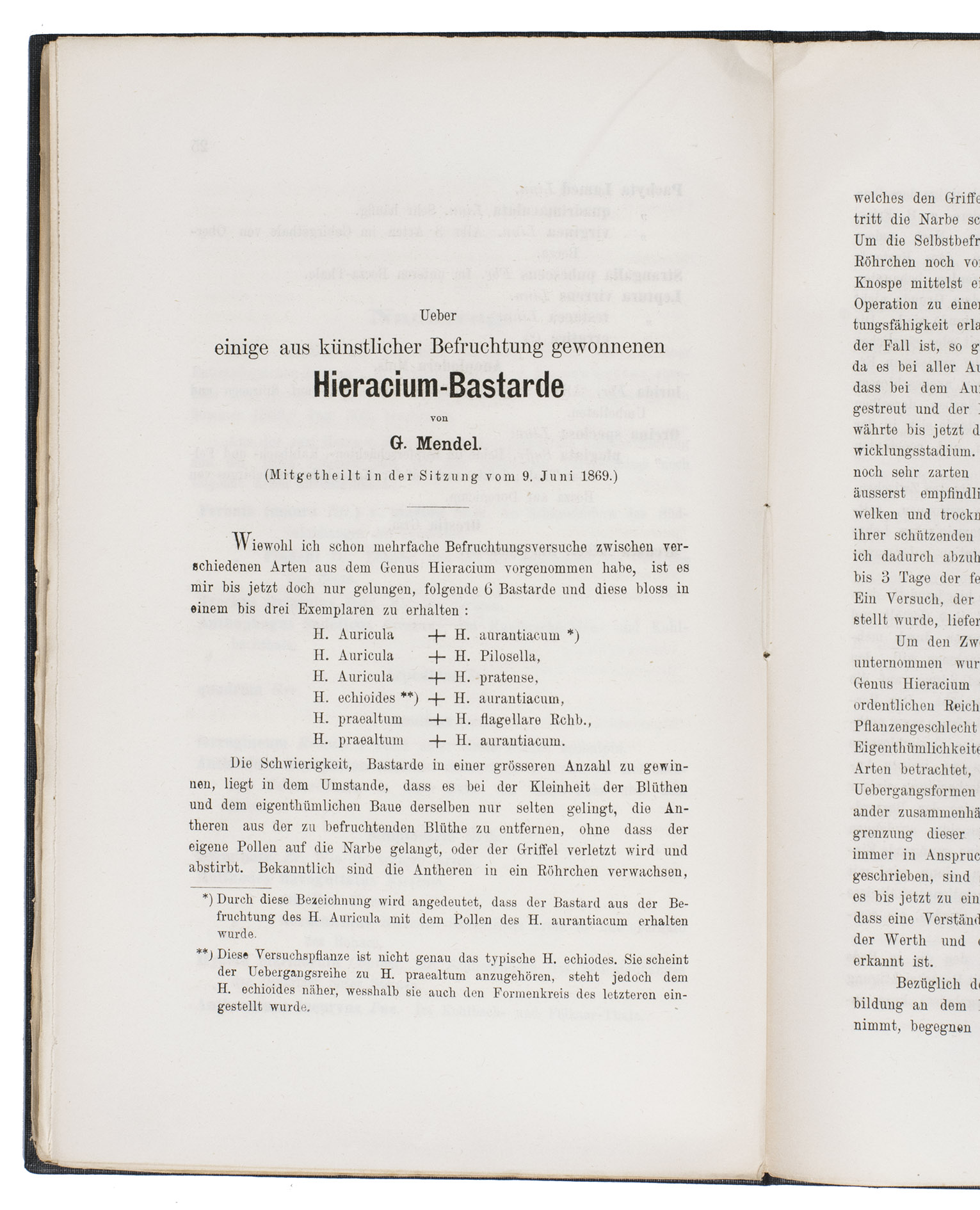
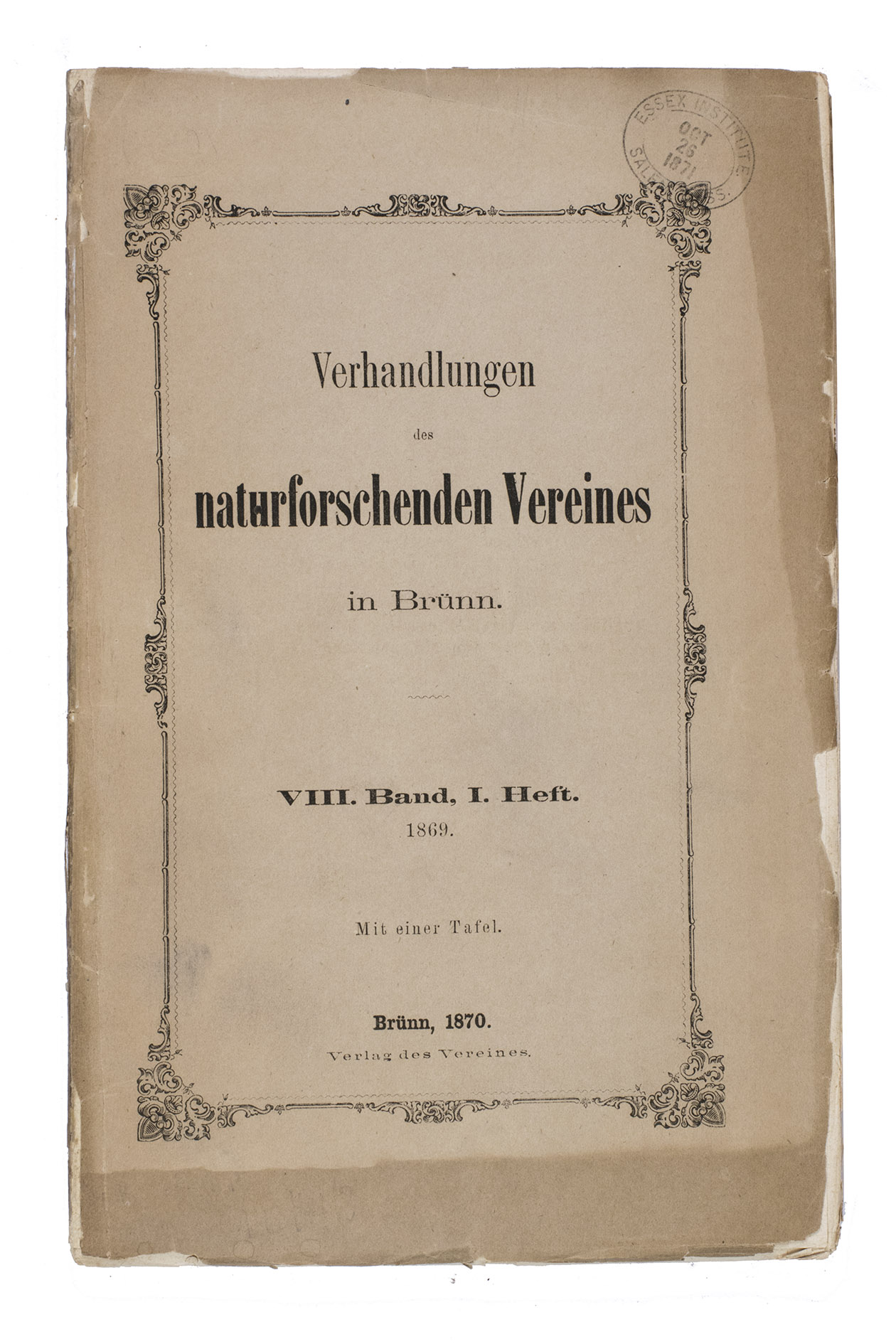
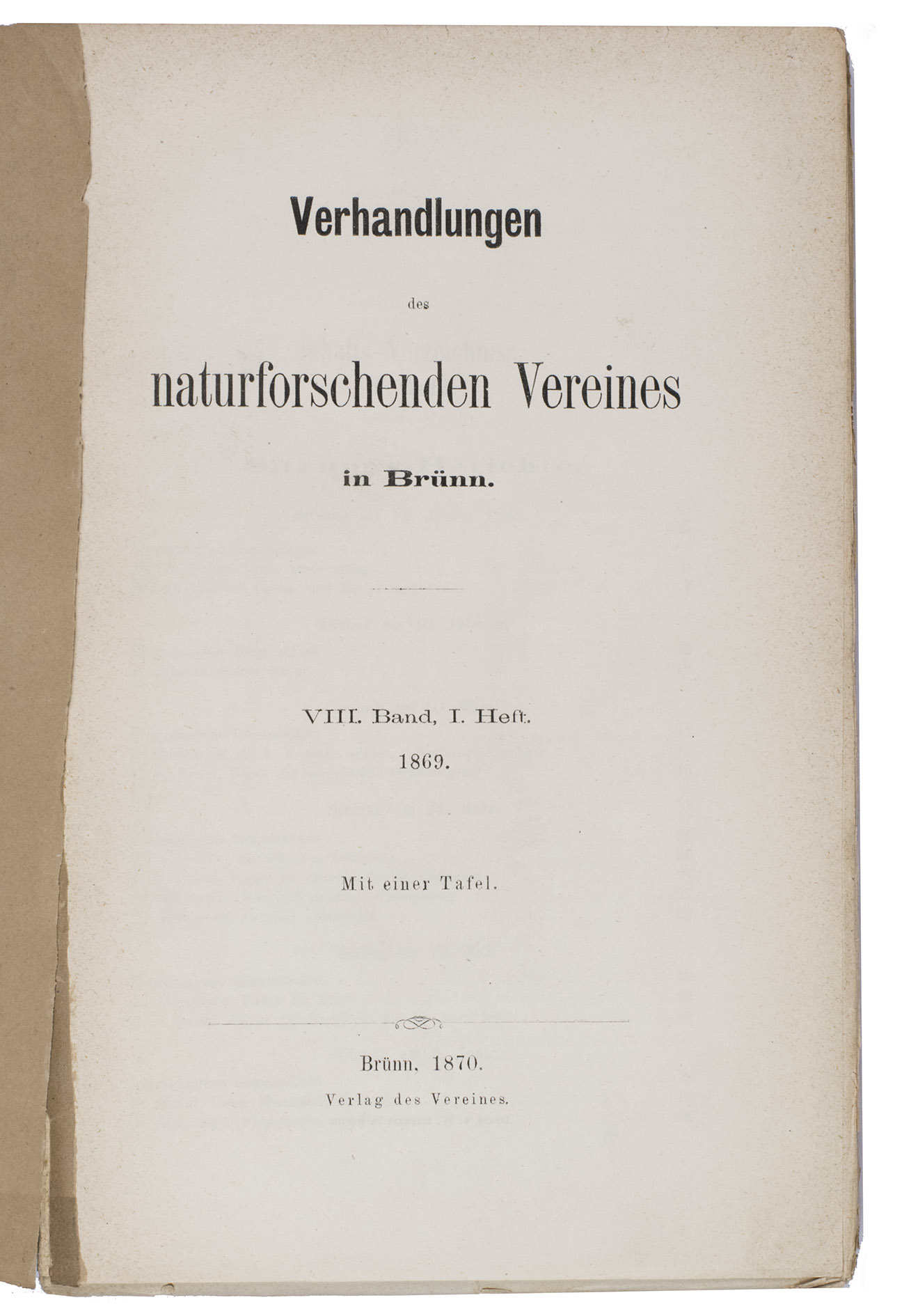
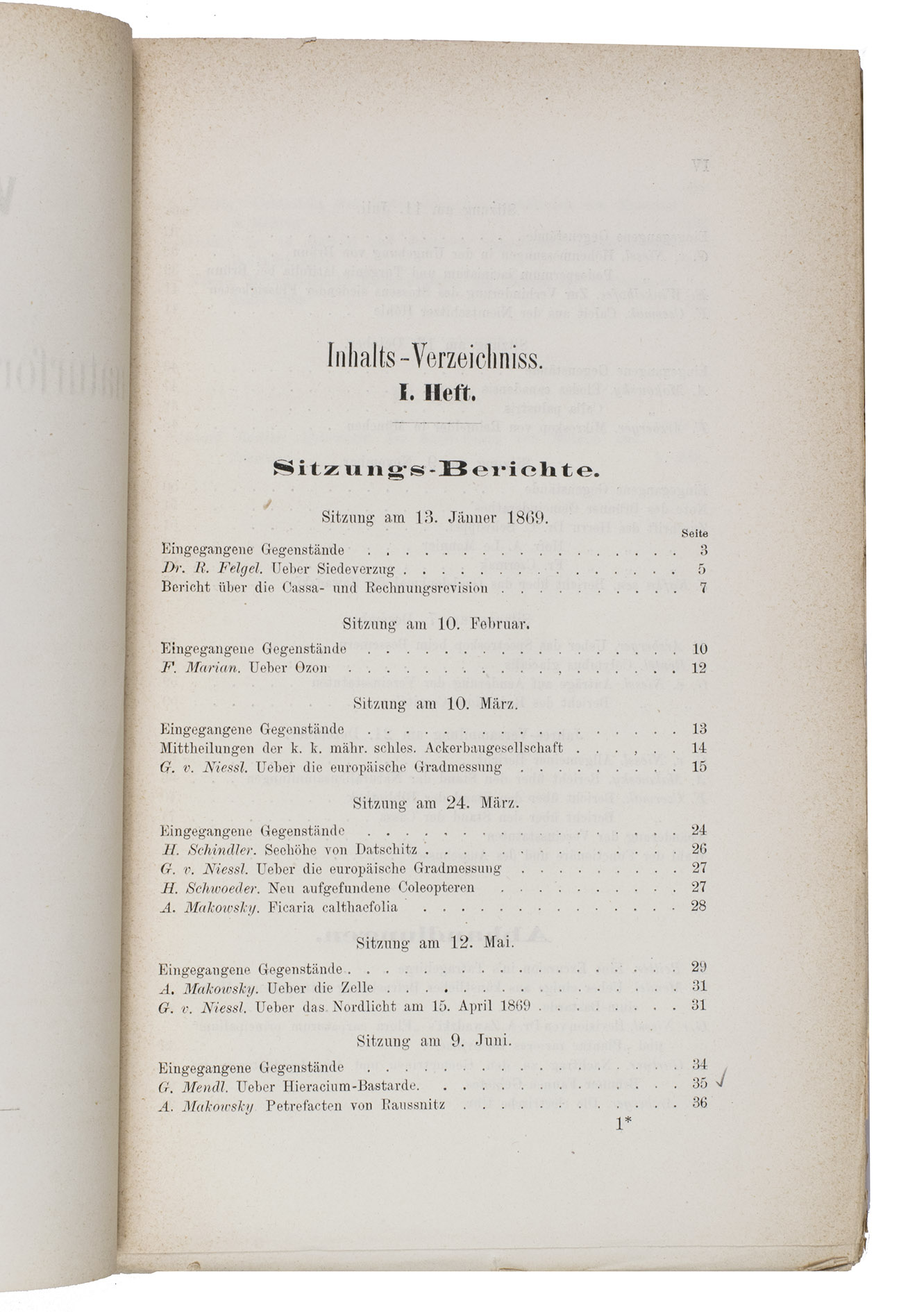
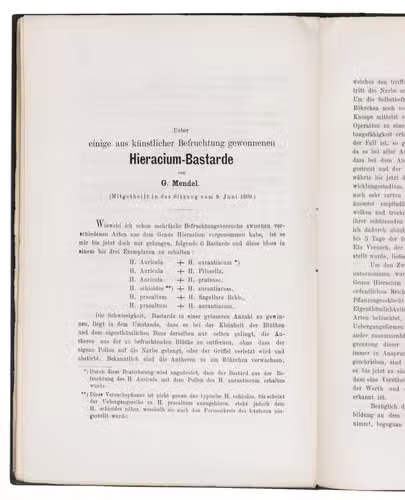
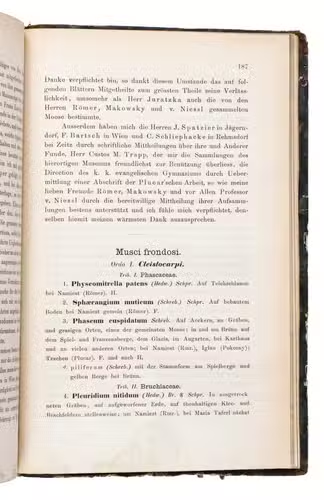
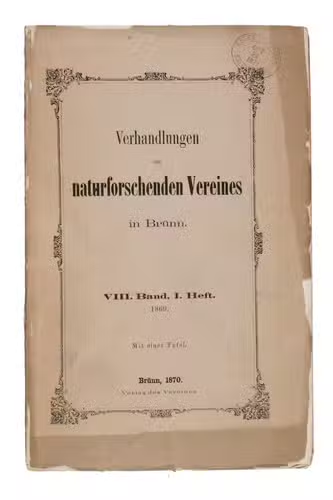
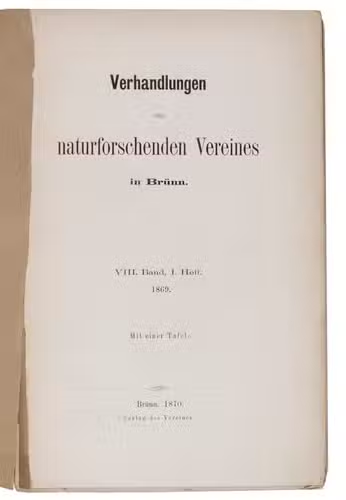
"Ueber einige aus künstlicher Befruchtung gewonnenen Hieracium-Bastarde" in: Verhandlungen des naturforschenden Vereins in Brünns. VIII Band, I. Heft. 1869.
Brno, im Verlage des Vereines (printed by W. Burkart), 1870.
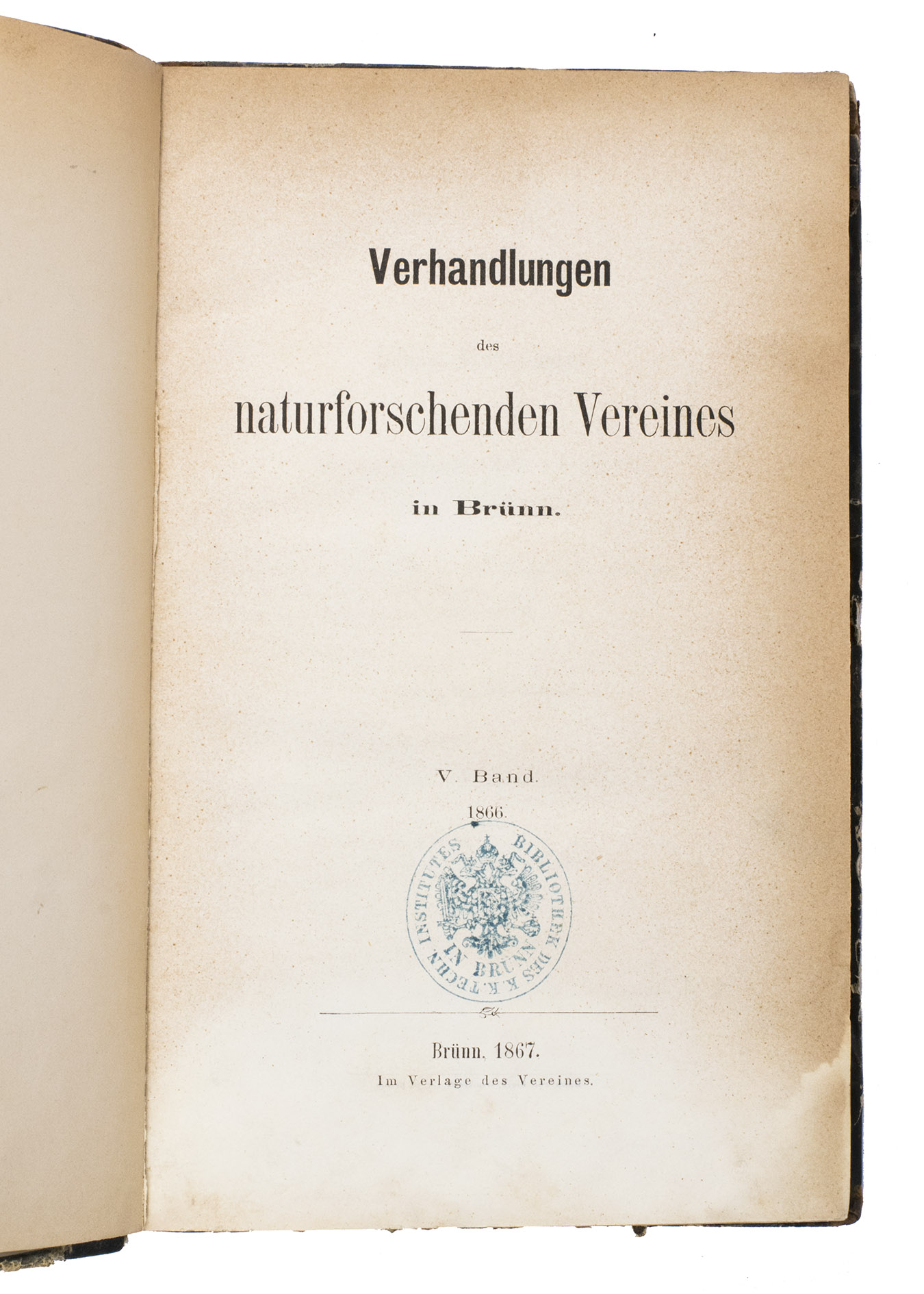
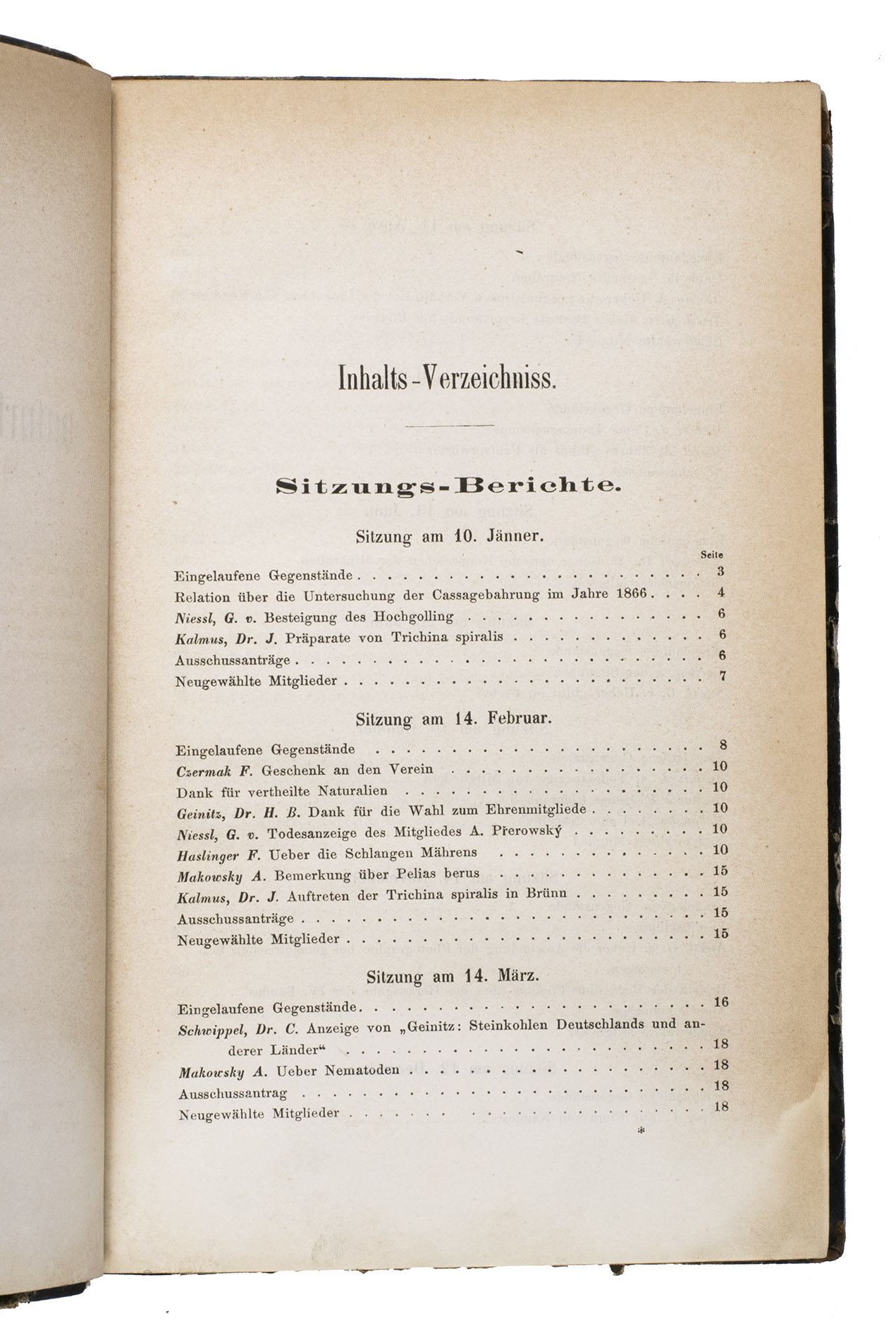
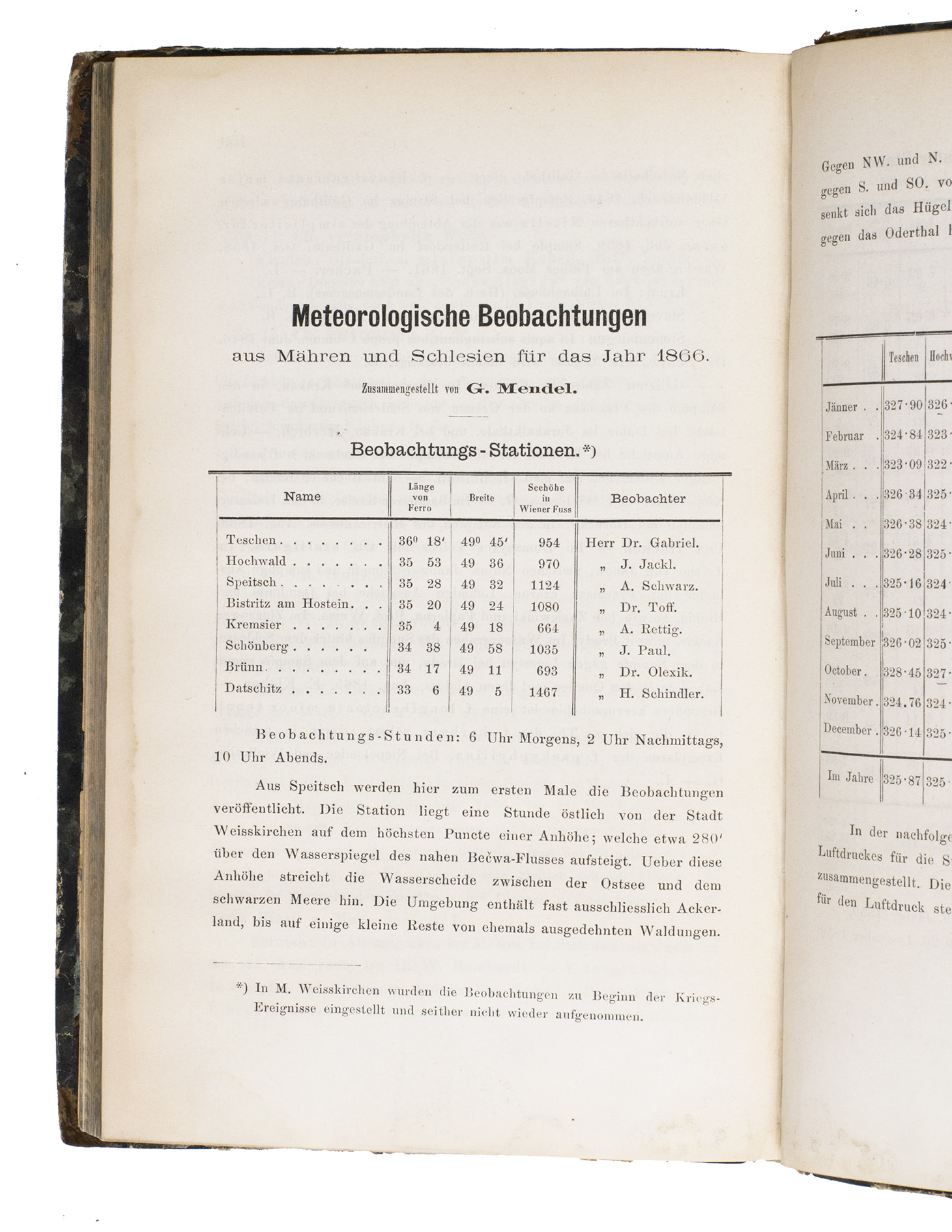
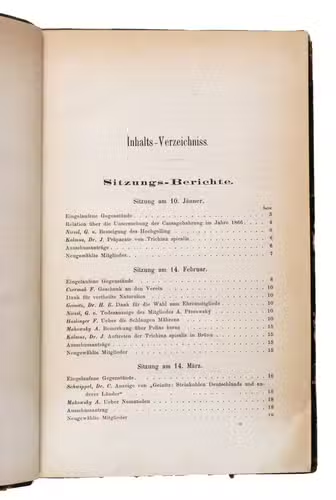
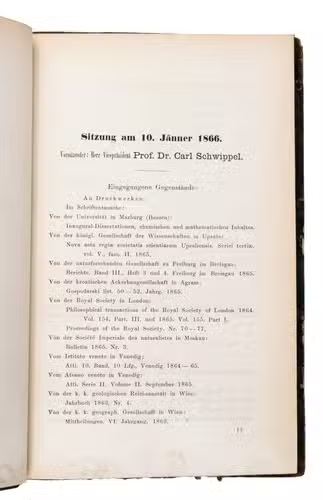
With: [JOURNAL - NATURAL HISTORY SOCIETY BRNO]. Verhandlungen des naturforschenden Vereins in Brünns. V Band, 1866.
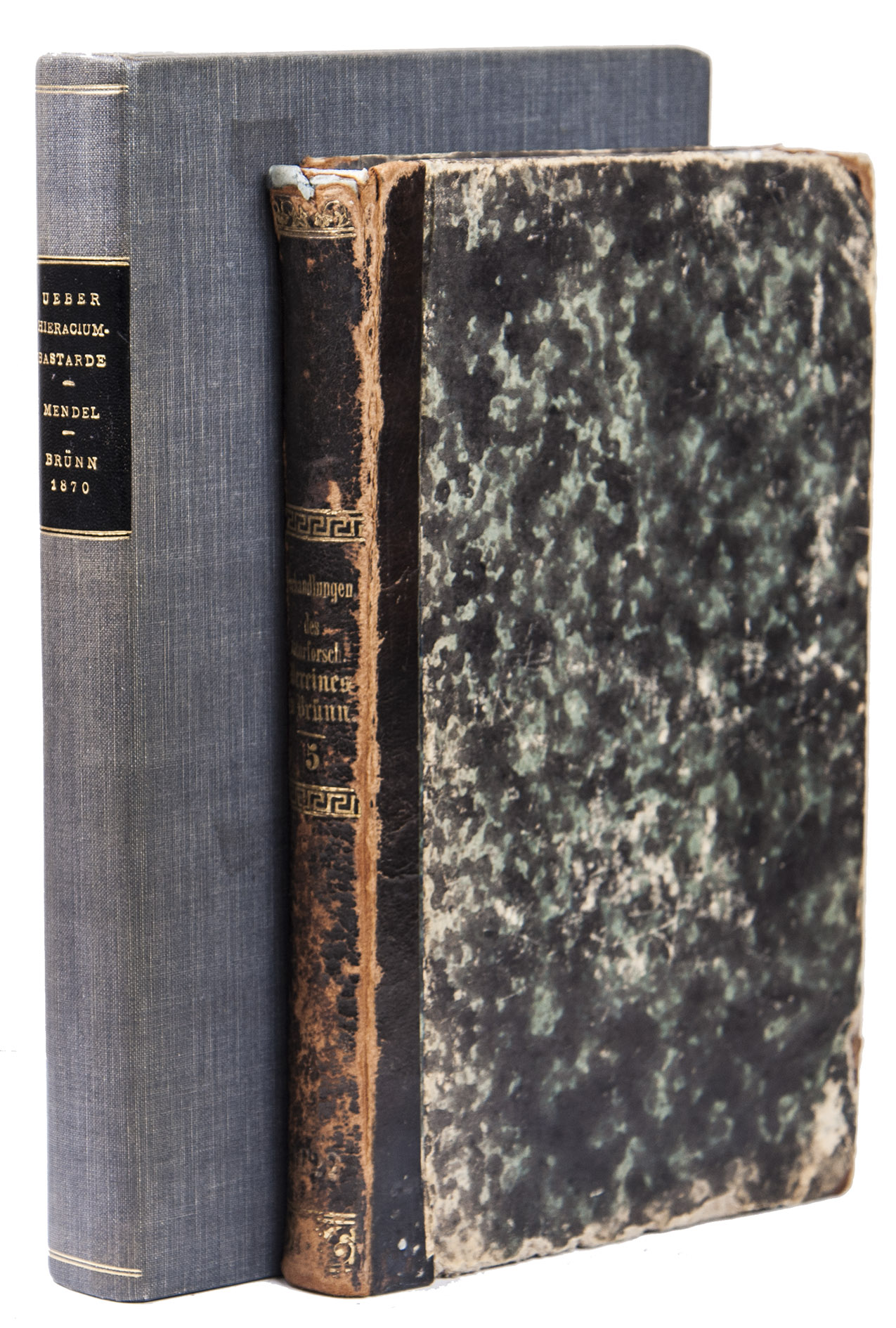
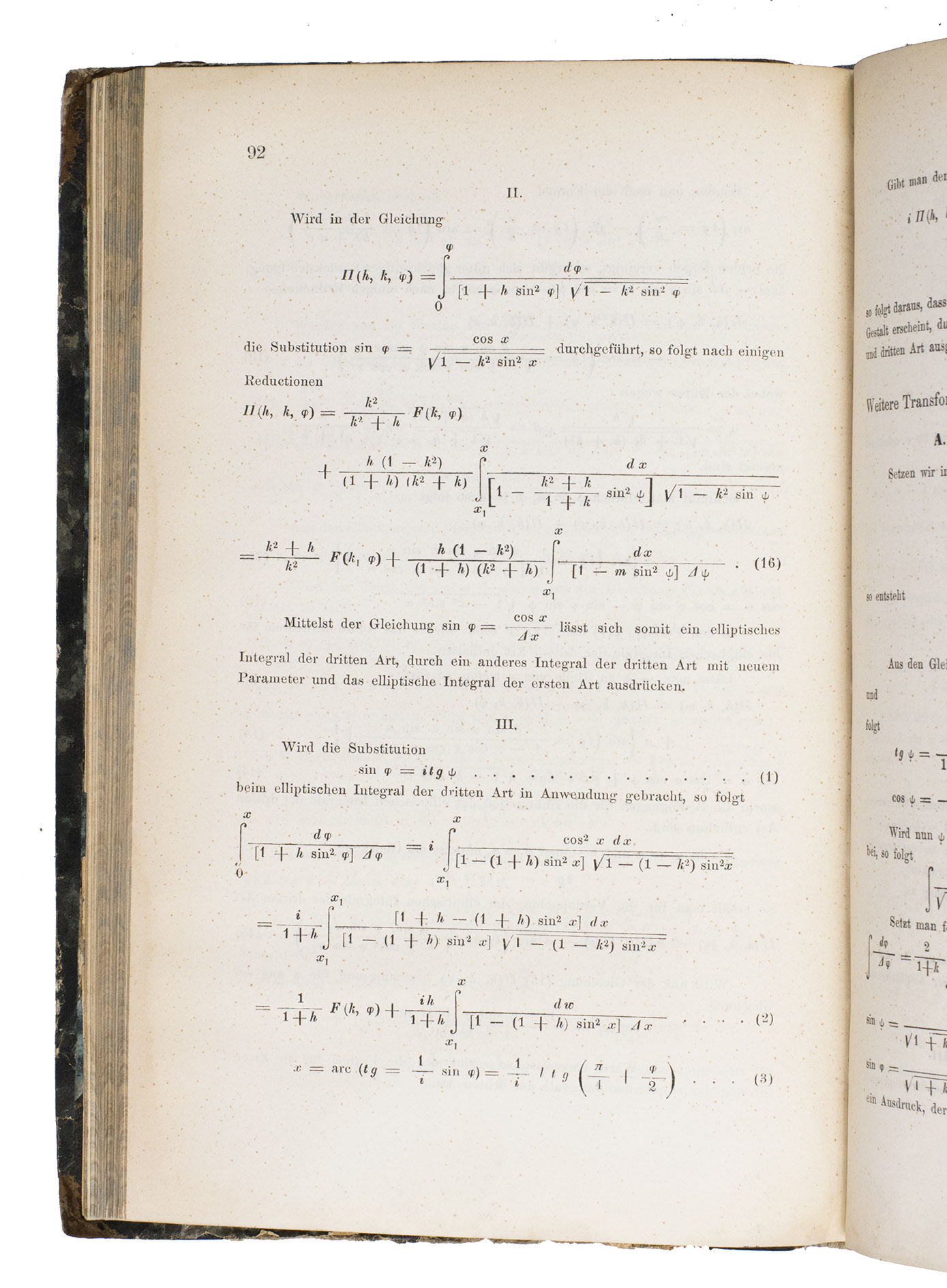
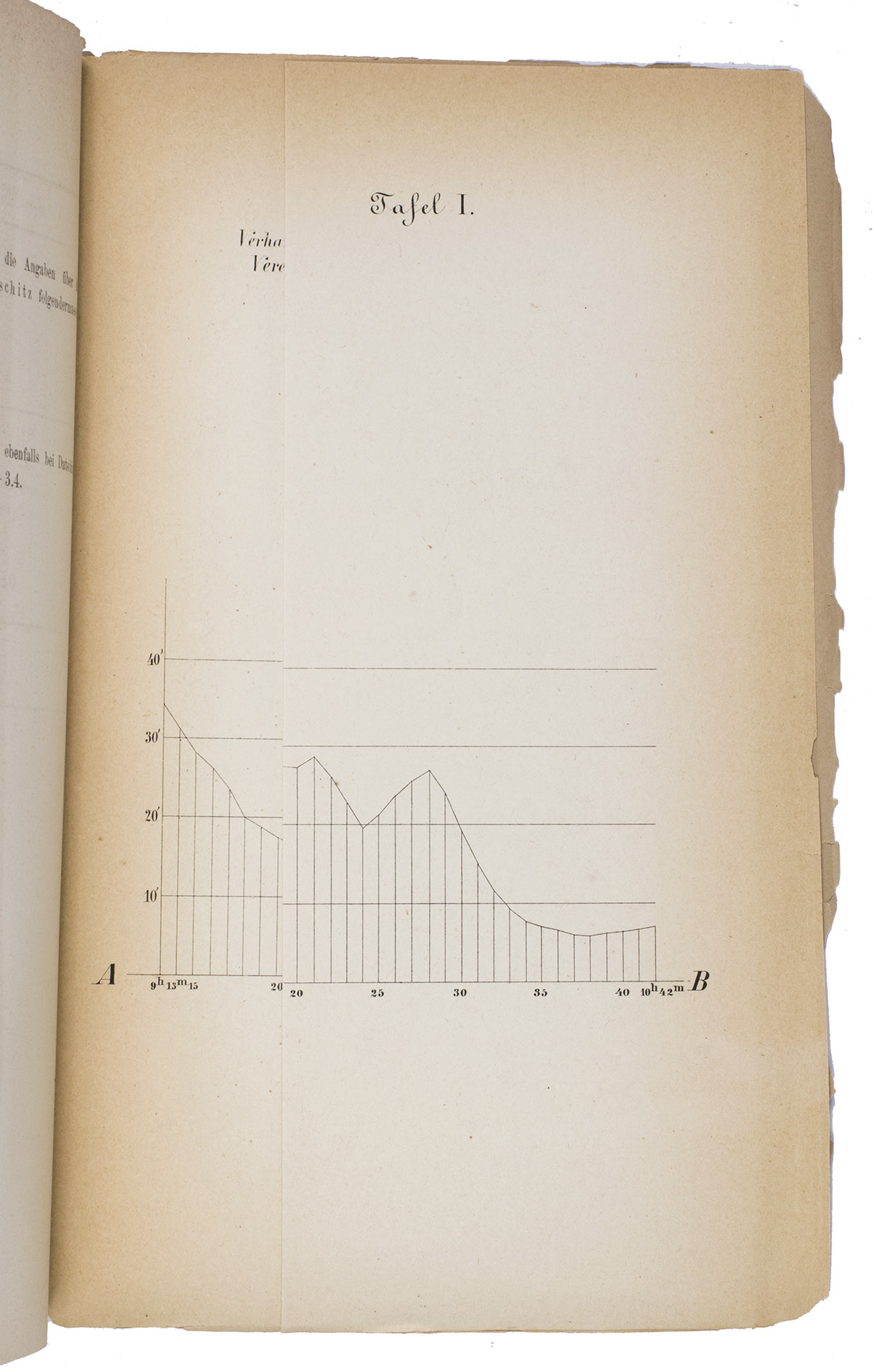
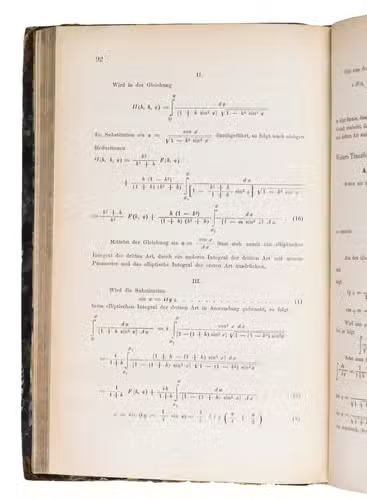
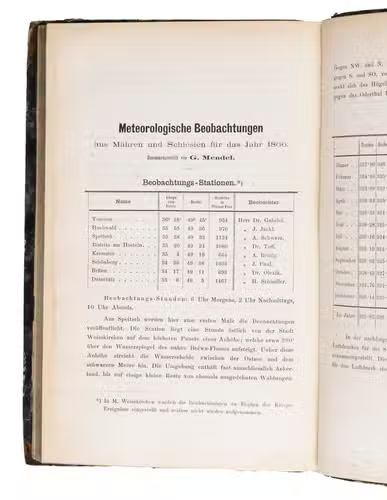
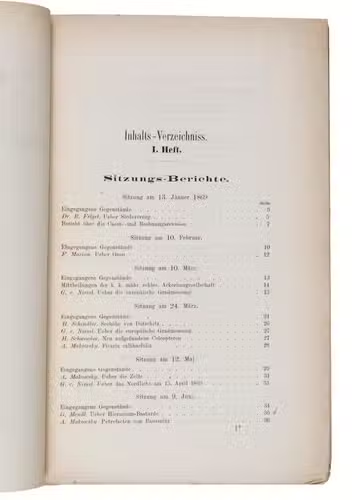
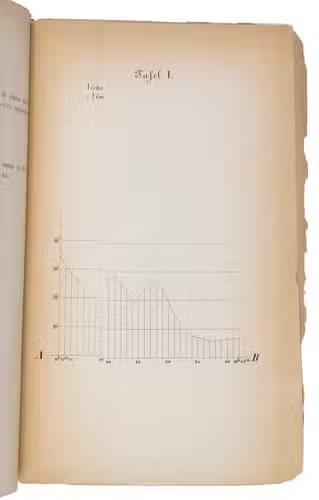
Brno, im Verlage des Vereines, 1867. 2 volumes. 8vo. With a folding plate at the end, and mathematical figures and tables in the text. Original printed publisher's wrappers, housed in a sturdy blue cloth folder, which has been inserted in a blue cloth slipcase. Ad 2: contemporary half black sheepskin, with the title lettered in gold on the spine, marbled paper sides, marbled edges. 26-31 [= 6] pp.
€ 8,500
First edition of the second of two famous articles in which Gregor Mendel (1822-1884), the founder of the modern science of genetics, published the results of his research into the laws of heredity. Based on breeding experiments, Mendel showed that the transmission of characters from parents to offspring conforms to a definite pattern, which became known as the Mendelian Inheritance. His theory of genetic mutation provided an explanation for the problem of the supply of variation on which selection acts according to Darwin's theory. Darwin was acutely aware of this difficulty, but Mendel's articles, the first of which titled Versuche über Pflanzen-Hybriden was published in 1865 in the same scholarly magazine, remained unfortunately unnoticed until their rediscovery in 1900 after Darwin's, and Mendel's, death.
Mendel was a biologist, mathematician, and Augustinian friar in Brno. The monastery where he lived was supported mainly from the income from its estates and the abbot therefore placed much importance on the improvement of agriculture, encouraging experiments in the gardens. Mendel attended courses in agriculture, viticulture, and pomology, as well as philosophy, mathematics, chemistry, and physics, and soon became in charge of these gardens. Here, he cultivated and tested 28.000 plants, primarily pea plants, over the course of ten years, analysing seven characteristics. When cross-breeding plants with different variations of these characteristics, he discovered that some variations were more likely to appear in the next generation than others. To explain this phenomenon, Mendel coined the terms "recessive" and "dominant". He repeated the experiments with a different type of plant, Hieracium (Hawkweed) over the course of four years. The results of this research are presented in the present article, published in the journal of the Natural History Society of Brno, of which he was a member. Also included here is an earlier volume of the same journal, with articles by other members on chlorophyll, the earth's magnetism, trichinella spiralis, and many other topics.
With the library stamp of the Essex Institute in Salem, Massachusetts on the front wrapper of ad 1, and a library stamp of the library of the K. K. Technische Intitutes in Brno on the title page of ad 2. The wrappers of ad 1 are somewhat discoloured and frayed around the edges, the boards and spine of ad 2 have been rubbed, with some loss of material. Ad 1 is uncut, the leaves of ad 1 and 2 are somewhat browned. Otherwise in good condition. Jakubícek & Kubícek, Bibl. Mendeliana 10; Sparrow, Milestones of science, pp. 41, 232; Stafleu & Cowan 5819; cf. DSB IX, pp. 277-286.
Related Subjects: