EUCLID and Christopher CLAVIUS (editor).
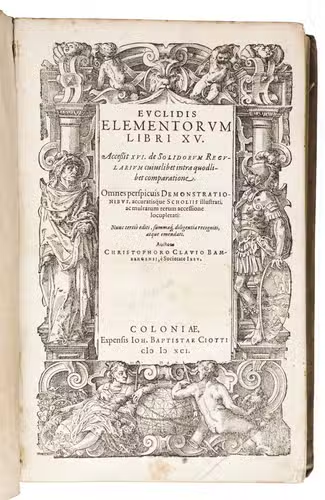
Elementorum Libri XV.
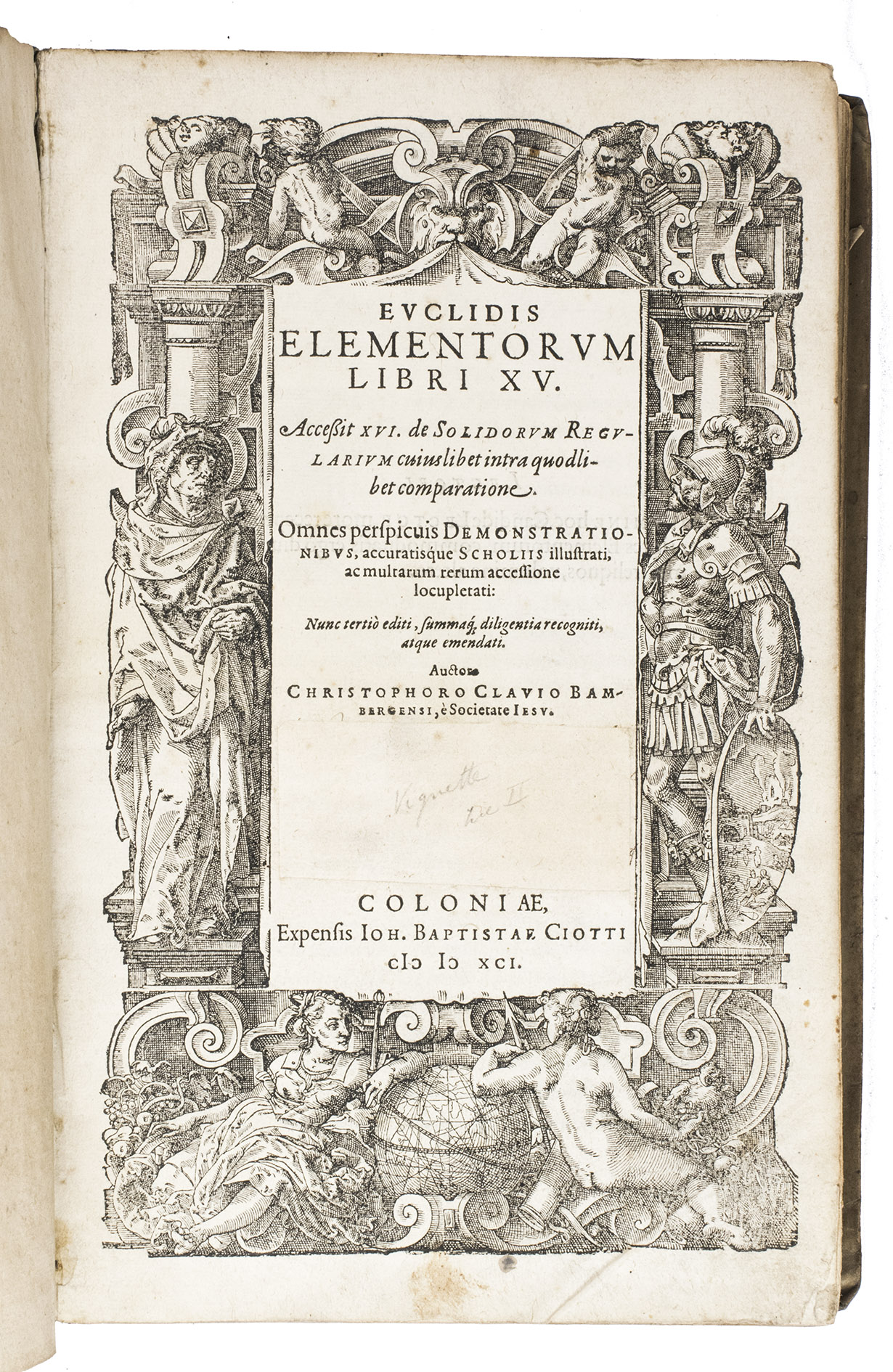
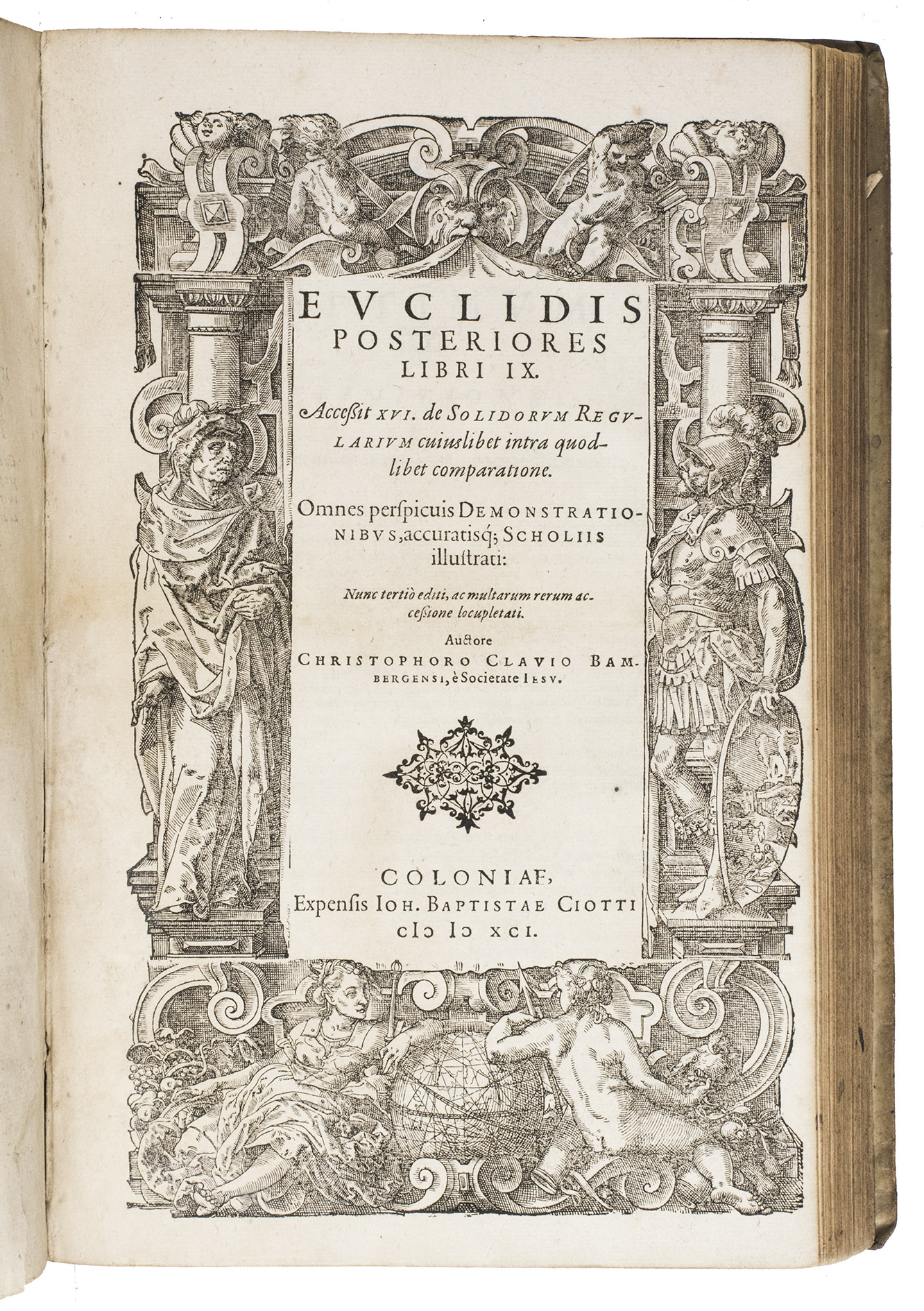
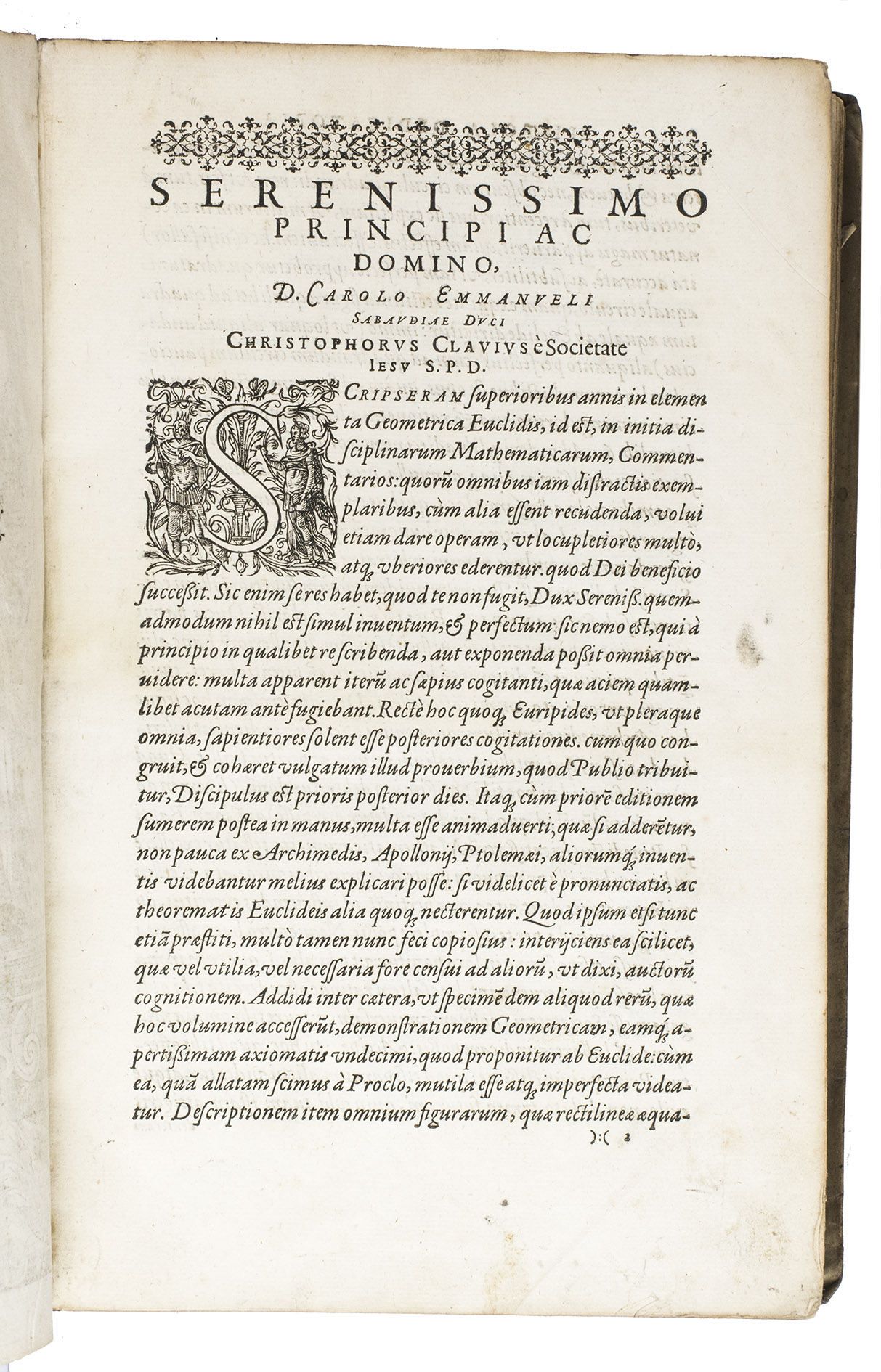
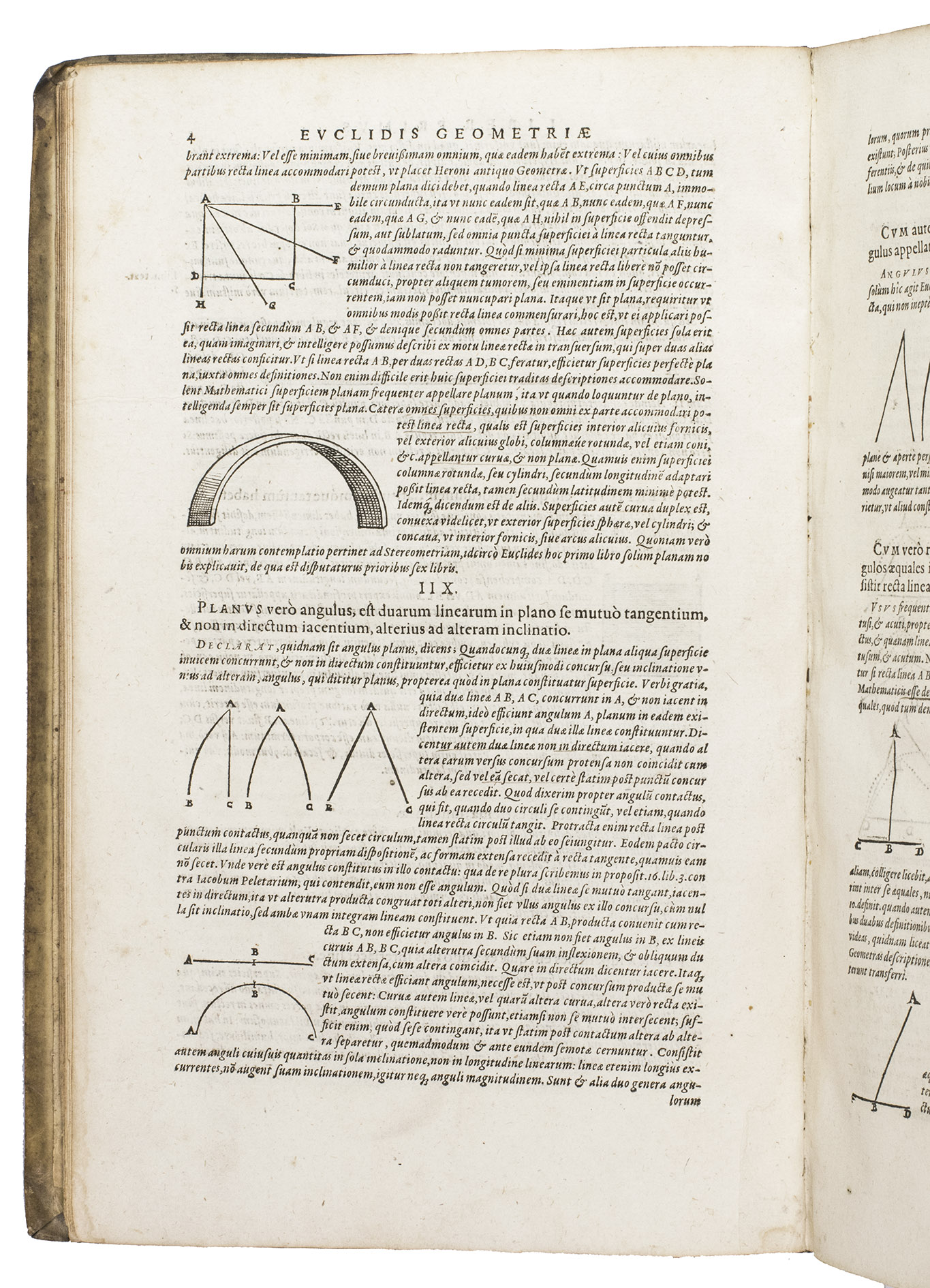
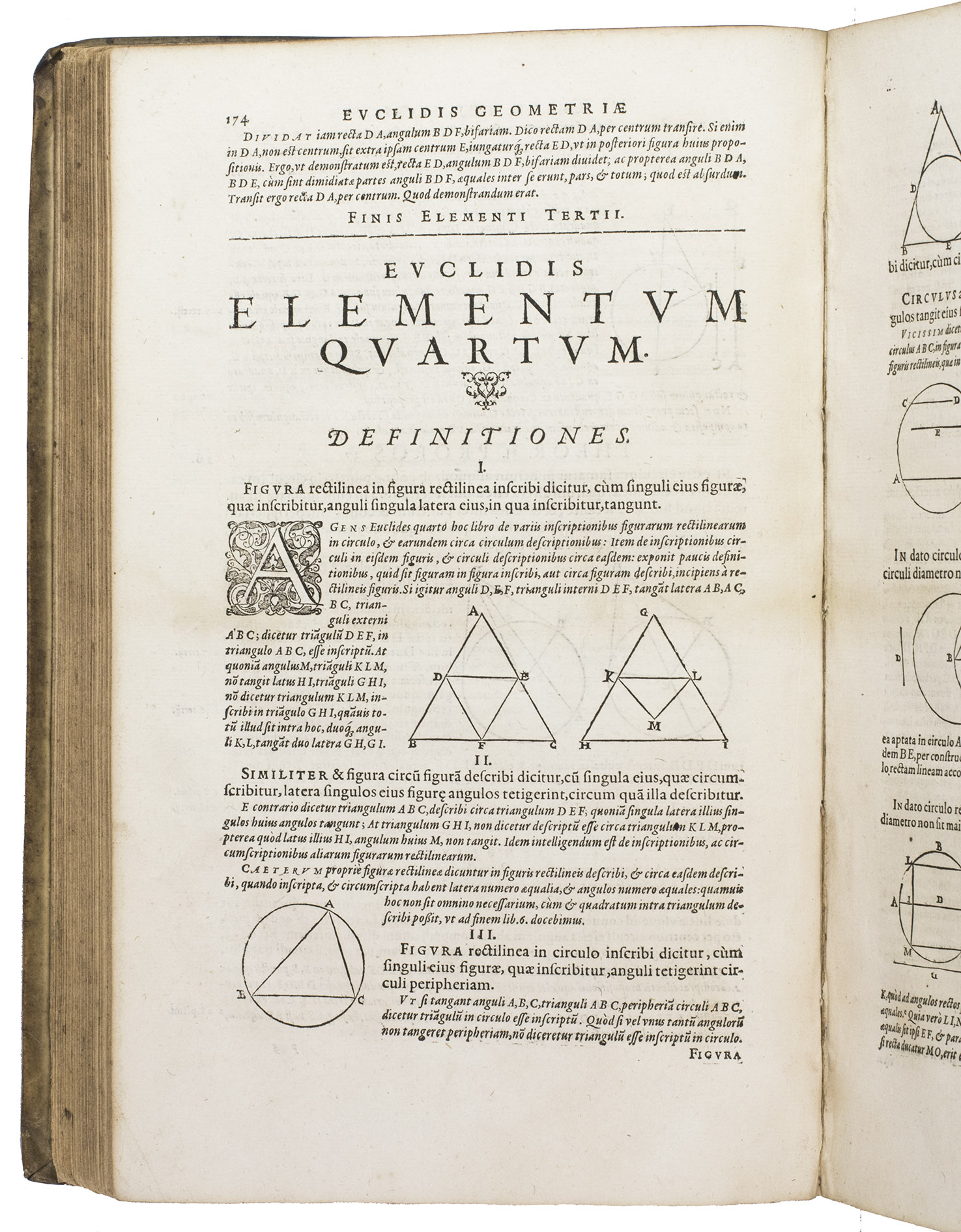
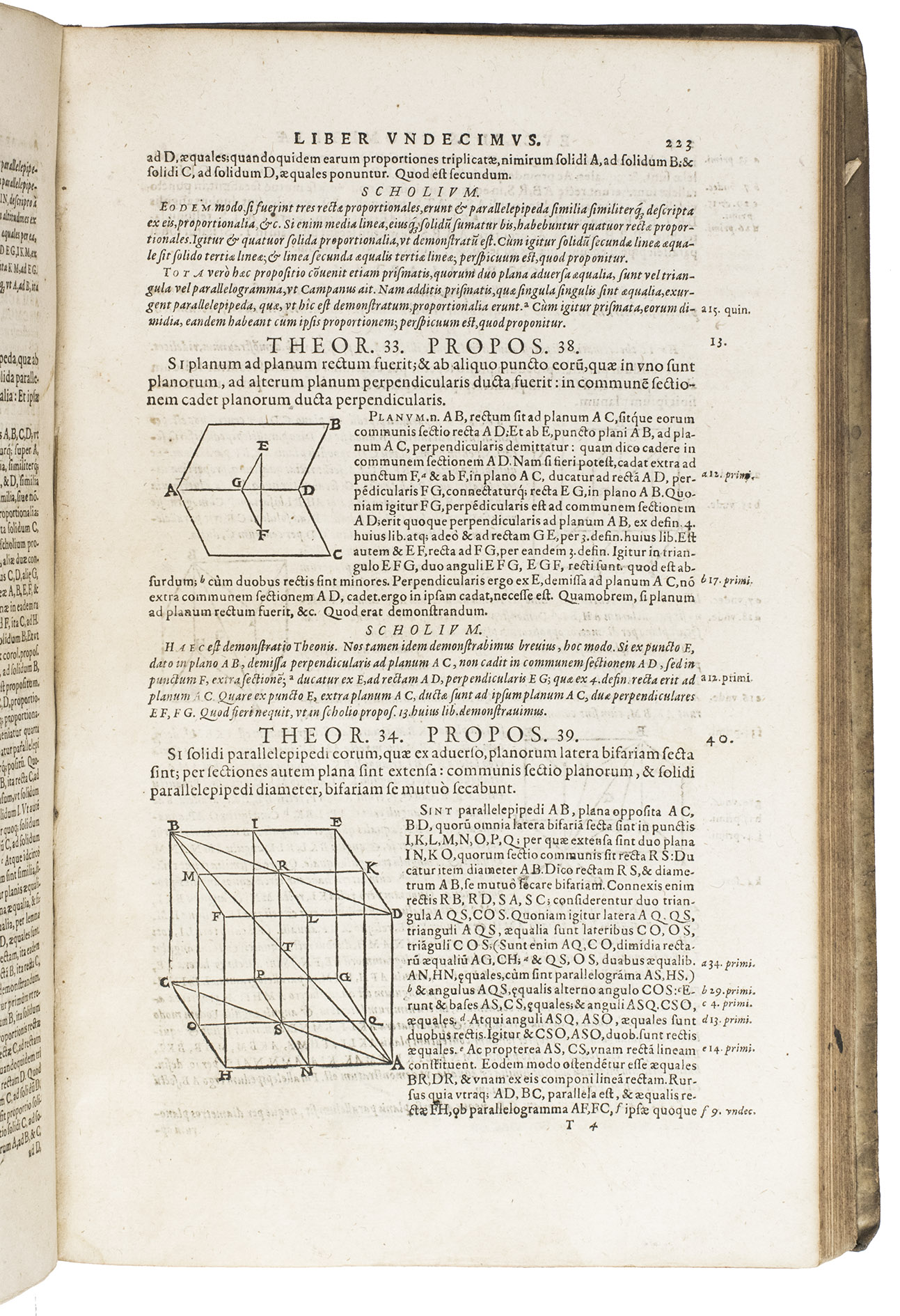
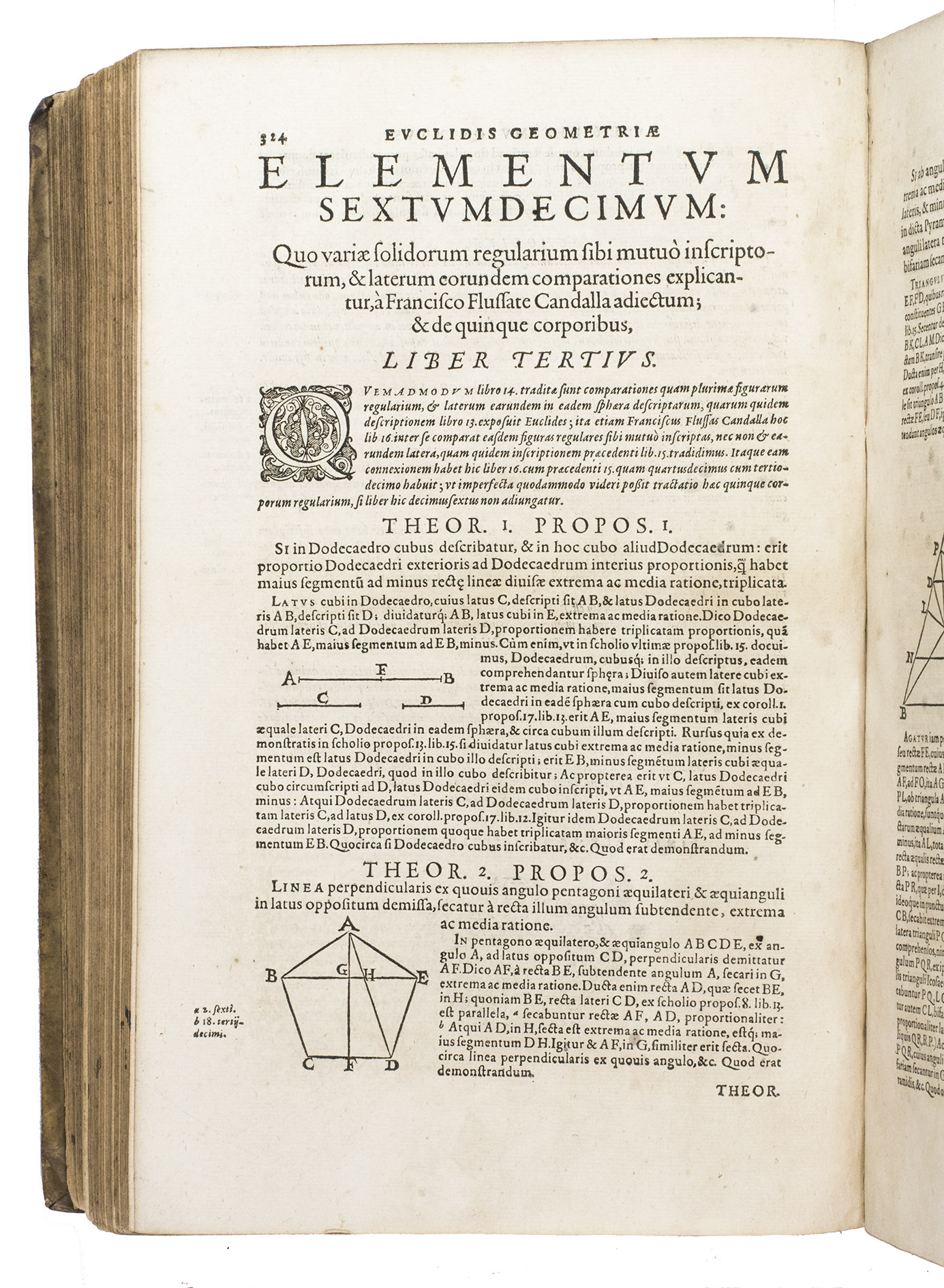
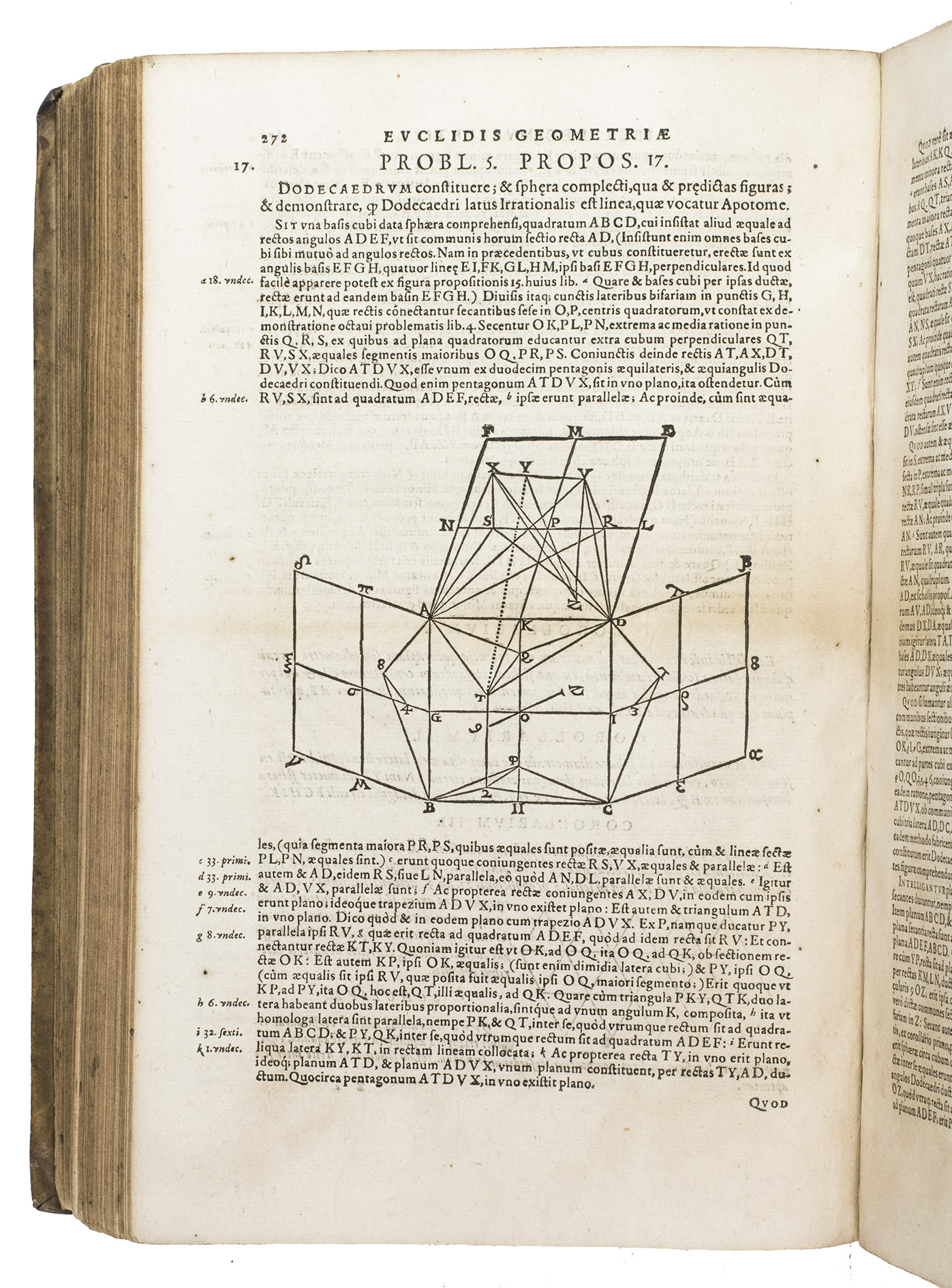
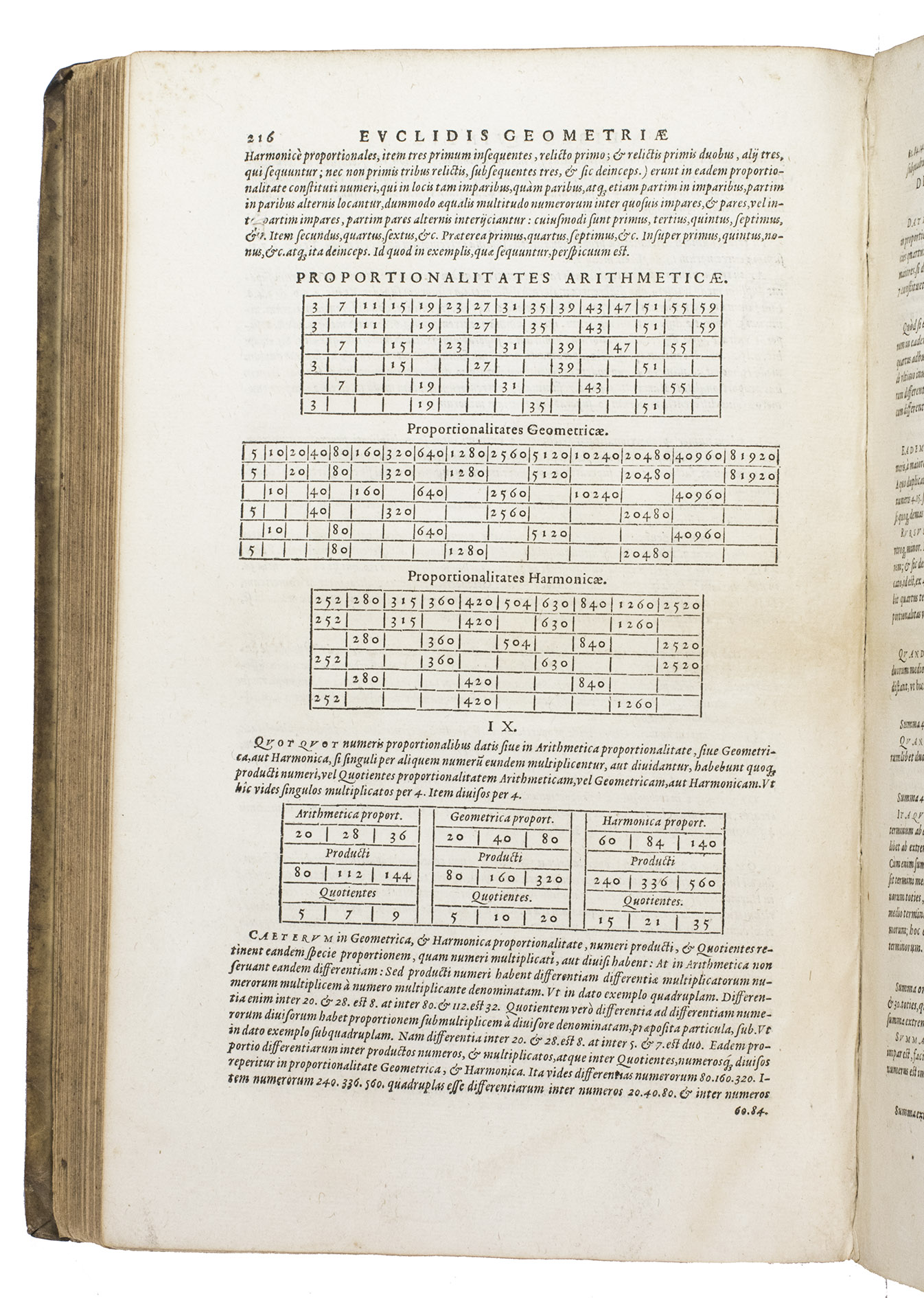
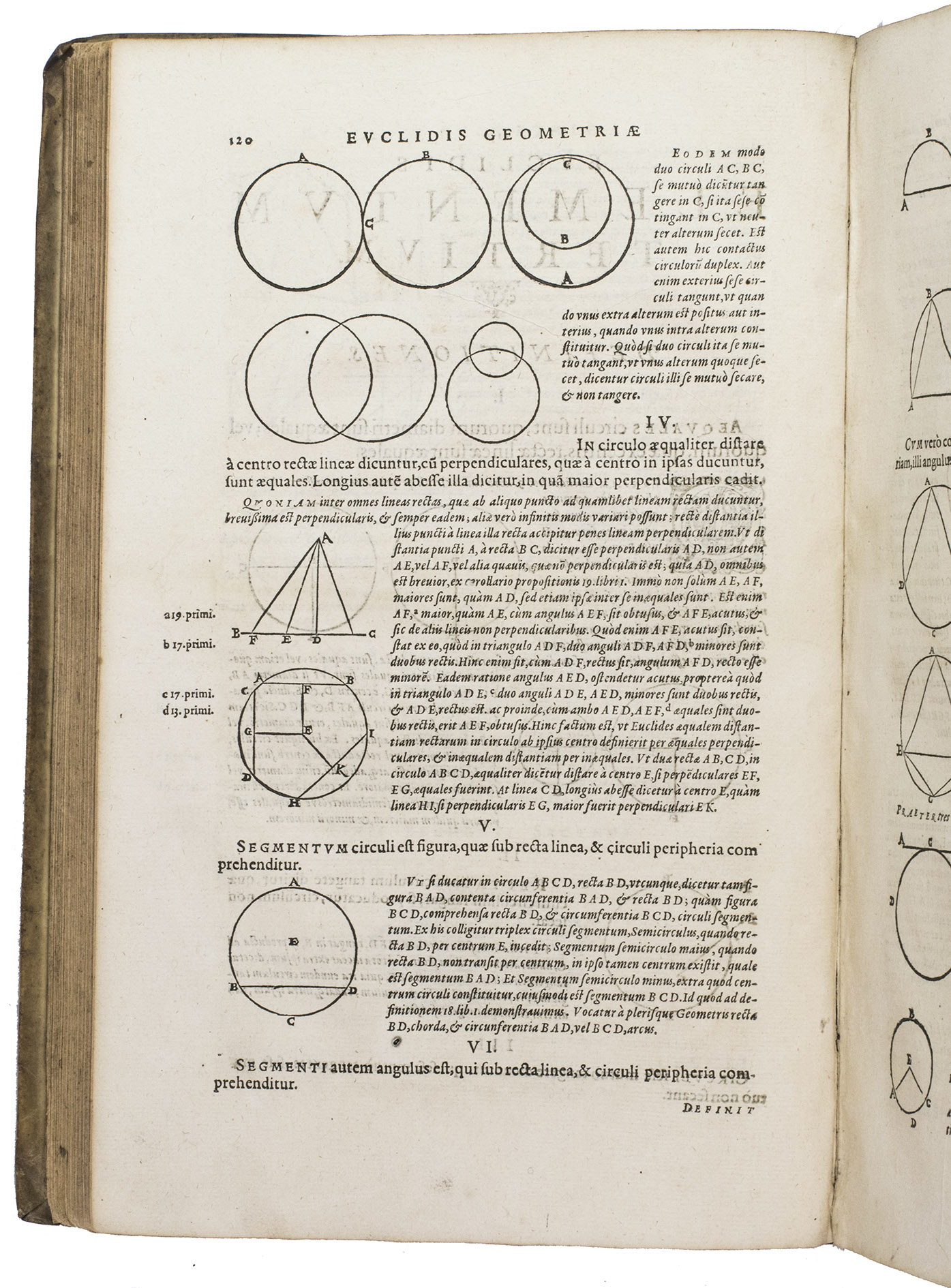
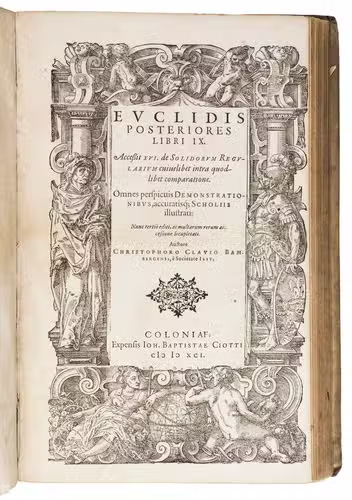
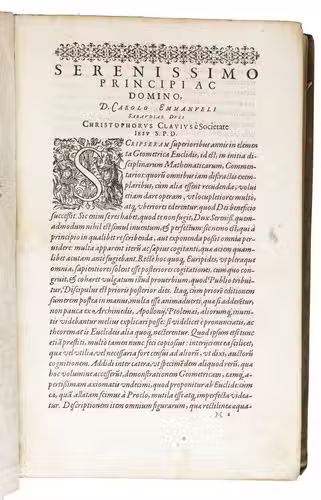
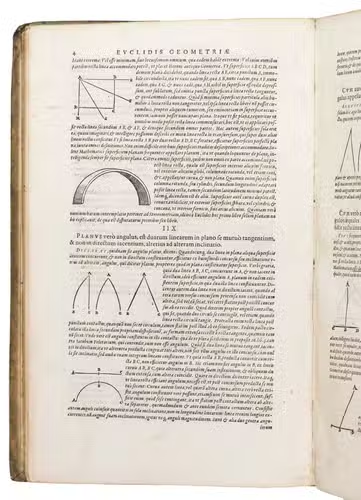
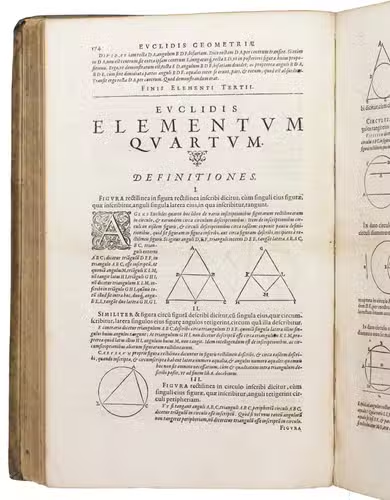
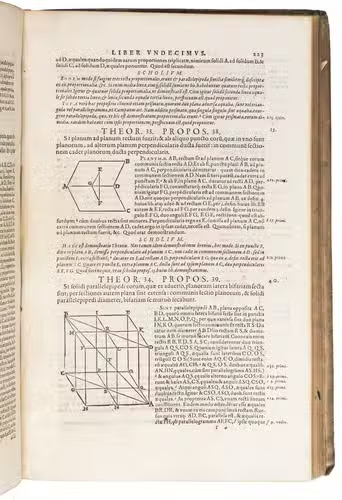
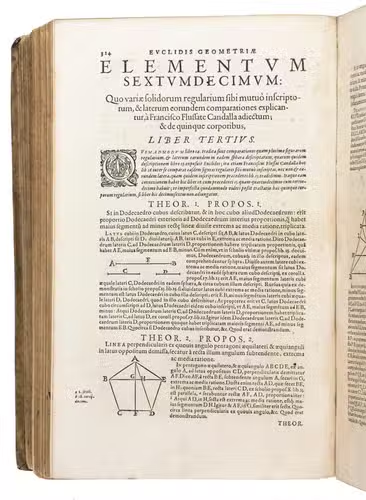
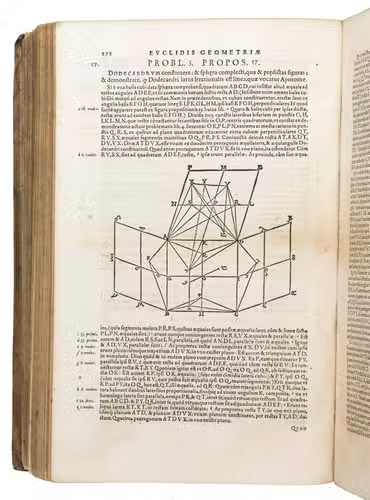
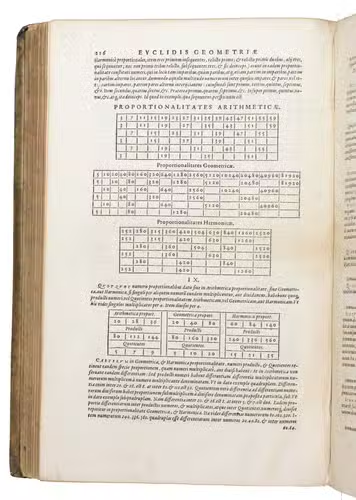
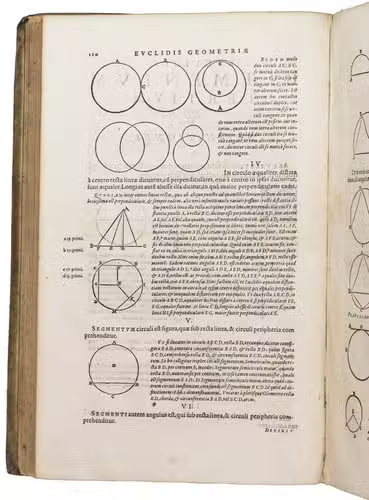
"Cologne" [= Venice], Giovanni Battista Ciotti, 1591. 2 parts in 1 volume. Folio. The title page of each part is set within an elaborate woodcut border, with woodcut decorated initials (at least 3 series), headpieces built up from typographical ornaments, numerous woodcut mathematical figures in the text, large woodcut ornamental tailpieces, and a woodcut printer's device on the otherwise blank verso of the last leaf of both parts. Including: Posteriores libri IX.
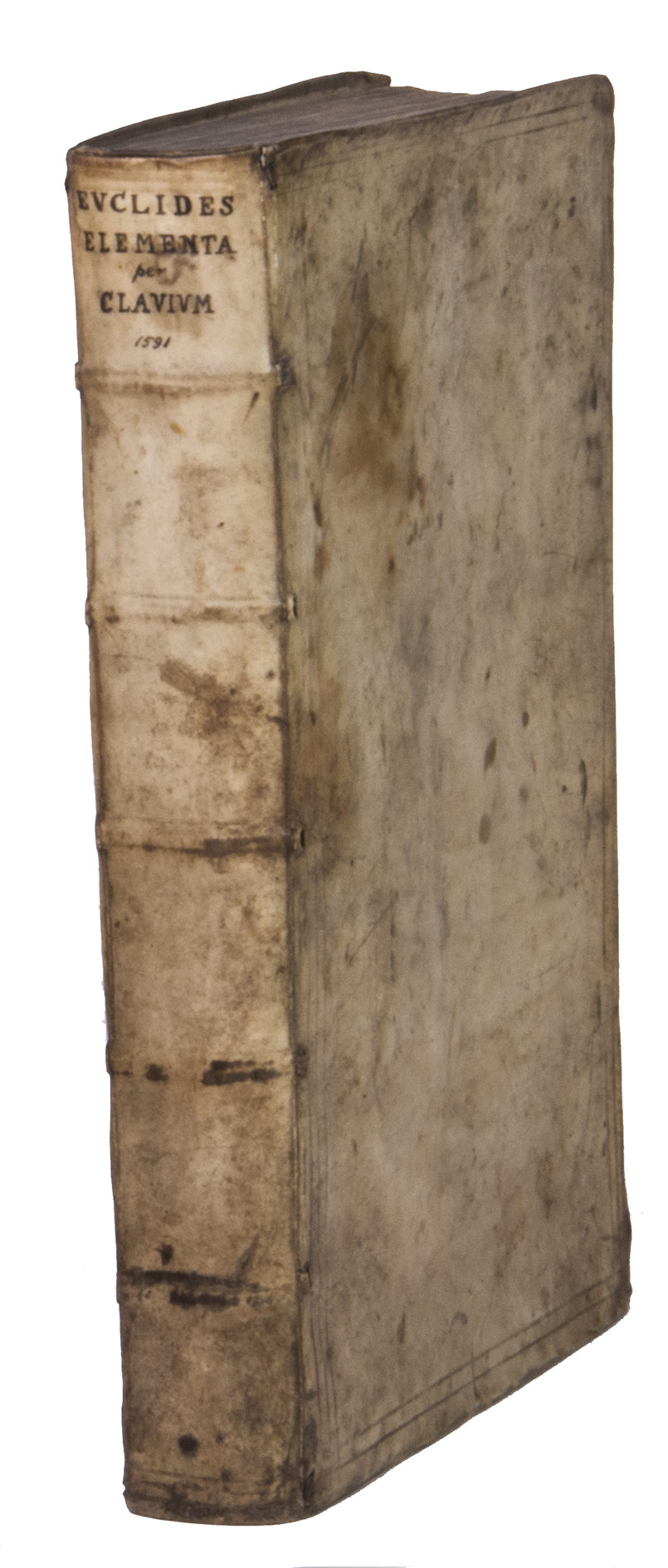
Later blind-tooled overlapping vellum. [15], [1 blank], 359, [1 blank]; 355, [1 blank], [40] pp.
€ 2,500
Early Latin edition of the Elementorum, one of the most successful textbooks ever written. The present edition contains the complete enunciations of all fifteen books, and the demonstrations, and has been illustrated with hundreds of geometrical woodcut figures. As the foundational text of both geometry and number theory, the work covers plain geometry, proportions, number theory and solid geometry. The present edition has been edited by Christopher Clavius (1536-1612), or "the Euclid of the 16th century" (DSB).
Clavius was a German Jesuit mathematician and astronomer, who was instrumental in the Vatican's adoption of the Gregorian calendar, a pioneer of the use of the decimal point, and, in his lifetime, the most highly respected astronomer in Europe. His edition of the Elementorum is his main work. His version is not a translation, but "contains a vast quantity of notes collected from previous commentators and editors, as well as some good criticisms and elucidations of his own. Among other things, Clavius made a new attempt at proving the "postulate of parallels"."(DSB). His edition first appeared in Rome in 1574, and again in 1589. The present edition is the third. There is some confusion in the literature about the place of printing, as the printer, Giovanni Ciotti (1560-1625), mainly worked in Venice, but the present title page mentions Cologne. According to Thomas-Stanford, the work was most likely printed in Venice, but sold by Ciotti's branch in Cologne.
With a later manuscript owners inscription on the front pastedown ("Carl Hollweide, Halle 1802"), the same inscription underneath which has been removed, and an owner's inscription from mathematician Moritz Wilhelm Drobisch (1802-1896) on the recto of the first flyleaf ("M. W. Drobisch. 1824"), all in brown ink. The vellum is somewhat scratched, scuffed, and stained, the corners of the boards are bumped. The vignette has been cut out of the title page, but the hole has been repaired with paper and bears a manuscript note in pencil, the title page and the first blank flyleaf have been reinforced with paper in the lower outer corner, the title page is slightly dust soiled, some occasional stains, a large tear in the bottom margin of leaves G6 in part 1, and Kk4-Kk6 in part 2. Otherwise in good condition. Adams E 988; De Backer-Sommervogel II, col. 1213-1214; Thomas-Stanford 23; USTC 654843; VD 16 E 4161 (part 1) and VD 16 ZV 5466 (part 2); cf. DSB 3, pp. 311-312 (Clavius); DSB 4, pp. 414-459 (Euclid); Poggendorff I, p. 455 (Clavius).
Related Subjects: