ERASMUS, Desiderius.
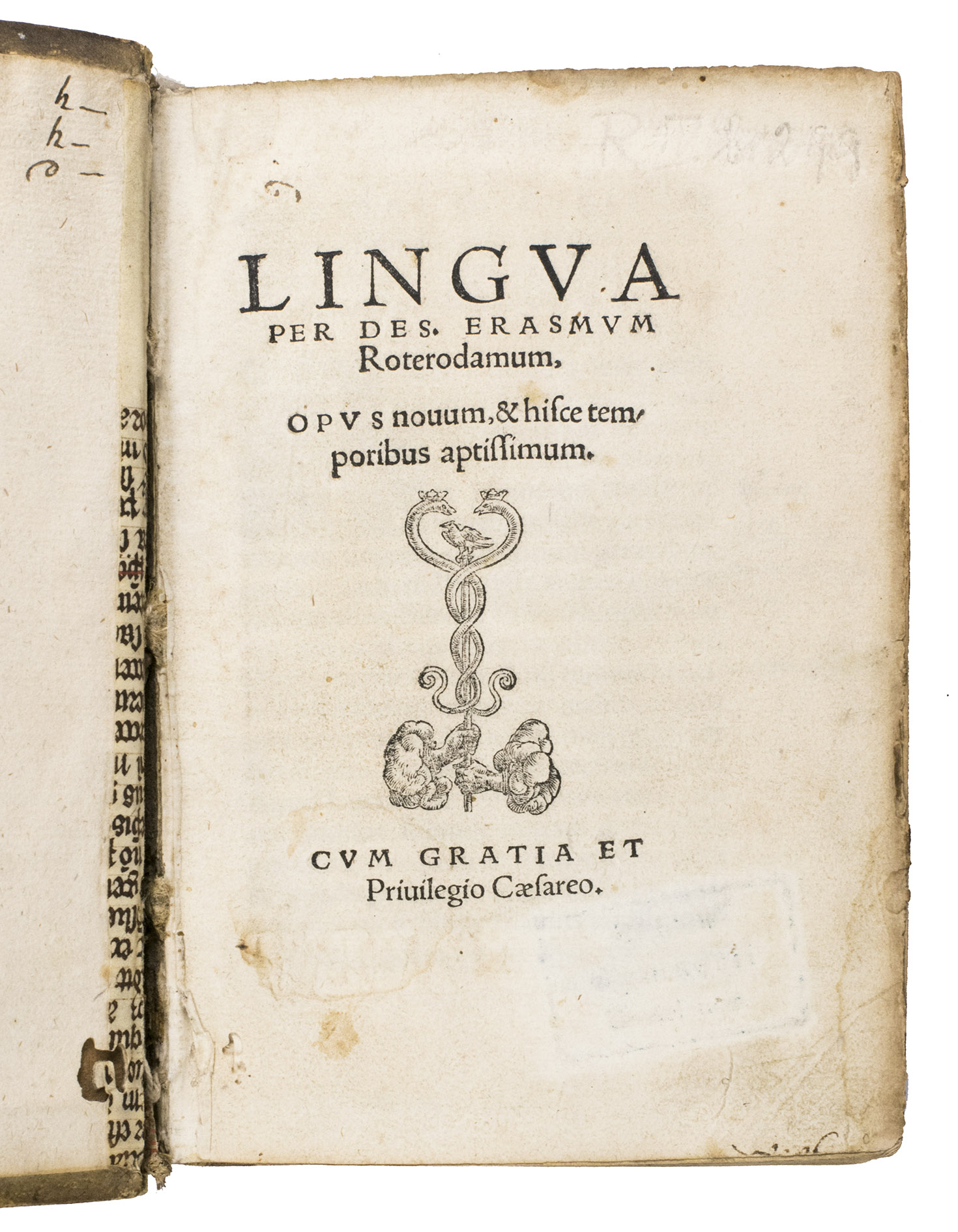
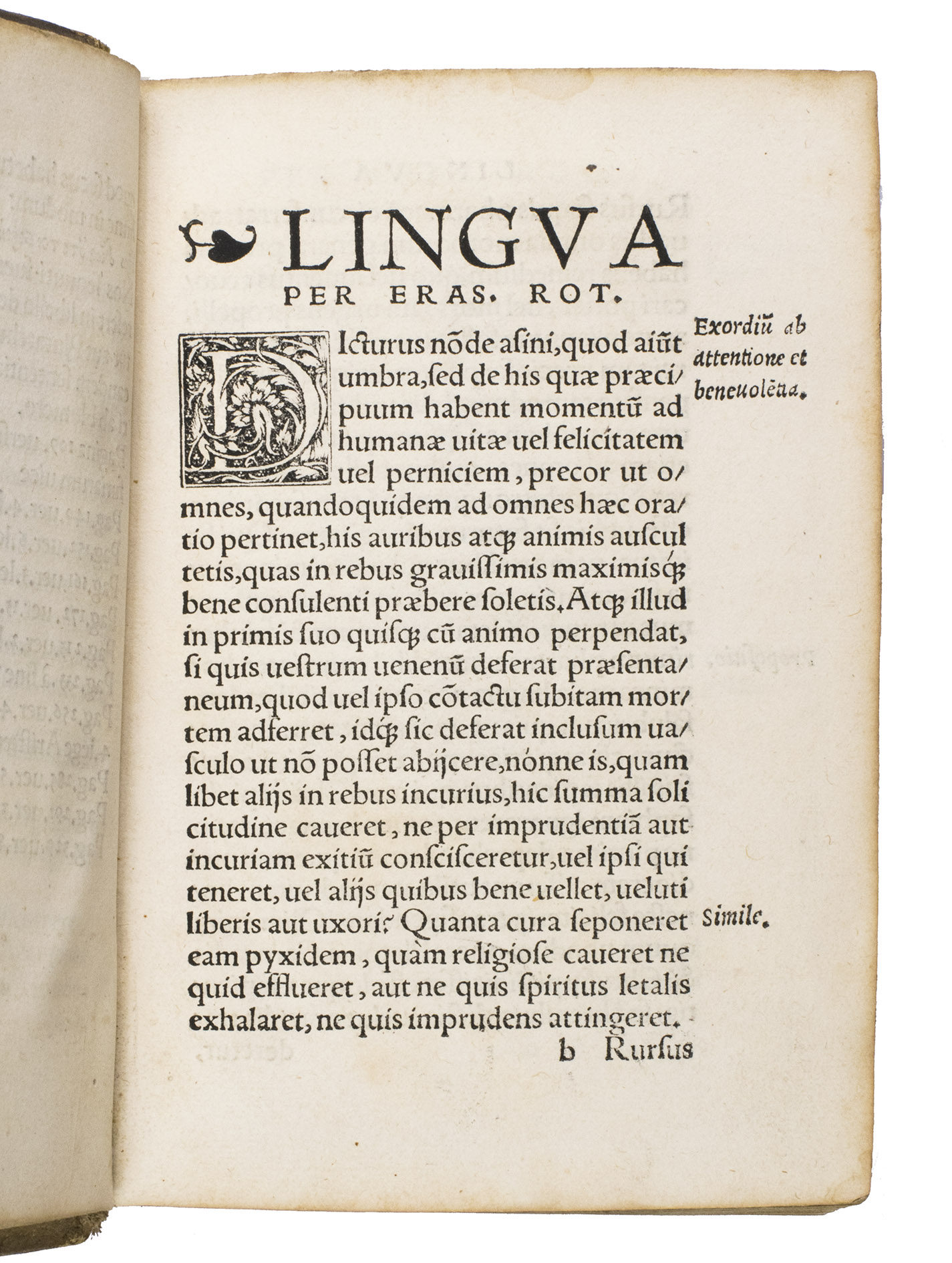
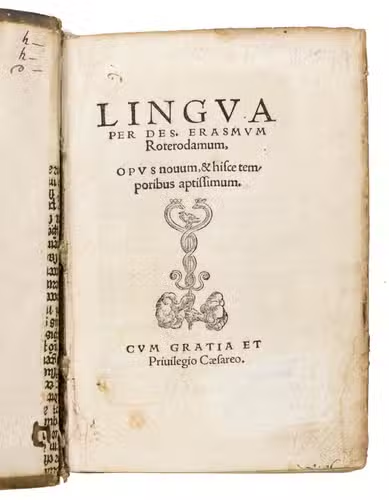
Lingua ... Opus novum, & hisce temporibus aptissimum.
(Colophon) Basel, Johann Froben, August 1525.
With:
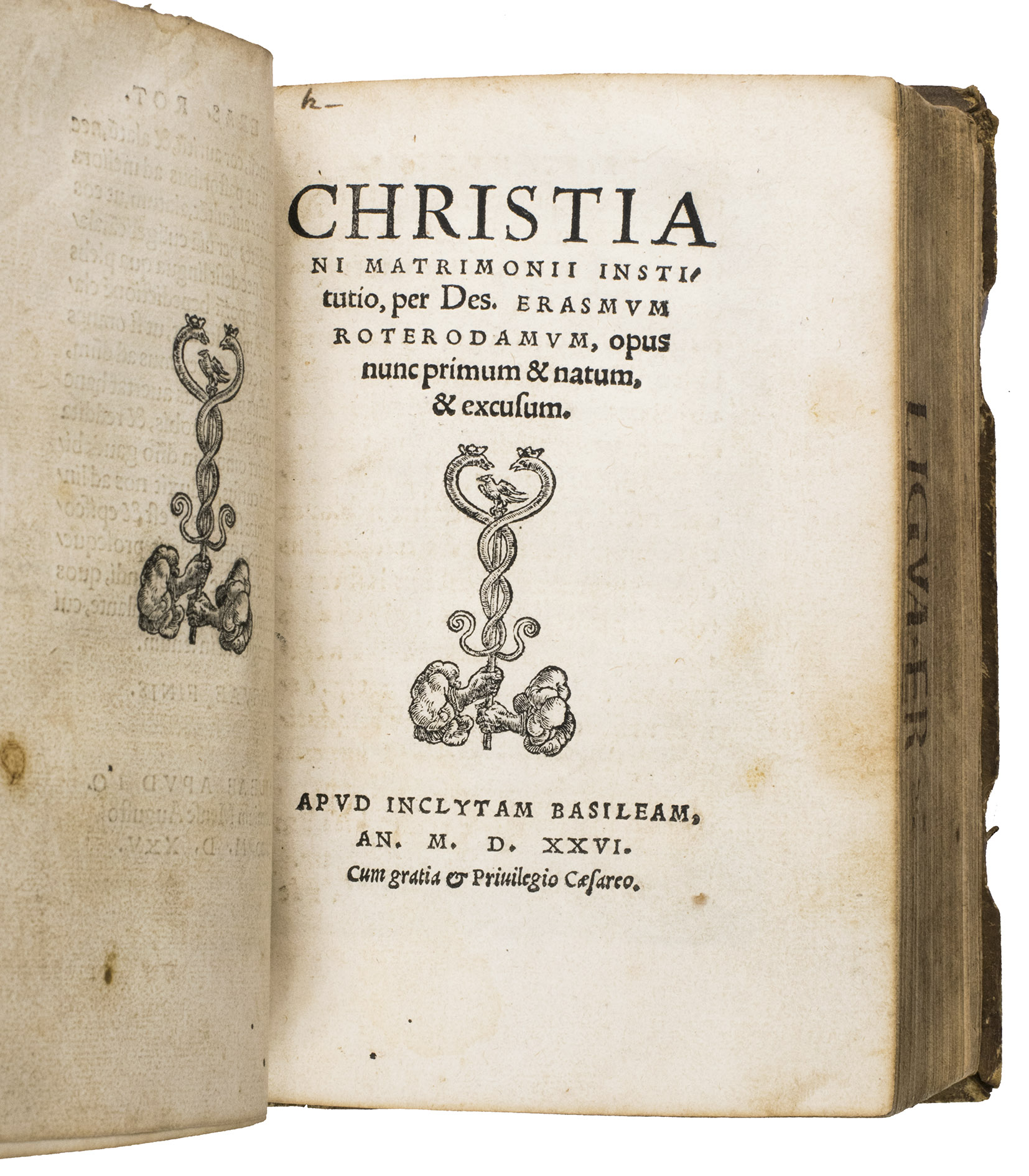
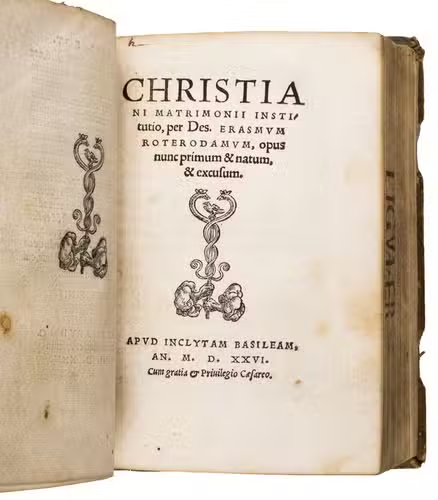
(2) IDEM. Christiani Matrimonii institutio ... opus nunc primum & natum, & excusum.
Basel, (colophon:) [Johann Froben], August 1526.
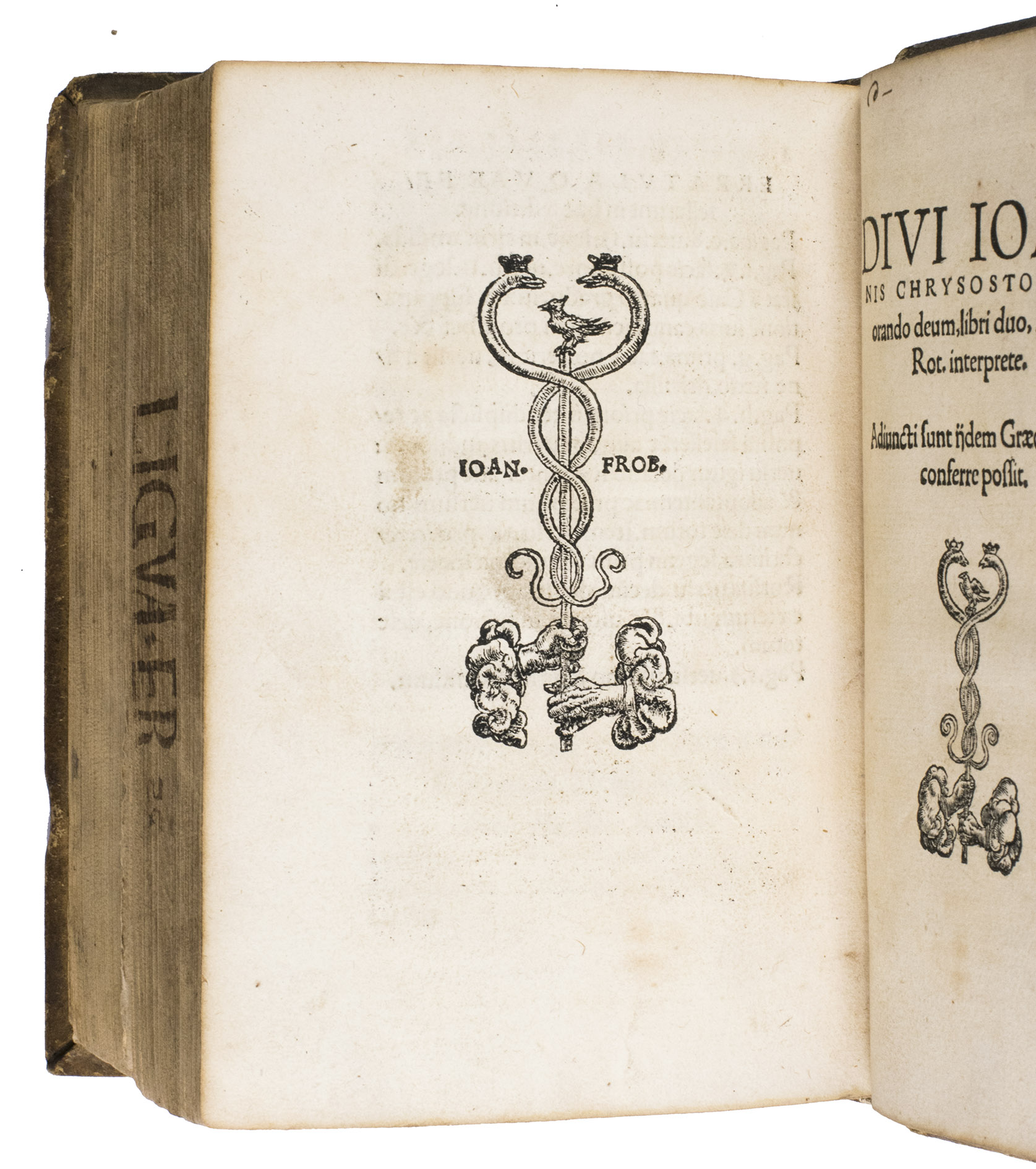
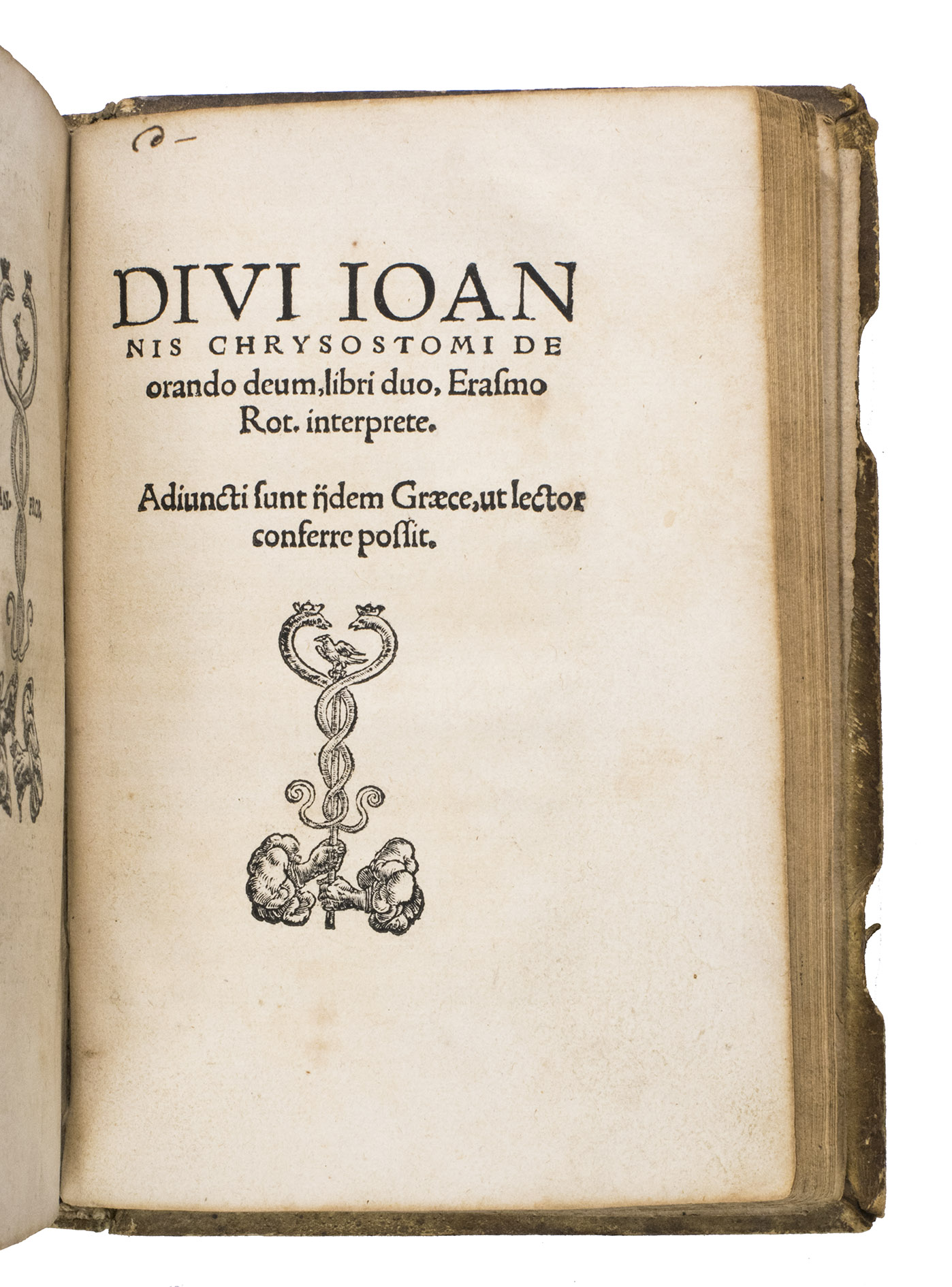
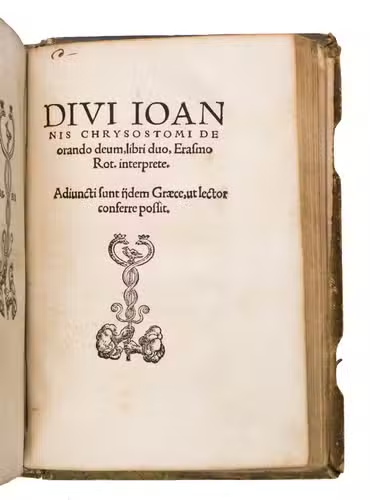
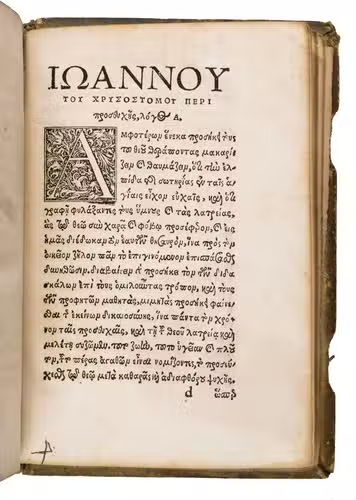
(3) CHRYSOSTOM, John and Desiderius ERASMUS (translator). Divi Ioannis Chrysostomi de orando deum, libri duo. Erasmo Rot. interprete. Adiuncti sunt ijdem Graece, ut lector conferre possit.
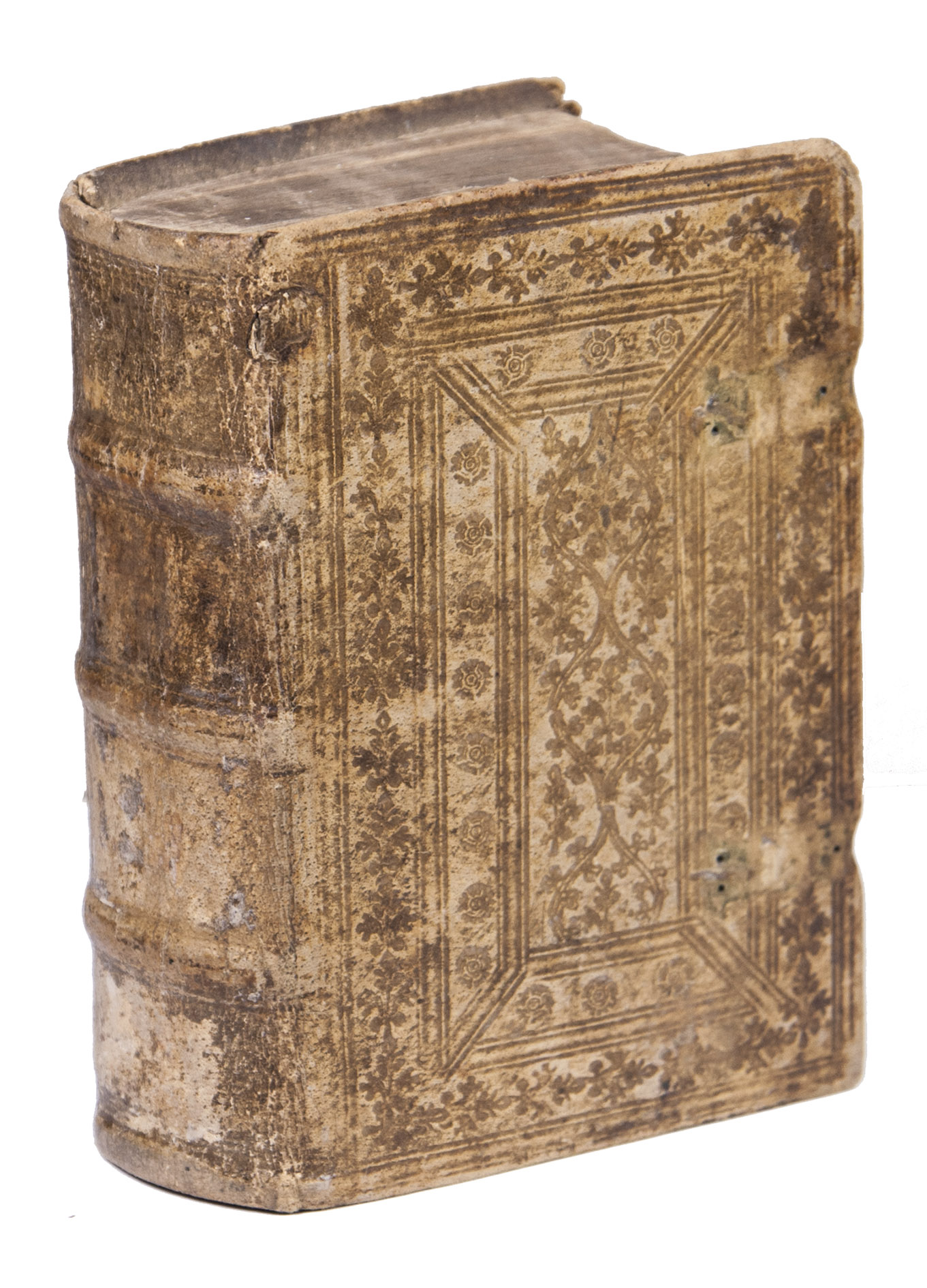
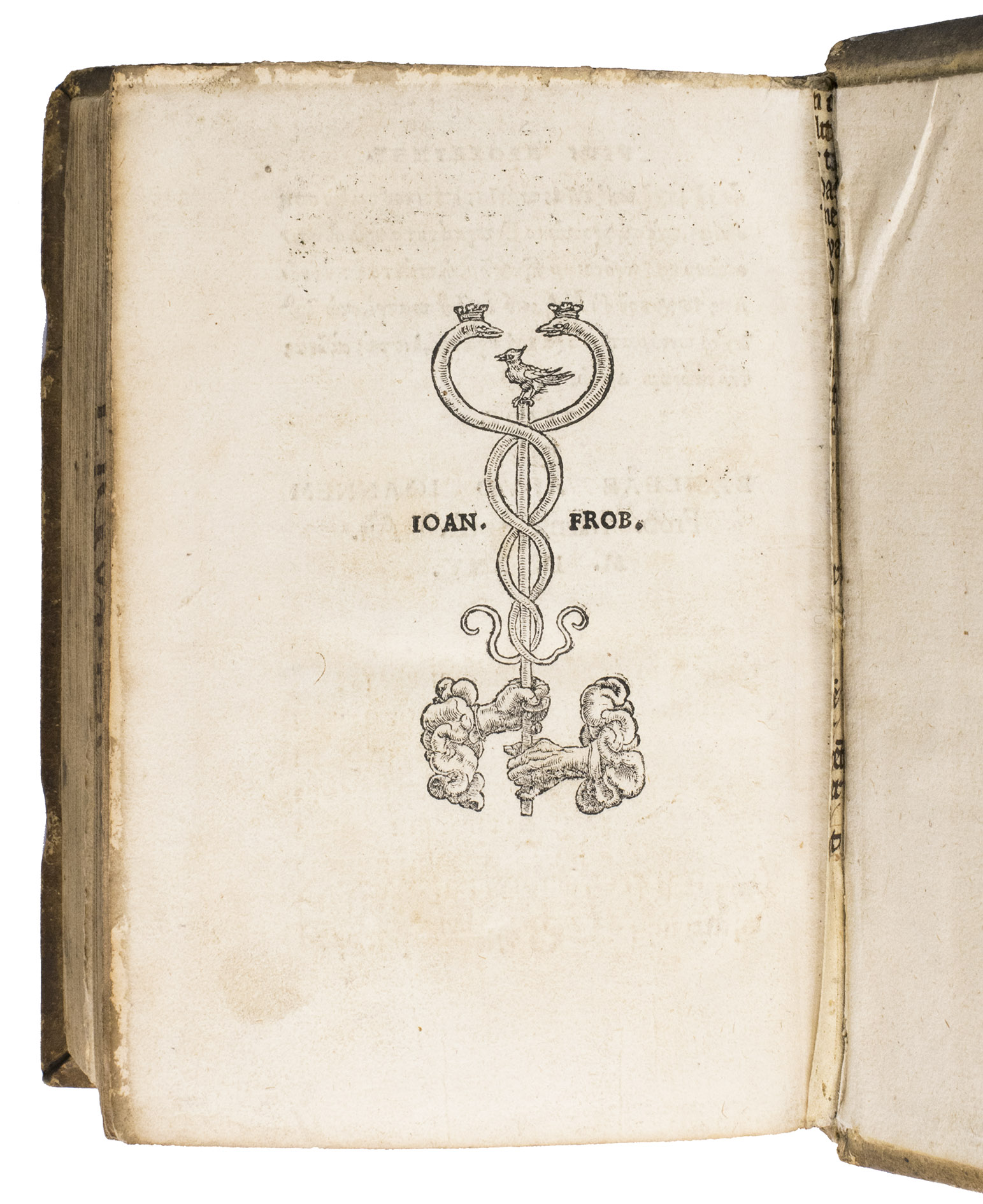
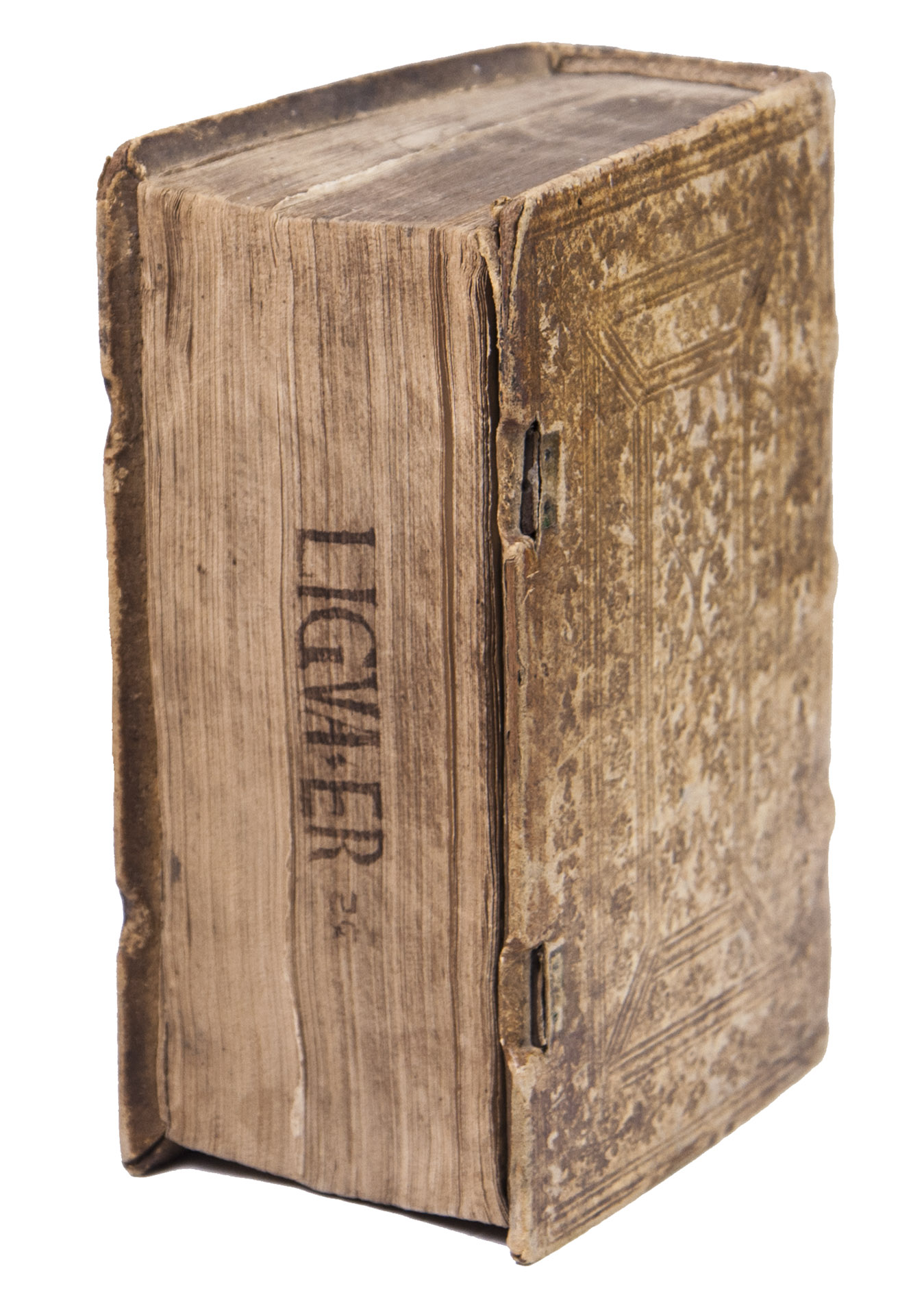
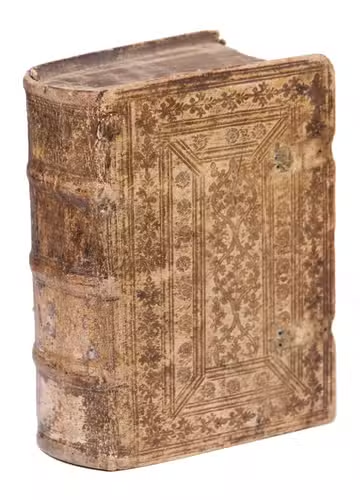
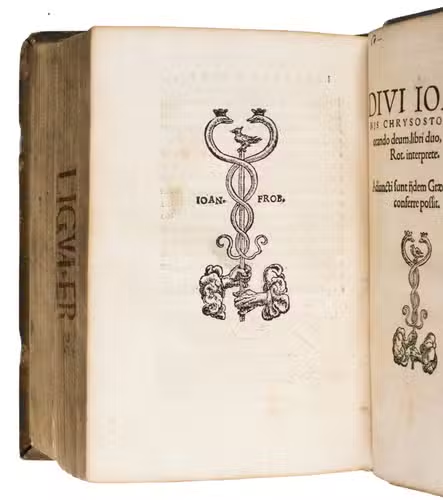
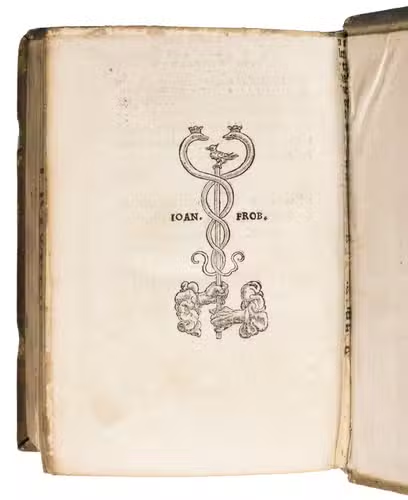
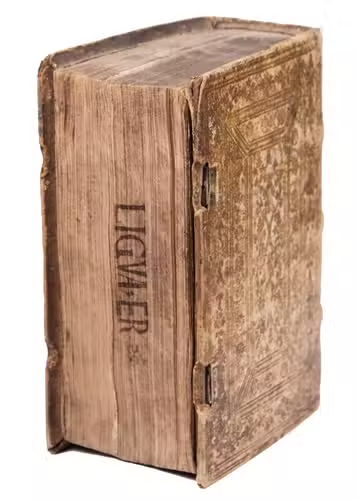
(Colophon:) Basel, Johann Froben, April 1525. 3 works in 1 volume. 8vo. With Froben's woodcut device on the title page and final leaf of each work. Contemporary elaborately blind-tooled pigskin over wooden boards, with the manuscript title of ad 1 on the fore-edge, remnants of fastenings. [172]; [212]; [40] ll.
€ 18,000
Three first editions of significant humanist and theological works on speech, marriage, and prayer.
Ad 1: First edition, in Latin, of an eloquent treatise on the use and abuse of the human tongue, exploring how speech can both edify and destroy. Rich with anecdotes drawn from classical and biblical sources, Erasmus warns against gossip, falsehood, and unrestrained speech, urging instead honesty and self-control. The work proved especially popular in the Low Countries, where no fewer than fourteen Dutch translations appeared between 1533 and 1633.
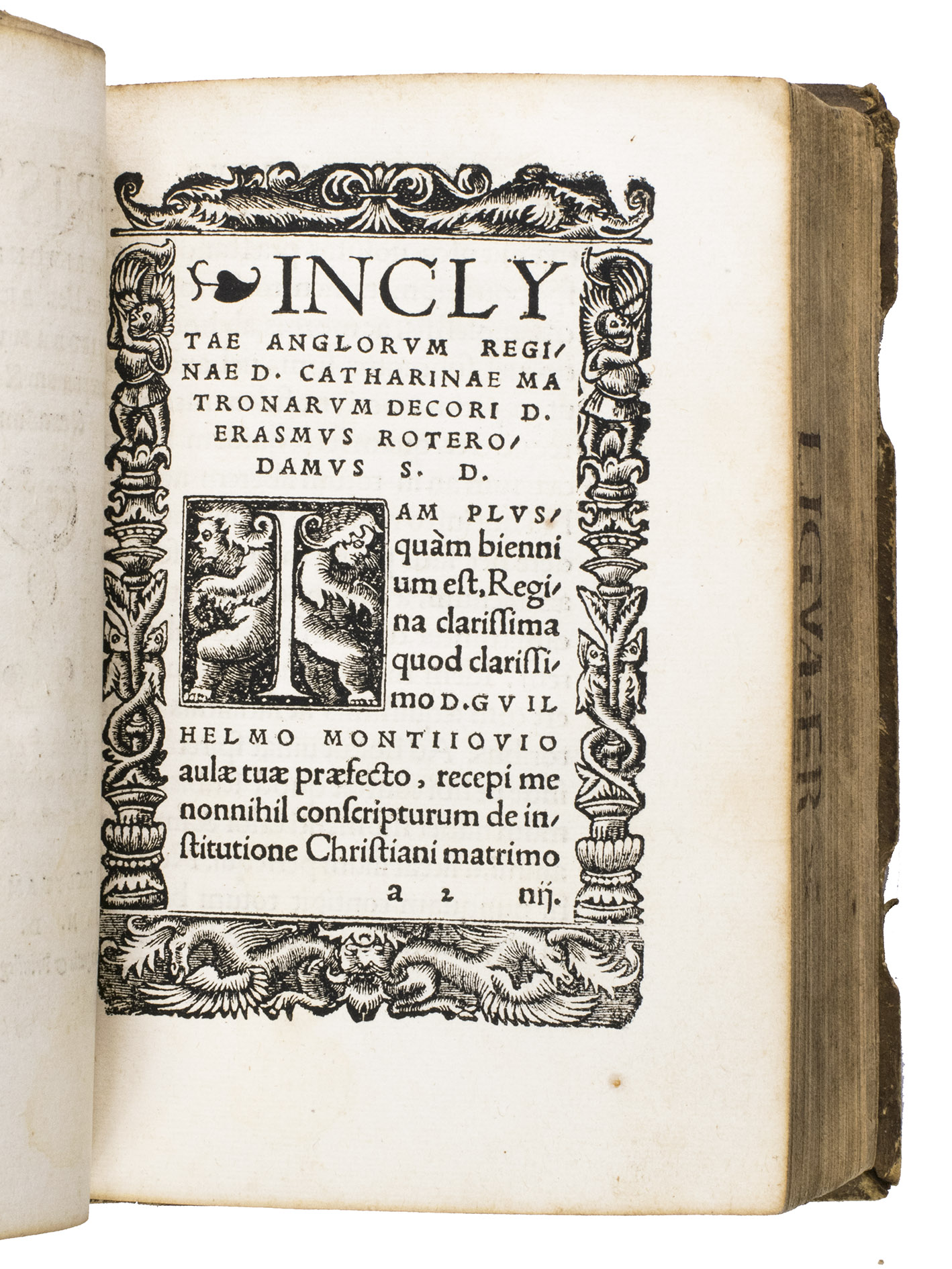
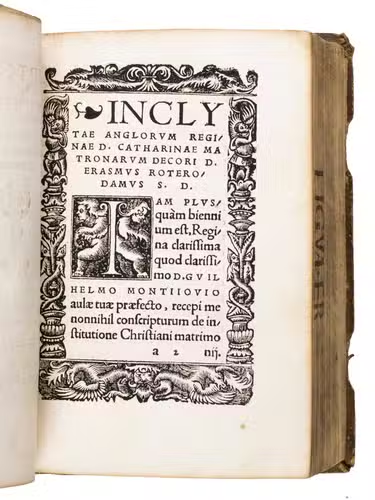
Ad 2: First edition of a moral treatise written for Catherine of Aragon, Queen of England, and first published in 1526. The work is described by Johan Huizinga as "one of the purest and most beneficent moral treatises,". It comprises Erasmus humanist and theological vision of marriage as a sacred union of souls as well as bodies, the foundation of family and society, and a mirror of the bond between Christ and the Church. This is the genuine first edition, preceding the folio edition, as shown by the presence of a list of errata not present in later editions.
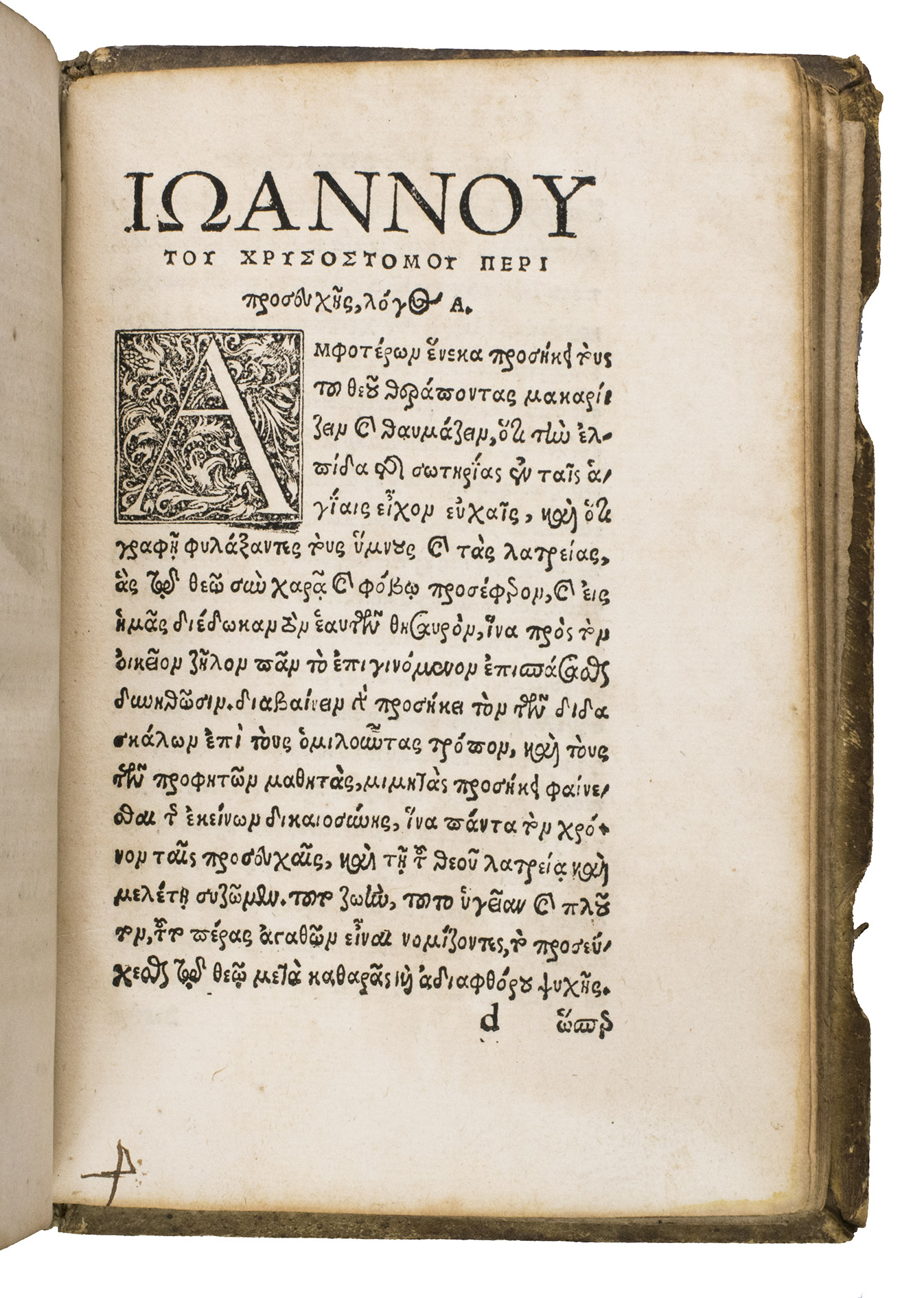
Ad 3: Erasmuss first Latin translation of two treatises on prayer by Saint John Chrysostom (ca. 347-407 CE), accompanied by the original Greek text. Chrysostom reflects on the nature and power of prayer, the inner disposition of humility and purity required of the supplicant, the various forms of prayer (praise, thanksgiving, petition, intercession), and the particular efficacy of communal devotion. A spiritual manual for the Christian life, enhanced by Erasmus elegant rendering.
Together, these three works exemplify Erasmus engagement with language, morality, theology, and patristic tradition, offering guidance on virtuous speech, holy matrimony, and devout prayer.
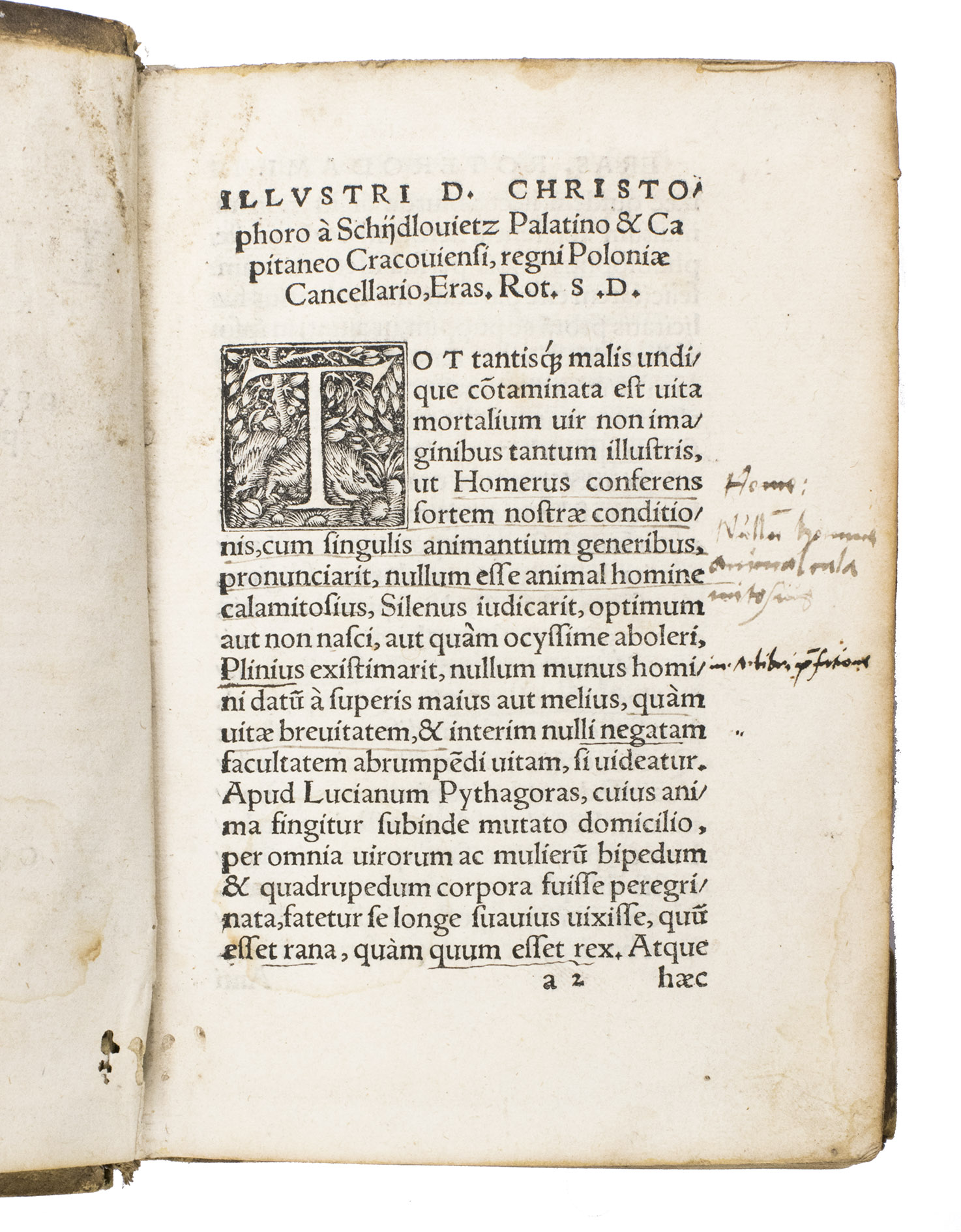
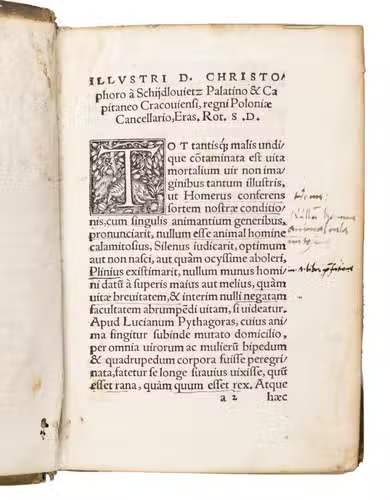
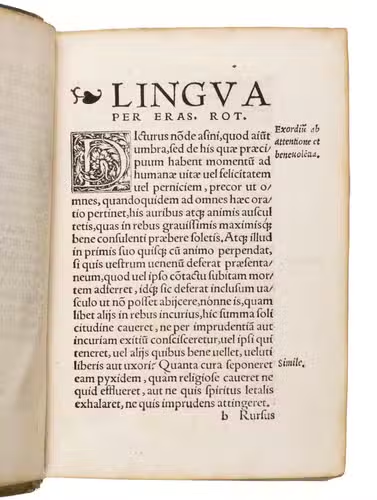
Ads 1 and 2 with manuscript annotations in the margins and some of the text underlined. The title page and last leaf of ad 1 are nearly detached and with faded/erased stamps on the title page. The binding shows signs of wear, some small pieces of leather missing on the back board revealing the wood below, remnants of catch- and anchor plates, small strips of manuscript waste visible in the gutters of the blank flyleaves, some staining and browning in places. Otherwise in good condition. Ad 1: USTC 673008; Vander Haeghen I, 117; VD 16 E3156; not in Adams; BM STC German; Ad 2: Adams E 518; BM STC German p. 279; Huizinga p. 160; USTC 621133; Vander Haeghen I, 110; VD 16 E 2182; Ad 3: Adams C 1552; BM STC German p. 455; USTC 667916; Vander Haeghen II, 35.
Related Subjects: