[SPINOZA, Benedictus de].
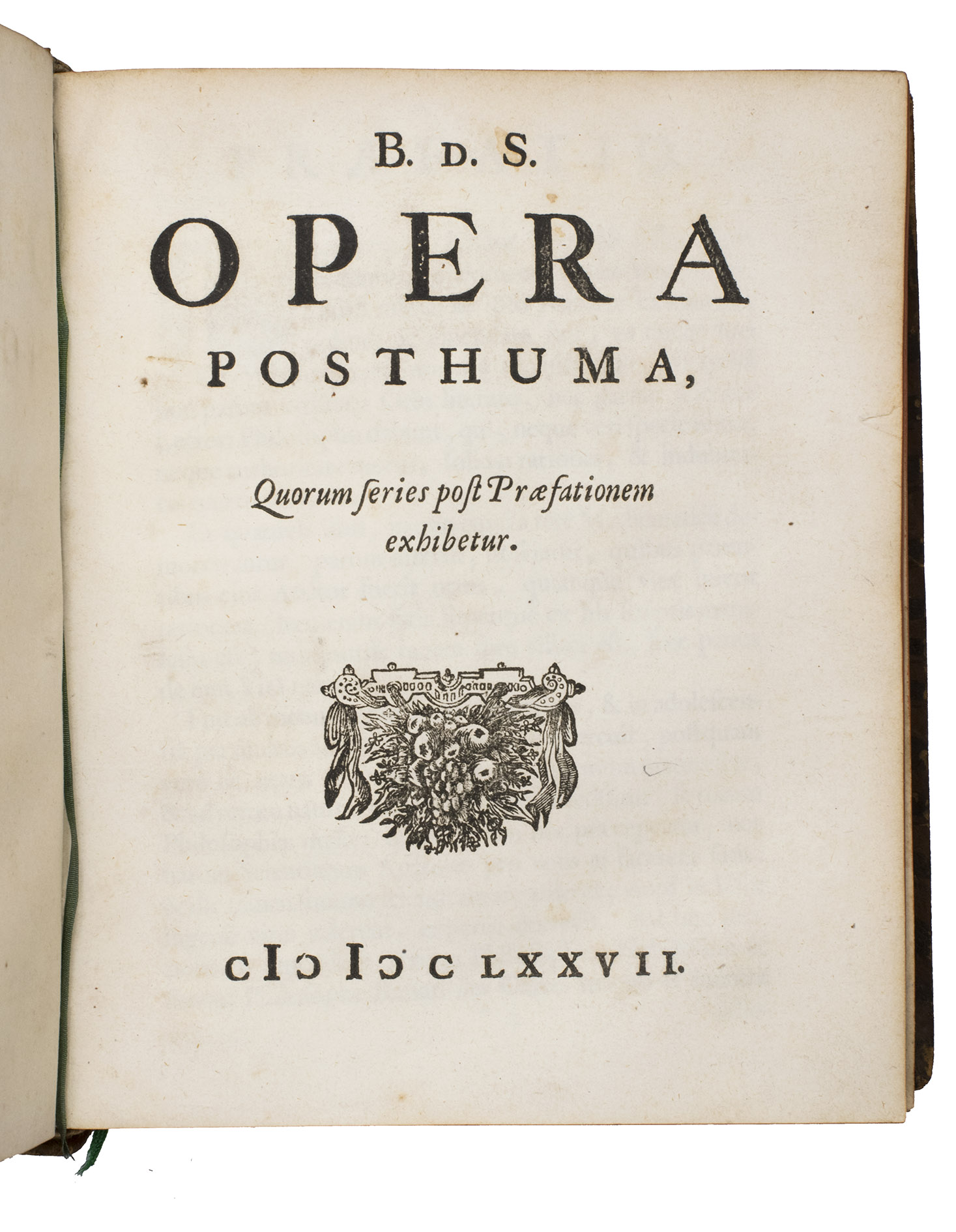
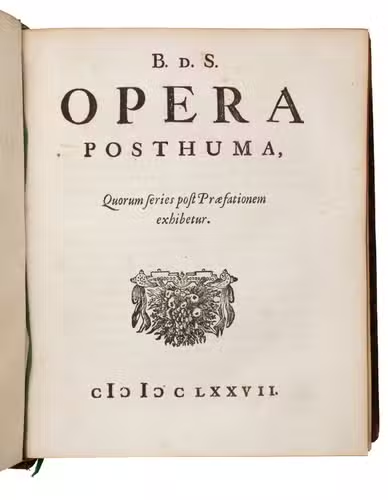
Opera posthuma, quorum series post praefationem exhibetur.
[Amsterdam, Israel de Paull for Jan Rieuwertsz. Sr.], 1677.
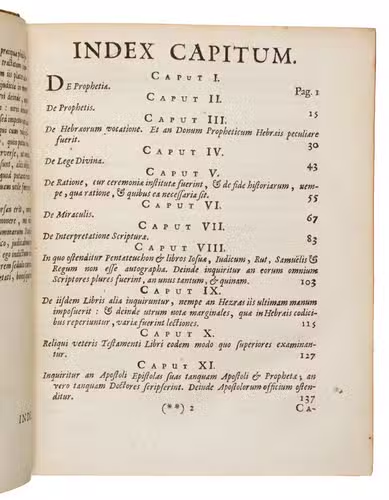
Comprising:
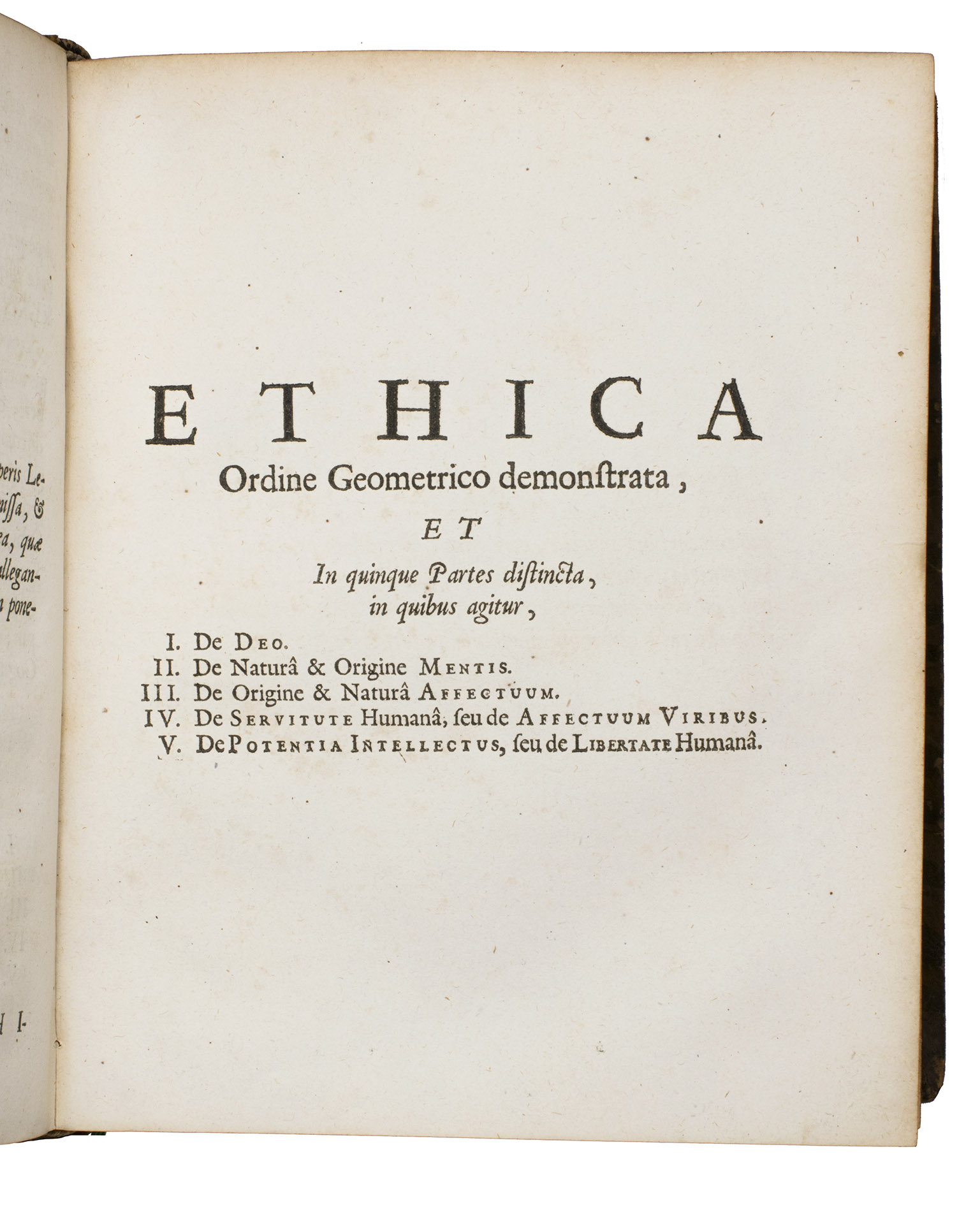
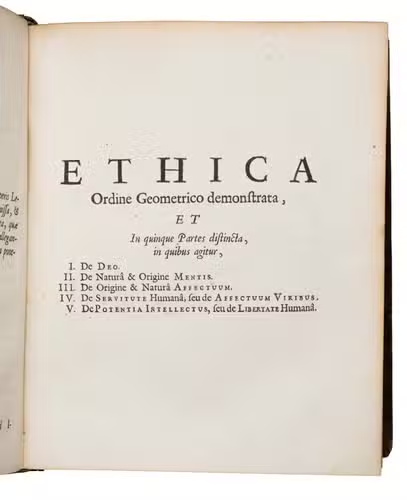
- Ethica ordine geometrico demonstrata.
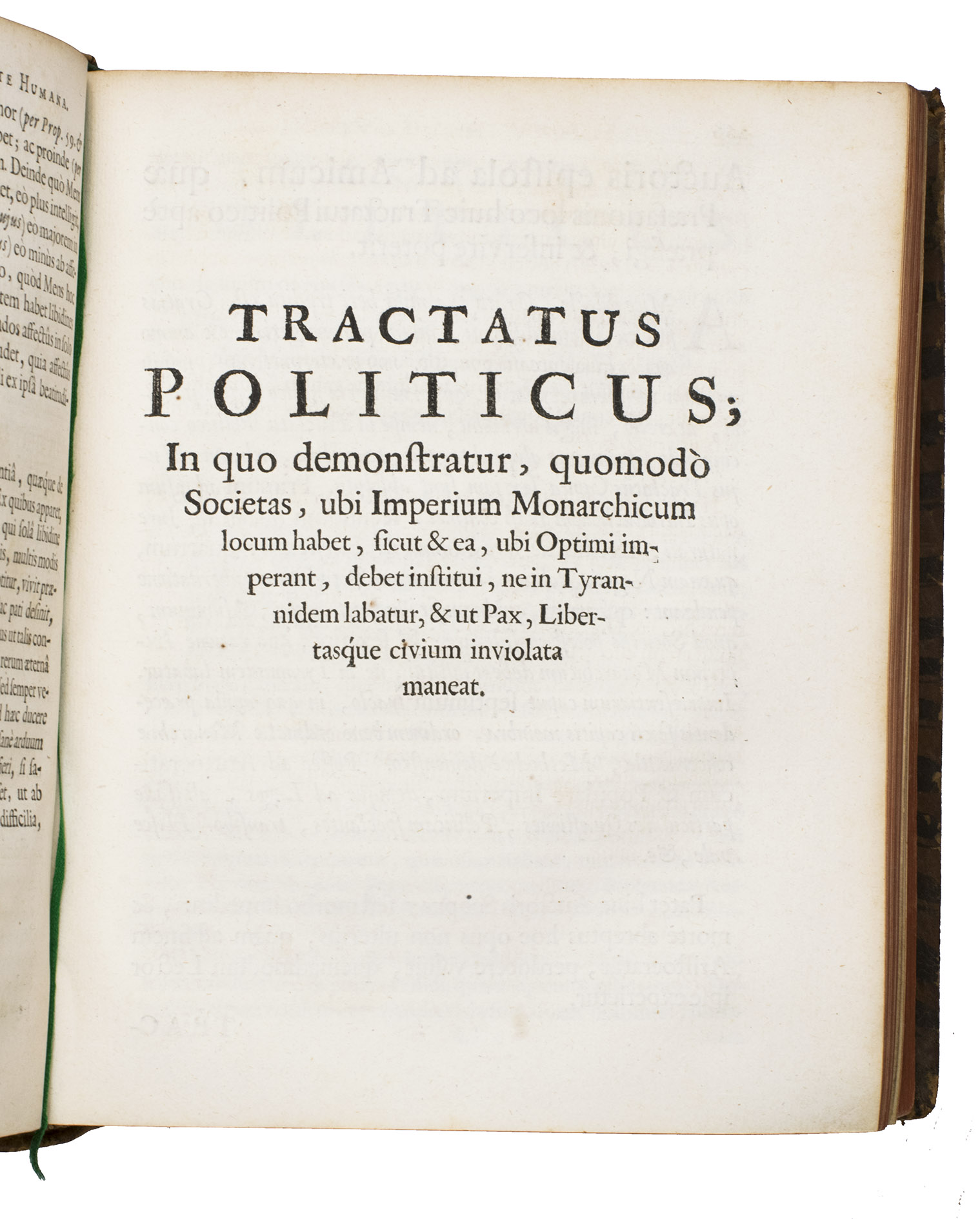
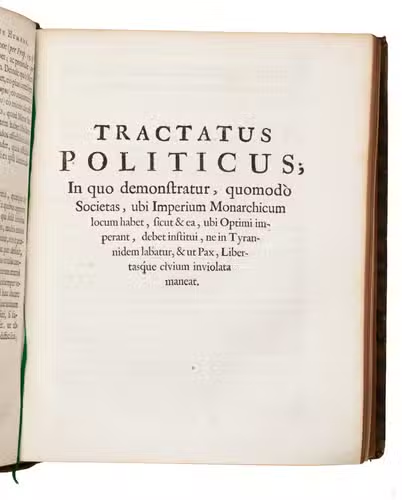
- Tractatus politicus.
- Tractatus de intellectus emendatione.
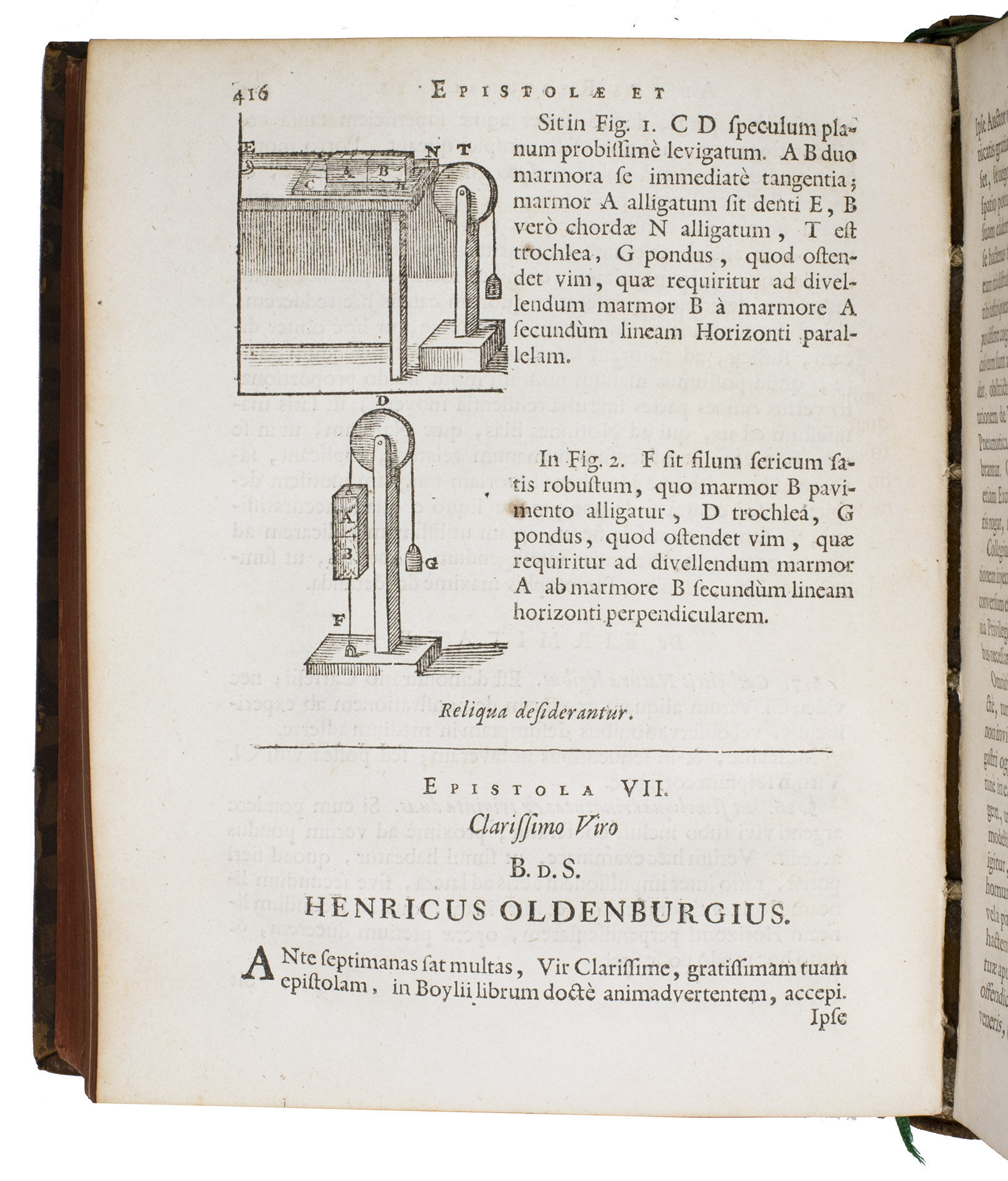
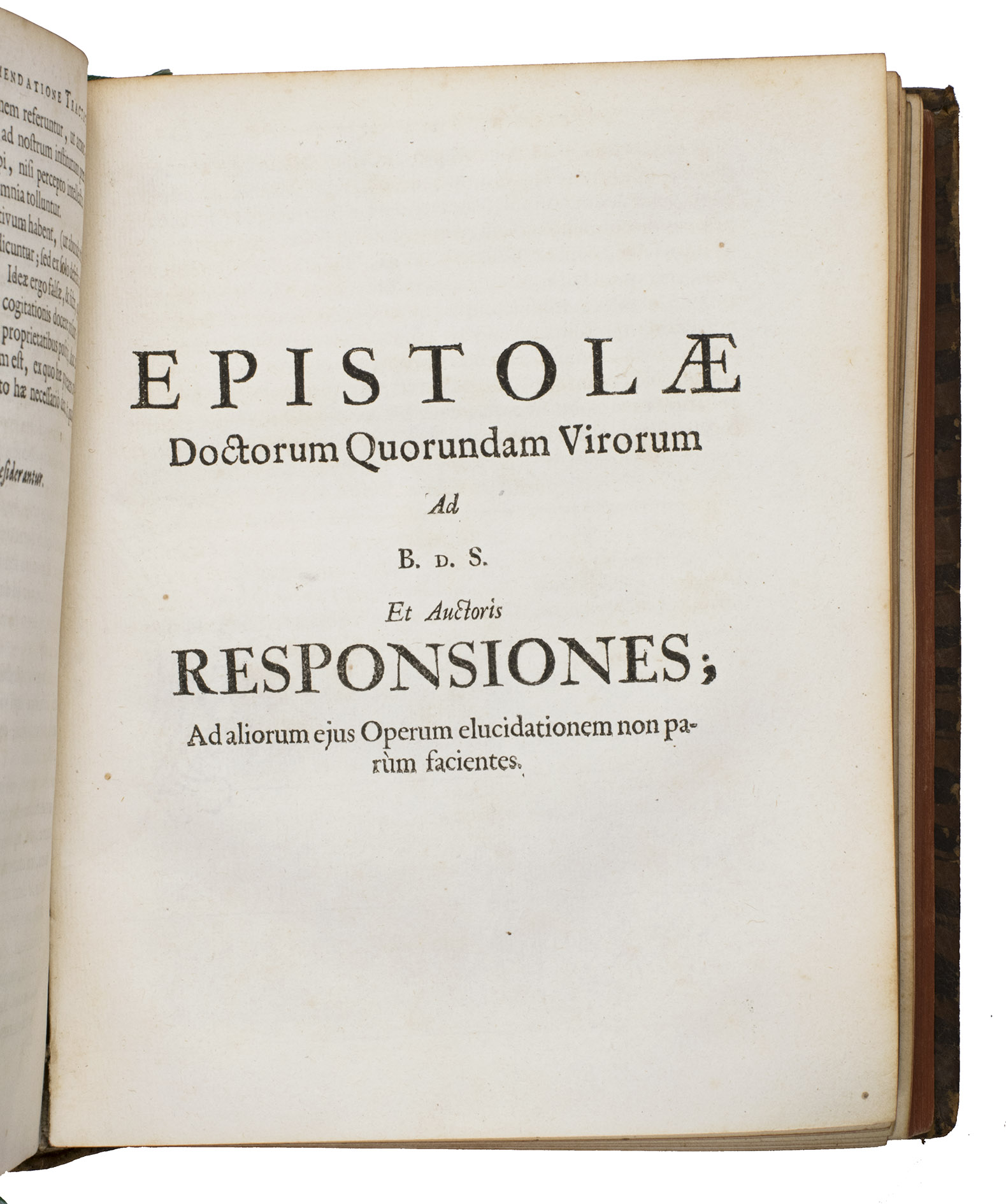
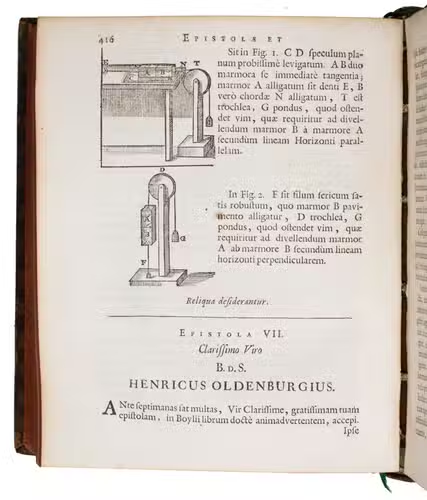
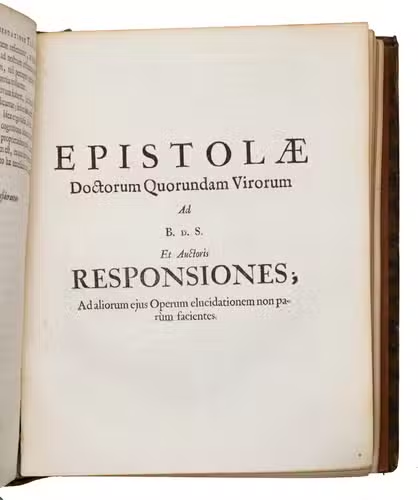
- Epistolae doctorum quorundam virorum.
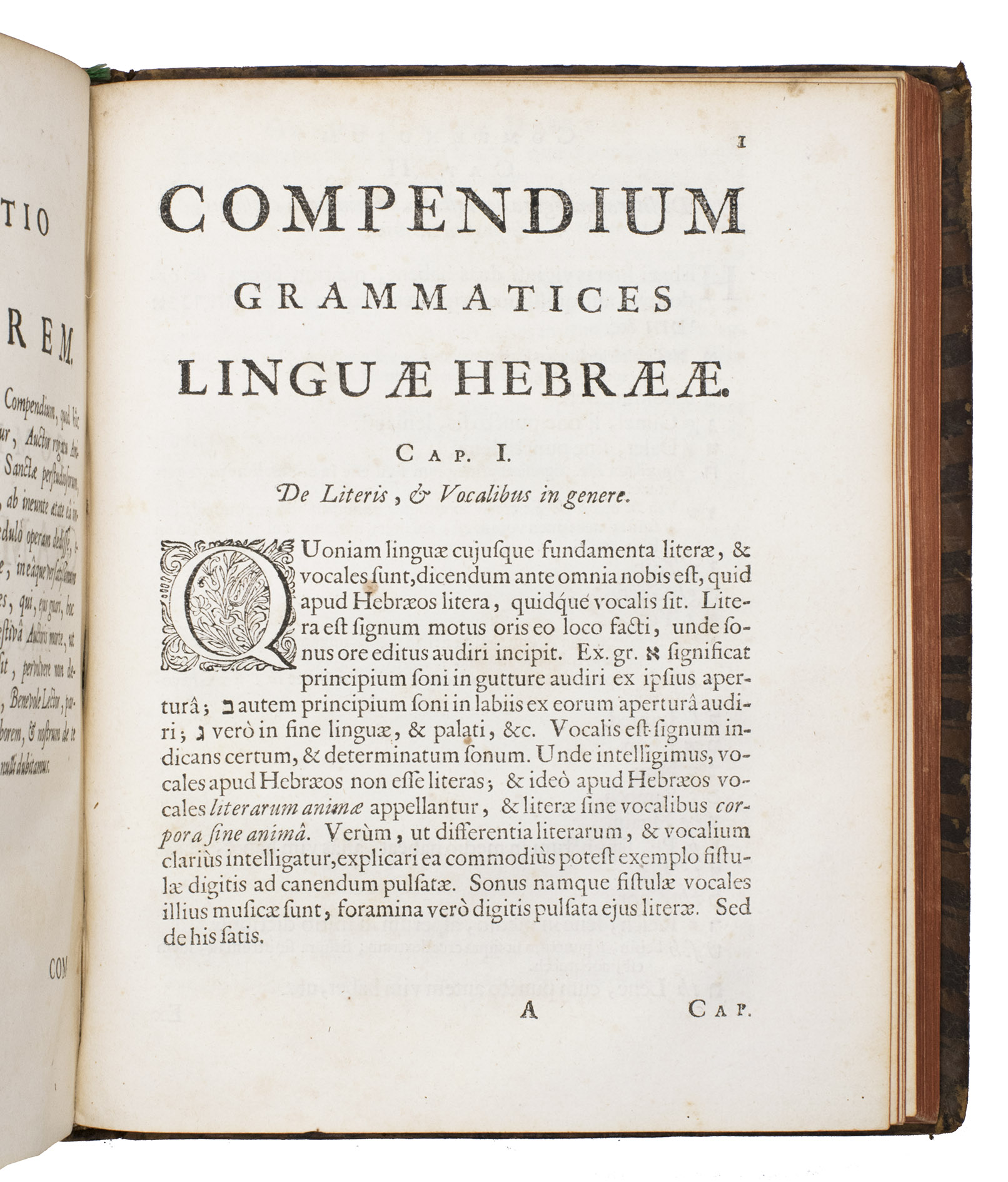
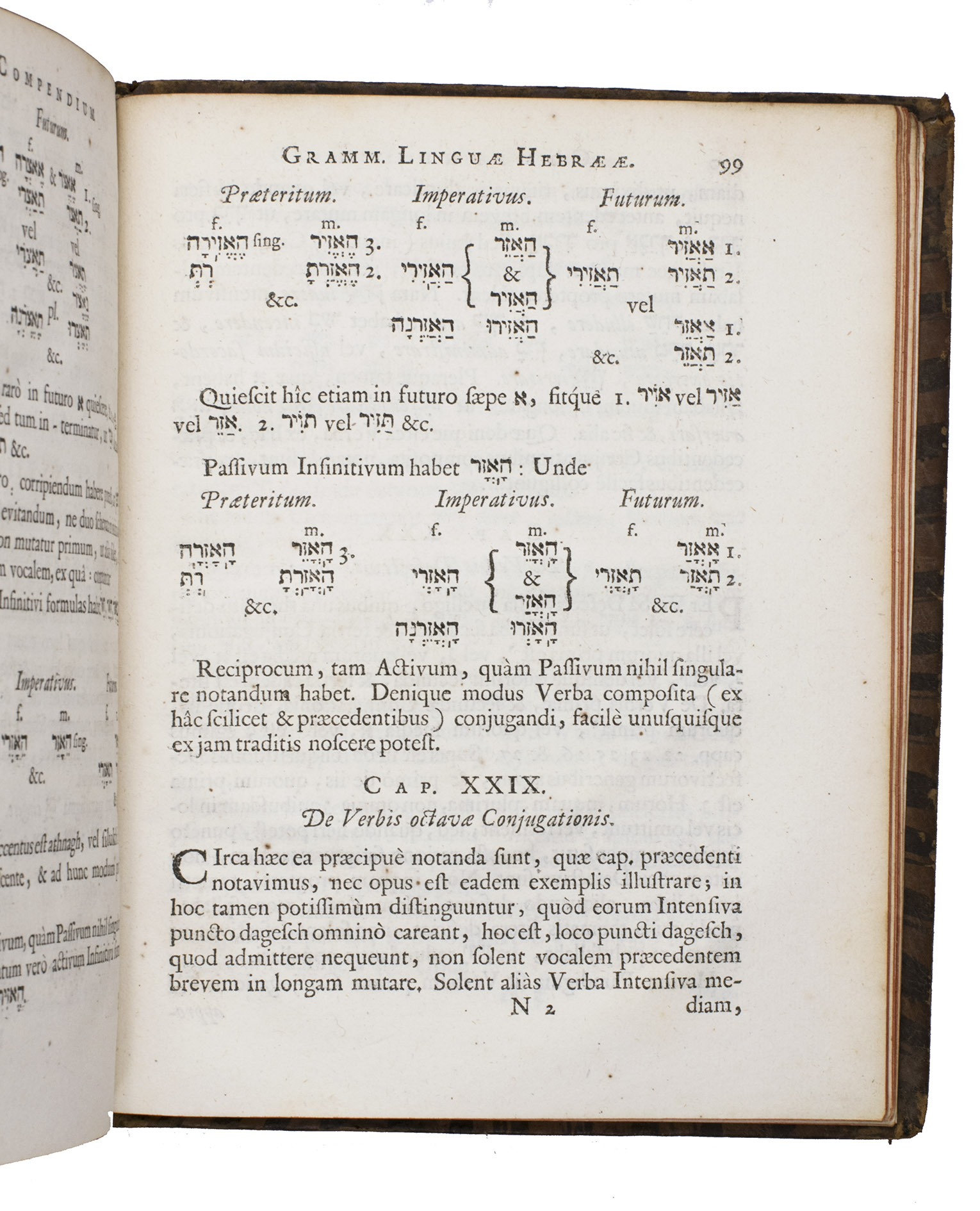
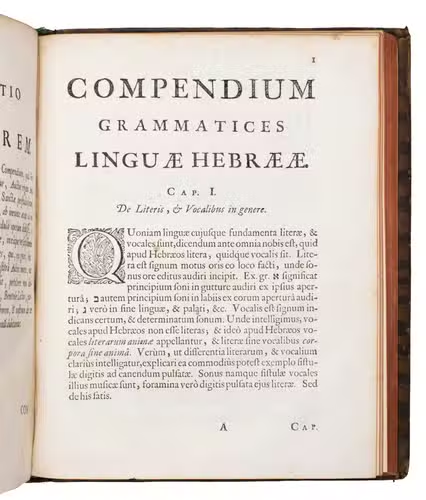
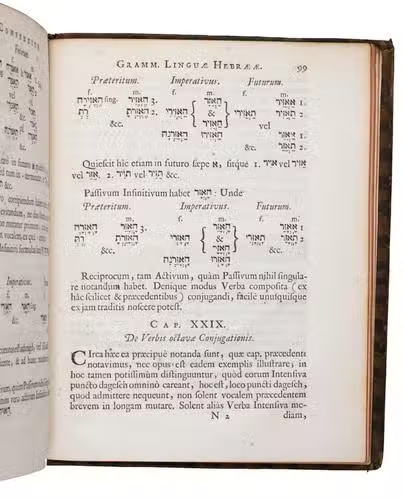
- Compendium grammatices linguae Hebraeae.
With (bound before ad 1):
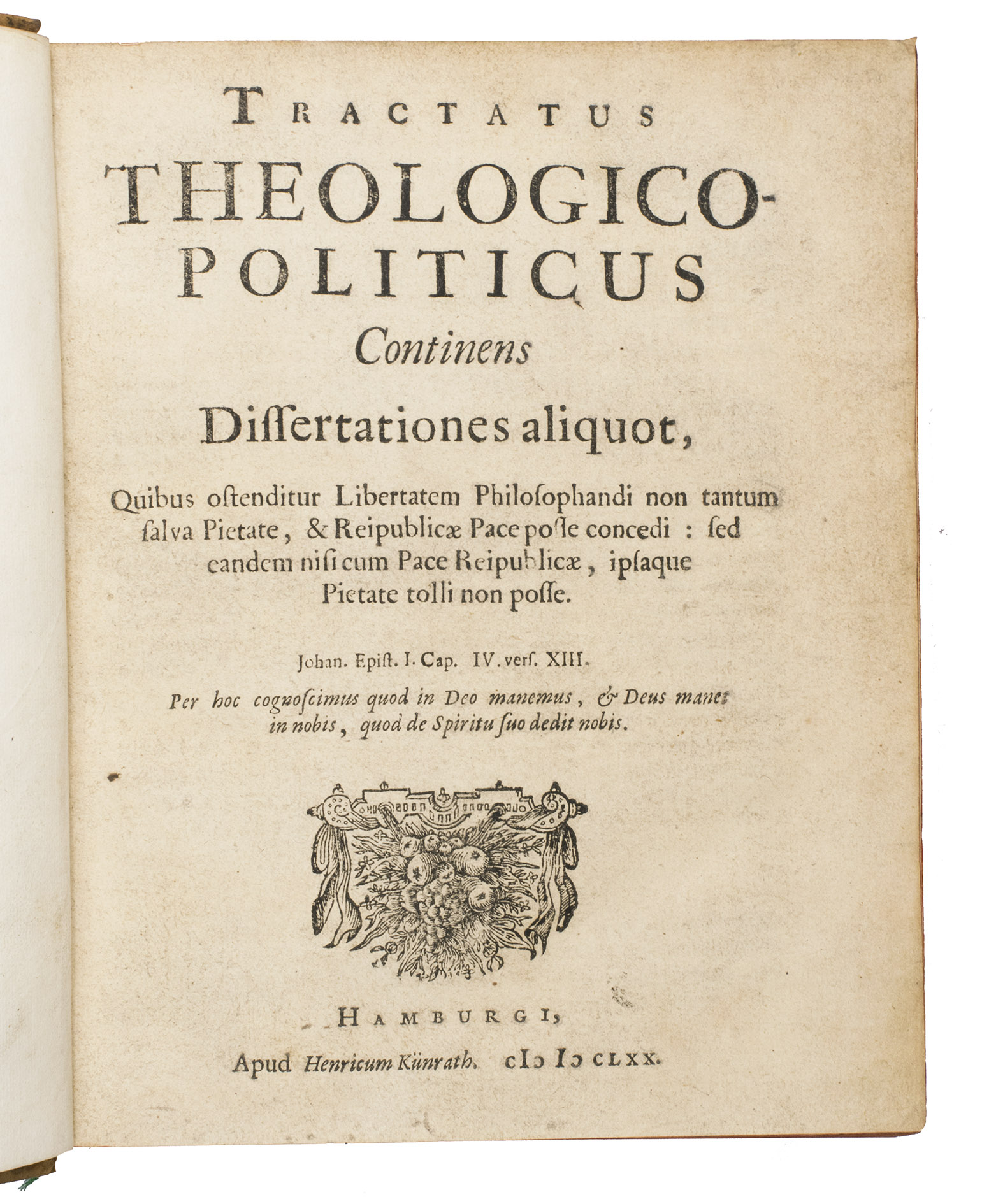
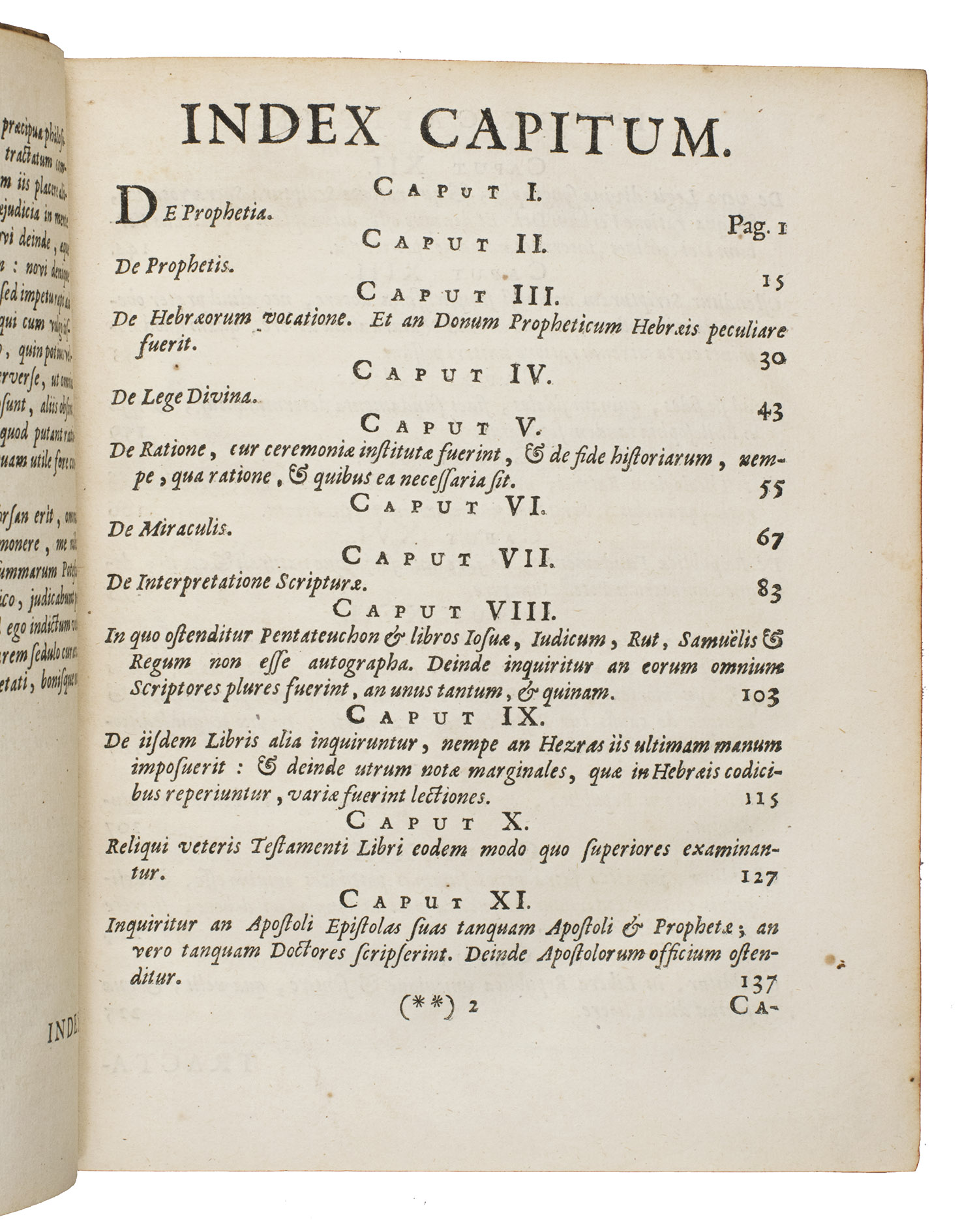
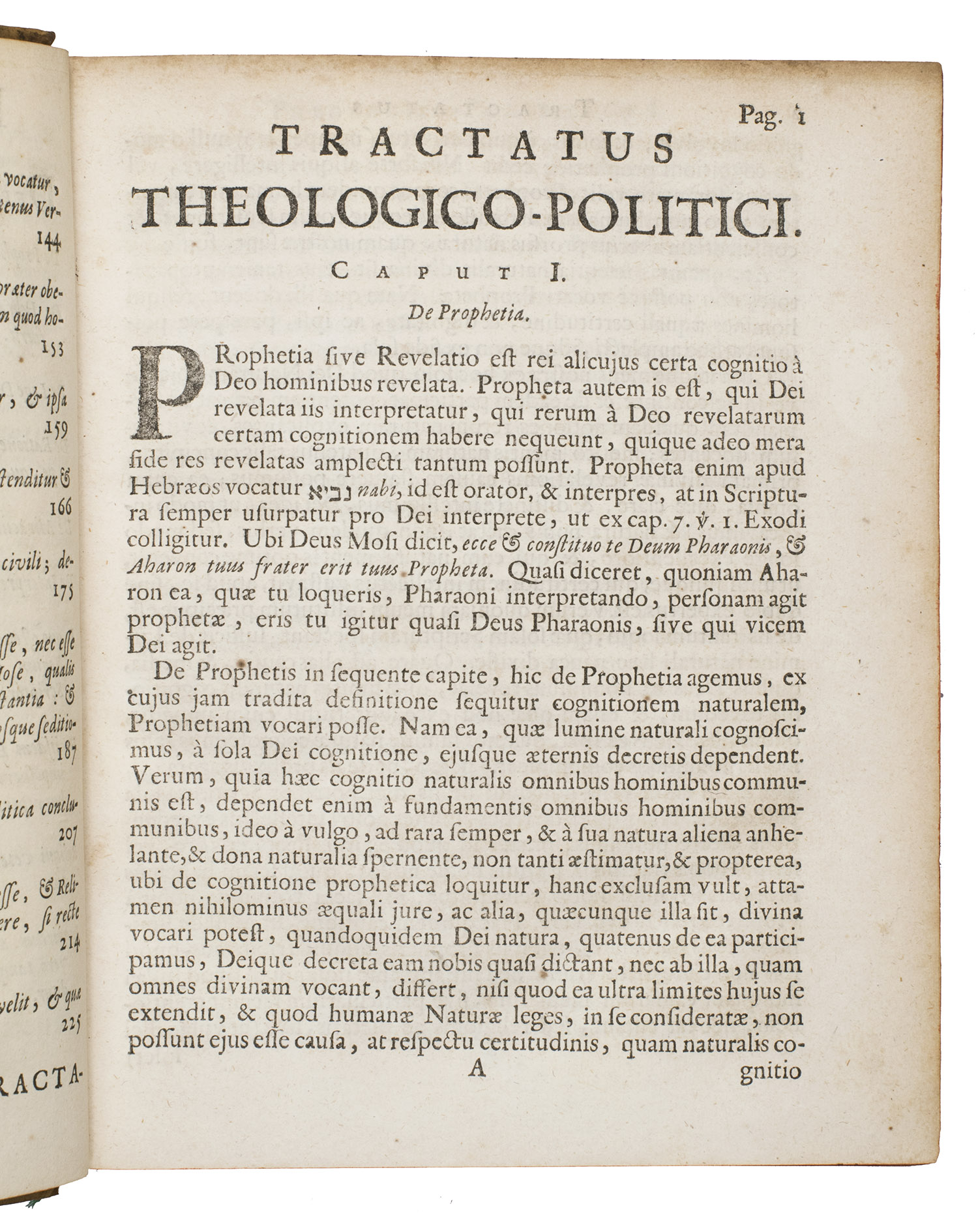
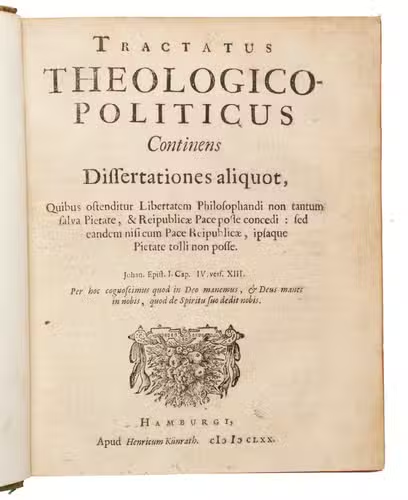
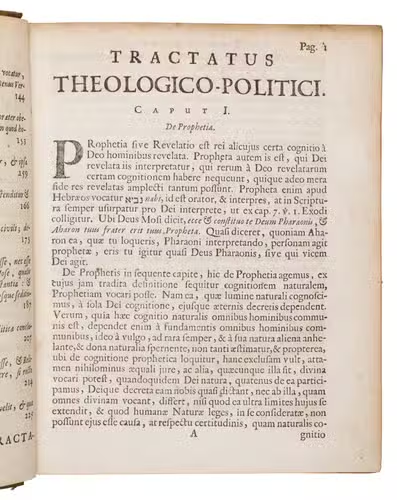
(2) IDEM. Tractatus theologico-politicus continens dissertations aliquot, quibus ostenditur libertatem philosophandi non tantum salva pietate, & Reipublicae pace posse concede: sed etiam nisi cum pace Reipublicae, ipsaque pietate tolli non posse ...
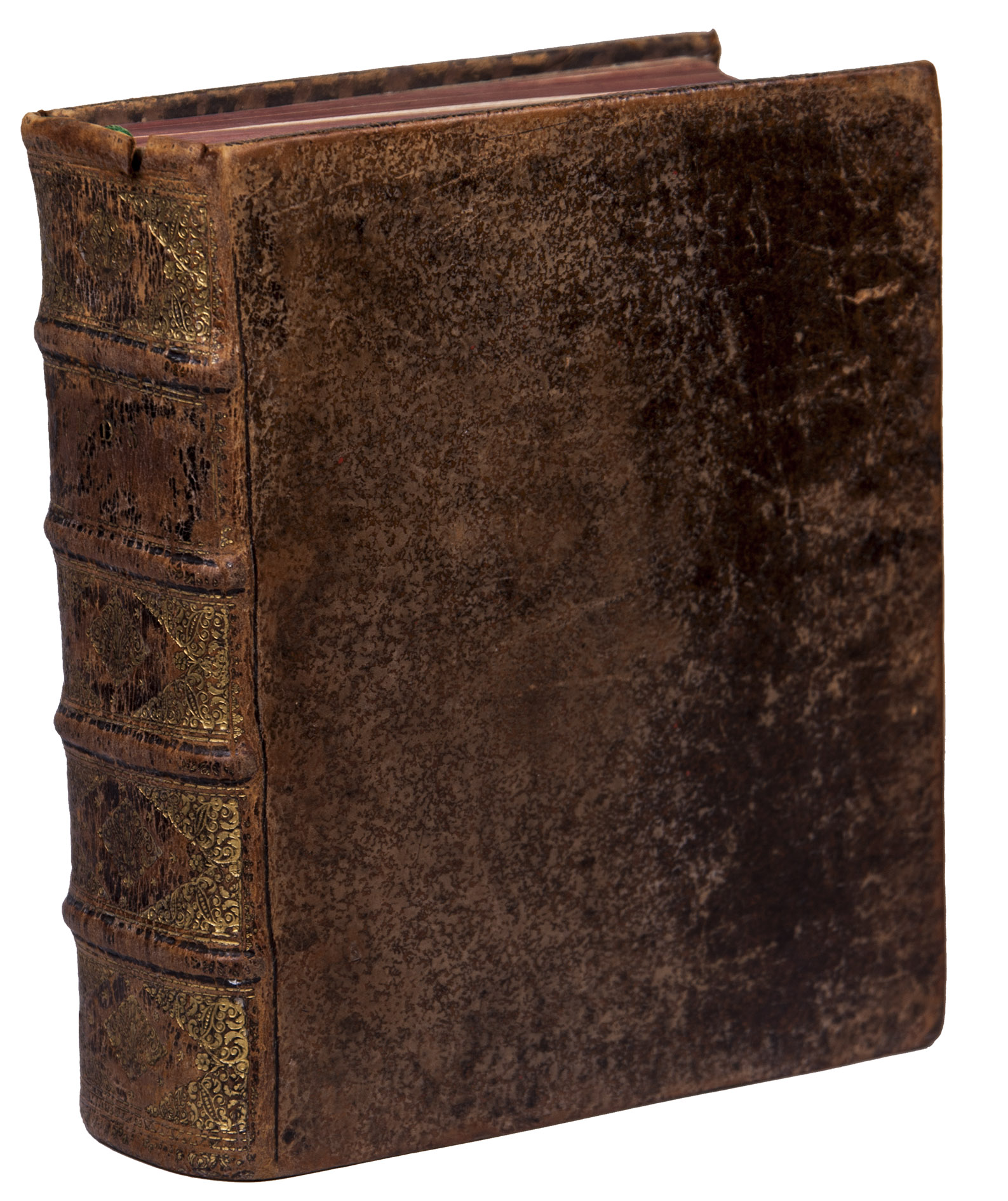
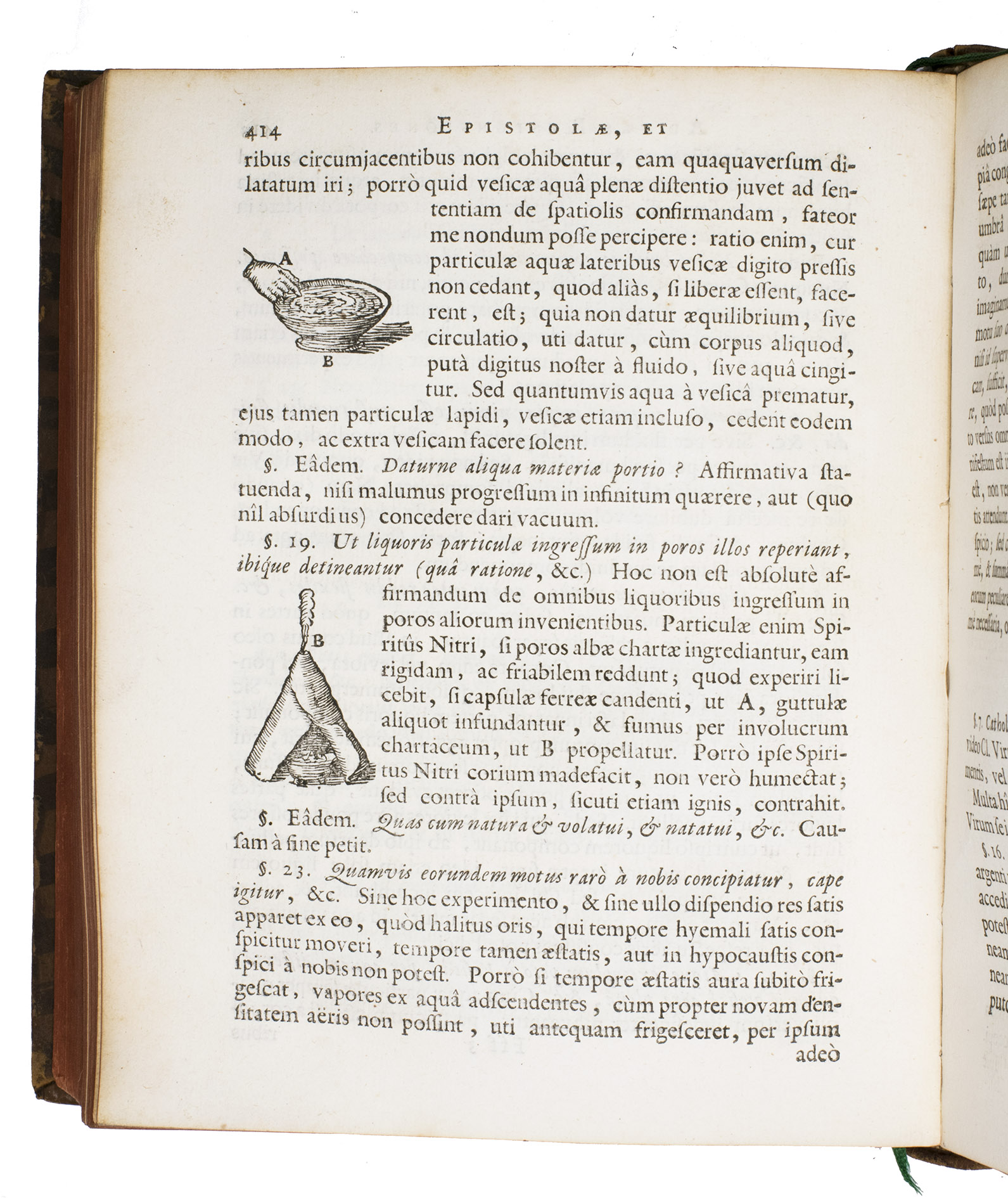
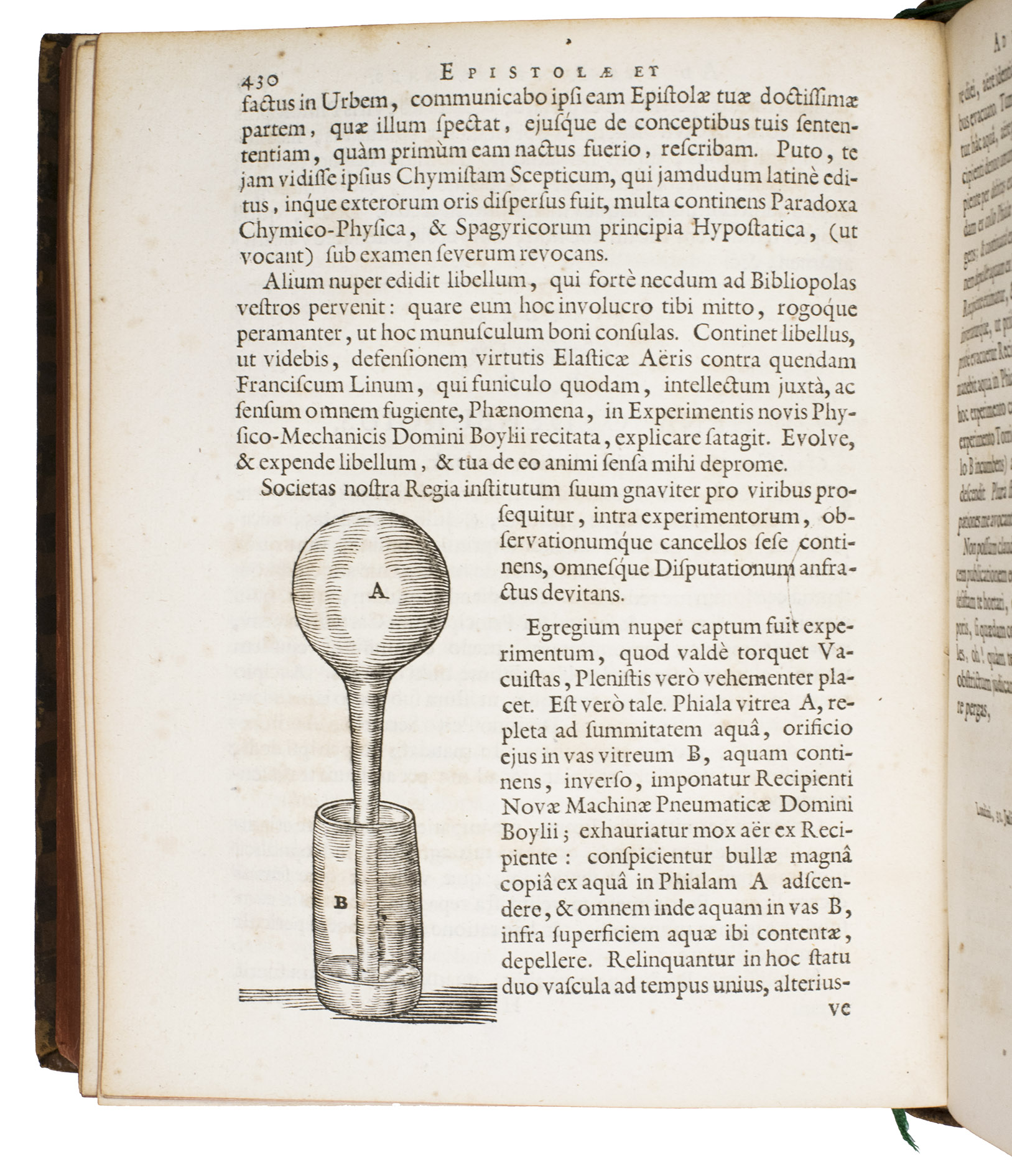
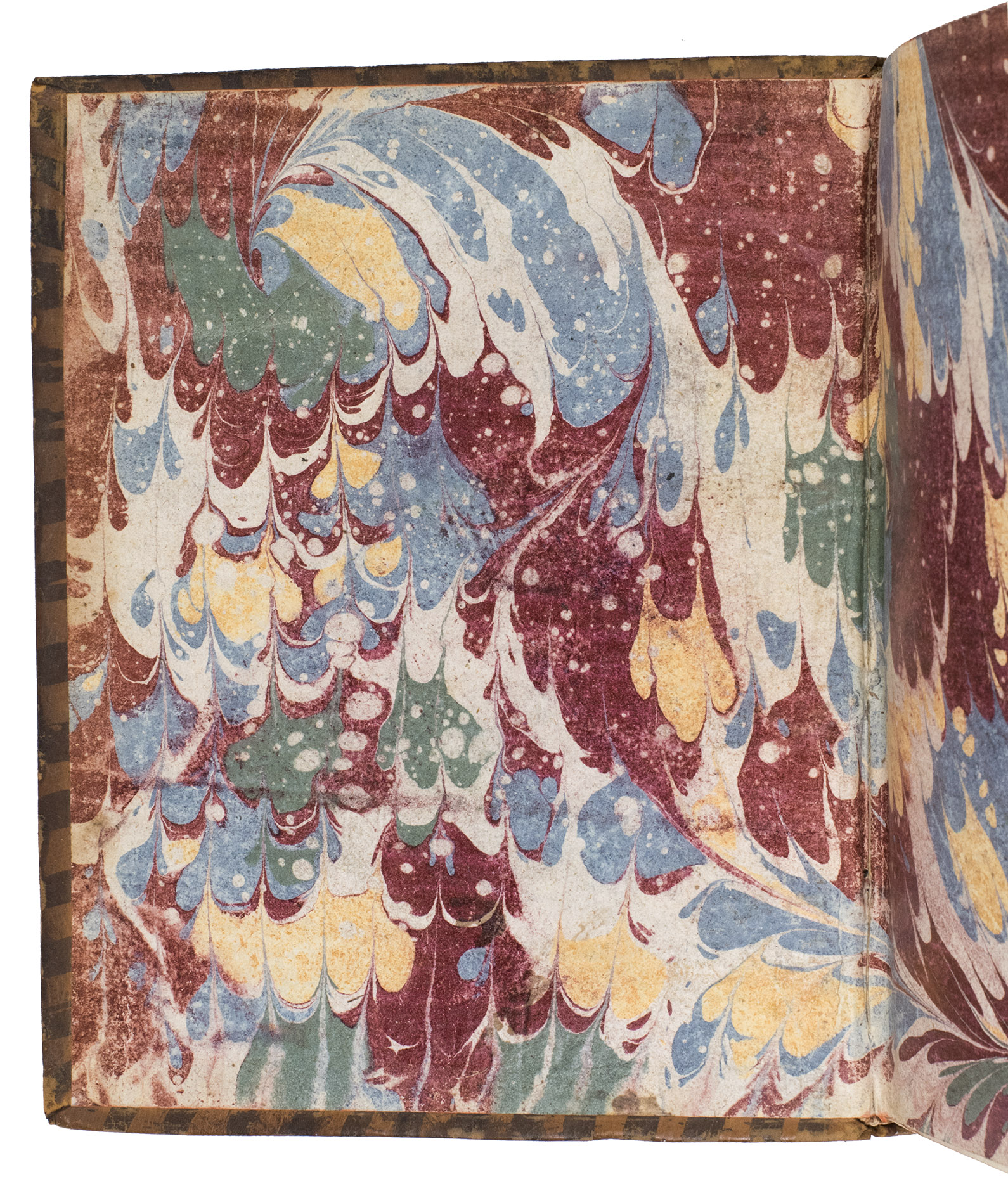
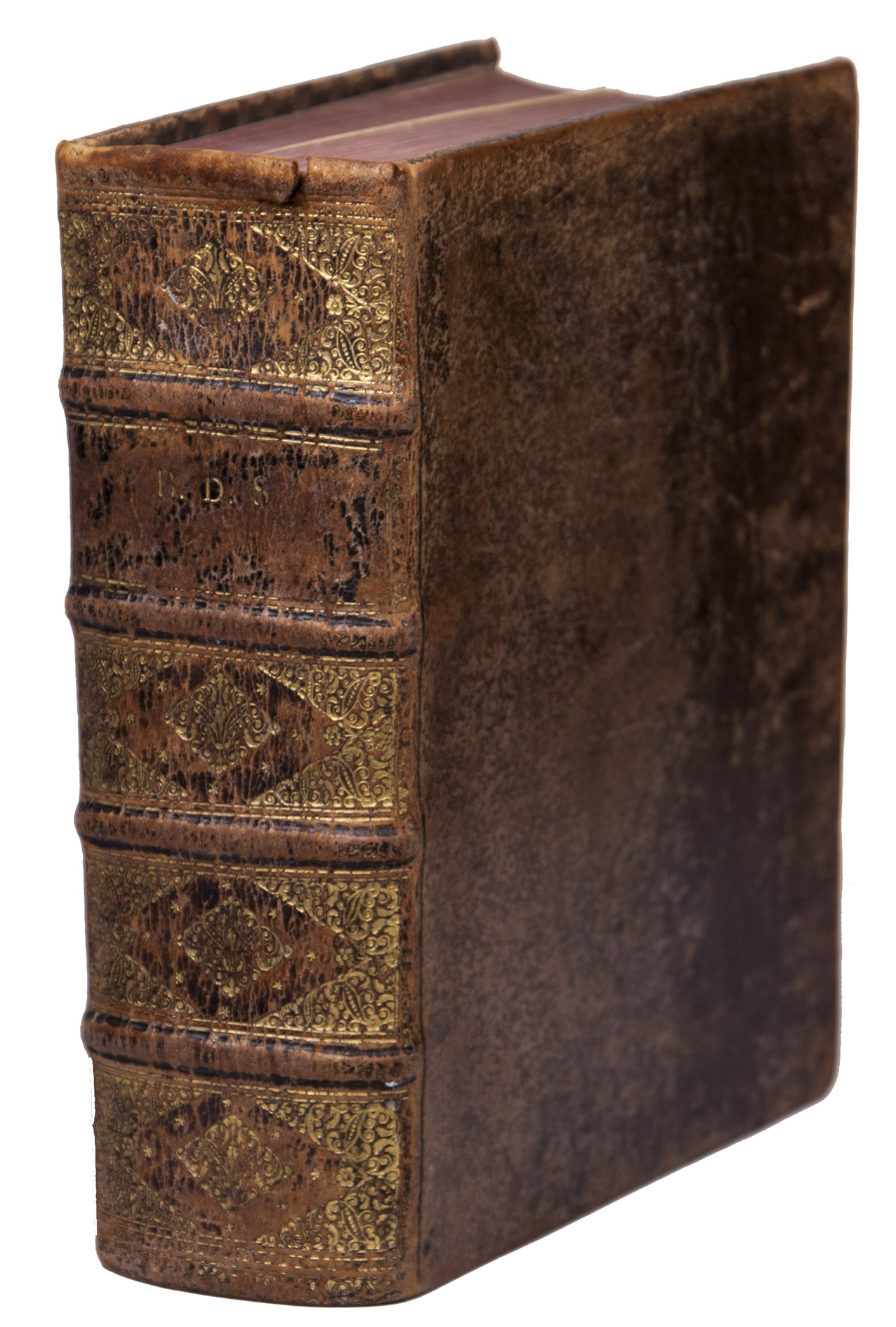
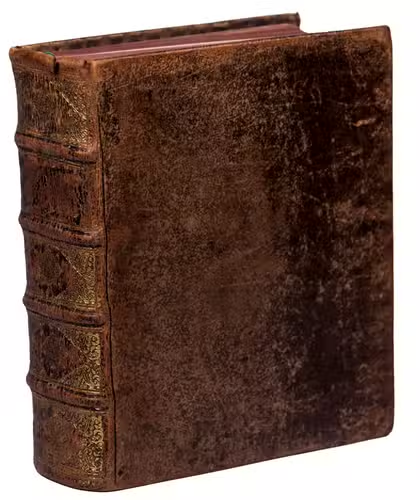
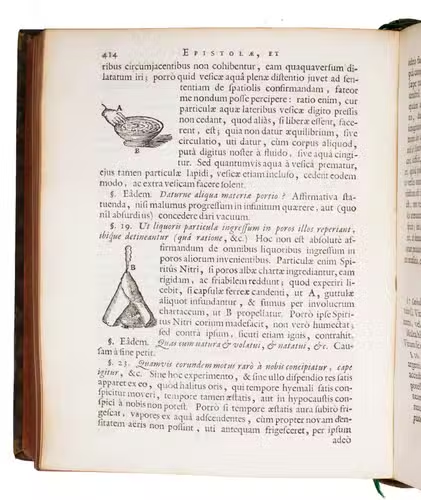
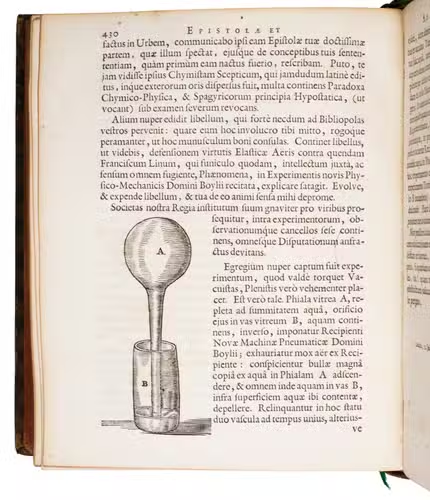
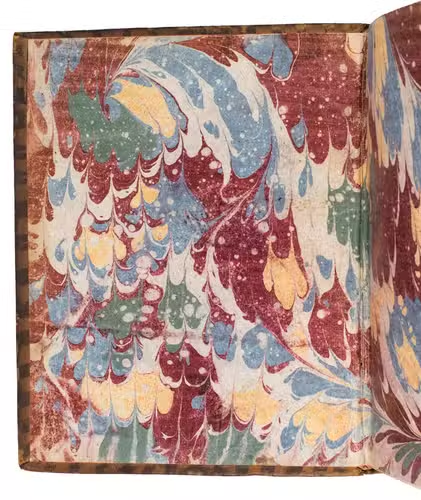
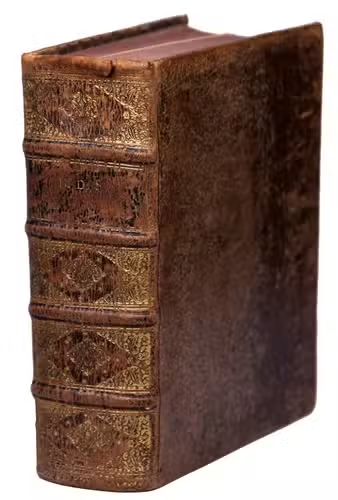
Hamburg, Henricus Künrath [= Amsterdam, Israel de Paull for Jan Rieuwertsz sr.], 1670. 2 works in 1 volume. 4to (19.8 x 16.2 cm). Ad 1 with several woodcut mathematical figures in the Epistolae, small diagrams in the Ethica and Epistolae, a woodcut vignette on the title page, and several decorated woodcut initials. Ad 2 with woodcut vignette on the title page and a woodcut tailpiece at the end of the preface. Contemporary sprinkled calf, gold-tooled spine with Spinoza's initials lettered in gold, gold-tooled board edges, marbled endpapers, red painted edges. (Ad 2 bound before ad 1:) [1], [1 blank], [10], 233, [3 blank]; [1], [1 blank], [38], 614, [31], [1 blank], [2], 112, [8] pp.
€ 16,000
First edition of the Ethica, widely regarded as one of the most important work on philosophy of all time. Published anonymously after Spinoza's death, it is considered the first systematic exposition of pantheism, in which God is identified with the entire universe. In addition, appearing for the first time in the present compendium are two treatises on politics and the intellect, a collection of Spinoza's letters, and an additional work on the grammatical rules of the Hebrew language, prepared by Spinoza in response to a request from his friends. The present copy also includes the first edition of one of the only two works published during his lifetime: the Tractatus theologico-politicus (1670 or later).
Ad 1: Spinoza's Opera posthuma, based on the autographs or apographs of the texts, which were immediately sent by his landlord in The Hague to Spinozas friends in Amsterdam following his unexpected death on 21 February 1677 (which are, however, no longer extant today). The edition was prepared and printed still in the same year 1677, through the efforts of his Amsterdam friends Jarig Jelles, Lodewijk Meyer (who translated Jelles original preface in Dutch into Latin) and Jan Rieuwertsz sr. Also other friends probably contributed, including Pieter van Gent (who made a faithful copy of the Latin Ethica text in 1674-75, now in the Vatican Library), Johannes Bouwmeester, and Georg Hermann Schuller.
The Ethica is Spinozas most important and influential philosophical work: the modern classic of pantheism, arguing that God is the immanent principle of the universe, undetermined or infinitely self-determined, identical with nature: "Deo est Natura". Spinozas thinking combined religion, science and philosophy in a revolutionary way, unpopular with both Jewish and Christian orthodoxy.
Ad 2: the last of the four almost identical editions (6 issues) of Spinozas famous Tractatus Theologico-Politicus which are dated "1670" (3) or "1672" (2), but published between 1670 and 1677 (or even later) under Spinozas own supervision. Our copy belongs to the first and only issue of the fourth edition according to Van de Ven (no. T5), dated 1670, but published in 1677 or later, with page number 192 misprinted as "92", the only issue without the list of errata, which were corrected here for the first time. Kingma/Offenberg, p. 6: "... it is abundantly clear how great an active interest Spinoza took in the corrections of his text. One might therefore expect the editions published during his lifetime to become increasingly nearly perfect". The Tractatus was first published anonymously in Amsterdam, either in late 1669 or during the first months of 1670, in a period when the relative freedom philosophers enjoyed in the Dutch Republic, was quickly evaporating.
The Tractatus is the most important work of the only two works Spinoza published during his lifetime. The first is a treatise on Descartes Principles of philosophy: Principia philosophiae cartesianae (1663). The Tractatus has been described by Steven Nadler as "one of the most important books of Western thought" in which Spinoza questioned the divine origin of the Hebrew Bible and the nature of God while arguing that ecclesiastic authority should have no role in a secular, democratic state with an established legal system. Notwithstanding relative neglect, in the past five decades the Tractatus has finally emerged from the shadow of the Ethica. In the wake of the important and extensive work on the historical significance of the Radical Enlightenment by Jonathan Israel, recent studies of the Tractatus have focused on the context of the Dutch Republic, but also explored the works broader philosophical relevance, considering Spinoza as an influential predecessor of the Enlightenment in general. "Spinozas thought, a fusion of Cartesian rationalism and the Hebraic tradition in which he grew up, is a solitary but crystal-clear exposition of the theory of natural right. He defends with eloquence the liberty of thought and speech in speculative matters, and the Tractatus contains the first clear statement of the independence of each other of philosophy and religion, in that speculation and precepts of conduct cannot collide" (Printing and the Mind of Men, 153). This revolutionary book was synodically condemned as early as April 1671, and officially banned by the Dutch government in 1674.
The binding is rubbed, also affecting the gold-tooling on the spine, the head of the spine is slightly damaged. Ad 1 is slightly foxed throughout. Ad 2: occasional browning (mainly to the first and last few leaves) and occasional slight foxing. The bookblock is split between pp. 416/417 but all still attached to the sewing supports. Otherwise in good condition. Ad 1: Baruch de Spinoza 1677-1977, 25; Cat. Wolf collection, p. 378; Gebhardt, in his standard edition of Spinozas Opera, vol. II (Heidelberg, 1925), pp. 311-319; Hoogendoorn, Spinozas briefwisseling (2016); Kingma/Offenberg, p. 24; Knuttel, Verboden boeken, p. 377; Ad 2: Cat. Wolf collection, p. 363; Introduction by F. Akkerman for his translation into Dutch (1997); Jeroen M.M. van de Ven, Printing Spinoza. A descriptive bibliography of the works printed in the 17th century (Library of the Written Word, 100), Leiden, Brill, 2022, Chapter 3, pp. 76-166, nr. T5; Kingma/Offenberg, p. 7; Knuttel, Verboden boeken, p. 391; Van der Linde, p. 3.
Related Subjects: