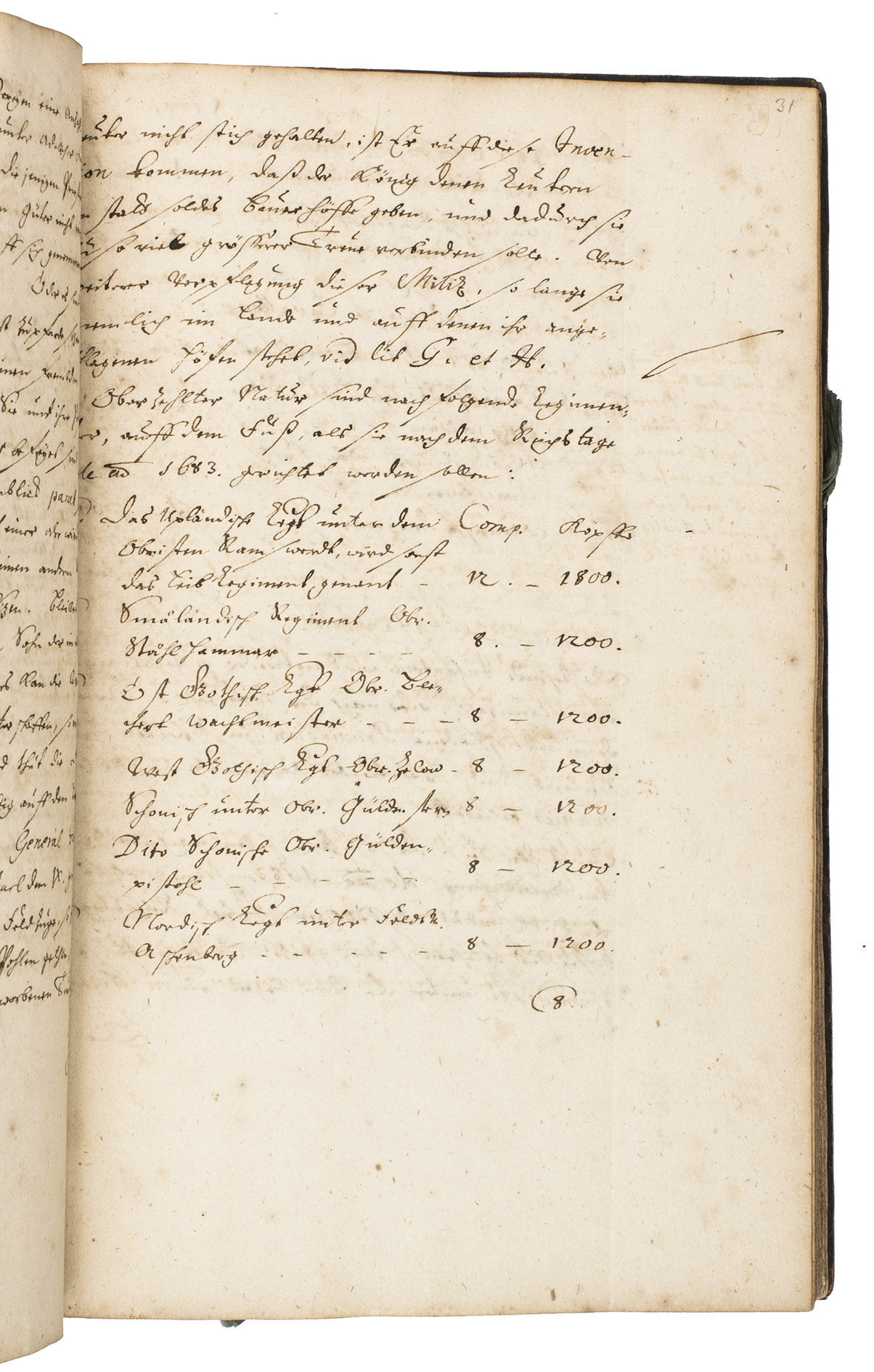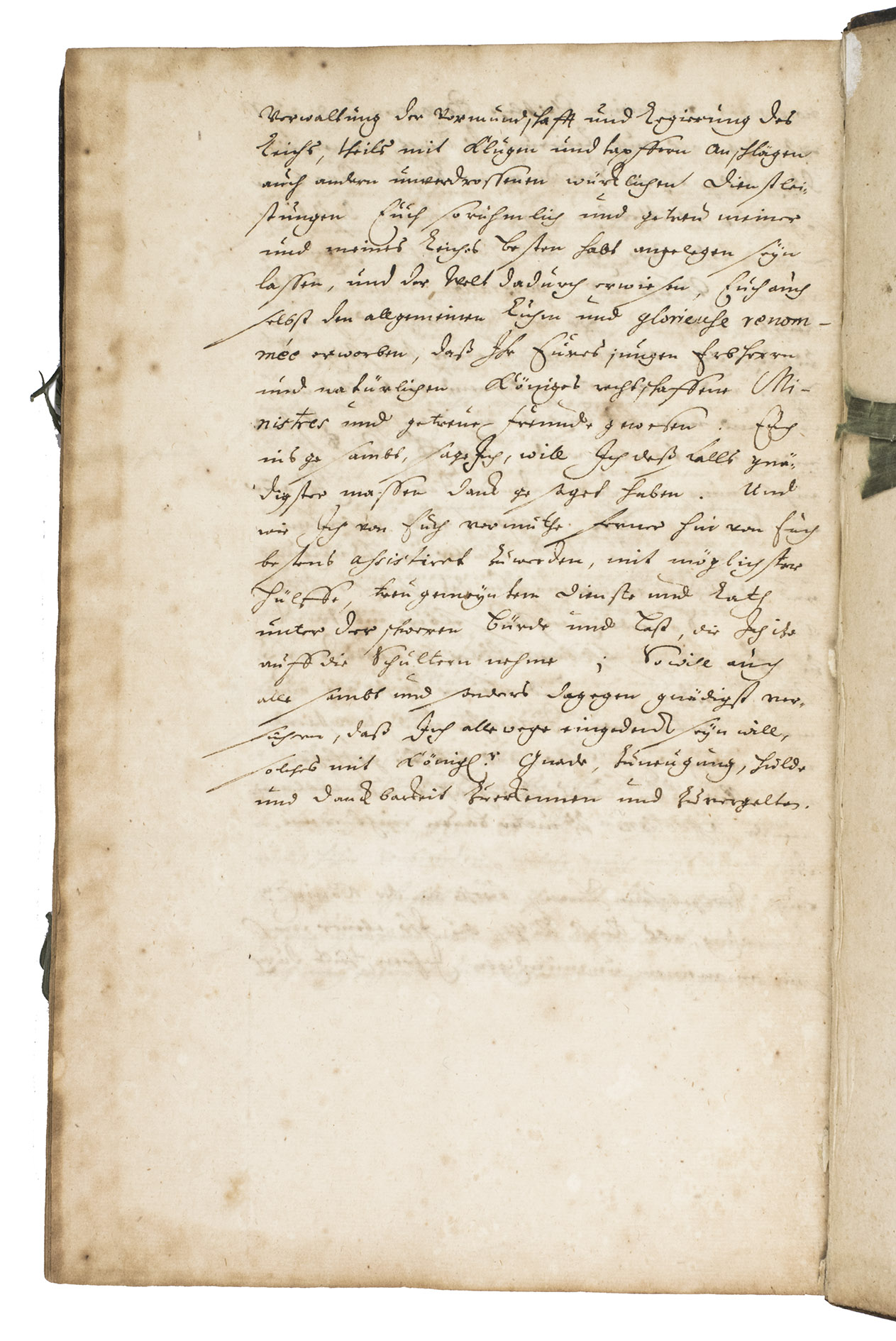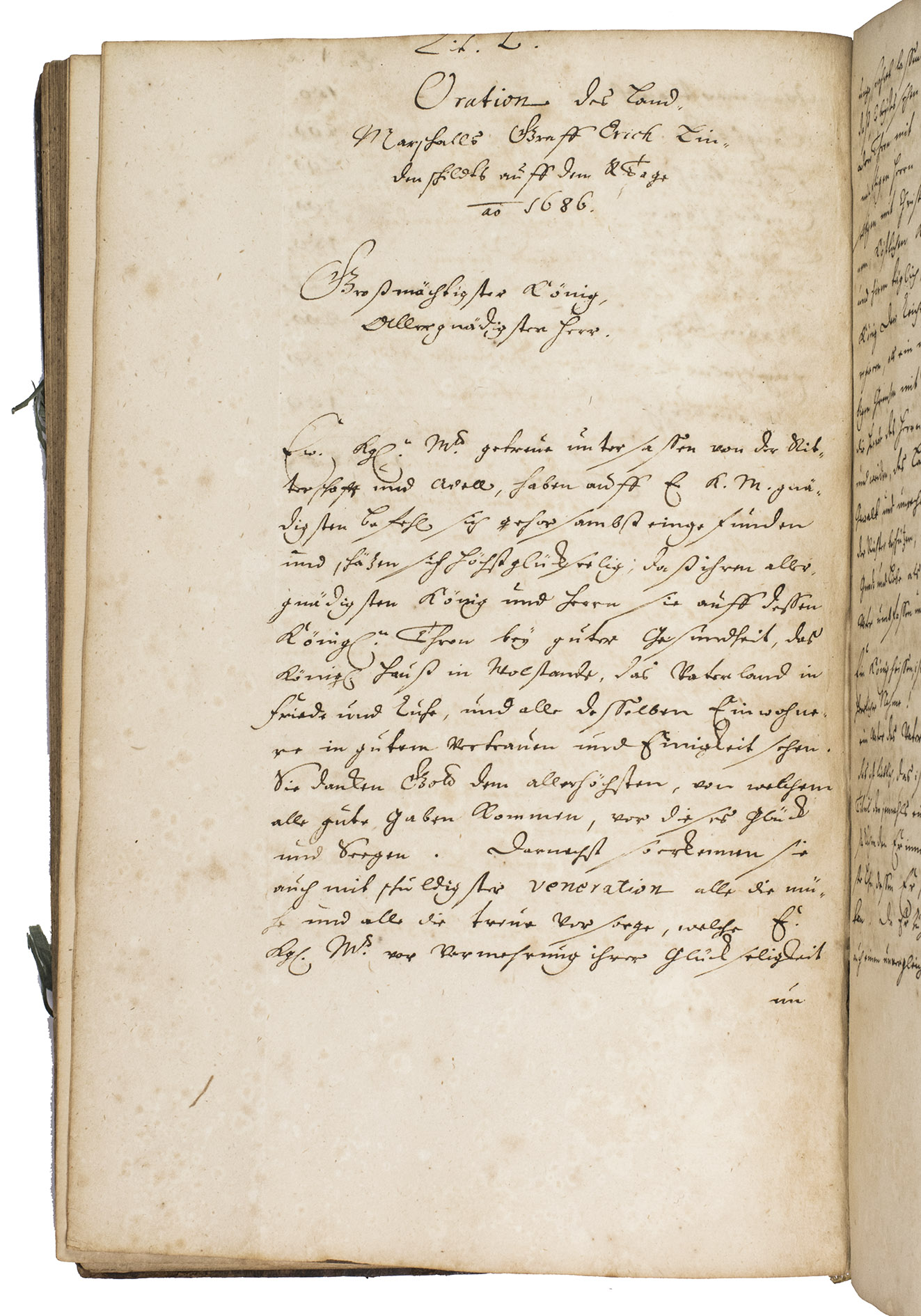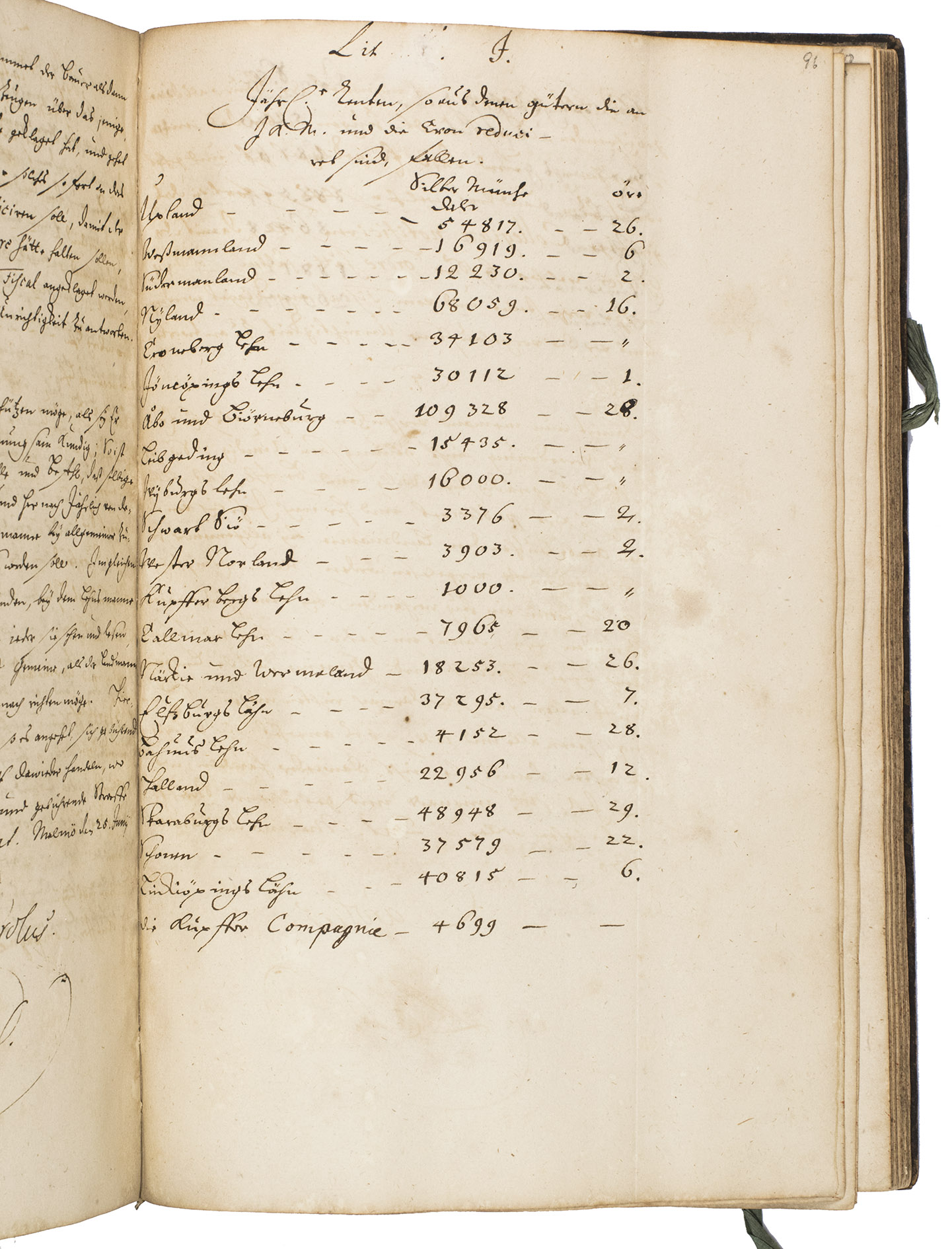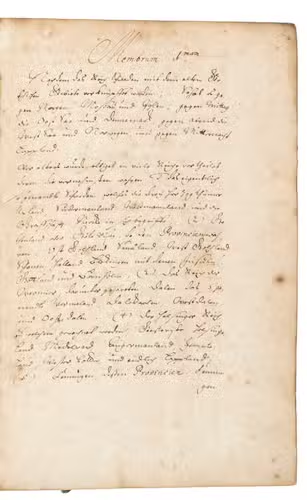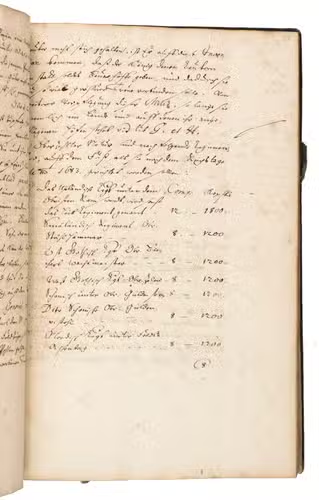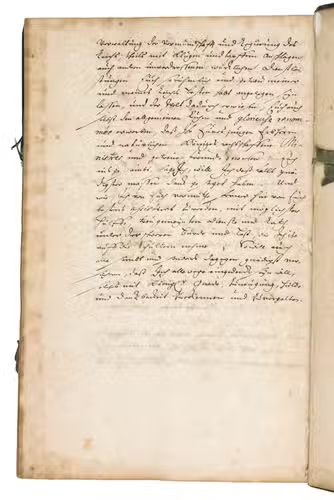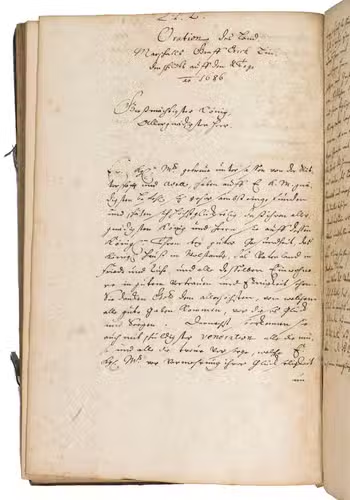
[MANUSCRIPT - GERMAN - SWEDISH POLICIES].
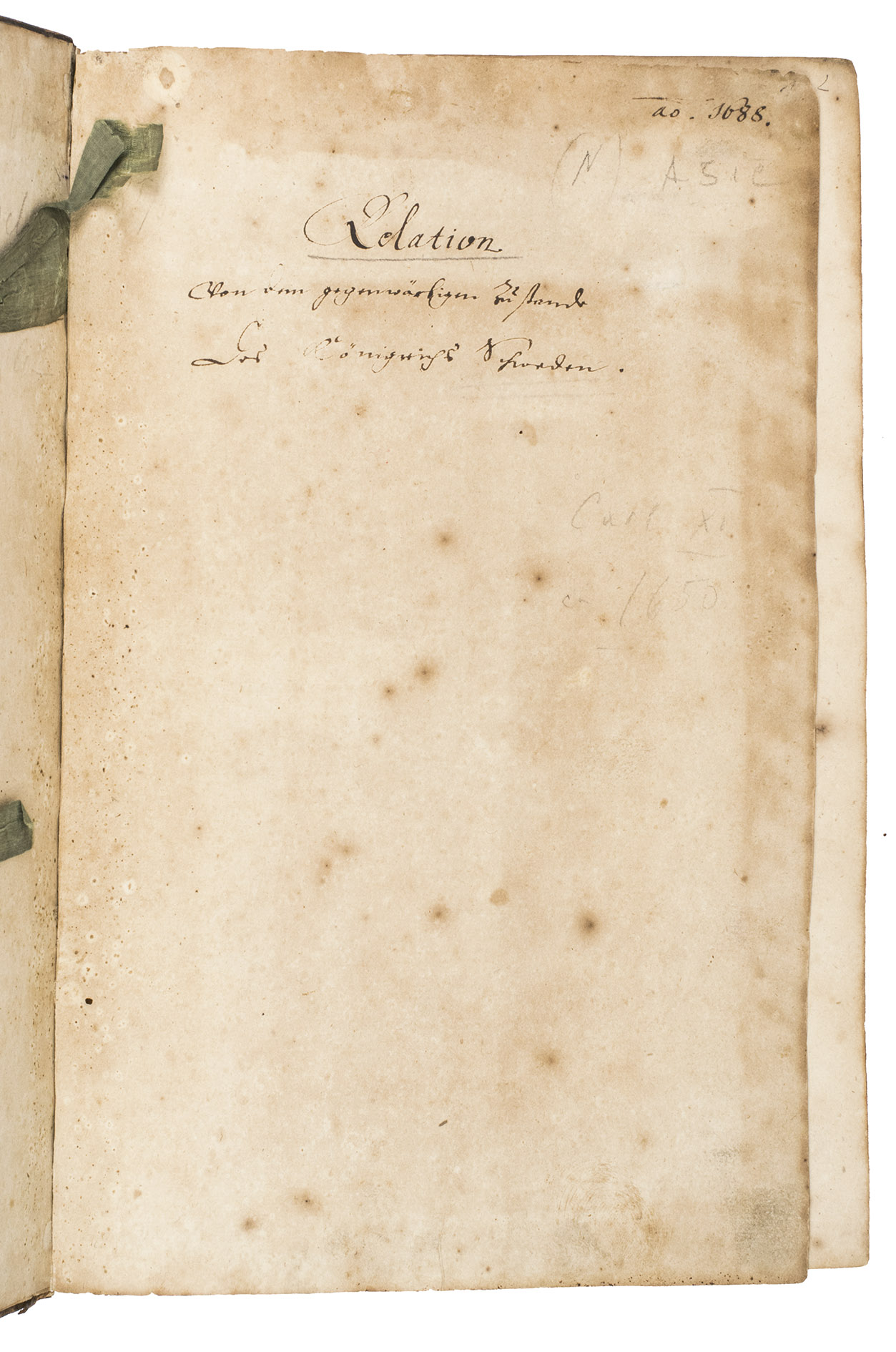
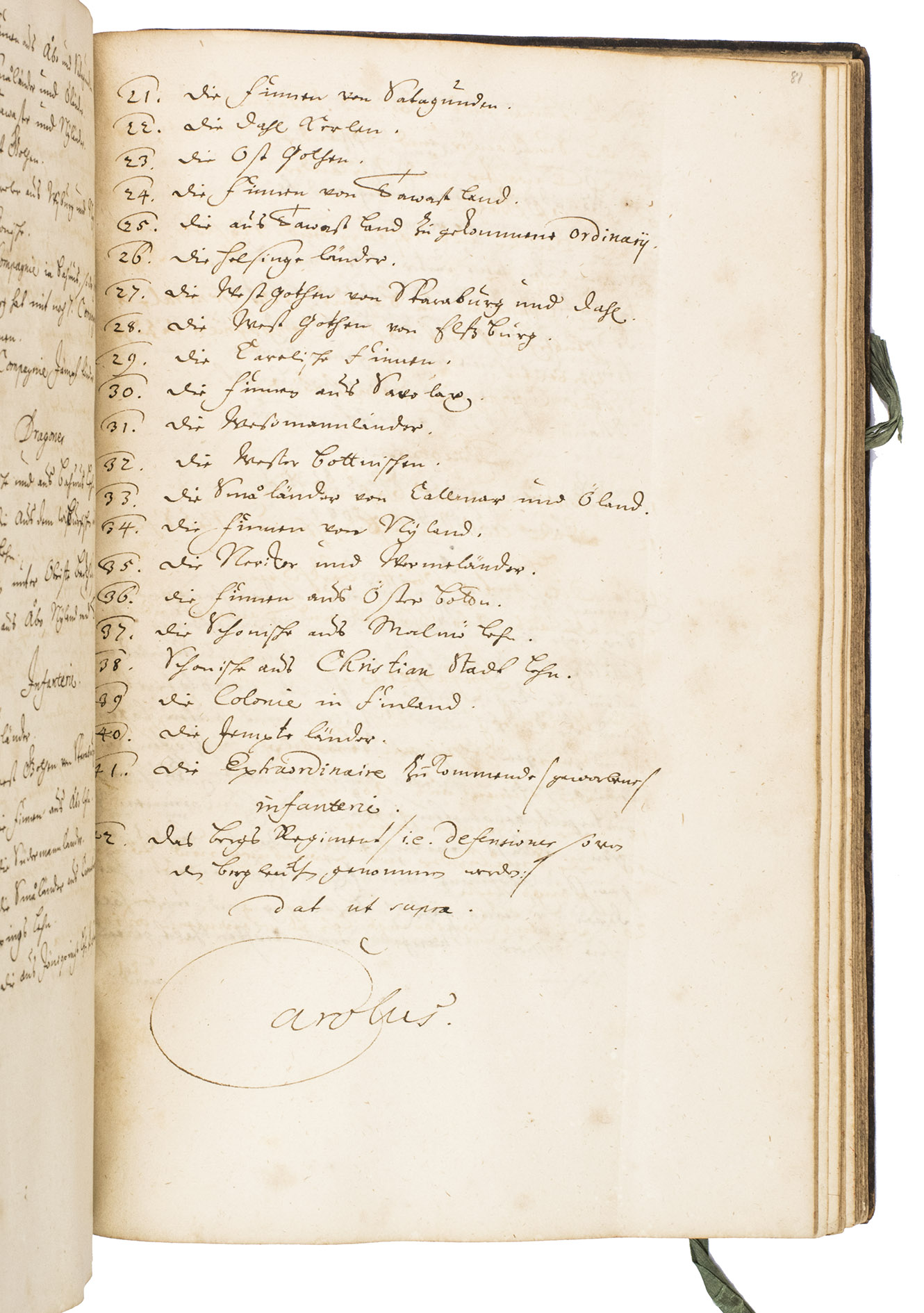
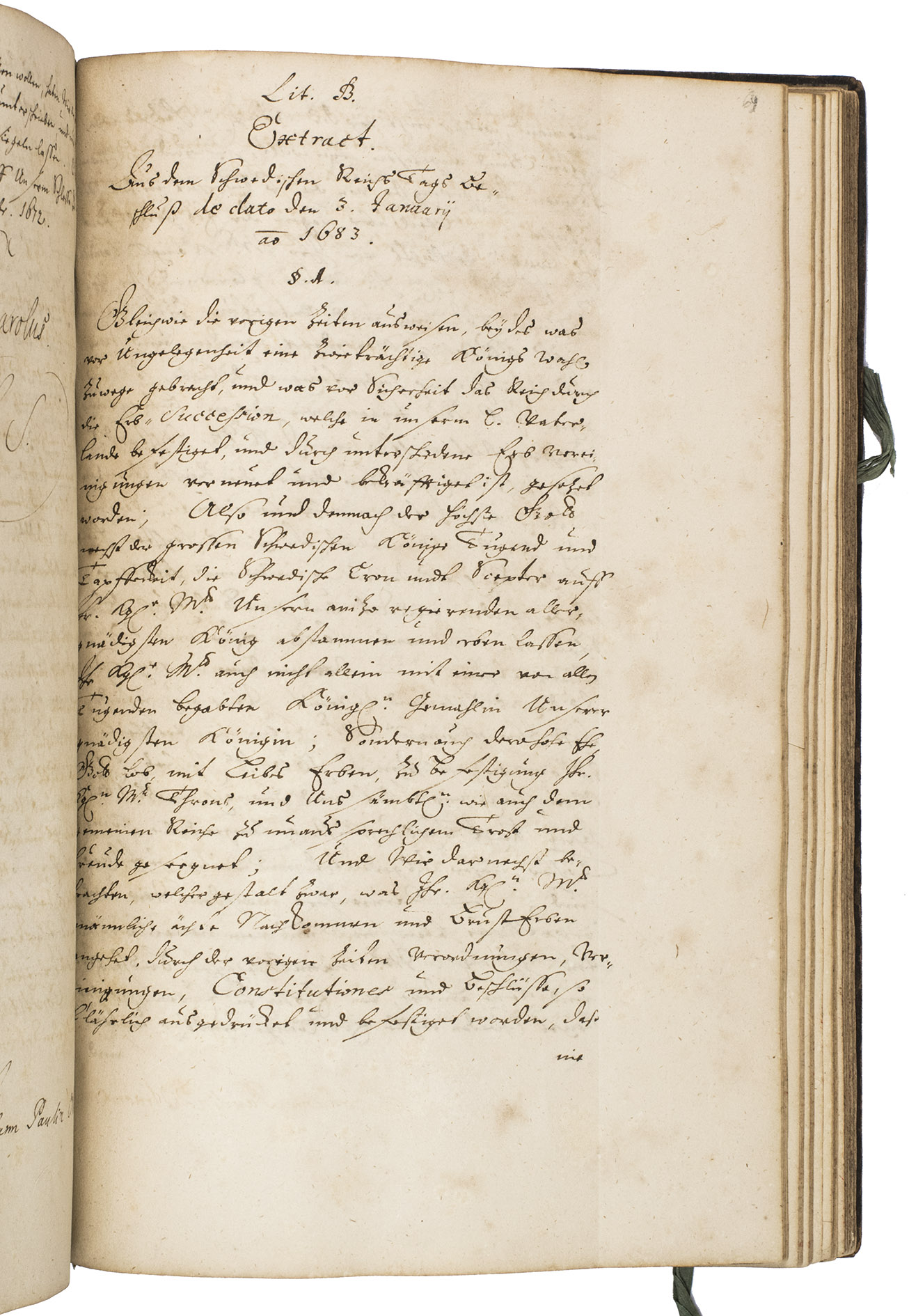
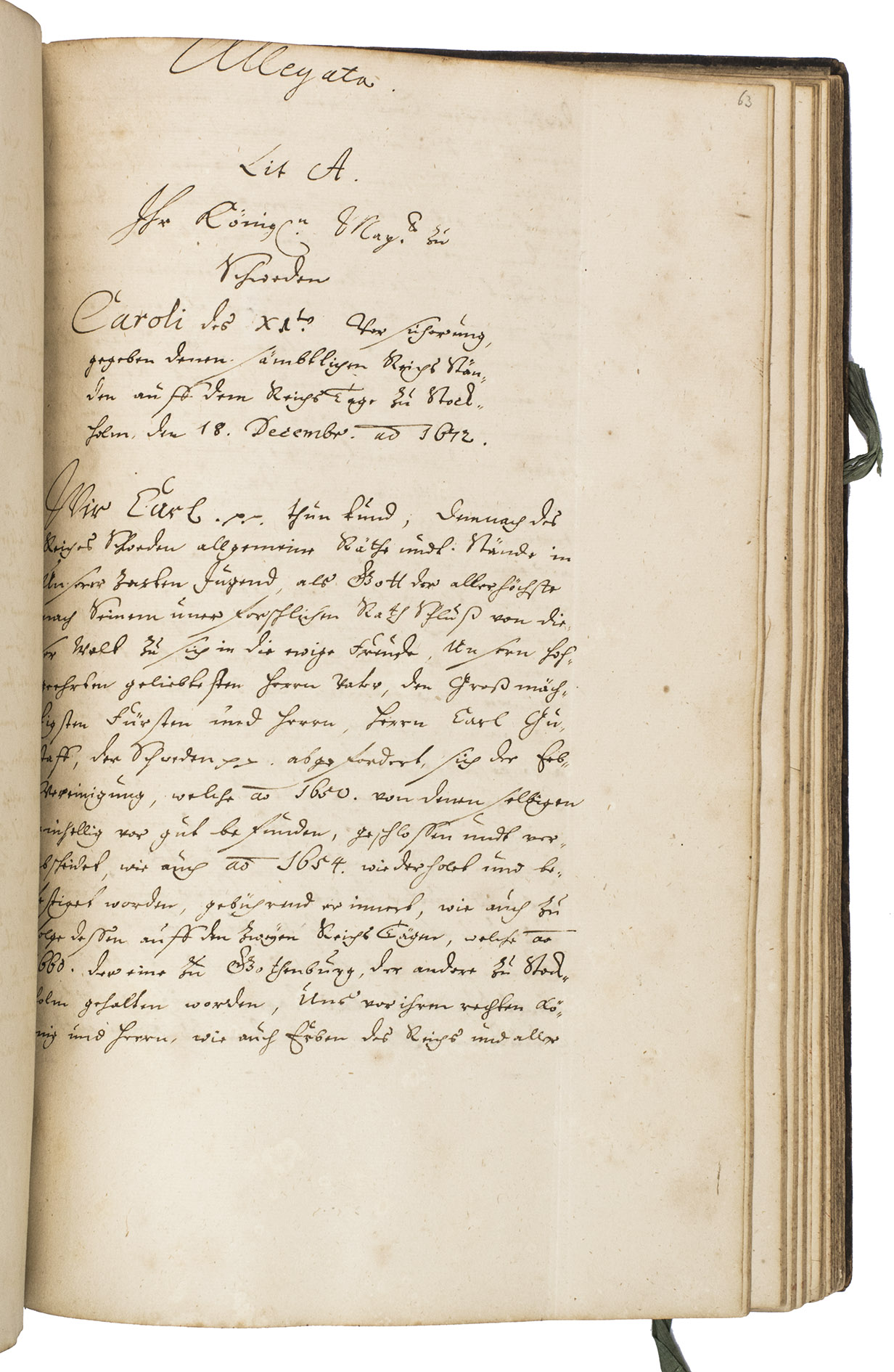
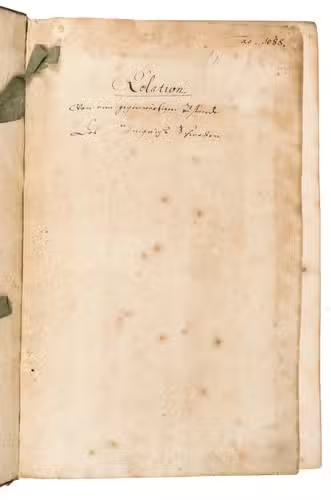
Relation. Von dem gegenwartigen Zustande des Konigreichs Schweden.
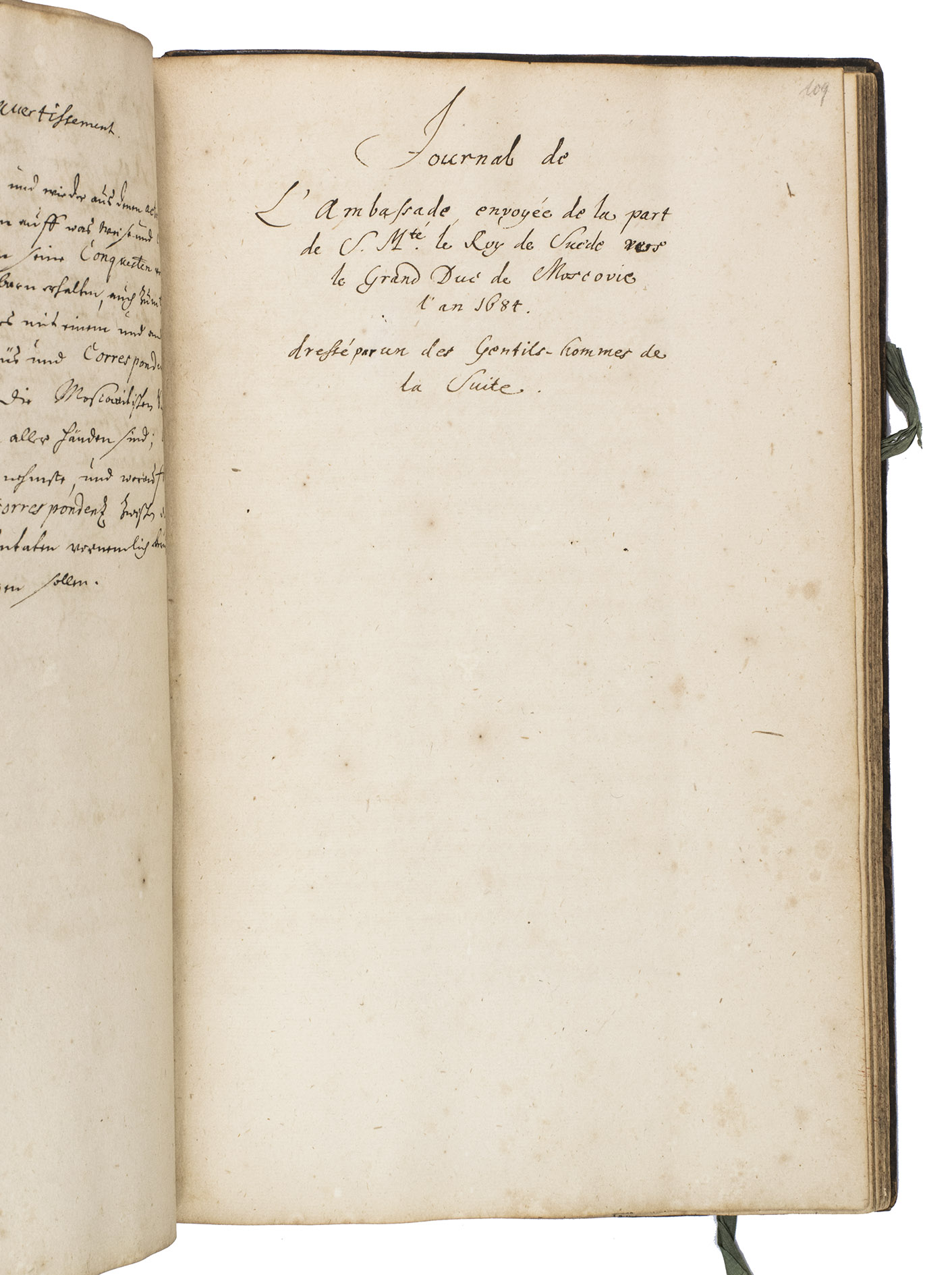
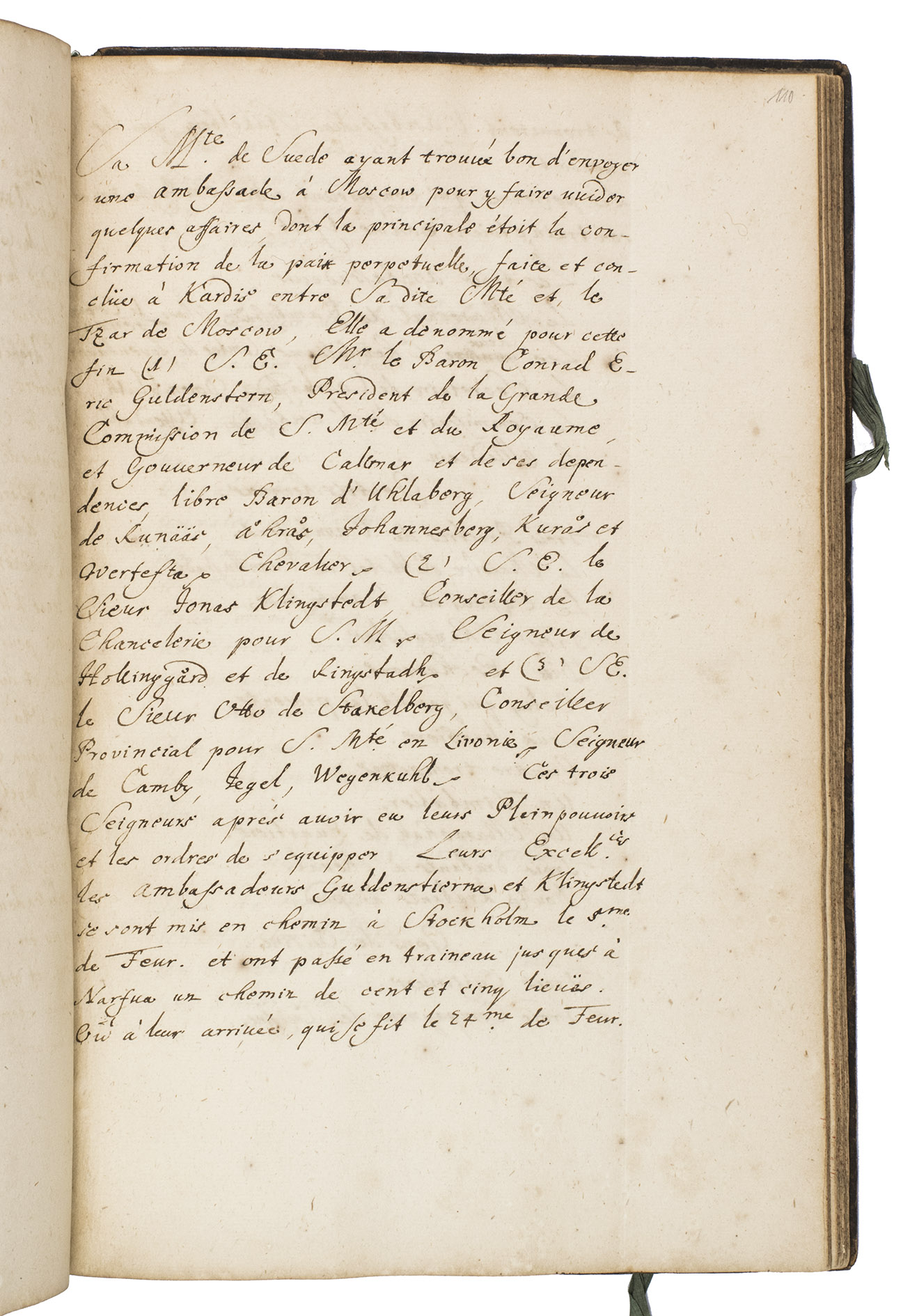
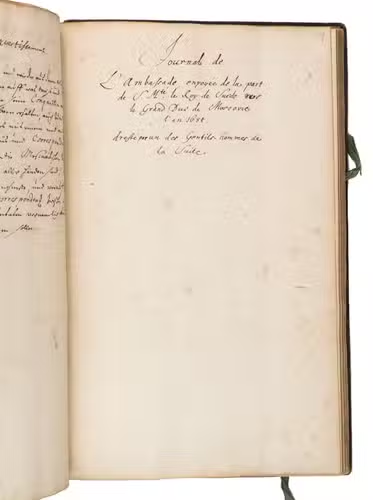
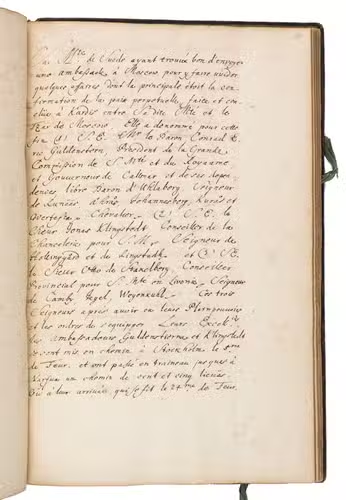
With: [MANUSCRIPT - FRENCH]. Journal de LAmbassade envoyée de la part de S. M.té le Roy de Suède vers le Grand Duc de Moscovie lan 1684, dressé par un des Gentils-hommes de la Suite.
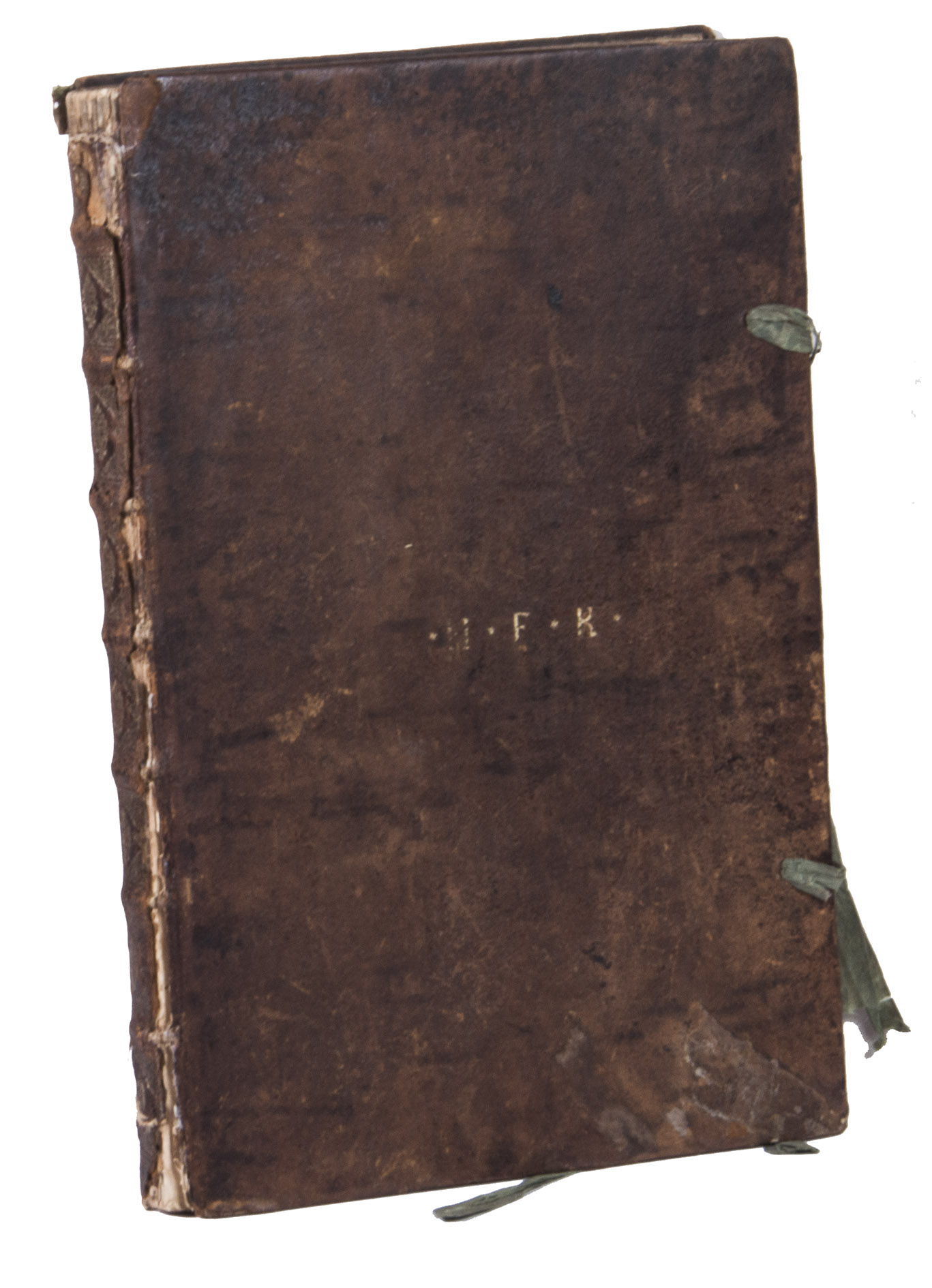
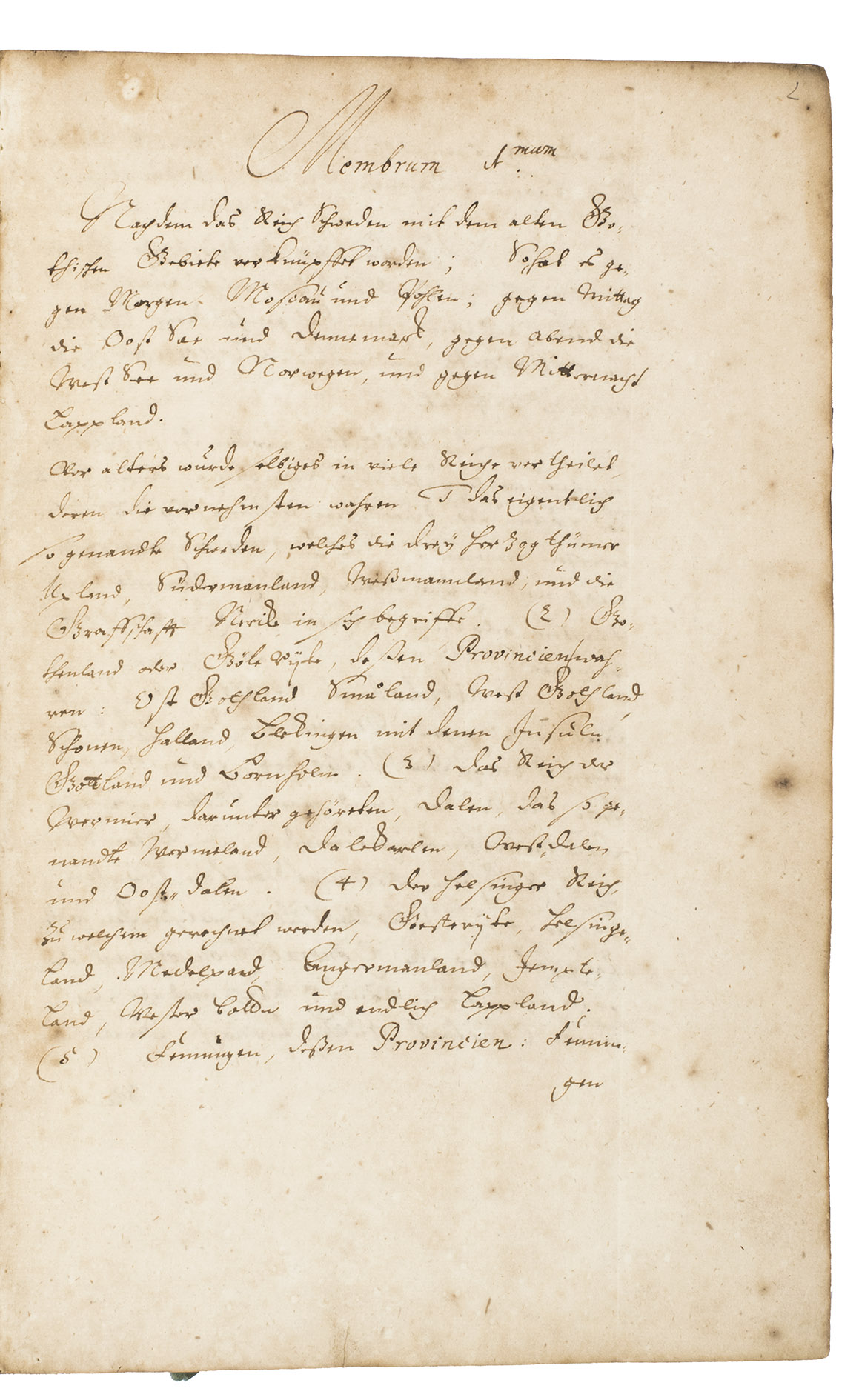
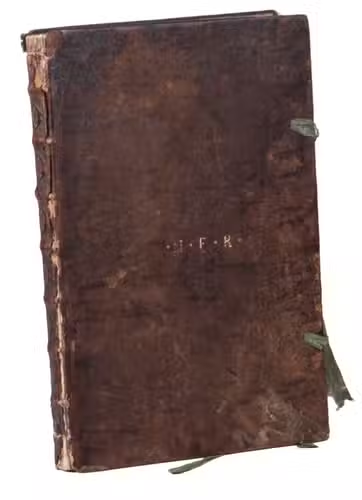
1684-1688. Folio (ca. 30 x 20 cm). The German part is neatly written in a Kurrent script, and the French part in a cursive hand. Contemporary gold-tooled calf, sewn on 7 supports with the corresponding raised bands on the spine, the initials "M.F.K" in the centre of the front board, red and black sprinkled edges, green closing ties. 167 ll.
€ 4,500
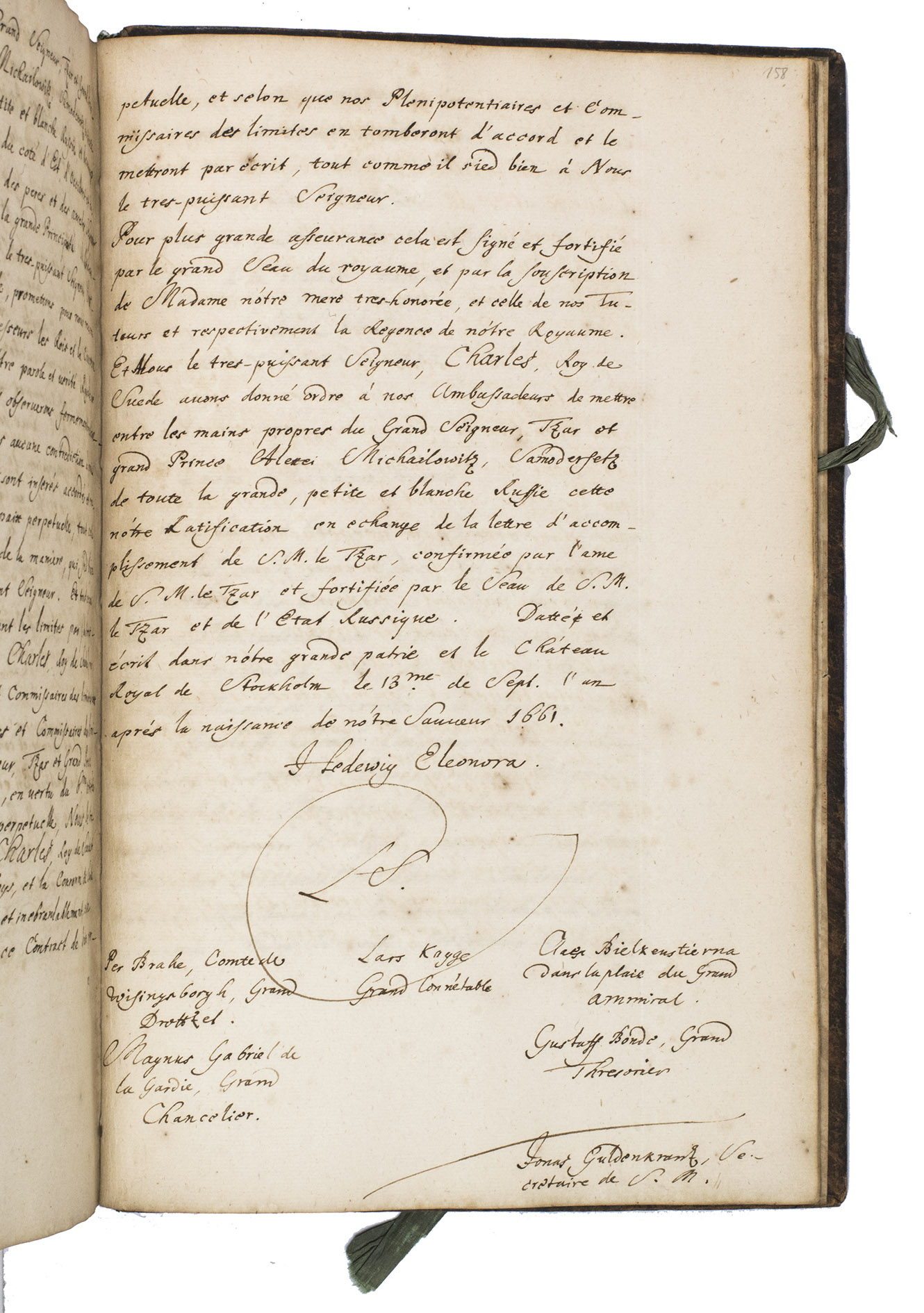
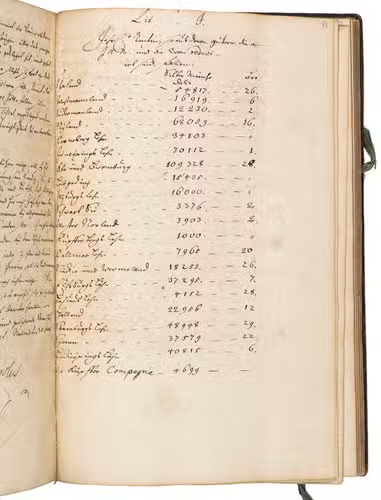
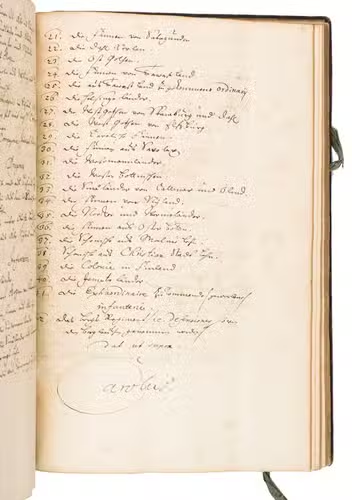
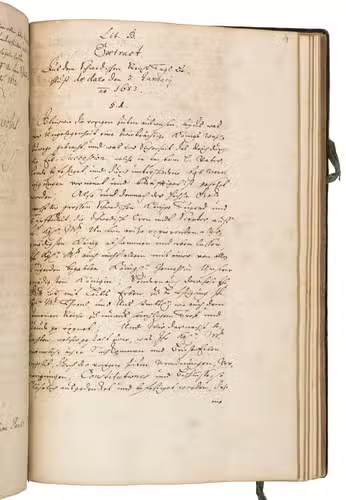
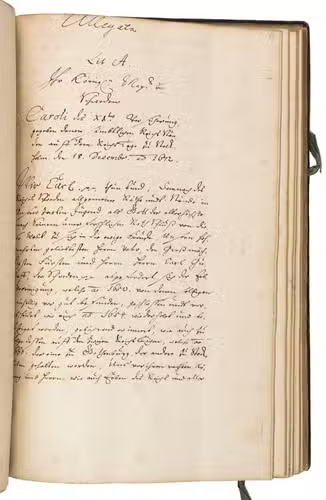
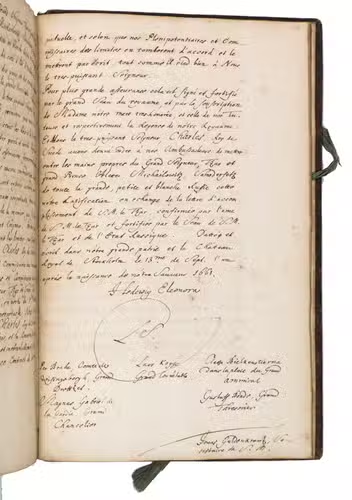
Remarkable manuscript on the history of Sweden in the 17th century, including the conclusion of the Russo-Swedish War (1656-1658). The work consists of two parts. The first is written in German and contains general descriptions of Sweden, excerpts on its governing structure, military system, the strength of the army, resolutions of the Swedish Rikstagen, and proclamations of King Charles XI (1660-1697) from the period 1672-1685. The second part, which starts on the recto of folio 109, is written in French, and contains a description and account of a Swedish embassy on their way to Russia in 1684, with descriptions of the members, the many gifts that were given to the Tsar and his daughter Princess Sophie, letters from the members of the embassy, and the text of the treaty.
The Russo-Swedish War, or the War of Rupture, took place during the Northern War (1655-1660), which began when Sweden invaded Poland and claimed some of Russia's conquests in the region. After a two-year fight, Russia had to give in to Sweden's demands, and signed the Treaty of Cardis in 1661. A few decades later, Sweden sent an embassy to strengthen the relationship with Russia. It was led by Baron Conrad Erik Guldenstern, Baron dUhlaberg, Ahras Johannes Berg, Jonas Klingstedt, and Otto von Stakelberg, and is described in detail in the present manuscript. We have not been able to find any evidence that the manuscript was ever published.
The boards are somewhat rubbed and scratched, missing a portion of leather at the bottom outer corner of the front board and at the head of the spine, the front hinge is broken, but the structural integrity of the binding is still partly intact, lacking a silk closing tie on the back, the other three are somewhat frayed. The work is somewhat browned and foxed throughout, the leaves have been folded in the past, and are numbered with pencil in a later hand. Otherwise in good condition.
Related Subjects: