[MANUSCRIPT - FRENCH].
[18th-century manuscript in French, concerning King Louis XVI and a dictionary of old French].
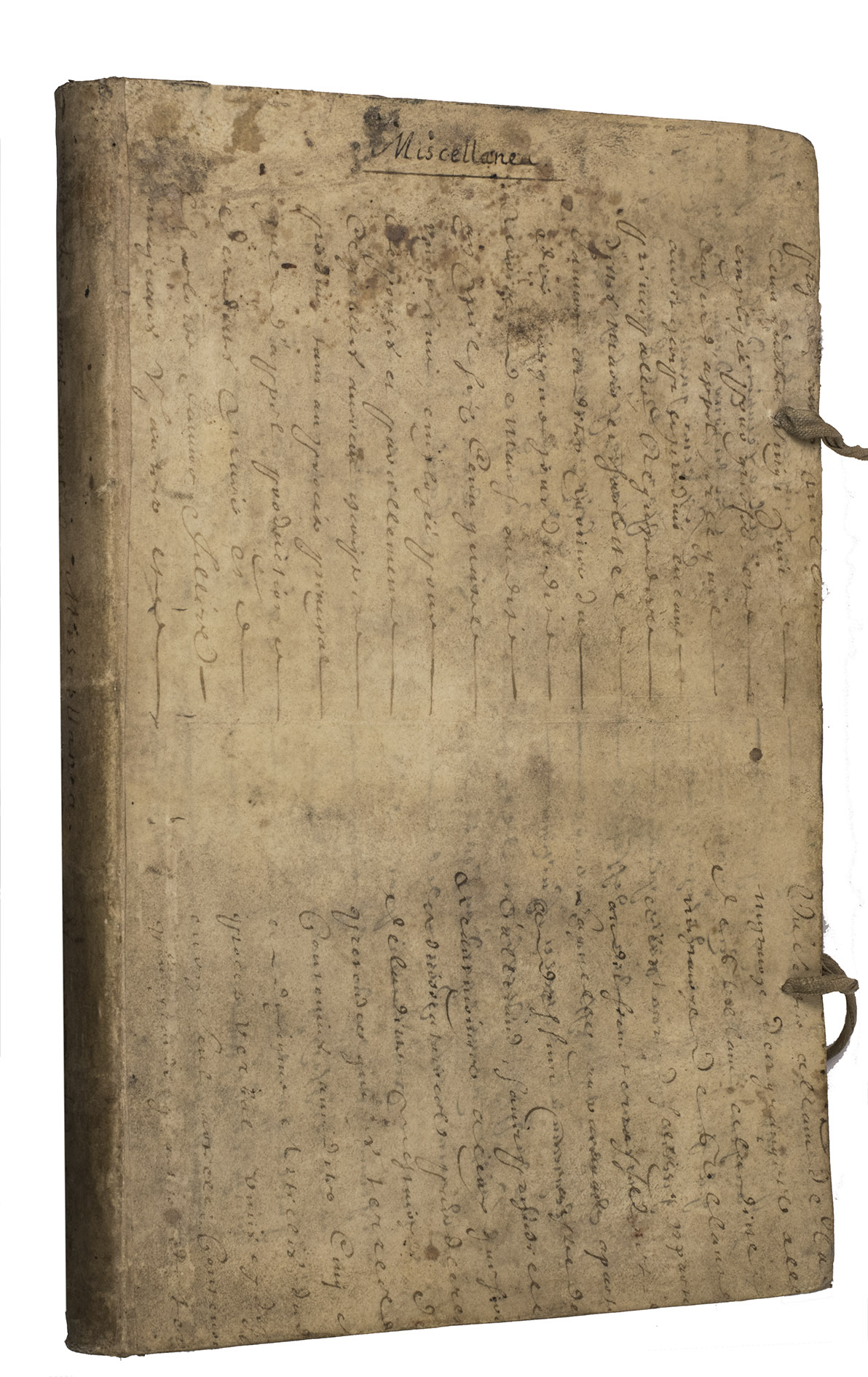
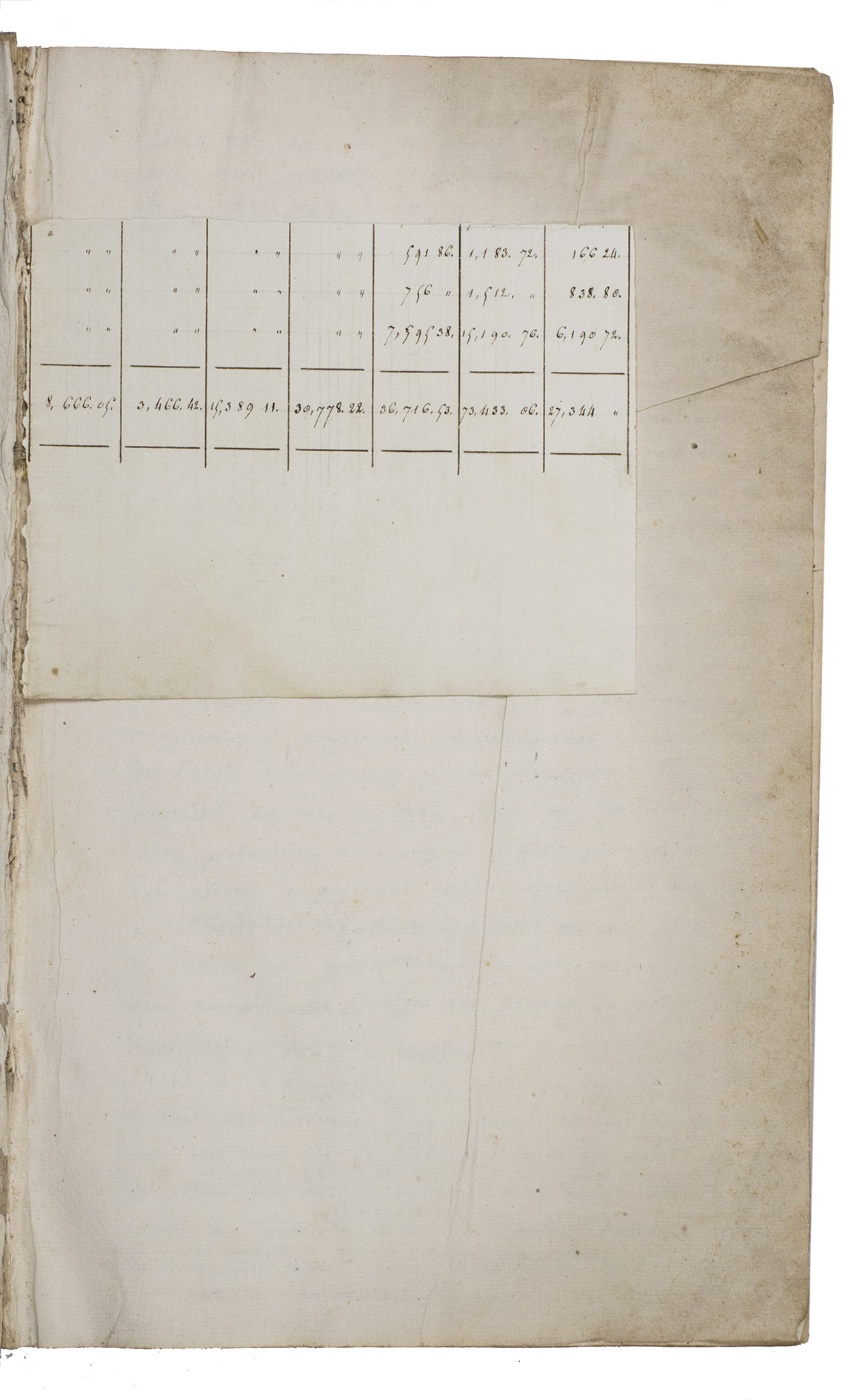
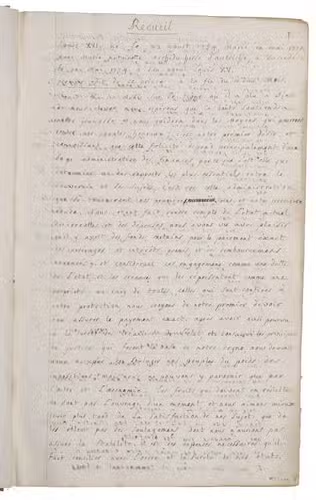
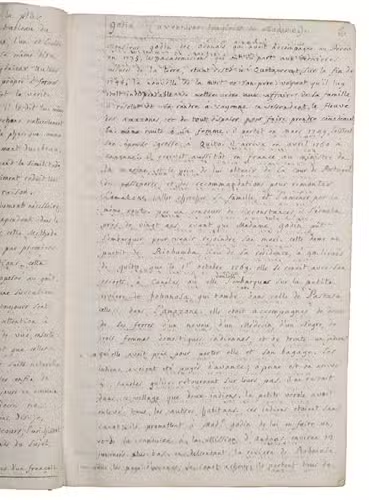
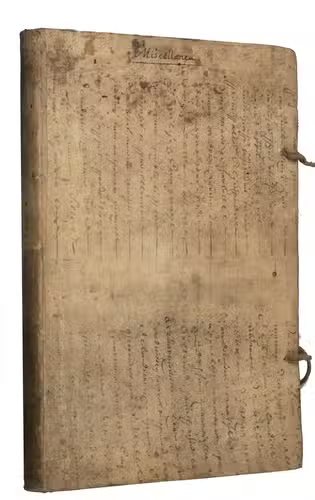
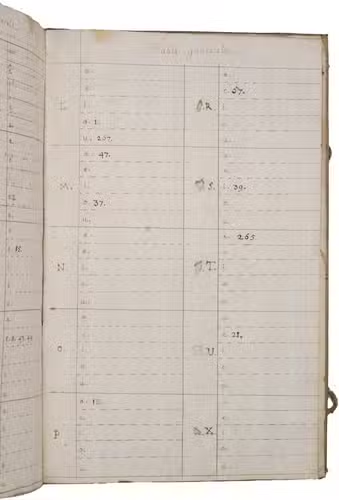
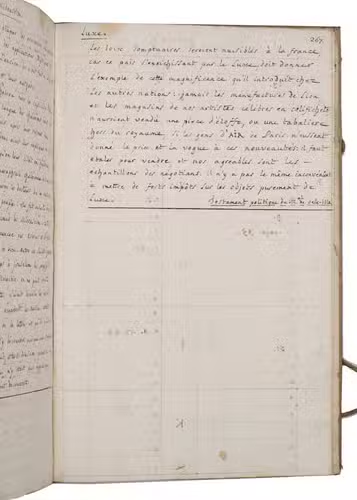
[France?, second half of the 18th century]. Folio (ca. 36.5 x 23 cm). French manuscript on paper, written in a neat 18th-century hand in brown and black ink, 26-28 lines to the page. Repurposed vellum from a 17th-century manuscript, with the manuscript title "Miscellanea" on the front board and the spine, and 2 pairs of cloth ties. 267, [2], [1 blank] pp.
€ 1,750
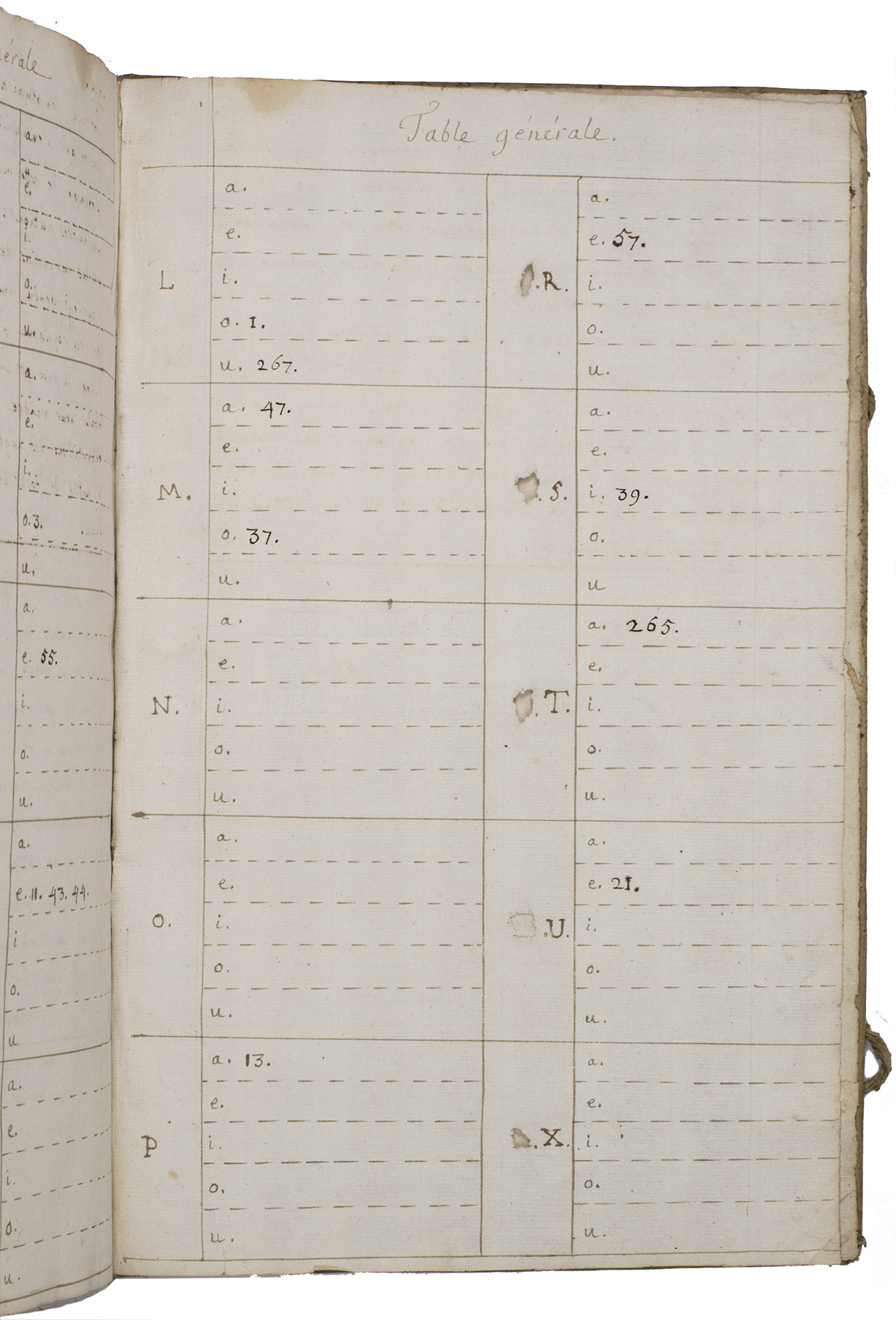
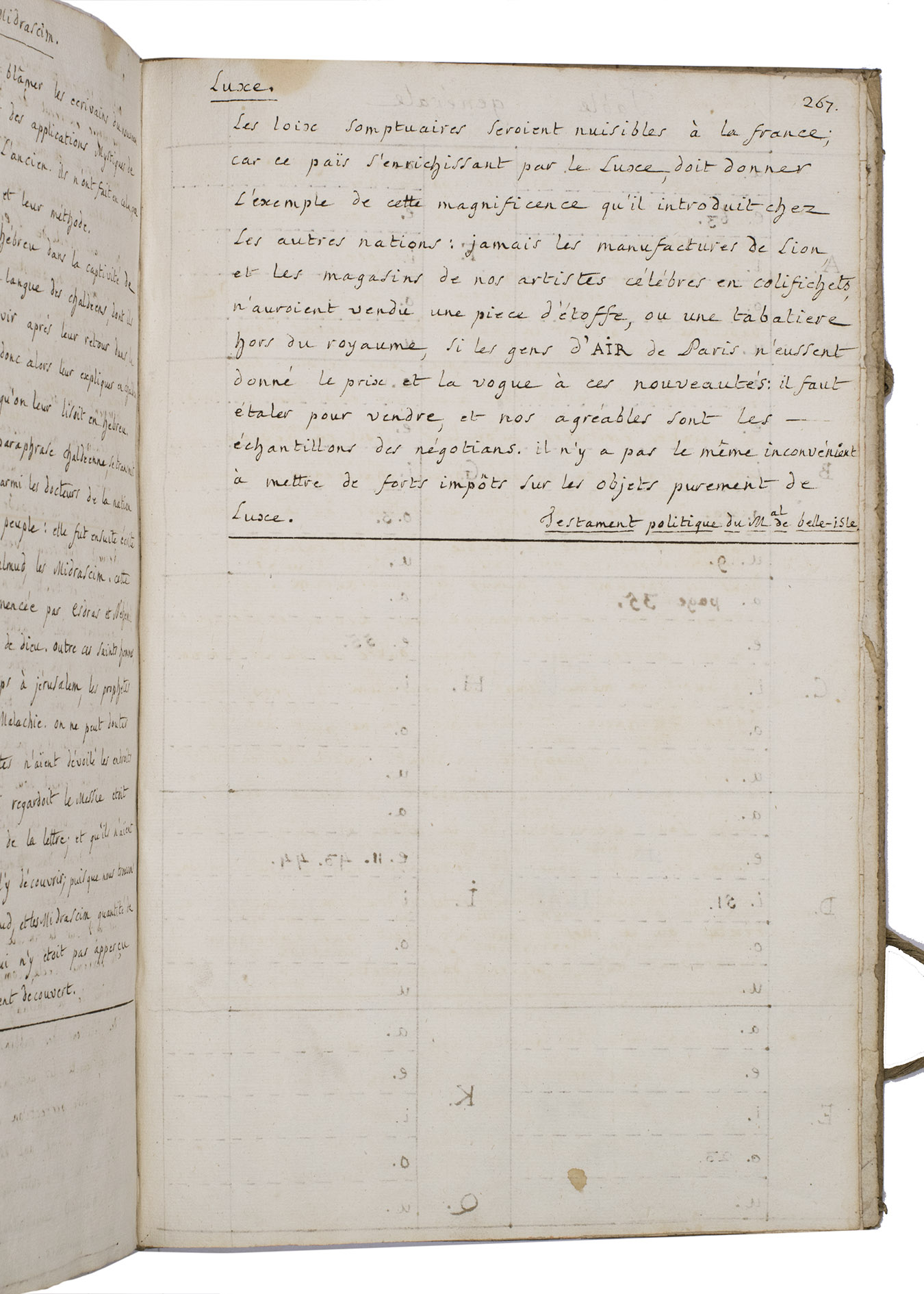
An extensive French manuscript compiled in the intellectually charged decades of the later 18th-century. Rather than forming a coherent treatise, the present work constitutes a personal anthology of extracts, reflections and copied texts spanning politics, science, philosophy, religion, literature and philology.
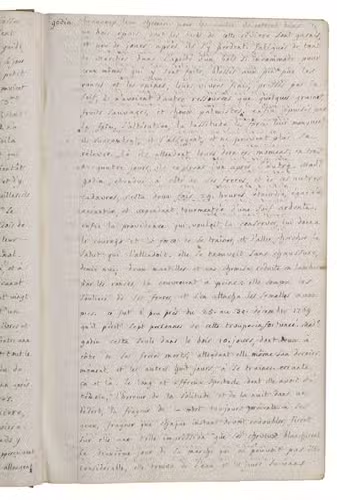
On p. 19 occurs an extract from the reception speech delivered in 1761 by Georges-Louis Leclerc de Buffon (1707-1788) at the Académie Française upon the admission of Charles Marie de La Condamine (1701-1774). The passage celebrates La Condamines intellectual brilliance, literary gifts and scientific courage, praising his traversal of both hemispheres, his ascent of Andean summits crowned with glaciers and subterranean fire, and his descent of roaring cataracts. Buffon emphatically presents him as a traveller motivated not by the lure of gold, but by glory and knowledge.
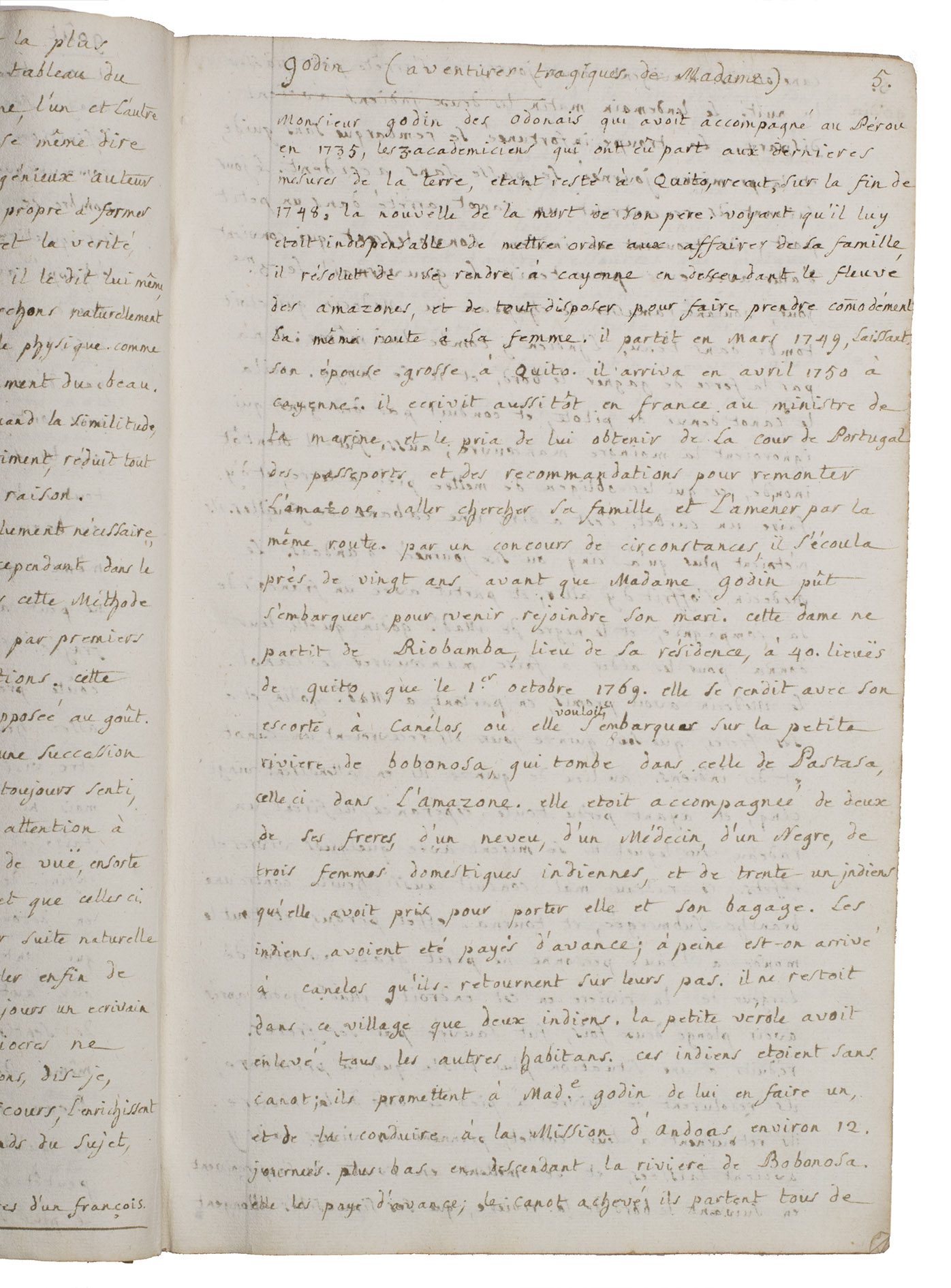
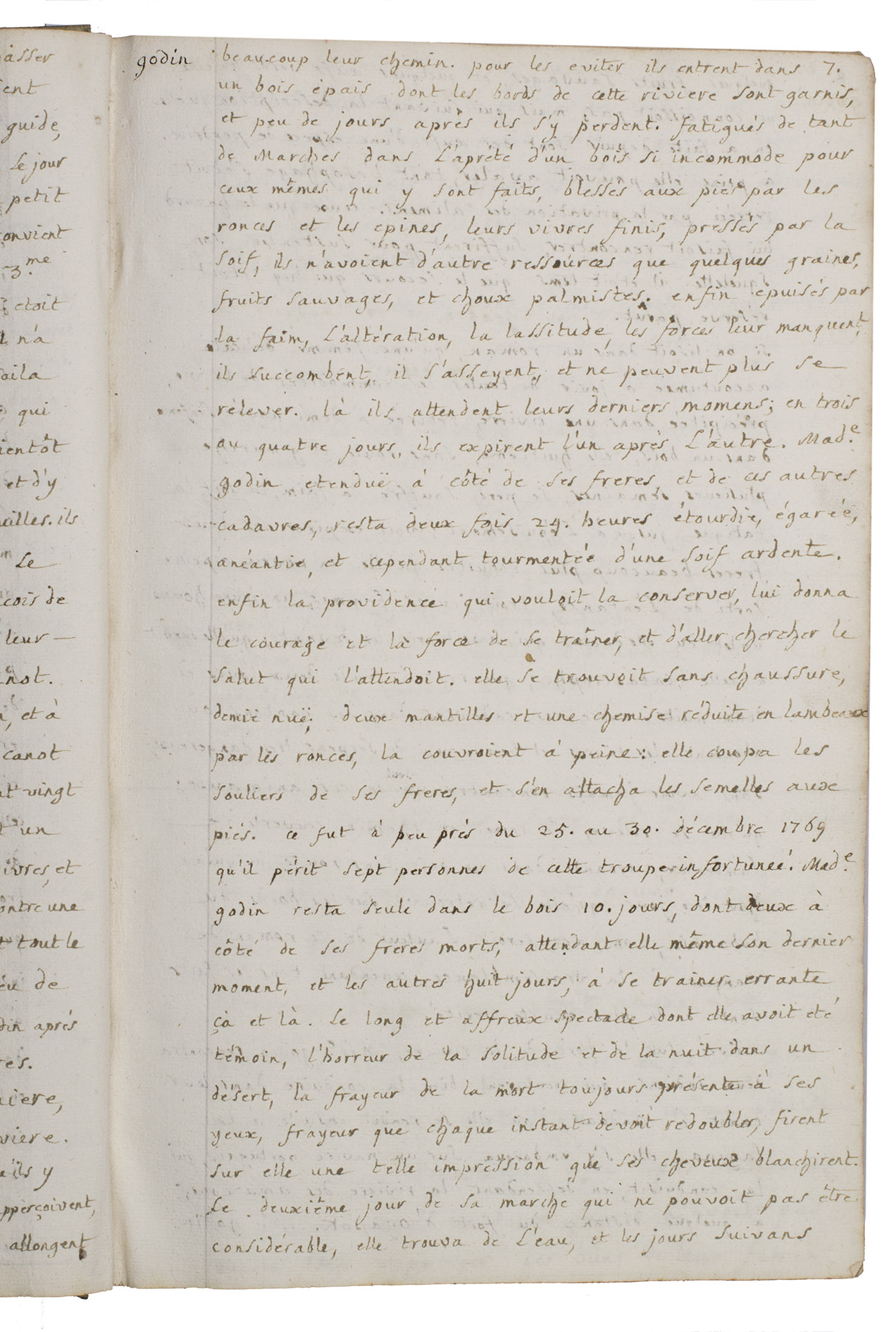
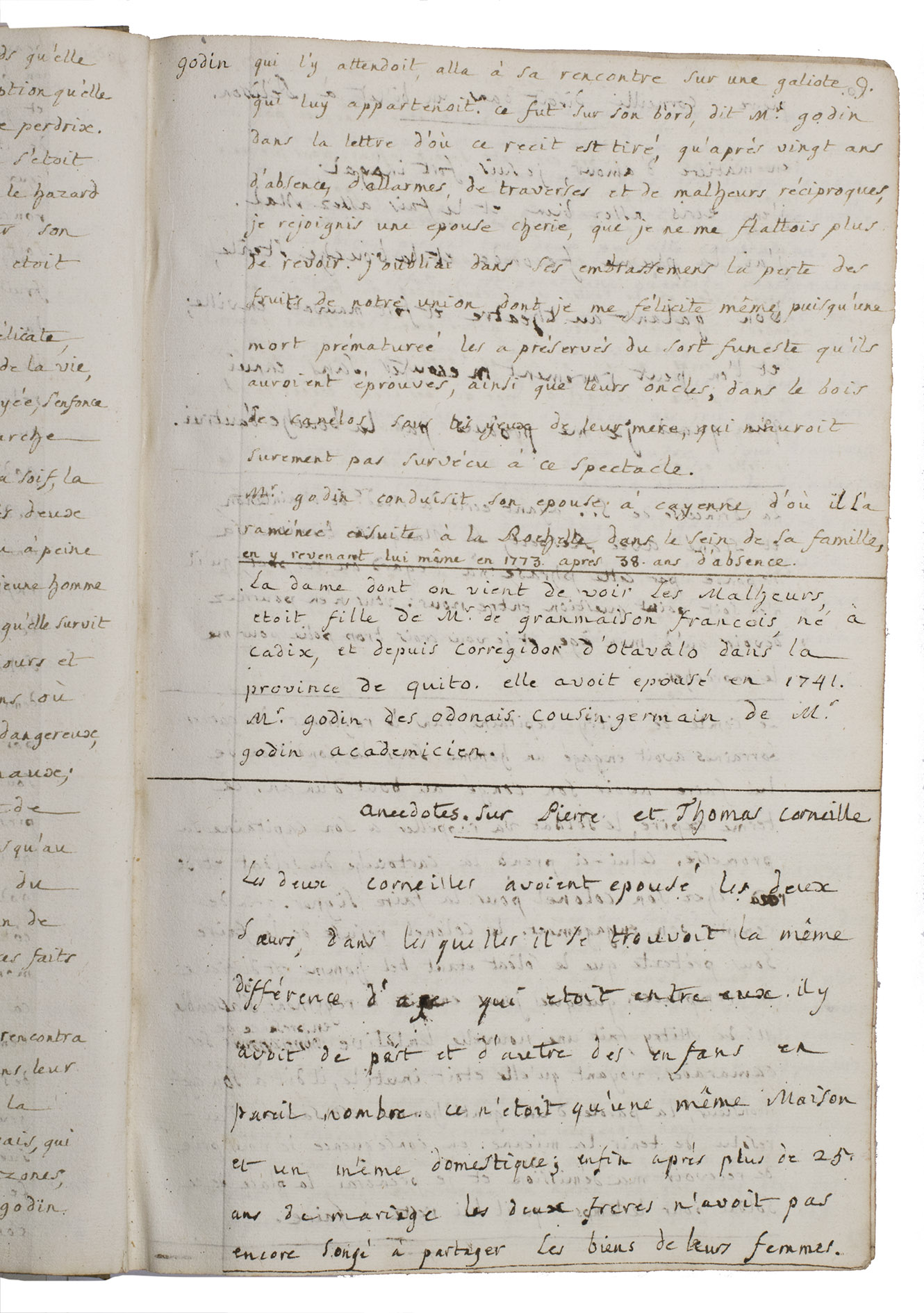
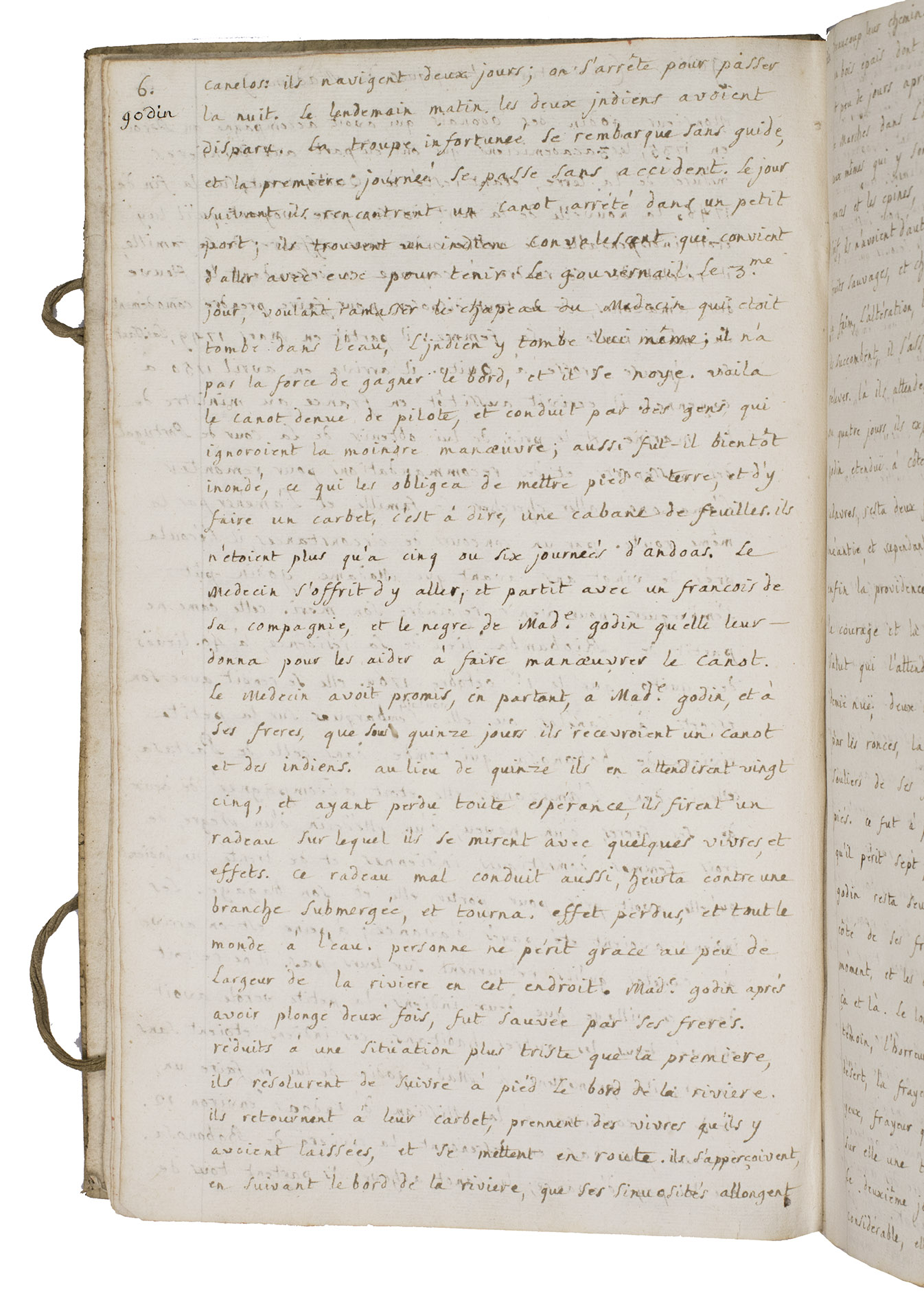
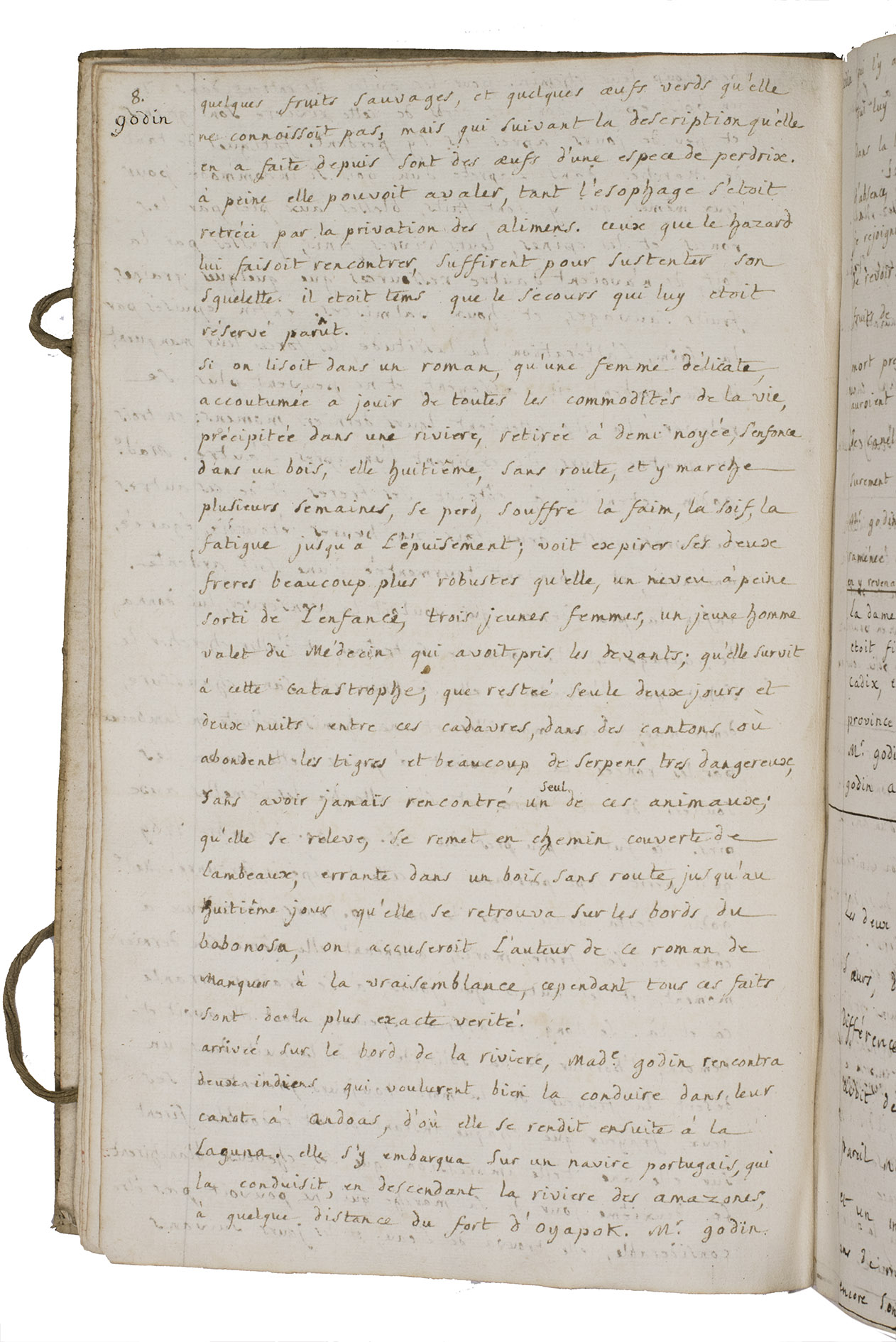
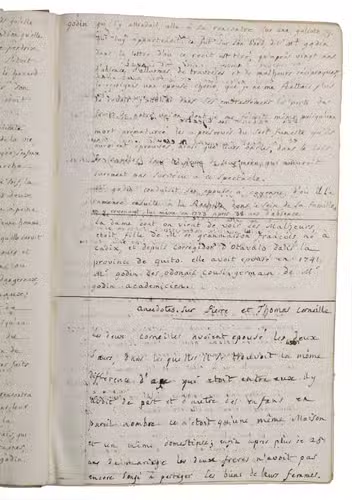
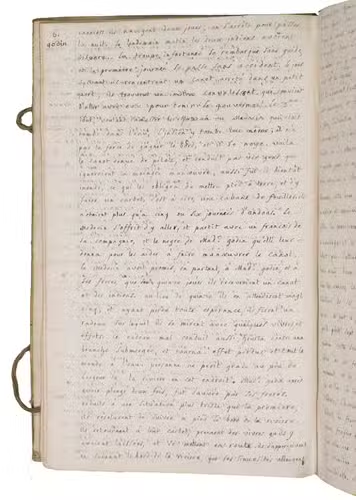
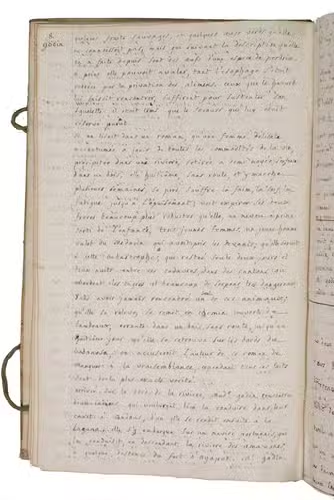
Pp. 5-9, are devoted to "Godin (aventures tragiques de Madame)", referring to Jean Godin des Odonais (1713-1792) and, more poignantly, to his wife Isabel Godin (1728-1792). After participating in the French geodesic mission to South America led by La Condamine, Jean Godin remained abroad for decades. Isabel, separated from her husband for 20 years, attempted a catastrophic descent of the Amazon in order to re-join him. Of the party that set out, most perished, she survived alone in the forest for several days before being rescued and ultimately reaching Cayenne.
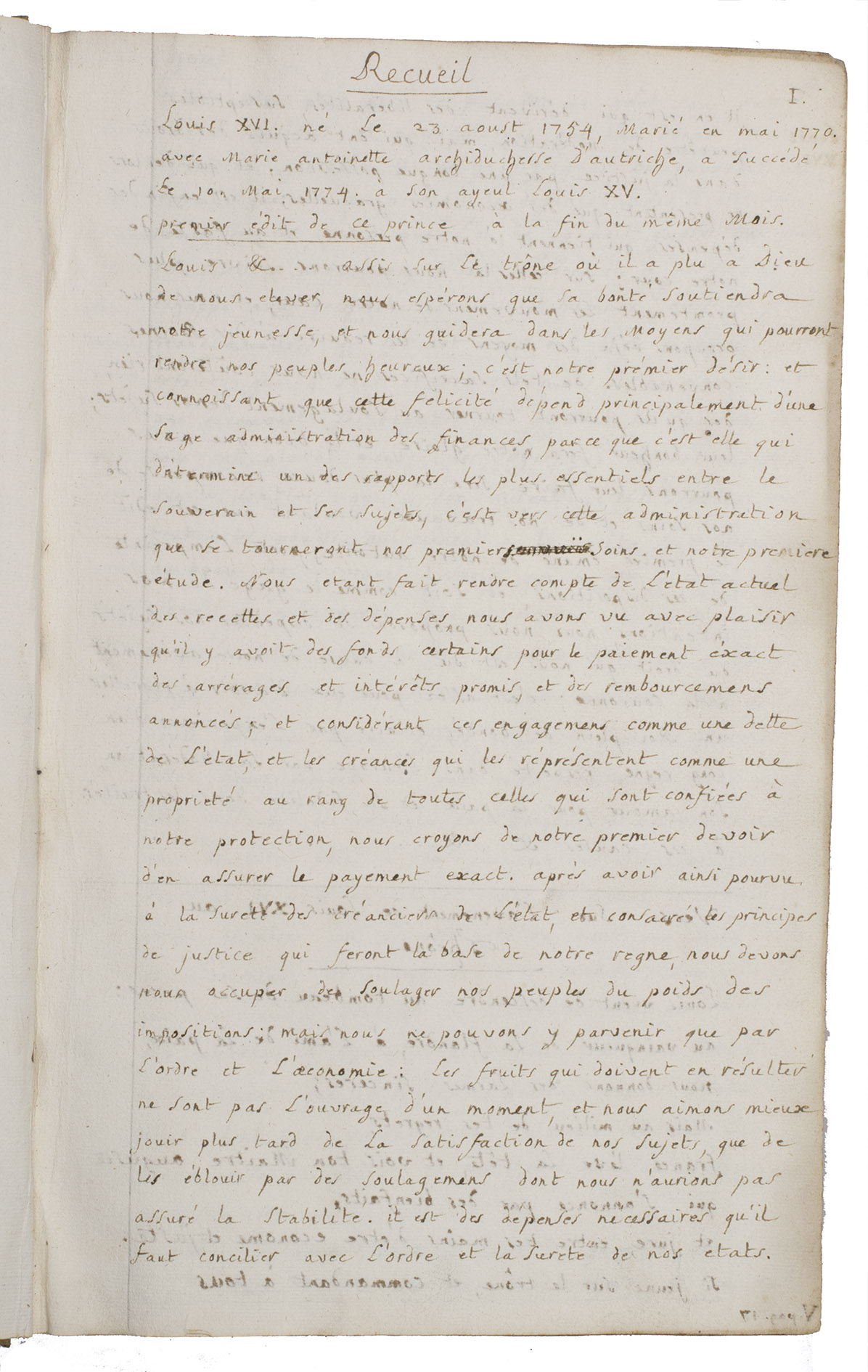
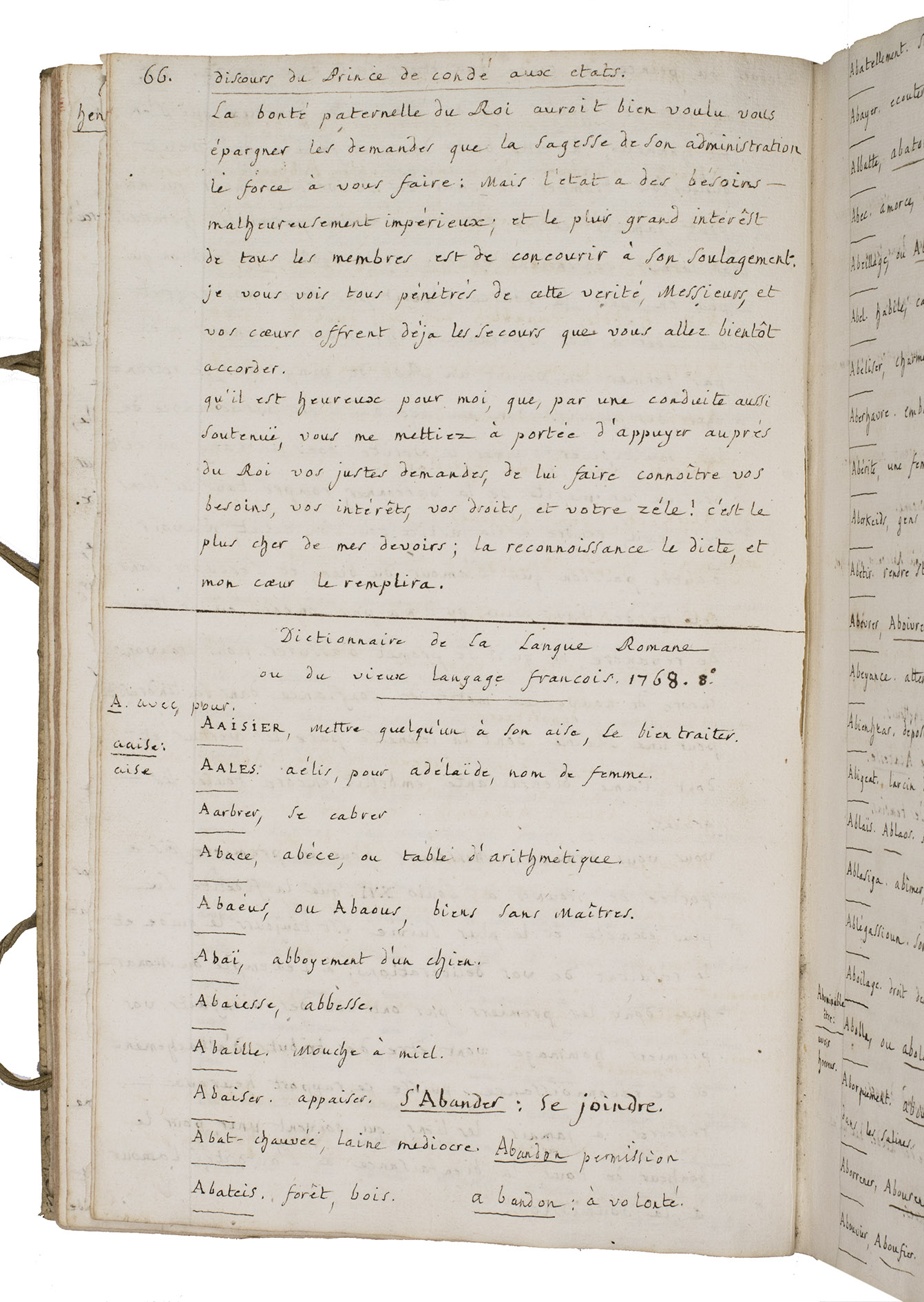
The political horizon of the present work is firmly anchored in the 1770s. It refers to the "lit de justice" held by Louis XVI (1754-1793) on 12 November 1774 to restore the Parlement suppressed under Louis XV (1710-1774), as well as to the 1775 address of Louis Joseph de Bourbon, prince de Conde (1736-1818) at the opening of the Estates of Burgundy. Extracts from Maximes du droit public François (1772) further confirm a date of compilation in the later 1770s, situating the manuscript within the tense pre-Revolutionary decade marked by debates on sovereignty, justice and public law.
Philosophical material includes extracts from An essay concerning human understanding by John Locke (1632-1704), including discussions of syllogism, juxtaposed with comparisons to Nicolas Malebranche (1638-1715), reflecting empiricist and anti-scholastic concerns characteristic of the Enlightenment.
Literary culture is represented by notes on Pierre Corneille (1606-1684) and his younger brother Thomas Corneille (1625-1709), extracts from La Jérusalem délivrée, and passages from the letters of Guy Patin (1601-1672). Scientific curiosity extends to the aberration and nutation of the stars and to smallpox (petite vérole). Historical notes include anecdotes concerning Henry IV of France (1553-1610) and references to the Czars since Peter I of Russia (1672-1725). Religious and polemical materials range from Biblical verses to references to the Talmud, Targum and Midrash, alongside a description of a portrait of Christ.
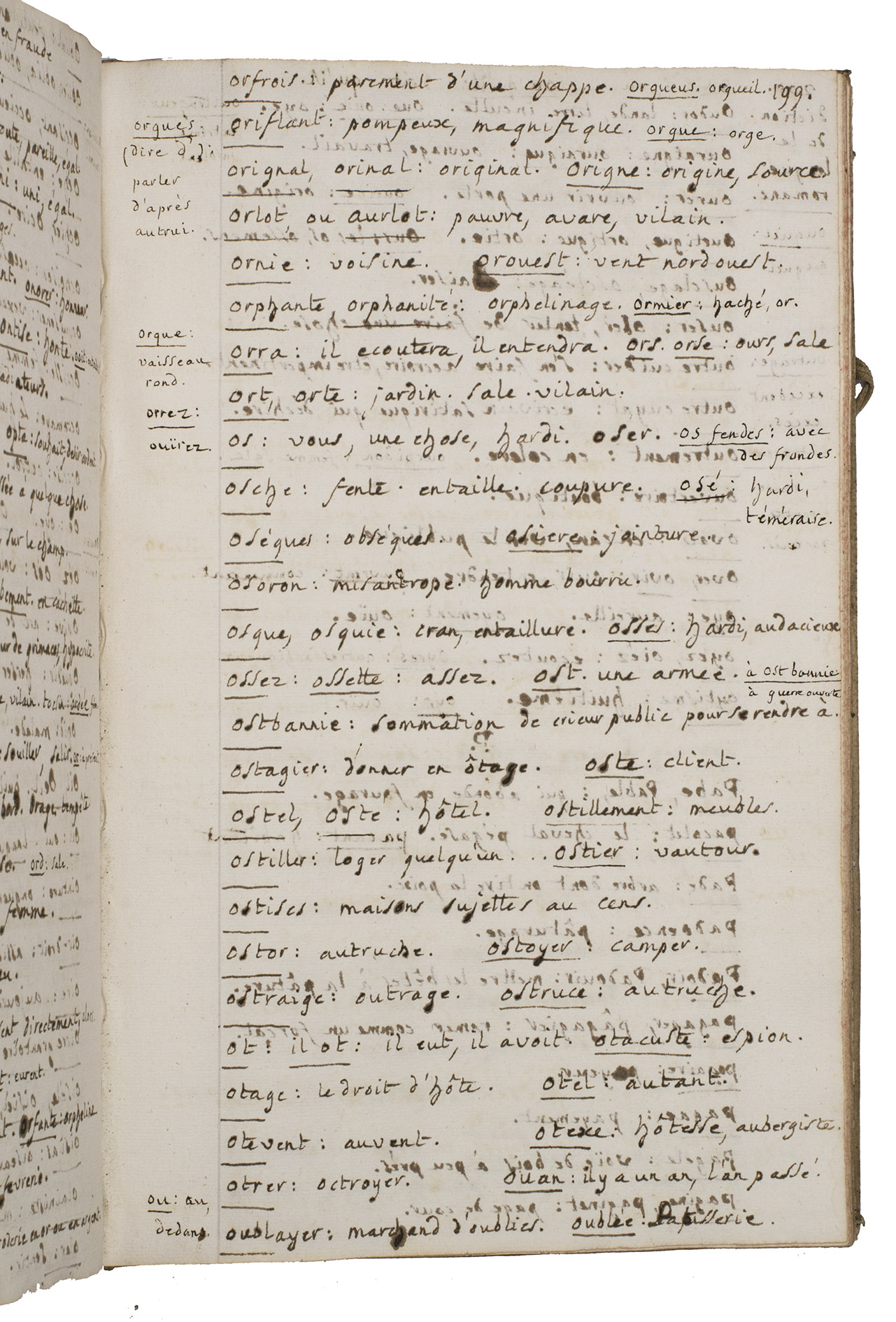
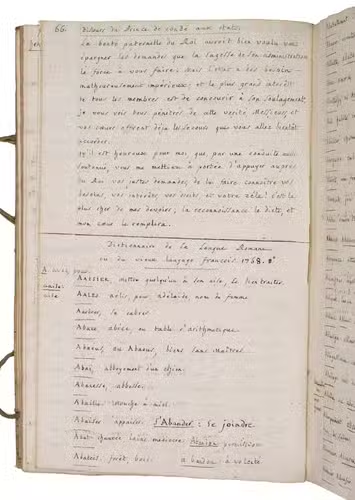
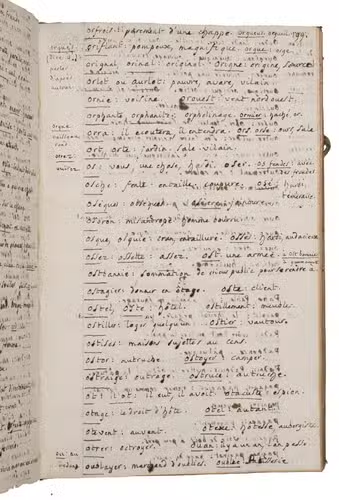
The largest portion of the manuscript (pp. 66-262) consists of a substantial transcript of the Dictionnaire de la langue romane ou du vieux langage françois (1768, 8vo), demonstrating sustained philological interest.
Taken as a whole, the present manuscript is best understood as a learned commonplace work compiled in the later 1770s. The diversity of its contents reflects the Enlightenments fascination with scientific exploration, heroism, and endurance, while its political extracts mirror the anxieties of the early reign of Louis XVI.
With a fleur-de-lis black stamp on the front turn-in, under the pastedown, reading (partially legible) "Des Greffiers Deux Rooles". The vellum is somewhat soiled and stained, with small wormholes on both boards, and a likely intentional loss on the back, removing a few words. Internally clean, with occasional small marginal tears or stains, and some ink corrosion from the brown ink. Otherwise in very good condition.
Related Subjects: