[CONFESSIO BELGICA - Hierotheos ABBATIOS (translator)].
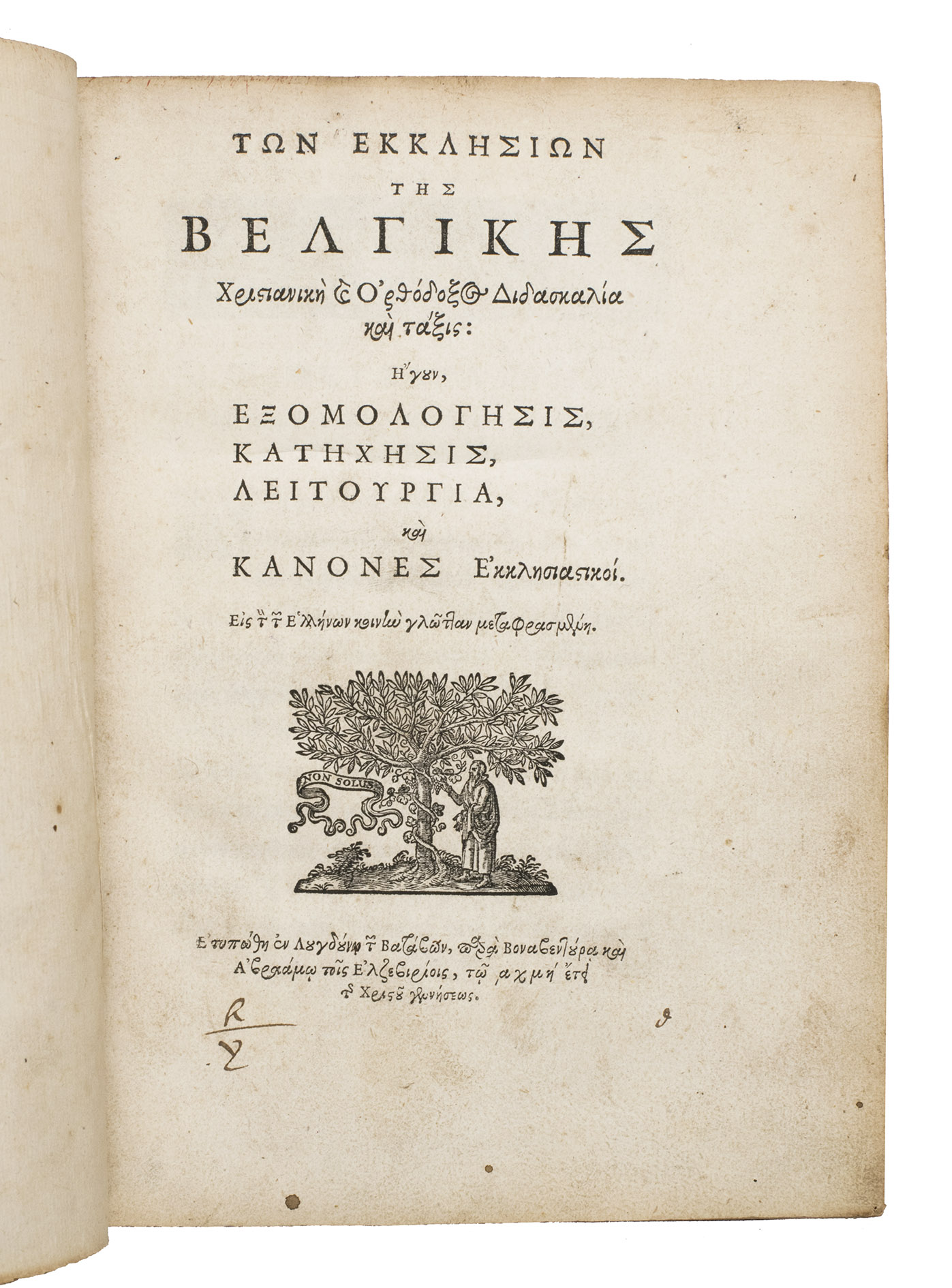
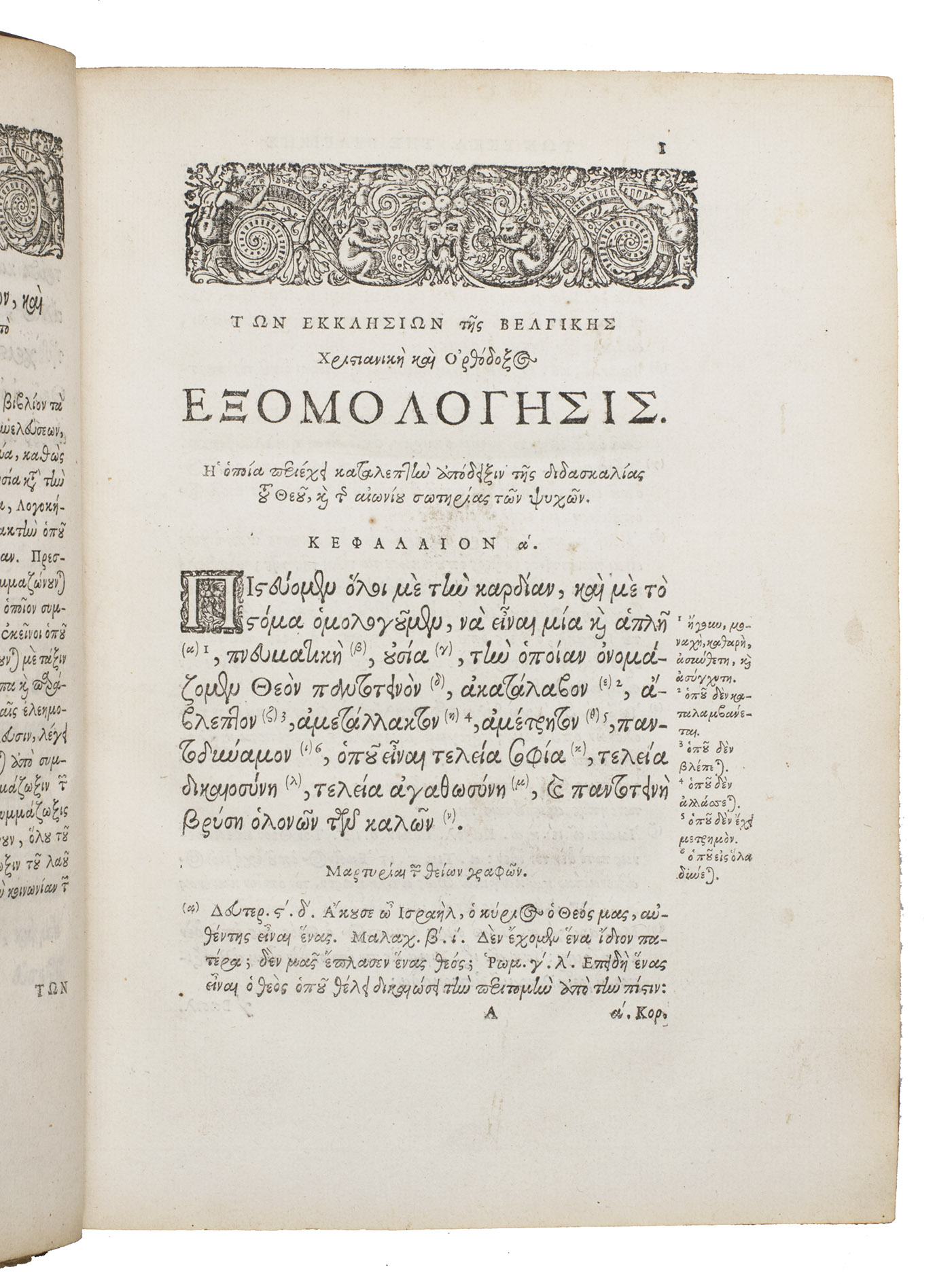
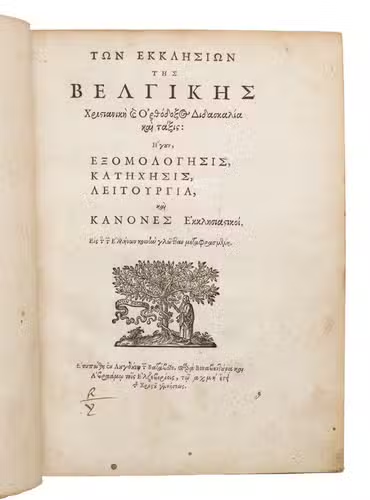
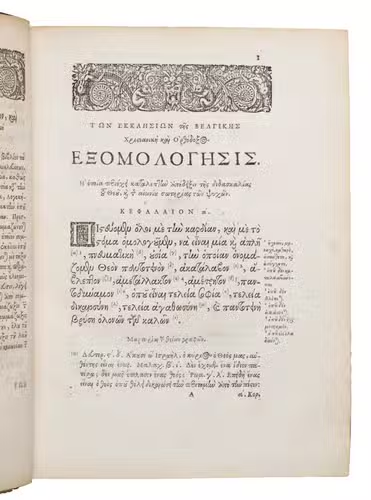
Tōn ekklēsiōn tēs Belgikēs christianikē kai orthodoxos didaskalia kai taxis : ēgoun exomologēsis, katēchēsis, leitourchia, kai kanones ekklēsiastikoi.
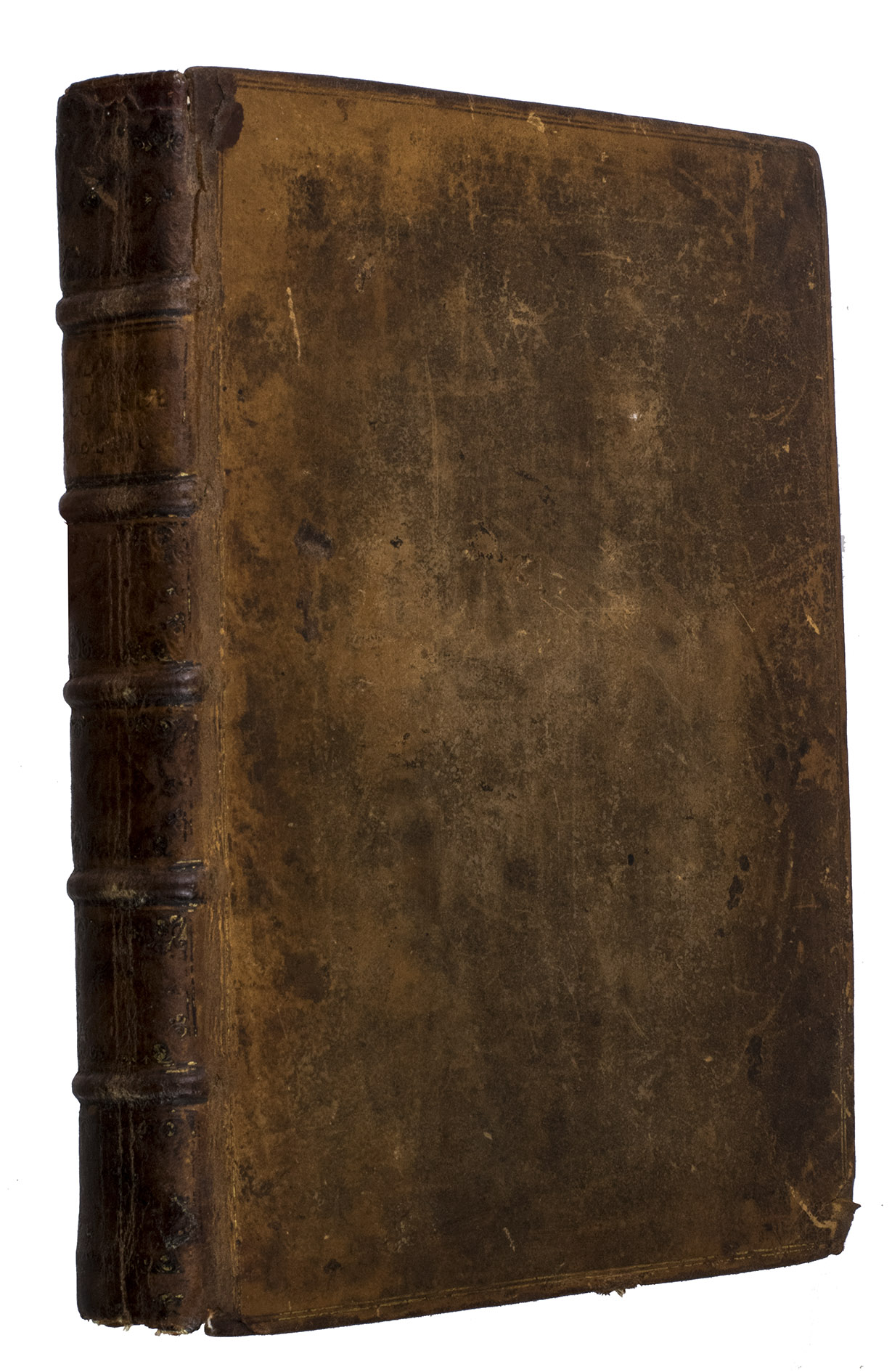
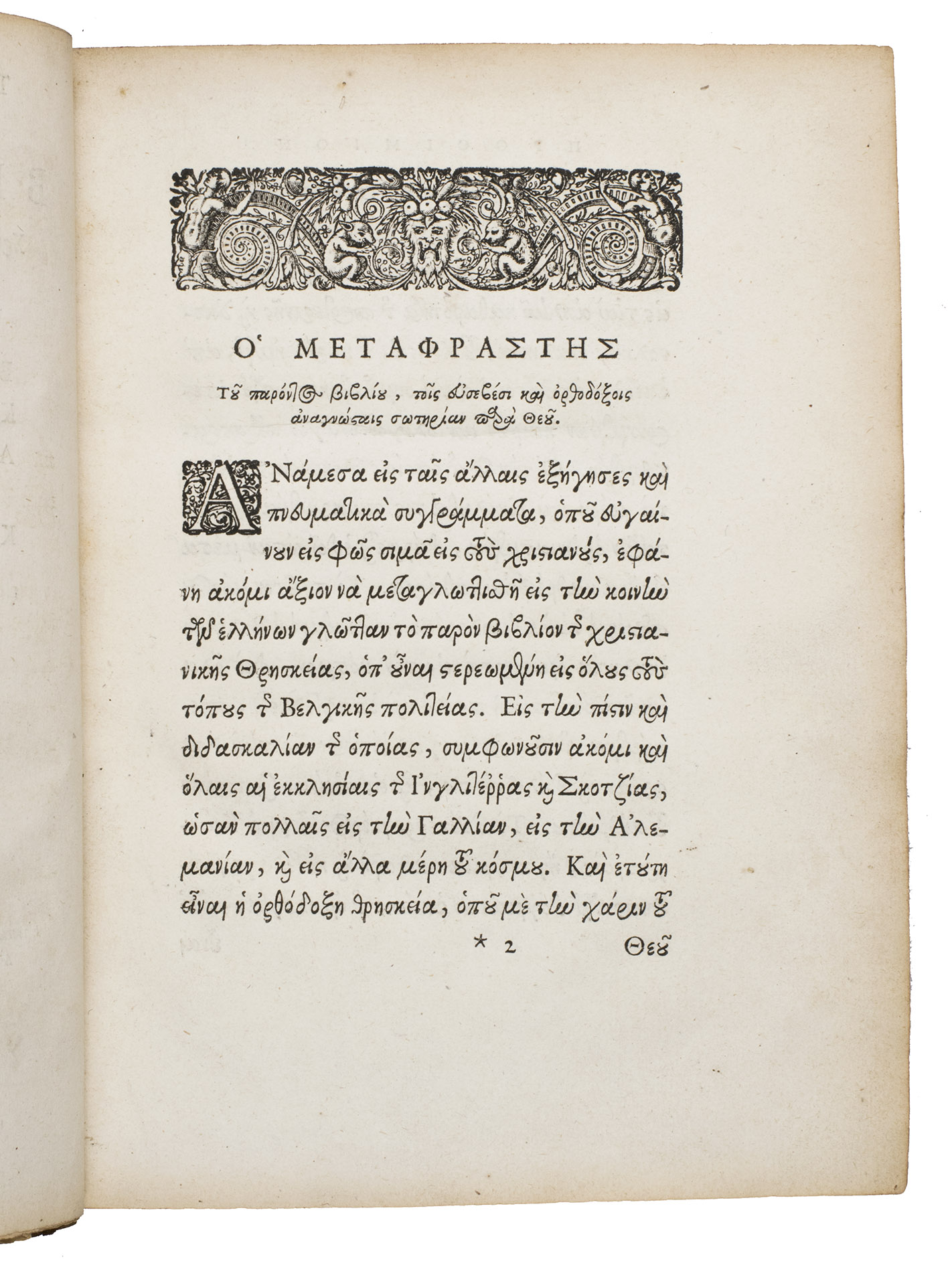
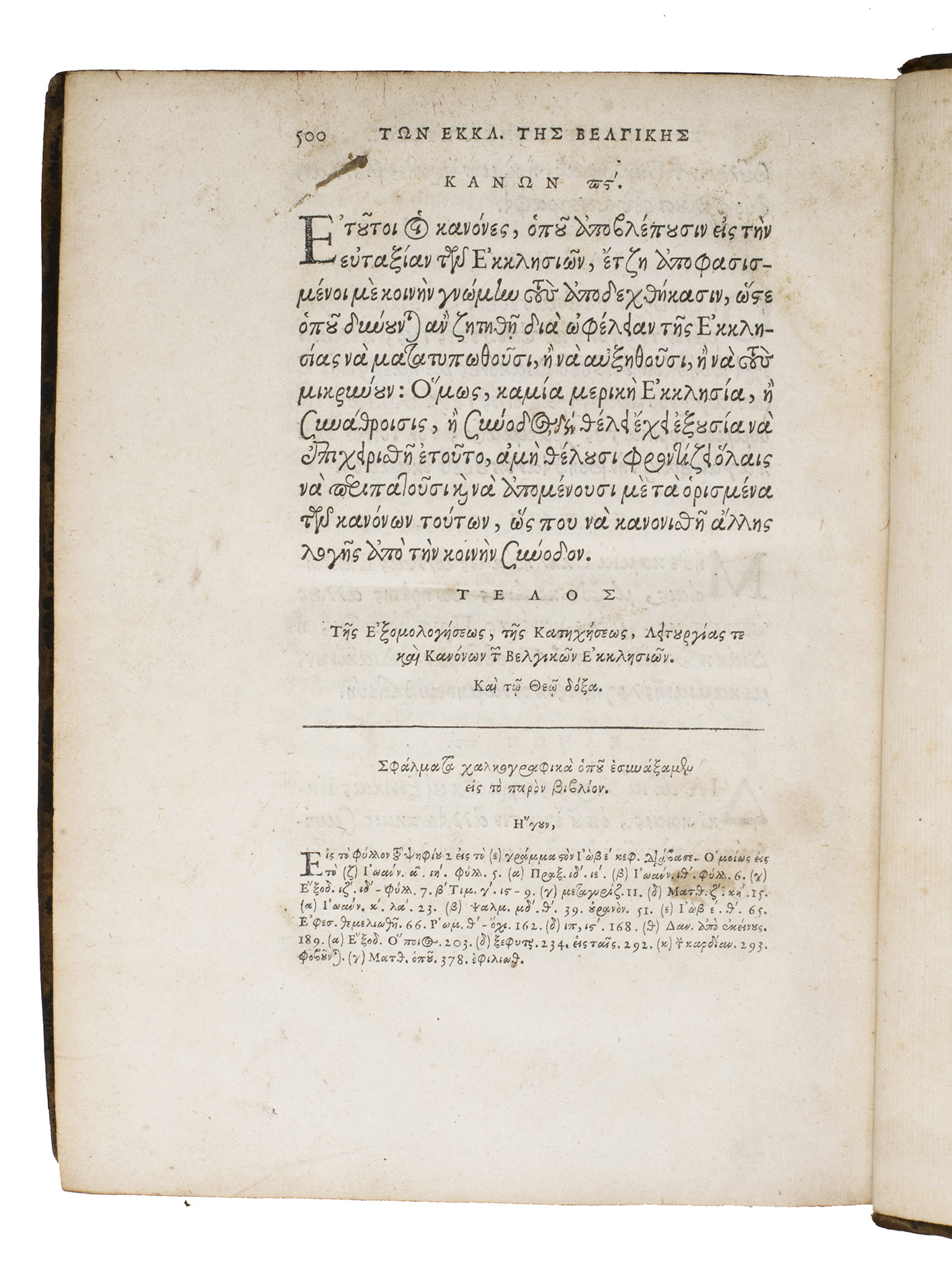
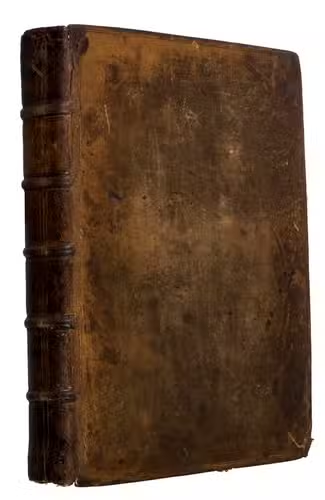
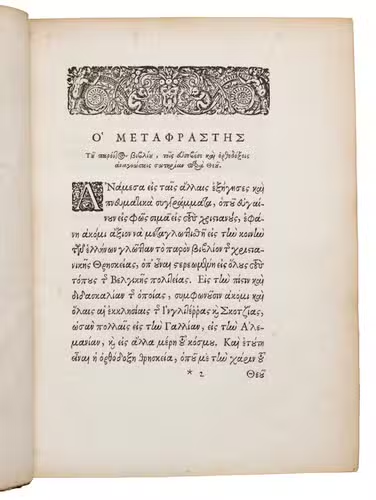
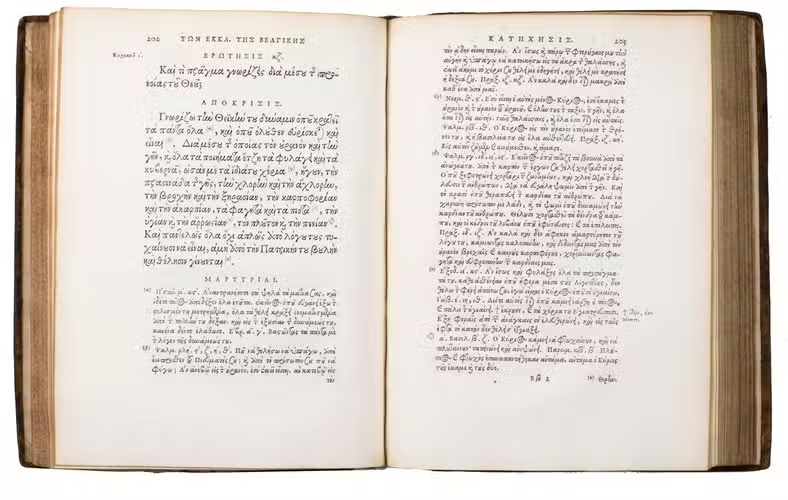
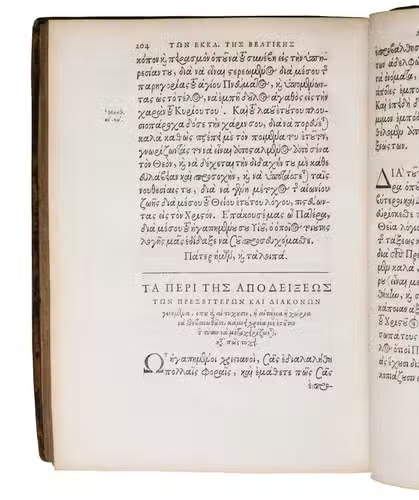
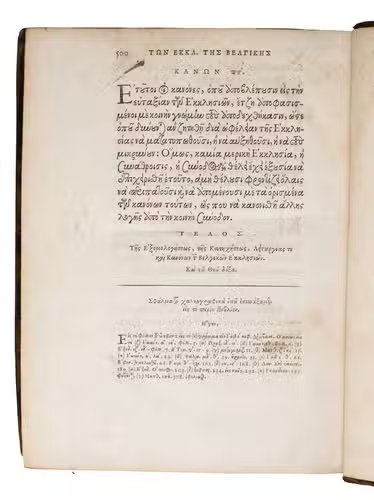
Leiden, Bonaventura & Abraham Elzevier, 1648. 4to. With Elzeviers woodcut device on the title page, several decorated woodcut initials, and head- and tailpieces. 18th-century gold-tooled calf. [2 blank], [12] 500, [2 blank] pp.
€ 2,500
Rare first and only edition printed entirely in modern Greek. The text records a largely overlooked episode in relations between the Orthodox Eastern Church and Calvinism in the mid-17th century: Kyrillos Lukaros (1572-1638), Metrophanes Kritopoulos (ca. 1589-1639), and other Greek Church leaders sought to reform the Eastern Church by harmonising its doctrines with those of Calvinism. Central to this effort was the present work, a modern Greek translation of the Dutch Reformed creed, catechism, liturgy, and rules, prepared by Hierotheus, Abbot of Cephalonia (ca. 1599-1664), who studied at Leiden and enjoyed the patronage of both the Leiden Theological Faculty and the Dutch States General.
Abbatios arrived in Leiden in 1644 with a companion, also a high-ranking Orthodox cleric. Their visit was designed both to strengthen earlier contacts with the Reformed Church and to study customs and beliefs in the Eastern Mediterranean. The States General subsidised their year-long stay so that they might familiarise themselves with Reformed doctrine, but Abbatios remained longer to translate key Reformed texts into modern Greek. These translations appear not to have circulated widely in the Levant. Their main significance was that they led French Huguenots to (mistakenly) believe that the Greek Church as a whole rejected Transubstantiation.
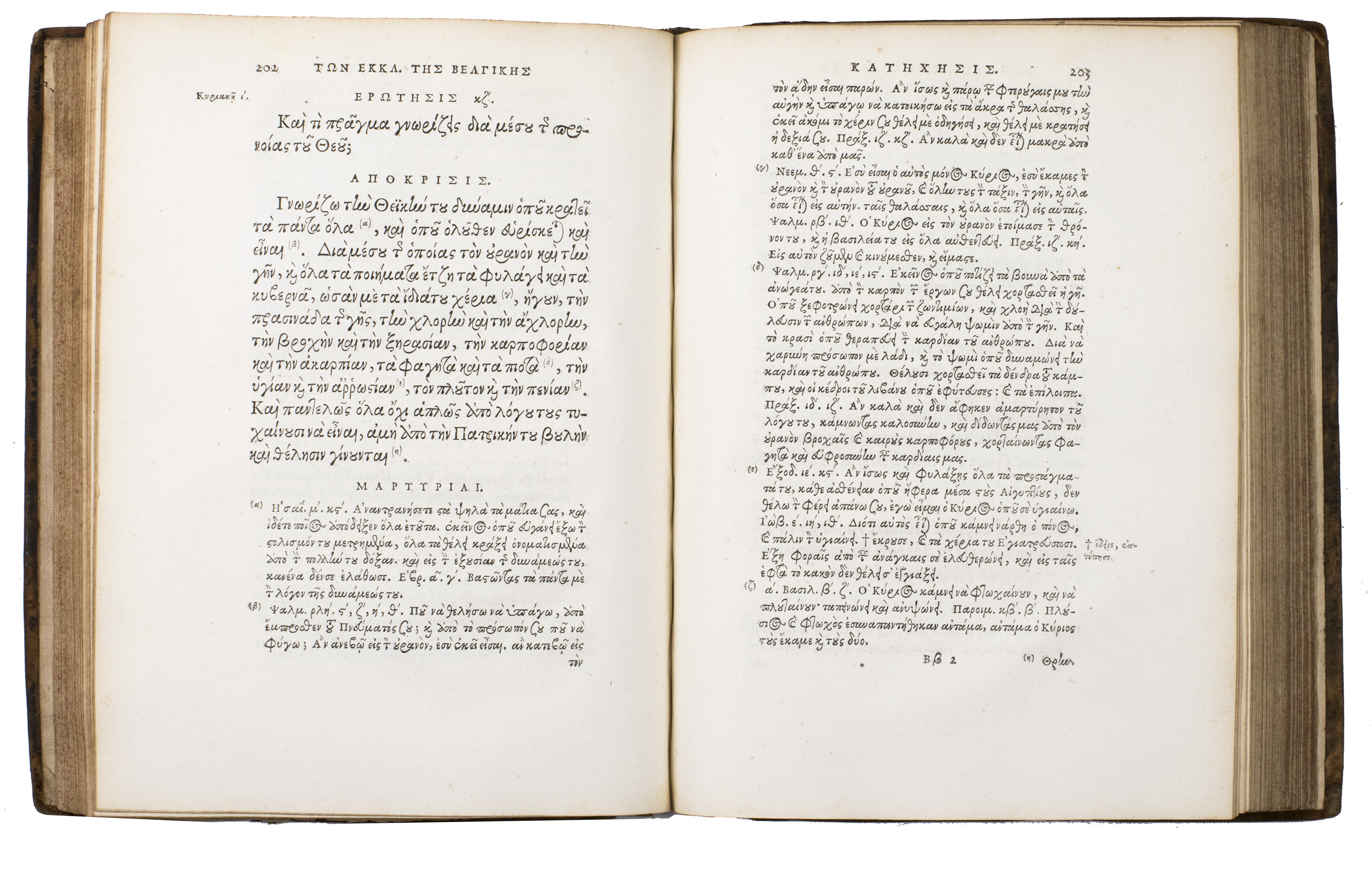
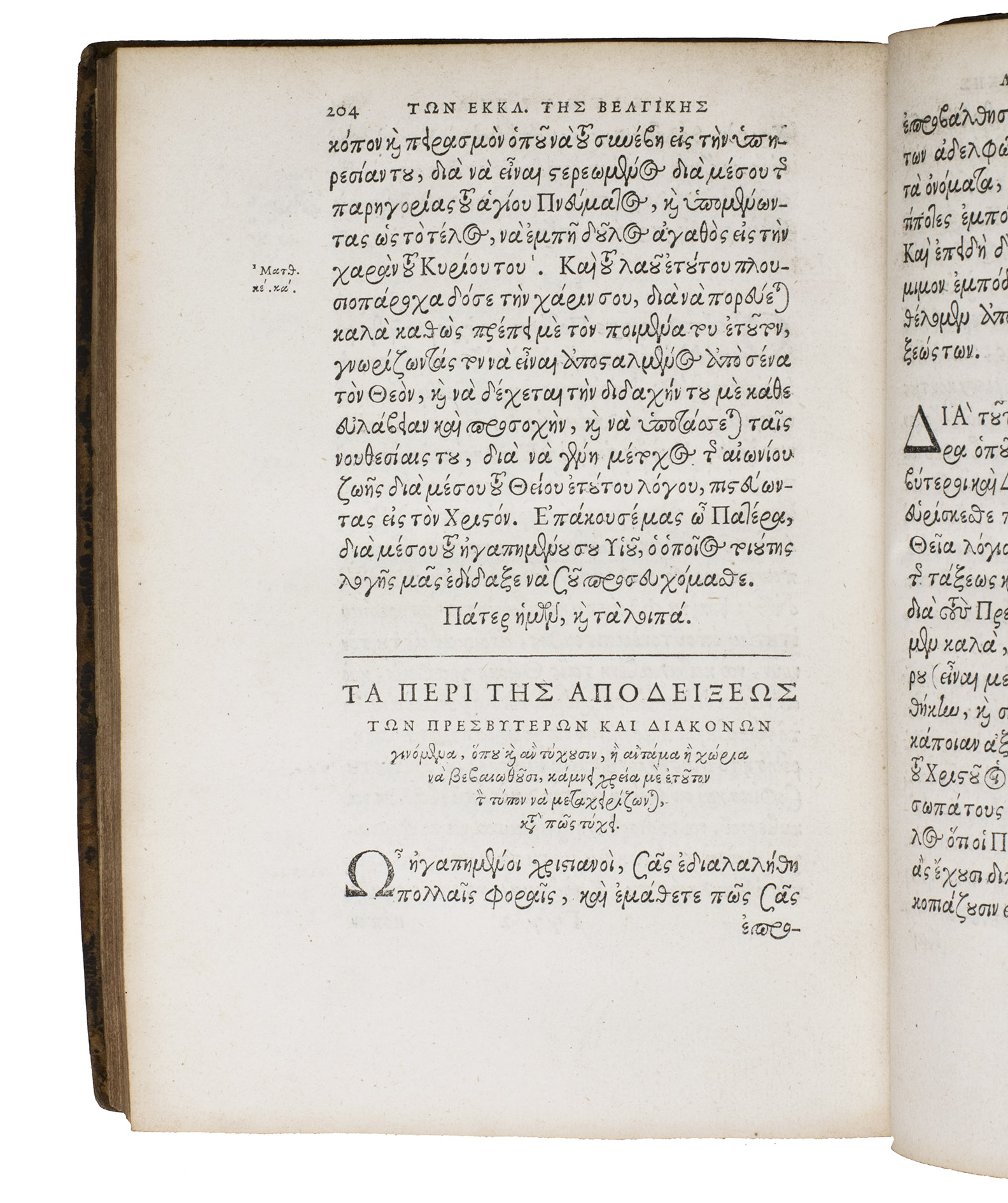
The text, finely printed in three sizes of Greek type, presents the Belgic Confession, the Heidelberg Catechism, and the Liturgy of the Fathers of Dordrecht. The Confession, largely the work of Guido de Brès (1522-1567), had been adopted at various synods between 1571 and 1619 and reaffirmed at The Hague in 1651.
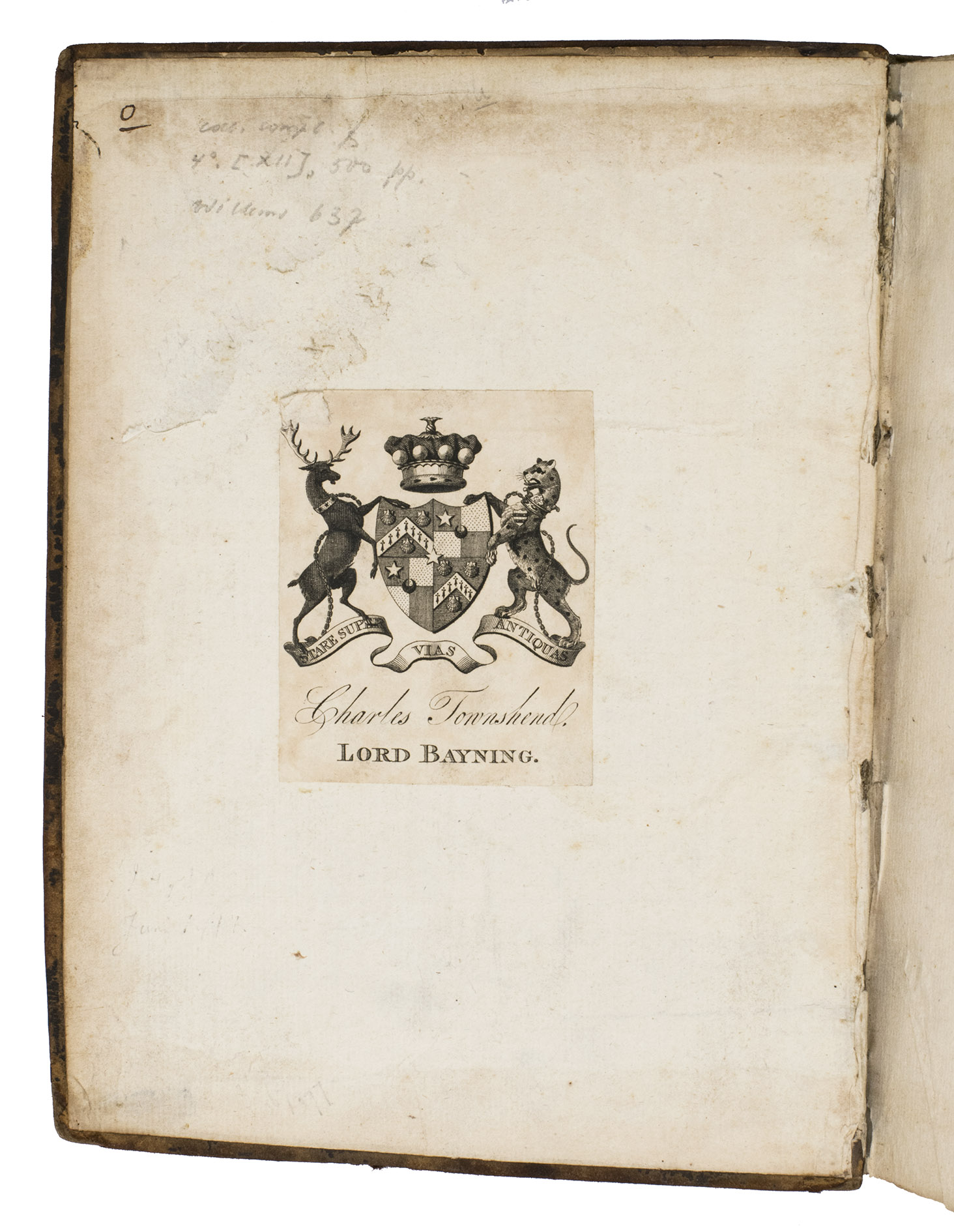
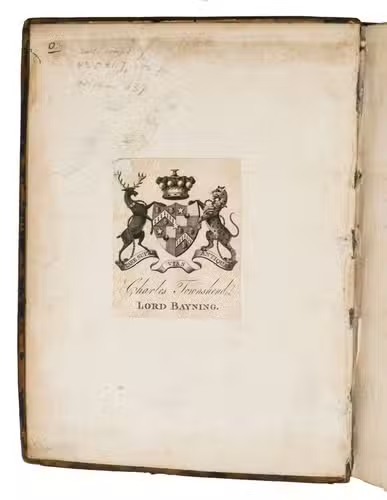
The present copy comes from the library of Charles Townshend, Lord Bayning (1728-1810), who was a British politician and diplomat. Known as "Spanish Charles" from his service as Secretary to the British Embassy in Madrid (1751-1756), he represented Great Yarmouth in the House of Commons (1756-1784, 1790-1796), serving as Lord of the Admiralty (1765-1770), Lord of the Treasury (1770-1777), Joint Vice-Treasurer for Ireland (1777-1782), and Treasurer of the Navy (1783). Admitted to the Privy Council in 1777, he was raised to the peerage in 1797 and became High Steward of Great Yarmouth in 1807. He resided at Honingham Hall, Norfolk.
With the armorial bookplate of "Charles Townshend Lord Bayning" mounted on the front pastedown, a contemporary annotation ("R/Y") on the title page. The boards and spine have been rubbed, causing most of the gold tooling to fade, the corners of the boards are scuffed, the head of the spine has been restored. Internally clean, with only occasional soiling and foxing. Otherwise in good condition.
Related Subjects: