[BARNAUD, Nicolas].
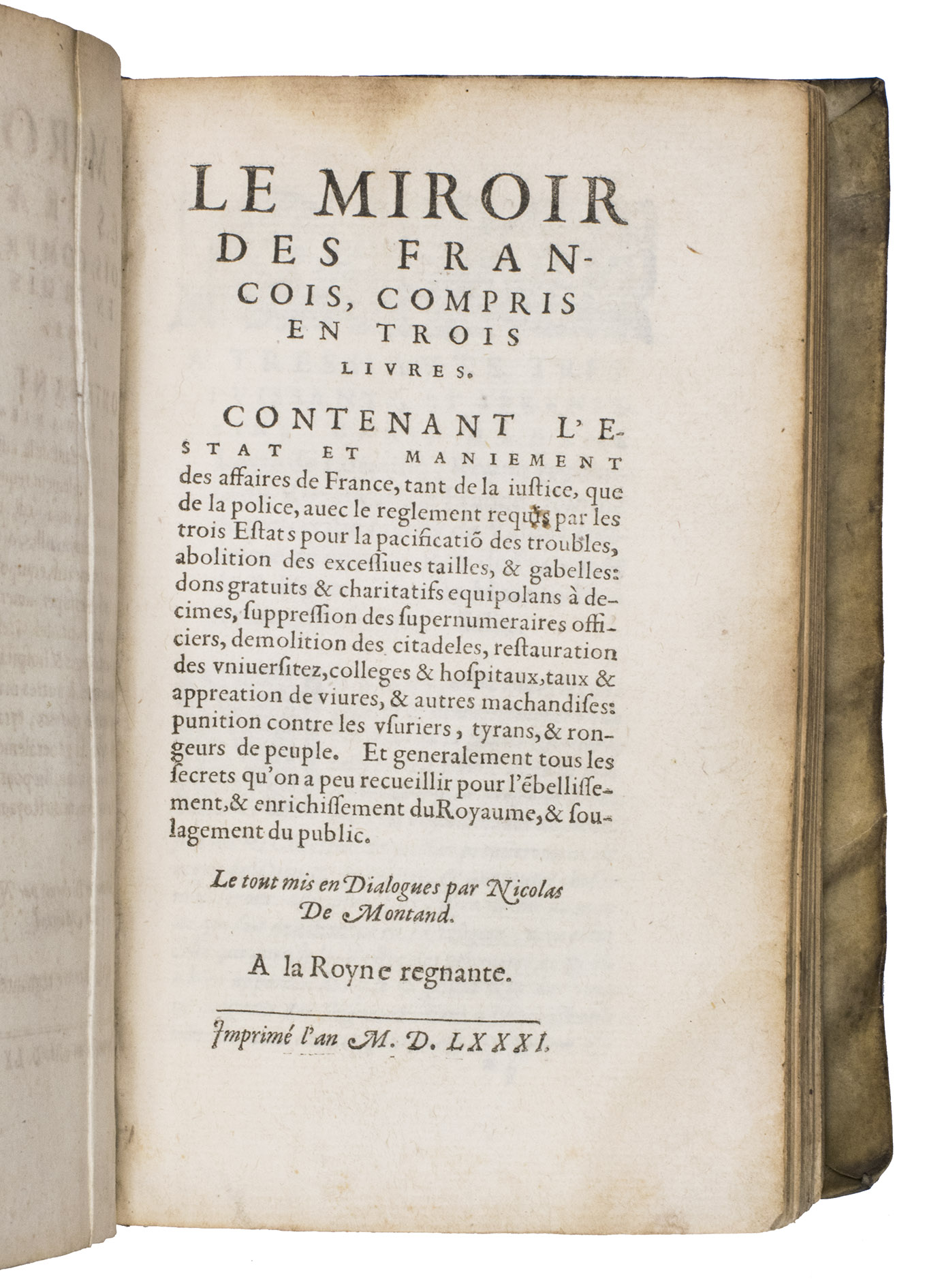
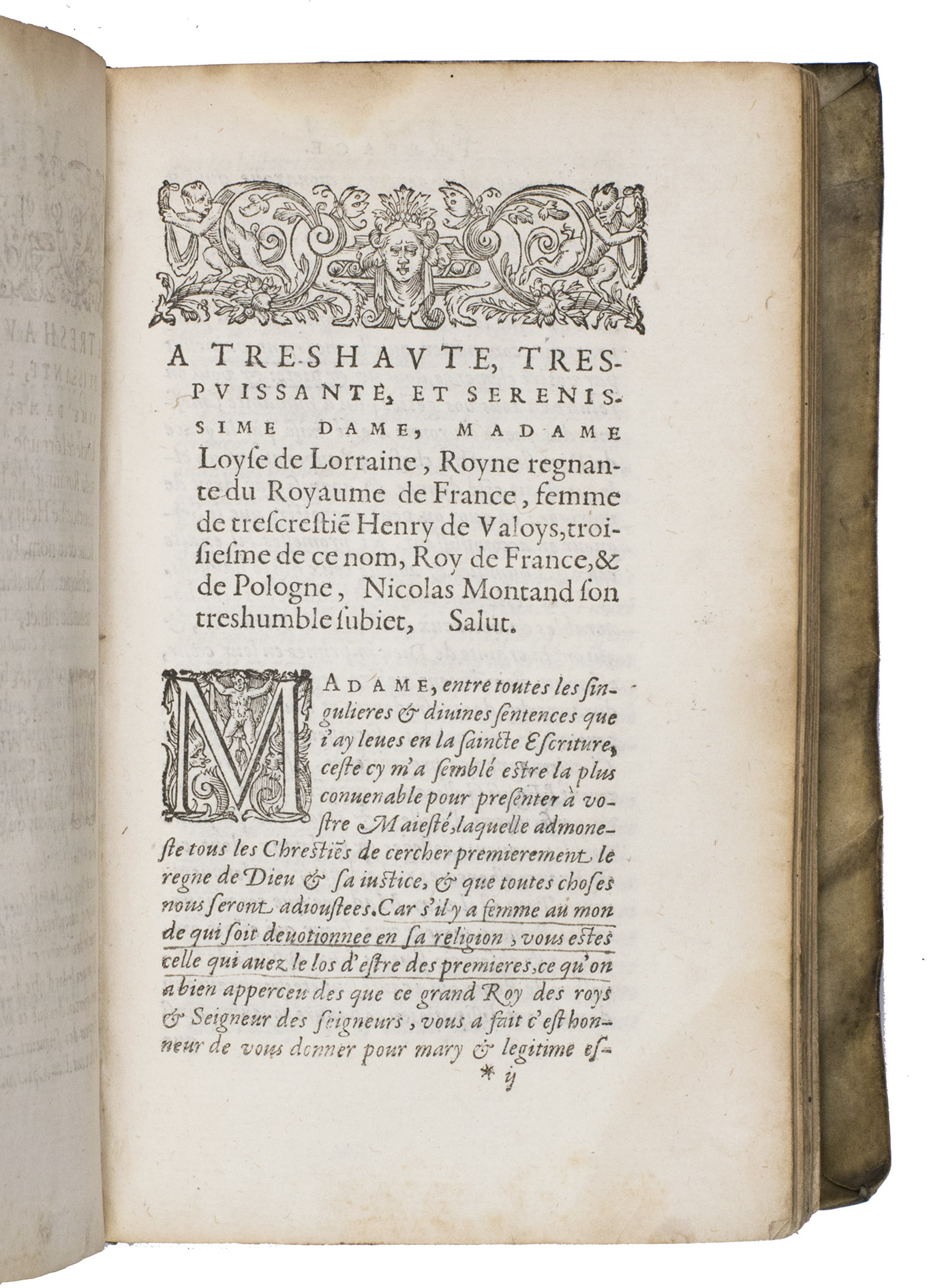
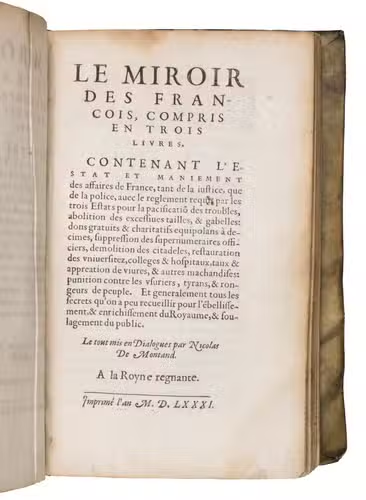
Le miroir des Francois, compris en trois livres. contenant l'estat et maniement des affaires de France ... Et generalement tous les secrets qu'on a peu recueillir pour l'ébelissement, & enrichissement du royaume, & soulagement du public. Le tout mis en dialogues par Nicolas De Montand. A la royne regnante.
[Geneva/France?], 1581.
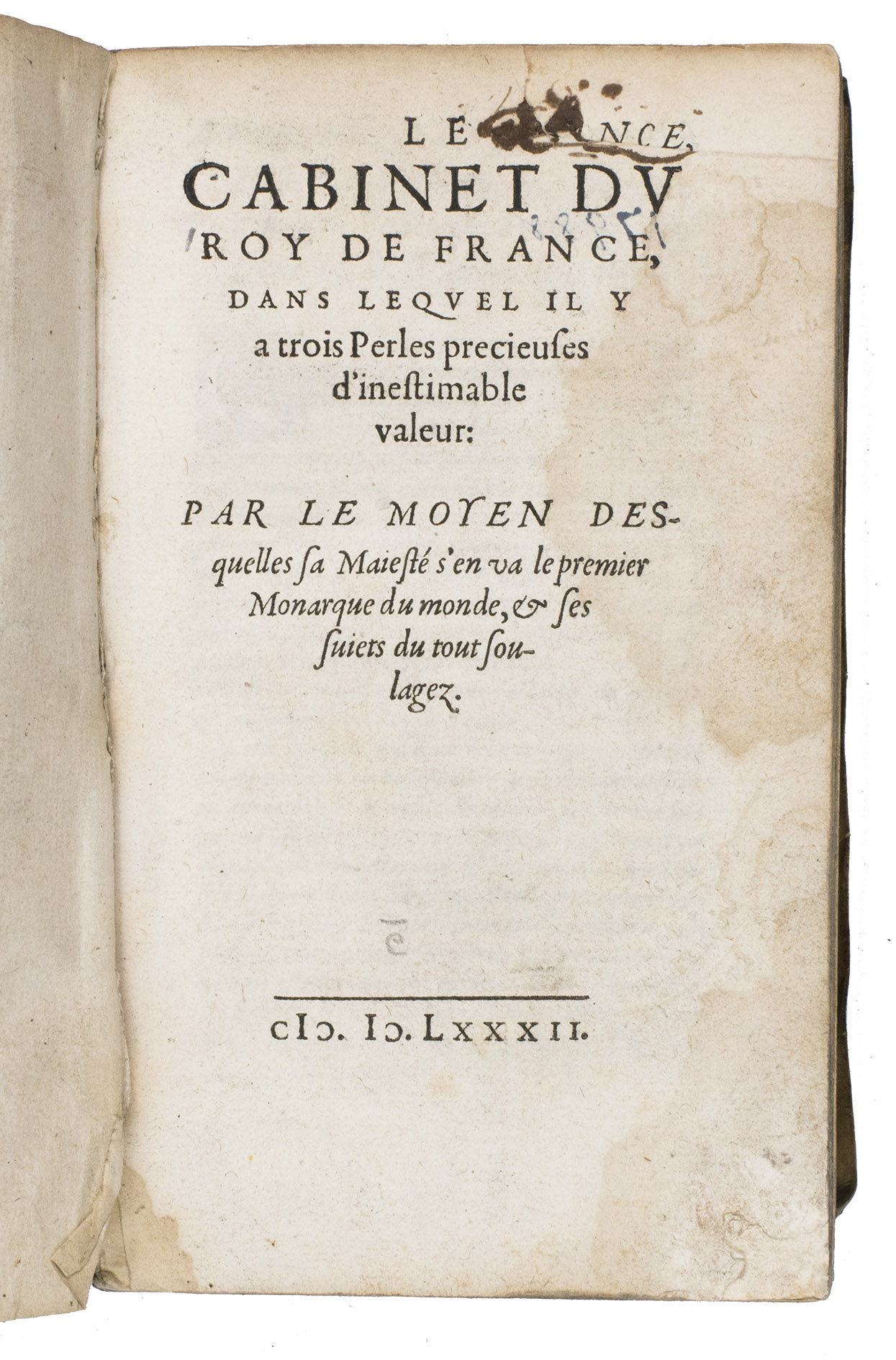
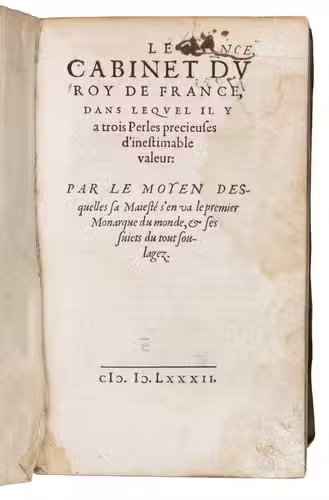
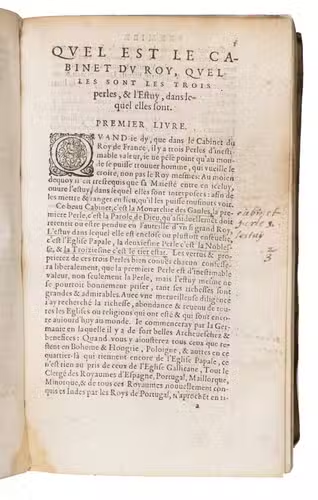
Bound after: (2) [Nicolas BARNAUD], Le cabinet du Roy de France, dans lequel il y a trois perles precieuses d'inestimable valeur: par le moyen desquelles sa maiesté s'en va le premier monarque du monde, et ses suiets du tout soulagez.
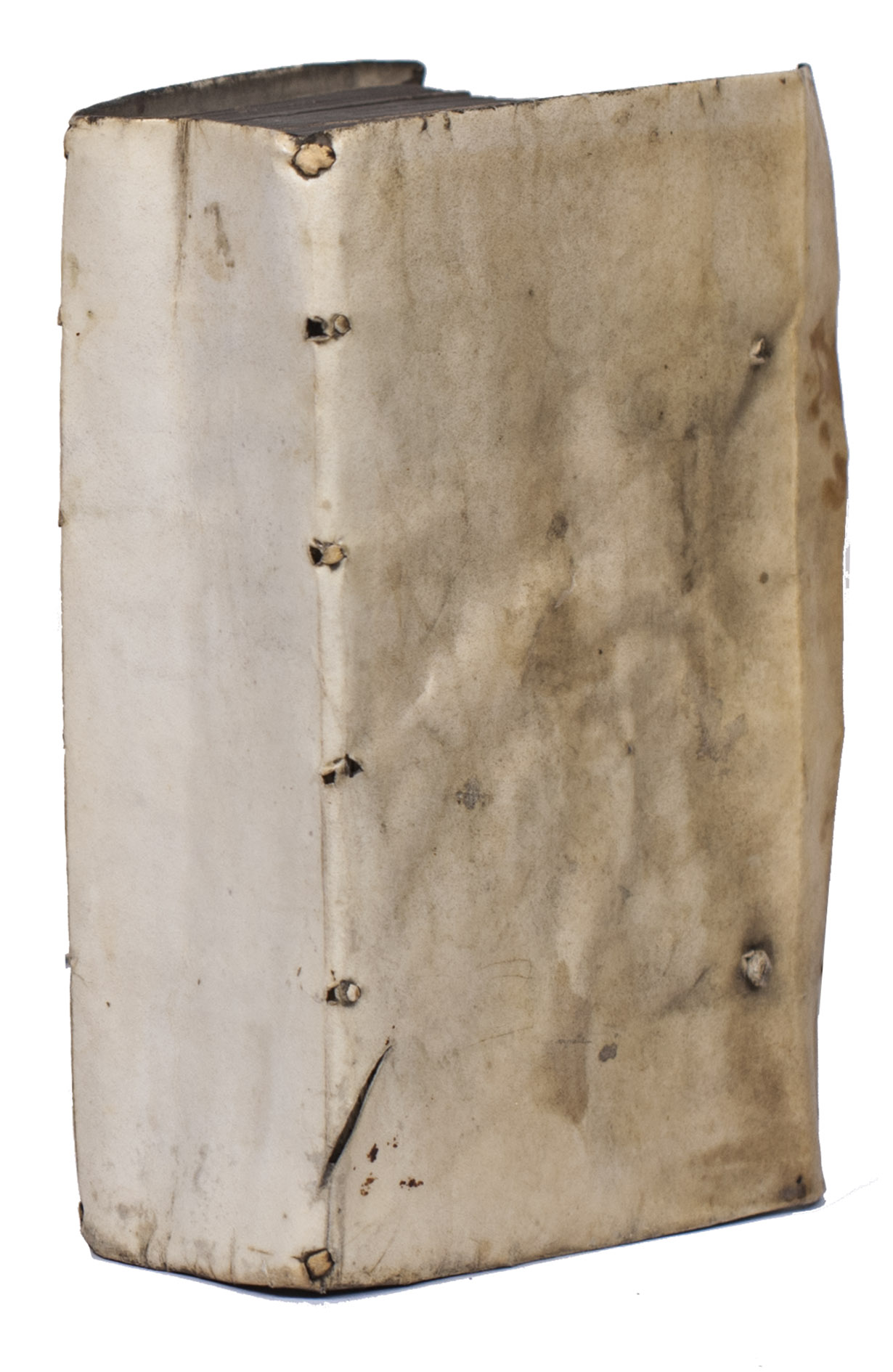
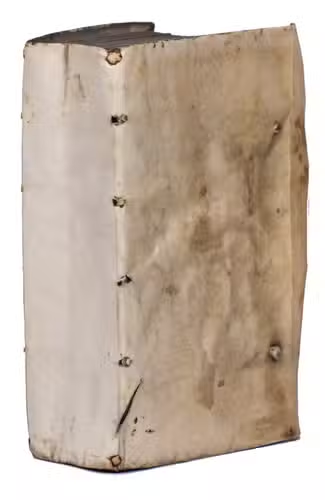
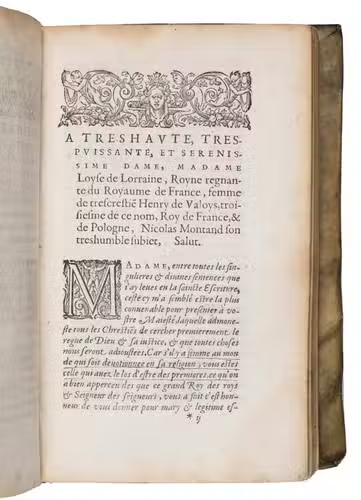
[Geneva/France?], 1582. 2 works in 1 volume. 8vo. Ad 1 with some woodcut head- and tailpieces and initials. Ad 2 with a small woodcut initial. Contemporary overlapping vellum. [1], [1 blank], [7], "497" [=495], [1 blank]; [16], 647, [1 blank], [10], [2 blank] pp.
€ 4,000
This convolute brings together two closely related satirical political texts by, or attributed to, Nicolas Barnaud (1538-1604), a Protestant, and more specifically Huguenot, theologian and physician from Crest in the Dauphiné. The present work offers a striking insight into radical Huguenot political thought on monarchy, tyranny, and reform in late 16th-century France. Both works were banned and systematically destroyed shortly after publication, thus making the present examples rare survivals.
Ad 1: Le Miroir des François, sets out a comprehensive critique of the political and moral condition of France. Written in dialogue form and dedicated to the then reigning Queen of France Louise of Lorraine, the work examines the management of public affairs, justice, religion, and finance, presenting the kingdom as a "mirror" in which its rulers and subjects might recognise their failures.
Barnaud draws a sharp distinction between the legitimate king and the tyrant, arguing that true monarchy is founded upon natural law, justice, and faith, whereas tyranny represents their inversion. The text proposes far-reaching reforms that anticipate, with remarkable clarity, measures later realised during the French Revolution, including the secularisation of ecclesiastical property and the reorganisation of civic and military structures.
Ad 2: Le Cabinet du Roy de France is one of the most forceful and controversial political texts of the French Wars of Religion (1562-1598). Published anonymously and dedicated to King Henry III, it presents itself as a work of counsel, structured around the metaphor of three "precious pearls" by which the monarch might restore the kingdom and relieve his subjects.
Attributed by many scholars to Barnaud, the work offers a fierce denunciation of corruption within both Church and nobility, which the author identifies as the principal causes of Frances moral and financial decline. Advocating radical anti-clerical reforms, the work reflects a vision of political economy and moral regeneration that places unusual emphasis on the role of the Third Estate alongside religion and true nobility.
The tone of Le Cabinet du Roy is notably harsher and more abrasive than that of Le Miroir des François. Its explosive content led to immediate suppression, and the text was deliberately destroyed for revealing what contemporaries considered dangerous truths about the state and the court.
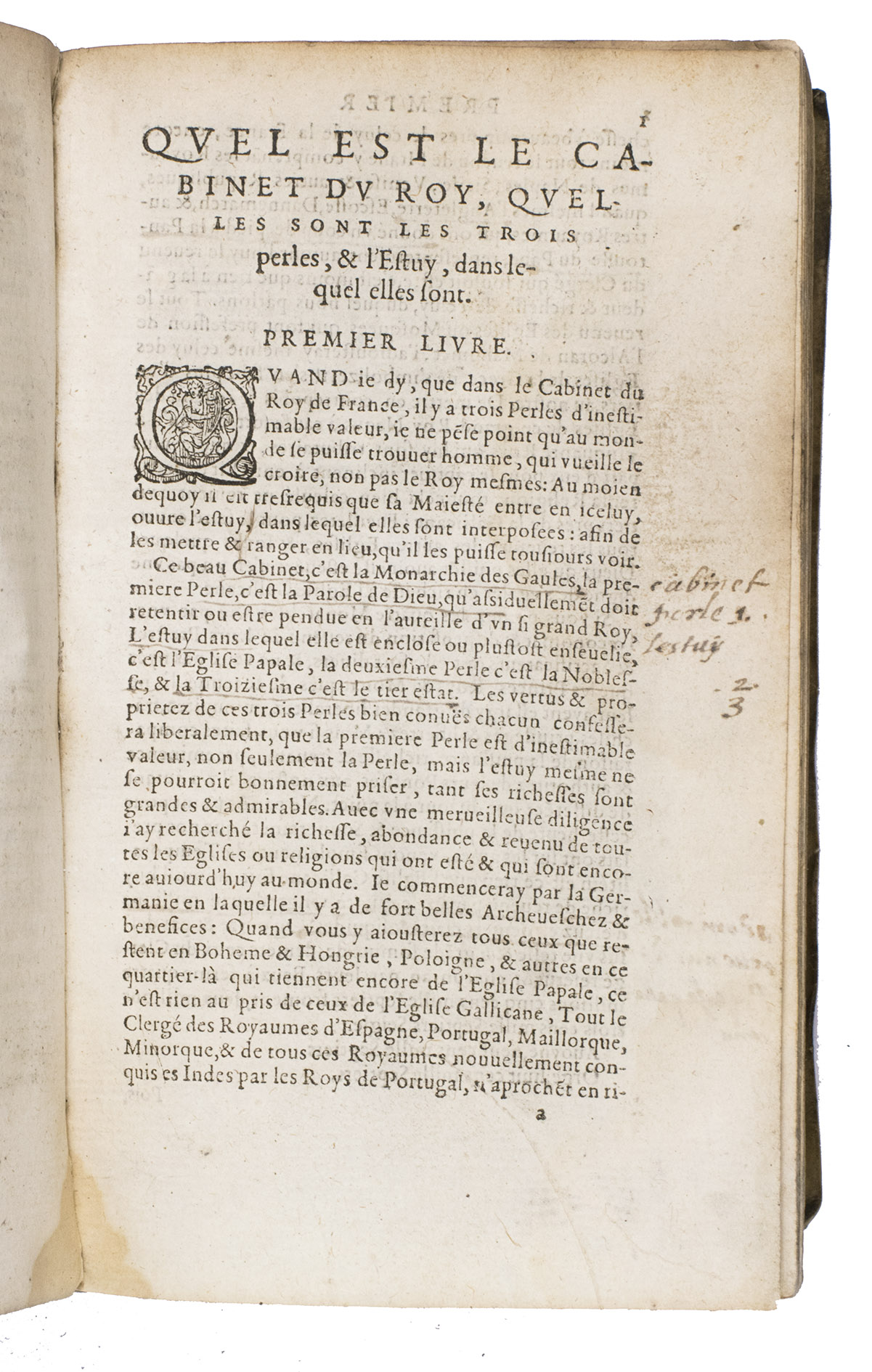
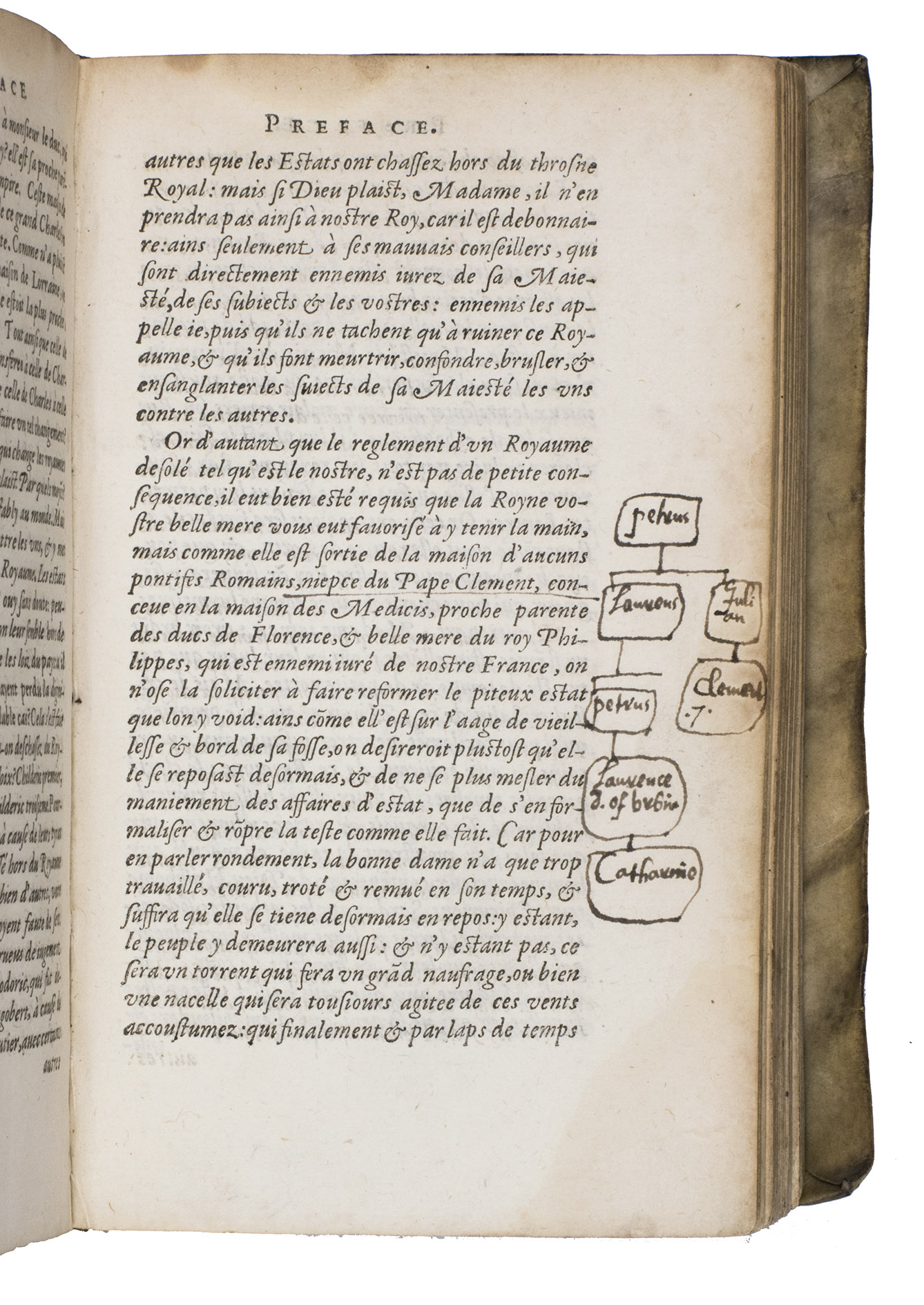
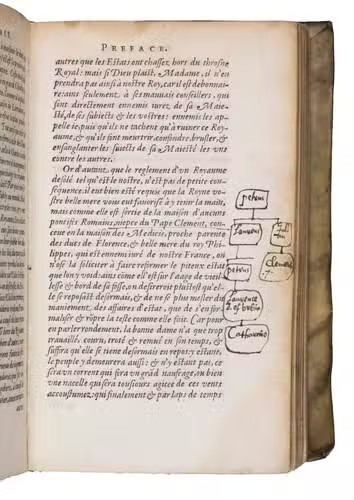
With the printed bookplate of the "Case Memorial Library, Hartford Seminary Foundation" on the inside of the front board (mounted on the vellum), the pastedowns have detached from the inside of the boards. Ad 1 with two blind library stamps of the "Theological Institute of Connecticut" on the last two leaves, some underlining throughout and a marginal annotation in the preface, consisting of a handwritten genealogical note and diagram referring to popes and royalty. A few inner margins lightly wormed (not affecting the text), and an ink stain affecting pp. 290-291. Ad 2 with the same two blind library stamps of the "Theological Institute of Connecticut" on the first two leaves, a manuscript cypher "17988" on the verso of the title. The upper and lower corners of the title leaf is slightly teared (not affecting the text, but removing an old inscription in the upper corner). A damp stain visible throughout the volume, and occasional browning. Otherwise in good condition. Ad 1: Adams B 221; BM STC French p. 317; Brunet III 1846; Cioranesco 3112; Pettegree, Walsby and Wilkinson, FB 2761; USTC 6614; not in Chaix-Dufour-Moeckli; Ad 2: Adams B 219; BM STC French p. 88; Brunet, vol. 1 pp. 1441; Cioranesco 3110; Pettegree, Walsby and Wilkinson, FB 2771; USTC 14757; not in Chaix-Dufour-Moeckli.
Related Subjects: