LEMNIUS, Levinus.
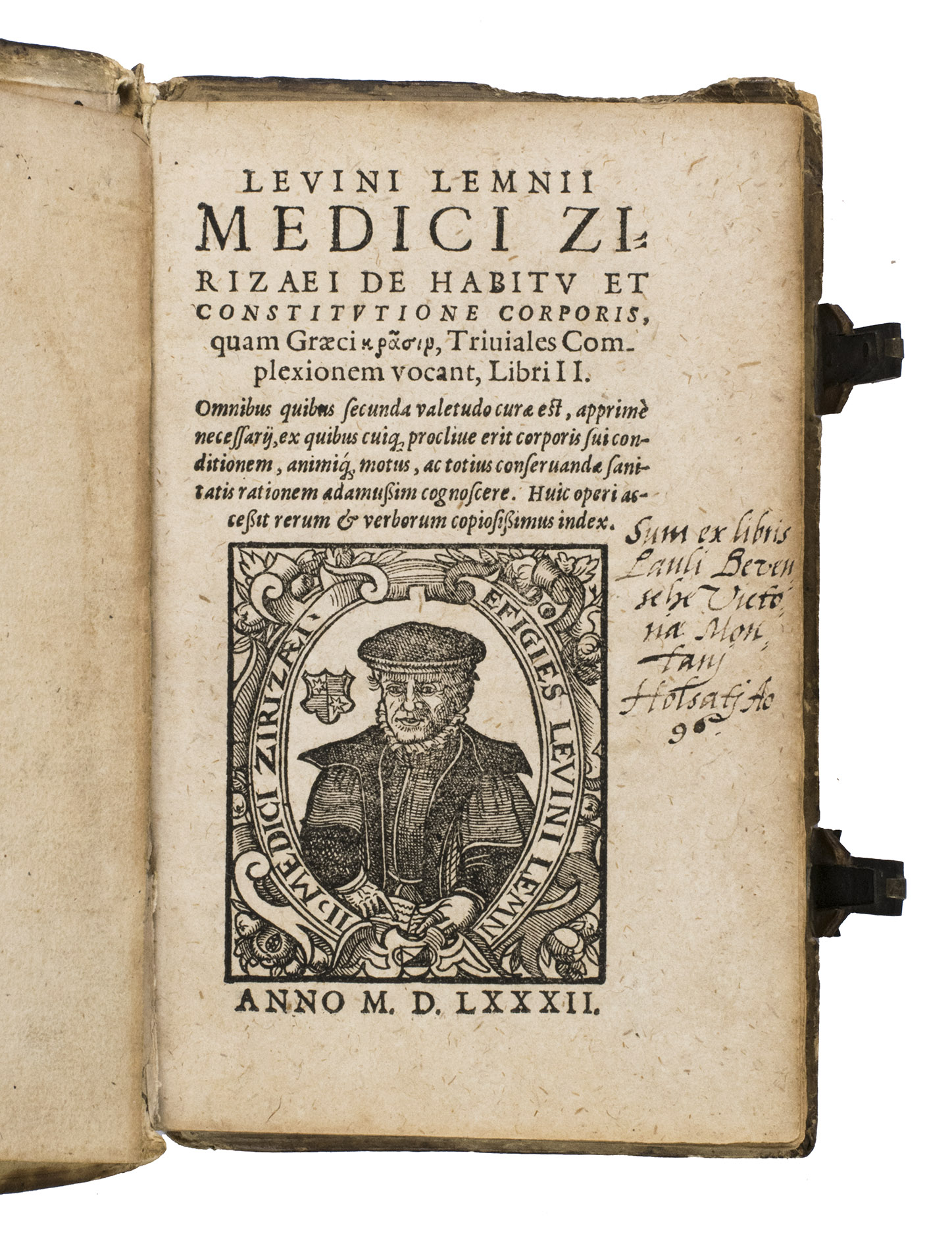
De habitu et constitutione corporis, quam Graeci "krasin", triviales complexionem vocant, libri II.
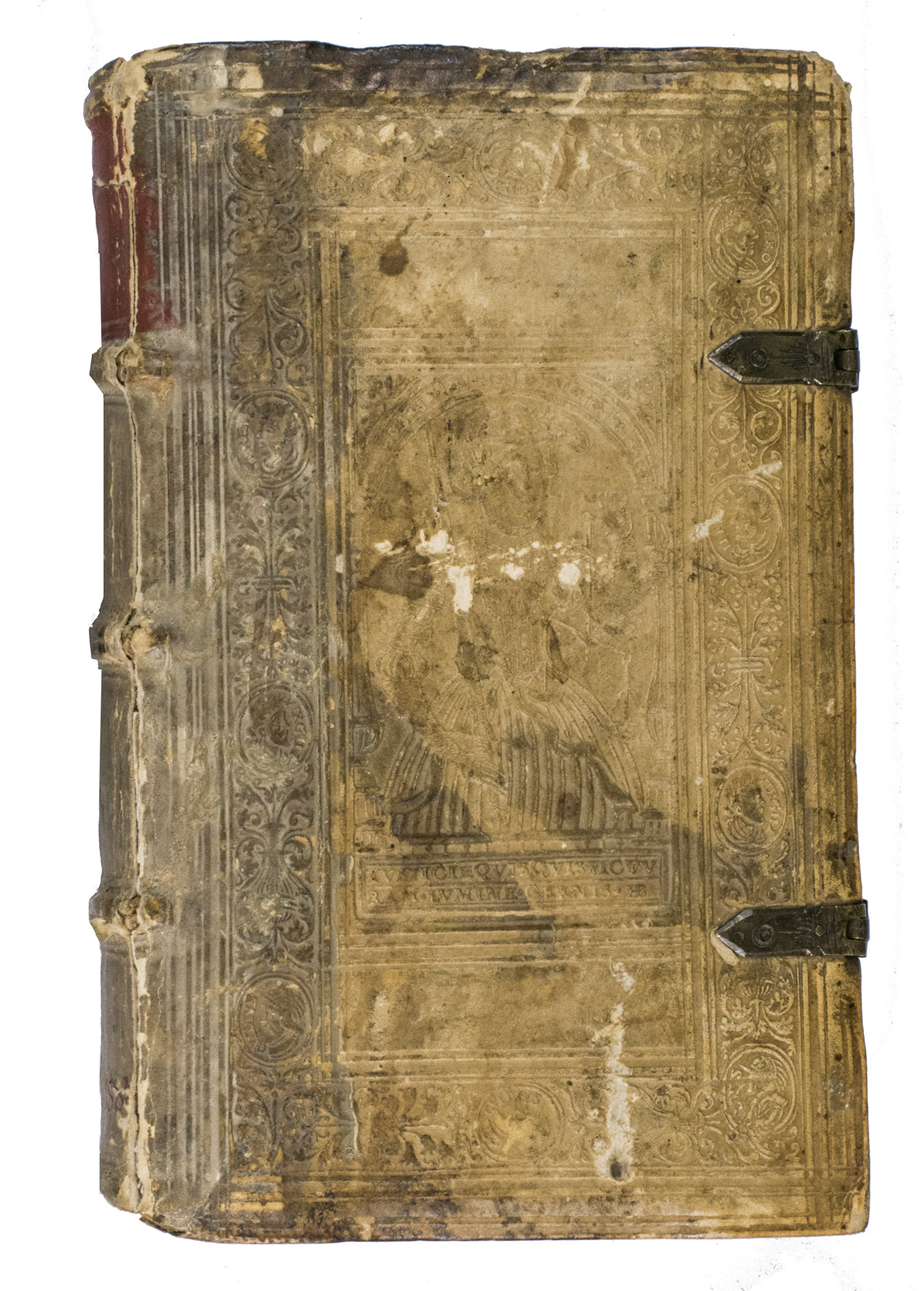
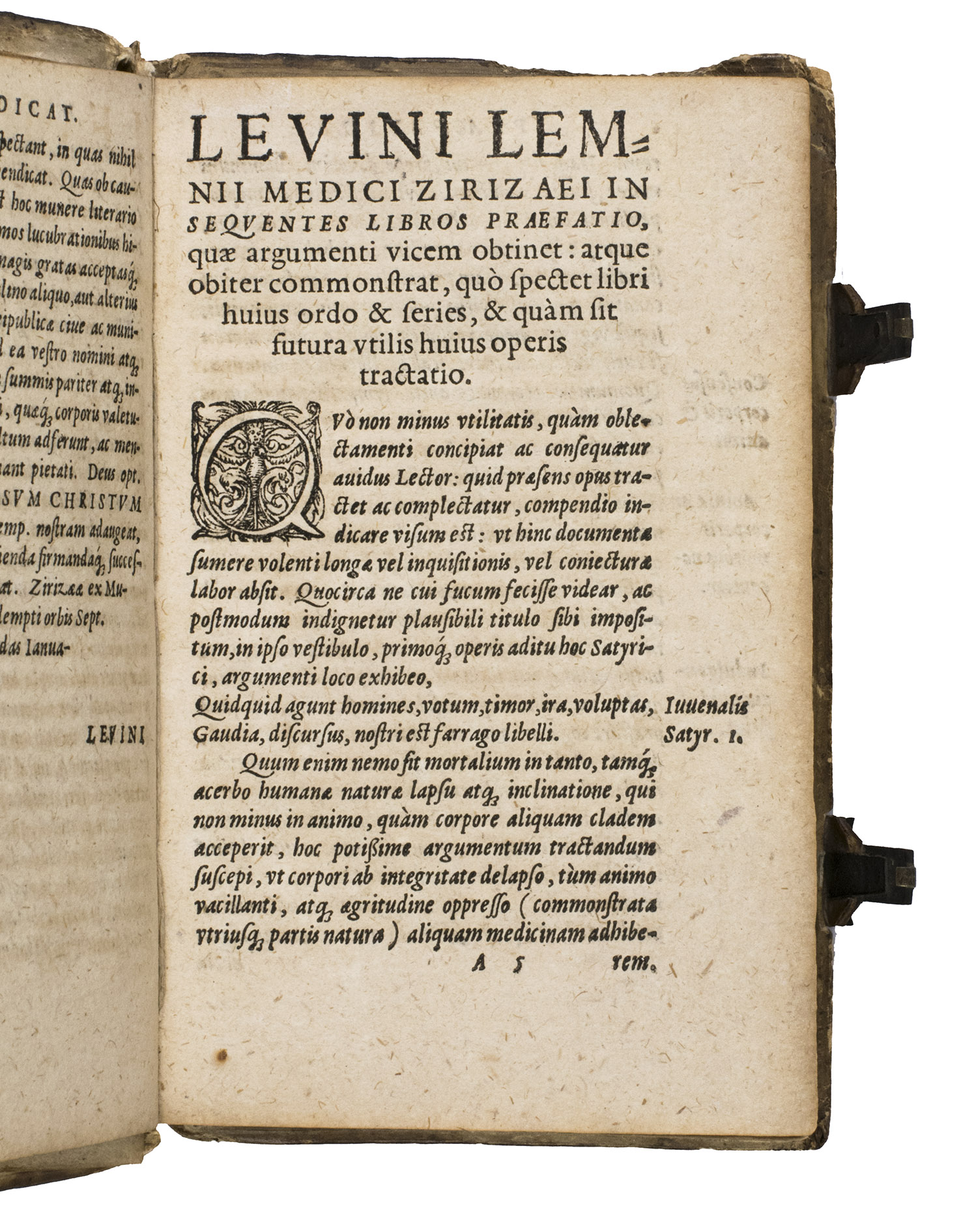
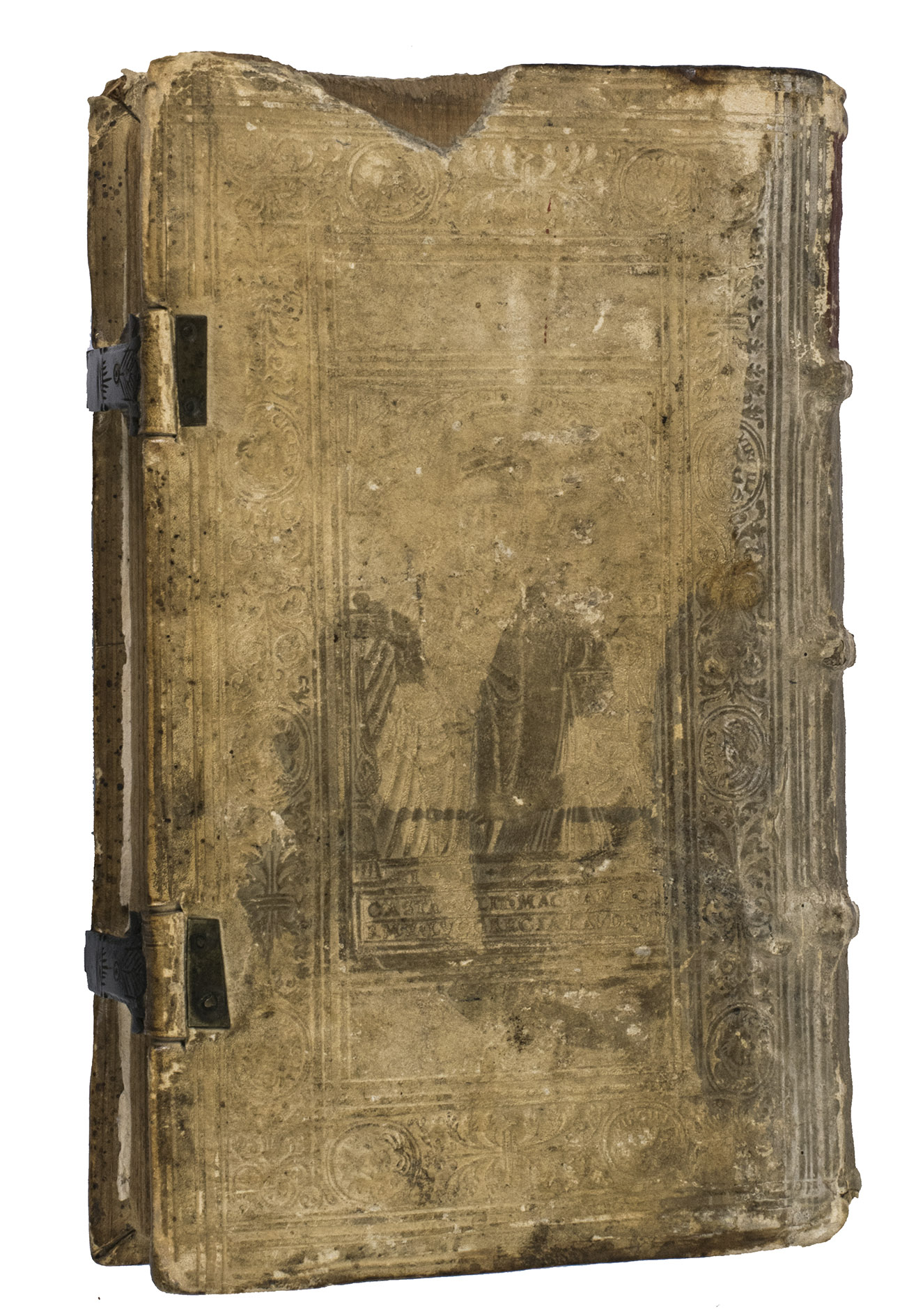
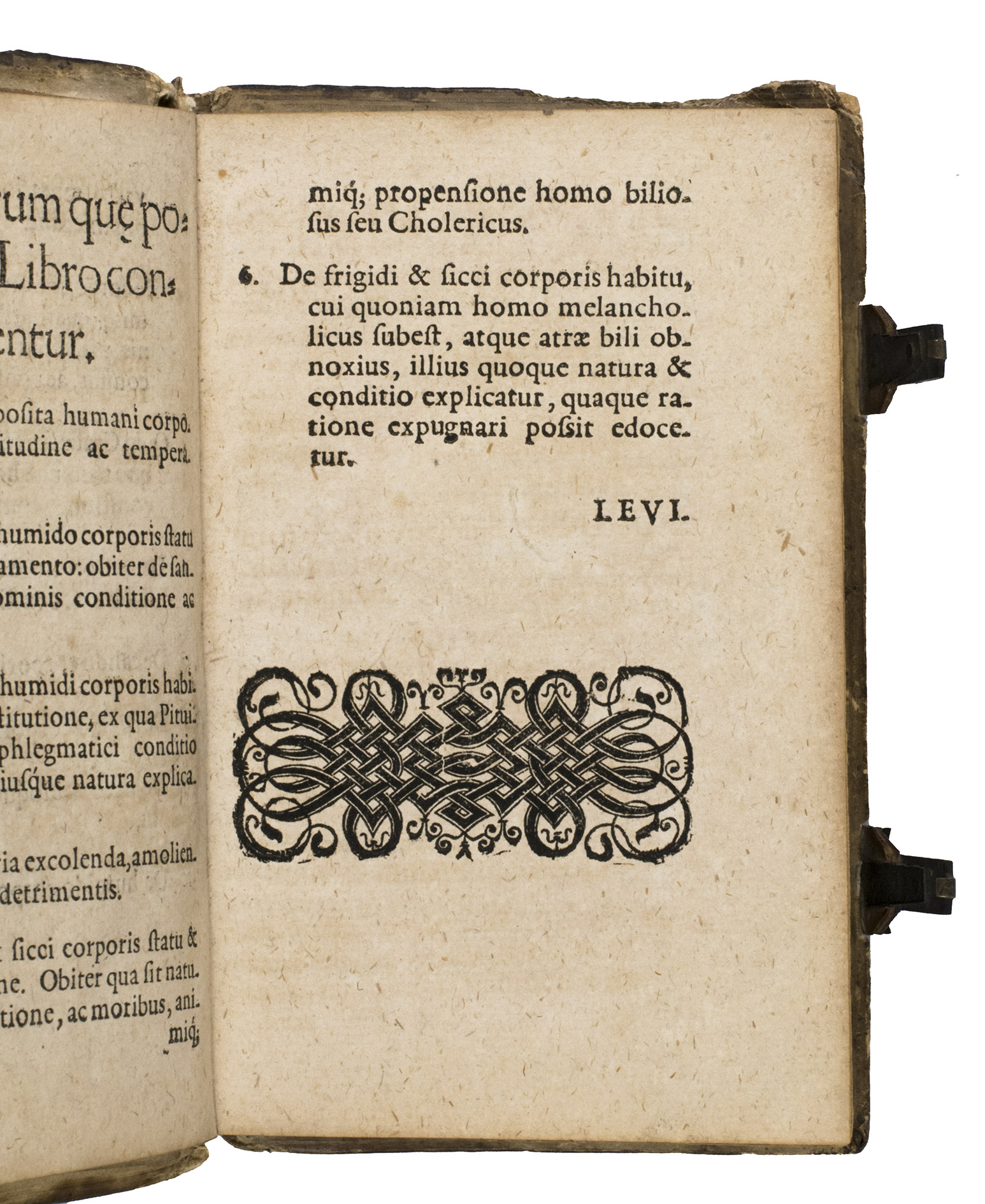
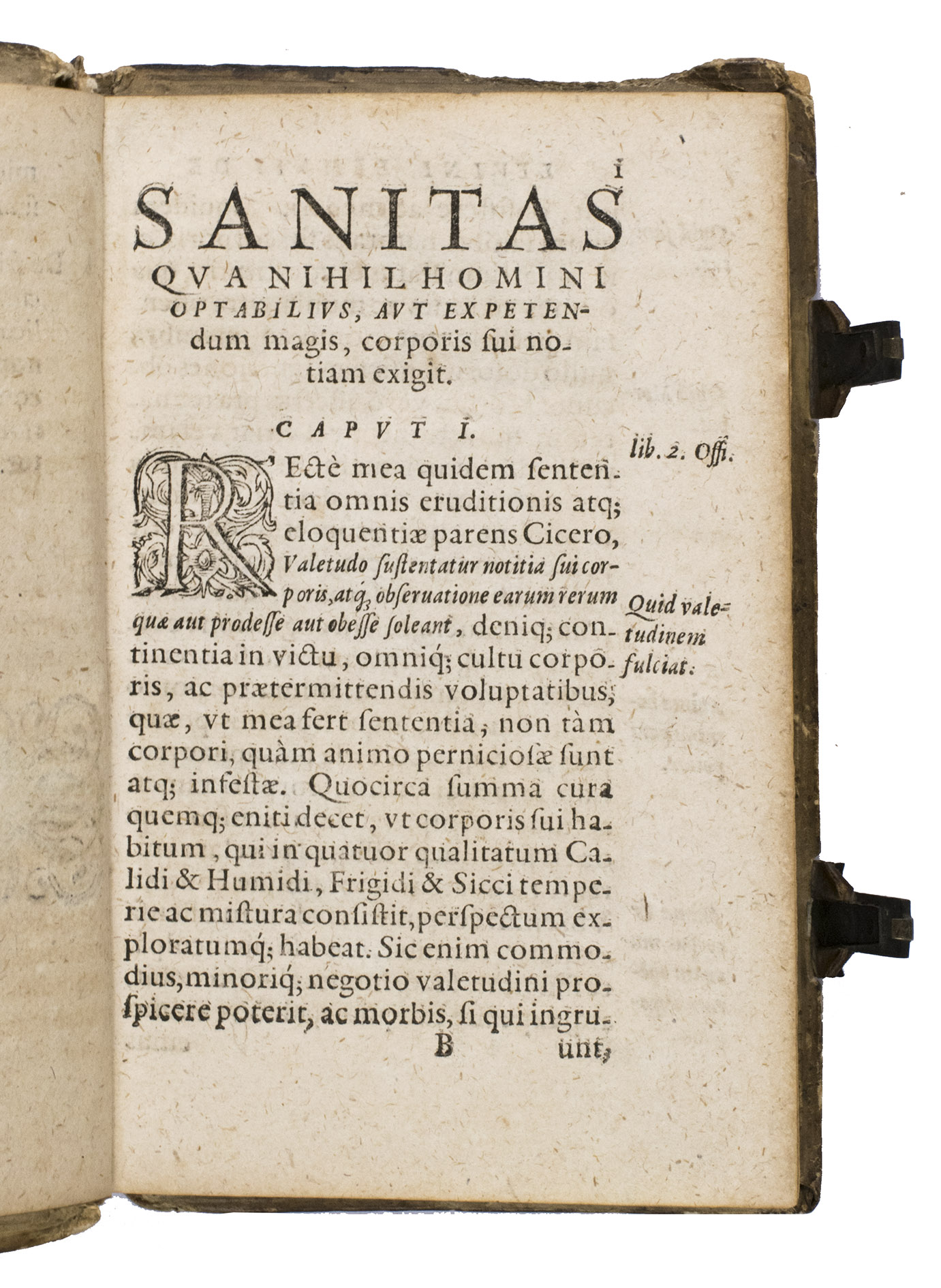
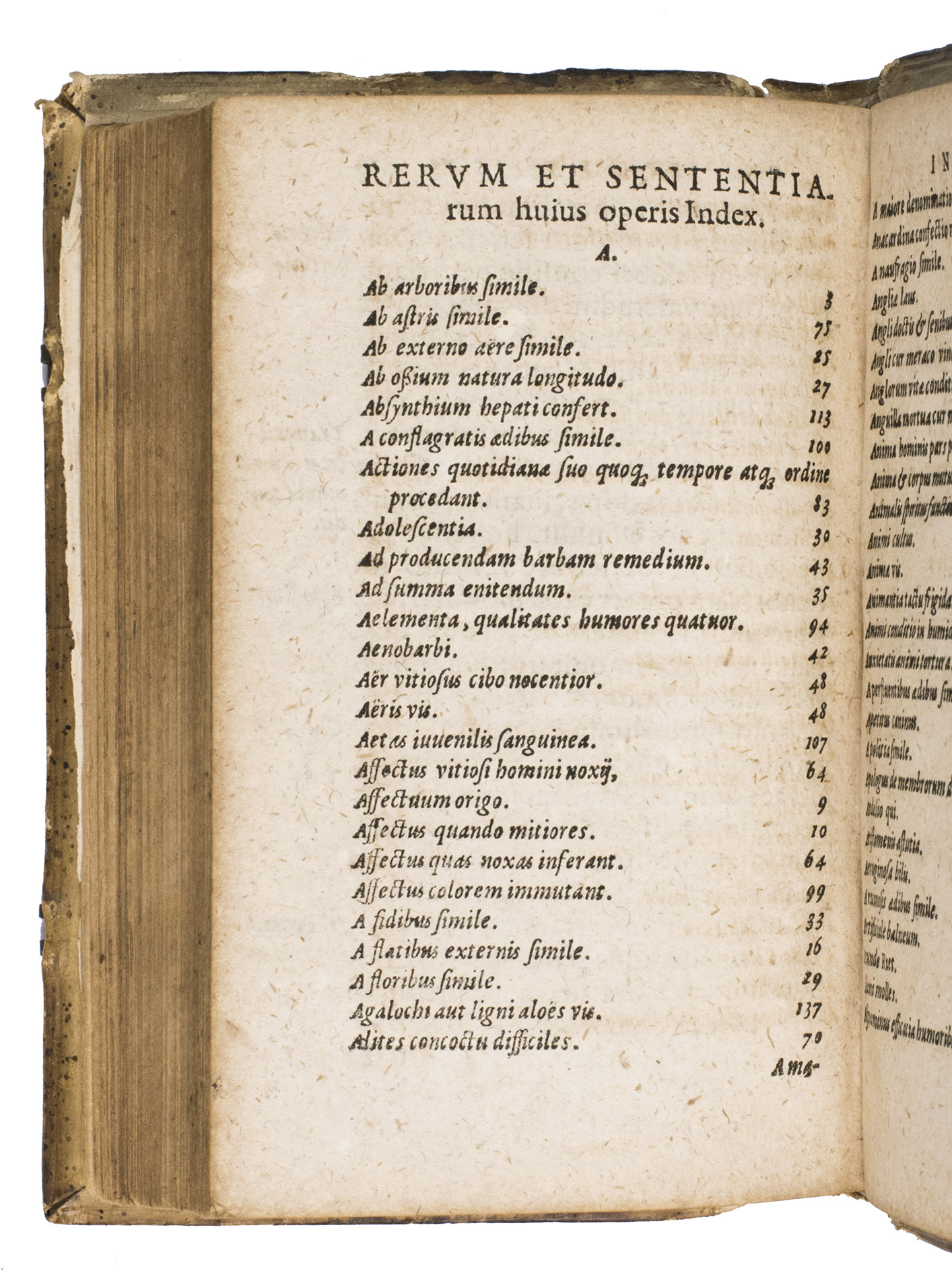
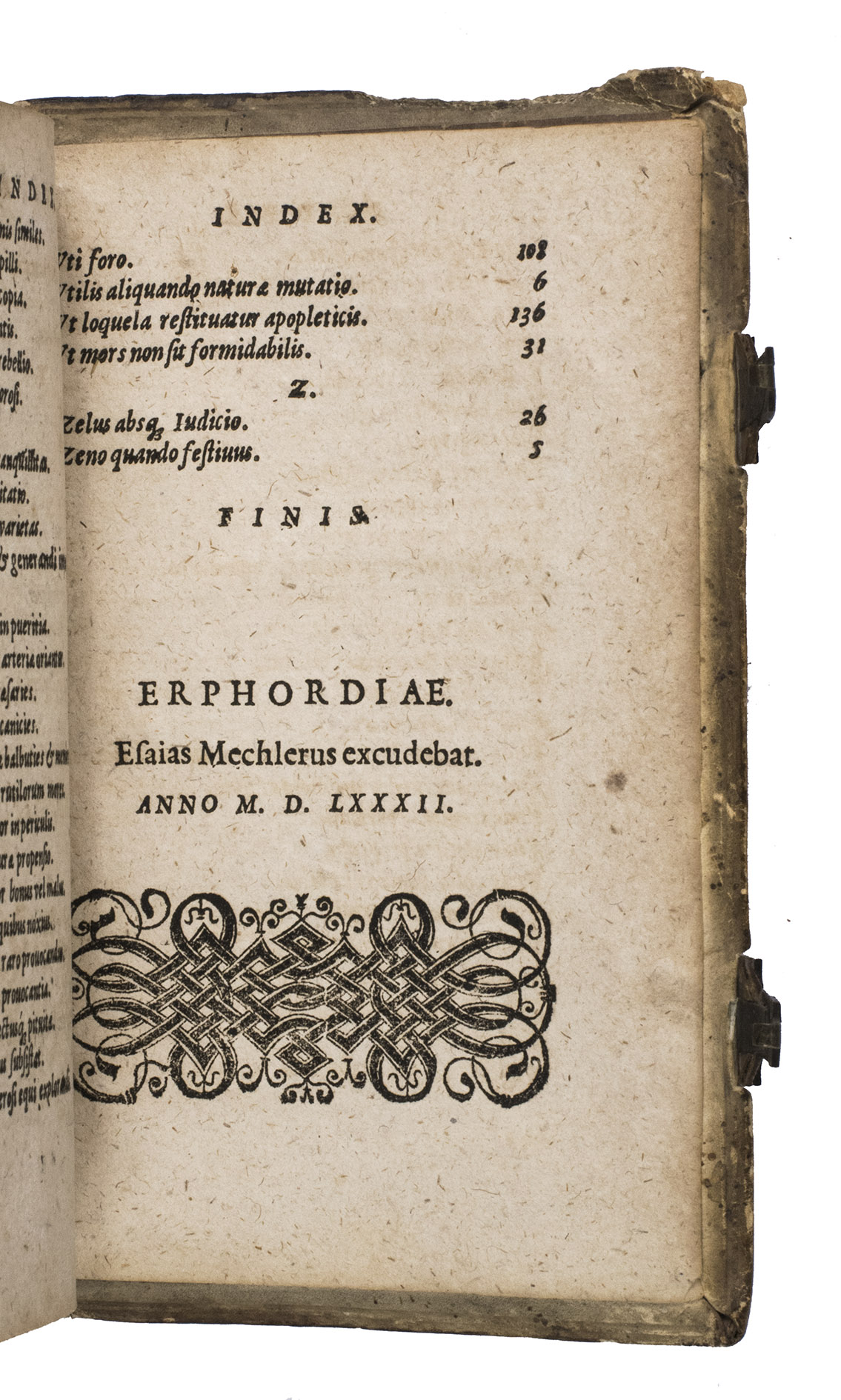
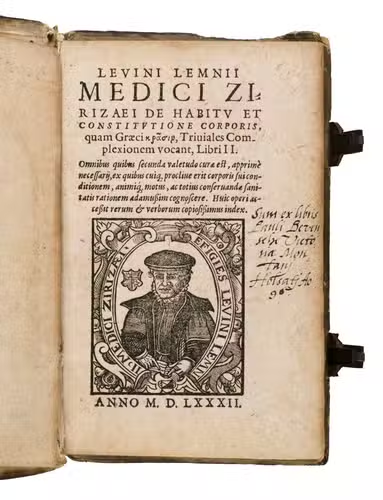
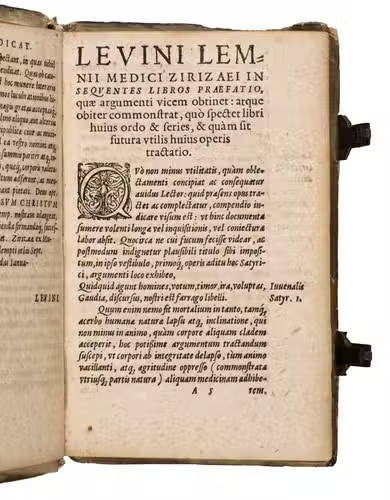
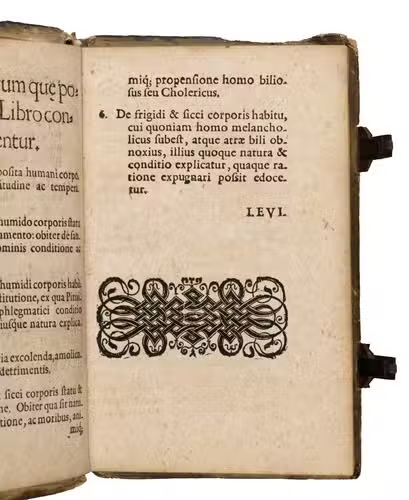
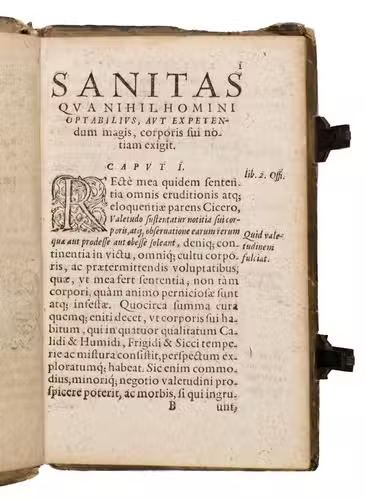
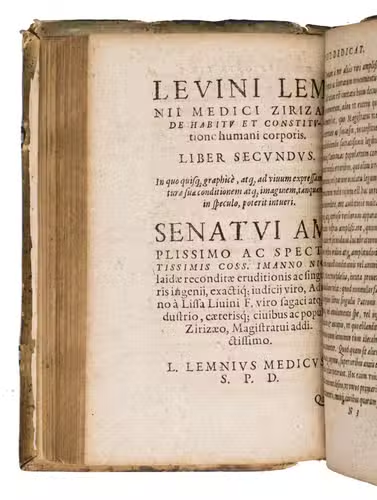
Erfurt, Esaias Mechlerus, 1582. 8vo. With a woodcut portrait of the author on the title page, several decorated woodcut initials and tail pieces. Contemporary blind-tooled pigskin over wooden boards, sewn on 3 supports with the corresponding raised bands on the spine, the first compartment of the spine has been painted red, a manuscript shelf mark ("E. 188") in red ink in the fourth compartment, the boards are richly blind-tooled with a central panel featuring Justicia (signed "HB") on the front, and Lucrecia (dated 1570) on the back, framed by a decorative border containing small portraits of classical authors, secured with two brass clasps and catches. [8], 167, [13] ll.
€ 3,000
Rare second edition of a popular work on the "complexions" of the human body, a compendium on the preservation of health of the body and the mind. This (occult-)medical work was written by Levinus Lemnius (1505-1568), a physician and theologian from Zierikzee in the Dutch province of Zeeland. On account of his attitude towards mentally ill people, which he discusses in the present work, "the hygienist of his time" (as he was called) was even considered a forerunner of the Enlightment. His undeniable influence lasted until the late seventeenth century as is proven from testimonies by Dodoens, Cardanus, Paré, Bauhin, Richard Burton, and others.
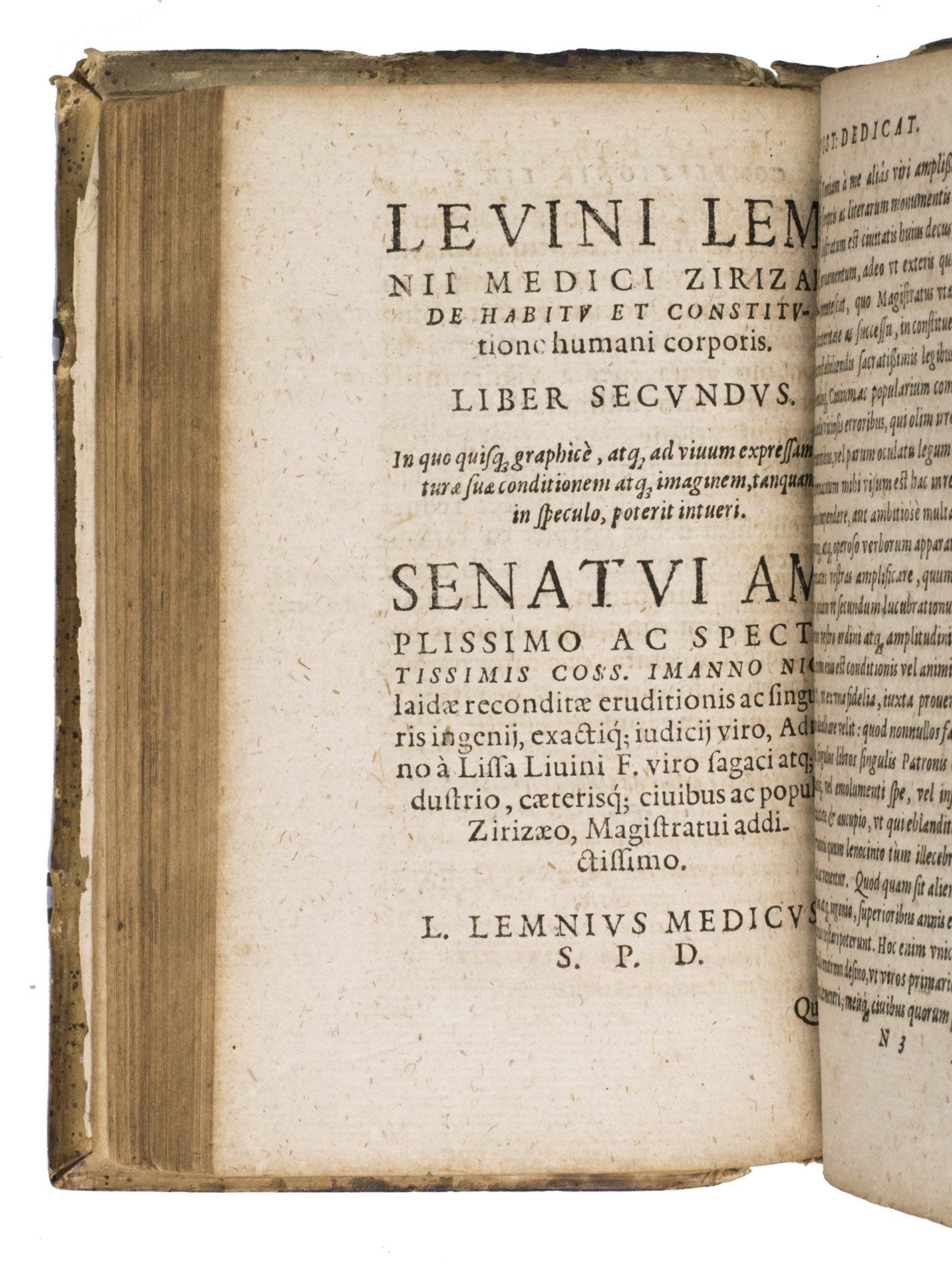
Lemnius first studied theology, and then medicine under Vesalius. He graduated at Padua in 1525 and returned to Zierikzee to practice. He was a pupil and friend of Conrad Gesner and Rembert Dodoens, and was reputed for the elegance and pureness of his Latin. The De habitu et constitutione corporis was first printed in 1561 in Antwerp. The present edition, printed at Erfurt and dedicated to Cornelius Ocker and Petrus Nicolaida, bears a dedication dated 1 January 1561 at Zierikzee. Other 16th-century editions were printed in 1587, 1591, and 1596. Lemniuss work also reached an English audience: a translation was published in London in 1633 under the title The Touchstone of Complexions, a treatise on the physical and mental constitution intended to promote health and self-knowledge.
The binding is finely decorated with two distinct panel stamps. The front cover depicts Justitia (75 × 48 mm) above the inscription Iusticie quisquis picturam lumine cernis, signed with the monogram "HB". The back cover shows Lucretia (75 × 47 mm) above the text Casta tulit magnam forme Lucrecia laudem, dated 1570. Both panels are framed within a roll border featuring medallion portraits of classical authors including Cicero, Terence, Virgil, and Ovid.
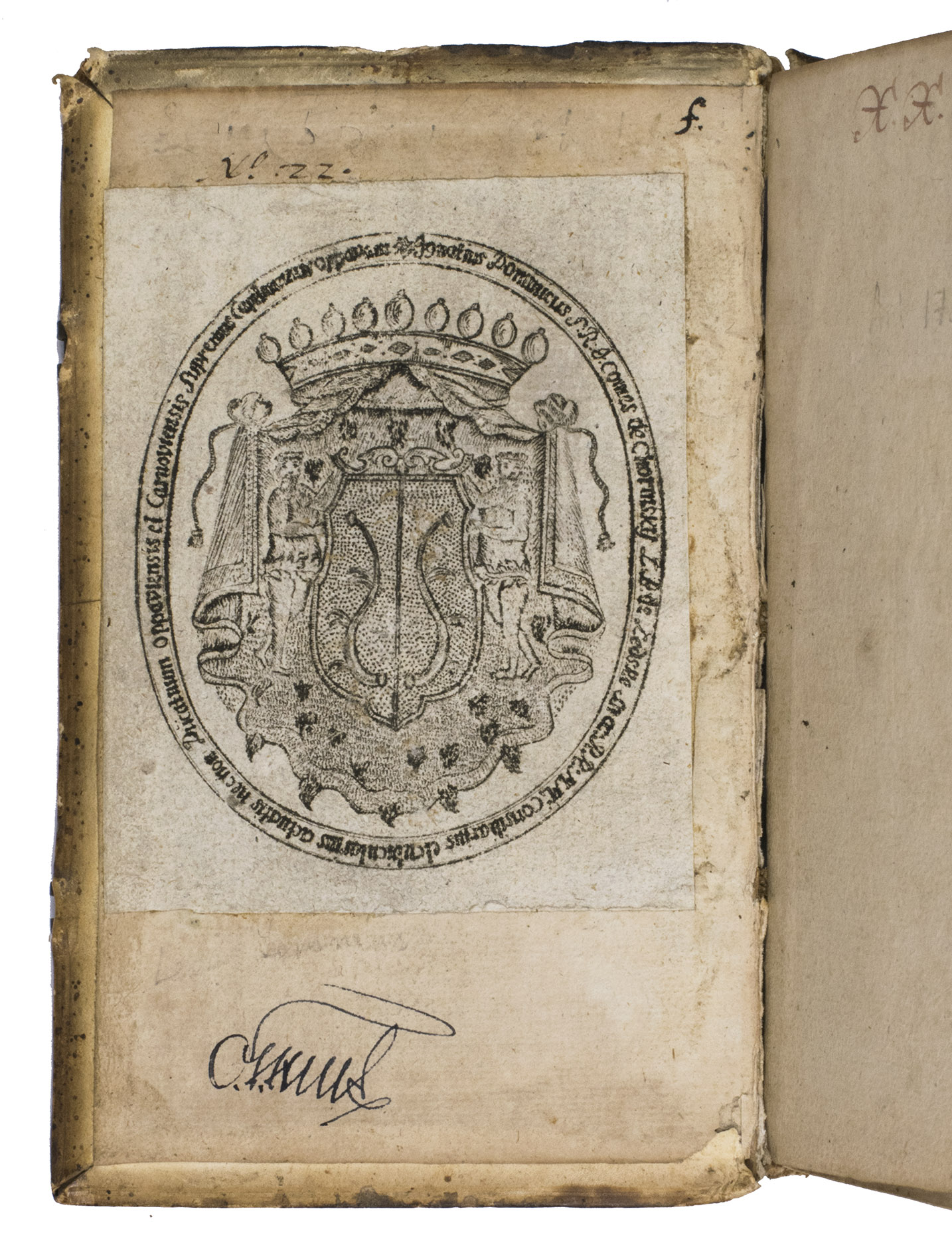
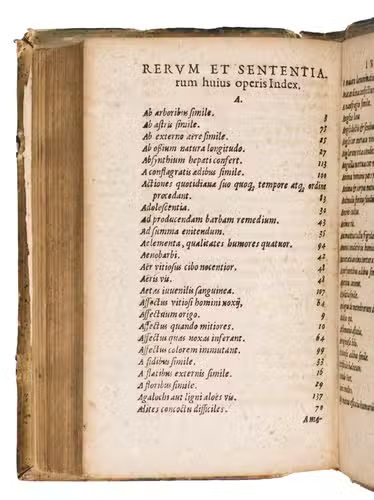
With the printed bookplate of F.R.J. Comes de Chominsky mounted on the front pastedown, and a contemporary ownership inscription ("Sum ex libris Pauli Bevensehe (Bevensee) Victoriae Montani Holsati An(no) (15)96") on the title page. The spine is somewhat discoloured, missing pieces of leather around the edges of the boards, showing the wood underneath, the front joint is weakened, but the structural integrity of the binding is still intact. The front flyleaf is detached, but still present, the lower outer corner of leaf 82 has been torn off, affecting a few letters, some browning throughout. Otherwise in good condition. Caillet 6478; Durling 2766; Ferguson II, p. 22-23 (Frankfurt ed. of 1604); Hirsch III, 736; STC German p. 493; USTC 670768; VD 16 L 1103; Waller 5700; Wellcome 3712; cf. Bibliotheca esoterica 2609 (ed. 1619); Bibliotheca magica et pneumatica 2961 (ed. 1596); for the binding: Haebler I, 47, XV and 49, III, 76; this edition not in Adams.
Related Subjects: