KLEINGROTHE, Charles J.
Malay peninsula (straits settlements & federated Malay states).
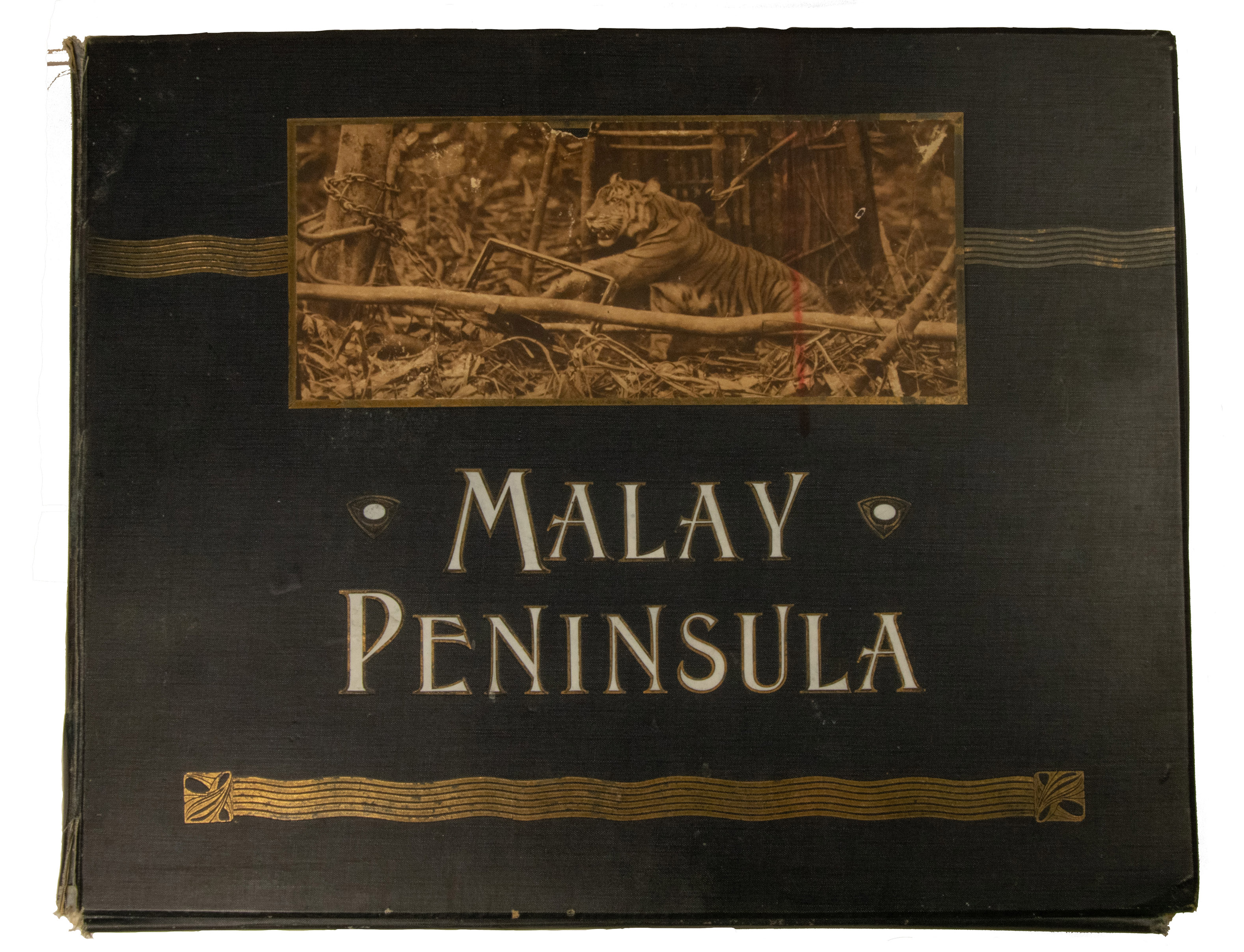
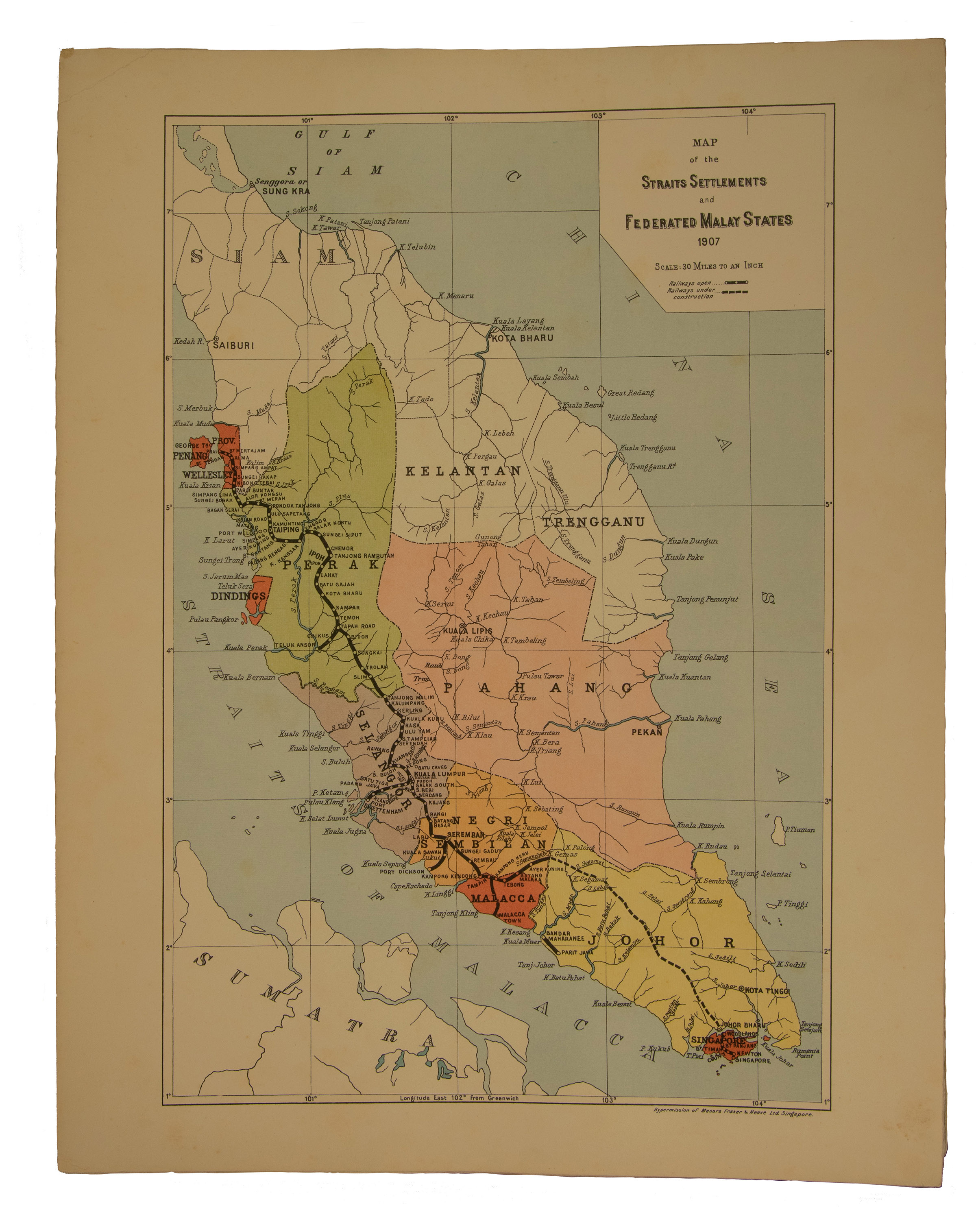
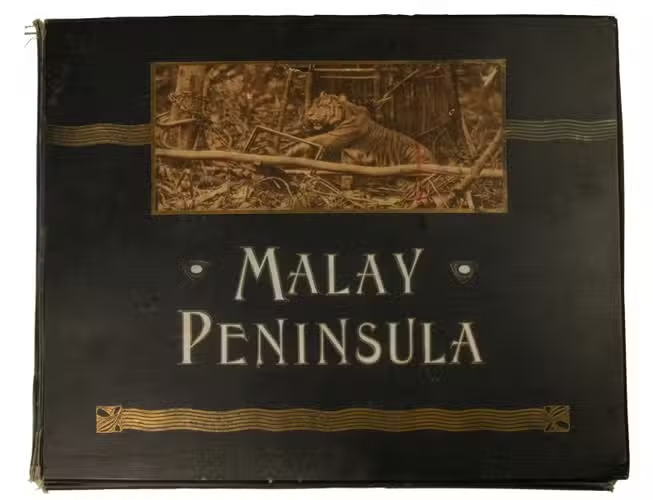
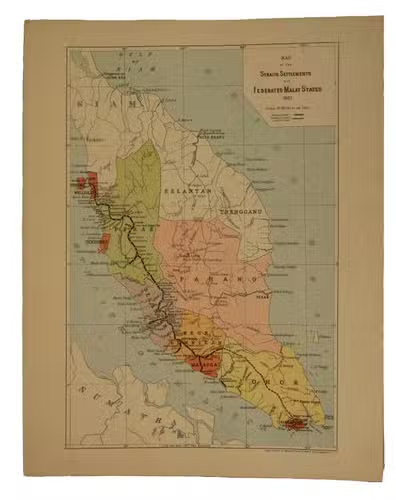
Medan, 1907. Oblong folio (36.3 x 45.5 cm) With 172 photogravures, 1 illustrated map of the Malay Peninsula in colour, and 1 illustrated diagram of the fruit of the rubber tree on 72 leaves, together with a title leaf. 73 loose leaves kept in a decorated black cloth portfolio, with "Malay Peninsula" stamped in white and gold along with some gold-stamped decorations and a ca. 27 x 11 cm. photogravure of a trapped tiger on the front board. The pastedowns and tabs are covered with gold floral paper. [73] ll.
€ 15,000
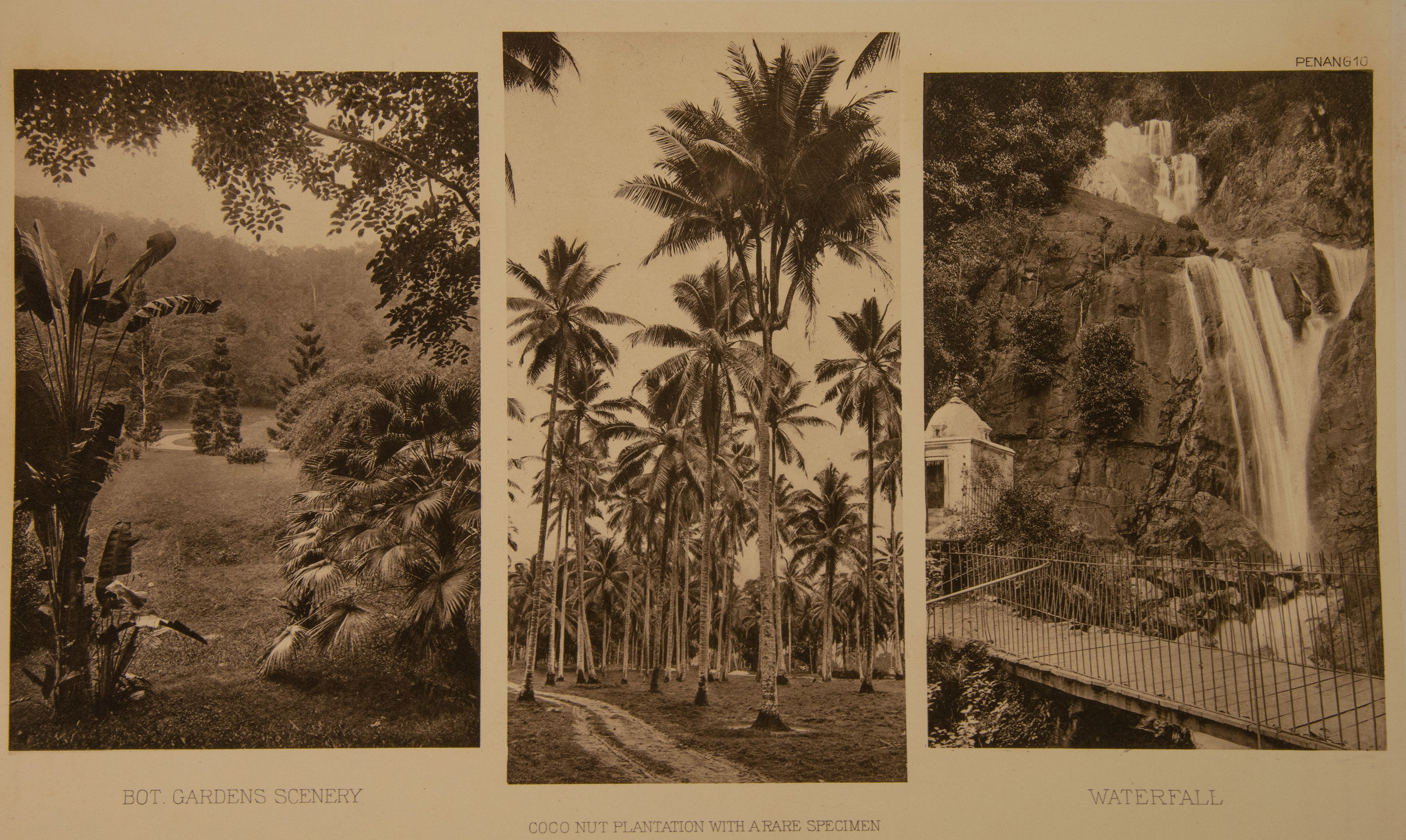
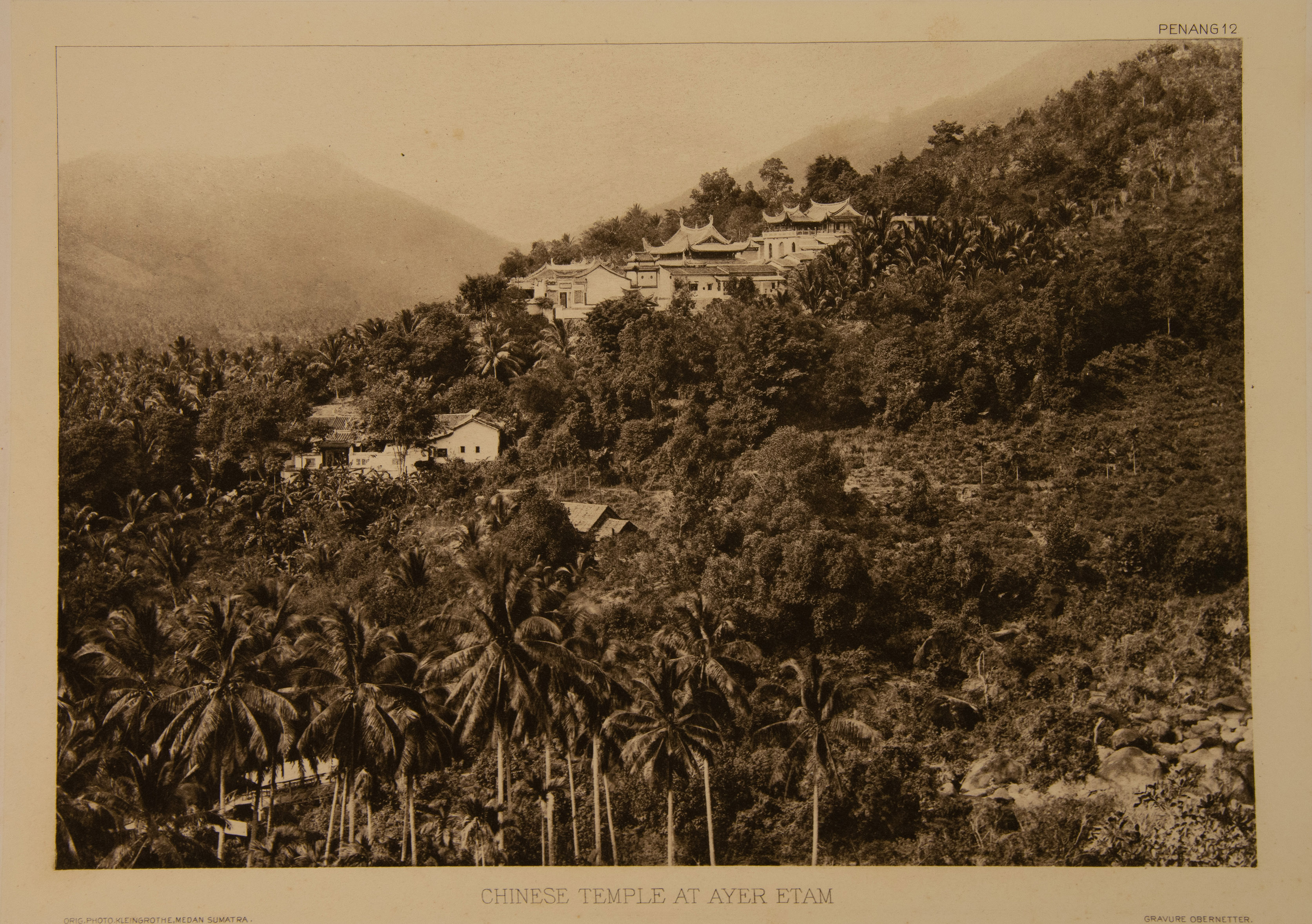
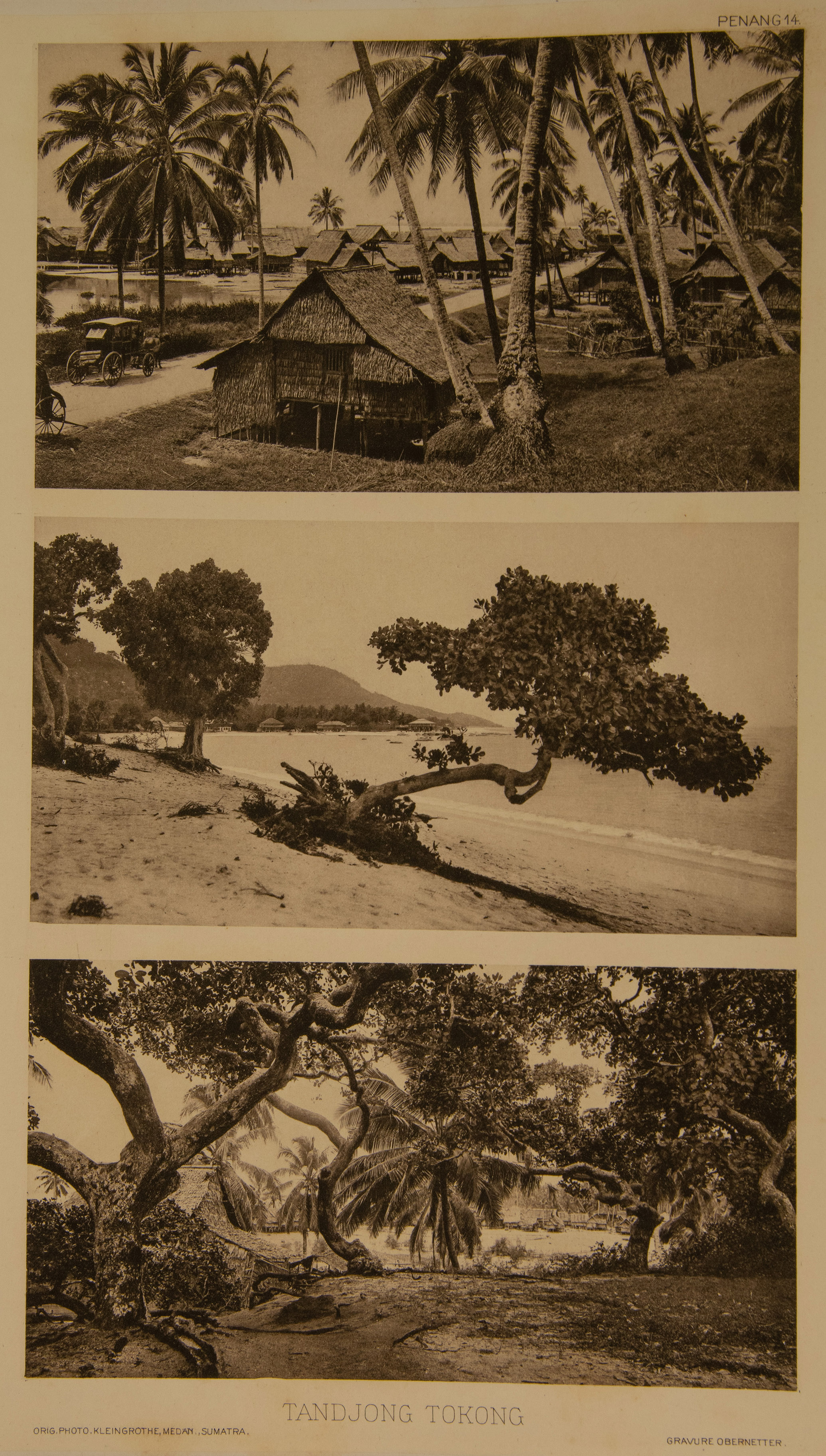
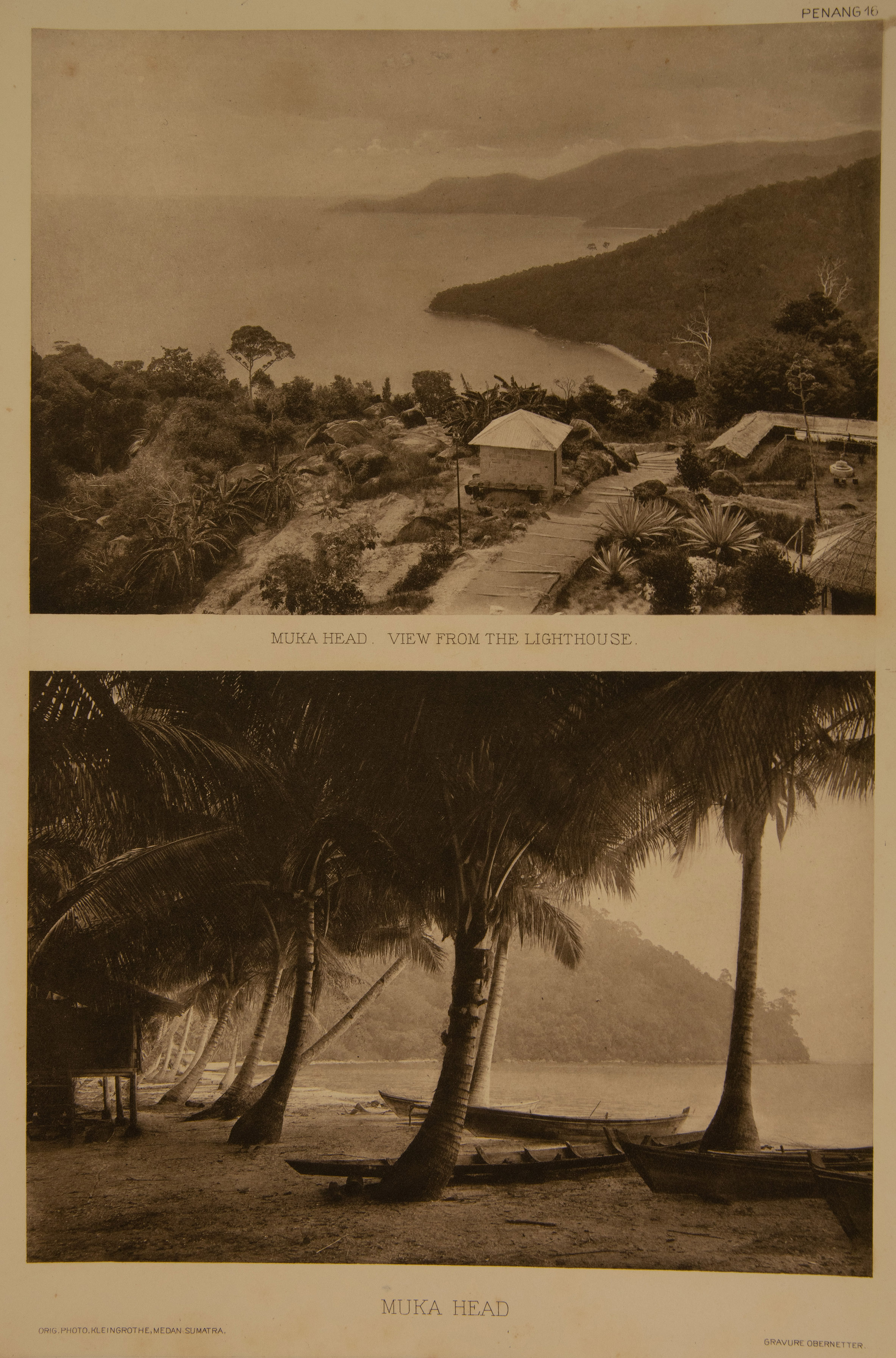
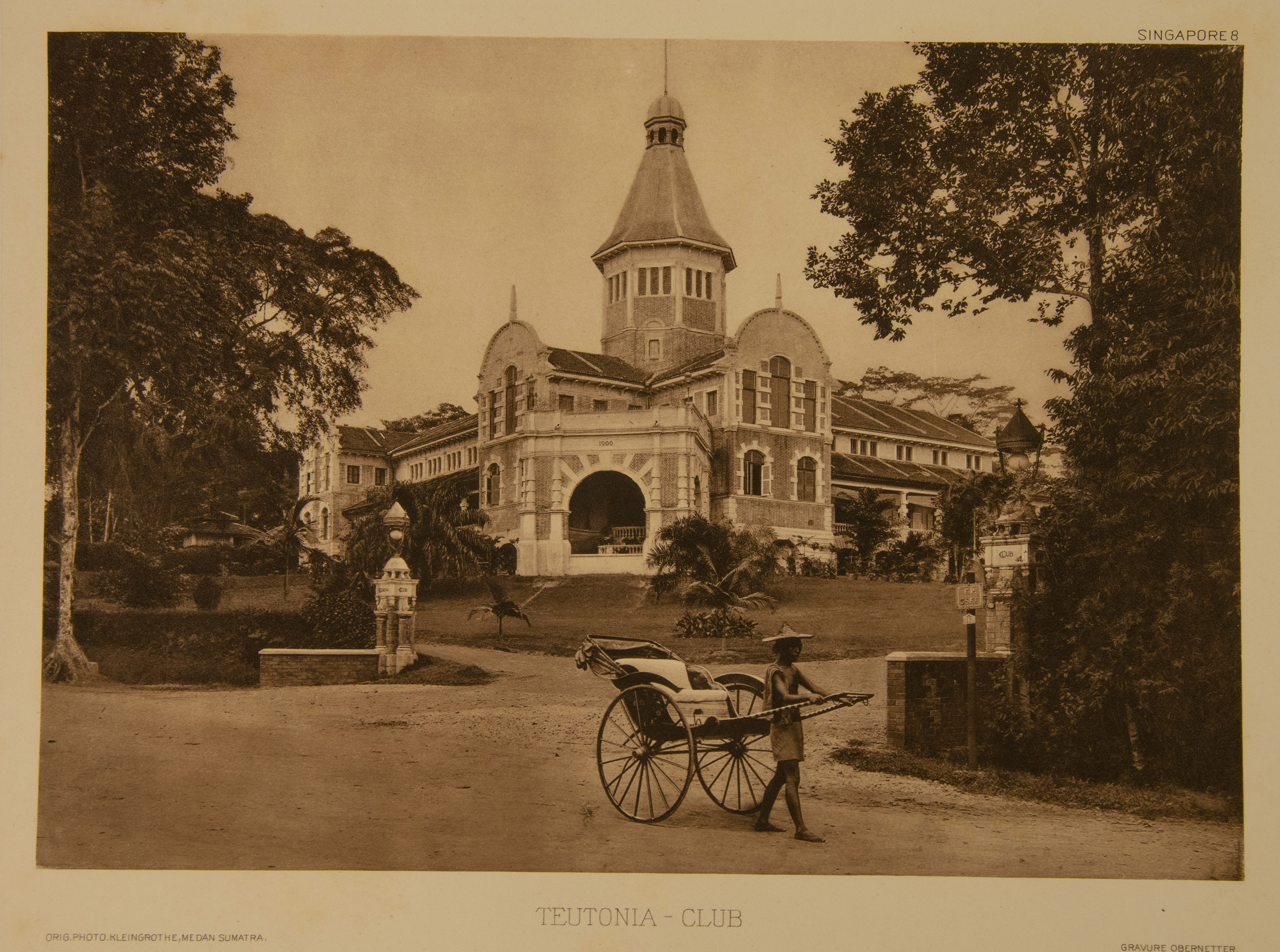
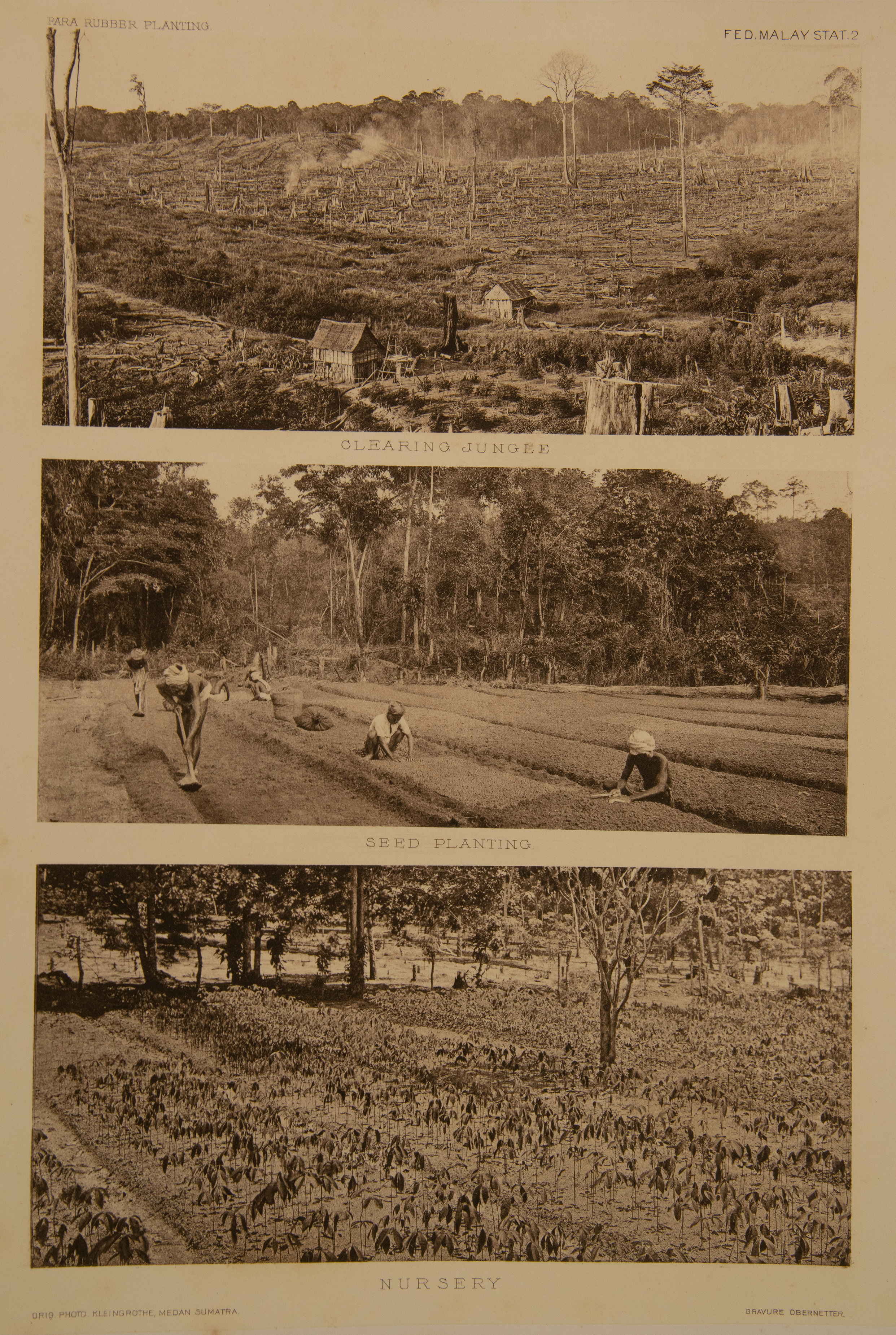
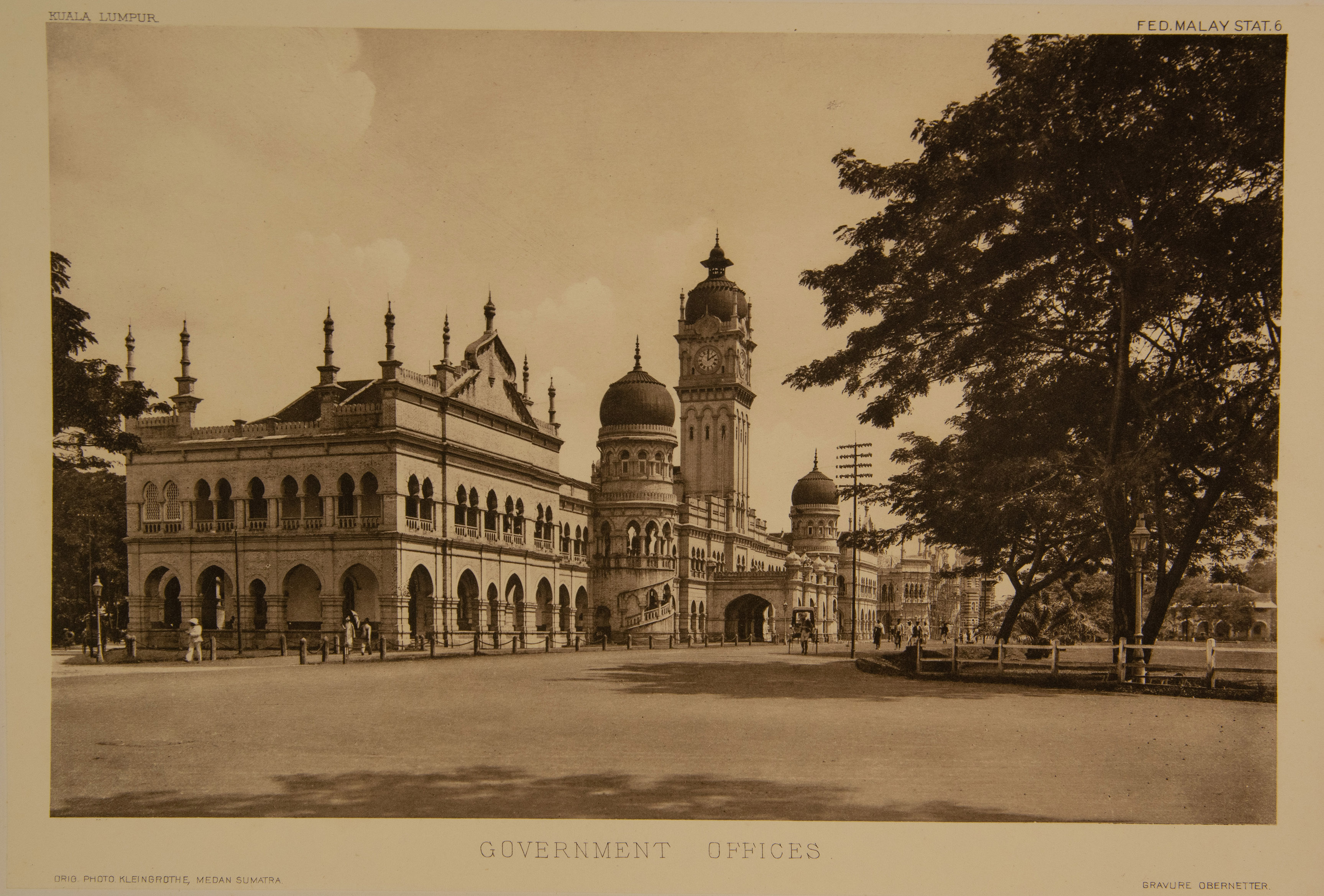
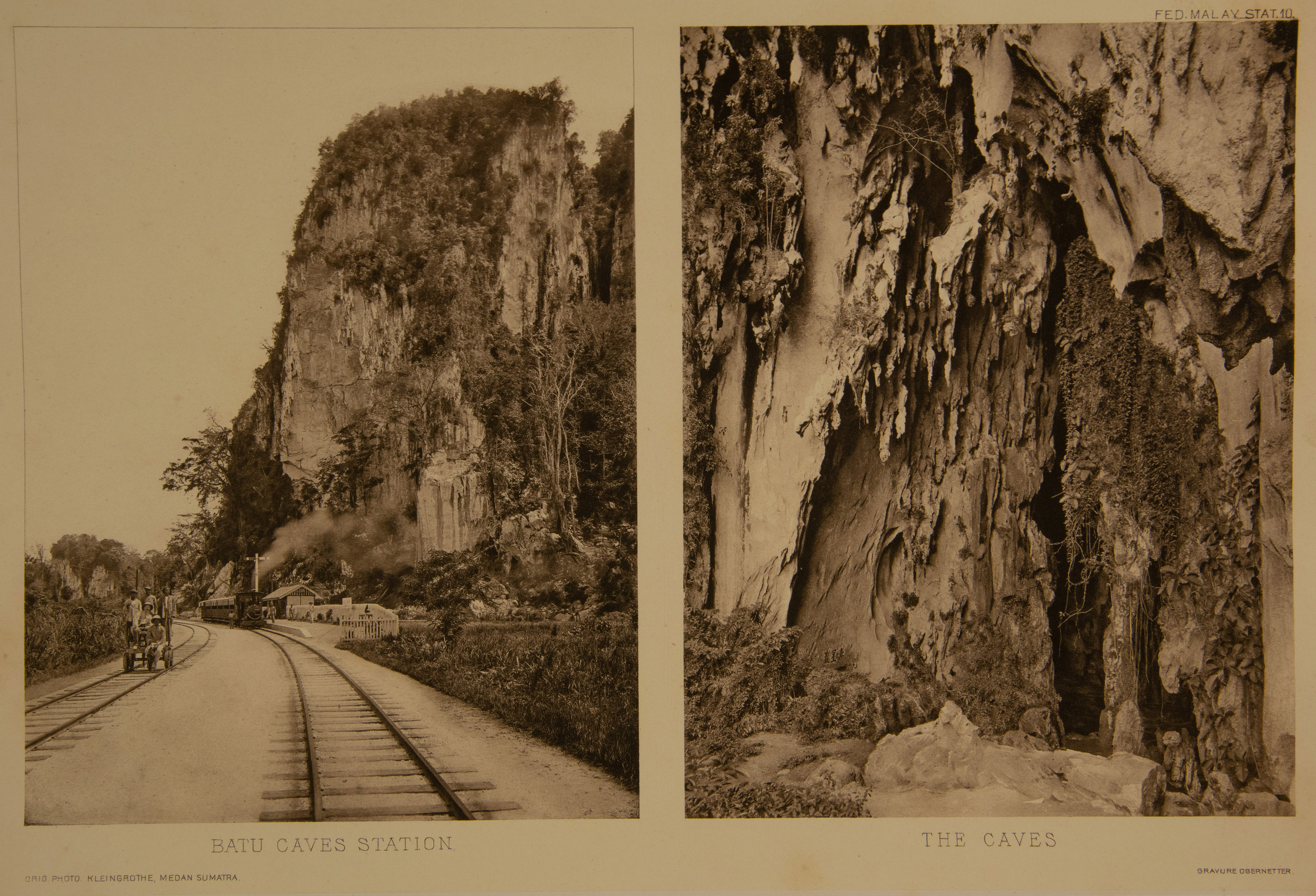
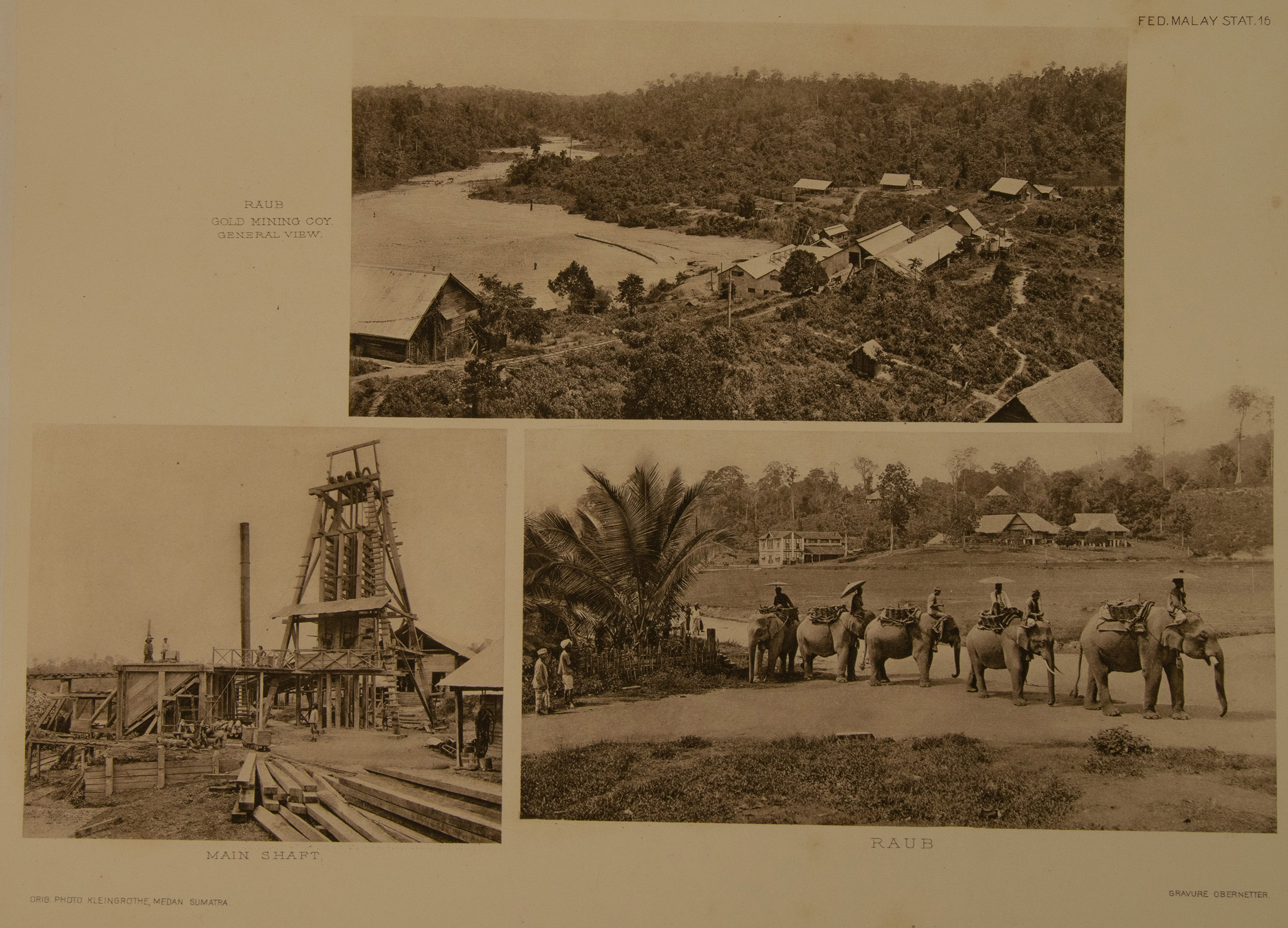
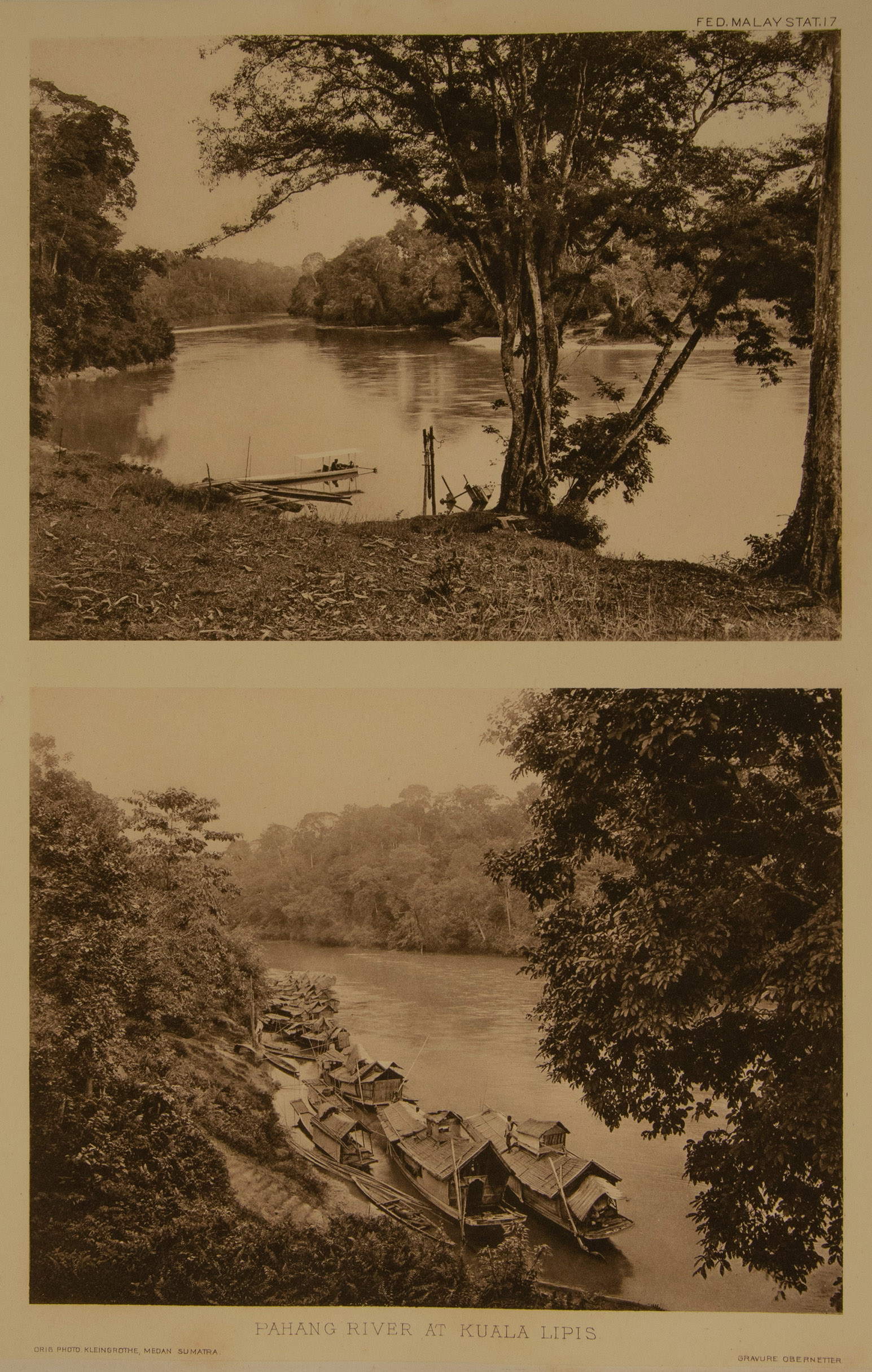
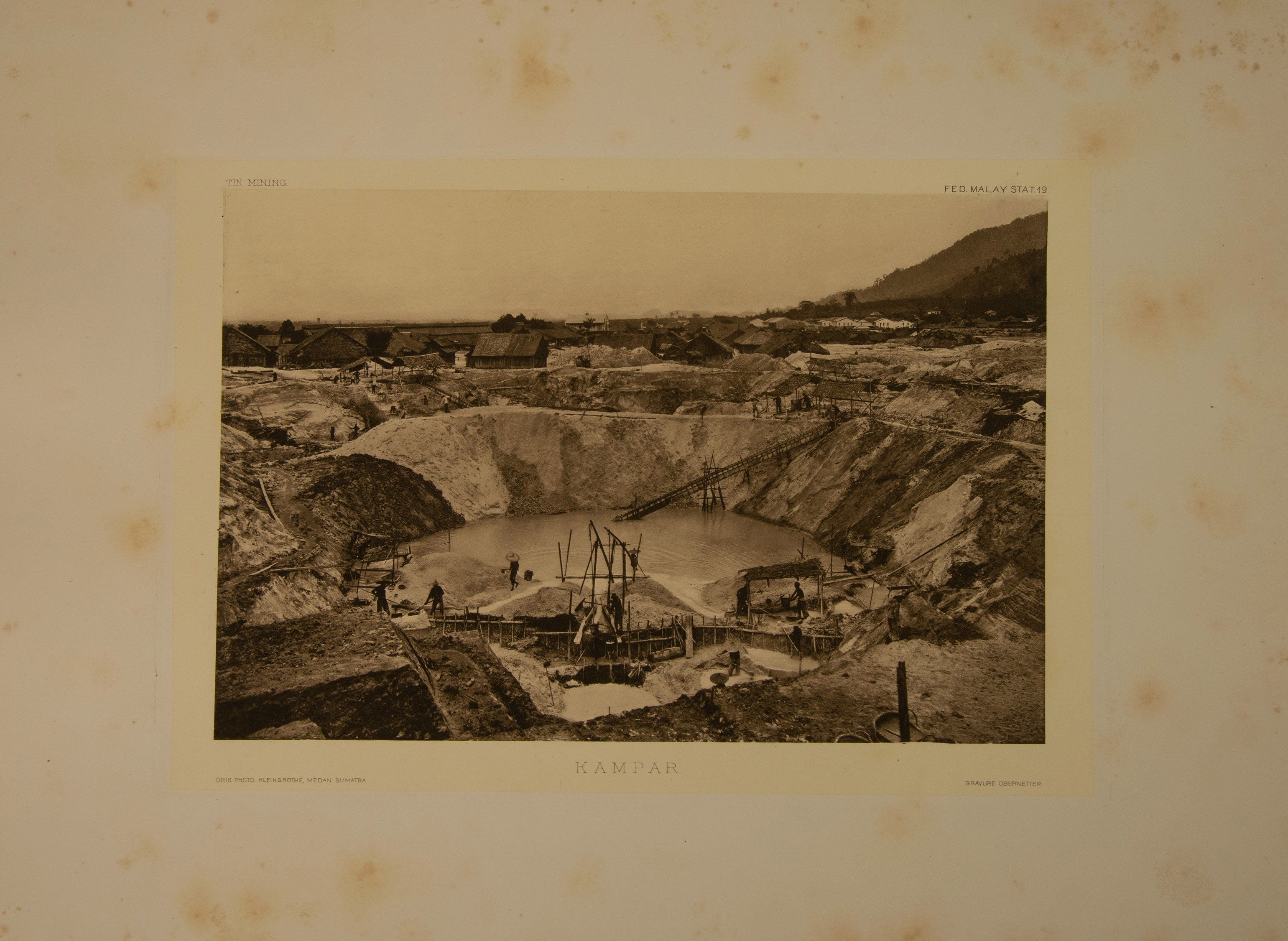
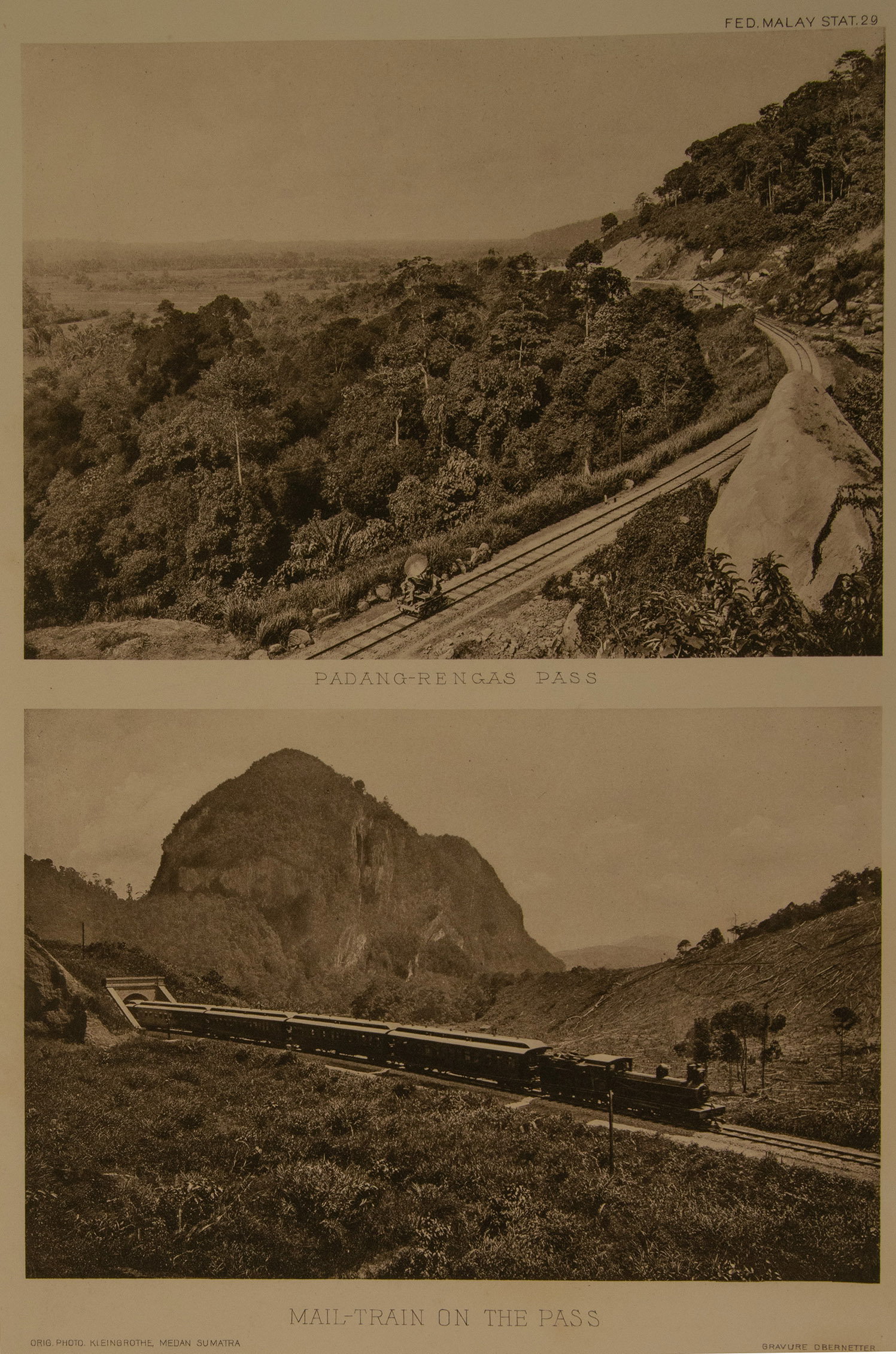
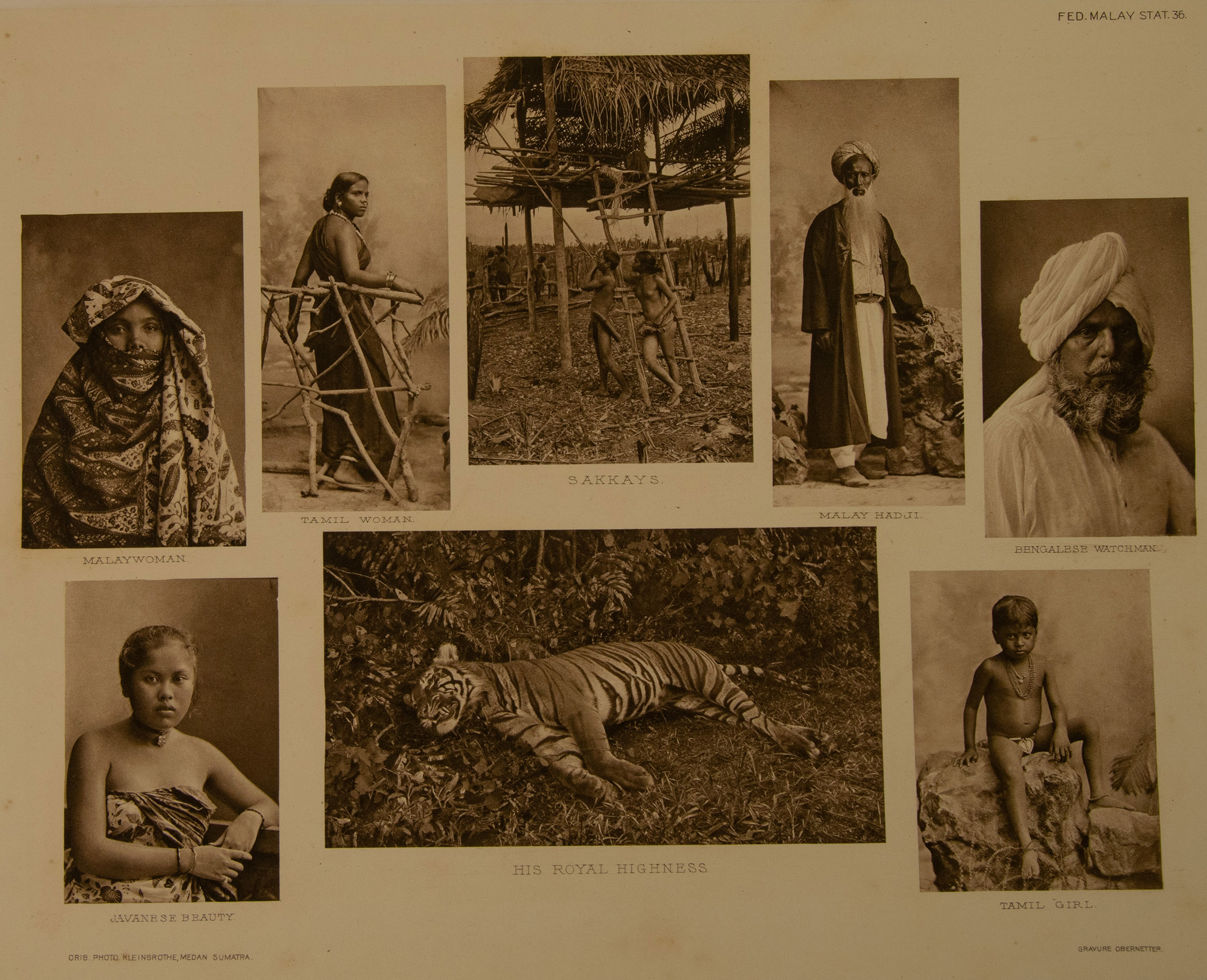
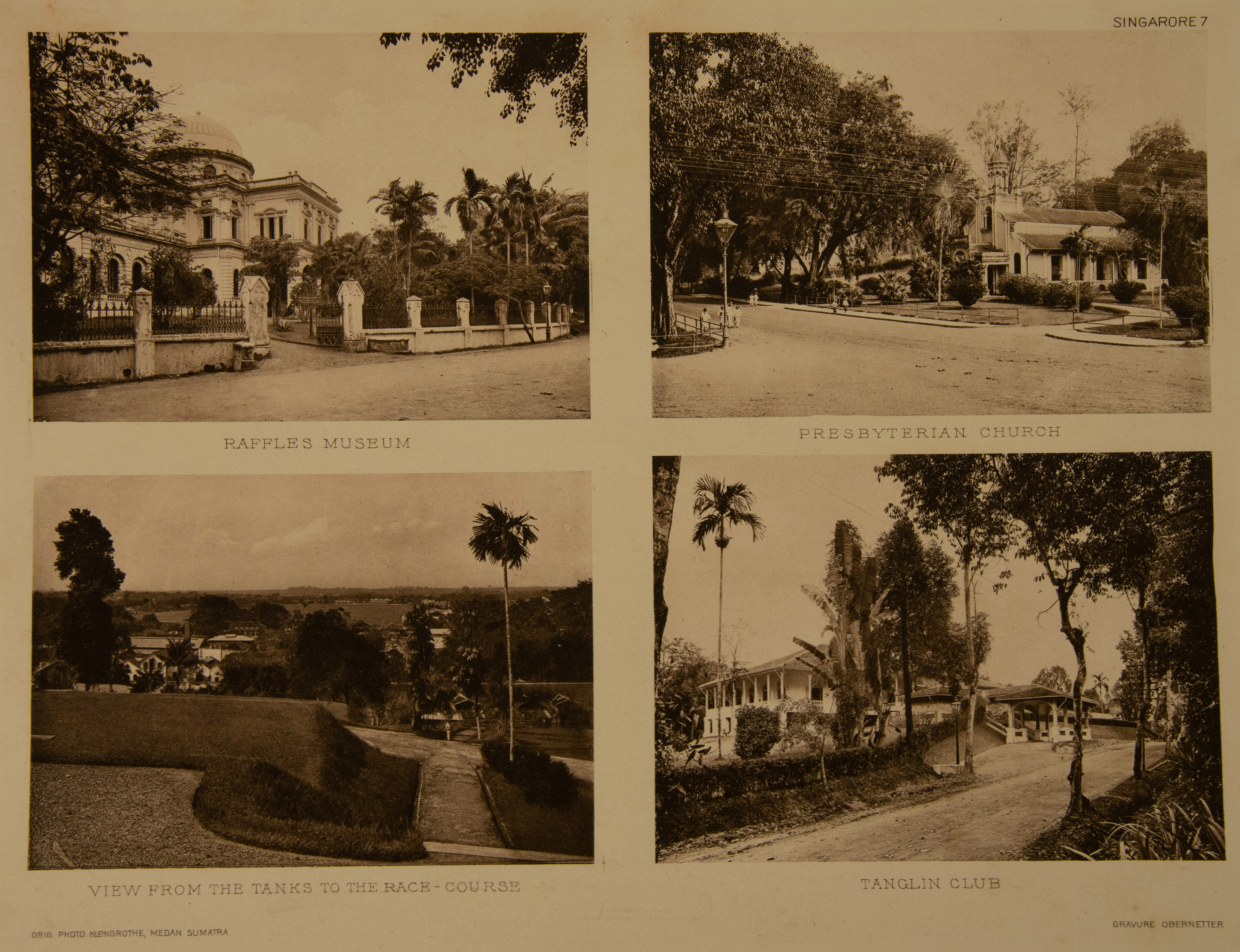
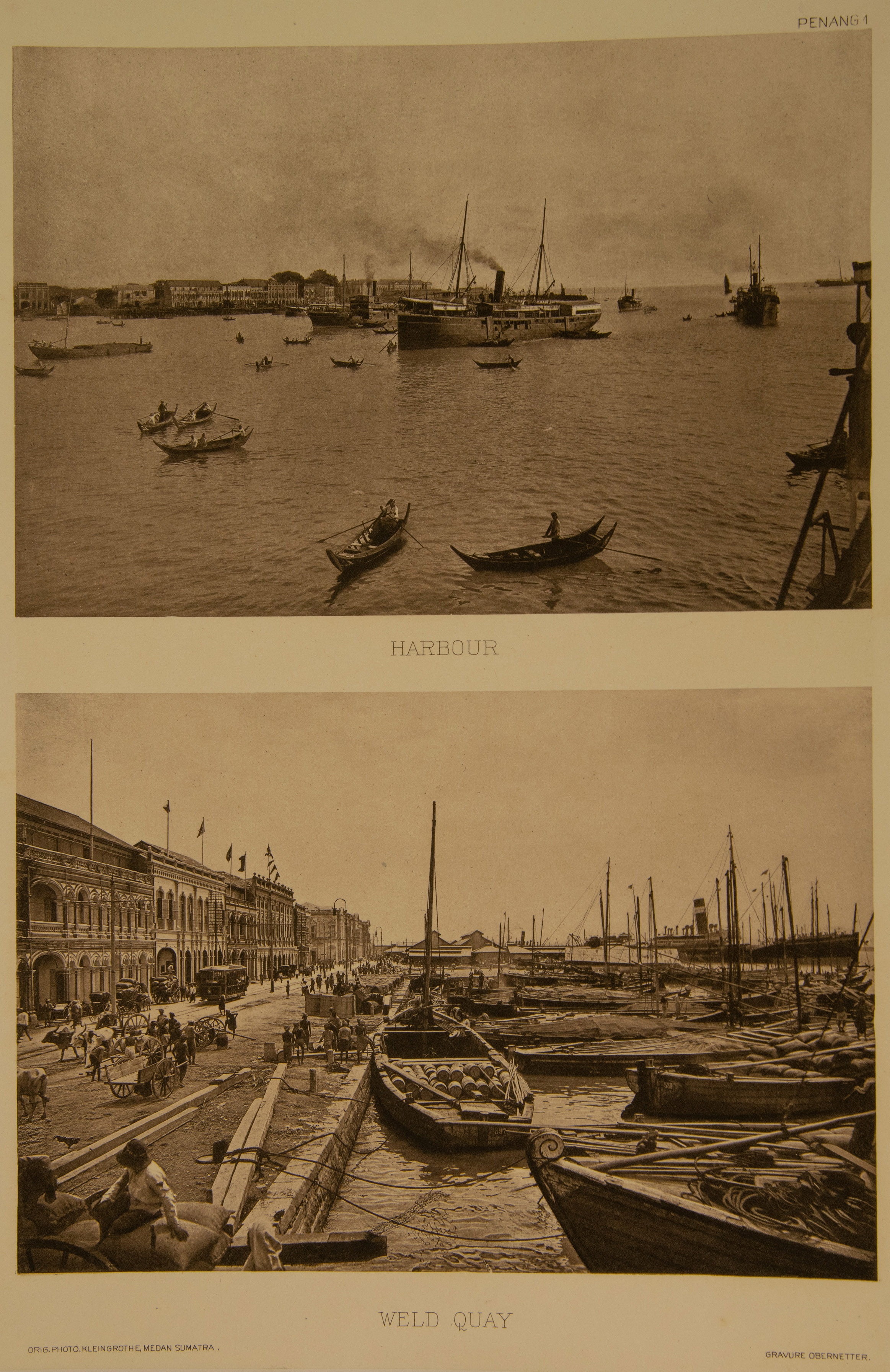
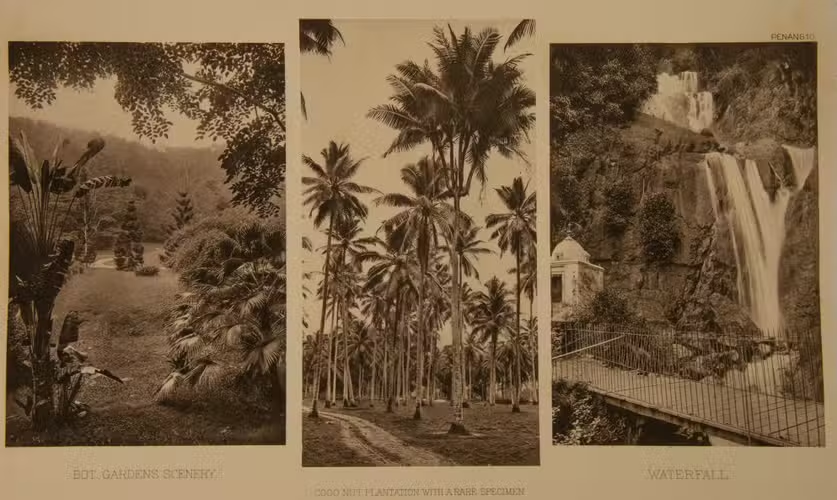
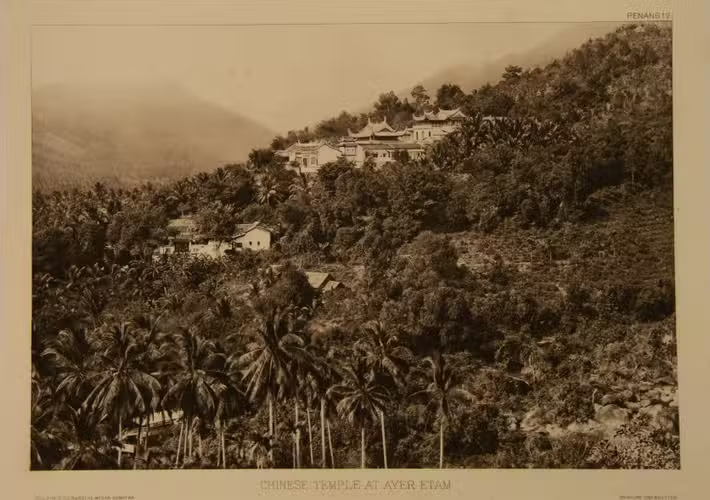
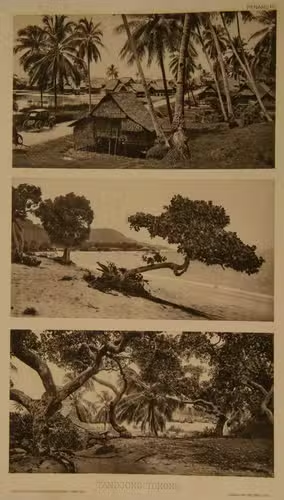
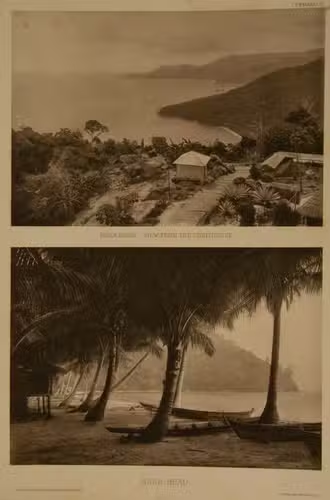
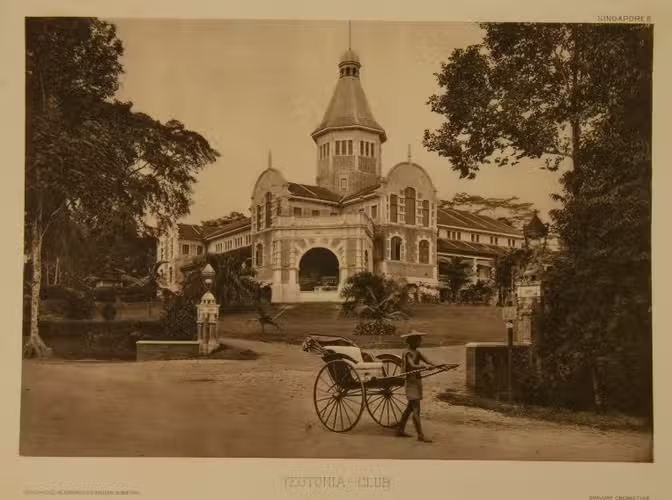
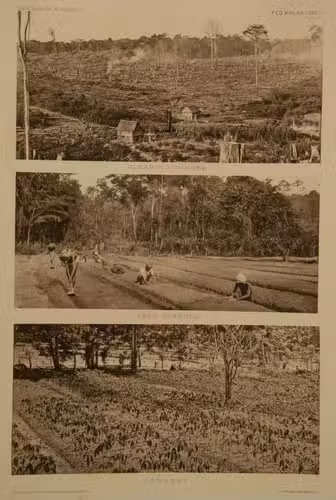
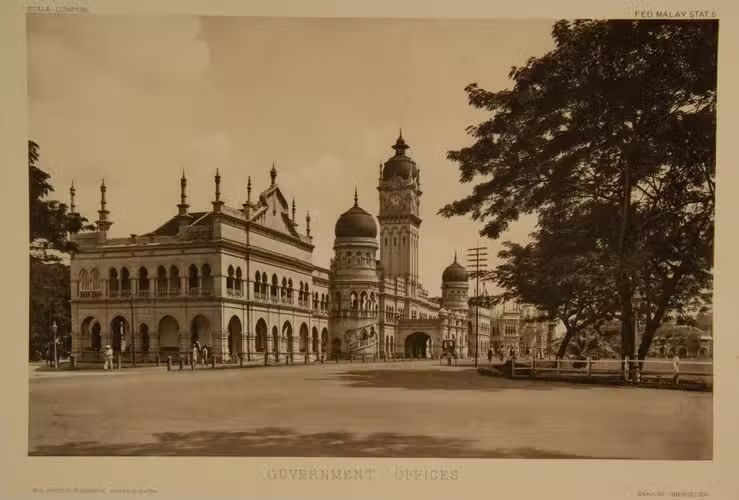
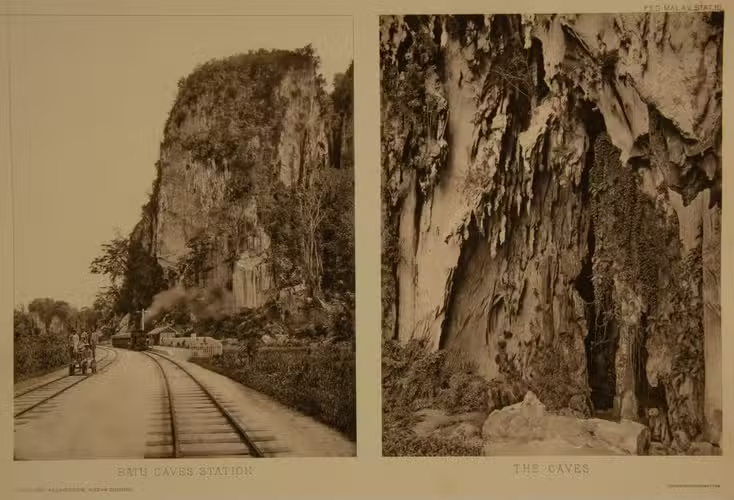
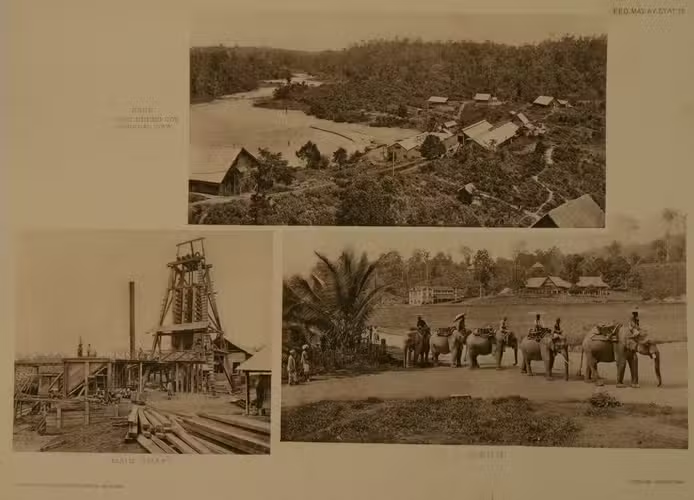
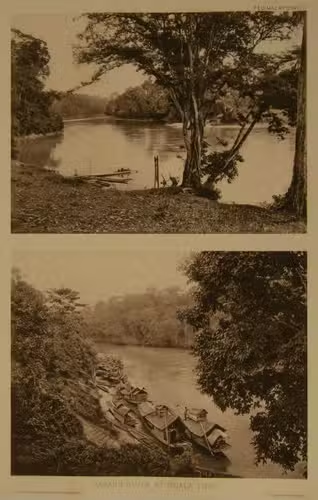
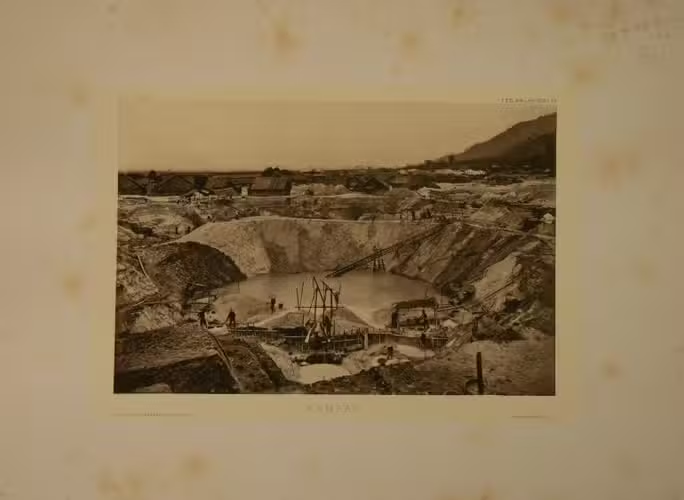
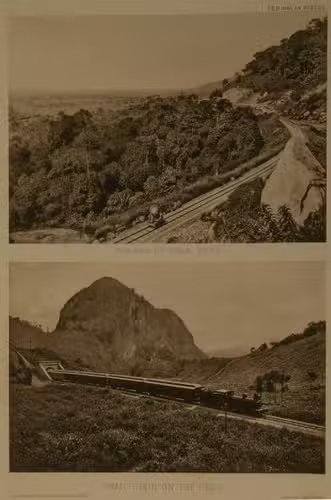
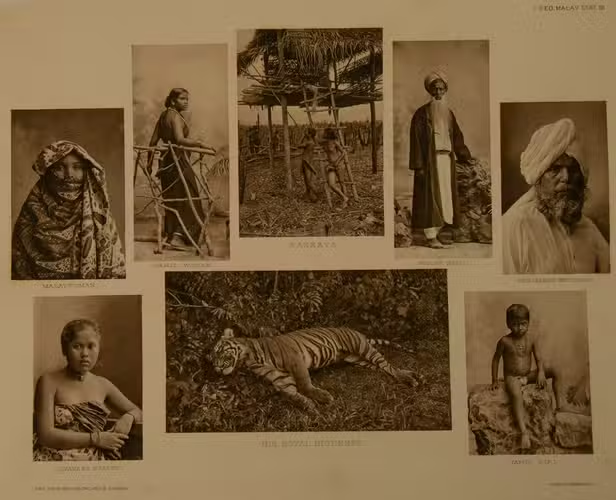
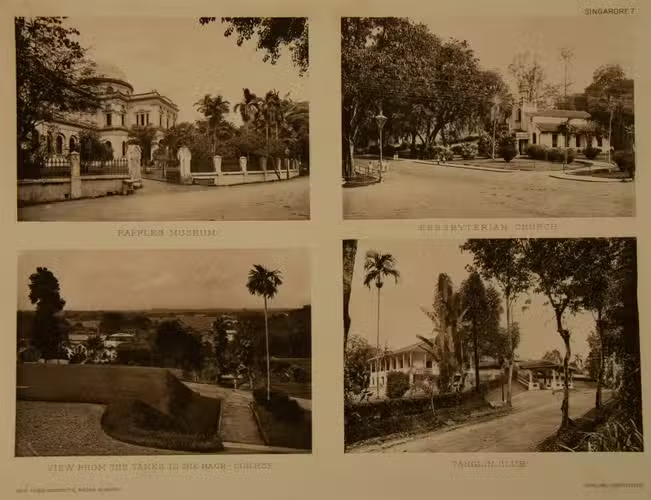
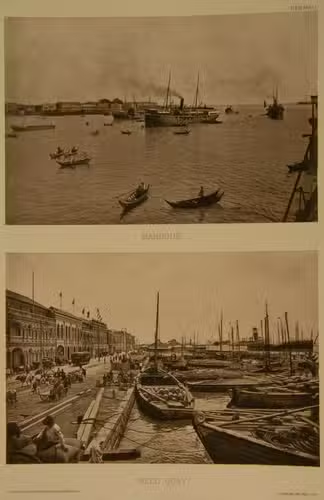
Rare and luxurious portfolio of photogravures depicting the Malay Peninsula just after the turn of the century, comprising of a title leaf, a map of the Malay Peninsula in colour, and 173 finely executed photogravures on 71 leaves. The plates show views of Penang (16 leaves with 35 photogravures), Malacca (1 leaf with 4 photogravures), Singapore (18 leaves with 45 photogravures), and the Federated Malay States (36 leaves with 89 photogravures), the latter also including an illustrated diagram of the fruit of the rubber tree.
The work offers an extensive visual survey of British Malaya in the early 20th century, with particular strength in its coverage of the Federated Malay States. The plates encompass a wide range of topographical, architectural, and industrial subjects, including views of Port Dickson, Raub in Pahang, Ipoh, Taiping, Sungei Besi, the Batu Caves, and the Menara Condong at Teluk Intan, as well as scenes of what is now Merdeka Square in Kuala Lumpur. Numerous images document the region's economic foundations, depicting tin and gold mining operations alongside rubber, sugar, and coffee plantations, while others record palaces of Sultans, mosques, and urban streetscapes, together forming a varied visual record.The German photographer Charles J. Kleingrothe (1864-1925), was among the most accomplished commercial photographers working in Southeast Asia at the turn of the century. Having worked with the prominent Singapore firm G.R. Lambert & Co., he later established himself in Medan, Sumatra, between 1889 and 1925 where he produced extensive photographic documentation of plantation economies and colonial infrastructure. His images of the Dutch East Indies and British Malaya are highly desirable collector's items. Photogravure was the most refined method of photographic printing available at the time, involving the transfer of a photographic image onto a copper plate and its subsquent printing by hand. The process yields prints which are entirely free of mechanical screen patterns and has long been valued for its ability to convey the full range of photographic detail with unusual depth. The printed captions and imprint details in the margins of the photographs credit Obernetter, most likely referring to the printing company of Johann Baptist Obernetter. In a work such as the present, this technique lends a particular coherence to the series as a whole, uniting its varied subjects within a consistent visual language that is both descriptive and atmospheric.
The portfolio shows clear signs of wear, mainly around the spine and corners of the boards and the tabs extending over the edges, and with a tear in the cloth of the tab extending over the top edge. The front board is somewhat rubbed, affecting the gold-stamping and the image of the trapped tiger, foxed throughout. Otherwise in good condition.
Related Subjects: