BODIUS, Hermann.
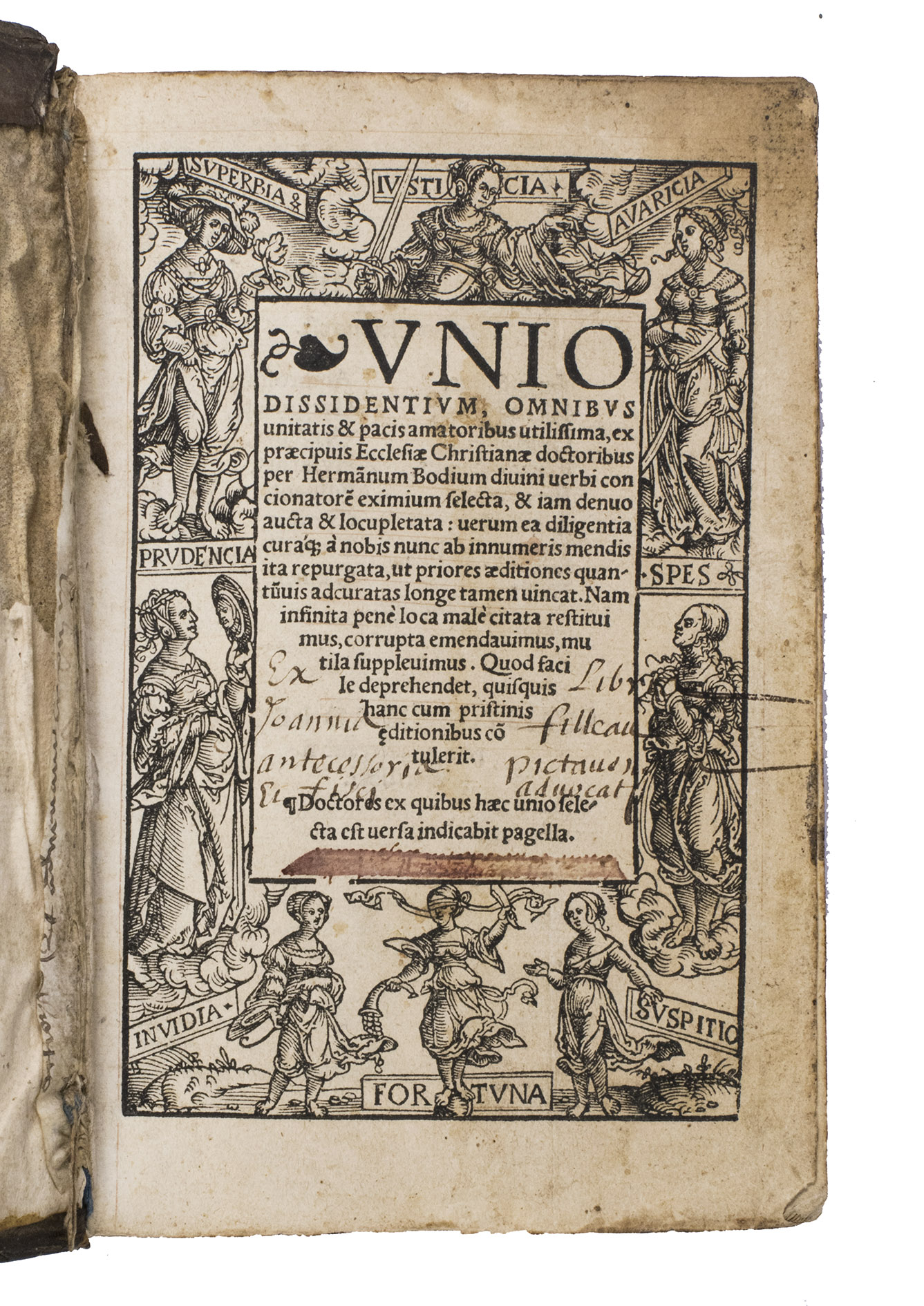
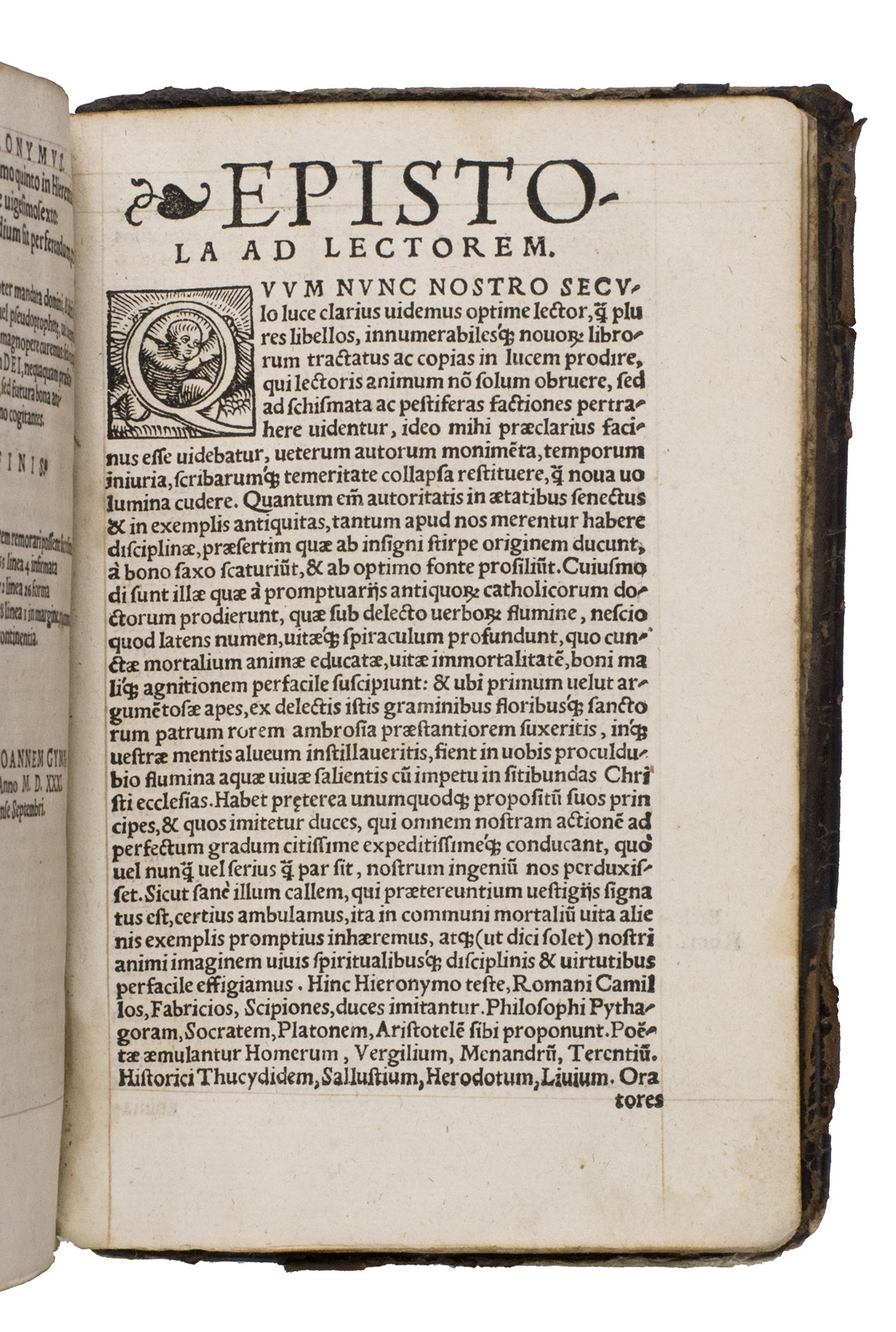
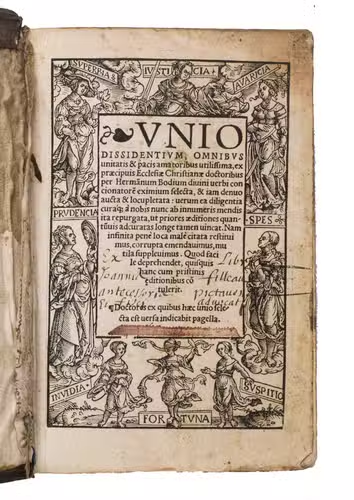
Unio dissidentium, omnibus unitatis & pacis amatoribus utilissima, ex praecipuis Ecclesiae Christianae doctoribus ... selecta, & iam denuo aucta & locupletata ...
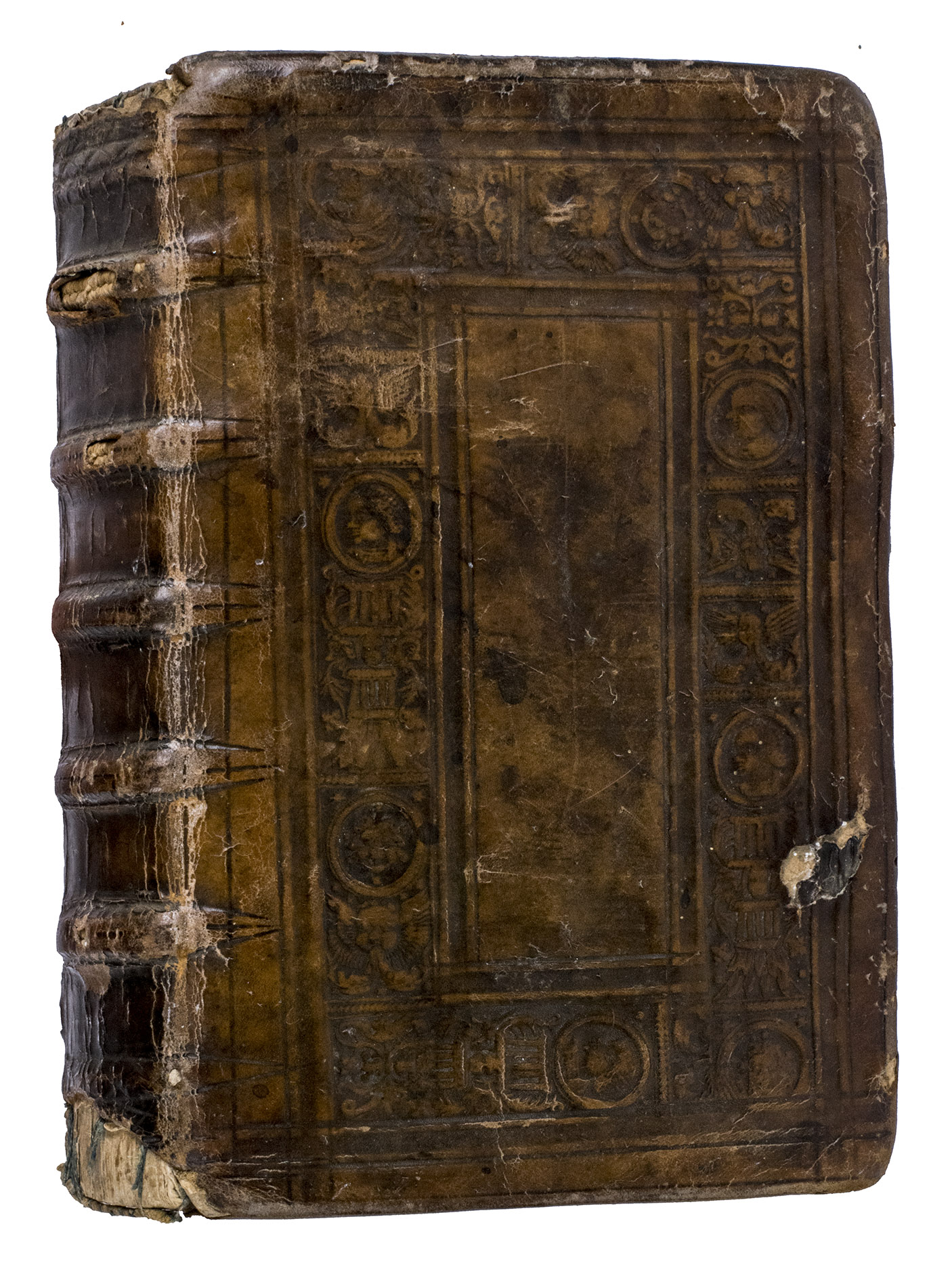
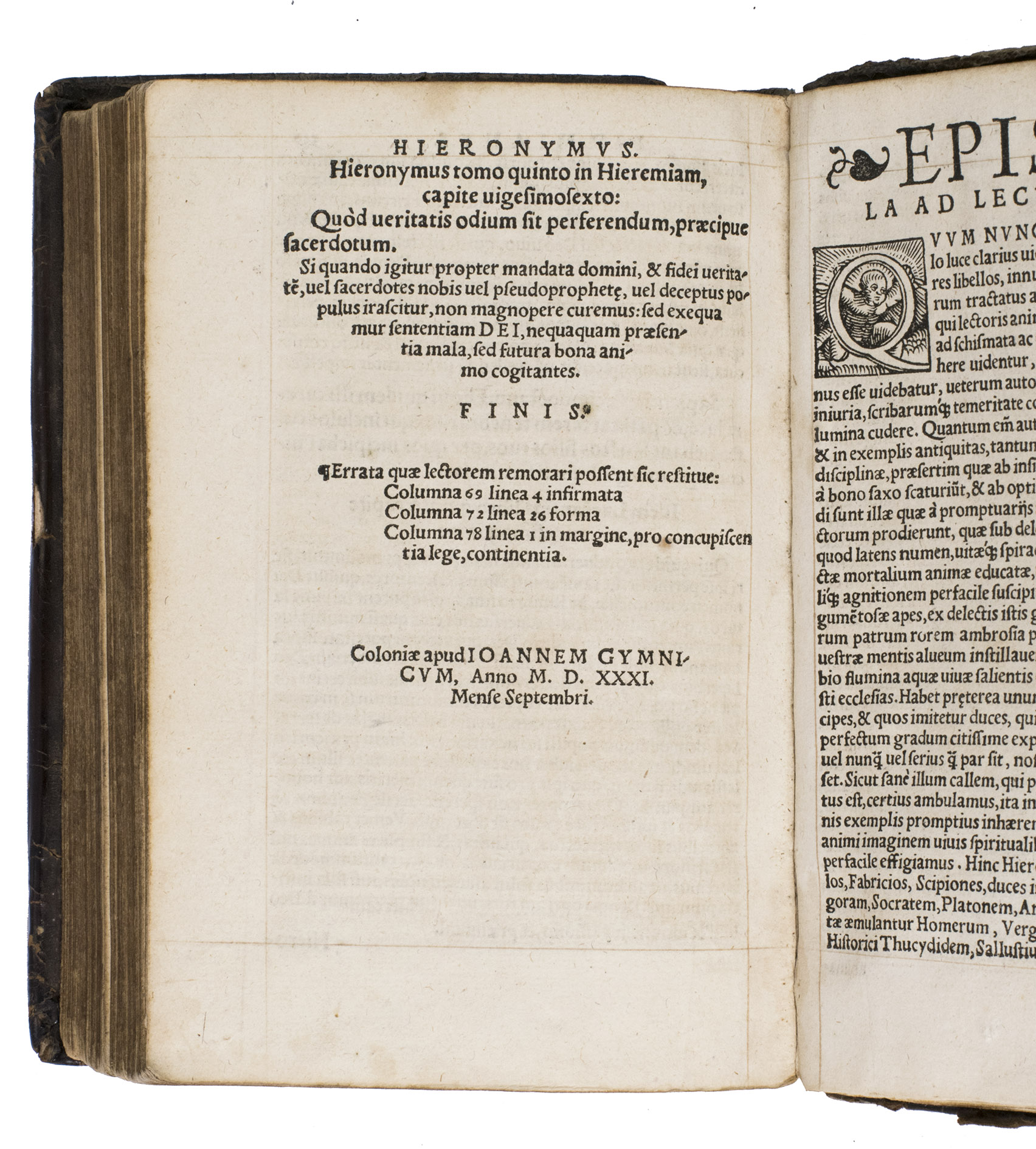
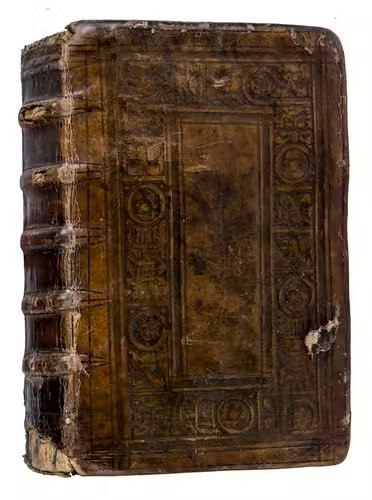
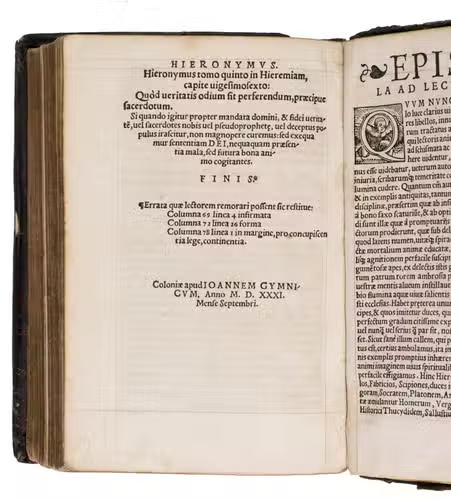
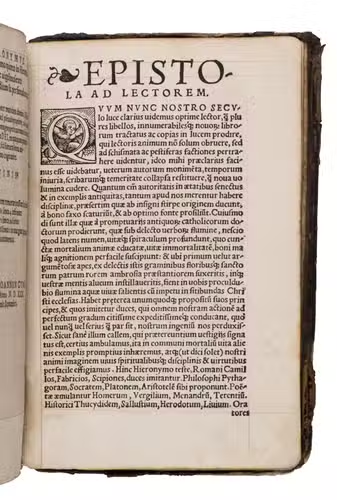
(Colophon:) Cologne, Johann Gymnich, September 1531. 8vo (15.1 x 10.1 cm). With a woodcut title frame. Contemporary blind-tooled calf. [32], 539, [4], [1 blank] pp.
€ 2,750
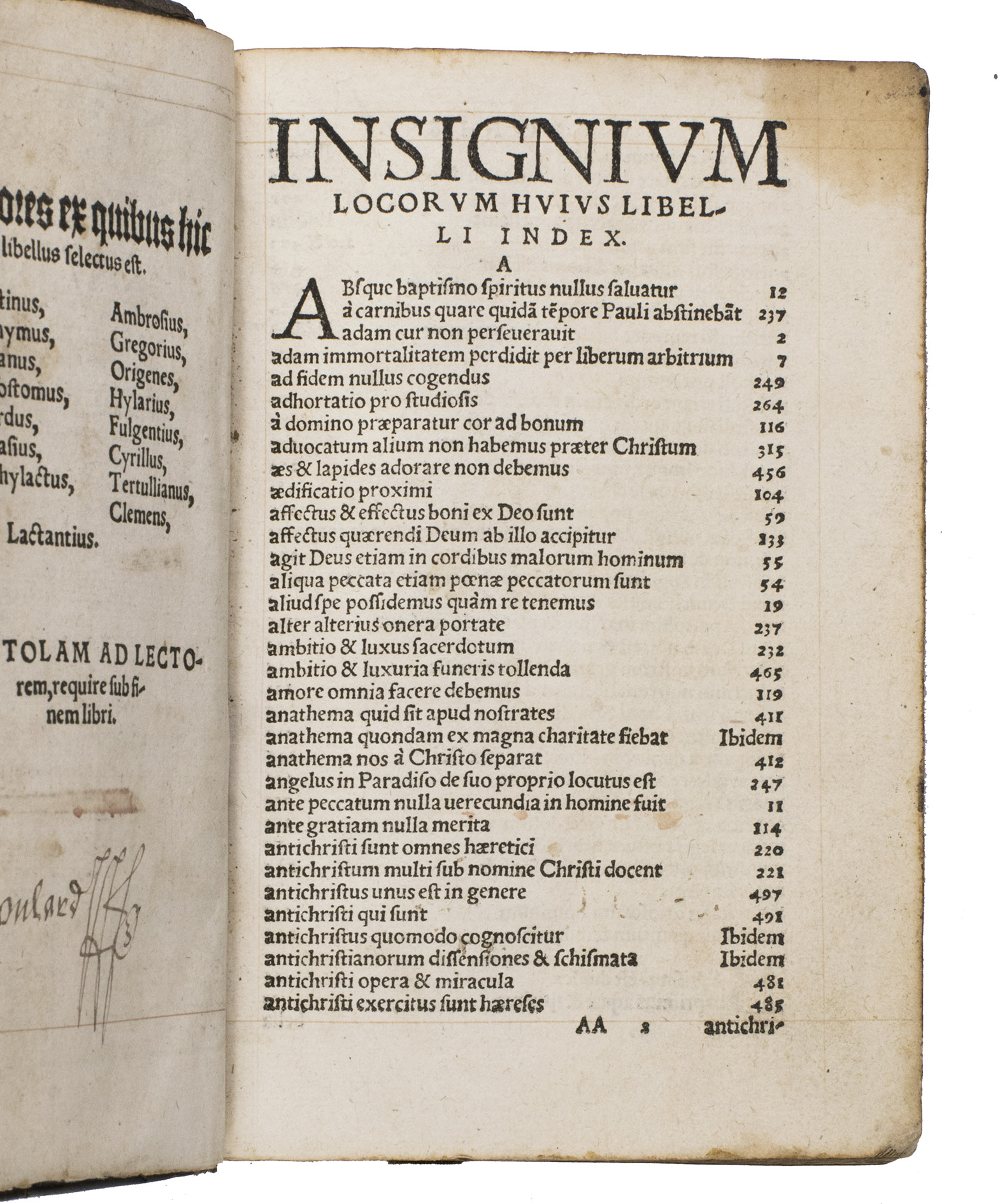
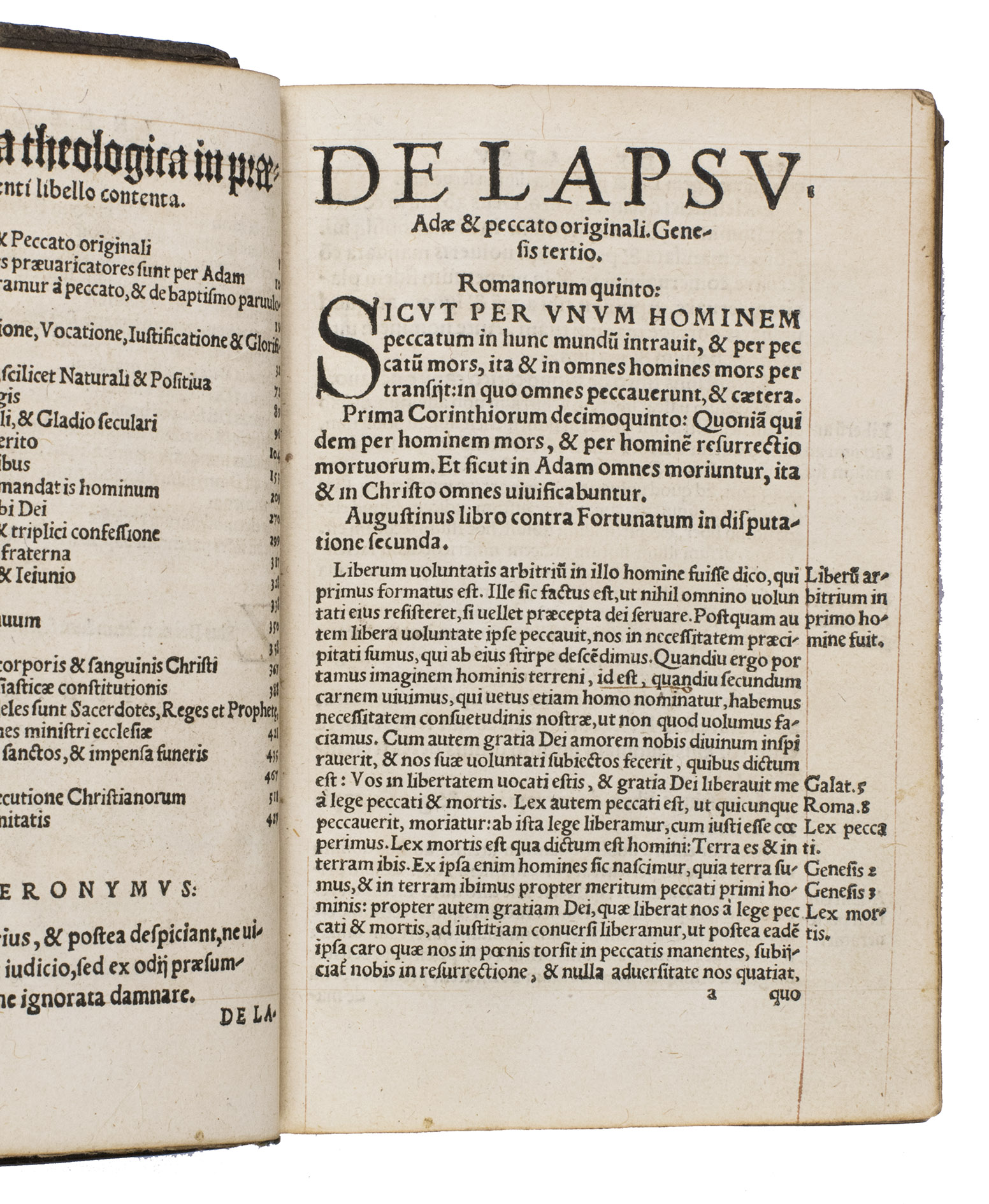
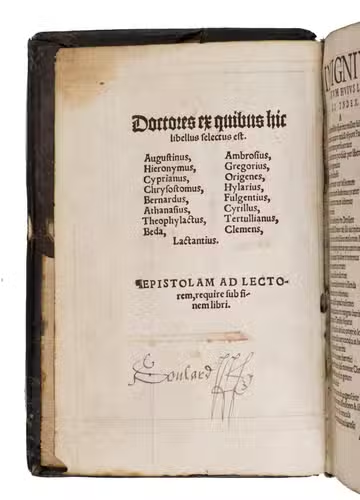
Early Cologne edition of one of the most intriguing irenical works of the early Reformation. The present work is the Unio dissidentium, and represents an early and expanded state of a work first published in Antwerp in 1527. The Unio dissidentium is a substantial irenical treatise in systematic theology, conceived as an attempt to reconcile the opposing confessional positions that divided Christendom in the first decades of the Reformation. Its compiler assembled an impressive body of biblical passages alongside nearly 550 quotations from the Church Fathers, many of them extensive, situating the work firmly within the Humanist revival of patristic theology associated with figures such as Erasmus (1469-1536) and Beatus Rhenanus (1485-1547).
The author, who names himself Hermann Bodius, remains one of the most elusive figures of 16th-century religious literature. His name does not appear in modern biographical dictionaries, and even his nationality is uncertain. From an early date it was suspected that Bodius might be a pseudonym. Scholars have variously identified him with Martin Bucer (1491-1551) or with Joannes Oecolampadius (1482-1531), while others have suggested a Dutch theologian otherwise unknown to history. The consistent Antwerp origin of the earliest editions, both Latin and French, has led several scholars to favour a Netherlandish provenance for the author.
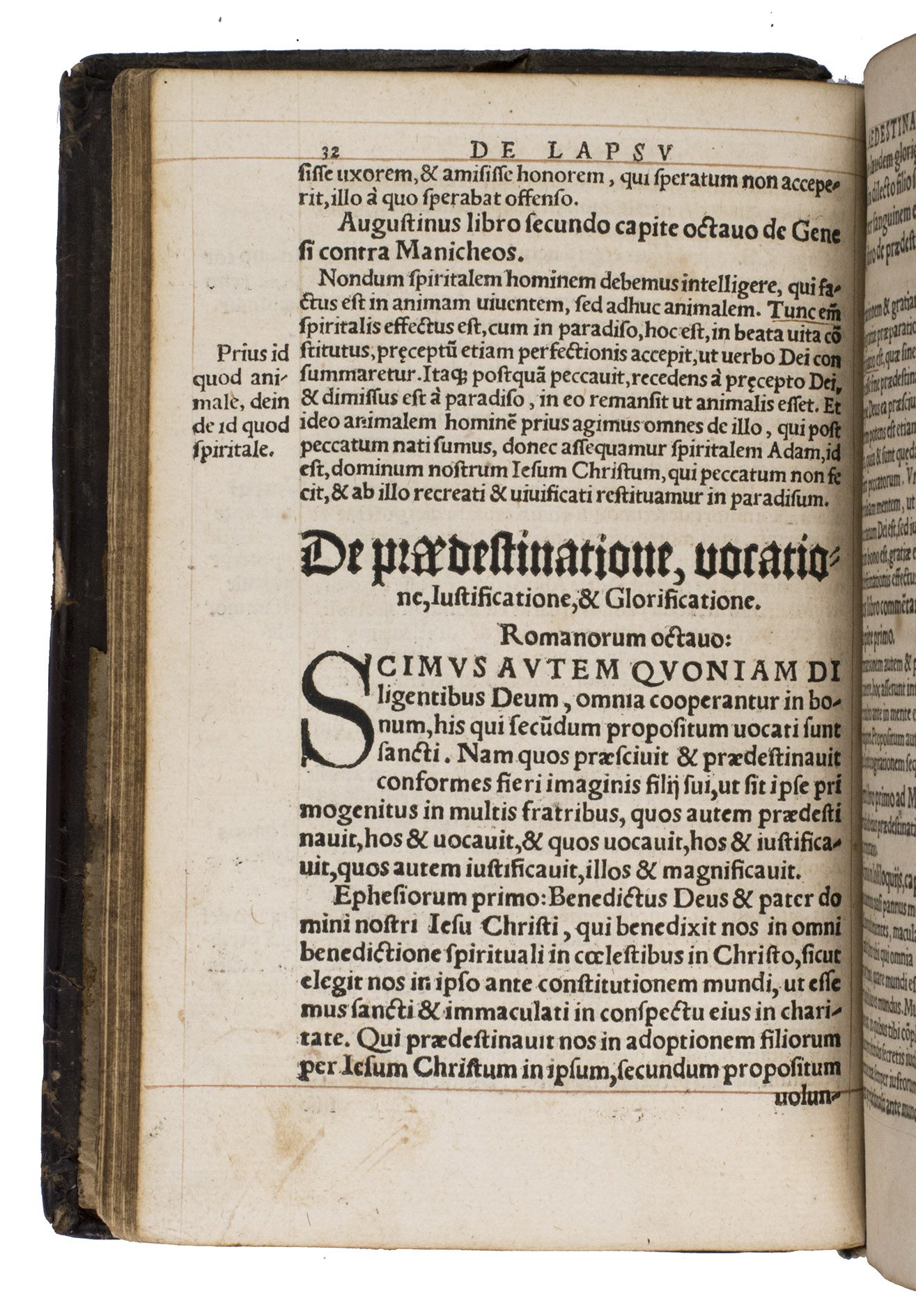
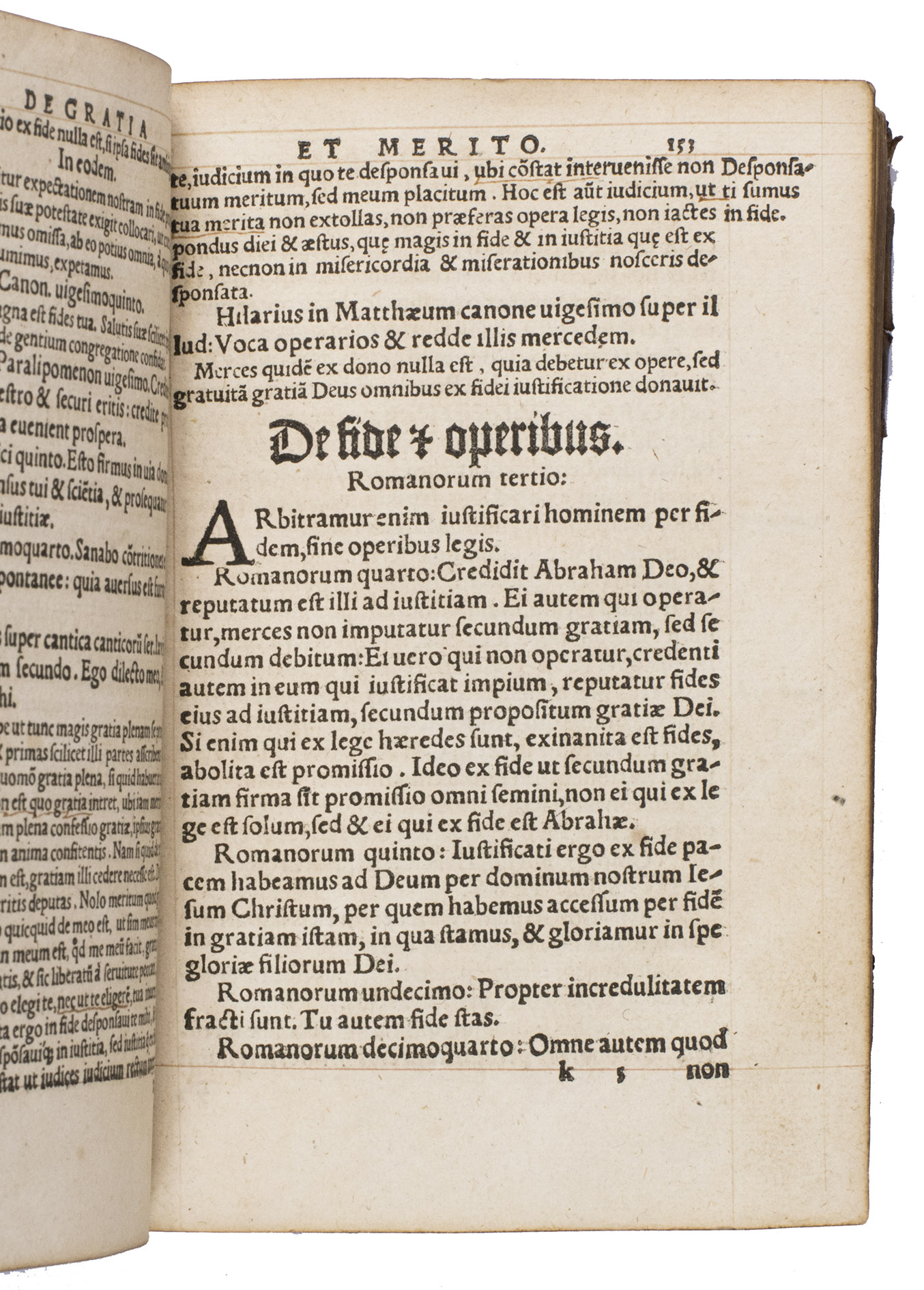
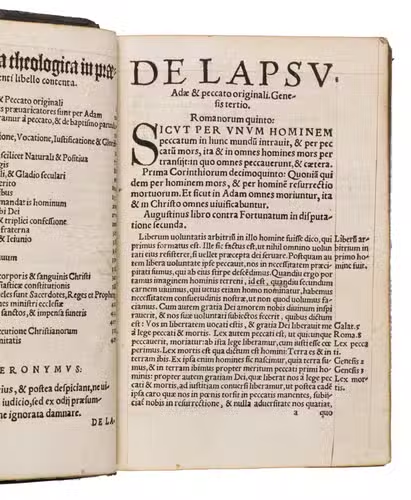
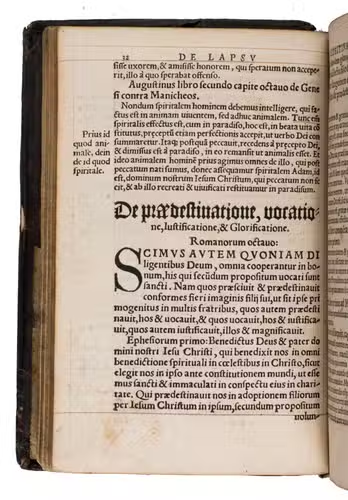
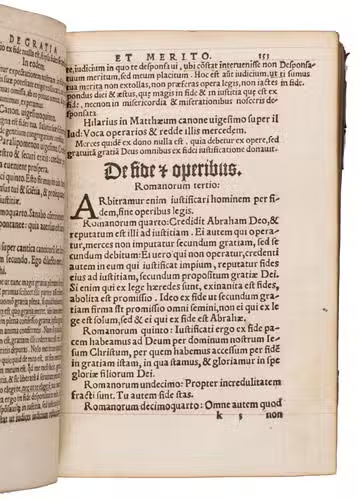
The first edition appeared in March 1527, followed later that year by the second. From 1531 onwards, editions were augmented by three additional sections, including a tract attributed to Pseudo-Augustine (De essentia divinitatis). Despite its conciliatory intent, the Unio dissidentium provoked swift and sustained hostility from ecclesiastical authorities. Theologically, the Unio dissidentium addresses the major controversies of its age- original sin, baptism, predestination, law and grace, faith and works, the Eucharist, ecclesiastical authority, and the nature of Antichrist- while consistently striving for moderation and reconciliation. Its extensive use of patristic sources gives it particular importance in the history of early modern theology, placing it at the intersection of Humanism and reform.
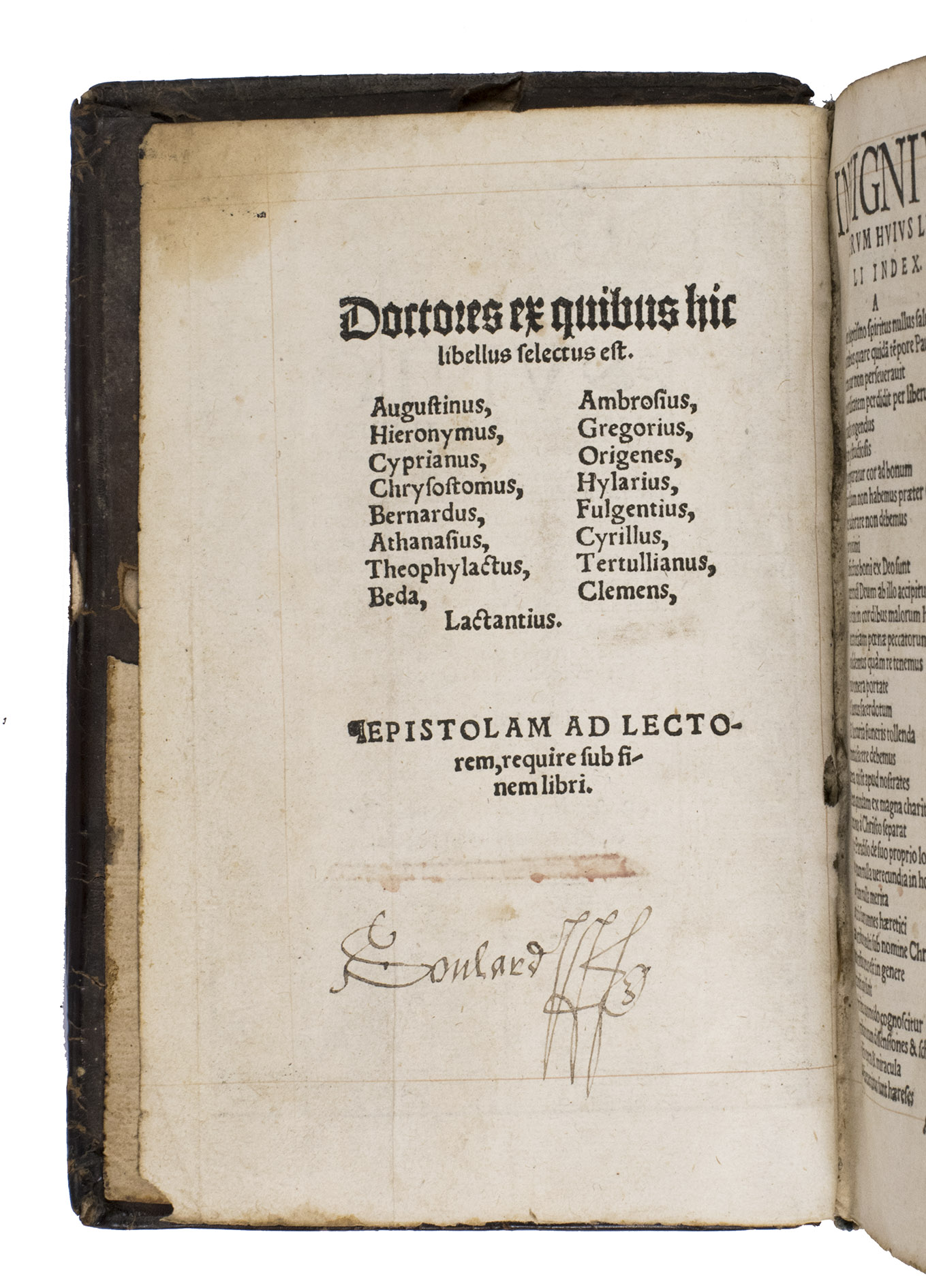
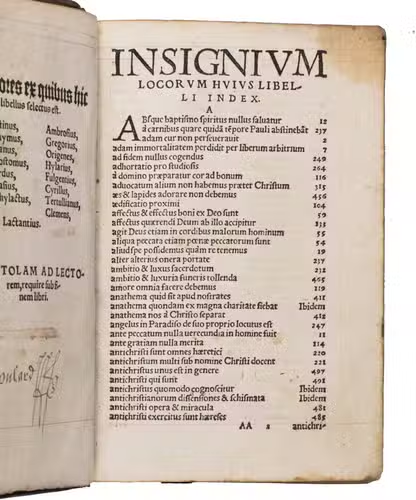
With early owners inscriptions on the title page and its verso, as well as on the final pastedown, including the name Franciscus Soulard. The title page bears a partly legible ownership inscription ("ex joannu antecessoria et fisco liber ... advocat"), with a further inscription entirely crossed out; the verso of the title page is inscribed ("Soulard..."). Further with occasional marginal annotations, the text is ruled in ink throughout. The spine and corners show damage and wear, with minor staining. Otherwise in good condition. BM STC German p. 134; Kronenberg, "Het Boek", 34, (1960/61), pp. 1-11; NUKAT xx001538065; Peters, "Who Compiled the Sixteenth-Century Patristic Handbook Unio Dissidentium?", Studies in Church History, 2, (1965), pp. 237-250; USTC 701804; not in Adams.
Related Subjects: