AMPHIAREO DA FERRARA, Vespasiano.
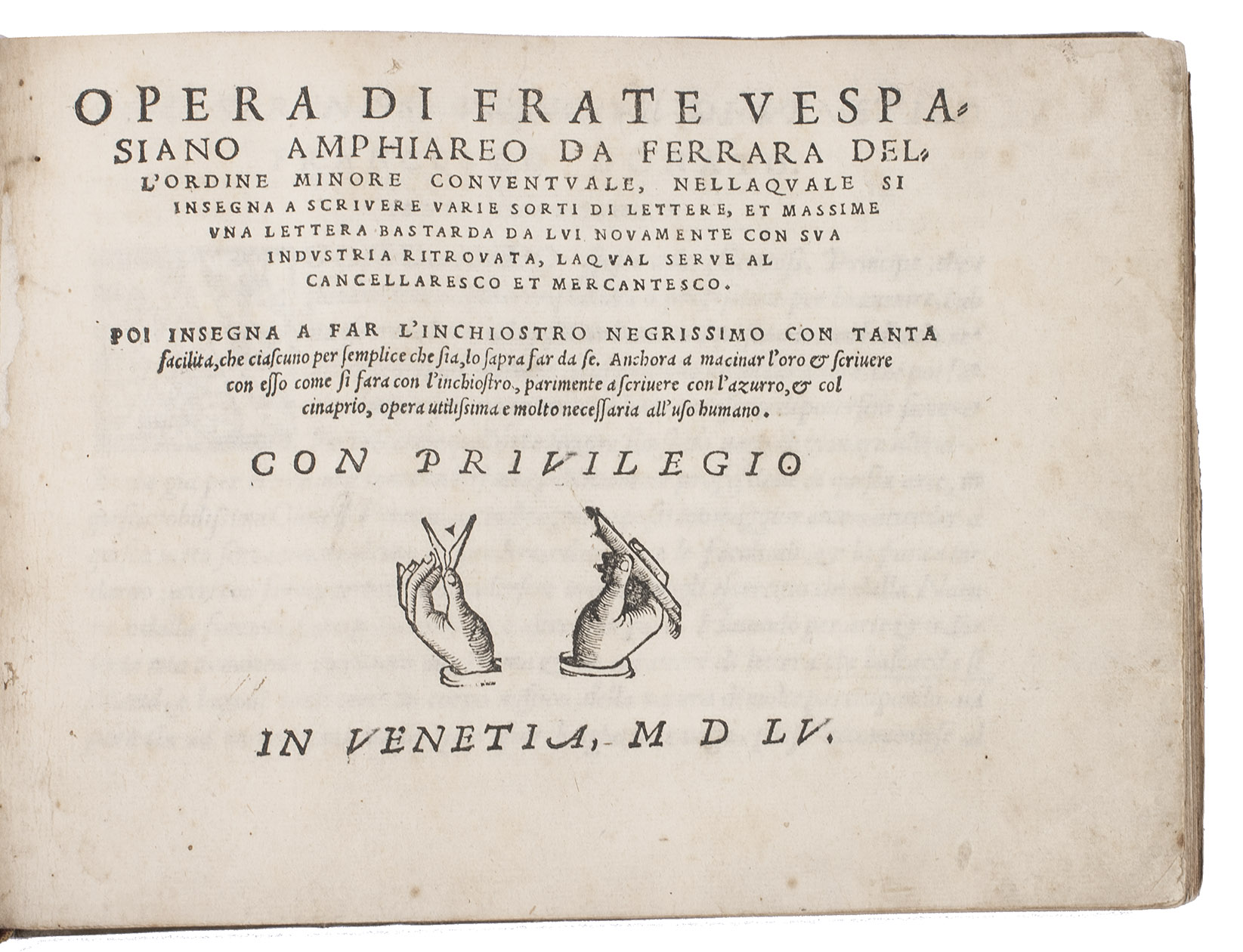
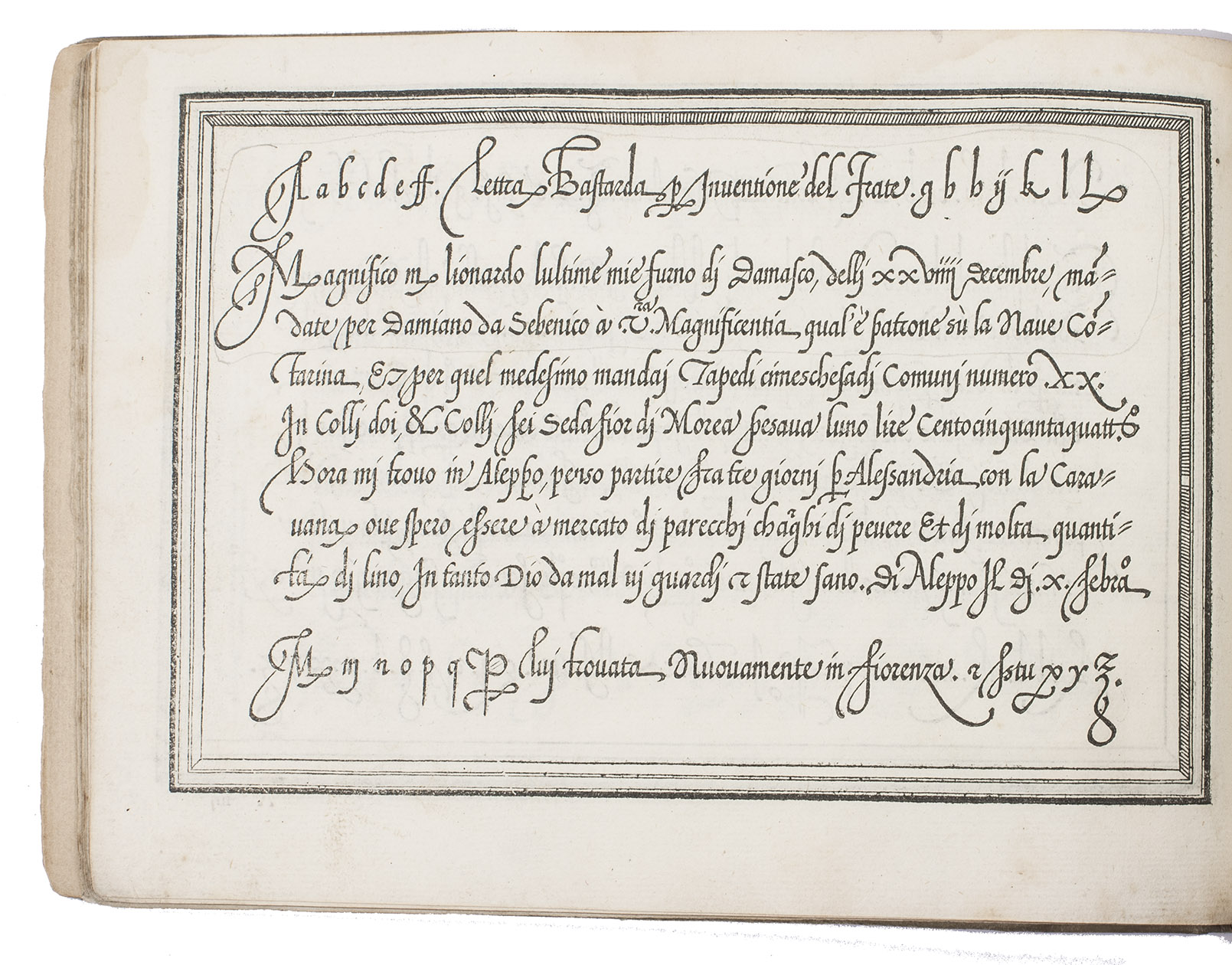
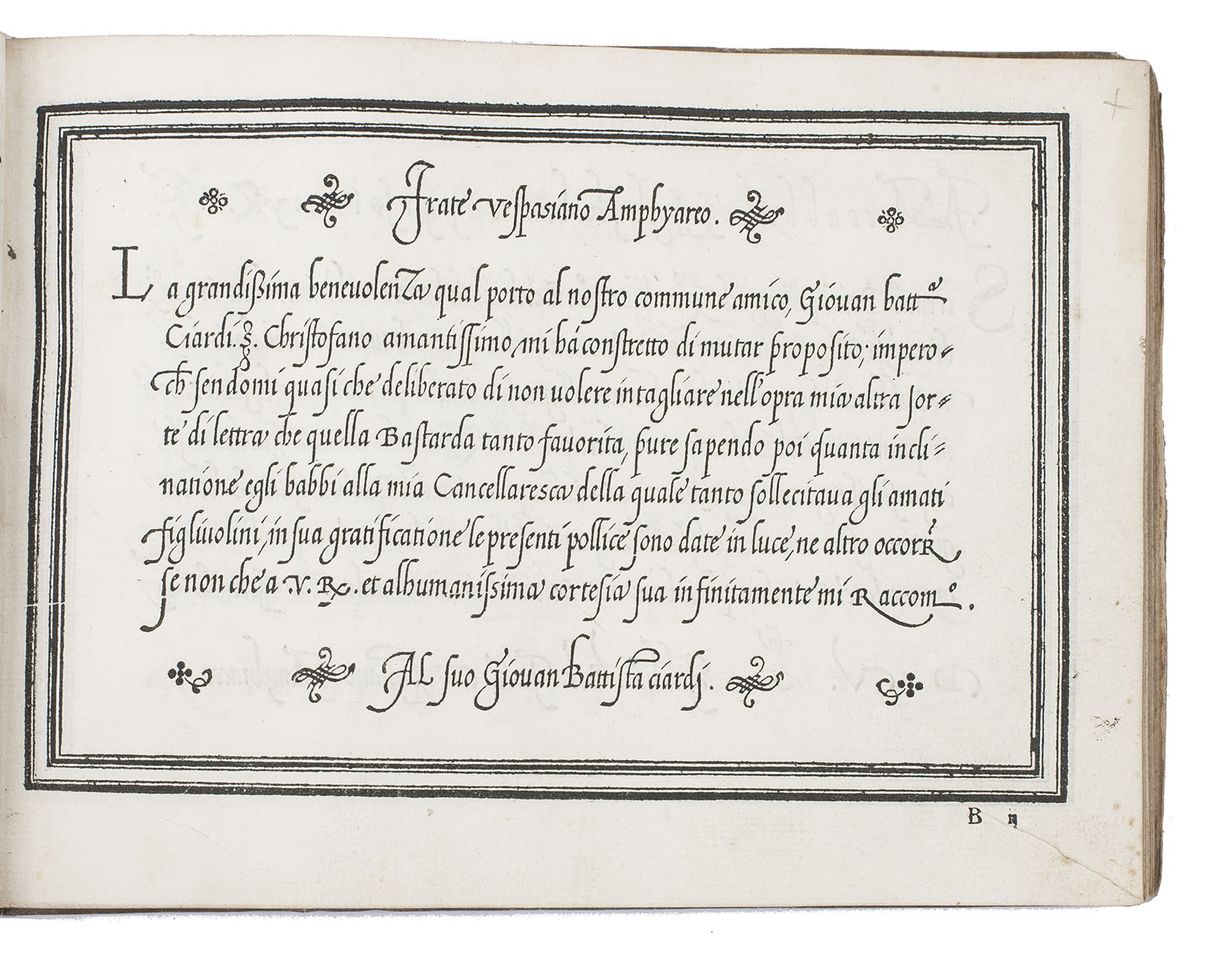
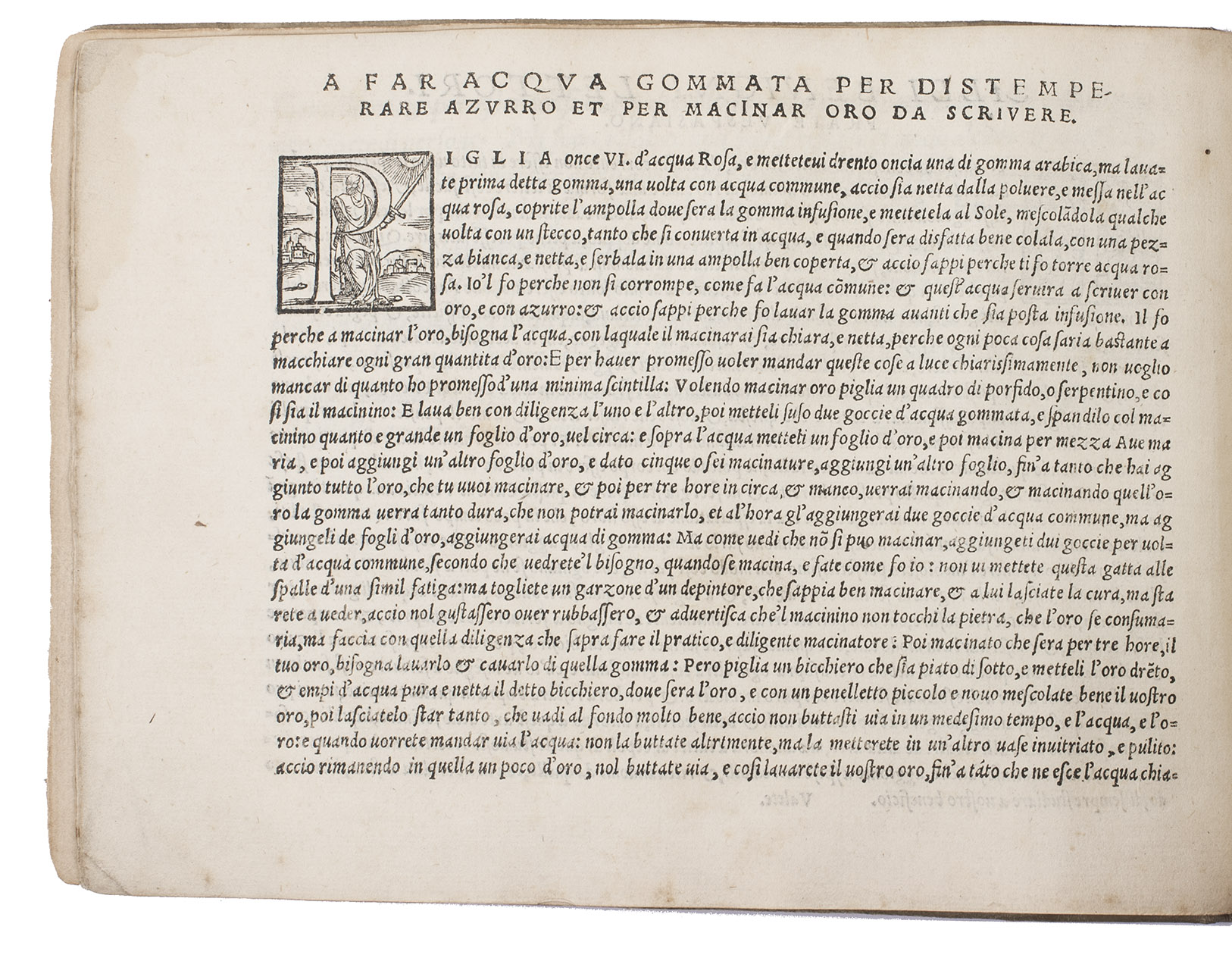
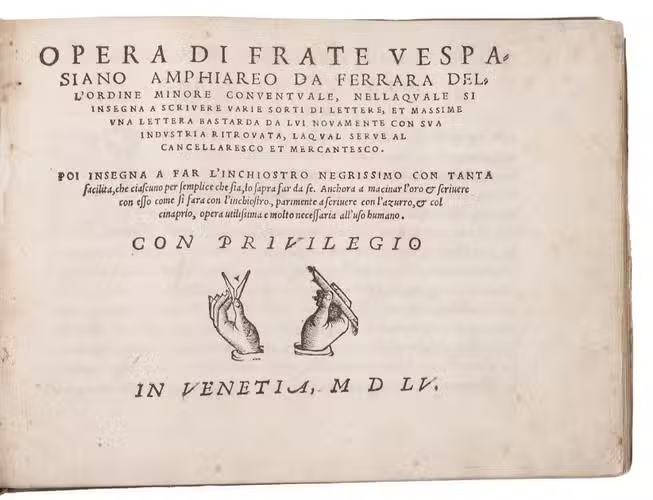
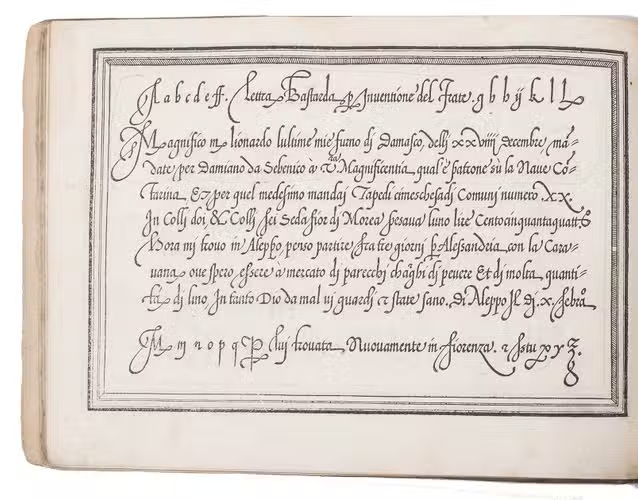
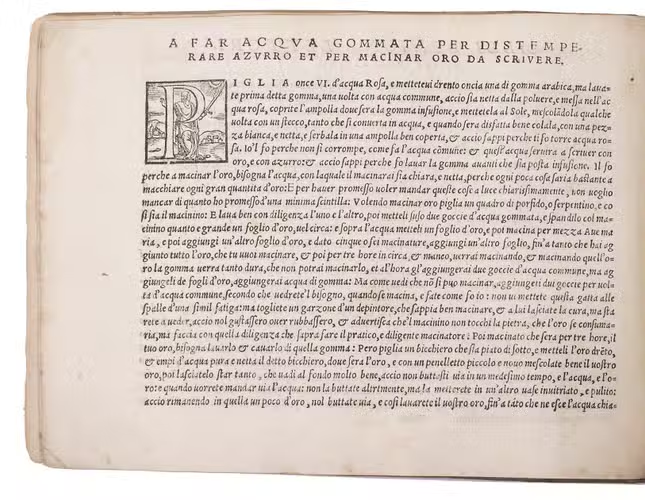
Opera, nella quale si insegna a scrivere varie sorti di lettere, et massime una lettera bastarda da lui novamente con sua industria ritrovata, laqual serve al cancellaresco et mercantesco. Poi insegna a far linchiostro negrissimo con tanta facilita, che ciascuno per semplice che sia, lo sapra far da se. Anchora a macinar loro & scrivere con esso come si fara con linchiostro, parimente a scrivere con lazurro, & col cinaprio, opera utilissima e molto necessaria alluso humano.
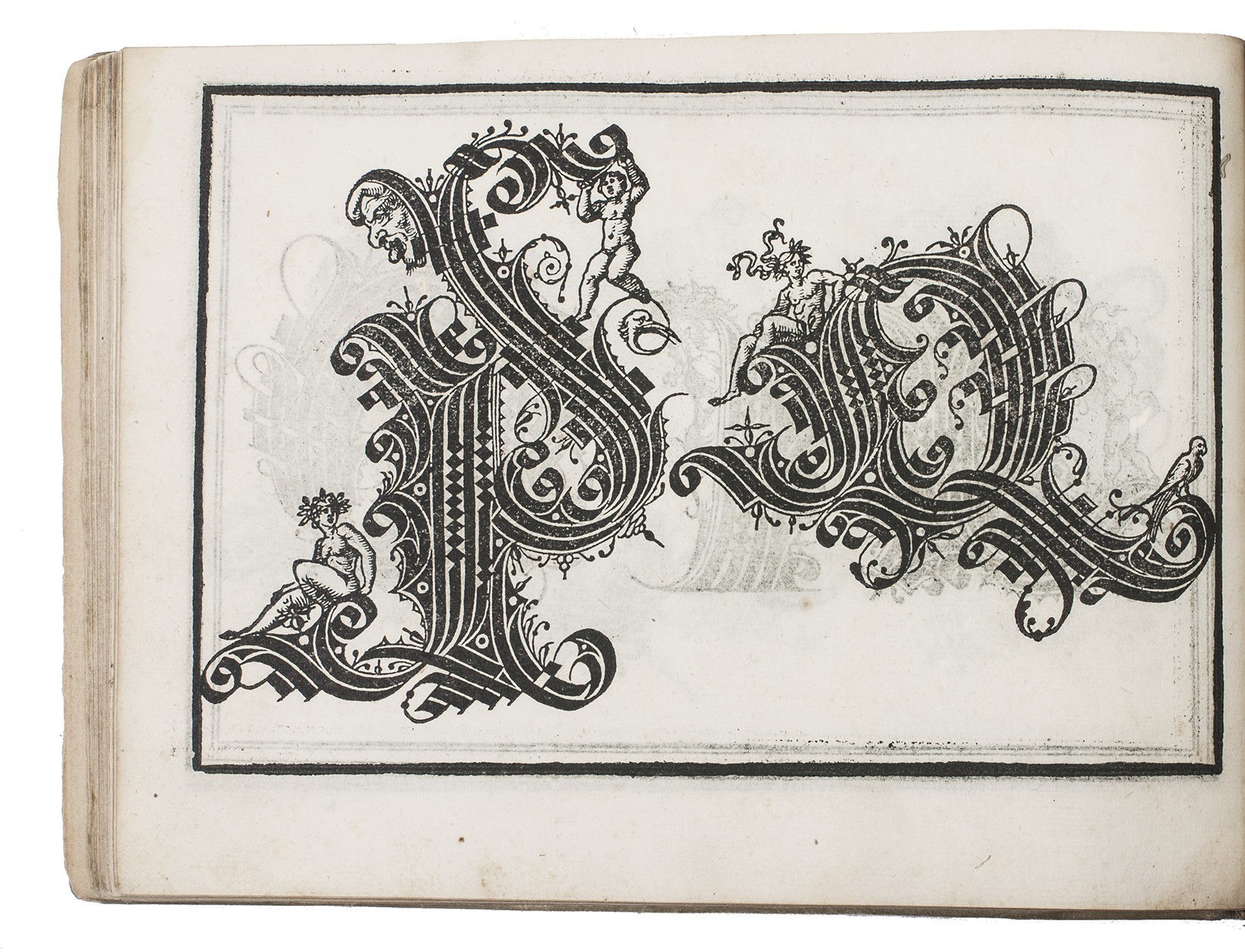
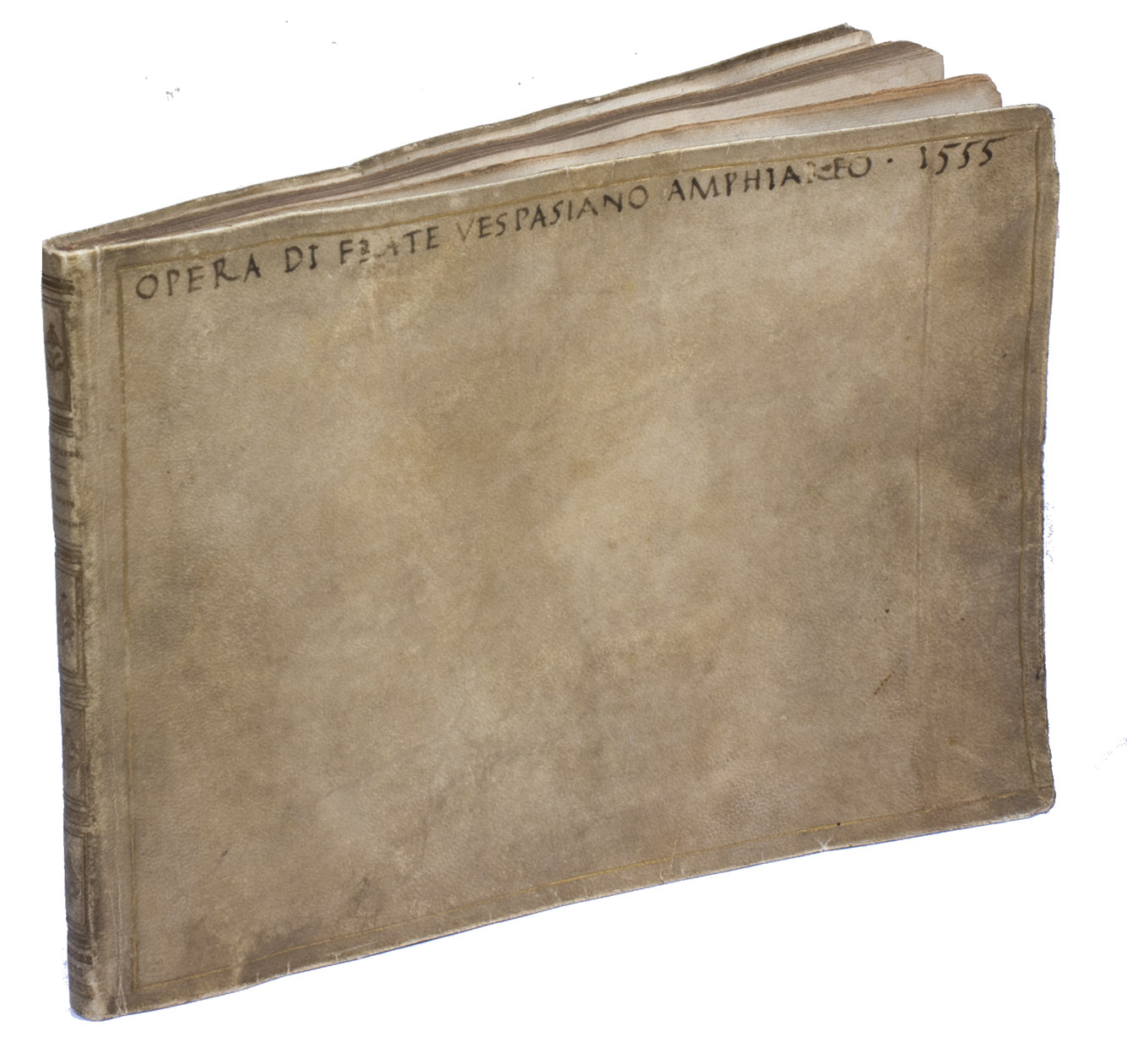
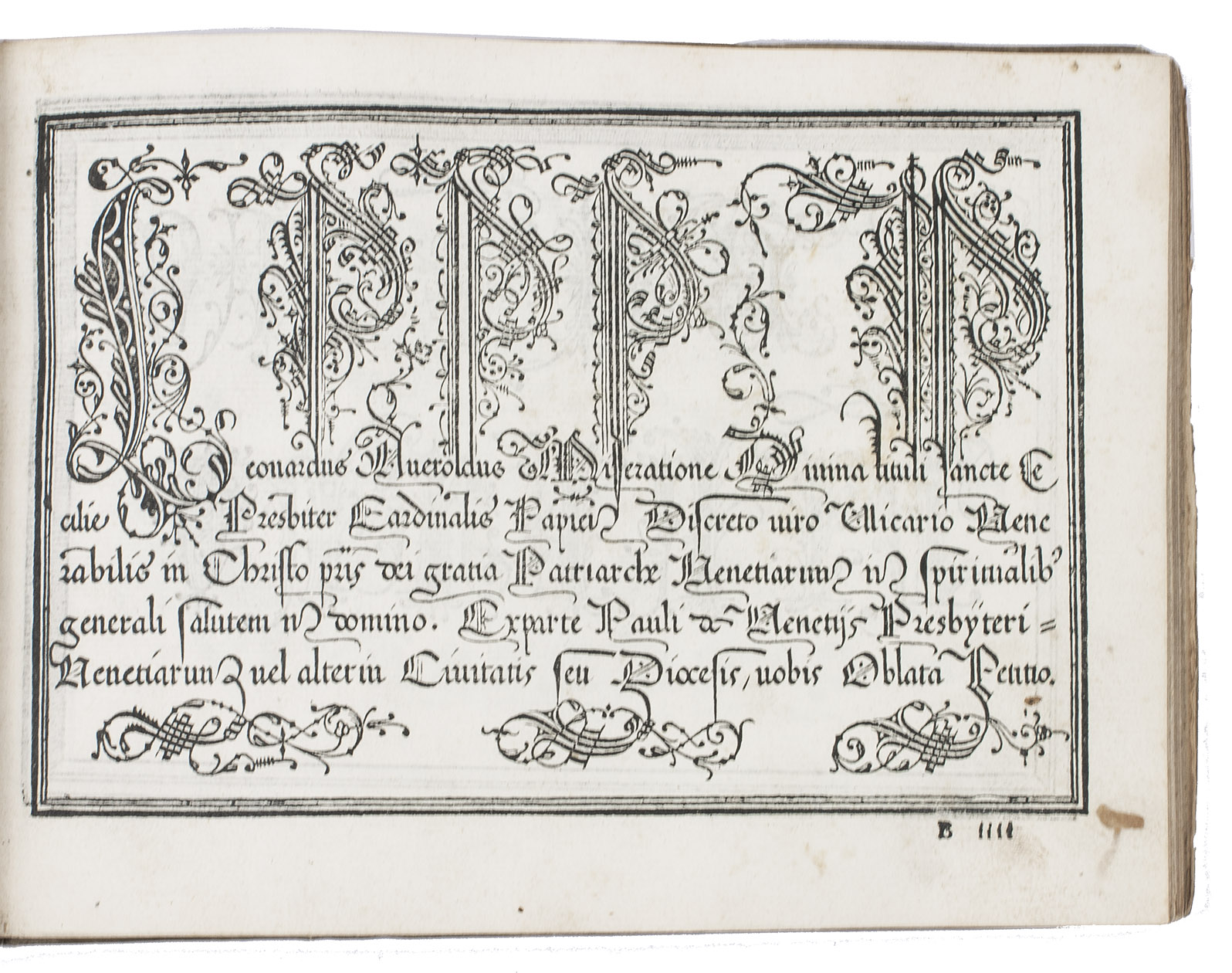
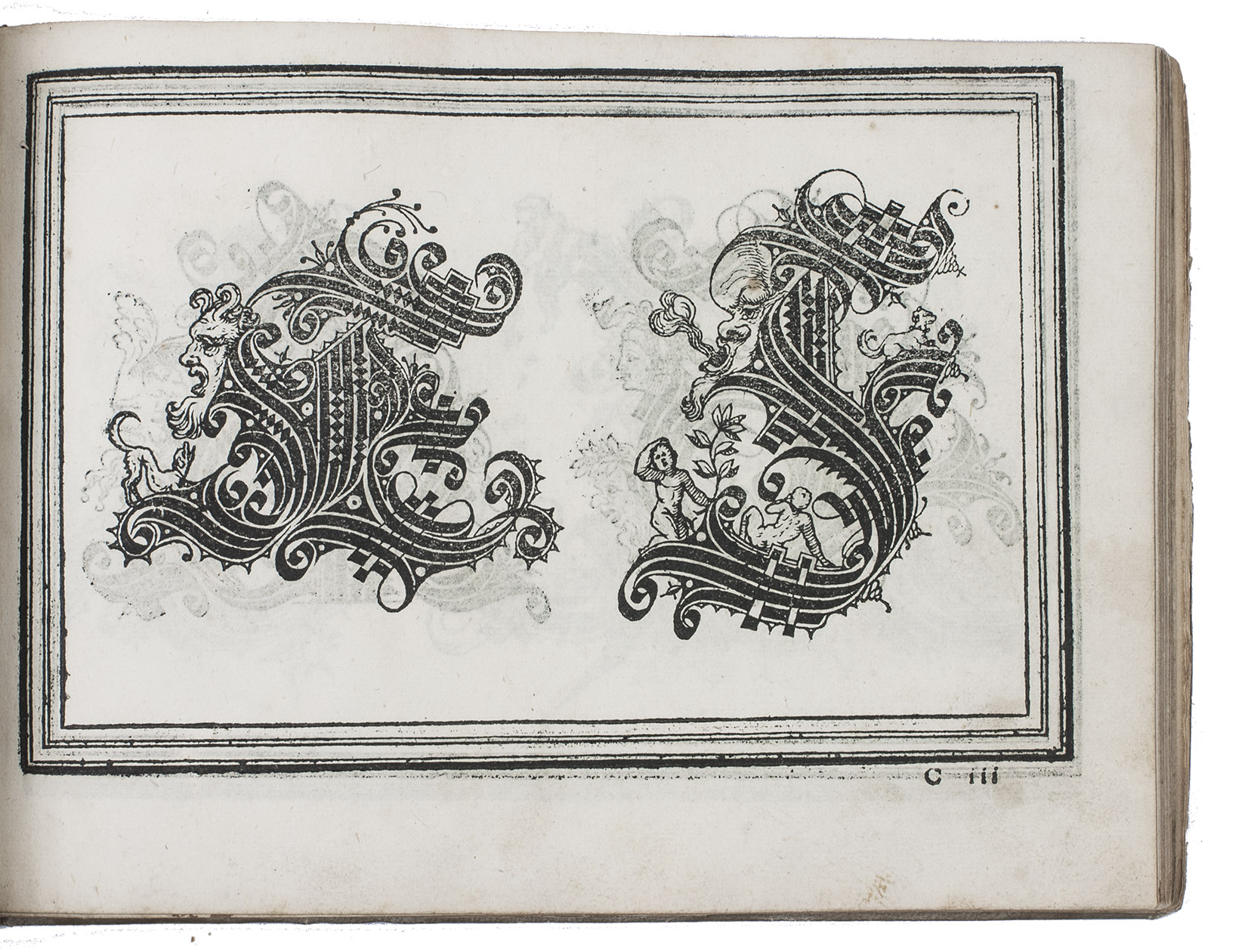
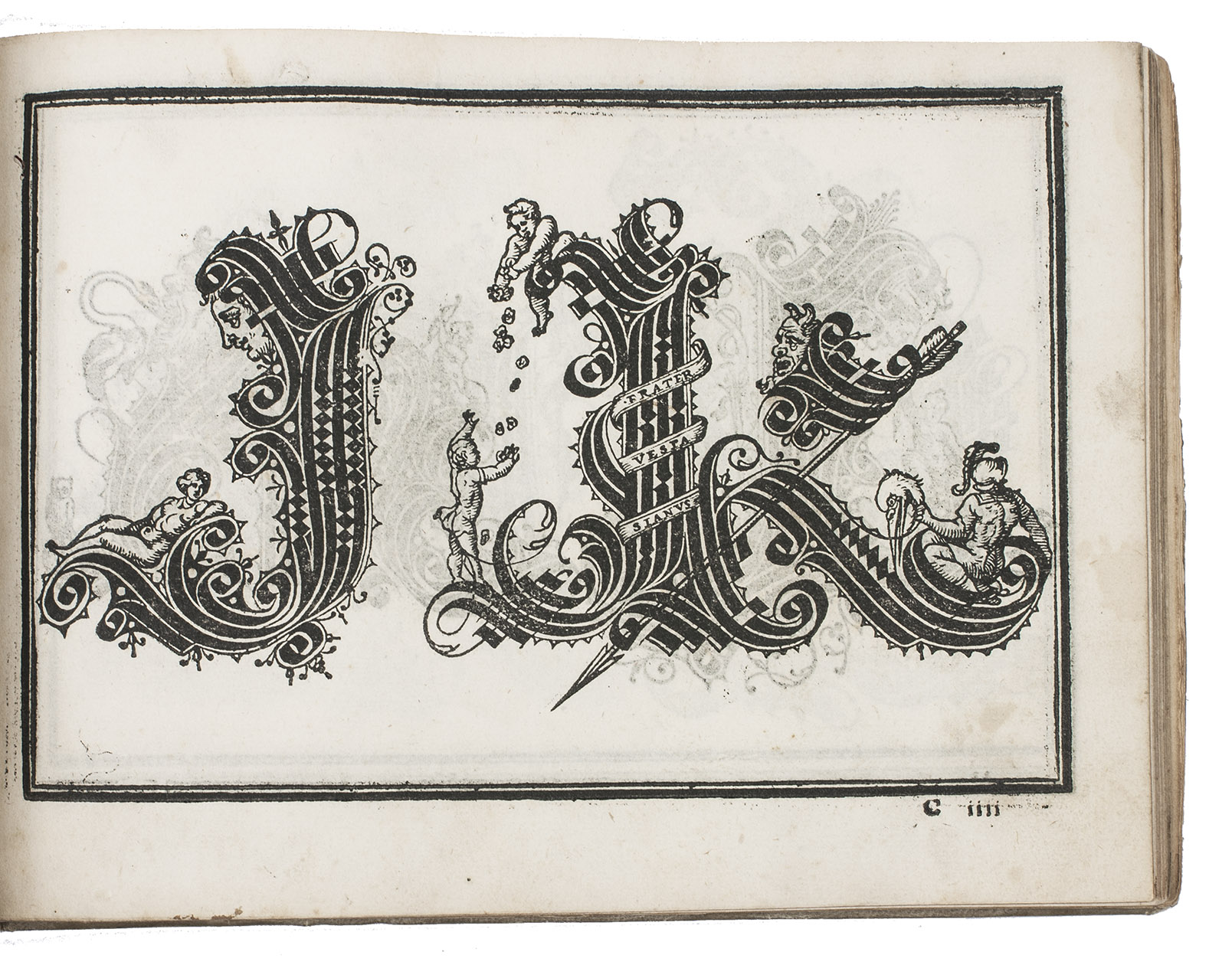
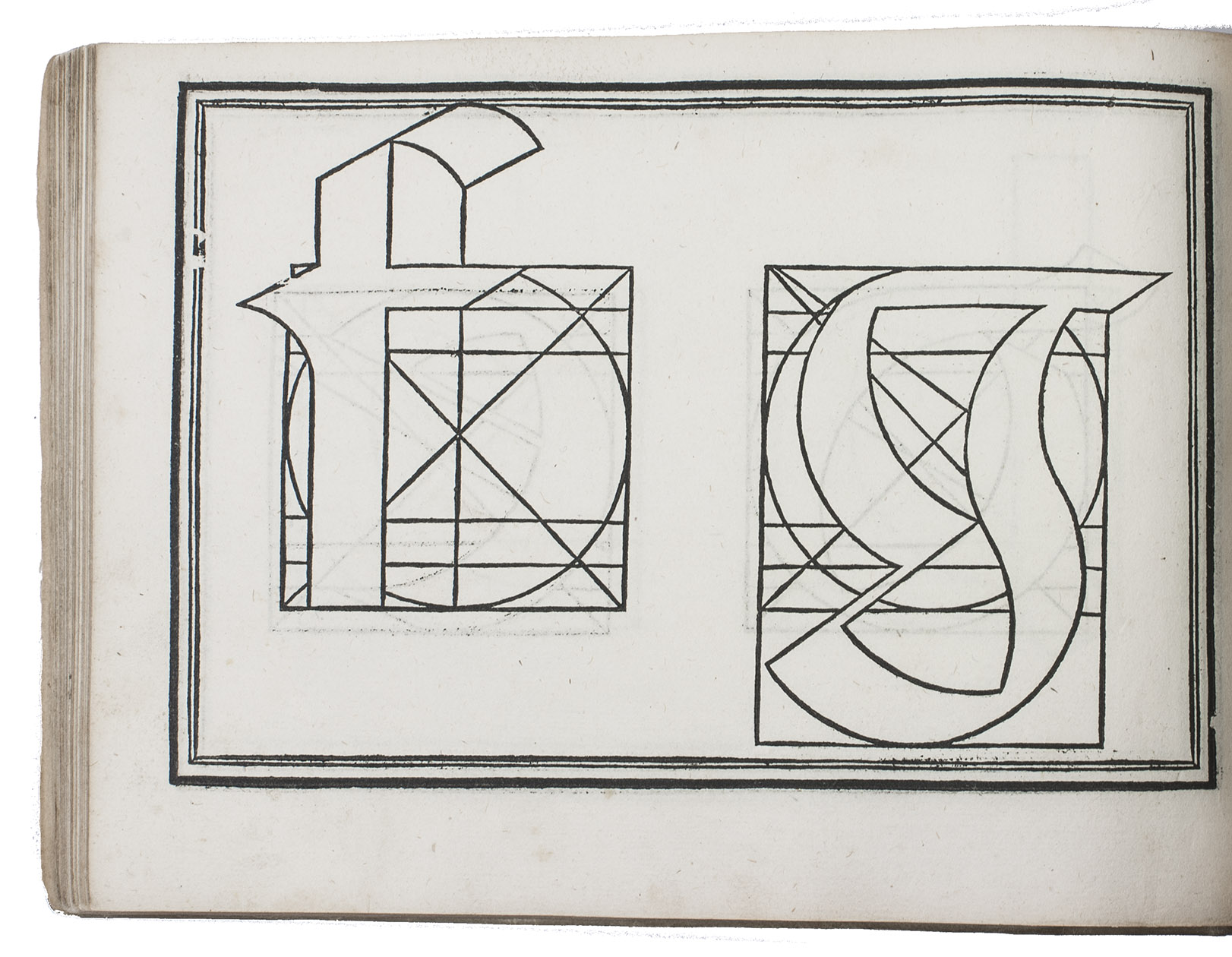
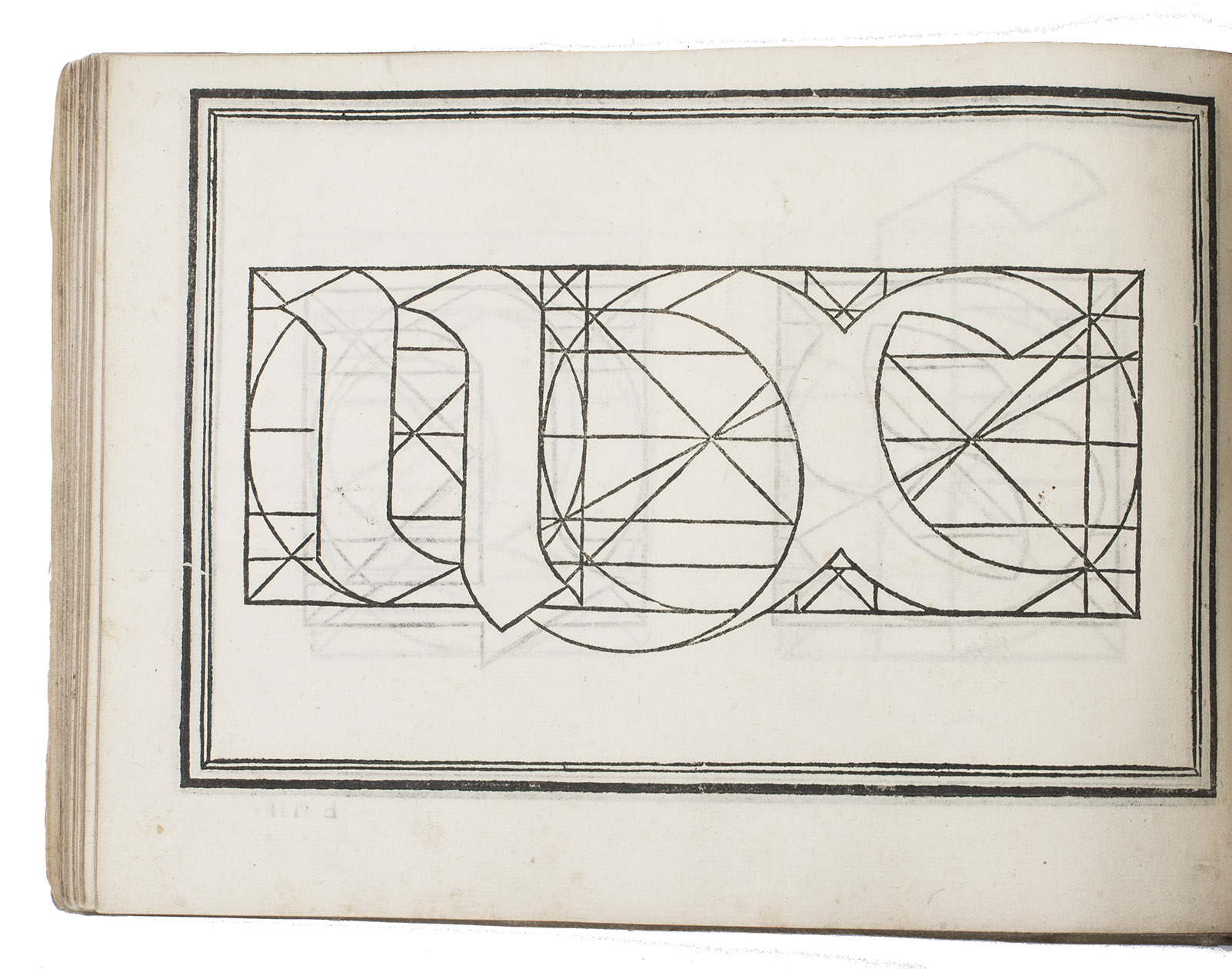
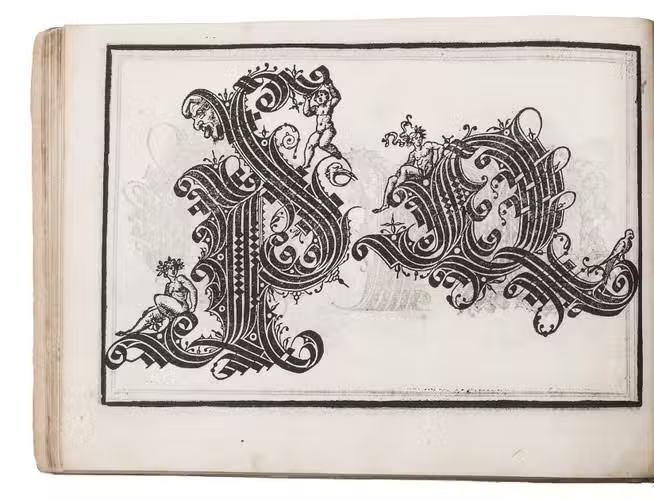
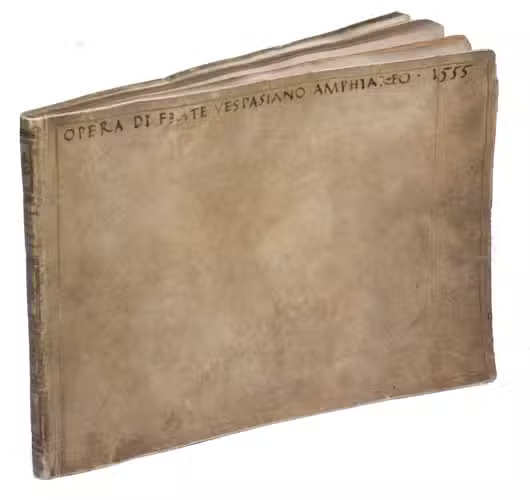
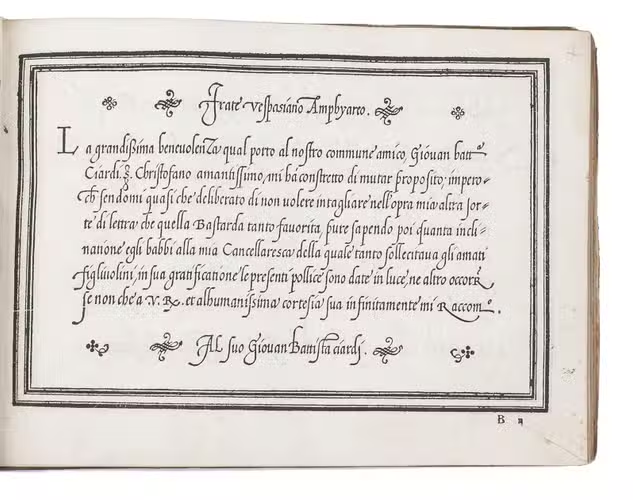
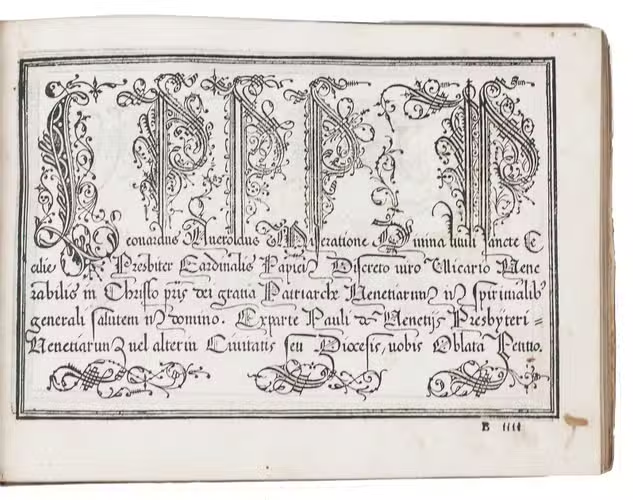
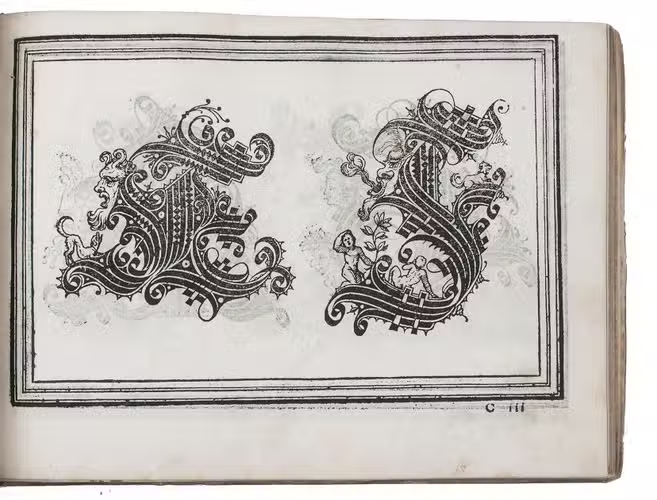
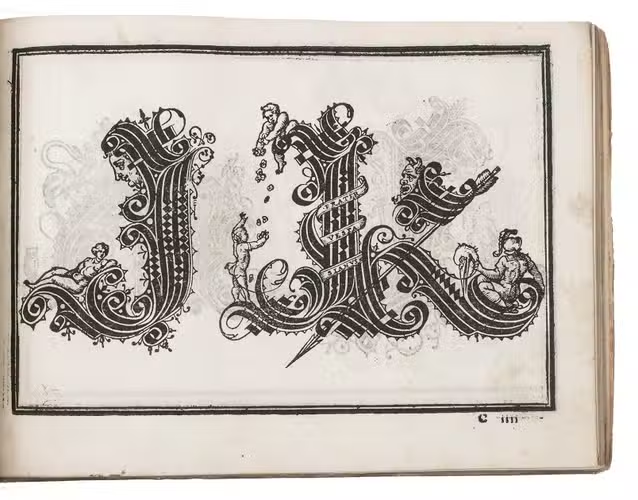
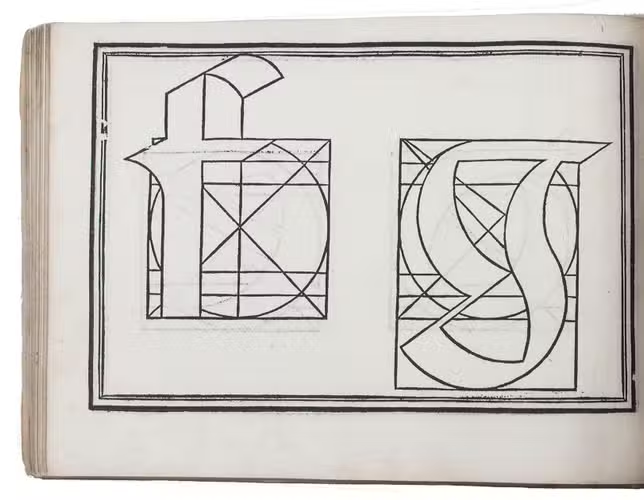
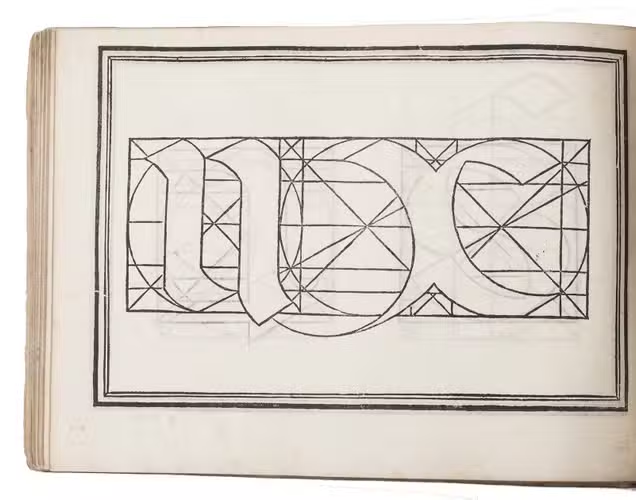
Venice, 1555. Oblong 4to. With a woodcut of two hands, one holding a compass and the other holding a pen, 6 charming woodcut initials in text and 85 engraved models of calligraphic text and initials, all set within black-lined borders. 18th-century gold-tooled vellum. [48] ll.
€ 9,500
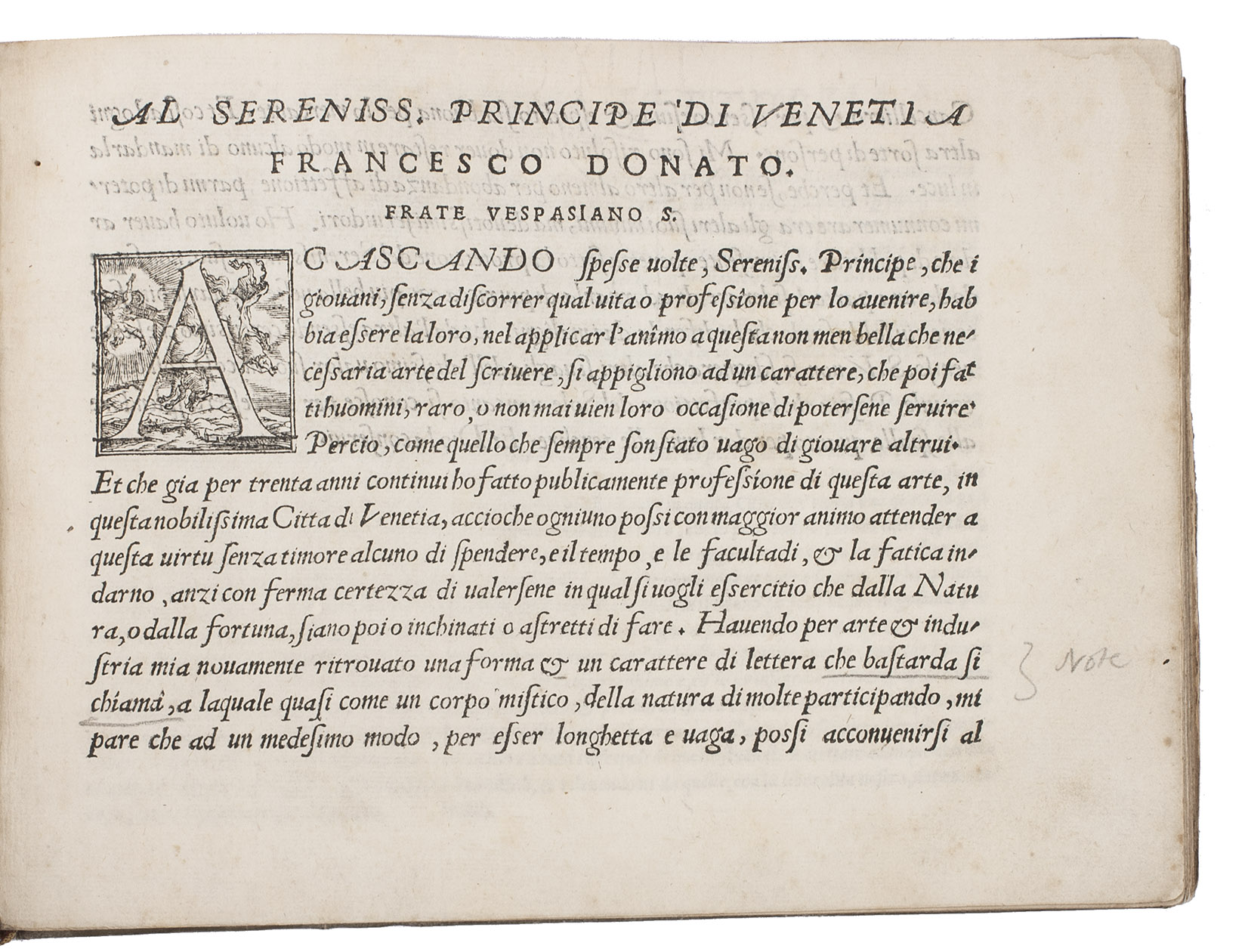
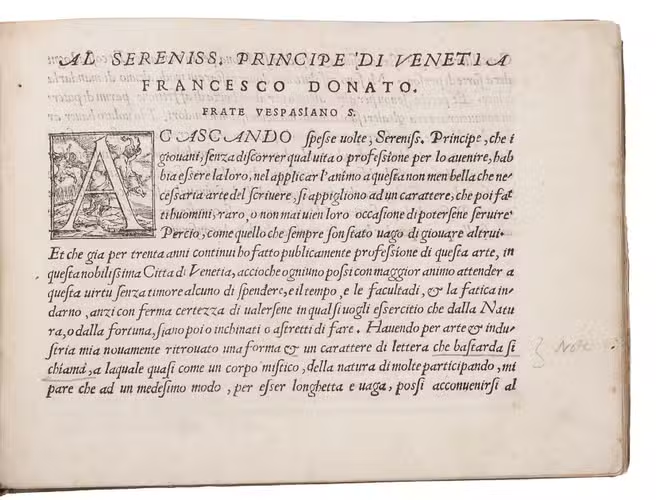
Rare edition of a famous Italian writing book by Vespasiano Amphiareo (Ferrara 1501-Venice 1563), first published as "Un novo modo d'insegnar a scrivere" at Venice in 1548. A new enlarged edition followed in 1554 (in two issues), after which our edition followed and sixteen more before 1620. Amphiareo belonged to the noble family Albertaccia and had been, to all probability, a pupil of the famous Tagliente, and later he was a writing-master at Venice for some thirty years. He dedicated his writing book to the Doge Francesco Donà.
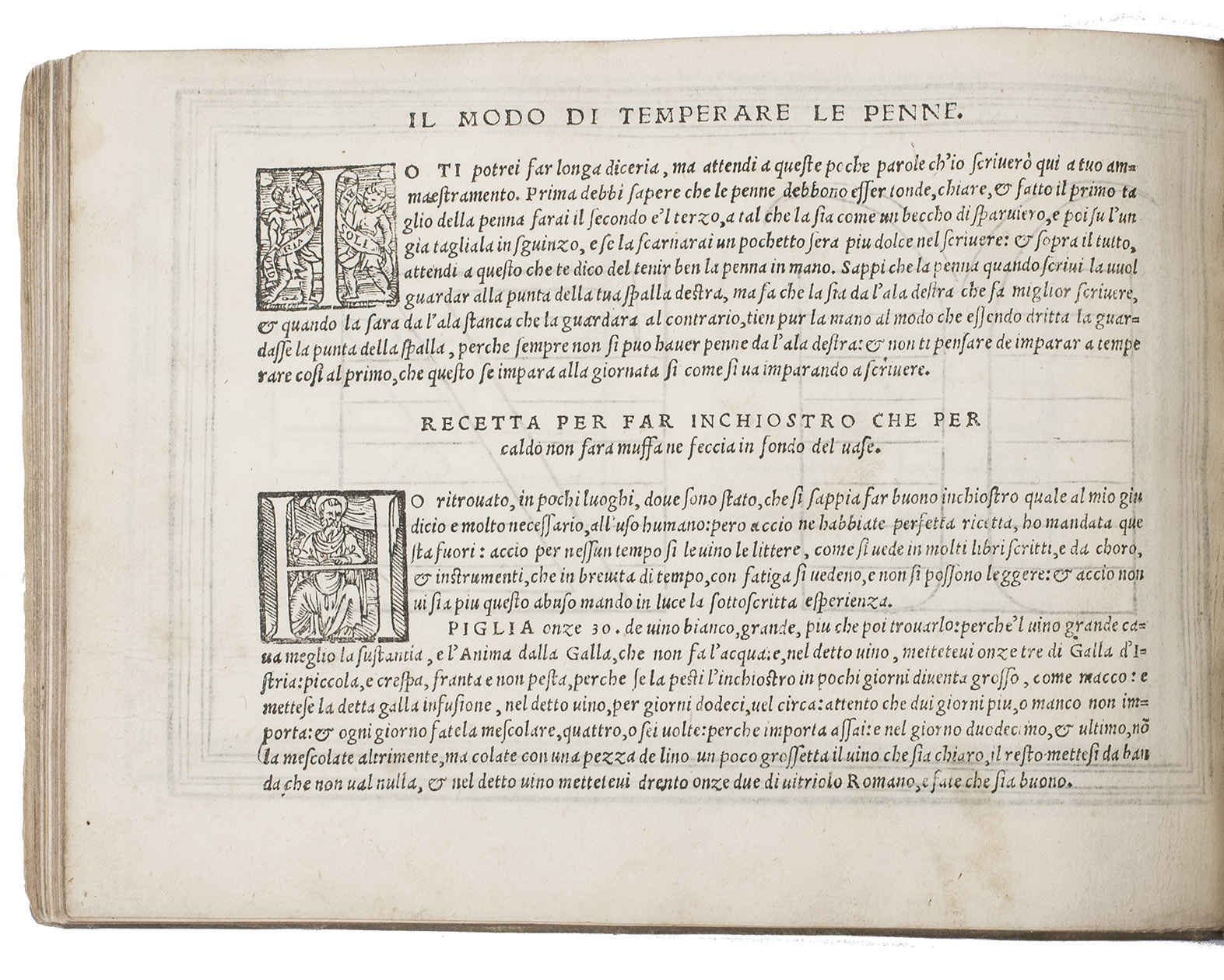
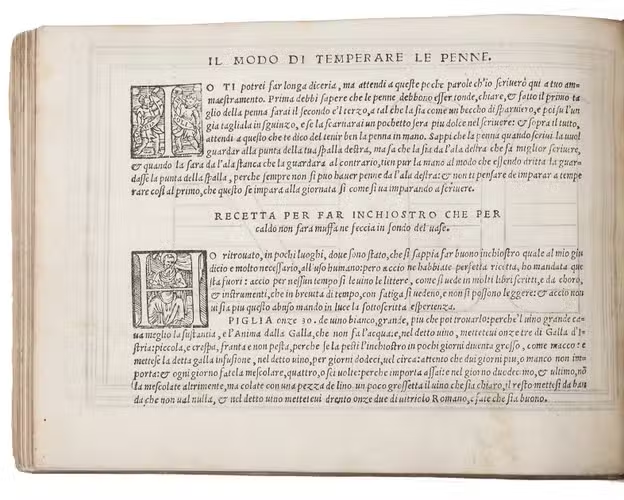
We see for the first time in an Italian writing book a majuscule alphabet based on botanical motives, another on trunks of trees, heavy gothic letters embodying putti and masks, and black strapwork letters obviously linked to contemporary writing books in Germany and Switzerland. The book ends with a section on teaching the cutting of the quill and how to make a clear, black ink, partly based on Arrighi's instructions. To the second edition Amphiareo added further sections on illuminating in azure and gold, and in vermilion in his later editions.
The real significance of the writing book is that Amphiareo was dissatisfied with both the chancery and mercatile hands of his time. He therefore devised a mixture of the two styles "like a mystic body" in the Friar's Bastard, as he called it, which would suit both purposes. He wanted this "invention"' to be generally known and thus "with incredible personal expense" he had his book engraved and printed. After the famous writing masters Tagliente, Arrighi and Palatino, Amphiareo represented both their tradition and the transition to the revolutionary writing master Cresci of the second half of the 16th century.
The title page is slightly browned, slight (marginal) foxing throughout. Otherwise in very good condition. Casamassima, Trattati di Scrittura (1966), p. 90, no. XII, and plates XLV-XLVIII (first ed.); EDIT 16 CNCE 61646 (1 copy); Johnson, A.F., A catalogue of Italian writing books of the 16th century, in: Signature, N.S., 10 (1950), p. 36; Medri, G., Le opera calligrafiche a stampa, II, Vesp. Amphiareo da Ferrara, in: All' insegna del libro I, (1928), pp. 57-58; cf. Becker, D.P., The practice of letters (1997), no. 19; Bonacini 49.
Related Subjects: