[CARDUCCI, Alessandro, Giovanni Andrea MONIGLIA, and Stefano DELLA BELLA].
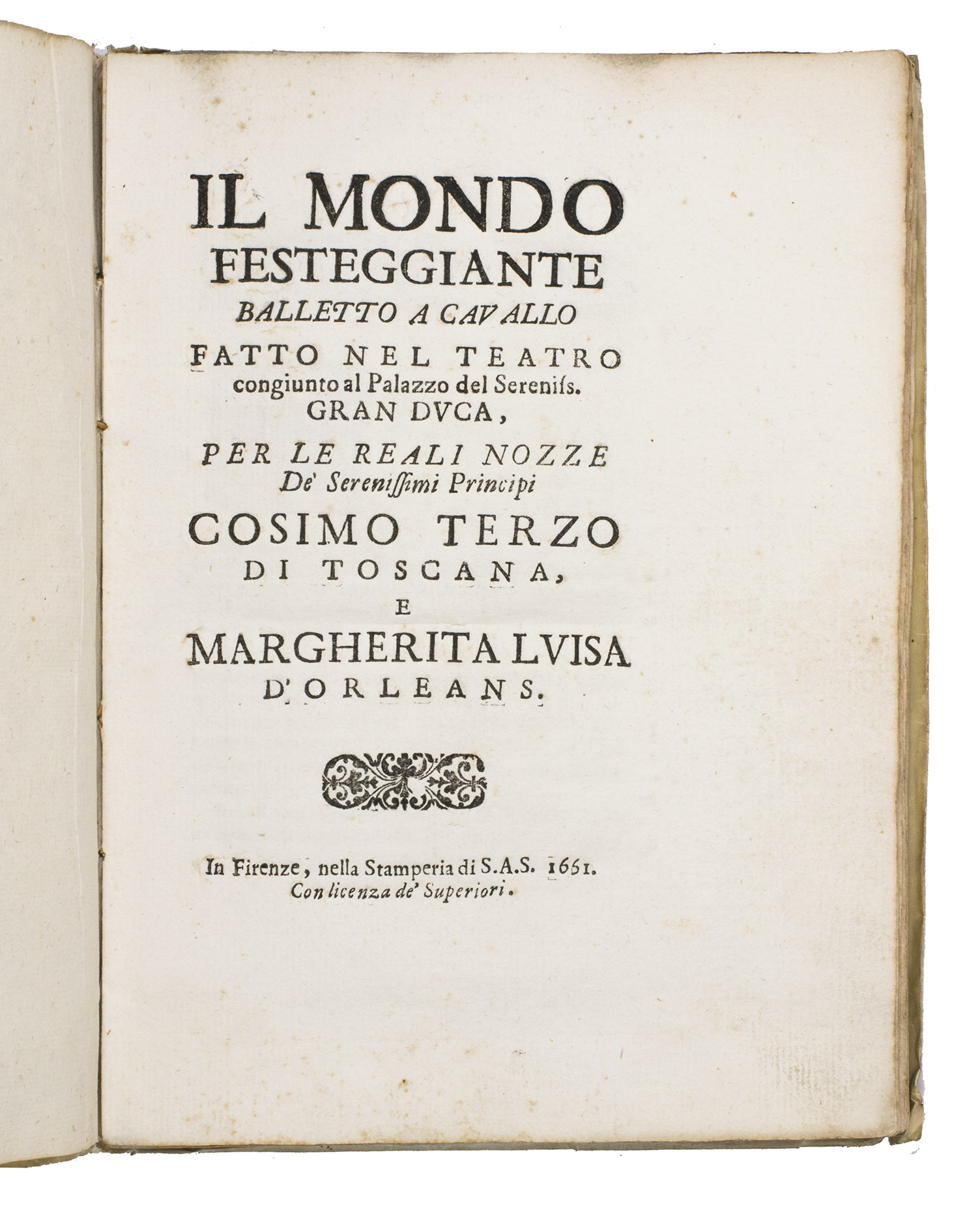
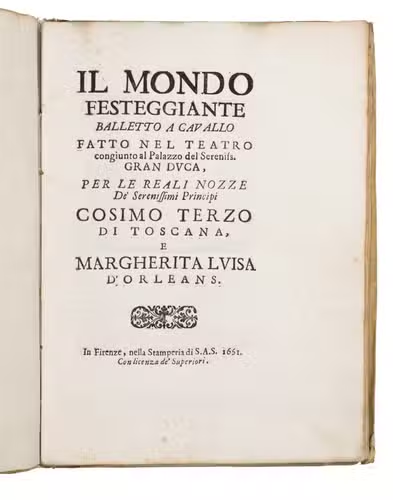
Il mondo festeggiante balletto a cav allo fatto nel teatro congiunto al palazzo del sereniss. gran duca, per le reali nozze de' serenissimi principi Cosimo terzo di Toscana, e Margherita Luisa d'Orleans.
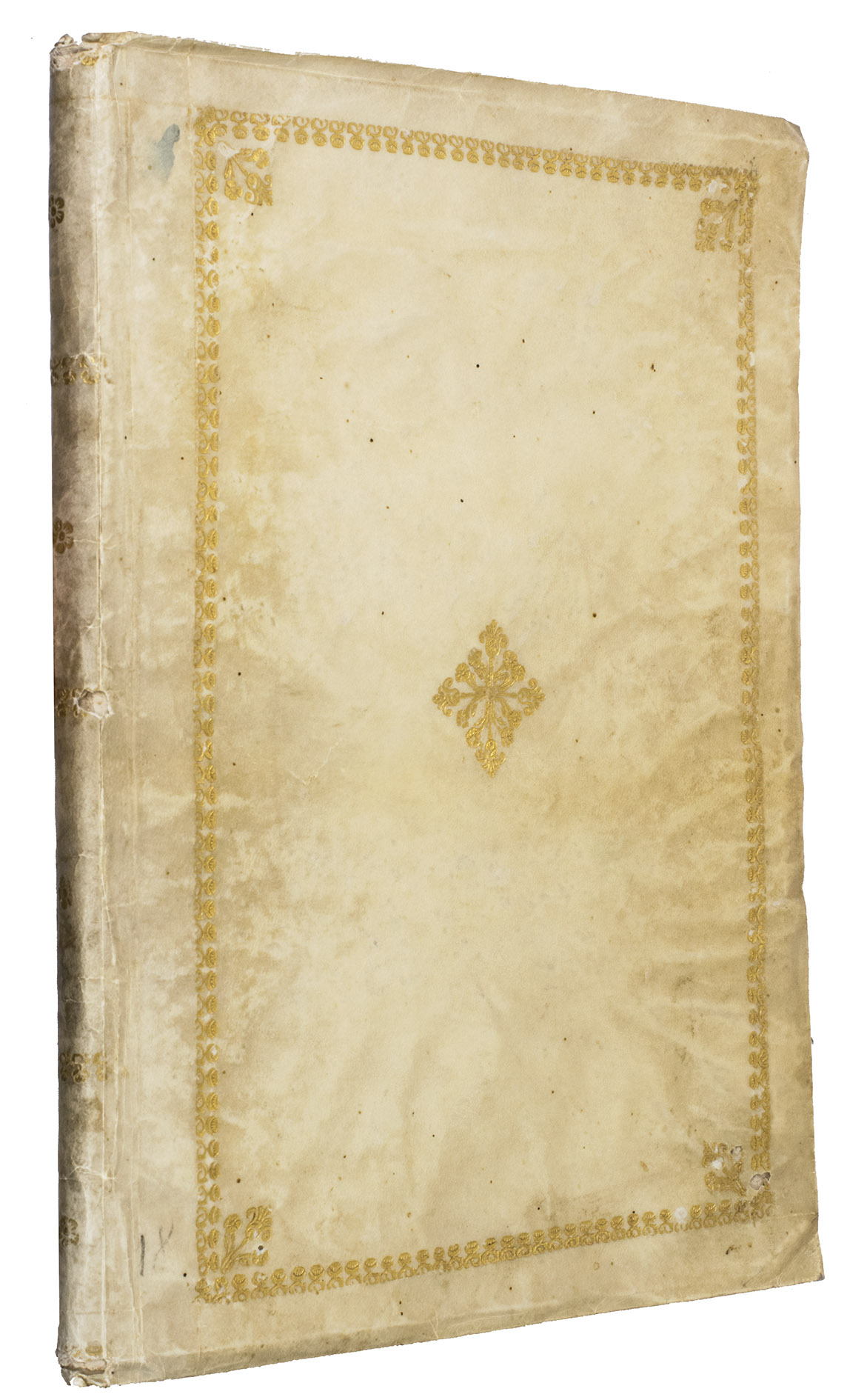
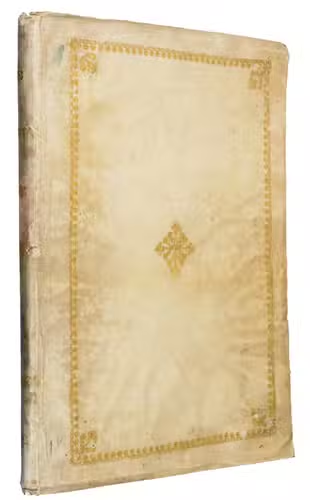
Florence, Nella stamperia di S.A.S., 1661. 4to. With 3 fold-out engravings, 1 woodcut initial, and 2 woodcut headpieces. Contemporary gold-tooled vellum. [1], [1 blank], 7-66, [2 blank] pp.
€ 22,500
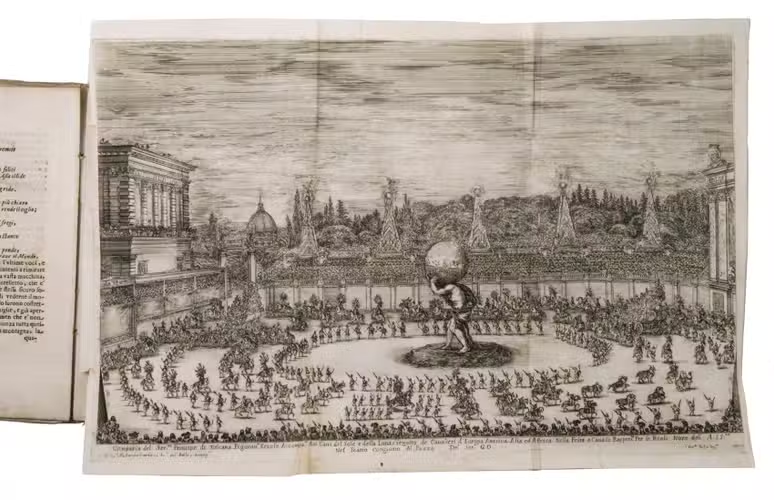
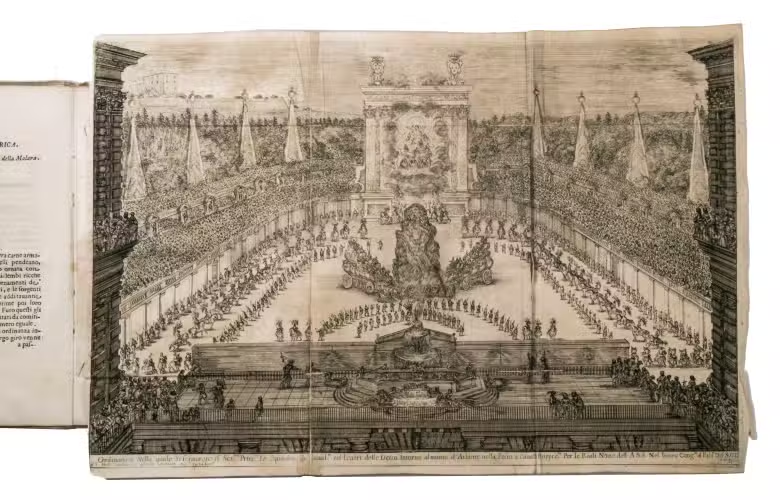
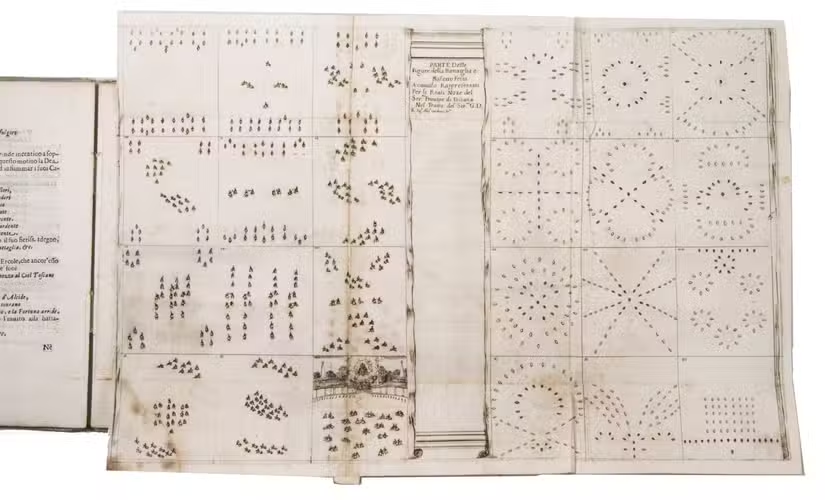
First and only edition of a Florentine festival book, magnificently illustrated with three large folding copper engravings by Stefano della Bella (1610-1664), produced to commemorate the sumptuous equestrian ballet staged for the marriage of Cosimo III de Medici (1642-1723) and Marguerite Louise dOrléans (1645-1721) on 20 June 1661.
The text is by Alessandro Carducci, with celebratory poems by Giovanni Andrea Moniglia (1625-1700). Carducci was responsible for the conception of the elaborate spectacle, an ambitious theatrical and mechanical enterprise staged in the amphitheatre behind the Palazzo Pitti (now the Boboli Gardens).
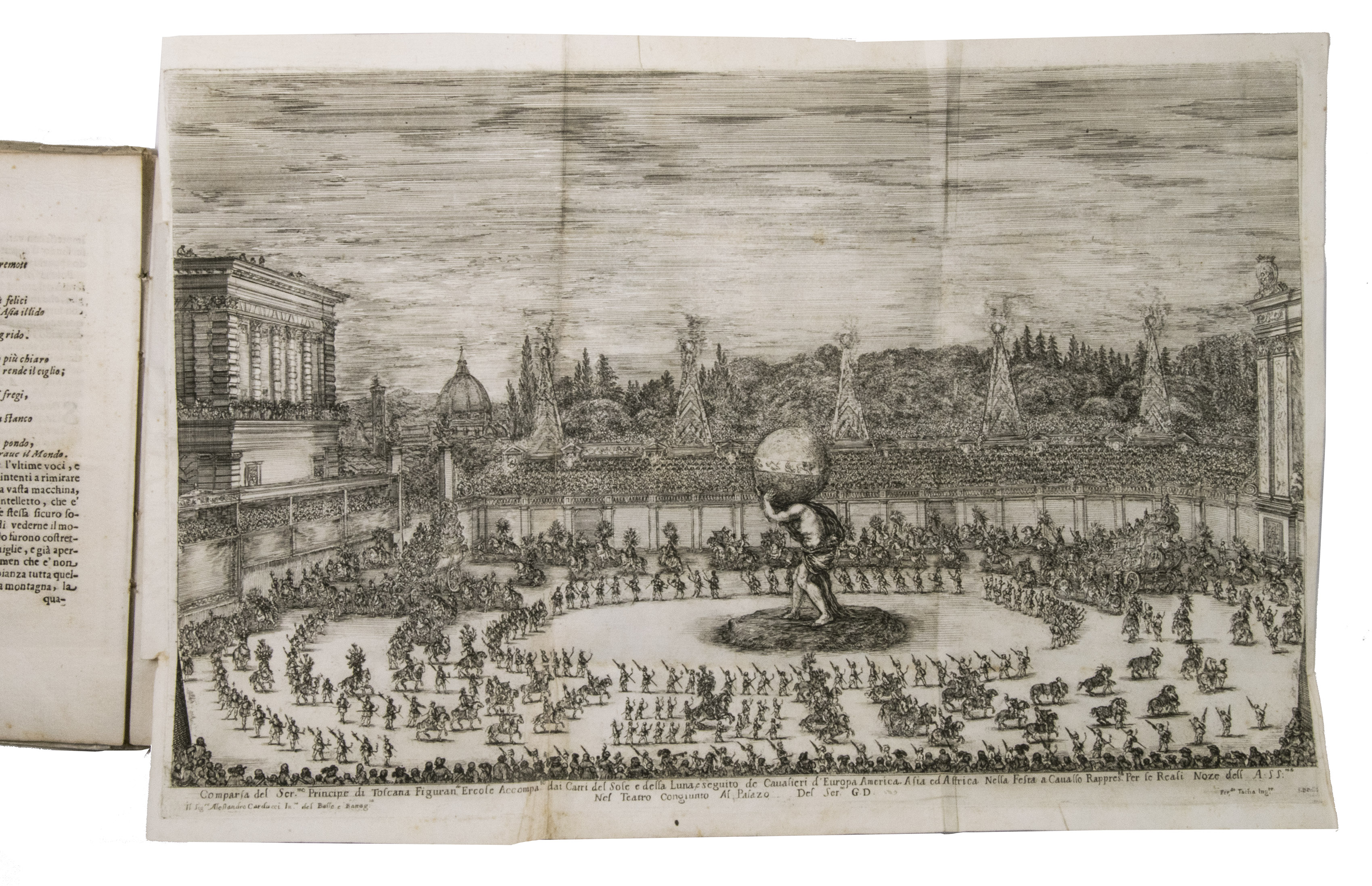
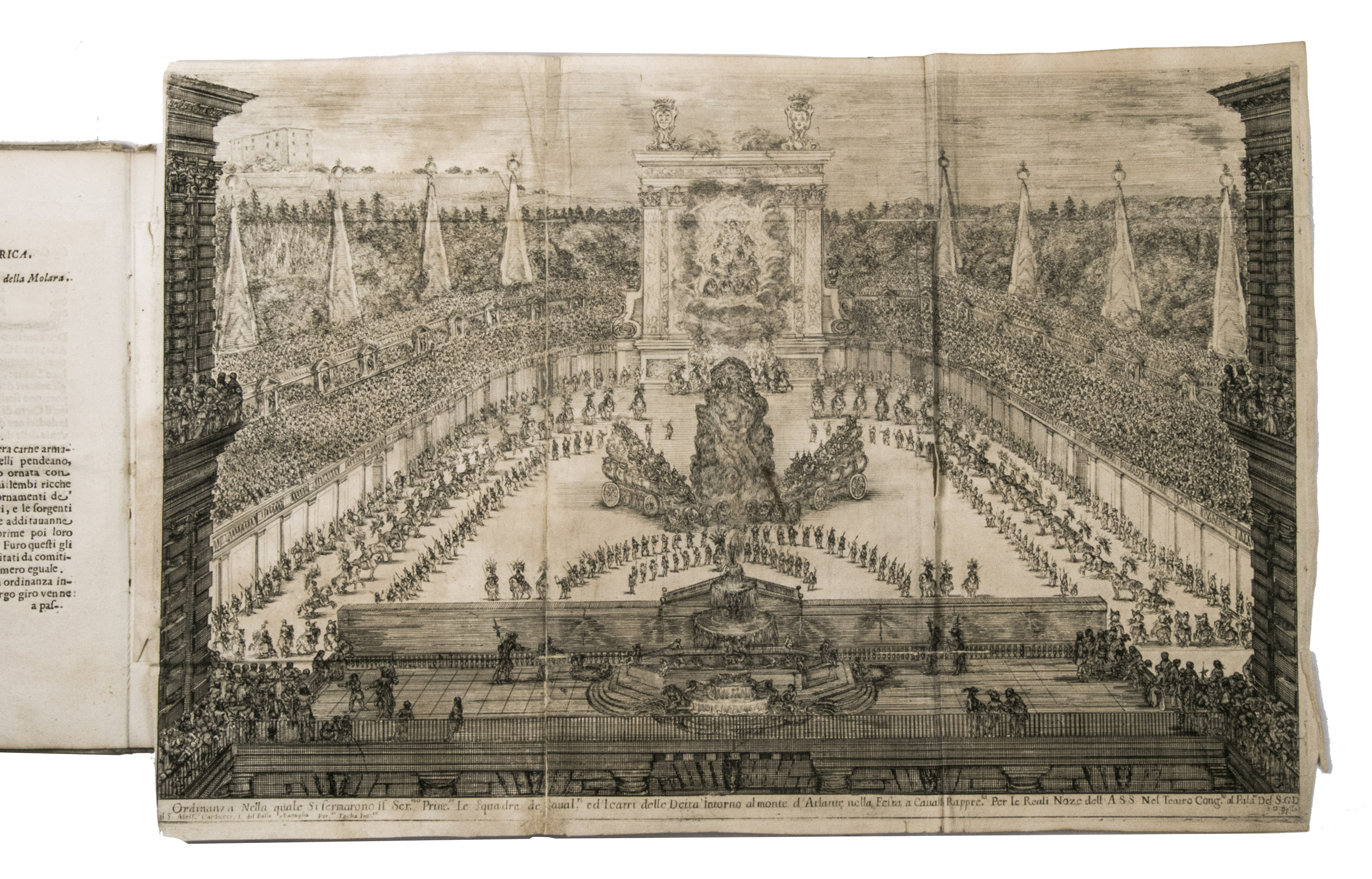
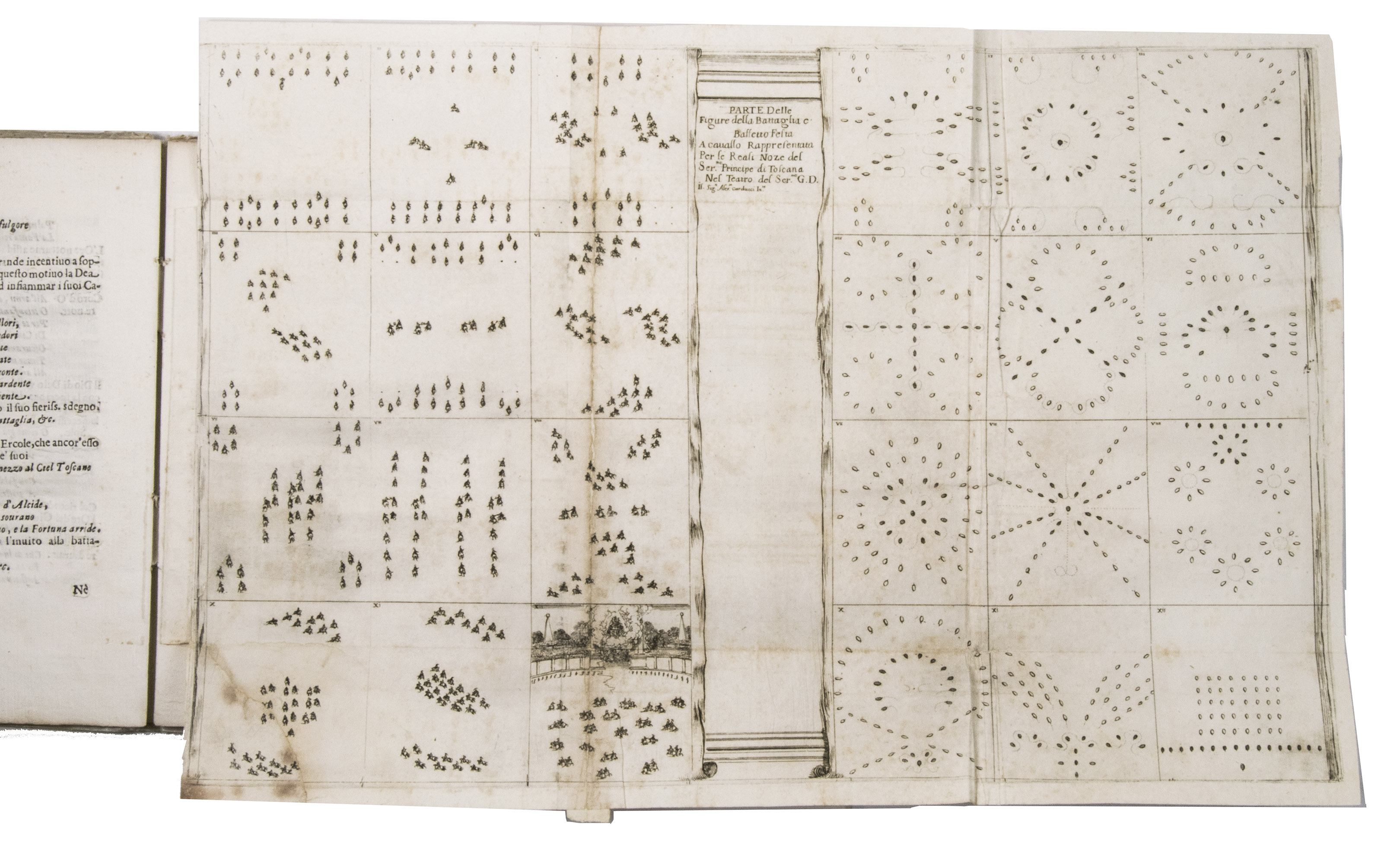
The first two large folding engravings are signed by della Bella, and also bear the name of the engineer Ferdinando Tacca (1619-1686), who oversaw the complex machinery of the performance. The plates depict: the grand cavalcade of Hercules, accompanied by the chariots of the Sun and the Moon and followed by riders representing Europe, Asia, Africa, and America, the general arrangement of the quadrilles around Mount Atlas; the plan of the tournament and equestrian ballet, with detailed diagrams of the manoeuvres.
One of the most striking novelties of the spectacle was the colossal figure of Atlas, described as a "vast machine", which not only dominated the arena but also sang, opening to reveal four female singers within the celestial sphere he supported. Prince Cosimo himself appeared as Hercules, identifiable in the engraving by his club and lion skin.
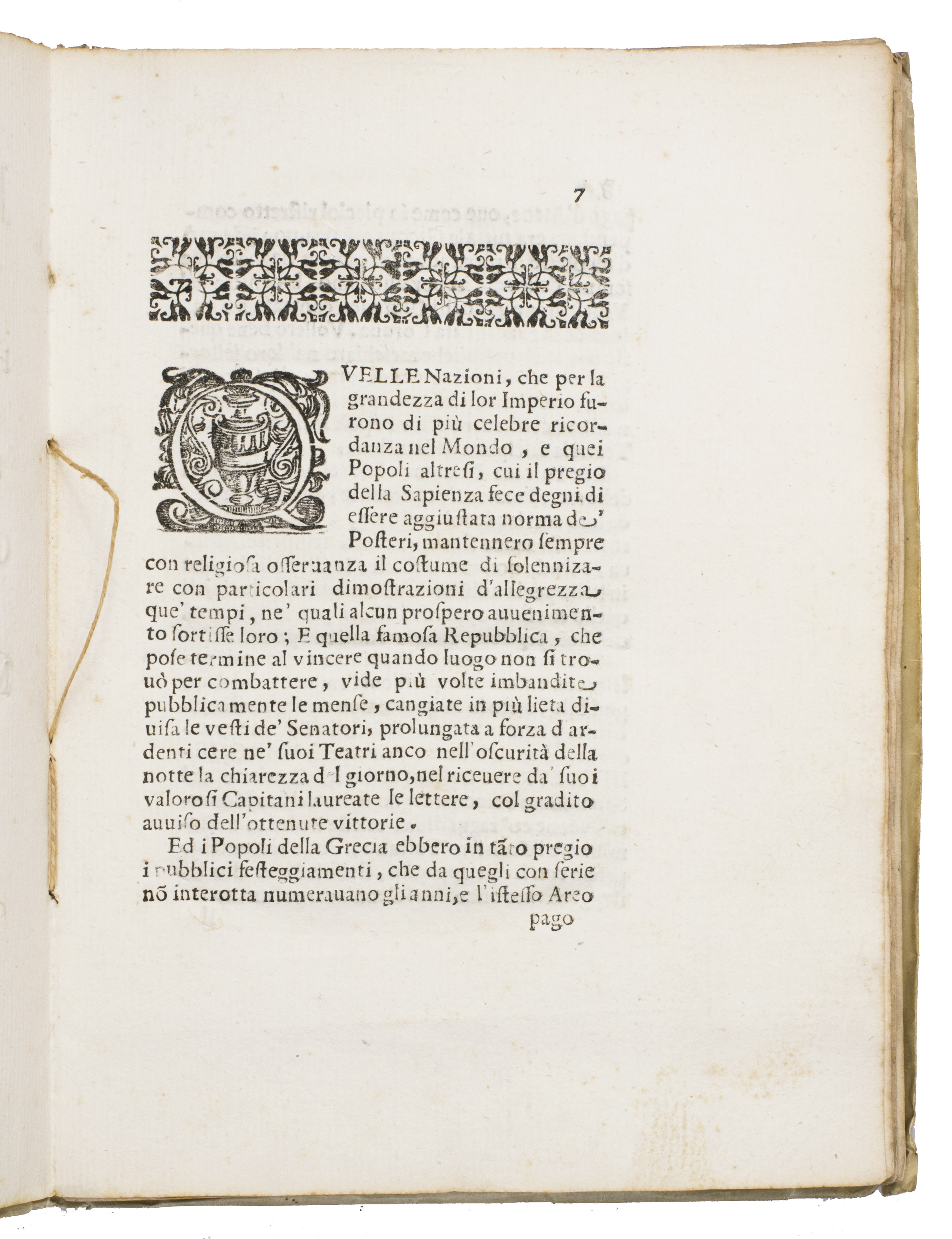
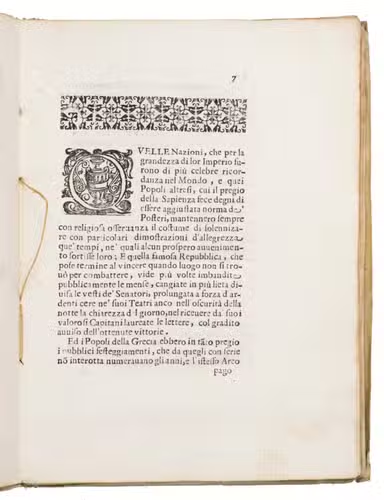
As is characteristic of all known surviving copies, the text begins on page 7, pages 3-6 were never printed.
With a bookplate of "Johannes Ferri de Legnano" mounted on the verso of the first flyleaf, the binding shows some wear, including a minor wormhole and a blue ink stain on the front board, as well as some tears to the vellum of the rear board. The second folding plate is slightly browned, with some tears, and has been reinforced on the verso, the third folding plate shows some foxing. Otherwise in good condition. BL 17th-Century Italian I, p. 189; Katalog der Ornamentstich-Sammlung, SKB Berlin 3049; Moreni I, pp. 217-218; NUKAT xx003642114; OPAC SBN RMRE001305; Ruggieri, 503; USTC 1707652, 1726213; Vinet, 614; not in Brunet
Related Subjects: